Professional Metal Framing Demolition: Techniques, Safety, and Recycling

A single miscalculation during metal framing demolition can compromise the structural integrity of a 50,000 square foot industrial facility in less…

A single miscalculation during metal framing demolition can compromise the structural integrity of a 50,000 square foot industrial facility in less than ten seconds. You’re likely aware that dismantling commercial steel structures requires more than raw force; it demands engineering precision to avoid catastrophic structural failures. It’s natural to worry about the unexpected discovery of hazardous materials like lead or asbestos, which frequently appear in structures built prior to the 1978 ban on lead-based paints. These variables, combined with the rising costs of debris disposal, make every selective demolition project a high-stakes operation.

We’ll provide the expert insights you need to master these complexities through rigorous technical execution and sustainable material recovery. You’ll gain a clear understanding of the professional demolition workflow, ensuring your site remains compliant with OSHA safety standards while maintaining total control over the environment. This guide outlines a strategic plan for material recycling that can significantly reduce project overhead. We’ll examine the critical steps of the process, from initial load-bearing assessments to the final logistics of hauling reclaimed steel to specialized processing centers.

Key Takeaways

  • Learn to distinguish between light-gauge cold-formed steel and heavy structural components to ensure the correct technical approach for any project scope.
  • Understand why structural surveys and engineering sign-offs are essential for executing safe, surgical selective removals or total structural deconstructions.
  • Identify hidden hazards like lead-based paint and asbestos while maintaining strict OSHA standards for fall protection and fire prevention on-site.
  • Master the systematic workflow of metal framing demolition, beginning with site mobilization and following through to the precise deconstruction of the structural skeleton.
  • Implement sustainable debris management strategies that utilize the total recyclability of steel to lower project costs and minimize environmental footprints.

Fundamentals of Metal Framing Demolition

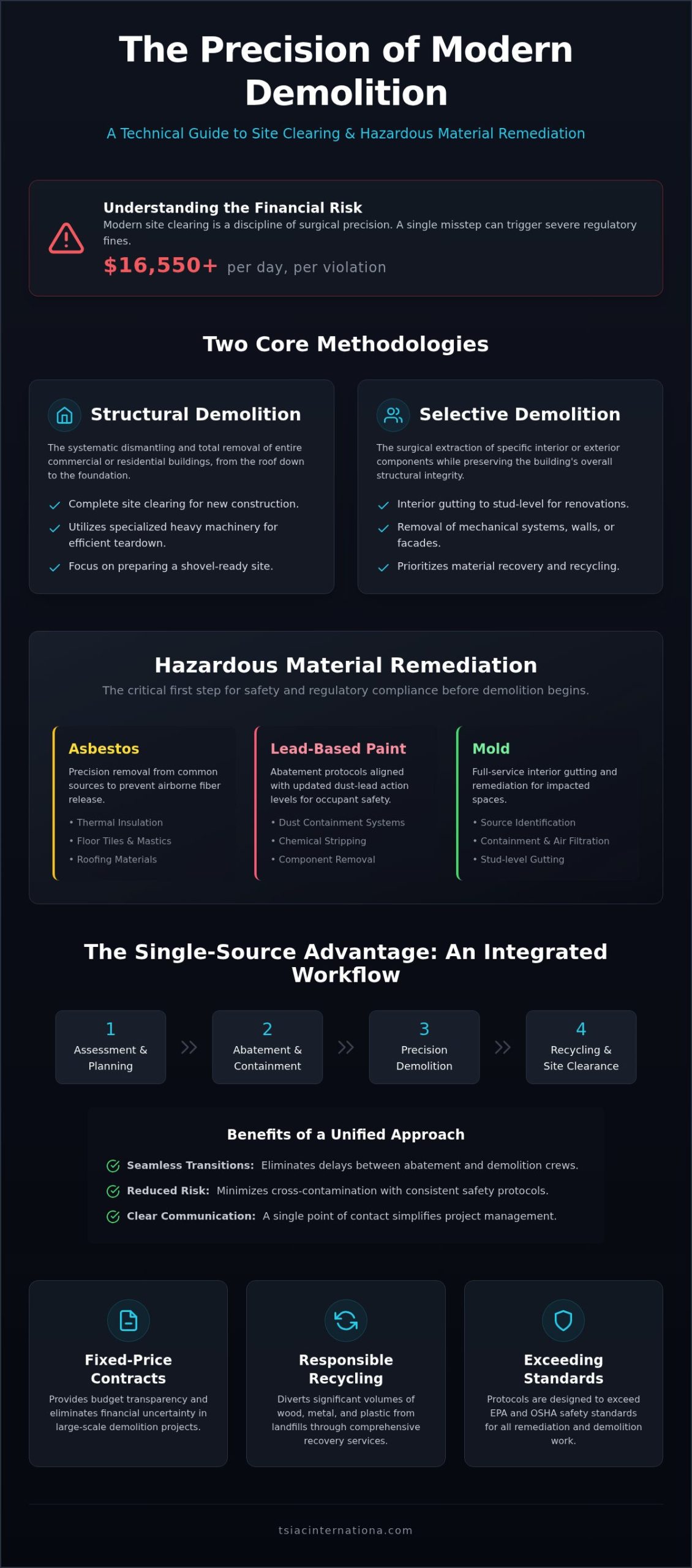
Metal framing demolition is the engineered process of dismantling steel or aluminum structural elements within a building. This discipline requires a different set of skills compared to timber removal because metal doesn’t splinter or fail predictably under impact. Instead, it behaves according to its metallurgical properties, requiring precise thermal or mechanical intervention. In modern industrial settings, where steel accounts for over 70% of the structural mass in commercial builds, a controlled approach ensures the stability of the remaining envelope.

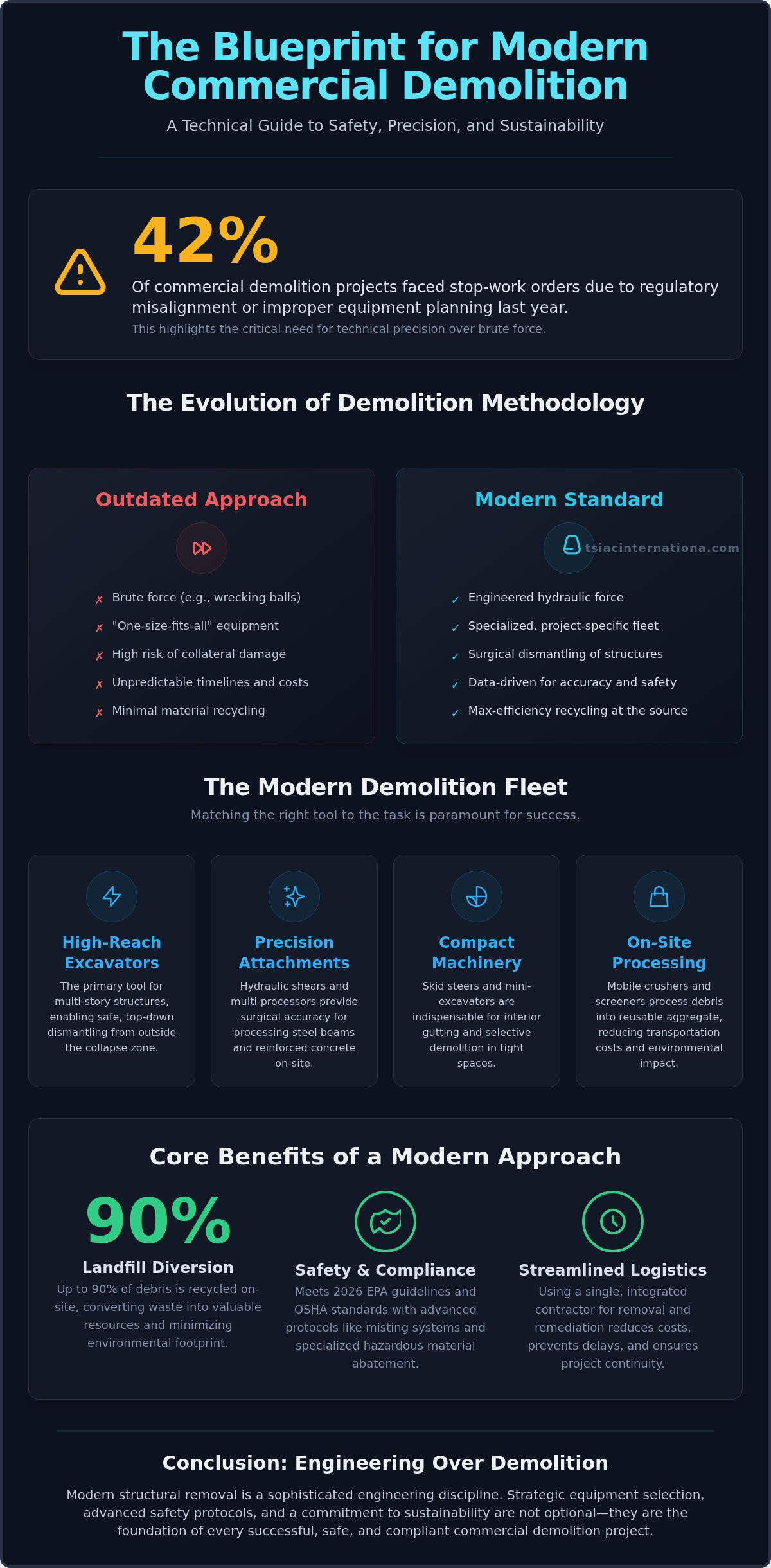
The industry distinguishes between light-gauge cold-formed steel (CFS) and heavy structural members. While CFS has been the standard for interior partitions since the 1990s, heavy structural steel forms the primary skeleton of high-rise and industrial facilities. Using advanced Demolition techniques like hydraulic shearing allows teams to process these materials safely. This systematic approach is vital for maintaining site safety and maximizing the recovery of recyclable materials, which can reach rates of 98% in well-managed steel projects.

Light-Gauge vs. Structural Steel Demolition

Interior gut-outs often focus on light-gauge metal studs. These non-load-bearing components are typically 25 to 20 gauge steel and are removed using manual tools or small robotic breakers. However, structural steel demolition is far more complex. Removing load-bearing columns or beams requires a comprehensive shoring plan. Engineers must calculate the redirected loads before a single bolt is torqued or a torch is lit. Temporary bracing prevents progressive collapse, a risk that increases significantly when working in high-density urban environments.

Common Applications for Metal Demo

Professional metal framing demolition is essential in several scenarios:

  • Commercial Renovations: Stripping out tenant spaces in office buildings to prepare for new layouts while protecting existing utilities.
  • Industrial Decommissioning: Removing heavy steel platforms, mezzanines, and equipment supports from active or retired manufacturing plants.
  • Total Structural Demolition: The complete teardown of steel-framed warehouses or multi-story buildings where structural integrity must be managed until the final member is grounded.

Each application demands a specific safety protocol. Industrial sites often involve “hot work” permits for torch cutting, requiring strict fire watch procedures and specialized ventilation. Our teams prioritize these technical details to deliver results that meet rigorous engineering standards and tight project timelines.

Professional Techniques: Selective vs. Total Removal

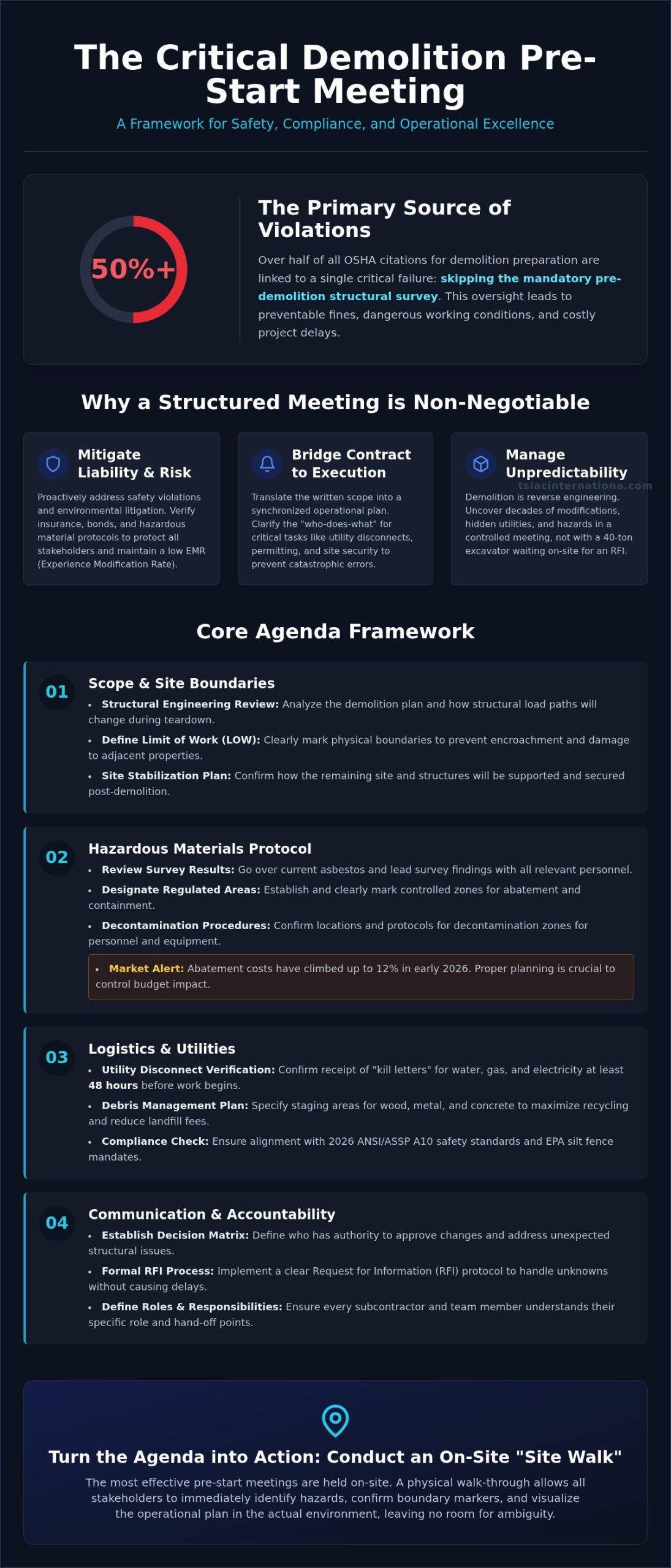
Successful metal framing demolition begins with a precise assessment of the project scope. Engineers must determine if the structure requires surgical selective demolition or a complete structural removal based on the 2024 structural assessment protocols. A pre-demolition structural survey is mandatory for every site. This document identifies load-bearing elements and ensures the building remains stable throughout the process. Engineering sign-offs aren’t just paperwork; they’re the foundation of site safety and risk mitigation. Adhering to OSHA demolition safety standards ensures that every phase, from the initial hazard assessment to the final debris removal, protects both the workforce and the surrounding environment.

Maintaining the building envelope’s integrity is a primary concern during partial removals. If the exterior skin is compromised, the cost of remediation can increase by 25% due to water ingress or thermal bridge issues. Professional teams use temporary shoring and weatherproofing to protect the asset while internal metal components are extracted. For projects requiring this level of technical oversight, consulting with an experienced industrial partner ensures the structural integrity of your facility remains uncompromised.

The Selective Demolition Framework

Selective demolition is the preferred method for active commercial facilities where business continuity is a priority. This approach minimizes downtime by allowing operations to continue in adjacent zones. Before any stud removal starts, teams must isolate mechanical, electrical, and plumbing (MEP) systems to prevent accidental utility interruptions. We use precision cutting tools, such as hydraulic shears and reciprocating saws, because they prevent vibration damage to the remaining structure. Integrating commercial interior gutting services into the project timeline allows for a streamlined transition from demolition to renovation. This method typically results in a 15% faster turnaround for tenant improvement projects compared to traditional gutting.

Total Structural Removal Strategies

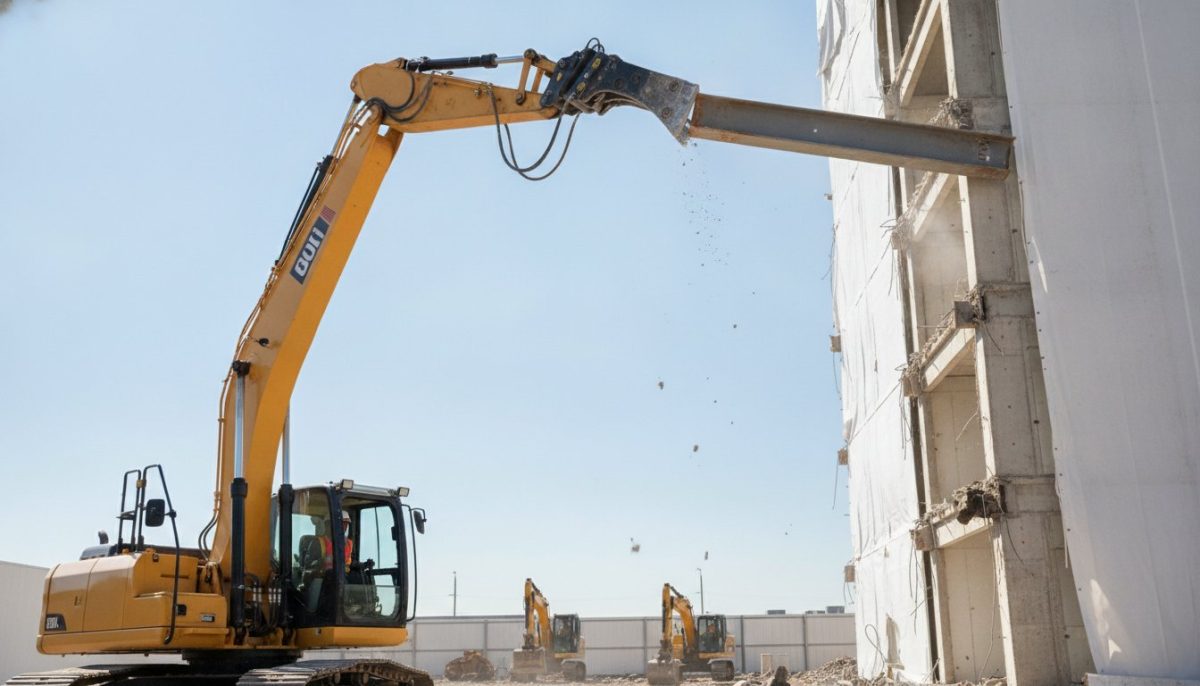
When a building reaches the end of its lifecycle, total removal is the only viable path. We utilize a top-down sequencing method for multi-story metal-framed buildings. This ensures gravity works with the demolition team, preventing premature collapses. High-reach excavators equipped with specialized shears dismantle structural steel with surgical accuracy. In high-density urban environments, site logistics are complex. We manage debris flow by scheduling off-peak hauling, which has been shown to reduce site congestion by up to 30% in metropolitan areas. Every ton of steel is tracked from the moment it’s cut until it reaches the recycling facility, providing a transparent audit trail for LEED certification requirements.

Professional Metal Framing Demolition: Techniques, Safety, and Recycling

Safety Protocols and Hazardous Material Management

Metal framing demolition requires more than just mechanical force; it demands a rigorous risk assessment to identify hidden contaminants before the first strike. Older commercial structures frequently utilized asbestos-containing materials (ACM) for fireproofing steel beams or as thermal insulation within wall cavities. Lead-based paint remains a persistent threat on industrial steel surfaces, particularly in facilities built before 1978. Professionals must treat every metal surface as a potential hazard until certified testing proves otherwise.

Asbestos and Lead Abatement in Metal Framing

Asbestos fibers often hide in spray-applied fireproofing, pipe wrap insulation, and heavy-duty adhesives used to secure metal tracks to concrete slabs. Federal law requires a comprehensive survey and professional asbestos removal before any mechanical demolition begins. For lead-encapsulated steel, we employ stabilization techniques like chemical stripping or vacuum-shrouded power tools to prevent toxic dust migration. This precision ensures that materials entering the steel recycling process remain uncontaminated and safe for downstream processing. It’s a technical necessity that protects both the environment and the scrap value of the metal.

Compliance with OSHA 29 CFR 1926 is non-negotiable during these operations. Fall protection systems, including temporary guardrails and personal fall arrest systems (PFAS), are mandatory when dismantling multi-story metal skeletons. Structural instability is a constant variable during metal framing demolition. We use engineered shoring and bracing to maintain equilibrium as load-bearing studs are removed. Site managers must also monitor noise pollution, as metal-on-metal impact often exceeds 90 decibels, necessitating strict hearing conservation zones.

Torches and abrasive saws introduce significant fire risks. A formal ‘hot work’ permit is required for these operations. This protocol includes a dedicated fire watch person who remains on-site for at least 30 minutes after cutting ends. We maintain a 35-foot clearance zone and conduct pre-operational checks of all fuel lines and oxygen cylinders to prevent catastrophic leaks.

Personal Protective Equipment (PPE) for Metal Demo

Standard construction gear won’t suffice for the specific rigors of metal framing demolition. The debris generated is exceptionally sharp and prone to springing under tension. Our crews utilize specialized equipment designed for high-impact environments:

  • Cut-Resistant Gloves: ANSI Level A6 or higher protection is required to handle jagged C-channels and sharp fasteners safely.
  • Respiratory Protection: P100 respirators are used to filter toxic metal fumes and any residual silica dust generated during track removal from masonry.
  • Impact Protection: High-velocity eye protection and face shields are mandatory during grinding or torch-cutting to deflect sparks and metal shards.

Every safety measure is a calculated step to maintain control over a high-energy environment. By prioritizing these protocols, we ensure that complex structural teardowns proceed without injury or environmental liability.

The Demolition Workflow: Tools, Steps, and Execution

A systematic metal framing demolition requires engineering-grade planning to ensure structural integrity remains intact throughout the process. Our mobilization phase begins with a total utility disconnect. Teams verify the absence of live electrical circuits and pressurized plumbing lines within the wall cavities using non-destructive testing tools. We establish a 10-foot safety perimeter using high-visibility barriers. This zone prevents unauthorized personnel from entering areas where structural shifts or falling debris might occur during the deconstruction of heavy-gauge assemblies.

The execution phase prioritizes source-separation. By removing finishes like gypsum board and mineral wool insulation first, we expose the underlying steel skeleton. This approach prevents the contamination of scrap metal, which can increase the recycling value of the salvaged steel by 15% to 20% compared to mixed demolition waste. We select removal methods based on the material’s thickness. Manual removal suits 25-gauge non-structural partitions, while mechanical intervention is mandatory for load-bearing cold-formed steel structures.

Essential Tools for Metal Framing Removal

  • Reciprocating saws: Equipped with carbide-tipped metal-cutting blades, these are the primary tools for severing 14-gauge or 16-gauge structural studs.
  • Hydraulic shears and nibblers: These tools provide cold-cutting capabilities for heavy-gauge components thicker than 2.5mm, eliminating the fire risk associated with torches.
  • High-torque impact drivers: These allow for the non-destructive removal of fasteners in 20-gauge assemblies, facilitating the potential reuse of undamaged tracks and studs in secondary structures.

Step-by-Step Interior Stud Removal

Our teams follow a disciplined four-step protocol to maintain site order and safety. This sequence ensures that the demolition remains controlled and that the material flow is optimized for recycling centers.

  • Step 1: Exposure. Strip all drywall and insulation. This reveals the track and stud assembly, allowing for a final inspection of the fastening points.
  • Step 2: Disconnection. Sever the connection between the vertical studs and the top track first. This prevents the wall from leaning unexpectedly. We then cut the bottom track connections.
  • Step 3: Processing. Collapse the studs and bundle them in groups of 15 to 20 units. Secure bundling makes transport via freight elevators or hoists significantly safer.
  • Step 4: Track Extraction. Remove floor and ceiling tracks using heavy-duty pry bars. If the tracks are embedded in concrete, we use walk-behind concrete saws to cut the anchors without damaging the slab.

Precision in deconstruction reduces the risk of onsite accidents and ensures that every pound of steel is accounted for in the project’s sustainability report. For projects requiring technical expertise in complex environments, you can rely on our professional metal framing demolition services to handle the most challenging structural requirements.

Sustainable Debris Management and Metal Recycling

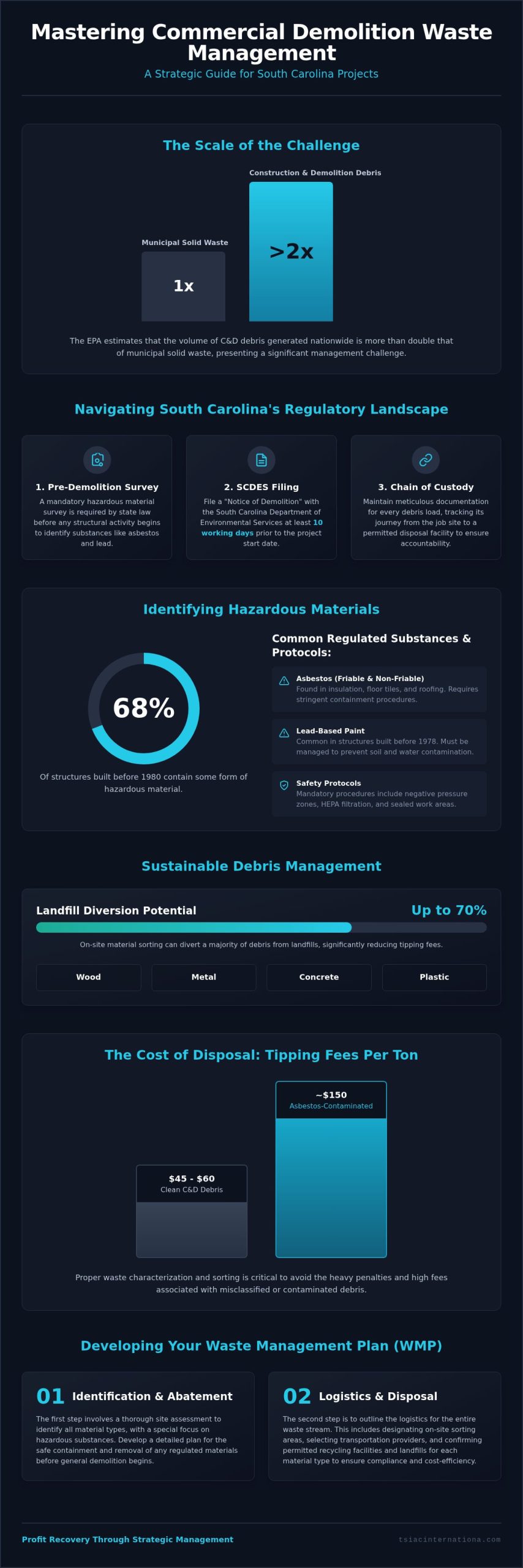
Steel stands as a pillar of the circular economy because it offers 100% recyclability without any loss in structural integrity or material properties. During a metal framing demolition project, this characteristic transforms what would be waste into a valuable commodity. Professional contractors implement a site-wide recycling plan at the earliest stages of mobilization. This strategy isn’t just about environmental stewardship; it’s a calculated move to reduce landfill tipping fees, which can consume a large portion of a project’s logistics budget. By diverting steel, aluminum, and copper from the waste stream, teams maintain a leaner, more efficient job site.

Tracking diversion rates has become a standard requirement for modern industrial projects. This data is essential for achieving LEED certification and meeting strict corporate sustainability goals. When dealing with mixed-material debris, professional crews use advanced mechanical separation techniques. They isolate metal components from wood, plastic, and composite materials to ensure that each waste stream is processed correctly. This level of precision prevents cross-contamination, ensuring that the maximum amount of material remains eligible for recovery rather than disposal.

The Metal Recovery Process

Maximizing the value of recovered materials requires a systematic approach to sorting. Crews separate ferrous metals, which are magnetic, from non-ferrous metals like copper and high-grade aluminum. Non-ferrous materials typically command higher market prices, so keeping them isolated is a priority. On-site processing involves using hydraulic shears and mobile balers to bundle the metal for transport. These machines compress the framing into dense, manageable units that foundries can easily process. To ensure a clean load, workers must remove contaminants such as insulation, adhesives, and drywall screws. Foundries often reject loads that contain more than 1-2% non-metallic debris, so the cleaning phase is critical for project success.

The Economic Case for Recycling

Recycling provides a direct financial benefit by helping to offset demolition costs through the sale of scrap metal. In many cases, the revenue generated from high-volume steel recovery can turn a high-cost removal into a more budget-friendly operation. This approach also lowers the carbon footprint of the new construction phase. Producing steel from recycled scrap uses approximately 75% less energy than manufacturing it from virgin iron ore. By partnering with specialized industrial haulers, contractors ensure that metal framing demolition remains a sustainable and economically viable solution for facility upgrades. This partnership guarantees that large-scale metal recovery happens quickly, keeping the project on schedule while maximizing the return on salvaged assets.

Ensuring Precision in Your Next Structural Project

Successful metal framing demolition requires more than just heavy machinery; it demands engineering precision and a disciplined approach to safety. Whether your site involves selective removal for a renovation or a total structural teardown, the process relies on strict hazardous material management and technical expertise. TSIA C International brings 15+ years of structural demolition experience to every job site. Our certified hazardous material abatement specialists ensure that every phase of the workflow meets rigorous industrial standards while protecting your property assets.

Sustainability isn’t an afterthought in modern construction. We implement a comprehensive 100% recycling program for all wood, metal, and plastic debris recovered during the project. This systematic management of materials reduces environmental impact and streamlines the transition to your next phase of development. You can trust our team to handle the most complex technical challenges with the calm confidence that comes from over a decade of specialized field work. We’re ready to apply our engineering-grade accuracy to your specific site requirements.

Get a Professional Quote for Your Metal Framing Demolition Project

We look forward to partnering with you to deliver a safe, efficient, and professional result.

Frequently Asked Questions

Is it possible to reuse metal studs after they have been demolished?

You can reuse metal studs if they remain straight and free of structural deformities like crimping or heavy corrosion. While direct reuse is possible for minor non-structural partitions, the industry standard focuses on recycling because steel maintains 100% of its metallurgical properties during the melting process. Contractors often find that the labor required to remove screws without damaging 25-gauge metal exceeds the cost of new materials.

How do I know if the metal framing in my building contains asbestos?

Metal studs don’t contain asbestos, but the joint compound, spray-on fireproofing, or thermal insulation attached to them often does in buildings constructed before 1986. You must conduct a certified hazardous material survey according to EPA NESHAP regulations before starting any metal framing demolition. A licensed inspector will take bulk samples of suspicious coatings to verify the presence of chrysotile or amosite fibers before crews enter the site.

What is the difference between a load-bearing and non-load-bearing metal wall?

You distinguish load-bearing walls by their gauge and structural connection to the floor or roof assembly. Load-bearing studs are typically 18-gauge or thicker, measuring at least 1.2 millimeters, while non-load-bearing partitions use 25-gauge steel. Structural walls also feature heavy-duty tracks and specialized fasteners designed to transfer vertical loads of 1,000 pounds or more per linear foot, making them critical to the building’s stability.

Do I need a special permit for metal framing demolition?

You need a permit for most metal framing demolition projects involving structural changes, fire-rated assemblies, or alterations to the building’s egress. Local building departments enforce International Building Code Section 105.1, which mandates permits for any work that impacts the life safety systems of a commercial space. Failing to secure a permit can result in fines exceeding $500 per day and a mandatory stop-work order from the local inspector.

Can metal framing be demolished while the building is still occupied?

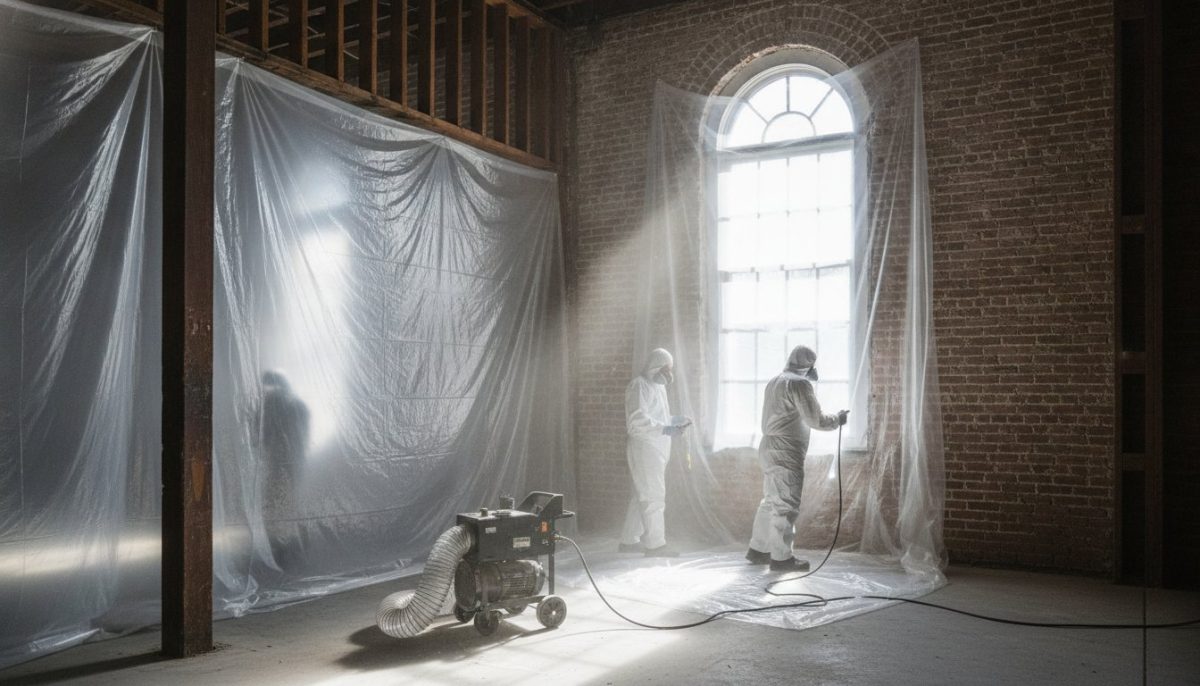
Demolition can proceed in occupied buildings if you implement strict dust and noise mitigation protocols to protect the safety of the public. OSHA Standard 1926.850 requires structural evaluations to ensure the safety of occupants in adjacent zones during the process. Crews use negative air machines with HEPA filters that capture 99.97% of airborne particles to maintain air quality while working behind floor-to-ceiling poly-plastic barriers.

How much does metal framing demolition typically cost per square foot?

Interior demolition costs for metal-framed spaces typically range from $2.50 to $5.50 per square foot based on 2023 RSMeans construction cost data. This price fluctuates depending on the height of the ceilings and the complexity of the electrical systems embedded within the wall cavities. Total project expenses also account for debris disposal fees, which can consume 15% of the total budget if the metal isn’t properly sorted for scrap value.

What are the most common safety risks when removing commercial steel framing?

The most frequent risks include lacerations from sheared steel edges and accidental contact with live electrical circuits hidden within the studs. Bureau of Labor Statistics data shows that nearly 20% of non-fatal construction injuries result from contact with objects or equipment. Workers must wear Level A4 cut-resistant gloves and use lockout-tagout procedures to neutralize every power source before they begin removing the metal tracks.

How long does it take to gut a 10,000 square foot metal-framed office space?

A 5-man professional crew can typically gut a 10,000 square foot metal-framed office in 7 to 10 business days. This timeline assumes a daily production rate of 1,200 square feet, which includes the removal of studs, tracks, and non-structural debris. If the project requires salvaging specific components or working around sensitive IT infrastructure, the schedule may extend by 3 days to accommodate the extra precision required.

Signs of Mold in Your House: The 2026 Property Owner’s Detection Guide

A single undetected leak can degrade the structural load-bearing capacity of timber framing by nearly 25 percent within just 14 days of moisture…

A single undetected leak can degrade the structural load-bearing capacity of timber framing by nearly 25 percent within just 14 days of moisture exposure according to 2024 building safety reports. You’ve worked hard to secure your property, and it’s natural to feel anxious when you suspect a hidden threat is silently undermining your investment or your family’s well-being. This 2026 Property Owner’s Detection Guide empowers you with the technical knowledge to identify the specific signs of mold in house environments before they necessitate a total structural overhaul.

We understand that uncertainty regarding remediation costs often leads to delayed action, but precision in early detection is your most effective cost-saving tool. This article breaks down the subtle biological indicators and moisture mapping techniques used by industry professionals. We’ll show you how to distinguish between common surface mildew and the deep-seated fungal growth that targets your building’s core. You’ll gain a clear, engineering-based perspective on moisture indicators and a definitive plan for securing a professional assessment to restore your home’s safety and structural integrity.

Key Takeaways

  • Distinguish between harmless surface mildew and destructive fungal colonies that digest organic building materials and compromise structural integrity.
  • Master the 12 visual and olfactory indicators to accurately identify the signs of mold in house before they escalate into costly property damage.
  • Explore the “Iceberg Effect” to detect hidden mold hazards lurking within wall cavities, crawl spaces, and attics that standard inspections often miss.
  • Learn why disturbing mold in older properties requires a specialized approach to avoid the simultaneous release of hazardous lead or asbestos fibers.
  • Understand the engineering-led “Source Control” philosophy and when selective demolition is the only viable path to permanent structural restoration.

What is Mold and Why is it a Structural Hazard?

Mold is a biological organism belonging to the fungi kingdom that serves a specific ecological purpose: the decomposition of organic matter. In a residential setting, this process targets building materials rich in cellulose, such as timber framing, drywall paper, and insulation backing. Identifying the early signs of mold in house structures is critical because these organisms don’t just sit on the surface. They actively digest the substrate they inhabit. This biological breakdown transforms rigid building components into soft, decaying matter, directly threatening the safety of the occupants.

The growth of Indoor mold relies on what engineers call the “Golden Triangle” of fungal development. This requires three specific environmental factors to align:

  • Moisture: Wood moisture content above 19% or relative indoor humidity exceeding 60%.
  • Organic Food Source: Materials like plywood, OSB, or the paper facing on gypsum boards.
  • Temperature: A range typically between 40 and 100 degrees Fahrenheit, which covers almost all climate-controlled interiors.

Property owners must distinguish between harmless surface mildew and destructive structural mold. Mildew is a superficial growth that stays on the surface and is easily removed. Structural mold colonies establish deep roots that compromise the load-bearing capacity of wooden joists and studs. If left unchecked, this biological activity can reduce a property’s market value by 10% to 25% and eventually lead to catastrophic structural failure.

The Biology of Decay: How Mold Eats Your Home

Mold spreads through microscopic filaments called hyphae. These structures penetrate porous materials like wood and drywall, acting much like the roots of a plant. This is why surface cleaning often fails to solve the problem. You might remove the visible spores, but the hyphae remain embedded deep within the material, ready to regrow as soon as moisture returns. According to industry standards, mold colonies can begin to form and compromise structural integrity within 24 to 48 hours of a water intrusion event. This narrow window makes rapid detection and professional intervention a necessity for asset protection.

Common Indoor Mold Species in US Residential Properties

Property owners typically encounter three primary genera: Cladosporium, Penicillium, and Aspergillus. These are prevalent in various climates and can grow on everything from carpets to HVAC ducts. While Stachybotrys chartarum, often called black mold, receives significant media attention, it requires constant saturation to thrive. From a technical perspective, the specific type of mold is often less critical than the total extent of the colony. A large-scale infestation of “common” mold presents a higher risk to the building’s skeletal framework than a small, isolated patch of a more notorious species. Identifying the signs of mold in house environments early allows for targeted remediation before the damage requires full-scale structural demolition.

The 12 Critical Signs of Mold in Your House

Identifying the signs of mold in house environments requires a systematic approach that prioritizes technical observation over guesswork. Fungal growth is a biological process that actively degrades the structural integrity of building materials through enzymatic breakdown. Property owners must recognize that by the time mold becomes visible, the underlying moisture issue has often been active for 48 to 72 hours. Detection involves monitoring for visual discoloration, distinct olfactory cues, and physical changes in material density. According to the New York State Department of Health in their guide, What You Need to Know About Mold, identification is the first step toward maintaining a safe indoor environment.

  • Discoloration: Black, green, or white patches that reappear after cleaning.
  • Fuzzy Textures: Velvety or filamentous growth indicating active spore release.
  • Leathery Patches: Thick, dense fungal mats often found on organic substrates like plywood.
  • Musty Odors: The release of microbial volatile organic compounds (mVOCs).
  • Bubbling Paint: Moisture trapped between the substrate and the coating.
  • Peeling Wallpaper: Adhesive failure caused by high localized humidity.
  • Warped Floorboards: Cellulose fibers swelling due to prolonged water absorption.
  • Respiratory Issues: Unexplained coughing or wheezing that improves when leaving the property.
  • Sick Building Syndrome: A cluster of symptoms, including headaches and fatigue, linked to indoor air quality.
  • Condensation: Persistent droplets on window frames or metal fasteners.
  • Warped Drywall: Soft spots or “crowning” in wall panels.
  • Cracked Grout: Degradation of porous masonry materials in high-moisture zones.

Visual Cues: Identifying Mold vs. Dirt or Water Stains

Distinguishing between a benign water stain and active fungal growth is vital for structural maintenance. A water stain typically presents as a dry, yellowish tan ring with a defined perimeter, whereas mold appears as irregular, textured spots that may spread over time. To verify structural damage, technicians use the Screwdriver Test; if a flathead screwdriver easily penetrates a wooden beam or baseboard with minimal pressure, the mold has already facilitated significant wood rot. Shadowing describes the dark lines that appear on walls when mold and dust particles accumulate specifically along the path of wall studs due to thermal bridging.

The Olfactory Profile: Tracking the Source by Scent

The scent of mold is a chemical byproduct of its metabolic cycle. These mVOCs become more pungent when the HVAC system is operational or when indoor humidity levels climb above 55%. A general “damp basement” smell suggests poor ventilation, but a sharp, earthy, or “rotten” odor usually indicates an active, dangerous infestation hidden from view. You can use your nose to pinpoint hidden leaks by sniffing along the base of cabinetry or behind heavy appliances where airflow is restricted. For property owners facing complex structural challenges, securing specialized technical solutions is the most reliable way to ensure long term safety and asset protection.

Signs of Mold in Your House: The 2026 Property Owner’s Detection Guide

Hidden Mold: Detecting Hazards Behind the Walls

Structural integrity and occupant safety depend on identifying what remains invisible to the naked eye. In the field of property inspection, experts refer to the “Iceberg Effect,” where visible spotting on a baseboard or ceiling represents only 10% of the total fungal mass. The remaining 90% typically thrives within wall cavities, floor assemblies, and ceiling voids. When you notice minor discoloration, it often signals a mature colony consuming the paper backing of drywall or the organic components of insulation. Utilizing a New York State Department of Health guide helps owners understand that scent and subtle structural changes are often the first reliable indicators of a problem.

Environmental signals provide the necessary data for a preliminary diagnosis. Condensation forming on window panes or cold-water pipes isn’t merely a plumbing nuisance; it’s a sign of high indoor humidity. When relative humidity levels sustain a point above 60%, the risk of hidden growth increases. Professional detection involves more than a visual sweep. Technicians use thermal imaging cameras to locate cold spots that indicate moisture intrusion behind finished surfaces. Moisture meters then provide a quantitative analysis, confirming if the substrate exceeds the 15% moisture threshold required for mold to germinate. These tools allow for a non-destructive assessment of the signs of mold in house structures.

Crawl Space and Basement Indicators

Crawl spaces and basements are the most neglected zones in 70% of residential properties. One primary indicator of trouble is efflorescence, a white, crystalline salt deposit on concrete walls. While efflorescence itself isn’t mold, it proves that moisture is migrating through the foundation, creating a habitat for fungi. Property owners should inspect fiberglass insulation for a “heavy” or sagging appearance. This physical deformation occurs when the material absorbs moisture from the air. Spores often utilize “upward migration,” where the stack effect pulls contaminated air from the crawl space through floor joists and into the primary living areas of the home.

HVAC Systems and Ductwork Contamination

The HVAC system serves as the building’s respiratory network, making it a critical point for cross-contamination. Mold growth on supply vents or around air conditioning coils often points to a failure in the condensate drainage system or a lack of proper filtration. If spores reach the plenum or return air registers, the mechanical system distributes them throughout every room within minutes of operation. You should suspect a deep-seated issue if a musty odor intensifies when the fan engages. These mechanical signs of mold in house systems require immediate technical remediation to prevent the spread of spores to previously unaffected building materials.

The Dangerous Intersection: Mold, Lead, and Asbestos

Detecting common signs of mold in house environments often leads to the discovery of deeper structural hazards. In older properties, moisture doesn’t just invite fungal growth; it actively destabilizes legacy building materials. When water penetrates walls or ceilings, it triggers a chain reaction that compromises the integrity of asbestos-containing materials (ACM) and lead-based coatings. This overlap creates a high-risk scenario where simple mold cleanup can inadvertently release toxic fibers or dust into the air.

Professional remediation requires a comprehensive hazardous material abatement strategy. Without this integrated approach, property owners risk violating EPA and OSHA regulations while endangering occupants. The presence of mold acts as a catalyst for the deterioration of hazardous substrates, making it impossible to address one without disturbing the other. Engineering controls must be established to manage both biological and mineral-based toxins simultaneously.

Why Mold and Asbestos Often Appear Together

Properties constructed before 1980 frequently utilize materials that serve as both a food source for mold and a carrier for asbestos. Acoustic ceiling tiles, often found in basements or commercial spaces, are porous enough to trap moisture and support mold colonies while containing friable asbestos fibers. Similarly, vinyl floor mastic, which can contain up to 25% chrysotile asbestos, often fails when subfloor moisture levels rise, leading to mold growth beneath the tiles. Attempting DIY mold removal in these environments is dangerous. Disturbing these materials without containment releases microscopic fibers that cause long-term respiratory damage. For detailed regulatory requirements, consult our asbestos removal safety guide to ensure compliance during renovations.

Managing Lead Paint in Mold-Impacted Areas

Lead-based paint, common in homes built before 1978, relies on a strong bond to the substrate to remain stable. Moisture-driven mold growth compromises this bond through hydrostatic pressure and chemical degradation. As mold spreads, it causes the lead-based paint to flake, peel, or pulverize into toxic dust. Handling these “dual-threat” projects requires specialized PPE, including P100 respirators and disposable suits, to prevent cross-contamination. We define “co-remediation” as the safest path for historic property preservation, as it addresses biological and chemical hazards through a single, controlled engineering plan. If you’ve identified physical signs of mold in house structures, you must account for these underlying toxins before starting any demolition or abrasive cleaning.

Protect your investment and your health by ensuring your remediation plan covers all hazardous variables. Contact TSIA C International for professional structural hazard management.

Professional Remediation and Structural Restoration

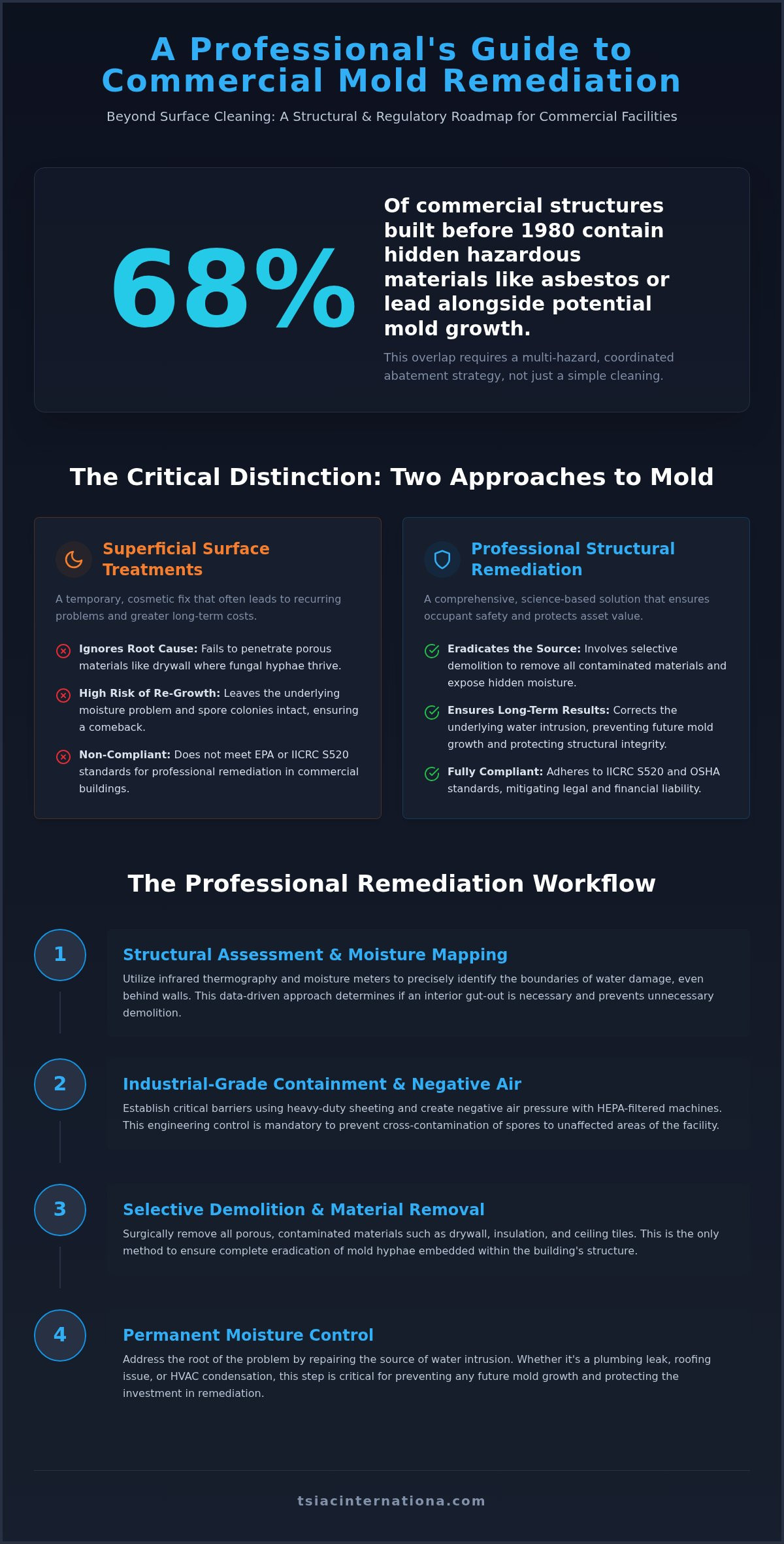
Effective mold remediation requires more than surface-level cleaning. It demands a rigorous engineering approach centered on source control. If you identify signs of mold in house, your primary objective is identifying and stopping the moisture intrusion. Removing fungal growth without addressing a 2024 plumbing leak or a faulty HVAC seal guarantees recurrence. TSIAC International prioritizes structural integrity by evaluating whether materials require simple sanitization or selective demolition. This strategic choice prevents the unnecessary destruction of sound structures while ensuring every spore colony is physically extracted. We maintain strict control over the environment using negative air pressure machines and HEPA filtration systems that capture 99.97% of particles down to 0.3 microns. This containment ensures that agitated spores don’t migrate to unaffected areas of the property.

The Professional Remediation Workflow

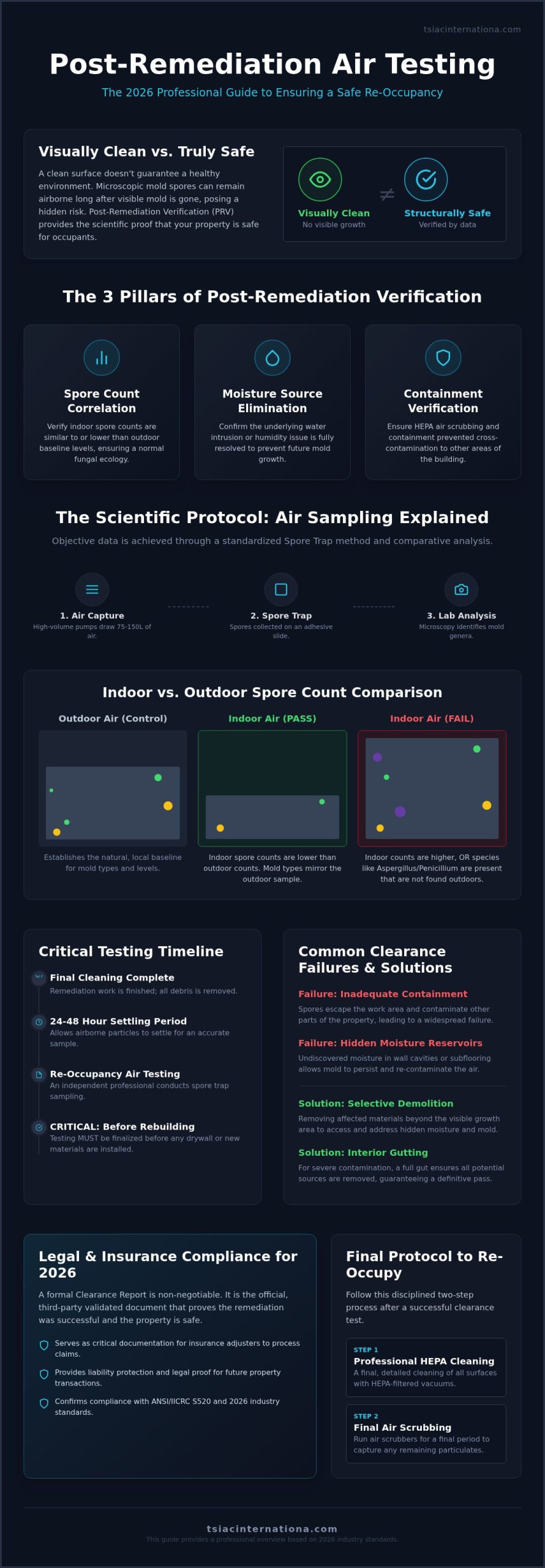
Professional remediation follows a precise sequence to prevent cross-contamination. Technicians establish containment zones using 6-mil fire-retardant polyethylene sheeting. For severe infestations, we utilize a gut-to-stud approach. This involves stripping away contaminated drywall and insulation to expose the framing. Once the physical removal is complete, we perform Post-Remediation Verification (PRV) testing. Independent laboratory analysis of air and surface samples confirms the environment is safe for re-occupancy before we begin any reconstruction. We don’t guess; we verify with data.

Material Salvage and Environmental Responsibility

Deciding what stays and what goes depends on material porosity. Non-porous materials like structural steel and glass are typically salvageable through abrasive cleaning. Porous materials like drywall and carpeting absorb moisture and fungal hyphae. These must be discarded to prevent future health risks. TSIAC remains committed to recycling demolition debris whenever possible. We separate clean timber and metal from contaminated waste to minimize the environmental footprint. The final restoration phase involves sealing treated surfaces with antimicrobial coatings and rebuilding the structure to meet 2026 building codes. This ensures the property isn’t just clean, but structurally sound for the long term.

Securing Your Property Against Structural Contaminants

Identifying the 12 critical signs of mold in house is the first step toward protecting your property’s long-term structural health. Mold rarely acts alone. It often signals deep-seated moisture issues or resides alongside hazardous materials like lead and asbestos in structures built before 1978. Ignoring these indicators leads to compromised load-bearing elements and deteriorating air quality. TSIAC International brings 15+ years of hazardous material abatement expertise to every site. Our team maintains specialized certifications for asbestos, lead, and mold remediation, ensuring every phase of the process meets rigorous industry safety standards. We provide comprehensive structural demolition and interior gutting capabilities for complex projects requiring extensive intervention. Technical precision in remediation isn’t a luxury; it’s a requirement for property viability. We specialize in finding solutions for difficult locations where standard contractors often fail. Professional assessment provides the technical clarity needed to restore safety and structural stability to your home. Contact TSIAC International for a Professional Hazardous Material Assessment to ensure your living environment remains secure and compliant for years to come.

Frequently Asked Questions

Is mold in a house always a health risk?

Mold exposure consistently presents physiological risks, particularly for the 25 percent of the population with genetic markers sensitive to biotoxins. Inhalation of spores triggers inflammatory responses and respiratory distress. Even non-toxic species compromise indoor air quality by releasing volatile organic compounds. Maintaining a sterile environment is a technical necessity for long-term occupant safety and structural integrity.

Can I remove mold myself with bleach or vinegar?

Bleach is ineffective for remediating mold on porous substrates like drywall or timber because its chemical structure prevents deep penetration. The 90 percent water content in household bleach often feeds the remaining hyphae, leading to regrowth within 14 days. Professional standards dictate physical removal or abrasive cleaning rather than topical applications that fail to address the root fungal colony.

How much mold is considered “too much” for a homeowner to handle?

Professional intervention is required if the contaminated surface area exceeds 10 square feet, according to EPA safety protocols. Attempting to clean larger areas without industrial-grade containment systems risks dispersing millions of spores per cubic meter into the ventilation. When contamination reaches this scale, the technical complexity of the cleanup necessitates specialized HEPA filtration and negative pressure zones.

What happens if I ignore signs of mold in my basement?

Ignoring signs of mold in house foundations leads to the gradual decomposition of organic building materials and load-bearing wooden components. Unchecked moisture levels above 60 percent relative humidity allow colonies to double in size every 48 to 72 hours. This neglect eventually compromises the building’s structural certification and significantly increases the technical scope of future restorative engineering efforts.

Does homeowners insurance typically cover mold remediation?

Insurance coverage depends on whether the mold resulted from a “covered peril,” such as a pipe bursting within the last 14 days. Most standard policies exclude damage caused by long-term humidity or lack of maintenance. Property owners should review their specific riders, as 80 percent of standard policies require additional endorsements to cover comprehensive fungal remediation and structural drying.

How long does the professional mold remediation process take?

A standard professional remediation project typically spans 3 to 7 days depending on the contamination’s severity. This timeline includes 24 hours for initial site stabilization and containment setup, followed by active removal and air scrubbing. The final stage requires a mandatory waiting period for post-remediation verification testing to ensure spore counts have returned to baseline outdoor levels.

What is the difference between mold and mildew in a house?

Mold is a multicellular fungus that penetrates deep into structural substrates, while mildew is a superficial growth that remains on the surface. While mildew is typically flat and gray or white, mold exhibits fuzzy or slimy textures and appears in various colors. Mold poses a much greater threat to the building’s structural components due to its invasive growth patterns.

Can mold grow inside my walls without me seeing it?

Mold frequently colonizes wall cavities where hidden pipe leaks or condensation meet insulation, remaining invisible to the naked eye. Identifying these hidden signs of mold in house structures requires specialized diagnostic tools like infrared thermography or moisture meters. Often, the colony is only discovered after it has already compromised 15 percent or more of the interior wall assembly.

Professional Concrete Slab Removal Services: The 2026 Engineering Guide

A single miscalculation in vibration frequency during demolition can compromise the structural integrity of an entire adjacent facility in less than…

A single miscalculation in vibration frequency during demolition can compromise the structural integrity of an entire adjacent facility in less than sixty seconds. You likely recognize that clearing a complex site involves far more than brute force. It requires a surgical approach to avoid unforeseen structural damage and the escalating landfill fees that, according to 2024 industry data, now account for up to 40% of total demolition project costs. Securing high-tier concrete slab removal services is no longer just about clearing space; it’s about protecting the long-term viability of your next build and ensuring zero damage to sub-slab utilities.

By engaging with our 2026 Engineering Guide, you’ll master the technical requirements, safety protocols, and recycling standards necessary for professional execution. We’ve designed this resource to help you ensure your site is cleared safely and with maximum efficiency. We’ll examine the specific methodologies for precision vibration control, the latest regulatory compliance frameworks, and the logistics of transforming 100% of your concrete waste into high-grade reusable aggregate to meet modern sustainability mandates.

Key Takeaways

  • Distinguish between basic demolition and the engineered removal strategies required for complex commercial and industrial structural projects.
  • Evaluate the efficiency of advanced technical methods, including robotic demolition and hydraulic breaking, for high-risk or confined work zones.
  • Identify and mitigate critical sub-slab hazards such as post-tensioned (PT) cables and essential utility lines to maintain site safety.
  • Adopt sustainable “Zero Waste” disposal standards by learning how to sort and repurpose crushed concrete into high-quality road base or aggregate.
  • Understand how to leverage professional concrete slab removal services and fixed-price contracts to ensure precision in complex demolition environments.

Defining Professional Concrete Slab Removal Services

Professional concrete slab removal services represent a strategic shift from brute-force demolition toward precision engineering. While basic breaking relies on high-impact force that can damage neighboring structures, an engineered approach prioritizes the integrity of the entire site. To understand the complexity involved, one must first establish the fundamentals: What is a Concrete Slab? It’s a critical structural element that distributes loads across the ground or a supporting frame. In industrial environments, removing these elements requires sophisticated vibration mitigation to protect sensitive machinery and precision-cut edges to ensure seamless transitions for new pours.

Specialized contractors utilize diamond-tipped sawing and hydraulic bursting to manage energy transfer during the extraction. This level of control prevents micro-fracturing in adjacent structures that often goes unnoticed until years later. For 2026 projects, maintaining site safety standards means managing crystalline silica dust through HEPA-filtered vacuum systems and ensuring sub-grade protection to avoid soil compaction issues. It’s about maintaining a controlled environment where the demolition doesn’t compromise the future build.

When to Replace vs. Remove Concrete

Engineers evaluate structural failure points such as deep settlement exceeding 2 inches or frost heaves that have compromised the internal reinforcement mesh. While slab-jacking offers a temporary fix for minor sinking, it cannot restore the structural capacity of a shattered slab. Structural slab failure is the point where repair costs exceed 50% of replacement. At this threshold, total removal becomes the only fiscally responsible path for facilities managers who need to maintain long-term asset value.

The Scope of Modern Removal Projects

Project scale varies from residential driveway excavations to 100,000-square-foot warehouse floor replacements. Interior gutting projects often involve reinforced slabs where weight-bearing columns must remain undisturbed, requiring surgical precision. Understanding the broader demolition process south carolina firms follow is vital for coordinating waste logistics and site preparation. Whether it’s a high-precision cleanroom or a heavy-duty loading dock, modern concrete slab removal services provide the technical discipline necessary for the next phase of construction. Every square foot removed is a calculated step toward a fresh, stable foundation.

Industrial Equipment and Removal Methods

Modern concrete slab removal services have evolved beyond simple destruction to focus on engineering precision. While traditional pneumatic jackhammering remains effective for residential walkways or spaces under 150 square feet, industrial projects require hydraulic breaking systems. A carrier-mounted hydraulic hammer delivers up to 1,500 blows per minute, achieving a 300% increase in demolition speed compared to manual methods. This efficiency is vital for maintaining tight 2026 construction schedules.

For high-risk environments or confined subterranean levels, robotic demolition units provide a safer alternative. These remote-controlled machines allow operators to stand 50 feet away from potential fall zones or structural hazards. When dealing with heavily reinforced slabs thicker than 24 inches, diamond wire sawing becomes the primary choice. This method uses a pulley system and diamond-beaded wire to cut through steel-heavy concrete without generating the micro-fractures often caused by percussive tools. It’s the most reliable way to ensure the remaining slab edges stay structurally sound.

Heavy Machinery for Large-Scale Clearance

Large clearance operations rely on a combination of skid steers and compact excavators. These machines utilize specialized attachments like hydraulic shears and pulverizers to break material into manageable sizes for hauling. To protect adjacent structures, engineers implement vibration control measures, monitoring peak particle velocity to ensure it remains below 0.5 inches per second. Dust suppression is equally critical for compliance. Integrated water-mist systems keep respirable silica levels below the OSHA limit of 50 micrograms per cubic meter. This focus on site safety aligns with the EPA Guidelines for C&D Materials, ensuring that demolished concrete is properly sorted for recycling rather than filling local landfills.

Selective Demolition Techniques

Selective demolition involves the surgical removal of specific slab sections to access utilities or install new footings. This approach ensures the building’s structural shell stays intact while allowing for modern upgrades. Slab-cutting technology, utilizing walk-behind saws with 30-inch blades, creates clean expansion joints and borders that prevent cracks from migrating to preserved areas. These precision methods are often integrated into broader commercial interior gutting services where asset protection is the priority. If you’re planning a complex renovation, our team can help you evaluate your structural requirements to determine the most efficient removal path.

Professional Concrete Slab Removal Services: The 2026 Engineering Guide

Critical Safety: Structural Integrity and Sub-Slab Risks

Professional concrete slab removal services require more than brute force; they demand a surgical understanding of the slab’s internal composition. In modern construction, post-tensioned (PT) cables present the most significant life-safety risk. These high-strength steel strands are often stressed to approximately 33,000 pounds of force. Accidentally severing a PT cable during demolition results in an explosive release of energy, potentially causing catastrophic injury or compromising the structural stability of the entire building. Professional crews utilize Ground-Penetrating Radar (GPR) as a non-negotiable prerequisite. By employing high-frequency 1600 MHz antennas, technicians map the precise depth and orientation of cables and conduits before the first impact occurs.

The #1 objection to professional intervention is the perceived cost-saving of DIY removal. However, unguided demolition often leads to foundational damage that costs 5 to 10 times more to remediate than the initial removal. Manual jackhammering without vibration monitoring can send shockwaves through the soil, causing settlement in adjacent footings or cracking in load-bearing walls. It’s a risk that professional concrete slab removal services mitigate through engineering-led planning and site-specific risk assessments.

Hazardous Material Awareness

Older industrial and commercial slabs often hide legacy contaminants. Mastics used for floor tiles before 1980 frequently contain chrysotile asbestos, while industrial coatings applied before 1978 may have high lead concentrations. Disturbing these materials without containment creates an inhalation hazard for everyone on-site. It’s vital to secure hazardous material abatement south carolina protocols before the demolition phase begins to ensure compliance with EPA and OSHA standards. We prioritize these inspections to protect both the environment and the workers.

Vibration and Noise Mitigation

Protecting neighboring structures is a technical requirement, not a courtesy. Technicians use Peak Particle Velocity (PPV) sensors to monitor vibrations in real-time. If levels exceed 0.5 inches per second near sensitive masonry, operations halt immediately to adjust the methodology. For commercial tenant improvements, scheduling demolition during off-peak hours, typically 10:00 PM to 6:00 AM, minimizes the impact on business continuity. This ensures that high-decibel activities don’t disrupt sensitive laboratory equipment or data centers located in adjacent suites.

Environmental Responsibility: Disposal and Recycling

Modern engineering demands more than just demolition; it requires a circular economy approach. Professional concrete slab removal services now prioritize a ‘Zero Waste’ objective, where 95% of extracted materials are diverted from landfills. This process starts with meticulous sorting at the source. Technicians separate clean concrete from contaminants like vapor barriers and reinforcement steel to ensure the purity of the secondary product. It’s a logistical challenge that requires discipline, but it ensures that demolition debris becomes a resource rather than a liability.

Once sorted, the concrete doesn’t sit in a waste pile. High-impact crushers break the slabs into various fractions to create recycled concrete aggregate (RCA). In 2025, industry data showed that using RCA as a road base reduces virgin aggregate mining by 40%. It also slashes project carbon footprints by minimizing the transport of new materials to the site. Every ton of recycled concrete saves roughly 1,300 gallons of water that would otherwise be used in mining and processing virgin stone. This systematic reuse is the backbone of sustainable infrastructure development.

Managing Demolition Debris

Logistics dictate whether sorting happens on-site or at a specialized facility. On-site crushing works best for projects exceeding 5,000 square feet because it eliminates hundreds of heavy truck trips. Recovering metal reinforcements is a critical financial and environmental step; rebar is extracted using magnetic separators and sent to secondary markets for smelting. Closed-loop concrete recycling is the process of using old slabs as new structural fill. This ensures that the material cycle remains within the construction ecosystem without requiring external inputs or additional transport costs.

Compliance and Permitting

Handling debris involves strict adherence to local environmental regulations. Commercial demolition contracts now mandate a Waste Management Plan (WMP) that tracks every ton of material from the site to its final destination. This documentation is vital for securing LEED certification credits, specifically under the Material and Resources (MR) category. Projects achieving 75% diversion can earn up to two points toward their final rating. If hazardous materials like lead-based coatings are present, crews must follow EPA-mandated disposal protocols and maintain a chain-of-custody manifest for 30 years. This level of precision protects the client from future liability while upholding global sustainability standards.

Consult with our specialists for compliant concrete slab removal services today.

Planning Your Project with TSIAC International

TSIAC International manages concrete slab removal services through a lens of engineering precision. Since 2009, the firm has specialized in fixed-price structural demolition contracts. This model eliminates the financial volatility often associated with site work. By conducting exhaustive pre-demolition surveys, TSIAC identifies hidden variables like sub-slab utilities or unexpected reinforcement densities before the first hammer drops. The team prioritizes environmental stewardship, ensuring that 90% of concrete debris is diverted from landfills through on-site crushing or certified recycling streams. This approach guarantees that your project adheres to both budgetary constraints and modern sustainability mandates.

Why Experience Matters in Concrete Removal

Removing industrial slabs within active manufacturing plants requires more than just heavy machinery. It demands a surgical approach to vibration control and dust mitigation. TSIAC’s history includes complex projects where 12-inch reinforced slabs were removed while adjacent production lines remained operational. Operating as a single-source provider for both hazardous material abatement and demolition streamlines the project schedule. You won’t have to coordinate between separate contractors for asbestos tile removal and structural slab work. This integrated methodology is part of the TSIAC International Charleston standard, which emphasizes safety in high-risk environments. Their 15 years of field experience allows them to solve logistical puzzles in “impossible” locations where traditional equipment cannot reach.

Requesting a Professional Estimate

Accuracy in a quote depends on technical data. When you contact TSIAC, provide specific details including slab thickness, the presence of post-tension cables, and current site access dimensions. Mobilization typically occurs within 10 to 14 business days of contract execution, depending on the complexity of the utility disconnects required. For example, a standard 5,000-square-foot industrial slab removal often reaches completion in 5 to 7 working days. To prepare your site for the crew, follow these steps:

  • Clear all movable equipment and debris from the work zone.
  • Verify that all sub-slab electrical and plumbing lines are locked out and tagged out.
  • Ensure there is a designated area for debris load-out and heavy equipment staging.
  • Review the structural drawings to confirm the location of load-bearing footings.

A well-prepared site prevents delays and ensures the safety of the demolition team. Contact TSIAC International for a professional site evaluation to begin the engineering assessment of your facility and secure a fixed-price proposal for your concrete slab removal services.

Securing Structural Integrity for Your Next Project Phase

Successful concrete slab removal services require more than just heavy machinery. It’s a technical discipline where structural integrity meets environmental stewardship. In 2026, project success hinges on mitigating sub-slab risks and ensuring that hazardous materials like lead or asbestos are managed by fully licensed professionals. TSIAC International brings over 15 years of selective demolition expertise to every site. We don’t just clear the ground; we protect the future of your build through engineering precision. Our commitment to sustainability is backed by data, as we consistently achieve a 90% or higher material diversion rate through on-site recycling. This approach reduces landfill waste and optimizes project logistics. Whether you’re dealing with complex industrial foundations or sensitive structural retrofits, you need a partner who views every challenge as a solvable equation. Our team specializes in navigating impossible locations where others hesitate. Let’s ensure your site is prepared for its next phase with the highest safety standards in the industry.

Request a Fixed-Price Concrete Removal Quote from TSIAC International

Your project deserves the reliability and precision that only a seasoned engineering partner can provide.

Frequently Asked Questions

How much does professional concrete slab removal cost per square foot?

Professional concrete slab removal costs typically range from $2 to $6 per square foot based on 2024 industry benchmarks. This price fluctuates depending on the slab’s thickness and whether it contains steel reinforcement like rebar. For a standard 4-inch thick residential slab, you’ll likely pay on the lower end of that scale. Thicker industrial slabs require heavier machinery, which increases the total project expenditure.

Can I remove a concrete slab myself with a rented jackhammer?

You can remove a concrete slab yourself, though it’s rarely efficient for areas exceeding 100 square feet. Renting a 60-pound jackhammer costs roughly $100 per day, but manual labor often leads to uneven debris sizes. Professional concrete slab removal services use hydraulic breakers that complete the work 70% faster than manual methods. Improper technique also risks damaging underground utilities buried less than 12 inches deep.

How do you check for post-tension cables before breaking concrete?

Technicians use Ground Penetrating Radar (GPR) to locate post-tension cables before any demolition begins. This non-destructive testing method provides real-time data on cable depth and spacing with 98% accuracy. If GPR isn’t sufficient, X-ray imaging offers a clearer view of the internal structure. Identifying these cables is critical because a snapped post-tension strand releases enough energy to cause catastrophic structural failure.

What happens to the concrete debris after it is removed from the site?

Concrete debris is hauled to specialized recycling centers where it’s crushed into various grades of aggregate. The EPA reports that recycling concrete saves approximately 300 million tons of natural resources annually. This crushed material often finds a second life as a sub-base for new roads or parking lots. Utilizing professional concrete slab removal services ensures that 95% of your waste material is diverted from landfills into sustainable construction cycles.

How long does it take to remove a standard 20×20 concrete driveway?

A professional crew typically removes a standard 20×20 driveway in 6 to 10 hours. This timeline includes the initial breaking, loading the debris into a 20-yard dumpster, and final site clearing. If the concrete is more than 6 inches thick or features heavy mesh reinforcement, the process might require a second day. Efficient logistics and high-capacity machinery are the primary factors in meeting these tight schedules.

Is a permit required for concrete slab removal on a private property?

Permit requirements depend on your local building department, but 85% of urban areas mandate a demolition permit for any slab larger than 200 square feet. You’ll need to submit a site plan that shows where the debris will go and how you’ll protect neighboring properties. Fines for unpermitted work often exceed $1,000 in major metropolitan areas. Always check your city’s municipal code before starting any heavy demolition work.

What are the risks of removing concrete near an existing foundation?

The biggest risks include structural settlement and damage to the foundation’s waterproofing membrane. Vibrations from heavy machinery can travel through the soil and create hairline fractures in adjacent walls as small as 0.5 millimeters. Engineering standards suggest maintaining a 24-inch buffer zone where only hand tools are used to prevent impact damage. Careful planning ensures the soil remains stable and the existing structure’s integrity stays intact.

Finding a Trustworthy Abatement Contractor: The 2026 Property Owner’s Guide

According to EPA enforcement reports from 2023, non-compliance with hazardous material regulations resulted in over $25 million in civil penalties…

According to EPA enforcement reports from 2023, non-compliance with hazardous material regulations resulted in over $25 million in civil penalties across the construction sector. You likely understand that managing a property containing asbestos, lead, or mold is more than a logistical hurdle; it’s a significant liability that affects both your conscience and your balance sheet. The anxiety over potential health risks for your tenants or the threat of a sudden OSHA audit is a reality for owners dealing with infrastructure built before 1980.

We’re here to provide clarity. This guide focuses on the critical steps for finding a trustworthy abatement contractor who prioritizes engineering precision over cutting corners. You’ll learn how to secure a certified-clean site while ensuring your property remains fully compliant with evolving 2026 safety standards. We’ll examine the specific certifications required for modern projects, the red flags often hidden in technical quotes, and the essential documentation needed to facilitate a seamless transition to the demolition phase.

Key Takeaways

  • Learn to verify non-negotiable credentials, such as state-specific licensing and bonding, to ensure your project meets 2026 regulatory standards.
  • Discover the critical steps for finding a trustworthy abatement contractor who prioritizes controlled containment and remediation over simple material removal.
  • Understand how to analyze project quotes to identify red flags, such as suspiciously low bids that may indicate dangerous safety shortcuts or illegal disposal.
  • Identify the essential physical safety measures, including polyethylene containment barriers and air filtration, required for a compliant and hazard-free job site.
  • Explore the benefits of integrated remediation services that combine hazardous material removal with complex structural demolition for maximum project efficiency.

The High Stakes of Finding a Trustworthy Abatement Contractor

Managing a property in 2026 requires more than just aesthetic maintenance; it demands a rigorous approach to environmental safety. When hazardous materials like asbestos or lead-based paint are discovered, the situation shifts from a standard renovation to a high-stakes engineering challenge. Many owners mistake abatement for simple demolition. In reality, it’s a meticulously controlled containment and remediation process. Finding a trustworthy abatement contractor is the only way to ensure these toxins don’t migrate from a localized area into the building’s entire HVAC system.

General contractors often possess broad construction knowledge, but they’re legally and technically insufficient for hazardous material handling. They lack the specialized HEPA-filtered vacuum systems, negative air pressure machines, and decontamination chambers required by OSHA Part 1926.1101. Relying on an uncertified team creates a legal liability shift. Under federal “cradle-to-grave” statutes, the property owner remains responsible for improper hazardous waste disposal, even if a third party performed the work. If a contractor dumps asbestos-containing material in a standard landfill, the EPA can hold the owner liable for the entire cleanup cost. Physical risks are equally daunting. Improper handling leads to secondary contamination, where microscopic particles settle in carpets and ductwork, creating long-term health hazards for every future occupant.

Abatement vs. Remediation: Understanding the Difference

While people use the terms interchangeably, they represent distinct technical protocols. Asbestos abatement focuses on the total removal or permanent encapsulation of fibers. Lead remediation involves stabilizing or removing lead-based paint to prevent dust inhalation. Mold mitigation centers on structural drying and spore removal. The scope of work changes based on the specific hazardous material identified because each substance reacts differently to disturbance. Abatement is a highly regulated engineering control process designed to isolate and eliminate hazardous materials while preventing environmental cross-contamination. Following established Asbestos abatement procedures ensures that microscopic fibers don’t become airborne during the removal phase.

The Consequences of Cutting Corners

The financial impact of hiring an unqualified crew is often immediate and severe. EPA civil penalties for National Emission Standards for Hazardous Air Pollutants (NESHAP) violations can exceed $37,000 per day. Beyond fines, a failed air clearance test can halt a multi-million dollar renovation for weeks. If a Post-Abatement Air Clearance (PAAC) doesn’t meet the 0.01 fibers per cubic centimeter threshold, the contractor must re-clean the entire site at the owner’s expense. Long-term property value also suffers. Without a certified waste manifest and a final clearance report, prospective buyers or lenders will likely view the asset as a “distressed” property, often leading to a 10% to 15% reduction in market valuation. Finding a trustworthy abatement contractor protects the physical structure and the financial equity of the investment.

The Credentials Checklist: Non-Negotiables for 2026

Success in hazardous material removal depends on technical precision and legal adherence. When you’re finding a trustworthy abatement contractor, your first task involves auditing their professional credentials. State-specific licensing is the foundation of this process. Every legitimate firm must hold a current license specifically for asbestos or lead abatement, which you can verify through state regulatory databases. These licenses confirm the contractor understands the 2026 protocols for containment and disposal. Identifying these specific documents is the most reliable way of finding a trustworthy abatement contractor who respects both your budget and your health.

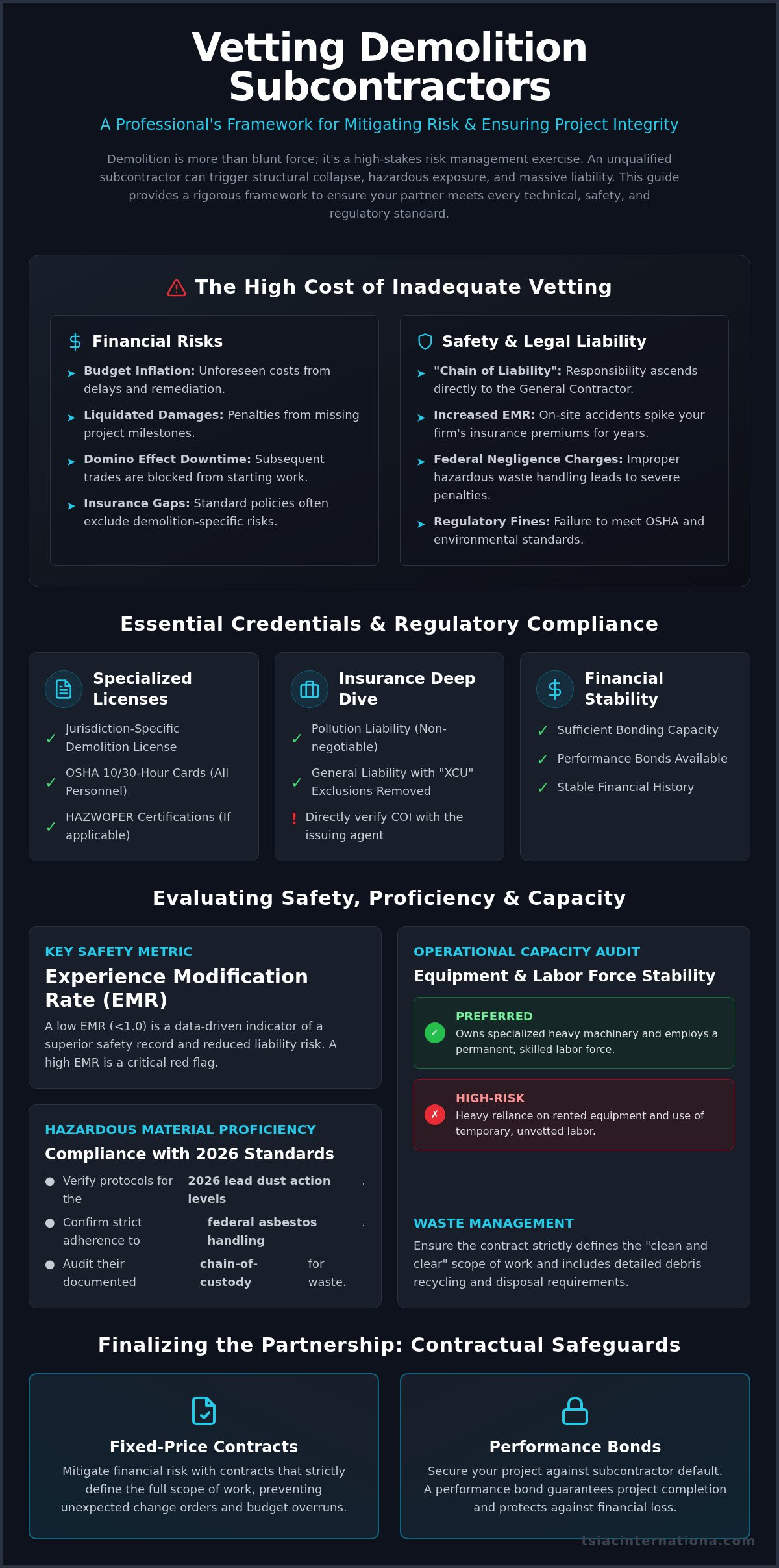
Worker safety and site supervision are equally critical. Each person on your property must possess up-to-date, EPA-approved training certificates. This ensures they follow OSHA’s Asbestos Standard for the Construction Industry, which mandates specific work practices and the presence of a “competent person” to oversee high-risk tasks. Without these certifications, you risk both legal liability and environmental contamination. Bonding requirements also provide a financial safety net. A performance bond ensures the project reaches completion, while a payment bond guarantees that all subcontractors and material suppliers receive their dues, preventing mechanics’ liens on your property.

Verifying Insurance and Bonding

Don’t accept a verbal confirmation of insurance. You need a Certificate of Insurance (COI) that specifically lists “Pollution Liability.” Standard general liability policies often contain “Total Pollution Exclusions,” meaning they won’t cover a spill or fiber release. It’s better to choose an “Occurrence-Based” policy over a “Claims-Made” policy. Occurrence-based coverage protects you even if a claim is filed years after the work ends, provided the incident happened during the policy period. Always request direct verification from the insurance carrier to confirm the policy is active and paid in full.

Modern Compliance Documentation

A project’s paper trail is as important as the physical removal. For commercial renovations, NESHAP (National Emission Standards for Hazardous Air Pollutants) requires a 10-day notification to the EPA before work begins. Once the project concludes, you must receive a Waste Shipment Record (WSR) or disposal manifest. This document proves the hazardous waste reached a licensed landfill. Finally, never accept a project as “complete” without a clearance letter from an independent, third-party laboratory. This lab should perform aggressive air sampling to confirm the area is safe for re-occupancy. If you need a partner who prioritizes these complex technical requirements, focus on firms with a proven track record in high-stakes environments.

Finding a Trustworthy Abatement Contractor: The 2026 Property Owner’s Guide

Vetting the Bid: Comparing Quotes Beyond the Bottom Line

Selecting a partner based solely on the lowest price often leads to catastrophic failure. In the abatement industry, an unusually low bid usually indicates that a contractor is cutting corners on labor protection or bypassing legal disposal fees. Finding a trustworthy abatement contractor requires a forensic look at the line items within a proposal. If a quote lacks specific costs for 6-mil polyethylene sheeting, HEPA-filtered negative air machines, or specialized decontamination units, the contractor likely intends to skip these critical safety layers.

A professional Scope of Work must be granular. It should specify a minimum of four air changes per hour within the containment zone to maintain negative pressure. This isn’t just a suggestion; it’s a technical requirement to prevent hazardous fibers or particles from migrating to clean areas of the property. You should also demand an equipment list that includes HEPA vacuums certified to capture 99.97% of particles down to 0.3 microns. Without these tools, the contractor is simply moving dust around your building rather than removing it.

Questions to Ask During the Site Walk-Through

During the initial inspection, watch how the contractor evaluates the structural layout. Ask these specific questions to gauge their technical competence:

  • How will you establish negative pressure and contain the work area? Look for mentions of manometer monitoring and physical barriers.
  • What is your specific plan for the safe transport of hazardous materials? They must describe a path that avoids high-traffic zones.
  • Who is the independent lab performing the final air clearance testing? A trustworthy firm never tests their own work; they use a third-party laboratory to ensure total transparency.

Analyzing the Disposal Plan

The liability for hazardous waste remains with the property owner until it reaches its final destination. You must confirm the contractor uses certified hazardous waste landfills and provides a waste shipment record for every load. All debris must be double-bagged in 6-mil bags, goose-neck sealed with duct tape, and labeled according to federal EPA and OSHA standards. For projects involving Hazardous Material Abatement in South Carolina, contractors must also adhere to specific DHEC regulations regarding transport manifests.

Finally, evaluate the proposed timeline. Professional abatement requires meticulous setup and mandatory settling periods for airborne dust. A contractor promising to finish a 1,000-square-foot lead or asbestos project in a single day is likely ignoring the 24-hour waiting period often required before final air clearance testing can begin. Precision takes time, and speed shouldn’t come at the expense of your structural integrity or health.

Red Flags and Industry Warning Signs

Finding a trustworthy abatement contractor requires a critical eye for technical compliance and safety protocols. Professional hazardous material removal is a highly regulated field where shortcuts lead to legal liability and health crises. If a contractor suggests skipping the permitting process to expedite the timeline or reduce costs, they’re signaling a disregard for state and federal law. In South Carolina, for example, DHEC regulations mandate specific notification periods before any regulated asbestos-containing material is disturbed. Bypassing these steps can result in five-figure fines for the property owner. For residents in the region who value this same level of regulatory adherence and professional integrity in other essential services, the Cremation Society of South Carolina – Westville Funerals provides dependable support for families during difficult times.

Visual inspections of active job sites often reveal a contractor’s true standards. You should look for specific engineering controls and safety measures, including:

  • Containment Barriers: Professional sites utilize 6-mil polyethylene sheeting to create airtight seals. If you see thin, household-grade plastic or gaps in the taping, the containment is compromised.
  • Negative Air Pressure Monitors: These digital devices are mandatory. They ensure that air flows into the work zone and through HEPA filters, preventing contaminated dust from escaping into clean areas of the building.
  • PPE Compliance: Workers must wear appropriate Personal Protective Equipment, including N100 or P100 respirators and disposable suits. Seeing workers in standard dust masks or street clothes is a definitive sign of an amateur operation.

Identifying the “Solar Cowboy” Equivalent in Abatement

The abatement industry has its share of “Solar Cowboys,” contractors who lack a permanent physical office or a verifiable track record in complex industrial environments. These operators often apply high-pressure sales tactics, demanding the full project amount upfront. A legitimate firm will tie final payment to a successful third-party air clearance test. Furthermore, look closely at the contract. If it doesn’t specify the exact EPA-approved landfill for disposal, you risk being held responsible for illegal dumping. Transparency in the waste manifest process is the hallmark of a professional partner.

The Danger of DIY or Unlicensed Labor

Attempting to save money through DIY methods or unlicensed labor is a high-risk gamble. Improper removal techniques aerosolize microscopic fibers, which stay suspended in the air for up to 72 hours. Once these fibers enter an HVAC system or settle into porous furniture, the site becomes effectively uninhabitable. Cleaning a cross-contaminated site is significantly more expensive than a standard removal, often increasing remediation costs by 400% or more. Before starting any structural changes, it’s vital to understand The Demolition Process in South Carolina to ensure every safety hurdle is cleared.

Ensure your property meets the highest safety standards by choosing a partner with proven technical expertise. Contact TSIA C International for a professional site assessment today.

The TSIAC International Standard: Integrity in Remediation

TSIAC International brings over 15 years of specialized experience to complex structural and selective demolition projects. Since 2009, our team has refined a methodology that prioritizes technical precision over marketing slogans. Finding a trustworthy abatement contractor requires looking past surface-level promises to examine a firm’s operational history and regulatory compliance record. We provide transparent reporting for every client. This ensures that every milligram of hazardous material is documented from the moment of removal to its final disposal. Our crews are trained to manage difficult locations where standard equipment fails, often utilizing industrial rope access or custom-engineered scaffolding to reach contaminated areas safely.

Why an Integrated Approach Saves Time and Money

Most property owners hire separate crews for abatement and demolition. This often leads to a cycle of delays and finger-pointing where one team stalls the other. These inefficiencies can increase project costs by 15% or more. TSIAC eliminates this friction by handling hazardous material removal and structural gutting simultaneously. We streamline the permitting process for total structural removals, which reduces the administrative burden on the property owner. For those managing assets in the Southeast, understanding Asbestos Removal in South Carolina is critical for staying within the 2026 legal frameworks. Our integrated model ensures that safety protocols and structural integrity move in lockstep, preventing the “blame game” that plagues traditional construction sites.

Environmental Stewardship and Recycling

Environmental responsibility is a logistical requirement in modern remediation, not just a preference. We implement debris recycling programs that sort metal, wood, and plastic directly on-site. This systematic approach reduces landfill impact by up to 70% on major industrial demolition projects. To prevent cross-contamination, we use rigid safety protocols that isolate non-hazardous materials from contaminated zones before they leave the site. This level of control protects the environment and the client’s legal standing. Finding a trustworthy abatement contractor means choosing a partner who values long-term safety over short-term shortcuts. Partnering with TSIAC means choosing a safer, cleaner, and more efficient project completion. We don’t just clear a site; we engineer a solution that meets the highest industrial standards for safety and sustainability.

Securing Your Property’s Future with Precision Remediation

Protecting your investment requires more than a casual search. It demands a technical audit of every potential partner. You’ve seen that finding a trustworthy abatement contractor in 2026 hinges on verifying full compliance with EPA and OSHA regulations. A low bid often masks a lack of comprehensive pollution liability insurance, which leaves your assets exposed to unnecessary risk. By prioritizing a credentials-first approach, you ensure that remediation is a controlled engineering process rather than a liability.

TSIAC International leverages 15+ years of industry experience to handle complex remediation in high-stakes environments. We don’t offer empty promises; we deliver documented safety and structural integrity. Our team maintains strict adherence to federal protocols to ensure your project remains on schedule and within regulatory bounds. When the stakes involve hazardous materials, professional precision is the only acceptable metric for success. You deserve a partner who navigates these technical challenges with calm authority and proven expertise.

Contact TSIAC International for a Professional Abatement Quote

Taking the right steps today prevents costly structural and legal failures tomorrow. Your property deserves the highest standard of technical excellence and a partner who delivers on every commitment.

Frequently Asked Questions

How do I check if an abatement contractor is licensed?

You verify an abatement contractor’s license by searching the official state environmental agency database or the EPA’s Lead-Safe firm registry. Every certified professional holds a unique credential number that’s verifiable online. You should request a copy of the firm’s current 2026 certification and cross-reference it with the Department of Labor’s active list to ensure compliance and safety.

Is it safe to stay in the building during asbestos or lead abatement?

It’s not safe to remain in the immediate work zone during active asbestos or lead abatement processes. EPA guidelines require occupants to vacate the area until third-party air clearance testing proves fiber levels are below 0.01 per cubic centimeter. Professionals establish sealed containment zones using 6-mil polyethylene sheeting to protect the remaining 95 percent of the building from cross-contamination.

What is the difference between a standard demolition and abatement?

Standard demolition involves the mechanical destruction of structures, but abatement is the precise process of isolating and removing hazardous pollutants. Abatement uses negative air machines and HEPA filtration to capture microscopic particles that traditional demolition would release into the environment. This technical approach protects both the structural integrity and the health of future occupants through engineering controls.

How much does professional abatement cost compared to DIY?

Professional abatement involves higher upfront costs than DIY, but it eliminates the risk of legal penalties that reach $37,500 per day for environmental violations. Industry reports from 2024 indicate that professional asbestos removal typically ranges from $1,500 to $3,000 for small residential projects. DIY attempts often lead to 100 percent contamination of the HVAC system, causing much higher long-term remediation expenses.

What documents should I receive after the abatement is finished?

You must receive a comprehensive close-out binder containing the waste disposal manifest, daily work logs, and independent air clearance certificates. The waste manifest is a critical legal document signed by the licensed landfill, proving the hazardous material reached its destination. Finding a trustworthy abatement contractor guarantees you get these records to protect your property’s resale value and legal standing.

Can a general contractor handle lead paint removal?

A general contractor can only handle lead paint removal if they hold a valid EPA RRP certification and employ workers trained in lead-safe practices. Without this specific 2026 accreditation, they lack the technical equipment to manage toxic dust. Finding a trustworthy abatement contractor is vital because they follow the 40-hour HAZWOPER standards required for high-risk environmental work and hazardous waste operations.

What happens if a contractor is caught improperly disposing of hazardous waste?

Contractors caught improperly disposing of hazardous waste face heavy civil fines, license revocation, and potential jail time under the Resource Conservation and Recovery Act. The EPA can levy penalties up to $70,117 per violation for each day the non-compliance continues. Property owners might also be held liable for cleanup costs if the contractor’s disposal chain isn’t documented and verified.

How long does the average abatement project take?

The average residential abatement project takes between 3 and 5 days to complete from initial containment to final clearance. Industrial sites or complex structural projects often require 15 to 20 days due to the scale of the containment systems. Each phase is strictly timed, including a mandatory 24-hour settling period before the final air quality samples are collected for laboratory analysis.

Sustainable Demolition Practices: The 2026 Guide to Environmental Structural Removal

By 2026, the European Commission’s Circular Economy Action Plan targets a 70% recovery rate for non-hazardous construction waste, yet many projects…

By 2026, the European Commission’s Circular Economy Action Plan targets a 70% recovery rate for non-hazardous construction waste, yet many projects still lose 40% of their potential salvage value to inefficient teardowns. You’re likely facing the dual pressure of escalating landfill tipping fees and the rigorous documentation required for BREEAM or LEED certifications. It’s clear that the era of indiscriminate site clearing has ended. Adopting sustainable demolition practices isn’t just an environmental choice; it’s a structural necessity for maintaining project profitability and regulatory standing in an increasingly complex industrial market.

We understand that managing hazardous material contamination while trying to hit recovery targets often feels like a technical bottleneck. This guide shows you how to overcome those constraints. Discover how modern sustainable demolition maximizes material recovery and ensures safety through precision engineering and hazardous material abatement. We’ll outline the exact technical protocols for 2026, including robotic deconstruction sequences and the latest methods for isolating legacy pollutants without compromising your site timelines.

Key Takeaways

  • Understand the critical shift from traditional wrecking to strategic deconstruction, aligning your project with 2026 circular economy standards.
  • Master the engineering precision required for selective demolition to maintain structural integrity while salvaging high-value materials for renovation.
  • Learn why professional hazardous material abatement is a non-negotiable prerequisite for sustainable demolition practices to prevent the contamination of recyclable debris.
  • Identify advanced on-site sorting strategies for wood, metal, and concrete to maximize material recovery and reduce landfill reliance.
  • Discover how to implement a rigorous Waste Management Plan (WMP) through pre-demolition audits to ensure technical compliance and meet diversion goals.

Defining Sustainable Demolition: Beyond Landfill Diversion in 2026

The industry shifted. By 2026, the era of the wrecking ball has concluded. Professional structural removal now centers on resource recovery rather than simple destruction. We view buildings as material banks. This evolution is driven by the 2026 European Green Deal targets and global circular economy mandates. Implementing sustainable demolition practices is no longer a choice for premium projects; it’s a technical requirement. Traditional methods often resulted in 35% to 40% of landfill volume coming from construction waste. Modern engineering-led approaches reduce this to less than 8% through Sustainable Materials Management (SMM).

Project timelines now account for meticulous dismantling. While the initial phase might take 12% to 15% longer than traditional demolition, the ROI improves through reduced disposal fees and the sale of recovered assets. Precision in structural removal ensures that high-value materials remain intact for their next lifecycle. This disciplined approach requires advanced technical planning and a deep understanding of structural integrity.

The Core Pillars of Sustainable Deconstruction

Systematic Deconstruction prioritizes the hierarchy of waste through three primary channels. Source reduction begins during the planning phase. We analyze the structural assembly to minimize debris generation before a single tool touches the site. Salvage for reuse focuses on identifying high-value architectural and structural components. High-purity recycling streams then process the remaining materials into technical-grade raw components for new manufacturing. This methodical separation at the source prevents cross-contamination, which is essential for maintaining material value in a circular economy.

Why Embedded Energy Matters in 2026

Every ton of structural steel or masonry represents a massive energy investment from its original production. Preserving these materials prevents the carbon-intensive extraction of virgin resources. In 2026, the carbon footprint of a project is as critical as its budget. Recovered structural steel can reduce the embodied carbon of a new build by up to 75% compared to using new components. Masonry recovery similarly offsets the energy required for kiln-firing new bricks. These sustainable demolition practices provide a stable economic return while meeting strict environmental compliance standards. We prioritize the preservation of this embedded energy to ensure long-term project viability and environmental responsibility.

Selective Demolition and Deconstruction: Surgical Precision for Recovery

Selective demolition represents a fundamental shift from blunt force to engineering precision. Unlike total structural removal, which often results in commingled waste that is difficult to process, selective methods preserve the primary structure while removing specific components. This approach is foundational to sustainable demolition practices in 2026. Engineers must conduct rigorous load-path analyses before work begins. This ensures that removing a secondary wall or floor slab doesn’t compromise the building’s overall stability. Precision is mandatory. Technical teams use real-time structural monitoring sensors to detect shifts as small as 0.5 millimeters during the removal process.

Surgical removal maximizes the purity of recycled material streams by separating components at the source. According to the EPA’s guidelines on the Sustainable Management of C&D Materials, source separation is the most effective way to reduce contamination. When materials like concrete, steel, and timber are harvested individually, they retain a higher market value. By 2025, projects utilizing these methods achieved purity levels exceeding 97% for metallic scrap, significantly lowering the energy required for secondary smelting.

The Benefits of Commercial Interior Gutting

Stripping a commercial space to its shell is a critical phase in sustainable urban redevelopment. This process involves the meticulous removal of non-structural elements like HVAC systems, acoustic ceiling tiles, and electrical wiring. In 2024, industrial audits showed that interior gutting can recover up to 82% of copper and aluminum components if performed correctly. For developers, choosing Commercial Interior Gutting Services ensures the building remains viable for modern tenant improvements while diverting dozens of tons of debris from local landfills.

Structural Deconstruction: A Piece-by-Piece Approach

Modern deconstruction requires taking a building down in the exact reverse order of its construction. This methodology relies on heavy machinery equipped with hydraulic shears and pulverizers for precise dismantling. In confined urban spaces or hazardous environments, robotic demolition units provide a safer alternative. These remote-controlled machines can operate on floor loads as low as 250 kg/m², allowing for surgical removal in areas where traditional excavators are too heavy. Our team applies these engineering principles to every project to ensure safety and resource efficiency. If your next renovation requires this level of technical oversight, you can consult with our structural specialists to review your specific site requirements.

  • Sequence Planning: Engineers develop a step-by-step “de-construction” manual to maintain center-of-gravity balance.
  • High-Reach Techniques: Excavators with 30-meter booms allow operators to dismantle upper stories with millimeter precision, minimizing dust and vibration.
  • Robotic Integration: Small-scale robots handle interior wall removal in tight spaces, reducing the physical strain on human workers by 60%.

Sustainable Demolition Practices: The 2026 Guide to Environmental Structural Removal

The Role of Abatement in Sustainable Practices: Managing Asbestos and Lead

True sustainable demolition practices start long before the first excavator arrives on site. Hazardous material abatement is the non-negotiable foundation of any environmentally responsible project. If toxic substances remain during structural removal, they compromise the entire waste stream. This makes the separation of hazardous elements a technical necessity rather than just a legal obligation. By 2026, the industry has shifted toward a “zero-contamination” baseline where the purity of salvaged materials determines the project’s overall success.

The danger of cross-contamination is the primary reason why abatement must be executed with engineering precision. A single kilogram of asbestos-containing material can contaminate 20 tons of clean concrete rubble. Once mixed, that entire load is classified as hazardous waste, which prevents it from being crushed and reused as aggregate. This failure doubles the environmental impact: it fills up specialized landfills and necessitates the mining of virgin materials for new construction. Professional abatement teams use 2026-standard high-efficiency particulate air (HEPA) filtration systems to ensure that toxic dust doesn’t migrate into recyclable wood or masonry piles.

Regulatory requirements in 2026 have become increasingly stringent regarding the containment and disposal of these materials. Occupational Safety and Health Administration (OSHA) and EPA guidelines now mandate 100% verification of hazardous material removal before any mechanical demolition begins. This protects more than just the workers on the site. It safeguards the surrounding community and local ecosystems from “toxic plumes” that were common in older, less regulated demolition methods. Data from 2025 indicates that projects utilizing advanced containment protocols reduced local particulate matter emissions by 85% compared to traditional “smash and haul” techniques.

Asbestos Abatement as a Prerequisite for Recycling

Identifying both friable and non-friable asbestos is critical for maintaining clean material streams. Friable materials, which crumble under hand pressure, pose the most immediate airborne risk. Non-friable materials like floor tiles or roofing felt must be removed intact to prevent fiber release. Ensuring that concrete and wood streams remain “clean” allows for high-value secondary use. For detailed compliance steps, see our Asbestos Removal in South Carolina guide, which outlines the latest safety protocols.

Lead-Based Paint and Mold Remediation

Stabilizing lead-contaminated surfaces during selective demolition prevents lead dust from leaching into the soil or contaminating metal scrap. The intersection of mold remediation and sustainable interior gutting is equally vital. Removing biological hazards before stripping interior finishes ensures that salvaged wood and drywall components are safe for processing. Property owners should consult the Hazardous Material Abatement manual to understand how these processes integrate into a broader environmental strategy. These sustainable demolition practices ensure that the site is left clean for future generations while maximizing the recovery of valuable building assets.

Resource Management: Recycling Wood, Metal, and Concrete

Sustainable demolition practices rely on the surgical separation of materials at the source. Mixing debris reduces the value of every component and increases disposal costs. We implement rigorous on-site sorting protocols to ensure that 90% of structural materials remain uncontaminated. This logistical precision transforms a demolition site into a resource recovery center. By categorizing waste into clean streams, we maximize the lifecycle of every building element.

Recovered wood isn’t just waste; it’s a high-value asset. Large-scale structural timber from industrial sites often finds new life in modern construction as reclaimed beams. These materials carry a premium in the 2026 market due to their stability and aesthetic character. Smaller wood sections are processed into architectural accents or engineered wood products. This circular approach preserves the carbon sequestered within the timber for decades longer.

Metals represent the most efficient recovery stream in commercial projects. Ferrous metals, such as structural steel beams, are 100% recyclable without loss of quality. Non-ferrous metals like copper wiring and aluminum cladding offer even higher recovery values. Current market data from 2025 indicates that using secondary steel reduces production energy consumption by 75% compared to virgin ore. Our teams prioritize the extraction of these materials to offset project costs and support industrial sustainability.

  • On-site sorting: Prevents cross-contamination of gypsum and masonry.
  • Timber grading: Identifies structural versus decorative reuse potential.
  • Metal recovery: Captures high-value copper, brass, and stainless steel.
  • Logistical efficiency: Reduces the number of haul-off trips by 20%.

Managing Masonry and Concrete Debris

On-site crushing is often the most sustainable choice for large-scale removals. It eliminates the carbon footprint associated with transporting heavy debris to distant facilities. This process converts concrete into Recycled Concrete Aggregate (RCA), which now meets the 2026 engineering standards for use in road bases and new structural fills. Diverting these heavy materials from landfills prevents the unnecessary expansion of waste sites. When on-site space is limited, we utilize regional hubs that process masonry into certified aggregate for local infrastructure projects.

Specialized Recycling: Drywall, Glass, and Plastics

Processing gypsum wallboard requires specific handling to prevent the release of hydrogen sulfide gas in landfills. We work with specialized facilities that separate the paper backing from the gypsum core for agricultural or manufacturing reuse. Modern commercial facades also present a challenge with composite plastics and high-performance glass. These materials are stripped and sent to dedicated processors that can handle complex polymers. Managing these specialized streams ensures that even the most difficult components of a building contribute to a circular economy.

Discover how our engineering team manages complex structural removal projects with maximum resource recovery and technical precision.

Implementing a Sustainable Demolition Strategy for Your Project

Transitioning to sustainable demolition practices requires a structured, engineering-led approach rather than a simple “smash and haul” mentality. The process begins with a comprehensive pre-demolition audit. This technical assessment catalogs every material within the structure, separating hazardous substances like asbestos or lead from high-value salvageable assets. According to EPA data from 2018, the United States generated 600 million tons of C&D debris. A rigorous audit identifies which portions of that volume, such as structural steel or crushed concrete, can be diverted back into the supply chain. Engineers use these findings to create a site-specific Waste Management Plan (WMP).

Your WMP must establish clear diversion goals. Setting a target of 75% or higher for material recovery is standard for modern green building certifications. This plan dictates the logistics of on-site sorting and identifies the specific recycling facilities that will accept processed materials. It’s a roadmap that ensures accountability from the first day of mobilization to the final site clearance. Without a documented plan, tracking the lifecycle of debris becomes impossible, which jeopardizes your project’s compliance and environmental standing.

Choosing the Right Sustainable Demolition Partner

Success depends on selecting a contractor who views deconstruction as a precision task. You should evaluate potential partners based on their Experience Modification Rate (EMR) and their inventory of specialized equipment, such as high-reach excavators equipped with hydraulic shears for clean steel recovery. Transparency is the cornerstone of this partnership. A reliable firm provides detailed reporting on every ton of material moved. You can learn more about how these phases integrate by reviewing The Demolition Process. We focus on technical accuracy to ensure that salvageable materials retain their structural integrity for future use.

Safety and Compliance in Sustainable Operations

Sustainability and safety are inseparable. Complex deconstruction tasks require strict adherence to OSHA 1926 standards, especially when working in tight urban environments or at significant heights. Effective site management includes real-time air monitoring and advanced dust control systems to protect both workers and the surrounding community. At TSIAC International, we prioritize these safety protocols to maintain a controlled environment. High-efficiency particulate air (HEPA) filtration and wet-method suppression are non-negotiable for 2026 projects. These measures prevent environmental contamination while the site is prepared for its next phase of development.

Final site clearance is the culmination of these efforts. Once the structure is removed and the ground is stabilized, the contractor must provide a final report documenting the total diversion rate. This data is essential for LEED certification or other green building credits. It proves that your project adhered to sustainable demolition practices from inception to completion. Proper documentation turns a cleared lot into a certified foundation for future growth.

Elevating Structural Removal Standards for 2026 and Beyond

Transitioning to sustainable demolition practices requires a shift from blunt force to engineering precision. By 2026, successful projects must integrate selective deconstruction and rigorous abatement protocols to manage hazardous materials like asbestos and lead safely. This approach ensures that structural debris, including wood, metal, and plastic, is diverted from landfills through comprehensive on-site recycling. Efficiency in modern demolition depends on technical mastery and a firm commitment to safety.

TSIAC International brings over 15 years of specialized expertise in hazardous material handling and structural removal. Our teams implement OSHA-compliant safety protocols on every site, ensuring even the most complex selective projects remain under total control. We provide the technical solutions needed for challenging locations, turning structural liabilities into recovered resources. Ready to secure your project’s environmental future? Contact TSIAC International for a Professional Sustainable Demolition Quote and partner with a team that delivers engineering-grade results. Your next project deserves the reliability and precision that only a seasoned industry leader can provide.

Frequently Asked Questions

What is the difference between traditional demolition and sustainable deconstruction?

Traditional demolition prioritizes rapid site clearance through mechanical destruction, while sustainable deconstruction focuses on the systematic disassembly of components for reuse. This methodical approach allows contractors to salvage up to 90 percent of structural materials. By 2026, engineering standards require high-precision sorting at the source to ensure that timber, steel, and masonry retain their structural properties for secondary markets.

How does sustainable demolition affect the total project cost in 2026?

Implementing sustainable demolition practices reduces total project costs by offsetting disposal fees through the sale of salvaged assets and the avoidance of landfill taxes. While labor hours increase by 15 percent, the reduction in waste transport costs typically balances the budget. Industry data from 2025 indicates that projects utilizing on-site crushing for concrete aggregate save approximately 12 percent on procurement for new foundation phases.

Can hazardous materials like asbestos be recycled during demolition?

Hazardous materials like asbestos cannot be recycled and must be handled according to strict stabilization and deep-burial protocols. Regulations in 2026 mandate that these substances are isolated within the first 48 hours of site preparation to prevent cross-contamination of recyclable streams. Specialized filtration units and sealed transport containers ensure that 100 percent of hazardous particulates are contained, protecting both the workforce and the environment.

What percentage of demolition waste can typically be diverted from landfills?

Advanced structural removal projects can divert between 85 and 95 percent of total debris from landfills through rigorous sorting protocols. This figure depends on the building’s material composition, with steel-framed structures yielding the highest recovery rates. Standardized reporting in 2026 requires contractors to provide certified weight tickets for every material stream, documenting the exact path from the project site to the processing facility.

Is selective demolition more sustainable than a total building gut-out?

Selective demolition is significantly more sustainable because it focuses on removing specific interior or structural elements while preserving the primary building envelope. This technique reduces the volume of new materials required for reconstruction by up to 40 percent compared to a total gut-out. It requires high-level engineering precision and often employs industrial rope access or specialized shoring to maintain structural stability during the process.

How do sustainable practices impact the timeline of a commercial demolition project?

Sustainable practices typically extend the demolition phase by 20 percent due to the labor-intensive nature of material separation and cataloging. A project that takes 30 days using traditional methods will require approximately 36 days when employing deconstruction techniques. This investment in time ensures that high-value components, such as HVAC units or structural steel beams, remain intact for resale or immediate reintegration into the new build.

What are the legal requirements for managing C&D waste in 2026?

Legal requirements in 2026 mandate a comprehensive Waste Management Plan for all commercial projects exceeding 500 square meters. These regulations require digital tracking of all Construction and Demolition waste to ensure compliance with national diversion targets. Failure to meet the 70 percent minimum recovery threshold results in significant administrative penalties and potential project delays until a remediation strategy is approved by environmental authorities.

What role does heavy machinery play in sustainable demolition?

Modern heavy machinery utilizes precision attachments like hydraulic shears and pulverizers to separate materials at the point of contact, which is essential for high-yield recycling. Electric-powered excavators and low-emission crushers now reduce site-level carbon output by 25 percent compared to 2020 benchmarks. These specialized tools allow operators to process concrete and steel with surgical accuracy, minimizing dust and noise pollution in dense urban environments.

Health Risks of Lead Paint: A 2026 Comprehensive Safety & Abatement Guide

A single gram of dust from a deteriorating lead-painted surface contains enough toxin to contaminate an entire residential floor, yet 34 million…

A single gram of dust from a deteriorating lead-painted surface contains enough toxin to contaminate an entire residential floor, yet 34 million American homes still contain these legacy hazards according to 2023 EPA data. You likely understand that managing an older property involves more than just structural maintenance; it requires a rigorous commitment to occupant safety. The health risks of lead paint are a legitimate concern for any responsible stakeholder, especially when facing the potential for irreversible neurological damage or the complex web of modern regulatory compliance. It’s natural to feel overwhelmed by the perceived cost and technical difficulty of professional abatement.

This comprehensive 2026 guide removes the uncertainty by providing a precise, engineering-focused roadmap for identifying and neutralizing these biological dangers. You’ll gain a clear understanding of how lead interacts with human physiology and learn the exact industry standards required for safe, permanent mitigation. We’ll examine the latest testing technologies, the mandatory safety protocols for hazardous material handling, and the specific steps necessary to achieve full compliance with current environmental health standards.

Key Takeaways

  • Determine if your property requires intervention by understanding the 1978 ban and how lead-based additives once used for durability now pose modern structural liabilities.
  • Gain insight into the biological mechanism of toxicity, specifically how lead mimics calcium to bypass the blood-brain barrier and the long-term health risks of lead paint.
  • Identify critical hazard zones by learning to differentiate between intact surfaces and high-risk friction points where daily use generates hazardous dust.
  • Evaluate professional diagnostic tools, such as XRF (X-Ray Fluorescence) testing, to ensure accurate, non-destructive identification of hidden lead layers.
  • Implement engineering-grade abatement strategies, utilizing containment zones and negative air pressure to ensure permanent structural safety and compliance.

The Legacy of Lead-Based Paint in Modern Structures

Lead-based paint represents a significant historical chapter in industrial coatings and residential finishes. For decades, manufacturers added lead, primarily lead(II) carbonate or lead(II) chromate, to accelerate drying times, increase durability, and provide superior moisture resistance. These chemical properties made it the gold standard for high-wear surfaces before its long-term biological risks were fully quantified. The Legacy of Lead-Based Paint persists today because of these very strengths; the material was engineered to last for generations, often outliving the original structural components it was intended to protect.

The U.S. Consumer Product Safety Commission (CPSC) effectively banned lead-based paint for residential use in 1978. This date serves as the primary benchmark for property risk assessments. If your facility or home was constructed before 1978, there’s a statistically high probability that lead remains present within the building’s envelope. The scale of this issue is massive. Data from the Department of Housing and Urban Development (HUD) indicates that approximately 34 million American housing units still contain lead-based paint, with 22 million of those considered to have significant lead-based paint hazards.

Why Lead Was the Industry Standard

Lead-based pigments provided exceptional opacity and vibrant colors that resisted fading under intense UV exposure. In both industrial and residential applications, leaded oil-based paints formed a rigid, washable film that didn’t crack easily during seasonal temperature fluctuations. As the industry eventually transitioned to modern latex alternatives, these older coatings weren’t typically stripped away. Instead, they were covered with newer layers. This created a dangerous “sandwich” effect where multiple layers of modern, non-toxic paint hide “hot” lead layers beneath seemingly safe surfaces. When these surfaces are sanded, scraped, or begin to peel, the health risks of lead paint become an immediate concern as toxic dust is released into the environment.

Identifying High-Risk Properties

The age of the structure is the most reliable indicator of risk. Properties built before 1940 have an 87% chance of containing lead, while those built between 1960 and 1977 have a 24% chance. You’ll find these hazardous coatings most frequently on friction surfaces where constant movement can grind the paint into fine, inhalable dust. Key areas include:

  • Window sashes, tracks, and frames
  • Door jambs and headers
  • Exterior siding and decorative trim
  • Stair treads and handrails

Lead rarely exists in isolation in older structures. It’s common to find lead-painted surfaces in the same vicinity as other legacy toxins, such as asbestos-containing materials (ACM) used in pipe insulation or floor tiles. Managing these overlapping hazards requires a technical, site-specific strategy. For professionals overseeing these environments, reviewing the guide on Hazardous Material Abatement in South Carolina provides the necessary context for modern compliance. Effectively mitigating the health risks of lead paint requires recognizing that these materials are structural legacies that demand precise, engineered removal solutions.

The Biological Impact: How Lead Affects the Human Body

Lead operates as a sophisticated molecular mimic. It tricks the human body by imitating calcium, a mineral essential for cellular signaling and bone health. Because lead ions possess a similar size and charge to calcium, they easily bypass the blood-brain barrier and interfere with neurotransmitter release. This physiological deception allows the toxin to infiltrate the central nervous system, where it disrupts the electrical impulses that govern thought and movement.

Long-term storage of this heavy metal presents a unique challenge for medical professionals. Lead undergoes bioaccumulation, migrating from the blood into mineralized tissues. In adults, approximately 94% of the total body burden of lead is sequestered in the bones and teeth. These deposits don’t remain static; they have a half-life of 20 to 30 years. During periods of physiological stress, such as pregnancy or advanced age, the body may remobilize this stored lead back into the bloodstream, causing secondary exposure decades after the initial contact.

Medical standards for safety have shifted dramatically as diagnostic technology has improved. The consensus among global health authorities is that there’s no safe blood lead level. While the CDC lowered the blood lead reference value to 3.5 µg/dL in 2021, even trace amounts contribute to long-term health deficits. Understanding the health risks of lead paint requires recognizing that damage occurs well before clinical symptoms of poisoning appear.

Two primary routes of entry dominate lead exposure in residential and industrial environments. Ingestion often occurs when children swallow paint chips, which can contain up to 50% lead by weight. Inhalation is more insidious. Sanding, heat-stripping, or even the simple friction of a sliding window sash generates microscopic dust particles. These particles, often smaller than 10 microns, stay suspended in the air and are easily absorbed through the lungs into the systemic circulation.

Neurotoxicity in Children and Developing Brains

Young children represent the highest risk demographic due to their rapid metabolic rates and frequent hand-to-mouth behavior. Exposure during these formative years leads to permanent reductions in IQ and significant deficits in executive function. Research indicates that children under six absorb up to 50% of the lead they ingest, compared to just 10% in adults. Lead-induced neuroplasticity disruption occurs when lead ions replace calcium at synaptic junctions, effectively hijacking the signaling pathways required for healthy brain development. This disruption often manifests as behavioral regulation issues that persist into adulthood.

Adult Health Risks: Cardiovascular and Reproductive Effects

Chronic exposure in adults triggers a cascade of systemic failures. The health effects of lead exposure are particularly devastating to the cardiovascular system, where it’s linked to a 40% increase in hypertension risk. The kidneys also suffer as they attempt to filter the heavy metal, often leading to chronic renal insufficiency over time.

Reproductive health is another critical concern. For women, lead crosses the placental barrier, increasing the likelihood of miscarriage or premature birth. In men, it reduces sperm count and motility, impacting overall fertility. Occupational hazards remain high for those in demolition or renovation sectors. Workers who don’t utilize high-efficiency particulate air (HEPA) filtration or specialized PPE risk bringing toxic dust into their homes. Implementing a strategy for complex kivitelezĂ©s (complex execution) is the only reliable way to ensure these health risks of lead paint are managed with engineering precision.

Health Risks of Lead Paint: A 2026 Comprehensive Safety & Abatement Guide

Identifying Lead Hazards: When Does Paint Become Dangerous?

Lead paint doesn’t always present an immediate threat to occupants. If the coating remains intact and firmly bonded to the substrate, the health risks of lead paint stay contained within the material. The danger begins once the physical integrity of the film fails. This transition occurs through mechanical wear, environmental degradation, or improper maintenance. Identifying this tipping point is essential for maintaining a safe environment in structures built before 1978.

High-traffic areas like window sashes, door frames, and stair treads represent constant hazards. These are known as friction surfaces. Every time a window slides or a door closes, the surfaces act as a mechanical grinder. This process generates microscopic lead dust that’s often invisible to the naked eye. This dust settles on sills, floors, and nearby furniture where it’s easily disturbed. Data from the EPA indicates that even a tiny amount of lead dust, equivalent to a few grains of sugar, is enough to contaminate a standard-sized room.

Many property owners fall for the myth of the “clean” renovation. They believe that standard power sanding or heat stripping is the best way to prep a surface. This is a technical disaster. Dry sanding generates millions of lead particles small enough to remain airborne for hours. These particles bypass standard shop-vac filters and enter the building’s HVAC system. Once in the ducts, the lead migrates to every corner of the property, turning a localized repair into a facility-wide contamination event. Standard cleaning methods won’t remove this fine particulate matter from carpets or porous surfaces.

Signs of Deteriorating Lead Paint

Technicians must look for “alligatoring,” which appears as a grid of rectangular cracks resembling reptile skin. This pattern indicates the paint has lost its elasticity and is ready to flake. “Checking” refers to finer, shallower surface cracks. If you notice chalking on exterior siding, the binder has failed, leaving loose lead pigment on the surface that can wash into the soil. Moisture is the primary driver of this breakdown. Water penetration behind the paint film causes the coating to bubble and peel, exposing toxic layers that were previously buried.

The Hidden Threat of Lead Dust

Dust is significantly more dangerous than paint chips because it’s easily inhaled and ingested through hand-to-mouth contact. It migrates through a building during even minor selective demolition. A 2021 study confirmed that lead dust can travel through air ducts to rooms far from the work zone. Effective control requires specialized HEPA-filtered vacuums and wet-wiping techniques. Standard household vacuums often exhaust the finest lead particles back into the air, which significantly increases the health risks of lead paint for everyone in the building.

Mitigating Risk: Testing, Inspection, and Remediation Strategies

Effective risk mitigation begins with technical precision. You can’t manage what you haven’t accurately measured. A standard lead-based paint inspection utilizes X-Ray Fluorescence (XRF) technology to identify the presence of lead on every surface, regardless of its condition. It’s a surface-by-surface investigation that provides a clear inventory of lead-containing materials. Conversely, a full risk assessment evaluates the severity of the hazard. It identifies deteriorated paint and lead-contaminated dust that pose immediate health risks of lead paint to occupants. According to EPA standards, paint is considered lead-based if it contains 1.0 milligram per square centimeter or 0.5% lead by weight.

Professional Testing Protocols

Testing requires a multi-layered approach. While XRF provides non-destructive results on-site, laboratory paint chip analysis offers higher precision for complex substrates where XRF might be inconclusive. On-site dust wipe sampling measures the actual risk of ingestion or inhalation, which is critical for post-remediation clearance. In industrial or older residential settings, testing must extend to soil and water. Lead particles often migrate from exterior siding into the surrounding 12 inches of soil, creating long-term exposure risks. For projects involving older structures, it’s common to encounter multiple hazardous materials simultaneously. You can learn more about managing these complexities in our guide on Asbestos Removal in South Carolina.

Interim Controls and Management

Property owners often choose between interim controls and permanent abatement based on structural longevity and budget. Interim controls don’t remove the lead; they manage it.

  • Encapsulation: This involves applying a liquid-applied coating that creates a long-lasting, impact-resistant bond. It’s not standard paint; it’s a specialized polymer that prevents lead dust from escaping.
  • Enclosure: This method uses a permanent barrier, such as drywall or aluminum coil stock, to mechanically separate the lead paint from the living environment.

Interim controls require a written management plan and re-evaluation every two years. If the barrier fails, the health risks of lead paint return immediately.

Attempting DIY removal is a high-risk error. Sanding or scraping lead paint without HEPA-filtered vacuum attachments aerosolizes lead dust, making it easier to inhale. Studies show that improper DIY renovation can increase an occupant’s blood lead levels (BLL) by 5 to 10 micrograms per deciliter within days. Professional abatement ensures that lead is either permanently removed or safely contained using specialized engineering controls and negative air pressure environments.

To ensure your project meets 2026 safety standards, consult with the experts at TSIA C International for professional remediation services.

Professional Lead Abatement: Ensuring Long-Term Structural Safety

Mitigation of the health risks of lead paint requires a shift from temporary maintenance to permanent structural solutions. Abatement is a rigorous engineering process designed to eliminate lead hazards through three primary methods: complete mechanical removal, total component replacement, or permanent enclosure using specialized encasements. Unlike simple repainting, these methods provide a 30-year lifecycle of safety for industrial and residential assets by addressing the root cause of contamination.

Effective containment is the foundation of site safety. Crews establish a sealed environment using 6-mil polyethylene sheeting and maintain negative air pressure through industrial HEPA filtration units. This prevents microscopic lead particles from migrating to clean zones during the demolition or stripping phases. Once the physical work is complete, a third-party professional must conduct dust wipe sampling. Clearance is only granted when lead levels fall below the 2026 threshold of 5 micrograms per square foot (µg/ft²) on floors, ensuring the space is truly decontaminated.

Containment and Safety Standards

Workers must utilize specialized Personal Protective Equipment (PPE), including disposable Tyvek suits and P100-rated respirators, to prevent inhalation and dermal contact. To keep dust levels at a minimum, teams employ wet-scraping techniques and high-efficiency heat-stripping tools that operate below 1,100 degrees Fahrenheit. Under the 2026 EPA updated Resource Conservation and Recovery Act (RCRA) guidelines, all lead-contaminated debris exceeding 5.0 mg/L via Toxicity Characteristic Leaching Procedure (TCLP) testing must be treated as hazardous waste and transported to Subtitle C landfills.

Why Expertise Matters in Hazardous Abatement

Hiring uncertified contractors for structural gutting often results in catastrophic cross-contamination. Inexperienced crews may inadvertently spread lead dust into HVAC systems, turning a localized problem into a building-wide crisis. TSIAC International manages complex hazardous material projects by applying engineering-grade precision to every site, ensuring that structural integrity and human health remain protected. Our teams handle the logistics of containment, removal, and legal disposal so you don’t have to worry about long-term liability.

Protecting your facility and its occupants from the health risks of lead paint is a technical challenge that demands a proven partner. Schedule a professional lead risk assessment today.

Securing Structural Integrity and Public Health for 2026 and Beyond

Managing the health risks of lead paint requires a shift from passive observation to proactive engineering. Although the 1978 federal ban restricted lead use in residential settings, thousands of industrial and commercial structures still harbor legacy coatings that degrade into toxic dust. This degradation poses a persistent threat to the nervous system and overall biological health. Effective mitigation demands more than superficial fixes; it requires rigorous EPA-compliant containment and specialized disposal protocols to prevent environmental cross-contamination during the removal process.

TSIA C International brings over 15 years of hazardous material expertise to every project, ensuring that complex environmental challenges are met with technical precision. Our capabilities extend to comprehensive structural demolition and abatement, providing a permanent solution for aging infrastructure. We don’t just remove hazards; we restore the long-term safety of your assets through disciplined execution and engineering mastery. Taking decisive action today prevents irreversible neurological damage and ensures your facility remains compliant with evolving safety standards. Protect your property and health with professional lead abatement services.

Your commitment to safety today builds a foundation for a secure and healthy operational future.

Frequently Asked Questions

What are the first signs of lead poisoning in adults?

High blood pressure, joint pain, and cognitive difficulties represent the primary clinical indicators of adult exposure. The CDC identifies blood lead levels above 5 micrograms per deciliter as a threshold for medical concern. Adults frequently experience persistent headaches, muscle weakness, or reproductive complications before more severe neurological symptoms become evident. These physiological changes often occur gradually, making regular screening essential for those in high-risk industrial environments.

Can I just paint over lead-based paint to make it safe?

Encapsulation serves as a temporary control measure, but standard latex paint won’t neutralize the hazard. Lead-based paint remains a threat if the underlying layers chip or peel due to moisture or friction. To manage the health risks of lead paint, you must apply specialized EPA-approved encapsulants. These industrial coatings create a long-term chemical bond that prevents dust release, unlike decorative paints that lack the necessary durability for hazardous material containment.

How much lead exposure is required to cause health problems?

There’s no safe level of lead exposure according to the World Health Organization. Even a concentration of 3.5 micrograms per deciliter in a child’s blood can cause permanent neurological damage and IQ loss. In industrial construction environments, OSHA enforces a permissible exposure limit of 50 micrograms per cubic meter of air over an 8-hour shift. Maintaining levels below these specific thresholds is critical for long-term physiological safety and regulatory compliance.

What is the difference between lead abatement and lead renovation?

Lead abatement is a permanent hazard elimination process designed to last at least 20 years and must be performed by certified professionals. Renovation involves smaller repairs that may disturb lead surfaces but don’t aim for permanent removal. The EPA’s RRP Rule dictates that any renovation disturbing more than 6 square feet of interior lead paint requires specific containment and cleaning protocols. Abatements are more rigorous, involving specialized techniques like component replacement or enclosure.

How do I know if my house built before 1978 has lead paint?

Professional X-ray fluorescence (XRF) testing is the only definitive method to identify lead presence without damaging the structure. Data shows that 87 percent of homes built before 1940 contain lead paint, while 24 percent of homes built between 1960 and 1977 remain affected. You shouldn’t rely on retail DIY kits because they often fail to detect lead in lower paint layers. A certified inspector provides a comprehensive report detailing every lead-positive surface.

Is lead paint dust dangerous if I can’t see it?

Lead dust is microscopic and remains the primary cause of poisoning in residential and industrial environments. A single lead particle the size of a grain of salt is sufficient to contaminate a 10-foot by 10-foot room. Because these particles are heavy, they settle on floors and horizontal surfaces where they’re easily ingested through hand-to-mouth contact. You can’t see, smell, or taste these particles, making professional air monitoring vital during any structural work.

What should I do if my child tests high for lead?

Contact your local health department immediately to initiate a professional environmental investigation of your home. When a child’s blood lead level exceeds 3.5 micrograms per deciliter, the CDC recommends immediate nutritional interventions and source identification. You’ll need to hire a certified risk assessor to inspect the property for deteriorating paint, contaminated soil, or lead in water pipes. Swift action is necessary to prevent further absorption and mitigate long-term developmental damage.

How long does lead stay in the human body after exposure?

Lead stays in the bloodstream for approximately 30 days before migrating to bones and teeth where it remains for 20 to 30 years. The human body mistakenly treats lead like calcium, storing it within the skeletal structure for decades. During periods of physiological stress or pregnancy, this stored lead can re-enter the blood, causing delayed health risks of lead paint exposure. This long-term retention makes historical exposure a relevant factor for adult health assessments.

Professional Drywall Removal and Recycling: The 2026 Industrial Guide

Over 13 million tons of gypsum board reach landfills annually, despite 2026 environmental mandates requiring a 90% recovery rate for industrial…

Over 13 million tons of gypsum board reach landfills annually, despite 2026 environmental mandates requiring a 90% recovery rate for industrial construction materials. Handling this volume requires more than just labor; it demands engineering precision during drywall removal and recycling to maintain site safety and operational flow. You’ve likely dealt with the 20% surge in hauling costs or the technical complexity of identifying legacy hazardous materials like asbestos in pre-1990 wallboard installations. These risks represent more than just a logistical hurdle; they’re a direct threat to project timelines and worker health.

Mastering these technical requirements is now a baseline for firms prioritizing regulatory compliance and structural integrity. This guide provides the framework for safe demolition, hazardous material screening, and the implementation of high-efficiency recycling protocols. We’ll walk you through the entire pipeline from initial site assessment to the final reduction of your project’s carbon footprint through verified recovery streams. By the end of this guide, you’ll have a clear roadmap for converting demolition waste into a sustainable, compliant resource with surgical precision.

Key Takeaways

  • Learn the engineering-grade protocols for pre-demolition site assessments and utility locating to ensure structural integrity and personnel safety.
  • Identify the critical risks associated with legacy wallboard, specifically focusing on how to detect and manage chrysotile asbestos in pre-1980s joint compounds.
  • Implement high-efficiency drywall removal and recycling strategies that utilize dust suppression and mechanical grinding to meet 2026 landfill diversion mandates.
  • Understand the mechanical separation process that converts gypsum and paper liners into high-quality feedstock through advanced screening and magnetic separation.
  • Establish measurable ESG metrics for your corporate sustainability reports by selecting demolition partners who provide comprehensive recycling documentation and specialized gut-out services.

The Fundamentals of Drywall Removal and Recycling in 2026

Drywall, primarily composed of a gypsum core (calcium sulfate dihydrate) sandwiched between heavy paper liners, serves as the structural backbone of modern interior construction. As of 2026, the industrial sector has shifted from simple disposal to sophisticated recovery. Effective drywall removal and recycling strategies now dictate project profitability and regulatory compliance. Current frameworks mandate a 75% diversion rate for construction and demolition (C&D) waste in major metropolitan areas, making gypsum a priority material for recovery operations.

Distinguishing between “clean” scrap and demolition debris is a technical necessity for site managers. Clean scrap consists of unpainted offcuts from new installations, which processing facilities handle with 95% efficiency. Demolition debris often contains contaminants like lead paint, heavy adhesives, or rusted fasteners, requiring advanced mechanical separation. The Gypsum recycling process allows this recovered material to return to the manufacturing loop; this reduces the demand for virgin gypsum mining by an estimated 22% annually. This circular economy model ensures that high-volume waste becomes a high-value secondary raw material.

Understanding Gypsum Composition

Gypsum’s chemical properties make it uniquely suited for infinite recycling without structural degradation. It contains approximately 21% chemically combined water by weight. This composition provides natural fire resistance. When exposed to high heat, the water molecules are released as steam, which actively slows the transfer of heat through the wall assembly. In 2026, installers categorize boards into three primary technical grades:

  • Standard Wallboard: The baseline for general partitions and ceilings.
  • Moisture-Resistant (Greenboard): Enhanced with wax-based additives for high-humidity environments.
  • Fire-Rated (Type X): Reinforced with glass fibers to maintain core integrity during prolonged thermal exposure.

Environmental Impact of Improper Disposal

Landfilling drywall creates severe environmental liabilities that modern firms must mitigate. In anaerobic, oxygen-free conditions, specialized bacteria break down sulfates to produce hydrogen sulfide (H2S) gas. This gas is toxic and carries a pungent odor; it often reaches concentrations above 50 ppm in poorly managed landfill sites. Additionally, sulfates leach into groundwater systems if the landfill liner fails, which increases salinity and disrupts local aquatic ecosystems.

The 2026 EPA guidelines for C&D waste have tightened significantly to address these risks. New mandates require documented chain-of-custody reports for all gypsum products removed from job sites exceeding 5,000 square feet. Precise drywall removal and recycling isn’t just an environmental preference. It’s a rigorous technical requirement for maintaining operational licenses and avoiding heavy non-compliance fines in the current industrial landscape.

A Systematic Process for Professional Drywall Demolition

Professional demolition in 2026 demands a shift from blunt force to surgical precision. The objective is no longer just clearing space but maximizing material recovery while protecting the building’s core infrastructure. Every project begins with a comprehensive site assessment where technicians use Ground Penetrating Radar (GPR) and circuit tracers to map hidden utilities. Locating electrical conduits and HVAC sensors before the first strike prevents costly downtime and ensures crew safety. This data-driven approach allows for a demolition plan that respects the structural integrity of the framing and minimizes the risk of accidental damage to high-value systems.

Phase 1: Preparation and Safety

Preparation defines the success of any interior gut-out. Crews establish containment zones using 6-mil fire-retardant polyethylene sheeting to seal all penetrations and doorways. This isolation is reinforced by HEPA-filtered air scrubbers that maintain a controlled environment. Negative air pressure systems are critical because they ensure that airborne particulates remain trapped within the containment zone, preventing cross-contamination of adjacent clean spaces. Safety protocols require all personnel to wear P100 particulate respirators and puncture-resistant gloves. These measures are standard for teams handling drywall removal and recycling in sensitive industrial environments where air quality is non-negotiable.

Phase 2: Execution and Material Recovery

The choice between mechanical and manual removal is dictated by the project’s volume and the specific recycling goals. On massive industrial sites, specialized robotic demolition units can increase removal speeds by 35% compared to traditional methods. However, manual stripping remains the preferred technique for preserving light-gauge metal framing. Technicians use specialized shears to release gypsum panels from 20-gauge steel studs, ensuring the metal remains straight and reusable. This level of care is essential for maintaining the building’s skeleton for future fit-outs.

On-site sorting is the engine of the circular economy. We separate clean, unpainted scrap from contaminated materials at the point of generation to achieve diversion rates exceeding 85%. This process involves staging dedicated 40-yard roll-off containers for specific material streams. Efficient debris loading relies on a “first-in, first-sorted” logic that prevents the mixing of gypsum with wood or insulation. This systematic approach ensures that drywall removal and recycling efforts contribute directly to the project’s sustainability benchmarks. For organizations managing complex industrial gut-outs, this level of logistical control is the difference between a waste-heavy project and a high-yield recovery operation.

Logistics planning includes the use of compact, high-maneuverability lifts to transport debris from the upper floors to the loading bay. By timing these movements to avoid peak site activity, we maintain a steady flow of materials without disrupting other trades. This fegyelmezett (disciplined) execution ensures that the site remains clean, safe, and ready for the next phase of construction with minimal delay.

Professional Drywall Removal and Recycling: The 2026 Industrial Guide

Hazardous Material Abatement: Asbestos and Lead in Wallboard

Safety isn’t a secondary consideration in industrial demolition; it’s the foundation of every successful project. The critical intersection of hazardous material abatement and modern drywall removal and recycling protocols ensures that environmental liabilities don’t derail a construction schedule. Properties built before 1980 represent a specific risk profile. In these structures, joint compounds frequently contain chrysotile asbestos. While the gypsum core itself might be clean, the finishing materials often exceed the 1% regulatory threshold for asbestos-containing materials (ACM). This requires a specialized approach to extraction and waste management.

Asbestos Screening and Compliance

Industrial projects must distinguish between “hot” and “cold” demolition environments. A “hot” demolition involves the presence of ACMs and necessitates full negative-pressure containment and specialized filtration. A “cold” demolition only proceeds after certified inspectors provide a negative test result for hazardous fibers. Professional abatement is the only way to prevent cross-contamination of the recycling stream. If asbestos-tainted gypsum enters a standard processing facility, it can trigger immediate shutdowns and massive decontamination costs. Every project requires a strict chain of custody. This documentation tracks every kilogram of waste from the moment of removal to its arrival at a specialized disposal or treatment facility.

Lead-Safe Demolition Practices

Lead-based paint is a persistent challenge in commercial and residential renovations, particularly for buildings dated before 1978. Even if the drywall was installed later, it’s common to find legacy lead coatings on older surfaces or within structural cavities. Managing these materials requires strict adherence to the Renovation, Repair, and Painting (RRP) Rule. This federal mandate requires that firms use certified lead-safe work practices to protect occupants and workers alike. Demolition teams utilize wet-scraping techniques to keep dust levels low. High-efficiency particulate air (HEPA) vacuuming protocols are standard for capturing microscopic particles that traditional cleaning methods miss. These rigorous standards are essential for any drywall removal and recycling effort involving painted surfaces. Verification through post-remodeling dust wipe sampling ensures the site meets all safety benchmarks before the next phase of construction begins.

The Recycling Pipeline: From Job Site to New Feedstock

The industrial lifecycle of construction waste has evolved from a linear disposal model into a sophisticated closed-loop system. Effective drywall removal and recycling transforms brittle debris into high-purity raw materials, reducing the environmental footprint of large-scale projects. This transition isn’t just about sustainability; it’s a financial strategy. Landfill tipping fees for C&D (Construction and Demolition) waste have increased by an average of 12% annually in major industrial hubs since 2023. By diverting gypsum from the waste stream, contractors lower these overhead costs while qualifying for up to two LEED points under the Construction and Demolition Waste Management category.

The recovery process relies on engineering precision to ensure the final product meets industrial specifications. Modern facilities utilize a sequence of automated steps to isolate the gypsum core from contaminants. This pipeline ensures that materials don’t just disappear into a landfill but instead return to the supply chain as valuable feedstock for the next generation of building products.

The Mechanical Separation Process

Once the material arrives at a processing facility, it enters a high-speed hammer mill. These machines use rotating metal “hammers” to pulverize the gypsum core into a fine powder. Because the paper liners possess higher tensile strength, they don’t shatter like the core. Instead, they remain in larger fragments, allowing mechanical screens and air classifiers to separate the paper from the mineral. A secondary market exists for this recovered paper, which is often processed into animal bedding or industrial insulation.

  • Magnetic Separation: Rare-earth magnets are positioned over the conveyor belts to extract steel screws and nails with 99.8% efficiency.
  • Purity Standards: Quality control protocols ensure the recovered gypsum powder reaches a 99% purity level, a strict requirement for manufacturers.
  • Feedstock Consistency: Automated sensors monitor moisture levels to prevent clumping during the grinding phase.

Agricultural and Industrial Applications

Recycled gypsum’s utility extends far beyond the construction site. In the agricultural sector, it’s used as a soil amendment to improve water infiltration by up to 25% in heavy clay soils. It provides essential calcium and sulfur without significantly altering soil pH, unlike traditional lime. In the industrial sector, gypsum acts as a critical setting regulator in the production of Portland cement, typically making up 3% to 5% of the final mixture to prevent flash setting. A disciplined approach to the demolition process facilitates high-purity recycling by preventing cross-contamination at the source.

We’ve found that early-stage sorting is the only way to guarantee these high-purity outcomes. When the drywall removal and recycling workflow is integrated into the initial project plan, the recovered material maintains its value. It’s a technical process that requires the right equipment and a commitment to precision. If you’re looking to optimize your site’s waste management and improve project efficiency, partner with our technical experts today for a comprehensive waste diversion strategy.

Selecting a Professional Partner for Sustainable Demolition

Choosing a partner for large-scale drywall removal and recycling requires a move beyond simple price comparisons. Industrial projects in 2026 demand a partner who understands the technical intersection of structural integrity and environmental compliance. When you evaluate a commercial interior gutting service, you’re looking for a firm that treats waste as a resource. TSIAC International operates with engineering precision, ensuring that gypsum wallboard is stripped, sorted, and staged for processing without contaminating other debris streams.

Corporate sustainability reports have evolved into rigorous data-driven documents. You can’t rely on vague promises of “going green” anymore. We provide granular recycling documentation that tracks every ton of material from the moment it leaves your site. This transparency is vital for meeting ESG targets and securing LEED certification points. Our commitment to environmental stewardship is matched only by our dedication to site safety. We maintain a zero-incident culture by applying Tier 1 safety protocols to every interior demolition phase, protecting both your assets and our personnel.

The Value of Integrated Abatement and Demolition

Managing separate abatement and demolition teams creates friction that most industrial timelines can’t afford. Scheduling conflicts between different crews often lead to project delays exceeding 12% of the original timeframe. TSIAC eliminates these bottlenecks by integrating hazardous material abatement directly into the demolition workflow. This unified approach ensures 100% compliance with federal EPA and state environmental mandates. One project manager oversees the entire scope, which streamlines communication and ensures that asbestos or lead-paint issues are neutralized before the main gut-out begins. It’s a strategy that prioritizes speed without sacrificing regulatory rigor.

Securing Your Project Quote

An accurate estimate for drywall removal and recycling depends on precise site data. To provide a quote that reflects the true scope of work, we analyze several key factors:

  • Total square footage of the interior surfaces.
  • The age of the structure to determine potential hazardous material presence.
  • Site accessibility for heavy machinery and specialized recycling containers.
  • Current market proximity to gypsum processing facilities.

The ROI of professional waste management is found in the avoidance of landfill surcharges, which can increase disposal costs by 150% if materials aren’t properly sorted. By diverting clean drywall, you reduce your overall project liability. You can find more details on our technical approach by reviewing TSIAC’s comprehensive demolition services. We don’t just clear spaces; we execute controlled, sustainable removals that prepare your facility for its next phase of life.

Advancing Industrial Standards for Sustainable Wallboard Management

Effective drywall removal and recycling in 2026 requires more than simple demolition; it demands a technical approach to hazardous material abatement and environmental circularity. As industry regulations tighten, the transition from job site waste to new feedstock relies on precise separation and documented workflows. Managing lead and asbestos risks isn’t optional, as these materials still impact 35% of renovation projects involving structures built before 1990 according to EPA industry data.

TSIAC International brings over 15 years of abatement and demolition expertise to every project site. Our licensed hazardous material specialists ensure that every square foot of wallboard is handled with engineering precision. We provide comprehensive recycling documentation to guarantee your environmental compliance meets the highest industrial standards. Whether you’re navigating complex structural challenges or high-altitude industrial environments, our team delivers controlled results where others see obstacles. We don’t just clear space; we prepare your site for the next generation of construction.

Request a professional demolition and recycling quote from TSIAC International to secure a partner that values safety as much as your project’s timeline. Let’s build a cleaner industrial future together.

Frequently Asked Questions

Is drywall recycling mandatory in 2026?

Yes, many jurisdictions including Washington State and several Canadian provinces have implemented strict landfill bans on gypsum as of 2026. These regulations require certified drywall removal and recycling for all commercial and residential demolition projects to mitigate the production of hydrogen sulfide gas in landfills. Failure to comply can result in significant municipal fines and the rejection of waste loads at transfer stations.

Can I recycle drywall that has been painted or covered in wallpaper?

You can recycle painted drywall as long as the coating doesn’t contain lead or other hazardous substances. Modern industrial facilities use mechanical separation to strip away 98% of paper and surface contaminants from the gypsum core. If the material features heavy vinyl wallpaper, you’ll need to consult a specialized processor, as standard recycling equipment often struggles with non-biodegradable adhesives.

How do I know if my old drywall contains asbestos?

You must perform laboratory testing for any material installed before 1980. While the gypsum board itself is rarely the issue, the joint compound used in roughly 15% of vintage installations contains chrysotile asbestos fibers. You’ll need to submit three separate 2 inch samples to a certified lab to confirm the material is safe for standard handling before beginning any demolition work.

What is the cost difference between recycling and landfilling drywall?

Recycling typically costs 15% to 25% less than landfilling because of rising environmental surcharges at municipal waste sites. Data from 2025 industry reports shows that diverting clean gypsum saves contractors an average of $30 per ton compared to mixed debris disposal. These financial incentives are designed to offset the labor costs associated with the careful onsite separation of materials.

Can recycled drywall be used for garden soil?

Recycled gypsum works as an excellent soil conditioner for high clay areas because it adds calcium and sulfur without shifting the pH level. Agricultural research indicates that applying 1 to 2 tons per acre improves water penetration and soil structure. You must only use “clean” scrap that’s free from lead paint, adhesives, or synthetic additives to ensure the soil remains safe for food production.

What happens to the metal studs and screws during the recycling process?

Recycling facilities utilize high intensity magnetic pulleys to extract 100% of ferrous metals during the initial crushing phase. These metal components are collected and sent to smelting plants for secondary steel production. This automated extraction process ensures that the final gypsum powder reaches the 99% purity threshold required by manufacturers for the production of new wallboard panels.

Is it safe to live in a house during an interior drywall gut-out?

It’s not advisable to occupy the premises because drywall removal and recycling generates fine dust that often exceeds OSHA’s permissible exposure limits. If relocation isn’t possible, contractors must install HEPA filtered negative air machines and seal all living quarters with 6 mil polyethylene sheeting. Professional teams use specialized vacuum attachments to keep airborne particulate levels below 15 milligrams per cubic meter.

How does drywall recycling contribute to LEED certification?

Integrating drywall removal and recycling into your project plan contributes directly to the Construction and Demolition Waste Management credits under the LEED v4.1 standard. Projects that successfully divert 50% of their total waste earn one point, while reaching the 75% threshold earns two points. You’ll need to maintain rigorous weight tickets and diversion reports from the recycling facility to provide the documentation required for final certification.

Cost to Gut a House in 2026: A Professional Contractor’s Pricing Guide

The 2024 National Renovation Survey reveals that 40% of residential demolition projects encounter unexpected hazardous materials that can inflate…

The 2024 National Renovation Survey reveals that 40% of residential demolition projects encounter unexpected hazardous materials that can inflate budgets by 15% or more overnight. You’re right to feel that a complete interior strip-out is the most reliable foundation for a high-quality renovation, yet the risk of structural compromise or steep regulatory fines often creates significant anxiety. Mastering the projected cost to gut a house 2026 is no longer about simple labor estimates; it’s about integrating technical abatement strategies with disciplined engineering precision.

You’ll gain a comprehensive understanding of the financial and structural complexities involved in preparing a property for its next phase of construction. We’ll clarify the technical differences between selective and total interior demolition to ensure your site remains a safe, clean structural shell. This guide provides the current market data and expert insights required to maintain a predictable project timeline while avoiding the common pitfalls of uncoordinated demolition work.

Key Takeaways

  • Understand the critical distinction between stripping a structure to its structural shell and selective interior demolition to define your project’s technical scope accurately.
  • Evaluate current market data to determine the total cost to gut a house 2026, accounting for both residential and commercial pricing variables across different square footages.
  • Identify high-impact “invisible” budget drivers, such as mandatory hazardous material abatement, that are essential for maintaining safety and structural compliance.
  • Master the logistical requirements of modern site management, from navigating the 2026 permitting landscape to optimizing complex waste disposal and tonnage logistics.
  • Discover how professional execution mitigates the technical risks and hidden overhead costs often associated with DIY demolition attempts.

Defining the Scope: What Does It Mean to Gut a House in 2026?

Gutting a house in 2026 is a rigorous engineering process that involves stripping a building down to its essential structural shell. It’s not merely about cosmetic removal; it’s the systematic extraction of every non-load-bearing element within the perimeter walls. To understand What Does It Mean to Gut a House, one must view the property as a skeleton. This process includes the removal of all flooring, wall finishes, ceilings, insulation, plumbing fixtures, electrical wiring, and HVAC ductwork. When the work is complete, only the foundation, exterior walls, and roof support systems remain.

The cost to gut a house 2026 reflects the technical complexity of modern deconstruction. Unlike a general remodeling contractor who focuses on the aesthetic and functional rebuild, a specialized demolition contractor prioritizes structural integrity and site safety during the removal phase. They possess the heavy equipment and specialized knowledge required to handle hazardous materials and load-bearing transitions. Engaging a dedicated demolition crew ensures that the “clean slate” provided to the rebuild team is free of hidden defects or structural compromises.

Selective vs. Total Interior Demolition

Selective demolition is a surgical removal process designed to extract specific interior elements while maintaining the integrity of the surrounding structure. This approach is vital for historic preservation projects where original architectural features must remain intact. In contrast, total interior demolition is a comprehensive strip-out. By 2026, the cost-benefit analysis often favors a total gutting for older properties because it allows for the installation of high-efficiency insulation and smart-grid electrical systems that are difficult to retrofit into existing walls.

2026 Market Drivers for Demolition Pricing

Several economic factors have reshaped the demolition landscape over the last two years. Fuel costs for heavy machinery, including high-reach excavators and skid steers, have risen by 14% since early 2024, directly impacting site fees. Furthermore, environmental regulations enacted in late 2025 now require 85% of construction waste to be diverted from landfills, which has significantly increased the labor hours required for on-site material sorting.

The labor market for 2026 also shows a shift toward specialized crews. General laborers are no longer sufficient for the high-precision requirements of modern deconstruction. Today’s teams must be certified in advanced hazardous material mitigation and structural shoring. These enhanced safety standards and technical requirements are the primary drivers behind the current cost to gut a house 2026, ensuring that the project site remains a controlled, secure environment for all subsequent trades.

Cost per Square Foot: Budgeting for Your 2026 Gut-Out

Projecting the cost to gut a house 2026 requires a shift from simple square footage calculations to a more nuanced analysis of structural density. National averages for residential gutting currently fluctuate between $10 and $25 per square foot. However, these figures serve only as a baseline. A 2,500-square-foot property with an open floor plan presents fewer logistical hurdles than a smaller home divided by numerous load-bearing partitions. Labor hours increase exponentially when crews must navigate tight corners or manually carry debris through narrow hallways. For this reason, we recommend establishing a 15% contingency fund to account for unforeseen structural issues or Hazardous Materials like asbestos that often remain hidden behind drywall until demolition begins.

The complexity premium is a critical metric that many homeowners overlook. This refers to the ratio of labor hours to the volume of material removed. A high-density floor plan with many small rooms requires more manual labor and careful sorting of materials, which drives up the hourly cost. In contrast, large open spaces allow for faster movement and more efficient use of mechanical equipment. When you’re calculating your 2026 budget, don’t just look at the total area; look at the number of walls and systems that must be dismantled.

Residential Pricing by Room Type

Not every square foot carries the same price tag. Kitchens and bathrooms typically cost 2 to 3 times more to gut than bedrooms or living areas. This price spike stems from the high density of fixtures, specialized plumbing, and gas line terminations that require careful handling. Demolishing a kitchen involves disconnecting appliances and removing heavy cabinetry, which takes significantly longer than stripping a carpeted bedroom. Additionally, multi-story homes face a complexity premium. Moving debris from a third-story attic down to a dumpster adds 20% to 30% to the total labor cost compared to a single-level ranch style where we can utilize direct window chutes for disposal.

Commercial Interior Gutting Economics

Commercial projects operate on a different economic scale. Large-scale tenant improvement (TI) projects often benefit from efficiencies of scale, where the cost per square foot may decrease as the total area increases beyond 10,000 square feet. However, specialized infrastructure introduces unique costs. Removing medical gas lines in a healthcare facility or dismantling reinforced server rooms requires technical precision that standard residential crews don’t possess. For those managing large-scale renovations, reviewing our commercial interior gutting services can provide a clearer roadmap for these high-stakes environments. Precision in these settings ensures that HVAC systems and electrical risers serving other floors remain undisturbed. If you’re planning a complex project, it’s wise to consult with a structural specialist to verify your initial budget estimates.

Cost to Gut a House in 2026: A Professional Contractor’s Pricing Guide

Hidden Cost Drivers: Hazardous Materials and Structural Integrity

Budgeting for a renovation requires more than calculating square footage. The true cost to gut a house 2026 often hinges on variables hidden behind drywall and floorboards. For structures built before 1978, the likelihood of lead-based paint is approximately 69%. These factors can increase a project’s demolition budget by 50% to 100% if not identified during the initial survey. Professional abatement is a non-negotiable safety protocol. Ignoring these risks leads to severe respiratory hazards and massive legal liabilities. Improper hazardous waste disposal is a primary target for regulatory enforcement, and the financial consequences are severe.

  • EPA fines for improper lead-dust containment or asbestos handling can exceed $37,500 per day per violation.
  • Hazardous waste disposal at specialized landfills carries a 30% to 45% price premium over standard construction debris.
  • Stop-work orders from local building departments due to non-compliance can delay projects by 4 to 12 weeks.

Asbestos and Lead Paint Remediation

In 2026, regulatory compliance requires a certified hazardous material survey before any structural demolition begins. This process involves laboratory testing of samples from floor tiles, insulation, and popcorn ceilings. If results are positive, the site must be sealed using heavy-duty polyethylene sheeting and negative air machines. These containment measures, along with specialized PPE and continuous air monitoring, represent a significant portion of permits and disposal costs for high-risk properties. You can find detailed compliance requirements in our hazardous material abatement guide to ensure your project meets current safety standards and avoids environmental contamination.

Structural Support and Load-Bearing Wall Removal

Removing interior walls often reveals structural deficiencies that weren’t visible during the initial walkthrough. Engineering fees for a structural analysis typically range from $500 to $2,500, depending on the complexity of the load-bearing systems. During the gutting process, contractors must install temporary shoring to maintain the building’s integrity. This “shell” phase often exposes issues like termite damage or wood rot, which affects roughly 25% of older homes. Addressing these structural failures immediately is essential to prevent long-term foundation shifts. Precision in this phase ensures that the cost to gut a house 2026 remains a controlled investment rather than an escalating liability. We prioritize structural stability to guarantee that the renovated frame can support modern finishes and heavy appliances.

Logistics of a Gut-Out: Permits, Disposal, and Recycling

Gutting a residence involves more than manual labor; it requires a systematic approach to legal and logistical hurdles. The 2026 regulatory environment for structural modifications has become more stringent, focusing on structural integrity and environmental impact. These administrative factors directly influence the total cost to gut a house 2026. Professional contractors manage these complexities to ensure the project remains compliant and avoids work-stop orders that can inflate budgets by 15% or more.

Logistics extend beyond the building’s footprint. Efficient site management includes the placement of 20-yard or 30-yard dumpsters, securing street occupancy permits, and managing strict tonnage limits. A typical 2,000-square-foot gut-out can generate 5 to 8 tons of debris. Professional hauling is faster and safer than DIY attempts because experts understand weight distribution and the legal requirements for securing loads. This efficiency helps stabilize the overall cost to gut a house 2026 by reducing labor hours spent on waste transit.

Permitting and Regulatory Compliance

Municipalities in 2026 require detailed filings for any interior changes involving load-bearing walls or updated utility systems. Permit fees typically range from $500 to $2,500 depending on project scope. Approval timelines often span 10 to 21 business days. Following a standardized demolition process is vital for meeting safety codes and passing inspections. Contractors must also provide a chain of custody for hazardous materials like asbestos or lead-based paint, ensuring these substances reach specialized containment facilities rather than standard landfills.

Sustainable Waste and Recycling Practices

The industry has shifted from simple trash disposal to “material recovery.” Modern 2026 building codes often mandate that at least 50% of construction and demolition waste be diverted from landfills. Professionals sort wood, metals, and masonry on-site to capitalize on recycling rebates. Copper wiring and steel beams possess significant scrap value, which contractors use to offset disposal fees for the client. This “green demolition” approach reduces the environmental footprint while keeping hauling costs predictable. By utilizing specialized sorting equipment, a project can recover materials that would otherwise be lost to a landfill, turning waste management into a value-added service.

Effective logistics management prevents project delays and protects your investment from regulatory fines. To ensure your renovation starts on a solid legal and logistical foundation, consult with our structural experts today.

Professional vs. DIY: Why Strategic Gutting Saves Money

Homeowners often view demolition as a simple way to reduce the total cost to gut a house 2026. This perspective ignores the logistical reality of industrial scale material removal. While a DIY approach eliminates professional labor fees, it introduces significant rental costs for specialized equipment like floor scrapers, HEPA filtered vacuums, and multiple 30 yard dumpsters. These expenses, combined with the loss of personal time, often negate the perceived savings. A professional crew utilizes high capacity machinery and systematic workflows to clear a standard residential structure in 72 to 96 hours. A typical homeowner, working limited hours, frequently requires 45 to 60 days to reach the same milestone.

General contractors prefer a “clean slate” provided by a professional gut out. When a site is handled by experts, the structural integrity of load bearing members is protected, and the workspace is cleared of all fasteners and debris. A messy DIY demo often leaves behind protruding nails, splintered studs, or hidden lath that forces subsequent trades to stop and clean. This adds corrective labor costs that can increase the next phase’s budget by 10% to 15%.

Safety and Risk Mitigation

Safety involves more than just wearing a hard hat; it requires rigorous engineering controls. Untrained individuals risk striking live electrical lines or pressurized gas mains. Such incidents cause immediate physical danger and potential legal fines from local municipalities. Professional contractors follow strict lockout-tagout protocols and carry comprehensive liability insurance. This coverage protects the property owner from lawsuits arising from site injuries. Homes built before 1978 often contain lead based paint or asbestos. Handling these materials without specialized abatement training can lead to environmental contamination that costs upwards of $5,000 to remediate properly.

Preparing the Site for the Next Phase

A professional gutting service delivers a “broom clean” structural shell. This precision is vital for Mechanical, Electrical, and Plumbing (MEP) rough-in readiness. When the framing is stripped clean and the subfloor is cleared of staples, the plumbing and electrical crews can work at maximum efficiency. This streamlined environment ensures the renovation stays on schedule and avoids the “cleanup surcharges” common in the industry. For those seeking a seamless transition to the construction phase, contact TSIAC International for a professional gutting consultation to ensure your cost to gut a house 2026 remains within your initial projections.

Executing a Precision Gut-Out for Your 2026 Project

Navigating the cost to gut a house 2026 demands more than a simple square footage estimate. Success hinges on identifying hidden structural risks and managing complex logistics like permit acquisition and specialized waste disposal early in the planning phase. Industry reports indicate that unforeseen hazardous material remediation can increase demolition timelines by 30% if these elements aren’t identified during the initial site survey. TSIAC International leverages 15+ years of hazardous material expertise to ensure your site is safe and ready for reconstruction. As certified Asbestos and Lead Abatement specialists, we maintain a commitment to 100% regulatory compliance on every project. Our team applies engineering precision to every interior strip-out, transforming complex sites into clean slates for your next phase. We don’t just clear spaces; we mitigate risk and protect your long-term investment through disciplined execution and technical mastery.

Request a Fixed-Price Interior Gutting Quote from TSIAC International

Your vision for a modernized space starts with a controlled, professional demolition that sets a stable foundation for the entire build.

Frequently Asked Questions

Is it cheaper to gut a house or tear it down and rebuild in 2026?

Gutting is generally 20% to 40% cheaper than a full rebuild depending on the structural integrity of the existing frame. A 2025 industry report from the National Association of Home Builders suggests that foundation and framing reuse saves approximately $50,000 to $100,000 on mid-sized projects. Rebuilding involves higher permit fees and site preparation costs that gutting avoids, making it a more efficient choice for structurally sound buildings.

How long does it typically take to gut a 2,000-square-foot house?

A full interior demolition for a 2,000-square-foot property typically requires 5 to 10 business days for a professional crew. This timeline includes debris removal and structural stabilization. If the project involves complex load-bearing wall removals or hazardous material abatement, the schedule extends by 3 to 4 days. Precise planning ensures that crews maintain site safety and regulatory compliance throughout the process.

Can you live in a house while it is being gutted?

You can’t safely reside in a home during a full gut-out due to the suspension of critical utilities and structural risks. Occupational Safety and Health Administration standards for residential demolition highlight hazards like airborne particulate matter and exposed electrical circuits. Most contractors require a 100% vacant site to maintain safety protocols and meet the projected cost to gut a house 2026 targets.

What happens if asbestos is found during the gutting process?

Work stops immediately until a certified abatement team secures the area and removes the material according to EPA regulations. Asbestos was commonly used in over 3,000 types of building materials before the 1980s. A formal survey and subsequent remediation can add 48 to 72 hours to the timeline. This process requires specialized disposal documentation to satisfy local building departments and ensure long-term safety.

Does gutting a house include removing the windows and doors?

A standard full gut-out includes the removal of all interior finishes, including windows, doors, and frames, down to the structural studs. This process allows for the installation of modern, energy-efficient units that meet 2026 building codes. Contractors typically separate these materials for recycling, as glass and wood components account for 15% of total demolition waste by weight. It’s a necessary step for achieving a high-performance building envelope.

What is the average cost per square foot for a full gut-out in 2026?

Industry data for 2026 indicates that professional interior demolition costs range from $7 to $15 per square foot. Factors such as regional labor rates and the complexity of the structure’s mechanical systems influence this range. For a standard residential project, the cost to gut a house 2026 includes labor, heavy equipment rental, and the disposal fees for approximately 10 to 15 tons of debris.

Are permits required for interior gutting if I’m not moving walls?

Most jurisdictions require a demolition permit even if the structural footprint remains unchanged. Local building departments in 85% of major metropolitan areas mandate these permits to track waste management and ensure utility caps are performed by licensed professionals. Failure to secure a permit before starting can result in stop-work orders and fines exceeding $1,000 per day. It’s essential to verify local codes before any work begins.

How do I choose a qualified demolition contractor for an interior project?

Select a contractor who provides a detailed safety plan, proof of $1 million in liability insurance, and a list of five recent references. Verify their experience with complex structural support systems and hazardous material handling. A qualified professional will conduct a pre-demolition walkthrough to identify load-bearing elements and utility shut-off points. This technical approach ensures the project remains controlled, systematic, and safe from start to finish.

Lead Abatement Certification: The 2026 Comprehensive Regulatory & Compliance Guide

In 2023, the EPA finalized enforcement actions that resulted in $1,185,000 in civil penalties for lead-based paint violations. This figure highlights…

In 2023, the EPA finalized enforcement actions that resulted in $1,185,000 in civil penalties for lead-based paint violations. This figure highlights a critical reality for contractors and site managers; the cost of a compliance error far outweighs the investment in proper training. It’s common to feel overwhelmed by the technical overlap between RRP standards and the more stringent lead abatement certification requirements. You likely recognize that a single oversight in documentation or on-site protocol can lead to project shutdowns and significant environmental liability.

This 2026 comprehensive guide ensures you master the complexities of lead abatement certification to keep your projects aligned with the latest federal safety standards. By following this technical roadmap, you’ll protect your workers and eliminate the risk of heavy fines or legal challenges. We’ll examine the updated regulatory framework, provide a clear checklist for verifying contractor credentials, and outline the precise engineering controls required for successful, safe project completion without unnecessary delays.

Key Takeaways

  • Navigate the complex regulatory landscape of EPA and HUD standards to maintain absolute compliance in hazardous environments.
  • Differentiate between temporary RRP activities and permanent elimination to ensure you hold the correct lead abatement certification for your specific project intent.
  • Master the hierarchical structure of specialized abatement roles to optimize project safety and technical execution from workers to designers.
  • Establish a rigorous documentation “paper trail” that protects your assets and ensures long-term liability mitigation through meticulous record-keeping.
  • Streamline complex site management by leveraging integrated contractors who combine structural demolition with professional lead mitigation and debris disposal.

What is Lead Abatement Certification?

Lead abatement certification is a specialized, legally mandated credential that authorizes professionals to identify and permanently eliminate lead-based paint hazards. Unlike standard renovation tasks, this certification falls under strict federal and state oversight. The Environmental Protection Agency (EPA) and the Department of Housing and Urban Development (HUD) established the Lead-Based Paint Activities (LBPA) standards to ensure that high-risk projects don’t result in environmental contamination or public health crises. For any work performed in “target housing” (built before 1978) or “child-occupied facilities,” possessing a valid lead abatement certification is a non-negotiable legal requirement.

The regulatory framework draws a sharp line between a “certified firm” and “certified individuals.” A firm must register with the appropriate agency to legally bid on and contract for abatement projects. However, the firm’s registration doesn’t grant workers the right to perform the labor. Every supervisor and worker on the job site must hold their own individual certifications, earned through accredited training and, for supervisors, passing a third-party state or federal exam. Lead abatement focuses on long-term elimination rather than temporary repair, which is why the technical requirements are significantly more rigorous than those found in standard RRP (Renovation, Repair, and Painting) protocols.

The Legal Necessity for Property Owners

The Toxic Substances Control Act (TSCA) Section 402 provides the statutory authority for these regulations. For property owners in 2026, the risks of non-compliance are severe. The EPA has adjusted civil penalties for inflation, and unauthorized abatement work can now result in fines exceeding $46,192 per violation per day. Beyond these criminal and civil liabilities, certification status significantly impacts the financial health of an asset. Real estate data indicates that properties with certified lead-free status or documented professional abatement maintain higher valuations and enjoy lower liability insurance premiums. Most commercial insurers now require proof of lead abatement certification from contractors before they’ll provide coverage for projects involving pre-1978 structures.

Key Regulatory Bodies and Oversight

Navigating the jurisdictional landscape requires identifying who holds authority over your specific project site. The oversight structure generally follows these three pillars:

  • EPA-Authorized State Programs: Currently, 39 states manage their own lead programs. These state-run systems must meet or exceed federal standards but often have unique reporting forms and fee structures.
  • Federal EPA Oversight: In the remaining 11 states and on most tribal lands, the EPA directly manages the certification and enforcement process.
  • OSHA Compliance: While the EPA focuses on environmental outcomes, OSHA enforces 29 CFR 1926.62 to protect the workers. This includes mandatory blood-lead level monitoring and specific respiratory protection protocols that must be integrated into the abatement plan.

It’s the owner’s responsibility to verify that their chosen contractor’s credentials align with the specific requirements of the local jurisdiction. Failure to do so doesn’t just halt the project; it creates a chain of liability that can compromise the entire investment.

The Five Core Disciplines of Individual Certification

A compliant lead abatement project functions like a precision engineering operation. It relies on a tiered hierarchy of certified professionals, each possessing a distinct scope of authority and technical responsibility. Under the 2026 regulatory framework, individual lead abatement certification is not a generic credential but a discipline-specific authorization. This structure ensures that from the initial site assessment to the final clearance testing, every phase is managed by a qualified expert. Higher-level disciplines, including Supervisors, Inspectors, and Risk Assessors, must pass a mandatory third-party competency exam administered by the EPA or an authorized state program after completing their initial training.

The hierarchy begins with the field personnel and ascends to the strategic planners. Each role has specific prerequisites. For instance, a Lead Abatement Worker requires a basic 16-hour initial course, while a Project Designer often needs a bachelor’s degree in engineering or architecture along with specialized lead training. Professionals must strictly adhere to EPA lead certification requirements to maintain their legal standing and ensure site safety. Failure to maintain these credentials can result in project shutdowns and significant civil penalties.

The Evaluators: Inspectors and Risk Assessors

Lead Inspectors focus on the technical identification of lead-based paint. They conduct surface-by-surface investigations using X-ray fluorescence (XRF) analyzers to determine exactly where lead is present. Their work is purely diagnostic. Risk Assessors take this a step further by evaluating the severity of the hazards found. They determine if the lead is currently a threat through dust and soil sampling, eventually recommending specific interim controls or full abatement measures. These two roles must remain independent of the abatement contractor. This separation of duties prevents conflicts of interest and ensures that the professional who identifies the hazard is not the same person profiting from its removal.

The Executors: Supervisors, Workers, and Designers

The execution team turns the assessment into action. The Abatement Supervisor acts as the site manager, overseeing all daily activities and ensuring the crew follows the Occupant Protection Plan. They are responsible for the technical integrity of the containment systems. Abatement Workers are the technicians who perform the actual removal, encapsulation, or replacement of lead-contaminated materials. For large-scale industrial projects or housing complexes with more than 10 units, a Project Designer is required. They draft the blueprints and technical specifications that govern the entire process. When managing complex industrial sites, securing a partner with specialized technical expertise ensures long-term structural integrity and regulatory compliance. Every lead abatement certification within this group must be renewed every three years to stay current with evolving safety technologies.

Lead Abatement Certification: The 2026 Comprehensive Regulatory & Compliance Guide

Abatement vs. RRP: Understanding the Critical Difference

Distinguishing between Renovation, Repair, and Painting (RRP) and lead abatement isn’t just a technicality; it’s a legal boundary that defines project liability and safety protocols. The EPA defines RRP as work performed for compensation that disturbs painted surfaces in pre-1978 housing or child-occupied facilities. Abatement, however, refers to activities specifically designed to permanently eliminate lead-based paint hazards. Federal regulations require that abatement measures remain effective for at least 20 years, a standard that demands significantly more rigorous engineering controls and documentation.

The “Intent Rule” serves as the primary legal differentiator for contractors. If the project’s purpose is to improve, maintain, or remodel a structure, RRP rules apply. If the documented intent is to eliminate lead hazards, the project falls under abatement protocols. Selecting an RRP-certified firm for a project intended as lead removal constitutes a major compliance failure. This mistake can lead to federal fines exceeding $37,500 per day per violation. Professionals must obtain an EPA Lead Abatement Certification to legally conduct these permanent hazard reductions.

When is Abatement Mandatory?

Abatement isn’t always optional. It becomes a legal requirement in several high-stakes scenarios:

  • Court-Ordered Interventions: When a child is identified with an elevated blood lead level (BLL), local health departments often issue orders for immediate, permanent lead removal.
  • HUD-Funded Projects: Most projects receiving over $25,000 in federal assistance for lead hazard reduction must follow strict abatement standards.
  • Structural Removals: If the primary goal of a demolition or component removal is to address a lead hazard, it’s classified as abatement rather than standard construction.

The Scope of Work Comparison

Compliance Management and Liability Mitigation

Effective risk management in lead remediation requires more than technical skill; it demands a rigorous administrative protocol. For firms holding a lead abatement certification, the “paper trail” serves as a primary legal shield. Under EPA Title IV of the Toxic Substances Control Act (TSCA), certified firms must maintain detailed records for a minimum of three years. These records include occupant protection plans, onsite lead-safe work practice documentation, and final clearance reports that prove the project adhered to federal standards throughout its lifecycle.

Property owners shouldn’t take a contractor’s word regarding their credentials. Verification is a mandatory due diligence step. The EPA maintains the “Lead-Safe Certified Firms” database, a searchable registry that allows owners to confirm a company’s standing in real-time. This verification process prevents the engagement of expired or fraudulent certificates. Using an unverified contractor can immediately invalidate environmental insurance claims and trigger secondary audits from municipal building departments.

Occupant protection plans act as the primary defense against third-party liability. These documents outline the specific engineering controls, such as HEPA-filtered negative air machines and physical barriers, used to isolate the work area. The process concludes with post-abatement clearance testing. A third-party Lead Inspector or Risk Assessor must perform dust wipe sampling to prove lead levels fall below the 2024 EPA hazard standards, which require levels lower than 10 µg/ft² for floors and 100 µg/ft² for window sills.

Insurance and Bonding for Certified Projects

Standard General Liability (GL) policies typically contain a “Total Pollution Exclusion” clause. This means they won’t cover damages related to lead dust or toxic exposure. Certified firms must carry Pollution Legal Liability (PLL) coverage to bridge this gap. Before signing a contract, verify that the firm’s bond specifically covers hazardous material remediation. Without this specific language, the bond is often useless for environmental claims involving lead-based paint activities.

The Risks of Non-Certified Work

The financial penalties for non-compliance are severe. As of early 2024, and continuing into 2026, the EPA has adjusted civil penalties for inflation, reaching upwards of $46,102 per violation, per day. Operating without a valid lead abatement certification doesn’t just invite fines; it endangers the long-term viability of the asset. Lead dust contamination can lead to permanent structural occupancy bans if the site fails to meet safety thresholds during a post-work audit. Property owners are subject to a strict liability standard where they’re held legally responsible for lead-related injuries regardless of their intent or level of direct involvement in the work.

Ensure your project meets every regulatory benchmark by partnering with a team that prioritizes complex industrial safety solutions.

Hiring a Certified Partner for Integrated Projects

Choosing a single-source contractor for complex redevelopment projects provides a distinct advantage in risk mitigation. When one entity manages both structural demolition and lead removal, the potential for cross-contamination between phases drops significantly. This integrated approach ensures that lead abatement certification standards are maintained throughout the entire project lifecycle, rather than being treated as a disconnected task. Project timelines often shrink by 15% to 20% when a single team handles the specialized permitting and hazardous material logistics simultaneously.

Integrated certification simplifies debris management, which is a critical bottleneck in 2026 industrial projects. A certified partner coordinates the segregation of hazardous waste from recyclable materials right at the source. This precision allows for higher recovery rates of clean steel and masonry, reducing the volume of material sent to specialized landfills. Environmental responsibility isn’t just about compliance; it’s about the technical ability to separate toxins from valuable assets with engineering accuracy.

Vetting Your Hazardous Material Contractor

A reliable contractor must demonstrate more than just a valid license. You need to verify their internal safety protocols and their history of handling projects with similar technical demands. Use this checklist to evaluate potential partners:

  • Confirm the firm holds a current EPA Lead-Safe Certified Firm status and state-specific credentials.
  • Verify individual worker certifications and specialized training for high-reach or confined space operations.
  • Review the Experience Modification Rate (EMR). A score below 1.0 indicates a superior safety record compared to industry averages.
  • Inspect OSHA 300 logs from the last three years to identify patterns in site safety management.

For more localized insights into regional requirements, consult the Hazardous Material Abatement in South Carolina: The 2026 Property Owner’s Guide.

The TSIAC International Approach

TSIAC International operates with a focus on engineering precision and total regulatory transparency. We don’t just clear a site; we manage the complex intersection of structural integrity and chemical safety. Our teams excel in difficult environments, such as high-rise interior gutting and the removal of lead-impacted industrial frameworks where traditional methods fail. We treat every project as a technical challenge that requires a controlled, data-driven solution.

Our methodology ensures that every gram of hazardous material is accounted for, from initial testing to final disposal manifests. We provide clients with the confidence that their liability is managed through rigorous documentation and expert execution. Discover why we are considered TSIAC International: The Gold Standard in Demolition & Abatement by reviewing our history of successful, high-stakes project delivery.

To initiate a certified lead abatement project, start by securing a comprehensive hazardous material survey. Once the scope is defined, contact our technical team to discuss an integrated demolition and abatement strategy tailored to your facility’s specific structural requirements.

Securing Industrial Integrity Under 2026 Lead Standards

Navigating the 2026 regulatory landscape requires more than just basic awareness; it demands a technical mastery of the five core disciplines. Understanding the legal boundary between simple RRP work and full-scale abatement protects your organization from the liability risks inherent in hazardous material handling. A valid lead abatement certification isn’t just a permit. It’s a verified commitment to public safety and structural integrity that shields your assets from litigation and ensures every phase of the project meets strict engineering requirements.

TSIAC International brings over 15 years of hazardous material remediation experience to every project site. We operate as a fully licensed and insured partner specifically equipped for large-scale commercial abatement where technical precision is non-negotiable. Our team implements comprehensive environmental recycling protocols on every site to ensure 100% compliance with evolving EPA and state mandates. We specialize in complex environments where standard solutions often fail, providing the engineering-grade accuracy your infrastructure requires to remain safe and functional.

Secure your project’s safety today. Contact TSIAC International for a Certified Abatement Quote and ensure your facility meets the highest industrial standards. We look forward to solving your most difficult environmental challenges with the precision your business deserves.

Frequently Asked Questions

How long does a lead abatement certification last before it expires?

Lead abatement certification remains valid for 3 years under federal EPA regulations. You must complete a 1-day refresher training course before this 36-month window closes to maintain your legal standing. If your credentials lapse, you’re required to retake the full 32-hour initial training program to regain your professional status.

Can a general contractor perform lead abatement if they have an RRP certification?

A general contractor holding only an RRP certificate cannot legally perform lead abatement. RRP protocols cover renovation and painting where lead is disturbed, but abatement involves the permanent elimination of hazards as defined by 40 CFR Part 745. This specialized work requires a specific lead abatement certification and more rigorous engineering controls than standard renovation projects.

What is the difference between lead-safe work and lead abatement?

Lead-safe work focuses on interim controls and dust containment during standard remodeling, while lead abatement involves the permanent removal of lead-based paint hazards. Federal standards require abatement solutions to provide at least a 20-year guarantee of safety through methods like encapsulation or replacement. Lead-safe practices don’t eliminate the source of the lead; they only manage the risk during active construction.

Are there federal grants available to help cover the cost of certified lead abatement?

The U.S. Department of Housing and Urban Development (HUD) manages the Lead Hazard Reduction Grant Program to assist with these expenses. In 2023, HUD allocated 165 million dollars to various state and local agencies to fund lead remediation in low-income residential units. Property owners should contact their municipal housing department to access these specific federal funds for their projects.

What happens if I discover lead-based paint after a project has already started?

You must halt all construction activities immediately to prevent the spread of toxic dust. Federal law requires a certified inspector to test the material if the building was constructed before 1978. If tests confirm lead concentrations at or above 1.0 mg/cm2, you’re legally obligated to hire a team with a lead abatement certification to safely manage the site and protect occupants.

Does every worker on a lead project need to be individually certified?

Every individual performing abatement tasks must hold a personal EPA or state-issued certificate as a worker or supervisor. Unlike RRP projects where one certified person can oversee uncertified laborers, abatement rules require 100% of the on-site team to complete accredited 16-hour or 32-hour training courses. This ensures technical precision and strict adherence to safety protocols across the entire workforce.

How can I verify if my abatement contractor is currently EPA-certified?

You can verify a firm’s credentials using the EPA’s official “Locate Certified Renovation and Abatement Firms” search tool. Always demand to see the contractor’s firm certification and the individual photo ID cards of every worker on the job site. Cross-referencing these documents against the 2024 federal registry ensures your project meets all regulatory requirements and safety standards.

Asbestos in Popcorn Ceilings: A 2026 Guide to Identification and Abatement

According to Environmental Protection Agency (EPA) data updated for 2024, approximately 30 million homes in the United States still contain legacy…

According to Environmental Protection Agency (EPA) data updated for 2024, approximately 30 million homes in the United States still contain legacy building materials that pose a documented respiratory hazard during renovation. You likely suspect that the textured finish on your overhead surfaces is more than just an outdated design choice from the 1970s. It’s natural to feel a sense of hesitation before starting a remodel, especially when conflicting online advice ignores the rigorous safety protocols required for handling asbestos in popcorn ceilings safely.

This 2026 guide provides the technical framework you need to identify hazardous materials, execute precise testing protocols, and manage the abatement process without compromising your family’s health or your property’s long term value. We’ll examine current regulatory standards, the specific steps for professional grade containment, and how to transition your renovation project from a safety liability into a successful asset upgrade. By following a structured, engineering based approach, you can eliminate the anxiety of hidden contaminants and move forward with a clear, compliant plan for your property.

Key Takeaways

  • Identify the specific visual indicators and structural age factors that signal a high probability of hazardous material presence in acoustic finishes.
  • Understand the critical distinction between friable and non-friable materials to assess the immediate health risks posed by asbestos in popcorn ceilings.
  • Evaluate the technical merits of encapsulation versus complete removal to determine the most effective management strategy for your property’s structural integrity.
  • Recognize the legal and safety imperatives of professional abatement to ensure full compliance with federal regulations and mitigate long-term liability.

Understanding Asbestos in Popcorn Ceilings

Popcorn ceilings, technically referred to as acoustic or cottage cheese ceilings, represent a significant era in 20th-century construction. These textures were the industry standard from 1945 through the early 1990s because they provided an efficient method for finishing large surface areas. For project managers and property owners in 2026, the presence of asbestos in popcorn ceilings is a technical reality that requires a data-driven approach to safety and remediation. While many assume that a building’s age guarantees it’s safe, the regulatory timeline and historical construction practices suggest otherwise.

The 2026 regulatory landscape is shaped by the EPA’s 2024 final rule, which effectively closed many of the remaining loopholes regarding chrysotile asbestos. Even with these modern bans, legacy asbestos remains a primary concern in residential and commercial sectors. Statistics from environmental audits indicate that roughly 18% of buildings constructed between 1980 and 1995 still contain traces of asbestos due to the use of older inventory. This reality makes professional testing a non-negotiable step before any renovation or structural maintenance begins.

The History of Acoustic Textures

The widespread adoption of spray-on textures began in the post-war housing boom. Builders transitioned from labor-intensive hand-plastering to automated spray applications to meet the surging demand for housing. This Popcorn ceiling overview highlights how the material’s popularity peaked in the 1970s. Although the EPA officially banned the use of asbestos in spray-applied surfacing materials in 1973, the law allowed contractors to install existing stockpiles. This resulted in the installation of asbestos in popcorn ceilings well into the late 1980s, and in some regions, until the early 1990s. Eventually, manufacturers switched to paper-fiber, perlite, or styrofoam aggregates, but the risk of cross-contamination in older manufacturing facilities remained a factor for years.

Why Asbestos Was the “Miracle Mineral”

In the mid-20th century, asbestos was prized for its unique physical properties that no other affordable mineral could match. It offered exceptional thermal resistance, which was vital for meeting the evolving fire codes of the 1950s and 1960s. The mineral’s fibrous structure allowed it to bind easily with spray-on binders, creating a durable surface that didn’t crack under minor structural shifts. Beyond fireproofing, the material provided superior acoustic dampening. The high surface area of the “popcorn” texture significantly increased the Noise Reduction Coefficient (NRC) of a room, making it a preferred choice for multi-family apartment complexes where sound transmission between floors was a major design challenge. Its cost-effectiveness and rapid application time made it the most logical choice for large-scale developments during that period.

How to Identify Potential Asbestos Risks

Identifying asbestos in popcorn ceilings requires a shift from visual estimation to empirical data. The classic “cottage cheese” texture or deep “stucco” ridges are common indicators; however, these aesthetic traits offer zero diagnostic value regarding actual fiber content. Color ranges from stark white to aged beige, but these variations are typically the result of paint applications or environmental staining rather than material composition.

Visual identification is impossible. Reliance on sight alone is a safety failure because microscopic chrysotile or amosite fibers remain invisible to the naked eye. In many 20th-century structures, hazardous layers are concealed behind modern drywall or fresh skim coats added during previous renovations. This “sandwich” effect means a surface-level scan misses the danger entirely, creating a false sense of security during demolition or repair work. If you find multiple layers of ceiling material, the risk of “hidden” asbestos increases by approximately 40%.

Age-Based Risk Assessment

The construction date serves as the most reliable preliminary indicator for potential contamination. Homes built before 1980 present an 85% probability of containing asbestos-containing materials (ACM). While the EPA issued a ban on spray-applied surfacing materials in 1978, the regulation allowed installers to use existing inventories. Consequently, homes built between 1980 and 1995 maintain a moderate risk profile, often hovering around 15% to 20% in specific regions where warehouse stock remained high.

Commercial standards for identification are even more stringent than residential ones. Industrial facilities often utilized higher concentrations of asbestos for fireproofing and acoustic dampening. Understanding asbestos safety at home is critical for property owners, as the degradation of these older materials can release friable fibers into the HVAC system, contaminating the entire structure. Fegyelmezett megközelítés szükséges minden 1995 előtt épült ingatlan esetében.

The Necessity of Professional Testing

Bulk sampling is a technical process that requires specialized equipment and containment protocols. You shouldn’t take samples yourself. Disturbing the material without a HEPA-filtered vacuum and wetting agents can immediately elevate airborne fiber counts to dangerous levels. Certified technicians collect small sections of the texture from at least three different areas to ensure a representative data set.

Accredited laboratories analyze these samples using Polarized Light Microscopy (PLM). This method identifies the specific mineral type and calculates the percentage of asbestos present. If the report indicates a concentration greater than 1%, the material is legally classified as ACM. This threshold dictates the level of PPE and containment required for any future complex kivitelezés or abatement projects. Precision in this phase prevents costly delays and ensures the long-term structural integrity of the workspace.

Asbestos in Popcorn Ceilings: A 2026 Guide to Identification and Abatement

Friability: The Key Factor in Asbestos Safety

Understanding friability is essential when managing asbestos in popcorn ceilings because it dictates the immediate risk to occupants. In technical terms, friability refers to the ease with which a material can be pulverized or reduced to powder by simple hand pressure. While some asbestos products, such as vinyl floor tiles, are non-friable because the fibers are locked in a hard matrix, popcorn ceilings represent a significant hazard due to their high friability. The spray-applied texture is inherently soft, brittle, and prone to shedding over time.

Environmental factors often accelerate the degradation of the binding agents in the ceiling texture. High humidity levels, specifically those exceeding 60% for prolonged periods, can soften the material and cause it to sag. Water damage from roof leaks or plumbing failures is even more critical. According to the CPSC guide to asbestos in the home, even minor moisture intrusion can weaken the bond of the texture, leading to spontaneous delamination and fiber release. Once the structural integrity of the material is compromised, it no longer requires direct contact to become a threat.

The Science of Fiber Release

Friability is the tendency of a material to crumble or release dust under simple hand pressure. Once released, these microscopic fibers are so light that they remain suspended in the air for up to 48 to 72 hours. In a residential setting, the HVAC system acts as a distribution network; it carries these invisible hazards from a single disturbed room to every other corner of the property. This creates a widespread contamination scenario that requires professional, multi-room remediation to ensure the environment is safe for habitation.

Disturbance Risks During Renovation

Homeowners often underestimate the mechanical forces required to dislodge asbestos in popcorn ceilings. Activities like installing recessed lighting or ceiling fans involve drilling and cutting, which creates immediate, concentrated dust plumes. Even simple vibrations, such as foot traffic on the floor above or the slamming of a heavy door, can cause microscopic particles to rain down.

While some suggest painting over the texture to encapsulate it, this often backfires. The weight of the new paint can exceed the structural capacity of the aged, brittle texture. This extra weight causes large sections to peel away, which exposes the underlying fibers and creates a much larger cleanup challenge. Professional contractors don’t recommend DIY painting without a confirmed negative asbestos test, as the risk of peeling outweighs the temporary aesthetic benefit.

Management Strategies: Encapsulation vs. Removal

Choosing the right strategy for asbestos in popcorn ceilings requires a rigorous engineering assessment of the material’s current state. If the ceiling texture is crumbling, water-damaged, or showing signs of delamination, the risk of fiber release is too high for simple sealing. Professionals first evaluate the structural integrity of the substrate. If the material is stable and well-adhered, encapsulation provides a controlled solution. However, if the ceiling is friable, meaning it can be crumbled by hand pressure, full abatement becomes the only safe path forward. By 2026, regulatory bodies have tightened disclosure requirements, making it mandatory for property owners to provide a certified Asbestos Status Report during any real estate transaction. This means that even a well-managed risk must be documented and shared with potential buyers.

The Pros and Cons of Encapsulation

Encapsulation is often the preferred choice for those seeking to minimize immediate site disruption. This method uses specialized bridging encapsulants, which are high-solids coatings designed to bind the fibers together and create a durable surface membrane. Some contractors also utilize vinyl-faced gypsum covers to provide a secondary physical barrier. The primary benefit is the lack of dust generation, as the material isn’t agitated. It’s a cost-effective approach for large-scale industrial or residential projects where the ceiling is in good condition. The drawback is that the asbestos remains on-site. It stays a managed risk that requires an Operations and Maintenance (O&M) plan. Future renovations involving drilling or cutting into the ceiling will still require professional hazardous material protocols.

The Professional Abatement Process

Full abatement is the only way to permanently eliminate the liability associated with asbestos in popcorn ceilings. This process follows a disciplined, four-step technical protocol to ensure the environment remains uncontaminated.

  • Step 1: Containment. Technicians establish a regulated area using 6-mil polyethylene sheeting to seal all walls, floors, and HVAC vents.
  • Step 2: Negative Air Pressure. The team implements negative air machines equipped with HEPA filters. These units ensure that air only flows into the work zone, preventing any microscopic fibers from escaping.
  • Step 3: Wet-Scraping. Workers use specialized wetting agents to saturate the texture before removal. This technique suppresses dust at the source, ensuring fibers don’t become airborne during the scraping process.
  • Step 4: Decontamination and Disposal. All waste is double-bagged in leak-tight, labeled 6-mil containers. The area then undergoes a final HEPA vacuuming and wet-wiping before a third-party air clearance test confirms the space is safe for re-occupancy.

Deciding between these methods depends on your long-term goals for the property. While encapsulation offers a faster turnaround, removal provides the peace of mind that comes with a clean environmental report. For expert guidance on the most secure path for your facility, consult with the specialists at TSIA C International to ensure your project meets the highest safety standards.

Why Professional Abatement is Non-Negotiable

Attempting to remove asbestos in popcorn ceilings without professional intervention creates severe health risks and legal liabilities. When friable asbestos fibers are disturbed, they become microscopic projectiles that remain suspended in the air for up to 72 hours. Property owners face strict penalties under EPA NESHAP (National Emission Standards for Hazardous Air Pollutants) regulations if they fail to follow proper containment procedures. Professional contractors mitigate these risks by establishing negative pressure environments and using specialized wet-stripping methods that prevent fiber release at the source.

Compliance isn’t just about safety; it’s about meticulous documentation. Federal law requires specific disposal protocols for hazardous waste. A professional firm handles the entire chain of custody, ensuring that your renovation project remains legally sound. Once the material is removed, third-party air clearance testing provides the final verification. This independent analysis ensures that fiber counts are below 0.01 fibers per cubic centimeter. This is the standard safety threshold for re-occupancy. Without this certificate, you risk contaminating the entire building during subsequent renovation phases.

Safety Protocols and Specialized Equipment

Standard dust masks provide zero protection against microscopic mineral fibers. Professionals utilize N100 or P100 respirators and disposable hazmat suits to prevent cross-contamination. Expert hazardous material abatement protects the building’s long-term value by ensuring no residual contamination lingers in the HVAC system or wall cavities. Final cleanup requires industrial HEPA vacuums. These machines capture particles as small as 0.3 microns with 99.97% efficiency. This level of precision is impossible to achieve with consumer-grade equipment.

Choosing a Qualified Abatement Partner

Selecting a contractor requires more than a simple quote. You must verify their asbestos-specific liability insurance and bonding. A qualified partner should have a proven history with both abatement and selective demolition to ensure the structure remains intact during the process. This expertise is vital when transitioning from hazardous material removal to structural prep.

Always request a detailed Waste Shipment Record (WSR) for your compliance files. This document is your primary defense in environmental audits. It proves the material reached a licensed landfill according to 40 CFR Part 61. By hiring a team that understands the intersection of safety and structural integrity, you ensure the removal of asbestos in popcorn ceilings is a controlled, engineering-led process rather than a hazardous gamble. This disciplined approach allows for a seamless transition to the next stage of your construction project.

Securing Your Property Against Latent Hazardous Materials

Managing asbestos in popcorn ceilings requires a technical approach rooted in engineering precision rather than guesswork. Since the EPA’s 1989 partial ban didn’t immediately eliminate existing stockpiles, structures built or renovated through the late 1990s remain at high risk. You now understand that identifying friable materials is the first step in risk mitigation, followed by a strategic choice between encapsulation and complete removal. These aren’t DIY tasks. Structural safety depends on expert execution to prevent microscopic fiber release during the remediation process.

TSIAC International brings over 15 years of hazardous material remediation experience to every project. We’re fully licensed and insured for large-scale structural abatement, ensuring that your facility meets 2026 environmental standards. Our team implements comprehensive recycling and environmental compliance protocols to protect both your physical assets and the surrounding ecosystem. Don’t leave structural integrity or occupant safety to chance. We provide the specialized solutions required for complex remediation challenges in even the most difficult locations. Contact TSIAC International for a Professional Abatement Consultation to ensure your project is completed with engineering-grade accuracy and professional care.

Frequently Asked Questions

Is it safe to live in a house with asbestos popcorn ceilings?

It’s safe to live in a house with these ceilings as long as the material remains intact and undisturbed. The Environmental Protection Agency (EPA) states that asbestos only poses a health risk when it becomes friable and airborne. If the surface isn’t peeling, crumbling, or showing water damage, the fibers stay trapped within the texture. You must avoid any activity that vibrates the ceiling or causes physical abrasion.

Can I just paint over my popcorn ceiling to seal in the asbestos?

Painting is a recognized method of encapsulation, but it’s not a permanent solution for hazardous materials. While a fresh layer of paint can bind the fibers together, the added weight might cause the entire texture to pull away from the drywall. This failure leads to a significant release of dust. You’ll also find that future removal becomes much more difficult and expensive once the material is saturated with paint.

How much does it cost to remove asbestos popcorn ceilings in 2026?

Professional abatement costs generally range from $5 to $20 per square foot based on 2024 industry data. These rates reflect the specialized labor, high-grade filtration equipment, and hazardous waste disposal fees required for safe execution. Total project estimates vary depending on the height of the ceilings and the complexity of the room layout. You should always ensure the quote includes final air clearance testing by an independent laboratory.

What happens if I accidentally scrape or damage an asbestos ceiling?

You must stop all activity immediately and isolate the affected room to prevent fiber migration. Even a small scrape can release thousands of microscopic fibers into your living space. Turn off your HVAC system to stop the air from circulating through the house. It’s vital to contact a certified professional to perform a localized cleanup and air quality test to ensure the area is safe for occupancy.

Do all popcorn ceilings built before 1980 contain asbestos?

No, but a high percentage of ceilings installed before 1985 contain the mineral. Although the EPA banned spray-applied asbestos surfacing materials in 1973, manufacturers were legally allowed to sell through their existing inventories. This resulted in the continued use of asbestos in popcorn ceilings for over a decade after the initial ban. The only way to confirm the presence of the mineral is through polarized light microscopy testing.

How long does the professional asbestos removal process take?

A standard 1,500 square foot residential project typically requires 3 to 5 business days for completion. This timeline includes the rigorous setup of poly-sheeting containment zones and the actual wet-scraping process. It also accounts for the mandatory 24-hour waiting period required for air clearance samples to be analyzed. Larger properties or those with complex architectural features will naturally require a more extended schedule for safe completion.

Can I remove an asbestos popcorn ceiling myself if I wear a mask?

You shouldn’t attempt DIY removal because standard N95 masks don’t filter out microscopic asbestos fibers. Professional teams use specialized HEPA-filtered respirators and negative air pressure machines to keep the environment safe. Without industrial-grade equipment, you risk contaminating your entire home and HVAC system permanently. Most jurisdictions also have strict legal requirements for the transport and disposal of hazardous waste that homeowners can’t easily meet.

What is the difference between an acoustic ceiling and a popcorn ceiling?

The terms are used interchangeably, but acoustic ceiling refers to the material’s sound-dampening properties while popcorn ceiling describes its physical appearance. Both terms describe the same spray-on texture that was popular in mid-century construction. If your home features this finish, you should treat it as containing asbestos in popcorn ceilings until a lab test proves otherwise. Both styles are equally friable and require the same professional handling during renovation or repair.