Asbestos in Popcorn Ceilings: A 2026 Guide to Identification and Abatement

According to Environmental Protection Agency (EPA) data updated for 2024, approximately 30 million homes in the United States still contain legacy…

According to Environmental Protection Agency (EPA) data updated for 2024, approximately 30 million homes in the United States still contain legacy building materials that pose a documented respiratory hazard during renovation. You likely suspect that the textured finish on your overhead surfaces is more than just an outdated design choice from the 1970s. It’s natural to feel a sense of hesitation before starting a remodel, especially when conflicting online advice ignores the rigorous safety protocols required for handling asbestos in popcorn ceilings safely.

This 2026 guide provides the technical framework you need to identify hazardous materials, execute precise testing protocols, and manage the abatement process without compromising your family’s health or your property’s long term value. We’ll examine current regulatory standards, the specific steps for professional grade containment, and how to transition your renovation project from a safety liability into a successful asset upgrade. By following a structured, engineering based approach, you can eliminate the anxiety of hidden contaminants and move forward with a clear, compliant plan for your property.

Key Takeaways

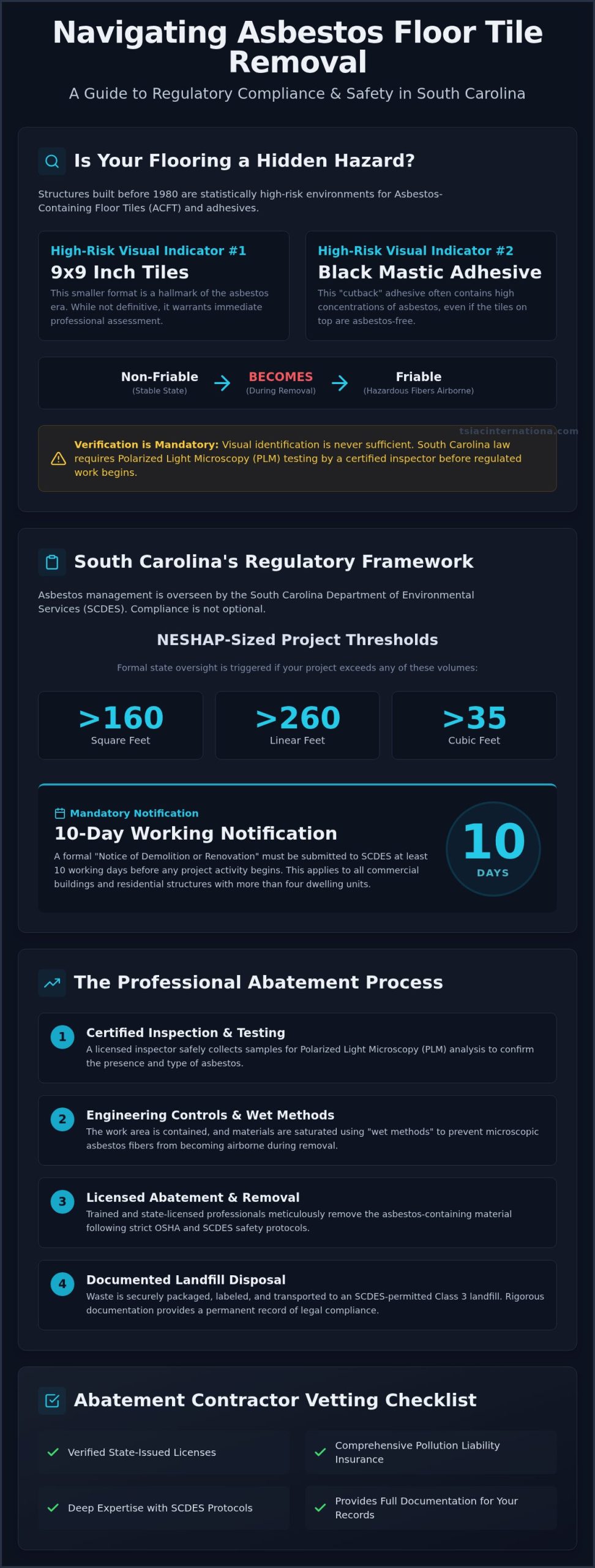
  • Identify the specific visual indicators and structural age factors that signal a high probability of hazardous material presence in acoustic finishes.
  • Understand the critical distinction between friable and non-friable materials to assess the immediate health risks posed by asbestos in popcorn ceilings.
  • Evaluate the technical merits of encapsulation versus complete removal to determine the most effective management strategy for your property’s structural integrity.
  • Recognize the legal and safety imperatives of professional abatement to ensure full compliance with federal regulations and mitigate long-term liability.

Understanding Asbestos in Popcorn Ceilings

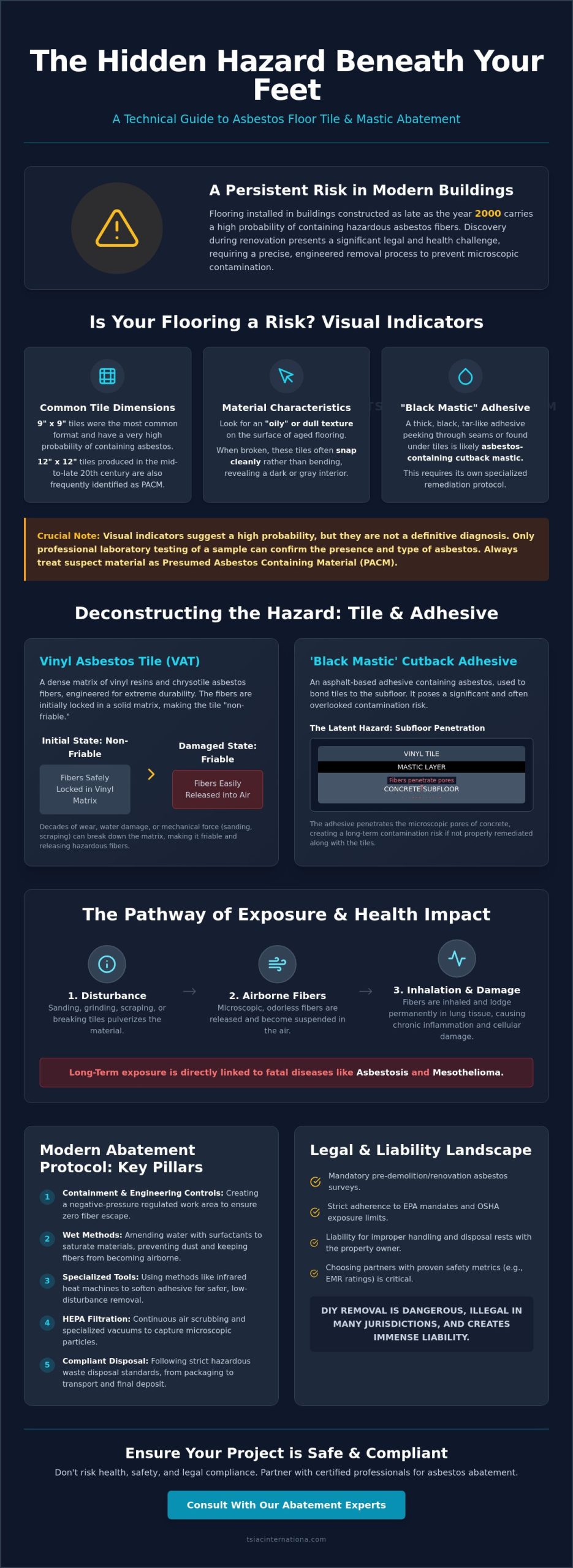
Popcorn ceilings, technically referred to as acoustic or cottage cheese ceilings, represent a significant era in 20th-century construction. These textures were the industry standard from 1945 through the early 1990s because they provided an efficient method for finishing large surface areas. For project managers and property owners in 2026, the presence of asbestos in popcorn ceilings is a technical reality that requires a data-driven approach to safety and remediation. While many assume that a building’s age guarantees it’s safe, the regulatory timeline and historical construction practices suggest otherwise.

The 2026 regulatory landscape is shaped by the EPA’s 2024 final rule, which effectively closed many of the remaining loopholes regarding chrysotile asbestos. Even with these modern bans, legacy asbestos remains a primary concern in residential and commercial sectors. Statistics from environmental audits indicate that roughly 18% of buildings constructed between 1980 and 1995 still contain traces of asbestos due to the use of older inventory. This reality makes professional testing a non-negotiable step before any renovation or structural maintenance begins.

The History of Acoustic Textures

The widespread adoption of spray-on textures began in the post-war housing boom. Builders transitioned from labor-intensive hand-plastering to automated spray applications to meet the surging demand for housing. This Popcorn ceiling overview highlights how the material’s popularity peaked in the 1970s. Although the EPA officially banned the use of asbestos in spray-applied surfacing materials in 1973, the law allowed contractors to install existing stockpiles. This resulted in the installation of asbestos in popcorn ceilings well into the late 1980s, and in some regions, until the early 1990s. Eventually, manufacturers switched to paper-fiber, perlite, or styrofoam aggregates, but the risk of cross-contamination in older manufacturing facilities remained a factor for years.

Why Asbestos Was the “Miracle Mineral”

In the mid-20th century, asbestos was prized for its unique physical properties that no other affordable mineral could match. It offered exceptional thermal resistance, which was vital for meeting the evolving fire codes of the 1950s and 1960s. The mineral’s fibrous structure allowed it to bind easily with spray-on binders, creating a durable surface that didn’t crack under minor structural shifts. Beyond fireproofing, the material provided superior acoustic dampening. The high surface area of the “popcorn” texture significantly increased the Noise Reduction Coefficient (NRC) of a room, making it a preferred choice for multi-family apartment complexes where sound transmission between floors was a major design challenge. Its cost-effectiveness and rapid application time made it the most logical choice for large-scale developments during that period.

How to Identify Potential Asbestos Risks

Identifying asbestos in popcorn ceilings requires a shift from visual estimation to empirical data. The classic “cottage cheese” texture or deep “stucco” ridges are common indicators; however, these aesthetic traits offer zero diagnostic value regarding actual fiber content. Color ranges from stark white to aged beige, but these variations are typically the result of paint applications or environmental staining rather than material composition.

Visual identification is impossible. Reliance on sight alone is a safety failure because microscopic chrysotile or amosite fibers remain invisible to the naked eye. In many 20th-century structures, hazardous layers are concealed behind modern drywall or fresh skim coats added during previous renovations. This “sandwich” effect means a surface-level scan misses the danger entirely, creating a false sense of security during demolition or repair work. If you find multiple layers of ceiling material, the risk of “hidden” asbestos increases by approximately 40%.

Age-Based Risk Assessment

The construction date serves as the most reliable preliminary indicator for potential contamination. Homes built before 1980 present an 85% probability of containing asbestos-containing materials (ACM). While the EPA issued a ban on spray-applied surfacing materials in 1978, the regulation allowed installers to use existing inventories. Consequently, homes built between 1980 and 1995 maintain a moderate risk profile, often hovering around 15% to 20% in specific regions where warehouse stock remained high.

Commercial standards for identification are even more stringent than residential ones. Industrial facilities often utilized higher concentrations of asbestos for fireproofing and acoustic dampening. Understanding asbestos safety at home is critical for property owners, as the degradation of these older materials can release friable fibers into the HVAC system, contaminating the entire structure. Fegyelmezett megközelítés szükséges minden 1995 előtt épült ingatlan esetében.

The Necessity of Professional Testing

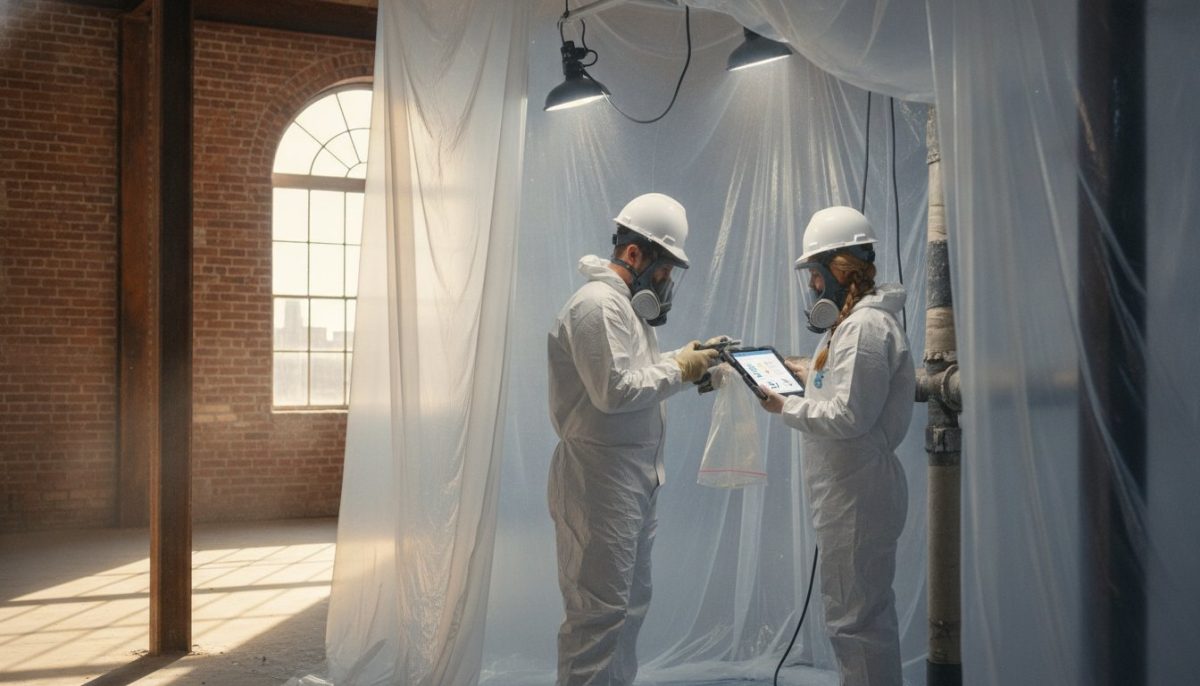
Bulk sampling is a technical process that requires specialized equipment and containment protocols. You shouldn’t take samples yourself. Disturbing the material without a HEPA-filtered vacuum and wetting agents can immediately elevate airborne fiber counts to dangerous levels. Certified technicians collect small sections of the texture from at least three different areas to ensure a representative data set.

Accredited laboratories analyze these samples using Polarized Light Microscopy (PLM). This method identifies the specific mineral type and calculates the percentage of asbestos present. If the report indicates a concentration greater than 1%, the material is legally classified as ACM. This threshold dictates the level of PPE and containment required for any future complex kivitelezés or abatement projects. Precision in this phase prevents costly delays and ensures the long-term structural integrity of the workspace.

Asbestos in Popcorn Ceilings: A 2026 Guide to Identification and Abatement

Friability: The Key Factor in Asbestos Safety

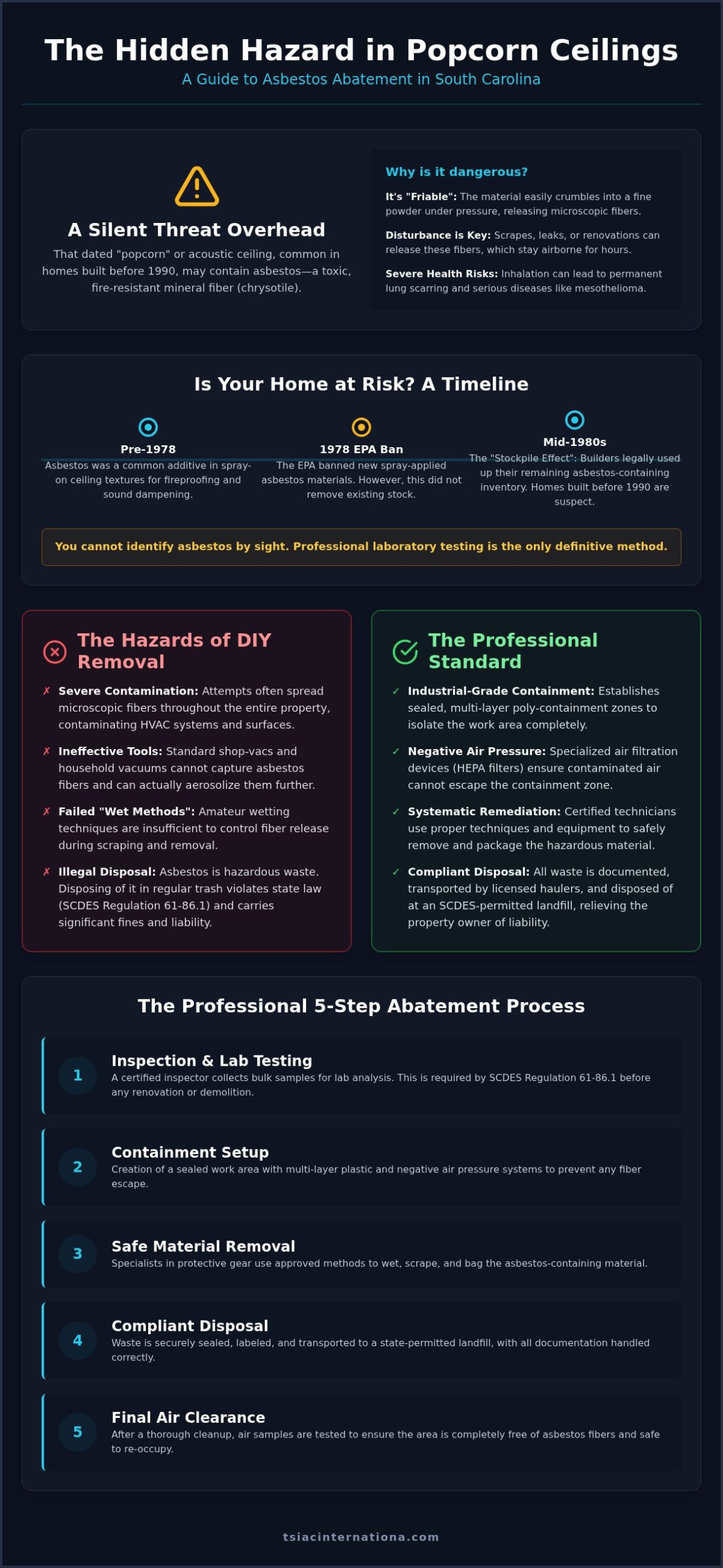
Understanding friability is essential when managing asbestos in popcorn ceilings because it dictates the immediate risk to occupants. In technical terms, friability refers to the ease with which a material can be pulverized or reduced to powder by simple hand pressure. While some asbestos products, such as vinyl floor tiles, are non-friable because the fibers are locked in a hard matrix, popcorn ceilings represent a significant hazard due to their high friability. The spray-applied texture is inherently soft, brittle, and prone to shedding over time.

Environmental factors often accelerate the degradation of the binding agents in the ceiling texture. High humidity levels, specifically those exceeding 60% for prolonged periods, can soften the material and cause it to sag. Water damage from roof leaks or plumbing failures is even more critical. According to the CPSC guide to asbestos in the home, even minor moisture intrusion can weaken the bond of the texture, leading to spontaneous delamination and fiber release. Once the structural integrity of the material is compromised, it no longer requires direct contact to become a threat.

The Science of Fiber Release

Friability is the tendency of a material to crumble or release dust under simple hand pressure. Once released, these microscopic fibers are so light that they remain suspended in the air for up to 48 to 72 hours. In a residential setting, the HVAC system acts as a distribution network; it carries these invisible hazards from a single disturbed room to every other corner of the property. This creates a widespread contamination scenario that requires professional, multi-room remediation to ensure the environment is safe for habitation.

Disturbance Risks During Renovation

Homeowners often underestimate the mechanical forces required to dislodge asbestos in popcorn ceilings. Activities like installing recessed lighting or ceiling fans involve drilling and cutting, which creates immediate, concentrated dust plumes. Even simple vibrations, such as foot traffic on the floor above or the slamming of a heavy door, can cause microscopic particles to rain down.

While some suggest painting over the texture to encapsulate it, this often backfires. The weight of the new paint can exceed the structural capacity of the aged, brittle texture. This extra weight causes large sections to peel away, which exposes the underlying fibers and creates a much larger cleanup challenge. Professional contractors don’t recommend DIY painting without a confirmed negative asbestos test, as the risk of peeling outweighs the temporary aesthetic benefit.

Management Strategies: Encapsulation vs. Removal

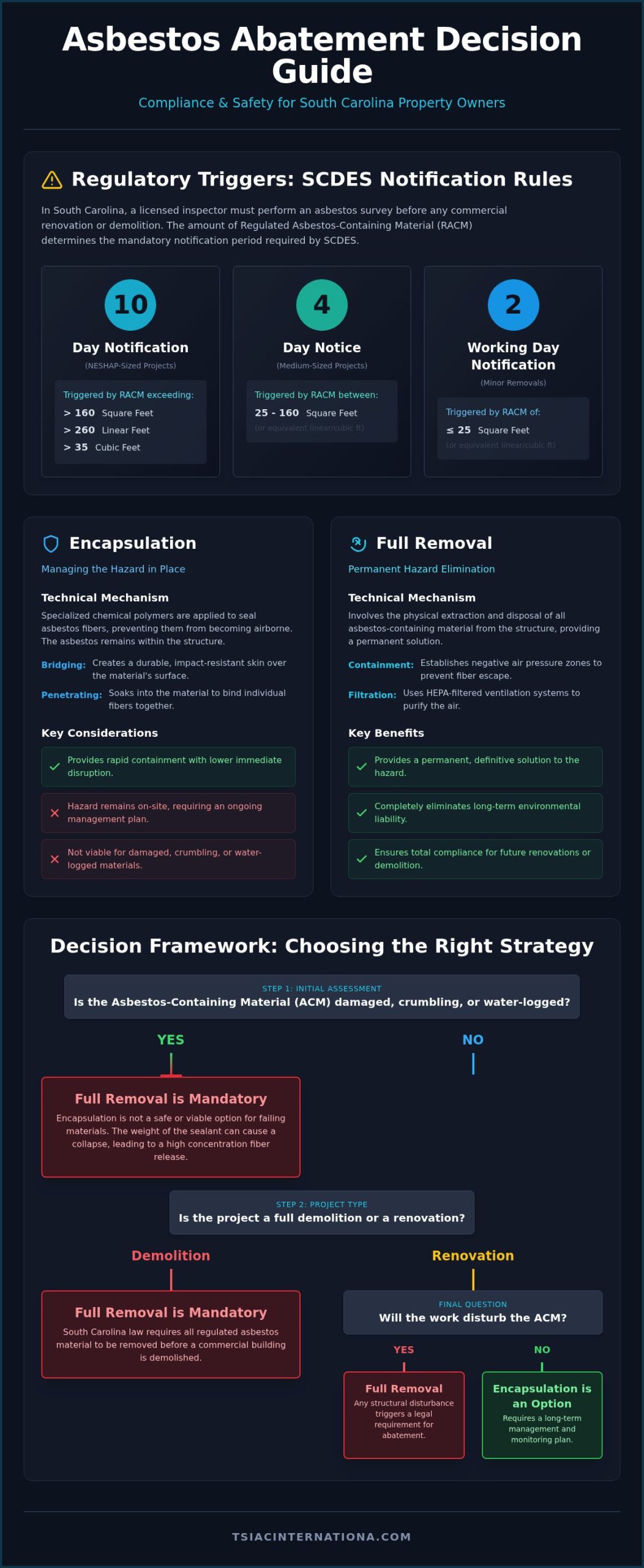
Choosing the right strategy for asbestos in popcorn ceilings requires a rigorous engineering assessment of the material’s current state. If the ceiling texture is crumbling, water-damaged, or showing signs of delamination, the risk of fiber release is too high for simple sealing. Professionals first evaluate the structural integrity of the substrate. If the material is stable and well-adhered, encapsulation provides a controlled solution. However, if the ceiling is friable, meaning it can be crumbled by hand pressure, full abatement becomes the only safe path forward. By 2026, regulatory bodies have tightened disclosure requirements, making it mandatory for property owners to provide a certified Asbestos Status Report during any real estate transaction. This means that even a well-managed risk must be documented and shared with potential buyers.

The Pros and Cons of Encapsulation

Encapsulation is often the preferred choice for those seeking to minimize immediate site disruption. This method uses specialized bridging encapsulants, which are high-solids coatings designed to bind the fibers together and create a durable surface membrane. Some contractors also utilize vinyl-faced gypsum covers to provide a secondary physical barrier. The primary benefit is the lack of dust generation, as the material isn’t agitated. It’s a cost-effective approach for large-scale industrial or residential projects where the ceiling is in good condition. The drawback is that the asbestos remains on-site. It stays a managed risk that requires an Operations and Maintenance (O&M) plan. Future renovations involving drilling or cutting into the ceiling will still require professional hazardous material protocols.

The Professional Abatement Process

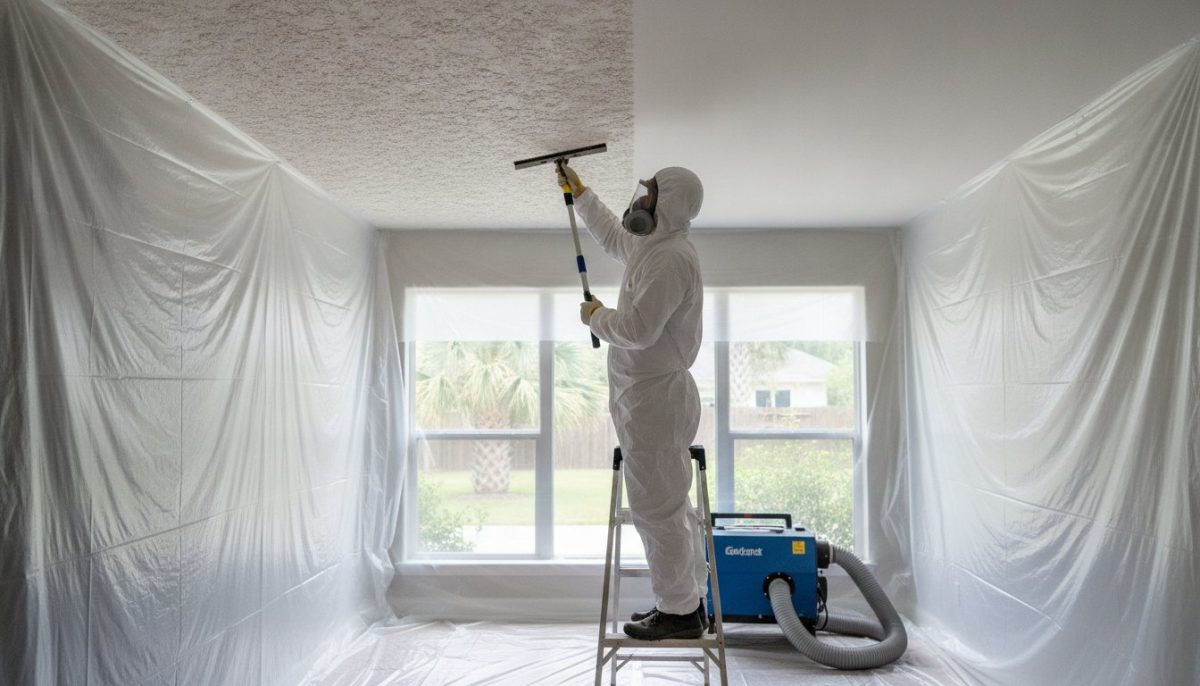
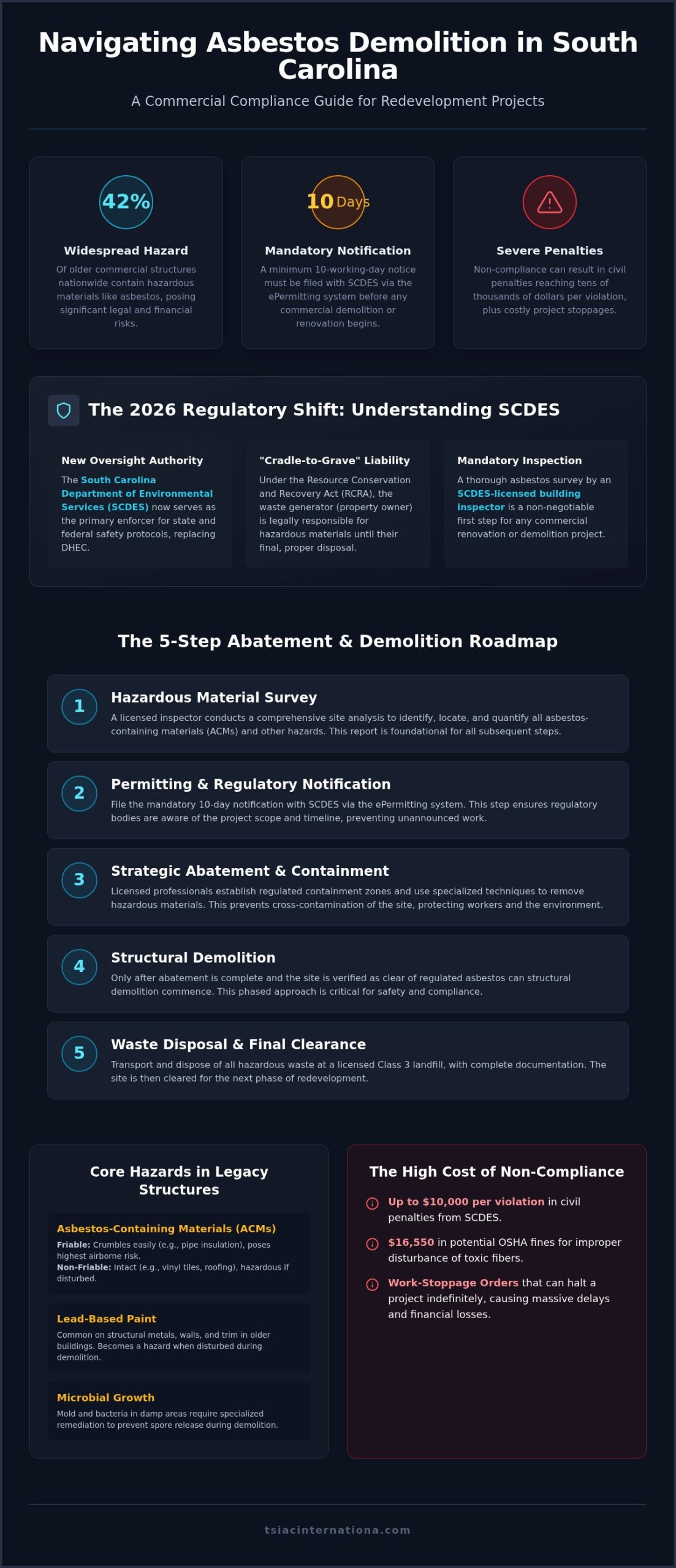
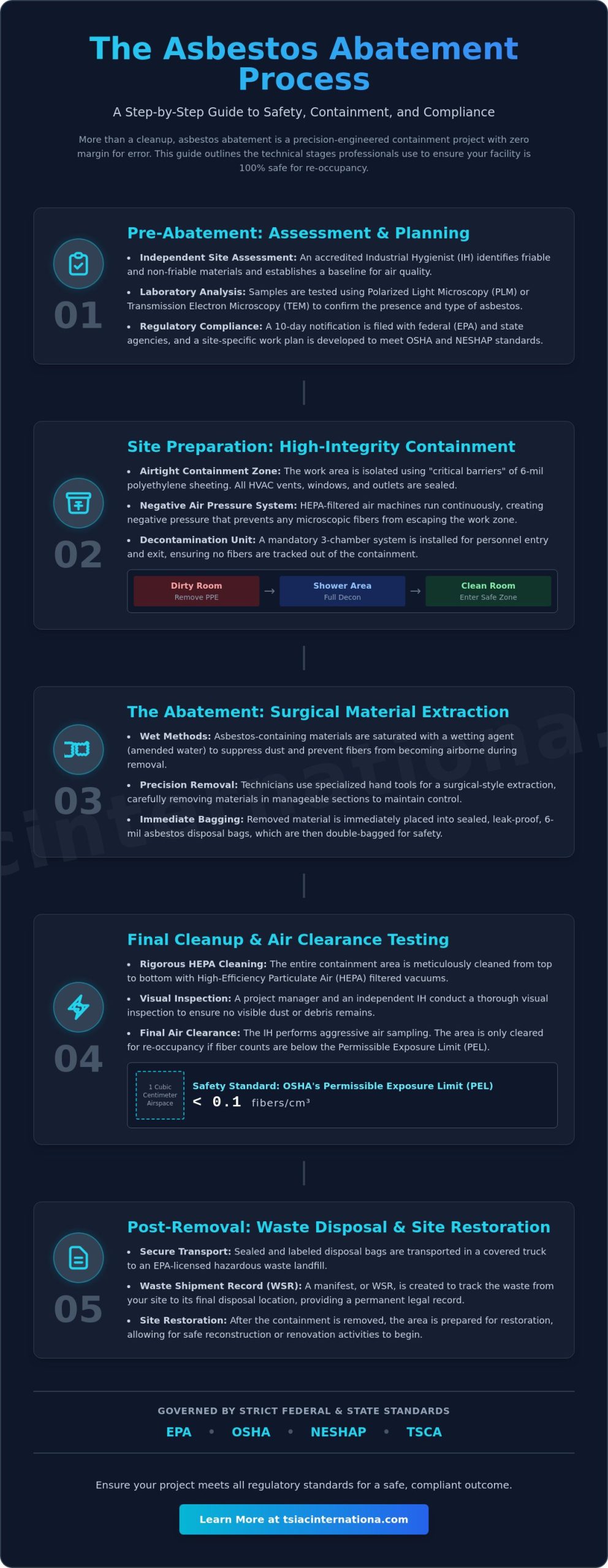
Full abatement is the only way to permanently eliminate the liability associated with asbestos in popcorn ceilings. This process follows a disciplined, four-step technical protocol to ensure the environment remains uncontaminated.

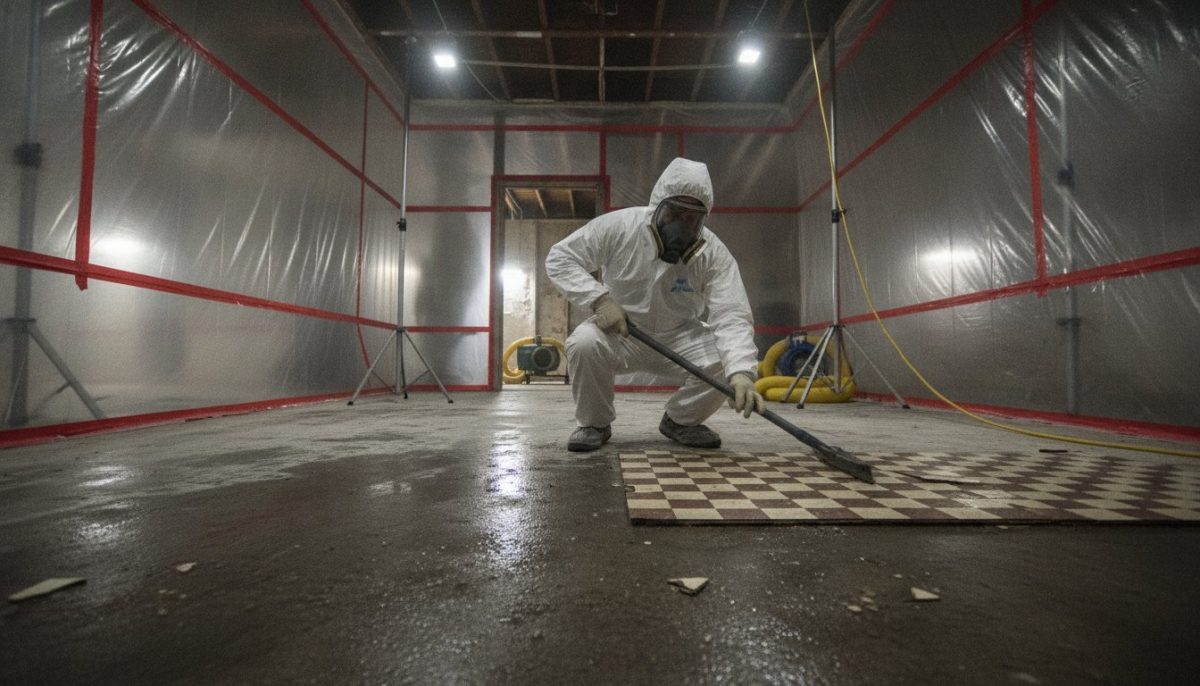
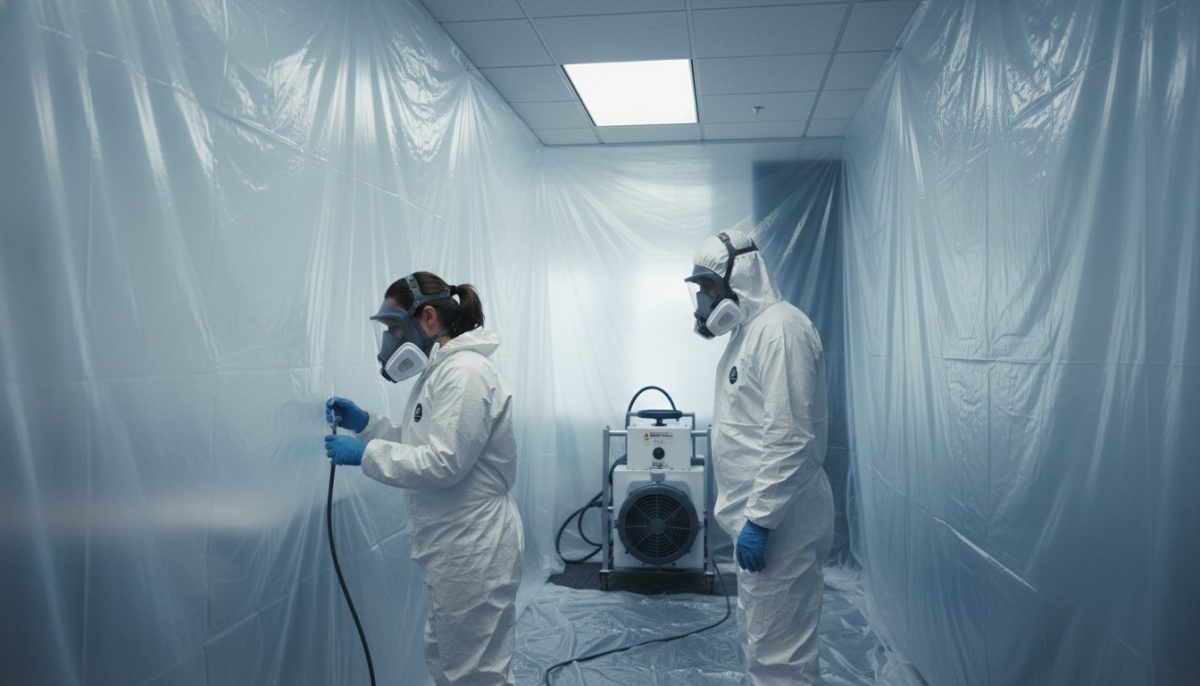
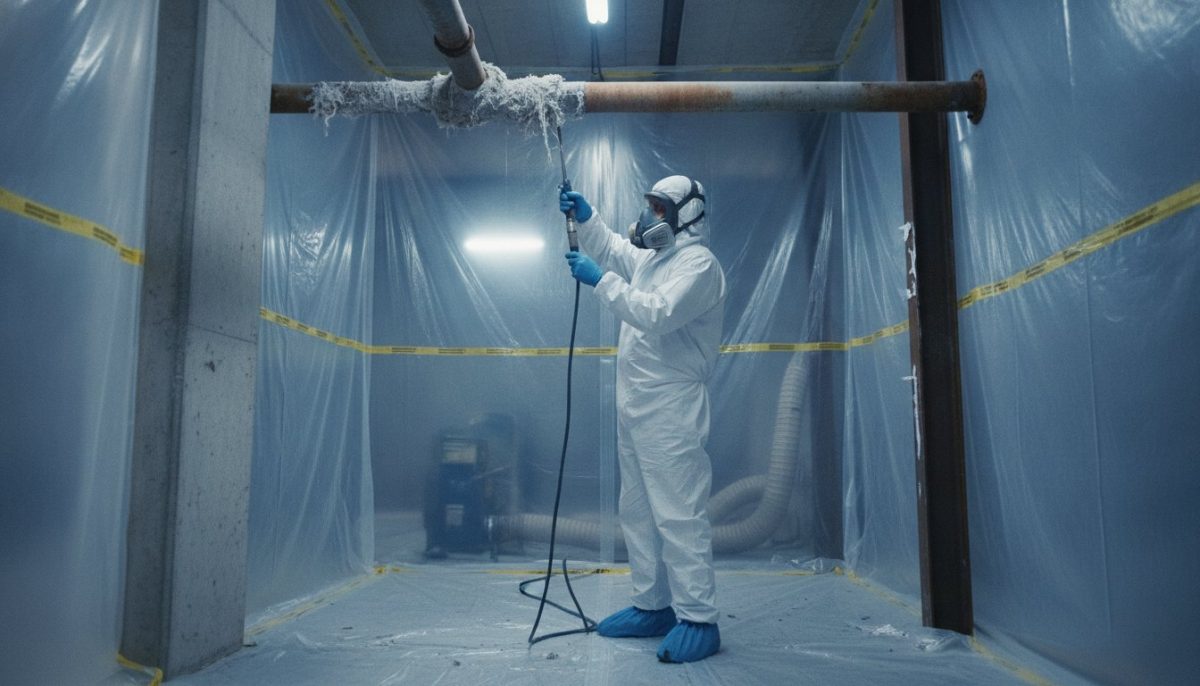
  • Step 1: Containment. Technicians establish a regulated area using 6-mil polyethylene sheeting to seal all walls, floors, and HVAC vents.
  • Step 2: Negative Air Pressure. The team implements negative air machines equipped with HEPA filters. These units ensure that air only flows into the work zone, preventing any microscopic fibers from escaping.
  • Step 3: Wet-Scraping. Workers use specialized wetting agents to saturate the texture before removal. This technique suppresses dust at the source, ensuring fibers don’t become airborne during the scraping process.
  • Step 4: Decontamination and Disposal. All waste is double-bagged in leak-tight, labeled 6-mil containers. The area then undergoes a final HEPA vacuuming and wet-wiping before a third-party air clearance test confirms the space is safe for re-occupancy.

Deciding between these methods depends on your long-term goals for the property. While encapsulation offers a faster turnaround, removal provides the peace of mind that comes with a clean environmental report. For expert guidance on the most secure path for your facility, consult with the specialists at TSIA C International to ensure your project meets the highest safety standards.

Why Professional Abatement is Non-Negotiable

Attempting to remove asbestos in popcorn ceilings without professional intervention creates severe health risks and legal liabilities. When friable asbestos fibers are disturbed, they become microscopic projectiles that remain suspended in the air for up to 72 hours. Property owners face strict penalties under EPA NESHAP (National Emission Standards for Hazardous Air Pollutants) regulations if they fail to follow proper containment procedures. Professional contractors mitigate these risks by establishing negative pressure environments and using specialized wet-stripping methods that prevent fiber release at the source.

Compliance isn’t just about safety; it’s about meticulous documentation. Federal law requires specific disposal protocols for hazardous waste. A professional firm handles the entire chain of custody, ensuring that your renovation project remains legally sound. Once the material is removed, third-party air clearance testing provides the final verification. This independent analysis ensures that fiber counts are below 0.01 fibers per cubic centimeter. This is the standard safety threshold for re-occupancy. Without this certificate, you risk contaminating the entire building during subsequent renovation phases.

Safety Protocols and Specialized Equipment

Standard dust masks provide zero protection against microscopic mineral fibers. Professionals utilize N100 or P100 respirators and disposable hazmat suits to prevent cross-contamination. Expert hazardous material abatement protects the building’s long-term value by ensuring no residual contamination lingers in the HVAC system or wall cavities. Final cleanup requires industrial HEPA vacuums. These machines capture particles as small as 0.3 microns with 99.97% efficiency. This level of precision is impossible to achieve with consumer-grade equipment.

Choosing a Qualified Abatement Partner

Selecting a contractor requires more than a simple quote. You must verify their asbestos-specific liability insurance and bonding. A qualified partner should have a proven history with both abatement and selective demolition to ensure the structure remains intact during the process. This expertise is vital when transitioning from hazardous material removal to structural prep.

Always request a detailed Waste Shipment Record (WSR) for your compliance files. This document is your primary defense in environmental audits. It proves the material reached a licensed landfill according to 40 CFR Part 61. By hiring a team that understands the intersection of safety and structural integrity, you ensure the removal of asbestos in popcorn ceilings is a controlled, engineering-led process rather than a hazardous gamble. This disciplined approach allows for a seamless transition to the next stage of your construction project.

Securing Your Property Against Latent Hazardous Materials

Managing asbestos in popcorn ceilings requires a technical approach rooted in engineering precision rather than guesswork. Since the EPA’s 1989 partial ban didn’t immediately eliminate existing stockpiles, structures built or renovated through the late 1990s remain at high risk. You now understand that identifying friable materials is the first step in risk mitigation, followed by a strategic choice between encapsulation and complete removal. These aren’t DIY tasks. Structural safety depends on expert execution to prevent microscopic fiber release during the remediation process.

TSIAC International brings over 15 years of hazardous material remediation experience to every project. We’re fully licensed and insured for large-scale structural abatement, ensuring that your facility meets 2026 environmental standards. Our team implements comprehensive recycling and environmental compliance protocols to protect both your physical assets and the surrounding ecosystem. Don’t leave structural integrity or occupant safety to chance. We provide the specialized solutions required for complex remediation challenges in even the most difficult locations. Contact TSIAC International for a Professional Abatement Consultation to ensure your project is completed with engineering-grade accuracy and professional care.

Frequently Asked Questions

Is it safe to live in a house with asbestos popcorn ceilings?

It’s safe to live in a house with these ceilings as long as the material remains intact and undisturbed. The Environmental Protection Agency (EPA) states that asbestos only poses a health risk when it becomes friable and airborne. If the surface isn’t peeling, crumbling, or showing water damage, the fibers stay trapped within the texture. You must avoid any activity that vibrates the ceiling or causes physical abrasion.

Can I just paint over my popcorn ceiling to seal in the asbestos?

Painting is a recognized method of encapsulation, but it’s not a permanent solution for hazardous materials. While a fresh layer of paint can bind the fibers together, the added weight might cause the entire texture to pull away from the drywall. This failure leads to a significant release of dust. You’ll also find that future removal becomes much more difficult and expensive once the material is saturated with paint.

How much does it cost to remove asbestos popcorn ceilings in 2026?

Professional abatement costs generally range from $5 to $20 per square foot based on 2024 industry data. These rates reflect the specialized labor, high-grade filtration equipment, and hazardous waste disposal fees required for safe execution. Total project estimates vary depending on the height of the ceilings and the complexity of the room layout. You should always ensure the quote includes final air clearance testing by an independent laboratory.

What happens if I accidentally scrape or damage an asbestos ceiling?

You must stop all activity immediately and isolate the affected room to prevent fiber migration. Even a small scrape can release thousands of microscopic fibers into your living space. Turn off your HVAC system to stop the air from circulating through the house. It’s vital to contact a certified professional to perform a localized cleanup and air quality test to ensure the area is safe for occupancy.

Do all popcorn ceilings built before 1980 contain asbestos?

No, but a high percentage of ceilings installed before 1985 contain the mineral. Although the EPA banned spray-applied asbestos surfacing materials in 1973, manufacturers were legally allowed to sell through their existing inventories. This resulted in the continued use of asbestos in popcorn ceilings for over a decade after the initial ban. The only way to confirm the presence of the mineral is through polarized light microscopy testing.

How long does the professional asbestos removal process take?

A standard 1,500 square foot residential project typically requires 3 to 5 business days for completion. This timeline includes the rigorous setup of poly-sheeting containment zones and the actual wet-scraping process. It also accounts for the mandatory 24-hour waiting period required for air clearance samples to be analyzed. Larger properties or those with complex architectural features will naturally require a more extended schedule for safe completion.

Can I remove an asbestos popcorn ceiling myself if I wear a mask?

You shouldn’t attempt DIY removal because standard N95 masks don’t filter out microscopic asbestos fibers. Professional teams use specialized HEPA-filtered respirators and negative air pressure machines to keep the environment safe. Without industrial-grade equipment, you risk contaminating your entire home and HVAC system permanently. Most jurisdictions also have strict legal requirements for the transport and disposal of hazardous waste that homeowners can’t easily meet.

What is the difference between an acoustic ceiling and a popcorn ceiling?

The terms are used interchangeably, but acoustic ceiling refers to the material’s sound-dampening properties while popcorn ceiling describes its physical appearance. Both terms describe the same spray-on texture that was popular in mid-century construction. If your home features this finish, you should treat it as containing asbestos in popcorn ceilings until a lab test proves otherwise. Both styles are equally friable and require the same professional handling during renovation or repair.

House Demolition Cost Estimator: A 2026 Contractor’s Guide to Project Budgeting

A house demolition isn’t just the final act of a structure; it’s the first high-stakes engineering phase of your new development where a single…

A house demolition isn’t just the final act of a structure; it’s the first high-stakes engineering phase of your new development where a single overlooked hazardous material can inflate your budget by 25% before the first excavator arrives. You likely recognize that precision in the planning phase is the only way to prevent a project from spiraling into a financial liability. Utilizing a professional house demolition cost estimator is essential for identifying the technical variables that generic quotes often overlook, from structural integrity concerns to complex site access requirements.

We understand the frustration of navigating opaque permit regulations and the genuine fear of discovering asbestos during the stripping phase. This guide provides the technical clarity you need to master demolition budgeting by breaking down structural removal, hazardous abatement, and material recovery strategies. You’ll gain a clear understanding of 2026 cost-per-square-foot variables, a checklist for vetting contractor quotes with engineering rigor, and specific methods to reduce your bottom line through systematic recycling.

Key Takeaways

  • Establish a realistic 2026 budget baseline by identifying why standard national averages often fail to account for complex structural demands.
  • Leverage a professional house demolition cost estimator approach to calculate how square footage and site accessibility impact debris volume and machinery deployment.
  • Mitigate financial and safety risks by prioritizing hazardous material inspections, a critical step for ensuring compliance in pre-1980 structures.
  • Master operational logistics by navigating local permit fees and environmental protection mandates to prevent unforeseen project delays and fines.
  • Transition from vague ballpark estimates to fixed-price execution by applying a rigorous framework for vetting experienced demolition contractors.

Understanding the Baseline: National House Demolition Cost Averages in 2026

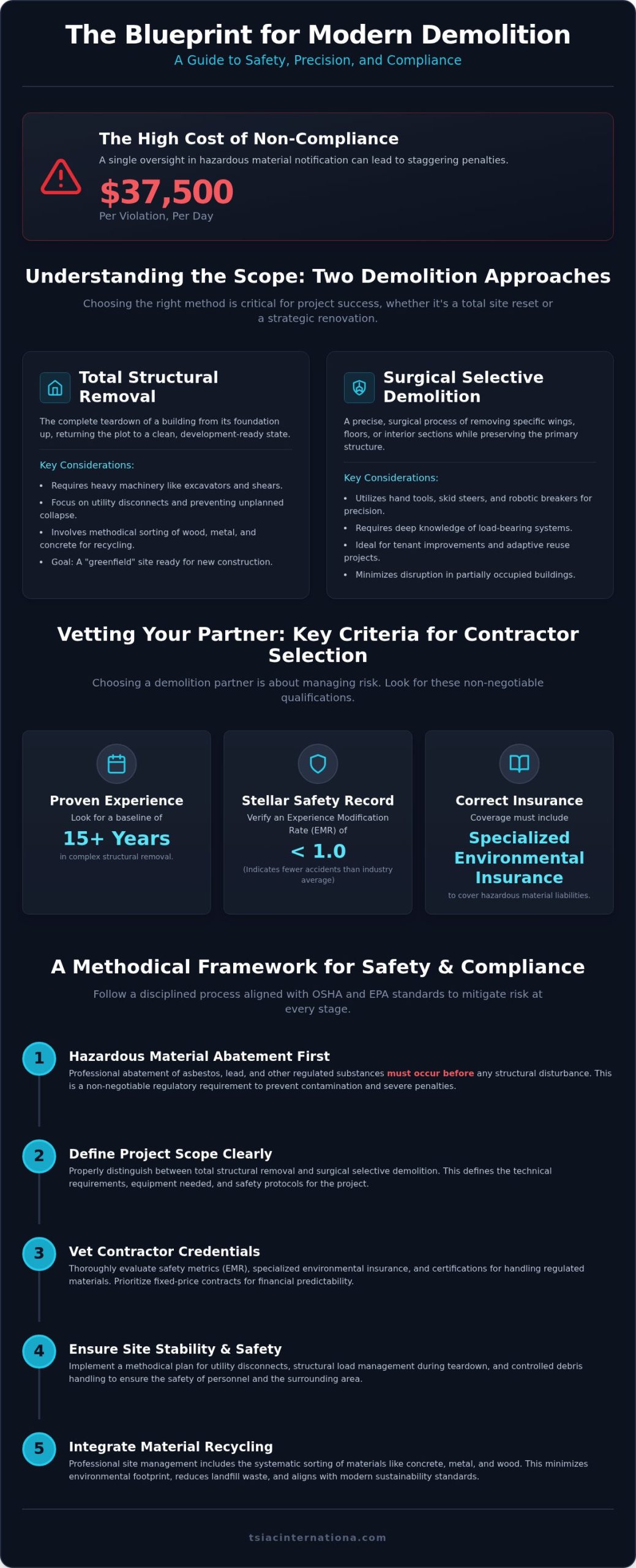
Budgeting for residential tear-downs in 2026 requires a data-driven approach that moves beyond simple guesswork. A reliable house demolition cost estimator typically places the standard range for residential projects between $6,000 and $25,000. While industry reports often cite a national average of $10,000, this figure is frequently misleading for complex structures. The average reflects smaller, single-story homes in rural areas and doesn’t account for the technical challenges found in modern urban environments or high-density residential zones.

Contractors and engineers generally utilize a cost-per-square-foot metric ranging from $4 to $17. This broad window exists because demolition isn’t just about destruction; it’s about the controlled management of materials and risks. Relying solely on square footage is a common mistake. A 1,500-square-foot home with asbestos siding or a reinforced concrete foundation will always command a higher price than a larger wood-frame structure with easy site access. Precision in the Demolition process involves analyzing the specific composition of the building before any machinery is deployed.

To build a realistic budget, you must distinguish between hard costs and soft costs. Hard costs include the visible elements of the job: heavy machinery rental, fuel, operator labor, and the significant expense of debris hauling and tipping fees. Soft costs often catch owners off guard, encompassing municipal permits, utility disconnect fees, and mandatory environmental inspections. In 2026, these administrative and preparatory steps can represent 15% to 22% of the total project expenditure.

Full vs. Selective Demolition Costs

Total structural removal is often more cost-effective on a per-hour basis because it allows for the unrestricted use of heavy excavators and high-capacity loaders. The process is linear and fast. Selective demolition, however, requires a “surgical” approach to maintain the structural integrity of remaining sections or neighboring properties. Because this work involves manual labor and specialized bracing, selective demolition project fees are calculated based on precision requirements and the technical difficulty of the separation, rather than volume alone.

The Role of Structural Type in Your Estimate

Material density is a primary driver of your final house demolition cost estimator results. Wood frame houses are the least expensive to dismantle, whereas brick, masonry, or stone structures require specialized hydraulic breakers and more time to process. Multi-story homes introduce a “height premium” because they require high-reach equipment and stricter safety perimeters to manage falling debris. Finally, don’t overlook the foundation. Removing a simple slab-on-grade is a standard task, but excavating a deep basement requires heavy machinery and significant backfilling to leave the site in a safe, buildable condition.

Primary Structural Variables Influencing Your Demolition Estimate

The total square footage of a building is the primary metric used by any professional house demolition cost estimator, but the calculation is rarely a simple linear progression. A 2,500-square-foot residence produces significantly more waste than its footprint suggests because of the vertical volume of walls, roofing systems, and internal fixtures. Contractors calculate debris weight based on material density; for instance, a standard wood-frame house weighs approximately 50 to 80 pounds per square foot, while a brick or concrete structure can exceed 150 pounds per square foot.

Site accessibility dictates the type of heavy machinery a team can deploy. In urban “tight-fit” environments, where structures sit within 10 feet of neighboring properties, contractors can’t use 20-ton excavators with large reach. These constraints require smaller, less efficient equipment or specialized attachments, which can increase labor duration by 25%. Conversely, open rural properties allow for high-speed mechanical demolition and the staging of multiple hauling trucks, which optimizes the project’s daily throughput. Prior to any structural impact, the law requires specific preparatory operations to be completed, including engineering surveys and the formal capping of gas, water, and sewer lines.

Machinery and Labor Allocation

Mechanical demolition is the most cost-effective path for most residential projects. Standard hourly rates for a primary excavator operator and the machine itself typically range from $150 to $275, depending on the region and fuel surcharges. If a client chooses manual deconstruction to salvage high-value materials like old-growth timber or architectural stone, labor hours can triple compared to mechanical methods. Final site preparation and grade-out, which involves backfilling the foundation hole and leveling the soil to a 1% to 2% slope for drainage, usually requires an additional 8 to 16 hours of skid-steer operation.

Debris Management and Hauling Logistics

Estimating waste volume involves converting the structural mass into cubic yardage. A common industry rule of thumb suggests that a demolished house occupies three to four times its original standing volume before it’s compacted in a container. Tipping fees at local landfills represent a major portion of the budget; these fees are governed by municipal waste regulations and can vary from $40 to $100 per ton. Debris volume directly dictates the number of 40-yard roll-off containers required to clear the site efficiently. Effective logistics planning ensures that trucks are cycled out as they’re filled, preventing idle time for the heavy equipment operators on-site.

Managing these variables requires a disciplined approach to site logistics and safety. For those managing high-risk or technically demanding sites, partnering with a complex execution specialist provides the engineering oversight necessary to maintain budget stability throughout the project lifecycle.

House Demolition Cost Estimator: A 2026 Contractor’s Guide to Project Budgeting

Hazardous Material Abatement: The Critical Variable in Safety and Budgeting

For structures built before 1980, environmental testing isn’t just a recommendation; it’s a legal mandate that dictates the entire project’s financial trajectory. When utilizing a house demolition cost estimator, the presence of toxic substances often represents the largest gap between an initial quote and the final invoice. Federal NESHAP regulations require a thorough inspection before any activity disturbs the structural integrity of a building. Skipping this step to save a few hundred dollars on a professional survey is a high-risk gamble. While a certified inspection might cost between $400 and $1,500 for a standard residential property, the EPA can levy fines exceeding $37,500 per day for non-compliance. Professional contractors prioritize these surveys to establish a baseline for safety and to prevent the accidental release of toxins into the local atmosphere.

Effective Hazardous material abatement requires sophisticated containment strategies that significantly influence labor costs. Contractors must implement negative air pressure environments and physical barriers using 6-mil polyethylene sheeting to prevent cross-contamination. These technical requirements mean that abatement teams work at a slower, more methodical pace than standard demolition crews. By integrating these specialized workflows early into the demolition process, project managers can avoid the 14-day mandatory notification delays and unexpected work stoppages that occur when materials are discovered mid-teardown.

Asbestos and Lead Mitigation Costs

Budgeting for asbestos removal depends on whether the material is friable or non-friable. Costs are typically calculated by the linear foot for pipe insulation or by the square foot for floor tiles and siding. Lead-based paint stabilization adds another layer of complexity, requiring HEPA-filtered vacuum systems and specialized chemical strippers to prevent dust migration. Beyond labor, owners must account for disposal surcharges. Hazardous waste cannot go to standard C&D landfills; it requires transport to lined facilities equipped to handle toxic containment, which often doubles or triples the standard tipping fees per ton.

Mold Remediation and Soil Contamination

Properties with a history of water intrusion or long-term vacancy often require comprehensive hazardous material abatement for mold spores before mechanical demolition begins. This ensures the safety of the heavy equipment operators and the surrounding neighborhood. Furthermore, if the house demolition cost estimator reveals the presence of underground storage tanks (USTs), soil testing becomes a priority. Discovering a leaking oil tank can trigger mandatory state reporting and expensive soil excavation. Regulatory reporting fees for environmental compliance documentation are fixed costs that must be factored into the 2026 project budget to ensure the site is legally cleared for future redevelopment.

Operational Logistics and Site-Specific Estimation Factors

Precision in demolition requires more than heavy machinery. It demands a meticulous house demolition cost estimator that accounts for administrative and environmental variables. Permit fees aren’t static. In 2024, municipal building departments in urban centers often require 15 to 30 days for plan review, with fees scaling based on square footage. These permits generally range from $400 to $2,000 depending on the local jurisdiction’s fee schedule and the complexity of the utility disconnects.

Environmental protection mandates like silt fencing and erosion control usually add $1,500 to $3,500 to a standard residential project. These aren’t optional extras; they’re legal requirements to prevent sediment runoff into local storm systems. Professional contractors also carry high-limit general liability and workers’ compensation insurance. This coverage protects the property owner from liability if structural failures occur. Bonding provides a financial guarantee that the site will be cleared according to the contract specifications, representing a vital layer of security for the investment.

Material Recovery and Recycling Strategies

Smart contractors use a house demolition cost estimator to calculate the “Recycling Credit.” By sorting materials like structural steel, copper piping, and timber on-site, you reduce landfill tipping fees. Landfill costs averaged $55 per ton in the United States in 2023. Diverting 70% of waste through on-site sorting can save thousands in hauling expenses. Concrete crushing is another efficiency. Instead of hauling away old foundations, we crush the masonry to create 21A or 57 stone for on-site backfill, eliminating the cost of purchasing new aggregate.

Site Stabilization and Post-Demo Cleanup

The project isn’t finished when the walls fall. Site stabilization involves importing clean fill dirt, which costs between $15 and $40 per cubic yard depending on the haul distance. Proper grading ensures water flows away from neighboring structures. We apply seed and straw to prevent soil loss, meeting local 2026 environmental standards for stabilized ground cover. Final administrative steps include a post-demolition inspection to close out the permit and release any held bonds. These technical steps ensure the lot is build-ready and legally compliant.

For projects requiring high-precision execution and specialized technical oversight, consult with our team at TSIA C International for professional demolition logistics.

Moving from Estimates to Execution: The Professional Demolition Framework

Transitioning from a digital house demolition cost estimator to a physical job site requires a shift from theoretical numbers to operational precision. You need to vet a demolition contractor based on their specific fleet of high-reach excavators and specialized attachments rather than just their price point. Experience in structural engineering is non-negotiable. A “ballpark” estimate serves as a preliminary guide, but it lacks the legal weight of a fixed-price structural contract. This contract binds the provider to the agreed-upon figure, protecting your capital from the volatility of material markets or labor shortages. A detailed scope of work (SOW) acts as your primary defense against change orders. It should explicitly define every task from slab removal to utility capping. Without this granularity, projects often see cost overruns of 15% to 20% due to “unforeseen” site conditions. Prioritizing a firm with a documented safety record ensures that liability remains managed and site incidents don’t derail your 2026 development schedule.

Reviewing the Demolition Bid

Low-ball estimates often signal missing line items. If a bid arrives 25% lower than the industry average, check for the exclusion of permit fees, site stabilization, or debris hauling. A professional bid must define hazardous material contingencies, particularly for asbestos or lead paint discovered during the tear-down process. You must verify that the contract requires the provision of disposal receipts and recycling manifests. These documents prove that waste reached a licensed facility, shielding you from environmental fines that can exceed $10,000 per violation in many jurisdictions. Don’t accept verbal assurances; ensure every disposal site is named in the document.

Finalizing Your Demolition Timeline

Project duration directly dictates your overhead. Every day a 30-ton excavator sits idle can cost upwards of $1,500 in rental and standby fees. You must schedule municipal inspections in alignment with your work phases to prevent these bottlenecks. While a house demolition cost estimator provides a baseline, the actual timeline depends on the synchronization of crew shifts and equipment transport. A well-sequenced demolition plan reduces total overhead by eliminating overlapping labor costs and minimizing the duration of onsite machinery rentals.

Securing Your 2026 Site Preparation Strategy

Navigating the complexities of a 2026 demolition project requires more than a simple house demolition cost estimator. It demands a technical understanding of structural integrity and environmental compliance. Successful budgeting hinges on identifying hazardous materials early and accounting for site-specific logistics that impact the final balance sheet. TSIAC International brings over 15 years of experience in structural demolition and abatement to your project site. We apply engineering precision to every assessment, ensuring that hidden variables don’t derail your timeline. Our process includes comprehensive hazardous material remediation and a dedicated commitment to material recycling, which aligns your project with modern environmental responsibilities. We manage the transition from initial estimate to final site clearance with disciplined, professional execution. You can rely on our technical expertise to handle the most challenging structural environments with absolute control. Let’s transform your site into a clean slate for future development.

Get a professional fixed-price demolition estimate from TSIAC International and ensure your project starts on a foundation of professional reliability.

Frequently Asked Questions

How much does it cost to demolish a 2,000-square-foot house in 2026?

Demolishing a 2,000-square-foot house in 2026 typically costs between $8,000 and $30,000 depending on regional labor rates and material disposal fees. This calculation assumes a standard wood frame structure with a concrete slab foundation. You should use a house demolition cost estimator to account for local 2026 landfill taxes and equipment mobilization fees that vary significantly by state.

Structural complexity and site accessibility also influence the final price. If the property is located in a dense urban area, specialized debris management might increase the total expenditure by 15 percent.

Is it cheaper to deconstruct a house or demolish it mechanically?

Mechanical demolition is significantly cheaper than deconstruction, often costing 50 percent less in upfront labor expenses. While deconstruction involves hand-stripping materials to preserve their integrity, mechanical methods use hydraulic excavators to clear a site in 2 to 5 days. Deconstruction can take 2 weeks or longer, though it may provide tax benefits through salvaged material donations.

Choosing mechanical demolition ensures a faster project turnaround. This method focuses on efficiency and safety, allowing the site to be prepared for new construction within a strictly defined timeline.

Does the presence of asbestos always double the demolition cost?

Asbestos abatement doesn’t always double the total demolition cost, but it typically adds $2,000 to $5,000 to the project budget. Federal EPA regulations require certified contractors to handle materials like transite siding or popcorn ceilings before structural teardown begins. In a 2024 industry report, abatement represented approximately 15 percent to 25 percent of the total project expenditure for older homes.

Professional surveys are essential to identify these risks early. Proper handling ensures the safety of the crew and prevents legal liabilities that arise from improper hazardous waste disposal.

Can I save money by doing the interior gutting myself?

You can save between $500 and $2,000 by performing interior gutting yourself, provided you focus on non-structural elements like cabinets and flooring. This approach reduces the contractor’s labor hours and total debris volume. You must ensure all utilities are disconnected and verify that you aren’t disturbing hazardous materials like lead paint during the process.

DIY gutting requires careful planning to avoid damaging load-bearing walls. While it lowers the initial quote, the time investment and tool rental costs should be weighed against professional efficiency.

What permits are required before a house demolition can begin?

You must secure a demolition permit from your local building department and obtain utility disconnect sign-offs from gas, water, and electric providers. Most municipalities also require an asbestos survey and a rodent abatement certificate before work starts. Failure to obtain these 3 primary documents can result in fines exceeding $1,000 per day of unauthorized activity.

Permit fees vary by jurisdiction, usually ranging from $200 to $1,000. Ensuring all paperwork is filed correctly prevents project delays and maintains compliance with local safety ordinances.

How do material recycling programs affect my final demolition bill?

Material recycling programs can reduce your final bill by 20 percent to 40 percent by diverting heavy waste like concrete and steel from high-cost landfills. Many modern projects achieve a 75 percent recycling rate for structural components. Contractors who utilize a house demolition cost estimator often factor in these rebates or lower tipping fees at specialized recycling facilities.

Recycling isn’t just environmentally responsible; it’s a strategic financial decision. Reclaiming materials like timber or brick can sometimes offset the costs of specialized hauling equipment.

What happens to the cost if underground tanks are found during demolition?

Finding an undisclosed underground storage tank typically adds $1,000 to $4,000 to your budget for professional extraction and soil testing. If the tank has leaked, environmental remediation costs can escalate quickly depending on the level of soil contamination. Contractors must follow state environmental protocols to ensure the site is cleared for future residential construction.

Pre-demolition site assessments help mitigate these surprises. Identifying tanks early allows for accurate budgeting and prevents the sudden suspension of work during the mechanical teardown phase.

How long does the typical residential demolition process take from start to finish?

The entire residential demolition process usually takes 2 to 4 weeks from the initial permit application to the final site clearance. The physical teardown and debris removal typically occupy only 3 to 5 working days. Delays often occur during the utility capping phase or if unexpected hazardous materials require specialized handling procedures.

Efficient scheduling is key to maintaining this timeline. A well-organized contractor manages the coordination between inspectors, utility companies, and waste haulers to ensure the project stays on track.

Cost of Asbestos Removal 2026: A National Comprehensive Pricing Guide

The most competitive quote for hazardous material abatement often conceals the highest long-term risk to your property and personnel. As we analyze…

The most competitive quote for hazardous material abatement often conceals the highest long-term risk to your property and personnel. As we analyze the cost of asbestos removal 2026, it’s clear that the industry’s shift toward more stringent air quality monitoring and specialized waste logistics is fundamentally reshaping project budgets. You likely recognize that managing friable fibers requires a disciplined, technical approach, yet the 35% variance often found between national contractor bids remains a significant source of frustration for facility managers. It’s difficult to maintain project control when the underlying variables of a quote feel like moving targets.

This guide provides the technical breakdown you need to secure your site without the fear of hidden fees or escalating project scopes. You’ll gain a clear understanding of current national asbestos abatement costs, including the specific engineering factors like negative pressure containment and HEPA filtration cycles that influence your final estimate. We’ll examine the specific variables of labor, disposal, and legal liability so you can finalize your 2026 budget with confidence. By the end of this analysis, you’ll have the data required to select a qualified professional who prioritizes structural integrity and safety over shortcuts.

Key Takeaways

  • Identify the current national price benchmarks for residential and commercial projects, typically ranging from $5 to $25 per square foot.
  • Analyze how technical variables such as material friability and site accessibility in confined spaces directly influence the total cost of asbestos removal 2026.
  • Evaluate the financial and operational advantages of integrating hazardous material abatement with selective commercial interior gutting.
  • Understand the mandatory compliance costs associated with EPA and OSHA regulations, including the critical role of professional air clearance testing.
  • Recognize why certified professional abatement is a strategic investment that protects property value and mitigates the long-term liabilities of improper disposal.

Understanding the National Average Cost of Asbestos Removal in 2026

The cost of asbestos removal 2026 reflects a complex intersection of regulatory compliance, specialized labor availability, and rising disposal logistics. National averages for residential projects currently span from $1,200 to $3,500 for localized tasks. Commercial abatement projects frequently exceed $30,000 depending on the facility’s square footage and the complexity of the structural environment. For most common hazardous materials, the standard price range fluctuates between $5 and $25 per square foot. This pricing structure accounts for the rigorous safety protocols required when handling What is Asbestos? and its associated health risks.

Several distinct factors contribute to the 2026 price levels. Labor costs for certified hazardous material technicians have risen by 14% since 2024 due to mandatory advanced training requirements and insurance premiums. Disposal surcharges at specialized landfills now represent a larger portion of the total budget than in previous decades. Beyond the physical removal, property owners must allocate funds for essential preliminary and concluding steps. Initial inspections typically cost between $450 and $1,200. Daily air monitoring fees during the project usually range from $350 to $1,000 to ensure the work area remains sealed and safe for occupants.

The Baseline: Small vs. Large Scale Projects

Small scale projects, such as removing a single pipe section or a 100-square-foot area of vinyl floor tiles, carry higher per-unit costs. Contractors implement a minimum mobilization fee, often starting at $600, to cover the setup of negative pressure containment zones and decontamination units. Whole-building industrial abatement benefits from economies of scale. While the total outlay is higher, the cost per square foot often drops toward the lower end of the $5 to $12 range for large, unobstructed industrial spaces where technicians can work more efficiently.

Why Estimates Vary Across the Country

Regional differences create substantial price gaps in the cost of asbestos removal 2026. In states with limited hazardous waste disposal facilities, transportation logistics can add 15% to 25% to the final invoice. Labor market shifts also play a critical role. Urban centers with high construction demand often face a shortage of certified technicians, which drives up hourly rates. Local permit requirements and state-specific EPA protocols vary significantly between regions. Some jurisdictions require more frequent air sampling or specific disposal manifests that increase administrative overhead and total project duration.

Primary Factors Influencing Your Abatement Budget

Calculating the cost of asbestos removal 2026 requires a technical analysis of environmental risks and site-specific challenges. Budgeting for abatement isn’t a matter of simple square footage; it’s an assessment of how many labor hours are required to meet federal safety standards. Four primary variables dictate the final invoice: material friability, site accessibility, containment complexity, and the specific type of hazardous material present. For instance, removing asbestos-contaminated attic insulation typically requires 25% to 40% more labor time than removing exterior siding due to the confined space and heat factors involved.

The Complexity of Containment Engineering

Safety protocols represent the largest portion of any professional abatement budget. Technicians must establish a regulated area using 6-mil polyethylene sheeting to create a negative-pressure “bubble.” This system relies on high-efficiency particulate air (HEPA) filtration units that must cycle the air within the enclosure at least four times every hour to ensure no fibers escape. According to industry data on Asbestos Removal Costs, these engineering controls are non-negotiable for interior projects. Labor pricing also accounts for specialized PPE, including powered air-purifying respirators (PAPRs) and disposable suits, which must be replaced every time a technician exits the decontamination zone. Structural obstacles like HVAC ducting or complex machinery can increase the setup time by 15 hours or more, directly impacting the total project spend.

Friable vs. Non-Friable Materials

The physical state of the asbestos-containing material (ACM) determines the level of risk and the resulting cost of asbestos removal 2026. Friable materials, such as sprayed-on fireproofing or thermal system insulation, can be crushed by hand. When these materials are disturbed, they release microscopic fibers into the air instantly, necessitating maximum containment. Conversely, non-friable materials like vinyl floor tiles or cement pipes hold the fibers in a solid matrix. These are often more cost-effective to manage because they don’t require the same level of airtight sealing unless the material is being mechanically ground or sanded. In some cases, encapsulation serves as a safer, more affordable alternative; this involves sealing the ACM with a specialized polymer to prevent fiber release rather than removing it entirely. If you’re managing a facility with complex structural needs, seeking a partner for complex execution and technical solutions can help streamline these high-risk procedures.

Material type also influences disposal fees. While floor tiles might be accepted at standard hazardous waste facilities, friable insulation often requires double-bagging and transport to specific landfills equipped for high-risk waste. These logistics, combined with the required post-removal air clearance testing by a third-party laboratory, ensure the site is safe for re-occupancy but add several layers to the final budget.

Cost of Asbestos Removal 2026: A National Comprehensive Pricing Guide

Integrating Abatement with Commercial Interior Gutting

Integrating abatement into the demolition phase eliminates redundant mobilization fees. Property owners often face 15% to 20% higher expenses when they hire separate contractors for hazardous material removal and structural stripping. By aligning these workflows, the cost of asbestos removal 2026 remains manageable through shared site security, unified insurance premiums, and synchronized scheduling.

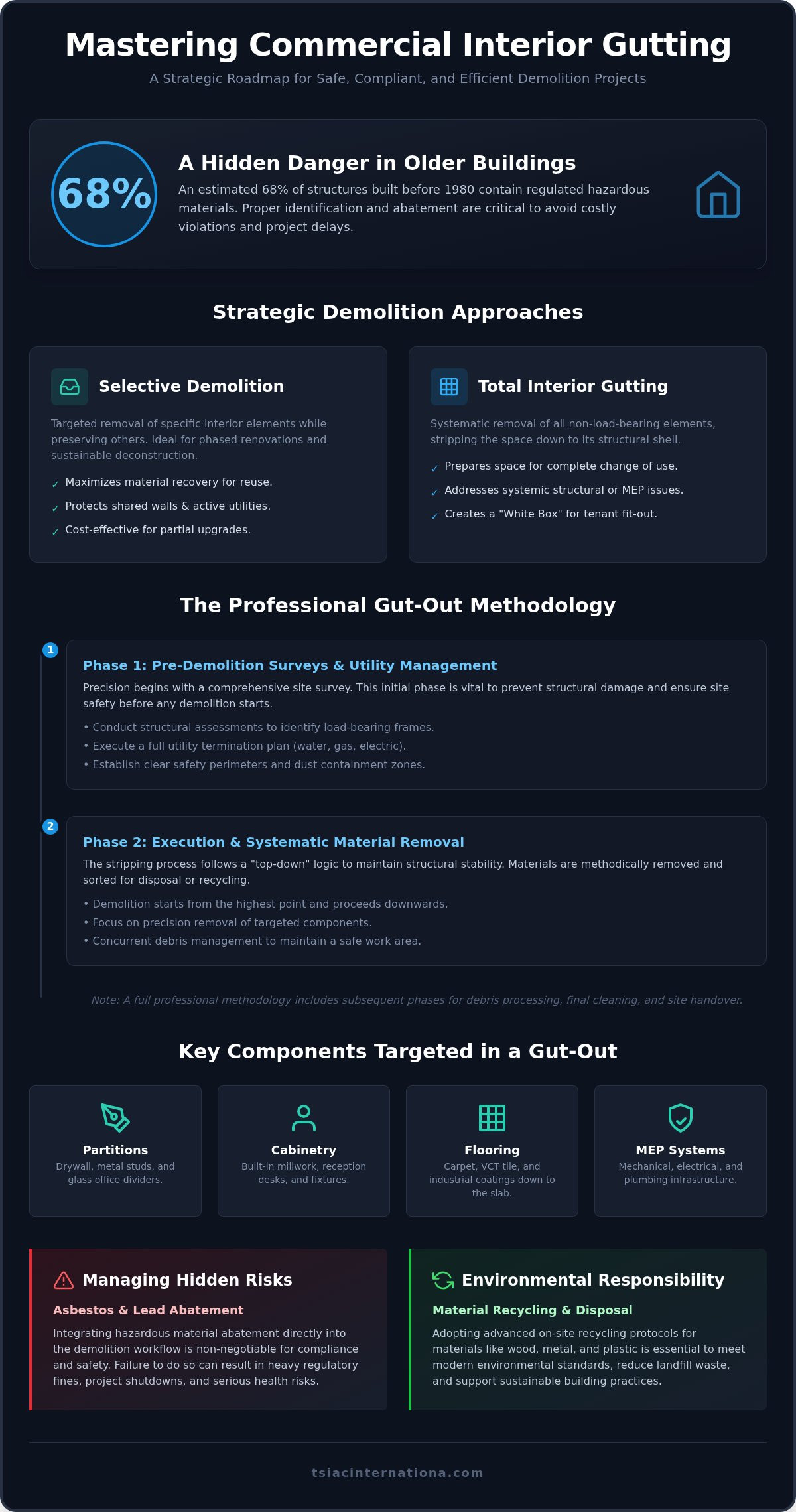
Interior gut-outs frequently expose friable materials hidden within wall cavities or beneath multiple layers of subflooring that initial inspections might overlook. Utilizing professional commercial interior gutting services ensures that these discoveries don’t derail the project timeline. Experienced crews maintain the structural integrity of the building envelope while performing deep stripping; this prevents accidental damage to load-bearing elements during the removal of contaminated insulation or pipe lagging.

Selective Demolition and Hazardous Materials

A surgical approach allows for the removal of specific building wings while the rest of the facility remains operational. This precision is vital for hospitals or schools where total closure is impossible. Identifying lead-based paint and asbestos before the renovation starts prevents costly work stoppages. Projects must adhere to strict protocols, such as those defined by hazardous material abatement south carolina standards, which serve as a rigorous baseline for national safety compliance. Accurate pre-demolition surveys reduce the risk of 48-hour emergency shutdowns by 30% on average.

Efficiency Through Single-Source Contracting

Hiring one firm to handle both demolition and abatement reduces administrative overhead significantly. Contractors with 15+ years of experience understand the logistical complexities of managing hazardous waste streams alongside standard construction debris. This unified approach simplifies the chain of custody for toxic materials. The cost of asbestos removal 2026 is heavily influenced by disposal logistics; therefore, a single-source partner can leverage volume-based rates at specialized landfills to protect the project budget.

  • Unified debris management lowers hauling and disposal fees by consolidating logistics.
  • Single-source accountability eliminates disputes between different trades.
  • Streamlined permitting processes accelerate the overall project completion date.
  • Integrated safety plans ensure all personnel follow the same containment protocols.

Managing these complex job sites requires a fegyelmezett, engineering-focused mindset. When a single entity controls the demolition of interior partitions and the subsequent abatement, they can maintain airtight barriers more effectively. This level of control is essential for protecting the remaining building assets and ensuring the safety of all occupants.

The Cost of Compliance: Permits, Testing, and Disposal

Regulatory frameworks for 2026 demand stricter adherence to EPA and OSHA protocols than ever before. These aren’t suggestions; they’re legal mandates that dictate the total cost of asbestos removal 2026. Failure to comply results in fines that often exceed the original project budget by 200% or more. Proper documentation ensures the safety of the structure and the people within it, providing a legal shield for property owners. Compliance is a specialized engineering task that requires meticulous planning and execution to avoid the long-term liabilities associated with toxic exposure.

Air Quality Monitoring and Post-Abatement Clearance

Third-party verification is the industry standard for risk mitigation. Commercial insurers typically require air clearance certificates before they’ll renew a policy or allow site re-entry. These tests use Phase Contrast Microscopy (PCM) or Transmission Electron Microscopy (TEM) to detect microscopic fibers. While TEM is more expensive, it provides a higher degree of accuracy that’s often required for schools and healthcare facilities. The process adds approximately 24 to 48 hours to the project timeline. This delay is a critical pause that prevents the cross-contamination of clean zones and ensures the cost of asbestos removal 2026 includes a guarantee of safety.

  • Independent Testing: Prevents conflicts of interest between the removal crew and the safety inspectors.
  • Liability Protection: Provides a “clean bill of health” for the building’s permanent records.
  • Site Re-entry: Ensures that air fiber counts are below the 0.01 f/cc threshold set by regulatory bodies.

Hazardous Waste Management and Recycling

Moving toxic materials requires specialized logistics and certified transport vehicles. Hazardous waste cannot go to standard municipal landfills. Transporters must maintain a strict chain of custody, documenting every mile from the abatement site to the certified disposal facility. TSIAC International integrates sustainable practices into this phase to maximize efficiency. By separating non-contaminated materials like steel framing, clean plastic, or wooden supports on-site, we reduce the total volume of waste sent to hazardous landfills.

This recycling strategy helps offset a portion of the disposal fees while meeting modern corporate environmental goals. All asbestos-containing materials (ACM) are double-bagged in 6-mil polyethylene, sealed, and labeled according to Department of Transportation (DOT) regulations. Maintaining a transparent manifest is the only way to prove that the toxic debris was handled with the necessary engineering precision. This fegyelmezett approach ensures that every gram of hazardous material is accounted for from removal to final burial.

Ensure your project meets all 2026 regulatory standards with a professional risk assessment. Contact our technical experts for a compliance-focused consultation.

Why Professional Abatement is a Strategic Investment

Viewing the cost of asbestos removal 2026 as a simple line-item expense is a mistake that often leads to catastrophic financial consequences. When property owners opt for “DIY” methods or low-bid contractors who lack industrial credentials, they inherit a legacy of liability. Improper handling frequently results in microscopic fibers settling into HVAC systems and porous surfaces, necessitating a secondary, much more expensive decontamination process. Since 2024, the EPA has intensified its oversight, and civil penalties for improper disposal now frequently exceed $80,000 per violation. Professional abatement is the only way to insulate yourself from these legal and financial risks.

Protecting Property Value and Human Health

A certified abatement report is a vital document for any real estate portfolio. Properties without documented clearance often see a 15% to 22% reduction in market value during the due diligence phase of a sale. By securing professional asbestos removal south carolina, owners ensure their assets remain liquid and attractive to institutional buyers. Beyond the balance sheet, the human cost is non-negotiable. Modern abatement protocols protect current occupants and future renovation crews from the health risks associated with friable materials. This proactive stance on safety drastically reduces the potential for long-term litigation that can haunt property owners for decades.

Choosing a Reliable Partner for 2026

Selecting a contractor requires looking beyond the initial quote to evaluate their track record in complex structural demolition. As we move into 2026, the industry is shifting toward more integrated solutions where abatement and engineering go hand-in-hand. TSIAC International approaches every hazardous project with a focus on mechanical precision. We understand that removing asbestos from a load-bearing structure or a complex mechanical room requires more than just masks and bags; it requires an engineering mindset to prevent structural damage.

The “TSIAC Gold Standard” represents our commitment to safety and technical excellence. This methodology ensures that every project is managed with the same rigor we apply to high-altitude industrial climbing or heavy steel fabrication. We don’t rely on guesswork. We provide a transparent, fixed-price framework that accounts for the specific technical challenges of your site. To protect your investment and ensure your facility meets all 2026 safety benchmarks, contact our team to request a detailed, fixed-price contract for your upcoming project. Our measured, authoritative approach ensures your project stays on schedule and within the projected cost of asbestos removal 2026 without compromising the integrity of your building.

Securing Your Project’s Future with Precise Abatement Planning

Navigating the cost of asbestos removal 2026 demands a transition from reactive maintenance to rigorous structural strategy. Budgeting for the upcoming year must account for shifting disposal regulations and the logistical complexities of hazardous material transport. Integrating abatement with commercial interior gutting remains the most efficient method to minimize site downtime. It’s a technical challenge that requires an engineering mindset rather than a simple cleanup crew. Technical precision in the early stages prevents expensive remediation later.

TSIAC International brings 15+ years of structural removal expertise to every site, ensuring full regulatory compliance and environmental recycling for all hazardous waste. Our certified hazardous material abatement specialists focus on controlled execution, even in the most difficult industrial environments. By prioritizing technical accuracy over shortcuts, you protect both your timeline and your long-term assets. We’re ready to provide the precision your infrastructure requires. Our team handles the complex logistics so your project remains on schedule and within the defined safety parameters.

Contact TSIAC International for a Professional Abatement Quote

Your path to a safe, compliant, and structurally sound facility begins with professional oversight and a commitment to engineering excellence.

Frequently Asked Questions

Is asbestos removal an emergency that increases the cost?

Emergency asbestos removal increases total project costs by 20% to 50% because contractors must mobilize specialized teams and equipment within 24 hours. These situations typically occur after structural failures or pipe bursts that expose friable materials to the air. The cost of asbestos removal 2026 includes these premiums for immediate containment and the rapid deployment of negative air machines to ensure site safety.

Can I remove asbestos floor tiles myself to save money in 2026?

You shouldn’t remove asbestos floor tiles yourself because the risk of fiber release outweighs any potential savings. While some local jurisdictions allow homeowners to perform DIY work, the EPA and OSHA warn that breaking 9-inch or 12-inch vinyl tiles creates hazardous dust. Professionals use wet-stripping methods and HEPA-filtered vacuums to prevent contamination. DIY mistakes often lead to decontamination bills that cost three times more than the original abatement price.

How long does a typical professional asbestos abatement project take?

A standard professional abatement project for a 1,500-square-foot residential area typically takes 2 to 5 business days. This timeframe includes one day for setting up airtight containment zones and another day for the mandatory third-party air clearance testing. Larger commercial projects or complex industrial sites may require 10 to 15 days. The duration depends heavily on the accessibility of the material and the required drying times for encapsulants.

Does homeowners or commercial insurance cover the cost of asbestos removal?

Standard insurance policies generally exclude asbestos removal unless the damage results from a covered peril like fire or a sudden water pipe burst. Most ISO HO3 policies contain a “Pollution Exclusion” clause that removes liability for hazardous material abatement during routine renovations. Property owners should expect to pay out of pocket for 95% of removal scenarios. Always verify your specific coverage limits with a licensed agent before starting any demolition work.

What is the difference between asbestos removal and encapsulation costs?

Encapsulation costs approximately 15% to 25% less than full removal because it seals the hazardous fibers behind a protective membrane instead of extracting them. While this reduces the immediate cost of asbestos removal 2026, it requires a long-term management plan and inspections every 6 to 12 months. Removal is a permanent solution that eliminates the hazard entirely. Most structural engineers recommend full removal for high-traffic areas where physical damage to the sealant is likely.

Are there specific permits required for asbestos removal at the national level?

National regulations require a NESHAP notification for any project involving more than 160 square feet or 260 linear feet of regulated materials. This federal mandate involves a 10-day waiting period before any work can begin on the site. Contractors must also follow 40 CFR Part 61 standards for wetting and labeling waste. Violating these permit requirements can result in federal civil penalties that exceed $37,000 per day of non-compliance.

How do contractors calculate the disposal fees for hazardous materials?

Contractors calculate disposal fees based on the total tonnage or cubic yardage of the hazardous waste generated during the project. EPA-approved landfills charge tipping fees that are often 300% higher than standard construction debris rates. These costs also include specialized transport in 6-mil polyethylene bags and the generation of Waste Shipment Records (WSR). Each load must be tracked from the job site to the final burial cell to ensure legal compliance.

What happens if more asbestos is discovered during the demolition process?

Work must stop immediately if workers discover suspected asbestos, as mandated by OSHA standard 29 CFR 1926.1101. The site supervisor is legally required to seal the area and hire a certified industrial hygienist to perform bulk sampling. This discovery usually adds 3 to 7 days to the project timeline for testing and the creation of a new abatement plan. Resuming work without a professional survey can lead to massive legal liabilities and health hazards for everyone on site.

Asbestos Abatement Services: The 2026 Professional Buying Guide

In 2024, approximately 18% of large scale industrial renovations were halted by regulatory bodies because of inadequate initial site surveys. You…

In 2024, approximately 18% of large scale industrial renovations were halted by regulatory bodies because of inadequate initial site surveys. You likely understand that discovering hazardous materials mid-project is a professional nightmare that triggers immediate delays and massive potential liabilities. Selecting the right asbestos abatement services is no longer just a safety requirement; it’s a critical strategic decision for your property’s 2026 valuation and legal standing.

We agree that the confusion surrounding varying technical quotes and complex remediation methodologies often leads to decision paralysis. This guide provides the engineering precision you need to evaluate contractors and secure full regulatory documentation for your permanent records. We’ll break down the specific criteria for hiring specialized teams, ensuring you achieve zero contamination while maintaining a 100% predictable workflow for your next renovation phase.

Key Takeaways

  • Understand the critical regulatory distinctions between standard demolition and hazardous material remediation to ensure total site safety and compliance.
  • Learn how to evaluate professional asbestos abatement services by verifying specialized insurance, bonding, and advanced technical monitoring capabilities.
  • Discover the long-term ROI and safety implications of choosing between total removal, encapsulation, and enclosure for your specific facility needs.
  • Master the professional procurement roadmap, from initial laboratory testing to the development of site-specific work plans and regulatory notifications.
  • Explore the operational advantages of an integrated approach that combines hazardous material remediation with expert structural demolition for seamless project delivery.

Defining Professional Asbestos Abatement Services in 2026

Professional asbestos abatement services represent a specialized engineering discipline rather than a simple demolition task. This process involves the meticulous identification, containment, and elimination of asbestos-containing materials (ACM) to prevent the release of microscopic fibers. While standard demolition focuses on structural removal, remediation protocols prioritize atmospheric control and environmental safety. By 2026, the industry has shifted toward total elimination of even trace exposures following the EPA’s 2024 final rule on chrysotile asbestos. This transition ensures that property values remain intact during structural renovations. Failing to follow Asbestos abatement procedures can lead to legal liabilities and permanent contamination of a building’s internal systems.

The Science of Containment and Remediation

Professionals categorize materials as either friable or non-friable. Friable materials pose the highest risk because they crumble under hand pressure, releasing fibers instantly. Modern remediation relies on the physics of negative air pressure. We use high-efficiency particulate air (HEPA) filtration systems that capture 99.97% of particles as small as 0.3 microns. These systems create a vacuum that prevents fibers from escaping the work zone. Attempting DIY removal isn’t just dangerous; it’s a violation of federal safety statutes. Unqualified individuals lack the specialized equipment required to maintain these critical pressure differentials.

Regulatory Framework: EPA and OSHA Standards

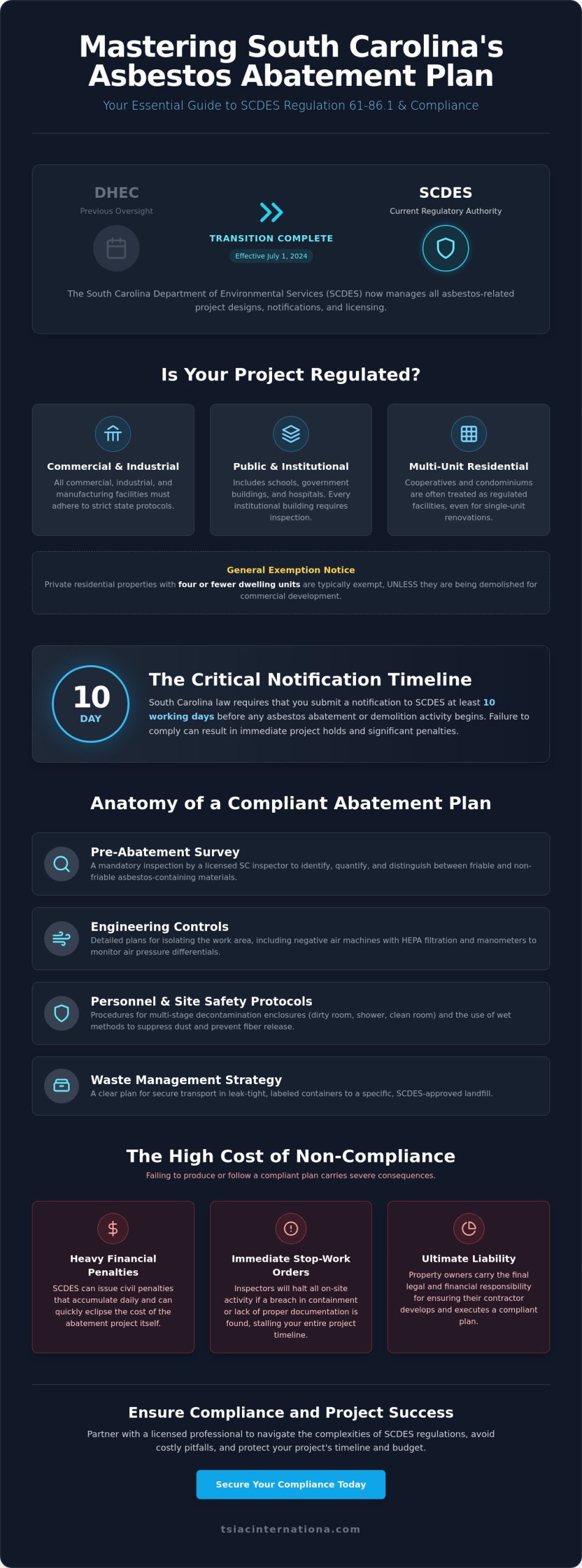
Compliance in 2026 is anchored in EPA NESHAP and OSHA standards. The EPA requires a 10-day notification before any activity disturbs more than 160 square feet of ACM. OSHA worker safety requirements under 29 CFR 1926.1101 protect the property owner from significant liability. If a worker isn’t properly protected, the owner shares the legal responsibility for long-term health claims. Every project must generate a rigorous paper trail. This includes the initial site survey, air clearance reports, and the final Waste Shipment Record (WSR). These documents prove the hazardous material reached a licensed landfill safely.

Engaging asbestos abatement services ensures that every technical step meets these 2026 benchmarks. It’s about protecting the structural integrity of the asset while maintaining a zero-exposure environment for occupants. Professional firms provide the engineering precision needed to handle “impossible” locations, such as high-rise elevator shafts or complex industrial boiler rooms, where standard methods often fail.

Key Criteria for Evaluating an Abatement Contractor

Selecting a partner for asbestos abatement services requires a rigorous technical audit. You aren’t just hiring a contractor; you’re managing a high-stakes environmental liability. Professional firms carry specialized Pollution Liability and Errors and Omissions (E&O) insurance with minimum limits of $5 million per occurrence. Standard general liability policies usually contain an “asbestos exclusion” clause, leaving the asset owner exposed to massive litigation risks if a fiber release occurs. Every technician must hold a state-validated license, and a dedicated project safety officer should oversee the site to ensure 100% compliance with OSHA 29 CFR 1926.1101.

Certifications and Insurance: Non-Negotiable Assets

Verification of credentials goes beyond viewing a certificate. You must confirm that the contractor’s bonding capacity matches the project scale. A firm with a 15-year history of clean safety records provides more security than a startup with lower premiums. This level of oversight mirrors the stringent protocols found in the University of Oregon’s asbestos program, which emphasizes continuous monitoring and documented compliance as the baseline for safety. Demand to see the last 24 months of worker training logs and medical surveillance records before signing any contract.

Technological Sophistication in Remediation

Modern asbestos abatement services rely on precision engineering. High-performance HEPA filtration units must maintain a negative pressure of at least -0.02 inches of water gauge within the work area. We use advanced wetting agents that penetrate porous materials 35% faster than standard water, significantly reducing the risk of airborne friability. Digital manometers and laser-based particle counters provide real-time data, allowing supervisors to adjust ventilation instantly. This technological edge is why many industrial clients seek specialized engineering solutions for complex structural environments.

  • Disposal Transparency: The contractor must provide a completed Waste Shipment Record (WSR) signed by the receiving landfill within 35 days of waste removal. This document is your only legal proof of proper disposal.
  • Structural Experience: Review past project performance in similar environments, such as high-rise HVAC systems or industrial boiler rooms. A contractor who understands the specific load-bearing constraints of your facility will avoid accidental damage.
  • Constant Supervision: A certified supervisor must remain on-site at all times. They manage the “dirty room” protocols and ensure no worker exits the containment area without following a 3-stage decontamination process.
  • On-site Monitoring: Independent third-party air monitoring should occur daily. This ensures that fiber counts remain below the permissible exposure limit of 0.1 fibers per cubic centimeter of air.

Strategic Mitigation: Removal vs. Encapsulation vs. Enclosure

Facility managers often mistake asbestos remediation for a single-track process. It isn’t. Professional asbestos abatement services require a calculated choice between removal, encapsulation, or enclosure. Each path carries distinct engineering requirements, cost structures, and long-term liability profiles. The U.S. Environmental Protection Agency (EPA) on asbestos confirms that management-in-place is a viable strategy if the material is in good condition, yet the decision must align with the building’s 10-year master plan. By 2026, property valuation trends show that “asbestos-free” certifications can increase asset liquidity by 15% compared to buildings with managed-in-place contaminants.

When to Choose Full Asbestos Removal

Total removal stands as the only permanent resolution for property owners seeking to eliminate long-term regulatory risk. If your 2026 capital improvement plan involves structural changes, removal is usually the only logical path. This strategy becomes vital when integrated with commercial interior gutting services. During a full interior demolition, hidden Asbestos-Containing Material (ACM) is almost certainly disturbed. Removing it before the main crew arrives prevents project shutdowns that can cost $5,000 or more per day in liquidated damages. It’s the most expensive upfront option, but it secures a “clean” status that simplifies future insurance renewals and real estate transactions.

Encapsulation and Enclosure: Tactical Alternatives

Encapsulation involves sealing fibers with a specialized chemical bond, typically a high-solids polymer penetrant or bridging mastic. This prevents fiber release without the disruption of physical extraction. Enclosure, conversely, requires building airtight mechanical barriers around the ACM, such as permanent impact-resistant panels or sheet metal jackets. These methods offer a 40% to 60% reduction in initial costs compared to full removal.

These aren’t “set and forget” solutions. They demand a rigorous Operations and Maintenance (O&M) program. Facility managers must conduct documented inspections every 6 to 12 months to ensure the barriers remain intact. Deferred maintenance on encapsulated materials often leads to air quality failures during routine building vibrations or minor plumbing repairs. If you don’t have the internal infrastructure to manage long-term monitoring, the initial savings of encapsulation will eventually be erased by the costs of specialized compliance audits.

The Professional Abatement Workflow: A Procurement Roadmap

Procuring professional asbestos abatement services requires a structured sequence to mitigate liability and ensure structural integrity. The 2026 standard for industrial safety dictates a five-stage engineering protocol that prioritizes containment and objective verification.

  • Initial Survey and Laboratory Analysis: Certified inspectors collect bulk samples from suspicious materials. These samples undergo polarized light microscopy (PLM) at NVLAP-accredited laboratories to determine fiber concentration.
  • Regulatory Compliance and Planning: Contractors must file a 10-day NESHAP notification with environmental agencies before disturbing more than 160 square feet of regulated material. The site-specific work plan outlines the exact methodology for extraction.
  • Containment and Decontamination: Crews build airtight barriers using 6-mil fire-retardant polyethylene. A three-stage decontamination unit provides a controlled transition for personnel and equipment.
  • Precision Removal: Technicians use wet-removal methods to keep fibers from becoming airborne. All waste is double-bagged in labeled, 6-mil poly bags and sealed with a gooseneck tie.
  • Final Clearance: The project concludes only after air samples meet the EPA AHERA standard of less than 0.01 fibers per cubic centimeter.

Pre-Project Planning and Site Preparation

Site preparation is a logistical exercise in risk isolation. Professional crews begin by de-energizing electrical circuits and executing a 100% HVAC shutdown. All supply and return vents are sealed with critical barriers to prevent cross-contamination. This phase includes a pre-work walkthrough with facility managers to confirm that 100% of fire suppression systems remain operational but protected. Clear communication with stakeholders is vital; we provide a 48-hour mobilization notice to all adjacent occupants to maintain site transparency and safety.

The Final Clearance: Ensuring a Clean Bill of Health

Independent verification is the only way to guarantee safety. A third-party industrial hygienist must conduct the final air monitoring to avoid conflicts of interest. While PCM testing is common for many commercial sites, TEM (Transmission Electron Microscopy) is the gold standard for 2026 high-occupancy environments because it identifies asbestos fibers as small as 0.01 microns. Your final close-out package should include waste shipment records (WSR), worker certifications, daily pressure logs, and the lab-certified clearance report. This document acts as your permanent legal defense against future environmental claims.

For projects requiring this level of technical precision and documented safety, partner with our expert asbestos abatement services team.

TSIAC International: The Gold Standard in Hazardous Remediation

TSIAC International brings over 15 years of disciplined experience to high-stakes hazardous material projects. We don’t just remove waste; we engineer solutions for the most complex abatement challenges. Our technical precision makes us the primary choice for government agencies and commercial enterprises requiring absolute compliance. We maintain a 100% project completion rate on sites with high structural risk or environmental sensitivity, ensuring that every phase of the remediation meets rigorous federal and state standards.

Unmatched Expertise in Complex Environments

Managing remediation in occupied buildings requires more than just standard PPE. It demands a “no-compromise” safety culture. We’ve successfully executed asbestos abatement services in sensitive structural shells where integrity was compromised, ensuring zero cross-contamination. Our track record spans 500+ residential projects and heavy industrial facilities where precision is non-negotiable. This rigorous approach reduces your project’s risk profile, preventing costly regulatory delays or long-term health liabilities that arise from substandard work.

Seamless Integration with Demolition Services

Efficiency isn’t just about speed; it’s about a unified workflow. Our integrated model combines abatement with structural demolition for seamless project delivery. Using a single contractor eliminates the communication gaps that often plague multi-vendor sites. By consolidating these services, we’ve helped clients reduce mobilization costs by an average of 18% through shared logistics, equipment, and on-site management teams.

  • Rigorous waste management protocols that prioritize recycling and environmental stewardship.
  • Unified project management for both hazardous material abatement and site clearing.
  • Strict adherence to NESHAP and OSHA standards, providing detailed documentation for every cubic yard of waste removed.
  • Advanced containment technology that allows for continued operation in adjacent building wings.

Our commitment to environmental stewardship isn’t a secondary goal. It’s a core component of our technical execution. We implement waste management protocols that prioritize recycling, often diverting up to 85% of non-hazardous debris from landfills during integrated projects. This level of detail is why technical directors at government and commercial agencies prefer our partnership. We provide the documentation, safety data, and engineering precision required for high-security and high-liability environments. Our team handles the heavy lifting, from initial site assessment to final waste disposal, adhering to the strictest environmental standards. Contact TSIAC International today for a professional project consultation to secure your site’s future with asbestos abatement services you can trust.

Securing Your Infrastructure for 2026 and Beyond

Navigating the complexities of hazardous material remediation requires more than just standard compliance; it demands a technical partnership rooted in engineering precision. By 2026, the distinction between simple removal and strategic encapsulation will define the lifecycle of your industrial assets. Selecting a contractor based on rigorous procurement roadmaps ensures your project stays on schedule and within regulatory bounds. Success depends on moving from reactive fixes to proactive, expert led management strategies.

TSIAC International brings 15+ years of hazardous material experience to every site, specializing in the difficult locations that others often avoid. We’re fully licensed and insured for high liability remediation, providing a layer of financial and operational security for your facility. Our team delivers comprehensive close-out documentation for every project, ensuring your records are audit ready and transparent. When you prioritize long term structural integrity, choosing professional asbestos abatement services becomes a vital investment in your property’s future. Secure your property with TSIAC International’s professional abatement services.

Let’s build a safer environment through engineering excellence and unwavering reliability.

Frequently Asked Questions

What is the average cost of asbestos abatement services in 2026?

Average costs for asbestos abatement services in 2026 range from $15 to $35 per square foot. A standard 1,500 square foot residential project typically requires a budget between $4,500 and $9,000 for full remediation. These figures include labor, specialized filtration equipment, and disposal fees. Costs have risen 8% since 2024 because of stricter landfill regulations and updated safety requirements.

How long does a typical asbestos removal project take to complete?

A typical asbestos removal project takes 2 to 5 days to complete for standard residential or small commercial properties. Larger industrial sites or complex structural removals often extend to 14 days. The timeline accounts for site preparation, the actual removal process, and the final 24 hour air clearance testing period. We ensure every phase meets engineering precision to prevent project delays.

Can I stay in my building during the asbestos abatement process?

You can’t stay in the immediate work area or any connected zones while abatement is active. Safety protocols require the establishment of negative pressure enclosures that prevent fiber migration to clean areas. While some large facilities allow partial occupancy in separate wings, residential projects usually require a total evacuation for the 72 hour duration of the high risk phases. It’s the only way to ensure 100% safety.

What is the difference between an asbestos inspection and an abatement service?

An asbestos inspection identifies the presence and location of hazardous materials, while an abatement service involves the physical removal or encapsulation of those substances. Inspectors use polarized light microscopy to confirm fiber types in a laboratory setting. Abatement teams follow these technical reports to execute a remediation plan using HEPA filtration and specialized containment barriers to secure the site.

How do I know if my building needs asbestos abatement before a renovation?

You’ll need a professional survey if your building was constructed before 1980, as 90% of structures from that era contain asbestos in floor tiles or pipe insulation. OSHA regulation 1910.1001 mandates an inspection before any renovation that might disturb structural components. If your 2026 renovation plan involves cutting into walls or ceilings, a certified technician must pull samples for laboratory verification first.

What certifications should I look for in an asbestos removal company?

Look for contractors holding EPA Model Accreditation Plan (MAP) certification and a valid state asbestos contractor license. Every on site supervisor should possess an OSHA 40 hour HAZWOPER certification to prove they’re trained for hazardous waste operations. Verification of these credentials through the state database ensures the team follows the 2026 safety standards for asbestos abatement services and maintains high professional integrity.

What happens to the asbestos waste after it is removed from my property?

Asbestos waste is sealed in double layers of 6 mil polyethylene bags and transported to a licensed Type I hazardous waste landfill. Each shipment requires a Waste Shipment Record (WSR) that tracks the material from your property to the final disposal cell. These specialized facilities bury the sealed containers under 6 inches of non asbestos material within 24 hours of arrival to prevent fiber release.

Is lead paint removal usually included in asbestos abatement services?

Lead paint removal isn’t standard in a basic asbestos contract, though many firms offer it as a separate, specialized service. While both involve hazardous materials, they require different chemical strippers and containment protocols under EPA RRP rules. You should request a combined environmental remediation quote if your pre 1978 building requires both lead and asbestos mitigation to streamline the project timeline effectively.

Asbestos Abatement Cost in Charleston, SC: 2026 Professional Pricing Guide

Did you know that 75% of Charleston structures built before 1981 still house hazardous minerals that can halt a renovation in its tracks? When you’re…

Did you know that 75% of Charleston structures built before 1981 still house hazardous minerals that can halt a renovation in its tracks? When you’re managing a historic property or a mid-century commercial site, understanding the asbestos abatement cost charleston sc becomes a matter of structural integrity and legal liability. You likely recognize that cutting corners on environmental remediation isn’t an option when the South Carolina Department of Environmental Services (SCDES) mandates strict oversight for every square foot disturbed. It’s frustrating to face a demolition deadline while worrying about hidden line items or air quality failures that could endanger your occupants.

We agree that professional transparency is the only way to manage industrial risks effectively. This guide delivers a professional decision-making framework designed to help you secure a predictable cost estimate while maintaining 100% regulatory compliance. We’ll examine current 2026 pricing trends for residential and commercial projects, explain the mandatory SCDES notification protocols, and outline the specific steps required to transition from a contaminated site to a cleared workspace ready for your next phase of construction.

Key Takeaways

  • Establish a realistic budget by understanding the $5 to $20 per square foot regional pricing standard and why mobilization fees are a necessary baseline for safety.
  • Learn how technical factors like material friability and structural accessibility create significant variations in your professional remediation estimate.
  • Ensure full regulatory compliance by navigating SCDES licensing protocols and the mandatory role of independent air monitoring for final site clearance.
  • Analyze the comprehensive asbestos abatement cost charleston sc to see how certified removal protects property resale value and eliminates the liability of DIY mistakes.
  • Explore how integrated abatement and debris recycling strategies from industry veterans can streamline complex projects while maintaining environmental responsibility.

Calculating Asbestos Abatement Cost in Charleston, SC: 2026 Framework

Estimating the asbestos abatement cost charleston sc requires a technical understanding of current market conditions and local regulatory compliance. Regional remediation projects in 2026 typically command pricing between $5 and $20 per square foot, depending on the material’s friability and accessibility. For small-scale interventions, professional contractors establish a baseline minimum mobilization fee ranging from $1,200 to $1,500. This initial charge covers the deployment of specialized HEPA filtration equipment and the setup of physical decontamination units. This framework accounts for 2026 labor rates, where specialized hazardous material handlers in the Lowcountry earn 8.5% more than 2024 averages due to increased certification requirements and rising insurance premiums.

Before initiating a project, owners should consult a comprehensive overview of asbestos to understand why strict safety protocols drive these underlying costs. Categorizing the project by scope is essential for budget accuracy. Residential projects often involve smaller volumes but higher labor intensity per square foot. Commercial projects benefit from economies of scale but face more rigorous air monitoring standards. It’s a matter of engineering precision to ensure total containment, regardless of the building’s age or size.

The Baseline: What Influences the Initial Quote?

Square footage is the primary metric for initial estimates, yet the total volume of material remains the secondary driver of disposal fees. Encapsulation, which involves sealing the fibers to prevent release, generally costs 40% less than full removal. However, full removal is the only permanent solution for structural longevity and future renovations. Project duration directly impacts overhead; site monitoring and negative air pressure maintenance must continue 24 hours a day until a third-party laboratory confirms final air clearance.

Fixed-Price vs. Variable Remediation Contracts

Professional contractors prioritize transparent, line-item estimates to ensure fiscal predictability for the client. Fixed-price contracts for structural demolition and abatement provide the most security for large-scale budgets. These agreements usually include a 10% contingency clause to address hidden materials discovered behind wall cavities or within subflooring. Using a asbestos abatement cost charleston sc model that emphasizes fixed pricing prevents budget creep during the execution phase. Detailed quotes allow project managers to track exactly where capital is allocated, from specialized PPE to legal disposal manifests at approved hazardous waste facilities. We don’t believe in hidden fees, only technical accuracy.

Primary Technical Cost Drivers: Material Type and Accessibility

Charleston’s diverse inventory of historic and industrial properties means that a single flat rate for remediation doesn’t exist. The total asbestos abatement cost charleston sc depends on the physical state of the material and how difficult it’s to reach. Professional teams categorize these projects based on technical risk factors that dictate the level of equipment and labor hours required for safe completion.

Friable vs. Non-Friable Asbestos Costs

The distinction between friable and non-friable materials is the most significant price factor in any project. Friable asbestos, such as popcorn ceilings or thermal pipe insulation, crumbles easily into a fine powder. This fragility increases the Asbestos Exposure and Cancer Risk for everyone in the vicinity, necessitating rigorous containment. Conversely, non-friable materials like vinyl floor tiles or cement siding keep fibers locked within a solid matrix. Because friable materials require 100% airtight seals and advanced filtration, they typically cost 2 to 3 times more per square foot to remove than non-friable alternatives.

Site Logistics and Containment Requirements

Logistical complexity often dictates the final invoice more than the volume of material itself. Removing asbestos from a cramped 1920s attic crawlspace involves higher labor costs than an open-plan warehouse. Our technical teams must factor in several critical components:

  • Negative Pressure Enclosures: We build custom plastic barriers and use industrial blowers to ensure no fibers escape the work zone.
  • HEPA Filtration: Systems must achieve a 99.97% efficiency rating and maintain at least 4 air changes every hour.
  • Decontamination Units: Multi-stage shower systems for personnel are mandatory for high-risk friable projects.
  • Structural Integrity: If a building has over 12% moisture damage or existing rot, we must install temporary shoring to protect the abatement team.

Height adds another layer of expense. Projects involving multi-story industrial facades or ceilings over 15 feet require specialized scaffolding or scissor lifts. These mechanical requirements increase the asbestos abatement cost charleston sc due to the additional equipment rental and the slower pace of work at elevation. When dealing with complex structural challenges, engineering precision is the only way to ensure both safety and budget stability. We don’t guess on safety; we calculate every variable before the first seal is placed.

Regulatory Compliance and Disposal Fees in South Carolina

Compliance isn’t optional. It’s a foundational cost driver in any professional project. In South Carolina, the 2026 regulatory landscape dictates that every abatement action follows a rigid sequence of notifications and inspections. Adhering to South Carolina Department of Environmental Services (SCDES) regulations ensures that every project meets the current safety benchmarks. These mandates require specialized personnel, including licensed supervisors and air samplers, whose credentials must be verified before work begins. Their expertise adds a layer of precision that protects the property owner from future liabilities.

Professional air monitoring serves as the final gatekeeper for project clearance. An independent third-party consultant must conduct aggressive air clearance testing to confirm the area is safe for re-occupancy. This process typically adds $500 to $1,500 to the total bill. While it’s an additional expense, it provides the “Chain of Custody” documentation required by insurance providers and legal entities. This paperwork proves that the hazardous material was handled, transported, and disposed of according to federal and state law, shielding the owner from the $25,000 per-day fines associated with improper handling.

Permitting and Notification Requirements

State law requires a mandatory 10-day notification period for any renovation or demolition involving more than 160 square feet of asbestos-containing material. This waiting period is non-negotiable and impacts the project timeline. Administrative fees for these notifications generally range from $50 to $1,000. Skipping these steps is a financial disaster; the asbestos abatement cost charleston sc is always lower than the cost of an EPA enforcement action. Fines for non-compliance in the Charleston region have historically reached five figures for single-family residential violations.

Hazardous Waste Transportation and Landfill Fees

Asbestos cannot go to a standard municipal landfill. It requires specialized transportation in leak-tight, 6-mil poly-lined containers. Landfill “tipping fees” for hazardous waste are significantly higher than standard debris, often costing between $75 and $150 per ton. Since Charleston has limited local options for hazardous waste disposal, hauling costs often include long-distance transport to regional facilities like those in Pinewood. These logistics account for approximately 15% to 25% of the total asbestos abatement cost charleston sc, depending on the volume of waste generated during the removal phase.

The ROI of Professional Abatement vs. Hidden DIY Risks

Choosing a $50 home test kit or following online forum advice to “just wet it down” creates a dangerous false economy. While the initial asbestos abatement cost charleston sc might seem high, the long term financial exposure of DIY errors is immense. Improper handling leads to secondary contamination; this often forces a 400% increase in remediation costs later when microscopic fibers settle into HVAC systems and porous materials. Professional intervention utilizes HEPA-filtered negative pressure zones to ensure the hazard is removed, not relocated.

Liability and Property Value Preservation

A certified abatement letter serves as a critical legal shield for any asset owner. In the 2026 Charleston real estate market, residential properties lacking professional clearance documentation often see a 12% to 15% reduction in final offer prices. For commercial transactions, lenders require a Phase I Environmental Site Assessment before releasing funds. Professional documentation acts as an insurance safeguard. It prevents the $250,000 legal claims that typically arise from cross-contamination of neighboring properties or future occupant exposure. A “certified clean” status isn’t just a safety metric; it’s a value multiplier for your investment.

Efficiency in Selective and Structural Demolition

Professional project management integrates asbestos removal directly with the interior gutting phase. This coordination reduces the total construction timeline by an average of 14 days compared to fragmented, multi-contractor schedules. In historic Charleston renovations, surgical removal of pipe lagging or floor mastic is 30% more cost-effective than total structural demolition. Expert teams identify which materials require full containment and which can be managed via localized methods. This precision prevents the stop-work orders that occur when uncertified crews accidentally disturb hidden hazardous materials during a standard renovation. We treat abatement as an engineering task, ensuring your site is sterile and ready for the next phase of construction without delay.

Safe project execution requires more than just masks and water; it demands technical precision and documented compliance. Consult with our specialists to secure your property’s value through professional abatement.

TSIAC International: Integrated Abatement and Demolition Solutions

TSIAC International brings 15 years of technical field experience to South Carolina’s complex industrial and residential landscapes. Since 2009, we’ve managed high-stakes projects ranging from historic downtown Charleston renovations to large-scale industrial sites. Our operational model focuses on eliminating the financial uncertainty often associated with hazardous material removal. We provide fixed-price contracts that lock in your budget from day one. This transparency ensures the asbestos abatement cost charleston sc property owners expect remains stable throughout the project lifecycle.

Our integrated approach allows for a seamless transition from hazardous material removal to structural or selective demolition. By managing both phases, we eliminate the scheduling gaps and communication breakdowns that occur when hiring multiple subcontractors. We don’t just clear the site; we prepare it for its next phase of life with engineering precision. This unified workflow reduces overhead and ensures that safety protocols remain consistent from the first glove touch to the final debris haul.

The TSIAC Advantage: Safety and Sustainability

Environmental stewardship is a core pillar of our operations. We implement aggressive debris sorting protocols that divert wood, metal, and plastic from local landfills. These recycling practices help stabilize the asbestos abatement cost charleston sc clients face by lowering the fees associated with hazardous waste transport. Our team maintains rigorous safety standards and holds all necessary South Carolina certifications. We’ve built a track record of reliability with a diverse portfolio, including:

  • Private homeowners requiring residential safety clearances for renovations.
  • General contractors managing multi-phase commercial developments.
  • Government agencies overseeing municipal infrastructure and school district projects.

Next Steps: Requesting Your Professional Site Assessment

Preparing for an abatement project requires specific documentation. Please have your building’s age records and any existing environmental survey reports ready for our initial consultation. We manage the entire regulatory burden for you. Our team handles the mandatory SCDES 10-day notifications and secures all necessary local permits to ensure full legal compliance. We specialize in “impossible” locations and technical challenges that other firms avoid. Secure your project timeline with professional asbestos abatement from TSIAC International to ensure your site is safe, compliant, and ready for its next chapter.

Secure Your Charleston Property for 2026 and Beyond

Managing the asbestos abatement cost charleston sc property owners face requires a technical approach that prioritizes long term structural integrity. Our 2026 framework highlights that material type and site accessibility are the two primary drivers of project budgets. While DIY methods might seem cost effective, they frequently lead to 100% contamination of ventilation systems. This can increase remediation expenses by 500% or more. Professional intervention by SCDES licensed experts ensures every project meets strict EPA standards. TSIAC International brings 15+ years of industrial experience to every job site, handling the complex accessibility challenges that smaller firms often avoid. We’ve refined our technical processes to balance rigorous safety with engineering precision. You don’t have to navigate these regulatory complexities or disposal fees on your own. Our team provides the stability and technical expertise needed to protect your investment and your health.

Request a Professional Abatement Quote from TSIAC International

Your property’s safety is a measurable asset that begins with a single, expert assessment from a partner you can trust.

Frequently Asked Questions

How much does it cost to remove asbestos from a 1,500 sq. ft. home in South Carolina?

Removing asbestos from a 1,500 square foot residence in South Carolina typically costs between $10,500 and $31,500 based on 2026 market projections. This estimate assumes a standard rate of $7 to $21 per square foot for common materials like flooring or popcorn ceilings. Total expenses fluctuate based on the friability of the material and the complexity of the containment zones required to meet SCDHEC safety protocols.

Does insurance typically cover the cost of asbestos abatement?

Standard homeowners insurance policies in South Carolina usually exclude asbestos abatement costs unless the fibers were released by a covered peril like a fire or a sudden pipe burst. Most policies issued by major carriers contain specific pollution exclusions that categorize asbestos as a hazardous contaminant. You should verify your specific policy endorsements; only 12 percent of standard residential plans include environmental remediation riders for elective renovations.

Is it cheaper to encapsulate asbestos or remove it entirely?

Encapsulation is 25 to 40 percent cheaper than full extraction because it avoids high disposal fees and intensive labor requirements. It’s a viable technical solution for non-friable materials that remain in good physical condition. However, full removal eliminates future liability and potential property value decreases. Choosing the right method depends on your long-term renovation plans and the 10-year maintenance schedule for the sealant.

What is the average cost for asbestos testing before abatement starts?

Professional asbestos testing in the Charleston area averages $450 to $850 for a standard residential assessment. This price includes a physical inspection by a licensed technician and laboratory analysis of 3 to 5 samples using Polarized Light Microscopy. Getting an accurate survey is the first step in determining the overall asbestos abatement cost charleston sc homeowners will face before starting a structural renovation.

How do South Carolina disposal fees impact the total project price?

Disposal fees contribute approximately 12 to 18 percent of the total project invoice due to strict SCDHEC waste manifest requirements. Hazardous waste landfills in South Carolina charge specific tipping fees that range from $65 to $110 per ton for asbestos-containing material. These costs include specialized double-bagging materials and the logistics of transporting hazardous cargo to a permitted Class 3 landfill facility.

Can I stay in my home during the asbestos removal process?

Residents shouldn’t remain in the home while active abatement is occurring within the living space for safety reasons. Technicians establish negative pressure enclosures and decontamination units that restrict access to the work zone for 24 to 72 hours. While exterior removals might allow you to stay inside, internal projects require a clearance certificate from a third-party air monitor before the site is safe for re-entry.

What happens if I ignore asbestos during a renovation?

Ignoring asbestos during a renovation can lead to civil penalties of up to $10,000 per day from South Carolina regulatory agencies. Beyond legal risks, disturbing materials like pipe insulation or floor tiles releases microscopic fibers that cause permanent respiratory damage. If a contractor discovers undocumented asbestos, they’ll stop work immediately, which often increases the asbestos abatement cost charleston sc projects incur due to emergency mobilization fees.

How long does a typical asbestos abatement project take to complete?

A standard residential abatement project takes 3 to 5 business days to complete from initial setup to final air clearance. The first day involves sealing the area with 6-mil polyethylene sheeting and installing HEPA filtration units to create a controlled environment. Removal and cleaning occupy the middle days, while the final 24 hours are reserved for mandatory air quality testing and laboratory verification of the results.

Professional Asbestos Removal Services: The Complete Guide to Safe Abatement in 2026

In 2026, a single microscopic fiber of disturbed chrysotile can devalue a commercial property by 15% in less than 24 hours if the abatement process…

In 2026, a single microscopic fiber of disturbed chrysotile can devalue a commercial property by 15% in less than 24 hours if the abatement process fails to meet updated EPA strictures. You likely recognize that managing an aging industrial or residential facility requires a calculated approach to hazardous materials. It’s a high-stakes environment where any error in professional asbestos removal services leads to more than just health risks; it triggers legal liabilities and expensive project delays. You need a partner who views safety through the lens of engineering precision rather than just a checklist.

You’ve probably felt the anxiety of navigating shifting safety standards while trying to keep a project on schedule. This guide provides the technical roadmap required to secure services that guarantee 100% regulatory compliance and a certified clean environment for your occupants. We’ve compiled expert insights on the latest OSHA safety protocols and the specific documentation necessary for future property sales. You’ll learn how to identify specialized solutions for difficult-to-reach locations and understand the 2026 cost structures for complex abatement projects. By the end of this analysis, you’ll have the clarity to eliminate hazardous materials while maintaining total control over your project’s budget and timeline.

Key Takeaways

  • Master the critical distinctions between removal, encapsulation, and enclosure to determine the most effective strategy for managing hazardous materials on your property.
  • Understand the engineering behind safety, including the implementation of airtight poly-sheeting barriers and negative air pressure systems to prevent site contamination.
  • Ensure full regulatory compliance by learning how to navigate EPA’s NESHAP requirements and OSHA’s strict standards for site safety and air monitoring.
  • Use our expert checklist to verify essential credentials, such as pollution occurrence insurance, when selecting professional asbestos removal services for your next project.
  • Explore the advantages of integrated abatement and demolition, where single-source contractors manage everything from interior gutting to high-level environmental recycling.

What are Professional Asbestos Removal Services?

Professional asbestos removal services involve a rigorous technical discipline known as asbestos abatement. This process focuses on the identification, containment, and physical extraction of asbestos-containing materials (ACMs) from a structure. It’s not a simple cleaning task; it’s a highly regulated engineering control designed to prevent the release of microscopic silicate fibers into the air. When these fibers remain undisturbed, they pose a negligible risk. However, during renovation or demolition, they become airborne and easily inhaled. Specialized asbestos abatement procedures ensure that these materials are handled within sealed environments using HEPA-filtered negative air pressure systems.

Property owners must understand the distinction between removal, encapsulation, and enclosure. Removal is the only permanent solution, as it completely eliminates the hazard from the premises. Encapsulation involves treating the ACM with a liquid sealant that binds the fibers together or coats the material to prevent fiber release. Enclosure involves building a permanent, airtight barrier around the asbestos. While encapsulation and enclosure are valid management strategies, they require ongoing monitoring and don’t eliminate the underlying liability. For most commercial properties and multi-family residential buildings with more than four units, professional intervention isn’t just a safety choice; it’s a legal mandate under EPA NESHAP regulations and South Carolina DHEC requirements.

Asbestos was integrated into over 3,000 different building products throughout the 20th century. In South Carolina, our team frequently identifies these materials in structural fireproofing applied to steel beams, 9×9 inch vinyl floor tiles, and acoustic “popcorn” ceilings installed before 1981. Other common locations include thermal system insulation on boilers and pipes, as well as exterior cement siding. Identifying these risks requires a certified inspector to take bulk samples for laboratory analysis before any structural work begins.

The Persistent Danger: Why Asbestos Still Matters in 2026

Asbestos remains a primary concern in 2026 because of the long latency period associated with respiratory diseases. It often takes 20 to 50 years after initial exposure for conditions like mesothelioma or asbestosis to manifest. Since many South Carolina structures built between 1940 and 1980 are now reaching their renovation cycles, the risk of disturbing dormant fibers is at a peak. We follow the “disturbing the fibers” rule: dormant asbestos is often safer than a poorly executed removal attempt that lacks proper containment. Professional asbestos removal services ensure that legacy materials don’t become modern health liabilities.

Friable vs. Non-Friable Asbestos: Identifying the Risk

The state of the material determines the immediate danger level. Friable asbestos, such as old pipe insulation or sprayed-on fireproofing, can be crumbled by simple hand pressure. This releases thousands of fibers instantly. Non-friable materials, like floor tiles or roofing felts, are more stable but become hazardous when subjected to mechanical force. Drilling, sanding, or grinding these surfaces turns a stable material into a friable one. A professional survey assesses the “state of repair” of these materials to determine if they can be managed in place or if immediate extraction is necessary for safety.

The Engineering of Safety: How the Abatement Process Works

Effective asbestos removal services rely on a rigorous, multi-stage engineering approach to isolate hazardous fibers. The process isn’t merely about disposal; it’s about the total control of a microscopic environment. Technicians treat every project as a high-stakes containment operation where the primary goal is preventing the migration of friable materials. Strict adherence to EPA asbestos regulations ensures that every stage of the process meets federal safety benchmarks. This systematic workflow prevents the contamination of adjacent spaces and protects building occupants from long-term health risks.

  • Step 1: Regulated Area Establishment. Technicians seal all HVAC vents, windows, and doors with two layers of 6-mil polyethylene sheeting. This creates an airtight barrier that isolates the work zone from the rest of the structure.
  • Step 2: Negative Air Pressure. Professionals install high-volume air machines to create a pressure differential. By pulling air out through HEPA filters, the system ensures that any accidental leaks pull clean air into the zone rather than pushing contaminated air out.
  • Step 3: Wet-Method Removal. To suppress dust, workers apply amended water, which contains chemical surfactants, to the asbestos-containing materials. This saturation prevents fibers from becoming airborne during the physical removal process.
  • Step 4: Three-Stage Decontamination. All personnel must pass through a series of connected chambers. This sequence includes a dirty room for equipment disposal, a shower room for personal cleaning, and a clean room for changing into street clothes.
  • Step 5: Final Clearance Testing. After removal and HEPA vacuuming, a third-party laboratory conducts air sampling. They use Phase Contrast Microscopy (PCM) or Transmission Electron Microscopy (TEM) to verify that fiber counts are below 0.01 fibers per cubic centimeter.

The Role of HEPA Filtration and Negative Air Machines

Negative air pressure is the engineering standard for safety in modern abatement. Professionals use industrial-grade machines equipped with High-Efficiency Particulate Air (HEPA) filters. These filters are rated to capture 99.97% of all particles as small as 0.3 microns. In a standard 1,000 square foot work area, these machines are calibrated to provide at least four air changes per hour. Technicians monitor this pressure constantly using a digital manometer, maintaining a minimum of -0.02 inches of water gauge pressure. This technical precision ensures that the surrounding environment remains unaffected by the work occurring inside the containment.

Decontamination Protocols for Site Workers

Worker safety is managed through a disciplined transition protocol that eliminates fiber carry-over. Every technician wears a full-body Tyvek suit and a dual-cartridge P100 respirator, which is fit-tested to ensure a perfect seal. The decontamination unit is the only way in or out of the work zone. When leaving, workers vacuum their suits with a HEPA-rated device, enter the shower room to wash away any residual dust, and only then enter the clean room. This three-stage system is mandatory for all professional asbestos removal services to prevent the “take-home” exposure that historically affected the families of industrial workers. Those seeking technical consultation on complex abatement can explore specialized industrial safety solutions to ensure total compliance. This level of fegyelmezett (disciplined) execution is what separates industrial-grade abatement from general demolition.

Regulatory Compliance: Navigating EPA and OSHA Standards

Compliance isn’t a suggestion; it’s a legal mandate that dictates every phase of a project. Property owners in South Carolina face complex layers of federal and state oversight that require technical precision. The EPA governs the environmental impact through NESHAP, while OSHA focuses on the human element. Professional OSHA asbestos safety standards dictate everything from the specific type of HEPA-filtered respirators used to the frequency of air quality tests on the perimeter. If a contractor skips these protocols, the property owner remains legally liable for the health and environmental fallout. We treat these regulations as the minimum baseline for our operations.

Regional nuances in South Carolina often complicate the process. The Lowcountry and Grand Strand regions have specific environmental stressors, such as high humidity and salt air, that can compromise temporary containment barriers. Local SCDHEC (Department of Health and Environmental Control) offices in Charleston and Myrtle Beach maintain strict oversight on local projects. Hiring a team familiar with these regional nuances ensures that your asbestos removal services don’t hit a bureaucratic wall or face unexpected work-stop orders due to structural failures in containment.

The NESHAP Notification Process

Federal law requires a formal written notification to SCDHEC at least 10 working days before any demolition or significant renovation begins. This rule applies even if no asbestos was found in some commercial renovation scenarios. Skipping this 10-day window leads to immediate project shutdowns and EPA fines that can reach $37,500 per day per violation. TSIAC manages this entire administrative burden. We handle the technical filings and coordinate with state inspectors so the timeline stays on track without legal interruptions.

Hazardous Waste Transport and Disposal

Asbestos cannot go into a standard roll-off container or a local municipal landfill. Every ounce of contaminated material requires double-bagging in 6-mil poly bags and distinct, OSHA-compliant labeling. We transport these materials to specific, EPA-approved Class 3 landfills designed for hazardous waste. The process concludes with the “Cradle-to-Grave” waste shipment record. This document tracks the waste from the moment it leaves your site until it’s permanently buried. Property owners should keep these records for 30 years to prove legal disposal and protect against future litigation. Selecting professional asbestos removal services means hiring a partner who understands that the manifest system is your primary defense against long-term liability.

Precise air monitoring is the only way to verify a safe site. We utilize Phase Contrast Microscopy (PCM) to analyze air samples during the project and after the final cleaning. These tests provide immediate data on fiber counts in the air. We don’t guess about safety; we prove it with lab-certified results. Our team maintains a fegyelmezett (disciplined) approach to these metrics. We ensure every technician on-site follows the established safety plan to the letter. This engineering-grade focus on data protects your property and your people from invisible risks.

Evaluating Asbestos Removal Companies: A Buyer’s Checklist

Selecting asbestos removal services requires more than a simple price comparison; it demands a rigorous audit of technical credentials and safety protocols. You shouldn’t settle for a general contractor who lacks specific hazardous material training. In South Carolina, any firm you hire must hold a valid SC DHEC license. Beyond the license, verify they carry specialized pollution occurrence coverage. Standard general liability policies often exclude asbestos-related claims, which means you’d be personally liable for any fiber release during the project. This insurance is the only way to protect your assets if a containment breach occurs during the 2024 operating season.

Verification of a company’s track record in both structural demolition and hazardous remediation is the next step. These fields are distinct but highly interdependent. A firm that understands the structural integrity of a 50,000 square foot facility can better predict where hidden hazards lie within wall cavities or HVAC systems. Demand a written project plan before signing any agreement. This document must outline the specific containment strategies, including the placement of HEPA-filtered negative air machines and the exact route for waste transport. If they can’t provide a detailed map of their containment zone, they don’t have a plan for your safety.

Transparency is maintained through independent, third-party air monitoring. It’s a conflict of interest when a removal company monitors its own air quality. You need an objective lab to perform PCM (Phase Contrast Microscopy) or TEM (Transmission Electron Microscopy) analysis during and after the work. These experts ensure that fiber counts remain below 0.01 fibers per cubic centimeter of air. This data provides the legal “clearance” required to re-occupy the space. Without this third-party verification, you’re relying on the word of the person you’re paying to do the cleanup, which is a significant risk in high-stakes environments.

Residential vs. Commercial Abatement Needs

Residential projects focus on precision, such as gutting 1,200 square feet of popcorn ceilings or removing 50 linear feet of pipe insulation in tight crawlspaces. Commercial abatement handles large-scale tenant improvements or selective demolition in active facilities. For these complex industrial environments, fixed-price contracts are the standard. They prevent the 15% to 20% budget creep that happens when contractors claim “unforeseen conditions” halfway through a structural removal project.

The Red Flags of ‘Low-Bid’ Abatement

A bid that’s 30% lower than the market average is a warning sign. Low-cost operators often save money by using thinner 4-mil poly instead of the required 6-mil polyethylene sheeting or by rushing the 24-hour settling period. Lack of documentation is your biggest liability. If a company can’t produce a waste manifest from an EPA-approved landfill, you haven’t legally disposed of the hazard. Companies with 15+ years of experience know that cutting corners isn’t worth the risk to their reputation or your health.

Protecting your property starts with choosing a partner who values engineering precision over speed. You can ensure your facility meets all SC safety standards by consulting with our specialized remediation team today.

TSIAC International: Integrated Demolition and Abatement

Efficiency in construction projects often fails when communication breaks down between separate abatement and demolition teams. TSIAC International eliminates this friction by operating as a single-source contractor. We handle both interior gutting and professional asbestos removal services under one management umbrella. This integrated model reduces project timelines by approximately 18% compared to traditional multi-vendor setups. Whether we’re working in Charleston, Myrtle Beach, or other locations throughout the South Carolina Lowcountry and Grand Strand, our crews apply a surgical selective demolition technique. This method ensures we protect the structural integrity of the building while isolating and removing hazardous toxins with 100% containment reliability. We utilize high-capacity negative air machines equipped with HEPA filtration to ensure that no fibers escape the designated work zone during the gutting process.

Responsibility doesn’t end when the asbestos leaves the site. We prioritize environmental recovery by sorting debris at the source. In our 2023 project data, we successfully diverted 78% of non-hazardous waste from South Carolina landfills by recycling wood, metal, and plastic components after the abatement phase was complete. This data-driven approach appeals to developers seeking LEED certification or those committed to reducing their carbon footprint. By managing the waste stream directly, we provide a transparent chain of custody for both hazardous and non-hazardous materials, which simplifies the compliance process for our clients and reduces overall disposal costs.

Our 15-Year Legacy in the Lowcountry

Since 2009, TSIAC International has built a reputation for handling complex technical challenges that stop general demolition crews in their tracks. We’ve partnered with over 135 general contractors and 18 government agencies to revitalize aging infrastructure across the Lowcountry. Our engineering-first mindset means we analyze load-bearing requirements and utility maps before a single hammer swings. For example, during a 2022 renovation of a 15,000-square-foot historic Charleston commercial interior, our team cleared contaminated thermal insulation and floor tiles without compromising the fragile 19th-century masonry. This level of precision is why professional project managers choose us for high-stakes environments where standard demolition is too risky.

Ready for a Safe Start? Contact TSIAC Today

Starting a renovation project requires a partner who values regulatory transparency and site safety above all else. We provide every client with a detailed site evaluation followed by a fixed-price proposal, ensuring there are no financial surprises during the abatement process. Our safety record remains 20% better than the industry average, a direct result of our rigorous training and equipment maintenance schedules. If you’re managing a property that requires expert asbestos removal services, don’t leave the results to chance. Schedule your asbestos abatement consultation with TSIAC International to secure a clean, compliant, and structurally sound foundation for your project.

Securing Your Infrastructure for 2026 and Beyond

Managing hazardous materials requires a shift from reactive fixes to engineering-led precision. Effective asbestos removal services in 2026 demand more than just basic containment. They require strict adherence to evolving EPA and OSHA mandates to prevent long-term liability. We’ve outlined how rigorous technical protocols and comprehensive ‘Cradle-to-Grave’ documentation ensure that every fiber is accounted for from the initial site survey through to final disposal. This level of detail isn’t optional; it’s the standard for professional abatement in modern construction.

TSIAC International brings 15+ years of hazardous material experience to every project. Our licensed and insured abatement specialists don’t just clear a site. They provide a technical foundation for safe redevelopment. Whether you’re navigating complex demolition or specialized abatement, we deliver the certainty your project needs to stay on schedule. You can rely on our team to handle the most difficult sites with surgical accuracy and complete transparency. We prioritize safety because we know that project integrity and human health are non-negotiable.

Get a Professional Asbestos Abatement Quote from TSIAC International

It’s time to transform your environmental challenges into a clean, compliant workspace that’s ready for the future.

Frequently Asked Questions

How much does asbestos removal service typically cost?

Asbestos removal service costs typically range from $1,500 to $3,000 for residential projects, while commercial jobs can exceed $25,000. Professional asbestos removal services in South Carolina calculate these fees based on a $10 to $20 per square foot industry standard. Factors like the accessibility of the containment area and the specific material type, such as friable pipe insulation versus non-friable floor tiles, determine the final project estimate.

Can I stay in my home or office during the asbestos abatement process?

You can’t remain in the building or any zone connected to the shared HVAC system during an active abatement project. Safety protocols require a negative air pressure enclosure to prevent microscopic fibers from migrating. While small exterior projects might allow you to stay inside, 95% of interior removals require occupants to vacate the premises until a third party completes final air clearance testing.

How do I know if a material in my building contains asbestos?

You can’t identify asbestos through a visual inspection; you must hire a South Carolina licensed inspector to collect material samples for polarized light microscopy analysis. Buildings constructed before the 1989 EPA partial ban often contain these fibers in popcorn ceilings, vinyl floor tiles, or thermal insulation. A formal survey provides a 100% accurate inventory of hazardous materials before you begin any renovation or demolition work.

Is it legal to remove asbestos myself in South Carolina?

South Carolina law allows homeowners to remove asbestos from their primary residence, but it’s illegal for unlicensed individuals to handle these materials in public or commercial structures. The South Carolina Department of Health and Environmental Control (SCDHEC) Regulation 61-86 mandates strict disposal and notification procedures for all projects. Even when it’s legal for your home, 85% of DIY attempts result in cross-contamination that requires professional remediation.

What is the difference between asbestos testing and asbestos abatement?

Asbestos testing is the diagnostic phase where an inspector takes physical samples, while abatement is the actual physical removal or encapsulation of the hazard. Testing costs roughly $250 to $750 and identifies the specific fiber type and its current condition. Professional asbestos removal services use these lab results to build a containment plan that meets OSHA and SCDHEC safety standards for your specific property.

How long does a typical asbestos removal project take?

A typical residential project takes 2 to 5 days, while complex industrial sites can require several weeks for completion. The first 24 hours involve the technical setup of critical barriers and HEPA-filtered decontamination units. Once the hazardous material is removed, the site must remain sealed for 48 hours to allow for air scrubbing and the mandatory final clearance sampling to ensure the environment is safe.

What happens to the asbestos after it is removed from my property?

Asbestos waste is sealed in double 6-mil poly bags, labeled with OSHA-required warnings, and transported to a specialized Class 3 landfill permitted by SCDHEC. The contractor must provide you with a Waste Shipment Record within 35 days of the disposal. This document tracks the material from your property to the final burial cell, ensuring 100% legal compliance and long term environmental safety for the community.

TSIAC International FAQ: Expert Answers on Demolition & Abatement in 2026

Navigating the complexities of a structural demolition or hazardous material abatement project presents significant challenges. The potential for…

Navigating the complexities of a structural demolition or hazardous material abatement project presents significant challenges. The potential for unforeseen costs, regulatory penalties from agencies like DHEC, and critical project delays are valid concerns for any property owner or developer in South Carolina. To provide clarity and instill confidence in these high-stakes operations, our team of specialists has compiled this comprehensive tsiac international faq for 2026. This is more than just a list of answers; it is a direct line to the expertise that has defined our firm as a leader in the industry.

Within this guide, you will find authoritative information on our meticulous safety protocols, our transparent pricing models for hazardous material removal, and our unwavering commitment to full regulatory compliance. We aim to demystify the process from initial assessment to final clearance, empowering you with the knowledge to move forward with your project, secure in the knowledge that every technical detail is under control. Consider this your essential resource for planning a safe, compliant, and efficient project outcome.

Key Takeaways

  • Understand the strict South Carolina DHEC requirements for asbestos testing *before* beginning any structural demolition to ensure full legal compliance.
  • Learn how a meticulously engineered demolition plan not only mitigates on-site risks like dust and vibration but also leads to a more predictable project timeline and budget.
  • This tsiac international faq clarifies how integrating hazardous material abatement directly with demolition creates a single, accountable point of contact for complex projects.
  • Discover how partnering with a sustainability-focused contractor can help you achieve environmental goals, from maximizing material recycling to earning valuable LEED credits.

Understanding TSIAC International’s Core Service Capabilities

For over 15 years, TSIAC International has served as the Charleston Lowcountry’s trusted contractor for technically demanding projects. Our expertise is engineered around a critical dual-focus: the precise execution of structural removal and the certified remediation of hazardous materials. This integrated service model provides clients with a single, accountable partner for projects ranging from residential teardowns to large-scale commercial site preparation, ensuring efficiency and strict regulatory compliance from start to finish.

We manage projects across both the residential and commercial sectors, understanding that the scale, risks, and regulations differ significantly. The primary advantage of hiring a unified contractor is seamless project continuity. When demolition uncovers unforeseen hazards, our cross-trained teams can pivot immediately to implement compliant asbestos abatement procedures without halting progress or engaging a separate subcontractor. This capability is a cornerstone of the value we provide and a frequent topic in this tsiac international faq.

Structural vs. Selective Demolition: What Do You Need?

The correct demolition method is dictated entirely by your project’s end goal. Total structural demolition involves the complete razing of a building and its foundation, creating a clean slate for new construction. In contrast, selective demolition is a surgical process essential for renovations, additions, or historic preservation projects. It involves removing only specific non-load-bearing walls, finishes, or building sections while meticulously preserving the primary structure.

Specialized Interior Gutting and Strip-Outs

Our interior gutting and strip-out services are engineered for precision, serving commercial tenant improvements and extensive residential remodels. This process involves the systematic removal of all interior finishes, partitions, and ceilings back to the structural shell. We carefully manage the safe disconnection and removal of mechanical, electrical, and plumbing (MEP) systems, guaranteeing that the building’s foundational integrity remains uncompromised throughout the deconstruction phase.

The TSIAC Demolition Workflow: Safety and Engineering Precision

At TSIAC International, a successful demolition project is defined not by the collapse of a structure, but by the meticulous process that precedes and follows it. Our workflow is a synthesis of advanced engineering, rigorous safety protocols, and strategic execution. This section of our tsiac international faq breaks down the critical phases of our demolition process, from initial site assessment to final debris management, ensuring every project is completed with unparalleled precision and control.

Pre-Project Planning and Permitting

The foundation of a safe demolition is laid long before heavy machinery arrives. Our project managers are experts in navigating the complex local permit requirements of municipalities like Charleston and Myrtle Beach, ensuring full compliance. A critical step is meticulous utility coordination, where we work directly with providers to guarantee that all gas, water, and electrical lines are identified, disconnected, and safely capped. The mandatory Pre-Demo Survey serves as our comprehensive blueprint, identifying structural characteristics, hazardous materials, and environmental sensitivities to inform every subsequent action.

Heavy Machinery and Technical Execution

TSIAC International deploys a state-of-the-art fleet engineered for power and precision. This includes high-reach excavators equipped with specialized attachments like shears and pulverizers for controlled, top-down demolition of commercial structures, alongside versatile skid steers for material handling. In sensitive urban environments, our methodology is paramount. We utilize advanced noise and vibration monitoring systems to ensure our operations remain within acceptable limits, protecting adjacent properties and minimizing community disruption through a carefully phased approach.

On-site execution is governed by an uncompromising commitment to safety. Every team member is trained to exceed the rigorous federal guidelines outlined in the OSHA Demolition Safety Standards, utilizing specialized personal protective equipment (PPE) and maintaining secure work zones. We engineer each demolition plan to actively mitigate risks like airborne dust and structural vibration. Upon completion of the teardown, the final phase involves systematic debris management—sorting materials for recycling and responsible disposal—and site stabilization, leaving the property secure, clean, and ready for its next chapter.

Compliance in demolition and abatement is not optional; it is a legal and ethical imperative. South Carolina’s Department of Health and Environmental Control (DHEC) enforces some of the most stringent regulations in the region, designed to protect public health and the environment from hazardous materials. A critical mandate is the legal requirement for a comprehensive asbestos inspection by a licensed inspector before any demolition or renovation activities can commence, regardless of the building’s age. Failure to comply can result in significant fines and project shutdowns.

At TSIAC International, our commitment to safety and regulatory adherence is absolute. Our hazardous material handlers are not only licensed by DHEC but also undergo continuous, rigorous training that exceeds OSHA and EPA standards. To provide clients with complete liability protection, every abatement project concludes with a meticulously compiled “Close-Out” package. This vital documentation includes:

  • State notifications and permits
  • Air monitoring and clearance reports
  • Hazardous waste manifests confirming proper disposal
  • Daily project logs and personnel certifications

This comprehensive record-keeping is a cornerstone of our process and a frequent topic in our tsiac international faq, as it provides clients with indisputable proof of compliance for their records.

The Asbestos Removal Process (Abatement)

Our abatement methodology is engineered for maximum safety and efficiency. We establish fully sealed containment zones maintained under negative air pressure, with all exhausted air passing through high-efficiency particulate air (HEPA) filters to capture microscopic fibers. TSIAC prioritizes a wet-method removal technique, which involves saturating asbestos-containing materials to prevent fibers from becoming airborne. All waste is securely bagged, sealed, and transported with manifest tracking to a licensed disposal facility, ensuring a complete and documented chain of custody.

Lead Paint Remediation and Mold Services

Beyond asbestos, our expertise extends to other environmental hazards. Handling lead-based paint, particularly in historic Charleston properties, requires specialized containment and removal techniques to preserve architectural integrity while ensuring safety. Similarly, our approach to mold remediation goes beyond surface cleaning. We identify and address the root cause of moisture intrusion—the source of the mold—before any structural removal, safeguarding the building’s long-term stability and preventing recurrence.

Estimating Project Costs, Timelines, and Logistics

A precise and transparent estimate is the foundation of any successful demolition or abatement project. A common question in our tsiac international faq is how we translate complex site variables into a predictable budget and schedule. Our methodology is built on meticulous assessment, ensuring clients and general contractors have a clear financial and operational roadmap from day one.

The final cost of a demolition contract is determined by a confluence of critical factors, never just one. We analyze:

  • Structural Complexity & Materials: A project’s scope extends beyond simple square footage. The type of construction—such as reinforced concrete versus a wood-frame structure—dictates the equipment, labor, and time required.
  • Hazardous Material Abatement: The confirmed presence of asbestos, lead paint, or other regulated materials fundamentally alters the project’s scope. These require specialized containment, removal, and disposal protocols, which are significant and non-negotiable cost drivers governed by strict federal and state regulations.
  • Site Accessibility & Logistics: The ability to deploy heavy machinery efficiently impacts the budget. Tight urban sites or locations with limited access require specialized equipment and more strategic planning, influencing mobilization costs and project duration.

How We Calculate Your Demolition Quote

Our quotes are engineered, not guessed. We balance the baseline metric of square footage against the material complexity and structural density of the building. We conduct a thorough site logistics analysis to calculate machinery deployment and debris removal costs accurately. Furthermore, TSIAC International actively identifies opportunities for material salvage and recycling; any credits obtained from reclaimed steel, concrete, or other valuable materials are passed on to you, directly offsetting project expenses.

Scheduling and Project Management

Once a contract is executed, typical lead times for mobilization in the Lowcountry range from two to four weeks, allowing for permitting, utility disconnection, and pre-construction surveys. While a standard residential demolition may be completed in under a week, a large-scale commercial or industrial project can span several months. Our project managers maintain proactive communication protocols with general contractors, providing regular updates and strategically navigating potential weather delays and mandatory regulatory inspection windows to keep the project on its critical path.

At TSIAC International, our commitment is to provide comprehensive, fixed-price contracts whenever possible. This eliminates financial uncertainty and establishes us not just as a contractor, but as a predictable and reliable partner in your project’s success. For a detailed, site-specific proposal, we invite you to contact our estimating team.

Compliance, Sustainability, and Partnering with TSIAC

Executing a successful demolition or abatement project extends beyond technical proficiency; it demands a deep commitment to regulatory compliance, environmental stewardship, and transparent partnership. At TSIAC International, these principles are integrated into every phase of our operations, ensuring that your project not only meets its technical objectives but also aligns with corporate responsibility standards and contributes positively to the community. Our approach is designed to provide clients with peace of mind, knowing every detail is managed with engineering precision.

Our commitment to sustainability is demonstrated through our proactive support for clients pursuing LEED (Leadership in Energy and Environmental Design) certification. By maximizing material recovery and minimizing waste, we help projects earn valuable credits. This dedication is a core part of our “Zero Waste” initiative, where materials such as wood, metal, and plastic are not viewed as debris but as resources to be reclaimed and repurposed, reducing environmental impact and often generating cost efficiencies.

The Recycling and Material Recovery Program

Central to our sustainability mission is a rigorous material recovery program. Our teams meticulously sort debris on-site to maximize the recovery of recyclable materials. Through strategic partnerships with certified recycling facilities across South Carolina, we ensure that resources are processed responsibly. Through these meticulous processes, TSIAC International consistently diverts over 85% of all non-hazardous project debris from landfills, directly contributing to our clients’ sustainability goals.

Why TSIAC International is the Preferred SC Partner

Selecting a partner for complex industrial work is a critical decision. As this tsiac international faq guide concludes, we want to emphasize the foundational pillars that make us a trusted leader. Our status as a certified Latino-owned business also enhances our clients’ ability to meet supplier diversity requirements for both public and private sector contracts. We provide a partnership built on:

  • Unquestionable Credentials: We maintain comprehensive insurance, full bonding capacity, and all requisite state and federal licenses to manage projects of any scale and complexity.
  • The Andra Basnight Standard: Every project is managed with a level of direct communication, accountability, and professionalism that reflects our founder’s commitment to client success.
  • Proven Performance: A documented history of delivering safe, efficient, and on-schedule demolition and abatement solutions for the most demanding industries.

The final step is to translate these capabilities into a tailored solution for your project. We invite you to request a comprehensive site walk-through to discuss your specific demolition or abatement needs. Contact TSIAC International for a Professional Consultation to receive a formal, detailed proposal from our expert team.

Your Strategic Partner for Complex Demolition and Abatement

Navigating the intricacies of demolition and hazardous material abatement requires a partner with proven expertise and an unwavering commitment to safety. This guide has illuminated the core tenets of our operations, from our meticulously engineered demolition workflows to our rigorous adherence to South Carolina’s asbestos and lead abatement regulations. We trust this tsiac international faq has provided the clarity and confidence you need for your upcoming projects in 2026 and beyond.

With 15+ years of industry experience, our status as a Fully DHEC & OSHA Compliant and Certified Latino-Owned Small Business stands as a testament to our dedication to operational excellence. When your project demands a solution that is both technically sound and executed with uncompromising precision, the next step is a detailed consultation.

Take the definitive step toward a safe and successful project outcome. Request a Comprehensive Project Quote from TSIAC International and let our team develop a strategic plan tailored to your specific needs. We look forward to building a safer, more sustainable future together.

Frequently Asked Questions About Demolition & Abatement

Is TSIAC International licensed for asbestos removal in South Carolina?

Yes, TSIAC International is fully licensed and certified by the South Carolina Department of Health and Environmental Control (SCDHEC) for asbestos abatement projects. Our technicians adhere strictly to all state and federal regulations, including OSHA and EPA standards. We maintain comprehensive insurance and bonding, ensuring every project is executed with the highest level of safety, compliance, and professional accountability. This commitment to regulatory adherence is fundamental to our operations.

Do I need an asbestos survey before I demolish my house in Charleston?

Absolutely. Both federal NESHAP regulations and South Carolina DHEC rules mandate a comprehensive asbestos survey by a licensed inspector before any demolition or significant renovation, regardless of the structure’s age. This is a critical step to identify any asbestos-containing materials (ACMs) and ensure they are handled safely. This legal requirement protects workers, the community, and property owners from liability and hazardous exposure.

How much does commercial demolition cost per square foot in 2026?

In 2026, commercial demolition costs typically range from $5 to $15 per square foot, but this figure is highly variable. The final price is determined by factors such as the building’s construction materials (e.g., steel frame vs. reinforced concrete), the presence of hazardous materials, site accessibility for heavy machinery, and local landfill fees. We provide a detailed, site-specific estimate after a thorough project evaluation to ensure accurate and transparent pricing.

What is the difference between abatement and remediation?

While related, these terms have distinct meanings. Abatement refers to the specific process of controlling, containing, or removing a known hazardous material, such as asbestos or lead paint, to eliminate exposure. Remediation is a broader term for the cleanup and reversal of environmental contamination. It can include abatement as one component but may also involve addressing contaminated soil or groundwater to restore a site to a safe, usable condition.

How does TSIAC handle dust and noise control for neighbors?

We implement a rigorous environmental control plan for every project. Dust is actively suppressed using engineered water misting systems and perimeter dust screens. For sensitive interior work, negative air pressure containments are established. Noise is managed by using modern equipment and adhering strictly to local ordinances regarding operational hours. Proactive communication with adjacent property owners is also a key component of our strategy to minimize community impact.

Can TSIAC assist with the demolition permit process in Myrtle Beach?

Yes, managing the permitting process is an integral part of our turnkey demolition services. We handle all necessary documentation and coordination with municipal bodies, including the City of Myrtle Beach. This is a common topic in our TSIAC International FAQ with clients. Our extensive experience with local regulations ensures that all prerequisites, from utility disconnects to environmental clearances, are met efficiently to secure the demolition permit without unnecessary delays.

What happens to the materials after a building is torn down?

Post-demolition, materials are meticulously sorted on-site to maximize recycling and ensure regulatory compliance. Concrete, steel, and wood are segregated and transported to certified recycling facilities to be repurposed. Any identified hazardous materials are handled and disposed of according to strict EPA and SCDHEC protocols at licensed facilities. Non-recyclable construction and demolition debris is transported to an approved landfill, minimizing the project’s environmental footprint.

Does TSIAC perform mold remediation alongside demolition?

Yes, TSIAC International provides integrated environmental services, including professional mold remediation. If mold is identified during the pre-demolition inspection or uncovered during the work, our certified technicians are equipped to establish containment and execute a thorough remediation plan. We follow IICRC S520 industry standards to safely remove mold and address the underlying moisture source, ensuring the issue is resolved completely before demolition proceeds.

Asbestos Removal in South Carolina: The Complete 2026 Safety & Regulatory Guide

Discovering asbestos in your residential or commercial property can initiate a cascade of concerns, from the significant health liabilities to the…

Discovering asbestos in your residential or commercial property can initiate a cascade of concerns, from the significant health liabilities to the complex web of state regulations and the potential for costly project delays. The process of asbestos removal in South Carolina is governed by stringent protocols that can be daunting for property owners to navigate alone. The anxiety surrounding SCDES (formerly DHEC) compliance, cost uncertainty, and the safe handling of hazardous materials is a substantial burden.

This comprehensive 2026 guide is engineered to replace that uncertainty with clarity and confidence. We provide a definitive roadmap for the entire abatement process, demystifying South Carolina’s legal requirements and outlining each critical step from initial assessment to final air clearance. By the end of this guide, you will not only understand the state’s safety and regulatory landscape but also possess the knowledge to select a qualified, compliant contractor, ensuring your project is completed safely, on schedule, and with unwavering adherence to the highest professional standards.

Key Takeaways

  • Understand the critical health hazards posed by friable asbestos in pre-1980s properties to better protect occupants and workers.
  • Navigate the updated 2026 SCDES notification requirements to ensure your project for asbestos removal south carolina remains fully compliant.
  • Discover why professional lab testing is the only definitive method for identifying asbestos-containing materials (ACMs), as visual inspection is unreliable.
  • Learn the key steps of a professional abatement, from establishing negative air pressure containment to utilizing wet-stripping techniques for safety.

Understanding the Risks: Why Asbestos Removal in South Carolina is Critical

Asbestos is a group of six naturally occurring silicate minerals once widely used in residential and commercial construction for their fire resistance, durability, and insulating properties. Until its use was heavily restricted in the late 1970s, it was a component in thousands of building materials. For a detailed scientific background, the Wikipedia entry on What is Asbestos? provides an exhaustive resource. The primary danger arises when these materials are disturbed, releasing microscopic fibers into the air.

The critical distinction for property owners lies between two categories of asbestos-containing materials (ACMs):

  • Friable Asbestos: This material can be crumbled, pulverized, or reduced to powder by hand pressure when dry. Examples include aged acoustic ceiling tiles, thermal pipe insulation, and spray-on fireproofing. Friable materials pose the highest risk as they release toxic fibers with minimal disturbance.
  • Non-Friable Asbestos: This material is encapsulated within a solid matrix, such as cement or vinyl, making it more resistant to fiber release. Examples include vinyl floor tiles and asbestos cement siding. However, cutting, drilling, sanding, or natural degradation can compromise this matrix and render it just as hazardous as friable asbestos.

Common Health Hazards and Long-term Liabilities

When microscopic asbestos fibers become airborne during renovation, demolition, or even routine maintenance, they can be inhaled deep into the lungs. This exposure is directly linked to fatal diseases like mesothelioma, asbestosis, and lung cancer. Crucially, the latency period for these diseases can span decades, meaning exposure today presents a grave risk far into the future. For commercial property owners, failure to perform proper abatement not only endangers occupants but also creates significant legal and financial liabilities. Managing these varied risks is a core responsibility, and for challenges beyond environmental hazards, many businesses also rely on security experts such as Palisade International LLC for comprehensive protection.

The “Lowcountry Factor”: Asbestos in Historic SC Properties

South Carolina’s rich architectural history, particularly in Charleston and other coastal communities, means many properties built before 1980 contain asbestos. The region’s high humidity and corrosive salt air can accelerate the deterioration of building materials, increasing the likelihood of fiber release. This environmental stress makes professional assessment a non-negotiable first step for any project, forming the foundation of safe and compliant asbestos removal in South Carolina. Pre-renovation surveys are essential to identify hidden ACMs in materials like “popcorn” ceilings, siding, pipe insulation, and old vinyl flooring before they become a hazard.

In South Carolina, all asbestos abatement activities are governed by the South Carolina Department of Environmental Services (SCDES). This agency is responsible for enforcing both state and federal regulations to protect public health and the environment from asbestos exposure. For any project involving asbestos removal in South Carolina, compliance is not optional; it is a critical component of a safe and legally sound operation. As of 2026, all regulated renovation and demolition projects require a formal notification submitted to SCDES, adhering to a mandatory 10-day waiting period before work can commence. This ensures the agency has adequate time to review the project plan and conduct inspections if necessary.

The state’s primary directive, SC Regulation 61-86, mirrors the federal EPA’s National Emission Standards for Hazardous Air Pollutants (NESHAP). While the state enforces these standards, it’s crucial to understand that South Carolina’s regulations can be more stringent. Property owners and contractors must be familiar with both the foundational Federal asbestos laws and regulations and the specific requirements mandated by SCDES. This dual jurisdiction underscores the need for expert guidance to ensure full compliance on every project.

SCDES Licensing and Certification Requirements

It is essential to distinguish between a licensed asbestos contractor and a certified supervisor. A licensed contractor is a company authorized by SCDES to perform abatement work, while a certified supervisor is a trained individual who must be on-site overseeing the project. Property owners must verify a contractor’s status through the SCDES Bureau of Air Quality before hiring. For large-scale projects, SCDES often mandates third-party air monitoring to independently verify that the work area is safe for re-occupancy.

Residential vs. Commercial Regulatory Differences

South Carolina regulations provide an exemption for owner-occupied, single-family homes and residential buildings with four or fewer dwelling units. However, this exemption only applies to notification and licensing rules; it does not eliminate the inherent danger of asbestos. Improper handling can contaminate an entire property, posing a severe health risk. For this reason, professional handling is strongly recommended for any asbestos removal south carolina project. Furthermore, the state enforces a strict “No Burn” policy, prohibiting the burning of any asbestos-containing waste under any circumstances.

Identifying Asbestos-Containing Materials (ACMs) in SC Properties

In South Carolina, countless properties constructed before the 1980s contain asbestos-containing materials (ACMs). Due to its widespread use as a fire retardant and insulator, asbestos can be found in over 3,000 building products. Critically, identifying these materials by sight alone is impossible and unsafe. Only a certified professional using accredited laboratory analysis can confirm the presence of asbestos fibers. Any attempt at DIY identification or removal risks releasing these carcinogenic fibers into the air.

Common ACM Locations in South Carolina

While a comprehensive survey is the only way to be certain, asbestos is frequently found in specific areas of both residential and commercial structures. Property owners should be particularly aware of:

  • Ceiling and Wall Finishes: “Popcorn” ceilings, textured paints, and joint compounds used on drywall.
  • Flooring Systems: Vinyl floor tiles (especially 9″x9″ and 12″x12″ formats), sheet vinyl, and the black mastic adhesive used to secure them.
  • Insulation: Thermal insulation on pipes, boilers, and HVAC ducts (often appearing as a chalky white wrap or blanket), as well as vermiculite attic insulation.
  • Exterior Materials: Transite cement siding, roofing shingles, and soffit panels, which were valued for their durability in South Carolina’s coastal climate.

The Necessity of Professional Lab Analysis

A conclusive diagnosis requires a meticulous sampling process. A licensed inspector will carefully extract small bulk samples of suspected materials, following strict protocols to prevent fiber release. These samples are then sent to an accredited laboratory for analysis using methods like Polarized Light Microscopy (PLM), the industry standard for identifying asbestos fiber types. For more complex samples or to confirm low concentrations, Transmission Electron Microscopy (TEM) may be employed for its higher resolution. For property owners in the Lowcountry, professional asbestos testing charleston sc provides the definitive data needed for regulatory compliance and safety.

An immediate asbestos survey is required if you see damaged or deteriorating materials like crumbling pipe insulation or cracked floor tiles. Furthermore, any planned renovation, demolition, or repair work on a pre-1980s structure mandates a survey. This is a critical first step in any compliant asbestos removal south carolina project, often conducted alongside testing for lead-based paint, as these hazards frequently coexist in older buildings and require a coordinated abatement strategy. For comprehensive guidance on managing multiple contaminants during renovation projects, property owners should consult resources on hazardous material abatement south carolina to ensure all regulatory requirements are met.

The Professional Abatement Process: From Containment to Safe Disposal

Professional asbestos abatement is a highly regulated, multi-stage process engineered to protect workers, building occupants, and the public. The meticulous protocols for asbestos removal in South Carolina are not merely guidelines; they are stringent requirements mandated by SCDHEC and OSHA to ensure that once the project is complete, the area is verifiably safe for re-occupancy. Each step is executed with precision, from initial site preparation to final legal documentation.

Containment Strategies and Site Safety

The first critical phase involves constructing a regulated work area. This containment is built using 6-mil polyethylene sheeting to create airtight critical barriers over all surfaces and openings, isolating the abatement zone from the rest of the building. A specialized decontamination unit is established for personnel entry and exit, preventing the cross-contamination of fibers. To maintain containment integrity, the entire area is placed under continuous negative air pressure with HEPA-filtered exhaust units, ensuring contaminated air cannot escape.

During removal, technicians exclusively use the “wet method.” Asbestos-containing materials are saturated with a wetting agent, a surfactant solution that suppresses the release of microscopic fibers into the air during stripping and handling. This technique is the industry standard for minimizing airborne fiber concentrations and is a cornerstone of safe abatement practices.

Post-Abatement Air Clearance and Documentation

Once all materials are removed and double-bagged in properly labeled, leak-tight containers, the final clearance protocol begins. This phase is non-negotiable and includes several verification steps:

  • Final Visual Inspection: After a detailed HEPA vacuuming and wet-wiping of all surfaces, an independent consultant or industrial hygienist typically performs a visual inspection to confirm that no visible debris remains.
  • Air Clearance Testing: Aggressive air sampling is conducted to test the air quality. Only when fiber concentrations fall below the permissible exposure limit of 0.01 fibers per cubic centimeter (f/cc) is the area considered safe to reoccupy.
  • Waste Shipment Record: All asbestos waste is transported by a licensed hauler to a permitted Class 2 or Class 3 landfill in SC. You will receive a copy of the Waste Shipment Record, a critical legal document that serves as your permanent proof of proper disposal and completes the chain of custody.

This rigorous, documented process provides the ultimate assurance of a successfully completed project. For complex industrial challenges that demand uncompromising safety and compliance, partner with a team that has mastered these protocols. Explore our specialized services at tsiacinternationa.com.

Choosing TSIAC International for Integrated Abatement and Demolition

When a project involves both hazardous material abatement and structural demolition, coordinating multiple contractors introduces significant risks of delays, miscommunication, and budget overruns. The most efficient and secure approach is to engage a single, fully-licensed firm capable of managing the entire lifecycle of the project. For over 15 years, TSIAC International has provided the South Carolina Lowcountry with a unified solution, streamlining complex projects from initial hazardous material containment to final site clearing.

Our integrated model ensures that every phase is meticulously planned and executed in sequence. We offer clients the security of fixed-price contracts, eliminating unforeseen costs and providing complete regulatory peace of mind. Furthermore, our commitment to environmental stewardship means we actively recycle materials like wood, metal, and plastic whenever feasible, reducing landfill waste and project footprint.

Our Seamless Abatement-to-Demolition Workflow

Our internal coordination between abatement and demolition teams minimizes downtime, a critical advantage for time-sensitive projects. This unified command structure has been proven effective in numerous large-scale commercial gut-outs in Charleston, where we managed the entire process from asbestos containment to structural removal. Our specialized fleet of heavy machinery is equipped to handle the most demanding projects, ensuring your site is cleared safely and prepared for its next phase.

Safety First: Our Commitment to SC Property Owners

Our unyielding commitment to safety is the foundation of our operations. Every TSIAC team member undergoes continuous training on the latest SCDES and OSHA safety protocols for asbestos removal in South Carolina. We provide property owners with transparent communication and comprehensive project documentation from start to finish. Your safety and regulatory compliance are our primary objectives. Ready to ensure your project is handled with precision and integrity? Contact TSIAC International for an Asbestos Abatement Quote today.

Your Partner for Compliant and Safe Asbestos Abatement in South Carolina

As this guide has detailed, navigating the complexities of asbestos abatement requires a deep understanding of the material’s inherent dangers and South Carolina’s stringent SCDES regulations. Proper identification, containment, and disposal are not just recommendations—they are legal and ethical imperatives for ensuring public safety. For any project involving asbestos removal south carolina, professional execution is the only way to mitigate risk effectively.

At TSIAC International, we bring over 15 years of industry experience to this critical task. As a fully SCDES licensed and certified firm, we possess the technical proficiency and regulatory knowledge to manage complex abatement and demolition projects, with specialized expertise in the unique demands of Charleston and Myrtle Beach Lowcountry properties. To ensure your project is handled with engineering precision and uncompromising safety standards, we invite you to Request a Professional Asbestos Abatement Quote from TSIAC International.

Protect your investment and ensure peace of mind by partnering with a leader in the field. Take the definitive step toward a safer environment today.

Frequently Asked Questions About Asbestos Removal in South Carolina

Can I remove asbestos from my own home in South Carolina?

While state regulations permit homeowners to remove asbestos from their single-family, owner-occupied residence, it is a highly hazardous undertaking that is strongly discouraged. The process requires specialized personal protective equipment (PPE), meticulous containment protocols to prevent fiber release, and adherence to strict disposal laws. Due to the severe health risks associated with improper handling, engaging a licensed professional is the most secure method to ensure the safety of your family and property.

How much does asbestos removal cost in South Carolina?

The cost for asbestos removal in South Carolina is contingent on several factors, including the type and condition of the material, its accessibility, and the total square footage. For example, removing friable (easily crumbled) pipe insulation is more complex and costly than abating non-friable vinyl floor tiles. A definitive cost can only be established after a thorough site inspection and assessment by a licensed abatement contractor, who will provide a detailed project estimate.

How long does the asbestos abatement process usually take?

The project timeline is directly proportional to its scope. A small-scale residential task, like removing asbestos insulation from a boiler, might be completed in one to two days. Conversely, a large commercial abatement involving extensive areas can take several weeks. The duration accounts for critical phases including containment setup, meticulous removal of materials, thorough site decontamination, and mandatory third-party air clearance testing to certify the area is safe for re-occupancy.

What should I do if I find suspected asbestos after a storm in Myrtle Beach?

If storm damage exposes materials you suspect contain asbestos, prioritize safety above all else. Do not touch, disturb, or attempt to clean the debris, as this can release hazardous fibers. Immediately secure the area to prevent access by others and contact a South Carolina-licensed asbestos professional. They possess the necessary training and equipment to safely assess the material, conduct testing if needed, and execute a compliant abatement plan to mitigate the hazard.

Do I need an asbestos survey before a commercial renovation in Charleston?

Yes, an asbestos survey conducted by a licensed inspector is a mandatory legal requirement before any commercial renovation or demolition activities in Charleston. This is enforced by both federal NESHAP (National Emission Standards for Hazardous Air Pollutants) and SCDHEC regulations. This prerequisite is crucial for ensuring worker safety and public health, and failure to comply can result in significant legal penalties and costly project delays. This step is not optional.

Where is asbestos waste disposed of in South Carolina?

Asbestos-containing waste must be disposed of exclusively at a Class 3 landfill specifically permitted by the South Carolina Department of Health and Environmental Control (SCDHEC) to accept it. This material is classified as special waste and cannot go to a standard municipal landfill. The waste must be properly wetted, double-bagged in labeled, leak-tight 6-mil polyethylene bags or wrapping, and transported according to strict state and federal protocols to prevent any fiber release.

What is the difference between asbestos abatement and asbestos encapsulation?

Asbestos abatement is the complete physical removal of asbestos-containing materials (ACMs) from a structure, providing a permanent solution. In contrast, asbestos encapsulation is a management method where the ACM is sealed with a durable, penetrating coating. This sealant prevents asbestos fibers from becoming airborne. Encapsulation is a viable, less disruptive option for materials that are in good, stable condition and are not likely to be disturbed in the future.

How do I know if my contractor is properly licensed by SCDHEC?

To verify a contractor’s license, request their SCDHEC-issued license number for the company, their on-site supervisor, and their workers. You can and should confirm the validity and status of these licenses directly through the SCDHEC Asbestos Section’s online database or by contacting their office. A reputable, professional firm will provide this information without hesitation. Never hire a contractor whose credentials cannot be independently verified as current and in good standing.