An asbestos report is far more than a simple inventory of hazardous materials; it’s a high-stakes risk-management roadmap that dictates the safety and financial viability of your property. When you receive a document dense with technical data, it’s natural to feel overwhelmed by the potential for hidden costs or legal liabilities. Learning how to read an asbestos survey report with professional precision is the only way to transform that uncertainty into a controlled, safe execution plan.
We understand that navigating these technicalities is daunting, but mastering the documentation ensures your project stays on track. This 2026 guide demystifies complex terms like Polarized Light Microscopy (PLM) and Asbestos Containing Material (ACM) so you can identify precise hazard locations. You’ll learn to distinguish between friable and non-friable findings, determine if immediate abatement is required, and understand the regulatory thresholds that trigger mandatory action. By the end of this article, you’ll have the technical clarity needed to manage your property’s safety with absolute confidence and methodological accuracy.
Key Takeaways
- Identify the Executive Summary as your primary risk roadmap to quickly locate confirmed Asbestos Containing Materials (ACMs) within your property.
- Master how to read an asbestos survey report by decoding technical laboratory results, including Polarized Light Microscopy (PLM) and Transmission Electron Microscopy (TEM) data.
- Distinguish between friable and non-friable materials to accurately prioritize high-risk areas that require immediate stabilization or removal.
- Evaluate the surveyor’s management plan to decide between long-term encapsulation or professional asbestos abatement based on the material’s current condition.
- Leverage technical survey findings to obtain fixed-price quotes while ensuring a professional separation between the testing laboratory and the abatement contractor.
Understanding the Anatomy of an Asbestos Survey Report
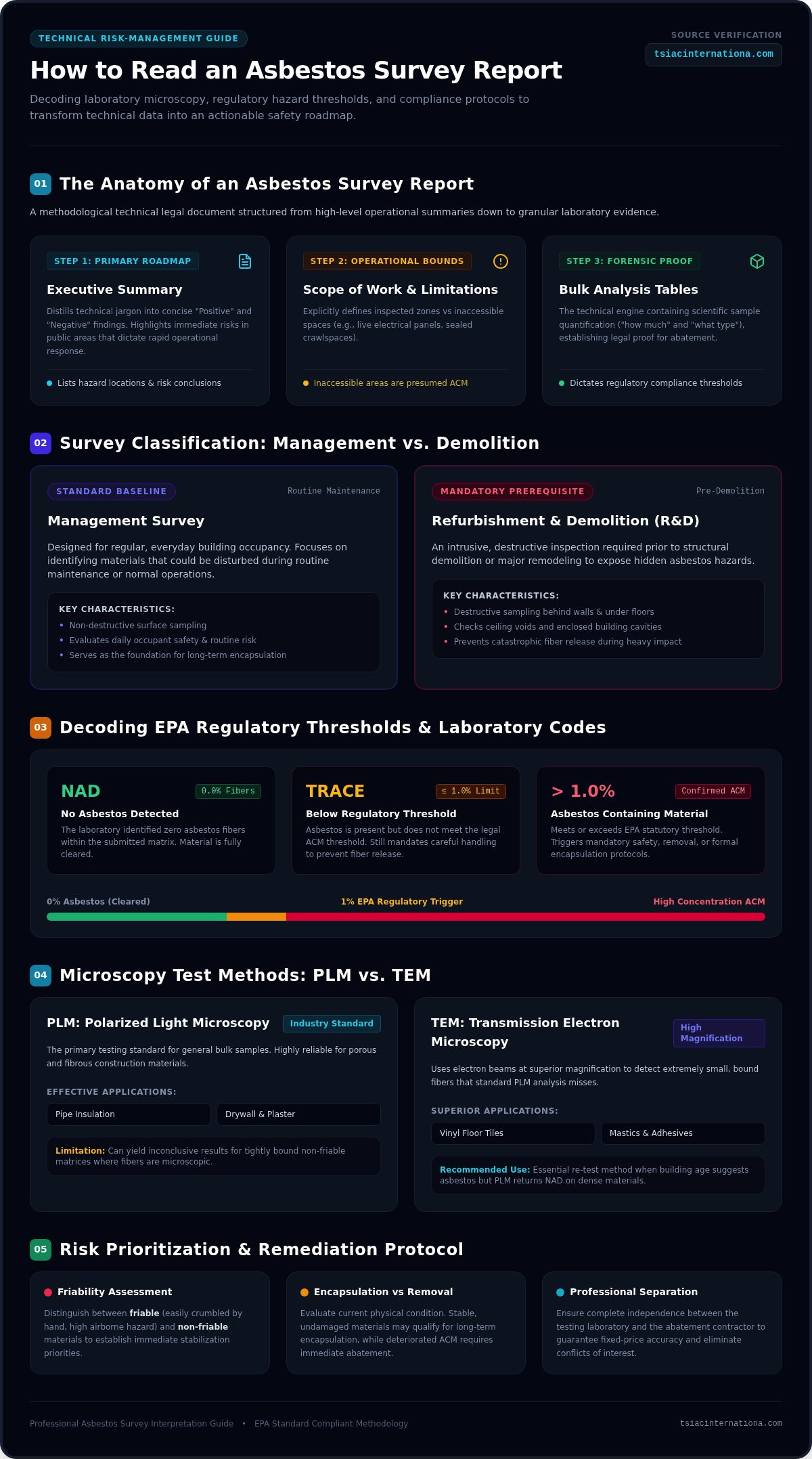
An asbestos survey report isn’t a mere suggestion; it’s a technical legal document designed to identify Asbestos Containing Materials (ACMs) with scientific precision. For property owners, this document provides the essential data required to maintain regulatory compliance and ensure occupant safety. Understanding how to read an asbestos survey report allows you to act with certainty rather than fear, transforming a complex stack of data into a clear action plan. The report structure follows a methodological sequence, starting with high-level summaries and ending with granular laboratory evidence.
The Executive Summary: Your Quick-Start Guide
The Executive Summary is the most vital section for any stakeholder. It distills technical jargon into a concise overview of “Positive” and “Negative” findings. A professionally drafted summary includes a table that lists every identified hazard, its specific location, and the surveyor’s risk conclusion. You’ll quickly see which materials contain asbestos and which were cleared by the lab. This section serves as your primary risk roadmap; it highlights immediate threats that require your attention before any other sections are analyzed. If the summary indicates high-risk materials in public areas, your response time must be immediate.
Management vs. Demolition Surveys
Property owners must distinguish between the two primary survey types to ensure they’ve commissioned the correct level of inspection. Management surveys are the standard for daily building occupancy. They identify ACMs that might be disturbed during routine maintenance or normal use. In contrast, Refurbishment and Demolition (R&D) surveys are intrusive. These inspections involve destructive sampling behind walls, under floorboards, and inside ceiling voids. An R&D survey is a mandatory prerequisite for any structural demolition. Without this intrusive data, contractors risk disturbing hidden asbestos fibers during high-impact work, which can lead to severe legal and health consequences.
Beyond the survey type, you must examine the “Scope of Work” and “Limitations” sections. The scope defines exactly which rooms or structural elements were tested. The limitations section is equally critical; it lists areas the surveyor couldn’t access, such as live electrical panels or sealed crawlspaces. Any area listed as a limitation must be presumed to contain asbestos until a further inspection can be conducted. When these findings necessitate remediation, the report provides the technical foundation for selecting appropriate asbestos abatement methods to ensure the site is returned to a safe state.
Decoding Laboratory Data and Technical Tables
The laboratory data section is the technical engine of your documentation. While the executive summary provides the “what,” the Bulk Analysis Report explains the “how much” and “what type” with scientific precision. Mastering how to read an asbestos survey report requires a deep dive into these tables to understand the specific risks associated with each material sample. These results are not just numbers; they are the legal proof that dictates your abatement strategy and safety protocols.
The EPA establishes a clear regulatory threshold: any material containing more than 1% asbestos is classified as Asbestos Containing Material (ACM). Results marked as “NAD” (No Asbestos Detected) mean the lab found zero fibers. However, “Trace” results indicate asbestos is present but below the 1% limit. While not strictly ACM by EPA standards, these materials still require careful handling during disturbance to prevent fiber release. Accurately interpreting these thresholds prevents costly over-reactions or dangerous under-estimations of site hazards.
Understanding Test Methods: PLM vs. TEM
Polarized Light Microscopy (PLM) is the industry standard for most bulk samples. It’s highly effective for identifying fibers in porous materials like pipe insulation or drywall. However, for “difficult” materials like vinyl floor tiles or mastics, PLM often yields inconclusive results because the fibers are too small or bound too tightly within the matrix. In these cases, Transmission Electron Microscopy (TEM) is the superior choice. TEM uses electron beams at much higher magnification to detect microscopic fibers that PLM misses. If your PLM result for a non-friable material is “NAD” but the building’s age suggests otherwise, a TEM re-test is the technically responsible next step.
Reading the Sample Summary Table
The sample summary table connects the lab’s findings to your physical property. Each row contains a unique Sample ID that corresponds to a specific location on the surveyor’s floor plan. You’ll see material descriptions like “9×9 Floor Tile” or “Pipe Wrap Lagging” paired with the specific mineral type. Chrysotile is the most common variety, but finding Amosite (brown asbestos) or Crocidolite (blue asbestos) often signals a higher risk profile due to the needle-like shape of those fibers. Following EPA guidance on hiring accredited asbestos professionals ensures that your data collection and subsequent analysis meet federal safety standards. If you’re struggling to translate these technical tables into a practical work scope, consulting with an expert at TSIAC International can help clarify your remediation requirements.
Evaluating Risk: Friability and Material Condition
Determining the physical state of identified materials is the most critical step in understanding how to read an asbestos survey report. While the laboratory results confirm the mineral type, the risk assessment section defines the actual threat to human health. This evaluation hinges on two factors: friability and material condition. A material’s condition determines whether asbestos fibers remain trapped in a solid matrix or are released into the breathing zone at the slightest disturbance.
Friable vs. Non-Friable Asbestos
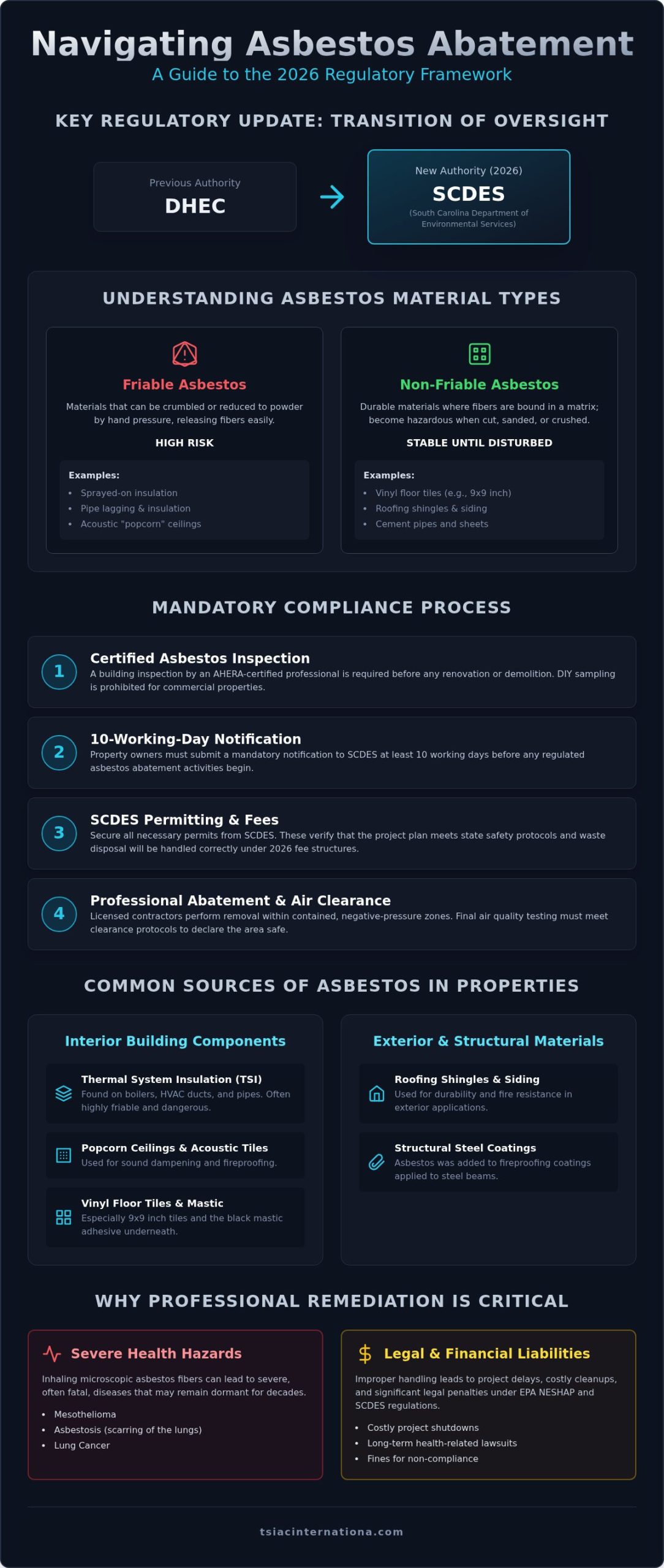
Friability refers to the ease with which a material can be crumbled, pulverized, or reduced to powder by hand pressure. High-risk friable materials include pipe wrap, boiler insulation, and sprayed-on fireproofing. These substances are dangerous because they release breathable fibers almost instantly if disturbed. In contrast, low-risk non-friable materials like transite siding, roofing felt, and floor mastic are generally safe if they remain intact. However, these classifications aren’t permanent. During commercial interior gutting, mechanical actions like grinding, sawing, or drilling can transform non-friable materials into a friable state, necessitating specialized containment and protection protocols.
The Material Assessment Algorithm
Surveyors use a standardized Material Assessment Algorithm to quantify risk with technical precision. This calculation considers the material type, its current condition (rated as Good, Fair, or Poor), and the extent of any existing damage. The ‘Extent’ field in your report provides a vital measurement, quantifying the ACM in square or linear feet. This data allows for precise project planning and cost estimation. If a material is rated as ‘Poor’ or ‘Damaged,’ the likelihood of fiber release is high, and immediate remediation is typically the only safe path forward.
A professional report follows rigorous standards, such as those found in the HSG264 asbestos survey guide, to ensure the assessment is objective and reproducible. By reviewing the ‘Damage Assessment’ column, you can prioritize removals based on the severity of the deterioration. A ‘Good’ rating implies the material is intact and safe to manage in place, provided it isn’t disturbed by future renovation work. This methodological approach ensures that your safety resources are directed exactly where the risk is greatest, preventing unnecessary expenditures on stable materials.
The Recommendations and Management Plan
The final phase of how to read an asbestos survey report involves translating technical data into an operational strategy. The Recommendations section provides the surveyor’s professional judgment on how to mitigate identified risks. It’s not enough to know asbestos is present; you must understand the required response to maintain a safe environment. These suggestions are based on the material’s condition, its location, and the likelihood of future disturbance. For many owners, this section serves as the primary tool for budgeting and project scheduling.
Action Priorities: 1 through 4
Professional surveyors categorize findings into a prioritized hierarchy to help you manage resources effectively. These rankings dictate the urgency of your response:
- Priority 1: Indicates an immediate danger where fibers are likely being released. Restricted access and emergency remediation are required.
- Priority 2: Identifies materials in deteriorating condition that require remediation in the short term, typically within 6 to 12 months.
- Priority 3: Includes stable materials that can be monitored and managed in place, provided they aren’t disturbed.
- Priority 4: Applied to areas where no asbestos was detected or where the risk is negligible.
Management Strategies: Abatement vs. Encapsulation
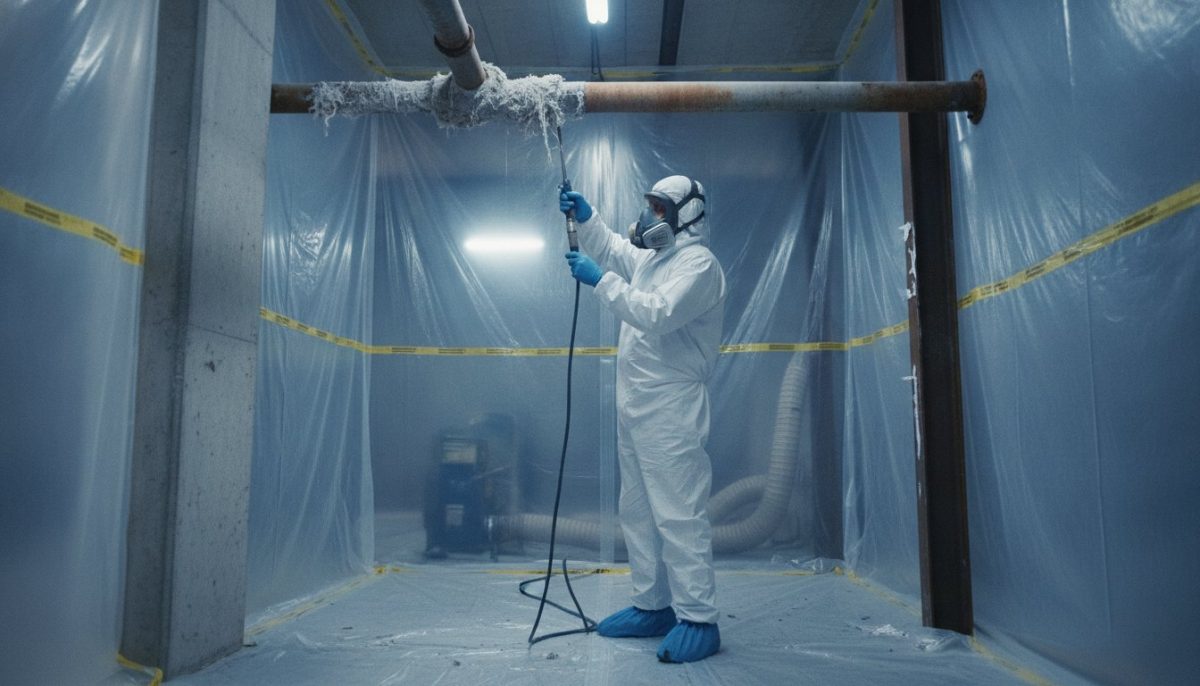
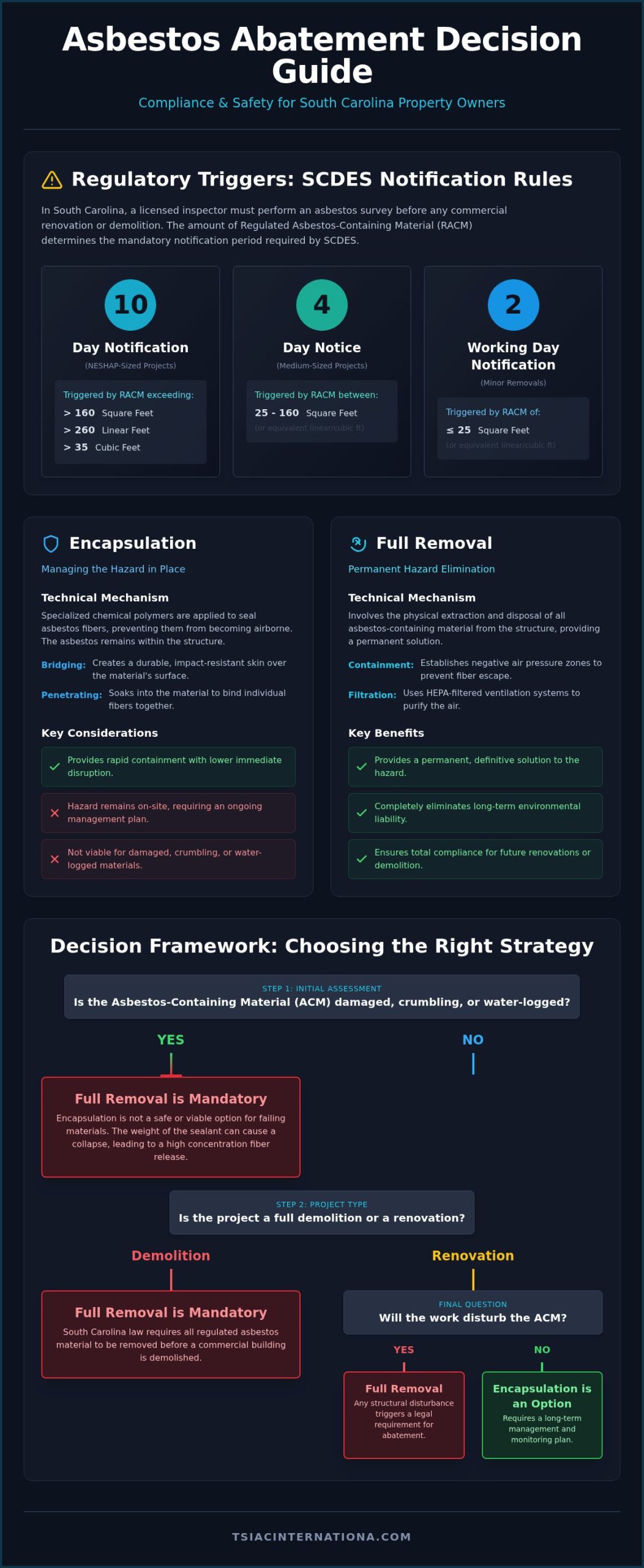
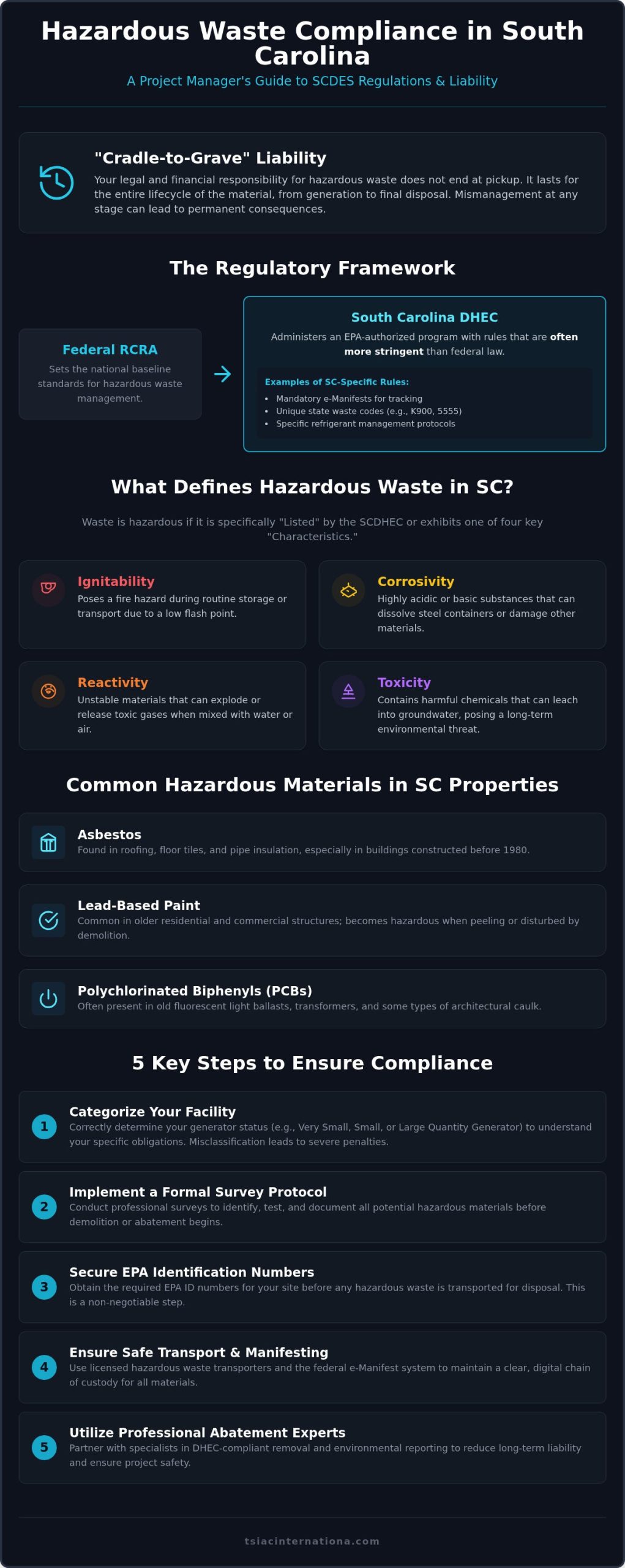
The report will suggest specific pathways for handling ACMs. “Manage in Place” is often the most cost-effective choice for stable, non-friable materials. This requires a formal Operations and Maintenance (O&M) plan to ensure staff don’t accidentally disturb the substance. “Encapsulation” involves coating the material with a specialized sealant to prevent fiber release. While effective, it’s often a temporary solution. When structural changes are planned, full removal is the only permanent fix. You must update your records immediately after any hazardous material abatement to reflect the building’s new status.
Regulatory Compliance and Record Keeping
Federal regulations from OSHA and the EPA require commercial property owners to keep asbestos records accessible. Your survey report must be available to maintenance staff, outside contractors, and tenants. Failure to provide this documentation before work begins can result in heavy fines and legal liability. A robust O&M plan acts as a living document, tracking inspections and any minor repairs. If you need assistance developing a compliant response based on your survey findings, contact the experts at TSIAC International to review your management plan and ensure technical accuracy.
From Report to Action: Hiring an Abatement Professional
Once you’ve mastered how to read an asbestos survey report, the document transitions from a diagnostic tool to a technical blueprint for remediation. The data within the report allows you to obtain fixed-price quotes with high accuracy; it eliminates the guesswork that often leads to budget overruns. However, the transition from report to action requires a disciplined approach to contractor selection. A professional report ensures that every stakeholder understands the exact scope of the hazard before a single containment barrier is erected.
A fundamental rule in hazardous material management is the separation of testing and remediation. You should never use the same company for both the initial survey and the subsequent abatement. This separation eliminates conflicts of interest, ensuring that the remediation scope is based on objective scientific findings rather than a desire to increase service fees. By maintaining this professional distance, you protect both your property’s budget and its long-term safety. An independent surveyor provides the data, and an expert contractor executes the removal based on those unbiased facts.
Vetting an Abatement Contractor
Selecting a partner for execution requires rigorous verification of technical credentials. You must confirm that the contractor holds active licenses and specialized asbestos abatement insurance. A qualified professional will analyze your survey’s “Extent” and “Material Assessment” columns to design a containment strategy that meets EPA and OSHA standards. They should provide a detailed waste shipment record (WSR) and follow the exact engineering controls specified in the survey. With 15+ years of industry experience, TSIAC International specializes in transforming these technical reports into safe, compliant execution plans that prioritize structural integrity and regulatory precision.
The Importance of a Post-Abatement Report
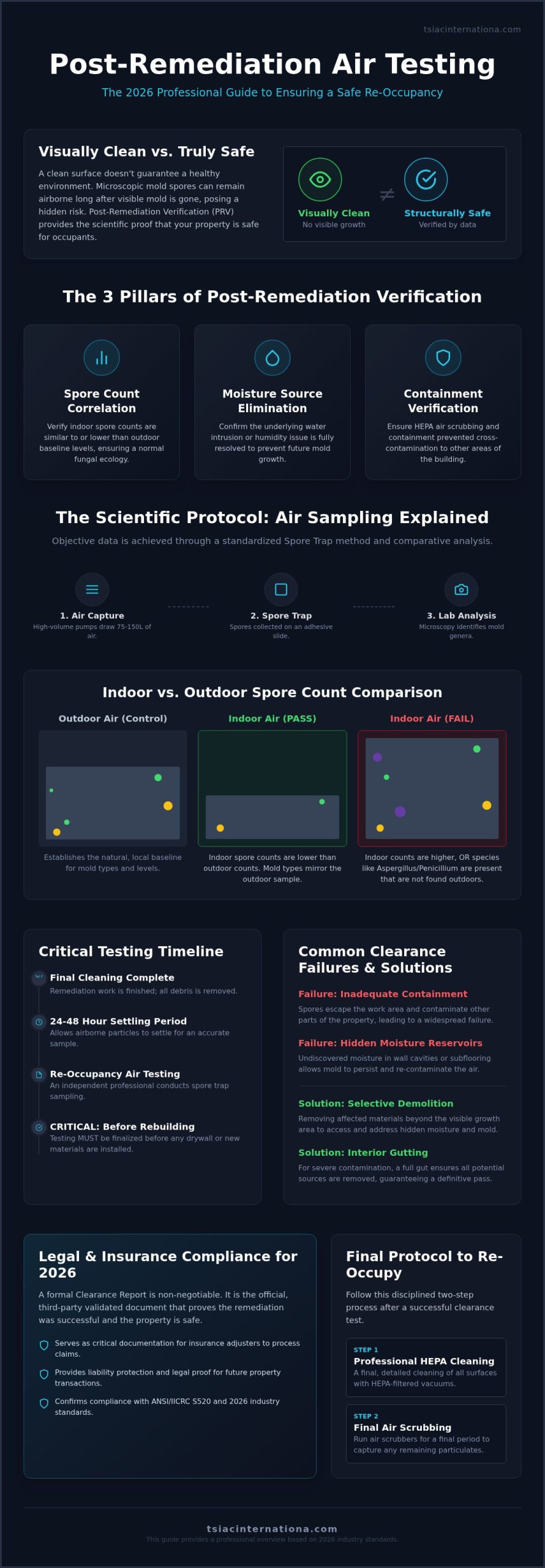
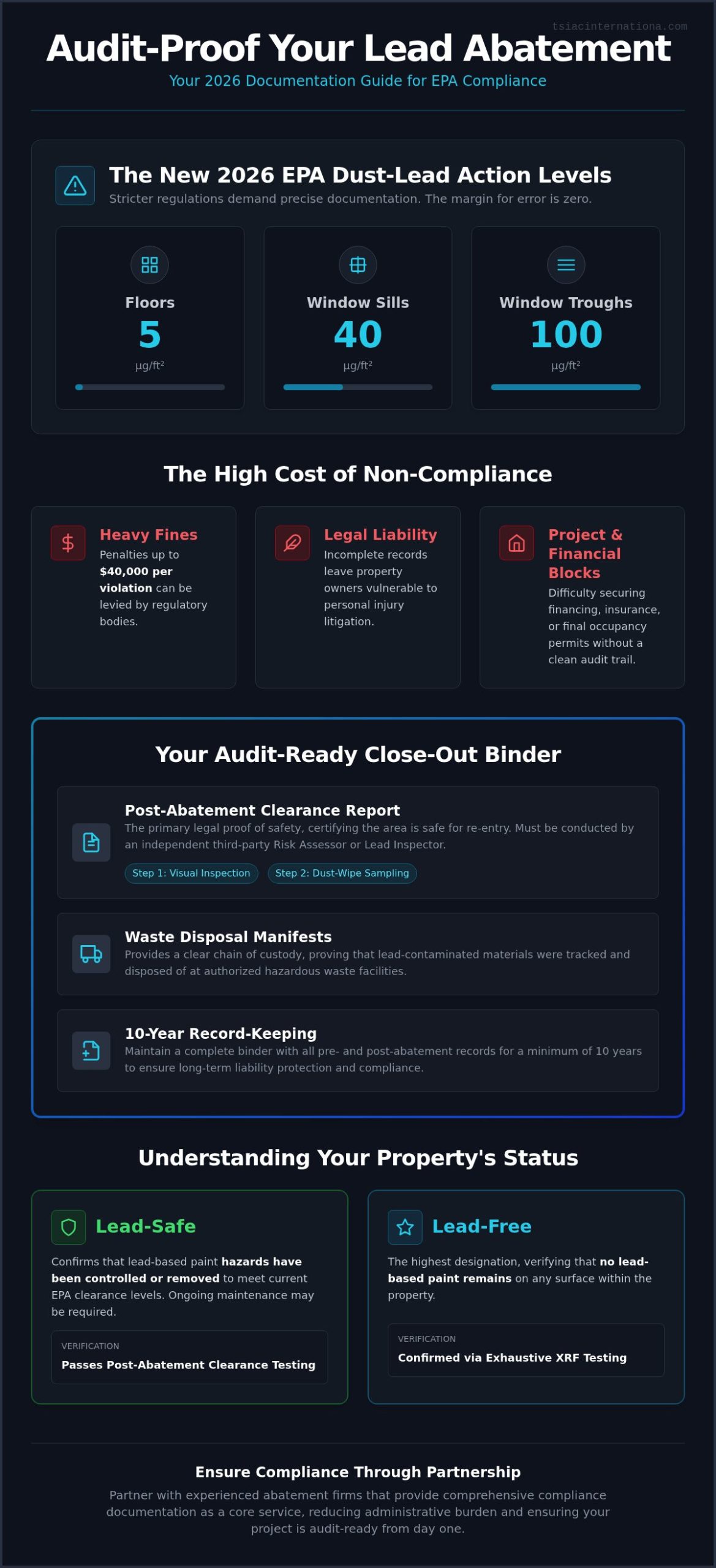
The remediation cycle concludes only when you receive a formal Clearance Certificate. This document is generated after “Clearance Testing,” where an independent technician monitors the air for residual fibers using specialized equipment. This post-abatement report is a critical piece of your building’s history. It proves that the hazardous materials identified in the initial survey have been successfully mitigated and the area is safe for re-occupancy.
Updating your master asbestos register after removal is a non-negotiable regulatory requirement. This updated record is essential for property valuations, future insurance renewals, and potential sales. It provides the final proof that your management of the site has been handled with methodological precision. By closing the loop on compliance, you ensure that the property remains a safe and valuable asset for years to come.
Securing Your Property’s Future with Technical Precision
Navigating the complexities of hazardous material documentation is a critical responsibility for any modern property owner. By mastering how to read an asbestos survey report, you move beyond mere compliance and begin to actively manage the long-term safety and value of your assets. You’ve learned to distinguish between laboratory methods like PLM and TEM, prioritize remediation based on friability, and transition from technical findings to a concrete action plan. This methodical approach ensures that every decision is backed by scientific data rather than guesswork.
When your report indicates that abatement is the necessary next step, partnering with a proven expert is essential for safe execution. TSIAC International brings 15+ years of hazardous material experience to every project, providing the technical precision required for complex structural and selective demolition. As a licensed and insured national provider, we specialize in turning detailed survey findings into secure, compliant remediation strategies. Don’t let technical documentation stall your progress. Contact TSIAC International for Expert Asbestos Abatement Planning and ensure your property remains a safe, productive environment.
Frequently Asked Questions
What is the difference between a positive and a negative asbestos result?
A positive result indicates that laboratory analysis confirmed the presence of asbestos fibers within the sampled material. Conversely, a negative result means no fibers were identified during the microscopic examination. These findings are typically summarized in the executive summary table of the documentation. Understanding these distinctions is the first step in learning how to read an asbestos survey report correctly. Positive results trigger specific regulatory obligations for management or removal, while negative results allow work to proceed without specialized controls.
How much asbestos is considered dangerous in a survey report?
The EPA defines Asbestos Containing Material (ACM) as any substance containing more than 1% asbestos by weight. While any amount of airborne fiber poses a potential health risk, the 1% threshold is the legal trigger for federal and state safety regulations. If your report shows a percentage above this level, you must implement specific containment and disposal protocols. Even “trace” amounts below 1% require careful handling during demolition to prevent accidental fiber release into the breathing zone.
Does a positive asbestos report mean I have to remove it immediately?
A positive result doesn’t always mandate immediate removal. If the material is in good condition and won’t be disturbed by maintenance or occupancy, you can often manage it in place through a formal Operations and Maintenance plan. However, if the material is friable or located in an area slated for renovation, professional abatement becomes necessary. The recommendations section of your report provides the specific timeline and priority level for handling each identified hazard based on its current physical state.
What does “NAD” mean on an asbestos laboratory report?
NAD stands for No Asbestos Detected. It’s the most favorable result you can find when learning how to read an asbestos survey report. This laboratory notation signifies that the microscopist found zero asbestos fibers within that specific sample. When a material is marked as NAD, it’s considered safe to handle using standard construction methods. You should still cross-reference the Sample ID with the floor plan to ensure the correct area was sampled and that no other materials were missed.
Can I perform my own asbestos survey for a commercial building?
You cannot legally perform your own asbestos survey for a commercial building. Federal and state laws require that surveys be conducted by accredited, licensed asbestos inspectors who follow strict sampling protocols. These professionals ensure the data is legally defensible and scientifically accurate. DIY sampling in a commercial setting often leads to heavy regulatory fines and significant health risks. It’s essential to hire a certified third-party firm to maintain compliance and ensure the safety of all building occupants.
How long is an asbestos survey report valid for?
An asbestos survey report doesn’t have a specific expiration date, but it must accurately reflect the current condition of the building. If the property undergoes structural changes, water damage, or significant deterioration, a re-inspection is required to update the risk assessment. For commercial properties, regular monitoring is often part of a long-term management plan. Most lenders and contractors require a survey conducted recently or specifically for the current scope of work to ensure technical accuracy and safety.
What should I do if my report finds “Friable” asbestos in a public area?
Finding friable asbestos in a public area is a high-priority risk that requires immediate intervention. You should restrict access to the affected zone and contact a licensed abatement professional to stabilize or remove the material. Because friable asbestos can be crumbled by hand pressure, it’s prone to releasing fibers into the air through simple vibrations or air currents. Immediate containment is the only way to prevent widespread contamination and protect building occupants from potentially dangerous exposure levels.
Why are some samples marked as “Inaccessible” in the report?
Samples are marked as “Inaccessible” when the surveyor couldn’t physically reach a material without compromising safety or structural integrity. This often occurs in live electrical panels, sealed wall cavities, or energized mechanical systems. Legally, any area labeled as inaccessible must be presumed to contain asbestos until it’s safely tested. These gaps in the report represent potential hidden costs and must be addressed before any demolition or renovation work begins in those specific zones to avoid accidental disturbance.