The Financial Impact of Lead Paint on Commercial Property Value

For any commercial asset built before 1978, lead paint isn’t just a maintenance line item; it’s a latent lien that quietly erodes your equity every…

For any commercial asset built before 1978, lead paint isn’t just a maintenance line item; it’s a latent lien that quietly erodes your equity every year it remains on the structure. This hidden liability often surfaces at the worst possible moment, such as during a high-stakes appraisal or a critical refinancing window. The impact of lead paint on commercial property value is profound, as it triggers stringent OSHA worker safety protocols and increasingly aggressive EPA enforcement. You likely feel the weight of these regulations when planning renovations or managing tenant health risks, especially with the stricter 2026 dust-lead hazard standards now in full effect.

It’s understandable to view hazardous material remediation as a drain on capital, but the reality is that ignoring it often costs more in lost marketability and financing hurdles. This guide clarifies how lead-based paint acts as a hidden liability on your balance sheet and how professional abatement restores commercial asset value. We’ll provide a technical framework for choosing between encapsulation and full abatement, explain the latest regulatory shifts and heightened enforcement measures, and outline a strategy to ensure your property remains a liquid, high-performing asset.

Key Takeaways

  • Identify why lead paint acts as a latent financial liability that triggers the “stigma effect” and reduces the pool of qualified institutional buyers.
  • Analyze the direct impact of lead paint on commercial property value through the lens of lender requirements and the necessity of Phase I Environmental Site Assessments.
  • Compare the long-term ROI of permanent abatement against the temporary, depreciating nature of interim encapsulation strategies.
  • Utilize the 10-day inspection window and comprehensive disclosure documentation as strategic leverage during acquisition or price negotiations.
  • Understand how professional-grade containment and HEPA filtration protect your balance sheet from the liabilities associated with improper hazardous material disturbance.

The Hidden Cost of Lead Paint: How It Impacts Commercial Asset Valuation

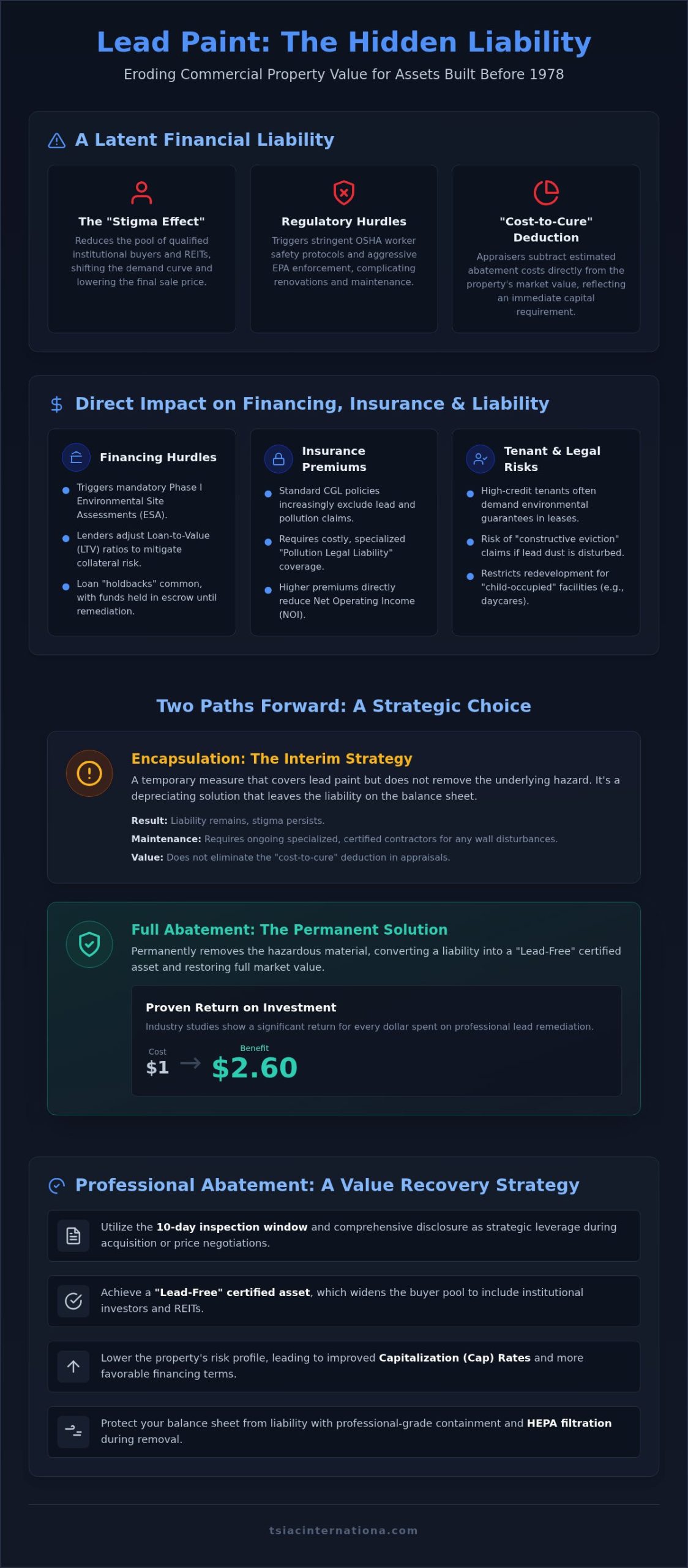
In the context of commercial real estate, lead paint functions as a latent financial liability. It isn’t merely a surface-level defect; it represents a quantifiable risk that directly influences the impact of lead paint on commercial property value. For structures built before 1978, the presence of Lead-Based Paint in the United States is a primary concern for institutional investors. This age threshold signals a potential for hidden costs that can derail a transaction during the due diligence phase. When hazardous materials are identified, the property’s “as-is” value is immediately adjusted downward to account for the specialized handling required during any future disturbance.

Owners must also contend with the “stigma effect.” This phenomenon reduces the pool of potential buyers to those specifically equipped to manage environmental hazards. Many institutional funds and Real Estate Investment Trusts (REITs) have strict environmental mandates that preclude them from bidding on assets with known contaminants. When the buyer pool shrinks, the demand curve shifts, often resulting in a lower final sale price. Appraisers typically apply a “cost-to-cure” deduction, subtracting the total estimated abatement expenses from the property’s market value to reflect the immediate capital requirement.

Lead Paint as a Capital Expenditure Liability

Unlike standard cosmetic wear, lead paint requires specialized handling under OSHA and EPA guidelines. This distinction transforms a routine repaint into a significant capital expenditure. In a Highest and Best Use (HBU) analysis, the presence of lead can restrict certain redevelopment options, particularly if the intended use involves “child-occupied” facilities like daycares or private schools. Lead-Based Paint Stigma is defined as the intangible loss in property value resulting from the public’s perception of risk and the increased administrative burden associated with managing hazardous materials.

The ROI of Professional Abatement

Investing in full lead abatement converts a hazardous liability into a “Lead-Free” certified asset. This transition has a measurable effect on the capitalization rate (Cap Rate). By removing the environmental risk, you lower the property’s risk profile, which leads to more favorable financing terms and lower liability insurance premiums. Research indicates that remediation generates a significant return, with some industry studies showing a $2.60 benefit for every $1 spent on removal. Professional abatement also eliminates the cycle of expensive, specialized maintenance. You no longer need to hire certified contractors for every minor wall repair or tenant improvement, leading to substantial long-term savings in operational expenses. This shift significantly improves the overall impact of lead paint on commercial property value by enhancing marketability and asset liquidity.

Valuation Depreciation: Financing, Insurance, and Liability Risks

Commercial lenders prioritize risk mitigation above all else. When a property contains lead, it often triggers a Phase I Environmental Site Assessment (ESA). If lead is confirmed, the impact of lead paint on commercial property value manifests through adjusted Loan-to-Value (LTV) ratios. Banks view unmanaged lead as a threat to their collateral. This often results in “holdback” agreements where a portion of the loan remains in escrow until remediation is complete. Institutional investors typically steer clear of assets with unresolved environmental issues to avoid the administrative and legal burdens associated with environmental hazards in commercial real estate.

Standard Commercial General Liability (CGL) policies increasingly exclude lead and pollution claims. Property owners must often secure specific “Pollution Legal Liability” coverage, which adds a recurring expense to the operating budget. These higher premiums directly reduce the Net Operating Income (NOI). Beyond insurance, lead hazards affect tenant quality. High-credit tenants often require environmental guarantees before signing long-term leases. If lead dust is disturbed during minor repairs, tenants can claim “constructive eviction,” arguing that the space is no longer safe for occupancy. This leads to costly legal battles and unexpected vacancies.

The Role of Environmental Due Diligence in Commercial Lending

Lenders use the Phase I ESA to determine if a Phase II investigation is necessary. If lead paint is found, it can significantly lower the appraised value. This depreciation isn’t just about the cost of removal; it’s about the increased risk premium lenders charge. For owners looking to exit, these hurdles can break a deal during the final stages of the 10-day inspection window. Sophisticated buyers use these findings to negotiate aggressive price reductions that far exceed the actual cost of remediation.

Legal and Civil Liability Exposure

Compliance with OSHA Title 29 CFR 1926.62 is non-negotiable for any commercial renovation involving lead. Failure to follow these standards leads to catastrophic fines. As of January 12, 2026, the maximum civil penalty for EPA violations increased to $46,989 per violation per day. These financial penalties can quickly eclipse the cost of a professional lead abatement project, further worsening the negative impact of lead paint on commercial property value. Commercial landlords have a non-delegable duty of care to ensure that third-party contractors and tenants are not exposed to hazardous lead dust during structural modifications.

Abatement vs. Encapsulation: Strategies for Maximizing Property ROI

Property owners must distinguish between managing a hazard and eliminating it. Encapsulation, often categorized as an interim control, involves applying a specialized coating over lead-based paint to prevent the release of toxic dust. While this method offers a lower initial capital outlay, it functions as deferred maintenance rather than a permanent solution. Conversely, full abatement involves the physical removal of the contaminant. This “gold standard” approach is the only way to secure a “Certificate of Lead-Free” status, which fundamentally changes the impact of lead paint on commercial property value by removing the asset from the hazardous material registry. When an appraiser sees a permanent clearance report, the environmental risk premium is removed from the valuation model.

The strategic choice between surgical removal and a total interior gutting depends on the building’s future lifecycle. Surgical abatement targets specific high-friction components like window sills, door frames, or stair treads. Total gutting is often more efficient for properties undergoing major repositioning or adaptive reuse. By combining lead removal with structural demolition, owners can streamline project timelines and significantly reduce mobilization costs. This integrated approach ensures that the building shell is entirely clean before new construction begins, preventing the cross-contamination that often occurs with less rigorous methods.

Encapsulation: The Hidden Costs of Deferred Maintenance

Encapsulation requires a rigorous, long-term monitoring and maintenance program to remain compliant. If the coating fails due to moisture infiltration or physical impact, the owner faces immediate emergency remediation costs and potential tenant lawsuits. This strategy often complicates future commercial interior gutting services. When lead is encapsulated rather than removed, any subsequent renovation will still trigger expensive hazardous material protocols. The presence of lead beneath “safe” layers continues to act as a drag on the property’s capitalization rate because sophisticated buyers discount the price to account for future removal requirements.

Professional Removal: Permanent Liability Elimination

Professional abatement utilizes mechanical stripping, chemical solvents, or component replacement to achieve permanent clearance. Each method must adhere to the latest federal lead paint hazard standards for dust-lead levels, which were significantly tightened in 2026. Unlike encapsulation, this process generates a permanent paper trail of hazardous waste disposal and post-abatement clearance testing. For owners in the Southeast, integrating these services with hazardous material abatement south carolina ensures that the asset meets both state and federal compliance thresholds. This proactive stance eliminates the negative impact of lead paint on commercial property value by transforming a “tainted” asset into a premium, lead-free facility that attracts institutional-grade tenants.

The Financial Impact of Lead Paint on Commercial Property Value

Due Diligence and Compliance: Navigating the Lead Disclosure Rule

During commercial acquisitions, the 10-day inspection window provides the buyer with critical leverage. This specific period allows for technical testing that can uncover hidden environmental liabilities before the contract becomes binding. Understanding the impact of lead paint on commercial property value during this phase is essential for accurate price discovery. Buyers often utilize certified lead inspectors to conduct XRF (X-ray fluorescence) testing, which provides immediate, non-destructive results. It’s vital to distinguish these inspectors from abatement contractors; the former provides the raw data, while the latter executes the remediation strategy. This separation of roles ensures an unbiased assessment of the asset’s condition.

Documentation is the primary defense against future litigation. Sellers who provide comprehensive lead records, including previous inspection reports and clearance certifications, often maintain higher closing prices because they eliminate buyer uncertainty. Conversely, a lack of transparency during due diligence can lead to aggressive price re-negotiations or deal termination. State regulations often impose stricter requirements than federal laws, especially in jurisdictions like New York or South Carolina, where active enforcement phases for older buildings are now standard operating procedure.

Using Lead Findings as a Negotiation Tool

If lead paint is detected, the buyer can structure a remediation contingency within the sales contract. This process involves calculating a “credit at closing” based on verified professional abatement estimates. A sophisticated buyer won’t just ask for a generic price reduction; they’ll demand a post-abatement clearance report as a condition for closing. This documentation ensures the asset is delivered without the “stigma effect” discussed earlier, protecting the new owner’s future resale value and exit strategy. It transforms a potential deal-breaker into a manageable capital improvement project.

The Lead-Based Paint Disclosure Rule for Commercial Assets

While federal disclosure rules primarily target residential units, they apply to commercial assets during “commercial-to-residential” conversions or for child-occupied facilities within a commercial structure. Property managers must maintain meticulous records of all lead-related activities to mitigate long-term litigation risk. In 2026, the financial risk of non-compliance is higher than ever, with EPA audits becoming more frequent for mixed-use developments and industrial-to-loft repositioning projects. Proper documentation isn’t just a legal requirement; it’s a value-preservation strategy that maintains the property’s marketability.

Ensuring your due diligence is backed by technical precision is the only way to protect your investment from hidden environmental costs. You can secure your asset’s future by partnering with a specialist for lead abatement services that meet the highest regulatory standards.

Professional Abatement as a Value Recovery Strategy

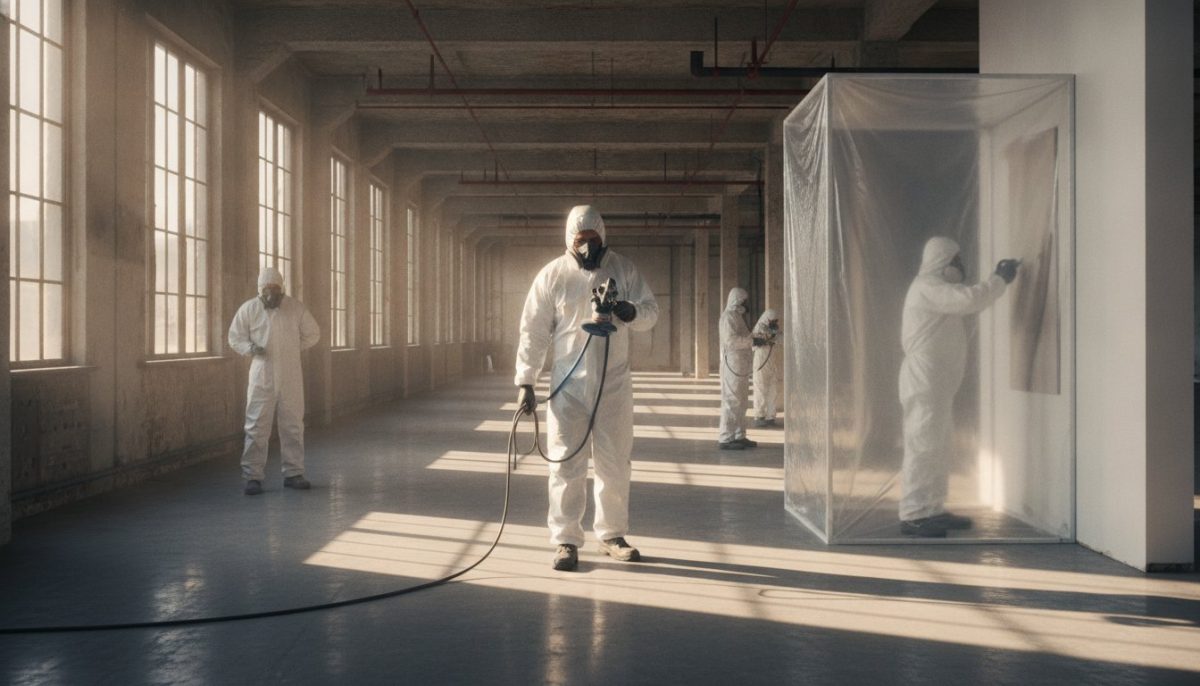
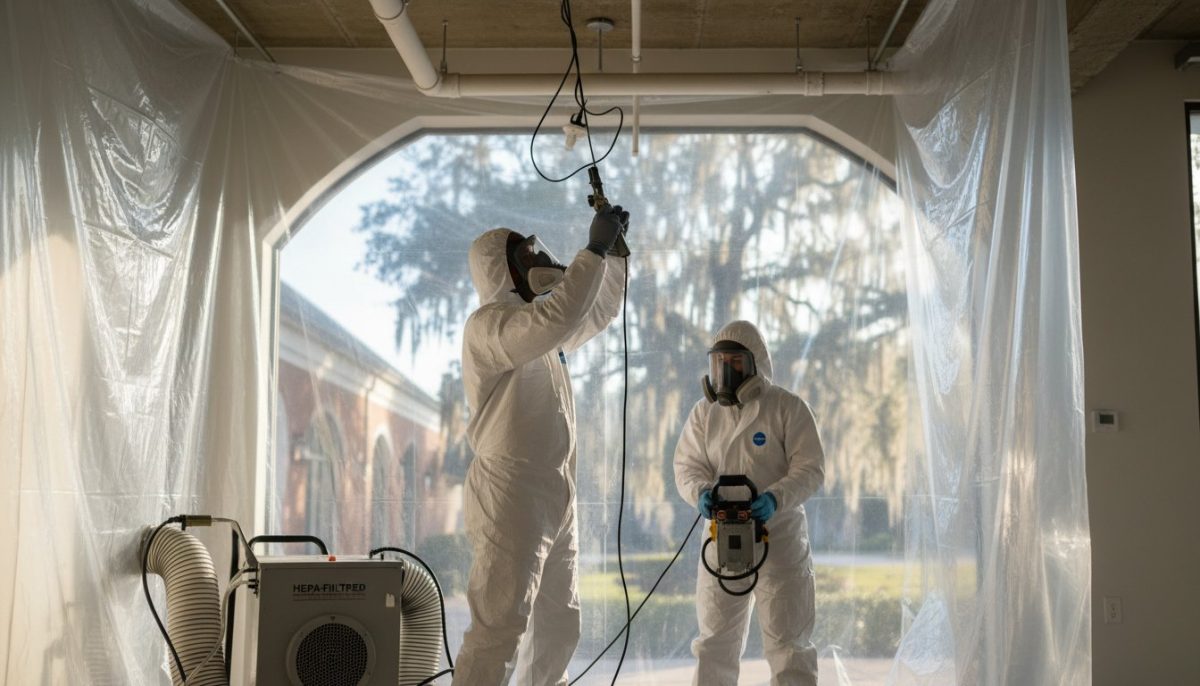
General contractors often treat lead as a secondary concern, but in a commercial setting, this lack of specialization creates massive liability. Professional abatement requires sophisticated engineering controls, including full-scale HEPA containment and high-volume negative air pressure systems. These systems prevent toxic dust from migrating into HVAC units or common areas. Without these controls, the impact of lead paint on commercial property value shifts from a manageable project to an environmental catastrophe that can trigger building-wide closures and aggressive EPA audits. Using a certified specialist ensures that the work meets the rigorous 2026 dust-lead hazard standards from the start.

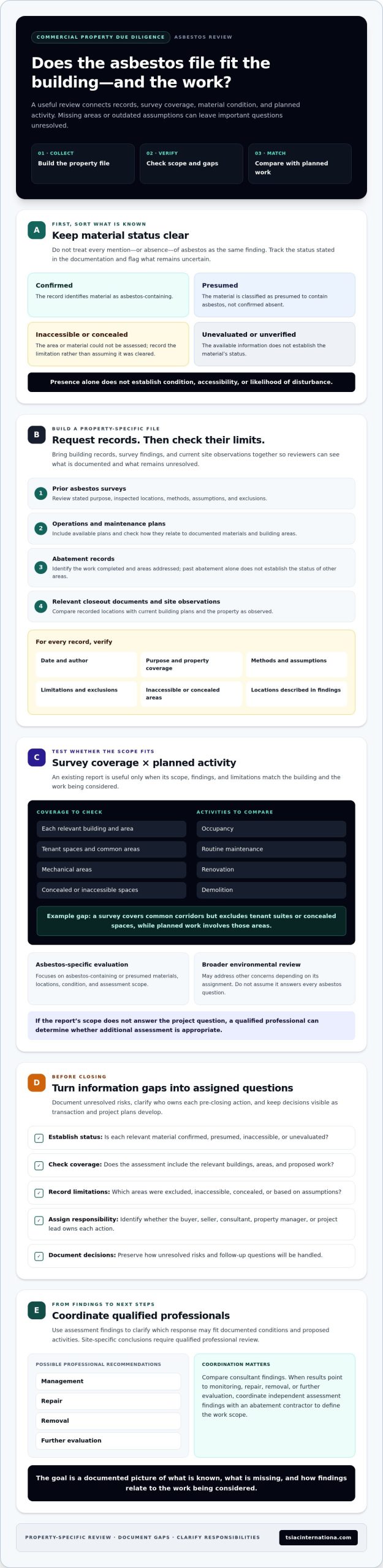
Many pre-1978 structures present multiple hazards simultaneously. It’s common to find lead-based coatings on structural steel that also features asbestos insulation or fireproofing. Coordinating these efforts is vital for maintaining project timelines and avoiding redundant mobilization costs. Owners should look for a partner capable of managing asbestos removal south carolina alongside lead protocols. TSIAC International leverages over 15 years of field experience to provide the rigorous compliance documentation necessary to secure a “Lead-Safe” certification, which effectively restores the property’s marketability and appraisal value.

Expertise in Complex Commercial Environments

Managing abatement in an occupied facility requires a level of tactical planning that standard renovation firms don’t possess. We utilize surgical precision to isolate work zones, ensuring that tenant operations continue without exposure risks. This precision is especially critical during selective demolition, where structural integrity and hazardous material containment must be balanced perfectly. Our logistics team handles large-scale debris management with a focus on environmental recycling, diverting significant percentages of metal and wood from landfills to align with modern ESG (Environmental, Social, and Governance) standards and reduce disposal fees.

Next Steps for Commercial Property Owners

The first step in value recovery is a comprehensive hazardous material audit. For owners with large portfolios, we recommend developing a multi-year abatement plan that prioritizes high-friction areas while spreading capital expenditures over several fiscal cycles. This proactive approach prevents the impact of lead paint on commercial property value from becoming a bottleneck during future asset liquidations or refinancing windows. If you’re ready to clear the environmental liability from your balance sheet, Contact TSIAC International for a professional lead abatement consultation to begin your asset restoration project.

Restoring Asset Liquidity Through Strategic Remediation

Proactive management of hazardous materials is no longer optional in the current regulatory landscape. Lead paint acts as a persistent drag on your balance sheet; it complicates everything from initial financing to the final exit strategy. Understanding the long-term impact of lead paint on commercial property value is the first step toward reclaiming your asset’s full market potential. By choosing permanent abatement over temporary encapsulation, you eliminate the “stigma effect” and ensure your property meets the highest institutional standards for safety and compliance.

TSIAC International utilizes 15+ years of hazardous material expertise to provide the technical precision required for complex commercial environments. Our OSHA and EPA compliant processes are backed by comprehensive disposal documentation, giving you the certainty needed for successful property transactions. Don’t let hidden contaminants dictate your property’s worth. Secure Your Asset Value with Professional Lead Abatement and position your commercial portfolio for sustainable growth and long-term security.

Frequently Asked Questions

How much does lead paint reduce the appraisal value of a commercial building?

Appraisers typically apply a “cost-to-cure” deduction, subtracting the total estimated abatement expenses from the property’s market value. Beyond these direct costs, the “stigma effect” can further depress the valuation by 5% to 15% depending on the buyer pool’s risk tolerance. The negative impact of lead paint on commercial property value is most severe when it limits the asset’s “Highest and Best Use,” such as preventing a conversion into a school or medical facility.

Is lead paint abatement required by law for commercial properties?

Federal law doesn’t mandate abatement for all commercial structures, but it is required for “child-occupied facilities” like daycares and schools. However, OSHA regulations mandate strict safety protocols if the paint is disturbed during any renovation or maintenance activity. Local laws, such as New York City’s Local Law 31, impose much stricter testing and remediation deadlines. Many owners choose professional abatement to eliminate the recurring costs of mandatory inspections and potential civil liability.

Can lead paint impact my ability to get a commercial mortgage?

Yes, lead paint significantly complicates the lending process. Most institutional lenders require a Phase I Environmental Site Assessment (ESA) before approving a loan. If lead is identified, the bank may require a Phase II audit or a “holdback” in escrow to cover the estimated remediation costs. The presence of hazardous materials often results in lower Loan-to-Value (LTV) ratios because lenders view unmanaged lead as a threat to the collateral’s liquidity.

What is the difference between lead encapsulation and lead abatement?

Encapsulation is a temporary “interim control” that seals lead paint under a specialized coating to prevent dust release; it requires ongoing monitoring and periodic re-application. Abatement is a permanent solution involving the physical removal or replacement of lead-contaminated components. While encapsulation is cheaper initially, abatement is the only method that secures a “Lead-Free” certification. This permanent status positively shifts the impact of lead paint on commercial property value by removing the asset from hazardous registries.

How long does the lead abatement process take for a 10,000 sq. ft. office building?

A 10,000 square foot project typically requires 7 to 14 business days, depending on the architectural complexity and the removal method chosen. Mechanical stripping is often faster than chemical solvents but requires more intensive HEPA containment. This timeline includes the initial site preparation, negative air pressure setup, the physical removal process, and the mandatory 2026 dust-lead clearance testing required before the building can be safely re-occupied by tenants.

Does lead paint affect insurance premiums for commercial property owners?

Lead paint frequently leads to higher insurance costs because standard Commercial General Liability (CGL) policies often exclude pollution and lead-related claims. Owners must typically purchase a separate “Pollution Legal Liability” policy to protect against tenant health claims and environmental litigation. These additional premiums reduce the building’s Net Operating Income (NOI). Remediation can lower these recurring costs by removing the specific risk profile that insurers use to calculate high-risk premiums.

What happens if I discover lead paint during a commercial renovation?

You must immediately halt work and implement OSHA-mandated lead safety protocols under Title 29 CFR 1926.62. Discovering lead mid-project often causes significant delays and budget overruns if the general contractor isn’t certified for hazardous material handling. You’ll need to hire a specialist to establish HEPA containment and negative air pressure zones. Failure to follow these steps can result in catastrophic EPA fines of up to $46,989 per violation per day.

Can I perform lead abatement with my own maintenance crew?

Most commercial property owners shouldn’t use in-house crews unless those employees have specific EPA RRP certification and medical surveillance programs in place. OSHA requires specialized training, fit-testing for respirators, and air monitoring that standard maintenance teams lack. Improper removal by uncertified staff creates massive liability risks and often results in cross-contamination. This can permanently damage the property’s marketability and appraisal value while exposing the owner to severe regulatory penalties.

Asbestos Abatement in Myrtle Beach: A Professional How-To Guide for 2026

By 2026, an estimated 12% of commercial structures in South Carolina built before the 1980s will require some form of structural intervention, making…

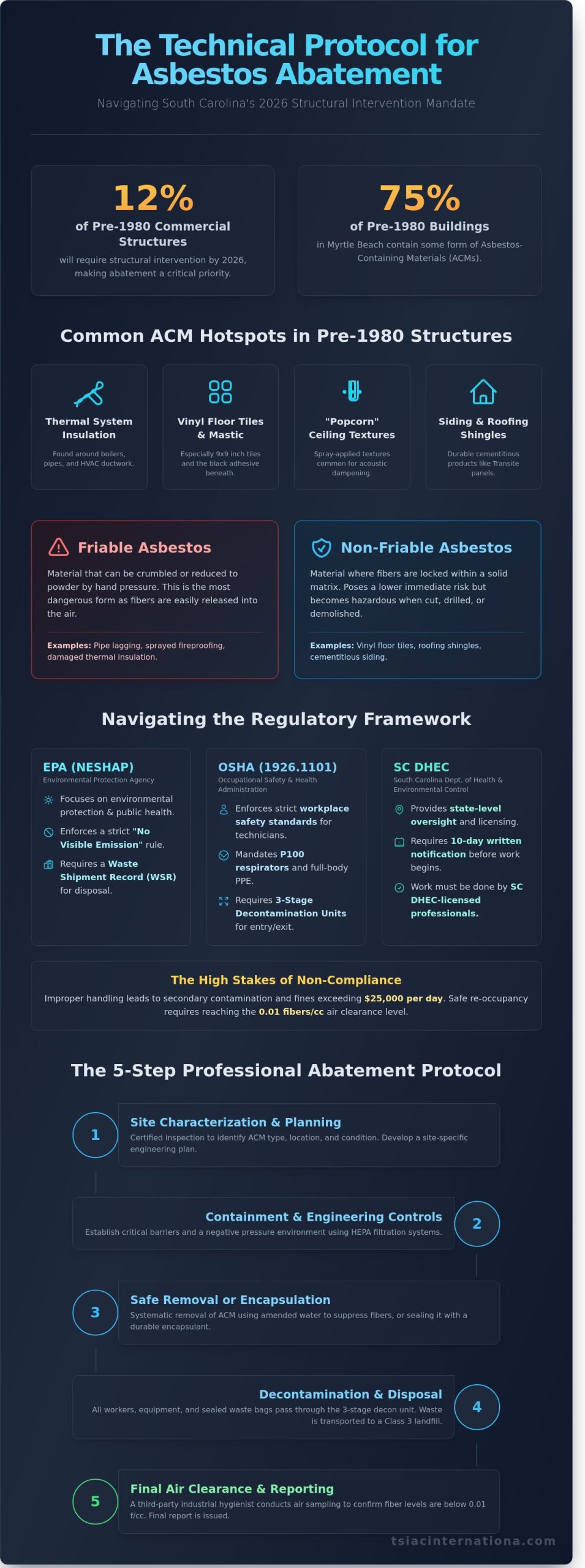
By 2026, an estimated 12% of commercial structures in South Carolina built before the 1980s will require some form of structural intervention, making asbestos abatement myrtle beach a critical priority for property managers and developers. You’re likely aware that even minor structural modifications can release hazardous particulates, creating liabilities that extend far beyond simple health codes. It’s a high-stakes environment where the margin for error is zero and technical precision is the only safeguard against long-term risk.

We’ll provide a technical, step-by-step protocol for professional remediation that ensures your project meets EPA and SCDHEC standards while maintaining total structural integrity. This guide breaks down the specific containment technologies, negative pressure filtration requirements, and contractor vetting frameworks necessary for a successful 2026 abatement project. From initial site characterization to the final air clearance report, we’ll give you the engineering-grade roadmap needed to manage hazardous materials with absolute certainty.

Key Takeaways

  • Understand the vital distinction between simple removal and professional abatement to ensure full compliance with EPA NESHAP and OSHA safety regulations.
  • Evaluate the technical benefits of full removal versus encapsulation to determine the safest and most cost-effective long-term strategy for your facility.
  • Follow our comprehensive 5-step protocol for asbestos abatement myrtle beach, including the establishment of critical barriers and negative pressure zones.
  • Learn how to integrate hazardous material remediation with structural demolition to maintain project momentum without compromising on engineering precision.
  • Gain insights into specialized filtration and containment techniques that secure the structural integrity of your site during complex abatement procedures.

Defining Professional Asbestos Abatement and Remediation

Professional asbestos abatement myrtle beach involves a rigorous, engineering-based process of identifying, containing, and either removing or encapsulating asbestos-containing materials (ACM). It’s a specialized discipline that requires technical precision. While simple removal might seem straightforward, professional abatement utilizes sophisticated asbestos abatement procedures to ensure that microscopic fibers don’t migrate through a building. This process includes the installation of physical barriers and the use of high-efficiency particulate air (HEPA) filtration systems to maintain negative pressure environments.

Maintaining structural integrity is a central priority for any project. Removing insulation from support beams or stripping materials from aging coastal foundations can weaken a building’s core if not managed by experts. In Myrtle Beach, approximately 75% of commercial and residential structures built before 1980 contain some form of ACM. These materials are most commonly found in:

  • Thermal system insulation around boilers and pipes
  • 9×9 inch vinyl floor tiles and associated mastic adhesives
  • Spray-applied “popcorn” ceiling textures
  • Transite siding and cementitious roofing shingles

The Difference Between Friable and Non-Friable Asbestos

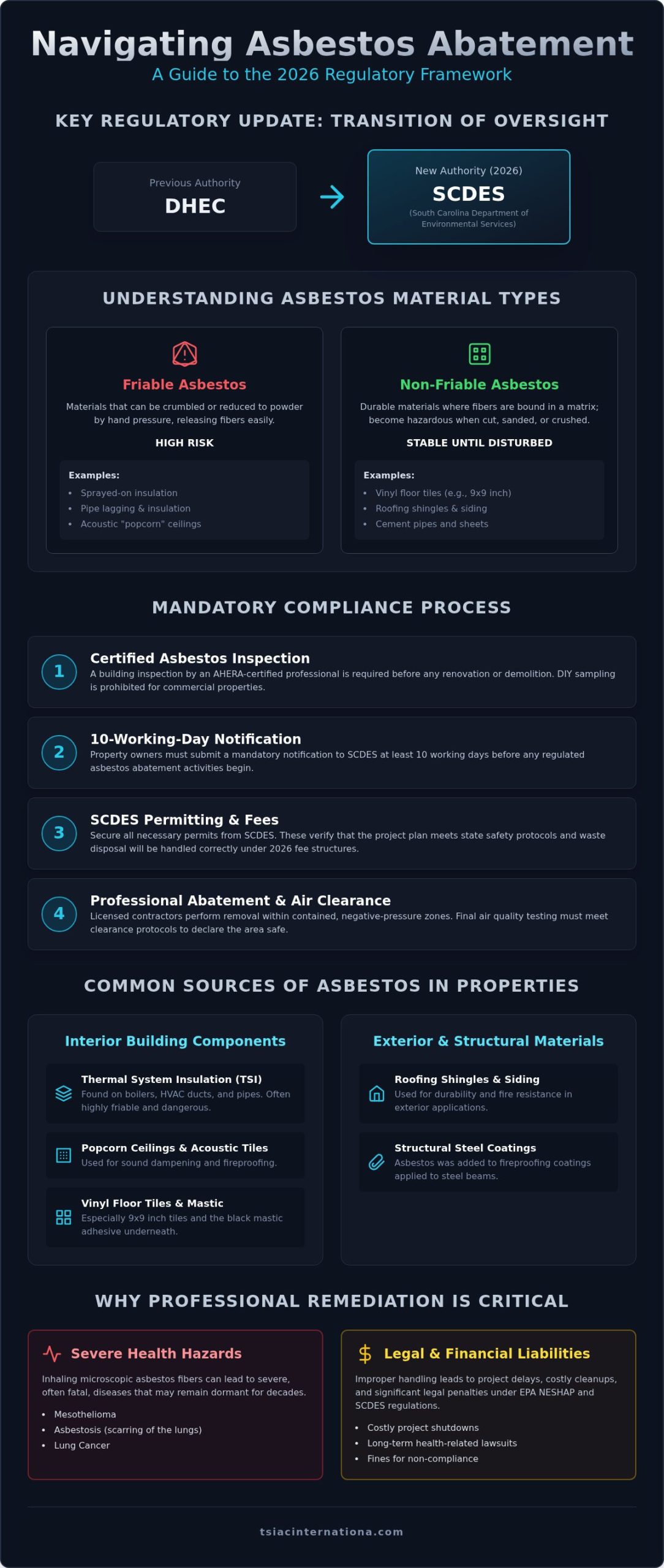
Friable asbestos refers to material that can be crumbled or reduced to powder by hand pressure. This category includes pipe lagging and sprayed fireproofing. It’s the most dangerous form because it easily releases fibers into the air. Non-friable materials, like floor tiles or roofing, keep fibers locked in a solid matrix. These pose a lower immediate risk but become hazardous during demolition or when subjected to mechanical force. Engineering controls for friable materials require full-scale containment with three-stage decontamination units to ensure zero fiber release.

Why Professional Remediation is Non-Negotiable

Inhaling a single microscopic fiber can lead to mesothelioma or asbestosis, diseases that often stay dormant for 20 to 50 years before surfacing. DIY attempts often lead to secondary contamination, where fibers settle into HVAC ductwork and carpets, creating a permanent health hazard. Beyond health, property owners face massive liability risks. South Carolina DHEC regulations are strict; improper handling can result in fines exceeding $25,000 per day. Professional asbestos abatement myrtle beach ensures that every project reaches the 0.01 fibers per cubic centimeter clearance level necessary for safe occupancy.

Federal Compliance: Navigating EPA and OSHA Abatement Regulations

Compliance in the hazardous material sector isn’t a suggestion; it’s a rigorous legal mandate. Two primary federal agencies dictate the safety parameters for every project. The Environmental Protection Agency (EPA) focuses on environmental protection and public health, while the Occupational Safety and Health Administration (OSHA) enforces strict workplace safety standards. For any commercial asbestos abatement myrtle beach project, South Carolina DHEC requires a written notification at least 10 working days before work begins. This window allows regulators to inspect the planned containment strategies and ensure the project adheres to Federal asbestos regulations. Only SC DHEC-licensed professionals and certified inspectors possess the legal standing to handle these materials, as they’re trained to manage the high-risk variables inherent in structural disturbance.

Understanding NESHAP Standards

The National Emission Standards for Hazardous Air Pollutants (NESHAP) governs how asbestos is handled during renovation and demolition. It enforces a “no visible emission” rule, meaning any dust or debris escaping the containment area constitutes a federal violation. Contractors must saturate materials with amended water to prevent fiber release. Every pound of waste requires detailed documentation through a Waste Shipment Record (WSR). This paperwork proves the material reached a Class 3 landfill authorized for hazardous waste disposal, ensuring a permanent, legal paper trail for the property owner.

OSHA Workplace Safety Protocols

OSHA standard 1926.1101 defines the protective measures required for the workforce. Technicians must utilize full-body Tyvek suits and P100 HEPA-filtered respirators to prevent inhalation. Entry and exit occur through a three-stage decontamination enclosure, which includes a clean room, a shower area, and a “dirty” equipment room. This prevents cross-contamination of the surrounding environment. Site supervisors conduct daily air monitoring to verify that fiber counts remain below the Permissible Exposure Limit (PEL) of 0.1 fibers per cubic centimeter. If a sample exceeds this 0.1 f/cc threshold, the site is shut down immediately for remediation of engineering controls.

Managing these high-stakes technical requirements demands a partner who understands the intersection of safety and structural integrity. For complex industrial or commercial sites, a technical consultation can help define a compliant path forward that protects both your personnel and your investment.

Identifying Risks: When to Choose Abatement Over Encapsulation

Selecting the right remediation path requires a cold assessment of the building’s ten year lifecycle. While encapsulation offers a lower initial price point, it’s often a temporary deferment of a permanent liability. In the 2026 Myrtle Beach market, property owners must weigh the immediate savings of sealing against the long term costs of specialized maintenance. Professional asbestos abatement myrtle beach is the only method that provides a definitive end to the risk cycle.

The Case for Full Abatement

Full removal is the superior choice for assets slated for redevelopment or intensive use. It provides a clean slate for future mechanical, electrical, and plumbing upgrades. Property data from 2025 indicates that commercial buildings with certified asbestos-free status see an 8% to 12% increase in valuation compared to those with active encapsulation plans. Removal is also a prerequisite for any structural demolition. Attempting to demolish a building with encapsulated materials is illegal and results in heavy EPA fines. By adhering to OSHA asbestos safety standards, our teams ensure that removal is performed under strict negative pressure, preventing any cross contamination of the job site. This approach removes the need for future air monitoring and specialized contractor insurance.

When Encapsulation is a Viable Strategy

Encapsulation is an engineering solution for materials that are currently stable and in hard to reach locations. It involves applying bridging agents or penetrants that create a durable chemical bond over the asbestos fibers. This strategy is appropriate in three specific scenarios:

  • The material is in “good” condition with no signs of delamination or water damage.
  • The ACM is located in a low traffic area where physical disturbance is impossible.
  • The cost or structural risk of removal outweighs the benefit, such as with certain fireproofing sprays on load bearing beams.

It’s a common misconception that encapsulation is a permanent “fix.” Sealing requires a rigorous Operations and Maintenance (O&M) program. South Carolina health codes demand inspections every six months to ensure the sealant hasn’t cracked or degraded. If your long term goal is a worry free asset, asbestos abatement myrtle beach remains the most logical investment for your 2026 project budget.

Asbestos Abatement in Myrtle Beach: A Professional How-To Guide for 2026

The 5-Step Protocol for Safe Asbestos Abatement

Executing a professional asbestos abatement myrtle beach project requires a disciplined engineering approach rather than simple demolition. Our protocol follows a rigid sequence to ensure that microscopic fibers never migrate beyond the regulated work zone. Since the 2024 update to South Carolina DHEC standards, the margin for error has narrowed, making technical precision the only acceptable standard for 2026 operations.

  • Step 1: Comprehensive Site Inspection and Laboratory Testing. Technicians must collect at least three bulk samples per homogenous material area. These samples are analyzed by NVLAP-accredited laboratories using Polarized Light Microscopy (PLM).
  • Step 2: Establishment of Critical Barriers and Negative Pressure Zones. The team isolates the area using 6-mil polyethylene sheeting. We then install Negative Air Machines (NAMs) to create a pressure differential that prevents air from escaping the containment.
  • Step 3: Precision Removal and Wet-Stripping Techniques. Workers saturate Asbestos-Containing Materials (ACM) with amended water. This process uses surfactants to penetrate the material, significantly reducing the risk of fiber release during physical detachment.
  • Step 4: HEPA Vacuuming and Fine Cleaning of the Remediation Area. After bulk removal, surfaces undergo a multi-stage cleaning process. We use industrial vacuums equipped with 99.97% efficiency filters to capture dust particles as small as 0.3 microns.
  • Step 5: Final Clearance Testing and Regulatory Documentation. An independent third party performs air clearance testing. The project is only considered complete when fiber concentrations drop below 0.01 fibers per cubic centimeter (f/cc).

Containment and Negative Air Pressure

Engineering controls are the foundation of safety. We utilize negative air machines to achieve a minimum of four air changes per hour within the work zone. This constant airflow ensures that any airborne particles are pulled through HEPA filtration systems before the air is exhausted outside. Technicians secure 6-mil poly-sheeting with heavy-duty duct tape to create airtight seals over HVAC vents, windows, and doorways. We perform smoke tests daily to visually confirm that the containment remains under constant negative pressure and that no leaks exist in the barrier system.

Safe Removal and Disposal Techniques

During the removal phase, dry scraping is strictly prohibited. We apply amended water to keep the ACM damp throughout the entire extraction. Once removed, the hazardous waste is placed into 6-mil poly bags, sealed, and then placed into a second 6-mil bag to meet double-bagging protocols. Each container receives a specific OSHA-compliant warning label. We manage the logistics of transporting these materials to certified Class 3 landfills, ensuring that the chain of custody remains documented from the moment of removal until final burial. This level of rigor is essential for any high-stakes asbestos abatement myrtle beach project.

For projects requiring extreme technical accuracy and verified safety results, you can secure your industrial site with certified specialists who prioritize engineering over guesswork.

Engineering Excellence in Hazardous Material Removal

Success in asbestos abatement myrtle beach requires more than basic containment; it demands a sophisticated engineering mindset. TSIAC International treats every remediation project as a high-stakes technical challenge. We don’t just remove hazards. We manage the structural and environmental risks that others avoid. By integrating abatement directly into the demolition phase, we eliminate the friction between separate contractors. This unified workflow prevents 15% to 20% of typical project delays caused by miscommunication between remediation teams and demolition crews. Our approach ensures that the structural integrity of the building remains uncompromised during the removal of friable materials.

The TSIAC International Approach

Since 2009, our teams have managed high-risk sites involving complex industrial alpinism and intricate structural supports. We specialize in “impossible sites” where traditional access methods fail. Our 15 years of field data shows that precise engineering planning reduces onsite accidents to near zero. Environmental stewardship drives our process through the following protocols:

  • Structural stability assessments: We evaluate load-bearing elements before any hazardous material is disturbed.
  • High-altitude containment: Specialized systems designed for multi-story structures in high-wind coastal environments.
  • Real-time telemetry: Constant monitoring of air quality and pressure differentials within the work zone.
  • Aggressive recycling: We prioritize the recovery of materials, successfully diverting up to 88% of non-hazardous debris from South Carolina landfills.

This commitment to recycling reduces the carbon footprint of your project while significantly lowering disposal fees for the property owner. We don’t see waste as an afterthought; we see it as a resource to be managed with precision.

Securing a Professional Consultation

Choosing the lowest bid for asbestos abatement myrtle beach often results in hidden costs, project creep, or severe regulatory penalties. TSIAC International provides fixed-price contracts that include comprehensive air monitoring results and disposal manifests. These documents are essential for your 2026 compliance audits and long-term liability protection. We deliver a transparent close-out package that confirms every milligram of hazardous material was handled according to EPA and DHEC standards. Our clients receive a digital vault of all permits, worker certifications, and waste shipment records within 14 days of project completion.

Contact TSIAC International for a Professional Abatement Assessment to ensure your property meets the highest safety and engineering standards.

Securing Your Industrial Infrastructure for 2026

Navigating hazardous material removal requires more than basic caution; it demands rigorous adherence to the latest 2026 EPA and OSHA standards. A structured 5-step protocol ensures structural integrity while eliminating microscopic risks that compromise long-term safety. For industrial managers and property owners, professional asbestos abatement myrtle beach is a critical investment in both regulatory compliance and site safety. We’ve shown that engineering excellence is the only way to manage these complex environmental hazards effectively without risking costly litigation or health crises.

TSIAC International brings 15+ years of hazardous material remediation experience to every job site. We’re fully licensed and insured for large-scale structural removal, ensuring that even the most difficult technical challenges meet federal mandates. Our team maintains a strict commitment to EPA and OSHA compliance on 100% of our projects. We don’t just clear the air; we provide a foundation of safety for your next phase of construction through disciplined technical execution.

Don’t leave your facility’s compliance to chance. Request a Professional Abatement Quote from TSIAC International to secure your property today. You can trust our engineering precision to handle your most demanding remediation needs with absolute reliability.

Frequently Asked Questions

Is asbestos abatement required before every demolition project?

South Carolina law requires a thorough inspection and subsequent asbestos abatement in Myrtle Beach before any demolition of a commercial or public facility. Regulation 61-86 from the SCDHEC mandates that owners identify all asbestos-containing materials before any structural disturbance occurs. If an inspection reveals more than 160 square feet or 260 linear feet of friable asbestos, you must complete full remediation. This protocol ensures that hazardous fibers don’t enter the local environment during mechanical demolition.

Can I stay in my home or office during the asbestos removal process?

You shouldn’t remain in the immediate work area while crews remove friable materials. While small non-friable removals might allow for limited occupancy in separate zones, standard safety protocols require total site evacuation to prevent accidental exposure. Professionals establish a negative pressure enclosure using HEPA filtration systems to contain dust. You can typically return only after a third-party laboratory confirms the air contains fewer than 0.01 fibers per cubic centimeter.

How long does a typical asbestos abatement project take to complete?

A standard residential project covering 1,500 square feet typically requires 3 to 5 business days from setup to final clearance. This timeline includes 1 day for containment area construction, 2 days for actual material removal, and 24 hours for final air monitoring and lab analysis. Larger commercial sites in Horry County may take 14 to 21 days depending on the complexity of the HVAC systems and structural accessibility. Weather conditions rarely impact indoor timelines.

What is the difference between an asbestos survey and an abatement plan?

An asbestos survey identifies the location and condition of hazardous materials, while an abatement plan outlines the specific engineering controls used for removal. The survey follows EPA AHERA protocols to sample materials like floor tiles or pipe insulation. Once the lab confirms asbestos presence above 1%, the abatement plan defines the work area boundaries, the number of air scrubbers needed, and the disposal route to a licensed landfill. You need both documents to maintain legal compliance.

How do I know if the air is safe after the abatement is finished?

Safety is verified through post-abatement air clearance testing conducted by an independent environmental professional. The technician uses Phase Contrast Microscopy or Transmission Electron Microscopy to analyze air samples from the work zone. In South Carolina, the air is considered safe for re-occupancy only when fiber concentrations fall below the 0.01 f/cc threshold. This empirical data provides a legal record that the asbestos abatement in Myrtle Beach was successful and the environment is secure.

Can a general contractor perform asbestos removal without a specific license?

No, a general contractor can’t legally remove asbestos without a specific license from the South Carolina Department of Health and Environmental Control. Handling these materials requires specialized training and certification under the Asbestos Hazard Emergency Response Act. Unlicensed removal often leads to civil penalties exceeding $10,000 per violation and creates severe health risks for occupants. Always verify that your contractor holds a valid certification before they begin any hazardous material handling.

What happens if asbestos is discovered mid-project during a renovation?

You must stop all work immediately and seal the affected area if you suspect asbestos during a renovation. Once the site is secure, an accredited inspector must sample the material and submit the findings to the state. If the test is positive, you’ll need to file a 10-day notification with SCDHEC before professional removal begins. This pause prevents the spread of fibers through the building’s ventilation system and protects workers from illegal exposure levels.