Commercial Asbestos Abatement: The 2026 Strategic Guide for Facility Managers

Approximately 92% of construction firms now report significant difficulty finding qualified professionals to handle hazardous materials. This labor…

Approximately 92% of construction firms now report significant difficulty finding qualified professionals to handle hazardous materials. This labor shortage, combined with an 8% to 12% increase in project costs this year, means that commercial asbestos abatement is no longer just a safety requirement; it’s a high stakes logistical challenge. You’re likely feeling the pressure of the May 28, 2026, deadline for phasing out asbestos sheet gaskets while trying to avoid the heavy EPA fines and project delays that stem from poor containment strategies.

We understand that your primary goal is to maintain project continuity while protecting your occupants and your balance sheet. This strategic guide provides the technical roadmap you need to master these complexities; ensuring your site achieves full regulatory clearance and a seamless transition to the next construction phase. We’ll examine the 2024 EPA rulings, current market pricing for large scale projects, and the specialized engineering methods required to integrate abatement with selective demolition for maximum efficiency.

Key Takeaways

  • Understand why commercial asbestos abatement requires industrial-scale engineering and rigorous containment protocols that far exceed standard residential cleanup methods.
  • Learn how to utilize advanced engineering controls, including negative air machines and polyethylene barriers, to maintain site safety and prevent hazardous fiber migration.
  • Protect your facility from long-term legal liability by ensuring a documented “Chain of Custody” for all hazardous waste identification and disposal.
  • Master the critical phases of the abatement lifecycle, from initial bulk sampling to final site clearance, to keep your project timeline and budget on track.
  • Identify the strategic advantages of integrating asbestos removal with selective demolition to reduce project friction and ensure a seamless transition to the next phase of construction.

What is Commercial Asbestos Abatement? Defining the Scope in 2026

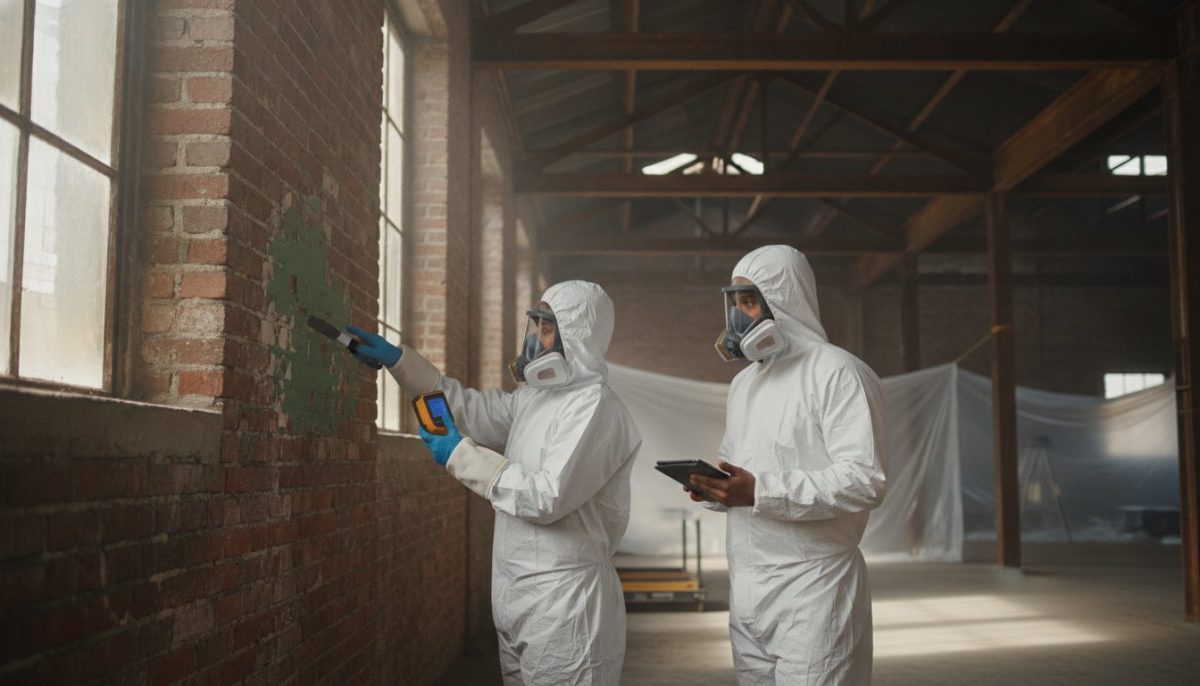
Professional commercial asbestos abatement is the systematic identification, containment, and removal of asbestos-containing materials (ACM) within industrial and commercial frameworks. While residential projects often focus on small-scale flooring or siding, commercial operations are complex engineering phases that require high-level precision to manage structural steel fireproofing, HVAC insulation, and industrial flooring. To understand the foundational procedures and occupational risks involved, facility managers should review the technical overview of What is Asbestos Abatement? to grasp why these projects demand specialized contractors.

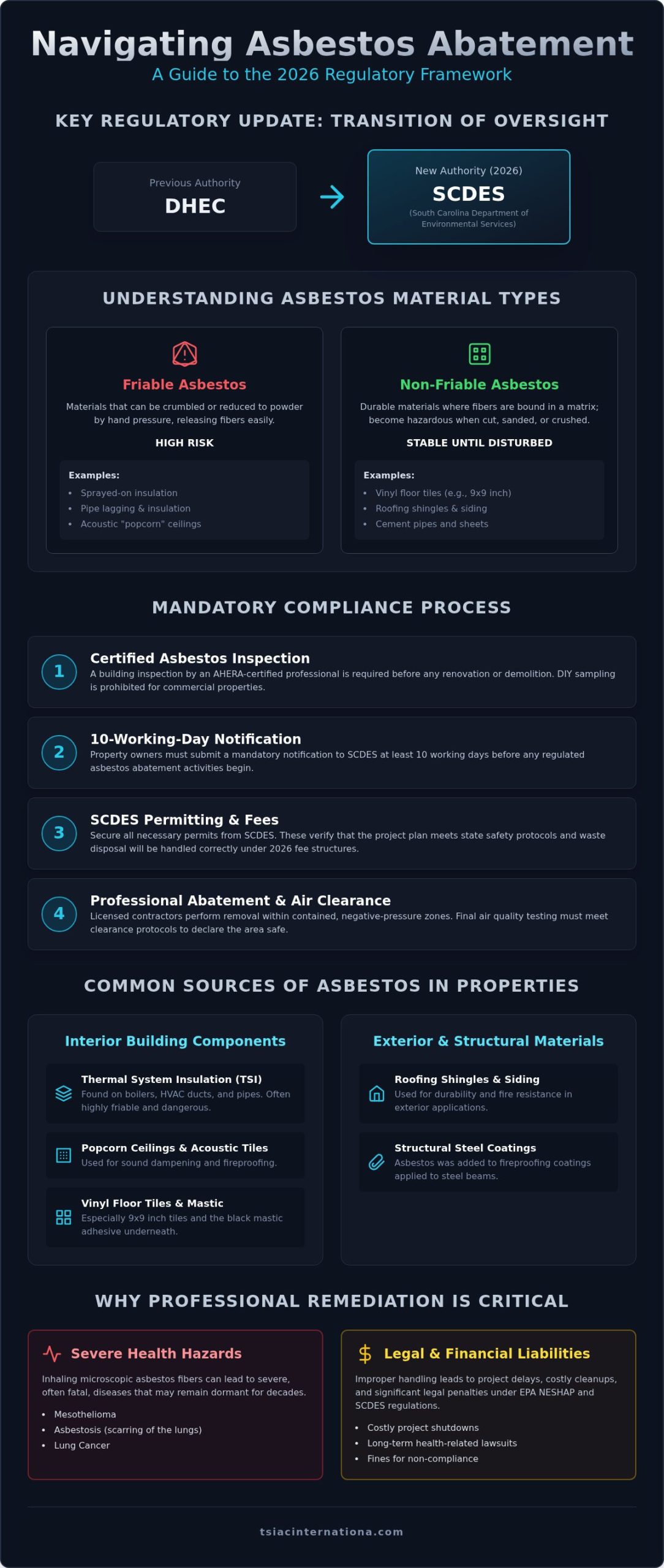
The regulatory environment in 2026 is exceptionally rigid. Following the EPA final rule issued on March 28, 2024, the industry has shifted toward a total prohibition of chrysotile asbestos. As of May 28, 2024, the manufacture and commercial use of this material became restricted, with a critical compliance deadline for asbestos sheet gaskets set for May 28, 2026. Facility managers must navigate these EPA NESHAP and OSHA requirements with absolute accuracy. Failure to align with these dates can halt a project entirely, especially as the U.S. Court of Appeals reviews ongoing legal challenges in June 2026.

The Legal and Financial Stakes of Non-Compliance

Managing hazardous materials falls under the doctrine of strict liability. This means a facility owner is responsible for exposure or environmental contamination regardless of intent or perceived negligence. Fines from the EPA or OSHA can reach tens of thousands of dollars per day, but the secondary costs are often more damaging. Stop-work orders during a renovation can derail construction timelines, while unresolved asbestos issues significantly diminish property value and future insurability. A professional approach ensures that liability is transferred through a documented chain of custody and proper disposal protocols.

Friable vs. Non-Friable Asbestos in Industrial Settings

The distinction between friable and non-friable materials dictates the engineering controls required on a job site. Non-friable materials, such as vinyl floor tiles, are stable unless they’re subjected to mechanical force. However, high-risk zones like boiler rooms and mechanical penthouses often contain friable insulation that poses a severe threat. Friable asbestos in commercial high-traffic zones refers to any material that, when dry, can be crumbled or reduced to powder by hand pressure, creating an immediate inhalation risk for occupants. Proper containment in these areas isn’t optional; it’s a structural necessity for the safety of the entire facility.

Engineering Controls: How Large-Scale Abatement Works

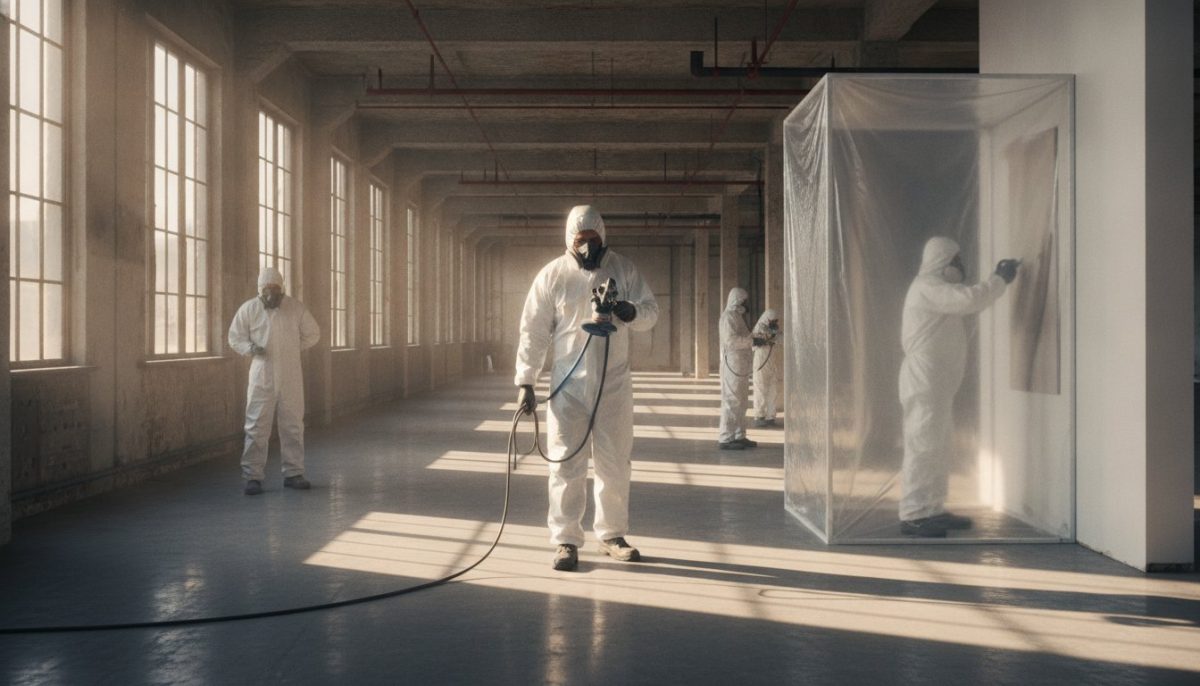
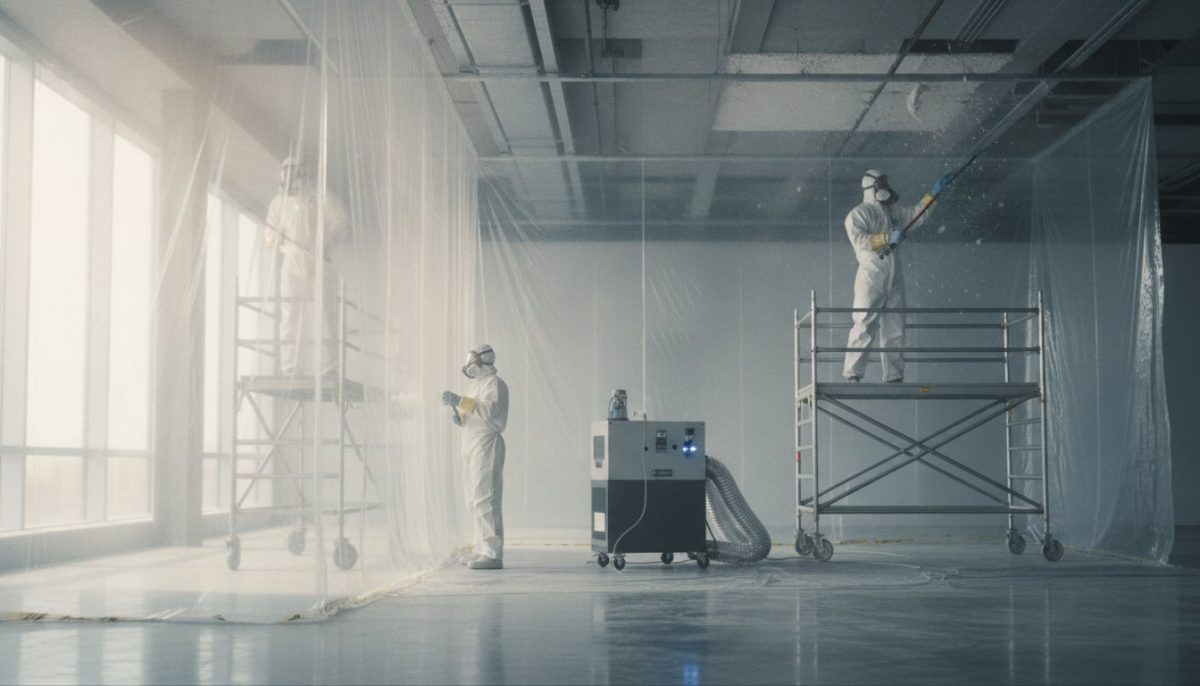
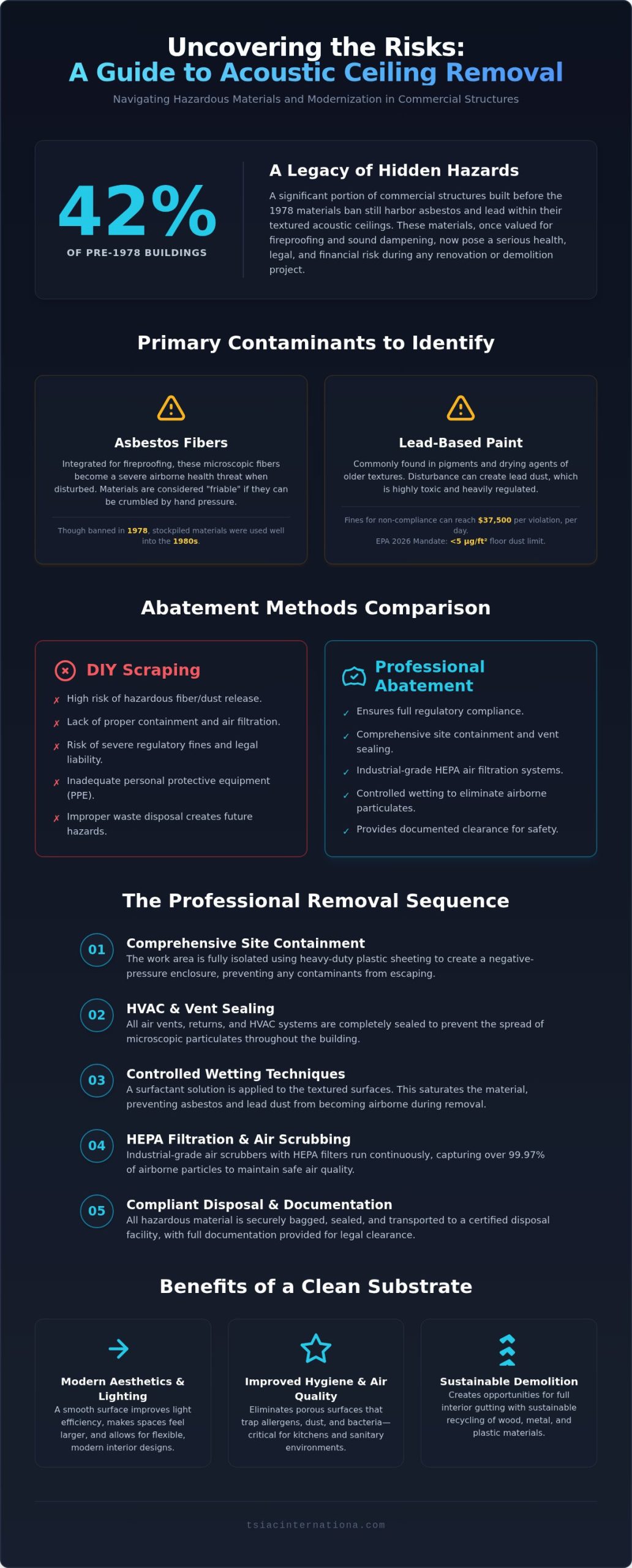
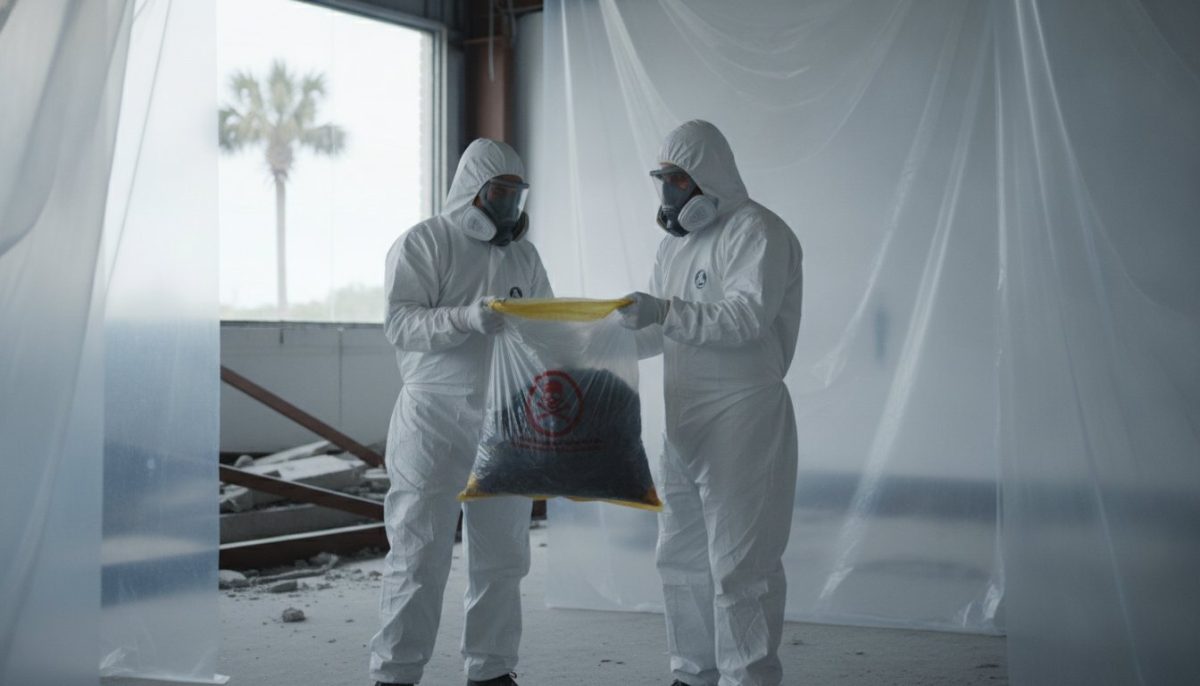
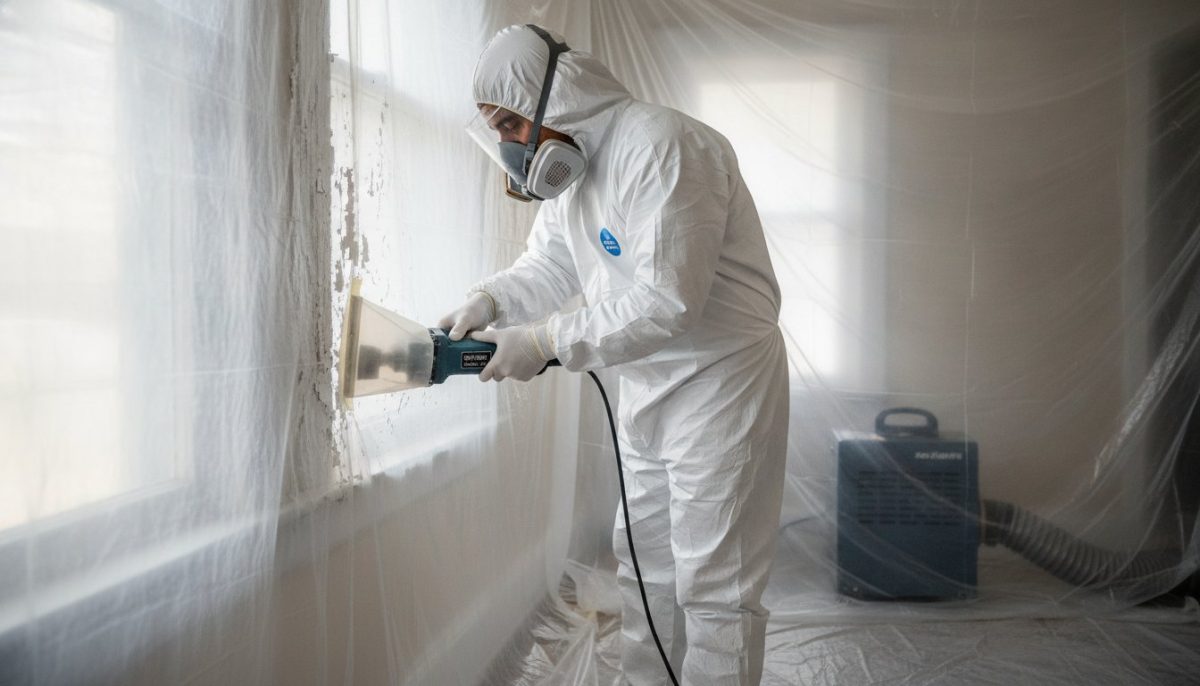
Large scale commercial asbestos abatement is an exercise in pressure differentials and physical isolation. We don’t just remove material; we re-engineer the environment to ensure zero fiber migration. This process begins with the construction of critical barriers. High-durability polyethylene sheeting, typically 6-mil thickness, is used to seal every opening, from windows to electrical outlets. These seals must be airtight to withstand the mechanical stress of negative pressure. It’s a technical foundation that ensures the safety of the entire structure.

The core of this containment strategy is the Negative Air Machine (NAM). These units pull air through HEPA filters and exhaust it outside the building, creating a vacuum effect. This ensures that if a seal were to fail, air would rush into the containment area rather than toxic dust escaping into the facility. For personnel and waste transfer, we utilize multi-stage decontamination units. These systems feature separate chambers for suit removal, showering, and clean dressing, acting as a technical airlock between the work zone and the rest of the building.

Industrial HEPA Filtration and Air Exchange Standards

Efficiency is measured by the ability to capture microscopic particles. We utilize HEPA filtration systems that are certified at 99.97% efficiency for particles as small as 0.3 microns. In high-ceiling industrial spaces, the calculation of air exchange rates is critical. We aim for a minimum of four air changes per hour to maintain a safe environment. Real-time air quality monitoring is conducted throughout the shift to verify that these engineering controls are functioning as intended. Adhering to Federal Asbestos Regulations ensures that these technical benchmarks meet the highest safety standards during every phase of the project.

Occupant Safety and Business Continuity

Maintaining business continuity during commercial asbestos abatement requires a surgical approach to HVAC management. We physically disconnect and seal ductwork serving the abatement area to prevent cross-contamination with occupied zones. Third-party industrial hygiene monitoring provides an objective layer of safety verification, offering peace of mind to your staff and stakeholders. If you’re planning a phased renovation, our team can help you design a custom abatement strategy that minimizes operational downtime. We focus on keeping your facility running while we manage the hazards.

Wet removal techniques are also essential for source control. By saturating asbestos-containing materials with amended water or surfactants at the point of contact, we significantly reduce the concentration of airborne fibers before they can even reach the filtration system. This multi-layered approach is what separates professional industrial engineering from basic cleanup services. It’s about controlling the environment with absolute precision.

Commercial Asbestos Abatement: The 2026 Strategic Guide for Facility Managers

Mitigating Risk: Why Professional Abatement is a Financial Necessity

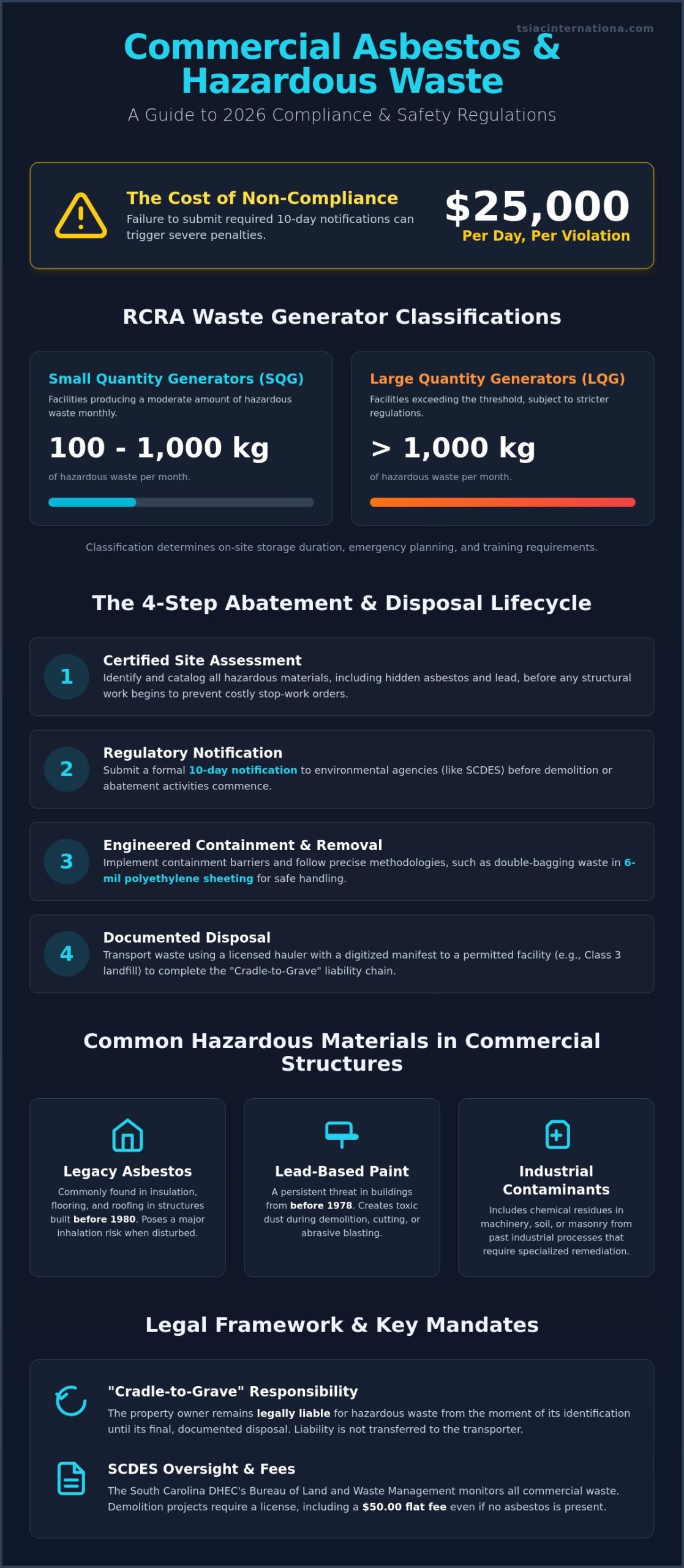
Facility managers often view commercial asbestos abatement as a line item to be minimized. However, selecting a contractor based solely on the lowest bid frequently leads to catastrophic financial outcomes. These hidden costs manifest as failed air clearance tests, multi-week project delays, and permanent legal exposure. A professional contractor does more than remove hazardous materials; they facilitate a total transfer of liability through a rigorous “Chain of Custody” protocol. This system ensures that every ounce of toxic waste is tracked from the point of origin to a certified disposal facility, protecting the asset owner from future litigation under EPA Asbestos Regulations.

Expert containment also accelerates the subsequent phases of a renovation or teardown. When abatement is performed with engineering precision, the site is handed over for structural or selective demolition in a pristine state, eliminating the need for costly re-clearing. Most commercial insurance policies explicitly require certified abatement professionals to maintain coverage. Using uncertified labor can void your liability protection instantly, leaving the facility owner to absorb the full cost of any accidental exposure or environmental contamination.

Avoiding the Pitfalls of Improper Removal

Secondary contamination is the most severe risk of amateur abatement. If fibers escape a poorly constructed containment zone, the cost of decontaminating an entire high-rise or industrial complex can easily exceed the original project budget. Improper disposal in non-certified landfills also carries criminal and civil penalties that can haunt a corporation for decades. On average, a single contamination breach increases total project costs by 40% due to emergency remediation and legal fees.

The Role of Regulatory Documentation

Precision in documentation is as important as precision in the field. Waste Shipment Records (WSR) serve as the permanent legal proof of compliant disposal and are required for long-term facility records. These close-out reports are often a mandatory prerequisite for obtaining structural demolition permits from local municipalities. For a detailed look at how these rules apply in specific jurisdictions, see our analysis of hazardous material abatement in South Carolina. This level of transparency ensures that facility managers can defend their compliance status during any future audit or property transaction. We provide the technical evidence required to prove that your commercial asbestos abatement project was executed to the highest engineering standards.

The 5-Step Lifecycle of a Commercial Abatement Project

Executing a commercial asbestos abatement project requires more than just manual labor; it’s a phased engineering operation that demands absolute sequence control. Each stage is designed to eliminate environmental risk while preparing the structure for its next lifecycle phase. Skipping a single verification step can lead to containment failure or legal complications during the final handoff. A disciplined approach ensures that the project moves from initial identification to final air clearance without the friction of unexpected delays.

  • 1. Comprehensive Asbestos Survey: Technicians map every square foot of the facility, using bulk sampling and laboratory analysis to identify all asbestos-containing materials (ACM).
  • 2. Site Preparation and Containment: We construct a physical “bubble” using 6-mil polyethylene and establish negative air pressure to isolate the work zone.
  • 3. Precision Removal: Teams systematically extract materials using specialized industrial tools and wet-removal techniques to keep fiber counts at the lowest possible levels.
  • 4. Final Cleaning and Encapsulation: After bulk removal, we perform multi-pass HEPA vacuuming and apply high-grade encapsulants to seal any remaining surfaces.
  • 5. Independent Clearance Testing: A third-party industrial hygienist conducts rigorous air sampling to verify the area meets all safety standards for re-entry.

Phase 1: The Pre-Abatement Survey

A standard maintenance survey is rarely sufficient for major renovations. A comprehensive pre-demolition inspection is required to identify “hidden” asbestos often found in wall cavities, internal duct linings, or underground piping systems. By uncovering these materials before the first hammer swings, we prevent the “change orders” and budget spikes that derail poorly planned projects. Accurate data at this stage is the only way to guarantee a fixed-cost estimate for the entire commercial asbestos abatement process.

Phase 5: Achieving Final Clearance

The project isn’t finished until an independent lab issues a “Safe for Re-entry” certificate. We typically recommend Transmission Electron Microscopy (TEM) over the more common Phase Contrast Microscopy (PCM) for high-stakes commercial environments. TEM provides a much higher level of analytical resolution, identifying the smallest fibers that PCM might miss. This certificate carries significant legal weight, serving as your primary defense against future liability claims. Once clearance is achieved, we provide a clean handoff to the demolition or renovation team, ensuring they can work in a 100% hazard-free environment. If you need to begin this process immediately, you can request a technical site assessment to define your project scope with engineering precision.

Managing these five steps with a single, experienced partner reduces the risk of communication gaps between the survey team and the removal crew. It ensures that the technical specifications established in the first phase are executed perfectly in the third, leading to a guaranteed pass in the fifth. This continuity is what protects your timeline and your occupants.

The TSIAC Advantage: Integrating Abatement with Selective Demolition

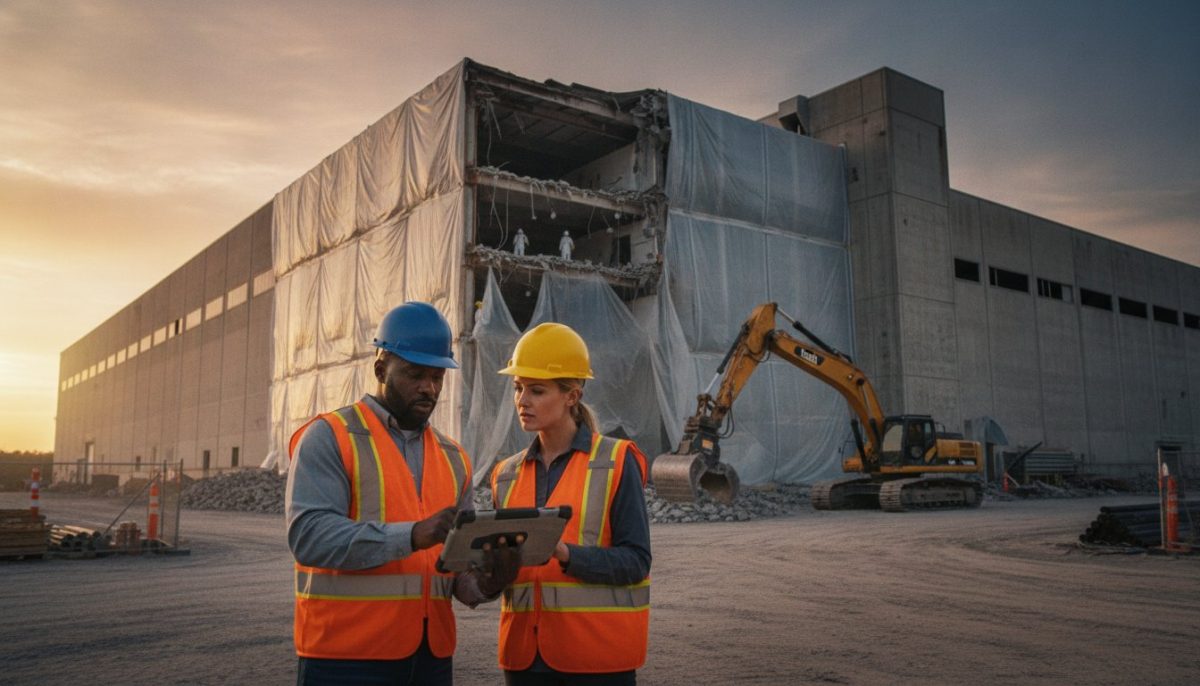
Efficiency in commercial asbestos abatement is frequently compromised during the handoff between specialized vendors. When a facility manager hires one firm for hazardous material removal and another for structural work, communication gaps lead to schedule friction and increased liability. We eliminate these bottlenecks by providing a unified engineering solution. By integrating abatement with selective demolition, we maintain a single point of accountability from the first air sample to the final structural modification. This approach ensures that technical requirements align perfectly with mechanical needs.

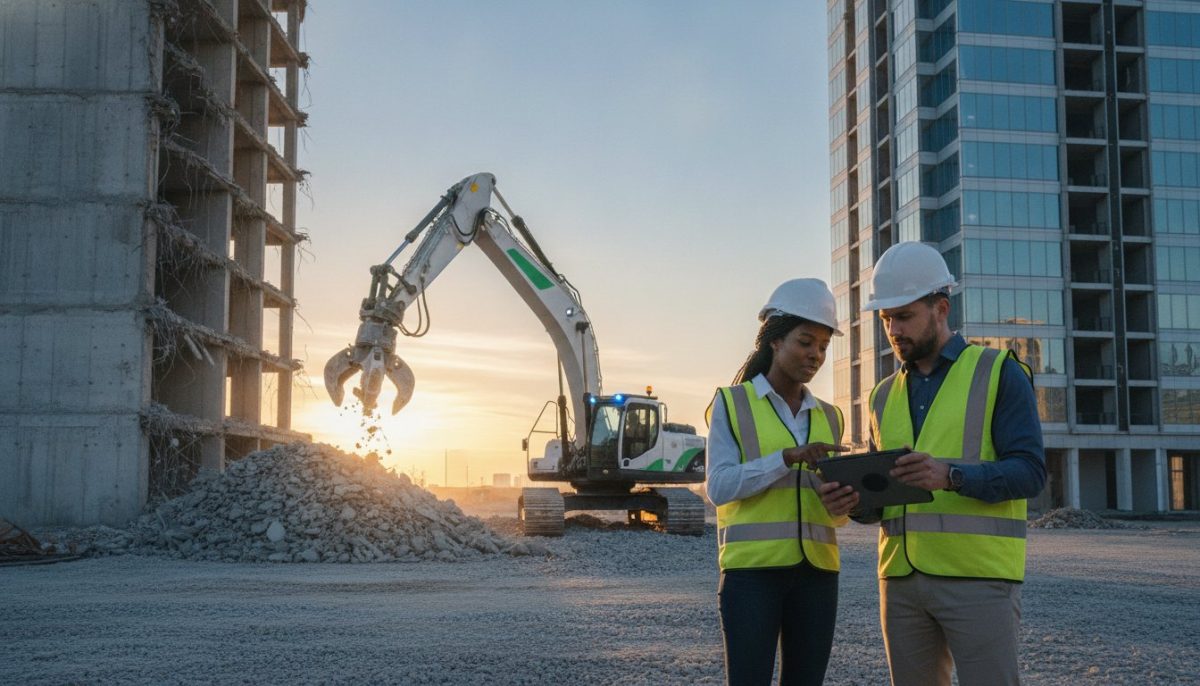
Selective demolition is a surgical process. It isn’t about a wrecking ball; it’s about the controlled removal of specific components to preserve the integrity of the remaining structure. Our teams utilize 15 years of engineering experience to navigate complex industrial environments where precision is the baseline. We don’t just clear the site. We prepare it for its next purpose with a level of accuracy that only a dual-specialty contractor can provide. This synchronized workflow allows for faster site turnover and a significant reduction in total project overhead.

Maximizing Efficiency Through Selective Gutting

Older commercial assets often contain hidden pockets of hazardous materials within wall cavities or floor assemblies. Our commercial interior gutting services are designed to strip these interiors to the studs while simultaneously managing toxic risks. We’ve executed this integrated model on large scale office complexes and industrial plants where stripping 100,000 square feet of interior space requires a disciplined, rhythmic approach. This prevents the delays that occur when a demolition crew accidentally encounters unidentified ACM and has to wait for a separate abatement team to mobilize.

Environmental Stewardship and Waste Management

Engineering precision also extends to our environmental impact. We don’t view debris as a single waste stream. Instead, we meticulously sort non-contaminated materials, such as metal framing, concrete, and wood, to divert up to 70% of project waste from landfills. This commitment to recycling reduces disposal costs and aligns your project with modern sustainability standards. We handle metal and concrete in close proximity to active abatement zones using specialized dust suppression and isolation techniques. For a deeper look at these technical protocols, you can review our guide on the demolition process in South Carolina. We provide the technical expertise to solve the site challenges that others avoid. This ensures your commercial asbestos abatement and demolition project is completed with absolute engineering precision.

Mastering the Technical Transition to a Hazard-Free Facility

Success in 2026 relies on viewing hazardous material removal not as a standalone obstacle, but as a critical engineering phase. By integrating commercial asbestos abatement with selective demolition, you eliminate the friction of vendor handoffs and ensure your project remains on schedule. Our 15+ years of hazardous material expertise allows us to navigate the most complex industrial environments with the precision your asset deserves. We don’t just clear a site; we prepare it for its next lifecycle with absolute technical certainty.

We provide the comprehensive documentation and engineering controls required for total regulatory compliance, backed by the security of being a fully bonded and insured partner for large-scale commercial contracts. This technical rigor protects your occupants and your bottom line from the risks of secondary contamination. Secure your facility with professional abatement; contact TSIAC International today. We’re ready to bring engineering-grade precision to your most challenging site requirements, ensuring a safe and seamless transition to your next phase of construction.

Frequently Asked Questions

Is it possible to isolate commercial abatement areas while tenants remain in other parts of the building?

Yes, it’s possible to isolate commercial asbestos abatement zones using airtight critical barriers and negative air machines. We establish a pressure differential that prevents fibers from migrating into occupied spaces. By sealing HVAC ducts and using multi-stage decontamination units, we ensure the rest of the building remains safe and operational throughout the project. This engineering approach allows for phased renovations without requiring total building evacuation.

How long does a typical commercial asbestos abatement project take to complete?

Project timelines vary based on the square footage and the type of material being removed. A mid-size commercial project might take one to three weeks, while large-scale industrial sites can span several months. Factors like the complexity of the containment bubble and the required air clearance testing phases significantly influence the final schedule. We provide a detailed technical timeline after the initial pre-abatement survey is finalized.

What happens if asbestos is discovered mid-project during a renovation?

Work must stop immediately if suspect material is discovered mid-project. The area should be sealed to prevent fiber release and a certified technician must collect bulk samples for lab analysis. If the tests are positive for ACM, a formal abatement plan is required before renovation can resume. This immediate response prevents the massive costs associated with total building decontamination and potential legal exposure for the property owner.

Can commercial asbestos abatement be performed at night or on weekends to avoid disruption?

Yes, we frequently schedule abatement activities during nights or weekends to minimize business disruption. This allows facility managers to maintain normal operations during business hours while we handle hazardous removals in a controlled environment. Off-hours work also simplifies the coordination of waste transport and personnel movement through high-traffic zones, ensuring a more efficient project lifecycle for active commercial assets.

What is the difference between asbestos abatement and asbestos encapsulation?

Abatement involves the physical removal and disposal of asbestos-containing materials from the structure. Encapsulation is the process of sealing the material with a specialized liquid sealant to prevent fiber release. While encapsulation costs less, typically $2 to $6 per square foot in 2026, removal is the only permanent solution that eliminates future liability and allows for subsequent structural demolition or interior gutting.

How do I know if my building needs a pre-demolition asbestos survey?

Federal NESHAP regulations require a thorough inspection before any renovation or demolition of a commercial facility. This applies regardless of the building’s age, as asbestos was used in industrial materials well into the late 20th century. A comprehensive survey identifies hidden ACM in wall cavities and mechanical systems, which is a mandatory step for obtaining legal demolition permits and ensuring worker safety.

What are the specific OSHA training requirements for workers on a commercial abatement site?

Workers on a commercial asbestos abatement site must complete a 40-hour initial training course and participate in annual 8-hour refresher sessions. OSHA also requires medical surveillance for employees exposed to asbestos above permissible limits. These regulations ensure that every person in the containment zone understands the technical protocols for personal protection, hazardous waste handling, and the maintenance of negative pressure environments.

How does the presence of asbestos affect the cost of structural demolition?

Asbestos significantly increases demolition costs because it must be removed before structural teardown can begin. Specialized labor, containment materials, and hazardous waste disposal fees add a layer of expense that standard demolition doesn’t require. Integrating these services with a single contractor can help mitigate these costs by streamlining the project lifecycle and reducing the mobilization fees associated with hiring multiple specialized firms.

Asbestos Disposal Regulations: A 2026 Guide to Federal Compliance

Did you know that 1.3 million American workers remain at risk of asbestos exposure even as the EPA moves toward a total ban of chrysotile by 2037?…

Did you know that 1.3 million American workers remain at risk of asbestos exposure even as the EPA moves toward a total ban of chrysotile by 2037? You likely feel the weight of shifting asbestos disposal regulations, especially as abatement costs in regions like Long Island and NYC have surged by 8% to 12% in early 2026. It’s a logistical challenge to manage complex industrial projects while fearing heavy EPA or OSHA fines for a single compliance oversight. We recognize that protecting your crew while maintaining project profitability requires precise technical control and a disciplined approach to safety.

This guide provides the clarity you need to ensure every phase of your demolition or abatement project remains legally sound. You’ll gain a clear understanding of NESHAP requirements and the specific documentation needed to satisfy federal inspectors. We’ll also examine the critical distinction between friable and non-friable materials, clarify the 0.1 fiber per cubic centimeter OSHA exposure limit, and explain how the 1% threshold for asbestos-containing materials impacts your disposal strategy in 2026.

Key Takeaways

  • Understand how EPA NESHAP and OSHA standards create a dual layer of compliance for your abatement project.
  • Master the critical distinctions between friable and non-friable waste to ensure your site follows current asbestos disposal regulations and avoids costly containment errors.
  • Learn the technical standards for sealing hazardous waste, including the industry-standard use of double-bagged 6-mil polyethylene.
  • Identify the essential components of a Waste Shipment Record (WSR) to maintain an airtight paper trail for regulatory audits.
  • Discover how partnering with a certified specialist mitigates long-term liability through expert management of the entire regulatory lifecycle.

Understanding the Federal Framework for Asbestos Disposal

Compliance in high-stakes demolition isn’t a suggestion; it’s a technical requirement. The Federal Framework for Asbestos Disposal is built on a foundation of overlapping jurisdictions between the EPA and OSHA. While the EPA focuses on the environmental legacy of hazardous materials, OSHA enforces the immediate safety of the workforce. Together, these agencies ensure that the “cradle-to-grave” management mandated by the Toxic Substances Control Act (TSCA) is strictly followed from the moment a structure is surveyed until the waste reaches a certified landfill.

State-level agencies often adopt these federal rules as a baseline. However, many jurisdictions, such as California or New York, impose significantly stricter local disposal bans or lower reporting thresholds. In California, for example, notification is required for as little as 100 square feet of material. Failing to account for these regional nuances can lead to project delays and severe financial penalties. It’s critical to realize that asbestos disposal regulations require a proactive approach to site management and legal documentation.

The Role of the EPA and NESHAP in 2026

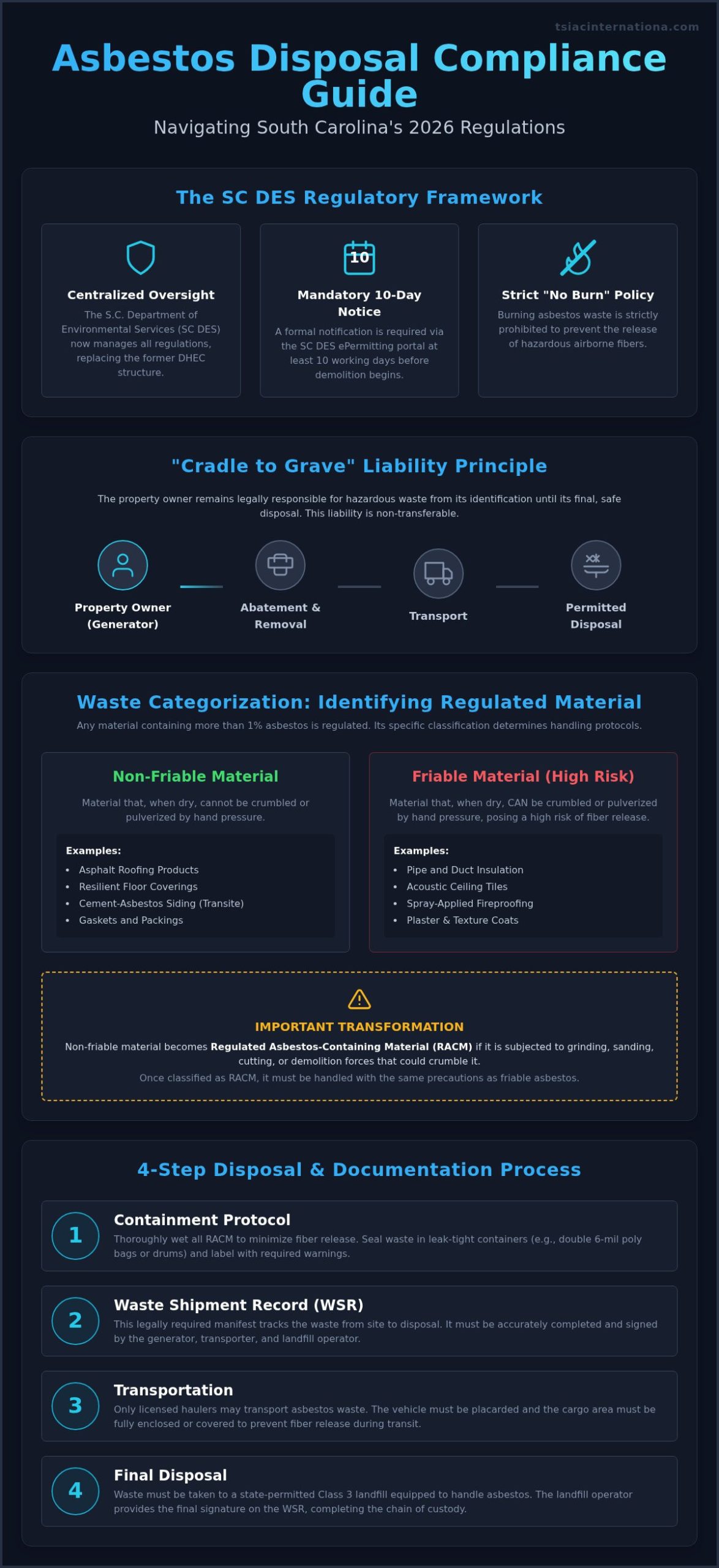
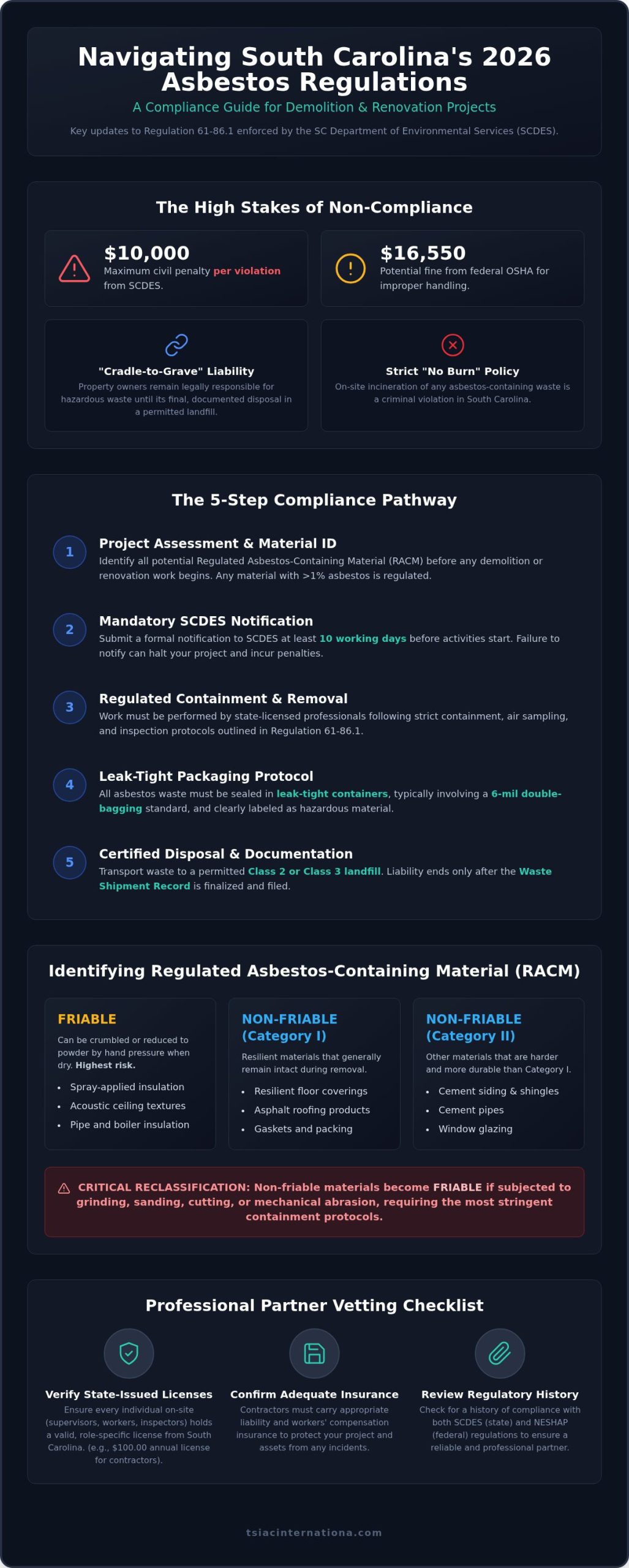
The National Emission Standards for Hazardous Air Pollutants (NESHAP) serves as the federal standard for air quality during abatement. Its primary mandate is the “zero visible emissions” rule. This means that during every stage of stripping, handling, and wetting, no dust can be visible to the naked eye. For projects involving more than 160 square feet or 260 linear feet of asbestos, you must submit a formal notification to the EPA at least 10 working days before work commences. This notification is a legal prerequisite that triggers potential site inspections and is the first step in the asbestos disposal regulations compliance chain.

OSHA Standards for Worker and Public Safety

Worker safety is governed by OSHA Standard 29 CFR 1926.1101. This regulation requires the establishment of regulated areas where access is restricted to trained personnel wearing specialized personal protective equipment (PPE). These safety standards aren’t just about health; they dictate the physical handling of the waste. For example, the requirement for negative air pressure and HEPA filtration ensures that fibers stay within the work zone. OSHA’s 0.1 fiber per cubic centimeter exposure limit forces contractors to use wet methods, which directly influences how the resulting waste is saturated and packaged for transport.

Waste Categorization: Friable vs. Non-Friable Asbestos

Effective site management starts with accurate material classification. Under current asbestos disposal regulations, the distinction between friable and non-friable materials determines the level of containment and the complexity of the disposal path. Friable asbestos is any material containing more than 1% asbestos that can be crumbled, pulverized, or reduced to powder by hand pressure when dry. This category represents the highest risk because fibers become airborne with minimal disturbance. Project managers must recognize that the physical state of the material, not just its chemical composition, dictates the legal handling requirements.

Non-friable materials are more resilient, but they aren’t exempt from scrutiny. They’re divided into two distinct categories based on their durability. The technical challenge lies in ensuring these materials don’t change state during the work process. If a non-friable material is subjected to sanding, grinding, or mechanical crushing, it’s legally “converted” into a regulated material. This shift immediately escalates the required safety protocols and disposal costs. Maintaining the integrity of the material during selective demolition is often the most cost-effective way to manage compliance.

Regulated Asbestos-Containing Material (RACM)

Regulated Asbestos-Containing Material (RACM) is the technical classification that triggers the most stringent federal oversight. This includes all friable asbestos and any non-friable material that has become friable through mechanical force. Common examples of RACM found on industrial sites include pipe insulation, thermal system components, and spray-on fireproofing. The EPA’s 1% rule remains the definitive threshold; any material exceeding this limit must be handled as hazardous waste. Because RACM has a high probability of releasing fibers, it requires specialized wetting agents and double-containment before it leaves the site.

Category I and II Non-Friable Classifications

Category I non-friable materials include resilient floor coverings, gaskets, and asphalt roofing products. These materials are generally flexible and unlikely to release fibers unless they’re severely weathered or mechanically abraded. Category II materials are more problematic. This group includes asbestos-cement products like transite siding and corrugated sheets. These are brittle by nature. While they start as non-friable, they’re highly susceptible to shattering during a gut-out or structural takedown. If Category II materials are likely to be broken or reduced to powder during the project, NESHAP requires them to be treated with the same rigor as RACM to prevent environmental contamination.

Asbestos Disposal Regulations: A 2026 Guide to Federal Compliance

Regulatory Requirements for Asbestos Transport and Landfills

Once material is classified as Regulated Asbestos-Containing Material (RACM), the focus shifts from identification to immobilization. The Regulatory Requirements for Asbestos Transport mandate that all waste remains in a leak-tight state from the point of origin to the final disposal facility. This process begins with thorough saturation using amended water to ensure no fibers become airborne during movement. You can’t simply throw debris into a container; it must be sealed while wet to satisfy the zero-visible-emissions mandate. Industry standards and asbestos disposal regulations in 2026 require double-bagging in 6-mil polyethylene bags as the primary containment method. Each bag must be individually sealed, typically using a gooseneck tie and heavy-duty tape, to prevent any accidental breach during transit.

The logistics of transport are equally governed by strict marking requirements. Any vehicle carrying asbestos waste must display visible hazard warning signs that communicate the presence of carcinogenic materials to the public and emergency responders. These signs must be removed only after the waste has been offloaded at a permitted facility. Modern compliance also involves tracking the material’s weight and volume precisely. With 2026 disposal costs ranging from $10 to $50 per cubic yard, accurate measurement is essential for both legal reporting and project management.

Proper Containment and Labeling Protocols

Every container leaving your site must bear OSHA-compliant warning labels that clearly state the health hazards involved. Labeling must include the generator’s name and the specific location where the waste was produced. When dealing with oversized debris, such as structural steel or large sections of concrete from concrete removal projects that cannot fit into standard bags, the material must be wrapped in two layers of 6-mil plastic sheeting and sealed with reinforced tape. This ensures that even bulky items meet the leak-tight standard required by asbestos disposal regulations. Failure to label correctly is a common reason for citations during roadside inspections.

Selecting an EPA-Approved Disposal Site

Not every landfill is legally allowed to accept asbestos. You must verify a facility’s permit status before the first truck leaves the site. Authorized landfills are required by federal law to provide immediate burial of the waste or cover it with at least six inches of non-asbestos material at the end of each operating day. This prevents wind dispersion and long-term environmental exposure. Illegal dumping or using an unauthorized facility carries severe legal consequences, including criminal charges and massive EPA fines. Using a disciplined contractor ensures that the final destination of your waste is as secure as the abatement process itself.

Compliance Documentation: The Paper Trail of Abatement

In any regulatory audit, the absence of a paper trail is legally equivalent to a failure of safety. While previous sections detailed the physical handling of hazardous materials, the administrative phase of asbestos disposal regulations is what protects property owners from long-term liability. The Waste Shipment Record (WSR) acts as the primary tracking mechanism. It documents the material’s journey from the project site to the disposal facility. Federal law holds the waste generator, often the building owner, strictly liable for the material until it’s buried. This means you must receive a signed copy of the manifest from the landfill operator within 35 days of the waste leaving your site. If that document doesn’t arrive within 45 days, you’re required by law to file an Exception Report with the EPA to explain the discrepancy.

Digital tracking has become the standard in 2026 to prevent these administrative gaps. Real-time GPS logging and electronic manifests provide an immutable record of transit times and disposal coordinates. This level of transparency is essential for high-stakes projects where the risk of litigation is high. We ensure that every document is cross-referenced with site logs to provide a complete audit package upon completion. Fulfilling these requirements isn’t just about paperwork; it’s about providing definitive proof that your project met every federal threshold for environmental protection.

Waste Shipment Records (WSR) and Manifests

A compliant federal WSR must contain specific data points: the name and address of the generator, the estimated quantity of asbestos-containing material, and the name of the transporter. It also requires the landfill’s permit number and a signature from each party in the chain of custody. If the waste isn’t delivered as scheduled, the Exception Report process triggers a formal investigation. This prevents unauthorized dumping and ensures that hazardous fibers don’t end up in municipal waste streams. Modern digital manifests now allow for instant verification, reducing the risk of lost physical records during long-term storage.

Notification Requirements for Demolition Projects

Documentation begins long before the first wall is breached. NESHAP requires a “Notice of Demolition or Renovation” to be filed at least 10 working days before any structural activity begins. This rule applies to all demolition projects, even if the initial survey indicates no asbestos is present. Filing this notice correctly requires precise technical data regarding the building’s age, use, and structural components. For those operating in the Southeast, understanding the demolition process south carolina is vital for navigating regional reporting quirks. Accuracy here prevents automatic stop-work orders and immediate fines.

Secure your project’s legal standing by partnering with experts who prioritize meticulous record-keeping. Contact us today for professional asbestos abatement services that guarantee a transparent paper trail.

Professional Abatement: Ensuring Full Regulatory Compliance with TSIAC International

Managing the complexities of asbestos disposal regulations requires more than just physical labor; it demands a disciplined, engineering-based approach to risk management. Property owners face significant legal exposure if hazardous materials aren’t handled with surgical precision. At TSIAC International, we act as a responsible partner by managing the entire regulatory lifecycle. This process begins with the initial 10-day NESHAP notification and extends through the final verification of burial at a permitted landfill. By centralizing these tasks, we provide the technical expertise and legal indemnification necessary to protect your assets from the threat of strict liability and federal oversight.

Our methodology is built on the principle of total control. We don’t just clear a site; we provide a transparent, documented process that stands up to the most rigorous audits. This includes the deployment of advanced HEPA filtration systems and the implementation of negative pressure enclosures that exceed the standard 0.1 fiber per cubic centimeter OSHA limit. Our commitment to environmental responsibility is reflected in our integrated recycling services, where we separate non-hazardous debris from contaminated waste to reduce the environmental footprint of your project while maintaining full compliance.

Why Certified Contractors are Legally Essential

Hiring uncertified or cut-rate contractors introduces the risk of “vicarious liability” for the property owner. If a contractor violates asbestos disposal regulations, the building owner is often held equally responsible for the resulting fines and remediation costs. Professional air monitoring is the only way to validate the success of the containment strategies discussed earlier. This data provides an empirical record that the work area was safe for re-occupancy or subsequent structural work. For a deeper look at local requirements, consult our hazardous material abatement south carolina guide to understand how regional enforcement impacts your project.

Integrating Abatement with Structural Demolition

There’s a distinct operational advantage to using a single contractor for both abatement and structural demolition. When these services are fragmented, communication gaps can lead to the accidental disturbance of overlooked hazardous materials during the structural phase. We ensure that every square foot of RACM is cleared and documented before any heavy machinery arrives for structural removal. This integrated approach is particularly vital during commercial interior gutting services, where selective demolition must occur in tight proximity to potentially friable materials. By coordinating these phases, we eliminate redundant mobilization costs and ensure that the transition from hazardous remediation to structural clearing is seamless and safe.

Adhering to the 2026 landscape of asbestos disposal regulations requires more than just a surface-level checklist. It demands a technical commitment to zero-visible-emissions and an airtight documentation process that survives federal scrutiny. You’ve seen how precise material categorization and the 35-day manifest window are critical for preventing property owner liability. By integrating these safety protocols directly into your structural demolition timeline, you eliminate the fragmentation that often leads to compliance failures and project delays.

TSIAC International brings 15+ years of hazardous material remediation experience to every site. We provide full regulatory compliance documentation for every project, ensuring your paper trail is as solid as our technical execution. Our certified experts manage both demolition and abatement to streamline your workflow and mitigate risk. Ensure your project is 100% compliant—Contact TSIAC International for expert abatement today. We’re ready to provide the engineering precision your next project deserves.

Frequently Asked Questions

Can I dispose of asbestos in my regular household trash?

No, you cannot dispose of asbestos in regular household trash under any circumstances. Federal law classifies asbestos as a hazardous air pollutant that requires specialized handling and containment. Mixing these materials with municipal waste puts sanitation workers at risk and can lead to immediate EPA enforcement actions. All waste must be saturated and transported to a landfill specifically permitted to accept hazardous materials.

What is the penalty for violating asbestos disposal regulations?

Penalties for violating asbestos disposal regulations are severe, with civil fines often exceeding $37,500 per day for each violation. Beyond financial costs, the EPA and Department of Justice can pursue criminal charges for intentional mismanagement. These penalties apply to the building owner, the contractor, and the transporter. Maintaining a clear paper trail is the only way to mitigate this level of legal risk.

How much asbestos can I legally remove myself without a license?

There’s no safe threshold that allows unlicensed individuals to remove asbestos in a commercial or industrial setting. While NESHAP reporting triggers at 160 square feet, any amount of disturbance requires specialized containment and training. OSHA regulations apply as soon as a single employee is exposed to the material. Attempting self-removal without certification exposes the property owner to strict liability and potential health lawsuits.

Does the EPA require a specific type of bag for asbestos disposal?

The EPA requires waste to be sealed in leak-tight containers, and the industry standard is double-bagging in 6-mil polyethylene bags. Each bag must be individually sealed using a gooseneck tie and heavy-duty duct tape. If the debris is too large for bags, it must be wrapped in two layers of 6-mil plastic sheeting. Proper labeling with the generator’s name and location is a mandatory federal requirement.

What happens if I find asbestos during a demolition project?

You must stop all structural work immediately and restrict access to the affected area. Finding unidentified material during a project requires a new inspection by a certified professional to confirm the asbestos content. If the quantity exceeds 160 square feet, you must update your 10-day EPA notification. Proceeding without a revised plan violates federal air quality standards and can result in a permanent stop-work order.

How long must I keep records of asbestos disposal?

Federal law requires you to maintain Waste Shipment Records (WSR) for at least 2 years following the disposal date. However, most legal experts recommend keeping these documents for the life of the property or at least 30 years. This longer duration covers the typical latency period for asbestos-related diseases. Having these records ready is your primary defense against future long-term liability claims.

Are there different disposal regulations for commercial vs. residential properties?

Yes, federal NESHAP rules primarily target commercial, industrial, and residential buildings with more than four units. Single-family homes are generally exempt from EPA notification, though they must still follow local landfill rules. Regardless of the property type, OSHA standards apply if you hire any outside contractors or employees to perform the work. Every site must meet the zero-visible-emissions standard.

Can asbestos materials be recycled instead of landfilled?

Asbestos materials cannot be recycled and must be disposed of in a permitted landfill. The indestructible nature of the fibers makes them a permanent contaminant in standard recycling streams for concrete or metal. Attempting to recycle ACM is a major violation of asbestos disposal regulations. Proper remediation involves total removal and permanent burial to ensure the fibers never enter the environment again.

Eco-Friendly Demolition Services: The Complete 2026 Guide to Sustainable Deconstruction

The EPA reports that construction and demolition debris reached 600 million tons in a single year, a figure more than double the volume of standard…

The EPA reports that construction and demolition debris reached 600 million tons in a single year, a figure more than double the volume of standard municipal waste. You likely recognize this reality through the lens of skyrocketing landfill tipping fees and the increasingly complex documentation required to meet 2026 LEED standards. Balancing the removal of hazardous materials like lead and asbestos with the need for strict budget adherence often feels like a zero-sum game. It doesn’t have to be.

By integrating professional eco-friendly demolition services, you can pivot from traditional site clearing to a high-precision deconstruction model. This guide explains how modern recovery techniques allow you to reclaim valuable assets and significantly lower project costs through strategic salvage operations. We’ll outline the technical process of deconstruction, the protocols for verified hazardous material safety, and the engineering logic that makes sustainable demolition the most cost-effective choice for complex industrial projects.

Key Takeaways

  • Learn why modern deconstruction is replacing traditional “wreck-and-haul” methods to maximize material recovery and environmental protection.
  • Understand the critical role of integrated hazardous material abatement and surgical dismantling in ensuring site safety and structural integrity.
  • Discover how eco-friendly demolition services reduce total project costs by diverting waste from landfills and generating value from recovered scrap.
  • Identify the essential components of a successful project, from conducting pre-demolition audits to securing regulatory approval through Waste Management Plans.
  • Explore how precision engineering and industrial expertise allow for the systematic salvage of wood, metal, and plastic in complex environments.

What Are Eco-Friendly Demolition Services in 2026?

In 2026, the construction sector views waste as a fundamental resource failure. Eco-friendly demolition services represent the systematic dismantling of structures designed to maximize material salvage and minimize environmental degradation. This methodology has replaced the obsolete “wreck-and-haul” practices that dominated the industry for decades. Modern engineers and project managers now prioritize “deconstruct-and-recover” strategies. These processes integrate selective demolition, precise on-site sorting, and rigorous hazardous material remediation to ensure that nothing of value reaches a landfill.

Sustainability has transitioned from a niche preference to the absolute industry standard for both commercial and residential projects. This shift is driven by strict regulatory frameworks. By 2026, over 80% of urban jurisdictions require detailed waste management plans before any permit is issued. Developers don’t just choose green methods for the environment; they do it to comply with carbon-neutral mandates and to recapture the value of high-grade materials like structural steel and old-growth timber.

Deconstruction vs. Traditional Demolition

Traditional demolition relies on heavy machinery to level a site in the shortest possible timeframe. While this method is fast, it destroys approximately 70% of potential recyclables by commingling debris with contaminants. In contrast, Deconstruction involves the manual or semi-automated removal of building components to preserve their structural integrity. It’s essentially construction in reverse.

Most 2026 projects utilize a hybrid approach. This strategy uses high-reach excavators for primary structural elements but employs specialized teams for the selective removal of copper, masonry, and architectural features. This balance maintains project timelines while meeting modern environmental responsibilities. It’s a calculated, engineering-led process that treats every building as a vertical warehouse of raw materials.

The Role of Material Recovery Facilities (MRFs)

The process doesn’t end when the trucks leave the site. Material Recovery Facilities (MRFs) are the backbone of the circular economy in the demolition sector. These centers use advanced optical sorters and robotic systems to process debris with surgical precision. Leading eco-friendly demolition services now aim for a 95% diversion rate from landfills, a significant increase from the 50% averages seen in 2015.

Transparency is a non-negotiable requirement for modern contracts. Contractors now provide digital chain-of-custody reports for every project. These documents track every ton of concrete and steel from the site to its secondary use. This level of tracking ensures that 100% of the recycling claims are verifiable through third-party audits, providing the technical proof that stakeholders and regulatory bodies demand.

The Mechanics of Sustainable Deconstruction and Abatement

Sustainable deconstruction isn’t a blunt force activity; it’s a disciplined engineering process. Unlike traditional methods that rely on wrecking balls and high-impact collisions, eco-friendly demolition services utilize surgical precision to dismantle structures. This approach involves removing specific building components while protecting the remaining structure and surrounding environment. We rely on high-reach excavators equipped with precision cutters and hydraulic shears to minimize vibration, noise, and dust. By 2026, these technical standards have become the baseline for projects requiring high levels of control and safety.

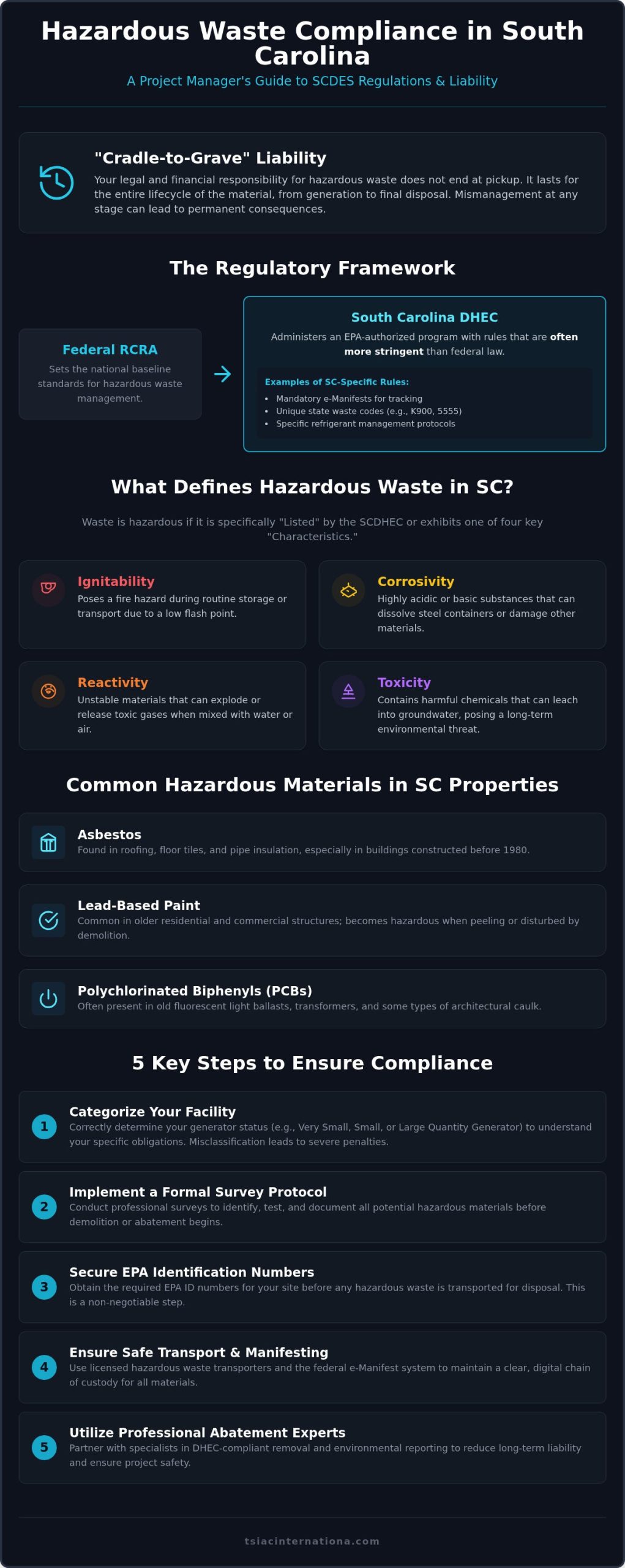
The sequence begins with integrated hazardous material abatement. This is the critical first step of any green demolition project. We don’t start structural work until every trace of lead, asbestos, and PCBs is identified and neutralized. Modern site management requires a thorough pre-demolition survey to map out these contaminants, ensuring they don’t enter the waste stream or the atmosphere. It’s a technical necessity that protects both the workforce and the long-term viability of the land.

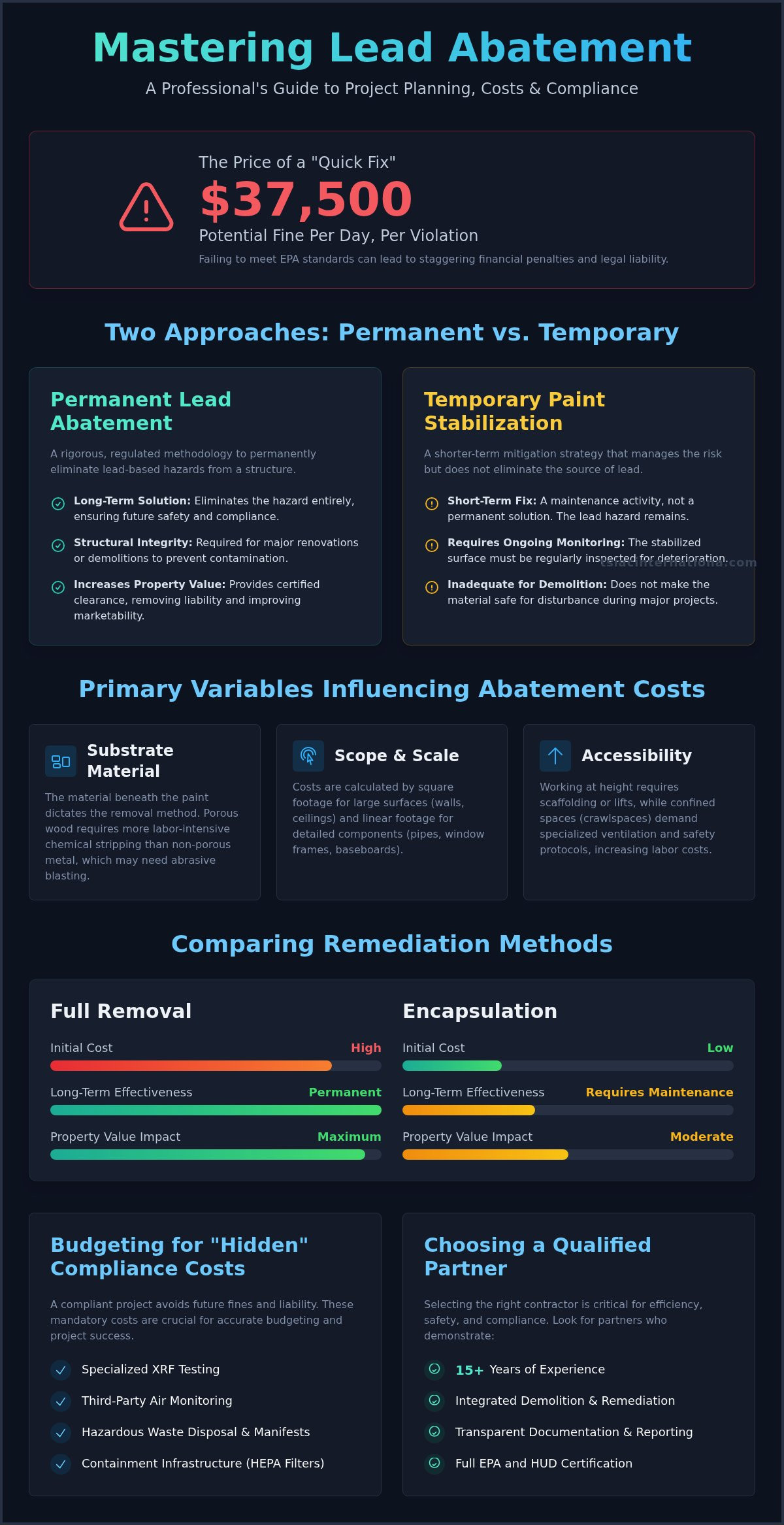
Safely Managing Asbestos and Lead

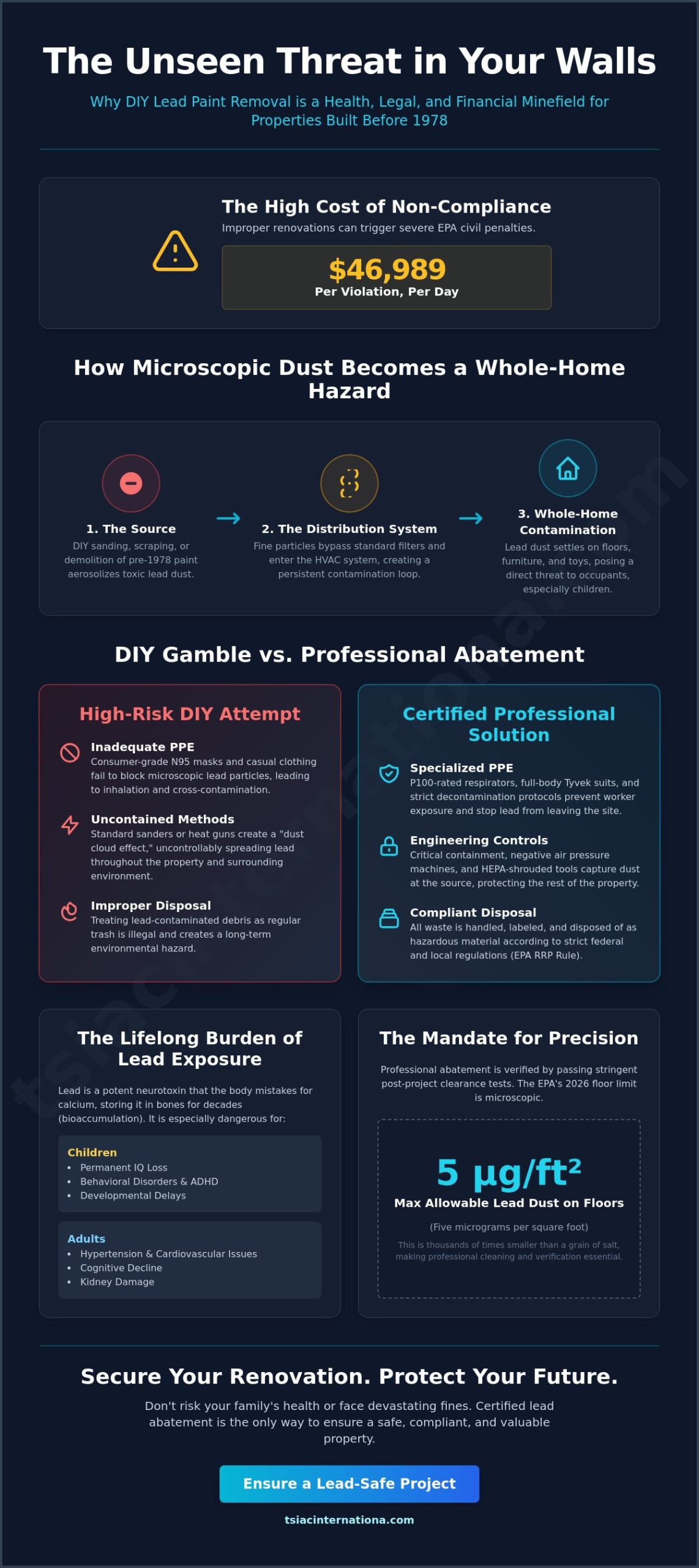
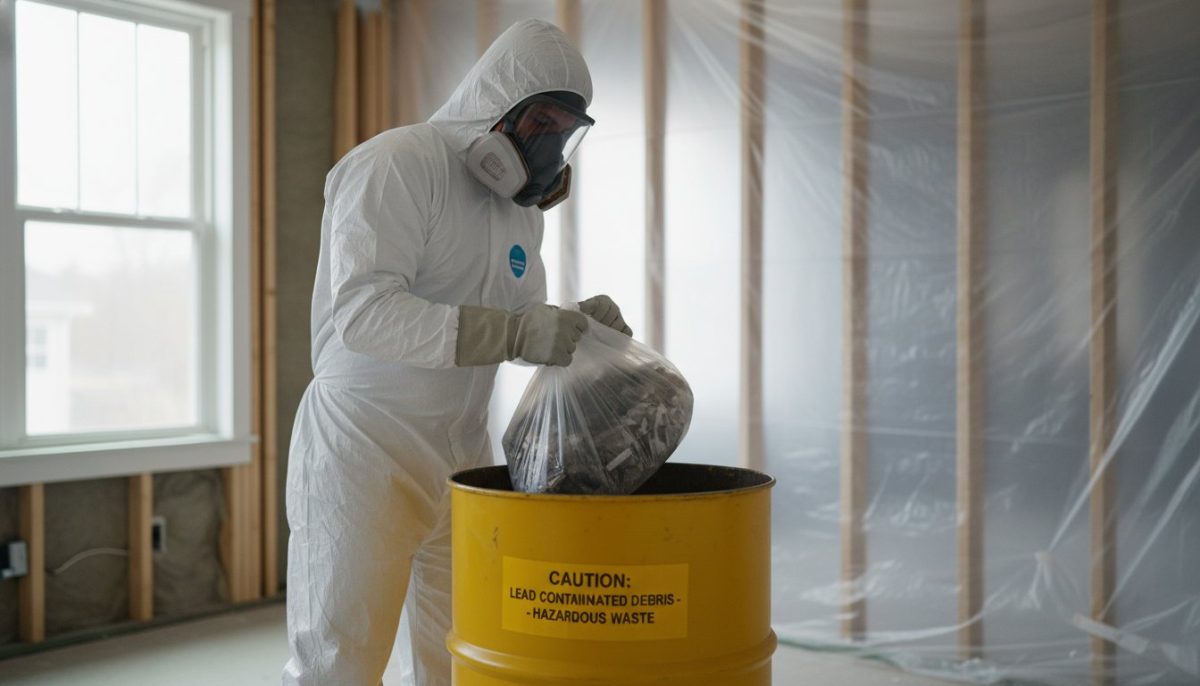
Rigorous asbestos removal is vital for preventing environmental contamination during the deconstruction phase. Our teams implement strict containment strategies, including the use of negative pressure enclosures and HEPA filtration systems to capture microscopic fibers. Regulatory compliance isn’t just a hurdle; it’s a safety mandate. We meet all EPA and OSHA standards for hazardous waste disposal, ensuring that toxic materials are transported to specialized facilities. This fomalized process prevents the release of lead dust and asbestos into the local ecosystem, maintaining the site’s environmental integrity.

Selective Interior Gutting

Selective gutting focuses on stripping interiors down to the structural studs to recover high-value assets. This process is essential for commercial interior gutting services where tenant improvements require a clean slate without destroying the building’s shell. Reusing and recycling construction and demolition (C&D) materials like copper wiring, structural steel, and architectural fixtures can divert up to 90% of interior debris from landfills.

Our technicians use specialized hand tools and small-scale machinery to preserve historical or architectural elements during complex renovations. This level of care ensures that unique materials, such as reclaimed timber or vintage masonry, are salvaged for future use rather than discarded. If your project involves complex structural challenges, you can consult with our technical team to develop a customized deconstruction plan that prioritizes material recovery and site safety.

Eco-Friendly Demolition Services: The Complete 2026 Guide to Sustainable Deconstruction

Economic Benefits: Why Green Demolition Saves Money

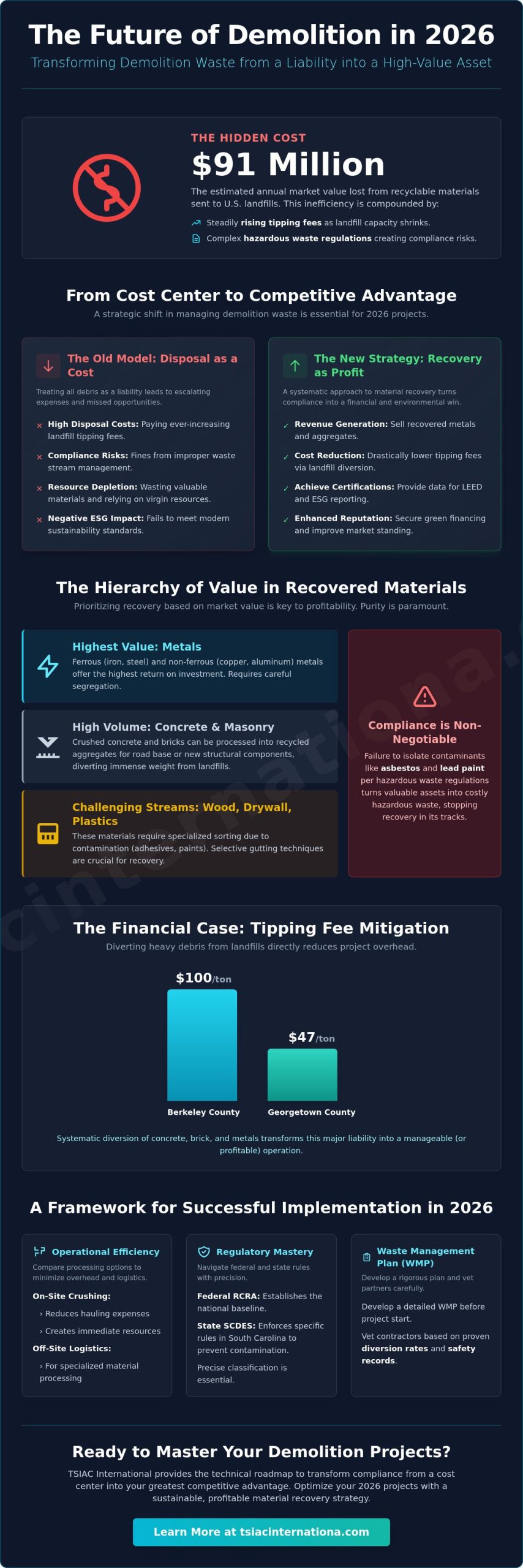
Adopting eco-friendly demolition services isn’t merely a choice for environmental stewardship; it’s a strategic financial decision. Traditional demolition focuses on speed, often resulting in high disposal costs that eat into project margins. In contrast, a controlled deconstruction approach treats a building as a repository of valuable assets. By diverting heavy materials like concrete and structural steel from landfills, contractors avoid escalating tipping fees, which in some jurisdictions can exceed $100 per ton. This shift from waste disposal to material management changes the fundamental math of a project’s budget.

The financial recovery starts with scrap value. Recovered structural steel, copper wiring, and architectural salvage like old-growth timber hold significant market value. These materials can be sold directly to recyclers or reclaimed wood dealers to offset labor costs. Integrating Sustainable Deconstruction practices into the initial planning phase allows for the systematic removal of these high-value items before the heavy machinery arrives, ensuring maximum recovery rates and cleaner material streams.

Reducing Disposal and Transportation Costs

Logistical efficiency is the backbone of a profitable site clearance. On-site crushing of concrete is a primary example of how engineering precision saves money. Instead of paying to haul concrete debris away and then paying again to bring in virgin aggregate, we process the material on-site. This crushed concrete serves as an immediate, high-quality road base or backfill. This process eliminates dozens of haul-off loads, directly reducing fuel consumption and truck rental expenses.

Effective material sorting at the source further minimizes costs. When waste is co-mingled, it’s charged at the highest possible disposal rate. By separating masonry, metal, and wood, we tap into lower recycling rates. Local recycling markets play a decisive role here; proximity to specialized processing centers can reduce transportation overhead by 15% to 22% compared to long-distance landfill hauls.

Long-Term Liability Reduction

Financial risk management is built into every step of the demolition process. Choosing “cheap” demolition often leads to hidden costs, such as soil remediation or legal penalties for improper waste handling. Professional eco-friendly demolition services provide rigorous documentation and hazardous waste tracking. This transparency protects the property owner from future litigation and ensures the site remains a high-value asset for future development.

Sustainable practices also unlock specific financial incentives. LEED certification offers points for construction and demolition waste management, which can increase a building’s market value and attract premium tenants. Many federal and state grants for brownfield redevelopment cover 20% to 35% of cleanup costs if sustainable methods are used. By ensuring a clean, documented site, developers avoid the 404 errors of the physical world: unexpected environmental liabilities that stall progress and drain capital years after the project is finished.

Planning Your Eco-Friendly Demolition Project

Execution of eco-friendly demolition services requires a transition from traditional destruction to a structured deconstruction methodology. This phase begins with a rigorous pre-demolition audit. In 2024, industry data indicated that projects utilizing a detailed audit achieved a 25% higher recovery rate for high-value materials like structural timber and architectural steel. We treat every structure as a resource bank rather than a waste source. A comprehensive Waste Management Plan (WMP) serves as the technical blueprint for the entire operation. This document isn’t merely a formality for regulatory approval; it’s a log of every kilogram of material expected to leave the site. By 2025, over 60% of municipal jurisdictions required a WMP that identifies specific downstream recycling facilities before a single brick is moved.

The timeline for sustainable projects differs from conventional methods. Precision takes time. You must account for the sequential dismantling of components to prevent cross-contamination. Monitoring and documenting the recovery rate throughout the project ensures compliance with the 90% waste diversion targets often required for green building certifications. Effective management involves:

  • Regulatory Alignment: Securing permits that specifically acknowledge deconstruction methods.
  • Environmental Clearances: Obtaining site-specific air and water quality protections.
  • Logistics Planning: Coordinating the transport of salvaged goods to secondary markets to avoid onsite clutter.

The Pre-Demolition Site Assessment

A professional assessment identifies the safest path for dismantling while maximizing asset recovery. Structural analysis determines load-bearing priorities, ensuring the building remains stable as layers are removed. Hazardous materials surveys are mandatory; they test for asbestos, lead paint, and mold to prevent environmental contamination. We create an inventory of reusable assets, such as heavy structural timber and high-grade fixtures, which can be diverted from landfills. This engineering-led approach minimizes risks and optimizes the financial return on salvaged materials.

Selecting a Sustainable Demolition Contractor

You need a partner with a proven track record in complex execution and structural safety. Verification of licenses and specialized insurance is the baseline. Review their past recovery reports to see if they consistently meet or exceed a 75% diversion rate. Assess their equipment; modern eco-friendly demolition services utilize specialized attachments for sorting and crushing material onsite. A contractor’s ability to manage specialized abatement internally, rather than outsourcing, often leads to better communication and tighter safety controls on the job site.

To ensure your project meets the highest standards of engineering precision, consult our experts on complex execution and structural safety for your next deconstruction phase.

TSIAC International: Precision Engineering in Sustainable Demolition

TSIAC International brings over 15 years of specialized experience to the field of complex structural removal and hazardous material abatement. We operate with a philosophy where engineering precision dictates every action on-site. This disciplined approach is vital in high-stakes environments, including heavy industrial plants, dense commercial hubs, and sensitive residential developments. We don’t just clear land; we manage assets through a rigorous framework of safety and environmental compliance that exceeds standard industry requirements.

Our commitment to eco-friendly demolition services is evidenced by our aggressive resource recovery rates. We prioritize the systematic extraction and sorting of wood, metal, and plastic on every project we undertake. By treating these materials as valuable commodities rather than debris, we support the circular economy and significantly reduce the carbon footprint of the entire construction cycle. In 2024, our recovery protocols successfully diverted over 85% of non-hazardous site materials from local landfills, proving that large-scale removals can be both efficient and sustainable.

  • Industrial Expertise: Safe dismantling of steel structures and manufacturing facilities.
  • Commercial Precision: Selective deconstruction in active business environments with minimal disruption.
  • Residential Care: Careful gutting and material salvage for high-end renovations and historic preservation.

The TSIAC Methodology

Our process begins with customized recovery plans tailored to the specific structural needs of each property. We recognize that a 40-year-old industrial warehouse requires a different tactical approach than a modern commercial office. Our teams utilize advanced abatement techniques for the seamless removal of hazardous materials, ensuring that contaminants like asbestos or lead are neutralized before deconstruction begins. Transparency is a cornerstone of our service. We provide clients with clear, data-driven reports on waste diversion, documenting exactly how much material was salvaged, recycled, or repurposed.

Start Your Sustainable Project Today

Ready to partner with a team that values precision and environmental responsibility? Request a Professional Demolition Estimate from TSIAC International to begin your next phase of development with confidence.

Advancing Your Project With Engineering Precision

The shift toward circular construction models isn’t just a trend; it’s a structural necessity for the 2026 industrial landscape. By prioritizing deconstruction over traditional methods, projects can achieve material recovery rates exceeding 90% in many documented cases. This precision approach ensures that hazardous material abatement complies with the strictest environmental regulations while protecting the long term value of your site. Choosing eco-friendly demolition services allows developers to leverage specific economic benefits, including reduced landfill fees and documented tax credits for diverted waste.

TSIAC International brings over 15 years of industry experience and comprehensive hazardous material abatement certification to every site. We ensure that even the most complex technical challenges are managed with engineering rigor. Our proven track record of high material recovery rates transforms what was once considered waste into valuable assets for future development. It’s time to set a higher standard for your site’s lifecycle management.

Partner with TSIAC International for Your Next Sustainable Project

Your next project deserves the reliability and safety that only a seasoned engineering partner can provide.

Frequently Asked Questions

Is eco-friendly demolition more expensive than traditional demolition?

Initial labor costs for deconstruction are typically higher, but tax incentives and avoided landfill fees often offset these expenses. According to the EPA, deconstruction can divert up to 90% of a building’s materials from landfills. Salvaged materials like old-growth timber or architectural features hold significant resale value that lowers the total project expenditure. It’s a strategic investment rather than a simple cost increase.

What is the difference between deconstruction and demolition?

Demolition involves the rapid destruction of a structure using heavy machinery like excavators or wrecking balls. Deconstruction is the systematic disassembly of a building to maximize material recovery. This process prioritizes the preservation of components for immediate reuse. While traditional methods treat everything as waste, deconstruction views the building as a source of high-quality raw materials for future projects.

Can all building materials be recycled during demolition?

Not all materials are recyclable, but modern industrial processes allow for the recovery of approximately 75% to 95% of debris in eco-friendly demolition services. Concrete is crushed for road base, while steel and aluminum are infinitely recyclable without losing structural integrity. Composite materials and certain treated lumbers remain difficult to process. We focus on segregating materials at the source to prevent cross-contamination.

How long does an eco-friendly deconstruction project usually take?

A full deconstruction project typically requires 2 to 4 times longer than traditional mechanical demolition. A 2,000 square foot residential structure might take 2 weeks to disassemble manually compared to 2 days for machine-led destruction. This timeline reflects the precision required to remove fasteners and preserve the integrity of salvaged assets. We plan these schedules into the critical path of every construction project.

What happens to hazardous materials like asbestos during green demolition?

Hazardous materials undergo strict abatement protocols before any structural disassembly begins. Regulations like the EPA’s NESHAP standards require certified professionals to seal and remove asbestos-containing materials in airtight containers. These materials can’t be recycled and must be transported to specialized hazardous waste landfills. Safety remains the primary objective during these technical procedures to ensure the site’s environmental integrity.

Do I need a special permit for eco-friendly demolition services?

Most jurisdictions require standard demolition permits, but many cities now mandate a Waste Management Plan for eco-friendly demolition services. For example, San Francisco requires 65% of all construction and demolition debris to be diverted from landfills. You’ll need to document material weights and destination facilities to comply with local environmental ordinances. Our engineering team handles the technical documentation required for these approvals.

How does sustainable demolition help with LEED certification?

Sustainable demolition directly contributes to the Construction and Demolition Waste Management credit under the LEED v4.1 rating system. Projects can earn up to 2 points by diverting 50% to 75% of debris from landfills. Utilizing deconstruction also supports the Building Product Disclosure and Optimization credits. This systematic approach provides the verified data needed for the final certification audit and improves the building’s overall environmental score.

Can selective demolition be performed while a building is still occupied?

Yes, selective deconstruction is frequently executed in occupied commercial spaces using dust mitigation and vibration control systems. We use HEPA-filtered negative air machines and physical barriers to isolate the work zone. This allows for the removal of specific interior components without disrupting the mechanical or electrical systems serving the rest of the facility. Precision is key to maintaining occupant safety and operational continuity.