Across South Carolina, many pre-1978 structures contain hazardous materials, meaning numerous redevelopment projects face an immediate risk of regulatory complications. For property owners and contractors, the reality of managing asbestos disposal regulations south carolina is often defined by a fear of SC DES penalties and the technical confusion of landfill requirements. You likely understand that a single oversight in hazardous waste handling can lead to indefinite project delays and significant legal exposure. It’s a high-stakes environment where technical precision is the only path to safety.
TSIAC International offers this 2026 compliance guide, providing the clarity needed to navigate South Carolina’s complex disposal landscape, ensuring your project remains legal and on schedule. We’ll outline the mandatory ePermitting protocols, the distinction between friable and non-friable waste streams, and the specific documentation required for valid waste shipment manifests. By following these methodical steps, you’ll secure a safe site clearance while maintaining an impeccable regulatory record.
Key Takeaways
- Understand the mandatory transition to SC DES ePermitting to prevent notification delays and ensure your project meets the 2026 filing standards.
- Differentiate between friable and non-friable materials to maintain full compliance with asbestos disposal regulations south carolina and avoid landfill rejections.
- Identify permitted Class 3 landfills and understand the specific containment requirements for Regulated Asbestos-Containing Material (RACM).
- Secure your project against liability by maintaining an accurate Waste Shipment Record (WSR) through the entire signature chain.
- Learn how single-source accountability for abatement and demolition reduces logistical friction and ensures environmental responsibility.
Navigating the SC DES Asbestos Disposal Framework in 2026
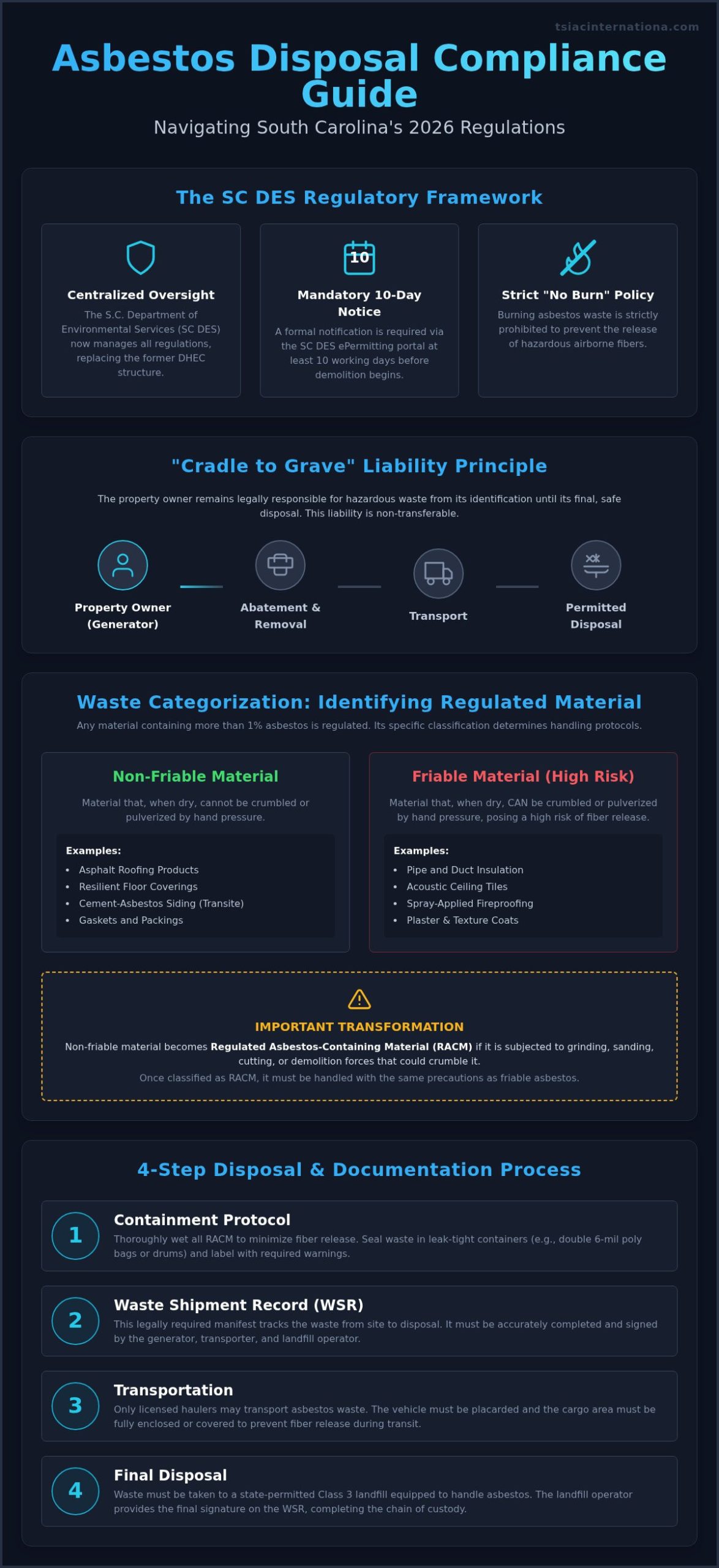
South Carolina has transitioned its environmental oversight from the former DHEC structure to the South Carolina Department of Environmental Services (SC DES). This reorganization centralizes the enforcement of asbestos disposal regulations south carolina under a more streamlined, digital-first agency. For property owners and developers, this means all compliance activities, from initial notifications to final waste shipment records, must align with the current SC DES Bureau of Air Quality and Bureau of Land and Waste Management standards. Compliance isn’t a suggestion; it’s a technical requirement for every structural project in the state.
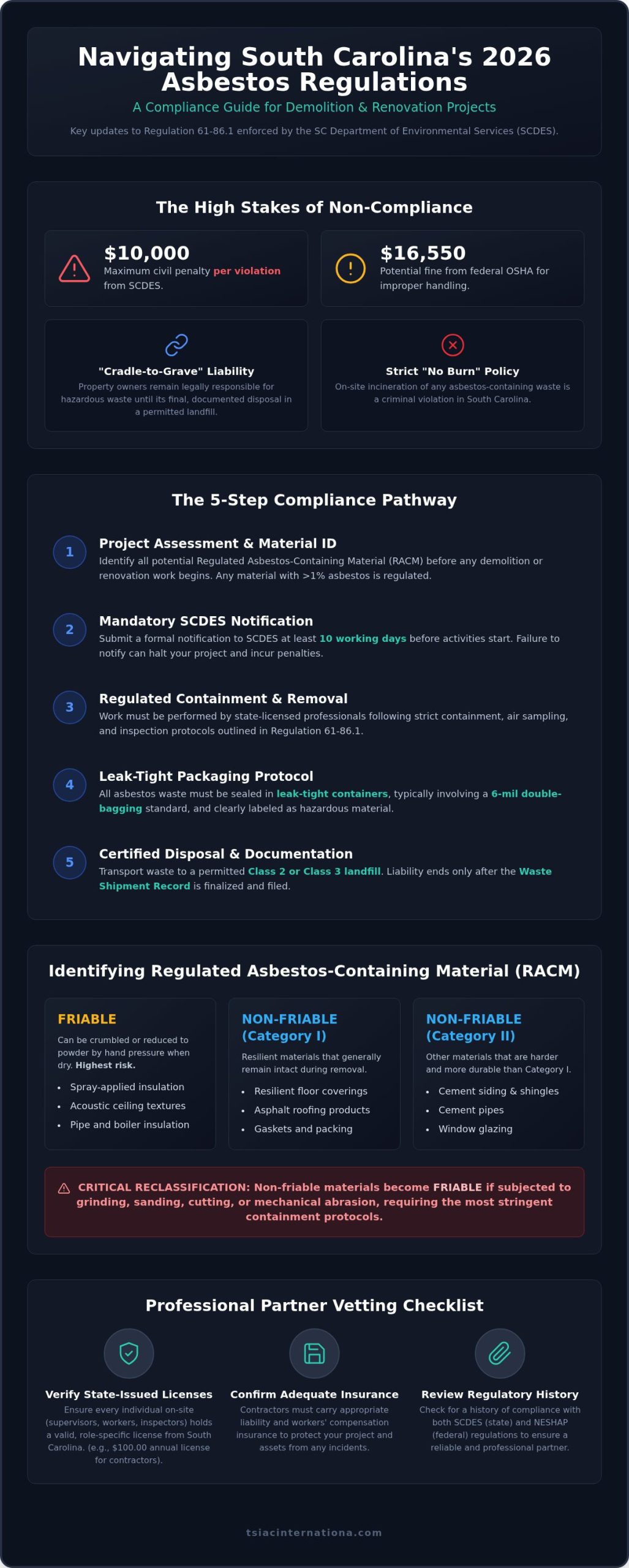
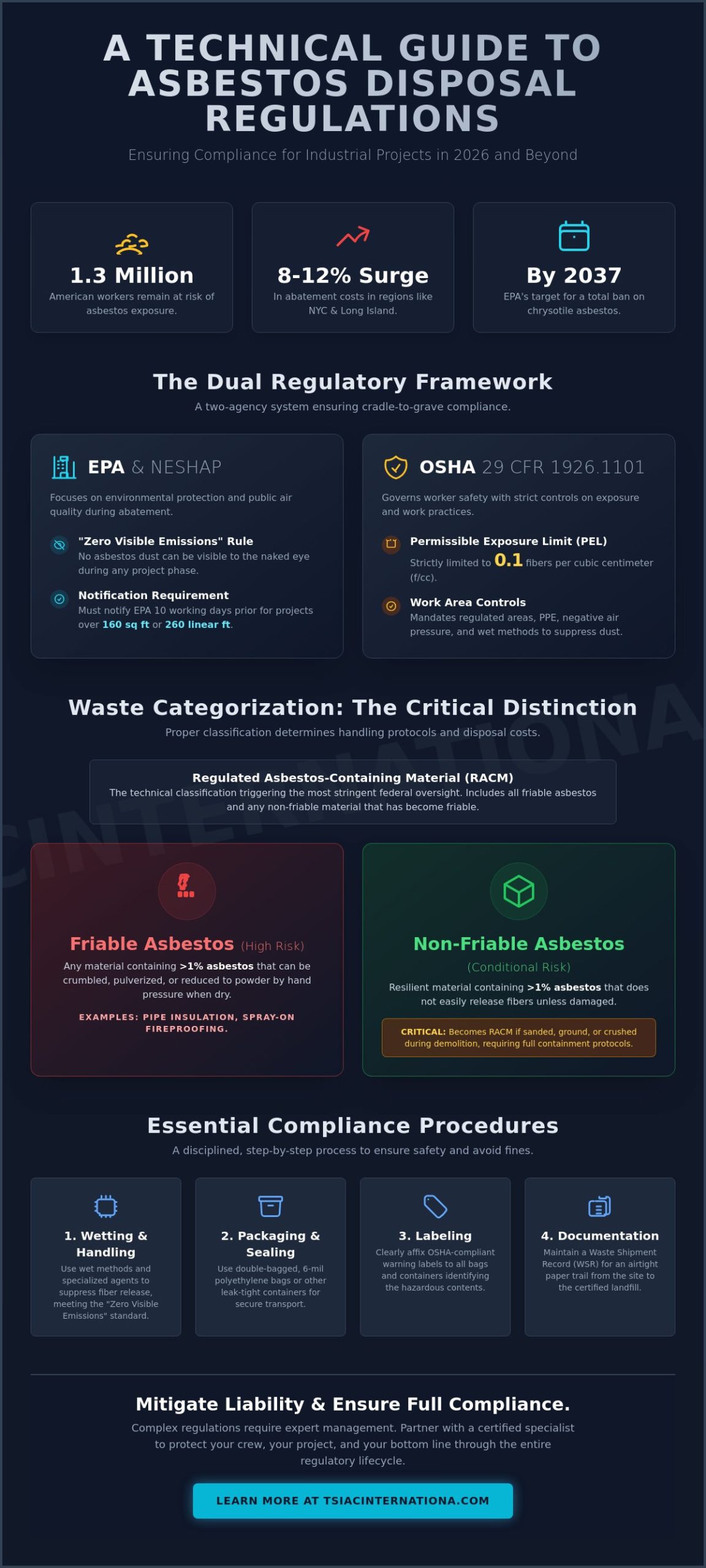
Central to this framework is the legal definition of Regulated Asbestos-Containing Material (RACM). This includes any friable material or non-friable material that has a high probability of becoming crumbled or pulverized during demolition. For a foundational Asbestos overview, one must recognize that any material containing more than 1% asbestos is subject to these strictures. South Carolina also enforces a strict “No Burn” policy. Burning asbestos waste is never permitted, as it releases microscopic fibers into the atmosphere, bypassing all containment protocols. State enforcement mirrors the EPA’s NESHAP standards, ensuring that work practices prevent any visible emissions during the disposal lifecycle.
The 10-Day Notification Requirement
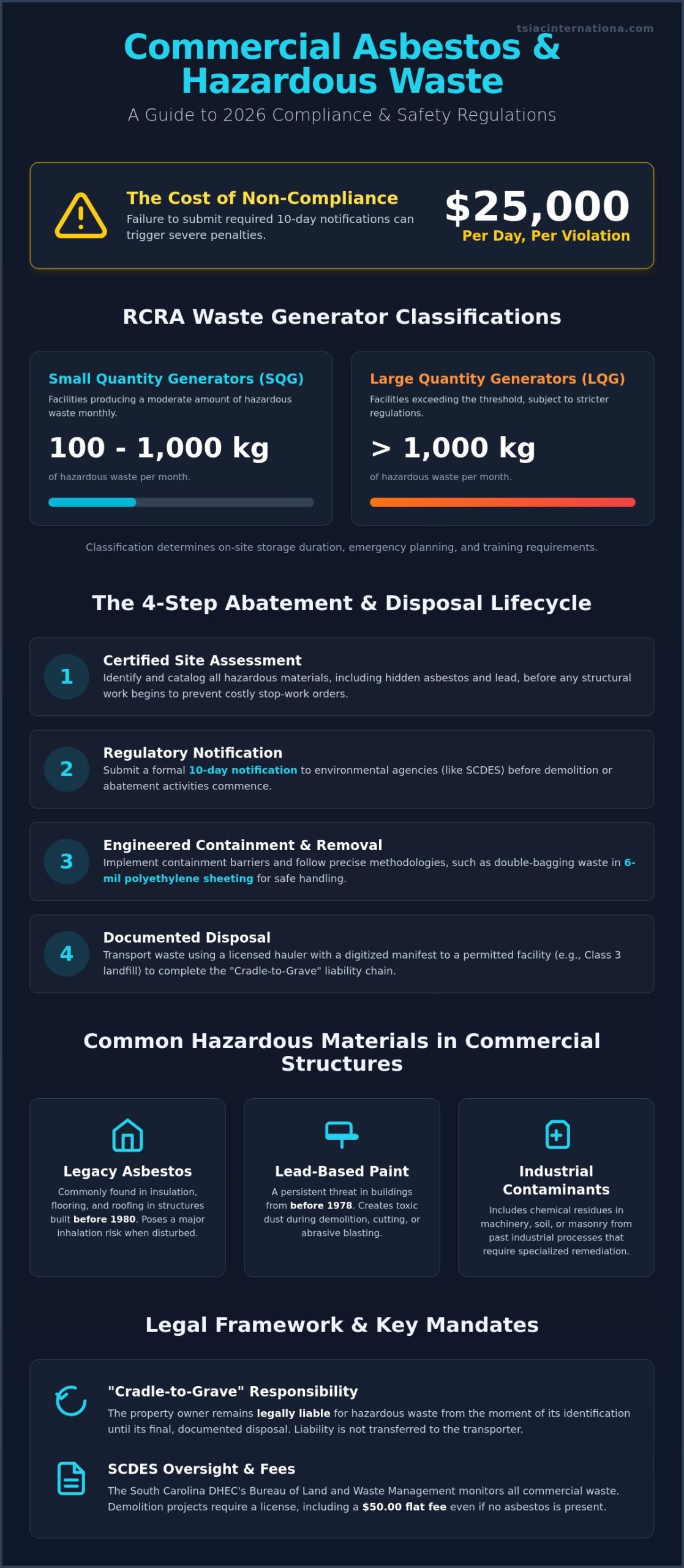
SC DES requires a formal notification at least 10 working days before any demolition begins, even if a prior survey indicated no asbestos was present. In 2026, all submissions must be processed through the SC DES ePermitting portal. This digital mandate ensures that state inspectors can review the project scope and disposal plan before a single brick is moved. Starting work without a valid state permit or failing to wait the full 10-day period triggers immediate stop-work orders and aggressive daily penalties. It’s a logistical gate that cannot be bypassed without risking the entire project timeline.
Liability and the Property Owner’s Responsibility
Hazardous waste management follows a “Cradle to Grave” liability principle. This legal doctrine dictates that the property owner remains responsible for the asbestos from the moment it’s identified until it’s safely buried in a permitted Class 3 landfill. Hiring an unlicensed or cut-rate contractor doesn’t absolve you of this burden. If waste is illegally dumped, the SC DES holds the generator, the owner, and the contractor jointly liable. You must verify AHERA certifications for all disposal personnel to ensure they possess the technical training required to handle RACM. This verification is your primary defense against long-term legal and environmental exposure.
Waste Categorization: Friable vs. Non-Friable Disposal Rules
Success in managing asbestos disposal regulations south carolina begins with accurate material classification. The state enforces a 1% threshold; any material exceeding this concentration is legally considered asbestos-containing. Regulators divide these into Category I and Category II non-friable materials. Category I includes resilient floor coverings, asphalt roofing products, gaskets, and packings. Category II encompasses all other non-friable materials, such as cement-asbestos siding or transite board. While these categories seem distinct, they aren’t static. The legal status of these materials can shift instantly based on the demolition methods employed.
Mechanical force during demolition often changes the legal status of waste. If you use grinders, saws, or heavy machinery that crumbles or pulverizes the material, it becomes Regulated Asbestos-Containing Material (RACM). In Charleston’s historic district, we frequently encounter horsehair plaster, layered roofing felts, and black floor mastic. These materials are “suspect” until laboratory results prove otherwise. Proper documentation is essential throughout this process, as specific data points must be recorded to satisfy the EPA Waste Shipment Record Requirements. Failing to account for how mechanical force impacts these materials can lead to the accidental creation of hazardous dust.
Handling Friable Asbestos Waste
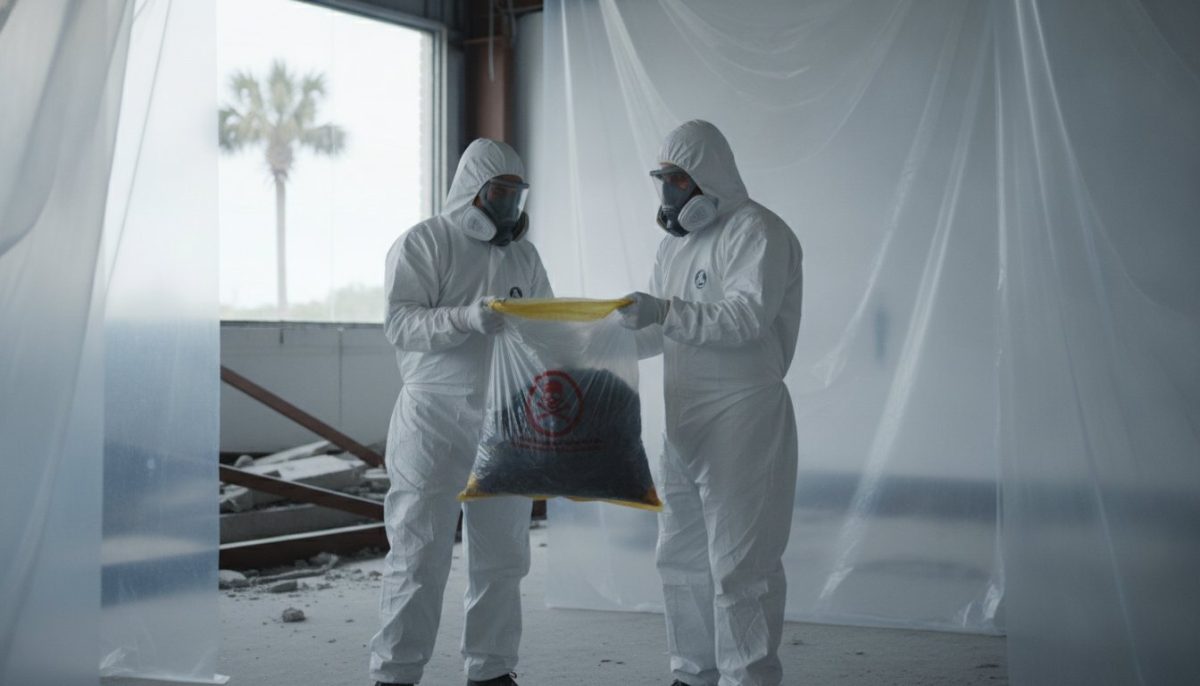
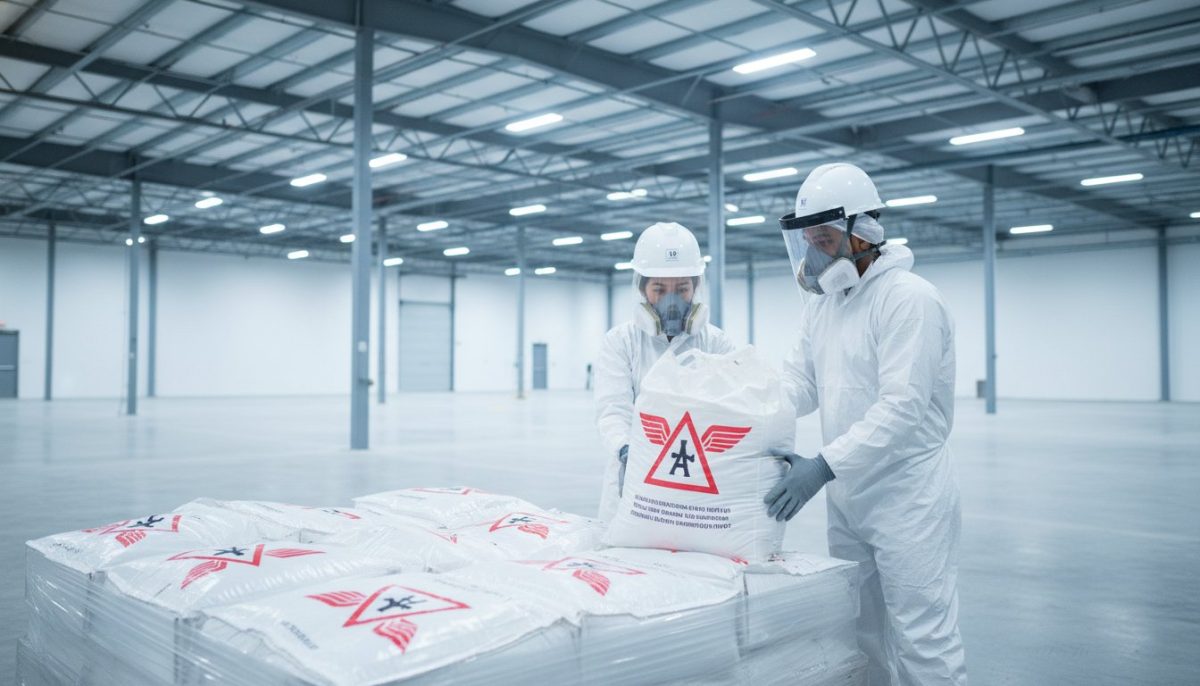
Friable asbestos is material that can be crumbled by hand pressure when dry. Disposal for these high-risk items requires absolute containment. You must ensure the waste is thoroughly wetted to prevent fiber release and then sealed in leak-tight containers. The industry standard involves double-bagging in 6-mil polyethylene bags. Each container must feature OSHA-compliant warning labels and specific generator identifiers. This methodical approach ensures that transporters and landfill operators are fully aware of the hazardous nature of the cargo. It also prevents the accidental release of fibers during transit to a permitted facility.
Non-Friable Disposal Exceptions
Some non-friable materials may be disposed of as standard Construction and Demolition (C&D) waste, but only if they remain intact. This exception is narrow. In South Carolina’s coastal environment, high humidity and salt air often weather Category II transite siding until it becomes brittle. Once the material starts to flake or break, it loses its non-friable status and must be handled as RACM. Because the line between safe and hazardous is so thin, professional asbestos testing charleston sc is required before you categorize any waste for the landfill. Understanding these nuances helps you avoid the severe penalties associated with misclassified waste. Engaging a team for asbestos removal south carolina ensures that every material is categorized correctly from the start, protecting your project from liability.
Approved Disposal Methods and Permitted Landfills in South Carolina
Identifying a facility authorized to accept hazardous waste is the final technical hurdle in the abatement process. Standard municipal solid waste (MSW) facilities in South Carolina will immediately reject any load containing ACM because they lack the specialized liner systems and daily cover protocols required to manage fiber release. Instead, asbestos disposal regulations south carolina mandate the use of Class 3 landfills specifically permitted by SC DES. While the state has 23 permitted Class 3 landfills, you must verify that your chosen site is currently authorized to accept Regulated Asbestos-Containing Material (RACM).
Logistics require more than just finding a site. Transporters must ensure the load remains wet and covered throughout the entire journey. This isn’t just about dust control; it’s a legal requirement to prevent accidental exposure on state highways. Hazardous waste cells differ significantly from cellulosic or standard municipal cells. These specialized cells are designed to prevent the crushing of bags, which would otherwise release fibers into the air. Landfill operators must bury the waste immediately under a layer of non-asbestos material to maintain a permanent seal.
Packaging and Labeling for Transport
OSHA and DOT standards require specific labeling on every container before it leaves the site. Labels must clearly display the generator’s name, the abatement contractor’s information, and the destination facility. This transparency ensures that emergency responders can identify the material in the event of a transit accident. Securing the load is paramount. We use reinforced containment systems to ensure that 6-mil polyethylene bags don’t puncture during movement. Any breach in containment during transit can lead to massive fines and environmental remediation costs for the roadway.
Landfill Tipping Fees and Logistics
Disposal isn’t a flat-rate service. Most facilities apply an ‘asbestos surcharge’ to cover the additional labor and soil cover required for immediate burial. Verified 2026 rates show significant variation across the state. For instance, Williams C&D Landfill charges $75 per ton for non-friable and $120 per ton for friable asbestos, while the Orangeburg County Landfill rate is $154 per ton. You must schedule drop-offs in advance; landfills won’t accept hazardous loads without prior notice. Upon disposal, always secure a ‘dump ticket’. This document, along with your manifest, serves as physical proof of legal disposal and is essential for your project records.
The Waste Shipment Record (WSR): Your Shield Against Liability
The Waste Shipment Record (WSR) is the most critical document in your compliance portfolio. Under asbestos disposal regulations south carolina, it’s not enough to simply remove the material; you must prove exactly where it went. This document serves as a legal shield, verifying that hazardous waste was handled by authorized personnel and accepted by a permitted facility. It establishes a clear paper trail that protects the property owner from future environmental claims or state enforcement actions. Without a completed WSR, you remain legally tied to the waste regardless of where it’s physically located.
The document relies on a three-party signature chain that must remain unbroken. First, the generator signs to confirm the volume and type of material. Next, the transporter signs to accept custody and responsibility during transit. Finally, the landfill operator signs upon receipt and burial. Tracking these documents requires methodological precision. If you don’t receive a copy of the WSR signed by the landfill operator within 35 days of the waste leaving your site, you’re required to contact the transporter to determine the load’s status. If it doesn’t arrive within 45 days, you must file an exception report with the SC DES. This rigorous tracking is a core component of the demolition process south carolina.
Step-by-Step Manifest Management
Management begins at the point of generation. Every bag and container is inventoried before being loaded onto the transport vehicle. During the waste transfer, you must verify that the transporter’s license matches the information on the manifest. Once the load reaches its destination, the landfill operator provides a final signature. If you use a landfill outside of South Carolina, you must submit the final signed copy to the SC DES through the ePermitting portal to close out your permit. This step is often overlooked, but it’s essential for final regulatory clearance.
Record Keeping for Property Transfers
Asbestos disposal records are foundational for any future property sale or refinancing. Prospective buyers and lenders will conduct environmental due diligence; missing manifests can stall a multi-million dollar transaction. Storing these environmental reports in a secure digital vault ensures they’re available for future audits. The WSR is also a requirement for bank financing, as it proves that the collateral is free of unresolved hazardous waste liabilities. Ensuring these documents are precise and accessible is part of our commitment to your project’s long-term value. For expert assistance in managing these complex requirements, contact TSIAC International for professional abatement services.
Integrated Abatement and Demolition: The TSIAC Professional Approach
TSIAC International manages the critical transition where abatement ends and structural demolition begins. Many projects stall because separate contractors fail to coordinate the handoff of waste shipment records or site clearance certificates. We provide a seamless transition from asbestos removal south carolina to the physical removal of the structure. This single-source accountability ensures that asbestos disposal regulations south carolina are followed through the entire project lifecycle. We don’t just clear the site; we provide a verified “clean bill of health” through rigorous post-abatement air monitoring. This gives your next phase of construction a safe, documented starting point.
Selective Demolition and Interior Gutting
During commercial interior gutting services, we employ surgical techniques to remove ACM. We protect the structural integrity of the building while stripping out hazardous pipe insulation or mastic-backed floor tiles. Our protocols include advanced dust suppression and continuous HEPA-filtration. These measures are essential for active commercial sites where neighboring tenants must remain undisturbed. By integrating these services, we eliminate the risk of a demolition crew accidentally disturbing hidden asbestos left behind by a previous abatement contractor.
Post-Abatement Site Recovery and Recycling
Once the site is cleared of regulated materials, our focus shifts to environmental responsibility. We sort wood, metal, and plastic debris to be processed through our recycling services rather than sending all materials to a landfill. This methodology reduces the environmental footprint of your demolition project and aligns with modern sustainability standards. The final result is a site prepared for immediate new construction or tenant improvements. You receive a site that’s not only physically clear but also legally compliant with all asbestos disposal regulations south carolina, supported by a complete chain of custody for every waste stream. Our 15+ years of experience in the Charleston market ensures that your project moves from hazardous remediation to structural clearance without a single day of regulatory delay.
Securing Your Project’s Future Through Regulatory Precision
Mastering the technical requirements of the SC DES ePermitting portal and maintaining an unbroken Waste Shipment Record chain are the only ways to insulate your property from long-term liability. The distinction between friable and non-friable materials remains narrow; a single mechanical error during demolition can shift your waste stream into a higher regulatory category. By aligning your project with the latest asbestos disposal regulations south carolina, you ensure that environmental safety doesn’t come at the cost of your development schedule.
Technical precision in hazardous waste management requires a partner who understands the structural complexities of Charleston’s commercial buildings. With AHERA-certified abatement crews and 15+ years of regulatory compliance expertise, we provide integrated demolition and abatement solutions that manage the entire lifecycle from initial survey to final recycling. Protect your project and your liability. Contact TSIAC International for expert asbestos abatement and disposal services.
We look forward to helping you maintain a safe, compliant, and efficient job site through every phase of your redevelopment project.
Frequently Asked Questions
Can I dispose of asbestos in my regular household trash in South Carolina?
No, you cannot dispose of asbestos in regular household trash. South Carolina law requires all asbestos-containing material to be buried in a permitted Class 3 landfill. Standard municipal solid waste facilities don’t have the required containment systems to prevent fiber release. Mixing hazardous material with household waste is a violation of asbestos disposal regulations south carolina and can lead to significant environmental remediation costs for the property owner.
What are the penalties for improper asbestos disposal in SC?
Improper disposal triggers severe legal and financial consequences. The SC DES can issue immediate stop-work orders and assess aggressive daily penalties that often reach thousands of dollars per violation. Because of the “Cradle to Grave” liability principle, the property owner and the contractor are held jointly responsible. Illegal dumping or misclassifying waste can also lead to criminal charges and long-term litigation if environmental contamination is discovered at a non-permitted site.
Is a Waste Shipment Record (WSR) required for non-friable asbestos?
Yes, a Waste Shipment Record is essential for documenting the disposal of non-friable asbestos. While some non-friable materials are less volatile, they still require a clear chain of custody to protect you from liability. Many permitted landfills in South Carolina won’t accept any asbestos-containing material without a completed WSR. This document proves the material reached its intended destination and wasn’t diverted or illegally dumped during the transportation phase of the project.
How do I find a landfill in SC that accepts asbestos waste?
You can find authorized facilities by consulting the SC DES list of permitted Class 3 landfills. There are currently 23 such facilities across the state, but not all choose to accept regulated asbestos. It’s vital to contact the landfill manager directly before transport to confirm their current acceptance policies and tipping fees. Sites like the Williams C&D Landfill or Orangeburg County Landfill are known to handle these materials under specific scheduling requirements.
Do I need a special permit to transport asbestos waste to the landfill?
You don’t need a specific transport permit for the vehicle, but the load itself must be permitted through the SC DES ePermitting portal. The waste must be wetted, sealed in leak-tight containers, and clearly labeled with generator and destination information. Transporters must follow DOT and OSHA standards for hazardous material movement. Failure to secure the load or provide the required manifest during a roadside inspection can result in heavy fines and vehicle impoundment.
What is the 10-day notification rule for SC DES?
The 10-day notification rule requires property owners to submit an electronic application to SC DES at least 10 working days before starting any demolition or major renovation. This period allows state inspectors to review your asbestos survey and disposal plan. Even if your survey shows no asbestos is present, the notification is still mandatory for all structural demolitions. Starting work before this 10-day window expires is a direct violation of state environmental law.
Can a homeowner remove and dispose of asbestos themselves in SC?
Homeowners can legally remove and dispose of asbestos from their own primary residence if the building contains four or fewer dwelling units. However, they must still obtain a specific disposal permit from the Asbestos Section of SC DES before taking the waste to a landfill. If you hire a contractor to help, that professional must be licensed and follow all asbestos disposal regulations south carolina, including full containment and air monitoring protocols.
How long must I keep my asbestos disposal records for a commercial project?
For commercial projects, you’re legally required to maintain asbestos disposal records for at least two years to satisfy NESHAP and SC DES standards. However, industry experts recommend keeping these records for the life of the property. Banks, insurance providers, and future buyers will require these documents during environmental due diligence. Missing manifests can devalue a property or stall a sale, so storing them in a secure digital vault is a critical business practice.