
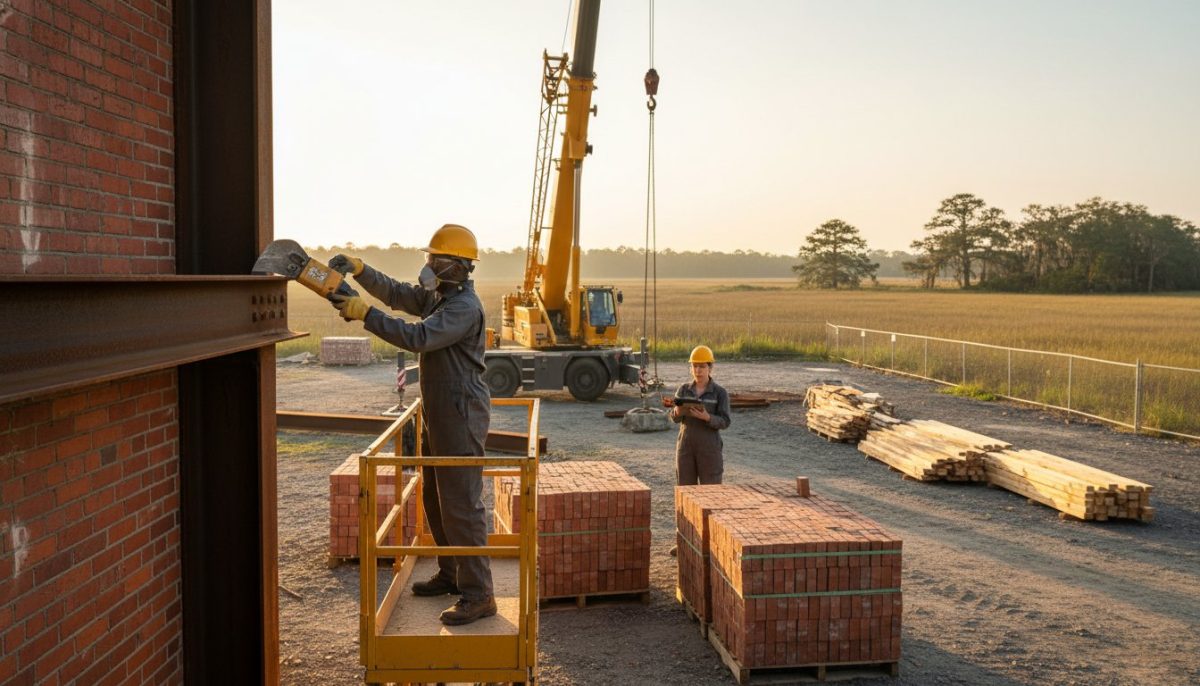
The EPA reports that construction and demolition debris reached 600 million tons in a single year, a figure more than double the volume of standard municipal waste. You likely recognize this reality through the lens of skyrocketing landfill tipping fees and the increasingly complex documentation required to meet 2026 LEED standards. Balancing the removal of hazardous materials like lead and asbestos with the need for strict budget adherence often feels like a zero-sum game. It doesn’t have to be.
By integrating professional eco-friendly demolition services, you can pivot from traditional site clearing to a high-precision deconstruction model. This guide explains how modern recovery techniques allow you to reclaim valuable assets and significantly lower project costs through strategic salvage operations. We’ll outline the technical process of deconstruction, the protocols for verified hazardous material safety, and the engineering logic that makes sustainable demolition the most cost-effective choice for complex industrial projects.
Key Takeaways
- Learn why modern deconstruction is replacing traditional “wreck-and-haul” methods to maximize material recovery and environmental protection.
- Understand the critical role of integrated hazardous material abatement and surgical dismantling in ensuring site safety and structural integrity.
- Discover how eco-friendly demolition services reduce total project costs by diverting waste from landfills and generating value from recovered scrap.
- Identify the essential components of a successful project, from conducting pre-demolition audits to securing regulatory approval through Waste Management Plans.
- Explore how precision engineering and industrial expertise allow for the systematic salvage of wood, metal, and plastic in complex environments.
What Are Eco-Friendly Demolition Services in 2026?
In 2026, the construction sector views waste as a fundamental resource failure. Eco-friendly demolition services represent the systematic dismantling of structures designed to maximize material salvage and minimize environmental degradation. This methodology has replaced the obsolete “wreck-and-haul” practices that dominated the industry for decades. Modern engineers and project managers now prioritize “deconstruct-and-recover” strategies. These processes integrate selective demolition, precise on-site sorting, and rigorous hazardous material remediation to ensure that nothing of value reaches a landfill.
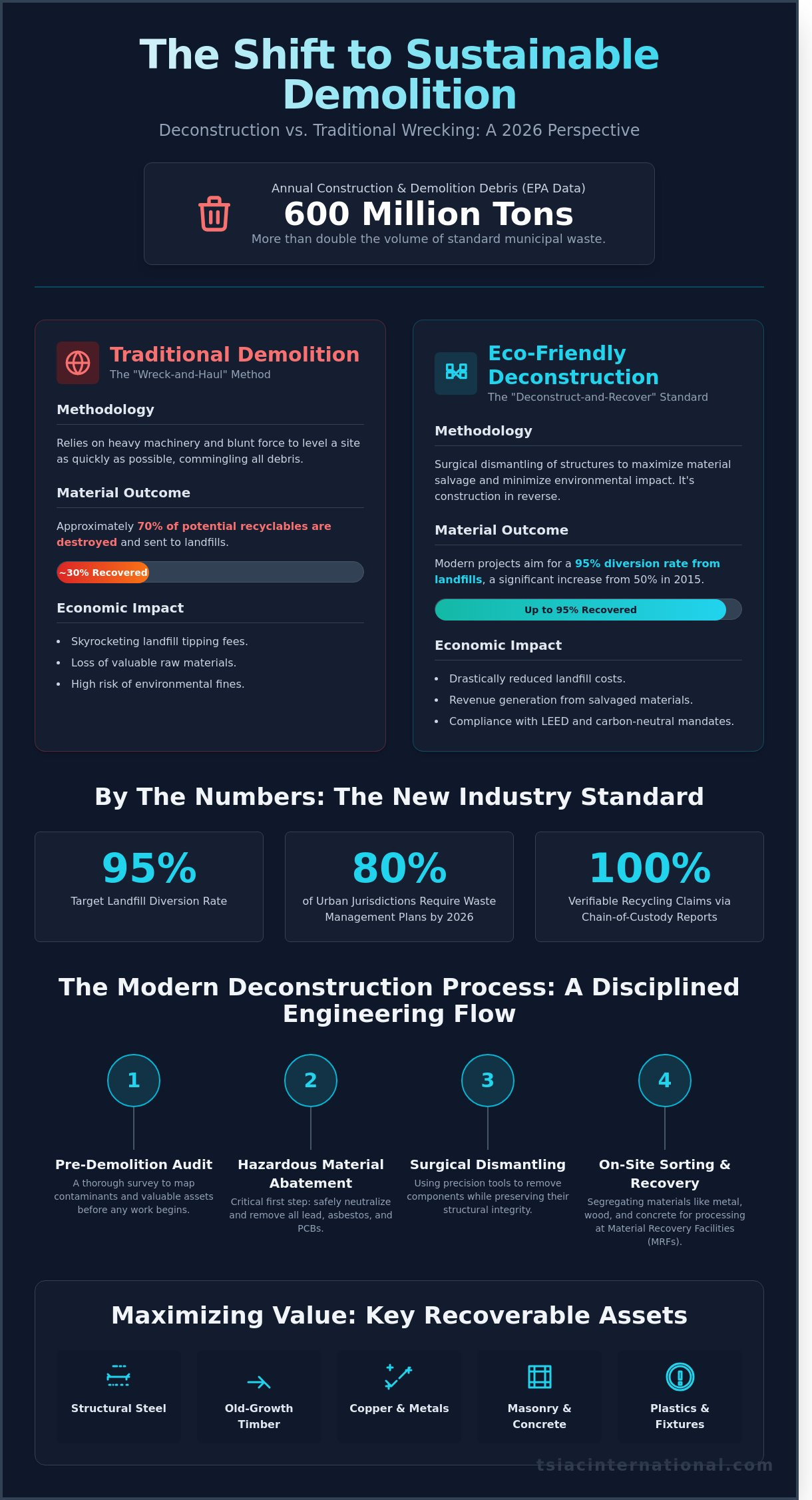
Sustainability has transitioned from a niche preference to the absolute industry standard for both commercial and residential projects. This shift is driven by strict regulatory frameworks. By 2026, over 80% of urban jurisdictions require detailed waste management plans before any permit is issued. Developers don’t just choose green methods for the environment; they do it to comply with carbon-neutral mandates and to recapture the value of high-grade materials like structural steel and old-growth timber.
Deconstruction vs. Traditional Demolition
Traditional demolition relies on heavy machinery to level a site in the shortest possible timeframe. While this method is fast, it destroys approximately 70% of potential recyclables by commingling debris with contaminants. In contrast, Deconstruction involves the manual or semi-automated removal of building components to preserve their structural integrity. It’s essentially construction in reverse.
Most 2026 projects utilize a hybrid approach. This strategy uses high-reach excavators for primary structural elements but employs specialized teams for the selective removal of copper, masonry, and architectural features. This balance maintains project timelines while meeting modern environmental responsibilities. It’s a calculated, engineering-led process that treats every building as a vertical warehouse of raw materials.
The Role of Material Recovery Facilities (MRFs)
The process doesn’t end when the trucks leave the site. Material Recovery Facilities (MRFs) are the backbone of the circular economy in the demolition sector. These centers use advanced optical sorters and robotic systems to process debris with surgical precision. Leading eco-friendly demolition services now aim for a 95% diversion rate from landfills, a significant increase from the 50% averages seen in 2015.
Transparency is a non-negotiable requirement for modern contracts. Contractors now provide digital chain-of-custody reports for every project. These documents track every ton of concrete and steel from the site to its secondary use. This level of tracking ensures that 100% of the recycling claims are verifiable through third-party audits, providing the technical proof that stakeholders and regulatory bodies demand.
The Mechanics of Sustainable Deconstruction and Abatement
Sustainable deconstruction isn’t a blunt force activity; it’s a disciplined engineering process. Unlike traditional methods that rely on wrecking balls and high-impact collisions, eco-friendly demolition services utilize surgical precision to dismantle structures. This approach involves removing specific building components while protecting the remaining structure and surrounding environment. We rely on high-reach excavators equipped with precision cutters and hydraulic shears to minimize vibration, noise, and dust. By 2026, these technical standards have become the baseline for projects requiring high levels of control and safety.
The sequence begins with integrated hazardous material abatement. This is the critical first step of any green demolition project. We don’t start structural work until every trace of lead, asbestos, and PCBs is identified and neutralized. Modern site management requires a thorough pre-demolition survey to map out these contaminants, ensuring they don’t enter the waste stream or the atmosphere. It’s a technical necessity that protects both the workforce and the long-term viability of the land.
Safely Managing Asbestos and Lead
Rigorous asbestos removal is vital for preventing environmental contamination during the deconstruction phase. Our teams implement strict containment strategies, including the use of negative pressure enclosures and HEPA filtration systems to capture microscopic fibers. Regulatory compliance isn’t just a hurdle; it’s a safety mandate. We meet all EPA and OSHA standards for hazardous waste disposal, ensuring that toxic materials are transported to specialized facilities. This fomalized process prevents the release of lead dust and asbestos into the local ecosystem, maintaining the site’s environmental integrity.
Selective Interior Gutting
Selective gutting focuses on stripping interiors down to the structural studs to recover high-value assets. This process is essential for commercial interior gutting services where tenant improvements require a clean slate without destroying the building’s shell. Reusing and recycling construction and demolition (C&D) materials like copper wiring, structural steel, and architectural fixtures can divert up to 90% of interior debris from landfills.
Our technicians use specialized hand tools and small-scale machinery to preserve historical or architectural elements during complex renovations. This level of care ensures that unique materials, such as reclaimed timber or vintage masonry, are salvaged for future use rather than discarded. If your project involves complex structural challenges, you can consult with our technical team to develop a customized deconstruction plan that prioritizes material recovery and site safety.
Economic Benefits: Why Green Demolition Saves Money
Adopting eco-friendly demolition services isn’t merely a choice for environmental stewardship; it’s a strategic financial decision. Traditional demolition focuses on speed, often resulting in high disposal costs that eat into project margins. In contrast, a controlled deconstruction approach treats a building as a repository of valuable assets. By diverting heavy materials like concrete and structural steel from landfills, contractors avoid escalating tipping fees, which in some jurisdictions can exceed $100 per ton. This shift from waste disposal to material management changes the fundamental math of a project’s budget.
The financial recovery starts with scrap value. Recovered structural steel, copper wiring, and architectural salvage like old-growth timber hold significant market value. These materials can be sold directly to recyclers or reclaimed wood dealers to offset labor costs. Integrating Sustainable Deconstruction practices into the initial planning phase allows for the systematic removal of these high-value items before the heavy machinery arrives, ensuring maximum recovery rates and cleaner material streams.
Reducing Disposal and Transportation Costs
Logistical efficiency is the backbone of a profitable site clearance. On-site crushing of concrete is a primary example of how engineering precision saves money. Instead of paying to haul concrete debris away and then paying again to bring in virgin aggregate, we process the material on-site. This crushed concrete serves as an immediate, high-quality road base or backfill. This process eliminates dozens of haul-off loads, directly reducing fuel consumption and truck rental expenses.
Effective material sorting at the source further minimizes costs. When waste is co-mingled, it’s charged at the highest possible disposal rate. By separating masonry, metal, and wood, we tap into lower recycling rates. Local recycling markets play a decisive role here; proximity to specialized processing centers can reduce transportation overhead by 15% to 22% compared to long-distance landfill hauls.
Long-Term Liability Reduction
Financial risk management is built into every step of the demolition process. Choosing “cheap” demolition often leads to hidden costs, such as soil remediation or legal penalties for improper waste handling. Professional eco-friendly demolition services provide rigorous documentation and hazardous waste tracking. This transparency protects the property owner from future litigation and ensures the site remains a high-value asset for future development.
Sustainable practices also unlock specific financial incentives. LEED certification offers points for construction and demolition waste management, which can increase a building’s market value and attract premium tenants. Many federal and state grants for brownfield redevelopment cover 20% to 35% of cleanup costs if sustainable methods are used. By ensuring a clean, documented site, developers avoid the 404 errors of the physical world: unexpected environmental liabilities that stall progress and drain capital years after the project is finished.
Planning Your Eco-Friendly Demolition Project
Execution of eco-friendly demolition services requires a transition from traditional destruction to a structured deconstruction methodology. This phase begins with a rigorous pre-demolition audit. In 2024, industry data indicated that projects utilizing a detailed audit achieved a 25% higher recovery rate for high-value materials like structural timber and architectural steel. We treat every structure as a resource bank rather than a waste source. A comprehensive Waste Management Plan (WMP) serves as the technical blueprint for the entire operation. This document isn’t merely a formality for regulatory approval; it’s a log of every kilogram of material expected to leave the site. By 2025, over 60% of municipal jurisdictions required a WMP that identifies specific downstream recycling facilities before a single brick is moved.
The timeline for sustainable projects differs from conventional methods. Precision takes time. You must account for the sequential dismantling of components to prevent cross-contamination. Monitoring and documenting the recovery rate throughout the project ensures compliance with the 90% waste diversion targets often required for green building certifications. Effective management involves:
- Regulatory Alignment: Securing permits that specifically acknowledge deconstruction methods.
- Environmental Clearances: Obtaining site-specific air and water quality protections.
- Logistics Planning: Coordinating the transport of salvaged goods to secondary markets to avoid onsite clutter.
The Pre-Demolition Site Assessment
A professional assessment identifies the safest path for dismantling while maximizing asset recovery. Structural analysis determines load-bearing priorities, ensuring the building remains stable as layers are removed. Hazardous materials surveys are mandatory; they test for asbestos, lead paint, and mold to prevent environmental contamination. We create an inventory of reusable assets, such as heavy structural timber and high-grade fixtures, which can be diverted from landfills. This engineering-led approach minimizes risks and optimizes the financial return on salvaged materials.
Selecting a Sustainable Demolition Contractor
You need a partner with a proven track record in complex execution and structural safety. Verification of licenses and specialized insurance is the baseline. Review their past recovery reports to see if they consistently meet or exceed a 75% diversion rate. Assess their equipment; modern eco-friendly demolition services utilize specialized attachments for sorting and crushing material onsite. A contractor’s ability to manage specialized abatement internally, rather than outsourcing, often leads to better communication and tighter safety controls on the job site.
TSIAC International: Precision Engineering in Sustainable Demolition
TSIAC International brings over 15 years of specialized experience to the field of complex structural removal and hazardous material abatement. We operate with a philosophy where engineering precision dictates every action on-site. This disciplined approach is vital in high-stakes environments, including heavy industrial plants, dense commercial hubs, and sensitive residential developments. We don’t just clear land; we manage assets through a rigorous framework of safety and environmental compliance that exceeds standard industry requirements.
Our commitment to eco-friendly demolition services is evidenced by our aggressive resource recovery rates. We prioritize the systematic extraction and sorting of wood, metal, and plastic on every project we undertake. By treating these materials as valuable commodities rather than debris, we support the circular economy and significantly reduce the carbon footprint of the entire construction cycle. In 2024, our recovery protocols successfully diverted over 85% of non-hazardous site materials from local landfills, proving that large-scale removals can be both efficient and sustainable.
- Industrial Expertise: Safe dismantling of steel structures and manufacturing facilities.
- Commercial Precision: Selective deconstruction in active business environments with minimal disruption.
- Residential Care: Careful gutting and material salvage for high-end renovations and historic preservation.
The TSIAC Methodology
Our process begins with customized recovery plans tailored to the specific structural needs of each property. We recognize that a 40-year-old industrial warehouse requires a different tactical approach than a modern commercial office. Our teams utilize advanced abatement techniques for the seamless removal of hazardous materials, ensuring that contaminants like asbestos or lead are neutralized before deconstruction begins. Transparency is a cornerstone of our service. We provide clients with clear, data-driven reports on waste diversion, documenting exactly how much material was salvaged, recycled, or repurposed.
Start Your Sustainable Project Today
Ready to partner with a team that values precision and environmental responsibility? Request a Professional Demolition Estimate from TSIAC International to begin your next phase of development with confidence.
Advancing Your Project With Engineering Precision
The shift toward circular construction models isn’t just a trend; it’s a structural necessity for the 2026 industrial landscape. By prioritizing deconstruction over traditional methods, projects can achieve material recovery rates exceeding 90% in many documented cases. This precision approach ensures that hazardous material abatement complies with the strictest environmental regulations while protecting the long term value of your site. Choosing eco-friendly demolition services allows developers to leverage specific economic benefits, including reduced landfill fees and documented tax credits for diverted waste.
TSIAC International brings over 15 years of industry experience and comprehensive hazardous material abatement certification to every site. We ensure that even the most complex technical challenges are managed with engineering rigor. Our proven track record of high material recovery rates transforms what was once considered waste into valuable assets for future development. It’s time to set a higher standard for your site’s lifecycle management.
Partner with TSIAC International for Your Next Sustainable Project
Your next project deserves the reliability and safety that only a seasoned engineering partner can provide.
Frequently Asked Questions
Is eco-friendly demolition more expensive than traditional demolition?
Initial labor costs for deconstruction are typically higher, but tax incentives and avoided landfill fees often offset these expenses. According to the EPA, deconstruction can divert up to 90% of a building’s materials from landfills. Salvaged materials like old-growth timber or architectural features hold significant resale value that lowers the total project expenditure. It’s a strategic investment rather than a simple cost increase.
What is the difference between deconstruction and demolition?
Demolition involves the rapid destruction of a structure using heavy machinery like excavators or wrecking balls. Deconstruction is the systematic disassembly of a building to maximize material recovery. This process prioritizes the preservation of components for immediate reuse. While traditional methods treat everything as waste, deconstruction views the building as a source of high-quality raw materials for future projects.
Can all building materials be recycled during demolition?
Not all materials are recyclable, but modern industrial processes allow for the recovery of approximately 75% to 95% of debris in eco-friendly demolition services. Concrete is crushed for road base, while steel and aluminum are infinitely recyclable without losing structural integrity. Composite materials and certain treated lumbers remain difficult to process. We focus on segregating materials at the source to prevent cross-contamination.
How long does an eco-friendly deconstruction project usually take?
A full deconstruction project typically requires 2 to 4 times longer than traditional mechanical demolition. A 2,000 square foot residential structure might take 2 weeks to disassemble manually compared to 2 days for machine-led destruction. This timeline reflects the precision required to remove fasteners and preserve the integrity of salvaged assets. We plan these schedules into the critical path of every construction project.
What happens to hazardous materials like asbestos during green demolition?
Hazardous materials undergo strict abatement protocols before any structural disassembly begins. Regulations like the EPA’s NESHAP standards require certified professionals to seal and remove asbestos-containing materials in airtight containers. These materials can’t be recycled and must be transported to specialized hazardous waste landfills. Safety remains the primary objective during these technical procedures to ensure the site’s environmental integrity.
Do I need a special permit for eco-friendly demolition services?
Most jurisdictions require standard demolition permits, but many cities now mandate a Waste Management Plan for eco-friendly demolition services. For example, San Francisco requires 65% of all construction and demolition debris to be diverted from landfills. You’ll need to document material weights and destination facilities to comply with local environmental ordinances. Our engineering team handles the technical documentation required for these approvals.
How does sustainable demolition help with LEED certification?
Sustainable demolition directly contributes to the Construction and Demolition Waste Management credit under the LEED v4.1 rating system. Projects can earn up to 2 points by diverting 50% to 75% of debris from landfills. Utilizing deconstruction also supports the Building Product Disclosure and Optimization credits. This systematic approach provides the verified data needed for the final certification audit and improves the building’s overall environmental score.
Can selective demolition be performed while a building is still occupied?
Yes, selective deconstruction is frequently executed in occupied commercial spaces using dust mitigation and vibration control systems. We use HEPA-filtered negative air machines and physical barriers to isolate the work zone. This allows for the removal of specific interior components without disrupting the mechanical or electrical systems serving the rest of the facility. Precision is key to maintaining occupant safety and operational continuity.
