Professional Concrete Removal and Disposal: The 2026 Industrial Guide

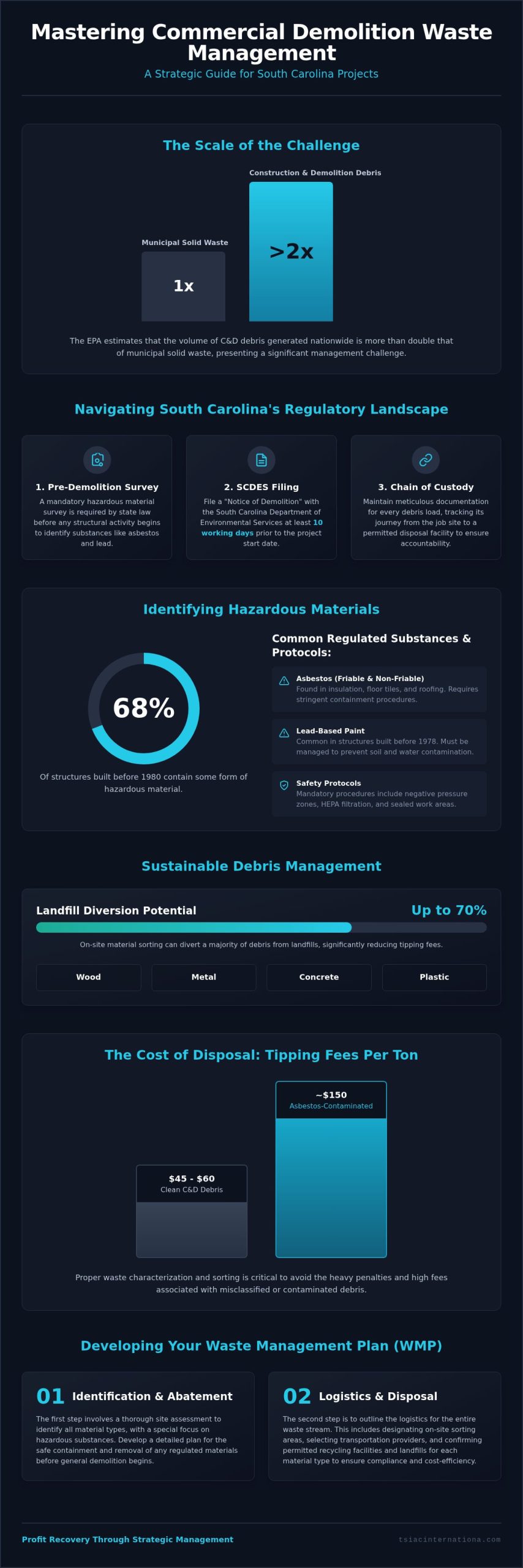
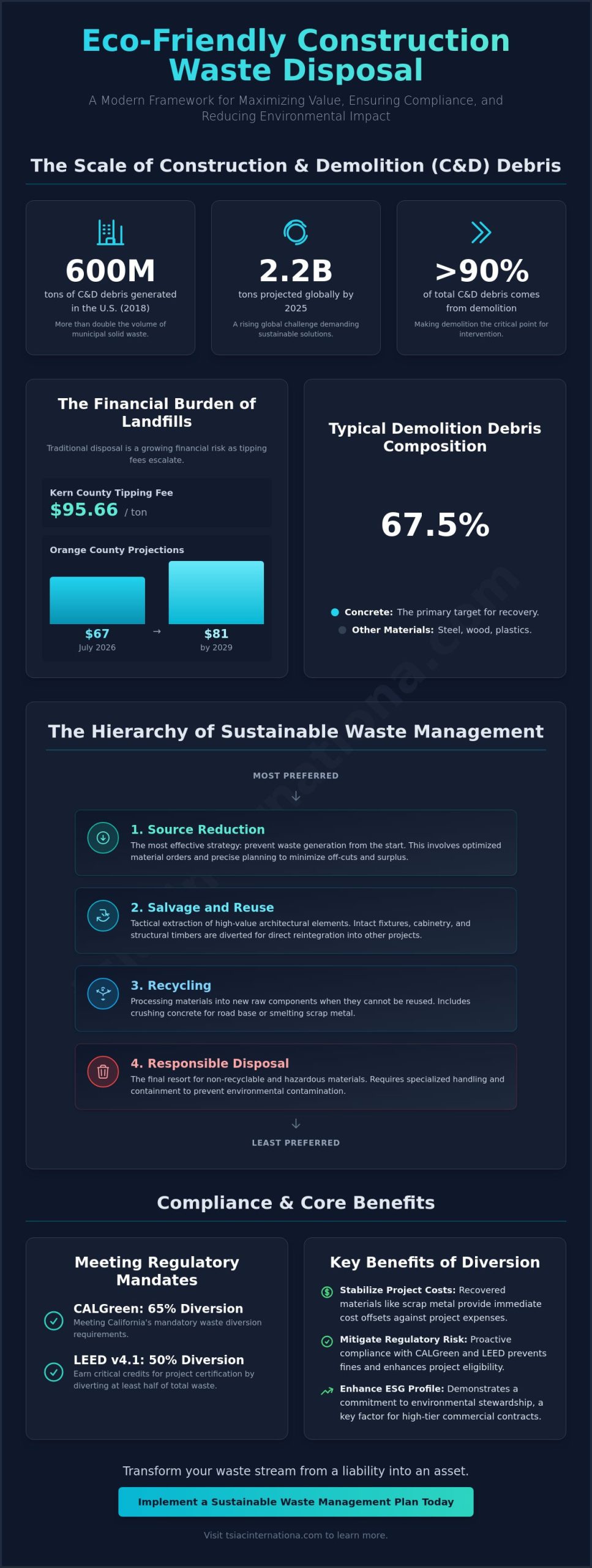
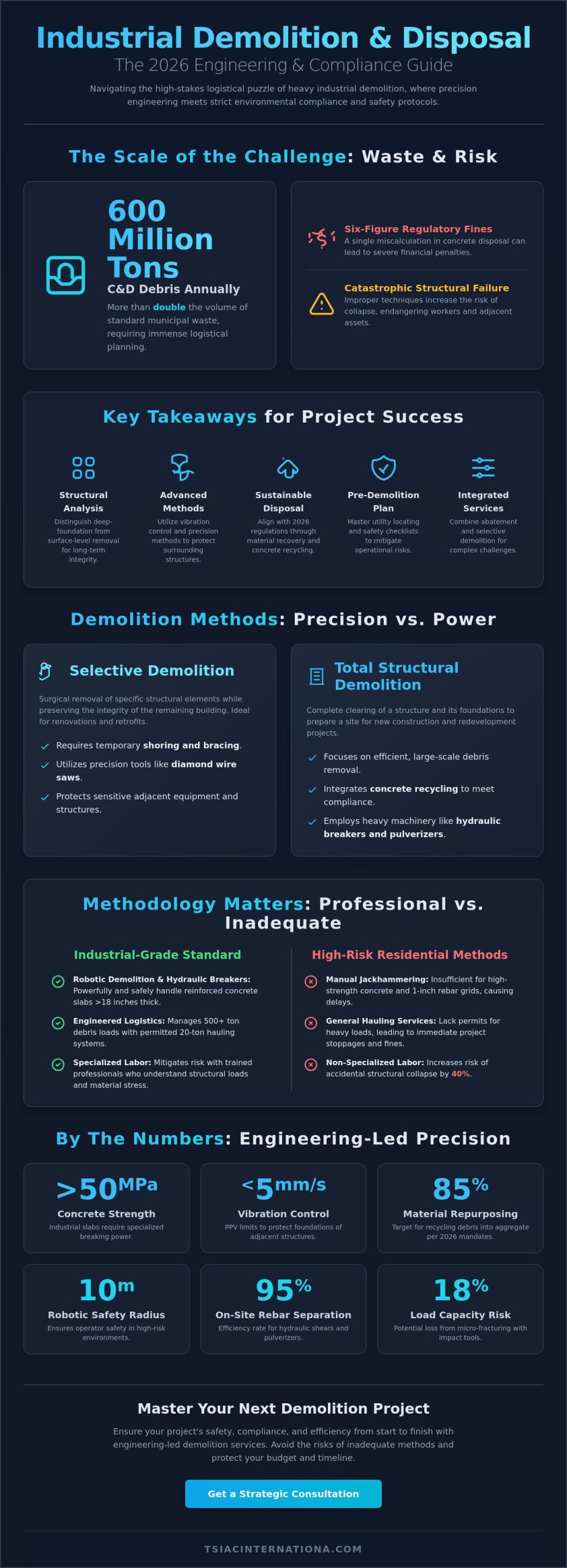
Industrial waste data from the EPA in 2023 reveals that construction and demolition debris accounts for 600 million tons annually, a figure more than…

Industrial waste data from the EPA in 2023 reveals that construction and demolition debris accounts for 600 million tons annually, a figure more than double the volume of standard municipal waste. You likely recognize that managing a project of this magnitude isn’t just about brute force; it’s a high-stakes logistical puzzle where a single miscalculation in concrete removal and disposal can lead to six-figure regulatory fines or catastrophic structural failure. We understand the pressure of balancing tight deadlines with the rigid requirements of environmental laws and the hidden dangers of legacy materials like lead or asbestos.

This 2026 industrial guide provides the engineering precision needed to master complex demolition without compromising safety or your operational budget. You’ll gain a clear understanding of specialized removal methods that protect adjacent assets while ensuring every ton of debris meets current compliance standards. We’ll detail specific demolition techniques, hazardous material protocols, and the logistical frameworks required for efficient hauling to ensure your site remains safe and remains fully documented throughout the project lifecycle.

Key Takeaways

  • Understand the critical engineering distinctions between surface-level clearing and deep-foundation structural removal to ensure long-term project integrity.
  • Explore advanced mechanical methods and vibration control protocols designed to protect sensitive industrial environments and surrounding urban structures.
  • Implement sustainable strategies for professional concrete removal and disposal that align with 2026 regulatory standards and material recovery mandates.
  • Master the essential pre-demolition checklist, including utility locating and safety protocols, to mitigate operational risks and ensure site compliance.
  • Discover the advantages of integrated abatement and selective demolition services for managing complex structural challenges in high-stakes environments.

The Logistics and Engineering of Professional Concrete Removal and Disposal

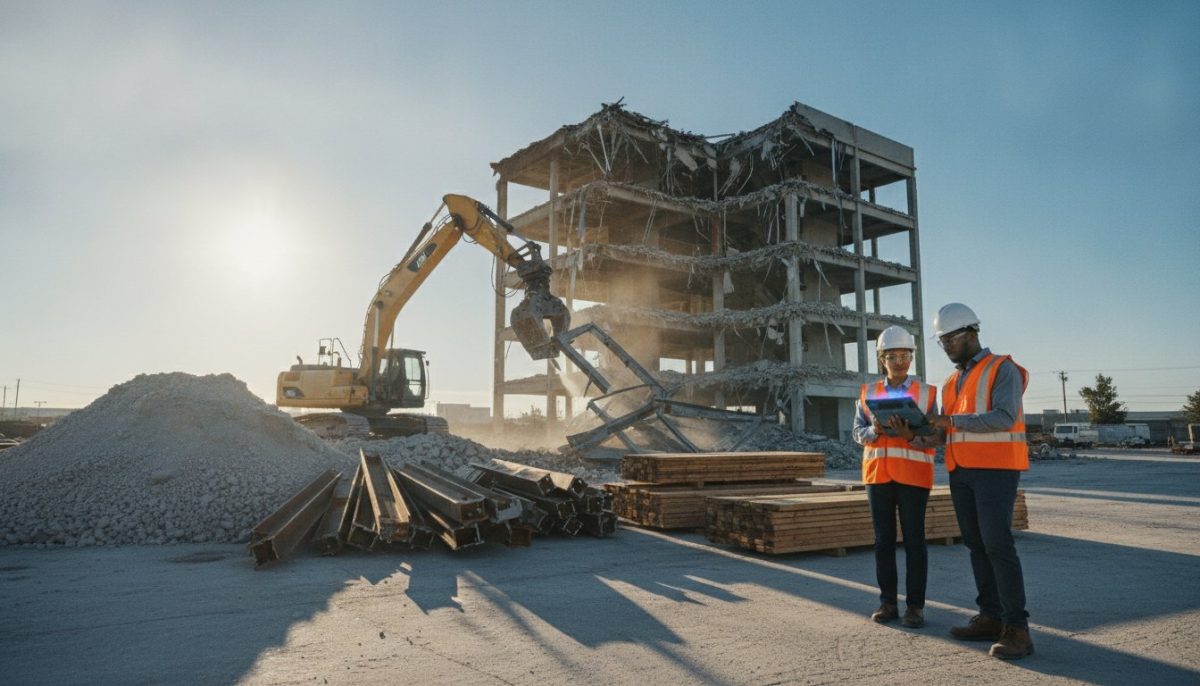
Professional concrete removal and disposal is a managed structural demolition process that requires engineering precision. It’s not a simple clearing task. Industrial projects often involve deep-foundation structural removal where slabs exceed 18 inches in thickness. Before any equipment arrives, engineers must perform a structural integrity assessment to identify load-bearing points. A single cubic yard of concrete weighs approximately 4,000 pounds. This means a standard industrial floor removal can generate 500 tons of debris within 48 hours. Managing this volume requires a logistics plan that accounts for weight-bearing limits of site access roads and the sequencing of heavy machinery.

Site safety remains the primary driver of logistics. When dealing with reinforced concrete, the presence of high-tension rebar adds a layer of complexity to the removal phase. Specialists must calculate the potential for structural shifts during the extraction process. Every pound of material moved must be tracked to ensure the site remains balanced and safe for operators and adjacent structures. This level of planning distinguishes industrial-grade execution from basic demolition services.

Structural vs. Selective Concrete Demolition

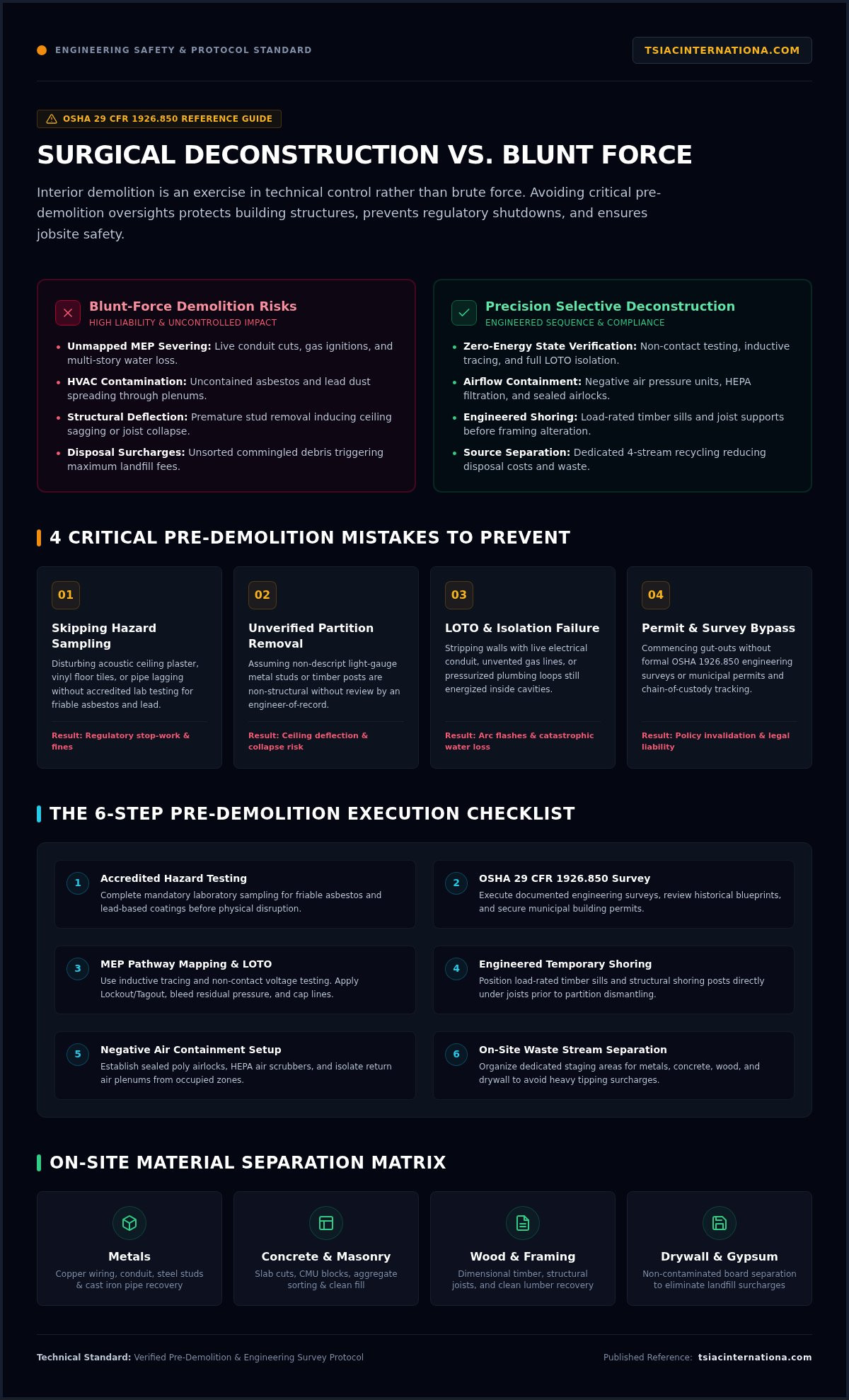
Selective demolition focuses on surgical removal for renovations. This process relies on temporary shoring and bracing to maintain the stability of the remaining structure while specific sections are cut away. In contrast, total structural removal involves the complete clearing of a site for redevelopment. During these phases, Concrete recycling methods are integrated into the workflow to reduce landfill impact. Current standards aim to repurpose at least 85% of demolished material into high-quality aggregate for new construction projects. This sustainable approach reduces transportation costs and meets 2026 environmental compliance mandates.

Why Residential Methods Fail on Industrial Project Sites

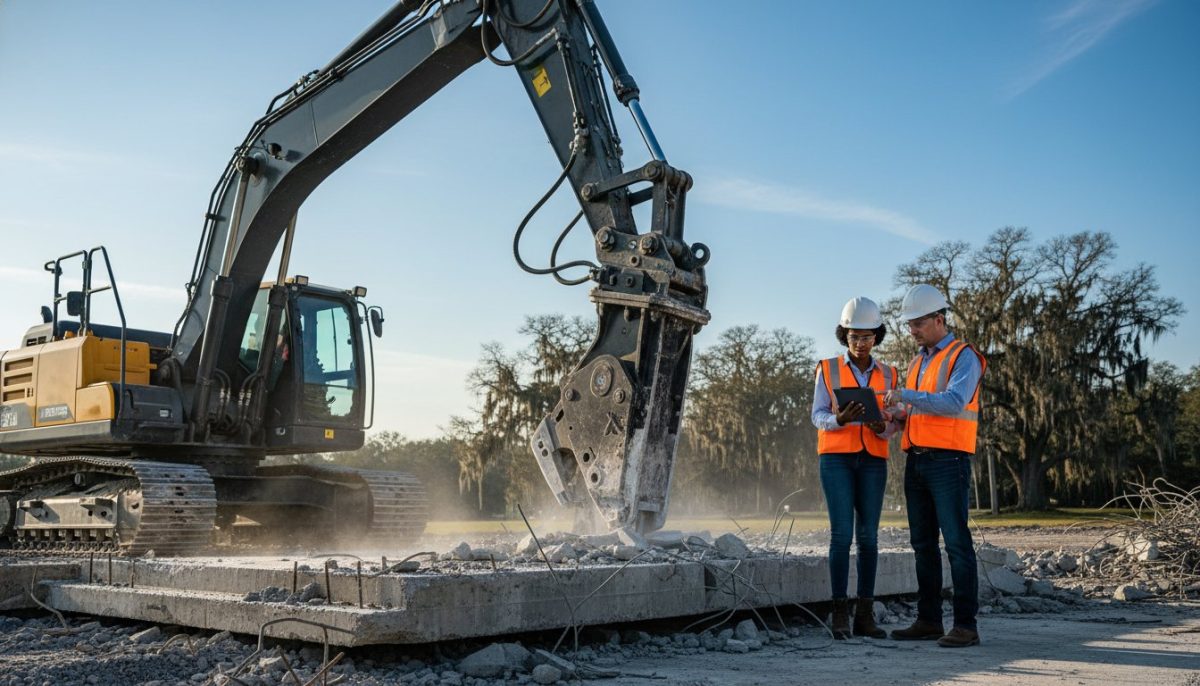
Standard jackhammering is insufficient for high-output industrial demolition. While a manual tool works for a thin driveway, it can’t handle reinforced slabs with 1-inch rebar grids. Industrial sites require robotic demolition units or diamond wire sawing to maintain the project schedule. General hauling services often lack the permits for 20-ton loads, which leads to immediate project delays. Using non-specialized labor for complex concrete tasks increases the risk of accidental structural collapse by 40% according to historical site safety data. Professional teams use high-pressure hydraulic breakers and specialized heavy debris management systems to ensure every stage of concrete removal and disposal remains under total control. This technical rigor ensures that the project moves from demolition to the next phase of construction without unforeseen structural failures or safety incidents.

Advanced Techniques in Structural and Selective Demolition

Modern concrete removal and disposal requires a shift from traditional blunt-force methods to engineering-led precision. In 2026, the industry prioritizes structural integrity and environmental stability above all else. Vibration control is a critical requirement in urban industrial zones, where peak particle velocity (PPV) must often be maintained below 5mm/s to protect the foundations of adjacent historical or sensitive structures. Selecting the correct machinery depends on the concrete’s compressive strength, which frequently exceeds 50 MPa in industrial slabs, and the specific density of the internal reinforcement. Precision cutting techniques are essential to prevent micro-fracturing; these invisible cracks can reduce the load-bearing capacity of remaining permanent structures by as much as 18% if handled with standard impact tools.

Robotic Demolition and Heavy Machinery Applications

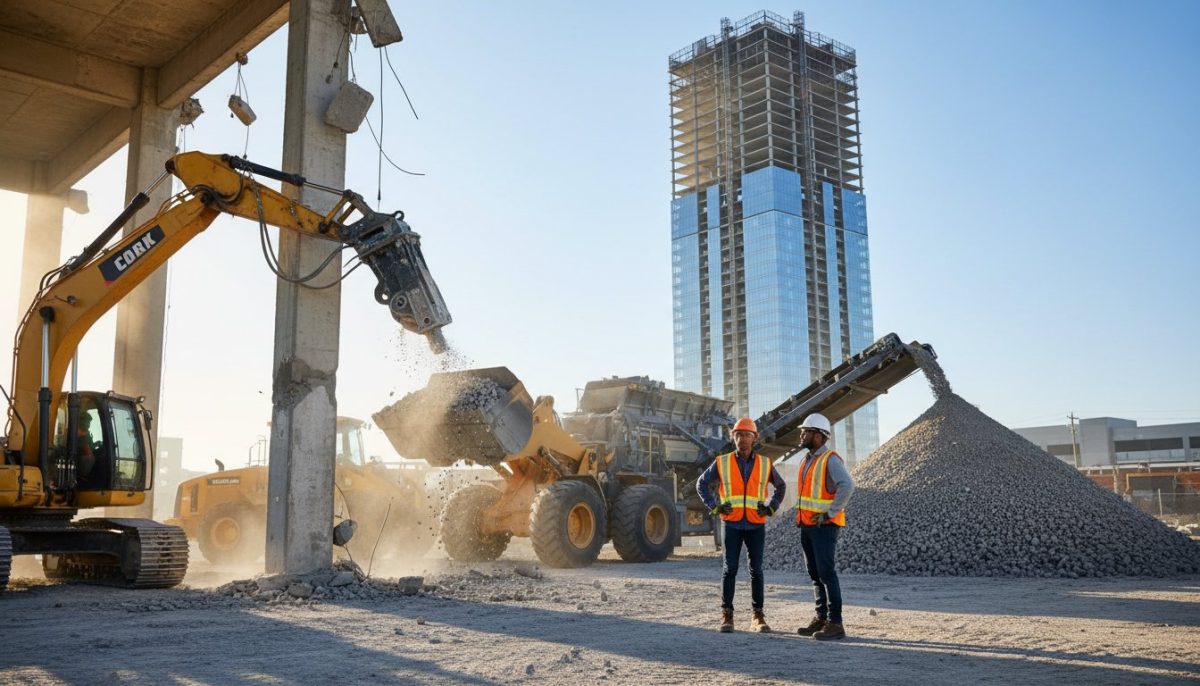
Remote-controlled robotic breakers allow operators to maintain a 10-meter safety radius in high-risk environments like chemical processing plants or unstable mezzanines. These compact machines deliver the hitting power of an excavator five times their size while fitting through standard 80cm doorways. For large-scale projects, excavators equipped with hydraulic shears and pulverizers achieve a 95% separation rate of steel rebar from concrete on-site. This level of efficiency is vital for meeting federal standards regarding the Sustainable Management of C&D Materials, turning debris into recyclable aggregate. High-reach demolition equipment now extends to 60 meters, enabling controlled, top-down dismantling that keeps the work zone footprint minimal.

Precision Surgical Removal and Slab Sawing

Diamond wire sawing is the primary solution for removing heavily reinforced sections thicker than 1000mm. By looping a diamond-impregnated cable around a bridge pier or foundation block, technicians execute clean cuts through any depth of concrete without inducing any vibration. This method is silent and produces no dust when water-cooled. For horizontal and vertical surfaces, flat sawing and wall sawing provide the linear accuracy needed for new elevator shafts or utility trenches. Core drilling remains the standard for structural testing and utility integration, creating clean apertures from 10mm to 1200mm in diameter. These surgical methods ensure that the primary structure’s health remains uncompromised during complex modifications. If your facility requires this level of technical oversight, partnering with a specialized industrial contractor ensures that even the most difficult removals are executed with engineering-grade accuracy.

The selection of these advanced techniques directly impacts the total timeline of concrete removal and disposal. By utilizing precision tools, contractors reduce the need for secondary patching and structural reinforcement, lowering the total project cost by an average of 12% compared to traditional jackhammering methods. Every cut is planned with CAD-level detail to ensure that the removal process supports the long-term viability of the industrial site.

Professional Concrete Removal and Disposal: The 2026 Industrial Guide

Environmental Compliance and Concrete Debris Management

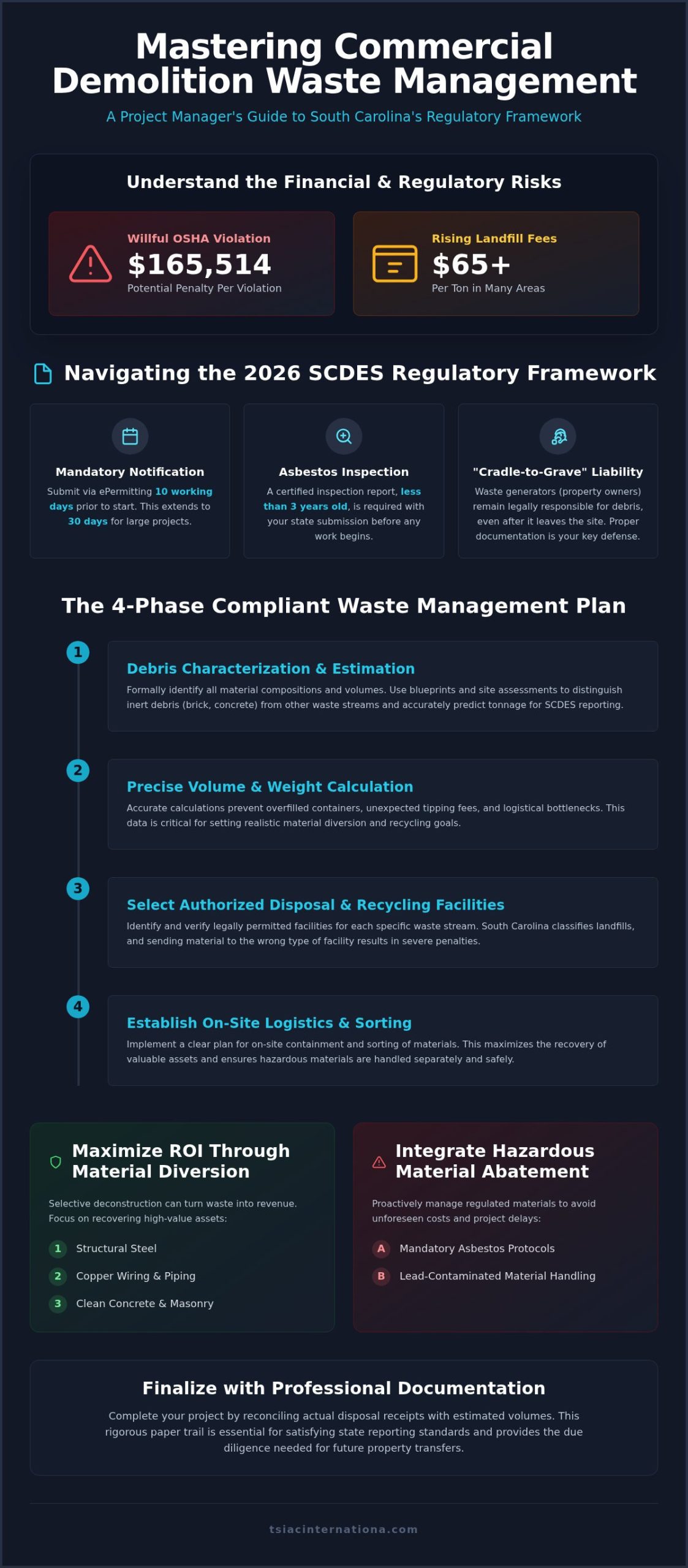
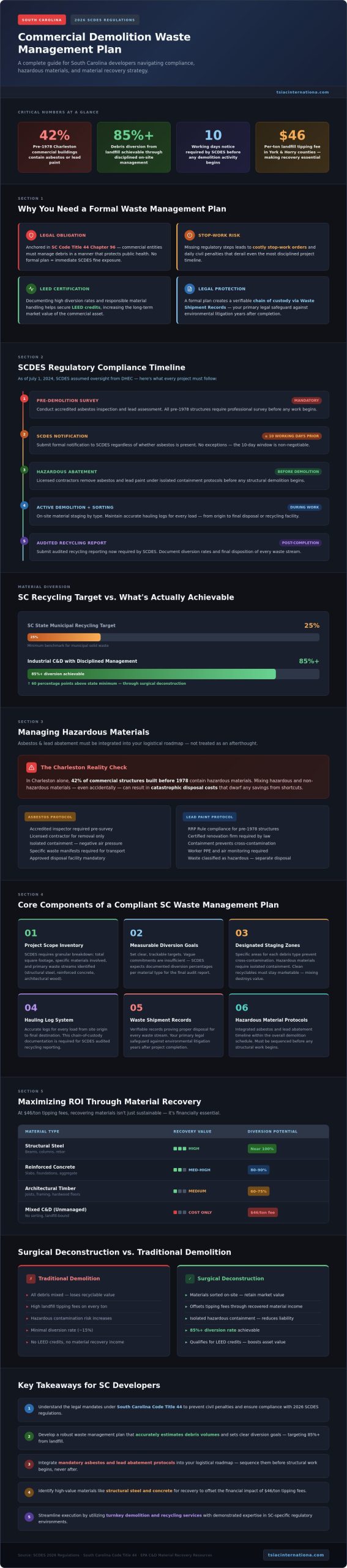
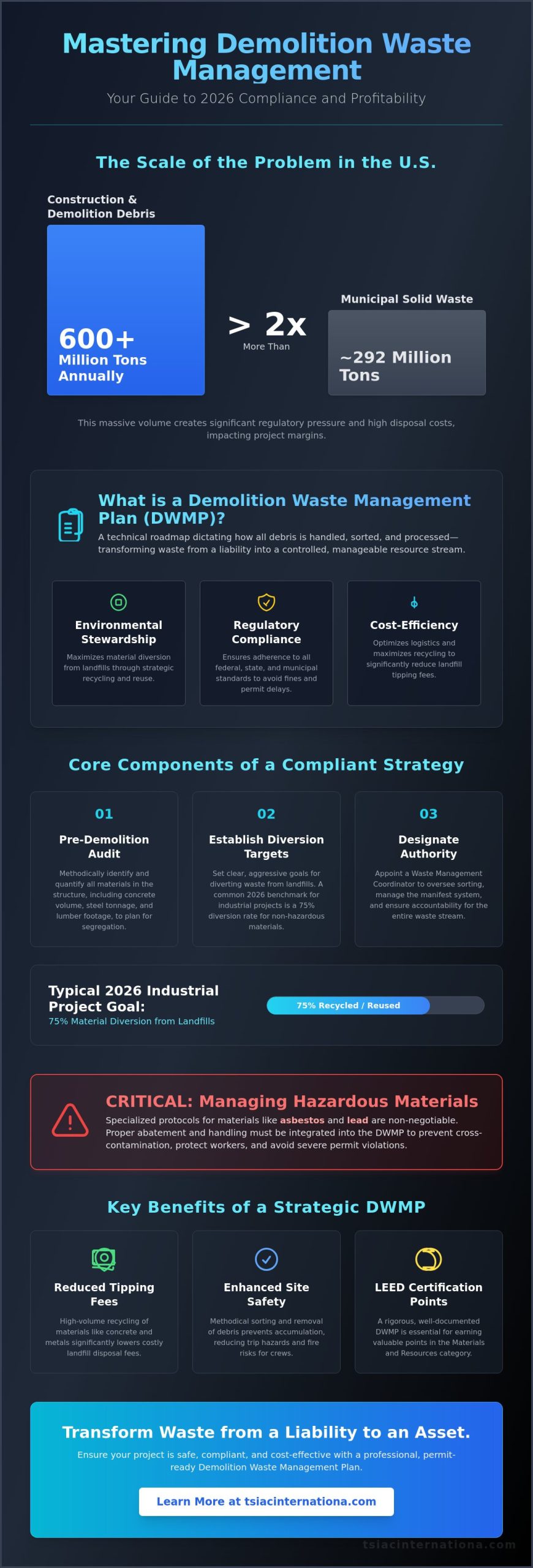
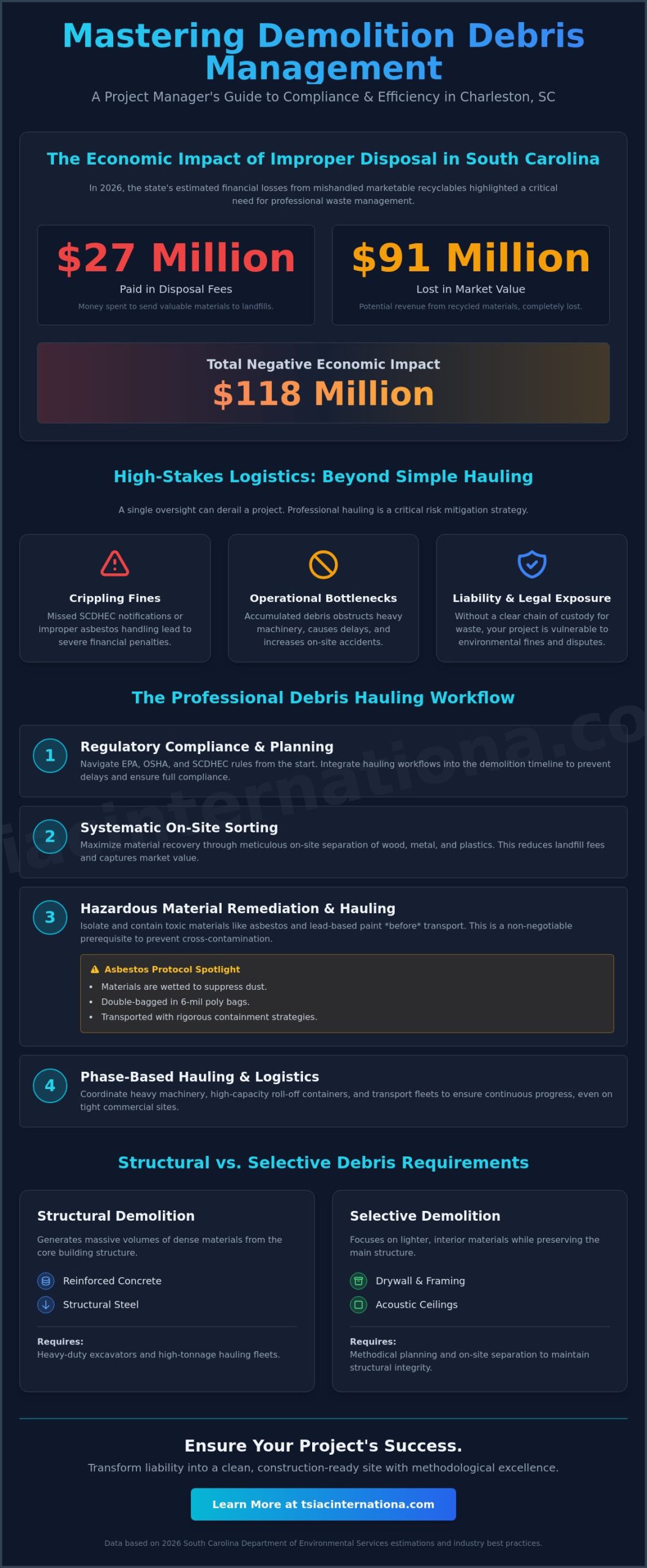
By 2026, the regulatory framework for concrete removal and disposal has shifted from simple waste management to a rigorous circular economy model. Landfill tipping fees in major industrial corridors have increased by an average of 15% since 2024, making the burial of inert debris the most expensive and least sustainable option for commercial developers. Modern environmental mandates now require a minimum 75% diversion rate for construction and demolition (C&D) materials on projects exceeding 5,000 square feet. This shift necessitates a sophisticated logistical chain that begins during the initial demolition process south carolina contractors must follow to ensure site-level separation.

Adhering to OSHA demolition standards is a prerequisite for safe debris handling and transport. These standards dictate how piles are staged to prevent collapses and how dust suppression systems must operate during load-out. Effective management moves material from the demolition face to a designated sorting zone, where primary crushing often occurs before the debris ever leaves the property. This reduces the volume of loads and optimizes transport costs, which is vital for maintaining project margins in high-scale industrial redevelopments.

Concrete Recycling and Material Recovery Systems

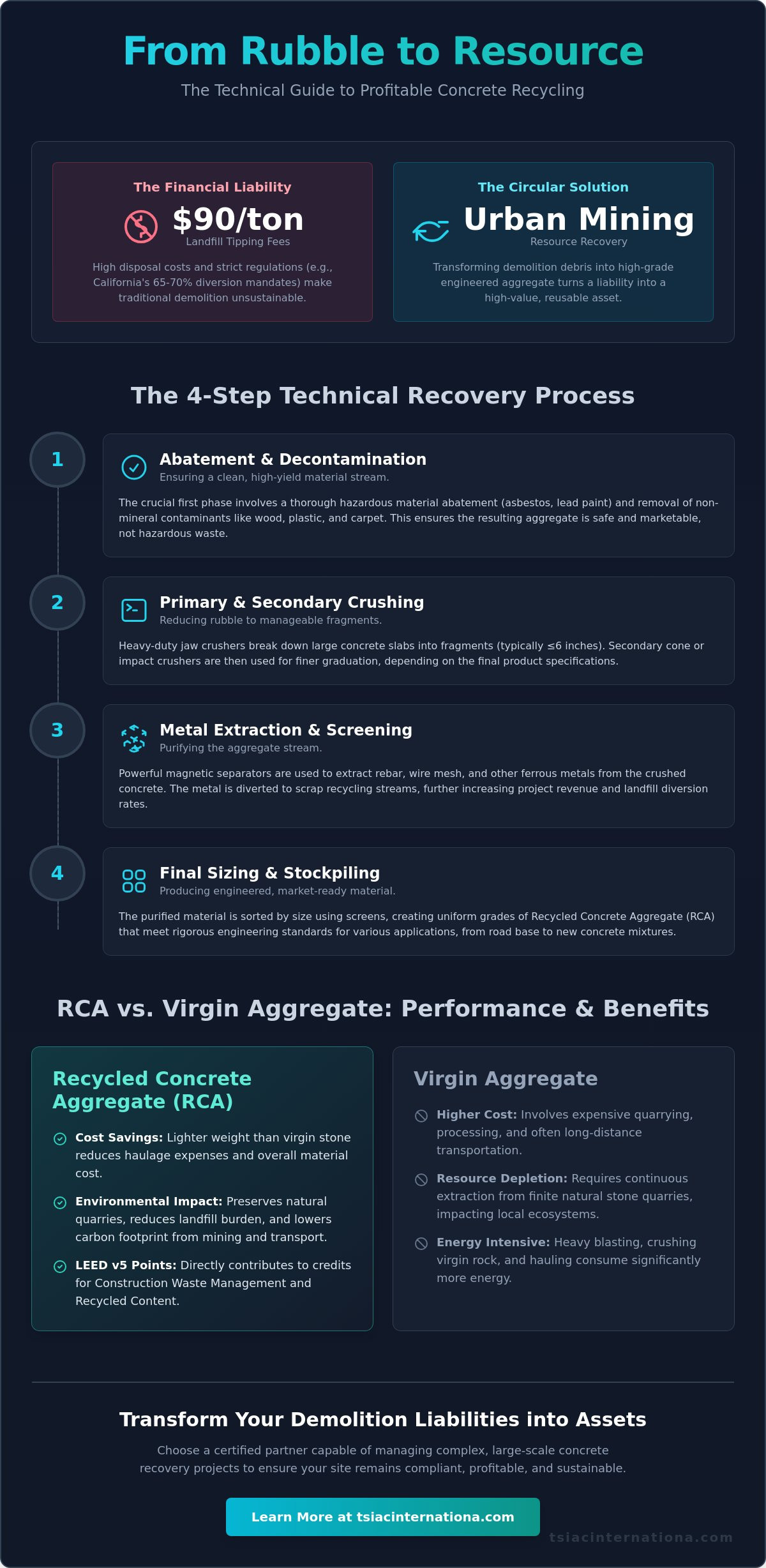
Modern recycling facilities utilize multi-stage crushing and screening plants to transform old slabs into high-quality recycled concrete aggregate (RCA). Magnetic separators pull rebar and embedded steel from the mix with 99% efficiency, allowing these metals to be sold as scrap, which often offsets the cost of the concrete removal and disposal process. For projects pursuing LEED v5 certification, contractors must provide verified weight tickets and processing manifests. These documents prove that the recovered material has been diverted from landfills, directly contributing to Materials and Resources credits. Using RCA as a sub-base for new parking lots or structural fill represents the peak of engineering efficiency in 2026.

Handling Hazardous Materials in Concrete Structures

Older industrial assets often hide environmental liabilities within their masonry. Lead-based paint coatings, common on concrete surfaces in facilities built before 1978, require specialized stabilization before removal to prevent soil contamination. Additionally, asbestos-containing materials (ACM) are frequently found in expansion joints and moisture barriers. If these materials are present, property owners must follow the protocols outlined in hazardous material abatement south carolina before mechanical demolition begins. Failure to identify these risks leads to stop-work orders and significant fines from state environmental agencies. Precise testing and documented remediation are the only ways to maintain compliance and project momentum.

Planning Your Project: Safety Standards and Regulatory Requirements

Executing professional concrete removal and disposal requires more than just heavy machinery. It demands a rigorous preliminary assessment to mitigate structural risks and environmental hazards. Property managers should start with a comprehensive pre-demolition checklist. This document must include structural load-bearing analysis, hazardous material surveys for lead or asbestos, and a clear site access plan. A critical step involves contacting local utility locating services. In most regions, calling 811 at least 48 hours before any excavation or slab removal is a legal mandate. Striking an unidentified high-pressure gas line or an electrical conduit can cause catastrophic site failures and immediate project shutdowns.

Establishing a secure safety perimeter is the next priority. This zone prevents unauthorized personnel from entering high-risk areas where falling debris or flying fragments are common. We also focus on dust mitigation. Uncontrolled concrete dust isn’t just a nuisance; it’s a major health hazard that can lead to permanent respiratory damage. Improper disposal or “fly-tipping” carries severe legal liabilities. In 2024, some municipalities increased fines for illegal dumping to over $25,000 per occurrence. Property owners remain legally responsible for their waste until it reaches a certified facility, making professional documentation essential.

Occupational Safety and Site Containment Strategies

Modern safety standards emphasize the total containment of respirable crystalline silica. We implement OSHA-compliant Table 1 methods for all projects. This involves using integrated water delivery systems for wet-cutting or HEPA-filtered vacuum attachments that maintain a 99.97% filtration efficiency. Technicians wear fit-tested P100 respirators and high-impact PPE at all times. For projects in high-density areas, we deploy acoustic barriers. These shields help keep noise levels below the standard 85-decibel threshold, ensuring the project doesn’t violate local noise ordinances or disrupt neighboring businesses.

Navigating Permits and Disposal Documentation

Structural demolition typically requires a specific permit from the municipal building department. This process ensures the work won’t compromise the integrity of the surrounding infrastructure. A professional contractor manages the “chain of custody” for all waste. This involves tracking every ton of debris through recycling manifests. These documents prove that the concrete was processed at a licensed facility rather than dumped illegally. It’s also vital to verify that your contractor maintains at least $2 million in general liability insurance and comprehensive bonding. This protection is your primary defense against property damage claims or site accidents. For complex industrial projects that require this level of precision, you can consult with our technical specialists today.

Strategic Concrete Solutions with TSIAC International

TSIAC International operates at the intersection of engineering precision and industrial grit. They specialize in high-stakes environments where standard demolition methods fall short. By positioning themselves as a leader in selective structural demolition, the company addresses the technical needs of 2026 industrial standards. Their team manages the entire lifecycle of concrete removal and disposal, ensuring that structural integrity remains uncompromised in adjacent areas. This specialized focus allows clients to repurpose existing facilities without the risks associated with broad-scale vibration or structural failure.

Environmental stewardship isn’t just a compliance checkbox for TSIAC; it’s a core operational pillar. The company prioritizes the onsite sorting of materials to maximize recycling potential. By crushing concrete for reuse as aggregate or base material, they significantly reduce the carbon footprint of industrial projects. This commitment helps clients meet strict sustainability mandates while lowering the total volume of waste destined for landfills.

The TSIAC Approach to Complex Concrete Challenges

With over 15 years of operational experience, TSIAC International has developed a reputation for solving site constraints that others label impossible. They utilize advanced mechanical methods and precision cutting to work within tight urban footprints or active industrial plants. One of their primary advantages is the use of fixed-price structural demolition contracts. These agreements provide absolute budget certainty, eliminating the 15% to 20% cost overruns often seen in the demolition industry due to poor planning or scope creep. Clients benefit from a single-source provider that handles gutting, structural removal, and technical debris management under one unified management structure.

Integrated Abatement and Structural Removal

Managing hazardous materials alongside structural demolition is a logistical hurdle that frequently delays industrial timelines. TSIAC International removes this friction by offering integrated services. Handling abatement and demolition under a single contract reduces project risk by centralizing liability and communication. It’s especially critical when dealing with asbestos removal south carolina regulations, where strict state-specific protocols must be followed during the concrete removal and disposal process.

Synchronizing remediation and removal accelerates the project schedule by up to 30% compared to using separate contractors. There’s no downtime spent waiting for a third-party abatement team to clear a site before the demolition crews can enter. This seamless transition ensures that the project moves from the hazardous material phase to structural clearing without delay. It’s a disciplined, engineering-first strategy that protects both the workforce and the client’s bottom line.

Precision and safety are the foundations of every successful industrial teardown. Consult with TSIAC International for your next concrete removal project.

Advancing Your Infrastructure with Engineering Precision

Successful industrial projects in 2026 demand more than simple demolition; they require a calculated approach to concrete removal and disposal that integrates structural engineering with environmental stewardship. Industry data indicates that selective demolition techniques can reduce site waste by 40% when compared to standard clearing methods. TSIAC International applies over 15 years of structural demolition and abatement expertise to manage these complexities. We prioritize sustainability by executing comprehensive recycling of wood, metal, and plastic on every job site. This engineering-first mindset is particularly critical for selective demolition during complex commercial renovations where structural integrity is non-negotiable. You’re looking for a partner who treats safety as a technical requirement, not just a checklist. We’ve mastered the logistics of difficult locations to ensure your project meets all regulatory standards without delay. Precision in execution is the only way to safeguard your investment.

Request a Professional Concrete Removal Quote from TSIAC International

Your project deserves a foundation built on professional excellence and technical reliability.

Frequently Asked Questions

How much does professional concrete removal and disposal cost in 2026?

Professional concrete removal and disposal costs typically range between $3.50 and $12.00 per square foot depending on reinforcement density and site accessibility. According to the 2025 Construction Cost Index, labor and fuel expenses account for 45% of this total. Complex industrial projects involving reinforced foundations require specialized machinery, which increases the baseline fee due to higher maintenance overheads and specialized disposal permits required by local authorities.

What is the difference between concrete removal and concrete recycling?

Concrete removal involves the physical extraction of material from a site, while recycling processes that waste into reusable aggregate for new construction. Statistics from the Construction & Demolition Recycling Association show that 85% of removed concrete is now diverted from landfills. We utilize mobile crushing units to transform debris into Grade A sub-base material, which effectively reduces raw material procurement costs for subsequent industrial phases.

Do I need a permit for concrete removal on my commercial property?

Commercial concrete projects almost always require a demolition or site alteration permit issued by the local building authority. Requirements vary by municipality, but 90% of urban jurisdictions mandate a structural stability report before work commences. Failure to secure these documents can result in fines exceeding $5,000 per day and immediate work stoppages, compromising project timelines and the legal standing of the property owner.

Can concrete containing lead paint or asbestos be recycled?

Concrete containing lead-based paint or asbestos fibers can’t be recycled and must be treated as hazardous waste. EPA Regulation 40 CFR Part 745 dictates that such materials require specialized containment and disposal at certified hazardous waste landfills. Our teams implement rigorous testing protocols to identify contaminants, ensuring that 100% of hazardous debris is handled through documented chain-of-custody procedures rather than standard recycling streams.

How long does it typically take to remove a large concrete slab or foundation?

Removing a 5,000 square foot industrial slab typically requires 3 to 5 business days using standard hydraulic breakers. Heavy foundations with deep footings extend this timeline by 40% due to the increased volume of material and required precision near existing utilities. We utilize detailed project scheduling to ensure every phase, from initial saw cutting to final site clearance, meets the engineered deadline without compromising structural integrity.

What is robotic demolition, and when is it necessary for concrete projects?

Robotic demolition involves remote-controlled machines that execute high-precision breaking in confined or hazardous environments. This technology is necessary when floor load capacities are limited or when vibration sensitivity reaches levels below 2.0 mm/s. By removing the operator from the immediate impact zone, we reduce workplace injury risks by 65% while maintaining a higher output than manual pneumatic tools can achieve in the same timeframe.

How do I ensure my concrete removal project is environmentally compliant?

Compliance is ensured by adhering to ISO 14001 standards and maintaining a comprehensive Waste Management Plan. Current regulations require tracking 100% of debris from the point of origin to the final disposal site. We provide clients with digital manifests and recycling certificates that verify the sustainable handling of all materials, which is essential for projects seeking LEED certification or meeting municipal green building codes in 2026.

What are the risks of DIY concrete removal for large structures?

DIY removal of large structures carries a 30% higher risk of accidental utility strikes and structural collapse compared to professional execution. Without industrial-grade equipment, operators often face prolonged exposure to crystalline silica dust, which exceeds OSHA permissible exposure limits within 15 minutes of dry cutting. Professional intervention guarantees that vibration control and dust suppression systems are active, protecting both the workforce and the surrounding infrastructure from damage.

Eco-Friendly Demolition Services: The Complete 2026 Guide to Sustainable Deconstruction

The EPA reports that construction and demolition debris reached 600 million tons in a single year, a figure more than double the volume of standard…

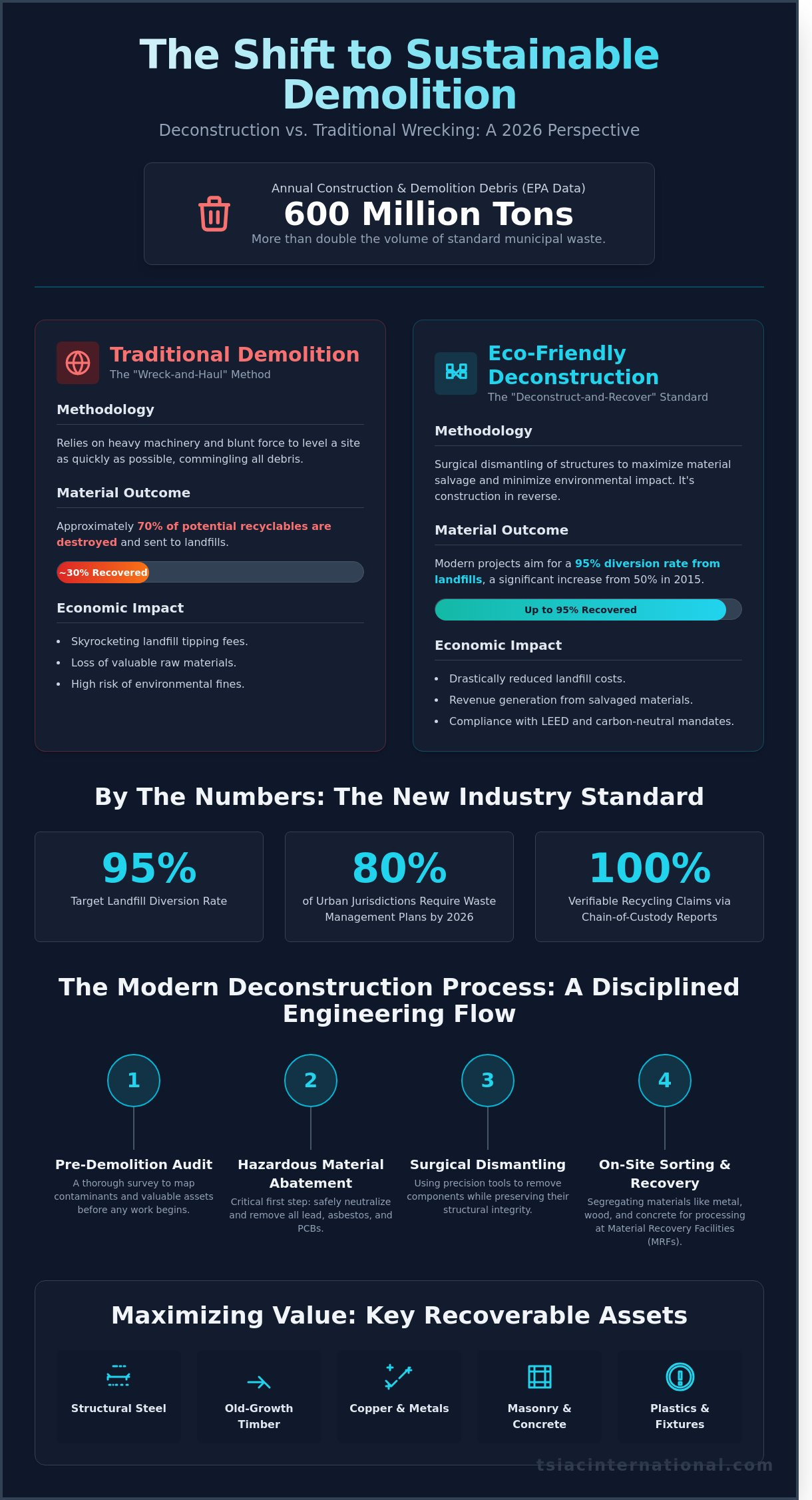
The EPA reports that construction and demolition debris reached 600 million tons in a single year, a figure more than double the volume of standard municipal waste. You likely recognize this reality through the lens of skyrocketing landfill tipping fees and the increasingly complex documentation required to meet 2026 LEED standards. Balancing the removal of hazardous materials like lead and asbestos with the need for strict budget adherence often feels like a zero-sum game. It doesn’t have to be.

By integrating professional eco-friendly demolition services, you can pivot from traditional site clearing to a high-precision deconstruction model. This guide explains how modern recovery techniques allow you to reclaim valuable assets and significantly lower project costs through strategic salvage operations. We’ll outline the technical process of deconstruction, the protocols for verified hazardous material safety, and the engineering logic that makes sustainable demolition the most cost-effective choice for complex industrial projects.

Key Takeaways

  • Learn why modern deconstruction is replacing traditional “wreck-and-haul” methods to maximize material recovery and environmental protection.
  • Understand the critical role of integrated hazardous material abatement and surgical dismantling in ensuring site safety and structural integrity.
  • Discover how eco-friendly demolition services reduce total project costs by diverting waste from landfills and generating value from recovered scrap.
  • Identify the essential components of a successful project, from conducting pre-demolition audits to securing regulatory approval through Waste Management Plans.
  • Explore how precision engineering and industrial expertise allow for the systematic salvage of wood, metal, and plastic in complex environments.

What Are Eco-Friendly Demolition Services in 2026?

In 2026, the construction sector views waste as a fundamental resource failure. Eco-friendly demolition services represent the systematic dismantling of structures designed to maximize material salvage and minimize environmental degradation. This methodology has replaced the obsolete “wreck-and-haul” practices that dominated the industry for decades. Modern engineers and project managers now prioritize “deconstruct-and-recover” strategies. These processes integrate selective demolition, precise on-site sorting, and rigorous hazardous material remediation to ensure that nothing of value reaches a landfill.

Sustainability has transitioned from a niche preference to the absolute industry standard for both commercial and residential projects. This shift is driven by strict regulatory frameworks. By 2026, over 80% of urban jurisdictions require detailed waste management plans before any permit is issued. Developers don’t just choose green methods for the environment; they do it to comply with carbon-neutral mandates and to recapture the value of high-grade materials like structural steel and old-growth timber.

Deconstruction vs. Traditional Demolition

Traditional demolition relies on heavy machinery to level a site in the shortest possible timeframe. While this method is fast, it destroys approximately 70% of potential recyclables by commingling debris with contaminants. In contrast, Deconstruction involves the manual or semi-automated removal of building components to preserve their structural integrity. It’s essentially construction in reverse.

Most 2026 projects utilize a hybrid approach. This strategy uses high-reach excavators for primary structural elements but employs specialized teams for the selective removal of copper, masonry, and architectural features. This balance maintains project timelines while meeting modern environmental responsibilities. It’s a calculated, engineering-led process that treats every building as a vertical warehouse of raw materials.

The Role of Material Recovery Facilities (MRFs)

The process doesn’t end when the trucks leave the site. Material Recovery Facilities (MRFs) are the backbone of the circular economy in the demolition sector. These centers use advanced optical sorters and robotic systems to process debris with surgical precision. Leading eco-friendly demolition services now aim for a 95% diversion rate from landfills, a significant increase from the 50% averages seen in 2015.

Transparency is a non-negotiable requirement for modern contracts. Contractors now provide digital chain-of-custody reports for every project. These documents track every ton of concrete and steel from the site to its secondary use. This level of tracking ensures that 100% of the recycling claims are verifiable through third-party audits, providing the technical proof that stakeholders and regulatory bodies demand.

The Mechanics of Sustainable Deconstruction and Abatement

Sustainable deconstruction isn’t a blunt force activity; it’s a disciplined engineering process. Unlike traditional methods that rely on wrecking balls and high-impact collisions, eco-friendly demolition services utilize surgical precision to dismantle structures. This approach involves removing specific building components while protecting the remaining structure and surrounding environment. We rely on high-reach excavators equipped with precision cutters and hydraulic shears to minimize vibration, noise, and dust. By 2026, these technical standards have become the baseline for projects requiring high levels of control and safety.

The sequence begins with integrated hazardous material abatement. This is the critical first step of any green demolition project. We don’t start structural work until every trace of lead, asbestos, and PCBs is identified and neutralized. Modern site management requires a thorough pre-demolition survey to map out these contaminants, ensuring they don’t enter the waste stream or the atmosphere. It’s a technical necessity that protects both the workforce and the long-term viability of the land.

Safely Managing Asbestos and Lead

Rigorous asbestos removal is vital for preventing environmental contamination during the deconstruction phase. Our teams implement strict containment strategies, including the use of negative pressure enclosures and HEPA filtration systems to capture microscopic fibers. Regulatory compliance isn’t just a hurdle; it’s a safety mandate. We meet all EPA and OSHA standards for hazardous waste disposal, ensuring that toxic materials are transported to specialized facilities. This fomalized process prevents the release of lead dust and asbestos into the local ecosystem, maintaining the site’s environmental integrity.

Selective Interior Gutting

Selective gutting focuses on stripping interiors down to the structural studs to recover high-value assets. This process is essential for commercial interior gutting services where tenant improvements require a clean slate without destroying the building’s shell. Reusing and recycling construction and demolition (C&D) materials like copper wiring, structural steel, and architectural fixtures can divert up to 90% of interior debris from landfills.

Our technicians use specialized hand tools and small-scale machinery to preserve historical or architectural elements during complex renovations. This level of care ensures that unique materials, such as reclaimed timber or vintage masonry, are salvaged for future use rather than discarded. If your project involves complex structural challenges, you can consult with our technical team to develop a customized deconstruction plan that prioritizes material recovery and site safety.

Eco-Friendly Demolition Services: The Complete 2026 Guide to Sustainable Deconstruction

Economic Benefits: Why Green Demolition Saves Money

Adopting eco-friendly demolition services isn’t merely a choice for environmental stewardship; it’s a strategic financial decision. Traditional demolition focuses on speed, often resulting in high disposal costs that eat into project margins. In contrast, a controlled deconstruction approach treats a building as a repository of valuable assets. By diverting heavy materials like concrete and structural steel from landfills, contractors avoid escalating tipping fees, which in some jurisdictions can exceed $100 per ton. This shift from waste disposal to material management changes the fundamental math of a project’s budget.

The financial recovery starts with scrap value. Recovered structural steel, copper wiring, and architectural salvage like old-growth timber hold significant market value. These materials can be sold directly to recyclers or reclaimed wood dealers to offset labor costs. Integrating Sustainable Deconstruction practices into the initial planning phase allows for the systematic removal of these high-value items before the heavy machinery arrives, ensuring maximum recovery rates and cleaner material streams.

Reducing Disposal and Transportation Costs

Logistical efficiency is the backbone of a profitable site clearance. On-site crushing of concrete is a primary example of how engineering precision saves money. Instead of paying to haul concrete debris away and then paying again to bring in virgin aggregate, we process the material on-site. This crushed concrete serves as an immediate, high-quality road base or backfill. This process eliminates dozens of haul-off loads, directly reducing fuel consumption and truck rental expenses.

Effective material sorting at the source further minimizes costs. When waste is co-mingled, it’s charged at the highest possible disposal rate. By separating masonry, metal, and wood, we tap into lower recycling rates. Local recycling markets play a decisive role here; proximity to specialized processing centers can reduce transportation overhead by 15% to 22% compared to long-distance landfill hauls.

Long-Term Liability Reduction

Financial risk management is built into every step of the demolition process. Choosing “cheap” demolition often leads to hidden costs, such as soil remediation or legal penalties for improper waste handling. Professional eco-friendly demolition services provide rigorous documentation and hazardous waste tracking. This transparency protects the property owner from future litigation and ensures the site remains a high-value asset for future development.

Sustainable practices also unlock specific financial incentives. LEED certification offers points for construction and demolition waste management, which can increase a building’s market value and attract premium tenants. Many federal and state grants for brownfield redevelopment cover 20% to 35% of cleanup costs if sustainable methods are used. By ensuring a clean, documented site, developers avoid the 404 errors of the physical world: unexpected environmental liabilities that stall progress and drain capital years after the project is finished.

Planning Your Eco-Friendly Demolition Project

Execution of eco-friendly demolition services requires a transition from traditional destruction to a structured deconstruction methodology. This phase begins with a rigorous pre-demolition audit. In 2024, industry data indicated that projects utilizing a detailed audit achieved a 25% higher recovery rate for high-value materials like structural timber and architectural steel. We treat every structure as a resource bank rather than a waste source. A comprehensive Waste Management Plan (WMP) serves as the technical blueprint for the entire operation. This document isn’t merely a formality for regulatory approval; it’s a log of every kilogram of material expected to leave the site. By 2025, over 60% of municipal jurisdictions required a WMP that identifies specific downstream recycling facilities before a single brick is moved.

The timeline for sustainable projects differs from conventional methods. Precision takes time. You must account for the sequential dismantling of components to prevent cross-contamination. Monitoring and documenting the recovery rate throughout the project ensures compliance with the 90% waste diversion targets often required for green building certifications. Effective management involves:

  • Regulatory Alignment: Securing permits that specifically acknowledge deconstruction methods.
  • Environmental Clearances: Obtaining site-specific air and water quality protections.
  • Logistics Planning: Coordinating the transport of salvaged goods to secondary markets to avoid onsite clutter.

The Pre-Demolition Site Assessment

A professional assessment identifies the safest path for dismantling while maximizing asset recovery. Structural analysis determines load-bearing priorities, ensuring the building remains stable as layers are removed. Hazardous materials surveys are mandatory; they test for asbestos, lead paint, and mold to prevent environmental contamination. We create an inventory of reusable assets, such as heavy structural timber and high-grade fixtures, which can be diverted from landfills. This engineering-led approach minimizes risks and optimizes the financial return on salvaged materials.

Selecting a Sustainable Demolition Contractor

You need a partner with a proven track record in complex execution and structural safety. Verification of licenses and specialized insurance is the baseline. Review their past recovery reports to see if they consistently meet or exceed a 75% diversion rate. Assess their equipment; modern eco-friendly demolition services utilize specialized attachments for sorting and crushing material onsite. A contractor’s ability to manage specialized abatement internally, rather than outsourcing, often leads to better communication and tighter safety controls on the job site.

To ensure your project meets the highest standards of engineering precision, consult our experts on complex execution and structural safety for your next deconstruction phase.

TSIAC International: Precision Engineering in Sustainable Demolition

TSIAC International brings over 15 years of specialized experience to the field of complex structural removal and hazardous material abatement. We operate with a philosophy where engineering precision dictates every action on-site. This disciplined approach is vital in high-stakes environments, including heavy industrial plants, dense commercial hubs, and sensitive residential developments. We don’t just clear land; we manage assets through a rigorous framework of safety and environmental compliance that exceeds standard industry requirements.

Our commitment to eco-friendly demolition services is evidenced by our aggressive resource recovery rates. We prioritize the systematic extraction and sorting of wood, metal, and plastic on every project we undertake. By treating these materials as valuable commodities rather than debris, we support the circular economy and significantly reduce the carbon footprint of the entire construction cycle. In 2024, our recovery protocols successfully diverted over 85% of non-hazardous site materials from local landfills, proving that large-scale removals can be both efficient and sustainable.

  • Industrial Expertise: Safe dismantling of steel structures and manufacturing facilities.
  • Commercial Precision: Selective deconstruction in active business environments with minimal disruption.
  • Residential Care: Careful gutting and material salvage for high-end renovations and historic preservation.

The TSIAC Methodology

Our process begins with customized recovery plans tailored to the specific structural needs of each property. We recognize that a 40-year-old industrial warehouse requires a different tactical approach than a modern commercial office. Our teams utilize advanced abatement techniques for the seamless removal of hazardous materials, ensuring that contaminants like asbestos or lead are neutralized before deconstruction begins. Transparency is a cornerstone of our service. We provide clients with clear, data-driven reports on waste diversion, documenting exactly how much material was salvaged, recycled, or repurposed.

Start Your Sustainable Project Today

Ready to partner with a team that values precision and environmental responsibility? Request a Professional Demolition Estimate from TSIAC International to begin your next phase of development with confidence.

Advancing Your Project With Engineering Precision

The shift toward circular construction models isn’t just a trend; it’s a structural necessity for the 2026 industrial landscape. By prioritizing deconstruction over traditional methods, projects can achieve material recovery rates exceeding 90% in many documented cases. This precision approach ensures that hazardous material abatement complies with the strictest environmental regulations while protecting the long term value of your site. Choosing eco-friendly demolition services allows developers to leverage specific economic benefits, including reduced landfill fees and documented tax credits for diverted waste.

TSIAC International brings over 15 years of industry experience and comprehensive hazardous material abatement certification to every site. We ensure that even the most complex technical challenges are managed with engineering rigor. Our proven track record of high material recovery rates transforms what was once considered waste into valuable assets for future development. It’s time to set a higher standard for your site’s lifecycle management.

Partner with TSIAC International for Your Next Sustainable Project

Your next project deserves the reliability and safety that only a seasoned engineering partner can provide.

Frequently Asked Questions

Is eco-friendly demolition more expensive than traditional demolition?

Initial labor costs for deconstruction are typically higher, but tax incentives and avoided landfill fees often offset these expenses. According to the EPA, deconstruction can divert up to 90% of a building’s materials from landfills. Salvaged materials like old-growth timber or architectural features hold significant resale value that lowers the total project expenditure. It’s a strategic investment rather than a simple cost increase.

What is the difference between deconstruction and demolition?

Demolition involves the rapid destruction of a structure using heavy machinery like excavators or wrecking balls. Deconstruction is the systematic disassembly of a building to maximize material recovery. This process prioritizes the preservation of components for immediate reuse. While traditional methods treat everything as waste, deconstruction views the building as a source of high-quality raw materials for future projects.

Can all building materials be recycled during demolition?

Not all materials are recyclable, but modern industrial processes allow for the recovery of approximately 75% to 95% of debris in eco-friendly demolition services. Concrete is crushed for road base, while steel and aluminum are infinitely recyclable without losing structural integrity. Composite materials and certain treated lumbers remain difficult to process. We focus on segregating materials at the source to prevent cross-contamination.

How long does an eco-friendly deconstruction project usually take?

A full deconstruction project typically requires 2 to 4 times longer than traditional mechanical demolition. A 2,000 square foot residential structure might take 2 weeks to disassemble manually compared to 2 days for machine-led destruction. This timeline reflects the precision required to remove fasteners and preserve the integrity of salvaged assets. We plan these schedules into the critical path of every construction project.

What happens to hazardous materials like asbestos during green demolition?

Hazardous materials undergo strict abatement protocols before any structural disassembly begins. Regulations like the EPA’s NESHAP standards require certified professionals to seal and remove asbestos-containing materials in airtight containers. These materials can’t be recycled and must be transported to specialized hazardous waste landfills. Safety remains the primary objective during these technical procedures to ensure the site’s environmental integrity.

Do I need a special permit for eco-friendly demolition services?

Most jurisdictions require standard demolition permits, but many cities now mandate a Waste Management Plan for eco-friendly demolition services. For example, San Francisco requires 65% of all construction and demolition debris to be diverted from landfills. You’ll need to document material weights and destination facilities to comply with local environmental ordinances. Our engineering team handles the technical documentation required for these approvals.

How does sustainable demolition help with LEED certification?

Sustainable demolition directly contributes to the Construction and Demolition Waste Management credit under the LEED v4.1 rating system. Projects can earn up to 2 points by diverting 50% to 75% of debris from landfills. Utilizing deconstruction also supports the Building Product Disclosure and Optimization credits. This systematic approach provides the verified data needed for the final certification audit and improves the building’s overall environmental score.

Can selective demolition be performed while a building is still occupied?

Yes, selective deconstruction is frequently executed in occupied commercial spaces using dust mitigation and vibration control systems. We use HEPA-filtered negative air machines and physical barriers to isolate the work zone. This allows for the removal of specific interior components without disrupting the mechanical or electrical systems serving the rest of the facility. Precision is key to maintaining occupant safety and operational continuity.

Metal Framing Disposal in South Carolina: The 2026 Professional Guide

Did you know that unmanaged steel debris can inflate your total project overhead by as much as 12% through excessive hauling fees and lost rebate…

Did you know that unmanaged steel debris can inflate your total project overhead by as much as 12% through excessive hauling fees and lost rebate opportunities? You recognize that site congestion represents a significant logistical bottleneck that compromises structural workflow and safety protocols. Managing high-volume metal framing disposal south carolina is no longer just a cleanup task; it’s a critical component of project precision and financial health. In an industry where margins are tight, unorganized waste is simply capital left on the ground.

We agree that keeping up with the 2026 SC DES recycling mandates requires technical clarity rather than guesswork. This guide promises to provide the exact framework you need to maximize scrap metal rebates while maintaining 100% regulatory compliance for state or LEED audits. We’ll analyze current market rates for heavy steel, outline specific hauling logistics to minimize landfill fees, and show you how to maintain a high-performance site that meets every safety standard.

Key Takeaways

  • Understand the evolving 2026 regulatory standards for commercial demolition and why South Carolina mandates specific metal recovery protocols over traditional waste.
  • Learn to differentiate between cold-formed steel and heavy structural components to optimize your site’s material recovery workflow and maximize recycling efficiency.
  • Navigate the complex logistics of metal framing disposal south carolina by evaluating the cost-efficiency of specialized flatbed hauling versus standard roll-off containers.
  • Master the essential steps for compliant disposal, from conducting precise material volume estimations to securing the necessary state-level demolition and hauling permits.
  • Discover how leveraging professional recovery solutions ensures 100% material recycling, transforming a disposal challenge into a sustainable, project-saving asset.

Understanding Metal Framing Disposal in South Carolina: 2026 Standards

Commercial demolition in the Palmetto State has entered a phase of high-precision material recovery. As of July 1, 2024, the South Carolina Department of Environmental Services (DES) took over the regulatory duties previously held by DHEC, signaling a stricter approach to construction and demolition (C&D) waste. For project managers, metal framing disposal south carolina is no longer just about clearing a site. It’s a technical process of separating light-gauge steel from contaminated debris to meet 2026 sustainability benchmarks. Steel remains the most recycled material globally; approximately 98% of structural steel from demolished buildings is diverted from landfills into the circular economy.

The environmental impact of steel recovery far outweighs traditional wood disposal. While wood waste often ends up in C&D landfills where it contributes to methane production, steel is infinitely recyclable without losing its structural integrity. In the Lowcountry and the Grand Strand, market trends show a 14% increase in the demand for recycled building materials over the last 18 months. This shift is driven by local developers who prefer locally sourced, recycled content to insulate their supply chains from global price volatility. Our approach ensures that every ton of cold-formed steel is tracked and processed through certified South Carolina recovery channels.

Why Steel Recovery Matters for Your Project

Precision on-site sorting is the most effective way to protect your project’s bottom line. Landfill tipping fees in South Carolina currently range from $45 to $65 per ton for mixed C&D waste. By aggressively separating metal framing, contractors can reduce these overhead costs by up to 30%. Before starting a teardown, Understanding Scrap Metal Value helps owners estimate potential rebates from recovered light-gauge steel. This recovery is vital for projects seeking LEED certification, specifically under the Materials and Resources (MR) credits. Beyond the financial incentives, professional disposal mitigates long-term liability. Unlike treated lumber, which can leach chemicals into the soil, steel is stable. Proper documentation of its removal protects property owners from future environmental litigation.

The Legal Landscape: SC DES and Local Ordinances

The legal framework for metal framing disposal south carolina is governed primarily by SC DES Regulation 61-107.19. This mandate requires detailed reporting for all construction waste generated on commercial sites. In industrial zones like Charleston and North Charleston, local ordinances are even more specific. For instance, heavy industrial zones (I-2) require specialized haul-off routes to minimize the impact on residential traffic. If your project involves hauling more than 10,000 pounds of metal debris, you’ll need specific transport permits that verify the load’s destination. We handle the technical paperwork and permit filings to ensure every load complies with both state and municipal laws. Fines for improper disposal can exceed $10,000 per violation, making professional oversight a necessity rather than an option. We don’t guess at compliance; we execute based on the current 2026 regulatory map.

Technical Breakdown: Types of Metal Framing and Recovery Workflows

Effective metal framing disposal south carolina requires a technical understanding of metallurgical properties and structural load-bearing requirements. We categorize metal recovery into two primary streams: light-gauge cold-formed steel and heavy structural members. Each requires a distinct set of tools, safety protocols, and logistics strategies to ensure the integrity of the site and the purity of the recycled material. Our team approaches every project as a precision engineering task rather than a simple demolition job.

Cold-Formed Steel (CFS) vs. Structural Steel

Cold-formed steel (CFS) typically consists of 25-gauge to 16-gauge galvanized studs and tracks. These components are ubiquitous in interior gutting projects across South Carolina commercial hubs. Because CFS is lightweight and high-volume, disposal logistics focus on onsite densification. We use mechanical shears to process these materials into manageable bundles, reducing transport overhead by 35% compared to loose loading. Structural steel, including I-beams and H-piles, demands heavy-duty rigging and hydraulic cutting equipment. Safety protocols for structural removal are rigorous; we calculate center-of-gravity and load-transfer points before a single cut is made. Market data from 2024 indicates that heavy structural steel (HMS 1) consistently commands a 18% to 22% price premium over light-gauge galvanized CFS in the scrap value hierarchy.

The environmental impact of these materials is a primary driver for modern construction standards. According to data regarding Steel Framing Sustainability, steel is the only material that can be recycled infinitely without losing its metallurgical properties. This makes the recovery of CFS and structural components a critical component of green building certifications. When handling metal framing disposal south carolina, we ensure that 98% of recovered steel enters the circular economy through verified processing facilities.

Hazardous Materials and Metal Framing

In historic regions like Charleston, older metal framing often presents hidden hazards. Buildings constructed before 1978 frequently contain lead-based primers on structural steel to prevent corrosion in the humid coastal climate. We utilize X-ray fluorescence (XRF) analyzers to identify lead content in seconds before any heat-based cutting begins. This prevents the aerosolization of toxic lead fumes, protecting both our technicians and the surrounding environment. If lead is detected, we pivot to cold-cutting methods or chemical stripping to maintain safety standards.

Asbestos contamination is another frequent challenge during metal framing removal. Spray-on fireproofing, often applied to steel beams in structures built between 1950 and 1980, must be professionally abated before the metal can be cleared for recycling. TSIAC manages this intersection by coordinating seamless decontamination workflows. Our methodology involves a “surgical” removal process where metal is isolated from drywall, insulation, and adhesives at the point of origin. This meticulous separation ensures that the final metal product is free of “prohibitives,” which are contaminants that can downgrade the scrap value or cause it to be rejected by foundries. This precision is why specialized firms request an industrial recovery assessment before starting complex interior demolitions.

  • Non-Ferrous Components: We separate aluminum tracks and T-bar ceiling grids, which require different smelting temperatures than steel.
  • Fastener Recovery: Specialized magnetic sweeps are used to collect 100% of steel screws and clips, preventing site hazards.
  • Decontamination: We use high-pressure, low-volume cleaning systems to remove adhesive residue from structural members.

By maintaining strict control over the material purity, we transform what others see as debris into a high-grade industrial resource. Our disciplined approach ensures that every pound of metal is accounted for and processed with engineering precision.

Professional Site Recovery vs. DIY Scrap Hauling

Managing heavy-gauge steel requires more than a pickup truck and a pair of gloves. Many site managers in the Southeast assume that using their own crew for cleanup saves money, but the math rarely supports this. When you divert a skilled tradesperson earning $48 per hour to haul scrap, you aren’t just paying for labor; you’re losing project momentum. Professional metal framing disposal south carolina involves technical recovery that integrates with your build schedule, rather than obstructing it. Our data shows that in-house scrap management often costs 22% more than professional services once you factor in fuel, insurance premiums, and lost productivity on the primary structure.

The Logistics of On-Site Sorting

Space is a premium on modern job sites. In 2026, urban construction zones in the Lowcountry and Grand Strand regions often operate with less than 600 square feet of dedicated staging area. TSIAC utilizes a “just-in-time” hauling model to prevent site congestion. We don’t let 20-foot studs pile up and block access for electrical or HVAC trades. Instead, we implement source-separated recycling protocols that ensure 98% of your steel waste avoids the landfill. This precision keeps the site clean and prevents the “domino effect” of delays caused by cluttered walkways and blocked loading bays.

  • Specialized Equipment: We use flatbed hauling for long-span studs that don’t fit in standard 30-yard roll-off containers.
  • Scheduled Extractions: Hauling occurs during off-peak hours to minimize crane and elevator bottlenecks.
  • Volume Reduction: On-site shearing reduces the physical footprint of scrap by 40% before it ever leaves the site.

Financial Comparison: Tipping Fees vs. Rebates

The financial gap between landfilling and professional recovery is widening. In Q1 2026, landfill tipping fees in certain South Carolina counties rose to $62 per ton. Choosing to dump metal framing isn’t just environmentally irresponsible; it’s a direct hit to your bottom line. Conversely, professional recovery services leverage volume to secure higher scrap rebates. Because we process thousands of tons annually, we secure rates that small-scale haulers can’t access. Project budgets see a significant boost when “waste” is converted back into a liquid asset.

Legal compliance is another hidden cost of the DIY approach. Navigating the state’s strict regulatory framework requires an understanding of South Carolina metal recycling laws, which dictate how nonferrous materials are documented and transported. Failure to possess the correct permits or manifests can result in fines starting at $1,000 per violation. We handle all the documentation, ensuring your project remains compliant with local sheriff’s office requirements and state environmental codes.

Safety risks represent the final, and perhaps most critical, variable in this comparison. Amateur metal dismantling accounts for 15% of laceration injuries on active demolition sites in the region. Steel framing has sharp edges and high tension points that require specific cutting sequences. Our crews are trained in these specialized techniques, which has helped us maintain a zero-incident rate across all metal framing disposal south carolina contracts in the last three years. The ROI of professional recovery is found in the 19% increase in site efficiency and the total elimination of disposal-related liability for the general contractor.

Step-by-Step Guide to Compliant Metal Disposal in SC

Executing a successful metal framing disposal south carolina project requires more than just brute force. It demands a calculated, engineering-first approach that prioritizes structural integrity and environmental accountability. At TSIAC International, we treat every disposal project as a reverse-engineering challenge, ensuring that every pound of steel is accounted for from the moment it is detached until it reaches a certified recycling facility.

Pre-Demolition Planning and Permitting

Precision begins with a comprehensive debris audit. Before the first stud is removed, our team calculates the exact material volume based on the original 2018 or later structural blueprints. For a typical 15,000-square-foot commercial facility in Greenville, this audit identifies roughly 18 tons of recyclable cold-formed steel. This data allows us to coordinate logistics with South Carolina Department of Health and Environmental Control (DHEC) certified facilities, ensuring we meet the state’s 2023 guidelines for construction and demolition waste diversion.

  • Permit Acquisition: We secure all necessary SC demolition and hauling permits, including specific municipal clearances required in coastal zones like Myrtle Beach.
  • Recycling Coordination: Our team establishes direct pipelines with specialized metal processors to maximize the 98% recovery rate inherent in structural steel.
  • Equipment Selection: We deploy high-capacity hydraulic shears for heavy gauge members and magnetic separators to ensure zero-waste site clearance.

On-Site Execution and Safety

The “Surgical Strike” method defines our on-site execution. Instead of traditional wrecking, we employ selective demolition of framing members to maintain the stability of adjacent structures. This process is critical in South Carolina’s dense urban centers where zero-lot-line construction is common. We utilize plasma cutters for high-speed precision in open areas; however, we switch to mechanical shears in confined spaces to eliminate fire hazards and minimize noise pollution for neighboring businesses.

Safety protocols follow strict ANSI/ASSE Z359.1 standards. Our technicians utilize integrated fall protection systems and overhead shielding during all phases of structural metal removal. Before any structural cut occurs, technicians must verify that tensioned metal members are stabilized with temporary bracing to prevent sudden, violent kinetic energy release. This level of caution protects our personnel and your property assets simultaneously.

The final phase involves rigorous manifesting and reporting. We don’t just haul debris; we provide a full audit trail. Each load of metal framing disposal south carolina is documented with weight tickets and facility receipts. This documentation is essential for LEED certification credits or corporate ESG reporting, providing 100% transparency for your environmental compliance records. Our process ensures that your project meets all state regulations while upholding the highest standards of industrial professionalism.

This level of meticulous record-keeping is becoming the industry standard, with digital platforms like SOCWeld emerging to automate and manage complex documentation for other critical trades, such as welding.

If you need a partner who treats demolition with the same precision as construction, contact our SC disposal specialists today to schedule your site assessment.

TSIAC International: Expert Metal Framing and Recovery Solutions

TSIAC International has spent 15 years refining industrial demolition and recovery processes across the South Carolina market. We’ve managed over 320 commercial projects where we prioritize 100% material recycling on every site we touch. Our team doesn’t just haul debris; we engineer solutions for metal framing disposal south carolina that turn potential waste into reusable industrial resources. Whether a project sits in the dense urban center of Charleston or the expanding commercial corridors of Myrtle Beach, we develop customized disposal plans that account for local municipal codes and specific site logistics.

Our methodology focuses on the lifecycle of the material. We understand that steel and aluminum framing represent significant value, both environmentally and economically. By diverting 100% of these metals from South Carolina landfills, we help our clients meet stringent LEED certification requirements and corporate sustainability goals. We utilize specialized equipment to sort materials at the source, ensuring that light-gauge steel, heavy structural components, and non-ferrous metals are processed correctly from the moment they’re dismantled.

Precision Selective Demolition

Commercial renovations require a surgical touch rather than blunt force. We specialize in “surgical” interior gutting where the primary objective is removing obsolete metal framing without vibrating or compromising the building’s core. In 2022, we completed a 48,000-square-foot office renovation in Charleston. Our crews extracted 16.4 tons of steel studs and tracks while protecting the structural integrity of the adjacent historic masonry. This level of precision ensures that the subsequent construction phase begins on a clean, safe, and structurally sound foundation.

We often encounter complex environments where metal framing is integrated with hazardous materials. Our technicians are fully certified in asbestos and lead abatement, allowing us to provide a seamless transition between hazardous material removal and structural dismantling. We don’t pause the project to wait for third-party testers when we find contaminated insulation or lead-based coatings on steel components. We handle the abatement and the metal framing disposal south carolina simultaneously; this unified approach saved a Greenville healthcare client 22 days on their project timeline last year.

The TSIAC Advantage: Safety and Reliability

Safety isn’t a secondary concern for our team; it’s the engineering foundation of every job. We maintain an Experience Modification Rate (EMR) significantly below the industry average, reflecting our rigorous standards for high-risk metal dismantling. Our clients never have to guess about the status of their materials or their compliance standing. We provide a complete documentation package for every project, including:

  • Detailed recycling certificates showing exact tonnage diverted from landfills.
  • Transparent disposal receipts and chain-of-custody logs.
  • Site-specific safety reports and daily compliance checklists.
  • Environmental impact summaries for corporate sustainability reporting.

Our reputation is built on our ability to handle “impossible” locations that other contractors avoid. We excel in high-rise environments and tight urban spaces where logistics are a constant challenge. We bring a disciplined, work-focused personality to every site, ensuring that what we promise is delivered with engineering accuracy. If you need a partner who values technical precision and unwavering reliability, we’re ready to deploy.

Request a Fixed-Price Quote for Your SC Project

Securing Your Project’s Compliance and Value in 2026

Effective site management in 2026 demands more than just clearing debris. It requires a systematic approach to technical recovery that prioritizes structural integrity and environmental accountability. Managing metal framing disposal south carolina involves navigating complex regulatory frameworks while maximizing the material value of recovered steel and aluminum. TSIAC International brings 15+ years of South Carolina demolition expertise to every site, ensuring that your project meets the highest industry benchmarks. We don’t just haul scrap; we execute a specialized recovery workflow that includes certified asbestos and lead abatement to protect your team and the surrounding environment. Our 100% recycling commitment ensures that every ton of metal debris is diverted from landfills and returned to the supply chain. This engineering-led approach transforms a logistical burden into a streamlined asset recovery process. If you’re ready to optimize your site’s efficiency and maintain total compliance, it’s time to partner with professionals who understand the complexities of specialized structures and difficult locations.

Get a professional metal recovery assessment from TSIAC International

Your project deserves the precision and reliability that only a dedicated industrial partner can provide.

Frequently Asked Questions

Is metal framing 100% recyclable in South Carolina?

Steel framing is 100% recyclable and can be repurposed indefinitely without any loss of structural integrity. The Steel Recycling Institute reports that the industry maintains a reclamation rate of 98% for structural steel in commercial construction projects. Our metal framing disposal South Carolina services ensure these materials reach specialized facilities that meet ASTM International standards for metallurgical recovery.

How much does it cost to dispose of metal framing from a commercial site?

Disposal costs typically range from $150 to $450 per ton, depending on the current market value of scrap steel and the logistical distance to Charleston or Greenville processing hubs. Landfill tipping fees in South Carolina average $45 per ton, but recycling often offsets these expenses through scrap rebates. We provide detailed line-item estimates based on the 2024 market index to ensure budgetary precision for every industrial client.

Do I need a special permit for hauling large quantities of scrap metal in Charleston?

You don’t need a specific municipal permit for the material itself, but vehicles exceeding a Gross Vehicle Weight Rating of 26,001 pounds must comply with SCDOT oversized load regulations. The City of Charleston requires a secondary metals recycler permit for businesses purchasing scrap, as outlined in South Carolina Code Section 16-17-680. We manage all regulatory documentation and logistical permits to ensure full compliance with local transport laws.

Can I recycle metal studs that have drywall or screws attached?

You can recycle studs with screws attached, but drywall must be removed to prevent load rejection at South Carolina recovery facilities. Processing plants require a purity level of at least 95% for light-gauge steel to avoid contamination penalties. Our team uses specialized tools to strip debris on-site, ensuring your metal framing disposal South Carolina process meets the strict intake criteria of local foundries.

What is the difference between ferrous and non-ferrous metal disposal?

Ferrous metals contain iron and are magnetic; non-ferrous metals like aluminum or copper are non-magnetic and often command a 300% higher market price. In industrial framing, we categorize 12-gauge steel studs as ferrous and aluminum storefront components as non-ferrous. Distinguishing these materials during the demolition phase is critical for maximizing recovery value and ensuring proper metallurgical processing at the refinery.

How does TSIAC International handle metal framing contaminated with lead paint?

We treat lead-contaminated framing as hazardous waste according to EPA Lead Renovation, Repair, and Painting Rule standards. If a structure predates 1978, we perform X-ray fluorescence testing to identify lead concentrations exceeding 1.0 mg/cm². Contaminated steel is stabilized and transported in sealed containers to specialized RCRA Subtitle C landfills, preventing environmental exposure during the decommissioning process.

Does recycling metal framing help with LEED certification in SC?

Recycling metal framing contributes directly to the LEED v4.1 Materials and Resources credit, which requires a minimum 50% diversion rate of construction waste. Steel’s high recycled content, which often exceeds 25% post-consumer material, helps projects earn points under the Building Product Disclosure and Optimization category. We provide the certified weight tickets and diversion reports necessary for USGBC audits on South Carolina commercial developments.