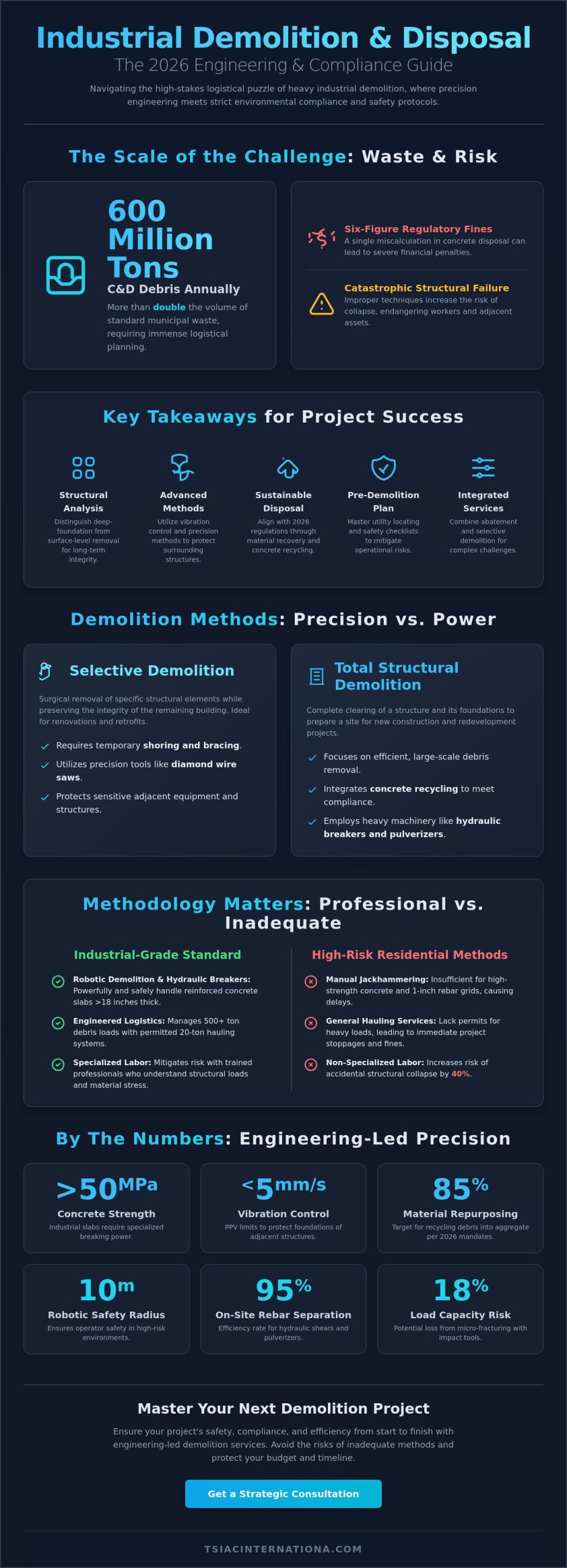
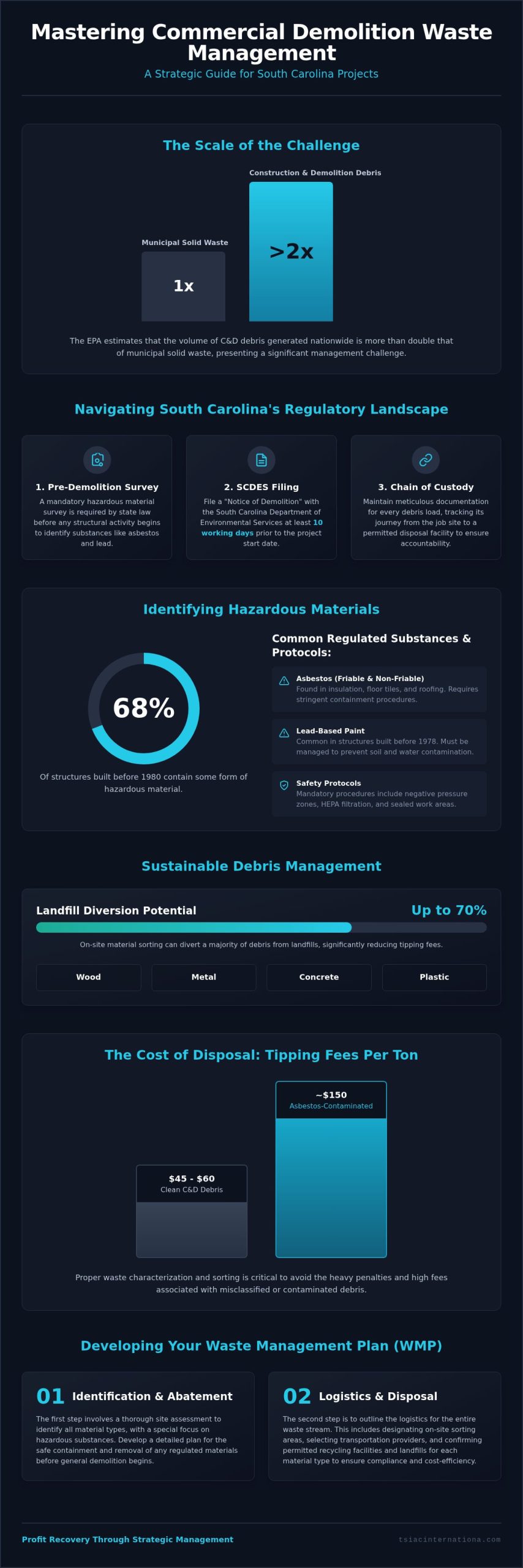
Did you know that the Environmental Protection Agency estimates the volume of construction and demolition debris is more than double that of municipal solid waste nationwide? For project managers, the technical complexities of commercial demolition waste management sc represent a significant liability if not handled with precision. It’s frustrating to manage the logistics of escalating tipping fees and the constant threat of regulatory fines, both of which can quickly erode your project’s financial feasibility before the site is even cleared.
We understand that effective debris management is a profit-recovery strategy rather than a simple disposal obligation. This guide provides the strategic framework you need to master debris disposal, hazardous material containment, and recycling protocols while maintaining strict compliance with state regulations. We’ll examine state-level landfill classifications, on-site sorting techniques for material recovery, and the critical steps for developing a compliant waste management plan that ensures site safety and operational efficiency.
Key Takeaways
- Master the latest SCDES regulatory requirements to ensure your commercial demolition waste management sc strategy remains compliant and avoids costly administrative fines.
- Learn why pre-demolition hazardous material surveys are mandatory for identifying asbestos and lead before any structural activity begins.
- Discover how on-site material sorting for wood, metal, and plastic can divert up to 70% of debris from landfills, significantly reducing tipping fees.
- Follow a structured two-step process to develop a Waste Management Plan (WMP) that optimizes logistics and site safety.
- Identify the technical advantages of partnering with an abatement expert to manage complex waste streams and environmental documentation.
Understanding the Regulatory Landscape for Commercial Demolition Waste in SC
The term Demolition waste encompasses a broad spectrum of materials, ranging from inert concrete and steel to regulated hazardous substances like asbestos and lead-based paint. In South Carolina, the South Carolina Department of Environmental Services (SCDES) maintains strict oversight of these materials under the South Carolina Solid Waste Policy and Management Act of 1991. For any project manager, commercial demolition waste management sc isn’t just a logistical hurdle; it’s a legal framework that dictates project viability. Failure to adhere to these standards can void project bonding and lead to insurance denials, as carriers view regulatory non-compliance as an unmanaged liability.
Permitting and Documentation Requirements
Before any structural removal begins, a “Notice of Demolition” must be filed with the SCDES. This is a mandatory filing that must occur at least 10 working days prior to the start date, regardless of whether hazardous materials were identified in the initial survey. Every facility requires its own project license. Beyond the permit, maintaining a meticulous chain of custody is essential. You must document every load of debris from the moment it leaves the job site until it reaches a permitted facility. This documentation protects the property owner from future environmental claims and ensures that all parties remain accountable for the final destination of the waste stream.
Landfill Classifications and Tipping Fees
Effective commercial demolition waste management sc requires a deep understanding of landfill classifications. South Carolina distinguishes between Class Two landfills, which accept construction and demolition (C&D) debris, and Class Three sites, often reserved for municipal solid waste (MSW) or more complex waste streams. As of 2026, tipping fees reflect these differences. For example, clean C&D waste in some regions averages $45 to $60 per ton. However, if debris is contaminated with asbestos, those fees can spike to approximately $150 per ton. Proper waste characterization is the only way to avoid the heavy penalties associated with illegal dumping or misclassification. By accurately separating streams, you ensure that materials are routed to the most cost-effective, permitted facility while maintaining the integrity of the project budget.
Hazardous Material Abatement: Managing Asbestos and Lead Debris
Effective commercial demolition waste management sc begins with a certified inspection, not a wrecking ball. Before any structural disturbance, state law requires a comprehensive hazardous material survey to identify regulated substances. This is a critical step because approximately 68% of structures built before 1980 contain some form of hazardous material. Whether you’re dealing with floor tiles, thermal insulation, or roofing, identifying these materials early prevents the accidental release of toxins. This intersection of safety and logistics is where hazardous waste management meets specialized asbestos removal in South Carolina, ensuring that toxic debris doesn’t contaminate the general waste stream.
The distinction between friable and non-friable asbestos is a primary driver of project costs and disposal methods. Friable materials, which can be crumbled by hand pressure when dry, pose the highest inhalation risk and require stringent containment. Non-friable materials, like certain transite panels or vinyl flooring, are more stable but still require professional handling to prevent them from becoming friable during the breakdown process. For commercial structures built before 1978, lead-based paint protocols also apply. These materials must be managed according to the Sustainable Management of C&D Materials framework to ensure that heavy metals don’t leach into the soil or groundwater during transport and disposal.
Safe Containment and Removal Procedures
During the interior gutting phase, contractors must establish negative pressure zones to prevent the migration of dust. This involves sealing the work area with heavy-duty polyethylene sheeting and utilizing decontamination units for personnel. High-Efficiency Particulate Air (HEPA) filtration is mandatory for all vacuuming and air scrubbing activities to capture microscopic fibers. All toxic waste must be double-bagged in 6-mil poly bags, clearly labeled with hazard warnings, and stored in locked, leak-proof containers until they’re transported to a facility permitted to accept hazardous waste.
Regulatory Reporting for Hazardous Waste
Compliance doesn’t end when the waste leaves the site. Once abatement is complete, you must file post-abatement reports and disposal manifests with the SCDES to prove that all materials reached a specialized, approved facility. These documents are vital for your commercial demolition waste management sc records, as they provide a permanent shield against future environmental liability. Property owners who prioritize these rigorous protocols find that working with a qualified abatement partner mitigates long-term risk and ensures the project remains bonded and insured. This methodical approach to documentation provides the technical evidence required to satisfy both state inspectors and corporate stakeholders.
Sustainable Debris Management: Recycling vs. Landfill Disposal
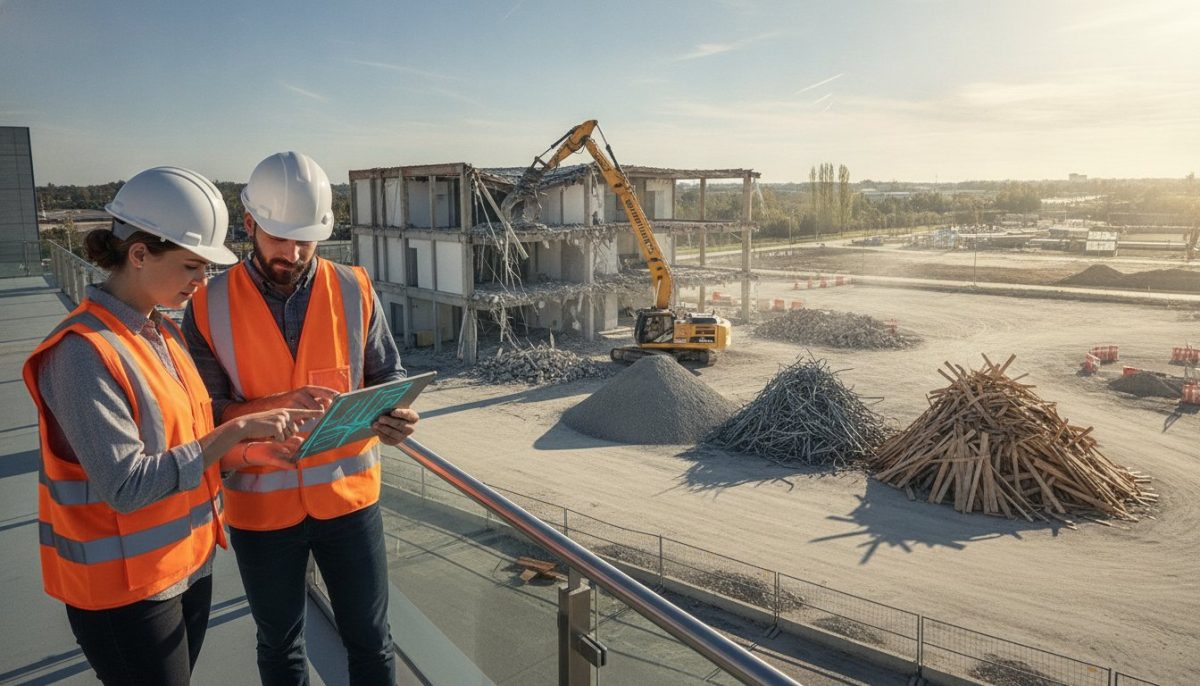
In 2026, the economic viability of a project often hinges on the efficiency of its commercial demolition waste management sc strategy. Moving beyond the traditional “haul and dump” mentality, modern contractors prioritize on-site material sorting to mitigate the impact of rising landfill tipping fees. By systematically separating recyclables from inert debris, it’s possible to reduce total project waste by up to 70%. This reduction isn’t merely an environmental goal; it’s a financial necessity when clean C&D tipping fees can consume a significant portion of the budget. Integrating these practices into the demolition process in South Carolina is also a prerequisite for projects seeking LEED certification, which adds long-term value to the redeveloped property.
A successful recovery strategy requires distinguishing between high-value scrap and low-value mixed debris. Ferrous and non-ferrous metals, for instance, offer significant rebates that can offset labor costs. In contrast, mixed C&D waste often incurs the highest disposal rates. By identifying these streams during the initial site audit, managers can allocate specialized equipment to maximize the extraction of salvageable materials before they become cross-contaminated in a mixed dumpster. This technical precision ensures that the maximum amount of material is diverted from the landfill while maintaining a high pace of site clearance.
Material Recovery for Wood and Timber
Wood accounts for a substantial volume of demolition debris. To maximize recovery, crews must meticulously sort clean, untreated wood from lumber that has been pressure-treated, painted, or contaminated with adhesives. While treated wood must be routed to specific C&D landfills to prevent chemical leaching, clean timber has a robust secondary market. Reclaimed architectural wood, such as large-scale structural beams or vintage flooring, is highly sought after for high-end commercial renovations. Diverting this organic waste from landfills also reduces the generation of methane, directly aligning the project with 2026 environmental standards for carbon footprint reduction.
Metal and Plastic Reclamation Strategies
The extraction of steel, copper, and aluminum is most effective during commercial interior gutting, where mechanical systems and structural reinforcements are first exposed. Copper wiring and piping represent the highest value-per-pound recovery, while structural steel provides the highest volume for recycling. Plastics, including PVC and high-density polyethylene (HDPE), require specific logistics to reach processing plants capable of handling industrial-grade polymers. Source separation is the most effective way to maximize recycling rebates in 2026. This methodical approach ensures that materials remain pure, fetching higher market prices and ensuring that your commercial demolition waste management sc plan remains both profitable and compliant.
Developing a Commercial Demolition Waste Management Plan (WMP)
A robust commercial demolition waste management sc strategy relies on a methodical Waste Management Plan (WMP). This document serves as the operational blueprint for the site, transforming regulatory requirements into actionable field procedures. A professional WMP prevents the cross-contamination of waste streams, which is the primary cause of inflated disposal costs and rejected recycling loads. By establishing a clear framework before the first structural element is removed, project managers can maintain tight control over both the site’s environmental impact and its bottom line.
The development of a WMP follows a disciplined, five-step methodology:
- Step 1: Conduct a thorough site audit to quantify expected tonnages of concrete, structural steel, and secondary materials like wood or plastic.
- Step 2: Define specific waste streams and designate on-site sorting zones to ensure materials are separated at the source.
- Step 3: Establish partnerships with certified haulers and recycling facilities that provide accurate weight tickets and compliance documentation.
- Step 4: Train on-site personnel on specific sorting protocols, emphasizing the safety requirements for handling potentially hazardous debris.
- Step 5: Monitor and document all waste outflow, maintaining a continuous log for final regulatory and corporate reporting.
Setting Diversion Goals and Benchmarks
Successful projects begin with a realistic waste diversion rate. This figure represents the percentage of total debris diverted from landfills through recycling or salvage. In 2026, many commercial projects aim for a 70% diversion rate to align with corporate sustainability goals and LEED requirements. By tracking these metrics in real time, you can identify inefficiencies early. This data doesn’t just satisfy current compliance; it provides a technical baseline to optimize future project bids and improve long-term profitability. If you need assistance structuring these complex logistics, you can partner with our expert team to develop a customized management plan for your next site.
Logistics: Dumpster Placement and Hauling Schedules
Site flow is critical to preventing debris bottlenecks. Dumpsters must be placed strategically to minimize the distance equipment travels while ensuring that sorting zones remain distinct. We utilize “just-in-time” hauling schedules to reduce the site footprint, which is especially vital in tight urban environments where space is at a premium. During the removal of acoustic ceiling tiles and drywall, specific containment areas are required. These materials are highly susceptible to moisture and cross-contamination; if they aren’t managed separately, they can quickly degrade from recyclable assets into high-cost landfill waste. Proper coordination ensures that the removal of these interior components doesn’t interfere with the broader structural demolition timeline.
Professional Demolition and Environmental Services with TSIAC International
Executing a successful waste strategy requires more than just a plan; it demands a partner who understands the technical nuances of the South Carolina regulatory landscape. TSIAC International provides this bridge, offering specialized hazardous material abatement in South Carolina that adheres to the strictest SCDES protocols. Our team doesn’t just manage debris. We mitigate the legal and financial risks inherent in complex structural removals. By integrating our 15 years of industry expertise into every phase of the project, we ensure that your site remains safe and your documentation remains beyond reproach.
One of the most significant challenges in commercial demolition waste management sc is the volatility of disposal costs. We address this through our “Fixed-Price” advantage, providing clients with predictable debris management costs that aren’t subject to the sudden spikes in landfill tipping fees discussed earlier in this guide. This financial predictability allows for more accurate project budgeting. It ensures that environmental compliance never comes at the expense of your project’s bottom line. We handle the complexities of waste characterization and hauling logistics so you can focus on the redevelopment phase of your project.
Expertise in Structural and Selective Demolition
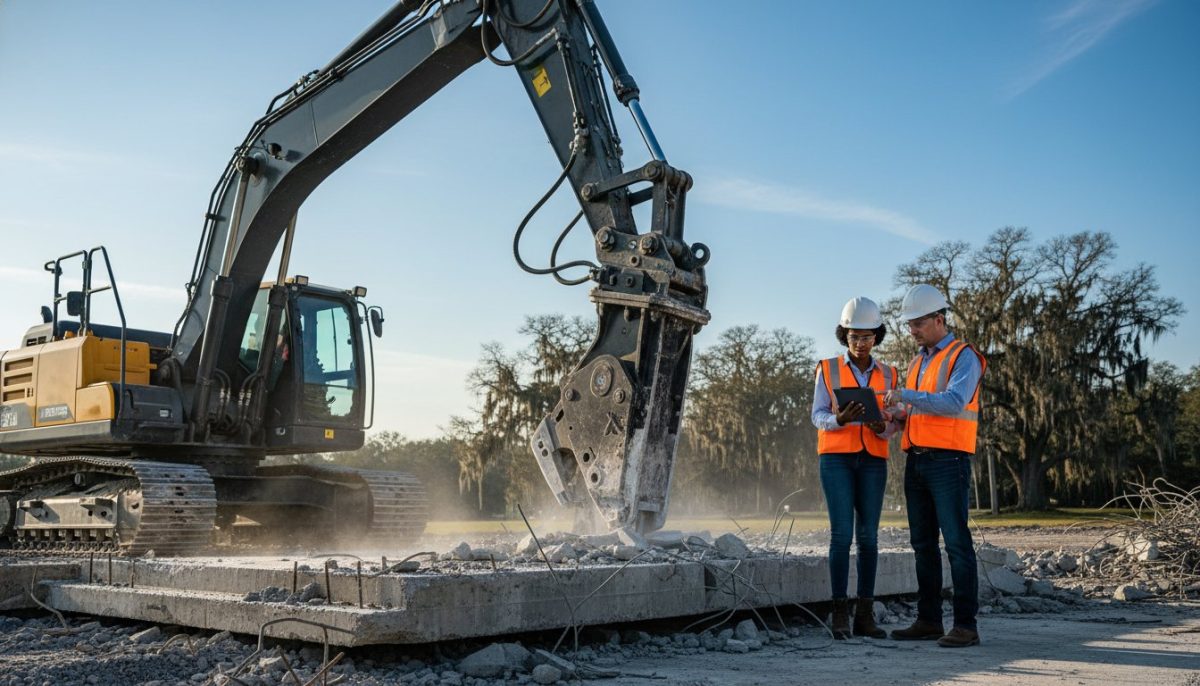
We utilize a surgical approach to selective demolition, which isolates specific materials for recovery before they ever enter the general waste stream. This precision is supported by a fleet of high-capacity excavators and specialized processing machinery designed to handle heavy structural steel and concrete with maximum efficiency. Our crews are trained to identify and separate high-value assets during the initial breakdown, reducing the volume of material destined for the landfill. TSIAC International maintains a 15-year history of incident-free hazardous material removal across a diverse range of commercial environments.
Environmental Responsibility in Action
Our environmental commitment is demonstrated through proprietary on-site sorting methods for wood, metal, and plastic on every job site. We don’t rely on third-party facilities to do the work that should happen in the field; instead, we process materials at the source to maintain purity and maximize recycling rebates. By providing robust documentation of these recovery efforts, we help our clients meet and exceed green building standards. The TSIAC difference is a project completed with safety, technical precision, and a clear conscience. Contact us today for a comprehensive site assessment and a waste management strategy tailored to your specific project requirements.
Achieving Operational Excellence through Strategic Waste Recovery
Mastering the complexities of commercial demolition waste management sc is no longer optional for property owners who value project margins. It’s a technical requirement that demands a structured Waste Management Plan and the source separation of wood, metal, and plastic. By prioritizing these protocols, you reduce environmental impact and recover significant value from debris. This precision, combined with expert hazardous material abatement, forms the foundation of a successful redevelopment project.
With 15+ years of industry experience, we’re your SCDES compliance experts and on-site recycling specialists. Our team provides the technical mastery needed to navigate challenging site conditions without compromising safety or project timelines. Request a Professional Demolition Waste Strategy from TSIAC International to ensure your site is managed with methodological accuracy. We’re ready to help you turn your demolition challenges into a streamlined, compliant success.
Frequently Asked Questions
What is considered ‘commercial demolition waste’ under SC law?
Commercial demolition waste includes all debris generated during the removal of a building or structure. This category encompasses structural steel, concrete, wood, and plastic, along with regulated hazardous substances like asbestos and lead-based paint. Under the South Carolina Solid Waste Policy and Management Act, these materials must be characterized and sorted to ensure they’re routed to the appropriate Class Two or Class Three landfill facilities.
Is an asbestos survey required for all commercial demolitions?
Yes, a certified asbestos survey is mandatory for every commercial facility slated for demolition, regardless of the building’s age. State regulations require this inspection to identify both friable and non-friable materials before any structural disturbance occurs. Even if the survey finds no hazardous materials, you must still submit a written notification to the SCDES at least 10 working days before the project begins.
How can I reduce the cost of debris disposal on a large project?
The most effective method for cost reduction is aggressive on-site source separation. By sorting wood, metal, and plastic before they enter a mixed dumpster, you can divert up to 70% of waste from high-cost landfills. This strategy minimizes tipping fees and allows you to capitalize on rebates for high-value scrap metals, making commercial demolition waste management sc a profit-recovery tool rather than just an expense.
What happens if hazardous materials are discovered after demolition begins?
Work must stop immediately in the contaminated zone to prevent the release of toxic dust or fibers. The site must be secured, and a licensed abatement professional must be called in to perform testing and establish a containment plan. These mid-project discoveries often lead to significant delays, which is why we emphasize the importance of thorough pre-demolition hazardous material surveys during the initial planning phase.
Can concrete and brick be recycled in South Carolina?
Clean concrete and brick are highly recyclable and are frequently processed into structural fill or road base. Because these are inert materials, they’re much cheaper to dispose of when separated from general debris. Diverting masonry from the waste stream is a core component of sustainable management, helping projects meet green building standards while significantly reducing the total tonnage sent to C&D landfills.
How long does the waste management planning process take?
A comprehensive waste management plan typically takes two to four weeks to finalize. This period includes the initial site audit, material estimation, and the mandatory 10-day state notification window. Starting this process early ensures that all hauling logistics and recycling partnerships are in place before the first structural element is removed, preventing bottlenecks that could disrupt the broader project timeline and increase operational costs.
What are the penalties for improper disposal of commercial demolition debris?
Improper disposal can lead to heavy administrative fines from state agencies and the immediate suspension of project permits. Beyond financial penalties, property owners may face long-term environmental liability and the loss of project bonding or insurance coverage. Maintaining a meticulous chain of custody and a clear audit trail for all hauled debris is the only way to ensure 100% regulatory compliance and protect your investment.
Does TSIAC International provide all necessary compliance documentation?
TSIAC International manages all aspects of regulatory documentation, providing disposal manifests, weight tickets, and post-abatement reports for every project. Our team leverages 15 years of expertise to ensure that your commercial demolition waste management sc records are accurate and complete. We prioritize methodological precision, giving you the technical evidence required to satisfy state inspectors and corporate stakeholders that all waste was handled safely and legally.