
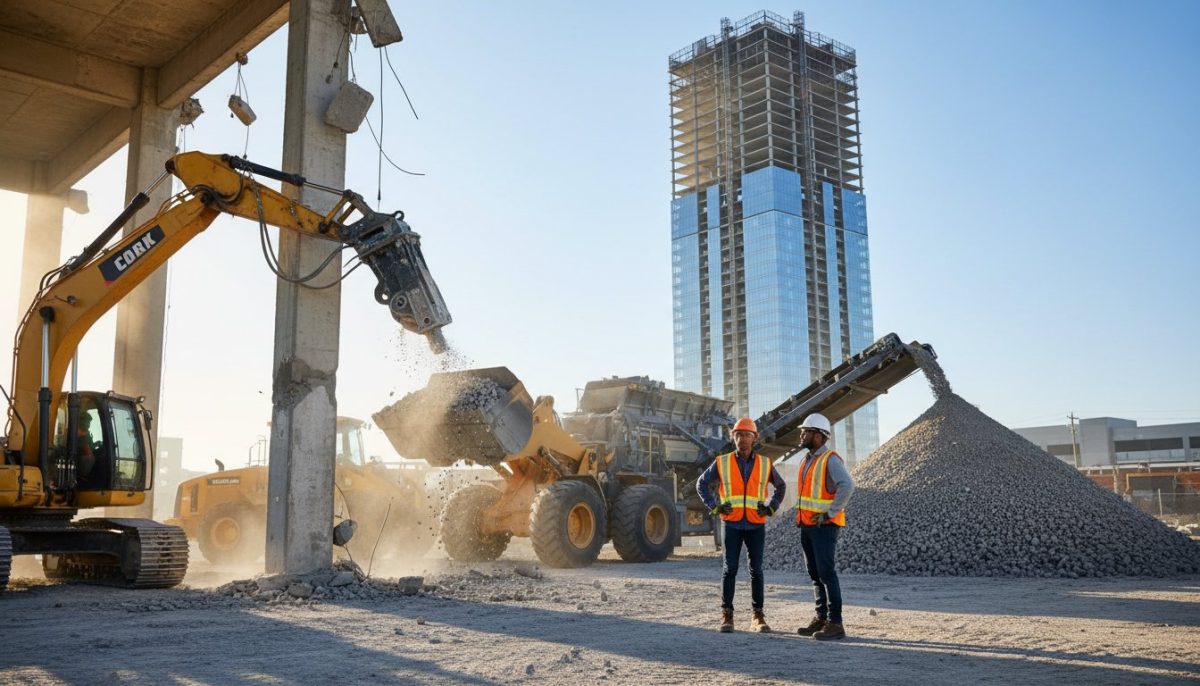
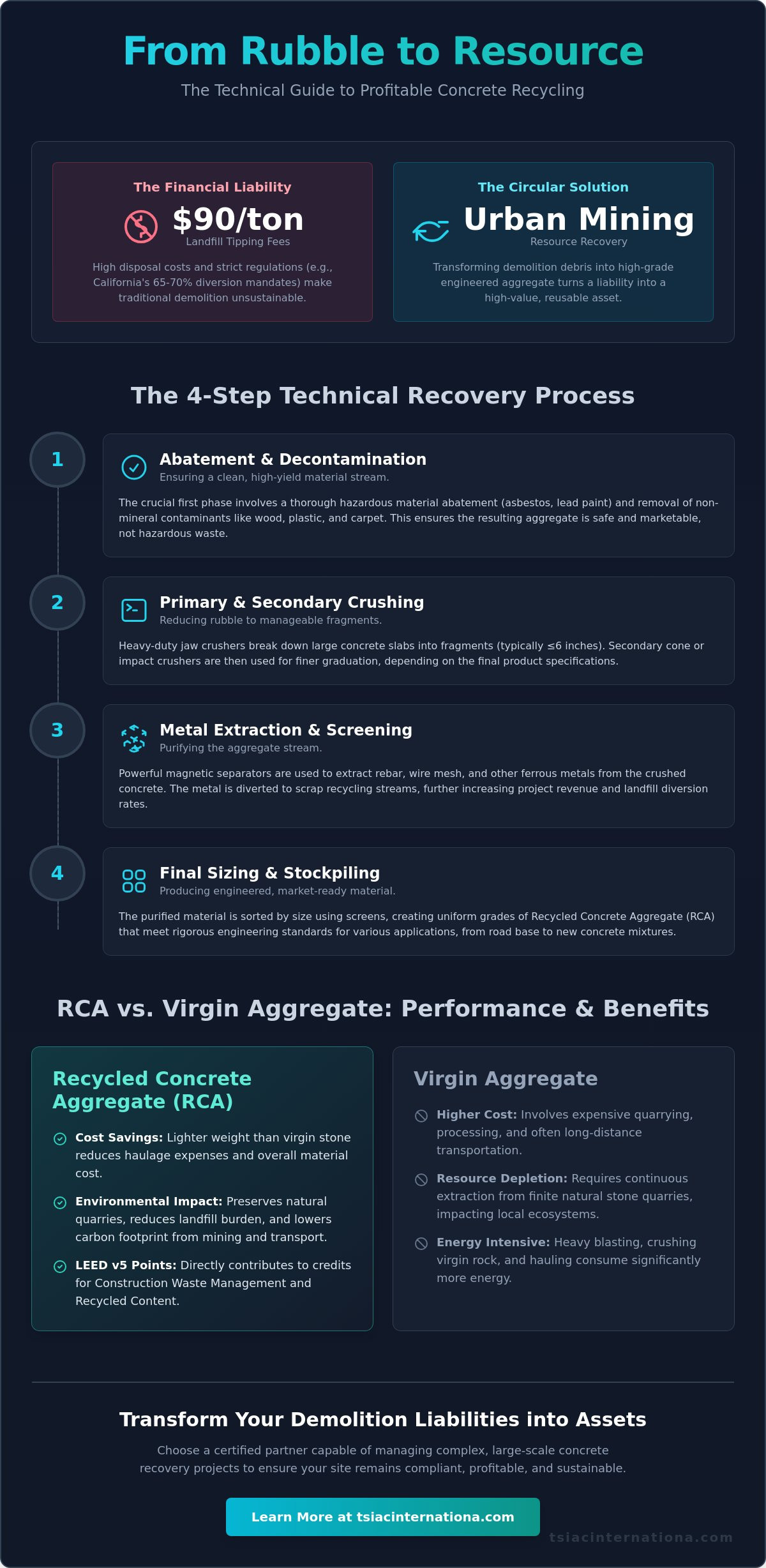
With landfill tipping fees reaching as high as $90 per ton in areas like Sacramento, disposing of debris has become a primary financial liability for commercial contractors. Effectively recycling concrete from demolition isn’t just a secondary green initiative anymore; it’s the central logistical engine that drives cost-efficient structural projects. You’re likely feeling the pressure of stricter regulations, such as California’s 65% diversion mandate or Los Angeles County’s updated 70% mixed-waste requirement. Managing heavy debris while navigating these complex compliance hurdles often feels like a technical bottleneck that threatens both your timeline and your bottom line.
This guide explains how to transform that logistical burden into a high-value resource, helping you secure LEED v5 points and significantly reduce project expenses. We’ll examine 2026 market rates for recycled aggregate, break down the latest regulatory updates, and outline the methodical processes that ensure your site remains compliant and profitable. From structural demolition to final material processing, you’ll discover how a disciplined approach to onsite recycling creates a clear path toward technical precision and operational success.
Key Takeaways
- Learn how modern industrial processes transform demolition rubble into high-grade engineered aggregate, effectively transitioning from a waste-heavy model to a circular construction economy.
- Understand the critical role of pre-demolition hazardous material abatement and surgical structural removal in ensuring a clean, high-yield material stream.
- Discover the performance benefits and cost-savings of Recycled Concrete Aggregate (RCA), which often reduces haulage expenses due to its lighter weight compared to virgin stone.
- Evaluate the logistical trade-offs between on-site mobile crushing and off-site facility hauling to maximize efficiency when recycling concrete from demolition.
- Identify the specific equipment and safety certification standards required to select a partner capable of managing complex, large-scale concrete recovery projects.
What is Concrete Recycling in Modern Demolition?
Concrete recycling is the systematic industrial process of reclaiming rubble from structural sites and transforming it into high-grade, engineered aggregate. This methodology represents a fundamental shift from the outdated linear “take-make-waste” model toward a circular construction economy. Instead of treating debris as a liability to be buried, modern recycling concrete from demolition treats it as a primary raw material source. With billions of tons of concrete produced globally each year, the industry has evolved to meet the demand through “Urban Mining.” This concept reframes existing buildings and infrastructure not as relics, but as resource banks waiting to be harvested for future use.
The technical definition of What is concrete recycling extends beyond simple crushing. It involves a disciplined sequence of sorting, cleaning, and sizing to ensure the final product meets rigorous engineering standards. By adopting these methods, contractors can maintain technical precision while fulfilling the logistical requirements of large-scale commercial projects.
The Anatomy of Demolition Debris
Success in material recovery depends on the purity of the input. “Clean” concrete refers to debris that’s free from wood, trash, or excessive soil. In reinforced structures, the presence of rebar and wire mesh adds a layer of complexity. Specialized equipment like magnetic separators is used to extract these metals, which are then diverted to scrap metal recycling streams. It’s also vital to distinguish between structural concrete, masonry, and asphalt. While structural concrete provides the highest yield for aggregate, masonry and asphalt require different processing parameters to ensure the resulting recycled aggregate (RCA) remains stable and reliable for its intended use cases.
Environmental and Economic Drivers
The transition to recycled materials is driven by both ecological necessity and financial logic. Utilizing recycling concrete from demolition significantly reduces the strain on local landfills, which are increasingly burdened by heavy construction waste. It also preserves natural stone quarries, protecting local ecosystems from the disruption of new mining operations. From an energy perspective, producing recycled aggregate is far more efficient than processing virgin stone. It eliminates the need for heavy blasting and reduces the carbon footprint associated with long-distance hauling. For projects aiming for LEED certification, these diversion efforts are essential for securing specific credits under the Construction Waste Management and Recycled Content categories.
The 4-Step Technical Process of Concrete Recovery
Recovery of high-quality aggregate begins long before a single crusher is activated. It requires a surgical approach to structural removal, ensuring that the source material remains uncontaminated from the outset. Transitioning debris from the pile to the processing plant involves careful logistical planning to maintain material integrity. Following EPA guidelines on C&D recycling ensures that the workflow meets federal standards for sustainable material management while protecting the project’s bottom line. This methodical progression transforms raw rubble into a standardized industrial product.
Step 1: Abatement and Decontamination
Concrete must be chemically and biologically inert before it enters the recycling stream. Hazardous substances such as asbestos, lead-based paint, and PCBs can compromise an entire batch of aggregate, rendering it hazardous waste rather than a resource. A thorough hazardous material abatement phase is the prerequisite for any safe recycling operation. During this stage, interior gutting removes non-mineral contaminants like wood, plastic, and carpet. This prevents the introduction of “light” debris into the crushing circuit, ensuring the final output is clean and marketable.
Step 2: Primary and Secondary Crushing
Once the structure is cleared of contaminants, the primary crushing phase begins. Heavy-duty jaw crushers are deployed to reduce massive concrete slabs and foundations into manageable fragments, typically six inches or smaller. For projects requiring finer graduation, secondary crushing is necessary. Impactors or cone crushers further refine the material into uniform sizes suitable for road base or new concrete mixes. Many high-efficiency operations utilize a closed-circuit system. In this setup, any oversized material that fails to pass through the initial screens is automatically re-fed into the crusher until it reaches the specified dimensions.
Step 3: Screening and Magnetic Separation
Pure concrete is rarely found in commercial demolition; it’s almost always reinforced with steel. High-powered industrial magnets are positioned over conveyor belts to extract rebar, wire mesh, and other ferrous metals. This not only cleans the aggregate but also provides a secondary revenue stream through scrap metal recovery. The material then moves through vibrating screen decks that sort the stones into specific grades based on size. To eliminate any remaining low-density contaminants like paper or wood slivers, air separators or water baths are used to float away the “lights,” leaving behind a dense, high-quality mineral product.
Step 4: Quality Control and Graduation
The final stage involves rigorous testing to ensure the recycled concrete aggregate (RCA) meets ASTM standards for strength and durability. Proper graduation is essential for structural applications where load-bearing capacity is non-negotiable. If you’re planning a complex project that requires technical precision, professional recycling services can integrate these recovery steps directly into your demolition timeline. This disciplined approach ensures that recycling concrete from demolition yields a product that is indistinguishable from virgin stone in performance and reliability.
RCA vs. Virgin Aggregate: Performance and Use Cases
A common technical misconception in the industry is that recycled concrete aggregate (RCA) is inherently weaker than virgin stone. Engineering data suggests otherwise. When recycling concrete from demolition is performed with surgical precision, the resulting material often exhibits structural properties comparable to natural diorite or granite. RCA typically possesses a lower density than virgin aggregate, often weighing 10% to 15% less per cubic yard. This weight reduction doesn’t signal a lack of strength; instead, it provides a logistical advantage. It allows for higher volume per truckload, which directly reduces haulage costs and fuel consumption on large-scale projects.
The performance of the aggregate is a direct reflection of the initial site work. As detailed in our guide on the demolition process, the method of structural removal dictates the purity of the final mineral stream. Beyond simple load-bearing capacity, RCA offers superior hydraulic conductivity. Its angular shape and porous texture provide better interlocking and drainage than many rounded natural gravels, making it an ideal choice for complex civil engineering applications.
Common Applications for Recycled Concrete
- Road base and sub-base: This remains the highest-volume use for RCA. Its excellent compaction characteristics create a stable foundation for heavy-duty asphalt and concrete pavements.
- Structural grade concrete: High-purity RCA can be upcycled into new ready-mix batches. While often limited to 20% to 30% replacement levels for structural members, it’s increasingly used for sidewalks, curbs, and gutters.
- Erosion control: Large, uncrushed fragments of concrete, known as “rip-rap,” are effectively used for slope stabilization and protecting shorelines from hydraulic scouring.
Downcycling vs. Upcycling: The Value Gap
The economic value of recycled material depends on whether it’s being downcycled or upcycled. Downcycling involves using crushed concrete as general backfill or low-grade fill. While this diverts waste from landfills, it offers the lowest financial return. Upcycling, conversely, involves processing the rubble into engineered aggregate that meets specific Department of Transportation (DOT) or ASTM standards.
Contractors have a significant economic incentive to produce higher-grade RCA. Higher purity levels allow the material to be sold or reused in more demanding applications, command better market prices, and secure more LEED points. Navigating local DOT specifications is essential here, as many jurisdictions now have established “approved source” lists for recycled materials in public works. By focusing on quality control during the recycling concrete from demolition, you ensure the material remains a high-value asset rather than a low-grade byproduct.
On-Site vs. Off-Site Recycling Logistics
Choosing between on-site and off-site logistics is a pivotal decision for any large-scale project. Mobile crushing involves bringing heavy processing equipment directly to the demolition site. This model is highly efficient for expansive industrial sites where space allows for material stockpiling and immediate reuse. Conversely, the haul-off model involves transporting debris to a centralized facility. This is often the only viable path for tight urban environments where site footprints are restricted. The carbon footprint of each model is primarily determined by trucking distance; on-site processing can eliminate hundreds of heavy-vehicle trips, significantly reducing the project’s overall emissions and wear on local infrastructure.
Site size and urban density are the primary factors that dictate the recycling strategy. In high-density areas, the logistical complexity of managing a mobile plant often outweighs the benefits of on-site processing. However, for suburban or industrial redevelopments, the ability to process material where it falls creates a streamlined workflow. The choice hinges on a careful analysis of the site’s physical constraints and the intended end-use of the reclaimed aggregate.
The Benefits of On-Site Mobile Crushing
On-site crushing is a logistical strategy that turns a waste liability into a site asset. By processing debris immediately, contractors can eliminate the high tipping fees associated with construction and demolition landfills. It also removes the need for inbound trucking of virgin fill material, as the crushed aggregate is ready for immediate use in backfilling and site stabilization. This dual-sided cost reduction makes recycling concrete from demolition a powerful tool for maintaining project budgets while adhering to strict environmental diversion requirements.
Managing Noise, Dust, and Vibration
Executing on-site recycling in a commercial setting requires rigorous environmental controls. High-performance water suppression systems are mandatory to mitigate crystalline silica dust, ensuring the safety of workers and the public. In urban settings, noise blankets and real-time vibration monitoring are essential to prevent structural damage to adjacent properties and maintain community standards. Experienced demolition contractors utilize these technical safeguards to manage impacts effectively. If your project requires a partner who understands the balance between logistical efficiency and environmental compliance, our recycling services provide the technical precision needed for even the most challenging urban environments.
Choosing a Contractor for Sustainable Demolition
Selecting a partner for large-scale structural work requires a rigorous evaluation of their technical capabilities and compliance history. High-yield recycling concrete from demolition is not a standard byproduct of every project; it requires specialized equipment, including high-torque primary crushers and sophisticated magnetic separation systems. A contractor’s ability to produce engineered aggregate depends on their mastery of these tools and their commitment to methodical site organization. Beyond the physical machinery, you must prioritize firms that maintain impeccable safety certifications and environmental records, as these are the primary indicators of a reliable, professional operation.
There is significant value in engaging a single-source provider capable of managing the entire lifecycle of a project. When one firm handles asbestos abatement, structural removal, and material processing, the risk of logistical friction and cross-contamination is virtually eliminated. This integrated approach also provides robust long-term liability protection. By maintaining a single, documented chain of custody for all materials, you ensure that your project meets every regulatory requirement and that all diversion claims are backed by verifiable data.
The TSIAC International Approach to Debris Management
Our methodology is built on a commitment to achieving 90% or higher material diversion on structural projects. This high rate of recovery is made possible by our disciplined approach to the early stages of a project. Our expertise in commercial interior gutting allows us to extract non-mineral contaminants before structural demolition begins, ensuring a clean concrete stream. We maintain a safety-first culture that treats every site as a controlled environment, preventing the mixing of hazardous substances with recyclable rubble. This technical precision ensures that the final aggregate meets the highest industry standards for reuse.
Planning Your Next Project for Maximum Recovery
Property owners should treat material recovery as a primary project goal rather than an afterthought. A comprehensive Waste Management Plan should be integrated into the initial construction contract, outlining specific diversion targets and reporting requirements. When evaluating potential partners, consider this checklist of essential questions:
- Does the contractor have experience with recycling concrete from demolition on similar-sized commercial sites?
- Can they provide documented proof of their historical diversion rates?
- Do they possess the specialized equipment required for on-site processing if the project footprint allows it?
- How do they manage the separation of reinforced steel and other mineral contaminants?
The transition to a circular construction economy requires a partner who views demolition debris as a strategic asset. We invite you to consult with our team for a comprehensive site assessment to determine the most efficient recovery strategy for your next project. Our disciplined processes and technical expertise provide the reliability you need to meet your environmental and financial objectives with absolute confidence.
Advancing Your Project with Technical Precision and Circular Logistics
The shift toward a circular construction economy has transformed recycling concrete from demolition from an optional green initiative into a technical necessity for commercial projects. By implementing a disciplined recovery process and prioritizing on-site logistics, contractors can effectively mitigate high tipping fees while securing essential LEED certification points. Success depends on maintaining material purity through surgical abatement and precise mechanical processing. This approach ensures that reclaimed aggregate meets rigorous engineering standards for structural reuse or site stabilization.
With over 15 years of structural demolition expertise, TSIAC International specializes in navigating the complex intersection of hazardous material abatement and environmental compliance. Our proven track record of high-percentage material diversion provides property owners with both operational efficiency and long-term liability protection. Consult with TSIAC International for your next sustainable demolition project to ensure your site is managed with the methodical accuracy and professional integrity it requires. Transforming structural debris into high-value resources is a logical step toward a more sustainable and profitable future.
Frequently Asked Questions
Is recycled concrete as strong as new concrete?
Recycled concrete aggregate (RCA) can achieve structural properties comparable to virgin stone when processed according to ASTM C33 standards. While the mortar clinging to the original aggregate might slightly increase water absorption, the overall compressive strength remains sufficient for most structural applications. High-purity RCA is frequently used at 20% to 30% replacement levels in new ready-mix batches without compromising the integrity of the finished product.
How much money can I save by recycling concrete on-site?
Financial savings are primarily realized through the elimination of landfill tipping fees, which reached $90 per ton in certain jurisdictions like Sacramento by May 2026. By performing recycling concrete from demolition on-site, you also remove the logistical expense of hauling heavy debris to a disposal facility and the cost of purchasing new virgin fill. These combined factors often make on-site recovery the most cost-effective logistical strategy for large-scale redevelopments.
What are the main contaminants that prevent concrete from being recycled?
The presence of hazardous materials like asbestos, lead-based paint, or PCBs is the primary barrier to recycling. Organic contaminants such as wood, insulation, and general site trash also degrade the quality of the final aggregate. A disciplined pre-demolition abatement process is essential to ensure the mineral stream remains clean and meets the technical specifications required for high-value upcycling into new construction materials.
Do I need special permits for on-site concrete crushing?
Most jurisdictions require specific air quality permits to manage dust emissions and noise ordinances to limit the impact on the surrounding community. Depending on your location, you may also need a temporary use permit for mobile crushing equipment. It’s essential to verify local requirements with the municipal planning department or environmental agency to ensure the site remains in full regulatory compliance throughout the processing phase.
Can reinforced concrete with rebar be recycled?
Reinforced concrete is a primary candidate for recycling, as modern processing plants are designed to separate mineral and metallic components. During the recycling concrete from demolition, high-powered industrial magnets extract rebar and wire mesh as the crushed material moves along conveyor belts. This automated separation ensures the final aggregate is free of metal fragments while allowing for the efficient recovery of valuable structural steel.
What happens to the steel that is removed from recycled concrete?
Extracted steel is diverted to scrap metal facilities where it’s processed and melted down for new manufacturing. This creates a secondary circular loop that prevents valuable metals from entering the waste stream. Recovering rebar and structural steel not only cleans the concrete aggregate but also provides a secondary revenue stream or a credit that can help offset the overall cost of the demolition project.
How does concrete recycling contribute to LEED certification?
Concrete recycling contributes to LEED certification by earning points under the Construction and Demolition Waste Management credit. It also supports the Recycled Content credit by using RCA in new site work or structural elements. Under the 2026 LEED v5 standards, the reduction in embodied carbon achieved through recycling is a mandatory reporting metric, making material diversion a critical component of achieving high-level certification.
Is recycled concrete aggregate (RCA) safe for residential use?
Recycled concrete aggregate is safe for residential applications once it has been decontaminated of hazardous materials. It’s an excellent, cost-effective material for residential driveways, walkway sub-bases, and drainage layers. Because RCA is often 20% to 40% cheaper than virgin gravel, it provides a high-performance alternative for homeowners and residential developers looking to reduce material costs without sacrificing structural stability or drainage efficiency.
