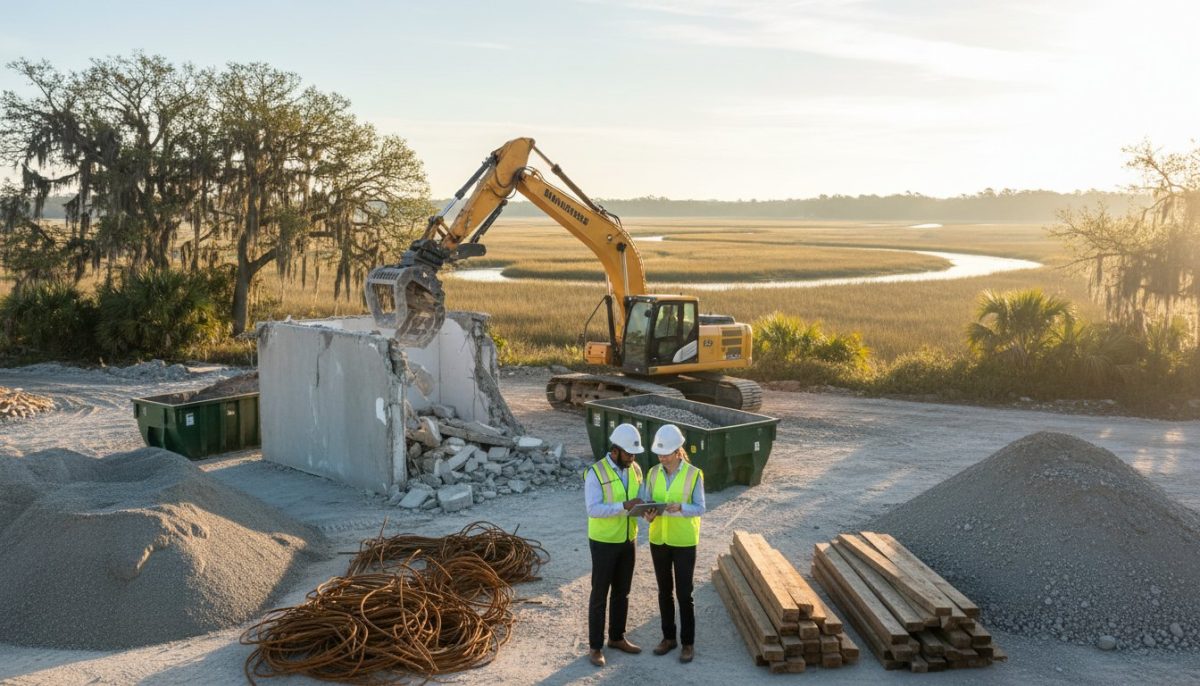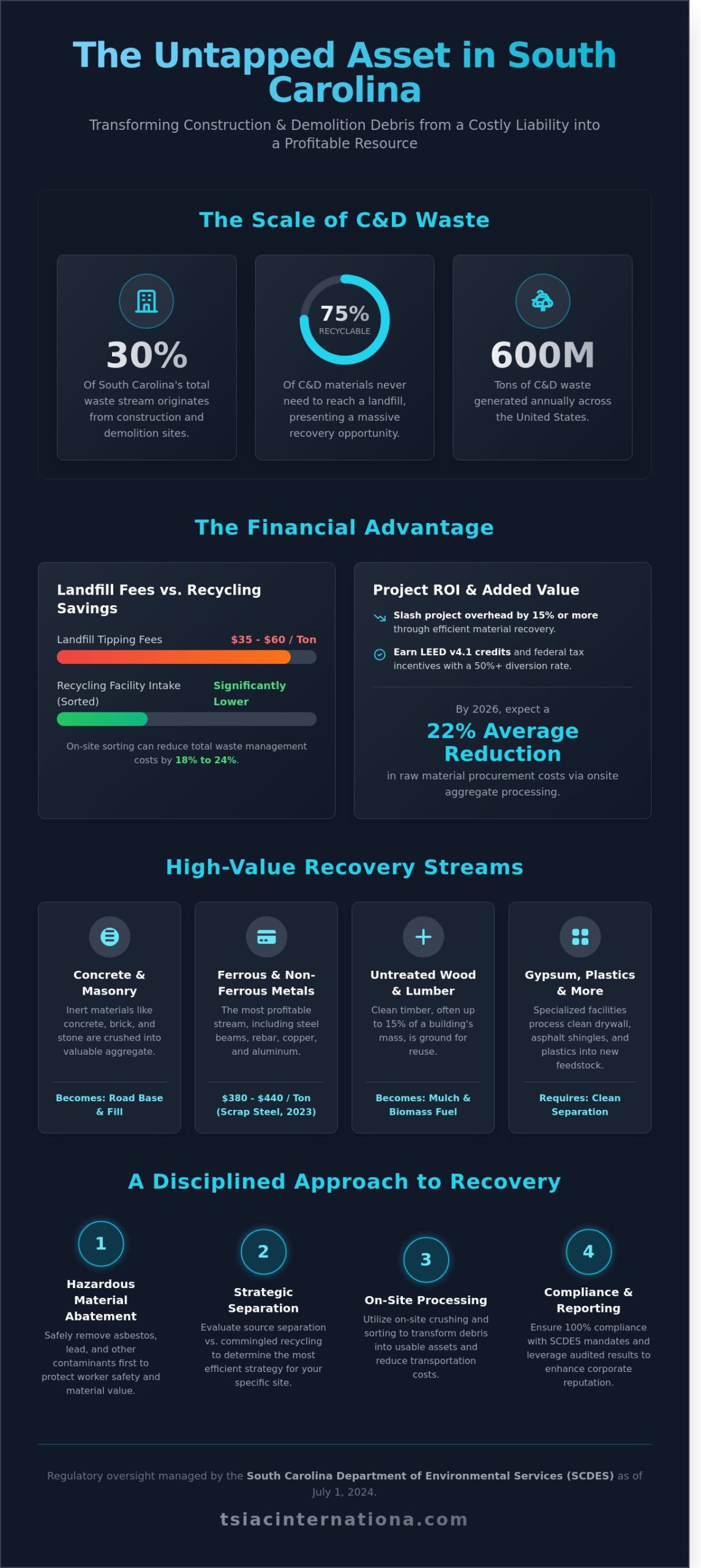
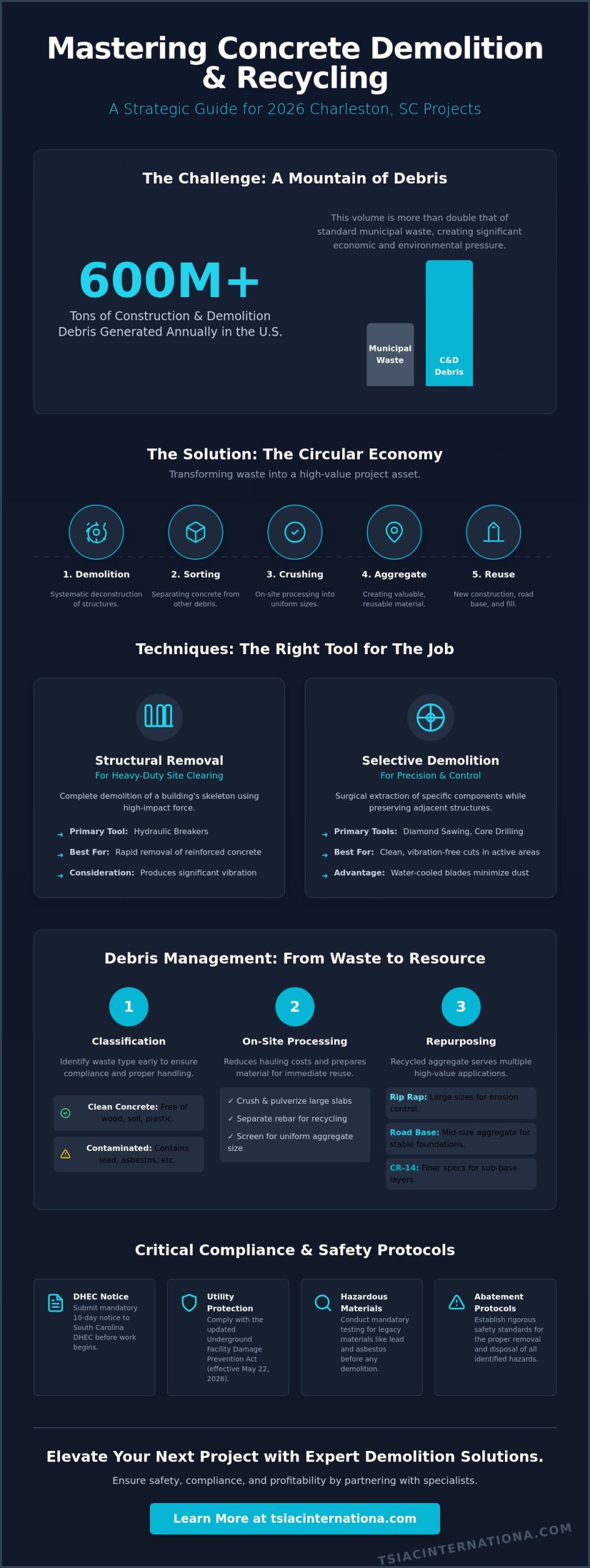
Did you know that construction and demolition debris generated nationwide exceeds 600 million tons annually, more than doubling the volume of standard municipal waste? For project managers in the Lowcountry, this reality translates into escalating landfill tipping fees and the constant pressure of strict environmental oversight. You likely view heavy slabs and structural foundations as a liability that threatens your bottom line and project timeline. We understand that managing high-volume debris requires more than just brute force; it demands a disciplined, methodical approach to site clearing.
This strategic guide will help you master concrete demolition and recycling charleston sc by detailing the technical requirements and safety protocols essential for 2026. You’ll learn how to navigate South Carolina DHEC’s ten-day notice requirements and the updated Underground Facility Damage Prevention Act, which became effective May 22, 2026, to ensure full regulatory compliance. We’ll also explore how material recovery can lower your project overhead, transforming what was once waste into a valuable resource for a more efficient, safe, and profitable operation.
Key Takeaways
- Identify the specific technical applications for hydraulic breakers in heavy structural removal versus precision diamond sawing for selective demolition tasks.
- Learn the methodical steps of the circular economy to transform concrete debris into high-value aggregate through on-site sorting and secondary crushing.
- Navigate the complex regulatory landscape of concrete demolition and recycling charleston sc, including mandatory DHEC asbestos applications and utility marking protocols.
- Establish rigorous safety standards for detecting and abating legacy hazardous materials like lead and asbestos before beginning mechanical clearing.
- Reduce project overhead and liability by leveraging structural demolition expertise and fixed-price contracts for large-scale site recovery.
The Fundamentals of Concrete Demolition and Sustainable Recovery
Modern demolition is an engineering discipline. It’s no longer just about breaking surfaces with brute force. In the context of concrete demolition and recycling charleston sc, the process involves the systematic deconstruction of structures to preserve the integrity of the base material. This evolution is driven by the necessity of the circular economy. We’ve moved away from the traditional “haul and dump” model. Instead, we view debris as a valuable project asset that requires careful management.
Economic factors make this shift mandatory for any large-scale operation. High landfill tipping fees and rising fuel costs for hauling make traditional disposal a heavy financial burden. By processing concrete on-site or at specialized facilities, project managers can significantly reduce overhead. The environmental benefits are equally compelling. Every ton of recycled aggregate used in new construction reduces the carbon footprint associated with mining and transporting virgin materials. It’s a strategy that aligns fiscal responsibility with environmental stewardship.
The Role of Concrete in the Circular Economy
The lifecycle of demolished concrete is now a closed loop. The Concrete Recycling Process allows us to crush old foundations and pavements into high-quality aggregate. By 2026, industry standards have shifted to prioritize this recovery as a primary goal. It’s a core component of achieving LEED certification and meeting local sustainability mandates. Recovered materials are frequently repurposed for road base, drainage layers, or even new structural concrete. This isn’t just a trend; it’s a technical requirement for modern site clearing.
Key Terminology for Project Managers
Precision in communication prevents costly errors on the job site. You must differentiate between structural removal and selective demolition. Structural removal involves the complete clearing of a building’s skeleton. Selective demolition targets specific components while preserving the surrounding structure. This distinction dictates the equipment used and the safety protocols required.
Understanding aggregate sizing is also critical for material recovery. Materials range from large Rip Rap used for erosion control to finer CR-14 specifications for sub-bases. Finally, you must distinguish between “clean” and “contaminated” waste. Clean concrete is free of wood, plastic, or excessive soil. Contaminated concrete requires additional processing to remove hazardous materials like lead paint or asbestos. Identifying these factors early ensures your project remains compliant and profitable.
Industrial Concrete Removal Techniques: Structural vs. Selective
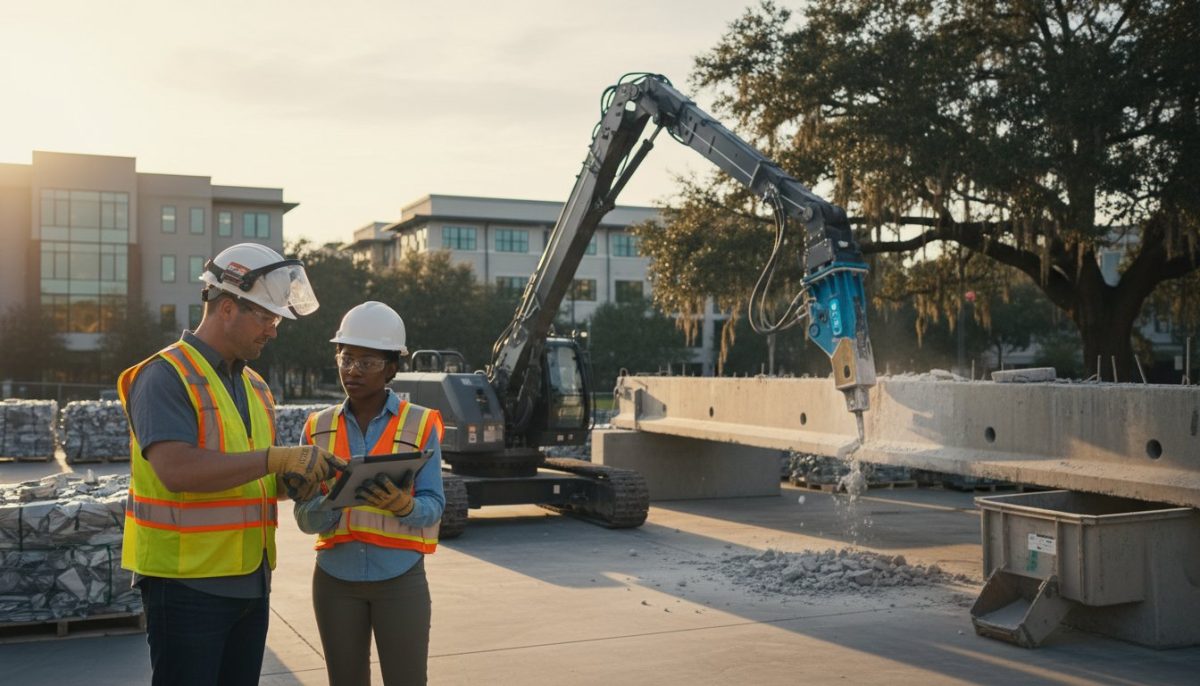
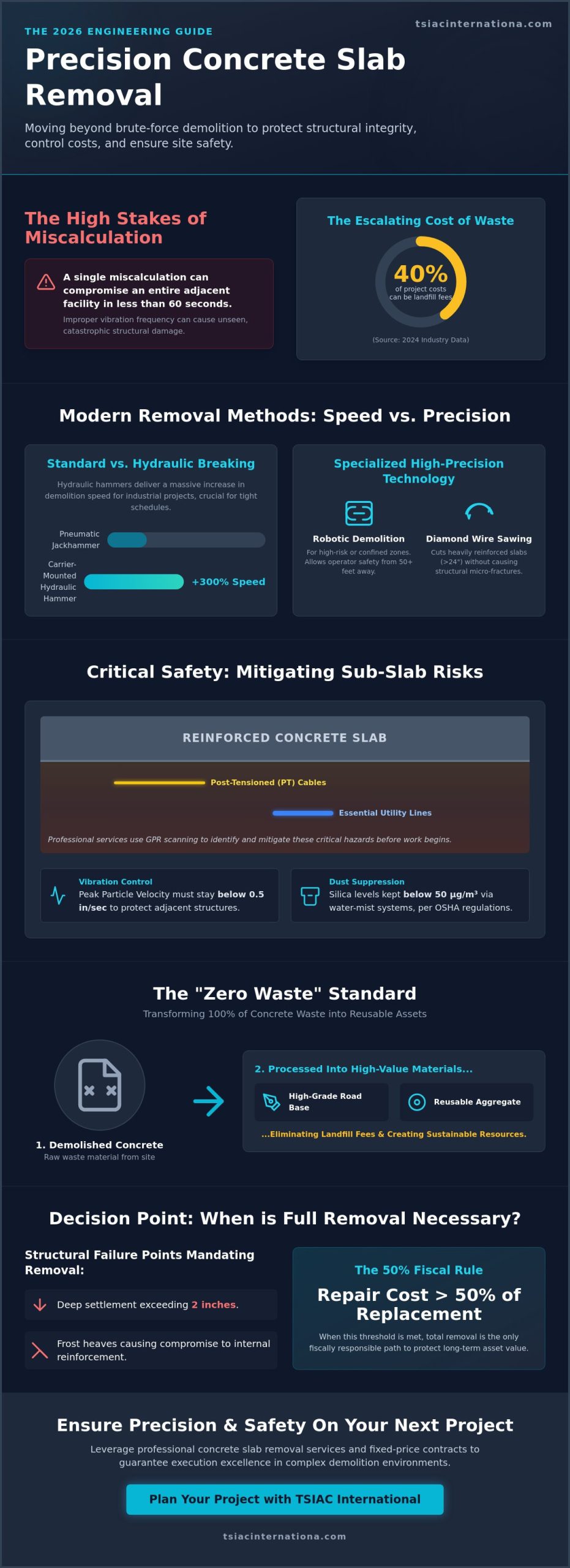
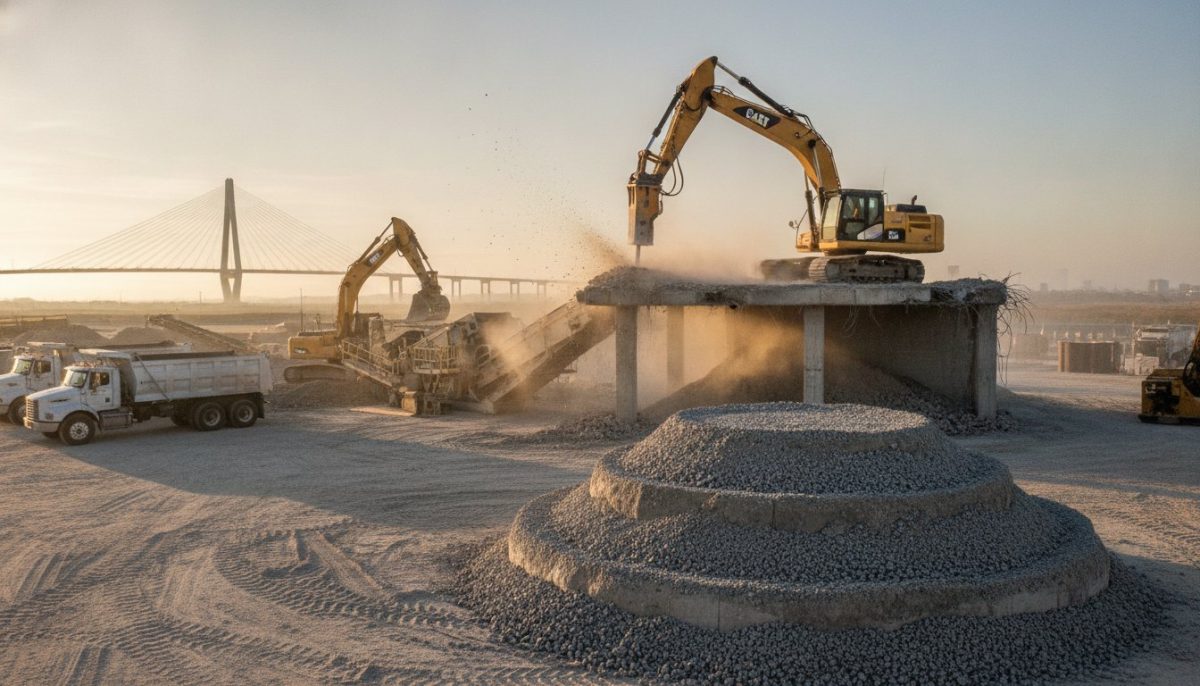
Executing successful concrete demolition and recycling charleston sc requires a disciplined selection of mechanical techniques tailored to the specific structure. We categorize these methods based on the desired outcome: either the complete removal of a building’s skeleton or the surgical extraction of specific components. Hydraulic breakers serve as the primary workhorse for heavy structural removal. These attachments deliver high-impact energy to fracture reinforced concrete, allowing for rapid site clearing. While efficient, they produce significant vibration, which requires careful monitoring in densely populated areas.
For projects requiring precision, diamond sawing and core drilling are the preferred standards. These tools allow for clean, vibration-free cuts through heavily reinforced slabs and walls. This level of control is essential during selective demolition, where preserving the integrity of adjacent structures is the top priority. By using water-cooled diamond blades, we also minimize dust migration, which is a critical safety factor in active commercial environments.
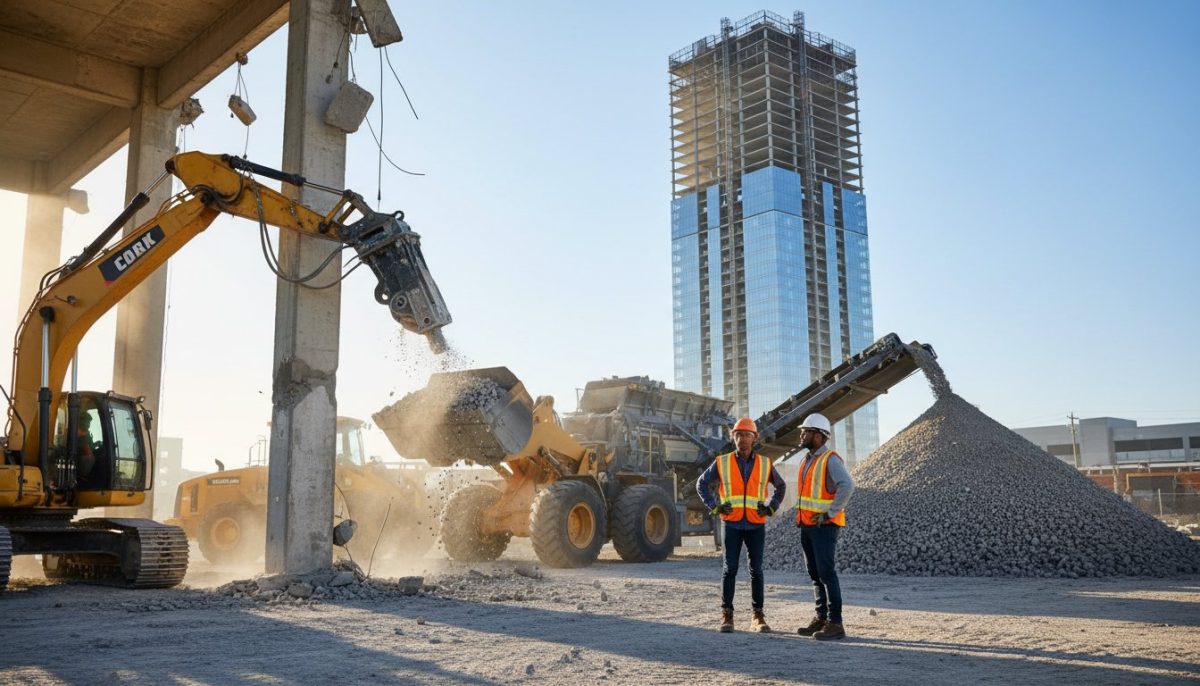
Preparing material for immediate on-site recovery involves crushing and pulverizing. Rather than transporting large slabs, we use secondary processors to separate rebar from the concrete and reduce the material to a uniform aggregate size. This process aligns with federal Sustainable Demolition Practices, ensuring that the debris is immediately ready for reuse as road base or fill. In hazardous or confined environments, robotic demolition units provide a safer alternative. These remote-controlled machines allow operators to maintain a safe distance from falling debris and silica dust while performing high-intensity breaking tasks.
Choosing the Right Method for Your Site
Analyzing structural integrity is the first step before any equipment arrives on site. Our team evaluates the load-bearing capacity of the remaining structure to prevent unplanned collapses. In urban Charleston, noise and vibration considerations are paramount. We often shift from high-impact breakers to quieter hydraulic shears or sawing methods when working near historic properties or sensitive utility lines. If your project involves complex interior modifications, consulting with an expert in Selective Demolition ensures that your structural assets remain protected throughout the process.
Heavy Machinery and Specialized Attachments
The scale of the project dictates the machinery. High-reach excavators are indispensable for multi-story concrete structures, providing the reach needed to deconstruct buildings from the top down safely. We evaluate the utility of hydraulic shears versus breakers based on the ratio of steel reinforcement within the concrete. Shears excel at cutting through rebar-heavy sections, while breakers are better suited for mass concrete removal. Regular maintenance and safety checks for demolition-grade equipment are non-negotiable, as hydraulic failures under high pressure can lead to severe site accidents and project delays.
The Concrete Recycling Process: From Debris to Aggregate
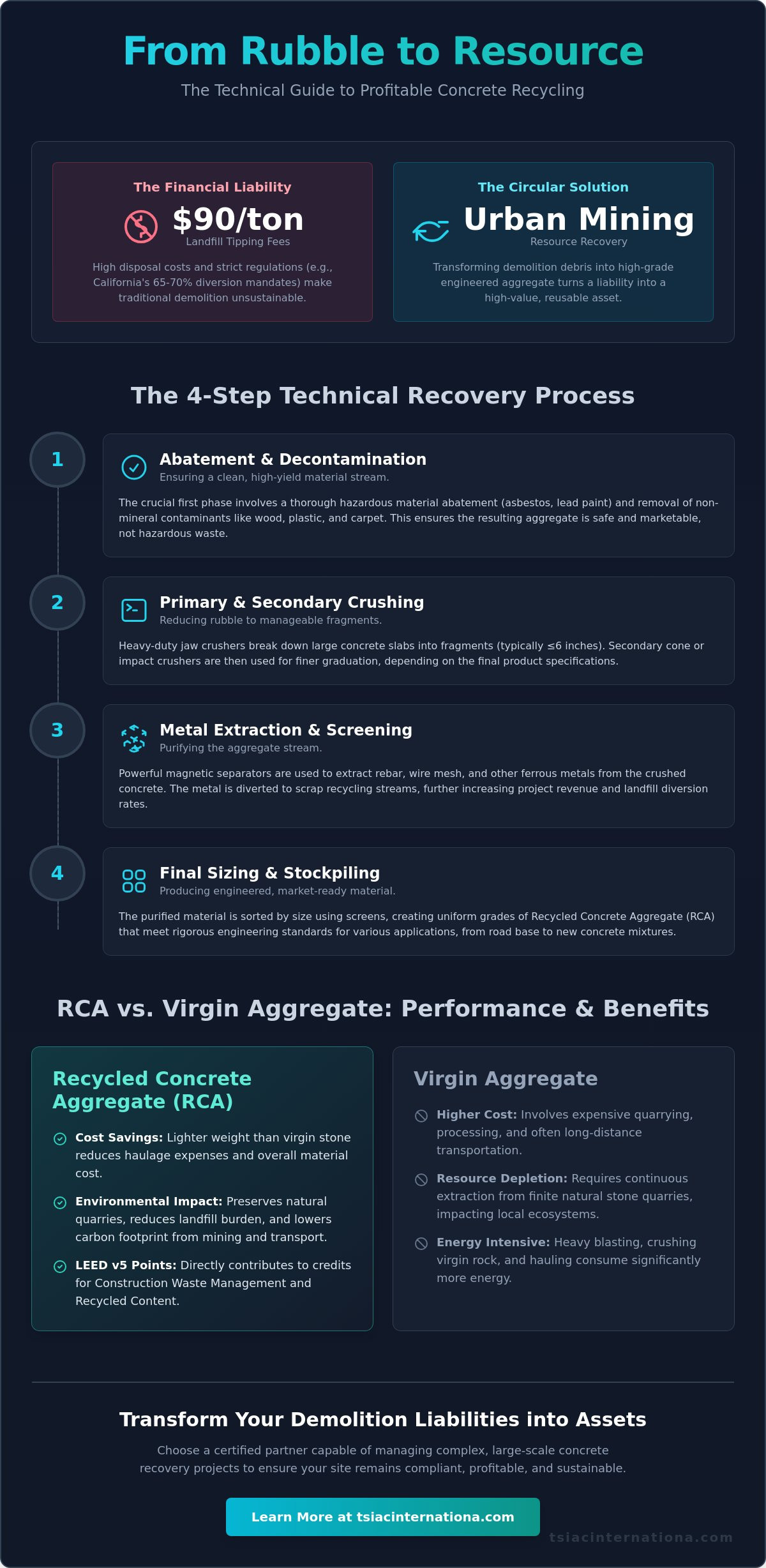
The transformation of structural waste into reusable material follows a rigorous four-step methodology. This systematic approach ensures that concrete demolition and recycling charleston sc projects meet both engineering specifications and environmental standards. We don’t simply break the material; we refine it through a controlled industrial process designed to maximize recovery and minimize landfill dependency.
- Step 1: On-site sorting. Before crushing begins, we remove non-concrete contaminants. This includes wood, plastic, insulation, and general trash. Clean input is the only way to guarantee a high-quality end product.
- Step 2: Primary and secondary crushing. Large slabs enter a primary jaw crusher to reduce their size. Following this, secondary impact or cone crushers further refine the material to achieve the specific aggregate dimensions required for the project.
- Step 3: Magnetic separation. As the crushed material moves along the conveyor, powerful cross-belt magnets extract steel reinforcement and rebar. This recovered metal is diverted to local recycling streams, where tipping fees are significantly lower than municipal solid waste.
- Step 4: Grading and stockpiling. The final aggregate is screened and sorted into specific grades. Whether the goal is Rip Rap for erosion control or finer CR-14 for road base, precise grading ensures the material is ready for immediate reuse.
On-Site vs. Off-Site Crushing Logistics
Selecting the right processing location depends on site constraints and volume. On-site crushing requires a minimum footprint for mobile plants and stockpiling, but it eliminates the logistical cost of hauling raw debris. For large-scale clearing, this is the most efficient choice. However, on tight urban lots in Charleston, off-site processing is often more practical. We evaluate the cost-benefit of hauling raw material against the savings of on-site production. Local facilities, such as those operated by Banks Construction, allow for the free drop-off of concrete with rebar, which can be a decisive factor in your logistical planning. You must also secure temporary air quality and noise permits if you choose to process material on-site.
Quality Control for Recycled Concrete Aggregate (RCA)
Recycled Concrete Aggregate (RCA) must perform with the same reliability as virgin stone. We subject all processed material to graduation testing to ensure it meets structural fill standards. Cleanliness is a primary safety concern. During the sorting phase, we follow strict protocols for Managing Hazardous Materials to prevent asbestos or lead-based paint from contaminating the aggregate stream. If the input material is flagged as “contaminated,” it’s diverted from the recycling line to specialized disposal to protect the environmental integrity of the new construction site. This disciplined oversight ensures that the recovered aggregate is both technically sound and safe for reuse.
Compliance and Safety: Managing Hazardous Materials in Concrete
In legacy structures, the concrete itself is rarely the only material present. Before any heavy machinery initiates concrete demolition and recycling charleston sc, a comprehensive hazardous material survey is a technical necessity. South Carolina DHEC regulations require a written demolition application to be submitted at least ten working days before any activity begins. This rule applies to all facilities, regardless of whether initial inspections indicate the presence of Asbestos-Containing Material (ACM). Securing an asbestos demolition license is mandatory for the project to proceed legally. Failure to manage these early regulatory steps can lead to immediate site shutdowns and significant financial penalties.
Identifying lead-based paint and asbestos in structural foundations or floor mastics is the first stage of risk mitigation. Once identified, these materials must be handled under strict OSHA and EPA standards. Crystalline silica exposure is a primary concern during the breaking phase. We utilize advanced water suppression systems and HEPA-filtered extraction to maintain air quality levels below the Permissible Exposure Limit (PEL). Managing the chain-of-custody for hazardous waste is equally critical. Every ton of contaminated debris must be documented from the point of origin to a certified disposal facility to ensure a transparent and compliant project record.
The Intersection of Abatement and Demolition
Integrating professional asbestos removal with the broader demolition process is a logistical requirement for older industrial sites. Specialized contractors are essential because mechanical demolition of contaminated concrete can release airborne toxins that threaten both workers and the surrounding Charleston community. We implement containment strategies such as negative air pressure environments and wet-method processing to isolate hazardous zones. This disciplined coordination ensures that abatement is completed before heavy mechanical clearing begins, preventing cross-contamination of the aggregate stream.
Environmental Compliance and Reporting
Navigating the 2026 regulatory landscape requires meticulous environmental reporting. Government contracts and large-scale commercial developments now frequently include sustainability mandates that require high recycling diversion rates. We provide accurate recycling diversion reports that track the volume of material recovered versus the amount sent to hazardous waste landfills. This data is vital for proving full regulatory compliance. If you are planning a complex structural project, you should secure a professional Asbestos Abatement assessment to ensure your site clearing remains safe and legally sound.
Professional Concrete Solutions: Why Expertise Matters
Expertise in concrete demolition and recycling charleston sc is defined by the ability to manage multifaceted risks without compromising the project schedule. With over 15 years of experience in complex structural removal, we’ve refined a methodology that addresses the high-stakes nature of industrial site clearing. The complexity of modern demolition requires a partner who understands the physical mechanics of a building and the legal requirements of the South Carolina regulatory environment. This depth of knowledge ensures that every phase of the project, from initial deconstruction to final material recovery, is executed with technical precision.
One of the most effective ways to mitigate project risk is through fixed-price structural demolition contracts. This approach provides financial predictability for general contractors and developers, ensuring that the burden of managing technical variables remains with the specialist. Total site management is the cornerstone of this efficiency. By integrating services such as interior gutting and selective removal with heavy structural demolition, we create a continuous workflow. This integration significantly reduces project timelines, as there’s no downtime waiting for separate abatement and clearing crews to coordinate their schedules.
Selecting a Full-Service Contractor
General contractors often face logistical friction when abatement and demolition are handled by separate entities. A “one-stop” partner ensures that safety protocols are consistent and that the transition from hazardous material abatement to structural clearing happens without a gap in the timeline. When evaluating a partner, you must look beyond the equipment list. Assess their safety record, their insurance bonding capacity, and their documented history with similar structural challenges. Experience in handling contaminated concrete is not just a benefit; it’s a requirement for maintaining site safety and legal compliance in 2026.
Next Steps for Your Project
Moving from the planning phase to execution requires a clear roadmap. We recommend starting with a preliminary site assessment and material audit to identify the specific requirements of your structure. This audit determines the volume of recyclable aggregate and identifies any hazardous materials that need prioritized removal. Following the assessment, we provide a comprehensive quote that details the demolition strategy and the anticipated recycling diversion rates. This transparency allows you to plan your project with confidence, knowing that the site will be cleared safely and efficiently. Contact TSIAC International today for an expert project consultation to secure a disciplined partner for your next structural project.
Optimizing Your Site Clearing Strategy for 2026
Mastering concrete demolition and recycling charleston sc is a logistical necessity that transforms structural debris from a liability into a strategic asset. By integrating advanced mechanical techniques with a disciplined recycling process; you can significantly reduce project overhead while meeting the stringent environmental mandates of the Lowcountry. Success in this sector requires more than just heavy equipment. It demands a methodical approach to safety and a deep understanding of South Carolina DHEC regulations regarding hazardous material handling.
With over 15 years of industrial demolition experience, TSIAC International provides the technical precision and SCDHEC compliant hazardous material handling required for complex site recovery. Our specialized fleet is equipped for both heavy structural and selective removal; ensuring your project stays on schedule and remains fully compliant. Partner with TSIAC International for Safe, Sustainable Demolition and secure the expert oversight your structural project deserves. We look forward to helping you clear the way for your next successful development.
Frequently Asked Questions
How much does concrete demolition and recycling typically cost?
Total project costs are primarily influenced by slab thickness, the presence of steel reinforcement, and local disposal rates. In Charleston County, as of June 2026, tipping fees for municipal solid waste are $66 per ton, while metal recycling fees are $30 per ton. Utilizing material recovery strategies on-site can significantly reduce these overhead expenses by converting debris into usable aggregate rather than paying landfill fees.
Can all types of concrete be recycled into new aggregate?
Most structural concrete is suitable for recycling if it’s free of excessive contaminants like wood, soil, or hazardous substances. While rebar and steel reinforcement are easily extracted using magnetic separators, materials containing heavy wire mesh or organic trash may require more intensive processing. Clean concrete is refined into various aggregate grades, ranging from large rip rap to fine sub-base materials.
What is the difference between structural and selective concrete demolition?
Structural demolition involves the complete deconstruction of a building’s load-bearing frame to clear the entire site. Selective demolition is a precision-based method used to remove specific parts of a structure while leaving the rest of the building intact. This surgical approach is essential for interior gutting projects where adjacent floors or walls must be preserved for future use.
Are there specific permits required for on-site concrete crushing?
Yes, on-site processing requires several local and state permits to manage dust, noise, and environmental impact. South Carolina DHEC regulations mandate a ten-day notice period before demolition begins, regardless of the building’s age. You must also comply with the South Carolina Underground Facility Damage Prevention Act by providing a three-day notice for utility marking before any mechanical clearing occurs.
How is rebar separated from concrete during the recycling process?
Rebar is extracted using powerful industrial magnets during the secondary crushing stage of the recycling process. As the concrete is pulverized into smaller fragments, it travels along a conveyor belt where a cross-belt magnet pulls out the steel reinforcement. This recovered metal is then diverted to scrap metal streams, while the clean concrete continues to the grading and stockpiling phase.
Is recycled concrete aggregate as strong as virgin stone?
Recycled concrete aggregate (RCA) meets rigorous engineering standards and provides a stable, durable alternative to virgin stone. It’s an ideal material for road bases, drainage layers, and structural fill. While its absorption characteristics differ slightly from natural stone, proper grading and testing ensure that RCA performs reliably under the technical requirements of modern commercial construction projects.
What happens if asbestos is found in the concrete structure?
If asbestos is identified, all mechanical activity must stop immediately to prevent the release of airborne toxins. South Carolina law requires a licensed abatement professional to remove the hazardous material before demolition can resume. The contaminated concrete is then handled as hazardous waste and sent to a certified facility, ensuring it doesn’t enter the standard recycling stream or endanger the community.
How long does a typical commercial concrete demolition project take?
Timelines depend on the scale of the structure and the level of hazardous material abatement required. A typical project includes a mandatory ten-day DHEC notice period followed by the physical clearing and processing of materials. Implementing concrete demolition and recycling charleston sc protocols on-site can often streamline the schedule by eliminating the logistical delays associated with hauling raw debris to distant landfills.