Deconstruction vs. Demolition: A Professional Guide to Structural Removal in 2026

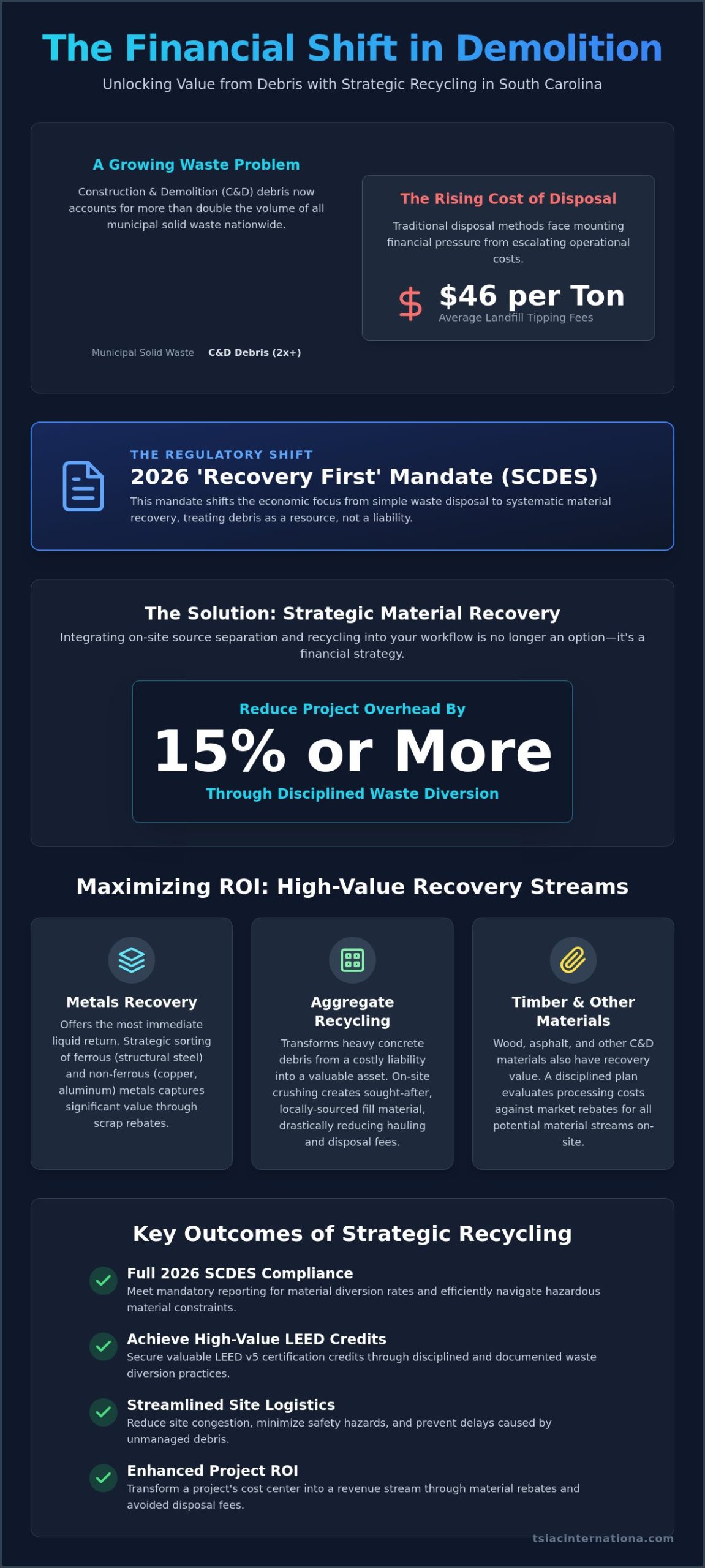
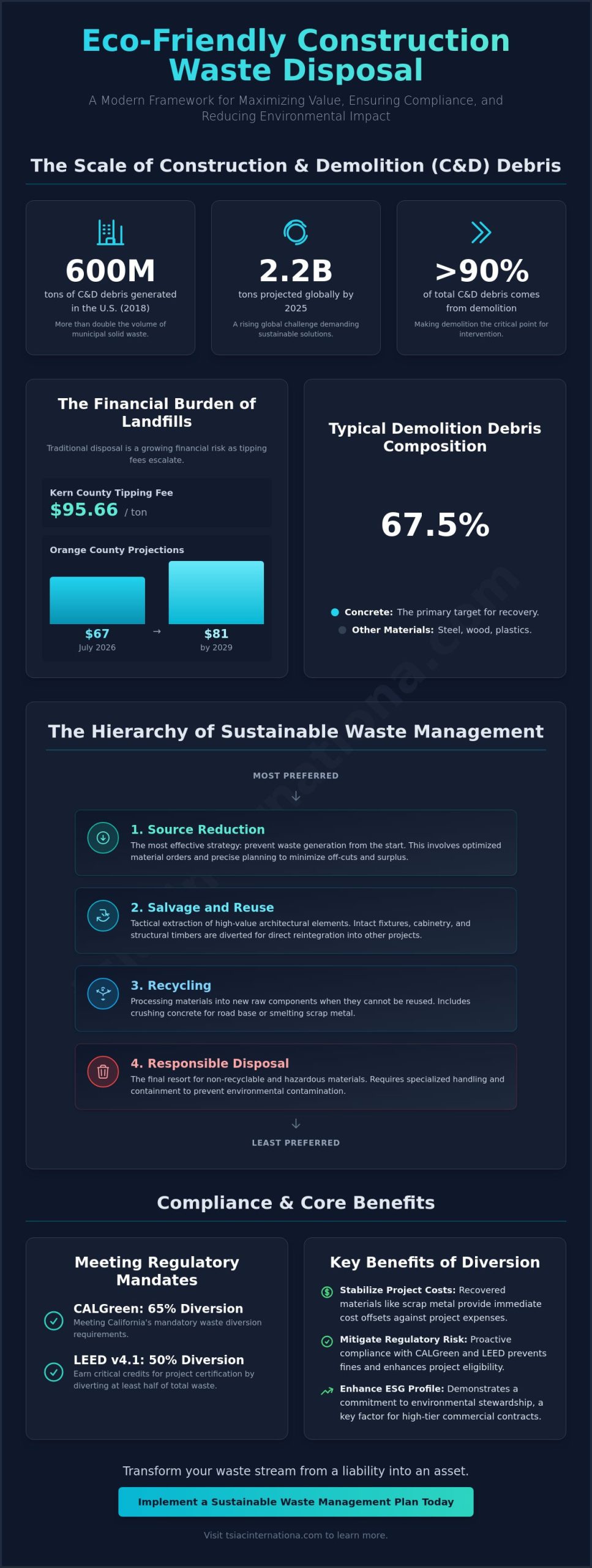
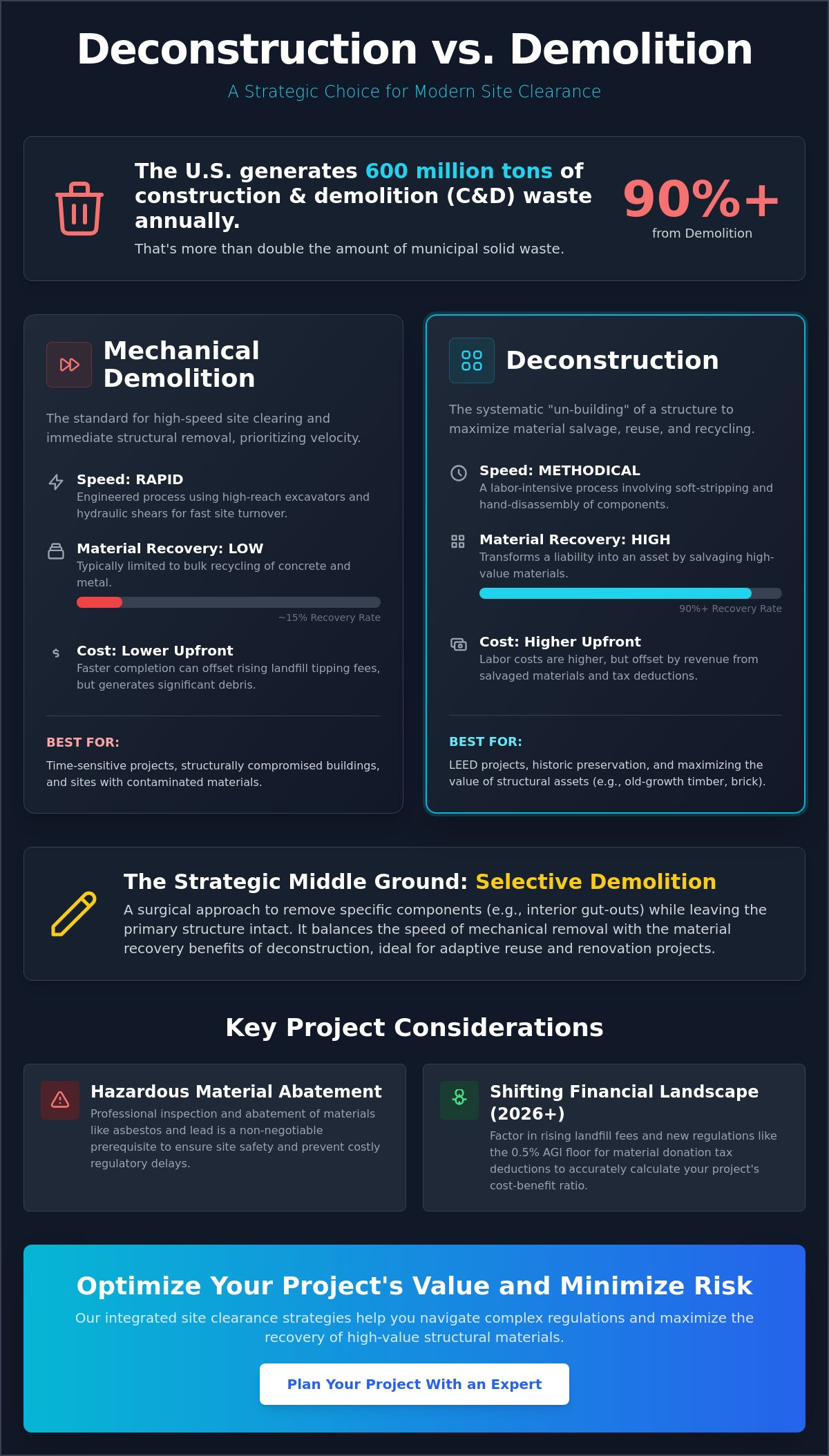
Demolition accounts for over 90% of the 600 million tons of construction and demolition waste generated annually in the U.S., a figure that’s more…

Demolition accounts for over 90% of the 600 million tons of construction and demolition waste generated annually in the U.S., a figure that’s more than double the amount of municipal solid waste. You likely recognize that clearing a site is no longer just about the fastest path to a vacant lot. With rising landfill tipping fees and the 2026 implementation of the One Big Beautiful Bill Act, the debate of deconstruction vs demolition is now a complex financial and regulatory calculation. Choosing the wrong method can lead to unexpected liabilities, especially when dealing with hazardous materials or strict LEED requirements.

This guide provides a professional framework to help you choose the strategy that aligns with your specific project goals. You’ll understand the technical differences between systematic dismantling and traditional structural removal. We’ll examine how to navigate the new 0.5% AGI floor for material donations, manage asbestos abatement protocols, and leverage industrial recycling services to maximize recovery. This analysis ensures you have the data needed to minimize risk, manage material cost inflation, and optimize the value of your structural assets through methodical planning.

Key Takeaways

  • Learn the technical differences between deconstruction vs demolition to determine if your site requires rapid mechanical clearing or systematic material salvage for LEED compliance.
  • Identify how selective demolition provides a surgical approach to interior gutting, enabling precise component removal while maintaining the primary structure’s integrity.
  • Recognize why hazardous material inspection and professional abatement are non-negotiable prerequisites to ensure safety and prevent costly regulatory delays.
  • Evaluate the shifting financial landscape of 2026, including new tax deduction thresholds and rising disposal fees, to optimize your project’s cost-benefit ratio.
  • Discover how integrated recycling services and professional site clearance strategies can minimize liability while maximizing the recovery of high-value structural materials.

Defining the Methods: Deconstruction vs. Demolition

Structural removal has evolved far beyond the blunt force of the wrecking ball. In 2026, the industry views site clearance as a precise engineering discipline rather than a simple act of destruction. The decision between deconstruction vs demolition functions as a strategic choice that balances project velocity against material recovery goals. While traditional methods prioritize rapid site turnover, the shift toward a circular economy has redefined “wrecking” as an outdated concept. Modern professionals now view structures as repositories of valuable materials that require methodical management to mitigate the 600 million tons of C&D waste generated annually.

The Mechanics of Modern Demolition

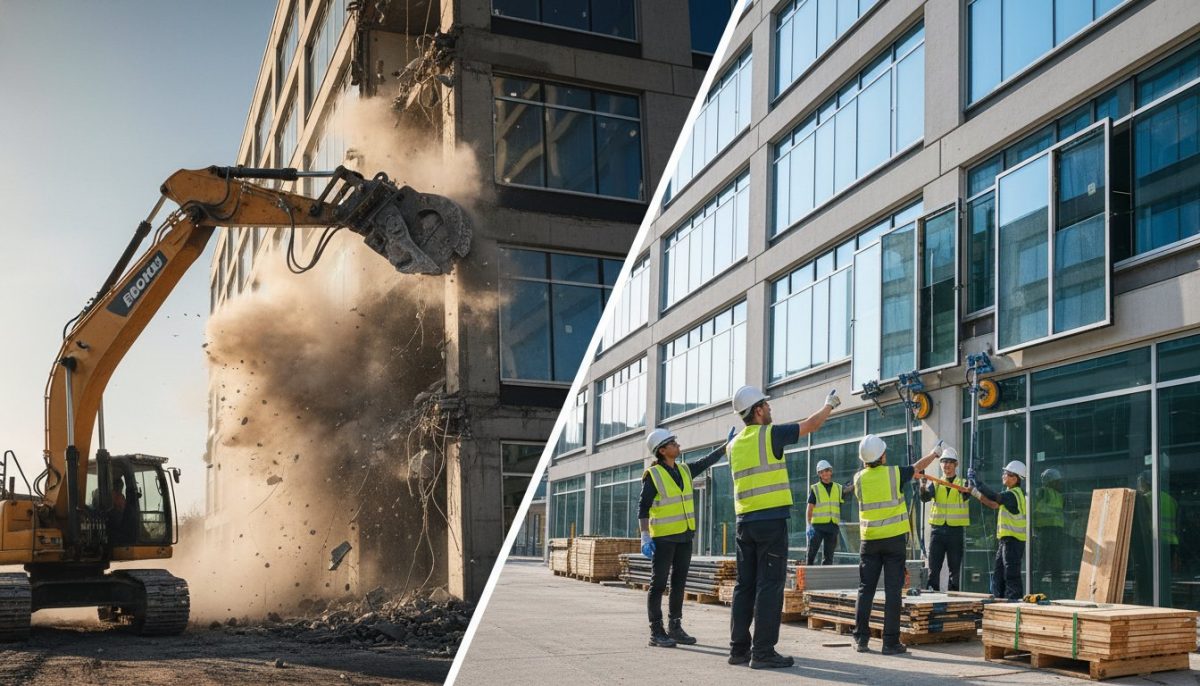
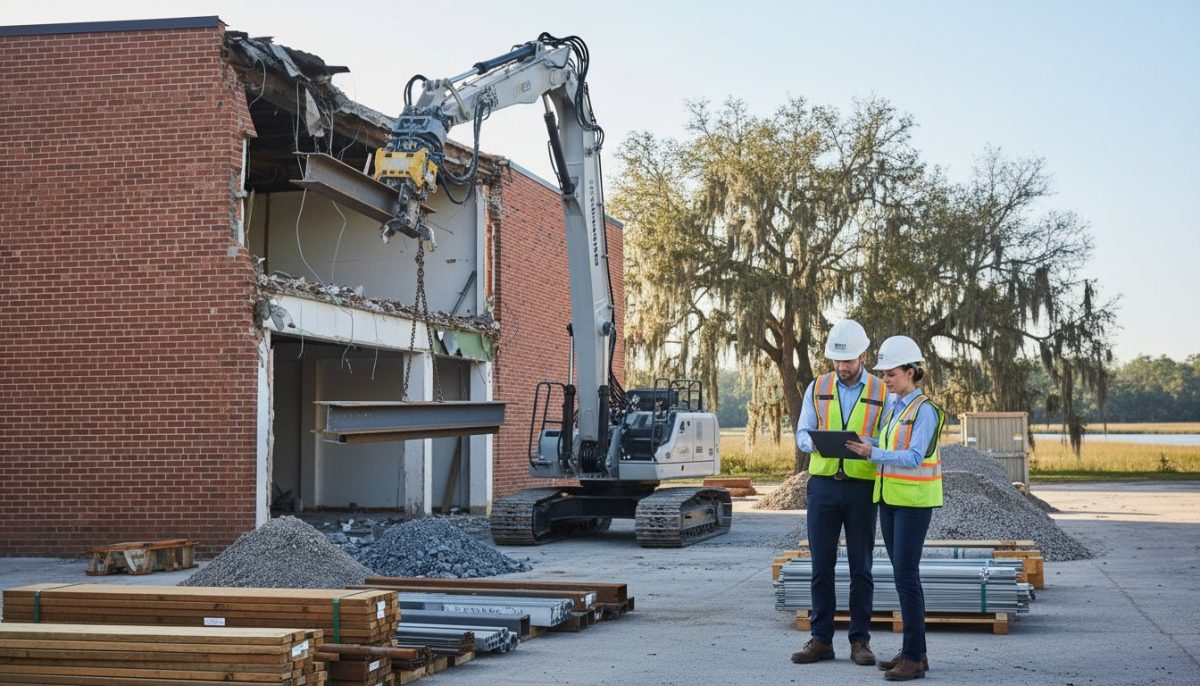
Mechanical demolition remains the standard for projects requiring high-speed site clearing and immediate structural removal. This method utilizes high-reach excavators equipped with hydraulic shears and concrete pulverizers to systematically dismantle multi-story buildings. It’s an engineered process where structural physics dictates the removal sequence to ensure site stability and worker safety. Before any high-impact removal begins, specialized teams develop detailed plans that account for load-bearing transitions and vibration control. This approach is highly efficient for clearing sites where materials are contaminated or the structural integrity is too compromised for manual labor. While it generates significant debris, the speed of execution often offsets the rising landfill tipping fees for time-sensitive commercial developments.

The Anatomy of Deconstruction

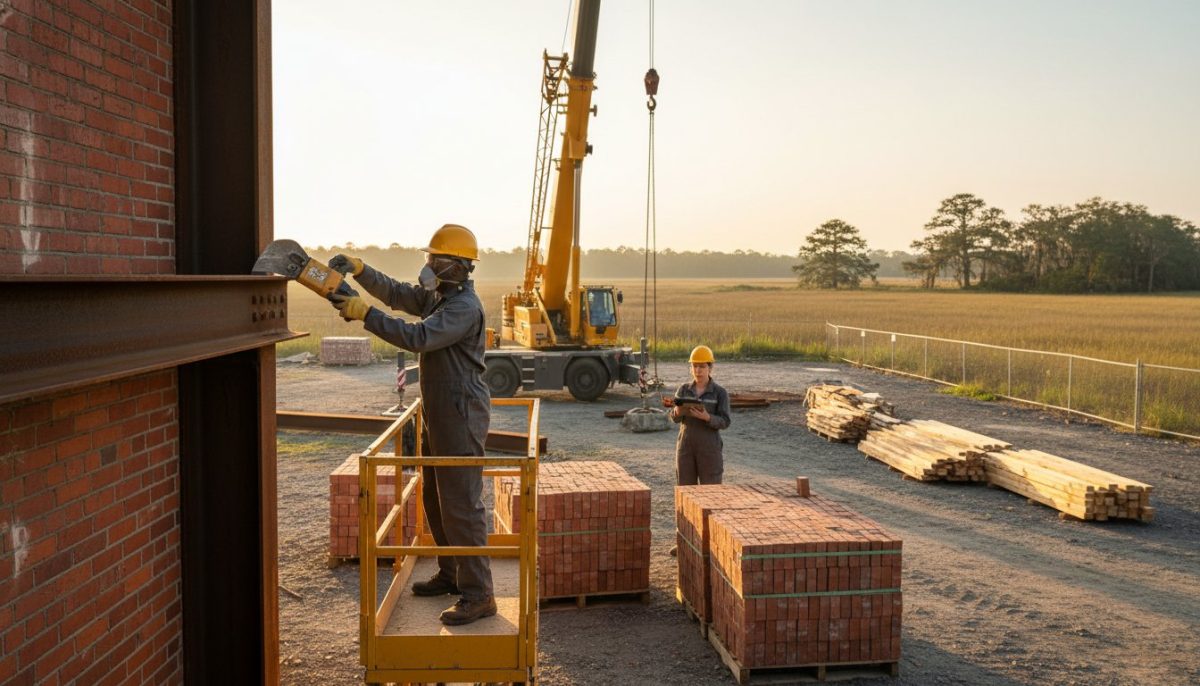
In contrast, Deconstruction (building) is the systematic “un-building” of a structure to maximize material salvage. This labor-intensive process begins with soft-stripping, which involves the careful removal of non-structural elements like fixtures, flooring, and cabinets. Once the interior is cleared, the structural deconstruction phase begins. Teams hand-disassemble timber frames, masonry, and steel components to preserve their physical properties for resale or reuse.

The primary metric for success in this method is the salvage rate. While standard demolition might only recycle bulk concrete and metal, deconstruction can achieve a 90% or higher recovery rate for all building materials. This methodical approach requires complex on-site logistics for sorting and protecting salvaged goods. It’s a strategy that transforms a liability into an asset, particularly for older structures containing high-value materials like old-growth timber or hand-pressed brick. By preserving the embodied carbon within these materials, deconstruction aligns with 2026 green building standards and municipal mandates increasingly seen in cities like Portland, Seattle, and San Antonio.

Selective Demolition: The Strategic Middle Ground

The choice between deconstruction vs demolition often overlooks the technical bridge between these two extremes: selective demolition. This method involves the surgical removal of specific building components while leaving the primary structure intact. It’s an engineered approach that requires high levels of precision and structural knowledge to ensure that the remaining portions of the building stay stable. By focusing on specific sections, developers can balance the speed of mechanical removal with the material recovery benefits of systematic dismantling. This strategy is particularly vital for historic preservation and adaptive reuse projects where the building’s shell holds significant architectural or cultural value.

Safe execution depends on rigorous shoring and bracing protocols. Before any load-bearing element is touched, temporary supports must be installed to redistribute structural weight. This process prevents unintended collapses and protects the integrity of the building’s envelope. Regulatory bodies, such as the CT DEEP on Deconstruction, emphasize that these activities fall under specific demolition standards that require careful planning for hazardous materials and structural stability. When handled correctly, selective removal allows for modern upgrades without the environmental cost of a total tear-down.

Interior Gut-Outs and Tenant Improvements

In commercial settings, selective demolition frequently takes the form of commercial interior gutting services. This process involves stripping a structure down to its studs or concrete slab while protecting vital mechanical, electrical, and plumbing (MEP) systems. Precision is paramount here. Teams utilize robotic demolition units and specialized hand tools to navigate tight spaces without damaging shared utilities. Managing dust and noise is a critical operational requirement, especially in occupied buildings. High-efficiency particulate air (HEPA) filtration and temporary sound barriers are standard tools used to maintain a safe, professional environment during high-intensity interior work.

Structural Modifications and Wing Removal

Removing a building’s wing or an outdated addition presents unique technical challenges. It requires a clear separation of structures that may share footings or load-bearing walls. Engineers must analyze the original blueprints to understand how the removal will impact the remaining building’s center of gravity. This method is often more cost-effective than total demolition because it preserves the most valuable parts of the real estate while allowing for modern expansions. If you’re managing a complex renovation that requires this level of technical accuracy, consulting with a partner experienced in selective structural removal can help mitigate long-term liability.

  • Protects the primary building envelope for future use.
  • Reduces landfill waste by focusing only on necessary removals.
  • Allows for the modernization of MEP systems without structural replacement.
  • Facilitates compliance with LEED and other green building certifications.

Deconstruction vs. Demolition: A Professional Guide to Structural Removal in 2026

The Abatement Prerequisite: Handling Asbestos and Lead

Before any structural removal begins, a comprehensive hazardous material survey is the mandatory first step for legal and safety compliance. Whether a project involves deconstruction vs demolition, the presence of toxic substances like asbestos or lead-based paint dictates the entire operational sequence. You can’t systematically “un-build” a structure if that process releases airborne fibers or toxic dust into the environment. Failing to identify these materials early doesn’t just invite regulatory fines; it creates a significant health liability for everyone on site. According to the EPA’s guidelines on the Sustainable Management of C&D Materials, managing the 600 million tons of debris generated annually requires a clear understanding of what can be safely recovered and what must be treated as hazardous waste.

Integrating asbestos removal in South Carolina into your project timeline prevents the 11th-hour delays that often plague structural removals. In a deconstruction scenario, the requirement for abatement is even more stringent because manual handling increases the risk of exposure compared to mechanical demolition where operators remain in sealed cabs. If you’re planning a complex removal, securing a partner for professional abatement services is essential to maintain site safety and project momentum.

Asbestos Abatement in Structural Removal

Asbestos identification focuses on distinguishing between friable and non-friable materials. Friable asbestos, such as pipe insulation or sprayed-on fireproofing, easily crumbles and becomes airborne, requiring strict containment protocols. Non-friable materials like floor tiles or transite siding are more stable but still require professional handling during disassembly. Effective abatement involves creating negative air pressure zones and utilizing HEPA filtration to ensure no fibers escape the work area. Professional documentation throughout this process serves as your primary defense against future environmental liabilities.

Lead and Mold Remediation

Lead-based paint is a primary obstacle when attempting to salvage historic wood and masonry. If these materials are contaminated, they cannot be sold or reused in new construction without extensive and often cost-prohibitive treatment. Similarly, mold remediation must be completed before structural disassembly to prevent the spread of spores. These factors directly impact the final recycling rate of a project. When hazardous material abatement in South Carolina is handled correctly, it ensures that the remaining “clean” materials can be diverted from landfills and processed through industrial recycling channels.

  • Mandatory inspections prevent cross-contamination of salvageable materials.
  • Negative air pressure environments protect both workers and the surrounding community.
  • Accurate manifest tracking provides a clear chain of custody for hazardous waste disposal.
  • Early abatement allows for higher material recovery rates in deconstruction projects.

Selection Matrix: Choosing the Right Method for Your Project

Choosing between deconstruction vs demolition requires a methodical evaluation of project variables. It’s not a binary choice but a technical calculation of time, cost, and regulatory compliance. Project managers must weigh the immediate speed of mechanical removal against the long-term financial benefits of material recovery. In 2026, this decision is heavily influenced by the One Big Beautiful Bill Act (OBBBA), which established a 0.5% AGI floor for charitable deductions on salvaged materials. For high-net-worth property owners, this means the tax benefits of deconstruction only trigger for donation values exceeding that threshold, with benefits capped at 35% for those in the highest marginal tax bracket.

Site constraints also play a defining role. Urban density often dictates the removal strategy due to noise ordinances and dust control requirements. While mechanical demolition is faster, deconstruction offers a quieter, more contained alternative that may be necessary in sensitive neighborhoods. Additionally, meeting LEED v4.1 requirements for construction and demolition waste management often necessitates a hybrid approach. With construction material cost inflation forecasted between 2% and 4% for 2026, reclaiming structural steel or high-grade timber can provide a significant hedge against the rising costs of new building supplies.

When to Prioritize Traditional Demolition

Standard structural demolition is the logical choice for projects with immediate redevelopment deadlines or when dealing with safety-compromised structures. If a building is structurally unstable, manual disassembly poses an unacceptable risk to personnel. Furthermore, structures with high levels of un-remediable contamination are poor candidates for salvage. In large-scale industrial environments, the use of hydraulic shears and concrete pulverizers is often the only viable method to clear the site within an efficient timeframe. If the building lacks high-value architectural components, the speed of mechanical removal remains the most cost-effective path to site clearance.

When Deconstruction is the Superior Choice

Deconstruction is the superior strategy when a structure contains high-value salvage potential, such as antique heart pine, hand-cut stone, or reusable structural steel. It’s also the required path in municipalities like Portland, Seattle, San Antonio, and Palo Alto, which have implemented strict deconstruction ordinances for older properties. For projects where environmental impact and carbon footprint reduction are primary KPIs, the systematic dismantling of the building ensures the highest possible material recovery rate. If you need a technical assessment to determine the most viable path for your property, contact our team for a professional structural removal consultation.

  • Timeline: Demolition (days) vs. Deconstruction (weeks/months).
  • Tax Strategy: Evaluating the 0.5% AGI floor for material donations.
  • Regulatory: Compliance with local deconstruction mandates for pre-1940 structures.
  • Logistics: Space availability for on-site material sorting and preservation.

The TSIAC Advantage: Integrated Site Clearance

The technical complexity of modern site clearance requires more than just heavy machinery; it demands a unified operational framework. Whether your project necessitates deconstruction vs demolition, TSIAC International provides a single-source solution that integrates hazardous material management with structural removal. This approach eliminates the coordination gaps that often occur when multiple vendors handle abatement, interior gutting, and final site clearing. By managing every phase under one contract, we maintain a continuous chain of custody for all materials, ensuring that site safety and environmental goals are met with methodical precision.

Our commitment to the circular economy is reflected in our on-site recycling services. We don’t just clear land; we process materials for recovery. By utilizing specialized equipment to sort and crush concrete or separate structural steel on-site, we significantly reduce the volume of debris sent to landfills. This integrated strategy is particularly valuable for developers seeking LEED certification or those operating in regions with strict waste diversion mandates. Our position among demolition contractors Charleston SC is built on this foundation of technical excellence and environmental responsibility, allowing us to navigate the unique structural challenges of both historic and industrial properties.

A Legacy of Professionalism and Safety

With over 15 years of experience in high-stakes structural removal, TSIAC has developed a reputation for unwavering reliability. Safety isn’t a secondary consideration; it’s the core of our engineered demolition plans. These plans exceed standard OSHA requirements by incorporating advanced structural physics and load-bearing analysis into every phase of the project. Our crews undergo rigorous training in hazardous material handling, ensuring that asbestos and lead abatement are completed without compromising site safety. We also prioritize the surrounding community by deploying advanced dust control systems and noise mitigation strategies, which are essential for maintaining professional standards in high-density urban environments.

Requesting Your Professional Estimate

Accurate project forecasting begins with a detailed site walk-through. This allows our technical team to identify hidden variables, such as structural anomalies or undetected hazardous materials, that could impact the deconstruction vs demolition timeline. When preparing your Request for Proposal (RFP), including your asbestos survey reports, original structural drawings, and specific salvage goals will ensure the most precise quote possible. A thorough initial assessment prevents the mid-project change orders that often derail commercial budgets. Contact TSIAC International today for a comprehensive project evaluation to discuss your structural removal requirements with an experienced partner.

  • Single-source accountability for abatement, gutting, and removal.
  • Engineered demolition plans that prioritize structural stability.
  • On-site recycling services to maximize material recovery.
  • Proven expertise in managing complex commercial and industrial sites.

Advancing Your Site Clearance Strategy

Successful site clearance in 2026 requires a sophisticated balance between operational speed, material recovery, and strict regulatory compliance. The choice of deconstruction vs demolition isn’t merely a matter of choosing equipment; it’s a strategic decision that impacts your project’s tax benefits, landfill fees, and environmental footprint. By prioritizing thorough hazardous material abatement and leveraging selective removal techniques, you can transform a complex liability into a streamlined asset. Modern projects demand this level of technical foresight to navigate rising costs and evolving municipal mandates.

TSIAC International provides 15+ years of specialized industry experience to guide your project from initial inspection to final clearance. Our teams act as certified asbestos and lead abatement specialists who maintain a comprehensive environmental recycling commitment on every site. We ensure that your structural removal is handled with the methodical precision and safety standards your investment deserves. Partner with TSIAC International for Safe, Professional Structural Removal and secure a reliable foundation for your next development phase.

Frequently Asked Questions

What is the main difference between deconstruction and demolition?

The fundamental difference between deconstruction vs demolition lies in the methodology and the final objective. Traditional demolition uses heavy machinery to clear a site rapidly for new development. Deconstruction is the systematic dismantling of a structure to preserve the physical integrity of its components for reuse. While demolition treats the building as waste, deconstruction views it as a source of valuable structural materials.

Is deconstruction always more expensive than traditional demolition?

Upfront labor costs for deconstruction are typically higher than mechanical removal due to the manual effort required. However, these expenses are often mitigated by reduced landfill tipping fees and the resale value of salvaged materials. In 2026, property owners can also leverage tax deductions for donated materials, though the One Big Beautiful Bill Act now requires these to exceed 0.5% of Adjusted Gross Income.

Can I salvage materials if my building has asbestos?

You cannot salvage materials that are contaminated with asbestos or lead-based paint. These substances must be professionally abated before any dismantling occurs to prevent environmental hazards. Only clean structural elements identified during the initial hazardous material survey are eligible for recovery. Attempting to salvage contaminated components is a direct violation of safety regulations and creates significant legal liability for the property owner.

How much of a building can typically be recycled during demolition?

Standard mechanical demolition typically recovers a portion of materials, primarily bulk concrete and scrap metal. In contrast, a methodical deconstruction vs demolition approach can achieve recovery rates exceeding 90%. The actual percentage depends on the building’s composition and the presence of hazardous materials. Utilizing on-site recycling services for concrete and masonry significantly increases the total diversion rate from local landfills.

Do I need different permits for deconstruction vs. demolition?

Permit requirements vary by municipality, but deconstruction often requires specific documentation not found in standard demolition applications. Cities like Portland and San Antonio have enacted ordinances that mandate deconstruction for older structures. You should check local building codes to see if a waste management plan or a specific deconstruction permit is required. Professional contractors handle these filings to ensure compliance with local environmental standards.

How long does a typical commercial deconstruction project take?

A commercial deconstruction project generally takes several weeks to a few months to complete, depending on the structure’s size and complexity. This is significantly longer than mechanical demolition, which can often be finished in a matter of days. The extended timeline accounts for the careful removal of fixtures, the manual disassembly of structural frames, and the on-site sorting of salvaged materials for transport.

What materials are most commonly salvaged during deconstruction?

The most commonly salvaged materials include old-growth timber, structural steel, hand-pressed bricks, and architectural fixtures. Hardwood flooring and heavy timber beams are particularly valuable in the 2026 resale market. Non-structural items like cabinets, high-end lighting, and plumbing fixtures are also frequently recovered during the initial soft-strip phase. Successful salvage depends on the physical condition of the items and the absence of hazardous coatings.

How does selective demolition differ from interior gutting?

Selective demolition is a broad engineering term for the surgical removal of specific building sections, which can include structural wings or additions. Interior gutting is a specific type of selective removal focused on stripping a space down to its core elements, such as studs or concrete slabs. While gutting prepares a space for tenant improvements, selective demolition may involve more complex shoring to maintain the integrity of the remaining building envelope.

Recycling Concrete from Demolition: The Complete 2026 Industry Guide

With landfill tipping fees reaching as high as $90 per ton in areas like Sacramento, disposing of debris has become a primary financial liability for…

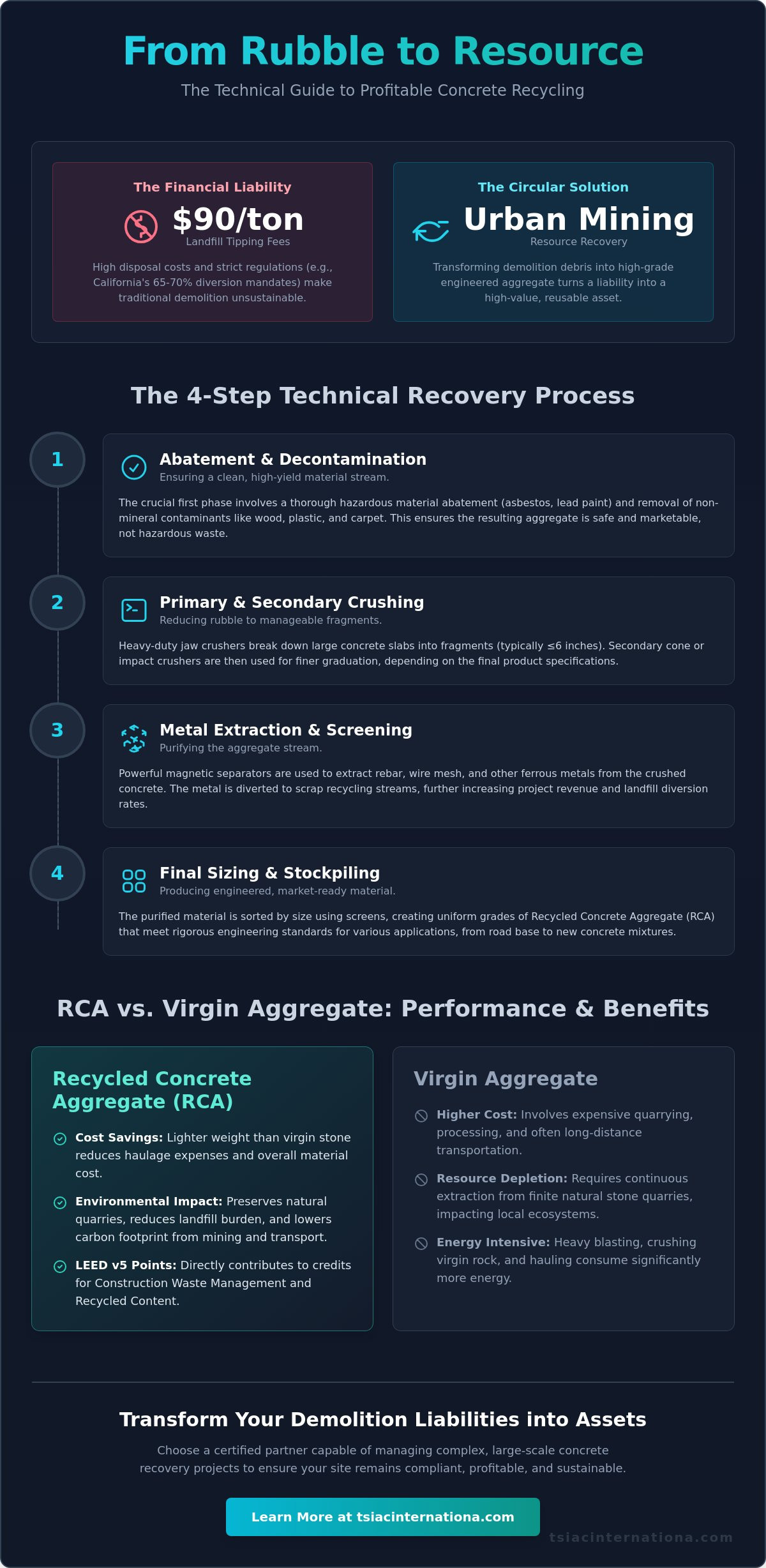
With landfill tipping fees reaching as high as $90 per ton in areas like Sacramento, disposing of debris has become a primary financial liability for commercial contractors. Effectively recycling concrete from demolition isn’t just a secondary green initiative anymore; it’s the central logistical engine that drives cost-efficient structural projects. You’re likely feeling the pressure of stricter regulations, such as California’s 65% diversion mandate or Los Angeles County’s updated 70% mixed-waste requirement. Managing heavy debris while navigating these complex compliance hurdles often feels like a technical bottleneck that threatens both your timeline and your bottom line.

This guide explains how to transform that logistical burden into a high-value resource, helping you secure LEED v5 points and significantly reduce project expenses. We’ll examine 2026 market rates for recycled aggregate, break down the latest regulatory updates, and outline the methodical processes that ensure your site remains compliant and profitable. From structural demolition to final material processing, you’ll discover how a disciplined approach to onsite recycling creates a clear path toward technical precision and operational success.

Key Takeaways

  • Learn how modern industrial processes transform demolition rubble into high-grade engineered aggregate, effectively transitioning from a waste-heavy model to a circular construction economy.
  • Understand the critical role of pre-demolition hazardous material abatement and surgical structural removal in ensuring a clean, high-yield material stream.
  • Discover the performance benefits and cost-savings of Recycled Concrete Aggregate (RCA), which often reduces haulage expenses due to its lighter weight compared to virgin stone.
  • Evaluate the logistical trade-offs between on-site mobile crushing and off-site facility hauling to maximize efficiency when recycling concrete from demolition.
  • Identify the specific equipment and safety certification standards required to select a partner capable of managing complex, large-scale concrete recovery projects.

What is Concrete Recycling in Modern Demolition?

Concrete recycling is the systematic industrial process of reclaiming rubble from structural sites and transforming it into high-grade, engineered aggregate. This methodology represents a fundamental shift from the outdated linear “take-make-waste” model toward a circular construction economy. Instead of treating debris as a liability to be buried, modern recycling concrete from demolition treats it as a primary raw material source. With billions of tons of concrete produced globally each year, the industry has evolved to meet the demand through “Urban Mining.” This concept reframes existing buildings and infrastructure not as relics, but as resource banks waiting to be harvested for future use.

The technical definition of What is concrete recycling extends beyond simple crushing. It involves a disciplined sequence of sorting, cleaning, and sizing to ensure the final product meets rigorous engineering standards. By adopting these methods, contractors can maintain technical precision while fulfilling the logistical requirements of large-scale commercial projects.

The Anatomy of Demolition Debris

Success in material recovery depends on the purity of the input. “Clean” concrete refers to debris that’s free from wood, trash, or excessive soil. In reinforced structures, the presence of rebar and wire mesh adds a layer of complexity. Specialized equipment like magnetic separators is used to extract these metals, which are then diverted to scrap metal recycling streams. It’s also vital to distinguish between structural concrete, masonry, and asphalt. While structural concrete provides the highest yield for aggregate, masonry and asphalt require different processing parameters to ensure the resulting recycled aggregate (RCA) remains stable and reliable for its intended use cases.

Environmental and Economic Drivers

The transition to recycled materials is driven by both ecological necessity and financial logic. Utilizing recycling concrete from demolition significantly reduces the strain on local landfills, which are increasingly burdened by heavy construction waste. It also preserves natural stone quarries, protecting local ecosystems from the disruption of new mining operations. From an energy perspective, producing recycled aggregate is far more efficient than processing virgin stone. It eliminates the need for heavy blasting and reduces the carbon footprint associated with long-distance hauling. For projects aiming for LEED certification, these diversion efforts are essential for securing specific credits under the Construction Waste Management and Recycled Content categories.

The 4-Step Technical Process of Concrete Recovery

Recovery of high-quality aggregate begins long before a single crusher is activated. It requires a surgical approach to structural removal, ensuring that the source material remains uncontaminated from the outset. Transitioning debris from the pile to the processing plant involves careful logistical planning to maintain material integrity. Following EPA guidelines on C&D recycling ensures that the workflow meets federal standards for sustainable material management while protecting the project’s bottom line. This methodical progression transforms raw rubble into a standardized industrial product.

Step 1: Abatement and Decontamination

Concrete must be chemically and biologically inert before it enters the recycling stream. Hazardous substances such as asbestos, lead-based paint, and PCBs can compromise an entire batch of aggregate, rendering it hazardous waste rather than a resource. A thorough hazardous material abatement phase is the prerequisite for any safe recycling operation. During this stage, interior gutting removes non-mineral contaminants like wood, plastic, and carpet. This prevents the introduction of “light” debris into the crushing circuit, ensuring the final output is clean and marketable.

Step 2: Primary and Secondary Crushing

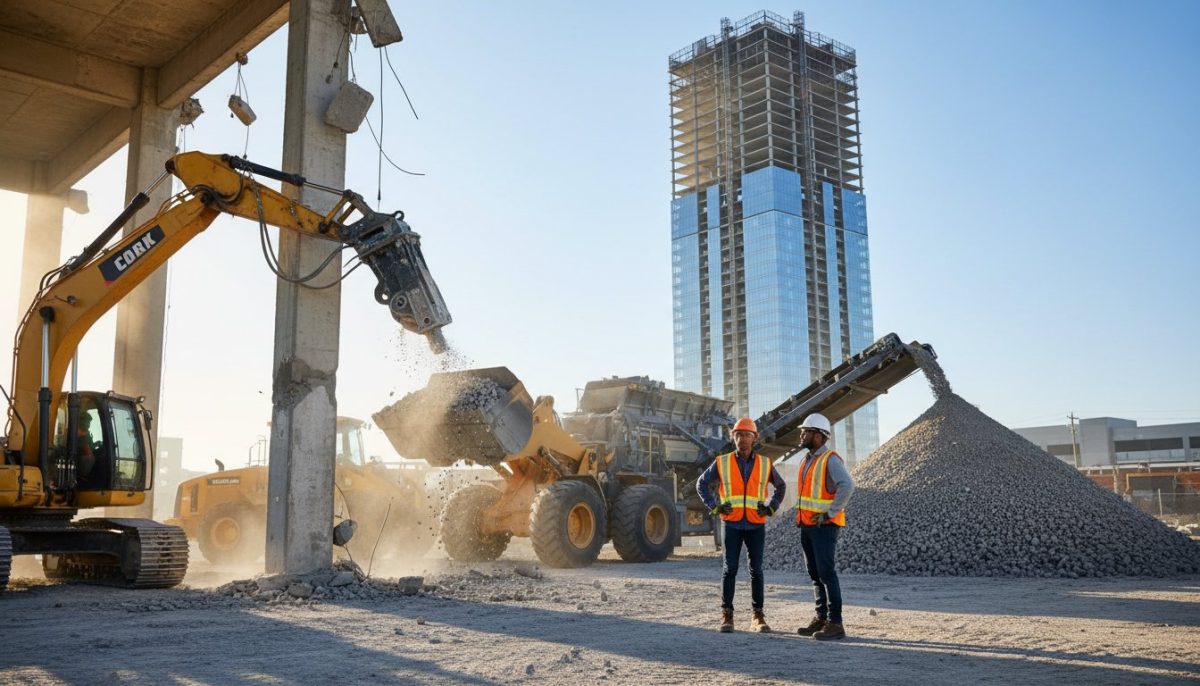
Once the structure is cleared of contaminants, the primary crushing phase begins. Heavy-duty jaw crushers are deployed to reduce massive concrete slabs and foundations into manageable fragments, typically six inches or smaller. For projects requiring finer graduation, secondary crushing is necessary. Impactors or cone crushers further refine the material into uniform sizes suitable for road base or new concrete mixes. Many high-efficiency operations utilize a closed-circuit system. In this setup, any oversized material that fails to pass through the initial screens is automatically re-fed into the crusher until it reaches the specified dimensions.

Step 3: Screening and Magnetic Separation

Pure concrete is rarely found in commercial demolition; it’s almost always reinforced with steel. High-powered industrial magnets are positioned over conveyor belts to extract rebar, wire mesh, and other ferrous metals. This not only cleans the aggregate but also provides a secondary revenue stream through scrap metal recovery. The material then moves through vibrating screen decks that sort the stones into specific grades based on size. To eliminate any remaining low-density contaminants like paper or wood slivers, air separators or water baths are used to float away the “lights,” leaving behind a dense, high-quality mineral product.

Step 4: Quality Control and Graduation

The final stage involves rigorous testing to ensure the recycled concrete aggregate (RCA) meets ASTM standards for strength and durability. Proper graduation is essential for structural applications where load-bearing capacity is non-negotiable. If you’re planning a complex project that requires technical precision, professional recycling services can integrate these recovery steps directly into your demolition timeline. This disciplined approach ensures that recycling concrete from demolition yields a product that is indistinguishable from virgin stone in performance and reliability.

Recycling Concrete from Demolition: The Complete 2026 Industry Guide

RCA vs. Virgin Aggregate: Performance and Use Cases

A common technical misconception in the industry is that recycled concrete aggregate (RCA) is inherently weaker than virgin stone. Engineering data suggests otherwise. When recycling concrete from demolition is performed with surgical precision, the resulting material often exhibits structural properties comparable to natural diorite or granite. RCA typically possesses a lower density than virgin aggregate, often weighing 10% to 15% less per cubic yard. This weight reduction doesn’t signal a lack of strength; instead, it provides a logistical advantage. It allows for higher volume per truckload, which directly reduces haulage costs and fuel consumption on large-scale projects.

The performance of the aggregate is a direct reflection of the initial site work. As detailed in our guide on the demolition process, the method of structural removal dictates the purity of the final mineral stream. Beyond simple load-bearing capacity, RCA offers superior hydraulic conductivity. Its angular shape and porous texture provide better interlocking and drainage than many rounded natural gravels, making it an ideal choice for complex civil engineering applications.

Common Applications for Recycled Concrete

  • Road base and sub-base: This remains the highest-volume use for RCA. Its excellent compaction characteristics create a stable foundation for heavy-duty asphalt and concrete pavements.
  • Structural grade concrete: High-purity RCA can be upcycled into new ready-mix batches. While often limited to 20% to 30% replacement levels for structural members, it’s increasingly used for sidewalks, curbs, and gutters.
  • Erosion control: Large, uncrushed fragments of concrete, known as “rip-rap,” are effectively used for slope stabilization and protecting shorelines from hydraulic scouring.

Downcycling vs. Upcycling: The Value Gap

The economic value of recycled material depends on whether it’s being downcycled or upcycled. Downcycling involves using crushed concrete as general backfill or low-grade fill. While this diverts waste from landfills, it offers the lowest financial return. Upcycling, conversely, involves processing the rubble into engineered aggregate that meets specific Department of Transportation (DOT) or ASTM standards.

Contractors have a significant economic incentive to produce higher-grade RCA. Higher purity levels allow the material to be sold or reused in more demanding applications, command better market prices, and secure more LEED points. Navigating local DOT specifications is essential here, as many jurisdictions now have established “approved source” lists for recycled materials in public works. By focusing on quality control during the recycling concrete from demolition, you ensure the material remains a high-value asset rather than a low-grade byproduct.

On-Site vs. Off-Site Recycling Logistics

Choosing between on-site and off-site logistics is a pivotal decision for any large-scale project. Mobile crushing involves bringing heavy processing equipment directly to the demolition site. This model is highly efficient for expansive industrial sites where space allows for material stockpiling and immediate reuse. Conversely, the haul-off model involves transporting debris to a centralized facility. This is often the only viable path for tight urban environments where site footprints are restricted. The carbon footprint of each model is primarily determined by trucking distance; on-site processing can eliminate hundreds of heavy-vehicle trips, significantly reducing the project’s overall emissions and wear on local infrastructure.

Site size and urban density are the primary factors that dictate the recycling strategy. In high-density areas, the logistical complexity of managing a mobile plant often outweighs the benefits of on-site processing. However, for suburban or industrial redevelopments, the ability to process material where it falls creates a streamlined workflow. The choice hinges on a careful analysis of the site’s physical constraints and the intended end-use of the reclaimed aggregate.

The Benefits of On-Site Mobile Crushing

On-site crushing is a logistical strategy that turns a waste liability into a site asset. By processing debris immediately, contractors can eliminate the high tipping fees associated with construction and demolition landfills. It also removes the need for inbound trucking of virgin fill material, as the crushed aggregate is ready for immediate use in backfilling and site stabilization. This dual-sided cost reduction makes recycling concrete from demolition a powerful tool for maintaining project budgets while adhering to strict environmental diversion requirements.

Managing Noise, Dust, and Vibration

Executing on-site recycling in a commercial setting requires rigorous environmental controls. High-performance water suppression systems are mandatory to mitigate crystalline silica dust, ensuring the safety of workers and the public. In urban settings, noise blankets and real-time vibration monitoring are essential to prevent structural damage to adjacent properties and maintain community standards. Experienced demolition contractors utilize these technical safeguards to manage impacts effectively. If your project requires a partner who understands the balance between logistical efficiency and environmental compliance, our recycling services provide the technical precision needed for even the most challenging urban environments.

Choosing a Contractor for Sustainable Demolition

Selecting a partner for large-scale structural work requires a rigorous evaluation of their technical capabilities and compliance history. High-yield recycling concrete from demolition is not a standard byproduct of every project; it requires specialized equipment, including high-torque primary crushers and sophisticated magnetic separation systems. A contractor’s ability to produce engineered aggregate depends on their mastery of these tools and their commitment to methodical site organization. Beyond the physical machinery, you must prioritize firms that maintain impeccable safety certifications and environmental records, as these are the primary indicators of a reliable, professional operation.

There is significant value in engaging a single-source provider capable of managing the entire lifecycle of a project. When one firm handles asbestos abatement, structural removal, and material processing, the risk of logistical friction and cross-contamination is virtually eliminated. This integrated approach also provides robust long-term liability protection. By maintaining a single, documented chain of custody for all materials, you ensure that your project meets every regulatory requirement and that all diversion claims are backed by verifiable data.

The TSIAC International Approach to Debris Management

Our methodology is built on a commitment to achieving 90% or higher material diversion on structural projects. This high rate of recovery is made possible by our disciplined approach to the early stages of a project. Our expertise in commercial interior gutting allows us to extract non-mineral contaminants before structural demolition begins, ensuring a clean concrete stream. We maintain a safety-first culture that treats every site as a controlled environment, preventing the mixing of hazardous substances with recyclable rubble. This technical precision ensures that the final aggregate meets the highest industry standards for reuse.

Planning Your Next Project for Maximum Recovery

Property owners should treat material recovery as a primary project goal rather than an afterthought. A comprehensive Waste Management Plan should be integrated into the initial construction contract, outlining specific diversion targets and reporting requirements. When evaluating potential partners, consider this checklist of essential questions:

  • Does the contractor have experience with recycling concrete from demolition on similar-sized commercial sites?
  • Can they provide documented proof of their historical diversion rates?
  • Do they possess the specialized equipment required for on-site processing if the project footprint allows it?
  • How do they manage the separation of reinforced steel and other mineral contaminants?

The transition to a circular construction economy requires a partner who views demolition debris as a strategic asset. We invite you to consult with our team for a comprehensive site assessment to determine the most efficient recovery strategy for your next project. Our disciplined processes and technical expertise provide the reliability you need to meet your environmental and financial objectives with absolute confidence.

Advancing Your Project with Technical Precision and Circular Logistics

The shift toward a circular construction economy has transformed recycling concrete from demolition from an optional green initiative into a technical necessity for commercial projects. By implementing a disciplined recovery process and prioritizing on-site logistics, contractors can effectively mitigate high tipping fees while securing essential LEED certification points. Success depends on maintaining material purity through surgical abatement and precise mechanical processing. This approach ensures that reclaimed aggregate meets rigorous engineering standards for structural reuse or site stabilization.

With over 15 years of structural demolition expertise, TSIAC International specializes in navigating the complex intersection of hazardous material abatement and environmental compliance. Our proven track record of high-percentage material diversion provides property owners with both operational efficiency and long-term liability protection. Consult with TSIAC International for your next sustainable demolition project to ensure your site is managed with the methodical accuracy and professional integrity it requires. Transforming structural debris into high-value resources is a logical step toward a more sustainable and profitable future.

Frequently Asked Questions

Is recycled concrete as strong as new concrete?

Recycled concrete aggregate (RCA) can achieve structural properties comparable to virgin stone when processed according to ASTM C33 standards. While the mortar clinging to the original aggregate might slightly increase water absorption, the overall compressive strength remains sufficient for most structural applications. High-purity RCA is frequently used at 20% to 30% replacement levels in new ready-mix batches without compromising the integrity of the finished product.

How much money can I save by recycling concrete on-site?

Financial savings are primarily realized through the elimination of landfill tipping fees, which reached $90 per ton in certain jurisdictions like Sacramento by May 2026. By performing recycling concrete from demolition on-site, you also remove the logistical expense of hauling heavy debris to a disposal facility and the cost of purchasing new virgin fill. These combined factors often make on-site recovery the most cost-effective logistical strategy for large-scale redevelopments.

What are the main contaminants that prevent concrete from being recycled?

The presence of hazardous materials like asbestos, lead-based paint, or PCBs is the primary barrier to recycling. Organic contaminants such as wood, insulation, and general site trash also degrade the quality of the final aggregate. A disciplined pre-demolition abatement process is essential to ensure the mineral stream remains clean and meets the technical specifications required for high-value upcycling into new construction materials.

Do I need special permits for on-site concrete crushing?

Most jurisdictions require specific air quality permits to manage dust emissions and noise ordinances to limit the impact on the surrounding community. Depending on your location, you may also need a temporary use permit for mobile crushing equipment. It’s essential to verify local requirements with the municipal planning department or environmental agency to ensure the site remains in full regulatory compliance throughout the processing phase.

Can reinforced concrete with rebar be recycled?

Reinforced concrete is a primary candidate for recycling, as modern processing plants are designed to separate mineral and metallic components. During the recycling concrete from demolition, high-powered industrial magnets extract rebar and wire mesh as the crushed material moves along conveyor belts. This automated separation ensures the final aggregate is free of metal fragments while allowing for the efficient recovery of valuable structural steel.

What happens to the steel that is removed from recycled concrete?

Extracted steel is diverted to scrap metal facilities where it’s processed and melted down for new manufacturing. This creates a secondary circular loop that prevents valuable metals from entering the waste stream. Recovering rebar and structural steel not only cleans the concrete aggregate but also provides a secondary revenue stream or a credit that can help offset the overall cost of the demolition project.

How does concrete recycling contribute to LEED certification?

Concrete recycling contributes to LEED certification by earning points under the Construction and Demolition Waste Management credit. It also supports the Recycled Content credit by using RCA in new site work or structural elements. Under the 2026 LEED v5 standards, the reduction in embodied carbon achieved through recycling is a mandatory reporting metric, making material diversion a critical component of achieving high-level certification.

Is recycled concrete aggregate (RCA) safe for residential use?

Recycled concrete aggregate is safe for residential applications once it has been decontaminated of hazardous materials. It’s an excellent, cost-effective material for residential driveways, walkway sub-bases, and drainage layers. Because RCA is often 20% to 40% cheaper than virgin gravel, it provides a high-performance alternative for homeowners and residential developers looking to reduce material costs without sacrificing structural stability or drainage efficiency.

Sustainable Demolition Practices: The 2026 Guide to Environmental Structural Removal

By 2026, the European Commission’s Circular Economy Action Plan targets a 70% recovery rate for non-hazardous construction waste, yet many projects…

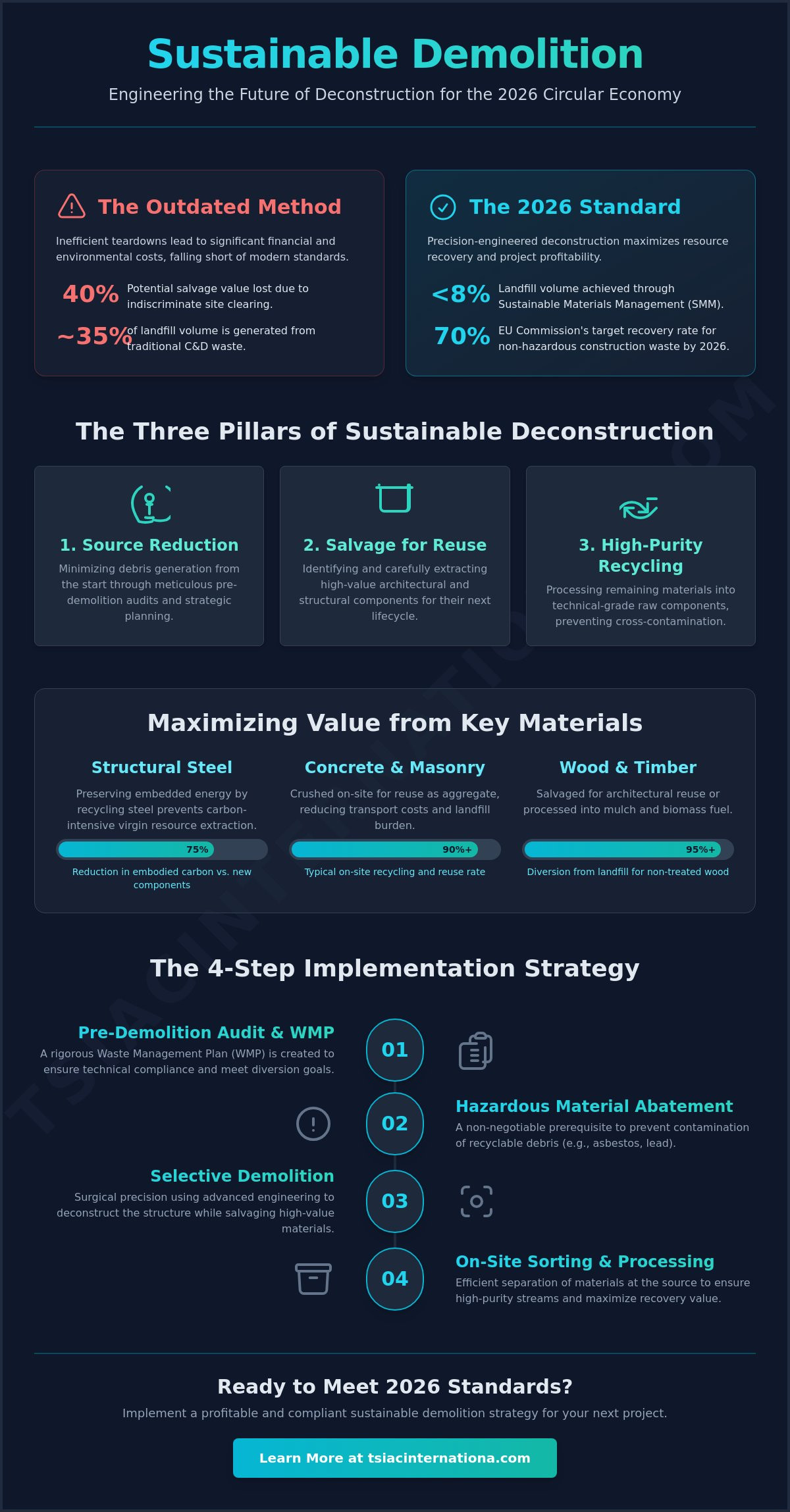
By 2026, the European Commission’s Circular Economy Action Plan targets a 70% recovery rate for non-hazardous construction waste, yet many projects still lose 40% of their potential salvage value to inefficient teardowns. You’re likely facing the dual pressure of escalating landfill tipping fees and the rigorous documentation required for BREEAM or LEED certifications. It’s clear that the era of indiscriminate site clearing has ended. Adopting sustainable demolition practices isn’t just an environmental choice; it’s a structural necessity for maintaining project profitability and regulatory standing in an increasingly complex industrial market.

We understand that managing hazardous material contamination while trying to hit recovery targets often feels like a technical bottleneck. This guide shows you how to overcome those constraints. Discover how modern sustainable demolition maximizes material recovery and ensures safety through precision engineering and hazardous material abatement. We’ll outline the exact technical protocols for 2026, including robotic deconstruction sequences and the latest methods for isolating legacy pollutants without compromising your site timelines.

Key Takeaways

  • Understand the critical shift from traditional wrecking to strategic deconstruction, aligning your project with 2026 circular economy standards.
  • Master the engineering precision required for selective demolition to maintain structural integrity while salvaging high-value materials for renovation.
  • Learn why professional hazardous material abatement is a non-negotiable prerequisite for sustainable demolition practices to prevent the contamination of recyclable debris.
  • Identify advanced on-site sorting strategies for wood, metal, and concrete to maximize material recovery and reduce landfill reliance.
  • Discover how to implement a rigorous Waste Management Plan (WMP) through pre-demolition audits to ensure technical compliance and meet diversion goals.

Defining Sustainable Demolition: Beyond Landfill Diversion in 2026

The industry shifted. By 2026, the era of the wrecking ball has concluded. Professional structural removal now centers on resource recovery rather than simple destruction. We view buildings as material banks. This evolution is driven by the 2026 European Green Deal targets and global circular economy mandates. Implementing sustainable demolition practices is no longer a choice for premium projects; it’s a technical requirement. Traditional methods often resulted in 35% to 40% of landfill volume coming from construction waste. Modern engineering-led approaches reduce this to less than 8% through Sustainable Materials Management (SMM).

Project timelines now account for meticulous dismantling. While the initial phase might take 12% to 15% longer than traditional demolition, the ROI improves through reduced disposal fees and the sale of recovered assets. Precision in structural removal ensures that high-value materials remain intact for their next lifecycle. This disciplined approach requires advanced technical planning and a deep understanding of structural integrity.

The Core Pillars of Sustainable Deconstruction

Systematic Deconstruction prioritizes the hierarchy of waste through three primary channels. Source reduction begins during the planning phase. We analyze the structural assembly to minimize debris generation before a single tool touches the site. Salvage for reuse focuses on identifying high-value architectural and structural components. High-purity recycling streams then process the remaining materials into technical-grade raw components for new manufacturing. This methodical separation at the source prevents cross-contamination, which is essential for maintaining material value in a circular economy.

Why Embedded Energy Matters in 2026

Every ton of structural steel or masonry represents a massive energy investment from its original production. Preserving these materials prevents the carbon-intensive extraction of virgin resources. In 2026, the carbon footprint of a project is as critical as its budget. Recovered structural steel can reduce the embodied carbon of a new build by up to 75% compared to using new components. Masonry recovery similarly offsets the energy required for kiln-firing new bricks. These sustainable demolition practices provide a stable economic return while meeting strict environmental compliance standards. We prioritize the preservation of this embedded energy to ensure long-term project viability and environmental responsibility.

Selective Demolition and Deconstruction: Surgical Precision for Recovery

Selective demolition represents a fundamental shift from blunt force to engineering precision. Unlike total structural removal, which often results in commingled waste that is difficult to process, selective methods preserve the primary structure while removing specific components. This approach is foundational to sustainable demolition practices in 2026. Engineers must conduct rigorous load-path analyses before work begins. This ensures that removing a secondary wall or floor slab doesn’t compromise the building’s overall stability. Precision is mandatory. Technical teams use real-time structural monitoring sensors to detect shifts as small as 0.5 millimeters during the removal process.

Surgical removal maximizes the purity of recycled material streams by separating components at the source. According to the EPA’s guidelines on the Sustainable Management of C&D Materials, source separation is the most effective way to reduce contamination. When materials like concrete, steel, and timber are harvested individually, they retain a higher market value. By 2025, projects utilizing these methods achieved purity levels exceeding 97% for metallic scrap, significantly lowering the energy required for secondary smelting.

The Benefits of Commercial Interior Gutting

Stripping a commercial space to its shell is a critical phase in sustainable urban redevelopment. This process involves the meticulous removal of non-structural elements like HVAC systems, acoustic ceiling tiles, and electrical wiring. In 2024, industrial audits showed that interior gutting can recover up to 82% of copper and aluminum components if performed correctly. For developers, choosing Commercial Interior Gutting Services ensures the building remains viable for modern tenant improvements while diverting dozens of tons of debris from local landfills.

Structural Deconstruction: A Piece-by-Piece Approach

Modern deconstruction requires taking a building down in the exact reverse order of its construction. This methodology relies on heavy machinery equipped with hydraulic shears and pulverizers for precise dismantling. In confined urban spaces or hazardous environments, robotic demolition units provide a safer alternative. These remote-controlled machines can operate on floor loads as low as 250 kg/m², allowing for surgical removal in areas where traditional excavators are too heavy. Our team applies these engineering principles to every project to ensure safety and resource efficiency. If your next renovation requires this level of technical oversight, you can consult with our structural specialists to review your specific site requirements.

  • Sequence Planning: Engineers develop a step-by-step “de-construction” manual to maintain center-of-gravity balance.
  • High-Reach Techniques: Excavators with 30-meter booms allow operators to dismantle upper stories with millimeter precision, minimizing dust and vibration.
  • Robotic Integration: Small-scale robots handle interior wall removal in tight spaces, reducing the physical strain on human workers by 60%.

Sustainable Demolition Practices: The 2026 Guide to Environmental Structural Removal

The Role of Abatement in Sustainable Practices: Managing Asbestos and Lead

True sustainable demolition practices start long before the first excavator arrives on site. Hazardous material abatement is the non-negotiable foundation of any environmentally responsible project. If toxic substances remain during structural removal, they compromise the entire waste stream. This makes the separation of hazardous elements a technical necessity rather than just a legal obligation. By 2026, the industry has shifted toward a “zero-contamination” baseline where the purity of salvaged materials determines the project’s overall success.

The danger of cross-contamination is the primary reason why abatement must be executed with engineering precision. A single kilogram of asbestos-containing material can contaminate 20 tons of clean concrete rubble. Once mixed, that entire load is classified as hazardous waste, which prevents it from being crushed and reused as aggregate. This failure doubles the environmental impact: it fills up specialized landfills and necessitates the mining of virgin materials for new construction. Professional abatement teams use 2026-standard high-efficiency particulate air (HEPA) filtration systems to ensure that toxic dust doesn’t migrate into recyclable wood or masonry piles.

Regulatory requirements in 2026 have become increasingly stringent regarding the containment and disposal of these materials. Occupational Safety and Health Administration (OSHA) and EPA guidelines now mandate 100% verification of hazardous material removal before any mechanical demolition begins. This protects more than just the workers on the site. It safeguards the surrounding community and local ecosystems from “toxic plumes” that were common in older, less regulated demolition methods. Data from 2025 indicates that projects utilizing advanced containment protocols reduced local particulate matter emissions by 85% compared to traditional “smash and haul” techniques.

Asbestos Abatement as a Prerequisite for Recycling

Identifying both friable and non-friable asbestos is critical for maintaining clean material streams. Friable materials, which crumble under hand pressure, pose the most immediate airborne risk. Non-friable materials like floor tiles or roofing felt must be removed intact to prevent fiber release. Ensuring that concrete and wood streams remain “clean” allows for high-value secondary use. For detailed compliance steps, see our Asbestos Removal in South Carolina guide, which outlines the latest safety protocols.

Lead-Based Paint and Mold Remediation

Stabilizing lead-contaminated surfaces during selective demolition prevents lead dust from leaching into the soil or contaminating metal scrap. The intersection of mold remediation and sustainable interior gutting is equally vital. Removing biological hazards before stripping interior finishes ensures that salvaged wood and drywall components are safe for processing. Property owners should consult the Hazardous Material Abatement manual to understand how these processes integrate into a broader environmental strategy. These sustainable demolition practices ensure that the site is left clean for future generations while maximizing the recovery of valuable building assets.

Resource Management: Recycling Wood, Metal, and Concrete

Sustainable demolition practices rely on the surgical separation of materials at the source. Mixing debris reduces the value of every component and increases disposal costs. We implement rigorous on-site sorting protocols to ensure that 90% of structural materials remain uncontaminated. This logistical precision transforms a demolition site into a resource recovery center. By categorizing waste into clean streams, we maximize the lifecycle of every building element.

Recovered wood isn’t just waste; it’s a high-value asset. Large-scale structural timber from industrial sites often finds new life in modern construction as reclaimed beams. These materials carry a premium in the 2026 market due to their stability and aesthetic character. Smaller wood sections are processed into architectural accents or engineered wood products. This circular approach preserves the carbon sequestered within the timber for decades longer.

Metals represent the most efficient recovery stream in commercial projects. Ferrous metals, such as structural steel beams, are 100% recyclable without loss of quality. Non-ferrous metals like copper wiring and aluminum cladding offer even higher recovery values. Current market data from 2025 indicates that using secondary steel reduces production energy consumption by 75% compared to virgin ore. Our teams prioritize the extraction of these materials to offset project costs and support industrial sustainability.

  • On-site sorting: Prevents cross-contamination of gypsum and masonry.
  • Timber grading: Identifies structural versus decorative reuse potential.
  • Metal recovery: Captures high-value copper, brass, and stainless steel.
  • Logistical efficiency: Reduces the number of haul-off trips by 20%.

Managing Masonry and Concrete Debris

On-site crushing is often the most sustainable choice for large-scale removals. It eliminates the carbon footprint associated with transporting heavy debris to distant facilities. This process converts concrete into Recycled Concrete Aggregate (RCA), which now meets the 2026 engineering standards for use in road bases and new structural fills. Diverting these heavy materials from landfills prevents the unnecessary expansion of waste sites. When on-site space is limited, we utilize regional hubs that process masonry into certified aggregate for local infrastructure projects.

Specialized Recycling: Drywall, Glass, and Plastics

Processing gypsum wallboard requires specific handling to prevent the release of hydrogen sulfide gas in landfills. We work with specialized facilities that separate the paper backing from the gypsum core for agricultural or manufacturing reuse. Modern commercial facades also present a challenge with composite plastics and high-performance glass. These materials are stripped and sent to dedicated processors that can handle complex polymers. Managing these specialized streams ensures that even the most difficult components of a building contribute to a circular economy.

Discover how our engineering team manages complex structural removal projects with maximum resource recovery and technical precision.

Implementing a Sustainable Demolition Strategy for Your Project

Transitioning to sustainable demolition practices requires a structured, engineering-led approach rather than a simple “smash and haul” mentality. The process begins with a comprehensive pre-demolition audit. This technical assessment catalogs every material within the structure, separating hazardous substances like asbestos or lead from high-value salvageable assets. According to EPA data from 2018, the United States generated 600 million tons of C&D debris. A rigorous audit identifies which portions of that volume, such as structural steel or crushed concrete, can be diverted back into the supply chain. Engineers use these findings to create a site-specific Waste Management Plan (WMP).

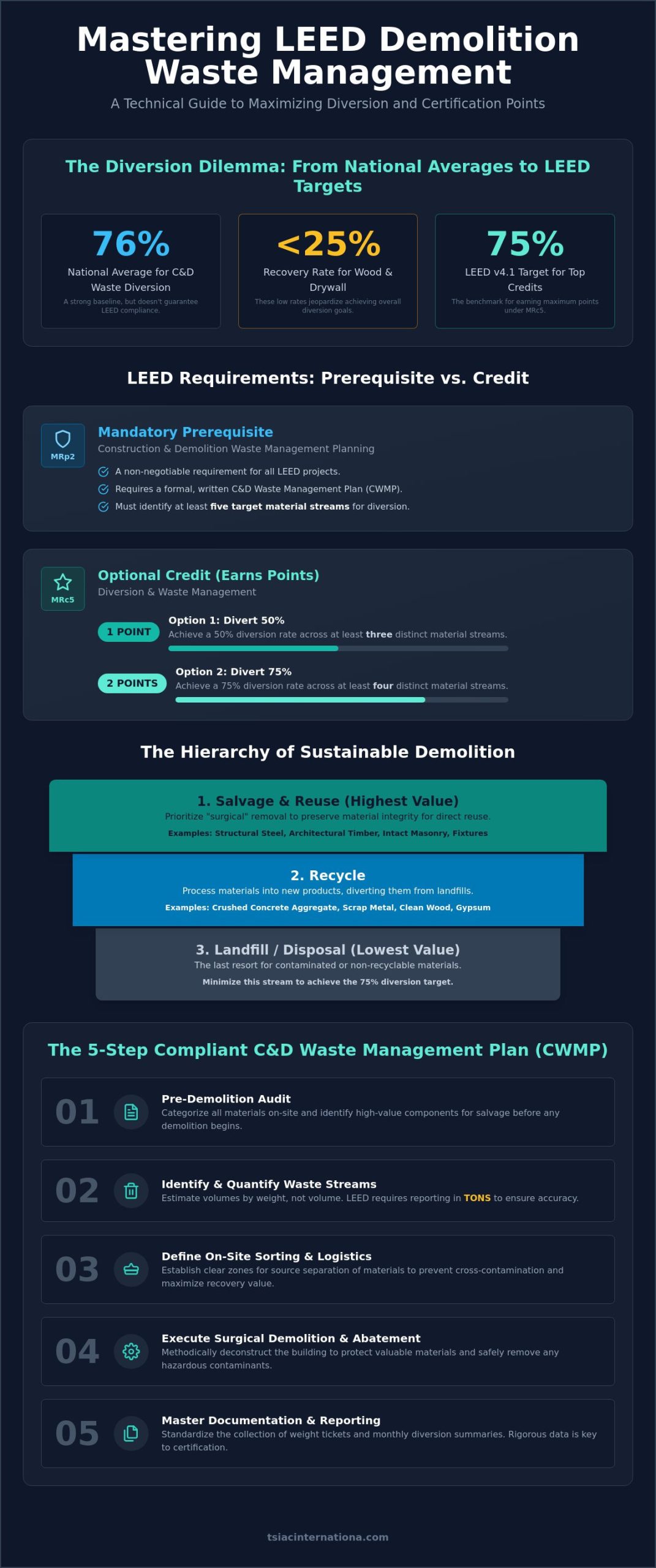
Your WMP must establish clear diversion goals. Setting a target of 75% or higher for material recovery is standard for modern green building certifications. This plan dictates the logistics of on-site sorting and identifies the specific recycling facilities that will accept processed materials. It’s a roadmap that ensures accountability from the first day of mobilization to the final site clearance. Without a documented plan, tracking the lifecycle of debris becomes impossible, which jeopardizes your project’s compliance and environmental standing.

Choosing the Right Sustainable Demolition Partner

Success depends on selecting a contractor who views deconstruction as a precision task. You should evaluate potential partners based on their Experience Modification Rate (EMR) and their inventory of specialized equipment, such as high-reach excavators equipped with hydraulic shears for clean steel recovery. Transparency is the cornerstone of this partnership. A reliable firm provides detailed reporting on every ton of material moved. You can learn more about how these phases integrate by reviewing The Demolition Process. We focus on technical accuracy to ensure that salvageable materials retain their structural integrity for future use.

Safety and Compliance in Sustainable Operations

Sustainability and safety are inseparable. Complex deconstruction tasks require strict adherence to OSHA 1926 standards, especially when working in tight urban environments or at significant heights. Effective site management includes real-time air monitoring and advanced dust control systems to protect both workers and the surrounding community. At TSIAC International, we prioritize these safety protocols to maintain a controlled environment. High-efficiency particulate air (HEPA) filtration and wet-method suppression are non-negotiable for 2026 projects. These measures prevent environmental contamination while the site is prepared for its next phase of development.

Final site clearance is the culmination of these efforts. Once the structure is removed and the ground is stabilized, the contractor must provide a final report documenting the total diversion rate. This data is essential for LEED certification or other green building credits. It proves that your project adhered to sustainable demolition practices from inception to completion. Proper documentation turns a cleared lot into a certified foundation for future growth.

Elevating Structural Removal Standards for 2026 and Beyond

Transitioning to sustainable demolition practices requires a shift from blunt force to engineering precision. By 2026, successful projects must integrate selective deconstruction and rigorous abatement protocols to manage hazardous materials like asbestos and lead safely. This approach ensures that structural debris, including wood, metal, and plastic, is diverted from landfills through comprehensive on-site recycling. Efficiency in modern demolition depends on technical mastery and a firm commitment to safety.

TSIAC International brings over 15 years of specialized expertise in hazardous material handling and structural removal. Our teams implement OSHA-compliant safety protocols on every site, ensuring even the most complex selective projects remain under total control. We provide the technical solutions needed for challenging locations, turning structural liabilities into recovered resources. Ready to secure your project’s environmental future? Contact TSIAC International for a Professional Sustainable Demolition Quote and partner with a team that delivers engineering-grade results. Your next project deserves the reliability and precision that only a seasoned industry leader can provide.

Frequently Asked Questions

What is the difference between traditional demolition and sustainable deconstruction?

Traditional demolition prioritizes rapid site clearance through mechanical destruction, while sustainable deconstruction focuses on the systematic disassembly of components for reuse. This methodical approach allows contractors to salvage up to 90 percent of structural materials. By 2026, engineering standards require high-precision sorting at the source to ensure that timber, steel, and masonry retain their structural properties for secondary markets.

How does sustainable demolition affect the total project cost in 2026?

Implementing sustainable demolition practices reduces total project costs by offsetting disposal fees through the sale of salvaged assets and the avoidance of landfill taxes. While labor hours increase by 15 percent, the reduction in waste transport costs typically balances the budget. Industry data from 2025 indicates that projects utilizing on-site crushing for concrete aggregate save approximately 12 percent on procurement for new foundation phases.

Can hazardous materials like asbestos be recycled during demolition?

Hazardous materials like asbestos cannot be recycled and must be handled according to strict stabilization and deep-burial protocols. Regulations in 2026 mandate that these substances are isolated within the first 48 hours of site preparation to prevent cross-contamination of recyclable streams. Specialized filtration units and sealed transport containers ensure that 100 percent of hazardous particulates are contained, protecting both the workforce and the environment.

What percentage of demolition waste can typically be diverted from landfills?

Advanced structural removal projects can divert between 85 and 95 percent of total debris from landfills through rigorous sorting protocols. This figure depends on the building’s material composition, with steel-framed structures yielding the highest recovery rates. Standardized reporting in 2026 requires contractors to provide certified weight tickets for every material stream, documenting the exact path from the project site to the processing facility.

Is selective demolition more sustainable than a total building gut-out?

Selective demolition is significantly more sustainable because it focuses on removing specific interior or structural elements while preserving the primary building envelope. This technique reduces the volume of new materials required for reconstruction by up to 40 percent compared to a total gut-out. It requires high-level engineering precision and often employs industrial rope access or specialized shoring to maintain structural stability during the process.

How do sustainable practices impact the timeline of a commercial demolition project?

Sustainable practices typically extend the demolition phase by 20 percent due to the labor-intensive nature of material separation and cataloging. A project that takes 30 days using traditional methods will require approximately 36 days when employing deconstruction techniques. This investment in time ensures that high-value components, such as HVAC units or structural steel beams, remain intact for resale or immediate reintegration into the new build.

What are the legal requirements for managing C&D waste in 2026?

Legal requirements in 2026 mandate a comprehensive Waste Management Plan for all commercial projects exceeding 500 square meters. These regulations require digital tracking of all Construction and Demolition waste to ensure compliance with national diversion targets. Failure to meet the 70 percent minimum recovery threshold results in significant administrative penalties and potential project delays until a remediation strategy is approved by environmental authorities.

What role does heavy machinery play in sustainable demolition?

Modern heavy machinery utilizes precision attachments like hydraulic shears and pulverizers to separate materials at the point of contact, which is essential for high-yield recycling. Electric-powered excavators and low-emission crushers now reduce site-level carbon output by 25 percent compared to 2020 benchmarks. These specialized tools allow operators to process concrete and steel with surgical accuracy, minimizing dust and noise pollution in dense urban environments.

Eco-Friendly Demolition Services: The Complete 2026 Guide to Sustainable Deconstruction

The EPA reports that construction and demolition debris reached 600 million tons in a single year, a figure more than double the volume of standard…

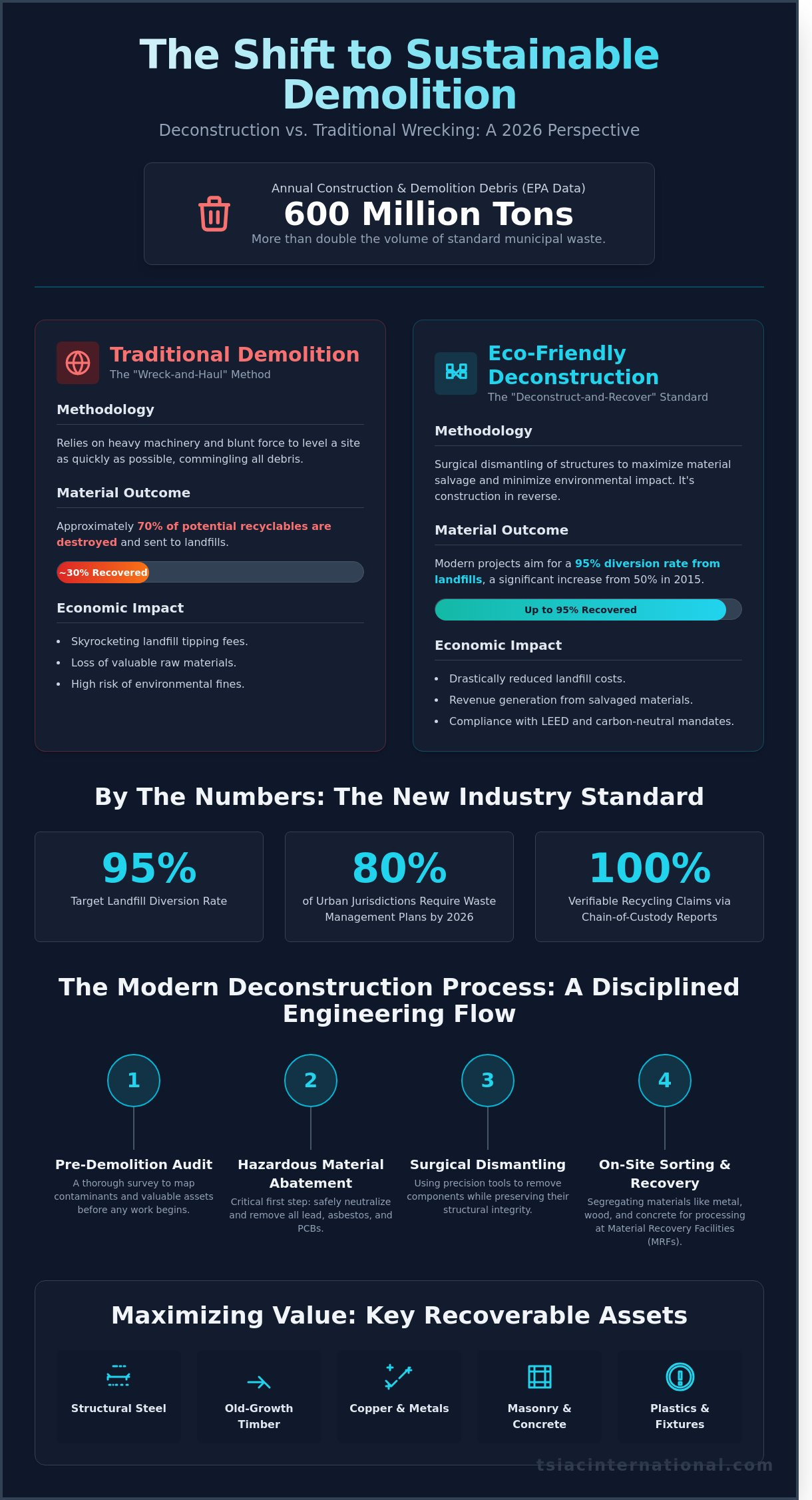
The EPA reports that construction and demolition debris reached 600 million tons in a single year, a figure more than double the volume of standard municipal waste. You likely recognize this reality through the lens of skyrocketing landfill tipping fees and the increasingly complex documentation required to meet 2026 LEED standards. Balancing the removal of hazardous materials like lead and asbestos with the need for strict budget adherence often feels like a zero-sum game. It doesn’t have to be.

By integrating professional eco-friendly demolition services, you can pivot from traditional site clearing to a high-precision deconstruction model. This guide explains how modern recovery techniques allow you to reclaim valuable assets and significantly lower project costs through strategic salvage operations. We’ll outline the technical process of deconstruction, the protocols for verified hazardous material safety, and the engineering logic that makes sustainable demolition the most cost-effective choice for complex industrial projects.

Key Takeaways

  • Learn why modern deconstruction is replacing traditional “wreck-and-haul” methods to maximize material recovery and environmental protection.
  • Understand the critical role of integrated hazardous material abatement and surgical dismantling in ensuring site safety and structural integrity.
  • Discover how eco-friendly demolition services reduce total project costs by diverting waste from landfills and generating value from recovered scrap.
  • Identify the essential components of a successful project, from conducting pre-demolition audits to securing regulatory approval through Waste Management Plans.
  • Explore how precision engineering and industrial expertise allow for the systematic salvage of wood, metal, and plastic in complex environments.

What Are Eco-Friendly Demolition Services in 2026?

In 2026, the construction sector views waste as a fundamental resource failure. Eco-friendly demolition services represent the systematic dismantling of structures designed to maximize material salvage and minimize environmental degradation. This methodology has replaced the obsolete “wreck-and-haul” practices that dominated the industry for decades. Modern engineers and project managers now prioritize “deconstruct-and-recover” strategies. These processes integrate selective demolition, precise on-site sorting, and rigorous hazardous material remediation to ensure that nothing of value reaches a landfill.

Sustainability has transitioned from a niche preference to the absolute industry standard for both commercial and residential projects. This shift is driven by strict regulatory frameworks. By 2026, over 80% of urban jurisdictions require detailed waste management plans before any permit is issued. Developers don’t just choose green methods for the environment; they do it to comply with carbon-neutral mandates and to recapture the value of high-grade materials like structural steel and old-growth timber.

Deconstruction vs. Traditional Demolition

Traditional demolition relies on heavy machinery to level a site in the shortest possible timeframe. While this method is fast, it destroys approximately 70% of potential recyclables by commingling debris with contaminants. In contrast, Deconstruction involves the manual or semi-automated removal of building components to preserve their structural integrity. It’s essentially construction in reverse.

Most 2026 projects utilize a hybrid approach. This strategy uses high-reach excavators for primary structural elements but employs specialized teams for the selective removal of copper, masonry, and architectural features. This balance maintains project timelines while meeting modern environmental responsibilities. It’s a calculated, engineering-led process that treats every building as a vertical warehouse of raw materials.

The Role of Material Recovery Facilities (MRFs)

The process doesn’t end when the trucks leave the site. Material Recovery Facilities (MRFs) are the backbone of the circular economy in the demolition sector. These centers use advanced optical sorters and robotic systems to process debris with surgical precision. Leading eco-friendly demolition services now aim for a 95% diversion rate from landfills, a significant increase from the 50% averages seen in 2015.

Transparency is a non-negotiable requirement for modern contracts. Contractors now provide digital chain-of-custody reports for every project. These documents track every ton of concrete and steel from the site to its secondary use. This level of tracking ensures that 100% of the recycling claims are verifiable through third-party audits, providing the technical proof that stakeholders and regulatory bodies demand.

The Mechanics of Sustainable Deconstruction and Abatement

Sustainable deconstruction isn’t a blunt force activity; it’s a disciplined engineering process. Unlike traditional methods that rely on wrecking balls and high-impact collisions, eco-friendly demolition services utilize surgical precision to dismantle structures. This approach involves removing specific building components while protecting the remaining structure and surrounding environment. We rely on high-reach excavators equipped with precision cutters and hydraulic shears to minimize vibration, noise, and dust. By 2026, these technical standards have become the baseline for projects requiring high levels of control and safety.

The sequence begins with integrated hazardous material abatement. This is the critical first step of any green demolition project. We don’t start structural work until every trace of lead, asbestos, and PCBs is identified and neutralized. Modern site management requires a thorough pre-demolition survey to map out these contaminants, ensuring they don’t enter the waste stream or the atmosphere. It’s a technical necessity that protects both the workforce and the long-term viability of the land.

Safely Managing Asbestos and Lead

Rigorous asbestos removal is vital for preventing environmental contamination during the deconstruction phase. Our teams implement strict containment strategies, including the use of negative pressure enclosures and HEPA filtration systems to capture microscopic fibers. Regulatory compliance isn’t just a hurdle; it’s a safety mandate. We meet all EPA and OSHA standards for hazardous waste disposal, ensuring that toxic materials are transported to specialized facilities. This fomalized process prevents the release of lead dust and asbestos into the local ecosystem, maintaining the site’s environmental integrity.

Selective Interior Gutting

Selective gutting focuses on stripping interiors down to the structural studs to recover high-value assets. This process is essential for commercial interior gutting services where tenant improvements require a clean slate without destroying the building’s shell. Reusing and recycling construction and demolition (C&D) materials like copper wiring, structural steel, and architectural fixtures can divert up to 90% of interior debris from landfills.

Our technicians use specialized hand tools and small-scale machinery to preserve historical or architectural elements during complex renovations. This level of care ensures that unique materials, such as reclaimed timber or vintage masonry, are salvaged for future use rather than discarded. If your project involves complex structural challenges, you can consult with our technical team to develop a customized deconstruction plan that prioritizes material recovery and site safety.

Eco-Friendly Demolition Services: The Complete 2026 Guide to Sustainable Deconstruction

Economic Benefits: Why Green Demolition Saves Money

Adopting eco-friendly demolition services isn’t merely a choice for environmental stewardship; it’s a strategic financial decision. Traditional demolition focuses on speed, often resulting in high disposal costs that eat into project margins. In contrast, a controlled deconstruction approach treats a building as a repository of valuable assets. By diverting heavy materials like concrete and structural steel from landfills, contractors avoid escalating tipping fees, which in some jurisdictions can exceed $100 per ton. This shift from waste disposal to material management changes the fundamental math of a project’s budget.

The financial recovery starts with scrap value. Recovered structural steel, copper wiring, and architectural salvage like old-growth timber hold significant market value. These materials can be sold directly to recyclers or reclaimed wood dealers to offset labor costs. Integrating Sustainable Deconstruction practices into the initial planning phase allows for the systematic removal of these high-value items before the heavy machinery arrives, ensuring maximum recovery rates and cleaner material streams.

Reducing Disposal and Transportation Costs

Logistical efficiency is the backbone of a profitable site clearance. On-site crushing of concrete is a primary example of how engineering precision saves money. Instead of paying to haul concrete debris away and then paying again to bring in virgin aggregate, we process the material on-site. This crushed concrete serves as an immediate, high-quality road base or backfill. This process eliminates dozens of haul-off loads, directly reducing fuel consumption and truck rental expenses.

Effective material sorting at the source further minimizes costs. When waste is co-mingled, it’s charged at the highest possible disposal rate. By separating masonry, metal, and wood, we tap into lower recycling rates. Local recycling markets play a decisive role here; proximity to specialized processing centers can reduce transportation overhead by 15% to 22% compared to long-distance landfill hauls.

Long-Term Liability Reduction

Financial risk management is built into every step of the demolition process. Choosing “cheap” demolition often leads to hidden costs, such as soil remediation or legal penalties for improper waste handling. Professional eco-friendly demolition services provide rigorous documentation and hazardous waste tracking. This transparency protects the property owner from future litigation and ensures the site remains a high-value asset for future development.

Sustainable practices also unlock specific financial incentives. LEED certification offers points for construction and demolition waste management, which can increase a building’s market value and attract premium tenants. Many federal and state grants for brownfield redevelopment cover 20% to 35% of cleanup costs if sustainable methods are used. By ensuring a clean, documented site, developers avoid the 404 errors of the physical world: unexpected environmental liabilities that stall progress and drain capital years after the project is finished.

Planning Your Eco-Friendly Demolition Project

Execution of eco-friendly demolition services requires a transition from traditional destruction to a structured deconstruction methodology. This phase begins with a rigorous pre-demolition audit. In 2024, industry data indicated that projects utilizing a detailed audit achieved a 25% higher recovery rate for high-value materials like structural timber and architectural steel. We treat every structure as a resource bank rather than a waste source. A comprehensive Waste Management Plan (WMP) serves as the technical blueprint for the entire operation. This document isn’t merely a formality for regulatory approval; it’s a log of every kilogram of material expected to leave the site. By 2025, over 60% of municipal jurisdictions required a WMP that identifies specific downstream recycling facilities before a single brick is moved.

The timeline for sustainable projects differs from conventional methods. Precision takes time. You must account for the sequential dismantling of components to prevent cross-contamination. Monitoring and documenting the recovery rate throughout the project ensures compliance with the 90% waste diversion targets often required for green building certifications. Effective management involves:

  • Regulatory Alignment: Securing permits that specifically acknowledge deconstruction methods.
  • Environmental Clearances: Obtaining site-specific air and water quality protections.
  • Logistics Planning: Coordinating the transport of salvaged goods to secondary markets to avoid onsite clutter.

The Pre-Demolition Site Assessment

A professional assessment identifies the safest path for dismantling while maximizing asset recovery. Structural analysis determines load-bearing priorities, ensuring the building remains stable as layers are removed. Hazardous materials surveys are mandatory; they test for asbestos, lead paint, and mold to prevent environmental contamination. We create an inventory of reusable assets, such as heavy structural timber and high-grade fixtures, which can be diverted from landfills. This engineering-led approach minimizes risks and optimizes the financial return on salvaged materials.

Selecting a Sustainable Demolition Contractor

You need a partner with a proven track record in complex execution and structural safety. Verification of licenses and specialized insurance is the baseline. Review their past recovery reports to see if they consistently meet or exceed a 75% diversion rate. Assess their equipment; modern eco-friendly demolition services utilize specialized attachments for sorting and crushing material onsite. A contractor’s ability to manage specialized abatement internally, rather than outsourcing, often leads to better communication and tighter safety controls on the job site.

To ensure your project meets the highest standards of engineering precision, consult our experts on complex execution and structural safety for your next deconstruction phase.

TSIAC International: Precision Engineering in Sustainable Demolition

TSIAC International brings over 15 years of specialized experience to the field of complex structural removal and hazardous material abatement. We operate with a philosophy where engineering precision dictates every action on-site. This disciplined approach is vital in high-stakes environments, including heavy industrial plants, dense commercial hubs, and sensitive residential developments. We don’t just clear land; we manage assets through a rigorous framework of safety and environmental compliance that exceeds standard industry requirements.

Our commitment to eco-friendly demolition services is evidenced by our aggressive resource recovery rates. We prioritize the systematic extraction and sorting of wood, metal, and plastic on every project we undertake. By treating these materials as valuable commodities rather than debris, we support the circular economy and significantly reduce the carbon footprint of the entire construction cycle. In 2024, our recovery protocols successfully diverted over 85% of non-hazardous site materials from local landfills, proving that large-scale removals can be both efficient and sustainable.

  • Industrial Expertise: Safe dismantling of steel structures and manufacturing facilities.
  • Commercial Precision: Selective deconstruction in active business environments with minimal disruption.
  • Residential Care: Careful gutting and material salvage for high-end renovations and historic preservation.

The TSIAC Methodology

Our process begins with customized recovery plans tailored to the specific structural needs of each property. We recognize that a 40-year-old industrial warehouse requires a different tactical approach than a modern commercial office. Our teams utilize advanced abatement techniques for the seamless removal of hazardous materials, ensuring that contaminants like asbestos or lead are neutralized before deconstruction begins. Transparency is a cornerstone of our service. We provide clients with clear, data-driven reports on waste diversion, documenting exactly how much material was salvaged, recycled, or repurposed.

Start Your Sustainable Project Today

Ready to partner with a team that values precision and environmental responsibility? Request a Professional Demolition Estimate from TSIAC International to begin your next phase of development with confidence.

Advancing Your Project With Engineering Precision

The shift toward circular construction models isn’t just a trend; it’s a structural necessity for the 2026 industrial landscape. By prioritizing deconstruction over traditional methods, projects can achieve material recovery rates exceeding 90% in many documented cases. This precision approach ensures that hazardous material abatement complies with the strictest environmental regulations while protecting the long term value of your site. Choosing eco-friendly demolition services allows developers to leverage specific economic benefits, including reduced landfill fees and documented tax credits for diverted waste.

TSIAC International brings over 15 years of industry experience and comprehensive hazardous material abatement certification to every site. We ensure that even the most complex technical challenges are managed with engineering rigor. Our proven track record of high material recovery rates transforms what was once considered waste into valuable assets for future development. It’s time to set a higher standard for your site’s lifecycle management.

Partner with TSIAC International for Your Next Sustainable Project

Your next project deserves the reliability and safety that only a seasoned engineering partner can provide.

Frequently Asked Questions

Is eco-friendly demolition more expensive than traditional demolition?

Initial labor costs for deconstruction are typically higher, but tax incentives and avoided landfill fees often offset these expenses. According to the EPA, deconstruction can divert up to 90% of a building’s materials from landfills. Salvaged materials like old-growth timber or architectural features hold significant resale value that lowers the total project expenditure. It’s a strategic investment rather than a simple cost increase.

What is the difference between deconstruction and demolition?

Demolition involves the rapid destruction of a structure using heavy machinery like excavators or wrecking balls. Deconstruction is the systematic disassembly of a building to maximize material recovery. This process prioritizes the preservation of components for immediate reuse. While traditional methods treat everything as waste, deconstruction views the building as a source of high-quality raw materials for future projects.

Can all building materials be recycled during demolition?

Not all materials are recyclable, but modern industrial processes allow for the recovery of approximately 75% to 95% of debris in eco-friendly demolition services. Concrete is crushed for road base, while steel and aluminum are infinitely recyclable without losing structural integrity. Composite materials and certain treated lumbers remain difficult to process. We focus on segregating materials at the source to prevent cross-contamination.

How long does an eco-friendly deconstruction project usually take?

A full deconstruction project typically requires 2 to 4 times longer than traditional mechanical demolition. A 2,000 square foot residential structure might take 2 weeks to disassemble manually compared to 2 days for machine-led destruction. This timeline reflects the precision required to remove fasteners and preserve the integrity of salvaged assets. We plan these schedules into the critical path of every construction project.

What happens to hazardous materials like asbestos during green demolition?

Hazardous materials undergo strict abatement protocols before any structural disassembly begins. Regulations like the EPA’s NESHAP standards require certified professionals to seal and remove asbestos-containing materials in airtight containers. These materials can’t be recycled and must be transported to specialized hazardous waste landfills. Safety remains the primary objective during these technical procedures to ensure the site’s environmental integrity.

Do I need a special permit for eco-friendly demolition services?

Most jurisdictions require standard demolition permits, but many cities now mandate a Waste Management Plan for eco-friendly demolition services. For example, San Francisco requires 65% of all construction and demolition debris to be diverted from landfills. You’ll need to document material weights and destination facilities to comply with local environmental ordinances. Our engineering team handles the technical documentation required for these approvals.

How does sustainable demolition help with LEED certification?

Sustainable demolition directly contributes to the Construction and Demolition Waste Management credit under the LEED v4.1 rating system. Projects can earn up to 2 points by diverting 50% to 75% of debris from landfills. Utilizing deconstruction also supports the Building Product Disclosure and Optimization credits. This systematic approach provides the verified data needed for the final certification audit and improves the building’s overall environmental score.

Can selective demolition be performed while a building is still occupied?

Yes, selective deconstruction is frequently executed in occupied commercial spaces using dust mitigation and vibration control systems. We use HEPA-filtered negative air machines and physical barriers to isolate the work zone. This allows for the removal of specific interior components without disrupting the mechanical or electrical systems serving the rest of the facility. Precision is key to maintaining occupant safety and operational continuity.