
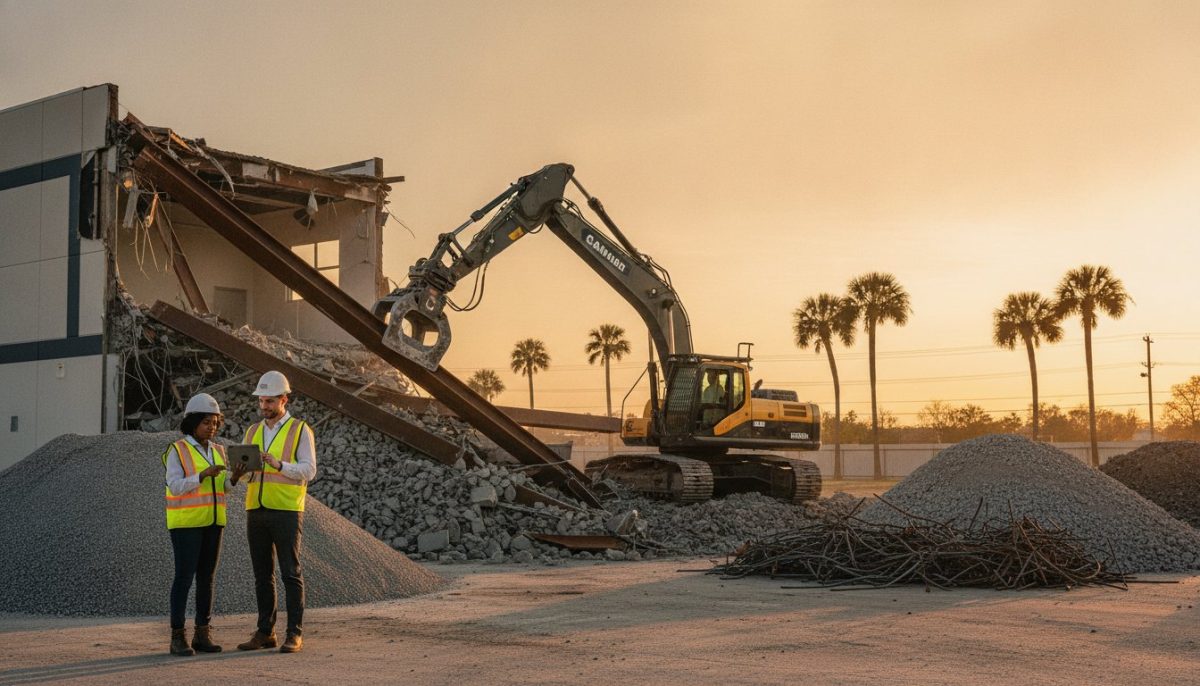
Did you know that construction and demolition debris nationwide now accounts for more than twice the total amount of municipal solid waste? Across South Carolina, where many older commercial structures contain hazardous materials like asbestos or lead, the financial burden of traditional disposal is reaching a critical breaking point. As landfill tipping fees in various regions across the state hit $46 per ton, industry leaders are shifting their focus toward the substantial cost savings from demolition recycling south carolina offers. It’s no longer just an environmental choice. It’s a calculated financial strategy to protect your project margins against rising operational costs.
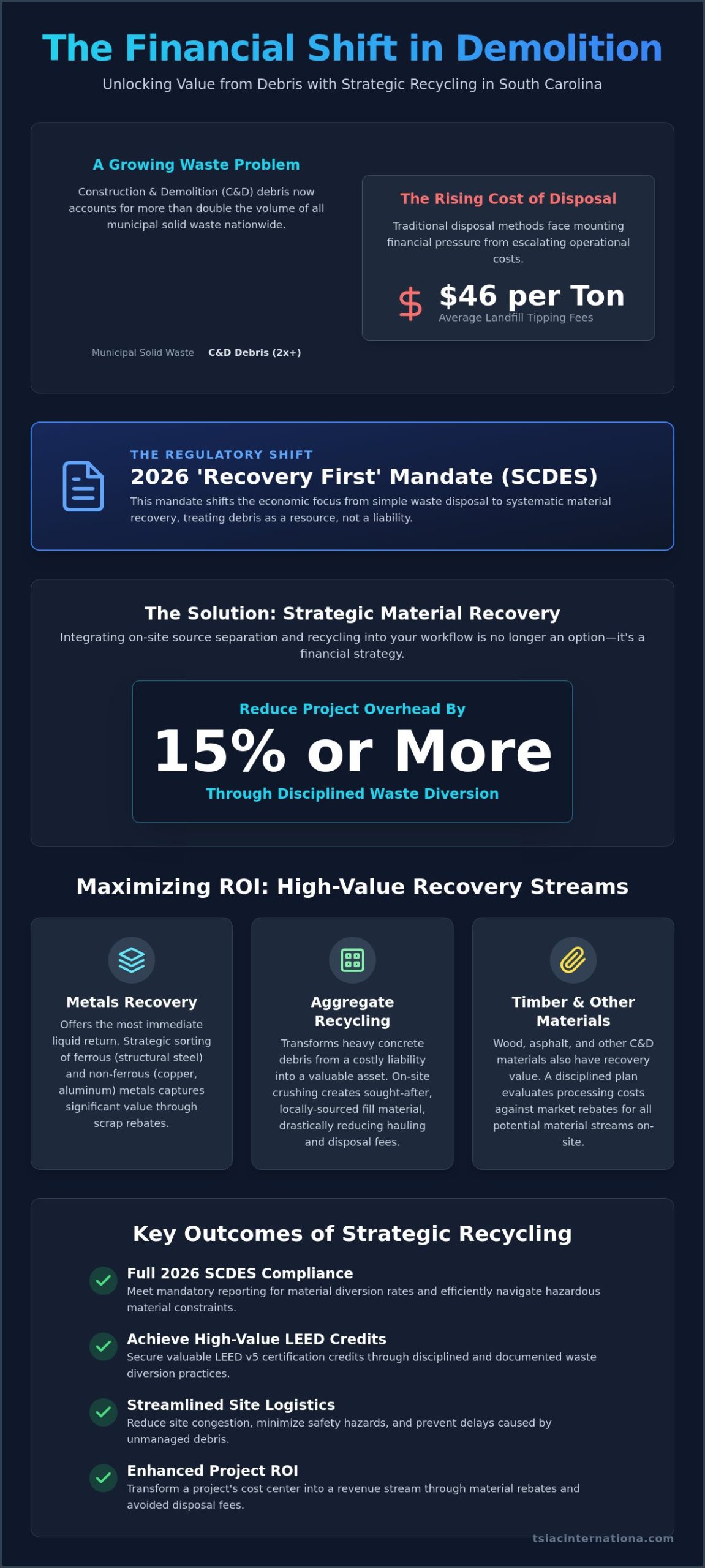
You’ve likely noticed that the 2026 South Carolina Department of Environmental Services (SCDES) regulations have added layers of technical complexity to every site teardown. We understand that navigating these audits while managing logistical debris delays can feel like a constant strain on your resources. This strategic guide will demonstrate how professional material recovery can reduce your South Carolina project overhead by 15% or more this year. We’ll examine the technical methods for on-site sorting, the path to full 2026 environmental compliance, and how to secure high-value LEED certification credits through disciplined waste diversion.
In addition to site-specific tactics, firms can achieve long-term success by building modern, effective organizations, a process facilitated by the direct management support of StrategyForge Partners.
Key Takeaways
- Understand how the 2026 ‘Recovery First’ mandate shifts the economic focus from simple waste disposal to systematic material recovery for maximum project ROI.
- Identify high-value recovery streams, including structural steel and clean concrete, to offset rising landfill tipping fees through strategic material rebates.
- Achieve measurable cost savings from demolition recycling south carolina by integrating source separation into your operational workflow to reduce overhead by 15% or more.
- Ensure full compliance with 2026 SC DES regulations by implementing mandatory reporting for material diversion rates and navigating hazardous material constraints efficiently.
- Leverage single-source expertise for abatement and structural demolition to streamline site logistics and minimize delays caused by unmanaged debris.
Understanding the Economics of Demolition Recycling in South Carolina
Demolition recycling is the systematic process of recovering construction and demolition (C&D) materials for reuse, repurposing, or financial rebate. In 2026, the South Carolina Department of Environmental Services (SCDES) has solidified a ‘Recovery First’ mandate, signaling a definitive departure from traditional “smash and haul” methods. This regulatory shift forces a transition from disposal-based project planning to a circular-economy model where debris is viewed as a resource rather than a liability. The primary economic drivers behind this change are the avoidance of escalating tipping fees and the capture of significant scrap metal revenue. By prioritizing material recovery, contractors can realize measurable cost savings from demolition recycling south carolina while maintaining full compliance with state mandates.
This evolution in the sector reflects a broader understanding of a Demolition Waste Overview, which categorizes debris not as trash, but as a collection of materials with distinct market values. A well-executed recovery plan ensures that high-value components are extracted before they’re contaminated by mixed-waste streams. This disciplined approach requires technical precision but results in a leaner, more profitable project lifecycle.
The True Cost of Landfill Disposal in 2026
Landfill tipping fees for Class II and III facilities have reached $46 per ton in counties like York and Horry. When you factor in fuel surcharges and the logistical strain of hauling debris to remote landfills, the total cost of disposal often exceeds initial budget projections. Beyond the direct invoice, unmanaged site debris creates hidden costs through site congestion and increased safety hazards. A cluttered footprint slows down heavy equipment and complicates the operational workflow, leading to labor inefficiencies that further erode project profitability. Managing these variables is essential for any firm looking to achieve cost savings from demolition recycling south carolina.
Recycling as a Revenue Stream: Beyond Waste Management
Modern demolition treats structures as inventory for asset recovery. Recovering structural steel, copper piping, and clean concrete transforms a project’s cost center into a potential revenue stream. This approach significantly boosts project ROI through material rebates, tax incentives, and the acquisition of LEED v5 diversion credits. The 2026 market demand for recycled construction aggregates remains high, as developers increasingly seek locally sourced, crushed concrete to replace expensive virgin fill material. By integrating these recovery strategies, the demolition process becomes a value-added phase of the construction cycle rather than a sunk cost.
The principle of asset recovery also applies to the disposal of old site vehicles and heavy machinery. To see how professional liquidation services handle these specific assets in other regions, you can check out Cash For Junk Cars Michigan.
Maximizing ROI Through High-Value Material Recovery
Achieving significant cost savings from demolition recycling south carolina requires a disciplined focus on high-value material streams. We categorize these assets into three primary groups: metals, aggregates, and timber. While traditional disposal treats these as a singular mixed-waste burden, a strategic recovery plan evaluates the processing costs against potential market rebates. This technical assessment is the foundation of project profitability. It ensures that the demolition phase acts as a recovery operation rather than a simple clearing task.
Ferrous and Non-Ferrous Metal Recovery
Metal recovery offers the most immediate liquid return on any commercial site. Structural steel, copper wiring, and aluminum framing carry distinct market values that fluctuate based on global demand. Success depends on timing the market for maximum scrap rebates and using specialized equipment, such as hydraulic shears or magnets, to accelerate extraction. According to the C&D Recycling Association, metal remains one of the most economically viable materials for recovery due to its infinite recyclability. Proper sorting ensures that non-ferrous metals, which command higher prices, aren’t lost in bulk steel shipments.
Aggregate Recycling: Turning Concrete into Fill
Concrete removal is often the heaviest line item in a demolition budget. On-site crushing transforms this liability into an asset. By processing concrete into structural fill or road base directly on the project site, you eliminate the $46 per ton tipping fee and the cost of hauling new aggregate. This double-sided financial benefit is a cornerstone of professional cost savings from demolition recycling south carolina. Maintaining aggregate purity is critical for meeting 2026 South Carolina construction standards. We ensure that rebar and contaminants are removed during the crushing phase to guarantee structural integrity for future builds.
In South Carolina’s 2026 commercial sector, there’s also a growing demand for reclaimed heart pine and historic timber. These materials often fetch prices far exceeding their value as mulch or fuel. Selective deconstruction allows for the preservation of these elements, turning what would be waste into a premium architectural product. Understanding these technical nuances is a key part of the demolition process in South Carolina, where material recovery is prioritized to maximize project margins.
Navigating 2026 SC DES Regulations and Hazardous Constraints
The South Carolina Department of Environmental Services (SCDES) has implemented a higher level of technical scrutiny for 2026. This oversight requires a formal notification at least 10 working days before any demolition activity begins. Beyond simple notification, the state now demands mandatory reporting of material diversion rates for commercial projects. If you fail to document exactly where your debris is processed, you risk heavy fines and immediate project stoppages. Achieving cost savings from demolition recycling south carolina isn’t just about sorting materials; it’s about proving your compliance through every phase of the project lifecycle.
The Impact of Asbestos and Lead on Recycling Feasibility
Approximately 42% of commercial structures built before 1978 in the Charleston peninsula contain hazardous materials. These substances represent the single greatest threat to your recovery margins. If asbestos fibers or lead paint contaminate a debris pile, the entire load is reclassified as hazardous waste. This technical failure increases disposal fees from the standard $46 per ton to as much as $150 per ton. Professional asbestos removal in South Carolina is the only way to ensure material purity. By isolating these contaminants before structural demolition begins, you protect the value of your underlying assets. Effective hazardous material abatement in South Carolina transforms a high-risk site into a source of clean, recyclable materials that can be diverted from landfills.
2026 Documentation and Audit Readiness
State-level environmental audits are now a standard reality for commercial sites in South Carolina. You must maintain a rigorous chain of custody for all materials leaving the site to satisfy SCDES inspectors. This process depends on obtaining certified scale tickets from authorized South Carolina facilities. These tickets serve as the primary evidence for your diversion reports and LEED certification applications. Without this verified paper trail, your recycling efforts won’t be recognized by regulators or insurance carriers. We recommend maintaining a centralized digital tracking system to manage these records in real time. This level of audit readiness protects your project from the financial consequences of non-compliance and ensures you capture the full cost savings from demolition recycling south carolina through accurate reporting.
- Notification Compliance: Ensure the 10-day SCDES window is strictly followed to avoid startup delays.
- Material Classification: Clearly separate ‘Contaminated’ from ‘Clean’ streams at the point of origin.
- Scale Ticket Verification: Confirm all tickets include the material type, weight, and destination facility license number.
Operational Workflow: How to Implement On-Site Material Sorting
Executing a high-yield recovery plan requires a definitive departure from traditional disposal-centric demolition. To realize the full cost savings from demolition recycling south carolina, you must implement a structured operational sequence that prioritizes source separation. This method involves sorting materials at the point of generation rather than at a remote facility. It’s the most cost-effective approach because it prevents clean materials from becoming contaminated by mixed debris, which would otherwise trigger the full $46 per ton landfill rate. A well-organized site layout with dedicated zones for concrete, metal, and timber ensures that the demolition process in South Carolina remains both efficient and profitable.
Phase 1: Pre-Demolition Material Audits
The workflow begins long before the first machine arrives on site. Our technical teams conduct a thorough site walk-through to estimate the total material tonnage and identify high-value assets. This data forms the basis of a site-specific Waste Management Plan (WMP), which is essential for 2026 SCDES compliance. During this phase, we also secure necessary permits for on-site crushing or sorting operations. By quantifying the expected volume of structural steel and aggregate before work starts, we can align logistical schedules with market rebate peaks, ensuring that no value is left on the site floor.
Phase 2: Surgical Selective Demolition
Surgical deconstruction is the next critical step. We utilize commercial interior gutting services to harvest architectural elements, copper piping, and wiring before structural demolition commences. This interior-first approach prevents the cross-contamination of clean wood and metal with drywall or insulation. Managing the logistics of multi-bin sorting on tight commercial project sites requires disciplined coordination. We deploy specialized crews to maintain these separation zones, ensuring all site workflows align with 2026 South Carolina safety standards. This rigorous approach minimizes the risk of sharp debris hazards while maximizing the purity of your recycled streams.
Safety remains the cornerstone of every recovery operation. Sorting crews are trained in specific protocols for handling heavy ferrous materials and sharp aluminum framing to prevent workplace injuries. By maintaining a clean and organized site through source separation, you naturally reduce the “hidden costs” of site congestion and safety incidents. If you’re ready to optimize your site logistics for maximum recovery, learn more about our integrated demolition process today.
- Source Separation: Dedicated bins for metal, wood, and concrete to avoid mixed-waste fees.
- Surgical Gutting: Removing high-value non-ferrous metals before structural collapse.
- Logistical Flow: Clearly marked zones to ensure heavy equipment can move without obstructing sorting efforts.
Partnering with TSIAC International for Strategic Cost Recovery
TSIAC International stands as the premier partner for complex recovery projects across the state. We provide a single-source solution that integrates asbestos abatement and structural demolition under one technical management team. This unified approach eliminates the logistical friction often found when multiple contractors handle different phases of site clearing. By controlling the entire process, we prevent hazardous cross-contamination, ensuring that your debris remains a clean, rebate-eligible asset. This operational control is the most reliable way to secure cost savings from demolition recycling south carolina while maintaining aggressive project timelines.
The TSIAC Advantage: 15 Years of Precision
With over 15 years of industry experience, our methodology is built on technical precision and measurable results. We don’t just clear sites; we engineer recovery streams. Our projects consistently achieve a material diversion rate of 75% or higher, significantly exceeding the 2026 state requirements. This high performance translates directly into lower waste management line items and increased scrap rebates for our clients. In recent South Carolina commercial projects, this disciplined focus on recycling has proven to reduce overall project overhead by 15% or more. Our experience allows for faster site turnover because we manage the debris flow with methodological accuracy, preventing the bottlenecks that plague less experienced crews.
Our specialized recycling fleet is a key technological advantage. We deploy mobile crushing units that transform concrete into usable fill right on your property, eliminating the need for expensive hauling and new aggregate purchases. This on-site capability is essential for maximizing cost savings from demolition recycling south carolina in high-density areas like Charleston or Greenville. During our initial budget audit, we analyze your structure’s composition to provide a realistic estimate of ferrous and non-ferrous recovery potential. This transparency allows stakeholders to plan for rebates rather than just expenses, turning the demolition phase into a recovery operation.
Securing Your 2026 Project Compliance
Compliance in 2026 requires more than just good intentions; it requires a bulletproof paper trail. We manage the complete ‘Chain of Custody’ for every ton of material that leaves your site. Our team provides the certified scale tickets and diversion reports necessary to withstand SCDES environmental audits and secure LEED v5 credits. This professional documentation is your best defense against potential fines and project stoppages. We invite you to schedule a consultation with our technical experts to audit your 2026 project budget and identify untapped recovery opportunities. Partner with TSIAC International for expert material recovery and ensure your next project is both compliant and cost-effective.
Optimizing Your 2026 Demolition Strategy for Maximum Recovery
The 2026 landscape for South Carolina demolition requires a transition from traditional waste management to a disciplined asset recovery model. By prioritizing on-site sorting and high-value metal extraction, you can protect your margins from rising landfill fees. Maintaining material purity through expert abatement remains the only way to ensure your debris streams stay eligible for rebates rather than becoming hazardous liabilities. As the SCDES increases its technical oversight, your documentation and diversion rates will define your project’s financial success.
TSIAC International brings 15+ years of South Carolina industry experience to every site, ensuring 100% SC DES regulatory compliance and precise execution. Our certified asbestos and lead abatement specialists work to unlock the full potential of your site’s materials while realizing measurable cost savings from demolition recycling south carolina. We focus on technical accuracy to ensure that every project meets the highest standards of safety and efficiency.
Don’t let unmanaged debris erode your project ROI. We’re ready to help you navigate these complex requirements with methodological accuracy and proven reliability. Request a Professional Material Recovery Audit from TSIAC International today to secure your project’s financial and environmental future. We look forward to helping you achieve a cleaner, more profitable site turnover.
Frequently Asked Questions
Is demolition recycling mandatory in South Carolina for 2026?
While state law doesn’t mandate a specific recycling percentage for every private project, the 2026 SCDES “Recovery First” guidelines require formal notification and detailed reporting for commercial demolition. Many municipalities now require proof of material diversion before they’ll close out building permits. This means that while it’s not a universal mandate, the regulatory framework makes high-value material recovery a practical necessity for modern commercial compliance.
How much can I save on project costs by recycling C&D debris?
You can typically reduce your total waste management overhead by 15% or more through a disciplined recovery plan. This is achieved by avoiding the standard $46 per ton tipping fees at Class II or III landfills and capturing rebates for scrap metals. Achieving cost savings from demolition recycling south carolina is most effective when you also crush concrete on-site, as it eliminates the expense of purchasing and hauling new structural fill.
What materials from a commercial demolition site have the highest rebate value?
Non-ferrous metals like copper wiring, brass fittings, and aluminum framing consistently offer the highest per-ton rebate values. Structural steel also provides significant returns due to the high volume found in commercial skeletons. Beyond metals, historic materials such as Charleston Grey brick or heart pine beams command premium prices in the reclamation market. These architectural elements often fetch prices that far exceed their value as simple mulch or fuel.
Can I recycle metal framing that has been painted with lead-based paint?
Yes, but the lead-based paint must be professionally abated or the material must be handled by a specialized facility equipped for hazardous coating recovery. If lead is not properly managed before structural demolition, the entire metal stream can be reclassified as hazardous waste. This technical failure increases disposal costs to as much as $150 per ton and prevents you from capturing any scrap metal rebates for the project.
What is the difference between a Class II and Class III landfill in South Carolina?
Class II landfills are specifically permitted for construction and demolition debris, such as concrete, brick, and wood. Class III landfills are designed for municipal solid waste and feature more complex liner systems to handle household trash. Tipping fees are generally higher at Class III facilities. Sorting your debris ensures that recyclable materials are diverted, leaving only non-recyclable waste for the more expensive, higher-tier disposal sites.
How does the 2026 SC DES track recycling rates for commercial projects?
The SCDES tracks diversion through mandatory reporting requirements and the verification of certified scale tickets. Contractors must maintain a detailed log of all materials leaving the site, including their destination and weight. This documentation is reviewed during state-level environmental audits to ensure the project aligns with the 2026 reporting standards. Failure to maintain these records can lead to significant fines or the suspension of demolition permits.
Does recycling demolition debris increase the project timeline?
Strategic material recovery may add initial time to the deconstruction phase, but it often accelerates the total site turnover. By implementing source separation, you reduce site congestion and logistical bottlenecks caused by unmanaged debris piles. A cleaner site allows heavy equipment to operate with more precision. This methodological approach prevents the common delays associated with disorganized, mixed-waste demolition projects that often struggle with landfill scheduling.
What documentation do I need to prove compliance with South Carolina recycling laws?
You must maintain a comprehensive chain of custody that includes SCDES notification forms, certified scale tickets from authorized recycling facilities, and a final diversion report. These documents must clearly show the material type, tonnage, and the facility license number. This paper trail is essential for realizing cost savings from demolition recycling south carolina through tax incentives or securing the necessary credits for LEED v5 certification.
