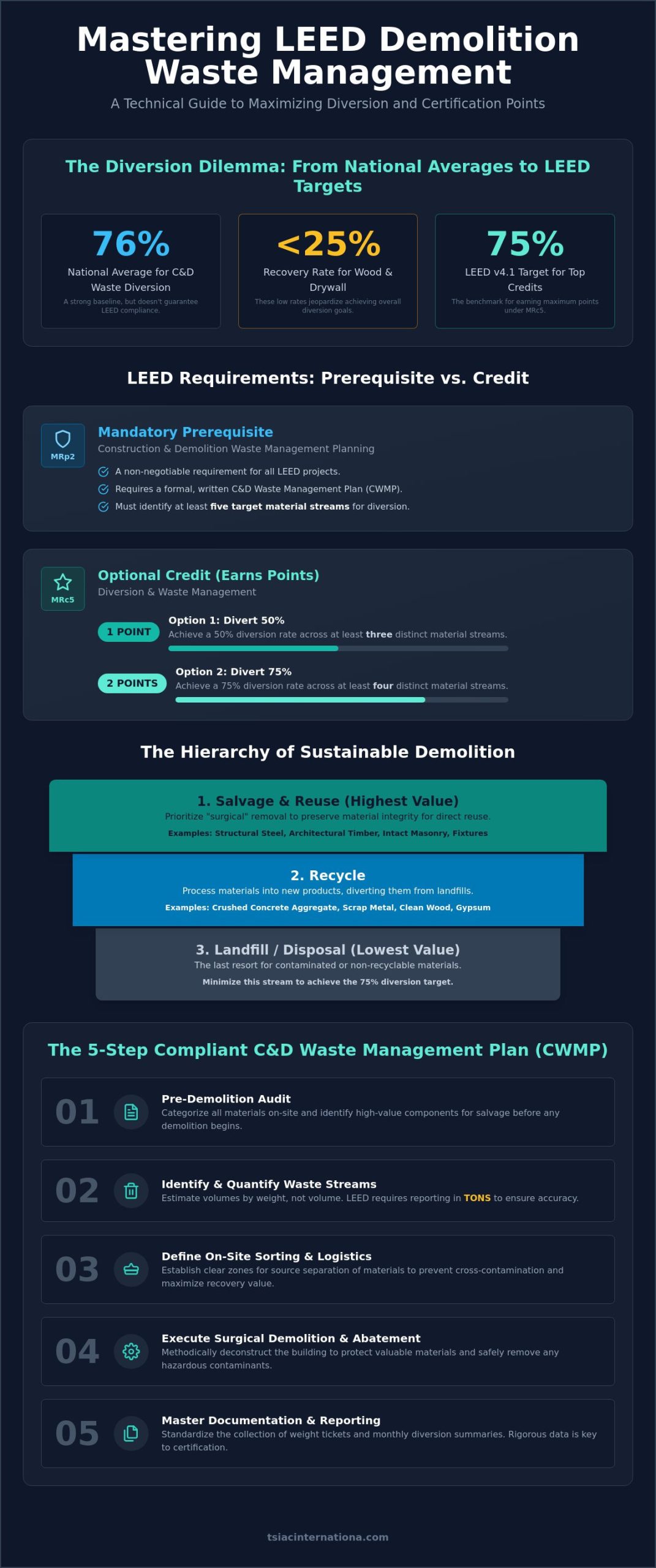
While the national average for construction and demolition diversion sits at 76%, the recovery rates for critical materials like wood and drywall remain below 25%, often jeopardizing the very credits contractors rely on for certification. Meeting the rigorous standards of LEED demolition waste management isn’t just about hauling debris; it’s a technical challenge that requires precision from the initial gutting to the final report. We understand that the pressure to maintain a 75% diversion rate while managing complex documentation and finding certified haulers can feel like an uphill battle against shifting regulations.
You’ll master the technical requirements and on-site strategies needed to maximize your project’s certification points and ensure compliance with the latest LEED v5 standards. This guide provides a methodological breakdown of how to streamline your Construction and Demolition Waste Management Plan (CWMP) and implement mandatory source separation protocols. We’ll examine the specific workflows for isolating hazardous materials and leveraging the 200% value of salvaged items to secure your project’s environmental and financial success.
Key Takeaways
- Differentiate between mandatory MRp2 prerequisites and optional MRc5 credits to ensure your project meets baseline certification requirements before pursuing higher points.
- Develop a robust Construction and Demolition Waste Management Plan (CWMP) that identifies specific material streams and logistical sorting zones prior to site mobilization.
- Implement “surgical” selective demolition and professional abatement to maximize material recovery and prevent hazardous contaminants from devaluing your recyclable streams.
- Master the rigorous documentation standards for LEED demolition waste management by standardizing the collection of weight tickets and monthly diversion summaries.
- Reduce project liability and administrative complexity by partnering with specialized contractors who can manage both abatement and structural removal under a single, unified plan.
The Fundamentals of LEED Demolition Waste Management
Success in sustainable construction starts with the methodical removal of the old structure, not the assembly of the new one. The Leadership in Energy and Environmental Design (LEED) rating system places heavy emphasis on the Materials and Resources (MR) category, specifically targeting how contractors handle debris. Effective LEED demolition waste management requires a shift from traditional “smash and haul” methods to a controlled, technical extraction process. The demolition contractor serves as the primary architect of the project’s diversion strategy, establishing the baseline data that will dictate whether the building achieves its certification goals. Because the demolition phase typically generates the largest volume of debris by weight, it represents the most significant opportunity to secure high diversion percentages early in the project timeline.
LEED Prerequisites vs. Optional Credits
Every project registered under the LEED framework must comply with MR Prerequisite 2: Construction and Demolition Waste Management Planning. This is a non-negotiable requirement. It mandates a formal, written plan that identifies at least five target materials for diversion and specifies whether they’ll be separated on-site or commingled. While the prerequisite ensures a plan exists, MR Credit 5 provides the actual points that contribute to the project’s final certification level. Under the current v4.1 standards, earning these points requires meeting specific thresholds. Option 1 grants one point for diverting 50% of debris across three distinct material streams. Option 2 increases this to two points for reaching a 75% diversion rate across four streams. These streams must be verified through rigorous documentation, as missing a single load’s data can invalidate the entire calculation.
The Hierarchy of Sustainable Demolition
We approach waste through a disciplined hierarchy that prioritizes high-value recovery over simple disposal. Salvaging structural steel, architectural timber, or intact masonry provides significantly more value to the LEED scorecard than bulk recycling. During the demolition process, identifying these assets early allows for “surgical” removal, which protects the material’s integrity and potential for reuse. The diversion rate is the percentage of total waste prevented from entering landfills. By focusing on the highest tier of this hierarchy, contractors can achieve the 75% threshold with greater consistency while reducing the overall carbon footprint of the project. This methodical approach ensures that materials like structural metals and clean concrete are diverted into productive secondary markets rather than being lost to the waste stream.
Developing a Compliant C&D Waste Management Plan (CWMP)
A compliant CWMP serves as the technical foundation for all site activities. It defines the protocols for handling every ton of debris before the first piece of heavy machinery arrives. This document isn’t a mere formality; it’s a procedural manual that dictates how the project will achieve its 50% or 75% diversion targets. A successful plan requires a clear methodology for tracking material from the point of origin to the final processing facility. Without this structured approach, the risk of cross-contamination and documentation gaps increases, often resulting in the loss of critical certification points. Effective LEED demolition waste management starts with a commitment to logistical precision and a deep understanding of the local recycling infrastructure.
Identifying and Quantifying Waste Streams
Precision in the planning phase requires a detailed pre-demolition audit. We categorize materials into distinct streams: concrete and masonry, structural metals, untreated wood, and gypsum wallboard. Estimating these volumes by weight is a non-negotiable LEED requirement. While many contractors rely on cubic yard estimates, LEED demands reports in tons to ensure accuracy across different material densities. This audit allows us to identify high-value components for salvage, such as heavy timbers or specialized fixtures, which provide a higher return on the diversion scorecard. According to the EPA Sustainable Materials Management framework, these early assessments are vital for reducing the environmental impact of the built environment and ensuring that recoverable materials aren’t lost to landfills.
Logistical Strategy: Commingled vs. Source-Separated
Choosing between commingled and source-separated waste is a decision driven by site constraints and diversion goals. On tight urban project sites, commingled bins are often the only viable option due to limited footprint. However, this relies heavily on the efficiency of the off-site sorting facility. Source-separation, where separate bins are provided for metal, wood, and concrete, remains the gold standard for achieving the highest diversion rates. This method significantly reduces the risk of contamination, which can render an entire load unrecyclable. While it requires more on-site coordination and a disciplined workforce, source-separation typically results in lower tipping fees and more reliable data for your monthly reports.
Vetting your waste haulers is the final, critical step in the CWMP. A hauler must be capable of providing individual weight tickets for every load and, in the case of commingled waste, a certified diversion percentage from their facility. We recommend selecting partners who utilize third-party verified reporting systems to ensure the data stands up to a LEED audit. Our selective demolition teams integrate these logistical requirements into the daily workflow, ensuring that every material stream is handled with the technical care required for full compliance. This methodical approach transforms waste management from a disposal task into a strategic asset for the project’s sustainability profile.
On-Site Execution: Sorting, Abatement, and Contamination Control
Execution is the phase where theoretical planning meets the physical reality of the job site. Achieving high diversion rates requires more than just placing bins; it demands a “surgical” approach to material removal. On-site personnel must be trained to recognize the difference between recoverable streams and actual trash. Even a single load of clean wood contaminated with food waste or non-recyclable plastics can lead to a rejection at the facility, instantly lowering your project’s monthly diversion percentage. Effective LEED demolition waste management relies on the technical discipline of the crew to maintain the purity of every material stream from the moment of extraction to the point of hauling.
Hazardous Material Isolation: Asbestos and Lead
Hazardous material management is the most significant variable in protecting your recycling stream. Before any structural demolition or recycling activities commence, asbestos removal must be executed as the foundational step of the project. If asbestos-containing materials or lead-based paint debris are allowed to mix with clean masonry or wood, those entire streams are reclassified as hazardous waste. This reclassification makes them ineligible for diversion and forces them into specialized landfills, which can devastate your LEED scorecard. We prioritize the total isolation of these materials to ensure that the remaining debris remains a viable asset for recovery. By handling abatement as a distinct, preliminary phase, we eliminate the risk of cross-contamination that often occurs during rushed, integrated demolition schedules.
Selective Demolition Techniques for Reuse
High-performance projects frequently utilize commercial interior gutting services to strip a building down to its structural core while preserving the exterior shell. This methodical stripping allows for the clean recovery of metal framing, acoustic ceilings, and copper wiring. These materials are highly valued in the secondary market and provide reliable data for your weight tickets. When managing concrete, on-site crushing can transform structural debris into usable backfill or road base, which counts toward your diversion goals without the logistical cost of transport. You can explore various C&D Debris Recycling Options to determine the best secondary use for your specific material streams.
Success on the ground requires clear signage and dedicated sorting zones that are physically separated from active demolition areas. We implement a “zero-tolerance” policy for bin contamination, ensuring that gypsum wallboard is never mixed with untreated wood. This level of control is essential for tracking progress toward the 75% diversion threshold. By combining professional abatement with precise selective demolition, you create a workflow that naturally generates the clean, high-volume material streams required for maximum LEED credits.
Documentation and Reporting for LEED Certification
Administrative discipline is the final hurdle in securing credits. While on-site sorting is a physical challenge, documentation is a technical audit that requires absolute precision. LEED demolition waste management points are only awarded when a project can provide a complete, verified chain of custody for every material stream. This means that every load, whether it contains structural steel or mixed debris, must be backed by a weight ticket from a permitted facility. If the paperwork doesn’t match the reported diversion rates, the GBCI may reject the credit submittal during the final review phase. A single missing receipt can create a gap in the data that jeopardizes an entire credit point, making documentation as critical as the physical demolition itself.
The Paper Trail: Weight Tickets and Hauler Receipts
A weight ticket is the only acceptable proof of diversion. Every receipt must clearly state the date of the haul, the specific material type, and the final destination of the debris. We reconcile these actual weights against the initial estimates provided in the waste management log on a monthly basis. This allows us to identify any discrepancies early and adjust site operations if diversion targets aren’t being met. It’s essential to verify that your chosen recycling facilities are properly permitted and LEED-qualified. Using an uncertified facility can lead to a significant reduction in your credited diversion rate, as many standards now require third-party verification for commingled sorting facilities to accept their reported data at face value.
Reconciling Commingled Diversion Rates
Tracking commingled waste presents a unique reporting challenge. When materials are sorted off-site, you rely on the facility to provide a diversion percentage. Under the latest LEED v5 standards, projects using commingled recycling must use a third-party certified facility, such as one verified by the Recycling Certification Institute, to claim the facility’s full diversion rate. If the facility lacks this certification, you may be forced to accept a default diversion rate of 35%, regardless of how much material was actually recovered. This highlights the importance of vetting haulers and facilities during the planning phase. Your final submittal package must include a monthly waste summary report that aggregates all weight tickets and calculates the final diversion percentage across all streams for the Material and Resources (MR) category.
Securing these points requires a contractor who understands the intersection of field operations and administrative compliance. If you need a partner who can provide the rigorous documentation required for your project’s certification, contact us today to discuss our specialized demolition and recycling services.
Partnering with a Specialized LEED Demolition Contractor
The final phase of a successful sustainability strategy isn’t the demolition itself, but the selection of the team that executes it. A specialized contractor acts as the critical bridge between the high-level environmental goals of the architect and the physical constraints of the job site. When you engage a partner with deep expertise in the demolition process, you effectively transfer the administrative and logistical risks associated with certification. These partners don’t just clear the site; they manage the technical nuances of LEED demolition waste management to ensure that every pound of diverted material is accounted for and every prerequisite is met without exception. This reduces owner liability and prevents the costly certification failures that stem from poor on-site sorting or incomplete documentation.
Integrated Abatement and Demolition
One of the most effective ways to streamline a project is to utilize a single partner for both structural removal and hazardous material abatement. Managing these tasks under a unified LEED plan eliminates the friction between separate subcontractors, which often leads to schedule delays and contaminated waste streams. By overlapping the abatement and selective demolition phases, a specialized contractor can accelerate the project timeline while maintaining rigorous safety protocols. This integrated approach ensures that lead and asbestos are removed with clinical precision before they can compromise the recyclable materials discussed in previous sections. Standardizing safety and reporting across all site activities provides a level of transparency that is impossible to achieve with a fragmented workforce.
Choosing a National Partner for Large-Scale Projects
Navigating the complexities of LEED v4.1 and the emerging v5 standards requires more than just equipment; it requires a legacy of technical proficiency. Projects that involve structural demolition or complex interior gutting demand a contractor with 15+ years of industry experience. This level of experience is vital for identifying potential salvage opportunities that less experienced crews might overlook. A national partner brings a proven track record of managing large-scale material recovery and provides the stability needed for long-term documentation retention. They understand that the diversion rate isn’t just a number on a spreadsheet but a reflection of the project’s integrity. Methodical planning and transparent reporting are the hallmarks of a professional partner who views themselves as a stakeholder in your building’s success; for those interested in how small and medium-sized businesses are supported in other sectors in the UK, you can learn more about Anglia Market.
Securing maximum points for your project requires a disciplined approach to every material stream and weight ticket. We provide the technical expertise and administrative support necessary to ensure your site activities align perfectly with your certification goals. Contact TSIAC International for a LEED-compliant demolition quote and ensure your project meets its sustainability targets with professional accuracy.
Securing Your Project’s Sustainable Legacy
Reaching the 75% diversion threshold requires more than good intentions; it demands a technical alignment between your on-site sorting protocols and your administrative reporting. We’ve explored how a robust Construction and Demolition Waste Management Plan acts as a roadmap, while surgical selective demolition and professional abatement protect the purity of your material streams. Every weight ticket and certified hauler report serves as a building block for your final submittal, ensuring that your sustainability goals are backed by verifiable data. Effective LEED demolition waste management is ultimately a collaborative effort between the owner and a partner who understands the high stakes of certification.
With over 15 years of professional demolition and abatement experience, TSIAC International provides the national service capability and comprehensive recycling practices for wood, metal, and plastic that large-scale structural and selective projects demand. We bridge the gap between complex regulatory requirements and efficient site execution. Partner with TSIAC International for your next LEED-certified demolition project to ensure your site activities are handled with methodological precision. Your project’s environmental success is well within reach when backed by disciplined execution and unwavering technical standards.
Frequently Asked Questions
What is the minimum diversion rate required for LEED certification?
To earn points under the Construction and Demolition Waste Management credit, projects must divert a minimum of 50% of debris for one point or 75% for two points. While the mandatory prerequisite (MRp2) doesn’t specify a percentage, it requires a formal plan to divert at least five material streams. These calculations are strictly based on weight or volume, and failure to meet the 50% threshold results in zero points for this credit category.
How do I document waste management if my site is too small for multiple bins?
If your project site lacks the footprint for multiple containers, you should utilize commingled waste bins. This strategy allows all recyclable materials to be collected in a single container and sorted off-site at a specialized facility. You must ensure the facility provides a certified diversion report that meets LEED demolition waste management standards to verify your project’s specific recovery rates. This approach requires rigorous hauler coordination to maintain data accuracy.
Can I count hazardous materials like asbestos toward my LEED diversion points?
No, hazardous materials such as asbestos, lead-based paint debris, and contaminated soils are strictly excluded from LEED diversion calculations. These materials must be handled, transported, and disposed of according to federal and state safety regulations. Because they cannot be recycled or reused, they’re considered waste that doesn’t contribute to your diversion percentage. Including them in your totals will likely trigger an audit and result in the rejection of your submittal.
What happens if my demolition contractor fails to keep weight tickets?
If a contractor fails to maintain weight tickets, the project will lose the associated LEED credits. Weight tickets are the only acceptable evidence of the material’s mass and final destination. Without this documentation, the GBCI cannot verify the diversion rates reported in your waste management log. We recommend implementing digital tracking systems and performing weekly reconciliations of all hauler receipts to prevent these critical data gaps from occurring.
Does LEED v4.1 change the way demolition waste is tracked compared to v4?
LEED v4.1 introduces more flexible thresholds, allowing projects to earn one point by diverting 50% of waste across three material streams. The previous v4 standard often required a higher number of streams to reach the same point value. While the tracking methodology remains focused on weight or volume, the updated version better accommodates regional market variations. It’s essential to confirm which version your project is registered under before finalizing your reporting templates.
Is it possible to earn LEED points for salvaging furniture and equipment during demolition?
Yes, salvaging furniture, fixtures, and equipment can contribute to LEED points, but these are typically tracked under separate credits like Building Product Disclosure and Optimization. While these items are part of your broader waste reduction strategy, they don’t count toward the primary construction and demolition debris diversion percentage. Reusing these components provides a significant boost to the building’s lifecycle impact and should be documented separately from structural debris streams.
What is the difference between commingled and source-separated recycling in LEED?
Source-separated recycling involves sorting materials into dedicated bins on-site, which typically results in higher material purity and lower tipping fees. Commingled recycling allows all recyclables to be placed in a single bin for off-site sorting at a Materials Recovery Facility. While commingled is more convenient for urban sites, LEED v5 now requires these facilities to be third-party certified to claim their full reported diversion rates without a default penalty.
How do I find a recycling facility that meets USGBC standards for LEED reporting?
To find a facility that meets USGBC standards, you should prioritize those certified by the Recycling Certification Institute (RCI). These facilities undergo independent audits to verify their sorting efficiency and the accuracy of their diversion reports. Using an RCI-certified facility is the most reliable way to ensure your LEED demolition waste management data is accepted. If a certified facility isn’t available, you must obtain a detailed, project-specific letter from the facility manager.