
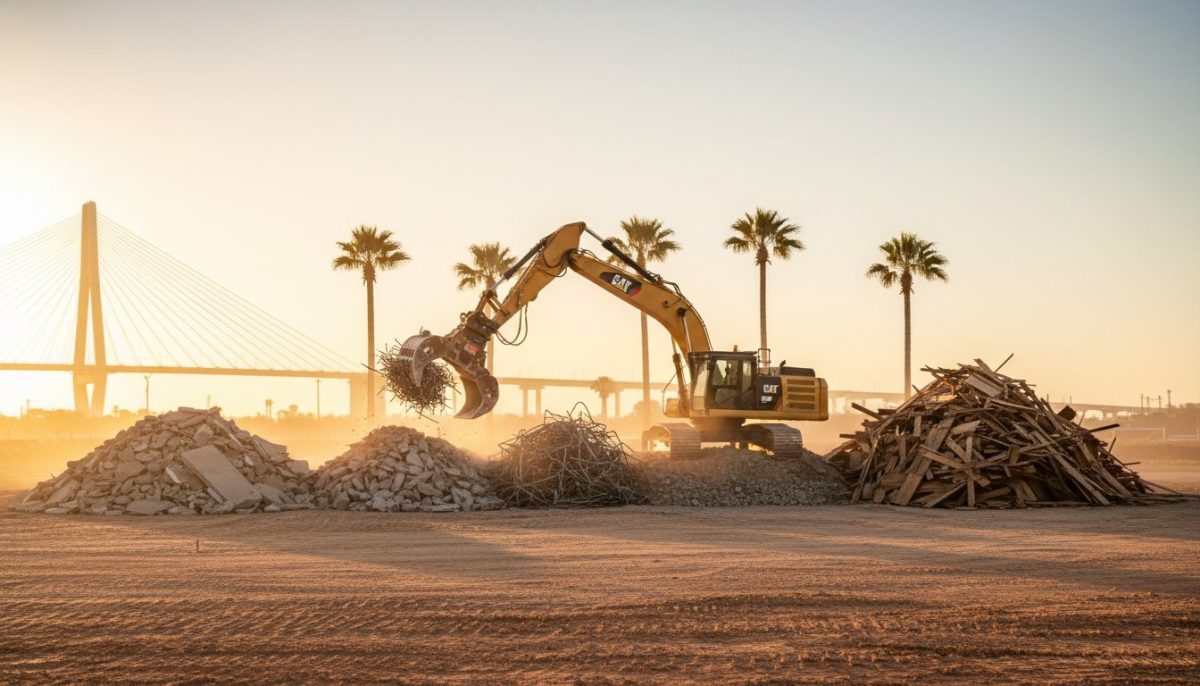
In 2026, the South Carolina Department of Environmental Services estimated that the disposal of marketable recyclables cost the state $27 million in fees while resulting in a lost market value of $91 million. Most project managers understand that site clearance is no longer just a physical task; it’s a high-stakes logistics operation where a single oversight in asbestos handling or a missed SCDHEC notification can lead to crippling fines. When you’re coordinating professional demolition debris hauling services charleston sc, you’re looking for a methodical process that ensures every ton of waste is accounted for and every safety protocol is met.
This guide will help you master the complexities of demolition waste management, from navigating the $47.00 per ton tipping fees at regional landfills to ensuring full regulatory compliance for hazardous materials. We’ll show you how to transform a liability-heavy site into a clean, safe environment ready for new construction. You’ll learn the technical requirements for asbestos abatement, the logistics of maximizing material recovery, and the documentation needed to protect your business from legal exposure.
Key Takeaways
- Learn how integrating debris management into your demolition timeline prevents operational bottlenecks and maintains rigorous safety standards on-site.
- Understand the critical intersection of EPA/OSHA regulations and asbestos abatement to ensure your project maintains full legal and environmental compliance.
- Discover how professional demolition debris hauling services charleston sc utilize systematic on-site sorting to maximize the recovery of wood, metal, and plastic.
- Master the logistics of phase-based hauling and heavy machinery coordination to ensure continuous progress even within tight commercial footprints.
- Explore how methodological precision in hazardous material remediation leads to a cleaner, construction-ready site through advanced material recovery processes.
The Critical Role of Professional Debris Hauling in Modern Demolition
Modern demolition is a precise engineering discipline where the systematic removal of material is as critical as the teardown itself. Professional demolition debris hauling services charleston sc function as the circulatory system of a project site; without the rhythmic removal of waste, progress grinds to a halt. This logistical coordination goes far beyond simple transport. It involves the strategic sorting and classification of demolition waste to comply with environmental standards and South Carolina landfill regulations. Integrating these hauling workflows into the broader demolition process in South Carolina ensures that each phase, from initial abatement to final site grading, remains on schedule.
When debris accumulates on-site, it creates physical barriers for heavy machinery and increases the risk of workplace accidents. Efficient management prevents these bottlenecks. For large-scale structural removals, specialized equipment like high-capacity roll-off containers and heavy-duty loaders are prerequisites. These tools allow for the rapid evacuation of concrete and steel, keeping the footprint clear for ongoing operations. A clean site isn’t just a matter of aesthetics; it’s a fundamental requirement for maintaining safety and operational flow.
Structural vs. Selective Debris Requirements
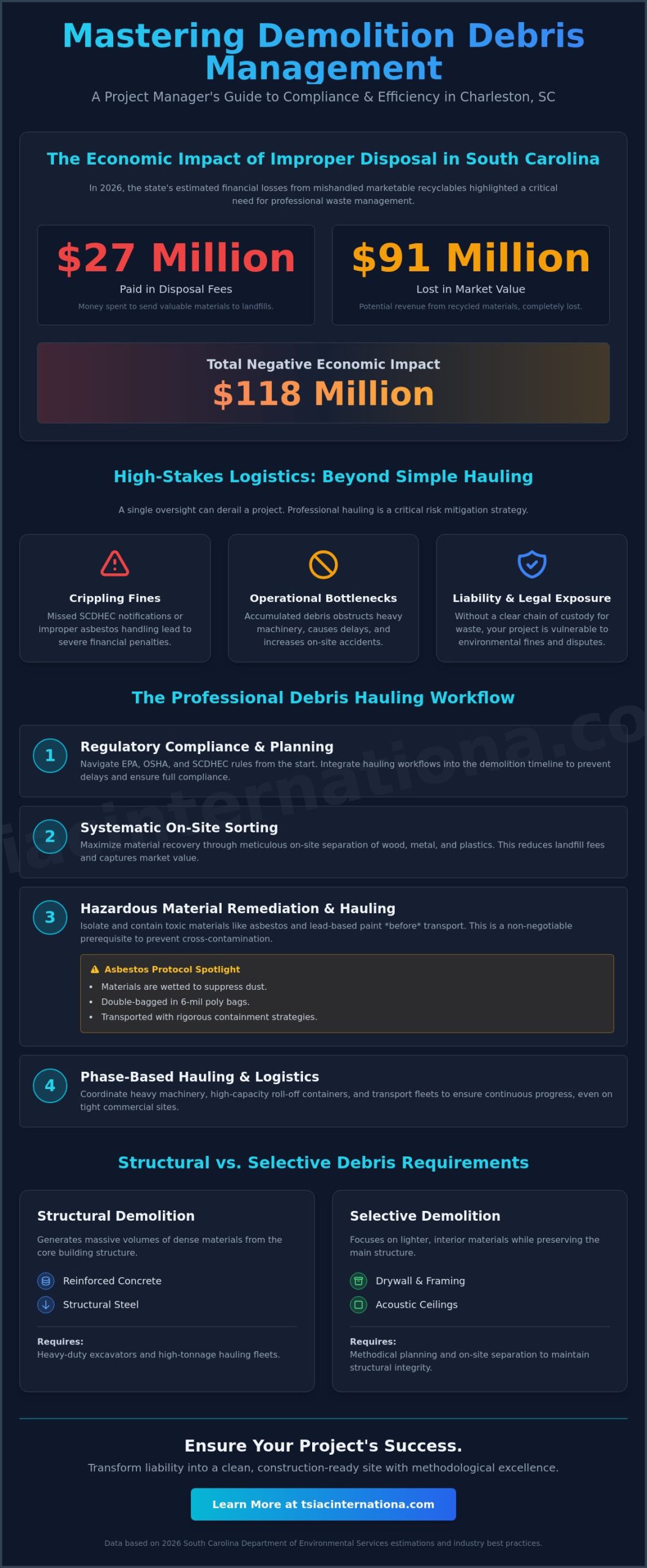
Structural demolition generates massive volumes of dense materials like reinforced concrete and structural steel, requiring heavy-duty excavators and high-tonnage hauling fleets. In contrast, selective demolition or interior gutting focuses on lighter materials such as drywall, acoustic ceilings, and metal framing. Staging these materials requires methodical planning to maintain the structural integrity of remaining building wings. We prioritize on-site separation to ensure that heavy loads don’t compromise the stability of the site or the safety of the crew.
Liability and Risk Management in Debris Transport
The legal responsibility for waste doesn’t end when the truck leaves the project boundaries. Establishing a clear chain of custody is essential for mitigating liability, especially when handling mixed building materials. Professional demolition debris hauling services charleston sc provide the necessary documentation to prove that all waste reached the appropriate Class 2 or Class 3 landfills. This level of oversight protects project owners from environmental fines and insurance disputes. Proper transport protocols also mitigate the risk of road hazards or environmental contamination during the transit of materials, ensuring that your project remains in full regulatory standing.
Navigating Regulatory Compliance and Hazardous Waste Management
Hazardous demolition waste, as defined by EPA and OSHA standards, encompasses any discarded material that exhibits ignitability, corrosivity, reactivity, or toxicity, specifically targeting substances like asbestos, lead-based paint, and mercury. In Charleston, the intersection of abatement and logistics is where many projects fail or succeed. You can’t treat contaminated materials as standard waste. Instead, the hauling strategy must be built around the abatement schedule to ensure that toxic elements are isolated and contained before they ever touch a transport vehicle. Engaging in specialized hazardous material abatement is a non-negotiable prerequisite for any demolition debris hauling services charleston sc. This technical preparation prevents the cross-contamination of otherwise recyclable materials, which is vital for maintaining the project’s economic and environmental integrity.
Asbestos and Lead-Based Paint Protocols
The transport of friable asbestos requires rigorous containment strategies to prevent the release of microscopic fibers into the atmosphere. This typically involves double-bagging materials in 6-mil poly bags and ensuring they remain wet during the entire loading process to suppress dust. Lead-contaminated components, such as aged wood siding or interior drywall, also require specific disposal routes to prevent heavy metal leaching into the groundwater. Following C&D landfill regulations ensures these materials reach Class 3 facilities equipped to handle their specific chemical profiles. Every load must strictly adhere to the National Emission Standards for Hazardous Air Pollutants (NESHAP) to avoid environmental contamination and the resulting legal consequences.
Compliance Documentation and Manifesting
Liability protection for property owners relies heavily on the Waste Shipment Record (WSR). This document serves as a legal manifest, tracking the debris from the moment it’s loaded onto the truck until it’s officially accepted at a permitted disposal facility. Professional haulers maintain these records with methodological precision to provide a clear audit trail that satisfies both SCDHEC and federal auditors. Without this documentation, you’re vulnerable to significant civil penalties and long-term legal exposure regarding “cradle-to-grave” waste responsibility. It’s often beneficial to coordinate these logistics with your mold remediation or lead abatement schedules to centralize your compliance reporting. Rigorous adherence to these mandates isn’t just about avoiding fines; it’s about establishing a standard of professional excellence that protects the community and your investment.
Sustainable Debris Management: Recycling vs. Landfill Disposal
The disposal of marketable recyclables costs South Carolina $27 million in fees annually, while the lost market value of these materials reaches $91 million. This data from the 2026 SCDES study highlights why advanced demolition debris hauling services charleston sc must prioritize material recovery over simple disposal. When we implement on-site sorting, we don’t just reduce environmental impact; we directly lower project overhead. With tipping fees at facilities like the Georgetown County Landfill rising to $47.00 per ton in July 2026, every ton diverted to a recycling center represents a significant cost saving. Recycling C&D materials isn’t an optional “green” initiative anymore; it’s a financial imperative for modern commercial projects.
Targeting a “zero waste” goal requires a disciplined approach to logistics. It means coordinating separate containers for wood, metal, and plastic to prevent cross-contamination. This methodological precision is also a cornerstone for projects seeking LEED certification. By documenting high diversion rates, our hauling processes provide the empirical data required for green building credits. It’s a system where technical accuracy in the field translates into tangible value for the property owner. We focus on diverting as much as possible to help the state reach its 50% recycling rate goal by 2030.
Ferrous and Non-Ferrous Metal Recovery
Commercial demolition sites are rich in high-value metals like copper wiring, aluminum siding, and structural steel beams. We don’t treat these as waste. Instead, we use a systematic recovery process that extracts these materials during the selective demolition phase. The logistics involve transporting these loads to specialized processing centers where they can be reintroduced into the manufacturing supply chain. High-volume metal recovery offers the strongest economic incentives, often offsetting a portion of the hauling costs through scrap value. This specialized approach is essential for large-scale industrial and commercial teardowns.
Concrete, Brick, and Masonry Crushing
The most massive component of any structural teardown is masonry. Transforming reinforced concrete and brick into reusable aggregate is a primary goal of our demolition debris hauling services charleston sc. This process requires specialized hauling equipment capable of managing dense, high-tonnage loads. Once removed, the concrete is crushed, and the rebar is extracted for recycling. This recycled aggregate often finds a second life as road base or structural fill, completing a lifecycle that bypasses the landfill entirely and reduces the demand for virgin quarried materials.
Strategic Planning for Structural and Selective Debris Removal
Successful site remediation depends on a phased approach to material evacuation. We don’t just dump everything into a single pile. Instead, we coordinate the removal to match the demolition’s physical progress. This is especially vital when managing the debris from commercial interior gutting services, where light, bulky materials like metal framing and acoustic ceilings can quickly overwhelm a tight urban footprint. By establishing a site-specific waste management plan early, we ensure that demolition debris hauling services charleston sc operate without interrupting the primary demolition crew. Managing site access logistics in Charleston’s dense commercial corridors requires a deep understanding of traffic patterns and machinery footprints. Every load’s departure is timed to prevent congestion and maintain a safe, productive environment.
Heavy Machinery and Fleet Selection
Matching the right fleet to the material density is a technical requirement that prevents equipment strain and site delays. Heavy concrete removal demands high-tonnage dump trucks and specialized loaders equipped with hydraulic attachments. In contrast, selective demolition might only require agile roll-off containers that fit into parking garages or narrow alleys. We maintain our fleet with methodological precision to ensure zero downtime during critical project windows. The role of excavators in debris staging is equally important; they must keep materials organized by type to facilitate faster loading and more accurate recycling. This level of organization is what allows us to maintain a continuous flow of outgoing material, even during high-volume demolition debris hauling services charleston sc operations.
Site Preparation and Safety Zones
Safety in high-traffic hauling zones is non-negotiable. We establish dedicated hauling lanes that are physically separated from personnel and active demolition areas. This prevents accidents and ensures that heavy machinery can move at peak efficiency. Dust control measures, such as water misting during the loading of fine debris or using tarped loads, protect the air quality and the surrounding community. Implementing these rigorous safety protocols is what distinguishes a professional operation from a standard hauling service. Every driver and operator follows a synchronized communication plan to avoid congestion and maintain the site’s structural integrity. For projects involving complex site constraints, our team provides the structural demolition expertise needed to manage heavy-volume debris safely.
TSIAC International: Methodological Excellence in Site Remediation
Choosing a single-source contractor for demolition, abatement, and hauling eliminates the communication gaps that often lead to regulatory failures. At TSIAC International, our demolition debris hauling services charleston sc are built on a foundation of technical precision developed over 15 years in the industry. By managing the entire lifecycle of a project, from the initial asbestos testing to the final material recovery, we maintain a controlled environment that minimizes liability for property owners. This integrated approach ensures that hazardous materials are identified and isolated before hauling begins, preventing the costly cross-contamination of recyclable streams. You can explore our standard of excellence to see how this technical rigor applies to every project we undertake.
Our commitment to environmental stewardship is reflected in our advanced recycling protocols. We don’t just clear sites; we recover value. By systematically sorting wood, metals, plastics, and steel, we support South Carolina’s goal of reaching a 50% recycling rate by 2030. This isn’t merely about following the law; it’s about a professional responsibility to reduce the economic impact of discarded recyclables, which currently costs the state millions in lost market value. Our methodology ensures that every ton of debris is processed through the most efficient channel possible, whether that’s a Class 2 landfill or a specialized metal processing center.
A Proven Track Record in Complex Environments
We’ve successfully executed contracts across government, commercial, and residential sectors, often in environments where structural integrity and toxic waste management were at high risk. Our team understands that a project’s success is measured by its safety record and its adherence to the original timeline. We apply rigorous internal safety standards that exceed basic OSHA requirements, ensuring that every operator and driver is trained in the specific logistics of high-volume hauling. Partnering with a specialist who understands both the physical mechanics of structural demolition and the chemistry of hazardous material abatement provides a level of security that general haulers simply can’t match.
Next Steps for Your Project
Transitioning from a complex interior gutting phase to final site clearance requires a partner who can manage the logistics without oversight. If you’re preparing for a structural teardown or require specialized hazardous material management, our team is ready to assist. You can request a comprehensive site assessment and a detailed hauling quote to establish a clear waste management plan before your project begins. Contact us today to learn how our methodological approach to demolition debris hauling services charleston sc can protect your investment and ensure a clean, construction-ready site.
Securing the Future of Your Construction Site
Mastering the logistics of site clearance is a prerequisite for any successful development project. As we’ve explored, the technical integration of hazardous material abatement with efficient material recovery isn’t just a regulatory requirement; it’s a strategic advantage that protects your investment and the local environment. By prioritizing methodological precision in demolition debris hauling services charleston sc, you ensure that your project remains in full compliance with EPA and OSHA mandates while maximizing the diversion of reusable materials from regional landfills.
TSIAC International brings over 15 years of specialized abatement experience to every project, providing a single-source solution for complex structural removals and remediation. Our team handles the difficult task of manifesting toxic waste and coordinating high-volume material recovery, allowing you to focus on the next phase of your build. Don’t leave your site’s safety and compliance to chance. Request a Professional Demolition & Hauling Quote from TSIAC International today to ensure your project starts on a clean, secure foundation. We look forward to partnering with you on your next site transformation.
Frequently Asked Questions
What is the difference between standard junk removal and demolition debris hauling?
Junk removal typically involves the disposal of non-structural items such as furniture, appliances, or general office waste. In contrast, professional demolition debris hauling services charleston sc manage high-tonnage, regulated materials like reinforced concrete, structural steel, and hazardous contaminants. This specialized service requires heavy-duty machinery and a technical understanding of South Carolina’s Class 2 and Class 3 landfill requirements to ensure legal compliance.
How is hazardous waste like asbestos handled during the hauling process?
Hazardous waste is managed through a rigorous containment process that includes isolating the material, wetting it to suppress airborne fibers, and double-bagging it in 6-mil poly bags. These materials are then loaded into sealed containers and transported to Class 3 landfills permitted to accept toxic waste. This methodical approach prevents the release of microscopic fibers and ensures that hazardous elements do not contaminate the surrounding community or the general waste stream.
Do I need specific permits for hauling demolition debris on public roads?
Yes, hauling operations must comply with local Charleston ordinances and SCDOT weight regulations for heavy-duty vehicles. While a demolition permit is required for the physical teardown, the transport of hazardous waste requires specific manifests and adherence to designated transport routes. It’s essential to verify that your hauling partner maintains the necessary insurance and regulatory documentation for the specific volume and type of material being moved.
What percentage of demolition debris can typically be recycled?
While South Carolina’s current municipal recycling rate is 23.5%, professional debris management can recover a much higher percentage of structural materials. Metals like copper and steel are nearly 100% recyclable, and concrete can be crushed into reusable aggregate for future construction. Prioritizing these high-recovery streams is a critical step in helping the state achieve its 50% recycling goal by 2030.
How do haulers ensure that dust and lead paint chips don’t escape during transport?
Containment is maintained through industrial-grade tarps, water-misting systems to suppress dust during loading, and the use of sealed roll-off containers. For materials contaminated with lead-based paint, we ensure that debris is loaded into lined containers to prevent particulates from escaping into the environment during transit. These protocols are non-negotiable for maintaining EPA and OSHA safety standards on and off the project site.
What documentation should I receive from a professional hauling service?
You should receive a comprehensive Waste Shipment Record (WSR) along with official tipping receipts from the permitted disposal or recycling facility. These documents provide a legal audit trail, proving that all material, especially hazardous waste, was handled and disposed of according to state and federal law. Professional demolition debris hauling services charleston sc provide this documentation to protect property owners from long-term liability and environmental fines.
Can demolition debris hauling be integrated with selective interior gutting?
Integrating hauling with selective interior gutting is the most effective way to maintain a safe work environment and prevent operational bottlenecks. By coordinating the removal of metal framing, drywall, and acoustic ceilings as they are dismantled, we keep the site clear for ongoing work. This phased approach allows for more precise on-site material sorting, which leads to higher recycling rates and lower overall disposal costs.
How does the type of heavy machinery used affect the cost of debris removal?
The choice of machinery, such as high-capacity excavators or specialized loaders, determines the speed of evacuation and the total labor hours required. While heavy machinery involves higher mobilization costs, it’s significantly more efficient for high-volume structural removals than manual loading. Selecting a fleet that matches the density and volume of the debris is a technical decision that optimizes both the project timeline and the total budget.
