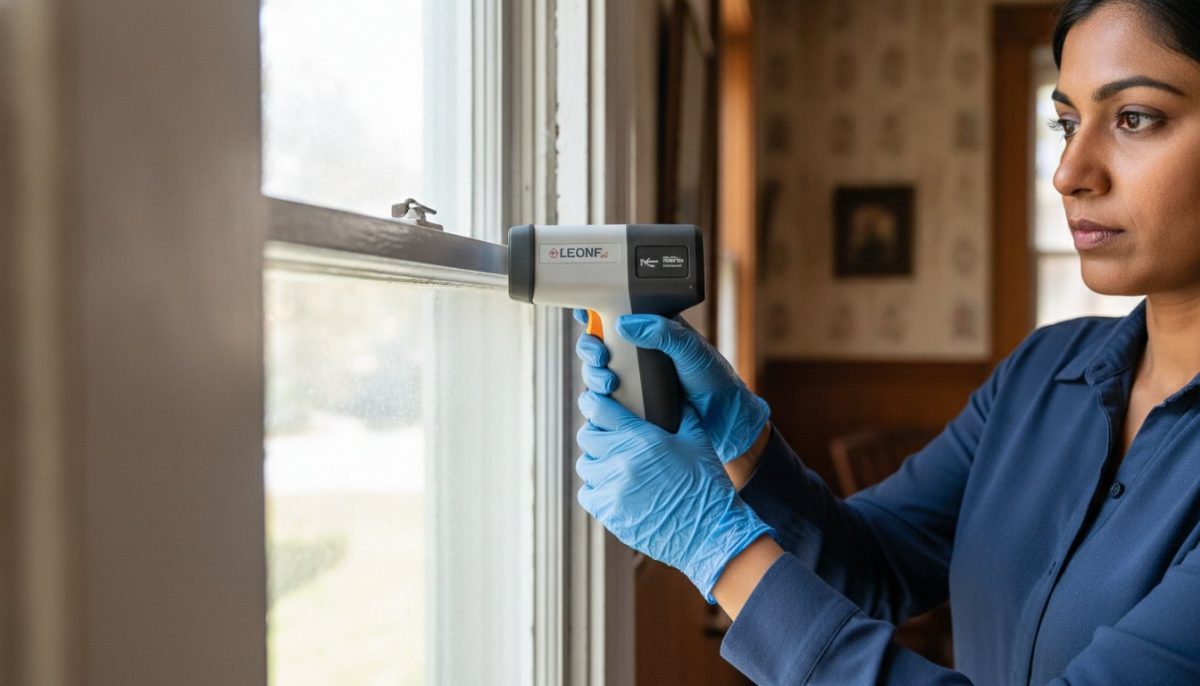
Did you know that an estimated 34% of residential structures in South Carolina built before 1978 contain lead based paint hazards? This is not just a legacy issue; it’s a current regulatory reality that property owners must address with technical precision. If you’re managing an older property, the requirements for residential lead paint abatement south carolina can seem complex. The fear of steep EPA fines, which can reach $37,500 per day for non compliance, is a valid concern for any professional who values safety and legal standing.
It’s frustrating to face the ambiguity of the 2026 EPA updates while trying to protect your occupants from health risks. This guide, brought to you by TSIAC International, provides the clarity you need to handle these requirements with absolute confidence. We’ll demystify the transition from previous state oversight to current environmental standards within the state. You’ll find a detailed breakdown of the new 2026 Dust-Lead Action Levels (DLAL), a comparison of testing versus full abatement methods, and a clear roadmap to achieving total regulatory compliance. By the end of this article, you’ll have a disciplined strategy to move from initial testing to a safe, certified conclusion.
Key Takeaways
- Understand the 2026 EPA updates and the shift in regulatory oversight to the South Carolina Department of Environmental Services (SC DES).
- Identify why any structure built before 1978 requires a certified lead inspection before starting renovation or demolition to avoid substantial legal penalties.
- Compare advanced diagnostic methods like non-destructive X-Ray Fluorescence (XRF) scanning and precision paint chip sampling for accurate hazard detection.
- Learn the professional protocols for transitioning from a positive test to residential lead paint abatement south carolina using specialized HEPA containment.
- Navigate the mandatory site walkthrough and risk assessment process required to maintain the safety and long-term value of your property.
Lead Paint Regulations and Legal Standards in South Carolina
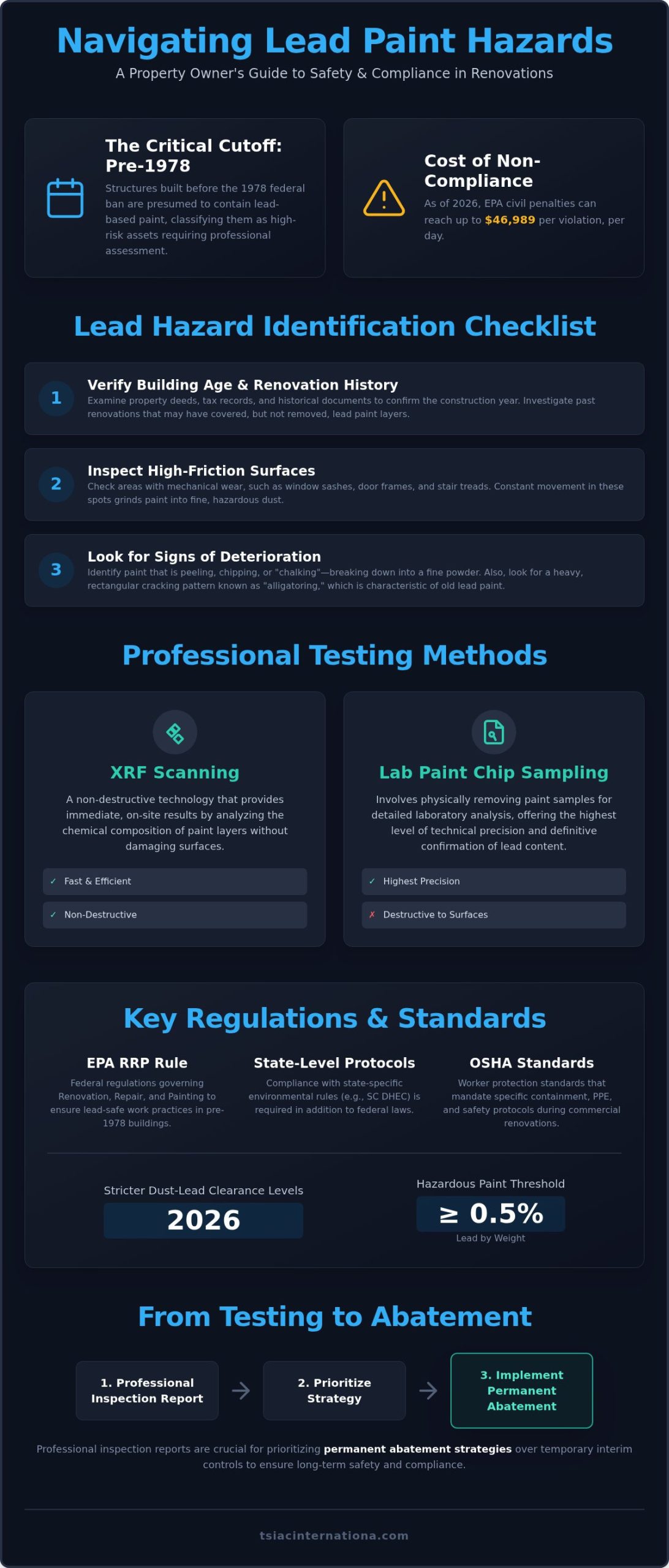
The 1978 federal ban on lead-based paint serves as the definitive threshold for regulatory scrutiny. If your property predates this year, it’s classified as “target housing,” making lead testing a mandatory prerequisite for any disturbance of painted surfaces. This legal framework evolved from the history of lead-based paint regulations, which shifted focus from simple awareness to aggressive containment. Today, residential lead paint abatement south carolina is a disciplined requirement enforced by both federal and state agencies to prevent environmental contamination.
Federal law dictates that landlords and sellers must disclose all known lead hazards. Failure to provide this information or allowing a 10-day inspection window can lead to severe civil liabilities and voided contracts. In South Carolina, the transition of oversight to the South Carolina Department of Environmental Services (SC DES) ensures that environmental standards align with the latest EPA mandates. While the Department of Public Health (DPH) continues to monitor blood lead levels and public health outcomes, the SC DES focuses on the technical execution of abatement, contractor certification, and safe disposal.
Understanding the 2026 Compliance Landscape
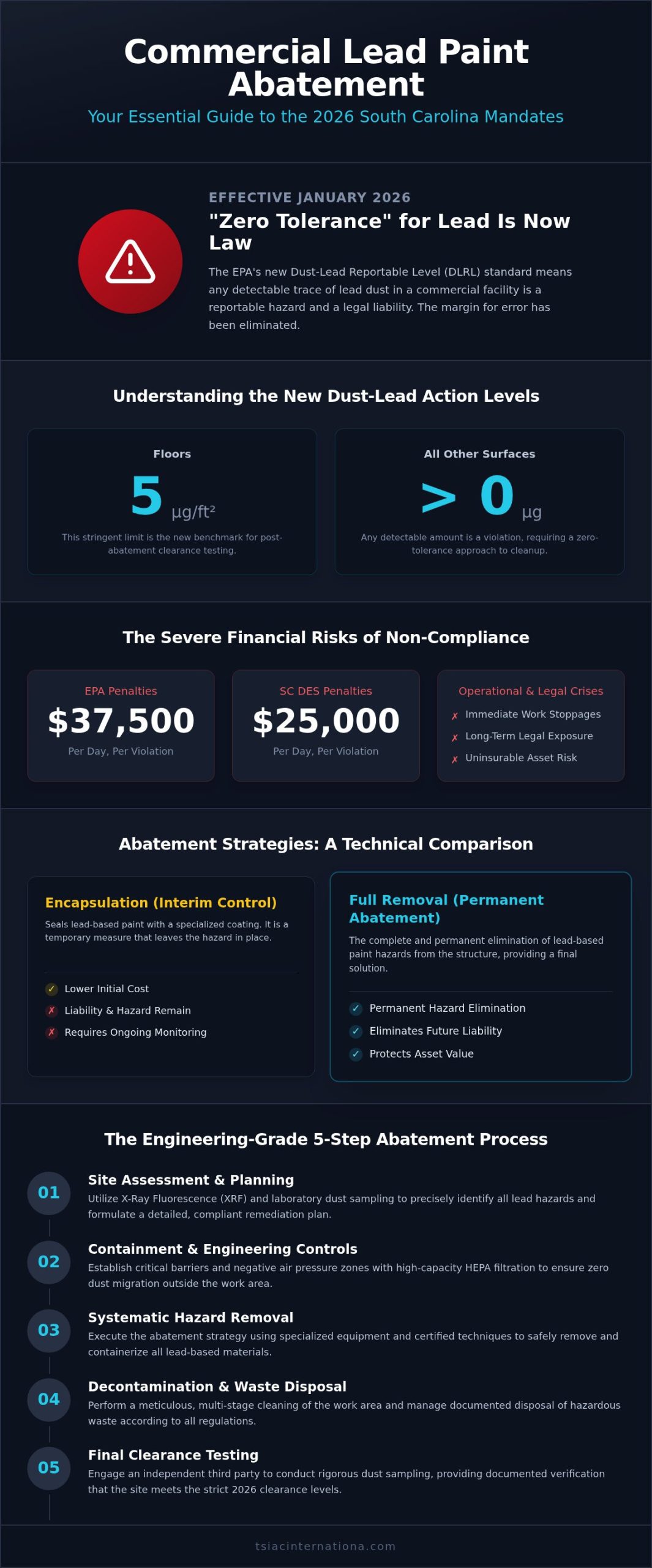
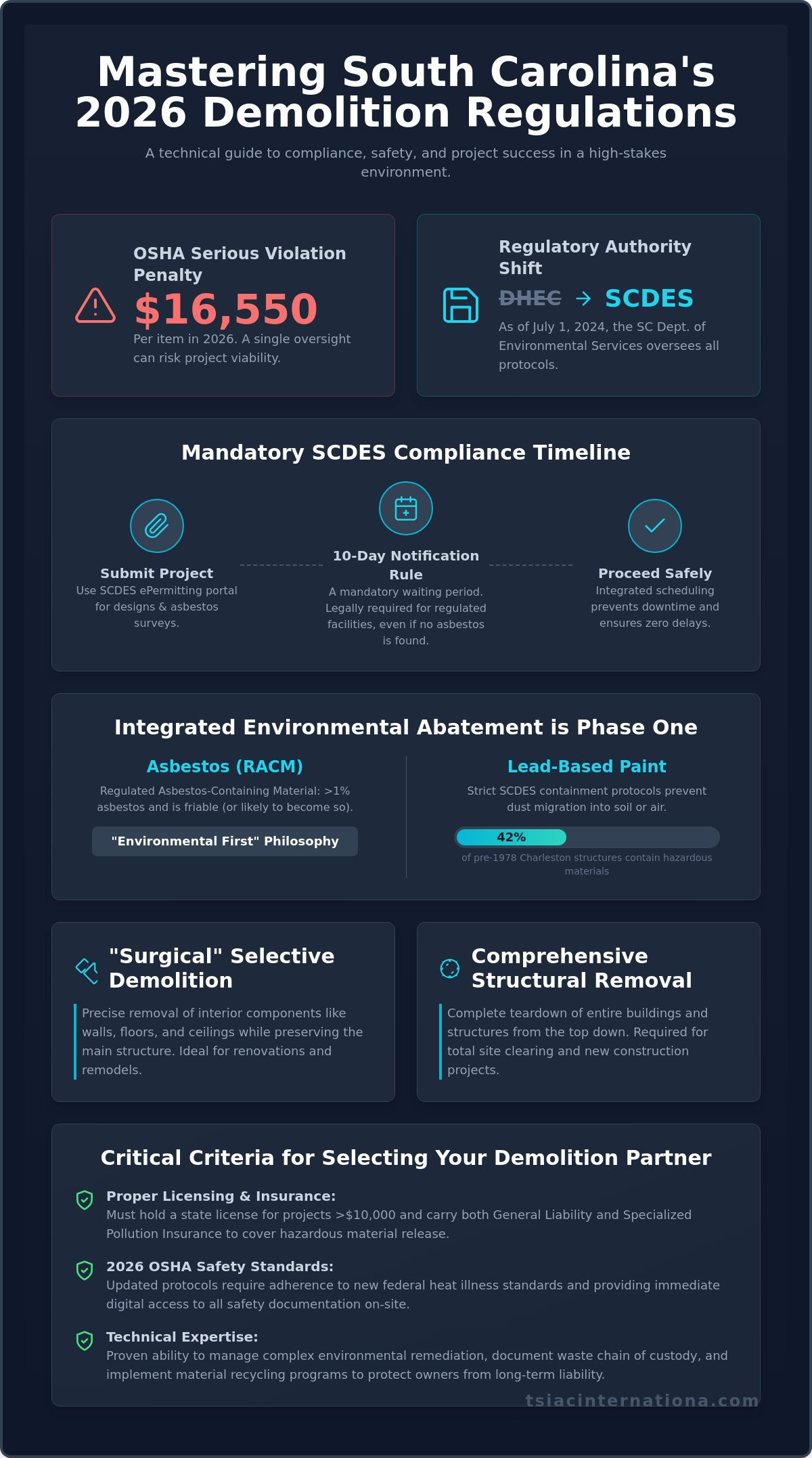
The 2026 regulatory environment is defined by a zero-tolerance approach to lead dust. The EPA’s updated Dust-Lead Reportable Levels (DLRL) mean that any detectable lead in a laboratory sample must be reported. This replaces older, higher thresholds that allowed for trace amounts of lead. Property owners face significant risks if they bypass these protocols during structural changes. Fines for violating the Renovation, Repair, and Painting (RRP) Rule can reach $37,500 per day. This makes professional oversight a financial necessity for any pre-1978 structure undergoing renovation.
The RRP Rule vs. Full Lead Abatement
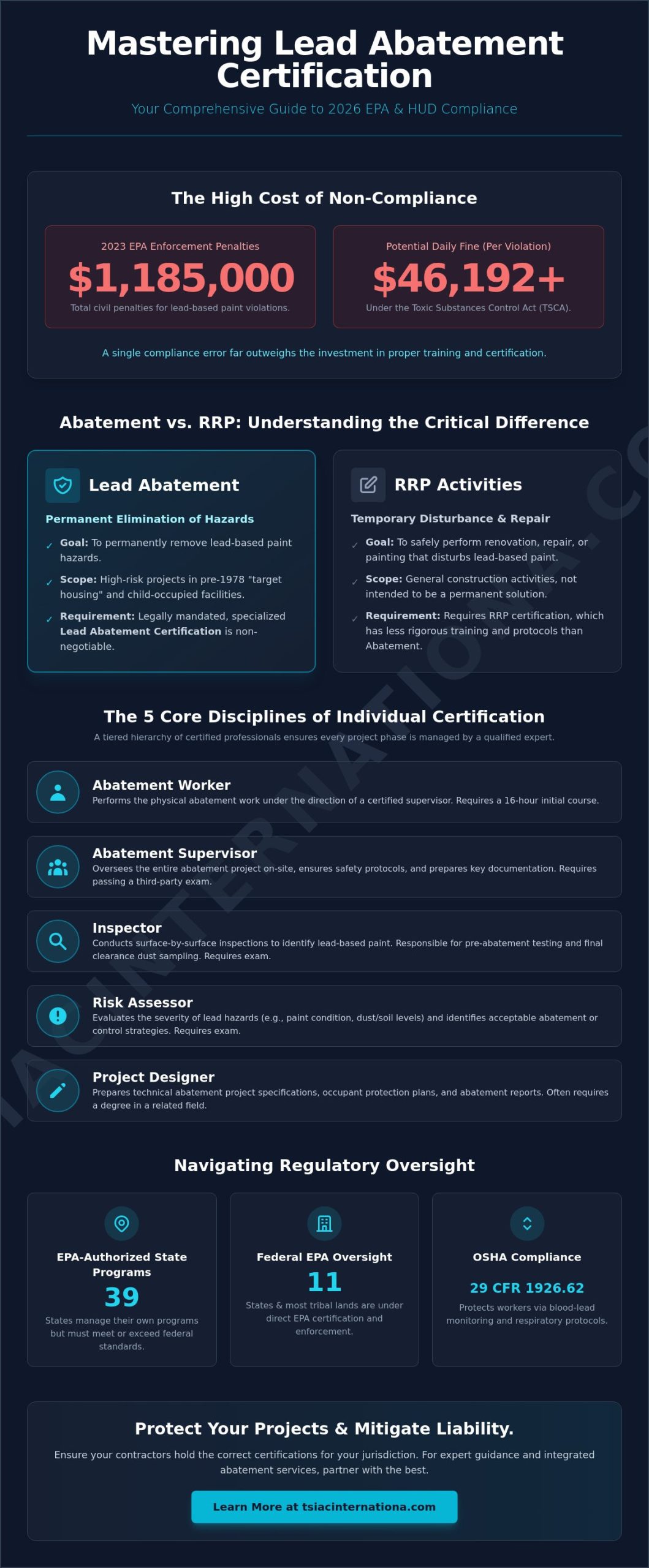
It’s vital to distinguish between lead-safe work practices and permanent abatement. The RRP Rule applies to renovations that disturb more than 6 square feet of interior paint or 20 square feet of exterior paint. These projects require lead-safe cleaning and specialized containment but don’t necessarily remove the hazard permanently. In contrast, full abatement involves the intentional, permanent elimination of lead-based paint through removal, enclosure, or encapsulation. When a project involves the permanent removal of hazards, residential lead paint abatement south carolina protocols require specialized equipment and certified disposal methods. South Carolina lead abatement requirements for 2026 mandate that all activities disturbing lead-painted surfaces in pre-1978 homes must be performed by EPA-certified firms following strict containment and reporting protocols.
Certified Lead Paint Testing Methods and Technologies
Accurate identification is the first step in any remediation project. Relying on visual inspections or consumer-grade test kits is insufficient for meeting EPA lead paint regulations. Professional testing provides a legally defensible data set that protects property owners from liability and ensures the safety of everyone on the jobsite. These methods quantify the hazard, allowing for a methodical approach to containment and removal.
XRF Scanning: Efficiency and Accuracy
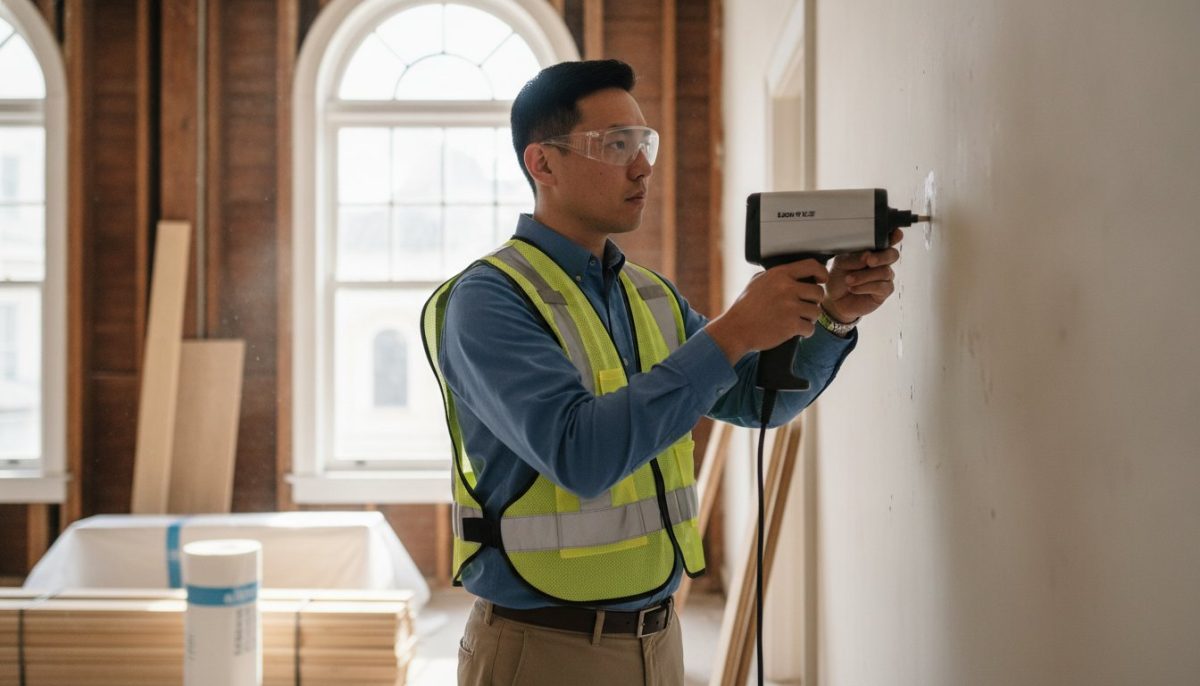
X-Ray Fluorescence (XRF) scanning uses low-level radiation to excite lead atoms, providing a direct measurement of lead concentration through multiple layers of paint. It’s the gold standard because it’s non-destructive; it doesn’t require cutting into the substrate or damaging historic finishes. For large-scale selective demolition or full gutting projects, this speed is vital for maintaining a tight schedule. Results are instant, allowing for immediate decision-making regarding safety zones. However, the accuracy of the data depends entirely on the calibration of the device and the expertise of the certified lead inspector interpreting the spectroscopic results.
Laboratory Analysis for Complex Projects
While XRF is efficient, certain scenarios require the higher precision of paint chip sampling. Inspectors collect physical samples from the structure and submit them to an EPA-accredited laboratory for chemical analysis. This method is often necessary when XRF readings are “inconclusive” or when testing irregular surfaces like ornate trim, metal piping, or textured masonry. Results are typically reported in milligrams per square centimeter (mg/cm²) or parts per million (PPM). Understanding these values is critical before initiating residential lead paint abatement south carolina, as they dictate the level of containment and the specific waste disposal route required by the SC DES.
Beyond the paint itself, dust wipe testing is the primary tool for post-abatement clearance. It ensures that the site meets the 2026 Dust-Lead Action Levels (DLAL) of 5 µg/ft² for floors. For older estates or properties with deteriorating exterior paint, soil and water testing provide a comprehensive view of environmental risks. These tests identify if lead has leached into the surrounding grounds or plumbing over several decades. Once your testing report confirms the presence of hazards, selecting a partner for professional lead abatement ensures that the transition from diagnosis to removal follows all safety protocols.
When to Schedule a Lead Inspection for Your Property
Scheduling a lead inspection is a critical path item in any professional project timeline. Waiting until work has already commenced often results in expensive work stoppages and unintentional environmental contamination. For property owners, an inspection is mandatory whenever a project disturbs surfaces in structures built before 1978. This proactive approach ensures that any required residential lead paint abatement south carolina is factored into the project’s scope from the beginning rather than becoming a costly emergency correction.
Real estate transactions serve as another high-stakes trigger for testing. Under the federal Lead-Based Paint Disclosure Rule, sellers must grant buyers a 10-day window to perform an inspection. For historic assets, this due diligence prevents a buyer from unknowingly inheriting significant remediation liabilities. Beyond the legalities, the primary driver for many homeowners is the prevention of childhood lead poisoning. Identifying deteriorating paint in high-risk residential environments is the only way to mitigate exposure risks before they impact occupant health.
Commercial and Industrial Triggers
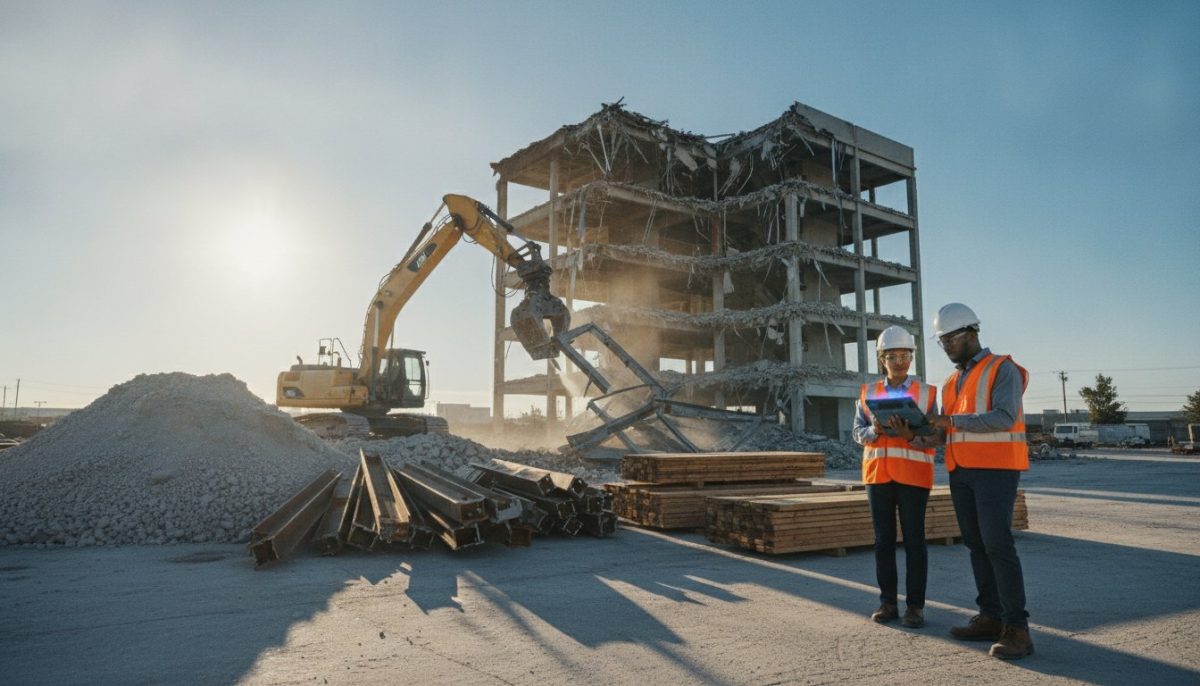
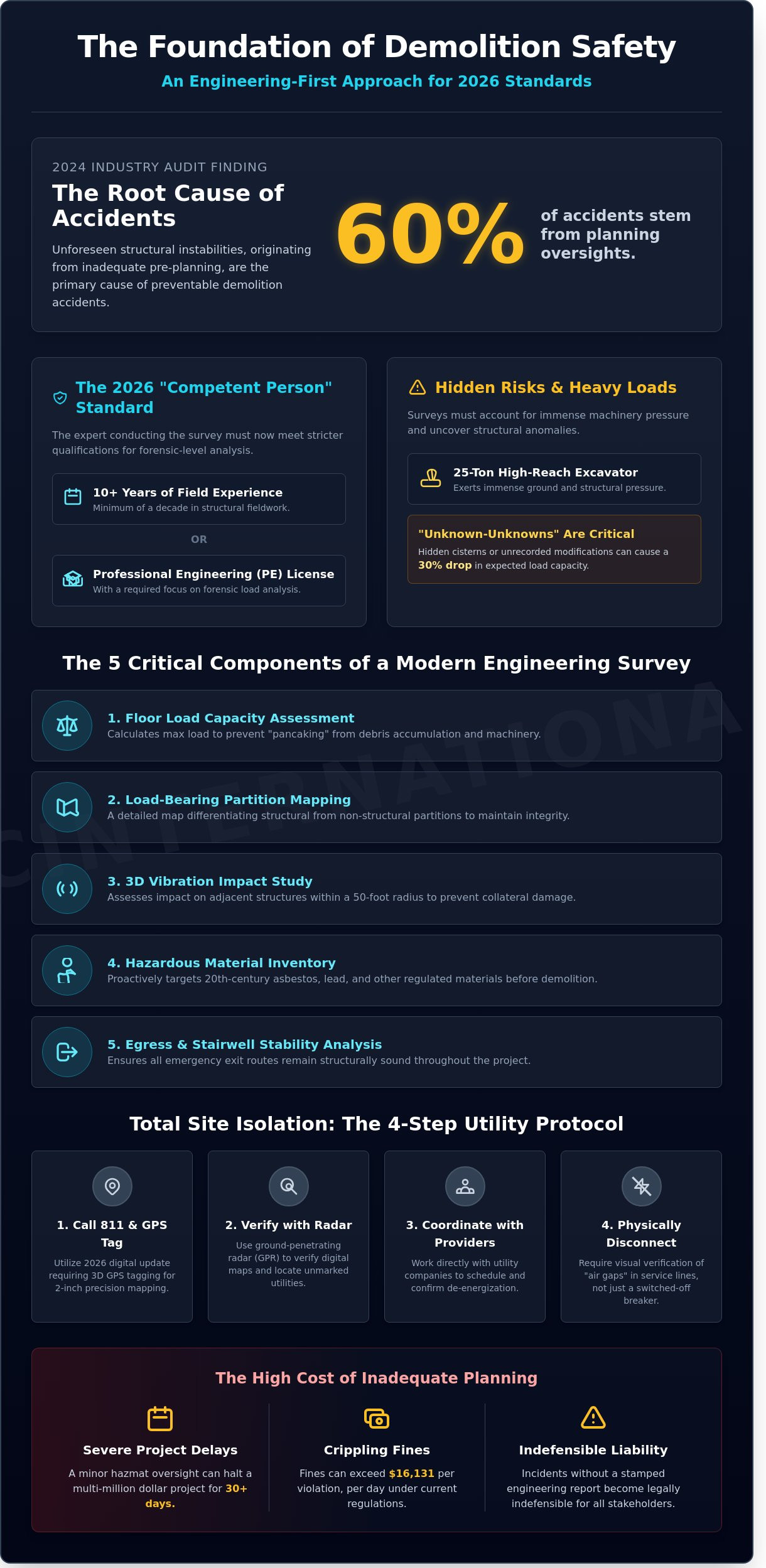
Commercial sites operate under rigorous OSHA requirements concerning worker protection. Projects involving the disturbance of lead-heavy materials require a baseline assessment to determine if lead-safe work practices or full hazardous material removal is necessary. This is especially relevant for commercial interior gutting services, where high-impact demolition can aerosolize lead particles. Before a single interior wall is removed, a lead clearance ensures the safety of the workforce and the integrity of the surrounding environment.
Residential Safety and Historic Preservation
South Carolina possesses a significant inventory of historic homes. For owners seeking historic preservation tax credits, lead testing is often a required step in the technical documentation process. These projects require a precise balance between preserving original materials and ensuring the site is safe for modern occupancy. Often, the demolition process south carolina for a partial renovation must be preceded by a targeted lead survey to identify friction surfaces like window sashes or door frames. Proactive identification allows for a methodical transition to residential lead paint abatement south carolina, preserving the structure’s value while meeting the latest 2026 safety standards.
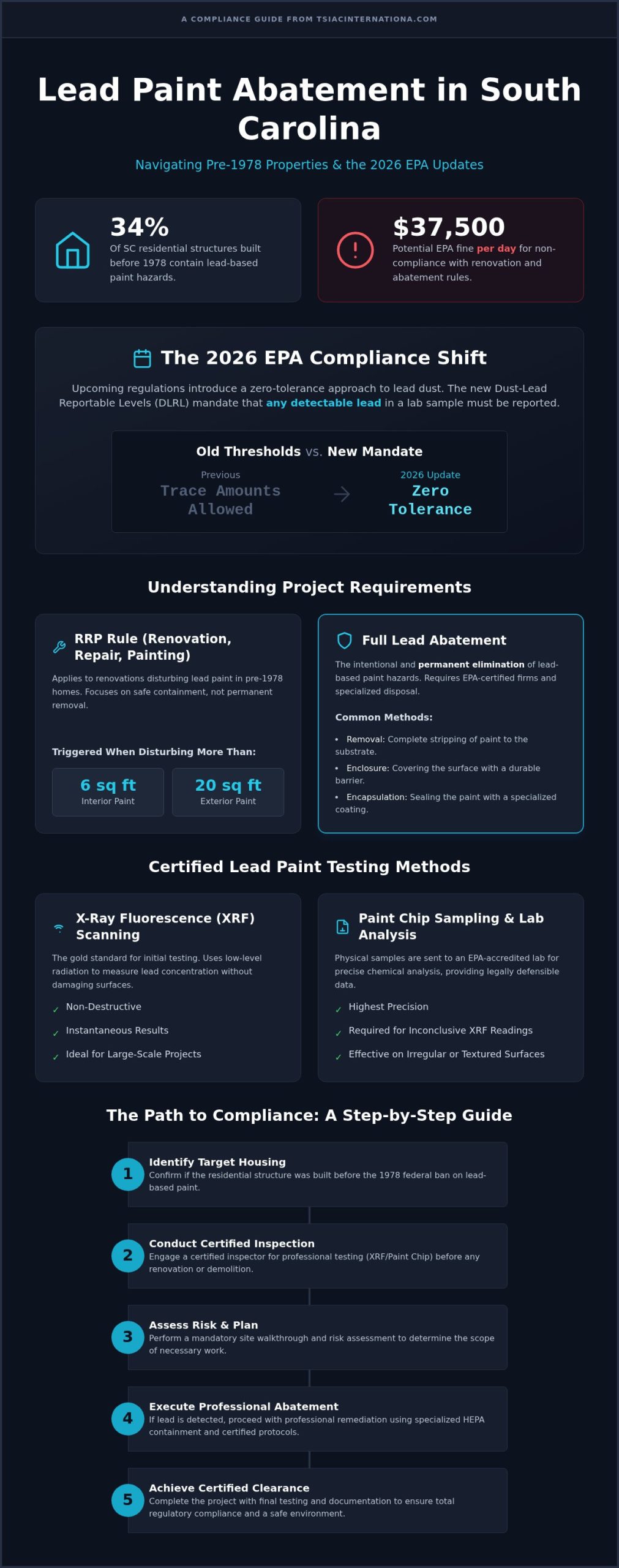
The Lead Testing Process: A Step-by-Step Guide
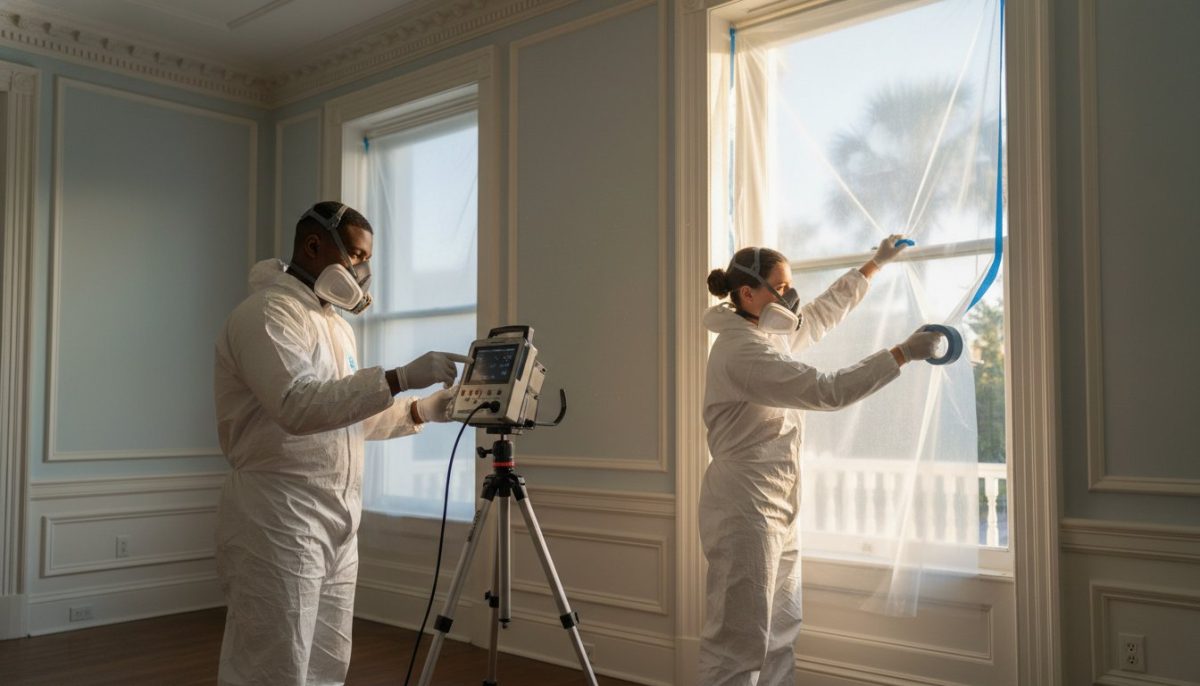
Selecting a certified South Carolina lead inspector or risk assessor is the foundation of a compliant project. These professionals are trained to identify not just where lead is, but where it poses an immediate risk to occupants. During the site walkthrough, they prioritize friction surfaces like window sashes and door frames where mechanical action can create lead dust. They also look for deteriorating paint that is peeling, chipping, or chalking. Every sample collected is logged against a structural profile of the building, ensuring that the final report provides a comprehensive map of the hazard. This data logging is meticulous. It includes the component type, the substrate material, and the condition of the finish. This level of detail is essential for planning a residential lead paint abatement south carolina project because it defines the specific containment measures required for different areas of the home.
Preparation for the Inspection
To ensure a thorough assessment, property owners should provide unobstructed access to all painted surfaces, including crawlspaces, attics, and outbuildings. Moving furniture away from walls and clearing closets allows the inspector to use XRF technology efficiently. Providing the inspector with building history or previous renovation records can streamline the process. In some cases, identifying “presumed lead” areas allows you to bypass testing for surfaces that’ll definitely be removed during a gutting project. This strategy focuses your testing budget on areas you intend to preserve, ensuring that your resources are allocated where they provide the most diagnostic value.
Interpreting the Risk Assessment Report
A standard inspection tells you if lead is present; a risk assessment tells you if it’s currently dangerous. You’ll need to distinguish between lead-based paint that is currently stable and lead-based paint hazards that require immediate intervention. The report will categorize findings and offer recommendations for interim controls, like specialized cleaning or repainting, versus permanent abatement. This document is your primary tool for securing hazardous material abatement south carolina services. It provides the technical specifications a contractor needs to estimate the scope of work accurately. If your risk assessment identifies high-priority hazards that threaten occupant safety, reach out to the experts at TSIAC International to develop a methodical, high-precision remediation strategy.
From Testing to Remediation: Professional Lead Abatement
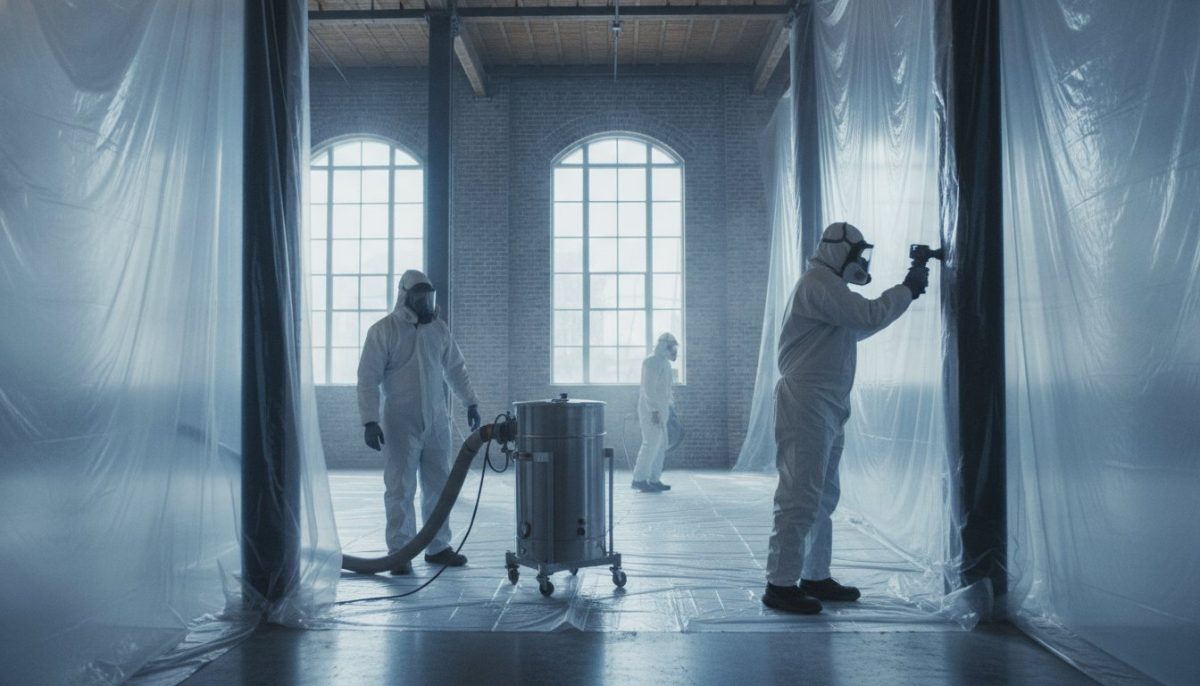
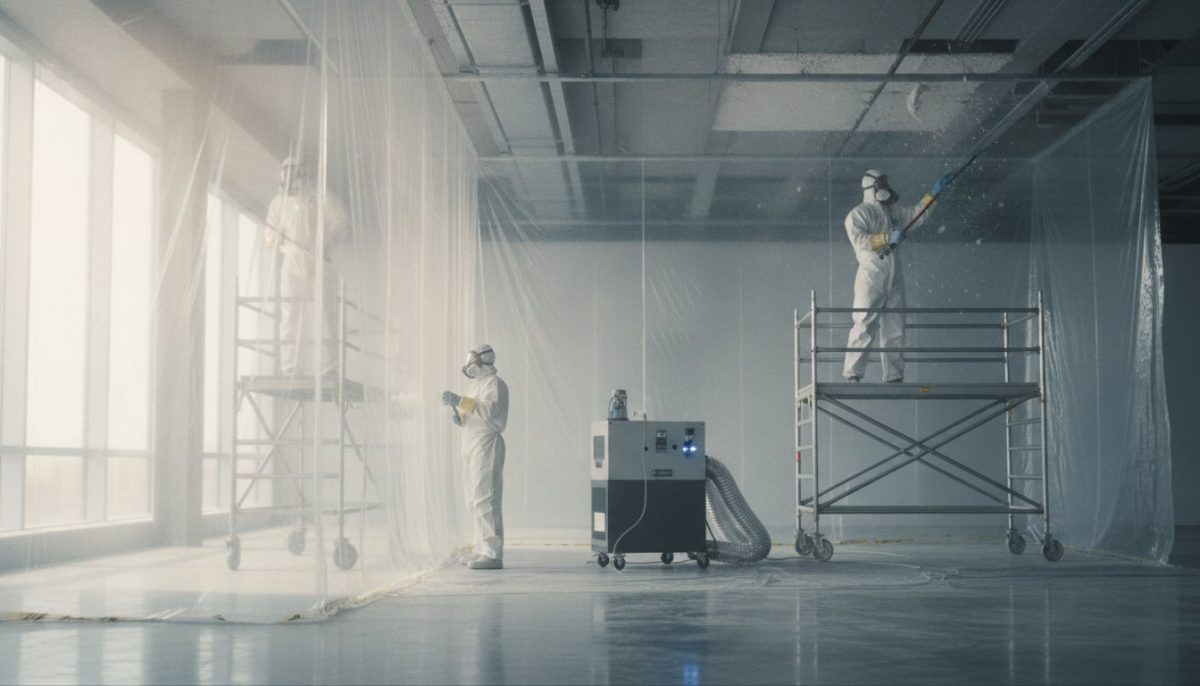
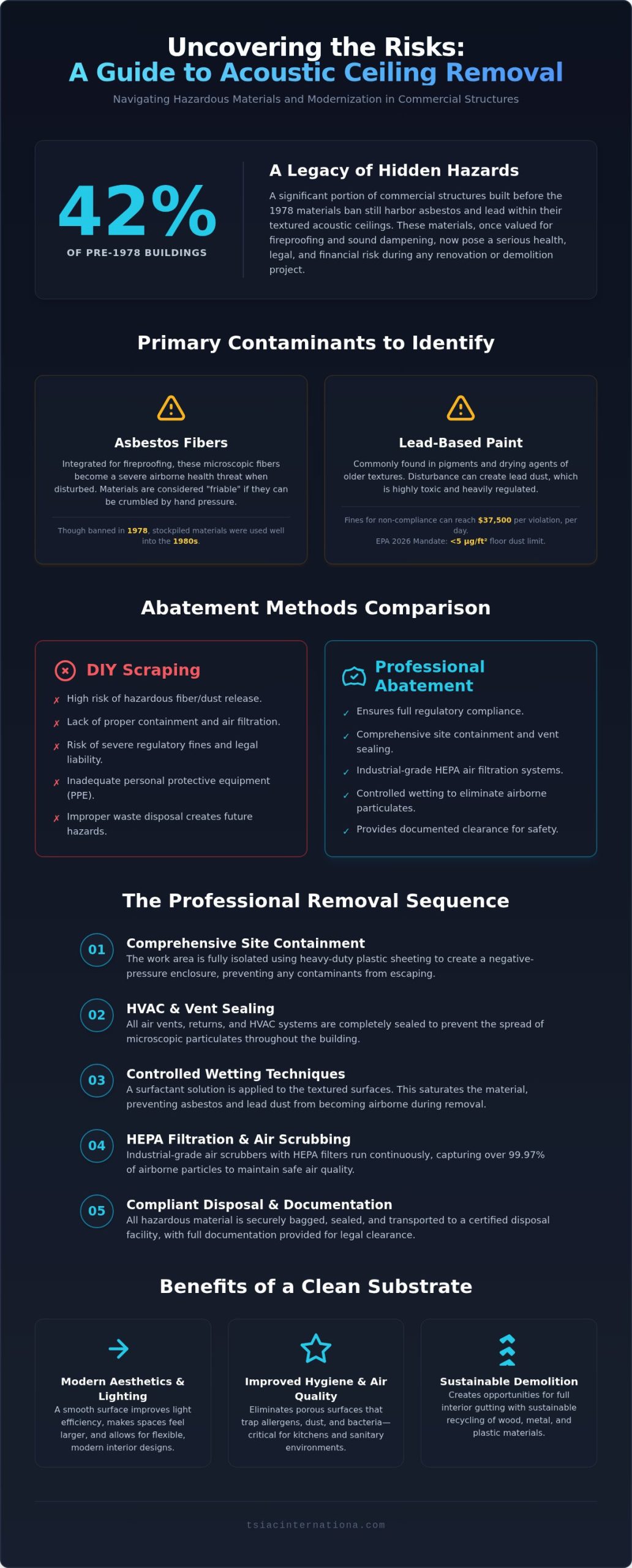
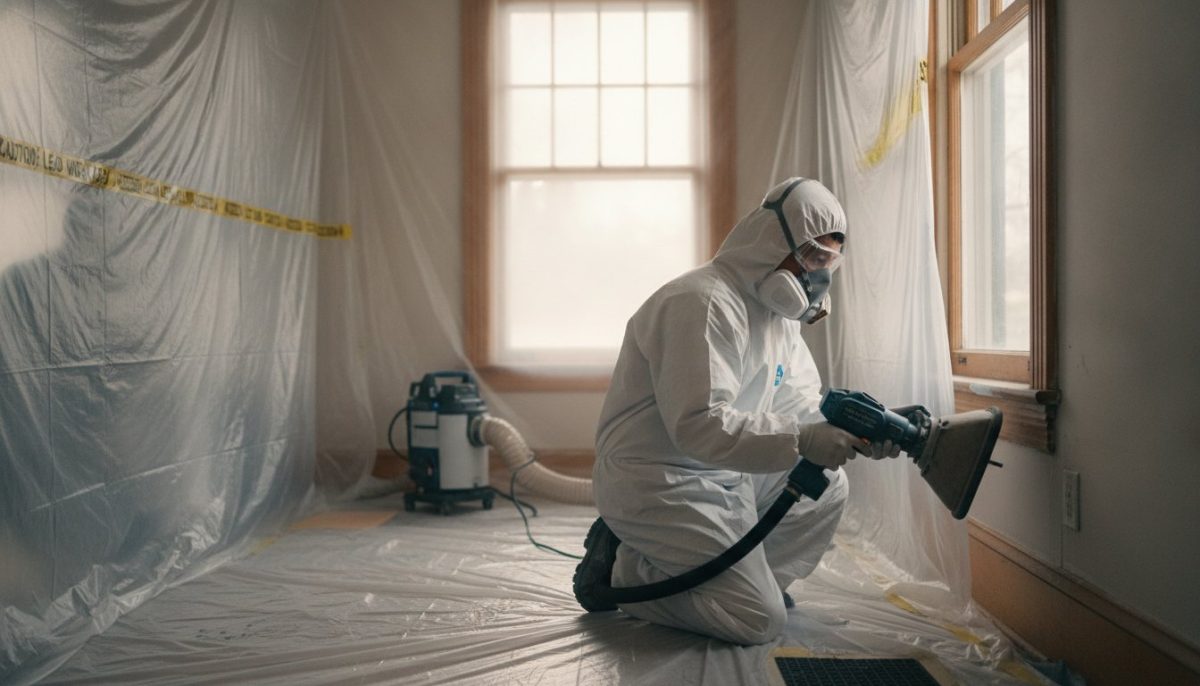
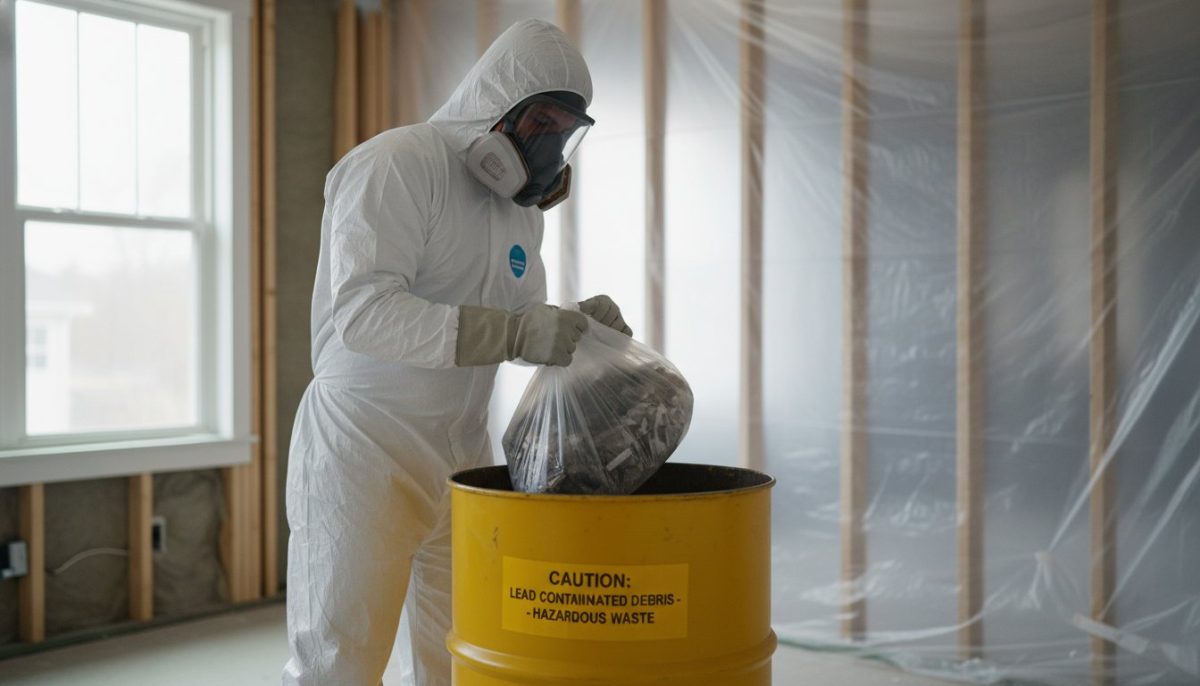
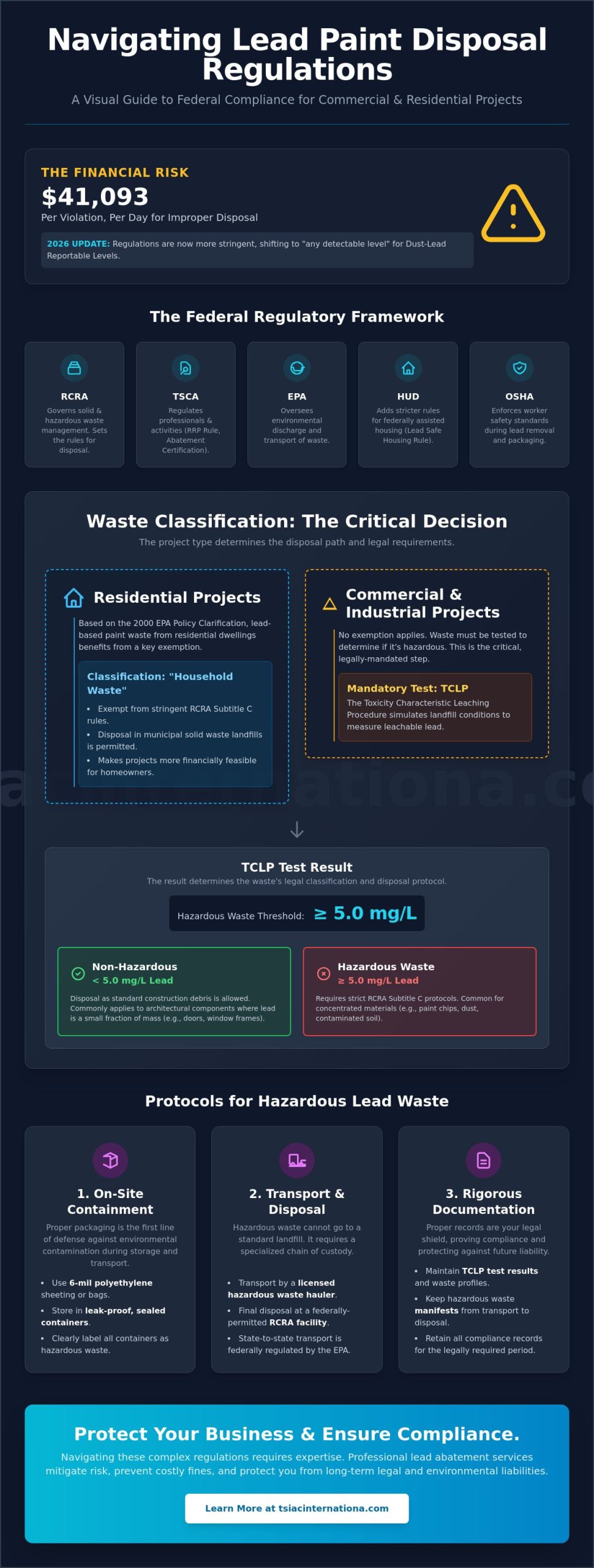
A positive lead test doesn’t have to stall your project; it simply defines the technical parameters for safe progress. Moving from the diagnostic phase to physical remediation requires a disciplined transition where the risk assessment report becomes a tactical work plan. For any residential lead paint abatement south carolina, the primary objective is the total containment of lead-contaminated dust and debris. This process begins by establishing regulated work areas using 6-mil polyethylene plastic barriers and negative air pressure systems equipped with HEPA filtration. These air scrubbers ensure that microscopic particles don’t migrate to clean areas of the structure during the removal process.
Safe removal techniques are selected based on the substrate and the condition of the paint. Wet scraping and wet sanding are standard practices because the moisture prevents lead dust from becoming airborne. For more complex architectural details, low-heat stripping is used to soften the paint without vaporizing the lead. In some scenarios, encapsulation provides a cost-effective pathway by applying a specialized liquid coating that creates a long-term, impact-resistant bond over the lead-based paint. Regardless of the method, the goal is to eliminate the hazard while maintaining the structural integrity of the property.
Managing the resulting toxic waste is a critical final step in the remediation cycle. In South Carolina, residential lead-based paint waste is generally managed in Class 2 or Class 3 landfills. However, commercial projects with lead concentrations of 5 mg/l or greater require disposal in specialized Subtitle C landfills as hazardous waste. A methodical approach to waste stream management prevents environmental contamination and ensures that the property owner remains in full compliance with SC DES regulations.
The TSIAC International Abatement Standard
TSIAC International has delivered high-precision hazardous material handling and structural solutions for over 15 years. We specialize in complex projects where lead hazards coexist with other environmental concerns, often integrating our services with asbestos removal south carolina to streamline the decontamination timeline. Our team follows a fegyelmezett, methodical protocol for site preparation and final cleaning, ensuring that every project meets the highest standards of safety and technical accuracy.
Post-Abatement Clearance
Before a site is released for general occupancy or further renovation, it must pass a rigorous post-abatement clearance. This process starts with a visual inspection to ensure all lead hazards were removed and no dust remains. Afterward, an independent professional collects dust wipe samples from floors, window sills, and troughs. To achieve regulatory sign-off in 2026, samples must meet the new Dust-Lead Action Levels (DLAL), including the strict 5 µg/ft² standard for floors. This final documentation provides the necessary proof for property records and regulatory authorities, allowing you to transition into the next phase of your renovation or demolition project with total peace of mind.
Securing Your Property’s Future with Regulatory Precision
Managing the complexities of lead-based paint requires a commitment to technical accuracy and environmental responsibility. The 2026 regulatory updates, including the transition to SC DES oversight and the implementation of stricter EPA Dust-Lead Action Levels, have raised the standard for property safety. By prioritizing certified XRF scanning and methodical risk assessments, you protect both your occupants and your structural investment. Successful residential lead paint abatement south carolina is built on the foundation of precise diagnostic data and high-performance containment protocols.
Whether you’re preparing for a full structural demolition or a selective interior gutting, understanding the legal requirements for clearance ensures a seamless project lifecycle. With over 15 years of specialized experience, our team provides full regulatory compliance and comprehensive hazardous material solutions tailored to the specific needs of South Carolina properties. We handle every phase of the process, from initial containment to final documentation and toxic waste disposal.
Contact TSIAC International for Expert Lead Abatement Services to ensure your next project is completed with absolute precision and safety. You can move forward with confidence, knowing your property meets the highest standards of modern environmental protection.
Frequently Asked Questions
Is lead paint testing mandatory in South Carolina for all home sales?
Federal law doesn’t mandate testing for every home sale, but it does require strict disclosure for structures built before 1978. Sellers must provide buyers with a 10-day window to conduct their own lead inspection. While you aren’t forced to test before listing, failing to disclose known lead hazards can lead to significant legal liabilities. Most buyers of historic South Carolina assets prioritize testing to understand future remediation costs.
How much does a professional lead paint inspection cost in SC?
Professional inspection costs depend on the size of the property and the specific diagnostic methods used, such as XRF scanning or paint chip sampling. Larger residential estates or commercial buildings require more extensive sampling points, which affects the final fee. Property owners should contact a certified lead inspector for a project-specific quote. Investing in a professional survey prevents the much higher costs associated with EPA fines or emergency work stoppages.
What is the difference between a lead inspection and a lead risk assessment?
A lead inspection is a surface-by-surface investigation that determines the presence of lead-based paint in a structure. In contrast, a lead risk assessment identifies the location, severity, and nature of lead-based paint hazards, such as lead dust or soil contamination. While an inspection tells you if lead exists, the risk assessment provides the technical roadmap for residential lead paint abatement south carolina by prioritizing the most dangerous areas for immediate remediation.
Can I use a DIY lead test kit for legal compliance in South Carolina?
DIY lead test kits don’t meet the legal requirements for regulatory compliance in South Carolina. These kits are often unreliable and can produce false negatives, which creates a dangerous sense of security. For renovations or demolitions subject to the EPA RRP Rule, you must use a certified lead inspector or risk assessor. Only professional reports using calibrated XRF technology or accredited laboratory analysis provide the legal documentation necessary to satisfy state and federal oversight.
How long does the lead testing process typically take for a commercial building?
The duration of the testing process depends on the building’s complexity and the required sampling density. A standard field walkthrough and XRF scan for a mid-sized commercial property can often be completed in one to two business days. However, if paint chip or soil samples are sent to an EPA-accredited laboratory for chemical verification, you should expect an additional three to five days for the final analytical report to be processed.
What happens if lead paint is found during a pre-demolition survey?
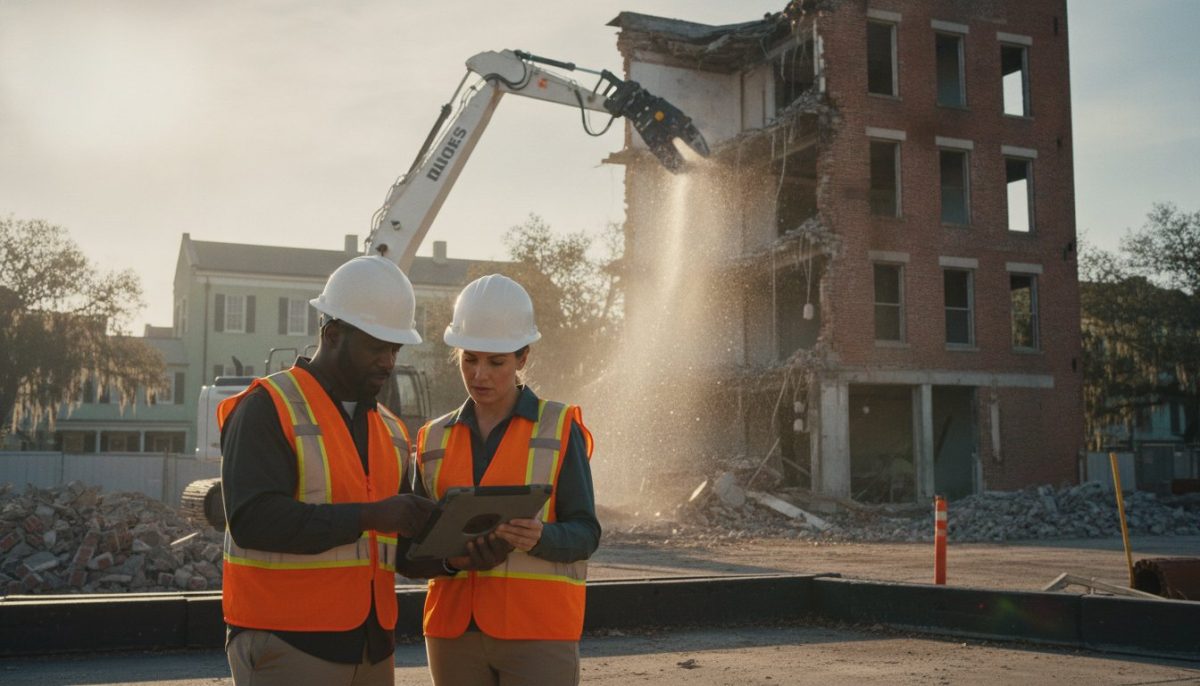
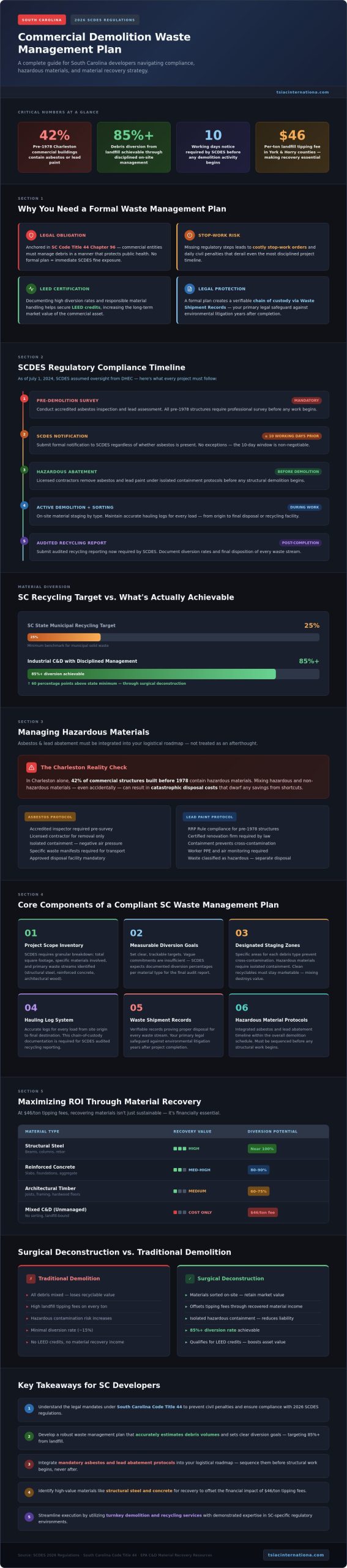
If a pre-demolition survey confirms the presence of lead, the project must transition into a formal abatement phase before any structural disturbance begins. This involves establishing specialized containment zones and using HEPA-filtered air scrubbers to prevent environmental contamination. The identified lead-based paint must be handled and disposed of according to SC DES hazardous waste regulations. Integrating residential lead paint abatement south carolina with your demolition plan ensures that toxic materials don’t contaminate the surrounding site.
Does South Carolina require specific certification for lead abatement contractors?
Yes, all firms performing lead-based paint activities in South Carolina must be EPA-certified. This includes any contractor who disturbs more than the minimum square footage thresholds in pre-1978 target housing or child-occupied facilities. Working with an uncertified contractor is illegal and exposes the property owner to massive civil penalties. Certified firms maintain the rigorous training and specialized equipment necessary to execute hazardous material removal while providing all required regulatory documentation for your property records.
How often should lead testing be updated for rental properties?
Federal and state laws don’t mandate a specific re-testing schedule for rental properties, but they do require landlords to maintain lead-safe environments. If a property has a lead-free certificate from a previous professional inspection, re-testing isn’t typically necessary unless structural changes occur. However, if lead is managed in place, landlords should perform regular visual assessments to ensure paint isn’t chipping or peeling. Any significant renovation or selective demolition project always triggers a new requirement for testing.