The Lead Paint Abatement Process: A Professional Guide to Permanent Removal

The EPA currently mandates fines of up to $37,500 per violation, per day, for non-compliance with lead safety protocols, yet many facility managers…

The EPA currently mandates fines of up to $37,500 per violation, per day, for non-compliance with lead safety protocols, yet many facility managers still treat surface preparation as a routine renovation task rather than a controlled hazardous operation. You likely recognize that managing an aging industrial asset involves more than just aesthetics; it’s about mitigating long-term structural and legal risks. When you face the reality of deteriorating coatings, the complexity of the lead paint abatement process can feel overwhelming, especially when balancing the conflicting demands of OSHA worker safety standards and EPA environmental mandates.

This guide provides the technical clarity you need to move from liability to a lead-free certification. We’ll break down the engineered phases of permanent removal, from initial XRF testing to the final clearance report. You’ll gain a transparent understanding of how professional containment and specialized HEPA vacuum systems ensure your project stays on schedule while meeting the strict 1992 Residential Lead-Based Paint Hazard Reduction Act requirements. We’re outlining the exact workflow that transforms a high-risk site into a safe, compliant, and fully documented asset.

Key Takeaways

  • Distinguish between temporary remediation and permanent abatement to secure the long-term safety and structural integrity of your property.
  • Master the technical phases of the lead paint abatement process, from initial hazardous material mapping to the engineering of critical containment barriers.
  • Evaluate specialized methods such as enclosure, encapsulation, and removal to determine the most effective strategy for wood, steel, and masonry substrates.
  • Ensure full regulatory compliance by understanding the latest 2026 EPA and OSHA standards for site safety and worker protection.
  • Identify the critical credentials and specialized pollution insurance required to partner with a high-tier professional abatement contractor.

Lead Paint Abatement vs. Remediation: Choosing Permanent Safety

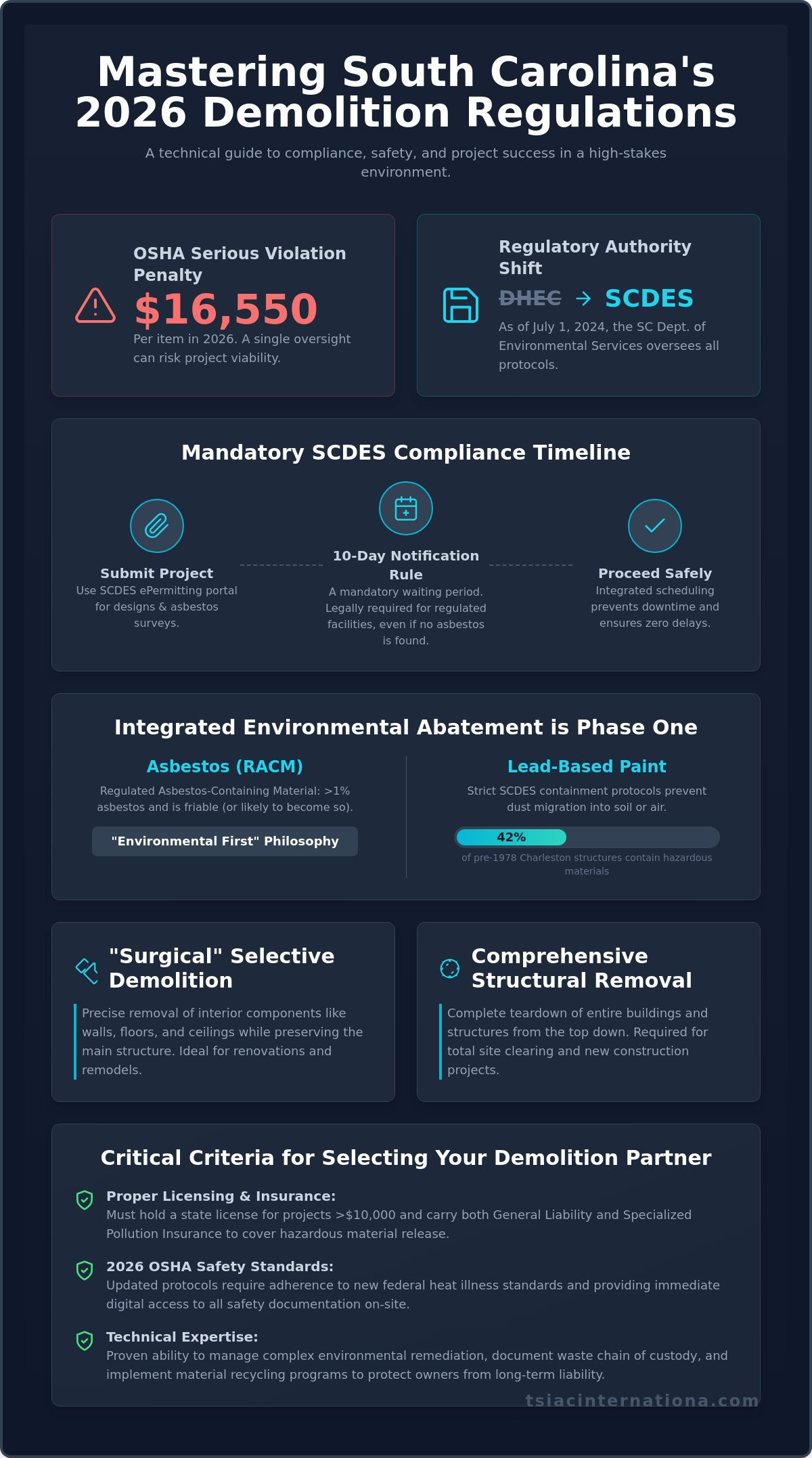
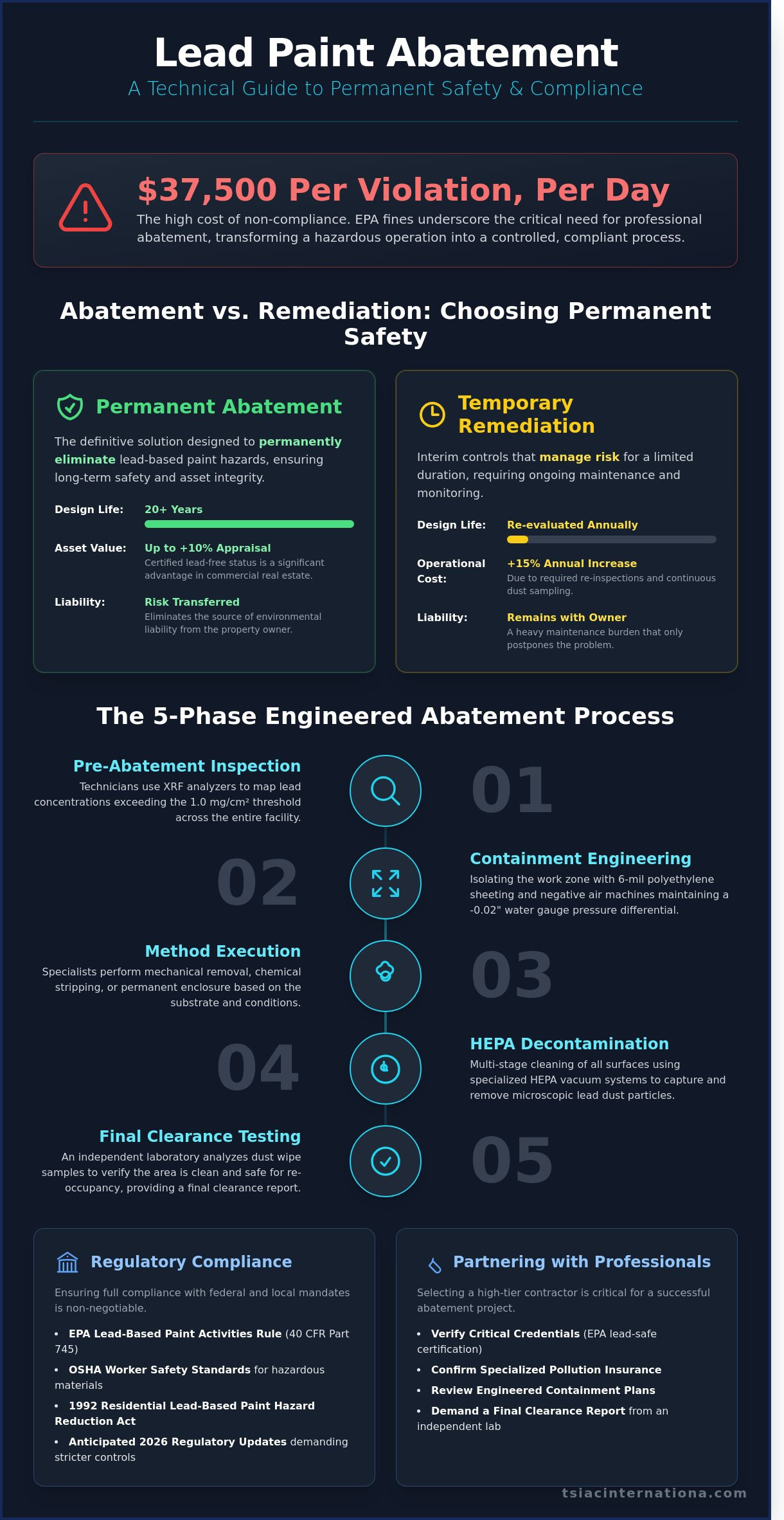
Understanding the lead paint abatement process requires a clear distinction between temporary risk management and permanent hazard elimination. While many facility managers initially look for quick fixes, the 2026 regulatory updates demand a more rigorous approach to long-term liability. Abatement refers specifically to a set of measures designed to permanently eliminate lead-based paint hazards. This differs fundamentally from interim remediation, which only manages the risk for a limited duration through maintenance and monitoring.

The EPA governs these technical interventions through the Lead-Based Paint Activities Rule, specifically detailed in 40 CFR Part 745. This regulation ensures that only certified professionals handle the removal, preventing the accidental dispersal of toxic dust that occurs during unmanaged renovations. For a comprehensive lead abatement overview, one can see that the distinction lies in the intent and the documented longevity of the solution. Professional contractors don’t just hide the problem; they remove the source of the toxicity to meet strict safety benchmarks.

Interim Controls: The Temporary Mitigation Strategy

Interim controls include specialized HEPA vacuuming, paint stabilization, and minor structural repairs. These methods act as short-term fixes. They’re appropriate when a building is slated for demolition within 24 months or when immediate budget constraints prevent full removal. However, they carry a heavy maintenance burden. Property owners often see a 15% increase in annual operational costs due to the required re-inspections and dust sampling needed to verify that the environment remains safe for occupants.

Abatement: The Permanent Solution for Structural Integrity

True abatement yields a minimum 20-year design life. It involves heavy-duty techniques like component replacement, enclosure with specialized barriers, or complete mechanical removal. From a technical standpoint, structural removal is often the most cost-effective path over a decade. It eliminates the need for the perpetual monitoring required by the EPA and HUD. Implementing a professional lead paint abatement process can increase commercial property appraisals by 10% or more. It also significantly lowers insurance premiums by removing the primary source of environmental liability. Our teams prioritize these methods to ensure the structural integrity of the asset remains intact while the hazard is surgically extracted.

  • Design Life: Abatement provides 20+ years of safety; interim controls require re-evaluation every 12 months.
  • Liability: Permanent removal transfers the risk away from the property owner.
  • Asset Value: Certified lead-free status is a significant advantage in commercial real estate transactions.

The 5-Phase Lead Paint Abatement Process

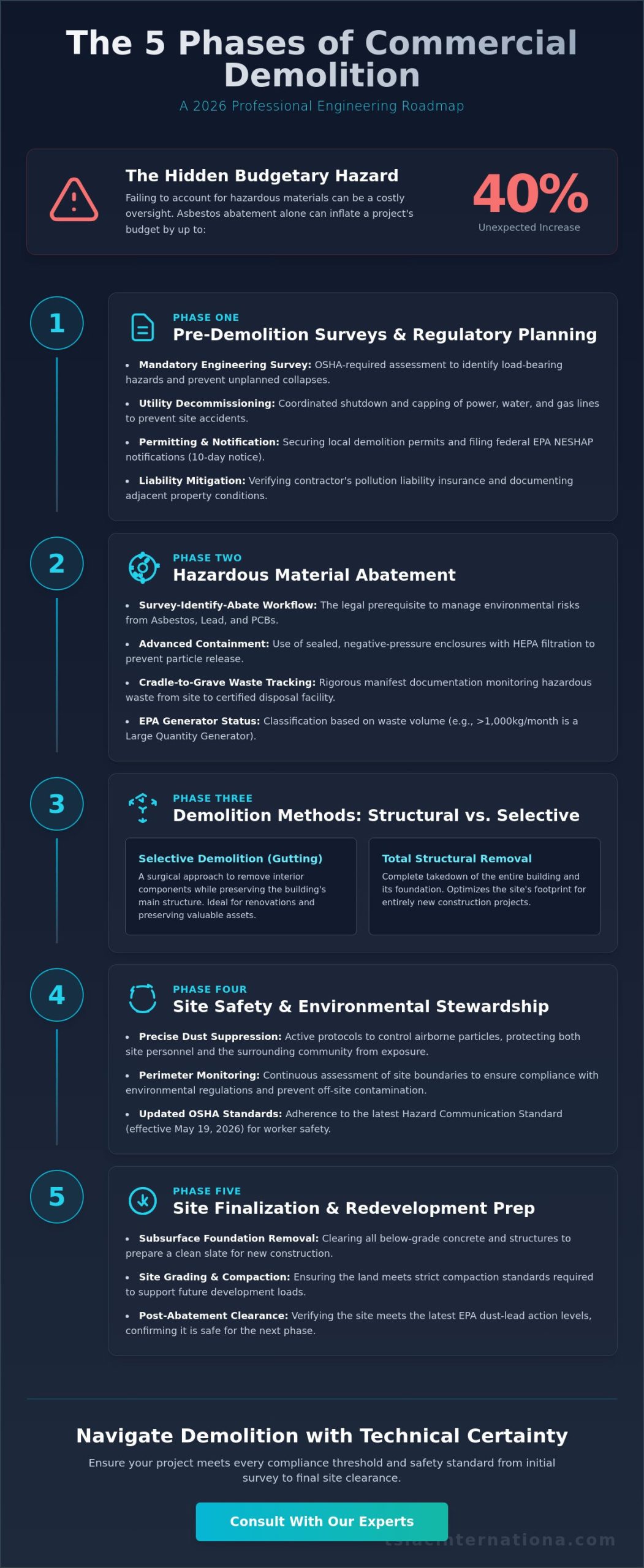
Successful projects require a structured, five-stage approach to eliminate toxicity and ensure structural integrity. The lead paint abatement process isn’t a simple renovation; it’s a controlled engineering operation that demands absolute precision. Professionals execute this workflow to ensure compliance with EPA lead regulations and local safety mandates.

  • Phase 1: Pre-abatement inspection. Technicians use XRF (X-ray fluorescence) analyzers to map lead concentrations exceeding 1.0 mg/cm² across the facility.
  • Phase 2: Containment engineering. The team establishes physical barriers and pressure differentials to isolate the work zone.
  • Phase 3: Method execution. Specialists perform mechanical removal, chemical stripping, or permanent enclosure based on the substrate’s condition.
  • Phase 4: HEPA decontamination. This involves multi-stage cleaning of all surfaces to remove microscopic dust.
  • Phase 5: Clearance testing. Independent laboratories analyze dust wipe samples to verify the area is safe for re-occupancy.

Site Preparation and Containment Engineering

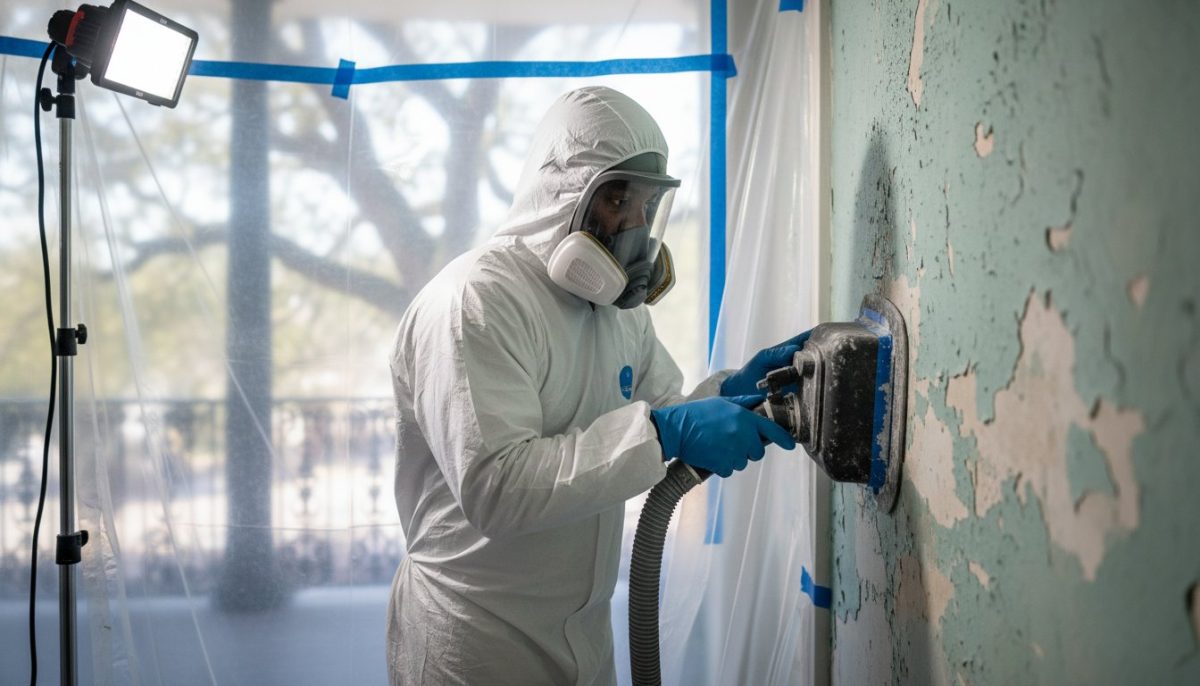
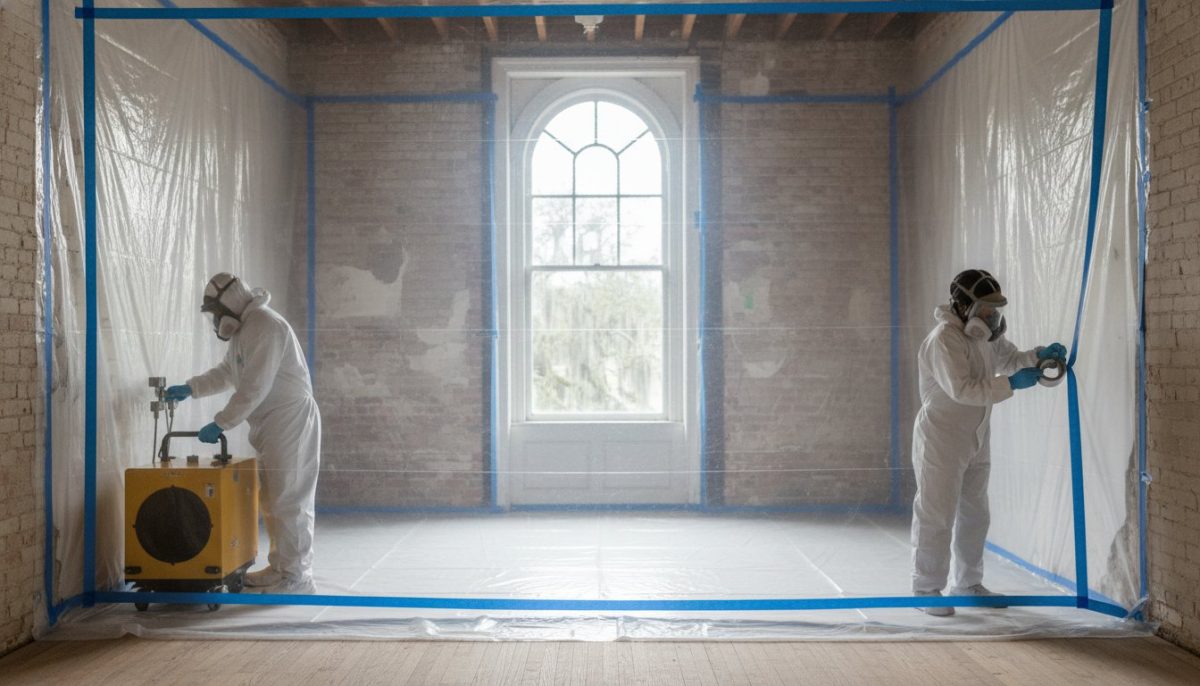
Technical precision starts with isolating the hazard. We use 6-mil polyethylene sheeting to seal every vent, window, and doorway, creating a redundant barrier system. To prevent lead dust migration, negative air machines must maintain a minimum pressure differential of -0.02 inches of water gauge. These units pull air through HEPA filters, exhausted outside the building. For projects in high-altitude or complex industrial environments, establishing three-stage decontamination units is mandatory. These units ensure that personnel and equipment don’t transport lead particles into “clean” zones during transitions. If you’re managing a facility with difficult access points, our team provides specialized industrial coating and abatement solutions for the most challenging environments.

Post-Abatement Cleanup and HEPA Vacuuming

Cleaning after lead removal is a rigorous mechanical process. Specialists utilize the “wet-mist” technique, lightly spraying surfaces with water to weigh down particles before they become airborne. Standard shop vacuums are strictly prohibited because they exhaust fine lead dust back into the atmosphere. Instead, we use industrial HEPA vacuums certified to capture 99.97% of particles as small as 0.3 microns. After the initial vacuuming, the team performs a wet-wash with high-phosphate detergents, followed by a final vacuum pass. A certified inspector then conducts a white-glove visual inspection. They look for any visible dust or debris in corners, cracks, and floor-to-wall joints before the final clearance samples are collected for laboratory analysis.

The Lead Paint Abatement Process: A Professional Guide to Permanent Removal

Professional Abatement Methods: A Strategic Comparison

Selecting the correct lead paint abatement process isn’t a matter of preference; it’s a technical decision dictated by the substrate material and the building’s future utility. Wood, steel, and masonry each react differently to chemical and mechanical interventions. Professionals must calculate the risk of dust migration against the speed of project completion. A strategic approach ensures that the chosen method doesn’t just hide the hazard but manages it according to the structural needs of the facility.

The choice of method depends heavily on the specific surface being treated:

  • Wood Substrates: Best handled through replacement or wet scraping. Wood is porous, meaning lead particles can migrate deep into the grain.
  • Steel and Metal: Often requires chemical stripping or abrasive blasting with HEPA-filtered vacuum attachments to prevent airborne contamination.
  • Masonry and Concrete: Typically requires enclosure or vacuum-shrouded needle scaling to address the textured surface.

Component Replacement: The Gold Standard

Removing contaminated elements like window sashes, door frames, and decorative trim represents the most decisive path to safety. This strategy bypasses the need for intensive on-site sanding, which significantly reduces the volume of hazardous dust. Modern selective demolition allows for the precise extraction of these components without damaging the surrounding structure. In most commercial retrofits, the labor hours required to strip a single door frame can exceed the cost of a high-quality replacement by 15% to 25%. This method simplifies the final inspection because the source of the toxin is physically gone from the site. It’s the most reliable way to achieve a “lead-free” designation rather than just “lead-safe” status.

Enclosure and Encapsulation Strategies

Enclosure utilizes permanent, rigid barriers like specialized siding, 5/8-inch gypsum board, or paneling to isolate lead-based paint from the environment. It’s a high-durability solution for large surface areas where removal is structurally impractical or too costly. Encapsulation is a different technical approach; it employs liquid-applied coatings that are chemically engineered to stay flexible and resist peeling. These aren’t typical hardware store paints. They are elastomeric polymers designed to withstand thermal expansion and create a long-lasting bond.

You can’t use encapsulants on friction surfaces or damp masonry, as the bond will fail within 12 to 24 months. When planning hazardous material abatement in South Carolina, the choice between these methods must align with EPA lead abatement regulations to ensure long-term compliance. Every enclosure must be mechanically fastened and sealed at the edges to prevent the escape of lead dust over time. This requires an engineering mindset to ensure the new barrier doesn’t trap moisture and cause underlying structural rot.

Regulatory Compliance and Safety Standards in 2026

Executing a lead paint abatement process requires strict adherence to a complex web of federal and state mandates. In 2026, the distinction between the EPA Renovation, Repair, and Painting (RRP) rule and full abatement is sharper than ever. While RRP focuses on “lead-safe” work practices during minor renovations, abatement is a specialized, permanent solution aimed at total hazard elimination. This high-stakes work falls under the OSHA Lead in Construction Standard (29 CFR 1926.62). This regulation dictates everything from mandatory blood lead level monitoring for workers to the specific types of HEPA-filtered respirators required on-site. Compliance isn’t a suggestion; it’s a structural necessity for any industrial or commercial project.

Safety protocols must extend beyond the active work zone. A third-party clearance inspection is the final, non-negotiable gatekeeper in the process. This independent verification ensures that the abatement contractor has met all cleanup standards before the area is re-occupied. This separation of duties prevents conflicts of interest and guarantees that the environment is truly safe. For projects involving structural changes, understanding the demolition process in South Carolina is often the next step in ensuring site-wide safety and regulatory alignment.

The Role of the Certified Lead Inspector

An independent Certified Lead Inspector provides the technical oversight necessary for legal validation. They use X-Ray Fluorescence (XRF) technology to identify lead concentrations in real-time. This handheld analyzer uses low-level radiation to excite lead atoms, allowing the inspector to see through multiple layers of paint without damaging the substrate. After the lead paint abatement process is complete, the inspector performs dust wipe sampling. In 2026, the EPA has maintained rigorous clearance levels, such as 10 µg/ft² for floors, to ensure no microscopic hazards remain. These samples are sent to a certified laboratory for final confirmation.

Hazardous Waste Disposal and Documentation

Lead-contaminated debris cannot be discarded with standard construction waste. Federal law under the Resource Conservation and Recovery Act (RCRA) requires contractors to characterize waste through Toxicity Characteristic Leaching Procedure (TCLP) testing. If lead levels exceed 5.0 mg/L, the debris is classified as hazardous waste. This necessitates specialized transport and disposal at a permitted facility. Maintaining a “Chain of Custody” is vital for regulatory audits; it provides a paper trail from the moment the lead is removed to its final disposal. This level of documentation is as critical as the work itself, much like the standards required for asbestos removal in South Carolina.

Ensure your facility meets every 2026 safety mandate by partnering with experts who prioritize technical precision. Contact TSIA C International for a professional lead abatement consultation today.

Partnering with a Professional Abatement Contractor

Selection of a contractor determines the long term liability and safety of a property. While state licensing represents a baseline requirement, it doesn’t guarantee the technical proficiency needed for complex industrial or commercial sites. A professional partner must demonstrate a deep understanding of the lead paint abatement process through documented past performance and rigorous adherence to EPA Lead-Safe Certification standards.

One critical differentiator is the possession of Pollution Occurrence Insurance (POI). Standard general liability policies often exclude hazardous material releases. Without POI, the property owner remains financially vulnerable if lead dust migrates beyond the containment zone during the project. You should always verify that a contractor’s insurance specifically covers lead-related claims. This technical detail separates professional remediation firms from general contractors who lack the specialized infrastructure to manage toxic particulates.

The TSIAC International Advantage

TSIAC International brings 15+ years of specialized experience to high-stakes remediation projects. We don’t view lead removal as an isolated task; it’s a critical phase of structural integrity management. Our teams integrate abatement with selective demolition, allowing for a streamlined workflow that saves time on large scale renovations. By utilizing industrial grade equipment and advanced containment strategies, we manage "impossible" sites where traditional methods fail.

Our commitment extends to environmental recycling protocols, ensuring that lead contaminated waste is processed according to EPA Title 40 CFR standards. We prioritize site safety to protect both our technicians and your future occupants. This engineering-led approach reduces project overhead by 15% to 20% compared to using separate contractors for demolition and hazardous material removal.

Evaluating Project Quotes and Timelines

A professional lead abatement bid must be granular. It should detail the specific methods used, such as chemical stripping or vacuum-shrouded power tools, and provide a clear timeline for each phase. Be wary of low cost proposals that lack specific details on waste disposal or air monitoring. These "red flags" often indicate a lack of certification or a plan to cut corners on safety.

A legitimate quote will include costs for third party clearance testing to verify the site is safe for re-occupancy. If you require a partner who manages technical complexity with engineering precision, contact TSIAC International for a professional lead abatement consultation to receive a comprehensive project breakdown. We provide the technical documentation and safety guarantees that ensure the lead paint abatement process is completed correctly the first time.

Securing Your Property Through Permanent Lead Removal

Executing a comprehensive lead paint abatement process is the only way to ensure long-term structural integrity and occupant safety. Temporary remediation often fails to address the underlying toxicity, leading to costly re-interventions. By following the 5-phase methodology and adhering to the 2026 EPA regulatory standards, property owners mitigate both health risks and legal liabilities. It’s a technical challenge that demands engineering precision rather than quick fixes.

TSIAC International leverages over 15 years of hazardous material experience to manage these complex environments. Our team consists of EPA-certified lead abatement specialists who understand the nuances of high-stakes industrial sites. We integrate comprehensive structural demolition and recycling capabilities into every project, ensuring that no hazardous residue remains. Our track record proves that even the most difficult locations can be restored to full safety through disciplined execution and technical expertise.

Secure your property with TSIAC International’s professional abatement services and gain the peace of mind that comes with a lead-free facility. We’re here to help you navigate every technical hurdle with confidence.

Frequently Asked Questions

How long does the lead paint abatement process typically take?

A standard lead paint abatement process typically takes between 3 and 14 days to complete. Small residential tasks finish in 72 hours, while complex industrial structures require 14 days for full containment and removal. The timeline depends on the total surface area and the chosen removal method, such as mechanical scraping or chemical stripping. We provide a precise schedule after the initial site assessment to ensure your operations resume quickly.

Can I stay in my home or building during lead abatement?

Occupants can’t stay in the immediate work area or adjacent rooms during the lead paint abatement process. EPA safety protocols and OSHA standards require us to establish sealed containment zones using 6-mil plastic and HEPA-filtered air systems. You’ll regain access only after a certified inspector confirms the area is safe. This strict approach prevents lead dust inhalation and ensures 100% safety for your family or employees.

Is lead paint abatement required by law for commercial properties?

Federal law, specifically Title 40 CFR Part 745, mandates lead-safe practices for any commercial building constructed before 1978. Property owners face fines of $37,500 per day for non-compliance with EPA regulations during renovations. While abatement is often voluntary, it’s the only way to eliminate long-term legal liability and reduce insurance premiums. Most commercial entities choose permanent removal to protect their 10-year capital improvement plans and avoid future litigation.

What is the difference between an RRP contractor and a lead abatement contractor?

RRP contractors handle minor renovations that disturb paint, while abatement contractors perform permanent hazard elimination. RRP certification is a 1-day course focused on lead-safe work practices during general repairs. Abatement requires a 40-hour supervisor certification and specialized equipment to remove lead forever. Our teams possess these advanced credentials to manage high-risk industrial sites where standard renovation techniques aren’t sufficient for total safety.

How much does professional lead paint abatement cost per square foot?

Professional lead abatement costs between $8 and $15 per square foot for most standard surfaces. Specialized projects involving industrial alpinism or complex steel structures can reach $25 per square foot due to the technical difficulty. These figures include labor, high-grade containment materials, and specialized waste management fees. A typical 2,000 square foot facility requires a budget of $16,000 to $30,000 for a complete, certified removal project.

What happens if a property fails the final lead clearance test?

The contractor must reclean the entire work area and repeat the dust-wipe testing if a site fails its clearance. HUD guidelines specify that floor lead levels must stay below 10 micrograms per square foot. If levels exceed this limit, the crew uses HEPA vacuums and specialized wet-wiping techniques again. We don’t consider a project finished until the third-party laboratory results confirm the site is safe for occupancy.

Are there specific disposal requirements for lead-painted wood and metal?

Lead-painted waste is classified as hazardous under RCRA regulations if it exceeds 5.0 mg/L in a TCLP test. Wood and metal components must be separated and transported to licensed Category C landfills that accept hazardous materials. We document every ton of debris with a formal waste manifest. This ensures 100% traceability and prevents legal complications for the property owner during future environmental audits or property transfers.

How does lead abatement impact the resale value of a building?

Certified lead removal typically increases a building’s resale value by 5% to 12% by eliminating significant buyer liability. Prospective buyers in the industrial sector prioritize “lead-free” certifications to avoid future renovation costs and health risks. A clean environmental record speeds up the closing process by 20 days on average. It transforms a high-risk asset into a premium, market-ready property that commands a higher appraisal value.

Professional Asbestos Removal Services: The Complete Guide to Safe Abatement in 2026

In 2026, a single microscopic fiber of disturbed chrysotile can devalue a commercial property by 15% in less than 24 hours if the abatement process…

In 2026, a single microscopic fiber of disturbed chrysotile can devalue a commercial property by 15% in less than 24 hours if the abatement process fails to meet updated EPA strictures. You likely recognize that managing an aging industrial or residential facility requires a calculated approach to hazardous materials. It’s a high-stakes environment where any error in professional asbestos removal services leads to more than just health risks; it triggers legal liabilities and expensive project delays. You need a partner who views safety through the lens of engineering precision rather than just a checklist.

You’ve probably felt the anxiety of navigating shifting safety standards while trying to keep a project on schedule. This guide provides the technical roadmap required to secure services that guarantee 100% regulatory compliance and a certified clean environment for your occupants. We’ve compiled expert insights on the latest OSHA safety protocols and the specific documentation necessary for future property sales. You’ll learn how to identify specialized solutions for difficult-to-reach locations and understand the 2026 cost structures for complex abatement projects. By the end of this analysis, you’ll have the clarity to eliminate hazardous materials while maintaining total control over your project’s budget and timeline.

Key Takeaways

  • Master the critical distinctions between removal, encapsulation, and enclosure to determine the most effective strategy for managing hazardous materials on your property.
  • Understand the engineering behind safety, including the implementation of airtight poly-sheeting barriers and negative air pressure systems to prevent site contamination.
  • Ensure full regulatory compliance by learning how to navigate EPA’s NESHAP requirements and OSHA’s strict standards for site safety and air monitoring.
  • Use our expert checklist to verify essential credentials, such as pollution occurrence insurance, when selecting professional asbestos removal services for your next project.
  • Explore the advantages of integrated abatement and demolition, where single-source contractors manage everything from interior gutting to high-level environmental recycling.

What are Professional Asbestos Removal Services?

Professional asbestos removal services involve a rigorous technical discipline known as asbestos abatement. This process focuses on the identification, containment, and physical extraction of asbestos-containing materials (ACMs) from a structure. It’s not a simple cleaning task; it’s a highly regulated engineering control designed to prevent the release of microscopic silicate fibers into the air. When these fibers remain undisturbed, they pose a negligible risk. However, during renovation or demolition, they become airborne and easily inhaled. Specialized asbestos abatement procedures ensure that these materials are handled within sealed environments using HEPA-filtered negative air pressure systems.

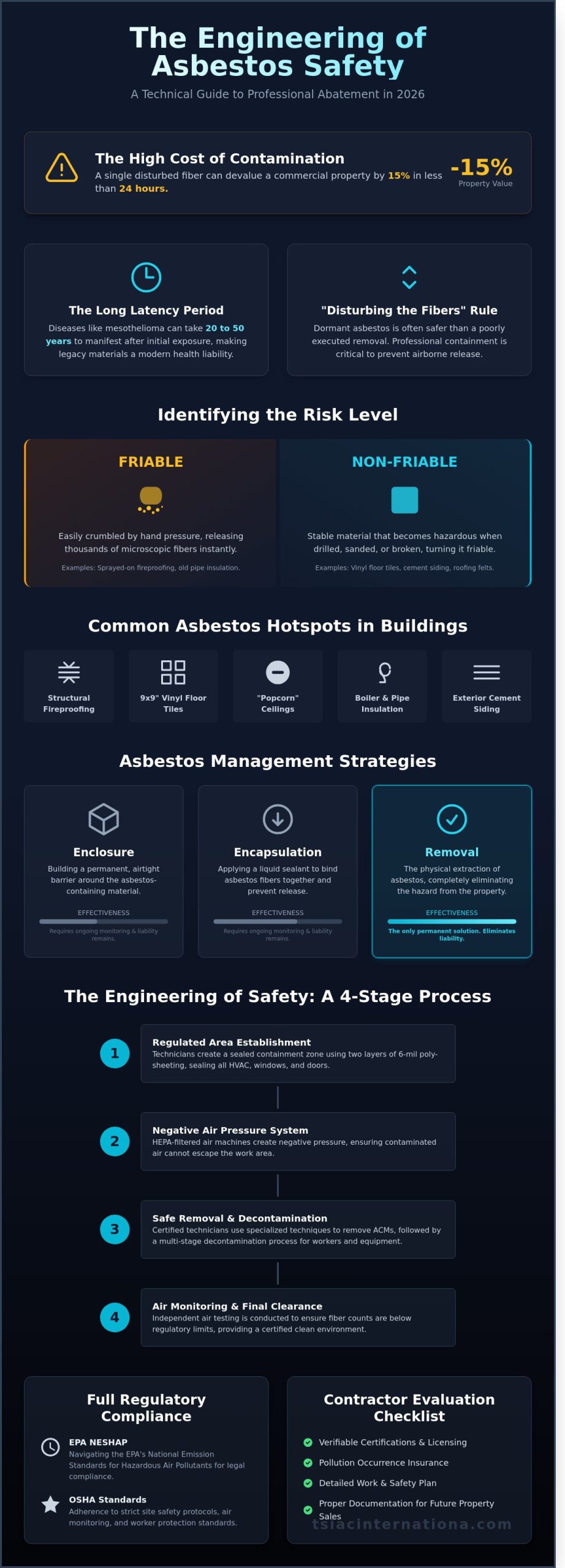
Property owners must understand the distinction between removal, encapsulation, and enclosure. Removal is the only permanent solution, as it completely eliminates the hazard from the premises. Encapsulation involves treating the ACM with a liquid sealant that binds the fibers together or coats the material to prevent fiber release. Enclosure involves building a permanent, airtight barrier around the asbestos. While encapsulation and enclosure are valid management strategies, they require ongoing monitoring and don’t eliminate the underlying liability. For most commercial properties and multi-family residential buildings with more than four units, professional intervention isn’t just a safety choice; it’s a legal mandate under EPA NESHAP regulations and South Carolina DHEC requirements.

Asbestos was integrated into over 3,000 different building products throughout the 20th century. In South Carolina, our team frequently identifies these materials in structural fireproofing applied to steel beams, 9×9 inch vinyl floor tiles, and acoustic “popcorn” ceilings installed before 1981. Other common locations include thermal system insulation on boilers and pipes, as well as exterior cement siding. Identifying these risks requires a certified inspector to take bulk samples for laboratory analysis before any structural work begins.

The Persistent Danger: Why Asbestos Still Matters in 2026

Asbestos remains a primary concern in 2026 because of the long latency period associated with respiratory diseases. It often takes 20 to 50 years after initial exposure for conditions like mesothelioma or asbestosis to manifest. Since many South Carolina structures built between 1940 and 1980 are now reaching their renovation cycles, the risk of disturbing dormant fibers is at a peak. We follow the “disturbing the fibers” rule: dormant asbestos is often safer than a poorly executed removal attempt that lacks proper containment. Professional asbestos removal services ensure that legacy materials don’t become modern health liabilities.

Friable vs. Non-Friable Asbestos: Identifying the Risk

The state of the material determines the immediate danger level. Friable asbestos, such as old pipe insulation or sprayed-on fireproofing, can be crumbled by simple hand pressure. This releases thousands of fibers instantly. Non-friable materials, like floor tiles or roofing felts, are more stable but become hazardous when subjected to mechanical force. Drilling, sanding, or grinding these surfaces turns a stable material into a friable one. A professional survey assesses the “state of repair” of these materials to determine if they can be managed in place or if immediate extraction is necessary for safety.

The Engineering of Safety: How the Abatement Process Works

Effective asbestos removal services rely on a rigorous, multi-stage engineering approach to isolate hazardous fibers. The process isn’t merely about disposal; it’s about the total control of a microscopic environment. Technicians treat every project as a high-stakes containment operation where the primary goal is preventing the migration of friable materials. Strict adherence to EPA asbestos regulations ensures that every stage of the process meets federal safety benchmarks. This systematic workflow prevents the contamination of adjacent spaces and protects building occupants from long-term health risks.

  • Step 1: Regulated Area Establishment. Technicians seal all HVAC vents, windows, and doors with two layers of 6-mil polyethylene sheeting. This creates an airtight barrier that isolates the work zone from the rest of the structure.
  • Step 2: Negative Air Pressure. Professionals install high-volume air machines to create a pressure differential. By pulling air out through HEPA filters, the system ensures that any accidental leaks pull clean air into the zone rather than pushing contaminated air out.
  • Step 3: Wet-Method Removal. To suppress dust, workers apply amended water, which contains chemical surfactants, to the asbestos-containing materials. This saturation prevents fibers from becoming airborne during the physical removal process.
  • Step 4: Three-Stage Decontamination. All personnel must pass through a series of connected chambers. This sequence includes a dirty room for equipment disposal, a shower room for personal cleaning, and a clean room for changing into street clothes.
  • Step 5: Final Clearance Testing. After removal and HEPA vacuuming, a third-party laboratory conducts air sampling. They use Phase Contrast Microscopy (PCM) or Transmission Electron Microscopy (TEM) to verify that fiber counts are below 0.01 fibers per cubic centimeter.

The Role of HEPA Filtration and Negative Air Machines

Negative air pressure is the engineering standard for safety in modern abatement. Professionals use industrial-grade machines equipped with High-Efficiency Particulate Air (HEPA) filters. These filters are rated to capture 99.97% of all particles as small as 0.3 microns. In a standard 1,000 square foot work area, these machines are calibrated to provide at least four air changes per hour. Technicians monitor this pressure constantly using a digital manometer, maintaining a minimum of -0.02 inches of water gauge pressure. This technical precision ensures that the surrounding environment remains unaffected by the work occurring inside the containment.

Decontamination Protocols for Site Workers

Worker safety is managed through a disciplined transition protocol that eliminates fiber carry-over. Every technician wears a full-body Tyvek suit and a dual-cartridge P100 respirator, which is fit-tested to ensure a perfect seal. The decontamination unit is the only way in or out of the work zone. When leaving, workers vacuum their suits with a HEPA-rated device, enter the shower room to wash away any residual dust, and only then enter the clean room. This three-stage system is mandatory for all professional asbestos removal services to prevent the “take-home” exposure that historically affected the families of industrial workers. Those seeking technical consultation on complex abatement can explore specialized industrial safety solutions to ensure total compliance. This level of fegyelmezett (disciplined) execution is what separates industrial-grade abatement from general demolition.

Regulatory Compliance: Navigating EPA and OSHA Standards

Compliance isn’t a suggestion; it’s a legal mandate that dictates every phase of a project. Property owners in South Carolina face complex layers of federal and state oversight that require technical precision. The EPA governs the environmental impact through NESHAP, while OSHA focuses on the human element. Professional OSHA asbestos safety standards dictate everything from the specific type of HEPA-filtered respirators used to the frequency of air quality tests on the perimeter. If a contractor skips these protocols, the property owner remains legally liable for the health and environmental fallout. We treat these regulations as the minimum baseline for our operations.

Regional nuances in South Carolina often complicate the process. The Lowcountry and Grand Strand regions have specific environmental stressors, such as high humidity and salt air, that can compromise temporary containment barriers. Local SCDHEC (Department of Health and Environmental Control) offices in Charleston and Myrtle Beach maintain strict oversight on local projects. Hiring a team familiar with these regional nuances ensures that your asbestos removal services don’t hit a bureaucratic wall or face unexpected work-stop orders due to structural failures in containment.

The NESHAP Notification Process

Federal law requires a formal written notification to SCDHEC at least 10 working days before any demolition or significant renovation begins. This rule applies even if no asbestos was found in some commercial renovation scenarios. Skipping this 10-day window leads to immediate project shutdowns and EPA fines that can reach $37,500 per day per violation. TSIAC manages this entire administrative burden. We handle the technical filings and coordinate with state inspectors so the timeline stays on track without legal interruptions.

Hazardous Waste Transport and Disposal

Asbestos cannot go into a standard roll-off container or a local municipal landfill. Every ounce of contaminated material requires double-bagging in 6-mil poly bags and distinct, OSHA-compliant labeling. We transport these materials to specific, EPA-approved Class 3 landfills designed for hazardous waste. The process concludes with the “Cradle-to-Grave” waste shipment record. This document tracks the waste from the moment it leaves your site until it’s permanently buried. Property owners should keep these records for 30 years to prove legal disposal and protect against future litigation. Selecting professional asbestos removal services means hiring a partner who understands that the manifest system is your primary defense against long-term liability.

Precise air monitoring is the only way to verify a safe site. We utilize Phase Contrast Microscopy (PCM) to analyze air samples during the project and after the final cleaning. These tests provide immediate data on fiber counts in the air. We don’t guess about safety; we prove it with lab-certified results. Our team maintains a fegyelmezett (disciplined) approach to these metrics. We ensure every technician on-site follows the established safety plan to the letter. This engineering-grade focus on data protects your property and your people from invisible risks.

Evaluating Asbestos Removal Companies: A Buyer’s Checklist

Selecting asbestos removal services requires more than a simple price comparison; it demands a rigorous audit of technical credentials and safety protocols. You shouldn’t settle for a general contractor who lacks specific hazardous material training. In South Carolina, any firm you hire must hold a valid SC DHEC license. Beyond the license, verify they carry specialized pollution occurrence coverage. Standard general liability policies often exclude asbestos-related claims, which means you’d be personally liable for any fiber release during the project. This insurance is the only way to protect your assets if a containment breach occurs during the 2024 operating season.

Verification of a company’s track record in both structural demolition and hazardous remediation is the next step. These fields are distinct but highly interdependent. A firm that understands the structural integrity of a 50,000 square foot facility can better predict where hidden hazards lie within wall cavities or HVAC systems. Demand a written project plan before signing any agreement. This document must outline the specific containment strategies, including the placement of HEPA-filtered negative air machines and the exact route for waste transport. If they can’t provide a detailed map of their containment zone, they don’t have a plan for your safety.

Transparency is maintained through independent, third-party air monitoring. It’s a conflict of interest when a removal company monitors its own air quality. You need an objective lab to perform PCM (Phase Contrast Microscopy) or TEM (Transmission Electron Microscopy) analysis during and after the work. These experts ensure that fiber counts remain below 0.01 fibers per cubic centimeter of air. This data provides the legal “clearance” required to re-occupy the space. Without this third-party verification, you’re relying on the word of the person you’re paying to do the cleanup, which is a significant risk in high-stakes environments.

Residential vs. Commercial Abatement Needs

Residential projects focus on precision, such as gutting 1,200 square feet of popcorn ceilings or removing 50 linear feet of pipe insulation in tight crawlspaces. Commercial abatement handles large-scale tenant improvements or selective demolition in active facilities. For these complex industrial environments, fixed-price contracts are the standard. They prevent the 15% to 20% budget creep that happens when contractors claim “unforeseen conditions” halfway through a structural removal project.

The Red Flags of ‘Low-Bid’ Abatement

A bid that’s 30% lower than the market average is a warning sign. Low-cost operators often save money by using thinner 4-mil poly instead of the required 6-mil polyethylene sheeting or by rushing the 24-hour settling period. Lack of documentation is your biggest liability. If a company can’t produce a waste manifest from an EPA-approved landfill, you haven’t legally disposed of the hazard. Companies with 15+ years of experience know that cutting corners isn’t worth the risk to their reputation or your health.

Protecting your property starts with choosing a partner who values engineering precision over speed. You can ensure your facility meets all SC safety standards by consulting with our specialized remediation team today.

TSIAC International: Integrated Demolition and Abatement

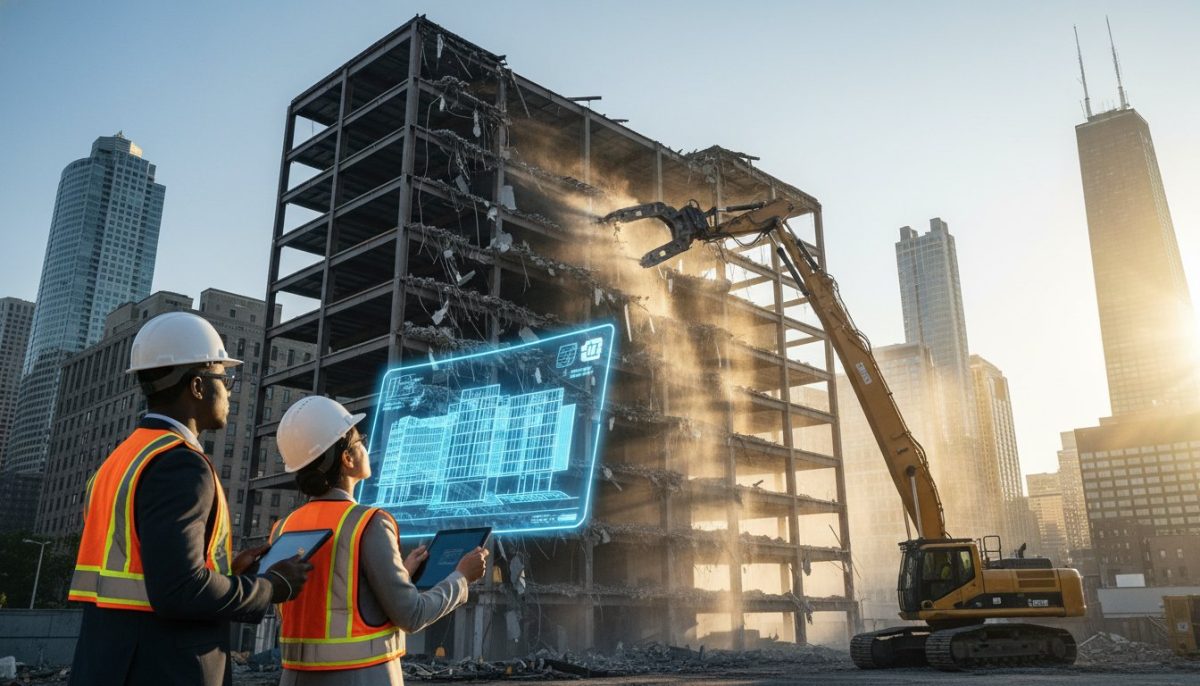
Efficiency in construction projects often fails when communication breaks down between separate abatement and demolition teams. TSIAC International eliminates this friction by operating as a single-source contractor. We handle both interior gutting and professional asbestos removal services under one management umbrella. This integrated model reduces project timelines by approximately 18% compared to traditional multi-vendor setups. Whether we’re working in Charleston, Myrtle Beach, or other locations throughout the South Carolina Lowcountry and Grand Strand, our crews apply a surgical selective demolition technique. This method ensures we protect the structural integrity of the building while isolating and removing hazardous toxins with 100% containment reliability. We utilize high-capacity negative air machines equipped with HEPA filtration to ensure that no fibers escape the designated work zone during the gutting process.

Responsibility doesn’t end when the asbestos leaves the site. We prioritize environmental recovery by sorting debris at the source. In our 2023 project data, we successfully diverted 78% of non-hazardous waste from South Carolina landfills by recycling wood, metal, and plastic components after the abatement phase was complete. This data-driven approach appeals to developers seeking LEED certification or those committed to reducing their carbon footprint. By managing the waste stream directly, we provide a transparent chain of custody for both hazardous and non-hazardous materials, which simplifies the compliance process for our clients and reduces overall disposal costs.

Our 15-Year Legacy in the Lowcountry

Since 2009, TSIAC International has built a reputation for handling complex technical challenges that stop general demolition crews in their tracks. We’ve partnered with over 135 general contractors and 18 government agencies to revitalize aging infrastructure across the Lowcountry. Our engineering-first mindset means we analyze load-bearing requirements and utility maps before a single hammer swings. For example, during a 2022 renovation of a 15,000-square-foot historic Charleston commercial interior, our team cleared contaminated thermal insulation and floor tiles without compromising the fragile 19th-century masonry. This level of precision is why professional project managers choose us for high-stakes environments where standard demolition is too risky.

Ready for a Safe Start? Contact TSIAC Today

Starting a renovation project requires a partner who values regulatory transparency and site safety above all else. We provide every client with a detailed site evaluation followed by a fixed-price proposal, ensuring there are no financial surprises during the abatement process. Our safety record remains 20% better than the industry average, a direct result of our rigorous training and equipment maintenance schedules. If you’re managing a property that requires expert asbestos removal services, don’t leave the results to chance. Schedule your asbestos abatement consultation with TSIAC International to secure a clean, compliant, and structurally sound foundation for your project.

Securing Your Infrastructure for 2026 and Beyond

Managing hazardous materials requires a shift from reactive fixes to engineering-led precision. Effective asbestos removal services in 2026 demand more than just basic containment. They require strict adherence to evolving EPA and OSHA mandates to prevent long-term liability. We’ve outlined how rigorous technical protocols and comprehensive ‘Cradle-to-Grave’ documentation ensure that every fiber is accounted for from the initial site survey through to final disposal. This level of detail isn’t optional; it’s the standard for professional abatement in modern construction.

TSIAC International brings 15+ years of hazardous material experience to every project. Our licensed and insured abatement specialists don’t just clear a site. They provide a technical foundation for safe redevelopment. Whether you’re navigating complex demolition or specialized abatement, we deliver the certainty your project needs to stay on schedule. You can rely on our team to handle the most difficult sites with surgical accuracy and complete transparency. We prioritize safety because we know that project integrity and human health are non-negotiable.

Get a Professional Asbestos Abatement Quote from TSIAC International

It’s time to transform your environmental challenges into a clean, compliant workspace that’s ready for the future.

Frequently Asked Questions

How much does asbestos removal service typically cost?

Asbestos removal service costs typically range from $1,500 to $3,000 for residential projects, while commercial jobs can exceed $25,000. Professional asbestos removal services in South Carolina calculate these fees based on a $10 to $20 per square foot industry standard. Factors like the accessibility of the containment area and the specific material type, such as friable pipe insulation versus non-friable floor tiles, determine the final project estimate.

Can I stay in my home or office during the asbestos abatement process?

You can’t remain in the building or any zone connected to the shared HVAC system during an active abatement project. Safety protocols require a negative air pressure enclosure to prevent microscopic fibers from migrating. While small exterior projects might allow you to stay inside, 95% of interior removals require occupants to vacate the premises until a third party completes final air clearance testing.

How do I know if a material in my building contains asbestos?

You can’t identify asbestos through a visual inspection; you must hire a South Carolina licensed inspector to collect material samples for polarized light microscopy analysis. Buildings constructed before the 1989 EPA partial ban often contain these fibers in popcorn ceilings, vinyl floor tiles, or thermal insulation. A formal survey provides a 100% accurate inventory of hazardous materials before you begin any renovation or demolition work.

Is it legal to remove asbestos myself in South Carolina?

South Carolina law allows homeowners to remove asbestos from their primary residence, but it’s illegal for unlicensed individuals to handle these materials in public or commercial structures. The South Carolina Department of Health and Environmental Control (SCDHEC) Regulation 61-86 mandates strict disposal and notification procedures for all projects. Even when it’s legal for your home, 85% of DIY attempts result in cross-contamination that requires professional remediation.

What is the difference between asbestos testing and asbestos abatement?

Asbestos testing is the diagnostic phase where an inspector takes physical samples, while abatement is the actual physical removal or encapsulation of the hazard. Testing costs roughly $250 to $750 and identifies the specific fiber type and its current condition. Professional asbestos removal services use these lab results to build a containment plan that meets OSHA and SCDHEC safety standards for your specific property.

How long does a typical asbestos removal project take?

A typical residential project takes 2 to 5 days, while complex industrial sites can require several weeks for completion. The first 24 hours involve the technical setup of critical barriers and HEPA-filtered decontamination units. Once the hazardous material is removed, the site must remain sealed for 48 hours to allow for air scrubbing and the mandatory final clearance sampling to ensure the environment is safe.

What happens to the asbestos after it is removed from my property?

Asbestos waste is sealed in double 6-mil poly bags, labeled with OSHA-required warnings, and transported to a specialized Class 3 landfill permitted by SCDHEC. The contractor must provide you with a Waste Shipment Record within 35 days of the disposal. This document tracks the material from your property to the final burial cell, ensuring 100% legal compliance and long term environmental safety for the community.