Cost of Asbestos Removal 2026: A National Comprehensive Pricing Guide

The most competitive quote for hazardous material abatement often conceals the highest long-term risk to your property and personnel. As we analyze…

The most competitive quote for hazardous material abatement often conceals the highest long-term risk to your property and personnel. As we analyze the cost of asbestos removal 2026, it’s clear that the industry’s shift toward more stringent air quality monitoring and specialized waste logistics is fundamentally reshaping project budgets. You likely recognize that managing friable fibers requires a disciplined, technical approach, yet the 35% variance often found between national contractor bids remains a significant source of frustration for facility managers. It’s difficult to maintain project control when the underlying variables of a quote feel like moving targets.

This guide provides the technical breakdown you need to secure your site without the fear of hidden fees or escalating project scopes. You’ll gain a clear understanding of current national asbestos abatement costs, including the specific engineering factors like negative pressure containment and HEPA filtration cycles that influence your final estimate. We’ll examine the specific variables of labor, disposal, and legal liability so you can finalize your 2026 budget with confidence. By the end of this analysis, you’ll have the data required to select a qualified professional who prioritizes structural integrity and safety over shortcuts.

Key Takeaways

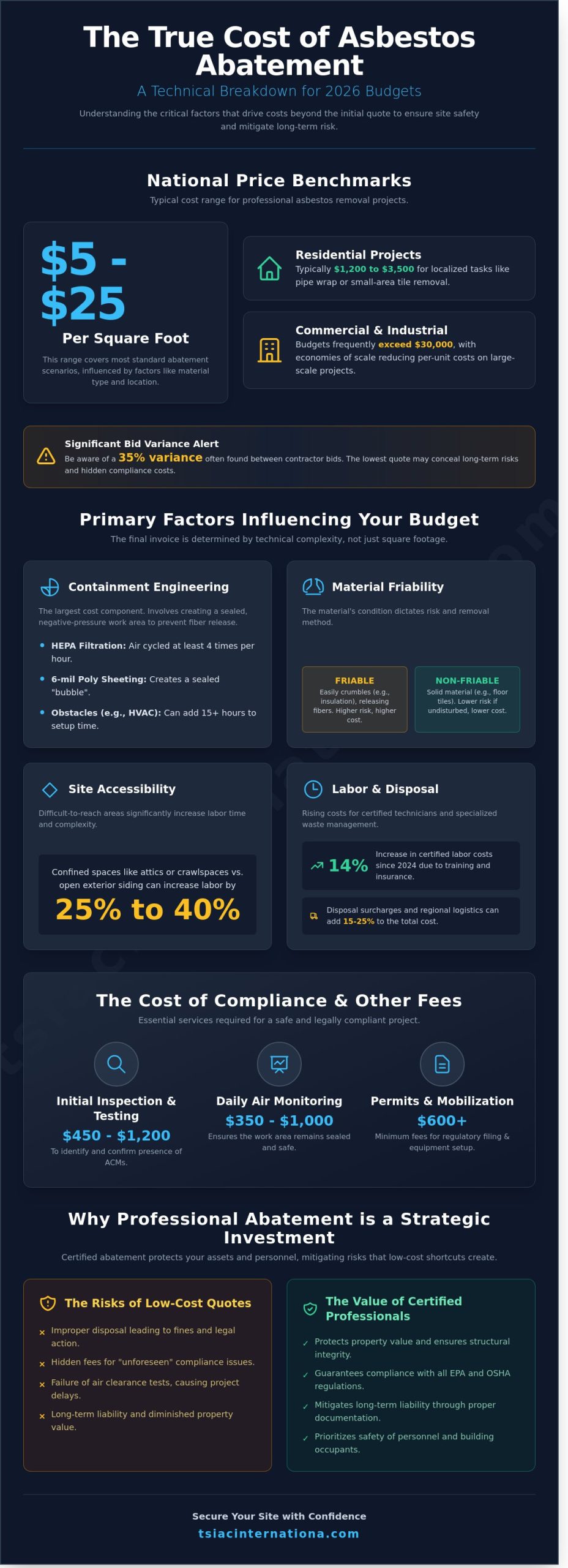
  • Identify the current national price benchmarks for residential and commercial projects, typically ranging from $5 to $25 per square foot.
  • Analyze how technical variables such as material friability and site accessibility in confined spaces directly influence the total cost of asbestos removal 2026.
  • Evaluate the financial and operational advantages of integrating hazardous material abatement with selective commercial interior gutting.
  • Understand the mandatory compliance costs associated with EPA and OSHA regulations, including the critical role of professional air clearance testing.
  • Recognize why certified professional abatement is a strategic investment that protects property value and mitigates the long-term liabilities of improper disposal.

Understanding the National Average Cost of Asbestos Removal in 2026

The cost of asbestos removal 2026 reflects a complex intersection of regulatory compliance, specialized labor availability, and rising disposal logistics. National averages for residential projects currently span from $1,200 to $3,500 for localized tasks. Commercial abatement projects frequently exceed $30,000 depending on the facility’s square footage and the complexity of the structural environment. For most common hazardous materials, the standard price range fluctuates between $5 and $25 per square foot. This pricing structure accounts for the rigorous safety protocols required when handling What is Asbestos? and its associated health risks.

Several distinct factors contribute to the 2026 price levels. Labor costs for certified hazardous material technicians have risen by 14% since 2024 due to mandatory advanced training requirements and insurance premiums. Disposal surcharges at specialized landfills now represent a larger portion of the total budget than in previous decades. Beyond the physical removal, property owners must allocate funds for essential preliminary and concluding steps. Initial inspections typically cost between $450 and $1,200. Daily air monitoring fees during the project usually range from $350 to $1,000 to ensure the work area remains sealed and safe for occupants.

The Baseline: Small vs. Large Scale Projects

Small scale projects, such as removing a single pipe section or a 100-square-foot area of vinyl floor tiles, carry higher per-unit costs. Contractors implement a minimum mobilization fee, often starting at $600, to cover the setup of negative pressure containment zones and decontamination units. Whole-building industrial abatement benefits from economies of scale. While the total outlay is higher, the cost per square foot often drops toward the lower end of the $5 to $12 range for large, unobstructed industrial spaces where technicians can work more efficiently.

Why Estimates Vary Across the Country

Regional differences create substantial price gaps in the cost of asbestos removal 2026. In states with limited hazardous waste disposal facilities, transportation logistics can add 15% to 25% to the final invoice. Labor market shifts also play a critical role. Urban centers with high construction demand often face a shortage of certified technicians, which drives up hourly rates. Local permit requirements and state-specific EPA protocols vary significantly between regions. Some jurisdictions require more frequent air sampling or specific disposal manifests that increase administrative overhead and total project duration.

Primary Factors Influencing Your Abatement Budget

Calculating the cost of asbestos removal 2026 requires a technical analysis of environmental risks and site-specific challenges. Budgeting for abatement isn’t a matter of simple square footage; it’s an assessment of how many labor hours are required to meet federal safety standards. Four primary variables dictate the final invoice: material friability, site accessibility, containment complexity, and the specific type of hazardous material present. For instance, removing asbestos-contaminated attic insulation typically requires 25% to 40% more labor time than removing exterior siding due to the confined space and heat factors involved.

The Complexity of Containment Engineering

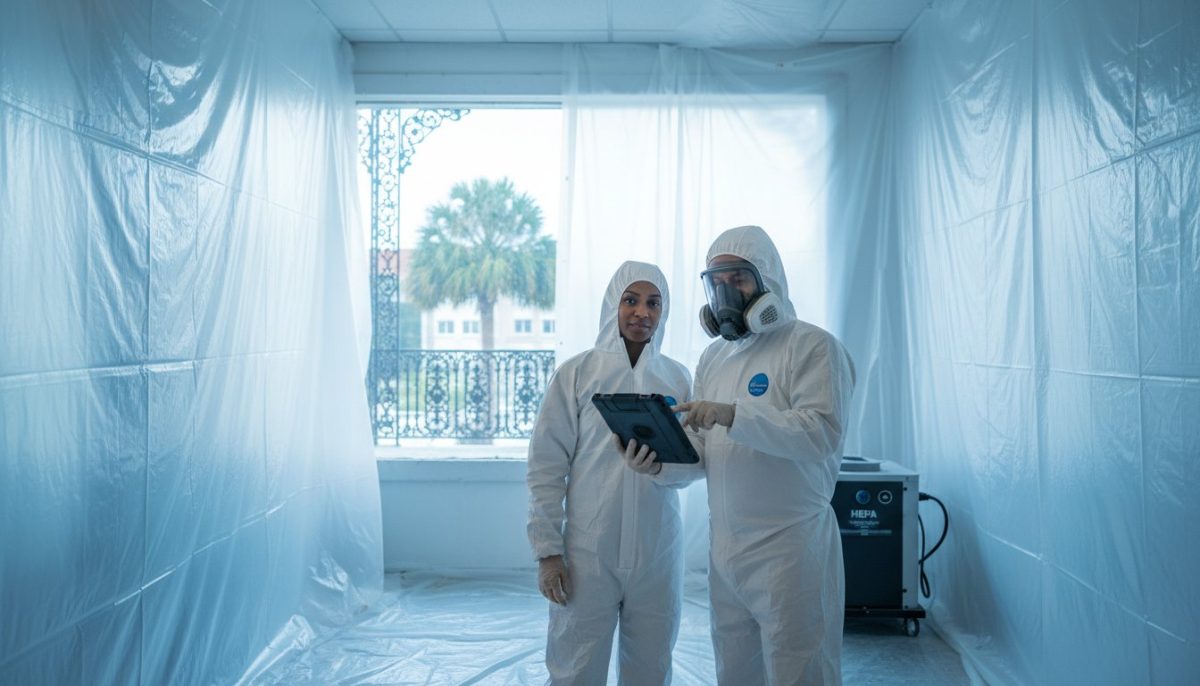
Safety protocols represent the largest portion of any professional abatement budget. Technicians must establish a regulated area using 6-mil polyethylene sheeting to create a negative-pressure “bubble.” This system relies on high-efficiency particulate air (HEPA) filtration units that must cycle the air within the enclosure at least four times every hour to ensure no fibers escape. According to industry data on Asbestos Removal Costs, these engineering controls are non-negotiable for interior projects. Labor pricing also accounts for specialized PPE, including powered air-purifying respirators (PAPRs) and disposable suits, which must be replaced every time a technician exits the decontamination zone. Structural obstacles like HVAC ducting or complex machinery can increase the setup time by 15 hours or more, directly impacting the total project spend.

Friable vs. Non-Friable Materials

The physical state of the asbestos-containing material (ACM) determines the level of risk and the resulting cost of asbestos removal 2026. Friable materials, such as sprayed-on fireproofing or thermal system insulation, can be crushed by hand. When these materials are disturbed, they release microscopic fibers into the air instantly, necessitating maximum containment. Conversely, non-friable materials like vinyl floor tiles or cement pipes hold the fibers in a solid matrix. These are often more cost-effective to manage because they don’t require the same level of airtight sealing unless the material is being mechanically ground or sanded. In some cases, encapsulation serves as a safer, more affordable alternative; this involves sealing the ACM with a specialized polymer to prevent fiber release rather than removing it entirely. If you’re managing a facility with complex structural needs, seeking a partner for complex execution and technical solutions can help streamline these high-risk procedures.

Material type also influences disposal fees. While floor tiles might be accepted at standard hazardous waste facilities, friable insulation often requires double-bagging and transport to specific landfills equipped for high-risk waste. These logistics, combined with the required post-removal air clearance testing by a third-party laboratory, ensure the site is safe for re-occupancy but add several layers to the final budget.
Cost of Asbestos Removal 2026: A National Comprehensive Pricing Guide

Integrating Abatement with Commercial Interior Gutting

Integrating abatement into the demolition phase eliminates redundant mobilization fees. Property owners often face 15% to 20% higher expenses when they hire separate contractors for hazardous material removal and structural stripping. By aligning these workflows, the cost of asbestos removal 2026 remains manageable through shared site security, unified insurance premiums, and synchronized scheduling.

Interior gut-outs frequently expose friable materials hidden within wall cavities or beneath multiple layers of subflooring that initial inspections might overlook. Utilizing professional commercial interior gutting services ensures that these discoveries don’t derail the project timeline. Experienced crews maintain the structural integrity of the building envelope while performing deep stripping; this prevents accidental damage to load-bearing elements during the removal of contaminated insulation or pipe lagging.

Selective Demolition and Hazardous Materials

A surgical approach allows for the removal of specific building wings while the rest of the facility remains operational. This precision is vital for hospitals or schools where total closure is impossible. Identifying lead-based paint and asbestos before the renovation starts prevents costly work stoppages. Projects must adhere to strict protocols, such as those defined by hazardous material abatement south carolina standards, which serve as a rigorous baseline for national safety compliance. Accurate pre-demolition surveys reduce the risk of 48-hour emergency shutdowns by 30% on average.

Efficiency Through Single-Source Contracting

Hiring one firm to handle both demolition and abatement reduces administrative overhead significantly. Contractors with 15+ years of experience understand the logistical complexities of managing hazardous waste streams alongside standard construction debris. This unified approach simplifies the chain of custody for toxic materials. The cost of asbestos removal 2026 is heavily influenced by disposal logistics; therefore, a single-source partner can leverage volume-based rates at specialized landfills to protect the project budget.

  • Unified debris management lowers hauling and disposal fees by consolidating logistics.
  • Single-source accountability eliminates disputes between different trades.
  • Streamlined permitting processes accelerate the overall project completion date.
  • Integrated safety plans ensure all personnel follow the same containment protocols.

Managing these complex job sites requires a fegyelmezett, engineering-focused mindset. When a single entity controls the demolition of interior partitions and the subsequent abatement, they can maintain airtight barriers more effectively. This level of control is essential for protecting the remaining building assets and ensuring the safety of all occupants.

The Cost of Compliance: Permits, Testing, and Disposal

Regulatory frameworks for 2026 demand stricter adherence to EPA and OSHA protocols than ever before. These aren’t suggestions; they’re legal mandates that dictate the total cost of asbestos removal 2026. Failure to comply results in fines that often exceed the original project budget by 200% or more. Proper documentation ensures the safety of the structure and the people within it, providing a legal shield for property owners. Compliance is a specialized engineering task that requires meticulous planning and execution to avoid the long-term liabilities associated with toxic exposure.

Air Quality Monitoring and Post-Abatement Clearance

Third-party verification is the industry standard for risk mitigation. Commercial insurers typically require air clearance certificates before they’ll renew a policy or allow site re-entry. These tests use Phase Contrast Microscopy (PCM) or Transmission Electron Microscopy (TEM) to detect microscopic fibers. While TEM is more expensive, it provides a higher degree of accuracy that’s often required for schools and healthcare facilities. The process adds approximately 24 to 48 hours to the project timeline. This delay is a critical pause that prevents the cross-contamination of clean zones and ensures the cost of asbestos removal 2026 includes a guarantee of safety.

  • Independent Testing: Prevents conflicts of interest between the removal crew and the safety inspectors.
  • Liability Protection: Provides a “clean bill of health” for the building’s permanent records.
  • Site Re-entry: Ensures that air fiber counts are below the 0.01 f/cc threshold set by regulatory bodies.

Hazardous Waste Management and Recycling

Moving toxic materials requires specialized logistics and certified transport vehicles. Hazardous waste cannot go to standard municipal landfills. Transporters must maintain a strict chain of custody, documenting every mile from the abatement site to the certified disposal facility. TSIAC International integrates sustainable practices into this phase to maximize efficiency. By separating non-contaminated materials like steel framing, clean plastic, or wooden supports on-site, we reduce the total volume of waste sent to hazardous landfills.

This recycling strategy helps offset a portion of the disposal fees while meeting modern corporate environmental goals. All asbestos-containing materials (ACM) are double-bagged in 6-mil polyethylene, sealed, and labeled according to Department of Transportation (DOT) regulations. Maintaining a transparent manifest is the only way to prove that the toxic debris was handled with the necessary engineering precision. This fegyelmezett approach ensures that every gram of hazardous material is accounted for from removal to final burial.

Ensure your project meets all 2026 regulatory standards with a professional risk assessment. Contact our technical experts for a compliance-focused consultation.

Why Professional Abatement is a Strategic Investment

Viewing the cost of asbestos removal 2026 as a simple line-item expense is a mistake that often leads to catastrophic financial consequences. When property owners opt for “DIY” methods or low-bid contractors who lack industrial credentials, they inherit a legacy of liability. Improper handling frequently results in microscopic fibers settling into HVAC systems and porous surfaces, necessitating a secondary, much more expensive decontamination process. Since 2024, the EPA has intensified its oversight, and civil penalties for improper disposal now frequently exceed $80,000 per violation. Professional abatement is the only way to insulate yourself from these legal and financial risks.

Protecting Property Value and Human Health

A certified abatement report is a vital document for any real estate portfolio. Properties without documented clearance often see a 15% to 22% reduction in market value during the due diligence phase of a sale. By securing professional asbestos removal south carolina, owners ensure their assets remain liquid and attractive to institutional buyers. Beyond the balance sheet, the human cost is non-negotiable. Modern abatement protocols protect current occupants and future renovation crews from the health risks associated with friable materials. This proactive stance on safety drastically reduces the potential for long-term litigation that can haunt property owners for decades.

Choosing a Reliable Partner for 2026

Selecting a contractor requires looking beyond the initial quote to evaluate their track record in complex structural demolition. As we move into 2026, the industry is shifting toward more integrated solutions where abatement and engineering go hand-in-hand. TSIAC International approaches every hazardous project with a focus on mechanical precision. We understand that removing asbestos from a load-bearing structure or a complex mechanical room requires more than just masks and bags; it requires an engineering mindset to prevent structural damage.

The “TSIAC Gold Standard” represents our commitment to safety and technical excellence. This methodology ensures that every project is managed with the same rigor we apply to high-altitude industrial climbing or heavy steel fabrication. We don’t rely on guesswork. We provide a transparent, fixed-price framework that accounts for the specific technical challenges of your site. To protect your investment and ensure your facility meets all 2026 safety benchmarks, contact our team to request a detailed, fixed-price contract for your upcoming project. Our measured, authoritative approach ensures your project stays on schedule and within the projected cost of asbestos removal 2026 without compromising the integrity of your building.

Securing Your Project’s Future with Precise Abatement Planning

Navigating the cost of asbestos removal 2026 demands a transition from reactive maintenance to rigorous structural strategy. Budgeting for the upcoming year must account for shifting disposal regulations and the logistical complexities of hazardous material transport. Integrating abatement with commercial interior gutting remains the most efficient method to minimize site downtime. It’s a technical challenge that requires an engineering mindset rather than a simple cleanup crew. Technical precision in the early stages prevents expensive remediation later.

TSIAC International brings 15+ years of structural removal expertise to every site, ensuring full regulatory compliance and environmental recycling for all hazardous waste. Our certified hazardous material abatement specialists focus on controlled execution, even in the most difficult industrial environments. By prioritizing technical accuracy over shortcuts, you protect both your timeline and your long-term assets. We’re ready to provide the precision your infrastructure requires. Our team handles the complex logistics so your project remains on schedule and within the defined safety parameters.

Contact TSIAC International for a Professional Abatement Quote

Your path to a safe, compliant, and structurally sound facility begins with professional oversight and a commitment to engineering excellence.

Frequently Asked Questions

Is asbestos removal an emergency that increases the cost?

Emergency asbestos removal increases total project costs by 20% to 50% because contractors must mobilize specialized teams and equipment within 24 hours. These situations typically occur after structural failures or pipe bursts that expose friable materials to the air. The cost of asbestos removal 2026 includes these premiums for immediate containment and the rapid deployment of negative air machines to ensure site safety.

Can I remove asbestos floor tiles myself to save money in 2026?

You shouldn’t remove asbestos floor tiles yourself because the risk of fiber release outweighs any potential savings. While some local jurisdictions allow homeowners to perform DIY work, the EPA and OSHA warn that breaking 9-inch or 12-inch vinyl tiles creates hazardous dust. Professionals use wet-stripping methods and HEPA-filtered vacuums to prevent contamination. DIY mistakes often lead to decontamination bills that cost three times more than the original abatement price.

How long does a typical professional asbestos abatement project take?

A standard professional abatement project for a 1,500-square-foot residential area typically takes 2 to 5 business days. This timeframe includes one day for setting up airtight containment zones and another day for the mandatory third-party air clearance testing. Larger commercial projects or complex industrial sites may require 10 to 15 days. The duration depends heavily on the accessibility of the material and the required drying times for encapsulants.

Does homeowners or commercial insurance cover the cost of asbestos removal?

Standard insurance policies generally exclude asbestos removal unless the damage results from a covered peril like fire or a sudden water pipe burst. Most ISO HO3 policies contain a “Pollution Exclusion” clause that removes liability for hazardous material abatement during routine renovations. Property owners should expect to pay out of pocket for 95% of removal scenarios. Always verify your specific coverage limits with a licensed agent before starting any demolition work.

What is the difference between asbestos removal and encapsulation costs?

Encapsulation costs approximately 15% to 25% less than full removal because it seals the hazardous fibers behind a protective membrane instead of extracting them. While this reduces the immediate cost of asbestos removal 2026, it requires a long-term management plan and inspections every 6 to 12 months. Removal is a permanent solution that eliminates the hazard entirely. Most structural engineers recommend full removal for high-traffic areas where physical damage to the sealant is likely.

Are there specific permits required for asbestos removal at the national level?

National regulations require a NESHAP notification for any project involving more than 160 square feet or 260 linear feet of regulated materials. This federal mandate involves a 10-day waiting period before any work can begin on the site. Contractors must also follow 40 CFR Part 61 standards for wetting and labeling waste. Violating these permit requirements can result in federal civil penalties that exceed $37,000 per day of non-compliance.

How do contractors calculate the disposal fees for hazardous materials?

Contractors calculate disposal fees based on the total tonnage or cubic yardage of the hazardous waste generated during the project. EPA-approved landfills charge tipping fees that are often 300% higher than standard construction debris rates. These costs also include specialized transport in 6-mil polyethylene bags and the generation of Waste Shipment Records (WSR). Each load must be tracked from the job site to the final burial cell to ensure legal compliance.

What happens if more asbestos is discovered during the demolition process?

Work must stop immediately if workers discover suspected asbestos, as mandated by OSHA standard 29 CFR 1926.1101. The site supervisor is legally required to seal the area and hire a certified industrial hygienist to perform bulk sampling. This discovery usually adds 3 to 7 days to the project timeline for testing and the creation of a new abatement plan. Resuming work without a professional survey can lead to massive legal liabilities and health hazards for everyone on site.
Professional Asbestos Removal Services: The Complete Guide to Safe Abatement in 2026

In 2026, a single microscopic fiber of disturbed chrysotile can devalue a commercial property by 15% in less than 24 hours if the abatement process…

In 2026, a single microscopic fiber of disturbed chrysotile can devalue a commercial property by 15% in less than 24 hours if the abatement process fails to meet updated EPA strictures. You likely recognize that managing an aging industrial or residential facility requires a calculated approach to hazardous materials. It’s a high-stakes environment where any error in professional asbestos removal services leads to more than just health risks; it triggers legal liabilities and expensive project delays. You need a partner who views safety through the lens of engineering precision rather than just a checklist.

You’ve probably felt the anxiety of navigating shifting safety standards while trying to keep a project on schedule. This guide provides the technical roadmap required to secure services that guarantee 100% regulatory compliance and a certified clean environment for your occupants. We’ve compiled expert insights on the latest OSHA safety protocols and the specific documentation necessary for future property sales. You’ll learn how to identify specialized solutions for difficult-to-reach locations and understand the 2026 cost structures for complex abatement projects. By the end of this analysis, you’ll have the clarity to eliminate hazardous materials while maintaining total control over your project’s budget and timeline.

Key Takeaways

  • Master the critical distinctions between removal, encapsulation, and enclosure to determine the most effective strategy for managing hazardous materials on your property.
  • Understand the engineering behind safety, including the implementation of airtight poly-sheeting barriers and negative air pressure systems to prevent site contamination.
  • Ensure full regulatory compliance by learning how to navigate EPA’s NESHAP requirements and OSHA’s strict standards for site safety and air monitoring.
  • Use our expert checklist to verify essential credentials, such as pollution occurrence insurance, when selecting professional asbestos removal services for your next project.
  • Explore the advantages of integrated abatement and demolition, where single-source contractors manage everything from interior gutting to high-level environmental recycling.

What are Professional Asbestos Removal Services?

Professional asbestos removal services involve a rigorous technical discipline known as asbestos abatement. This process focuses on the identification, containment, and physical extraction of asbestos-containing materials (ACMs) from a structure. It’s not a simple cleaning task; it’s a highly regulated engineering control designed to prevent the release of microscopic silicate fibers into the air. When these fibers remain undisturbed, they pose a negligible risk. However, during renovation or demolition, they become airborne and easily inhaled. Specialized asbestos abatement procedures ensure that these materials are handled within sealed environments using HEPA-filtered negative air pressure systems.

Property owners must understand the distinction between removal, encapsulation, and enclosure. Removal is the only permanent solution, as it completely eliminates the hazard from the premises. Encapsulation involves treating the ACM with a liquid sealant that binds the fibers together or coats the material to prevent fiber release. Enclosure involves building a permanent, airtight barrier around the asbestos. While encapsulation and enclosure are valid management strategies, they require ongoing monitoring and don’t eliminate the underlying liability. For most commercial properties and multi-family residential buildings with more than four units, professional intervention isn’t just a safety choice; it’s a legal mandate under EPA NESHAP regulations and South Carolina DHEC requirements.

Asbestos was integrated into over 3,000 different building products throughout the 20th century. In South Carolina, our team frequently identifies these materials in structural fireproofing applied to steel beams, 9×9 inch vinyl floor tiles, and acoustic “popcorn” ceilings installed before 1981. Other common locations include thermal system insulation on boilers and pipes, as well as exterior cement siding. Identifying these risks requires a certified inspector to take bulk samples for laboratory analysis before any structural work begins.

The Persistent Danger: Why Asbestos Still Matters in 2026

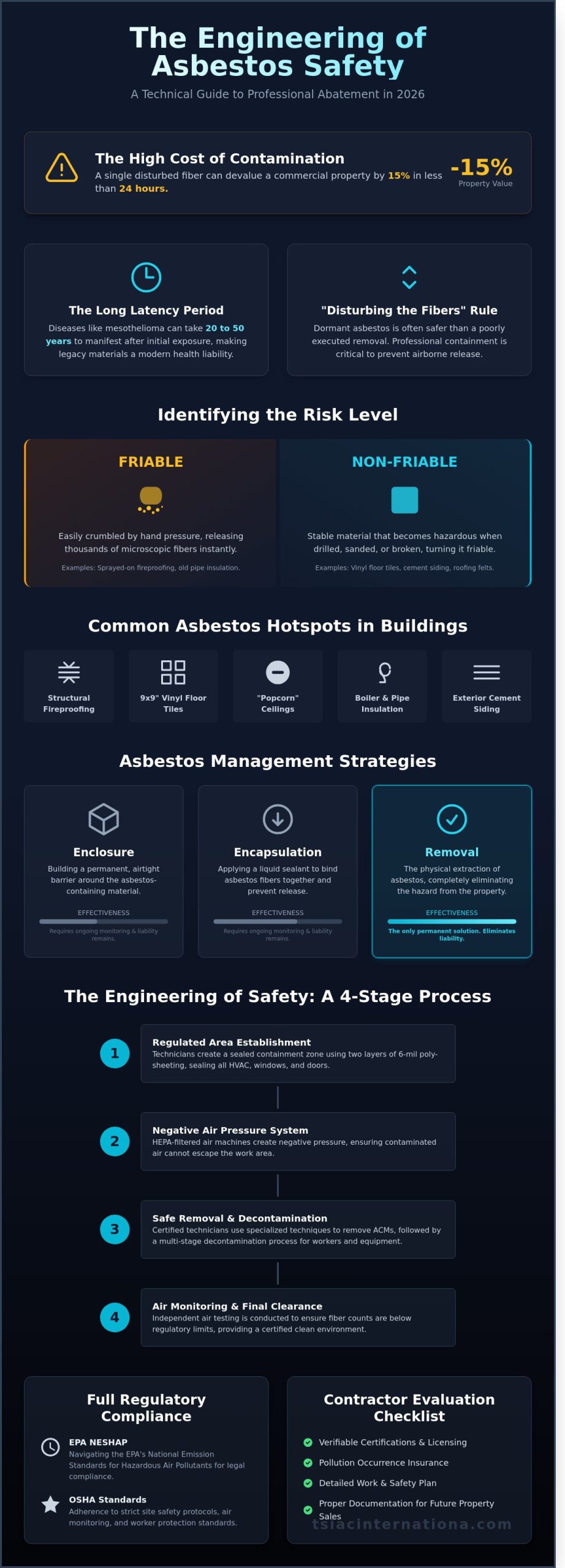
Asbestos remains a primary concern in 2026 because of the long latency period associated with respiratory diseases. It often takes 20 to 50 years after initial exposure for conditions like mesothelioma or asbestosis to manifest. Since many South Carolina structures built between 1940 and 1980 are now reaching their renovation cycles, the risk of disturbing dormant fibers is at a peak. We follow the “disturbing the fibers” rule: dormant asbestos is often safer than a poorly executed removal attempt that lacks proper containment. Professional asbestos removal services ensure that legacy materials don’t become modern health liabilities.

Friable vs. Non-Friable Asbestos: Identifying the Risk

The state of the material determines the immediate danger level. Friable asbestos, such as old pipe insulation or sprayed-on fireproofing, can be crumbled by simple hand pressure. This releases thousands of fibers instantly. Non-friable materials, like floor tiles or roofing felts, are more stable but become hazardous when subjected to mechanical force. Drilling, sanding, or grinding these surfaces turns a stable material into a friable one. A professional survey assesses the “state of repair” of these materials to determine if they can be managed in place or if immediate extraction is necessary for safety.

The Engineering of Safety: How the Abatement Process Works

Effective asbestos removal services rely on a rigorous, multi-stage engineering approach to isolate hazardous fibers. The process isn’t merely about disposal; it’s about the total control of a microscopic environment. Technicians treat every project as a high-stakes containment operation where the primary goal is preventing the migration of friable materials. Strict adherence to EPA asbestos regulations ensures that every stage of the process meets federal safety benchmarks. This systematic workflow prevents the contamination of adjacent spaces and protects building occupants from long-term health risks.

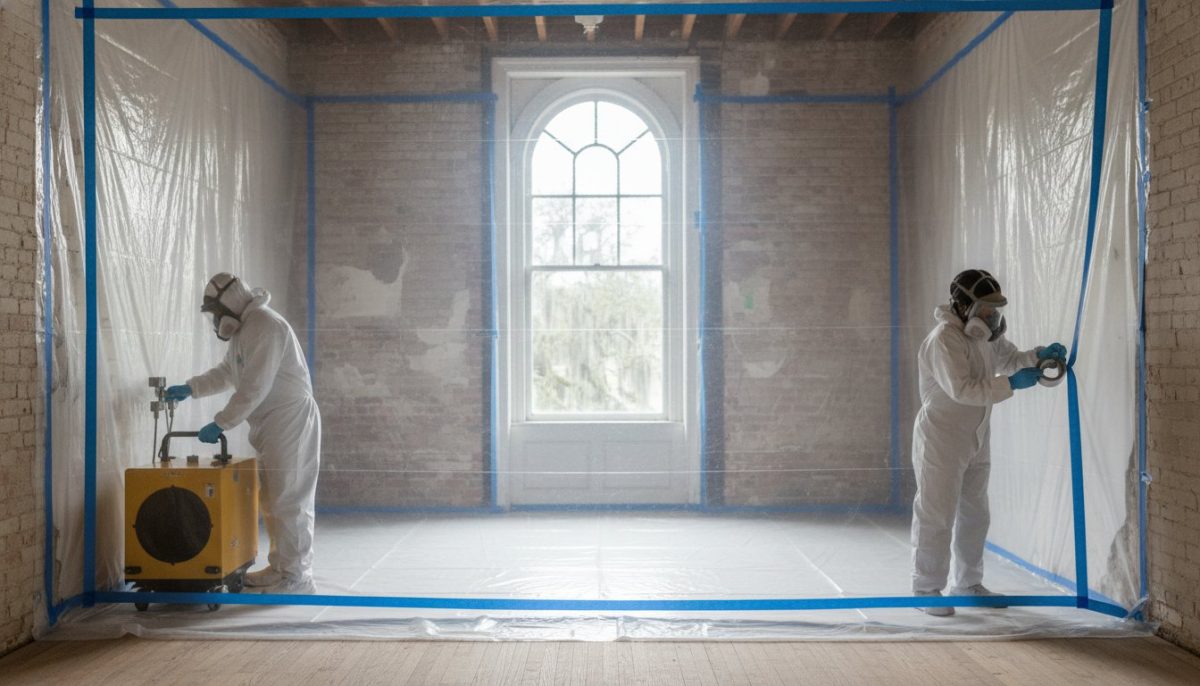
  • Step 1: Regulated Area Establishment. Technicians seal all HVAC vents, windows, and doors with two layers of 6-mil polyethylene sheeting. This creates an airtight barrier that isolates the work zone from the rest of the structure.
  • Step 2: Negative Air Pressure. Professionals install high-volume air machines to create a pressure differential. By pulling air out through HEPA filters, the system ensures that any accidental leaks pull clean air into the zone rather than pushing contaminated air out.
  • Step 3: Wet-Method Removal. To suppress dust, workers apply amended water, which contains chemical surfactants, to the asbestos-containing materials. This saturation prevents fibers from becoming airborne during the physical removal process.
  • Step 4: Three-Stage Decontamination. All personnel must pass through a series of connected chambers. This sequence includes a dirty room for equipment disposal, a shower room for personal cleaning, and a clean room for changing into street clothes.
  • Step 5: Final Clearance Testing. After removal and HEPA vacuuming, a third-party laboratory conducts air sampling. They use Phase Contrast Microscopy (PCM) or Transmission Electron Microscopy (TEM) to verify that fiber counts are below 0.01 fibers per cubic centimeter.

The Role of HEPA Filtration and Negative Air Machines

Negative air pressure is the engineering standard for safety in modern abatement. Professionals use industrial-grade machines equipped with High-Efficiency Particulate Air (HEPA) filters. These filters are rated to capture 99.97% of all particles as small as 0.3 microns. In a standard 1,000 square foot work area, these machines are calibrated to provide at least four air changes per hour. Technicians monitor this pressure constantly using a digital manometer, maintaining a minimum of -0.02 inches of water gauge pressure. This technical precision ensures that the surrounding environment remains unaffected by the work occurring inside the containment.

Decontamination Protocols for Site Workers

Worker safety is managed through a disciplined transition protocol that eliminates fiber carry-over. Every technician wears a full-body Tyvek suit and a dual-cartridge P100 respirator, which is fit-tested to ensure a perfect seal. The decontamination unit is the only way in or out of the work zone. When leaving, workers vacuum their suits with a HEPA-rated device, enter the shower room to wash away any residual dust, and only then enter the clean room. This three-stage system is mandatory for all professional asbestos removal services to prevent the “take-home” exposure that historically affected the families of industrial workers. Those seeking technical consultation on complex abatement can explore specialized industrial safety solutions to ensure total compliance. This level of fegyelmezett (disciplined) execution is what separates industrial-grade abatement from general demolition.

Regulatory Compliance: Navigating EPA and OSHA Standards

Compliance isn’t a suggestion; it’s a legal mandate that dictates every phase of a project. Property owners in South Carolina face complex layers of federal and state oversight that require technical precision. The EPA governs the environmental impact through NESHAP, while OSHA focuses on the human element. Professional OSHA asbestos safety standards dictate everything from the specific type of HEPA-filtered respirators used to the frequency of air quality tests on the perimeter. If a contractor skips these protocols, the property owner remains legally liable for the health and environmental fallout. We treat these regulations as the minimum baseline for our operations.

Regional nuances in South Carolina often complicate the process. The Lowcountry and Grand Strand regions have specific environmental stressors, such as high humidity and salt air, that can compromise temporary containment barriers. Local SCDHEC (Department of Health and Environmental Control) offices in Charleston and Myrtle Beach maintain strict oversight on local projects. Hiring a team familiar with these regional nuances ensures that your asbestos removal services don’t hit a bureaucratic wall or face unexpected work-stop orders due to structural failures in containment.

The NESHAP Notification Process

Federal law requires a formal written notification to SCDHEC at least 10 working days before any demolition or significant renovation begins. This rule applies even if no asbestos was found in some commercial renovation scenarios. Skipping this 10-day window leads to immediate project shutdowns and EPA fines that can reach $37,500 per day per violation. TSIAC manages this entire administrative burden. We handle the technical filings and coordinate with state inspectors so the timeline stays on track without legal interruptions.

Hazardous Waste Transport and Disposal

Asbestos cannot go into a standard roll-off container or a local municipal landfill. Every ounce of contaminated material requires double-bagging in 6-mil poly bags and distinct, OSHA-compliant labeling. We transport these materials to specific, EPA-approved Class 3 landfills designed for hazardous waste. The process concludes with the “Cradle-to-Grave” waste shipment record. This document tracks the waste from the moment it leaves your site until it’s permanently buried. Property owners should keep these records for 30 years to prove legal disposal and protect against future litigation. Selecting professional asbestos removal services means hiring a partner who understands that the manifest system is your primary defense against long-term liability.

Precise air monitoring is the only way to verify a safe site. We utilize Phase Contrast Microscopy (PCM) to analyze air samples during the project and after the final cleaning. These tests provide immediate data on fiber counts in the air. We don’t guess about safety; we prove it with lab-certified results. Our team maintains a fegyelmezett (disciplined) approach to these metrics. We ensure every technician on-site follows the established safety plan to the letter. This engineering-grade focus on data protects your property and your people from invisible risks.

Evaluating Asbestos Removal Companies: A Buyer’s Checklist

Selecting asbestos removal services requires more than a simple price comparison; it demands a rigorous audit of technical credentials and safety protocols. You shouldn’t settle for a general contractor who lacks specific hazardous material training. In South Carolina, any firm you hire must hold a valid SC DHEC license. Beyond the license, verify they carry specialized pollution occurrence coverage. Standard general liability policies often exclude asbestos-related claims, which means you’d be personally liable for any fiber release during the project. This insurance is the only way to protect your assets if a containment breach occurs during the 2024 operating season.

Verification of a company’s track record in both structural demolition and hazardous remediation is the next step. These fields are distinct but highly interdependent. A firm that understands the structural integrity of a 50,000 square foot facility can better predict where hidden hazards lie within wall cavities or HVAC systems. Demand a written project plan before signing any agreement. This document must outline the specific containment strategies, including the placement of HEPA-filtered negative air machines and the exact route for waste transport. If they can’t provide a detailed map of their containment zone, they don’t have a plan for your safety.

Transparency is maintained through independent, third-party air monitoring. It’s a conflict of interest when a removal company monitors its own air quality. You need an objective lab to perform PCM (Phase Contrast Microscopy) or TEM (Transmission Electron Microscopy) analysis during and after the work. These experts ensure that fiber counts remain below 0.01 fibers per cubic centimeter of air. This data provides the legal “clearance” required to re-occupy the space. Without this third-party verification, you’re relying on the word of the person you’re paying to do the cleanup, which is a significant risk in high-stakes environments.

Residential vs. Commercial Abatement Needs

Residential projects focus on precision, such as gutting 1,200 square feet of popcorn ceilings or removing 50 linear feet of pipe insulation in tight crawlspaces. Commercial abatement handles large-scale tenant improvements or selective demolition in active facilities. For these complex industrial environments, fixed-price contracts are the standard. They prevent the 15% to 20% budget creep that happens when contractors claim “unforeseen conditions” halfway through a structural removal project.

The Red Flags of ‘Low-Bid’ Abatement

A bid that’s 30% lower than the market average is a warning sign. Low-cost operators often save money by using thinner 4-mil poly instead of the required 6-mil polyethylene sheeting or by rushing the 24-hour settling period. Lack of documentation is your biggest liability. If a company can’t produce a waste manifest from an EPA-approved landfill, you haven’t legally disposed of the hazard. Companies with 15+ years of experience know that cutting corners isn’t worth the risk to their reputation or your health.

Protecting your property starts with choosing a partner who values engineering precision over speed. You can ensure your facility meets all SC safety standards by consulting with our specialized remediation team today.

TSIAC International: Integrated Demolition and Abatement

Efficiency in construction projects often fails when communication breaks down between separate abatement and demolition teams. TSIAC International eliminates this friction by operating as a single-source contractor. We handle both interior gutting and professional asbestos removal services under one management umbrella. This integrated model reduces project timelines by approximately 18% compared to traditional multi-vendor setups. Whether we’re working in Charleston, Myrtle Beach, or other locations throughout the South Carolina Lowcountry and Grand Strand, our crews apply a surgical selective demolition technique. This method ensures we protect the structural integrity of the building while isolating and removing hazardous toxins with 100% containment reliability. We utilize high-capacity negative air machines equipped with HEPA filtration to ensure that no fibers escape the designated work zone during the gutting process.

Responsibility doesn’t end when the asbestos leaves the site. We prioritize environmental recovery by sorting debris at the source. In our 2023 project data, we successfully diverted 78% of non-hazardous waste from South Carolina landfills by recycling wood, metal, and plastic components after the abatement phase was complete. This data-driven approach appeals to developers seeking LEED certification or those committed to reducing their carbon footprint. By managing the waste stream directly, we provide a transparent chain of custody for both hazardous and non-hazardous materials, which simplifies the compliance process for our clients and reduces overall disposal costs.

Our 15-Year Legacy in the Lowcountry

Since 2009, TSIAC International has built a reputation for handling complex technical challenges that stop general demolition crews in their tracks. We’ve partnered with over 135 general contractors and 18 government agencies to revitalize aging infrastructure across the Lowcountry. Our engineering-first mindset means we analyze load-bearing requirements and utility maps before a single hammer swings. For example, during a 2022 renovation of a 15,000-square-foot historic Charleston commercial interior, our team cleared contaminated thermal insulation and floor tiles without compromising the fragile 19th-century masonry. This level of precision is why professional project managers choose us for high-stakes environments where standard demolition is too risky.

Ready for a Safe Start? Contact TSIAC Today

Starting a renovation project requires a partner who values regulatory transparency and site safety above all else. We provide every client with a detailed site evaluation followed by a fixed-price proposal, ensuring there are no financial surprises during the abatement process. Our safety record remains 20% better than the industry average, a direct result of our rigorous training and equipment maintenance schedules. If you’re managing a property that requires expert asbestos removal services, don’t leave the results to chance. Schedule your asbestos abatement consultation with TSIAC International to secure a clean, compliant, and structurally sound foundation for your project.

Securing Your Infrastructure for 2026 and Beyond

Managing hazardous materials requires a shift from reactive fixes to engineering-led precision. Effective asbestos removal services in 2026 demand more than just basic containment. They require strict adherence to evolving EPA and OSHA mandates to prevent long-term liability. We’ve outlined how rigorous technical protocols and comprehensive ‘Cradle-to-Grave’ documentation ensure that every fiber is accounted for from the initial site survey through to final disposal. This level of detail isn’t optional; it’s the standard for professional abatement in modern construction.

TSIAC International brings 15+ years of hazardous material experience to every project. Our licensed and insured abatement specialists don’t just clear a site. They provide a technical foundation for safe redevelopment. Whether you’re navigating complex demolition or specialized abatement, we deliver the certainty your project needs to stay on schedule. You can rely on our team to handle the most difficult sites with surgical accuracy and complete transparency. We prioritize safety because we know that project integrity and human health are non-negotiable.

Get a Professional Asbestos Abatement Quote from TSIAC International

It’s time to transform your environmental challenges into a clean, compliant workspace that’s ready for the future.

Frequently Asked Questions

How much does asbestos removal service typically cost?

Asbestos removal service costs typically range from $1,500 to $3,000 for residential projects, while commercial jobs can exceed $25,000. Professional asbestos removal services in South Carolina calculate these fees based on a $10 to $20 per square foot industry standard. Factors like the accessibility of the containment area and the specific material type, such as friable pipe insulation versus non-friable floor tiles, determine the final project estimate.

Can I stay in my home or office during the asbestos abatement process?

You can’t remain in the building or any zone connected to the shared HVAC system during an active abatement project. Safety protocols require a negative air pressure enclosure to prevent microscopic fibers from migrating. While small exterior projects might allow you to stay inside, 95% of interior removals require occupants to vacate the premises until a third party completes final air clearance testing.

How do I know if a material in my building contains asbestos?

You can’t identify asbestos through a visual inspection; you must hire a South Carolina licensed inspector to collect material samples for polarized light microscopy analysis. Buildings constructed before the 1989 EPA partial ban often contain these fibers in popcorn ceilings, vinyl floor tiles, or thermal insulation. A formal survey provides a 100% accurate inventory of hazardous materials before you begin any renovation or demolition work.

Is it legal to remove asbestos myself in South Carolina?

South Carolina law allows homeowners to remove asbestos from their primary residence, but it’s illegal for unlicensed individuals to handle these materials in public or commercial structures. The South Carolina Department of Health and Environmental Control (SCDHEC) Regulation 61-86 mandates strict disposal and notification procedures for all projects. Even when it’s legal for your home, 85% of DIY attempts result in cross-contamination that requires professional remediation.

What is the difference between asbestos testing and asbestos abatement?

Asbestos testing is the diagnostic phase where an inspector takes physical samples, while abatement is the actual physical removal or encapsulation of the hazard. Testing costs roughly $250 to $750 and identifies the specific fiber type and its current condition. Professional asbestos removal services use these lab results to build a containment plan that meets OSHA and SCDHEC safety standards for your specific property.

How long does a typical asbestos removal project take?

A typical residential project takes 2 to 5 days, while complex industrial sites can require several weeks for completion. The first 24 hours involve the technical setup of critical barriers and HEPA-filtered decontamination units. Once the hazardous material is removed, the site must remain sealed for 48 hours to allow for air scrubbing and the mandatory final clearance sampling to ensure the environment is safe.

What happens to the asbestos after it is removed from my property?

Asbestos waste is sealed in double 6-mil poly bags, labeled with OSHA-required warnings, and transported to a specialized Class 3 landfill permitted by SCDHEC. The contractor must provide you with a Waste Shipment Record within 35 days of the disposal. This document tracks the material from your property to the final burial cell, ensuring 100% legal compliance and long term environmental safety for the community.