
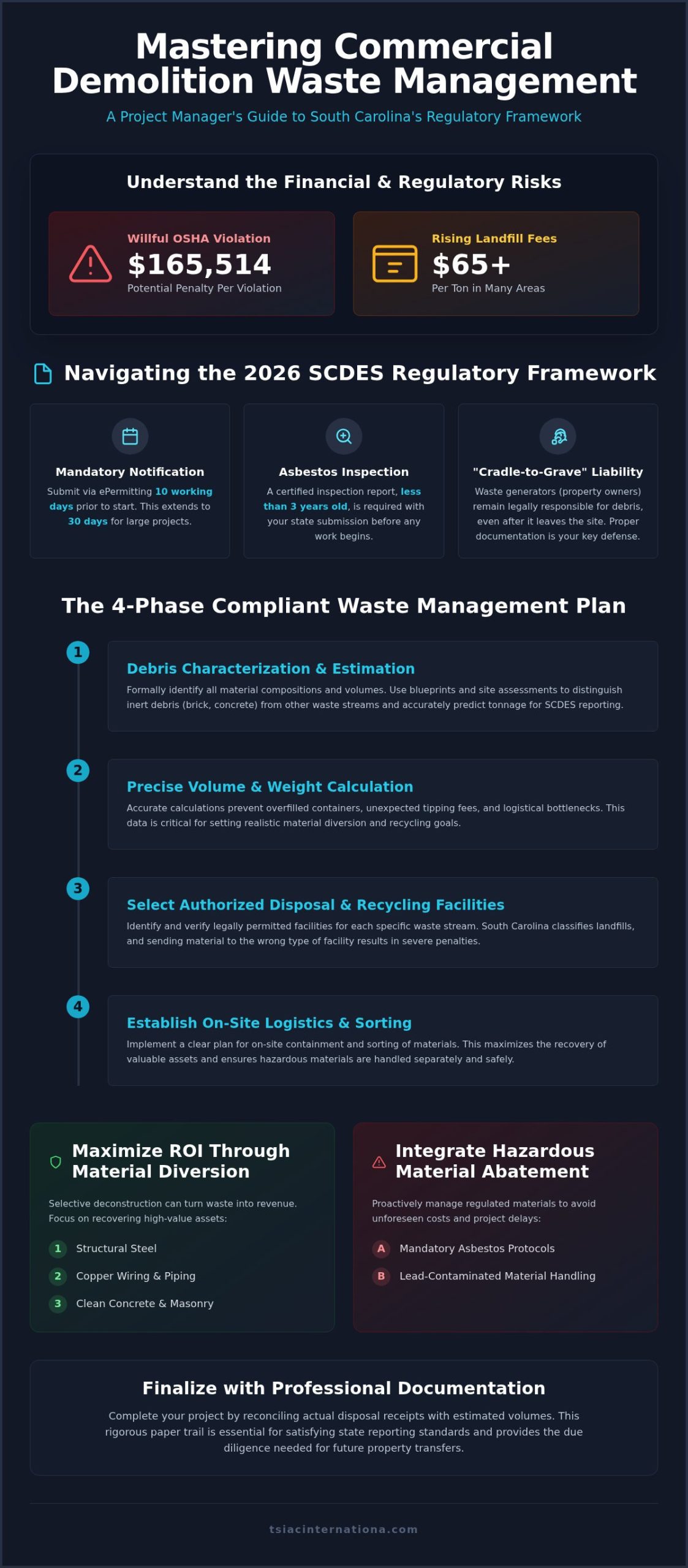
Did you know that a single willful OSHA violation on a job site can now result in a penalty of $165,514? For project managers, these figures represent more than just a regulatory threat; they’re a direct risk to the viability of every contract. You likely understand that managing debris is a logistical necessity, but the evolving regulatory landscape has introduced complexities that demand a more methodical approach. Navigating the mandatory 10-day notification rule and rising landfill fees, which now reach up to $65 per ton in many areas, requires precise technical planning.
This guide will show you how to master a commercial demolition waste management plan sc to ensure full compliance while mitigating environmental liability. We’ll provide a clear roadmap for handling upcoming ePermitting requirements and the critical three-year asbestos inspection window. You’ll learn how to integrate hazardous material abatement with structural removal to prevent unforeseen cost spikes from the discovery of regulated materials. By following this framework, you can transform waste management from a regulatory hurdle into a strategic tool for material recovery and margin protection.
Key Takeaways
- Understand the 2026 SCDES regulatory framework to ensure all ePermitting and notification requirements are met before site activity begins.
- Implement a comprehensive commercial demolition waste management plan sc that uses precise volume estimation to reduce landfill tipping fees and improve project margins.
- Integrate mandatory asbestos inspections and lead abatement protocols directly into your demolition timeline to mitigate environmental liability and avoid project delays.
- Discover how selective deconstruction methods can maximize material recovery for high-value assets like structural steel, copper, and clean concrete.
- Finalize your project with professional documentation that reconciles actual disposal receipts with estimated volumes to satisfy state reporting standards.
Navigating the 2026 South Carolina Regulatory Framework for Demolition Waste
In South Carolina, a commercial demolition waste management plan sc is a technical document that outlines the systematic identification, handling, and disposal of all debris generated during a project. As of 2026, the South Carolina Department of Environmental Services (SCDES) has assumed full regulatory authority, transitioning away from the previous DHEC structure. This shift isn’t merely administrative; it reflects a more rigorous enforcement of South Carolina Code Title 44. Property owners are now held to a higher standard of accountability for the materials leaving their sites. A comprehensive Demolition waste overview reveals that these materials often contain hazardous components that require specific handling protocols. The 2026 regulations demand intervention during the pre-planning phase because the state now requires verified documentation of waste streams before any structural impact occurs.
The 10-Day SCDES Notification Rule
Compliance begins with the mandatory 10-working-day notification submitted via the SCDES ePermitting system. For large-scale projects, which are defined by 2026 legislation as “large projects,” this notification window extends to 30 days. You can’t start work until this period has elapsed and the $50 project license fee is processed. Failing to adhere to these timelines results in immediate stop-work orders and significant civil penalties. A valid state submission must include a certified asbestos inspection report that’s less than three years old. This ensures the state can verify that hazardous materials are identified and managed according to statutory requirements before any debris reaches a landfill.
Liability and Environmental Risk Mitigation
Implementing a rigorous commercial demolition waste management plan sc serves as your primary defense against “cradle-to-grave” liability. Under state and federal law, the generator of the waste remains responsible for it even after it leaves the site. If debris is disposed of in an unpermitted facility, the property owner faces the legal and financial burden of remediation. This risk is particularly acute during future property transfers. Lenders and buyers will scrutinize the disposal records of previous demolition activities. Establishing a rigorous paper trail through your waste management plan provides the necessary due diligence to prove that all materials, from structural steel to lead-contaminated masonry, reached their appropriate destinations. This documentation is essential for maintaining the long-term value and tradability of your commercial assets.
Developing a Compliant Waste Management Plan: A Step-by-Step Framework
A commercial demolition waste management plan sc is not a static document. It is a precise operational roadmap that dictates how every pound of debris is handled from the moment of detachment to its final destination. Creating this plan requires a disciplined, four-phase methodology. Phase 1 involves a granular site assessment to characterize every material stream. Phase 2 focuses on precise volume and weight calculations. Phase 3 identifies authorized disposal and recycling outlets, while Phase 4 establishes the on-site logistics required for containment and sorting. This systematic approach ensures that you don’t just meet the minimum legal requirements but actually optimize the financial recovery of the project.
Debris Characterization and Volume Estimation
Debris characterization is the formal identification of material composition and volume within a structure to ensure each waste stream is diverted to its legally mandated disposal or recovery channel for SCDES reporting. Categorizing materials correctly is vital. You must distinguish between inert debris, such as brick and clean concrete, and putrescible waste that requires different handling protocols. We use historical data and architectural blueprints to predict tonnage for structural steel and heavy masonry. Accurate calculations prevent the logistical bottleneck of overfilled containers and unexpected tipping fees. This data also allows you to set realistic diversion goals, which are increasingly important for meeting modern sustainability standards.
Selecting Authorized Disposal Facilities
South Carolina classifies landfills into specific categories based on the waste they accept. Class II landfills are typically reserved for construction and demolition debris, while Class III facilities handle municipal solid waste and certain industrial streams. It’s critical to verify that your chosen Material Recovery Facility (MRF) holds a current permit under the latest South Carolina demolition regulations. This verification protects you from “cradle-to-grave” liability if a facility loses its permit mid-project. Effective logistics also involve calculating hauling distances and comparing tipping fees across different counties to optimize your project’s bottom line. For those managing complex sites, utilizing professional recycling services can significantly reduce the administrative burden of facility vetting and permit verification.
On-site logistics are where the plan is executed. You need dedicated zones for wood, metal, and concrete to prevent cross-contamination. Contaminated loads are often rejected by recycling centers or upgraded to higher-cost disposal categories. Clear signage and designated containment areas ensure the crew follows the plan without constant supervision. This discipline maintains site safety and ensures that your final weight tickets match your initial estimates. Reconciling these numbers is a key requirement for state-level compliance audits and provides a clear audit trail for property owners.
Hazardous Material Abatement: Integrating Asbestos and Lead Protocols
Every commercial structure in South Carolina, regardless of its construction date, requires a thorough asbestos inspection before any demolition activity. This isn’t an optional step; it’s a foundational requirement of a commercial demolition waste management plan sc. If hazardous materials aren’t identified early, the entire waste stream can become contaminated. This leads to exponential increases in disposal costs and significant legal liability. Integrating these abatement protocols into the master plan ensures that hazardous waste is separated at the source. This preservation of the waste stream follows federal guidelines for Sustainable C&D Materials Management and protects the financial viability of the project.
Asbestos Abatement Compliance in SC
South Carolina regulations demand a clear distinction between friable and non-friable asbestos disposal. Friable materials, which can be crumbled by hand pressure, pose a severe respiratory risk and require stringent wetting and double-bagging protocols. Non-friable materials, such as certain floor tiles or roofing, may be handled differently but still require precise tracking. Coordination between abatement teams and structural demolition crews is essential to prevent accidental disturbance. For a deeper look at these requirements, see our guide on Hazardous Material Abatement in South Carolina. All hazardous loads must be accompanied by a waste manifest that tracks the material from the site to a permitted disposal facility.
Lead-Based Paint and Toxic Debris Management
Lead-based paint (LBP) presents a different set of challenges, particularly when it’s bonded to wood or masonry. Improperly handling lead-impacted debris can lead to site-wide cross-contamination. This can trigger civil penalties that reach $37,500 per violation, per day. Specialized hauling is often required for debris that fails a Toxicity Characteristic Leaching Procedure (TCLP) test. Your commercial demolition waste management plan sc must specify how these materials are isolated and contained on-site to prevent runoff or dust migration. Once removal is complete, final clearance reporting serves as the closing piece of the hazardous waste record. This documentation is vital for reconciling your waste estimates with actual disposal volumes. It provides the legal closure necessary for property owners to proceed with future development without the shadow of environmental liability.
Sustainable Deconstruction: Maximizing ROI through Material Diversion
Modern demolition has evolved from indiscriminate wrecking into a precision-engineered deconstruction process. A robust commercial demolition waste management plan sc prioritizes the diversion of high-value materials to offset project costs. In 2026, landfill tipping fees in South Carolina continue to climb, making traditional disposal a liability for project margins. By identifying streams like structural steel, copper, and clean concrete early, we transform waste into revenue. The ROI of recycling becomes evident when you compare the cost of a contaminated 30-yard dumpster against the scrap value of sorted non-ferrous metals. This shift requires a disciplined approach to site logistics and material handling.
Selective Demolition and Interior Gutting
Surgical removal of components significantly improves material purity for recycling. When we perform Commercial Interior Gutting Services, the focus is on isolating drywall, acoustic ceilings, and metal framing before structural demolition begins. This prevents cross-contamination, which is the primary reason recycling centers reject loads. Managing these debris streams in active commercial environments requires meticulous logistics to ensure zero disruption to neighboring tenants. By gutting the interior first, we ensure that the remaining shell consists of clean, recyclable masonry and steel. This methodical separation is what allows for the high diversion rates required for modern compliance.
Concrete and Metal Recovery
The 2026 market for structural steel remains strong, providing a significant credit toward the total demolition budget. Non-ferrous metals like copper and aluminum offer even higher returns when properly sorted on-site. For masonry, we evaluate the feasibility of on-site crushing versus hauling to secondary processing centers based on the site footprint and total volume. Concrete recycling reduces aggregate costs for new construction by providing a locally sourced, high-quality base material that eliminates the need for virgin stone. This circular approach is a cornerstone of any effective commercial demolition waste management plan sc. Beyond concrete, we implement specific strategies for diverting wood, plastic, and drywall. Diverting these materials requires dedicated containers and clear site protocols to prevent the co-mingling that leads to higher tipping fees. By meticulously tracking these streams, we provide the data necessary for LEED certification and corporate sustainability reporting.
To maximize your material recovery and protect your project margins, consider our professional recycling services for your next South Carolina project.
Professional Execution and Documentation for State-Level Compliance
Professional oversight is mandatory for high-stakes environments where technical precision affects site safety and long-term liability. A commercial demolition waste management plan sc requires active management to ensure that field activities align perfectly with the initial SCDES notification. TSIAC International manages the full lifecycle of project waste, from the initial characterization to the final reconciliation of weight tickets. This level of control is essential for preparing for post-project audits by state environmental agencies, which often scrutinize the gap between predicted and actual debris volumes. Without a disciplined expert on-site, small logistical errors can quickly escalate into regulatory violations.
Site Safety and Environmental Monitoring
Effective execution involves rigorous dust suppression and runoff control to prevent the migration of toxic particulates into the surrounding environment. We ensure all personnel are trained in specialized waste handling, particularly when dealing with lead-impacted masonry or friable asbestos. This technical discipline is a core part of The Demolition Process in South Carolina, where environmental monitoring protects the property owner from third-party liability. Continuous site inspections verify that containment barriers remain intact and that sorting zones are used correctly to prevent cross-contamination. These protective measures are documented daily to provide a clear record of site-level compliance.
Final Documentation and Project Closeout
Project closeout is defined by the meticulous organization of tipping receipts, hazardous waste manifests, and recycling certificates. These documents must be reconciled against the initial volume estimates provided in your commercial demolition waste management plan sc. A “Final Waste Report” is more than a summary; it’s a legal shield that proves every ton of material reached a permitted facility. This report is also critical for securing LEED credits or regional tax incentives related to material diversion. If the SCDES requests an audit of the project, having a complete, organized record of every waste stream ensures a smooth review process.
Partnering for success involves professional planning that prevents project delays. When documentation is handled with methodological accuracy, the transition from demolition to new construction is seamless. Our 15 years of industry experience ensures that the paper trail is as solid as the physical execution. By maintaining this level of transparency, we help our partners mitigate risk and maximize the value of their commercial assets through the entire demolition lifecycle.
Securing Your Project’s Regulatory Future
The transition to SCDES oversight in 2026 marks a new era of accountability for South Carolina property owners. A robust commercial demolition waste management plan sc is your primary tool for navigating these complexities. By prioritizing early site characterization and integrating certified abatement protocols, you eliminate the risk of unforeseen hazardous material discovery. This methodical approach doesn’t just satisfy state auditors; it also maximizes material recovery to protect your project’s bottom line. Every weight ticket and waste manifest serves as a permanent record of your environmental due diligence. These steps ensure that your site remains safe and your liability is fully mitigated.
TSIAC International brings over 15 years of industry experience to every site. Our team of certified asbestos and lead abatement specialists maintains a proven track record with SCDES regulatory compliance. We don’t just clear the site; we manage the technical lifecycle of your project waste with unwavering precision and professional oversight. Ensure your next project is fully compliant with a TSIAC International waste management plan. Taking these strategic steps today guarantees a safer, more efficient, and legally sound project closeout tomorrow.
Frequently Asked Questions
Is a waste management plan mandatory for all commercial demolition projects in SC?
Yes, a formal notification and plan are mandatory for all regulated commercial demolition projects in South Carolina. The SCDES requires this documentation to ensure that hazardous materials are identified and that debris is diverted to permitted facilities. Failing to submit a commercial demolition waste management plan sc can result in immediate stop-work orders and significant daily civil penalties under state law.
How far in advance must I notify the SCDES before starting demolition?
You must submit your notification at least 10 working days before structural disturbance begins. For projects classified as “large projects” under 2026 legislation, this period extends to 30 days. This timeline allows state regulators to review your asbestos inspection reports and verify that your waste streams are handled according to state law before any debris leaves the site.
Can I recycle concrete that contains lead-based paint?
Concrete containing lead-based paint cannot be recycled as clean aggregate without specialized testing and decontamination. If the material fails a Toxicity Characteristic Leaching Procedure (TCLP) test, it must be disposed of as hazardous waste. Attempting to recycle contaminated concrete can lead to severe environmental liability and the rejection of entire material loads at secondary processing centers.
What happens if asbestos is discovered after the waste plan is already finalized?
If asbestos is discovered after work begins, you must immediately stop all activities and secure the area. The existing commercial demolition waste management plan sc must be revised to include specific abatement protocols and a separate notification to SCDES. Resuming work before the state reviews the new inspection and abatement plan can lead to willful violation penalties of up to $165,514 per violation.
Are there specific landfills in South Carolina that only accept commercial debris?
South Carolina utilizes Class II landfills specifically for construction and demolition (C&D) debris. While many facilities accept both residential and commercial waste, some municipal sites, like the Bees Ferry Landfill in Charleston, don’t accept debris from private or commercial haulers. You must verify that your chosen facility is permitted by the state to accept commercial-grade structural materials before transport.
How does selective demolition affect the cost of my waste management plan?
Selective demolition increases upfront labor costs but significantly reduces overall disposal fees. By surgically removing high-value metals and clean wood before structural collapse, you maximize recycling revenue and avoid the high tipping fees associated with mixed, contaminated loads. This precision approach often results in a higher net ROI compared to traditional wrecking methods that rely solely on landfilling.
What documentation do I need to prove that my project met its recycling goals?
You need a comprehensive file containing all weight tickets, tipping receipts, and recycling certificates from authorized facilities. These documents must be reconciled against your initial volume estimates to create a “Final Waste Report.” This documentation is the only recognized way to prove compliance to the SCDES or to qualify for LEED certification and regional tax incentives.
Can I manage the waste plan myself, or do I need a certified contractor?
While a property owner can draft a preliminary plan, South Carolina law requires certified professionals for critical components. Asbestos inspections must be performed by a state-licensed inspector, and any abatement must be handled by a certified contractor. Professional oversight ensures that your documentation meets the rigorous standards required for state-level audits and future property transfers.
