
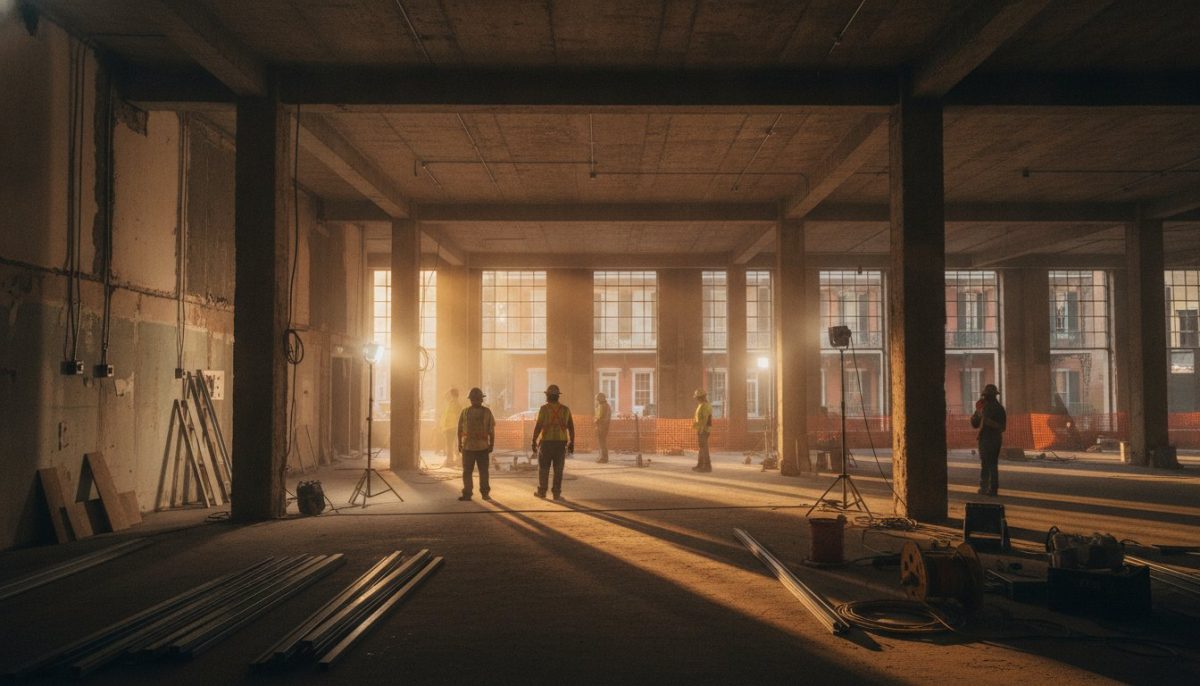
Speed is often the greatest risk factor when planning a commercial tenant improvement demolition. While the urge to clear a space for new construction is understandable, a rushed approach frequently leads to expensive permit delays or the accidental disturbance of legacy asbestos. You likely recognize that where commercial buildings often hide decades of unmapped structural modifications, the pressure to meet a tight deadline shouldn’t compromise your regulatory standing or the safety of neighboring tenants.
This 2026 guide, presented by TSIAC International, provides the technical framework required to master the complexities of commercial interior demolition. You’ll learn how to navigate relevant environmental and OSHA requirements for hazardous material abatement while executing selective gutting that preserves critical structural elements. We will examine the logistics of working within shared commercial environments and the precise steps needed to deliver a clean, permit-ready shell that streamlines your project’s transition to the build-out phase. By prioritizing methodological precision over raw speed, you ensure that your next commercial demolition project remains both compliant and on schedule.
Key Takeaways
- Identify the specific permit requirements for adaptive reuse projects in Charleston to avoid common regulatory delays and zoning complications.
- Distinguish between surgical selective demolition and total interior gutting to align your technical scope with specific structural and architectural requirements.
- Navigate the mandatory SC DHEC protocols for asbestos and lead abatement during a commercial tenant improvement demolition charleston sc.
- Analyze how building age and site accessibility in Charleston’s urban core impact your 2026 project timelines and cost projections.
- Streamline your construction schedule by integrating hazardous material remediation with site preparation under a single, high-precision contract.
Navigating Commercial Tenant Improvement Demolition in Charleston, SC
Charleston’s urban core is undergoing a significant transformation in 2026. Developers are increasingly favoring adaptive reuse projects over new builds. This shift places a heavy emphasis on commercial tenant improvement demolition charleston sc as the foundational step for modernizing retail and office corridors. Unlike total structural removal, TI demolition focuses on the surgical extraction of interior components while maintaining the building’s envelope. It’s a process of subtraction that enables future growth.
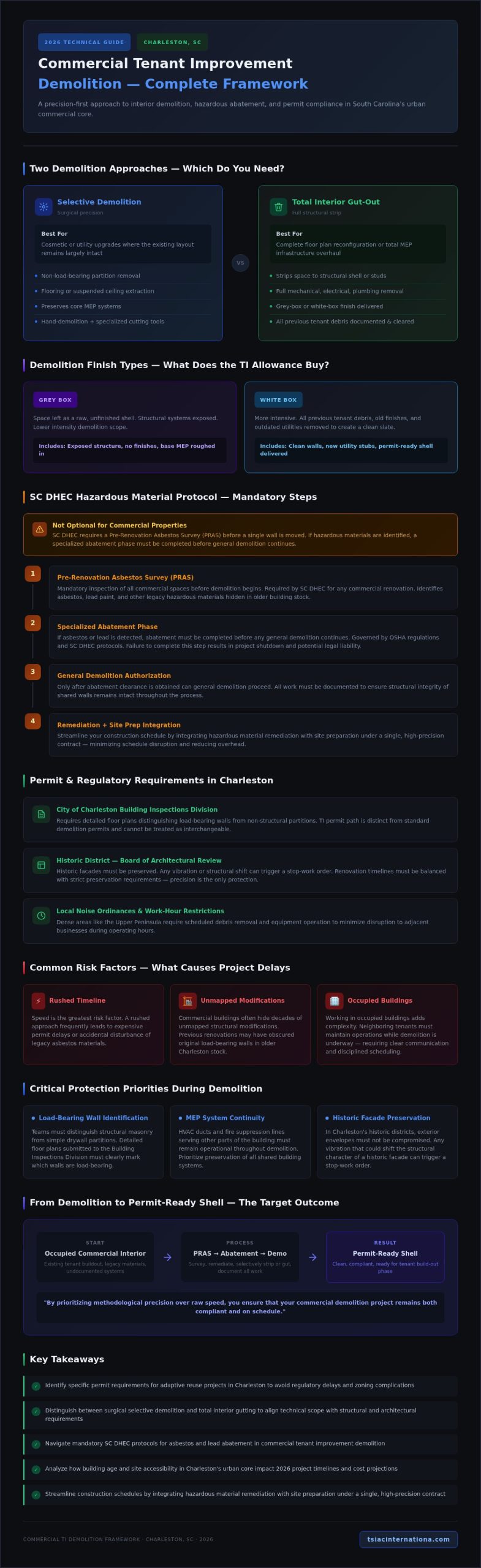
Coordination with the City of Charleston Building Inspections Division is mandatory. You can’t treat a TI project like a standard demolition. The permit path is distinct. It requires detailed floor plans that differentiate between load-bearing walls and non-structural partitions. In historic districts, this process becomes even more rigorous. You must balance aggressive renovation timelines with the preservation of historic facades. Any vibration or structural shift could trigger a stop-work order from the Board of Architectural Review. Precision is your only protection against these delays.
The Role of TI Demolition in Modern Charleston Real Estate
Retail and office spaces are transitioning to meet 2026 tenant demands for open-concept layouts and upgraded HVAC systems. The scope of your demolition is often dictated by the “Tenant Improvement Allowance” negotiated in the lease. This budget determines whether you perform a “grey-box” demolition, which leaves the space as a raw shell, or a “white-box” finish. A white-box demolition is more intensive. It involves removing all previous tenant debris, old finishes, and outdated utilities to create a clean slate for the incoming business. Every element removed must be documented to ensure the structural integrity of shared walls remains intact.
Regulatory Landscape for South Carolina Commercial Interiors
South Carolina DHEC (Department of Health and Environmental Control) maintains strict oversight of interior renovations. Before a single wall is moved, you must conduct a pre-renovation asbestos survey (PRAS). This isn’t optional for commercial properties in Charleston. If asbestos or lead is identified, the project must pivot to a specialized abatement phase before general demolition continues. Local noise ordinances and work-hour restrictions also dictate the project rhythm. In densely populated areas like the Upper Peninsula, work must be scheduled to minimize disruption to adjacent businesses. This requires a disciplined approach to debris removal and equipment operation. Managing these variables ensures that your project remains compliant with state law and local city codes.
Selective Demolition vs. Total Interior Gutting: A Technical Breakdown
The success of commercial tenant improvement demolition charleston sc depends on choosing the correct technical approach for the building’s future use. Selective demolition is a surgical process. It involves the removal of specific interior components like non-load-bearing partitions, flooring, or suspended ceilings while preserving the building’s core systems. This method is ideal when the existing layout remains largely intact but requires cosmetic or utility upgrades. In contrast, a total interior gut-out strips the space down to its structural shell or studs. This is necessary when the new tenant’s requirements demand a complete reconfiguration of the floor plan or a total overhaul of the MEP (mechanical, electrical, plumbing) infrastructure.
Protecting load-bearing elements is the primary concern during any interior strip-out. Our teams distinguish between structural masonry and simple drywall partitions to ensure the building’s stability isn’t compromised. This distinction is critical in Charleston’s older commercial stock where previous renovations may have obscured original load-bearing walls. Working in occupied buildings adds another layer of complexity. We must maintain clear communication with active neighboring tenants to minimize operational interference while we execute the demolition phase.
Surgical Techniques for Selective TI Projects
Precision is maintained through hand-demolition and the use of specialized cutting tools. We prioritize the protection of existing MEP systems that must remain operational. This includes maintaining the continuity of HVAC ducts and fire suppression lines that serve other parts of the building. When new layouts require updated utilities, we employ precision slab cutting and trenching. These techniques allow for the installation of new plumbing or electrical lines without disturbing the surrounding concrete foundation. If you need assistance determining the right scope for your project, our team provides selective demolition services tailored to complex commercial environments.
Managing Shared Infrastructure in Multi-Tenant Buildings
Shared infrastructure requires a defensive approach to demolition. Vibration monitoring is often deployed to prevent hairline fractures or structural stress in adjacent commercial units. We also implement rigorous dust containment strategies. Using HEPA-filtered air scrubbers and maintaining negative air pressure prevents the migration of particulates into common areas or neighboring offices. Logistics in Charleston present unique challenges. Navigating narrow downtown alleys for debris hauling requires small-chassis equipment and precise scheduling to avoid blocking traffic or violating local ordinances. Every load of wood, metal, or plastic is sorted to meet our commitment to on-site recycling, ensuring a clean and compliant transition to the construction phase.
Critical Hazardous Material Protocols for Charleston Commercial Spaces
Charleston’s commercial inventory, particularly within the mid-century district and historic downtown, presents specific environmental challenges that can derail a project’s timeline. During a commercial tenant improvement demolition charleston sc, the discovery of hazardous materials is a statistical probability rather than a rare occurrence. These materials aren’t just safety hazards; they represent significant legal and financial liabilities. SC DHEC and OSHA maintain rigorous oversight of interior renovations, and non-compliance can lead to permanent work stoppages or heavy fines. Integrating specialized abatement into the demolition workflow is the only way to ensure the site remains safe and the project stays on schedule.
Managing these risks requires a methodological approach to material identification and removal. When hazardous substances are handled incorrectly, they can contaminate adjacent tenant spaces through shared HVAC systems or structural gaps. This creates a chain of liability that extends from the property owner to the contractor. By addressing these issues during the initial demolition phase, you create a clean, certified environment for the subsequent build-out. This integration prevents the project-stalling violations that often occur when general contractors encounter unexpected legacy materials behind old finishes.
Asbestos Abatement in the TI Workflow
Asbestos identification is the first technical step in a high-precision TI workflow. Common asbestos-containing materials (ACMs) in Charleston’s older office and retail spaces include vinyl floor tiles, black mastic adhesives, and spray-applied fireproofing. We establish regulated work areas using 6-mil polyethylene sheeting and HEPA-filtered negative air machines to prevent fiber migration. This containment ensures that demolition activities don’t compromise the air quality of the rest of the building. For a detailed breakdown of the 2026 regulatory framework, review our guide on asbestos removal south carolina.
Lead Remediation and Mold Mitigation
Lead remediation is a primary concern when dealing with painted metal framing or original structural steel in historic renovations. We utilize wet-shaving techniques or HEPA-shrouded tools to suppress dust during the removal of these components. Mold mitigation also becomes necessary when gutting spaces that have experienced historical moisture intrusion. Fungal growth hidden behind old drywall or within outdated ductwork must be remediated before new finishes are applied. Following these protocols is essential for comprehensive hazardous material abatement south carolina. This unified approach guarantees that your space is permit-ready and safe for the next phase of development.
Projecting Timelines and Cost Drivers for 2026 TI Demolition
Budgeting for a commercial tenant improvement demolition charleston sc requires a technical assessment of variables that extend beyond simple square footage. In 2026, labor allocation and logistics are the most volatile cost drivers. Project owners often overlook how building age influences the complexity of a bid. Older structures in Charleston frequently require surgical hand-demolition to protect sensitive structural components; this increases labor hours compared to mechanical removal. Accessibility also plays a critical role. A site with restricted elevator access or narrow alleyways for debris load-out will naturally command a higher price point than a ground-floor retail space with direct exterior access.
Timelines are equally dependent on these site conditions. For a 5,000 square foot commercial gut-out, a standard schedule ranges from ten to fifteen business days. This timeframe accounts for the systematic removal of non-load-bearing partitions, flooring, and MEP systems. If hazardous material abatement is required, the timeline will expand to include containment setup and third-party air clearance testing. Planning for these phases early prevents the cascading delays that occur when a general contractor is forced to wait for a site to be cleared.
Primary Cost Drivers in Commercial Demolition
Labor intensity is the most significant factor in your project’s financial profile. Selective demolition demands high precision. Workers must manually disconnect utilities and saw-cut specific sections of the slab. This is far more time-consuming than the bulk removal seen in total structural demolition. Additionally, the volume of hazardous materials found during the pre-renovation survey dictates the disposal requirements. Specialized waste streams for asbestos or lead-containing components are priced differently than standard construction debris. You should also account for structural reinforcement needs. If the gut-out reveals compromised masonry or rusted steel framing, the cost of temporary shoring will be added to the demolition scope.
Sustainable Debris Management and Recycling
Material recovery offers a strategic “Recycling Offset” that can reduce overall project expenses. TSIAC International prioritizes the on-site sorting of wood, metal, and plastic to divert these materials from local landfills. This commitment isn’t just about environmental responsibility; it directly impacts your budget by lowering landfill tipping fees. If your project is pursuing LEED certification, our detailed recycling documentation provides the data required for your waste management credits. Effective debris management ensures a cleaner job site and a more efficient transition for the incoming construction crew. To optimize your project’s financial and environmental performance, partner with a team that specializes in commercial tenant improvement demolition charleston sc and integrated site preparation.
Partnering with TSIAC International for Your Charleston Project
Success in commercial tenant improvement demolition charleston sc requires more than just heavy equipment; it demands a deep understanding of local building stock and regulatory nuances. With over 15 years of industry experience in the Charleston market, TSIAC International has refined a methodology that addresses the specific technical challenges of the Lowcountry. We recognize that TI projects often occur in high-stakes environments where shared walls, active utilities, and neighboring tenants leave no room for error. Our team operates as a disciplined partner, bridging the gap between the initial gut-out and the start of new construction.
One of the primary advantages of our integrated approach is the consolidation of demolition and hazardous material remediation under a single contract. This model significantly reduces your liability. When the same team handles both the structural removal and the asbestos or lead abatement, there’s no risk of cross-contamination or communication gaps between subcontractors. We provide comprehensive documentation and maintain robust insurance profiles to protect property owners and developers throughout the project lifecycle. For those evaluating their options, our guide on demolition contractors charleston sc provides additional criteria for selecting a high-performance partner.
Beyond the Gut-Out: Integrated Site Services
Our scope extends beyond simple debris removal. We prepare the site for immediate build-out through specialized services such as precision concrete removal and mechanical floor grinding. These steps are essential for ensuring new finishes adhere correctly to the slab. We also clear acoustic ceilings and outdated MEP systems to provide a truly clean shell. By offering metal framing and drywall preparation, we jumpstart the construction schedule. This allows your general contractor to begin the installation phase without the typical delays associated with multi-vendor handoffs.
Get Started on Your Charleston Commercial Renovation
The process begins with a site-specific survey. This assessment allows us to identify potential cost drivers and environmental hazards before they become project-stalling issues. We provide fixed-price contracts to ensure budgetary transparency and eliminate the uncertainty often found in renovation bids. Our project managers coordinate directly with your architects and general contractors to align our demolition strategy with the final design goals. Once the interior strip-out is complete, we execute a final site clearing and manage all debris through our on-site recycling protocols. This disciplined finish ensures your space is permit-ready and safe for the next phase of development.
Securing the Foundation for Your Next Commercial Build-Out
Successful renovation projects in the Lowcountry depend on the technical integrity of the initial strip-out. You mitigate the risks of structural damage and regulatory fines by prioritizing hazardous material identification and surgical selective demolition. This guide has detailed how integrating abatement with site preparation ensures your project moves seamlessly from a raw shell to a permit-ready interior. By addressing environmental concerns and structural preservation during the demolition phase, you create a stable environment for the subsequent construction teams to follow.
TSIAC International brings over 15 years of local expertise to every site. As licensed asbestos and lead abatement specialists, we maintain full SC DHEC compliance while executing the most complex commercial tenant improvement demolition charleston sc. Our focus remains on delivering a clean, safe environment that allows your construction team to begin work immediately without the burden of legacy debris or environmental liabilities. We handle the technical complexities so you can focus on the final design and tenant occupancy. Professional demolition is the first step in a high-quality renovation.
Request a Consultation for Your Charleston TI Project to ensure your renovation starts with professional precision and unwavering reliability.
Frequently Asked Questions
Do I need an asbestos survey for a small interior TI project in Charleston?
SC DHEC regulations require a Pre-Renovation Asbestos Survey (PRAS) for every commercial renovation project in Charleston, regardless of the square footage. Even minor tenant improvements that involve disturbing finishes like floor tile or black mastic must be preceded by an inspection. Failing to conduct this survey before beginning a commercial tenant improvement demolition charleston sc can result in significant fines and project shutdowns by state regulators who prioritize environmental safety.
How long does a typical commercial interior gut-out take to complete?
A typical commercial interior gut-out for a 5,000 square foot space generally requires ten to fifteen business days. This timeline includes the systematic removal of non-structural partitions, flooring, and MEP systems. Factors such as restricted site access, the need for surgical hand-demolition, or the discovery of hazardous materials will extend this duration. We provide detailed schedules during the planning phase to ensure your construction team can begin work without unnecessary delay.
Can demolition happen while other tenants are still in the building?
Demolition frequently occurs in occupied buildings where neighboring businesses remain operational. We implement rigorous dust containment strategies using HEPA-filtered negative air pressure and physical barriers to prevent particulate migration into shared spaces. Noise-intensive activities are often scheduled during off-peak hours to minimize disruption. Vibration monitoring is also utilized to ensure that activities within your space don’t negatively impact the structural integrity or sensitive equipment of adjacent commercial tenants.
What is the difference between selective demolition and a total gut-out?
Selective demolition involves the surgical removal of specific building components while preserving the existing core infrastructure. This is common when the primary layout remains unchanged but requires utility upgrades. A total interior gut-out involves stripping the space down to its structural shell or studs. This approach is necessary when a tenant requires a complete reconfiguration of the floor plan or a total replacement of the mechanical, electrical, and plumbing systems.
Is lead paint remediation required for commercial buildings in South Carolina?
Lead paint remediation is mandatory for commercial buildings in South Carolina if the renovation activities will disturb lead-containing materials. While more common in historic downtown Charleston structures, lead is often found on original structural steel or metal framing in mid-century buildings. We employ wet-shaving and HEPA-shrouded tools to safely remove these components. Compliance with OSHA lead standards is essential to protect both our workers and the building’s future occupants.
How does TSIAC International handle material recycling during the demolition process?
TSIAC International maintains a strict commitment to on-site material recovery. During the demolition process, we sort wood, metal, and plastic debris into dedicated waste streams for transport to local recycling facilities. This practice reduces the volume of material sent to landfills and lowers overall project costs through reduced tipping fees. For projects pursuing LEED certification, we provide the necessary documentation to verify that waste diversion goals have been met with technical accuracy.
What permits are required for commercial interior demolition in Charleston?
Commercial interior demolition in Charleston requires a specific permit from the City of Charleston Building Inspections Division. This permit is distinct from a total structural demolition permit. You must submit detailed floor plans that clearly identify which elements are structural versus non-structural. If the property is located within a historic district, additional approval from the Board of Architectural Review may be necessary to ensure that the exterior envelope remains protected.
What happens if hazardous materials are found after the demolition starts?
If suspected hazardous materials are discovered after demolition has commenced, work must stop immediately in the affected area. The materials must be tested by a certified professional to determine their composition. If results are positive for asbestos or lead, a specialized abatement plan is implemented under SC DHEC guidelines. Our integrated team can pivot quickly to address these findings, ensuring that the commercial tenant improvement demolition charleston sc remains compliant without causing indefinite delays.
