
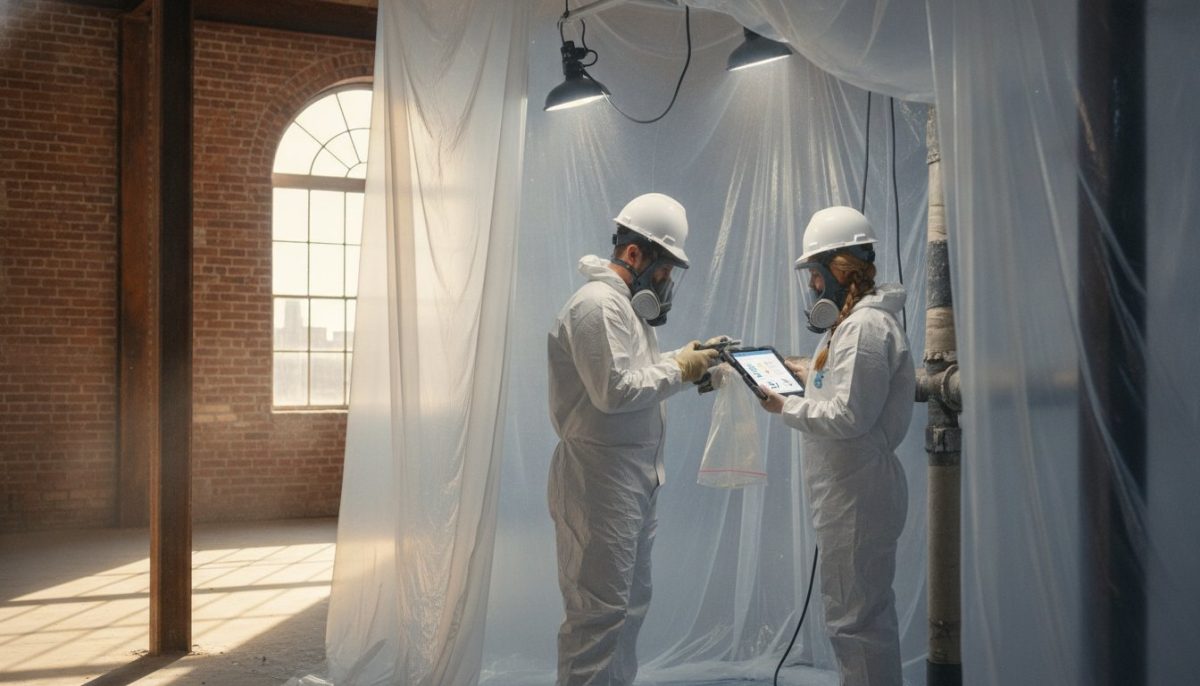
Approximately 42% of older commercial structures across the nation contain hazardous materials like asbestos. This isn’t just a historical footnote; it’s a significant legal and financial hurdle when you’re planning on demolishing a building with asbestos south carolina. Regulatory bodies nationwide have implemented stricter oversight and advanced permitting systems that demand absolute precision. One missed notification or an improper survey can lead to civil penalties reaching tens of thousands of dollars per violation, underscoring the critical need for compliance.
You likely feel the pressure of balancing tight redevelopment timelines with the rigid requirements of federal and state environmental regulations. TSIAC International understands these challenges. This guide provides the technical roadmap you need to master these complexities while ensuring a seamless transition from abatement to structural removal. We’ll examine current regulatory notification protocols, the specifics of managing friable versus non-friable materials, and the methodology for avoiding cross-contamination during the demolition phase. Following these disciplined procedures protects your project from delays and ensures that environmental safety remains a core component of your operational success.
Key Takeaways
- Understand the 2026 regulatory shift to the South Carolina Department of Environmental Services (SCDES) and the mandatory 10-day notification protocols for all commercial projects.
- Navigate the legal complexities of demolishing a building with asbestos south carolina by securing licensed inspections and specialized containment before structural work commences.
- Utilize selective demolition and interior gutting as strategic phases to isolate hazardous materials, preventing cross-contamination and protecting site safety.
- Follow a methodical five-step roadmap that guides your redevelopment project from the initial hazardous material survey to final site clearance and recycling.
- Minimize corporate liability and avoid civil penalties of up to $10,000 by ensuring all abatement documentation meets current state and federal standards.
Navigating the South Carolina Commercial Hazardous Waste Landscape
Redevelopment in the Palmetto State often involves reviving structures that predate modern environmental standards. Commercial hazardous material removal isn’t merely a cleanup task; it’s a foundational phase of the construction lifecycle. In 2026, the regulatory environment has shifted significantly with the establishment of the South Carolina Department of Environmental Services (SCDES). This agency now serves as the primary enforcer for state and federal safety protocols, replacing the oversight previously held by DHEC. While federal EPA standards provide the baseline, South Carolina adds specific layers of reporting and licensing that contractors must navigate when demolishing a building with asbestos south carolina. These rules apply across all major sectors, including the decommissioning of industrial plants, the renovation of institutional facilities like hospitals, and the repurposing of legacy retail spaces.
The Role of SC DES and RCRA Compliance
South Carolina manages hazardous waste through the framework of the Resource Conservation and Recovery Act (RCRA). The SCDES Bureau of Land and Waste Management oversees this process to ensure toxic materials don’t enter the general waste stream. A critical concept for any property owner is the “waste generator” liability. Under RCRA, the entity that produces the waste is responsible for its management from “cradle to grave.” This means your liability doesn’t end when the material leaves the site; it continues until the waste is properly treated or disposed of in a Class 3 landfill. For a comprehensive overview of asbestos and its historical usage, understanding why these strict disposal paths exist is essential for risk mitigation.
Regulatory Triggers for Abatement
Legal requirements for abatement are triggered well before the first excavator arrives. Any renovation or demolition of a commercial facility requires a thorough asbestos survey conducted by an SCDES-licensed building inspector. This is a non-negotiable step. Even if you believe a structure is “clean,” the state requires a written notification via the ePermitting system at least 10 working days before work begins. Failure to secure these permits or ignoring the presence of Regulated Asbestos-Containing Material (RACM) leads to immediate consequences. SCDES has the authority to issue work-stoppage orders and levy civil penalties of up to $10,000 per violation. These delays often prove more costly than the abatement itself, making early compliance the only viable path forward for demolishing a building with asbestos south carolina.
Core Hazardous Materials in Legacy Commercial Structures
Legacy commercial structures in South Carolina often harbor a triad of hazards: asbestos, lead, and microbial growth. These materials require specialized containment rather than standard debris removal because disturbance releases microscopic toxins into the air. When demolishing a building with asbestos south carolina, the primary risk involves cross-contamination through HVAC ducts and ventilation shafts, which can transport fibers throughout the entire footprint of the site. South Carolina’s older commercial stock, ranging from textile mills to mid-century retail centers, presents unique challenges due to the sheer volume of legacy materials integrated into their structural frameworks.
Asbestos Abatement in Commercial Frameworks
Commercial properties frequently contain asbestos in vinyl floor tiles, mastic, and built-up roofing systems. The South Carolina Asbestos Section classifies these materials based on their potential to become airborne. Friable asbestos, which can be crumbled by hand, requires the most rigorous containment, while non-friable materials like roofing shingles often follow different handling protocols. For a deep dive into technical specifications, consult our guide on asbestos removal in South Carolina. It’s essential to identify these materials early to avoid the $16,550 OSHA fines associated with the improper disturbance of toxic fibers.
Lead-Based Paint and Structural Metals
Lead abatement is a critical component of demolishing a building with asbestos south carolina, particularly when dealing with lead-coated steel beams or masonry. Standard demolition methods can create lead dust that leaches into the surrounding soil. We use “surgical” removal techniques during interior gutting to isolate lead-impacted components. This precision ensures that structural metals are safely removed and prepared for recycling without endangering the local environment. Proper disposal isn’t just a safety issue; it’s a liability shield for the property owner.
Microbial Remediation and Industrial Mold
South Carolina’s high humidity levels often lead to extensive microbial growth in abandoned or poorly maintained commercial buildings. Mold remediation must occur before the interior gutting phase to protect worker health and maintain structural integrity. We implement negative air pressure and HEPA filtration to contain spores. Addressing these biological hazards early prevents them from compromising the entire redevelopment project. Partnering with a firm that understands these technical nuances, like TSIAC International, is the best way to safeguard your investment from the start.
Strategic Abatement vs. Standard Demolition
Standard demolition relies on brute force to clear a site, but this approach is often incompatible with modern environmental mandates. When demolishing a building with asbestos south carolina, the choice between total structural collapse and selective dismantling determines your project’s risk profile. Strategic abatement treats the removal of hazardous materials as a surgical phase of the project rather than a secondary waste disposal task. By utilizing commercial interior gutting services, we can isolate and remove toxic components before any structural heavy machinery arrives. This methodology significantly reduces the volume of hazardous waste, often lowering disposal fees and allowing for the recycling of clean structural materials like steel and concrete.
The Surgical Nature of Selective Demolition
Selective demolition is the disciplined process of removing specific building components while preserving the main structural shell. This is particularly effective for managing acoustic ceilings, drywall, and pipe insulation that may contain legacy toxins. Our teams coordinate closely with abatement specialists to ensure that these materials are extracted under controlled conditions. We use specialized techniques to strip the interior down to the slab and studs without releasing fibers into the environment. This precision is required to meet the Asbestos NESHAP regulations, which dictate strict emission standards during any commercial renovation or demolition activity. Without this level of coordination, a project risks cross-contamination that could shutter the entire site.
Mitigating Liability Through Documentation
In South Carolina, the “Gold Standard” of abatement isn’t just about the physical removal; it’s about the paper trail. Every pound of hazardous waste must be accounted for through a rigorous Chain of Custody. We prioritize the generation of audit-ready safety records and Waste Shipment Records (WSRs) that prove compliance with SCDES requirements. These documents serve as your primary defense against future liability claims or regulatory inquiries. TSIAC International leverages over 15 years of industry experience to provide comprehensive documentation packages for every project. We don’t just clear the site; we provide the technical proof that the work was performed with methodological accuracy. This level of transparency ensures that when demolishing a building with asbestos south carolina, you’re protected from the legal and financial repercussions of improper disposal.
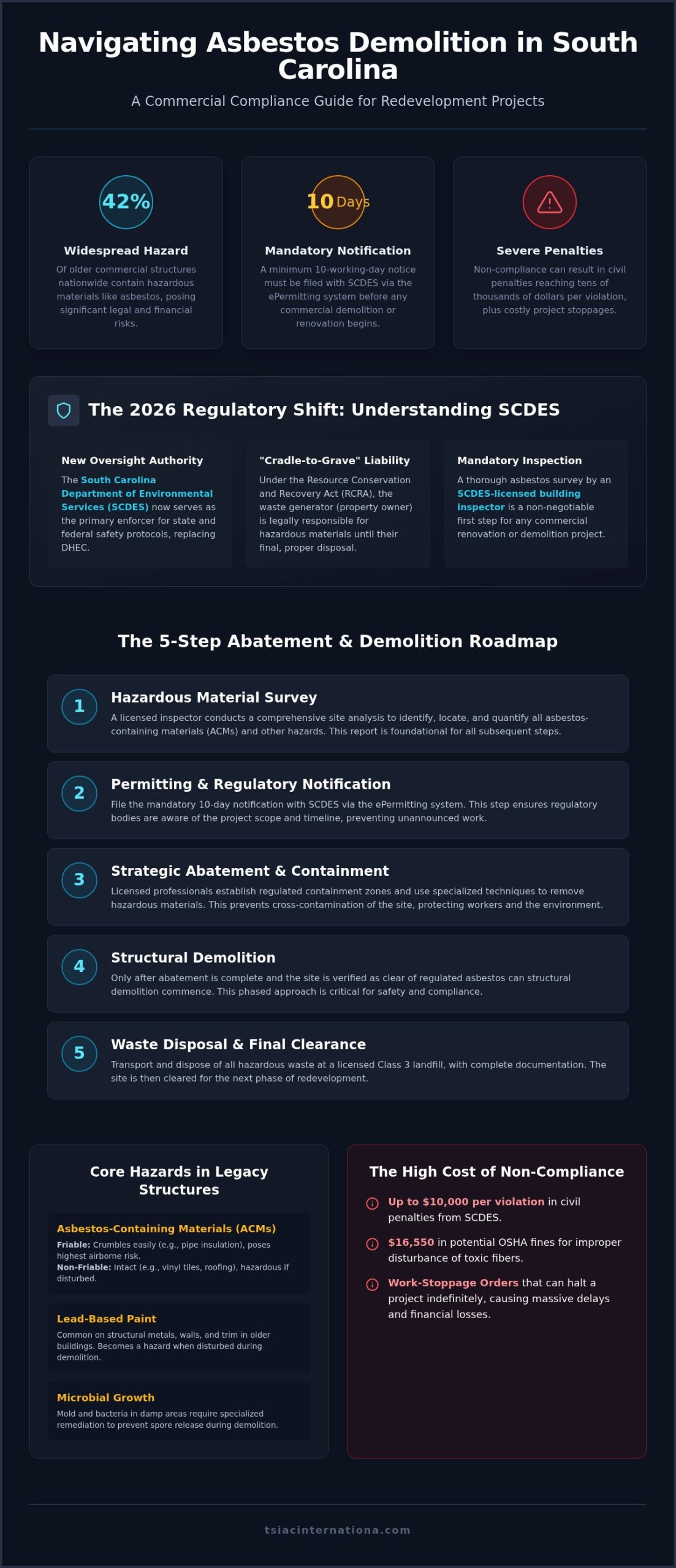
A 5-Step Roadmap for Commercial Abatement Projects
Successful redevelopment requires a structured sequence of operations. This five-step roadmap ensures that your project remains compliant while moving toward structural clearance. By integrating these steps with the broader demolition process in South Carolina, property owners can avoid the common pitfalls of unexpected site closures. This logic-driven approach prioritizes safety and environmental stewardship from the first site walk-through to the final load of debris.
Assessment and Permitting
The process begins with a mandatory hazardous material survey. A licensed inspector must identify all Regulated Asbestos-Containing Material (RACM) throughout the facility. Once the survey is complete, you’re legally required to file a notification through the SC DES ePermitting system. This notification must be submitted at least 10 working days before any activity starts. For projects involving demolishing a building with asbestos south carolina, a $50.00 project license fee is standard. These administrative steps are non-negotiable and provide the legal foundation for the physical work.
Containment and Removal
Abatement specialists then establish a controlled environment. This involves setting up negative pressure enclosures equipped with HEPA filtration to prevent fiber migration. We use decontamination units to ensure workers don’t carry toxins outside the work zone. During the removal phase, wet-removal techniques are applied to keep materials saturated, which minimizes airborne particulates. On-site air monitoring provides real-time data to verify that containment remains intact. This technical precision is what separates professional abatement from general debris clearing.
Sorting, Recycling, and Disposal
Environmental responsibility is a core pillar of our methodology. We don’t simply haul everything to a landfill. Instead, we implement a rigorous sorting process. Hazardous waste is double-bagged in leak-tight 6-mil polyethylene bags and transported to authorized Class 3 landfills. Simultaneously, we separate clean wood, metal, and plastic for recycling. This practice reduces the environmental footprint of demolishing a building with asbestos south carolina and can lower overall project costs by diverting non-toxic materials from expensive disposal streams.
If you’re ready to secure your site and ensure total regulatory compliance, consult with the abatement experts at TSIAC International today.
TSIAC International: The Gold Standard in Abatement
With over 15 years of industry experience, TSIAC International has established itself as the definitive leader for complex redevelopment projects across the state. We provide a unique integration of structural demolition and specialized remediation that eliminates the logistical friction of managing multiple subcontractors. This unified approach is vital when you’re demolishing a building with asbestos south carolina, as it ensures that safety protocols and structural timelines remain perfectly aligned. By managing the entire lifecycle of a project, from the first hazardous material survey to the final structural collapse, we maintain absolute control over the work environment. This technical continuity protects both the client’s investment and the surrounding community from the risks associated with fragmented project management.
Expertise in Complex Commercial Projects
Our portfolio includes extensive partnerships with government agencies and large-scale general contractors who demand methodological precision and unwavering reliability. We don’t just clear interiors; we utilize a fleet of advanced heavy machinery for efficient structural removal once the abatement phase is certified complete. Being a single-source provider means there’s no “hand-off” risk between an abatement firm and a demolition crew. This continuity is a hallmark of our service, positioning TSIAC as the premier choice for hazardous material abatement in South Carolina. We provide the specialized containment and regulatory compliance documentation required to satisfy the most stringent state and federal audits, ensuring your project remains on schedule and within its legal parameters.
Commitment to Environmental Responsibility
Environmental stewardship is a measurable outcome of our disciplined work process rather than a mere policy. We implement rigorous recycling practices for wood, metal, and plastic on every site we manage, diverting significant tonnage from the state’s landfill system. This commitment directly supports commercial LEED certification goals and enhances the sustainability profile of your redevelopment project. Beyond just hauling debris, we meticulously sort materials on-site to ensure that every recyclable component is recovered and processed. This methodical approach to waste management is a core component of demolishing a building with asbestos south carolina responsibly. TSIAC International is committed to achieving a 90% material diversion rate across all South Carolina project sites in 2026 through advanced on-site sorting and strategic recycling partnerships. Our focus remains on delivering a clean, safe, and ready-to-build site that meets the highest professional standards.
Securing Your Project’s Future with Compliant Abatement
Mastering the 2026 regulatory landscape is essential for any commercial redevelopment. You’ve seen how the shift to SCDES oversight and the use of selective demolition can mitigate risks during the complex process of demolishing a building with asbestos south carolina. By prioritizing a methodical roadmap, from the initial survey to final site clearance, you protect your investment from costly fines and structural delays. A disciplined approach ensures that hazardous materials are isolated and removed without compromising the integrity of your timeline or the safety of the surrounding environment.
TSIAC International stands as your dedicated partner in this high-stakes sector. We leverage 15+ years of industry expertise to provide comprehensive regulatory compliance documentation and certified environmental recycling practices on every project site. Our team ensures that your transition from hazardous material removal to full structural demolition is seamless, professional, and audit-ready. We don’t just clear the land; we provide the technical foundation for your new construction.
Take the first step toward a secure and compliant project site today. Request a Professional Abatement & Demolition Quote and let our specialists manage the technical complexities of your next South Carolina redevelopment. We look forward to bringing methodological precision to your site.
Frequently Asked Questions
Is a hazardous material survey required for all commercial buildings in South Carolina?
Yes, SCDES regulations mandate a thorough hazardous material survey for every commercial facility before any renovation or demolition begins. A licensed building inspector must perform this assessment to identify regulated materials. This requirement applies regardless of the building’s construction date. Skipping this step leads to immediate work-stoppage orders and significant legal liability for the property owner.
What are the penalties for improper asbestos removal in South Carolina?
Financial penalties for non-compliance are severe. SCDES can levy civil fines of up to $10,000 per violation for failing to follow air quality standards. Additionally, OSHA fines for the improper disturbance of asbestos can reach $16,550. These costs don’t include the secondary expenses of project delays, site decontamination, and potential lawsuits from exposed workers or the public.
How long does the commercial abatement process typically take?
Every project must account for the mandatory 10-working-day notification period required by SCDES before work starts. The actual removal phase depends on the volume of materials and the complexity of the containment setup. While a small selective project might conclude in a week, large industrial sites require a phased approach that can span several months to ensure total safety.
Can hazardous material removal be done during selective demolition?
Abatement is often integrated into selective demolition to increase efficiency. We use interior gutting to surgically remove hazardous materials like acoustic ceilings or floor mastic before structural teams arrive. This is a critical strategy when demolishing a building with asbestos south carolina. It prevents the cross-contamination of clean structural components, allowing for more effective recycling of steel and concrete.
Who is responsible for the hazardous waste once it leaves the project site?
The property owner, defined as the “waste generator,” remains legally responsible for hazardous waste from “cradle to grave” under RCRA. This liability doesn’t end when the truck leaves your site. You must ensure the material reaches a Class 3 landfill permitted by SCDES. TSIAC provides comprehensive documentation and Waste Shipment Records to prove your project met all legal disposal requirements.
What is the difference between asbestos abatement and asbestos remediation?
Abatement is the specific act of removing, encasing, or encapsulating asbestos to prevent fiber release. Remediation is a broader environmental term that describes the process of cleaning up a site after a hazardous release has occurred. In the context of redevelopment, we primarily focus on abatement to clear the structure of toxins before the main demolition or renovation phases begin.
Does TSIAC International handle both residential and commercial hazardous removal?
TSIAC International specializes exclusively in large-scale commercial, industrial, and institutional projects. Our 15 years of industry experience and specialized heavy machinery are tailored to the technical demands of high-volume removal. We don’t provide residential services for single-family homes. Instead, we focus on helping property owners navigate the complex regulatory hurdles found in the South Carolina commercial redevelopment sector.
How does TSIAC manage the recycling of non-hazardous demolition debris?
We utilize a disciplined on-site sorting process to maximize the recovery of non-hazardous materials. When demolishing a building with asbestos south carolina, we separate clean wood, metal, and plastic for processing at specialized recycling centers. This methodical approach supports LEED certification goals and reduces landfill impact. We’re committed to a 90% diversion rate for non-hazardous debris across all our South Carolina project sites.
