
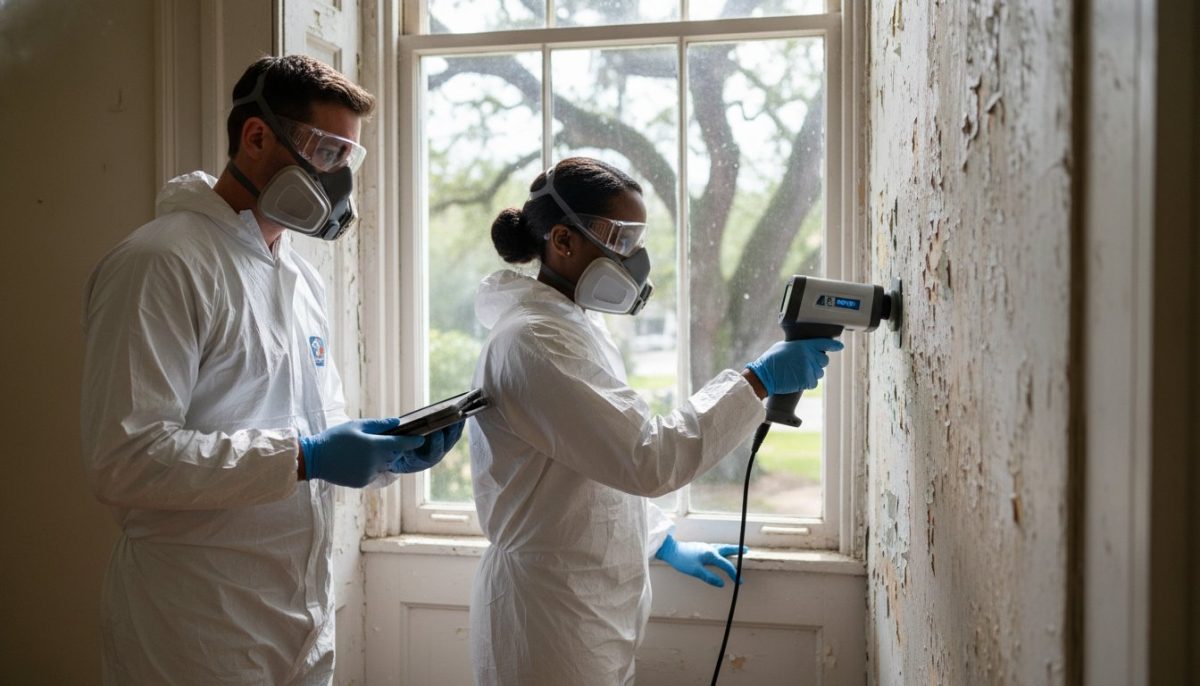
A single gram of dust from a deteriorating lead-painted surface contains enough toxin to contaminate an entire residential floor, yet 34 million American homes still contain these legacy hazards according to 2023 EPA data. You likely understand that managing an older property involves more than just structural maintenance; it requires a rigorous commitment to occupant safety. The health risks of lead paint are a legitimate concern for any responsible stakeholder, especially when facing the potential for irreversible neurological damage or the complex web of modern regulatory compliance. It’s natural to feel overwhelmed by the perceived cost and technical difficulty of professional abatement.
This comprehensive 2026 guide removes the uncertainty by providing a precise, engineering-focused roadmap for identifying and neutralizing these biological dangers. You’ll gain a clear understanding of how lead interacts with human physiology and learn the exact industry standards required for safe, permanent mitigation. We’ll examine the latest testing technologies, the mandatory safety protocols for hazardous material handling, and the specific steps necessary to achieve full compliance with current environmental health standards.
Key Takeaways
- Determine if your property requires intervention by understanding the 1978 ban and how lead-based additives once used for durability now pose modern structural liabilities.
- Gain insight into the biological mechanism of toxicity, specifically how lead mimics calcium to bypass the blood-brain barrier and the long-term health risks of lead paint.
- Identify critical hazard zones by learning to differentiate between intact surfaces and high-risk friction points where daily use generates hazardous dust.
- Evaluate professional diagnostic tools, such as XRF (X-Ray Fluorescence) testing, to ensure accurate, non-destructive identification of hidden lead layers.
- Implement engineering-grade abatement strategies, utilizing containment zones and negative air pressure to ensure permanent structural safety and compliance.
The Legacy of Lead-Based Paint in Modern Structures
Lead-based paint represents a significant historical chapter in industrial coatings and residential finishes. For decades, manufacturers added lead, primarily lead(II) carbonate or lead(II) chromate, to accelerate drying times, increase durability, and provide superior moisture resistance. These chemical properties made it the gold standard for high-wear surfaces before its long-term biological risks were fully quantified. The Legacy of Lead-Based Paint persists today because of these very strengths; the material was engineered to last for generations, often outliving the original structural components it was intended to protect.
The U.S. Consumer Product Safety Commission (CPSC) effectively banned lead-based paint for residential use in 1978. This date serves as the primary benchmark for property risk assessments. If your facility or home was constructed before 1978, there’s a statistically high probability that lead remains present within the building’s envelope. The scale of this issue is massive. Data from the Department of Housing and Urban Development (HUD) indicates that approximately 34 million American housing units still contain lead-based paint, with 22 million of those considered to have significant lead-based paint hazards.
Why Lead Was the Industry Standard
Lead-based pigments provided exceptional opacity and vibrant colors that resisted fading under intense UV exposure. In both industrial and residential applications, leaded oil-based paints formed a rigid, washable film that didn’t crack easily during seasonal temperature fluctuations. As the industry eventually transitioned to modern latex alternatives, these older coatings weren’t typically stripped away. Instead, they were covered with newer layers. This created a dangerous “sandwich” effect where multiple layers of modern, non-toxic paint hide “hot” lead layers beneath seemingly safe surfaces. When these surfaces are sanded, scraped, or begin to peel, the health risks of lead paint become an immediate concern as toxic dust is released into the environment.
Identifying High-Risk Properties
The age of the structure is the most reliable indicator of risk. Properties built before 1940 have an 87% chance of containing lead, while those built between 1960 and 1977 have a 24% chance. You’ll find these hazardous coatings most frequently on friction surfaces where constant movement can grind the paint into fine, inhalable dust. Key areas include:
- Window sashes, tracks, and frames
- Door jambs and headers
- Exterior siding and decorative trim
- Stair treads and handrails
Lead rarely exists in isolation in older structures. It’s common to find lead-painted surfaces in the same vicinity as other legacy toxins, such as asbestos-containing materials (ACM) used in pipe insulation or floor tiles. Managing these overlapping hazards requires a technical, site-specific strategy. For professionals overseeing these environments, reviewing the guide on Hazardous Material Abatement in South Carolina provides the necessary context for modern compliance. Effectively mitigating the health risks of lead paint requires recognizing that these materials are structural legacies that demand precise, engineered removal solutions.
The Biological Impact: How Lead Affects the Human Body
Lead operates as a sophisticated molecular mimic. It tricks the human body by imitating calcium, a mineral essential for cellular signaling and bone health. Because lead ions possess a similar size and charge to calcium, they easily bypass the blood-brain barrier and interfere with neurotransmitter release. This physiological deception allows the toxin to infiltrate the central nervous system, where it disrupts the electrical impulses that govern thought and movement.
Long-term storage of this heavy metal presents a unique challenge for medical professionals. Lead undergoes bioaccumulation, migrating from the blood into mineralized tissues. In adults, approximately 94% of the total body burden of lead is sequestered in the bones and teeth. These deposits don’t remain static; they have a half-life of 20 to 30 years. During periods of physiological stress, such as pregnancy or advanced age, the body may remobilize this stored lead back into the bloodstream, causing secondary exposure decades after the initial contact.
Medical standards for safety have shifted dramatically as diagnostic technology has improved. The consensus among global health authorities is that there’s no safe blood lead level. While the CDC lowered the blood lead reference value to 3.5 µg/dL in 2021, even trace amounts contribute to long-term health deficits. Understanding the health risks of lead paint requires recognizing that damage occurs well before clinical symptoms of poisoning appear.
Two primary routes of entry dominate lead exposure in residential and industrial environments. Ingestion often occurs when children swallow paint chips, which can contain up to 50% lead by weight. Inhalation is more insidious. Sanding, heat-stripping, or even the simple friction of a sliding window sash generates microscopic dust particles. These particles, often smaller than 10 microns, stay suspended in the air and are easily absorbed through the lungs into the systemic circulation.
Neurotoxicity in Children and Developing Brains
Young children represent the highest risk demographic due to their rapid metabolic rates and frequent hand-to-mouth behavior. Exposure during these formative years leads to permanent reductions in IQ and significant deficits in executive function. Research indicates that children under six absorb up to 50% of the lead they ingest, compared to just 10% in adults. Lead-induced neuroplasticity disruption occurs when lead ions replace calcium at synaptic junctions, effectively hijacking the signaling pathways required for healthy brain development. This disruption often manifests as behavioral regulation issues that persist into adulthood.
Adult Health Risks: Cardiovascular and Reproductive Effects
Chronic exposure in adults triggers a cascade of systemic failures. The health effects of lead exposure are particularly devastating to the cardiovascular system, where it’s linked to a 40% increase in hypertension risk. The kidneys also suffer as they attempt to filter the heavy metal, often leading to chronic renal insufficiency over time.
Reproductive health is another critical concern. For women, lead crosses the placental barrier, increasing the likelihood of miscarriage or premature birth. In men, it reduces sperm count and motility, impacting overall fertility. Occupational hazards remain high for those in demolition or renovation sectors. Workers who don’t utilize high-efficiency particulate air (HEPA) filtration or specialized PPE risk bringing toxic dust into their homes. Implementing a strategy for complex kivitelezés (complex execution) is the only reliable way to ensure these health risks of lead paint are managed with engineering precision.

Identifying Lead Hazards: When Does Paint Become Dangerous?
Lead paint doesn’t always present an immediate threat to occupants. If the coating remains intact and firmly bonded to the substrate, the health risks of lead paint stay contained within the material. The danger begins once the physical integrity of the film fails. This transition occurs through mechanical wear, environmental degradation, or improper maintenance. Identifying this tipping point is essential for maintaining a safe environment in structures built before 1978.
High-traffic areas like window sashes, door frames, and stair treads represent constant hazards. These are known as friction surfaces. Every time a window slides or a door closes, the surfaces act as a mechanical grinder. This process generates microscopic lead dust that’s often invisible to the naked eye. This dust settles on sills, floors, and nearby furniture where it’s easily disturbed. Data from the EPA indicates that even a tiny amount of lead dust, equivalent to a few grains of sugar, is enough to contaminate a standard-sized room.
Many property owners fall for the myth of the “clean” renovation. They believe that standard power sanding or heat stripping is the best way to prep a surface. This is a technical disaster. Dry sanding generates millions of lead particles small enough to remain airborne for hours. These particles bypass standard shop-vac filters and enter the building’s HVAC system. Once in the ducts, the lead migrates to every corner of the property, turning a localized repair into a facility-wide contamination event. Standard cleaning methods won’t remove this fine particulate matter from carpets or porous surfaces.
Signs of Deteriorating Lead Paint
Technicians must look for “alligatoring,” which appears as a grid of rectangular cracks resembling reptile skin. This pattern indicates the paint has lost its elasticity and is ready to flake. “Checking” refers to finer, shallower surface cracks. If you notice chalking on exterior siding, the binder has failed, leaving loose lead pigment on the surface that can wash into the soil. Moisture is the primary driver of this breakdown. Water penetration behind the paint film causes the coating to bubble and peel, exposing toxic layers that were previously buried.
The Hidden Threat of Lead Dust
Dust is significantly more dangerous than paint chips because it’s easily inhaled and ingested through hand-to-mouth contact. It migrates through a building during even minor selective demolition. A 2021 study confirmed that lead dust can travel through air ducts to rooms far from the work zone. Effective control requires specialized HEPA-filtered vacuums and wet-wiping techniques. Standard household vacuums often exhaust the finest lead particles back into the air, which significantly increases the health risks of lead paint for everyone in the building.
Mitigating Risk: Testing, Inspection, and Remediation Strategies
Effective risk mitigation begins with technical precision. You can’t manage what you haven’t accurately measured. A standard lead-based paint inspection utilizes X-Ray Fluorescence (XRF) technology to identify the presence of lead on every surface, regardless of its condition. It’s a surface-by-surface investigation that provides a clear inventory of lead-containing materials. Conversely, a full risk assessment evaluates the severity of the hazard. It identifies deteriorated paint and lead-contaminated dust that pose immediate health risks of lead paint to occupants. According to EPA standards, paint is considered lead-based if it contains 1.0 milligram per square centimeter or 0.5% lead by weight.
Professional Testing Protocols
Testing requires a multi-layered approach. While XRF provides non-destructive results on-site, laboratory paint chip analysis offers higher precision for complex substrates where XRF might be inconclusive. On-site dust wipe sampling measures the actual risk of ingestion or inhalation, which is critical for post-remediation clearance. In industrial or older residential settings, testing must extend to soil and water. Lead particles often migrate from exterior siding into the surrounding 12 inches of soil, creating long-term exposure risks. For projects involving older structures, it’s common to encounter multiple hazardous materials simultaneously. You can learn more about managing these complexities in our guide on Asbestos Removal in South Carolina.
Interim Controls and Management
Property owners often choose between interim controls and permanent abatement based on structural longevity and budget. Interim controls don’t remove the lead; they manage it.
- Encapsulation: This involves applying a liquid-applied coating that creates a long-lasting, impact-resistant bond. It’s not standard paint; it’s a specialized polymer that prevents lead dust from escaping.
- Enclosure: This method uses a permanent barrier, such as drywall or aluminum coil stock, to mechanically separate the lead paint from the living environment.
Interim controls require a written management plan and re-evaluation every two years. If the barrier fails, the health risks of lead paint return immediately.
Attempting DIY removal is a high-risk error. Sanding or scraping lead paint without HEPA-filtered vacuum attachments aerosolizes lead dust, making it easier to inhale. Studies show that improper DIY renovation can increase an occupant’s blood lead levels (BLL) by 5 to 10 micrograms per deciliter within days. Professional abatement ensures that lead is either permanently removed or safely contained using specialized engineering controls and negative air pressure environments.
Professional Lead Abatement: Ensuring Long-Term Structural Safety
Mitigation of the health risks of lead paint requires a shift from temporary maintenance to permanent structural solutions. Abatement is a rigorous engineering process designed to eliminate lead hazards through three primary methods: complete mechanical removal, total component replacement, or permanent enclosure using specialized encasements. Unlike simple repainting, these methods provide a 30-year lifecycle of safety for industrial and residential assets by addressing the root cause of contamination.
Effective containment is the foundation of site safety. Crews establish a sealed environment using 6-mil polyethylene sheeting and maintain negative air pressure through industrial HEPA filtration units. This prevents microscopic lead particles from migrating to clean zones during the demolition or stripping phases. Once the physical work is complete, a third-party professional must conduct dust wipe sampling. Clearance is only granted when lead levels fall below the 2026 threshold of 5 micrograms per square foot (µg/ft²) on floors, ensuring the space is truly decontaminated.
Containment and Safety Standards
Workers must utilize specialized Personal Protective Equipment (PPE), including disposable Tyvek suits and P100-rated respirators, to prevent inhalation and dermal contact. To keep dust levels at a minimum, teams employ wet-scraping techniques and high-efficiency heat-stripping tools that operate below 1,100 degrees Fahrenheit. Under the 2026 EPA updated Resource Conservation and Recovery Act (RCRA) guidelines, all lead-contaminated debris exceeding 5.0 mg/L via Toxicity Characteristic Leaching Procedure (TCLP) testing must be treated as hazardous waste and transported to Subtitle C landfills.
Why Expertise Matters in Hazardous Abatement
Hiring uncertified contractors for structural gutting often results in catastrophic cross-contamination. Inexperienced crews may inadvertently spread lead dust into HVAC systems, turning a localized problem into a building-wide crisis. TSIAC International manages complex hazardous material projects by applying engineering-grade precision to every site, ensuring that structural integrity and human health remain protected. Our teams handle the logistics of containment, removal, and legal disposal so you don’t have to worry about long-term liability.
Protecting your facility and its occupants from the health risks of lead paint is a technical challenge that demands a proven partner. Schedule a professional lead risk assessment today.
Securing Structural Integrity and Public Health for 2026 and Beyond
Managing the health risks of lead paint requires a shift from passive observation to proactive engineering. Although the 1978 federal ban restricted lead use in residential settings, thousands of industrial and commercial structures still harbor legacy coatings that degrade into toxic dust. This degradation poses a persistent threat to the nervous system and overall biological health. Effective mitigation demands more than superficial fixes; it requires rigorous EPA-compliant containment and specialized disposal protocols to prevent environmental cross-contamination during the removal process.
TSIA C International brings over 15 years of hazardous material expertise to every project, ensuring that complex environmental challenges are met with technical precision. Our capabilities extend to comprehensive structural demolition and abatement, providing a permanent solution for aging infrastructure. We don’t just remove hazards; we restore the long-term safety of your assets through disciplined execution and engineering mastery. Taking decisive action today prevents irreversible neurological damage and ensures your facility remains compliant with evolving safety standards. Protect your property and health with professional lead abatement services.
Your commitment to safety today builds a foundation for a secure and healthy operational future.
Frequently Asked Questions
What are the first signs of lead poisoning in adults?
High blood pressure, joint pain, and cognitive difficulties represent the primary clinical indicators of adult exposure. The CDC identifies blood lead levels above 5 micrograms per deciliter as a threshold for medical concern. Adults frequently experience persistent headaches, muscle weakness, or reproductive complications before more severe neurological symptoms become evident. These physiological changes often occur gradually, making regular screening essential for those in high-risk industrial environments.
Can I just paint over lead-based paint to make it safe?
Encapsulation serves as a temporary control measure, but standard latex paint won’t neutralize the hazard. Lead-based paint remains a threat if the underlying layers chip or peel due to moisture or friction. To manage the health risks of lead paint, you must apply specialized EPA-approved encapsulants. These industrial coatings create a long-term chemical bond that prevents dust release, unlike decorative paints that lack the necessary durability for hazardous material containment.
How much lead exposure is required to cause health problems?
There’s no safe level of lead exposure according to the World Health Organization. Even a concentration of 3.5 micrograms per deciliter in a child’s blood can cause permanent neurological damage and IQ loss. In industrial construction environments, OSHA enforces a permissible exposure limit of 50 micrograms per cubic meter of air over an 8-hour shift. Maintaining levels below these specific thresholds is critical for long-term physiological safety and regulatory compliance.
What is the difference between lead abatement and lead renovation?
Lead abatement is a permanent hazard elimination process designed to last at least 20 years and must be performed by certified professionals. Renovation involves smaller repairs that may disturb lead surfaces but don’t aim for permanent removal. The EPA’s RRP Rule dictates that any renovation disturbing more than 6 square feet of interior lead paint requires specific containment and cleaning protocols. Abatements are more rigorous, involving specialized techniques like component replacement or enclosure.
How do I know if my house built before 1978 has lead paint?
Professional X-ray fluorescence (XRF) testing is the only definitive method to identify lead presence without damaging the structure. Data shows that 87 percent of homes built before 1940 contain lead paint, while 24 percent of homes built between 1960 and 1977 remain affected. You shouldn’t rely on retail DIY kits because they often fail to detect lead in lower paint layers. A certified inspector provides a comprehensive report detailing every lead-positive surface.
Is lead paint dust dangerous if I can’t see it?
Lead dust is microscopic and remains the primary cause of poisoning in residential and industrial environments. A single lead particle the size of a grain of salt is sufficient to contaminate a 10-foot by 10-foot room. Because these particles are heavy, they settle on floors and horizontal surfaces where they’re easily ingested through hand-to-mouth contact. You can’t see, smell, or taste these particles, making professional air monitoring vital during any structural work.
What should I do if my child tests high for lead?
Contact your local health department immediately to initiate a professional environmental investigation of your home. When a child’s blood lead level exceeds 3.5 micrograms per deciliter, the CDC recommends immediate nutritional interventions and source identification. You’ll need to hire a certified risk assessor to inspect the property for deteriorating paint, contaminated soil, or lead in water pipes. Swift action is necessary to prevent further absorption and mitigate long-term developmental damage.
How long does lead stay in the human body after exposure?
Lead stays in the bloodstream for approximately 30 days before migrating to bones and teeth where it remains for 20 to 30 years. The human body mistakenly treats lead like calcium, storing it within the skeletal structure for decades. During periods of physiological stress or pregnancy, this stored lead can re-enter the blood, causing delayed health risks of lead paint exposure. This long-term retention makes historical exposure a relevant factor for adult health assessments.
