Lead Paint Hazards in Older Homes: A 2026 Guide to Risk and Abatement

Did you know that approximately 500,000 children in the United States currently have blood lead levels at or above the CDC’s reference value of 3.5…

Did you know that approximately 500,000 children in the United States currently have blood lead levels at or above the CDC’s reference value of 3.5 µg/dL? This staggering figure highlights the persistent reality of lead paint hazards in older homes, where deteriorating surfaces and microscopic dust pose a constant threat to neurological development. If you own a pre-1978 property, you’re likely concerned about the health of your family or the liability of your investment. It’s frustrating to face the anxiety of a remodel when you aren’t sure if your contractor’s methods will actually make the environment safer or inadvertently spread toxic particles throughout your home.

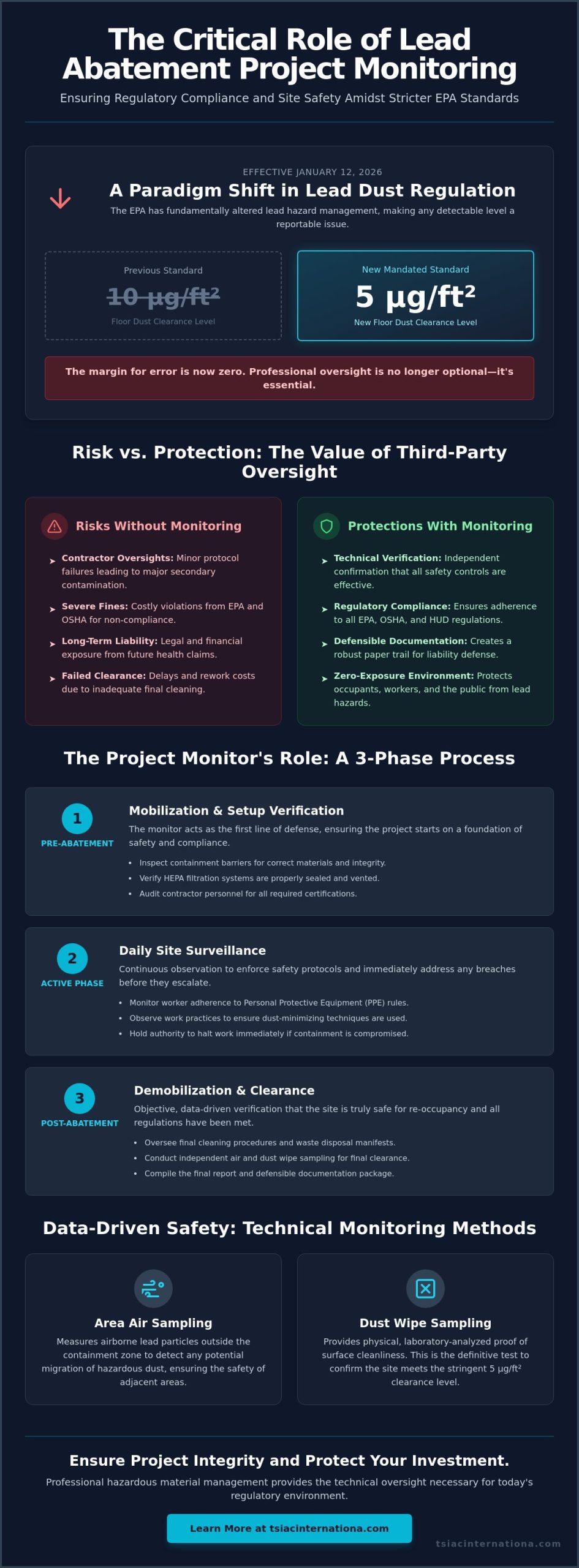
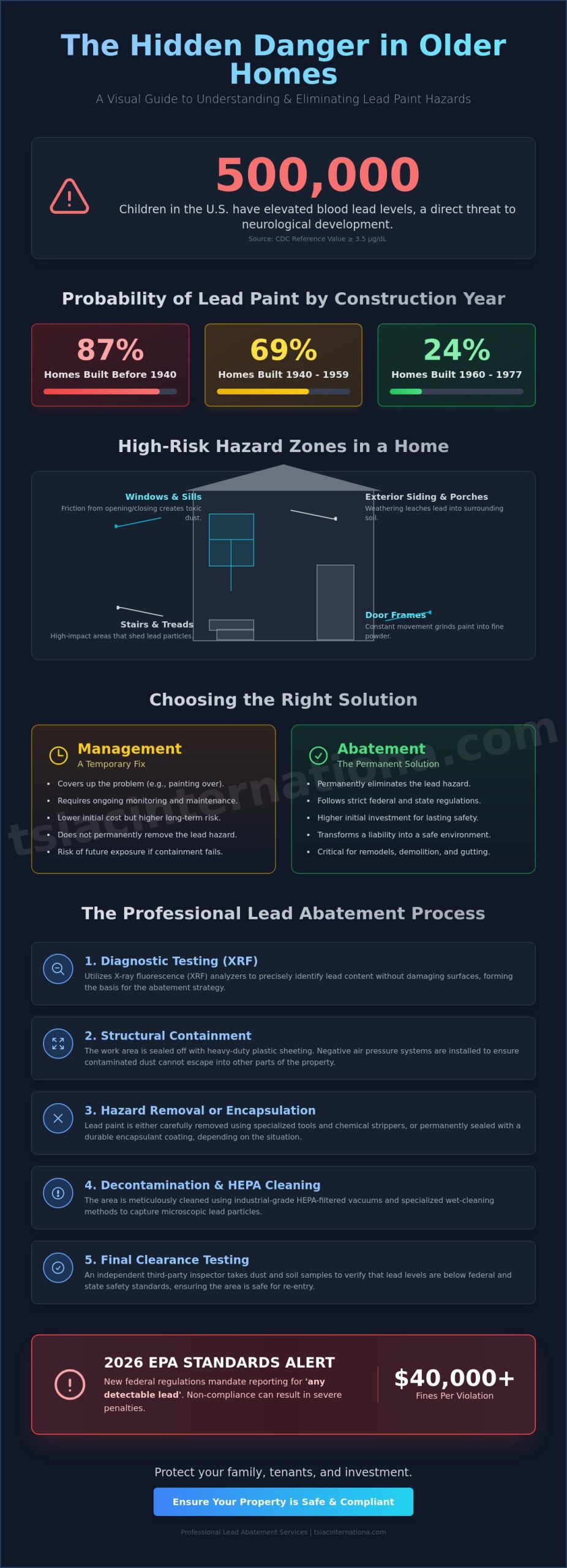
You’ll gain a clear understanding of the 2026 EPA standards, including the strict new “any detectable lead” reporting levels and the $40,000 fines for non-compliance. We’ll outline the professional protocols for lead abatement, from structural containment to final clearance testing, so you can move forward with technical precision. This guide covers everything from the latest dust-lead action levels to the specific methodologies required to transform a structural liability into a safe, compliant environment.

Key Takeaways

  • Understand how property age correlates to toxic exposure risk and why pre-1978 structures require specialized regulatory oversight.
  • Identify the hidden lead paint hazards in older homes that pose significant neurological risks and trigger the latest 2026 EPA reporting standards.
  • Distinguish between temporary management and permanent abatement to select the most secure long-term solution for your building’s health.
  • Explore the professional protocols for site containment, including the use of X-ray fluorescence (XRF) diagnostic testing and negative air pressure systems.
  • Learn why lead remediation is a critical prerequisite for safe selective demolition and commercial interior gutting projects.

Understanding Lead Paint Hazards in Older Homes

Lead-based paint is a heavy-metal additive used extensively in residential construction before 1978 to accelerate drying times and increase the durability of the finish. While it provided a resilient surface, its systemic toxicity eventually outweighed its industrial benefits. The history of lead paint reveals that despite early awareness of its dangers, it remained a standard material for decades. Today, federal safety regulations focus on pre-1978 structures because these properties are the most likely to contain layers of leaded pigment hidden beneath modern coatings.

Managing lead paint hazards in older homes requires a technical distinction between intact and deteriorated conditions. Intact paint that is undisturbed and in good condition doesn’t usually pose an immediate threat. However, paint becomes a hazardous condition the moment it begins to peel, chip, or chalk. This deterioration releases lead-contaminated dust, which is the primary vector for human ingestion. Even paint that appears intact presents a risk on friction surfaces. These are structural components like window sashes or door frames where constant mechanical movement grinds the paint layers into a fine, toxic powder.

Common Locations of Lead in Residential Structures

Windows and sills represent the most significant source of lead dust in a home. The mechanical action of opening and closing a window creates a grinding effect on painted tracks. Door frames and stair treads are also high-impact areas where physical contact frequently sheds microscopic particles. On the exterior, siding and porches are vulnerable to weathering. As exterior paint fails, it leaches lead into the surrounding soil, creating long-term environmental risks for yards and play areas.

The Chemistry of Lead Contamination

Lead is a persistent element that doesn’t biodegrade or lose its toxicity over time. When paint breaks down, lead particles bond tightly to household dust and organic matter in the soil. This chemical stability means contamination can remain active for decades. Homeowners often make the mistake of using standard household vacuums to clean up debris. This is dangerous because most consumer-grade filters can’t trap microscopic lead particles. Instead, the vacuum’s exhaust aerosolizes the dust, spreading lead paint hazards in older homes into the air where they’re easily inhaled. Professional abatement relies on industrial-grade HEPA filtration and specialized wet-cleaning methods to neutralize this chemical bond.

The Health Risks and Statistical Probabilities of Exposure

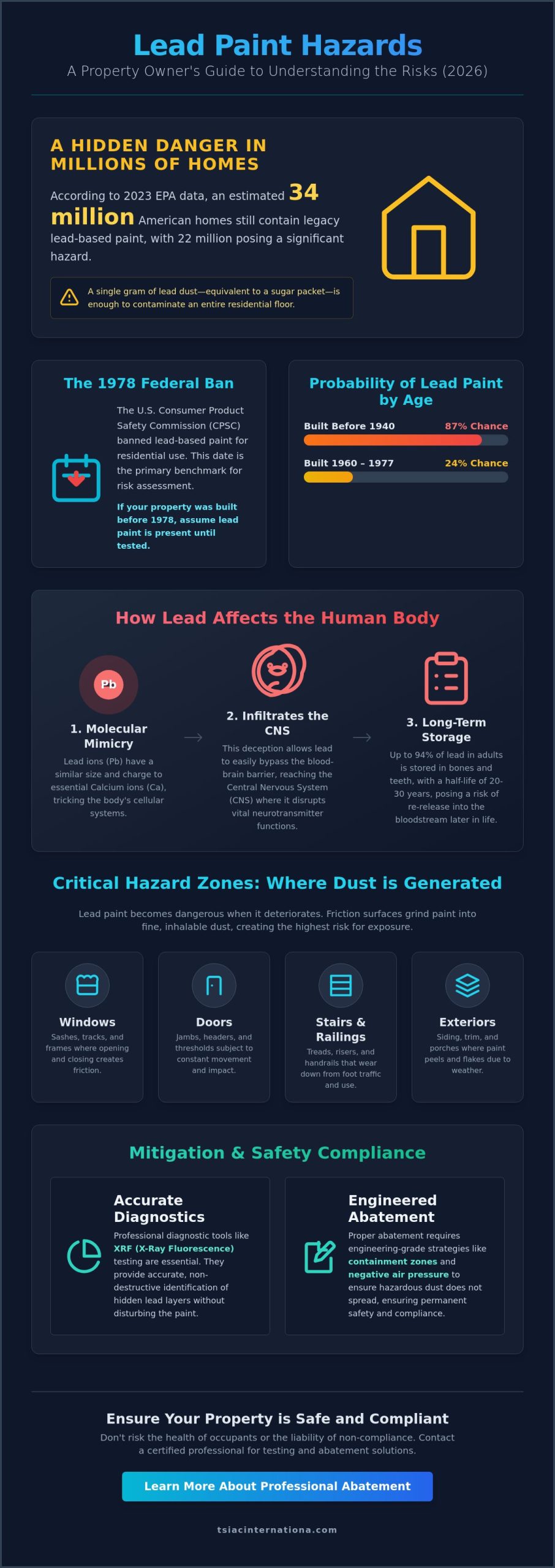
The probability of encountering lead paint hazards in older homes isn’t a matter of speculation; it’s a statistical certainty tied directly to the year of construction. Data indicates that 87% of homes built before 1940 contain lead-based paint. This risk remains high at 69% for structures built between 1940 and 1959, eventually tapering to 24% for those constructed between 1960 and 1977. These numbers represent a significant liability for property owners, particularly when maintenance or renovation disturbs stabilized surfaces. Understanding these probabilities is the first step in determining the necessary level of environmental intervention.

Lead poisoning is uniquely dangerous because of its cumulative nature. The human body doesn’t efficiently expel this heavy metal; instead, it treats lead similarly to calcium, absorbing it into the bloodstream and eventually depositing it into the skeletal system. This means small, repeated exposures to lead dust are just as hazardous as a single high-dose event. While children are the primary focus of safety protocols, adults face severe risks including chronic cardiovascular issues, kidney dysfunction, and compromised reproductive health. Managing these risks effectively requires a commitment to professional lead paint abatement rather than temporary cosmetic fixes.

Vulnerable Populations: Children and Pregnancy

Pregnant women and young children represent the highest risk categories for lead toxicity. Lead is one of the few toxins capable of crossing the placental barrier, meaning maternal exposure directly impacts fetal development. For toddlers, the primary exposure route is the hand-to-mouth pathway. Dust from lead paint hazards in older homes settles on floors and toys, where it’s easily ingested during normal play. Current medical benchmarks from the CDC set the blood lead reference value at 3.5 micrograms per deciliter, a threshold that reflects the modern medical consensus that no level of lead exposure is safe.

Long-term Neurological and Physical Consequences

As a potent neurotoxin, lead disrupts the electrical signaling between neurons. This interference leads to permanent cognitive impairment, reduced IQ, and behavioral disorders that often don’t manifest until years after the initial exposure. Once lead enters the bone structure, it can remain stored for over 20 years, potentially re-entering the bloodstream during periods of high calcium demand. The social cost of this exposure is immense, impacting educational outcomes and long-term economic productivity. If you suspect your property contains deteriorating leaded surfaces, professional lead abatement is the only methodology that ensures permanent risk elimination.

Lead Paint Hazards in Older Homes: A 2026 Guide to Risk and Abatement

Management vs. Abatement: Choosing the Right Path

Choosing between temporary management and permanent removal is a critical decision for property owners. Interim controls, such as specialized cleaning or paint stabilization, are designed to reduce exposure temporarily. They don’t eliminate the source. In contrast, permanent lead abatement involves techniques designed to eliminate the hazard for at least 20 years. While management might seem cheaper initially, it requires ongoing monitoring and doesn’t remove the underlying liability. Abatement is a definitive technical solution that secures the environment once and for all.

Many property owners attempt to handle lead paint hazards in older homes through traditional DIY methods like dry scraping or power sanding. This is a dangerous mistake. These actions create clouds of microscopic dust that settle into carpets and upholstery, often resulting in higher blood lead levels for residents than if the paint had been left alone. The EPA’s 2026 guidance, Protect Your Family from Lead in Your Home, emphasizes that disturbing lead-based paint without professional containment is a primary cause of environmental contamination. Beyond health, there are legal imperatives. Federal law requires the disclosure of known lead hazards before a sale or lease. Property managers who fail to follow the Renovation, Repair and Painting (RRP) Rule face fines of up to $40,000 per violation as of January 2026.

The Fallacy of Simple Encapsulation

Encapsulation involves applying a liquid coating that bonds to the lead paint. While it seems cost-effective, it’s often a temporary fix. If the underlying plaster or wood moisture levels change, the bond fails. This creates a “hidden hazard” during future structural repairs or selective demolition. Workers may unknowingly disturb the toxic layers beneath the encapsulant. Professional abatement remains the only permanent methodology for total risk elimination.

Professional Abatement Methods

Professional teams use several high-precision methodologies to manage lead paint hazards in older homes. Component replacement is often the most effective strategy. This involves removing entire windows or doors and disposing of them as hazardous waste. For historical details that cannot be replaced, we use low-temperature heat guns that soften paint without reaching the 1,100 degrees Fahrenheit threshold where lead vaporizes. Every tool in our inventory is connected to HEPA-shrouded vacuum systems to capture 99.97% of particles at the point of origin, ensuring the work site remains controlled and safe.

The Professional Lead Abatement Process

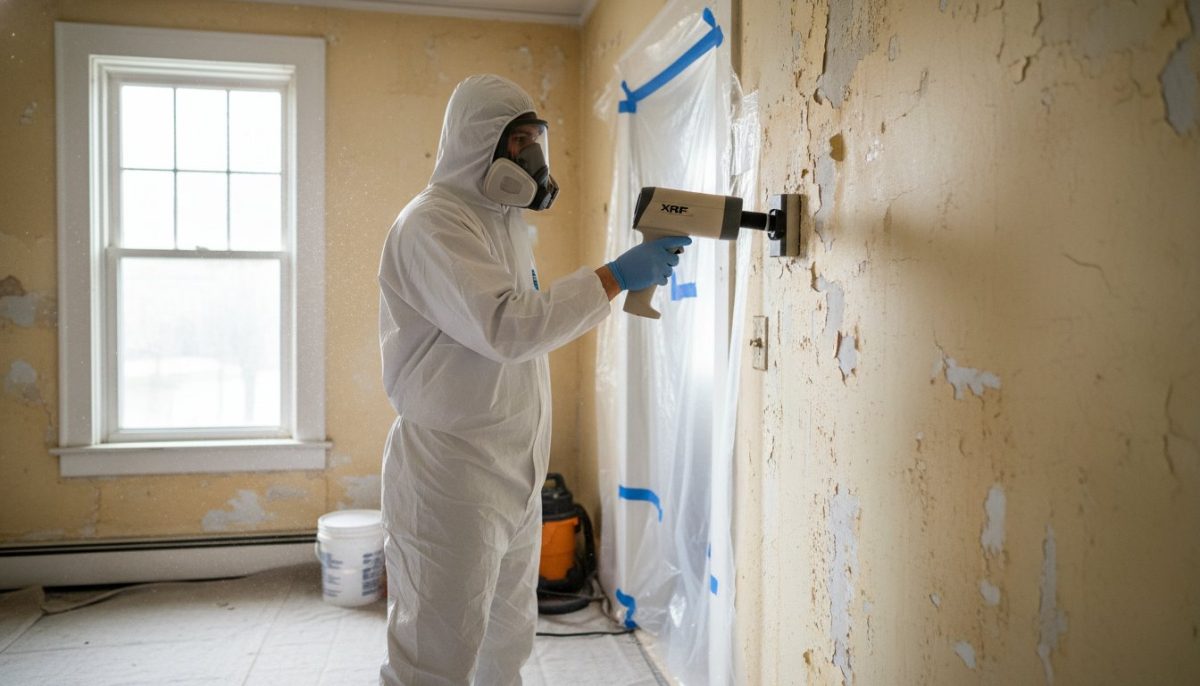
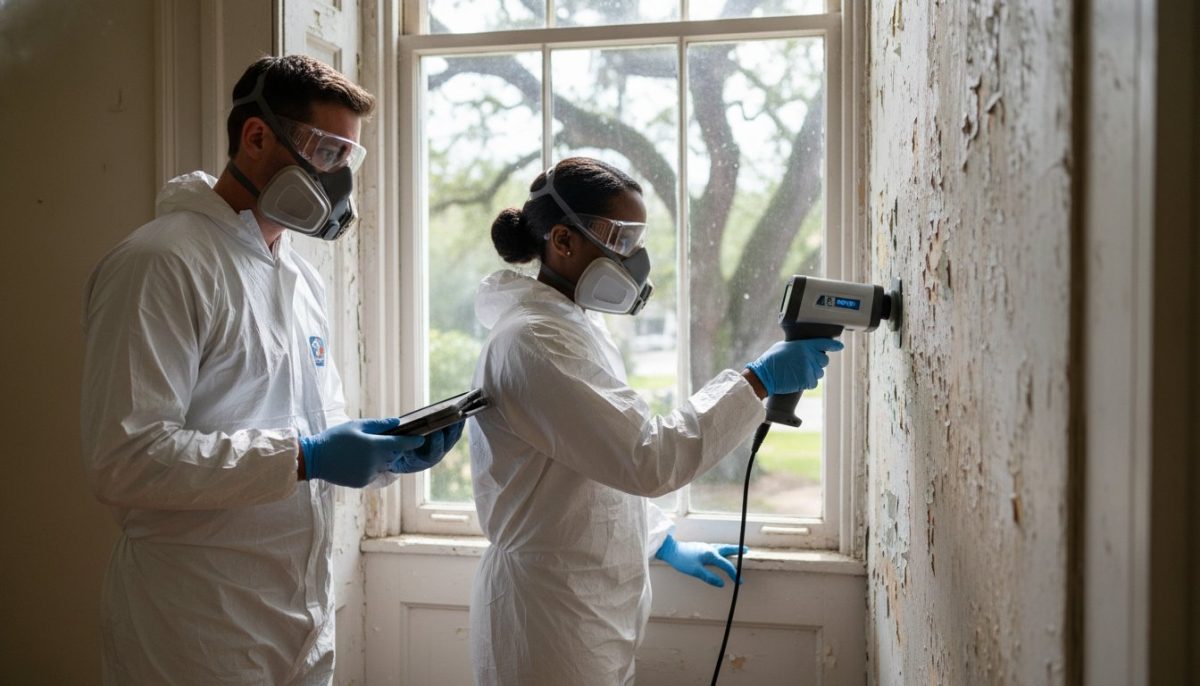
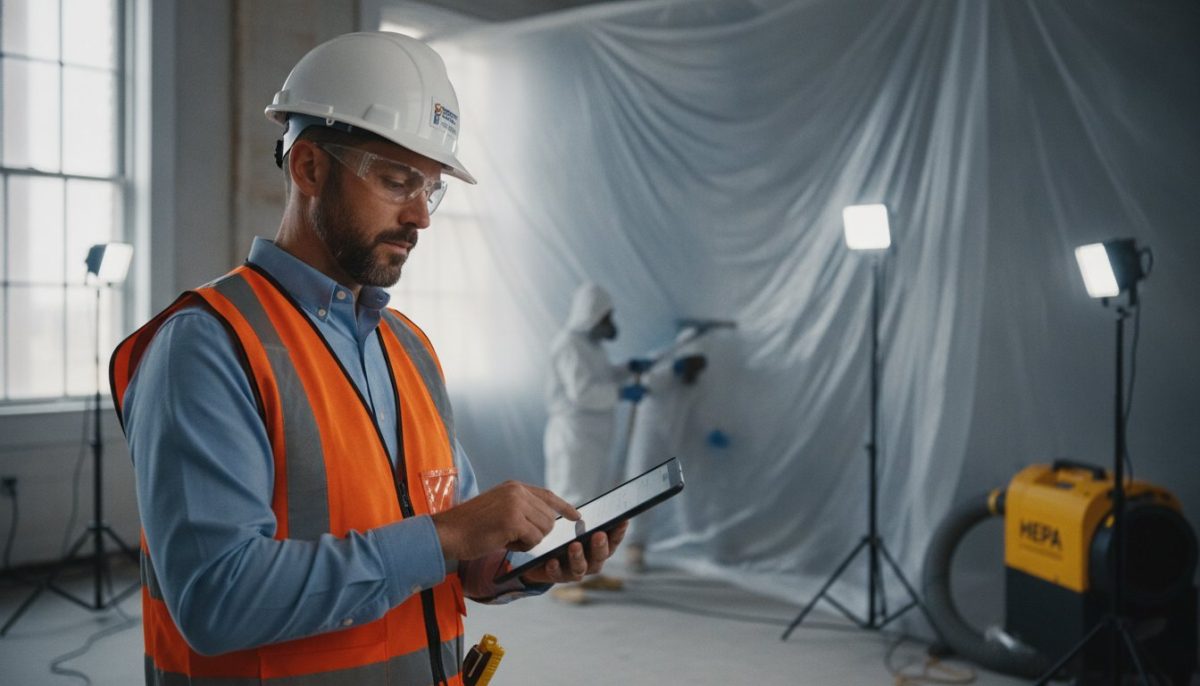
Professional intervention begins with empirical data rather than visual inspection alone. We utilize X-ray fluorescence (XRF) analyzers to identify lead concentrations within paint layers without damaging the structural substrate. This non-destructive testing is followed by dust wipe sampling to establish a baseline of contamination. These diagnostics allow our teams to map lead paint hazards in older homes with surgical precision, ensuring that every toxic surface is identified before the first containment barrier is raised. This methodical approach differentiates professional remediation from general contracting work.

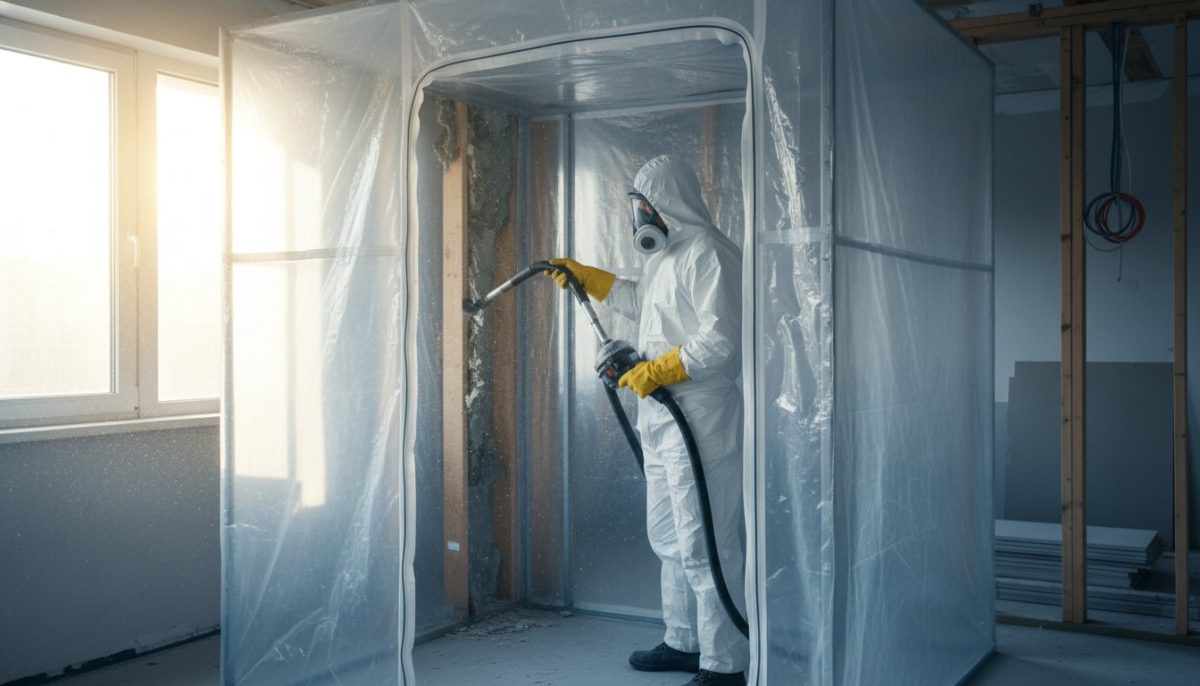
Site containment is the most critical phase of the technical workflow. We isolate the work area using 6-mil polyethylene barriers and heavy-duty adhesive seals to prevent cross-contamination. To manage airborne particles, we establish negative air pressure systems equipped with industrial HEPA filtration. These units pull air from the workspace and scrub it of microscopic lead dust before exhausting it safely. This setup ensures that even during the most intensive removal phases, the rest of the property remains completely isolated from environmental toxins.

Regulatory Compliance and Documentation

Adhering to the EPA Renovation, Repair, and Painting (RRP) Rule is a legal mandate for any project disturbing lead-based paint. Our protocols exceed these requirements by integrating OSHA standards for worker safety, which include mandatory respiratory protection and blood lead level monitoring for all field personnel. We also manage the complex logistics of hazardous waste disposal. Every pound of lead-contaminated debris is documented through strict manifesting and transported to licensed facilities. This documentation provides property owners with a verifiable paper trail of compliance, which is essential for future real estate transactions.

Ensuring a Lead-Safe Worksite

Maintaining a safe environment requires disciplined site management and specific physical techniques. We establish multi-stage decontamination zones where workers must clean their equipment and change out of personal protective equipment (PPE) before exiting the containment area. To suppress dust at the source, we use wet-sanding and misting techniques that keep particles heavy and grounded. Once the removal is complete, we don’t simply walk away. A third-party inspector must conduct final clearance testing, using independent lab analysis to verify that lead levels are below the 2026 EPA thresholds. If you are preparing for a structural renovation, securing a professional lead abatement service is the only way to guarantee a toxic-free result.

Strategic Abatement During Demolition and Gutting

Structural modifications in pre-1978 buildings require a sequential approach that prioritizes environmental safety before any mechanical impact. Executing selective demolition without first neutralizing lead paint hazards in older homes is a significant operational failure. This sequence prevents the uncontrolled release of heavy metal dust into the building’s HVAC systems and structural cavities. By integrating remediation into a commercial interior gutting project, property owners can streamline the renovation timeline while maintaining strict compliance with 2026 safety standards. TSIAC International specializes in this synchronization, ensuring that hazardous material is removed and documented before the gutting begins.

Environmental responsibility is a core component of our technical execution. During large-scale projects, we don’t treat all debris as hazardous waste. Instead, we perform precision segregation to identify non-contaminated materials suitable for our recycling services. This methodical sorting reduces the volume of material sent to specialized landfills and supports sustainable construction practices. Our approach ensures that the management of lead paint hazards in older homes doesn’t come at the expense of broader ecological goals.

Coordinating Abatement with Structural Changes

Blind demolition in older residential buildings often leads to catastrophic environmental contamination. Our demolition processes include a rigorous pre-impact survey to identify lead-coated components that require specialized handling. This foresight protects the local environment and adjacent properties from drifting toxic particles. We employ advanced containment strategies that remain in place until the structural work is complete, providing a continuous shield against exposure for both workers and the community.

Why Expertise Matters in Large-Scale Projects

TSIAC International brings over 15 years of experience to high-risk environments where technical precision is non-negotiable. Managing complex hazardous material abatement requires more than just certification; it demands a deep understanding of structural integrity and containment physics. We provide property owners with the security of fixed-price contracts for comprehensive remediation, eliminating the financial uncertainty often associated with environmental cleanup. This disciplined methodology ensures that every project meets the highest standards of safety and regulatory documentation. The first step toward a safe, compliant renovation is a professional site assessment to quantify existing risks and develop a roadmap for permanent removal.

Securing Your Property and Health for the Future

Effectively neutralizing lead paint hazards in older homes requires a transition from temporary management to permanent, technical solutions. We’ve established that the risks associated with pre-1978 structures are both statistically significant and medically severe. Relying on simple cosmetic fixes or uncertified contractors creates long-term liability and environmental contamination. Professional abatement is the only methodology that ensures your property remains compliant with 2026 EPA standards while protecting the neurological health of its occupants.

TSIAC International offers a disciplined approach rooted in 15+ years of hazardous material experience. Our teams integrate EPA-certified abatement protocols with comprehensive structural demolition and remediation services to handle even the most complex technical challenges. We don’t just clear the surface; we secure the entire structural environment through rigorous containment and documented disposal. Contact TSIAC International for Professional Abatement Services to begin your site assessment. Taking these professional steps today provides the certainty and safety your property deserves for the future.

Frequently Asked Questions

How do I know if my older home has lead paint?

Professional testing using XRF (X-ray fluorescence) technology is the only definitive way to identify lead presence without damaging your walls. While “alligatoring” paint patterns are a common visual indicator in pre-1978 structures, you’ll need lab-verified dust wipes or X-ray diagnostics for technical accuracy. Relying on visual inspection alone is insufficient for regulatory compliance or safety planning.

Is lead paint dangerous if it is not peeling or chipping?

Yes, lead paint remains a significant threat even when it appears intact, particularly on friction surfaces like window sashes and door frames. The mechanical action of opening a window grinds the leaded layers into microscopic dust that settles into carpets and air ducts. Structural settling and moisture changes can also cause stabilized paint to release toxic particles into the living environment.

Can I remove lead-based paint myself if I wear a mask?

No, you shouldn’t attempt DIY removal because standard consumer masks don’t filter microscopic lead particles effectively. Traditional sanding or scraping aerosolizes the lead, creating a toxic cloud that standard household vacuums will simply spread throughout the house. Professional abatement requires industrial HEPA filtration and negative air pressure systems to keep the environment safe during the removal process.

What is the EPA RRP rule and does it apply to my home?

The Renovation, Repair, and Painting (RRP) rule mandates that any contractor disturbing lead-based paint in a pre-1978 home must be EPA-certified and follow specific work practices. This federal law applies to almost all residential properties and child-occupied facilities. As of 2026, enforcement is strict to prevent the accidental spread of lead paint hazards in older homes during routine renovations.

How long does a professional lead abatement project take?

The timeline for a professional project depends on the scope of work and the chosen remediation methodology. A selective component removal project might conclude in three to five days. However, a comprehensive gutting and remediation of a large historical property can take several weeks of disciplined technical execution. Our crews provide a specific schedule after the initial site assessment is complete.

Does removing lead paint increase my property value?

Removing lead paint increases property value by permanently eliminating a major environmental and legal liability. In the 2026 real estate market, lead-free certification is a powerful selling point that attracts families and reduces the buyer’s future renovation risks. It transforms a structural liability into a certified safe asset, which often results in faster sales and higher offers.

What happens if a child is exposed to lead dust during a renovation?

If you suspect a child has been exposed, consult a pediatrician immediately for a blood lead level (BLL) test. Lead is a systemic toxin that accumulates in the body, so early medical intervention is critical to assess the risk of neurological damage. You should also halt all construction work until a professional team can assess the site for lead paint hazards in older homes.

How is lead-contaminated waste disposed of safely?

Contaminated waste is sealed in heavy-duty 6-mil polyethylene bags and marked with specific hazardous material labeling. Our teams manage the legal manifesting and transport of this debris to licensed hazardous waste landfills that are equipped to handle toxic heavy metals. This ensures that the lead removed from your home doesn’t leach into the local soil or groundwater systems.

Asbestos Containing Materials List: The 2026 Property Owner’s Guide to Identification

If you’re planning a renovation or structural update in 2026, could the very walls of your property be harboring a silent regulatory and health…

If you’re planning a renovation or structural update in 2026, could the very walls of your property be harboring a silent regulatory and health liability? Most property owners feel a justified sense of anxiety when facing potential hazardous materials, especially with the EPA’s 2024 ban on chrysotile asbestos and the high-stakes legal challenges currently moving through the courts. It’s difficult to keep track of shifting phase-out deadlines and even harder to know which legacy products actually pose a risk during an interior gutting or selective demolition project. You don’t have to guess when it comes to the safety of your occupants or the legal standing of your property.

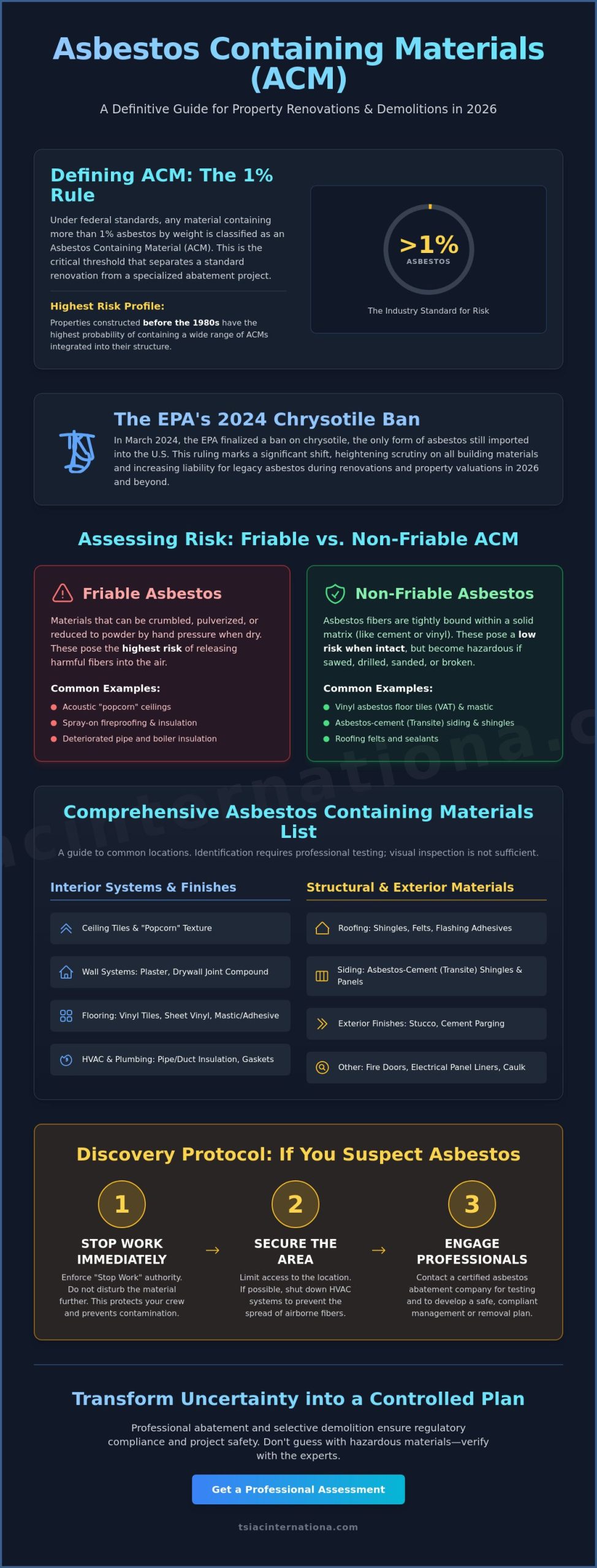
We recognize that the fear of accidental exposure and the complexity of modern compliance can be a significant burden. This guide provides a definitive asbestos containing materials list to help you identify hazards with methodical precision. You’ll learn to distinguish between high-risk friable insulation and non-friable products while gaining a clear roadmap for professional management. By following these established technical protocols, you can transform uncertainty into a controlled, professional plan for safe material removal and site preparation.

Key Takeaways

  • Understand the technical 1% threshold that defines Asbestos Containing Materials (ACM) and why historical building practices necessitate rigorous inspection.
  • Utilize our comprehensive asbestos containing materials list to identify hidden hazards across residential and commercial structures before disturbing any surfaces.
  • Learn to evaluate material risk by distinguishing between friable and non-friable states, which dictates the required containment and safety protocols.
  • Establish clear “Stop Work” authority and discovery protocols to ensure immediate crew safety when suspicious materials are encountered during a project.
  • See how professional abatement and selective demolition work together to maintain regulatory compliance while keeping your project timeline on track.

Defining Asbestos Containing Materials (ACM) in 2026

In the technical sector of hazardous material management, precision is the baseline for safety. Defining Asbestos Containing Materials (ACM) requires a strict adherence to regulatory thresholds. Under current federal standards, any material containing more than 1% asbestos by weight is classified as ACM. This mineral was once celebrated as a miracle component due to its exceptional tensile strength and resistance to heat and chemical erosion. It became a staple in fireproofing and thermal insulation until the health risks became undeniable. Even in 2026, property owners must contend with this legacy. Buildings constructed prior to the 1980s remain the highest priority for inspection because they often contain a complex asbestos containing materials list integrated into their structural fabric.

The 1% threshold is the industry standard for risk. It’s the line between a standard renovation and a specialized abatement project. Property owners in 2026 must understand that legacy asbestos is the primary driver of risk. The EPA’s recent actions have effectively closed the door on new chrysotile use, but the millions of tons already installed in our infrastructure don’t simply vanish. Every structural update requires a methodical assessment to ensure these fibers aren’t released into the environment.

The 2024 EPA Chrysotile Ban and Beyond

The EPA’s March 2024 ruling was a watershed moment for the industry. It finalized the ban on chrysotile asbestos, which was the only form still being imported into the United States. While this rule establishes phased deadlines, such as the five year phase out for asbestos diaphragms in the chlor-alkali industry, its effect on property management is immediate. In 2026, property valuations and renovation feasibility studies must account for these stricter standards. Modern imports are now under intense scrutiny to ensure they don’t contain even trace amounts that could trigger liability during future maintenance.

Why Identification is Mandatory for Demolition

Identification isn’t optional. It’s a legal prerequisite. Before any structural disturbance begins, OSHA and EPA regulations mandate a thorough asbestos survey. If you’re planning an interior gutting or selective demolition project, an unintentional disturbance of ACM can lead to catastrophic air quality issues and massive fines. Professional protocols require that we identify every item on the asbestos containing materials list before the first tool is used. This methodical approach protects both the site crew and the long term value of the asset. We don’t guess with hazardous materials; we verify through scientific testing and documented site history.

The Comprehensive Asbestos Containing Materials List

Identifying hazardous substances in a building is a technical exercise that goes far beyond visual observation. Many modern materials mimic the appearance of legacy products, making it impossible to declare a site “asbestos-free” without laboratory verification. To assist property owners in their risk assessment, we have organized The Comprehensive Asbestos Containing Materials List into functional categories based on their location within a structure. This systematic approach is essential during the pre-demolition phase to ensure no hidden fibers are disturbed. Relying on sight alone is a liability; many materials, such as certain types of plaster or insulation, look identical to safe alternatives but contain significant concentrations of chrysotile or amosite fibers.

Structural and Exterior Materials

Exterior surfaces often utilized asbestos for its weatherproofing capabilities and fire resistance. Asbestos-cement products, commonly known as Transite, were used for siding and roofing shingles because of their extreme durability. While these are non-friable when intact, they become dangerous if they’re broken, drilled, or weathered. Property owners should also inspect roofing felts, flashing adhesives, and older stucco applications. These materials often contain fibers to improve structural integrity against the elements, and their removal requires specific containment protocols to prevent environmental contamination.

Interior Finishes and Decorative Elements

The interior of a building holds the highest density of items on a typical asbestos containing materials list. Vinyl composition tile (VCT) is a frequent culprit, but the greater risk often lies in the “black mastic” adhesive used to secure it. Popcorn ceiling textures and acoustic tiles were industry standards for sound dampening and fireproofing through the late 20th century. Perhaps the most overlooked risk is drywall joint compound. In many older structures, the compound used to finish walls contains asbestos. This means a seemingly simple wall removal can lead to widespread fiber release if not handled by professionals.

Mechanical and Thermal Systems

Mechanical rooms are high-risk zones that require methodical inspection. Thermal system insulation (TSI) on boilers and pipe runs is often highly friable. HVAC systems may contain asbestos-lined duct wrap or furnace gaskets that can distribute fibers throughout the building if disturbed. Even electrical systems aren’t exempt. Panel partitions, cloth wire insulation, and arc chutes frequently appear on a professional asbestos containing materials list. Because these systems are often integrated into the building’s core, they require a strategic approach during selective demolition to maintain safety.

Misidentifying these materials can lead to project shutdowns and health liabilities. We recommend that property owners treat any suspicious material as hazardous until a certified lab confirms otherwise. Taking a disciplined approach to identification ensures that your project remains compliant with 2026 regulatory standards while protecting everyone on the job site.

Asbestos Containing Materials List: The 2026 Property Owner’s Guide to Identification

Assessing Risk: Friable vs. Non-Friable Asbestos

Risk management in the hazardous materials sector begins with a technical assessment of friability. Friability serves as the primary metric for airborne fiber risk assessment because it quantifies the ease with which hazardous fibers can enter the breathing zone. By definition, a friable material is one that can be crumbled, pulverized, or reduced to powder by simple hand pressure when dry. This physical state dictates the “Hazard Class” of the material and determines the level of containment required by law. When reviewing an asbestos containing materials list, property owners must look beyond the presence of the mineral and evaluate the stability of the matrix holding the fibers.

Many owners fall into a “false sense of security” regarding non-friable materials like vinyl floor tiles or cement siding. While these products are relatively safe when left undisturbed, their physical state changes immediately upon mechanical impact. Grinding, sawing, or crushing during an interior gutting project can transform a stable Category I material into a friable hazard. This transition is why professional selective demolition protocols treat all suspect materials with extreme caution. Before proceeding with any work, establishing clear Discovery Protocols: What to Do is essential for protecting the health of the crew and future occupants.

Category I and II Non-Friable Materials

Regulatory bodies distinguish between two categories of non-friable ACM. Category I materials include packings, gaskets, resilient floor coverings, and asphalt roofing products. These are generally durable and don’t release fibers easily. Category II materials encompass everything else, such as asbestos-cement (Transite) products. While Category II materials are more rigid, they’re still susceptible to becoming airborne if they’re crushed or subjected to intense weathering. Deciding whether to leave these in place during maintenance depends on their condition; however, identifying items on the asbestos containing materials list as non-friable doesn’t exempt them from strict disposal regulations during a full structural demolition.

High-Risk Friable Materials

Friable materials represent the highest level of risk in commercial and industrial structures. Spray-applied fireproofing is perhaps the most dangerous form of ACM because it’s often loosely bonded and can be easily disturbed by air currents. Thermal system insulation (TSI) and pipe lagging are also high-priority hazards. These materials require Class I abatement protocols, which involve the use of negative air pressure, specialized HEPA filtration systems, and rigorous wet methods to ensure fibers don’t migrate. Because there’s no safe level of exposure, managing these materials requires a disciplined, technical approach that prioritizes total containment over convenience.

Discovery Protocols: What to Do When You Suspect Asbestos

If you uncover suspicious material during an interior gutting or concrete removal project, the first step is non-negotiable: stop all work immediately. This “Stop Work” authority is a critical safety protocol that prevents the further disturbance of fibers and protects both your crew and the building’s occupants. Suspicious materials should always be treated as hazardous until proven otherwise by a certified industrial hygienist (CIH) or a licensed asbestos inspector. We strongly discourage DIY sampling. Disturbing a material to take a sample without proper containment can release millions of microscopic fibers into the air. These fibers are often drawn into the HVAC system, causing cross-contamination throughout the entire facility and significantly increasing the scope of the eventual cleanup.

Professional discovery protocols ensure that the site remains stable while a technical assessment is performed. Once the area is secured, an inspector will conduct a thorough walkthrough to update your asbestos containing materials list. This process isn’t just about safety; it’s about maintaining the legal integrity of your project. In 2026, regulatory scrutiny is at an all-time high, and documented discovery protocols are your best defense against liability and project delays.

The Asbestos Survey and Testing Process

A professional survey involves methodical bulk sampling analyzed in a laboratory. Inspectors typically use Polarized Light Microscopy (PLM) for standard building materials. However, Transmission Electron Microscopy (TEM) is often required for more complex matrices, such as floor tiles or thin-film coatings, where fibers are too small for PLM to detect. The resulting survey report provides a quantified asbestos containing materials list that acts as the foundation for your project’s safety plan. This report is essential for building a compliant asbestos removal south carolina strategy that meets all current DHEC and EPA standards.

Developing an Abatement Strategy

Once the survey is complete, you must choose between abatement and encapsulation. While encapsulation may be a viable short-term fix for materials in good condition, full abatement is the only permanent solution for a total structural demolition. Budgeting for this phase must be integrated into the early planning stages of your project to avoid surprise costs. If your property was constructed before 1978, we also recommend integrating lead abatement into the workflow. Combining these services reduces mobilization costs and ensures a cleaner transition to the recycling and demolition phases.

If you’ve encountered suspicious materials on your job site, contact our expert team for a professional assessment and asbestos abatement services to keep your project moving forward safely.

Professional Abatement: Safely Managing Asbestos with TSIAC

Professional management of hazardous materials requires more than just equipment. It demands a deep, technical understanding of material science and regulatory shifts. With 15 years of experience in the field, we’ve developed a methodology that prioritizes site stability and environmental safety. When we approach a project, we don’t view abatement as an isolated task. Instead, we integrate it directly with our structural and selective demolition workflows. This unified approach ensures that every item on the asbestos containing materials list is neutralized before structural disturbances begin, reducing the risk of project delays and health liabilities.

Our commitment extends to environmental stewardship. Once the abatement phase is complete and the site is cleared, we prioritize recycling wood, metal, and plastic components. This reduces the burden on landfills and aligns with modern sustainability goals. We handle the entire compliance chain with methodical precision:

  • Establishing airtight containment and negative pressure zones.
  • Utilizing HEPA-filtered air scrubbing systems to capture microscopic fibers.
  • Securing independent air clearance testing to verify site safety.
  • Providing documented disposal manifests for all hazardous waste.

Neutralizing the asbestos containing materials list is the critical first step in a successful redevelopment project. You’ll receive a transparent record of every action taken on your property, ensuring that the legacy of hazardous materials doesn’t hinder your future plans.

Comprehensive Remediation Solutions

We specialize in commercial interior gutting where hazardous ACM must be removed before any architectural elements are stripped. In selective demolition projects, our teams employ specialized containment to isolate work zones, allowing other areas of the building to remain unaffected. We provide a single-source solution for hazardous material abatement, including lead and mold remediation. This eliminates the need for multiple contractors and streamlines the communication process for property owners.

Next Steps for Your Project

Moving from identification to action requires a clear, fixed-price contract. We provide detailed estimates for structural demolition and abatement so you can budget with confidence. To prepare for our site arrival, property owners should ensure all utilities are properly disconnected and site access is secured. Once the project concludes, we provide a final clean certificate and all necessary documentation for future development or occupancy. This paperwork serves as your guarantee that the property meets all safety standards.

Securing Your Property’s Future Through Methodical Abatement

Managing a 2026 construction project requires more than a simple walkthrough. You’ve seen that a definitive asbestos containing materials list is the foundation of a safe site, allowing you to distinguish between stable non-friable products and high-risk friable hazards. By following established discovery protocols and prioritizing laboratory verification over visual guesswork, you protect your investment and your people from regulatory and health liabilities.

TSIAC International brings over 15 years of industry experience to every project, integrating specialized abatement with comprehensive structural and selective demolition expertise. Our commitment to environmental responsibility means we don’t just remove hazards; we actively recycle wood, metal, and plastic on every site to minimize the impact on our landfills. Secure Your Site with TSIAC International’s Professional Abatement Services and move forward with the confidence that your project is built on a clean, compliant foundation.

Frequently Asked Questions

Is there a safe level of asbestos exposure for building occupants?

No safe level of asbestos exposure has been established by the scientific community. Even minimal inhalation of microscopic fibers can lead to severe respiratory diseases decades after the initial contact. This reality makes the systematic identification of every item on an asbestos containing materials list a critical safety requirement. Property owners must prioritize total containment and professional removal over attempting to manage exposure levels.

Can I identify asbestos just by looking at a material?

Visual identification is technically impossible for the vast majority of building products. While some specific materials like Transite piping are recognizable to experienced professionals, most hazardous fibers are microscopic and embedded within a stable matrix. You must rely on laboratory analysis, such as Polarized Light Microscopy, to confirm the mineral’s presence. It’s a dangerous liability to assume a material is safe simply because it looks like modern drywall or flooring.

What should I do if I accidentally disturbed asbestos-containing materials?

Stop all work immediately and evacuate the area to prevent further fiber release. You should shut down the HVAC system to ensure that airborne particles don’t migrate to other parts of the building. Seal the entry points to the affected room with plastic sheeting and contact a certified professional for air quality testing. Don’t attempt to clean the debris with a standard vacuum, as this will only distribute the fibers more widely.

Does the 2024 EPA ban mean all asbestos is now illegal to have in a building?

The 2024 EPA ban specifically targets the ongoing use and import of chrysotile asbestos; it doesn’t mandate the immediate removal of all legacy materials. Existing asbestos can legally remain in a structure as long as it’s in good condition and remains undisturbed. However, this ruling increases the regulatory pressure to identify and remove these materials during any planned structural updates or selective demolition projects to ensure long-term compliance.

How much does professional asbestos abatement typically cost?

Abatement costs are determined by technical factors such as the material’s friability, its location, and the total square footage requiring containment. Removing friable pipe insulation in a confined basement involves different specialized equipment than removing non-friable floor tiles in an open warehouse. Property owners should request a comprehensive site assessment to understand their specific budgetary requirements. Investing in professional abatement prevents the far greater costs associated with environmental fines and project shutdowns.

Is asbestos only found in old insulation and floor tiles?

Asbestos is present in thousands of products beyond the most commonly known insulation and tiles. It’s frequently found in drywall joint compounds, roofing adhesives, electrical panel partitions, and even window glazing. Our asbestos containing materials list highlights that these fibers were used in mechanical, structural, and decorative elements throughout the 20th century. Any property built before the late 1980s likely contains asbestos in multiple, often overlooked, applications.

Can I sell a property that contains asbestos-containing materials?

You can sell a property containing asbestos, but you’re generally required by law to disclose its presence to potential buyers. Failure to disclose known hazardous materials can lead to significant legal liabilities and post-sale litigation. Providing a professional asbestos survey report can build trust with buyers by demonstrating that the risks are fully identified and manageable. Many commercial buyers expect to find these materials and will factor the abatement into their renovation budgets.

What is the difference between an asbestos survey and an asbestos abatement plan?

An asbestos survey is a diagnostic document used to identify the location, type, and quantity of hazardous materials within a building. An abatement plan is a tactical roadmap that outlines the specific engineering controls, safety measures, and disposal protocols required for safe removal. The survey identifies the hazards, while the abatement plan explains how a professional crew will neutralize them. Both documents are essential for maintaining a compliant and safe job site.

What to Do When You Uncover Asbestos During Renovation: A 2026 Safety Protocol

Approximately 40,000 Americans die each year from asbestos-related illnesses; a statistic that transforms a routine site inspection into a…

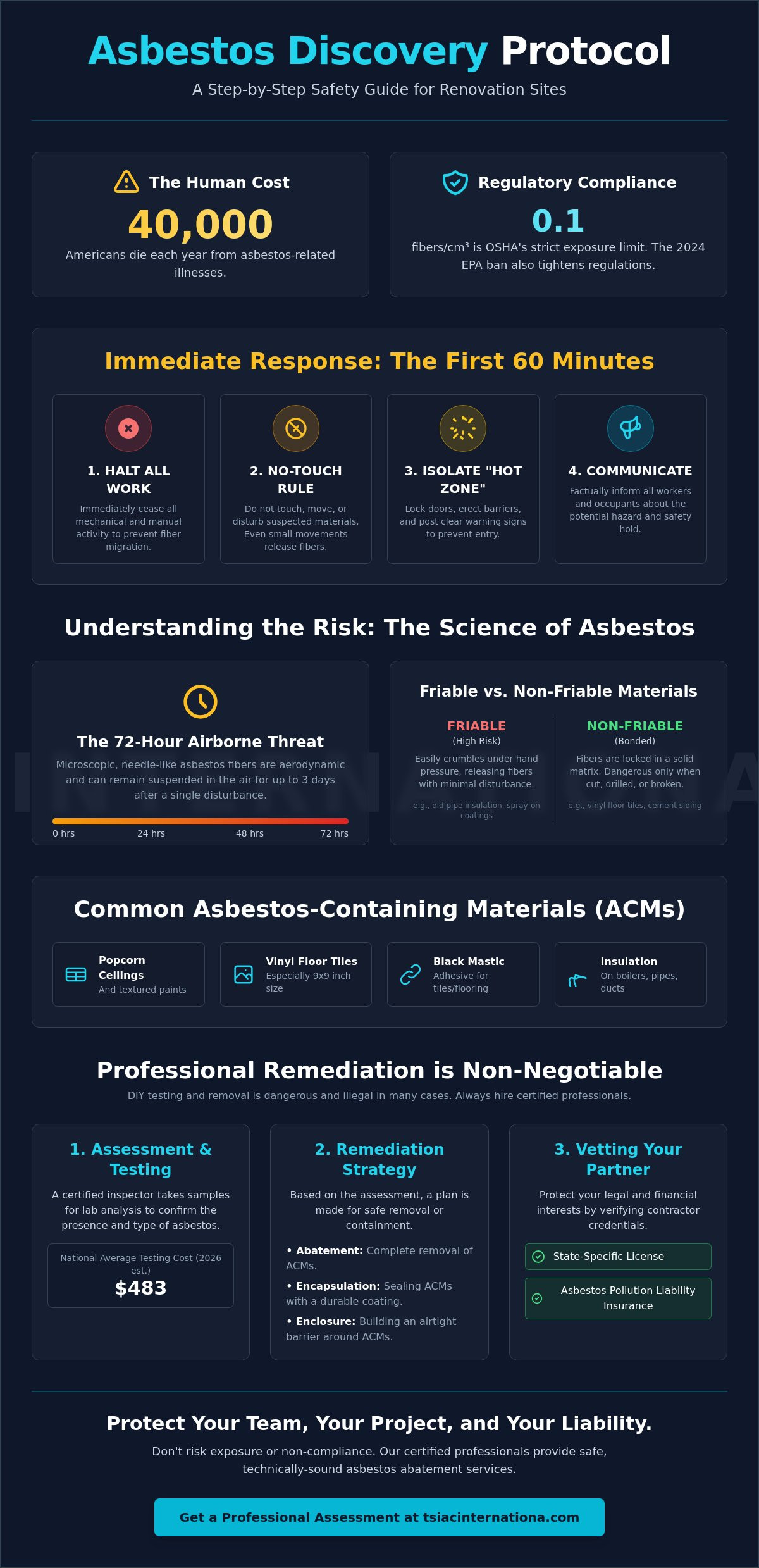
Approximately 40,000 Americans die each year from asbestos-related illnesses; a statistic that transforms a routine site inspection into a high-stakes safety event. It’s natural to feel overwhelmed by the threat of toxic exposure and the potential for significant budget disruptions. We understand that you need a plan that prioritizes safety without abandoning project logic. This definitive guide explains exactly what to do when you uncover asbestos during renovation to ensure your site remains compliant with the 2024 EPA chrysotile ban and OSHA’s strict 0.1 fiber per cubic centimeter exposure limit.

We’ll replace uncertainty with engineering precision. You’ll learn the immediate containment steps required to protect occupants, the breakdown of 2026 testing costs which currently average $483 nationally, and the technical requirements for certified abatement. We’ll also outline how to navigate federal NESHAP trigger levels so you can resume your structural goals with total confidence. This protocol provides the technical framework to manage legacy materials while maintaining the integrity of your workspace and your legal standing.

Key Takeaways

  • Immediate cessation of all mechanical and manual activity is the only way to prevent hazardous fiber migration within the first 60 minutes of discovery.
  • Master the critical technical steps of what to do when you uncover asbestos during renovation to ensure your site aligns with 2026 EPA and OSHA safety standards.
  • Identify the differences between friable and non-friable materials to understand why disturbed fibers can remain airborne for up to 72 hours.
  • Compare professional remediation strategies, such as complete surgical abatement versus industrial-grade encapsulation, to determine the safest path for your project.
  • Secure your legal and financial interests by vetting contractors for state-specific licenses and specialized asbestos pollution liability insurance.

Immediate Response Protocol: The First 60 Minutes After Discovery

The moment a crew member identifies a suspicious material, the renovation must transition from a construction phase to a hazardous material containment phase. Halt all mechanical and manual activity within the immediate vicinity. Whether you’re performing selective demolition or a full interior gutting, the vibration from power tools or even the draft from a swinging sledgehammer can mobilize microscopic particles. Understanding what to do when you uncover asbestos during renovation starts with a complete work stoppage to prevent further degradation of the material.

Adhere strictly to the “No-Touch” Rule. Asbestos fibers are often invisible to the naked eye; they’re measured in microns and possess a jagged physical structure that allows them to remain suspended in the air for up to 72 hours. Attempting to move a piece of broken tile or a clump of “popcorn” ceiling texture increases the fiber concentration exponentially. To grasp the severity of this risk, professionals often study The Science of Disturbed Asbestos, which details how these minerals break into thin, durable filaments. Isolate the “Hot Zone” by locking doors and posting clear, technical signage to prevent unauthorized entry.

Communicate the discovery to all occupants and workers immediately. Avoid sensationalist language. Use a factual, engineering-based approach: state that a potential Asbestos-Containing Material (ACM) has been identified and that the site is now under a safety holding pattern. This transparency maintains trust while ensuring no one accidentally enters the contaminated area.

Securing the Airflow and Environment

The most common error in discovery is leaving the HVAC system running. Forced-air units act as distribution engines for hazardous fibers, pushing them into ductwork and unaffected rooms. Shut down the entire climate control system. Seal all supply and return vents using 6-mil polyethylene sheeting and industrial-grade tape. Don’t use a standard shop-vac or household vacuum on suspicious debris. These machines lack the specialized HEPA filtration required to trap asbestos; they’ll simply exhaust the fibers back into the room, creating a much larger remediation problem.

Personnel Decontamination Basics

If workers were in direct contact with dust, they mustn’t leave the site in contaminated clothing. Establish a temporary clean zone at the perimeter of the Hot Zone. Personnel should carefully remove outer garments and place them in double-layered hazardous waste bags for disposal. Use wet wipes or a damp cloth to clean any exposed skin before they transition to a non-contaminated area. This disciplined approach prevents cross-contamination and protects the workers’ homes and families from secondary exposure.

Understanding the Risk: The Science of Disturbed Asbestos

Once you understand what to do when you uncover asbestos during renovation, the next step is recognizing why the danger persists even after tools are powered down. Asbestos fibers are aerodynamic anomalies. Due to their microscopic mass and needle-like geometry, they don’t settle like common sawdust. They remain suspended in the air for up to 72 hours, which means a disturbance on a Monday morning can still pose a severe inhalation risk on a Wednesday afternoon. Current 2026 safety standards prioritize zero-exposure thresholds because leading health agencies, including the EPA and OSHA, maintain that no level of exposure is entirely safe.

The technical risk level of a material is determined by its physical state. Friability is the tendency of a material to crumble under hand pressure, releasing fibers. Highly friable materials, such as thermal system insulation found on old boilers, pose an immediate threat because they’re already in a state of decay. Conversely, “bonded” materials like vinyl floor tiles are less hazardous while intact, but they become dangerous the moment mechanical force is applied. If your project involves a complex interior gutting, you must assume all suspicious materials will become friable during the demolition process.

Common Residential and Commercial Culprits

In structures built before 1980, asbestos-containing materials are ubiquitous. Popcorn ceilings and textured paints were frequently used for their acoustic properties and fire resistance. Below the surface, 9×9 inch Vinyl Asbestos Tiles (VAT) often hide a secondary threat: the black mastic adhesive used to secure them. This mastic often contains chrysotile asbestos, which accounted for approximately 95% of asbestos use in the 20th century. Identifying these materials early and following a strict Immediate Response Protocol prevents the accidental contamination of the entire building envelope.

The ‘Invisible Threat’ Mechanism

The primary danger of asbestos is its invisibility. You can’t see, smell, or taste hazardous concentrations, even when they exceed the OSHA permissible exposure limit of 0.1 fibers per cubic centimeter. The transformation from a safe, “intact” state to a lethal airborne state happens during routine tasks like drilling, sanding, or sawing. These actions pulverize the mineral matrix, releasing millions of microscopic filaments into the breathing zone. Because these fibers are small enough to bypass the body’s natural respiratory filters, they lead to long-term illnesses that claim the lives of roughly 40,000 Americans annually according to April 2026 data.

What to Do When You Uncover Asbestos During Renovation: A 2026 Safety Protocol

Professional Assessment vs. DIY Testing Risks

The decision of how to verify the presence of asbestos often determines the project’s legal and safety trajectory. While online forums frequently suggest hardware store test kits, these DIY methods introduce unacceptable variables into a controlled environment. The act of sampling, specifically cutting or scraping a piece of material, is a disturbance event that can release millions of fibers without the benefit of negative pressure containment. DIY kits often yield false negatives because of poor sampling technique or limited laboratory sensitivity. When determining what to do when you uncover asbestos during renovation, professional assessment is the only method that provides a legally defensible chain of custody.

As of April 2026, the national average cost for a professional asbestos test is $483, with physical sample testing typically ranging from $250 to $776. This investment covers the expertise of a Certified Asbestos Inspector who understands the complex federal and state-level trigger levels. For instance, many states require specific certifications for inspectors working on public and commercial buildings where NESHAP thresholds apply. A professional ensures the sampling process doesn’t become the very source of contamination you’re trying to avoid by following rigorous engineering controls during the collection phase.

Commercial properties face even stricter requirements regarding the chain of custody. If you’re managing a site involving selective demolition, a paper trail from a NVLAP-accredited laboratory is mandatory for regulatory compliance. Without this, you risk heavy fines and potential litigation if workers are exposed to unidentified hazards. Air testing, which costs between $200 and $800, provides the empirical data needed to prove the site is safe for re-entry. It’s a technical safeguard that protects both human health and the project’s financial stability.

What Happens During a Professional Inspection?

An inspector begins with a visual survey to map all Suspect Asbestos-Containing Materials (SACM). They use wet-misting techniques to saturate the sample area, preventing fiber release during extraction. They’ll also evaluate the current fiber count in the environment through air clearance testing. This data is critical for choosing between various Remediation Strategies: Abatement, Encapsulation, and Enclosure. The final report provides a detailed inventory of all hazardous materials discovered on-site.

Understanding Lab Results: PLM vs. TEM

Laboratory analysis follows two primary protocols. Polarized Light Microscopy (PLM) is the standard for bulk material analysis, identifying mineral types like chrysotile. For air samples or extremely fine fibers, Transmission Electron Microscopy (TEM) is the required standard. TEM uses electron beams to visualize fibers as small as 0.2 microns in length, offering the highest level of precision available. Your survey report will detail these findings, providing a technical roadmap for what to do when you uncover asbestos during renovation to ensure total safety.

Remediation Strategies: Abatement, Encapsulation, and Enclosure

Deciding on the appropriate remediation path is a technical decision based on the material’s current condition and your planned scope of work. Understanding what to do when you uncover asbestos during renovation means choosing between three primary engineering controls: abatement, encapsulation, or enclosure. Complete abatement involves the surgical removal of hazardous materials under negative air pressure, followed by disposal in an EPA-approved landfill. This is the only permanent solution for eliminating the liability of legacy asbestos. Encapsulation and enclosure serve as management strategies that isolate fibers without removing them from the building’s footprint.

The disposal phase of an abatement project is governed by strict federal protocols. Contaminated waste must be double-bagged in 6-mil polyethylene and transported by licensed haulers to designated facilities. This ensures that the material doesn’t re-enter the environment during transit. For projects requiring structural demolition and hazardous material management, following these disposal timelines is critical for maintaining compliance with the EPA’s 2024 chrysotile ban. Asbestos cement sheets, for example, face a total ban on most uses as of 2026, making removal the most logical long-term strategy for these specific components.

When to Choose Removal (Abatement)

Removal is often the mandatory path during commercial interior gutting services. If a material is water-damaged or severely friable, it cannot be safely sealed or covered. Total removal also maximizes property value for future real estate transactions. It eliminates the need for ongoing asbestos management plans. Interior abatement typically costs between $5 and $20 per square foot; a specific number that provides a clear baseline for project budgeting in 2026.

When Encapsulation Makes Sense

Encapsulation involves applying specialized bridging or penetrating sealants to “lock” fibers into a solid matrix. This strategy is effective for non-friable materials that aren’t in the path of future construction activity. It’s often used for large-scale industrial ceilings where total removal might be structurally risky. Encapsulation costs significantly less, averaging $2 to $6 per square foot according to April 2026 data. However, this choice requires a commitment to regular inspections to ensure the sealant remains intact. If the barrier is breached, the site immediately reverts to a hazardous state.

Selecting a Qualified Abatement Partner

Once you’ve determined what to do when you uncover asbestos during renovation, the final phase involves vetting a contractor capable of executing the remediation with surgical precision. This isn’t a standard construction hire; it’s a high-stakes safety partnership. You must verify that the contractor holds both federal and state-specific licenses required for the 2026 regulatory environment. A critical checklist item is their insurance depth. Standard general liability policies often exclude asbestos. Ensure your partner carries specific “Asbestos Pollution” liability coverage to protect against long-term claims and legal exposure.

Professionalism on-site is visible through the infrastructure of containment. A qualified partner will establish a multi-stage “Clean Room” and a dedicated “Decon Trailer” to prevent any fibers from leaving the work zone on personnel. This setup is non-negotiable for maintaining the 0.1 fiber per cubic centimeter OSHA limit. Finally, project closeout requires a third-party air clearance test. This ensures the contractor isn’t grading their own homework. It provides the empirical proof needed to declare the space safe for re-entry and satisfies the documentation requirements of local building departments.

The TSIAC Standard of Remediation

With a 15-year history of managing complex hazardous material abatement, we approach every discovery with engineering discipline. Our teams prioritize environmental responsibility, ensuring that every ounce of waste follows the strict disposal protocols established by the 2024 EPA chrysotile ban. We don’t view abatement as an isolated task. Instead, we integrate it seamlessly into the larger demolition process. This holistic approach minimizes timeline disruptions and ensures that your structural goals remain on track despite unexpected technical variables.

Next Steps: Resuming Your Renovation

Resuming work requires more than just a verbal “all clear.” You must obtain a formal Clearance Report. This document is essential for your building permit office and serves as a permanent record of regulatory compliance. Once the third-party lab confirms the air quality meets safety standards, other trades like plumbers and electricians can safely enter the site without specialized PPE. Keeping this “Asbestos-Free” certification is vital for the future valuation and sale of the property. If you’ve uncovered suspicious materials and need an immediate, technical response, contact TSIAC International for a professional assessment to secure your site and your health.

Securing Your Site and Restoring Project Momentum

Understanding exactly what to do when you uncover asbestos during renovation transforms a potential crisis into a manageable technical variable. By prioritizing immediate containment and professional laboratory analysis, you protect both the occupants of your building and your legal standing under the 2024 EPA chrysotile ban. A discovery doesn’t have to end your project; it simply requires a shift toward specialized engineering controls and disciplined remediation protocols that satisfy 2026 safety standards.

At TSIAC International, we bring 15+ years of certified experience to every site, ensuring full OSHA and EPA compliance through every phase of the process. Our expertise in complex selective demolition allows us to isolate hazards without compromising the structural goals of your renovation. We provide the technical clarity and rigorous safety protocols needed to resolve environmental challenges with total precision. Don’t let unexpected materials compromise your timeline or your health. Secure Your Project with Professional Abatement Services today and move forward with the confidence that your site is under expert control. Your path to a safe, successful renovation is clear.

Frequently Asked Questions

Is it illegal to remove asbestos myself in a residential home?

Federal law generally allows homeowners to remove asbestos from their own single family residence, but it’s illegal to perform DIY removal in commercial buildings or residential structures with more than four units. Even in private homes, you must comply with strict hazardous waste disposal regulations that vary by state. DIY removal often leads to accidental contamination, which can cost more to remediate than a professional abatement project conducted under controlled conditions.

How long does the asbestos abatement process usually take?

A standard abatement project typically lasts between two and five days, though complex industrial sites require more extensive timelines. This schedule includes site preparation with 6-mil polyethylene sheeting, the actual removal under negative pressure, and the mandatory 24-hour waiting period for air clearance testing. Factors such as the volume of material and the difficulty of access directly influence the final engineering schedule.

What does asbestos look like when it is uncovered?

Asbestos does not have a singular appearance because it’s often integrated into other building materials. You might see gray, fibrous blankets wrapped around steam pipes, white chalky textures in popcorn ceilings, or brittle 9×9 inch floor tiles. Because fibers are microscopic, you cannot rely on a visual identification to confirm safety. If you’re unsure what to do when you uncover asbestos during renovation, treat any suspicious gray or white mineral material as hazardous until lab results confirm otherwise.

Can I stay in my house while asbestos is being removed?

Occupants must vacate the immediate work zone and any adjacent areas that share the same HVAC system during the removal process. While some localized removals allow residents to stay in other parts of the building, most professional protocols recommend total vacancy to ensure zero exposure. The site remains off-limits until a third-party laboratory issues a clearance report confirming air quality levels are below the 0.01 fibers per cubic centimeter threshold.

How much does professional asbestos removal cost in 2026?

According to April 2026 industry data, the average asbestos removal project costs between $1,214 and $3,273. Interior abatement typically ranges from $5 to $20 per square foot, while exterior projects involving roofing or siding can cost between $50 and $150 per square foot. These figures vary based on the friability of the material and the complexity of the required negative pressure containment systems.

What happens if I accidentally vacuumed up asbestos dust already?

If you’ve used a standard vacuum, you’ve likely contaminated the machine and redistributed fibers into the air. Stop using the vacuum immediately and don’t empty the canister, as this will release a concentrated cloud of dust. You’ll need to have the room air-tested and the vacuum disposed of as hazardous waste, as standard filters cannot trap particles as small as 0.1 microns and will simply exhaust them back into the room.

Does standard homeowners insurance cover asbestos discovery during renovation?

Most standard homeowners insurance policies exclude pollutants, which typically includes asbestos. Coverage is usually only available if the asbestos was disturbed by a covered peril, such as a pipe burst or fire. Review your specific policy for pollution endorsements or environmental riders. In most renovation scenarios, the cost of abatement is considered a maintenance or elective project expense rather than an insurable loss.

How do I know if a contractor is truly certified for asbestos work?

Verify their credentials by requesting a copy of their current state-issued asbestos contractor license and proof of specialized Asbestos Pollution liability insurance. You can also cross-reference their name with the EPA’s list of certified firms or your state’s Department of Environmental Quality. Knowing what to do when you uncover asbestos during renovation includes vetting these documents to ensure the contractor follows NESHAP and OSHA safety protocols with engineering precision.

Health Risks of Lead Paint: A 2026 Comprehensive Safety & Abatement Guide

A single gram of dust from a deteriorating lead-painted surface contains enough toxin to contaminate an entire residential floor, yet 34 million…

A single gram of dust from a deteriorating lead-painted surface contains enough toxin to contaminate an entire residential floor, yet 34 million American homes still contain these legacy hazards according to 2023 EPA data. You likely understand that managing an older property involves more than just structural maintenance; it requires a rigorous commitment to occupant safety. The health risks of lead paint are a legitimate concern for any responsible stakeholder, especially when facing the potential for irreversible neurological damage or the complex web of modern regulatory compliance. It’s natural to feel overwhelmed by the perceived cost and technical difficulty of professional abatement.

This comprehensive 2026 guide removes the uncertainty by providing a precise, engineering-focused roadmap for identifying and neutralizing these biological dangers. You’ll gain a clear understanding of how lead interacts with human physiology and learn the exact industry standards required for safe, permanent mitigation. We’ll examine the latest testing technologies, the mandatory safety protocols for hazardous material handling, and the specific steps necessary to achieve full compliance with current environmental health standards.

Key Takeaways

  • Determine if your property requires intervention by understanding the 1978 ban and how lead-based additives once used for durability now pose modern structural liabilities.
  • Gain insight into the biological mechanism of toxicity, specifically how lead mimics calcium to bypass the blood-brain barrier and the long-term health risks of lead paint.
  • Identify critical hazard zones by learning to differentiate between intact surfaces and high-risk friction points where daily use generates hazardous dust.
  • Evaluate professional diagnostic tools, such as XRF (X-Ray Fluorescence) testing, to ensure accurate, non-destructive identification of hidden lead layers.
  • Implement engineering-grade abatement strategies, utilizing containment zones and negative air pressure to ensure permanent structural safety and compliance.

The Legacy of Lead-Based Paint in Modern Structures

Lead-based paint represents a significant historical chapter in industrial coatings and residential finishes. For decades, manufacturers added lead, primarily lead(II) carbonate or lead(II) chromate, to accelerate drying times, increase durability, and provide superior moisture resistance. These chemical properties made it the gold standard for high-wear surfaces before its long-term biological risks were fully quantified. The Legacy of Lead-Based Paint persists today because of these very strengths; the material was engineered to last for generations, often outliving the original structural components it was intended to protect.

The U.S. Consumer Product Safety Commission (CPSC) effectively banned lead-based paint for residential use in 1978. This date serves as the primary benchmark for property risk assessments. If your facility or home was constructed before 1978, there’s a statistically high probability that lead remains present within the building’s envelope. The scale of this issue is massive. Data from the Department of Housing and Urban Development (HUD) indicates that approximately 34 million American housing units still contain lead-based paint, with 22 million of those considered to have significant lead-based paint hazards.

Why Lead Was the Industry Standard

Lead-based pigments provided exceptional opacity and vibrant colors that resisted fading under intense UV exposure. In both industrial and residential applications, leaded oil-based paints formed a rigid, washable film that didn’t crack easily during seasonal temperature fluctuations. As the industry eventually transitioned to modern latex alternatives, these older coatings weren’t typically stripped away. Instead, they were covered with newer layers. This created a dangerous “sandwich” effect where multiple layers of modern, non-toxic paint hide “hot” lead layers beneath seemingly safe surfaces. When these surfaces are sanded, scraped, or begin to peel, the health risks of lead paint become an immediate concern as toxic dust is released into the environment.

Identifying High-Risk Properties

The age of the structure is the most reliable indicator of risk. Properties built before 1940 have an 87% chance of containing lead, while those built between 1960 and 1977 have a 24% chance. You’ll find these hazardous coatings most frequently on friction surfaces where constant movement can grind the paint into fine, inhalable dust. Key areas include:

  • Window sashes, tracks, and frames
  • Door jambs and headers
  • Exterior siding and decorative trim
  • Stair treads and handrails

Lead rarely exists in isolation in older structures. It’s common to find lead-painted surfaces in the same vicinity as other legacy toxins, such as asbestos-containing materials (ACM) used in pipe insulation or floor tiles. Managing these overlapping hazards requires a technical, site-specific strategy. For professionals overseeing these environments, reviewing the guide on Hazardous Material Abatement in South Carolina provides the necessary context for modern compliance. Effectively mitigating the health risks of lead paint requires recognizing that these materials are structural legacies that demand precise, engineered removal solutions.

The Biological Impact: How Lead Affects the Human Body

Lead operates as a sophisticated molecular mimic. It tricks the human body by imitating calcium, a mineral essential for cellular signaling and bone health. Because lead ions possess a similar size and charge to calcium, they easily bypass the blood-brain barrier and interfere with neurotransmitter release. This physiological deception allows the toxin to infiltrate the central nervous system, where it disrupts the electrical impulses that govern thought and movement.

Long-term storage of this heavy metal presents a unique challenge for medical professionals. Lead undergoes bioaccumulation, migrating from the blood into mineralized tissues. In adults, approximately 94% of the total body burden of lead is sequestered in the bones and teeth. These deposits don’t remain static; they have a half-life of 20 to 30 years. During periods of physiological stress, such as pregnancy or advanced age, the body may remobilize this stored lead back into the bloodstream, causing secondary exposure decades after the initial contact.

Medical standards for safety have shifted dramatically as diagnostic technology has improved. The consensus among global health authorities is that there’s no safe blood lead level. While the CDC lowered the blood lead reference value to 3.5 µg/dL in 2021, even trace amounts contribute to long-term health deficits. Understanding the health risks of lead paint requires recognizing that damage occurs well before clinical symptoms of poisoning appear.

Two primary routes of entry dominate lead exposure in residential and industrial environments. Ingestion often occurs when children swallow paint chips, which can contain up to 50% lead by weight. Inhalation is more insidious. Sanding, heat-stripping, or even the simple friction of a sliding window sash generates microscopic dust particles. These particles, often smaller than 10 microns, stay suspended in the air and are easily absorbed through the lungs into the systemic circulation.

Neurotoxicity in Children and Developing Brains

Young children represent the highest risk demographic due to their rapid metabolic rates and frequent hand-to-mouth behavior. Exposure during these formative years leads to permanent reductions in IQ and significant deficits in executive function. Research indicates that children under six absorb up to 50% of the lead they ingest, compared to just 10% in adults. Lead-induced neuroplasticity disruption occurs when lead ions replace calcium at synaptic junctions, effectively hijacking the signaling pathways required for healthy brain development. This disruption often manifests as behavioral regulation issues that persist into adulthood.

Adult Health Risks: Cardiovascular and Reproductive Effects

Chronic exposure in adults triggers a cascade of systemic failures. The health effects of lead exposure are particularly devastating to the cardiovascular system, where it’s linked to a 40% increase in hypertension risk. The kidneys also suffer as they attempt to filter the heavy metal, often leading to chronic renal insufficiency over time.

Reproductive health is another critical concern. For women, lead crosses the placental barrier, increasing the likelihood of miscarriage or premature birth. In men, it reduces sperm count and motility, impacting overall fertility. Occupational hazards remain high for those in demolition or renovation sectors. Workers who don’t utilize high-efficiency particulate air (HEPA) filtration or specialized PPE risk bringing toxic dust into their homes. Implementing a strategy for complex kivitelezés (complex execution) is the only reliable way to ensure these health risks of lead paint are managed with engineering precision.

Health Risks of Lead Paint: A 2026 Comprehensive Safety & Abatement Guide

Identifying Lead Hazards: When Does Paint Become Dangerous?

Lead paint doesn’t always present an immediate threat to occupants. If the coating remains intact and firmly bonded to the substrate, the health risks of lead paint stay contained within the material. The danger begins once the physical integrity of the film fails. This transition occurs through mechanical wear, environmental degradation, or improper maintenance. Identifying this tipping point is essential for maintaining a safe environment in structures built before 1978.

High-traffic areas like window sashes, door frames, and stair treads represent constant hazards. These are known as friction surfaces. Every time a window slides or a door closes, the surfaces act as a mechanical grinder. This process generates microscopic lead dust that’s often invisible to the naked eye. This dust settles on sills, floors, and nearby furniture where it’s easily disturbed. Data from the EPA indicates that even a tiny amount of lead dust, equivalent to a few grains of sugar, is enough to contaminate a standard-sized room.

Many property owners fall for the myth of the “clean” renovation. They believe that standard power sanding or heat stripping is the best way to prep a surface. This is a technical disaster. Dry sanding generates millions of lead particles small enough to remain airborne for hours. These particles bypass standard shop-vac filters and enter the building’s HVAC system. Once in the ducts, the lead migrates to every corner of the property, turning a localized repair into a facility-wide contamination event. Standard cleaning methods won’t remove this fine particulate matter from carpets or porous surfaces.

Signs of Deteriorating Lead Paint

Technicians must look for “alligatoring,” which appears as a grid of rectangular cracks resembling reptile skin. This pattern indicates the paint has lost its elasticity and is ready to flake. “Checking” refers to finer, shallower surface cracks. If you notice chalking on exterior siding, the binder has failed, leaving loose lead pigment on the surface that can wash into the soil. Moisture is the primary driver of this breakdown. Water penetration behind the paint film causes the coating to bubble and peel, exposing toxic layers that were previously buried.

The Hidden Threat of Lead Dust

Dust is significantly more dangerous than paint chips because it’s easily inhaled and ingested through hand-to-mouth contact. It migrates through a building during even minor selective demolition. A 2021 study confirmed that lead dust can travel through air ducts to rooms far from the work zone. Effective control requires specialized HEPA-filtered vacuums and wet-wiping techniques. Standard household vacuums often exhaust the finest lead particles back into the air, which significantly increases the health risks of lead paint for everyone in the building.

Mitigating Risk: Testing, Inspection, and Remediation Strategies

Effective risk mitigation begins with technical precision. You can’t manage what you haven’t accurately measured. A standard lead-based paint inspection utilizes X-Ray Fluorescence (XRF) technology to identify the presence of lead on every surface, regardless of its condition. It’s a surface-by-surface investigation that provides a clear inventory of lead-containing materials. Conversely, a full risk assessment evaluates the severity of the hazard. It identifies deteriorated paint and lead-contaminated dust that pose immediate health risks of lead paint to occupants. According to EPA standards, paint is considered lead-based if it contains 1.0 milligram per square centimeter or 0.5% lead by weight.

Professional Testing Protocols

Testing requires a multi-layered approach. While XRF provides non-destructive results on-site, laboratory paint chip analysis offers higher precision for complex substrates where XRF might be inconclusive. On-site dust wipe sampling measures the actual risk of ingestion or inhalation, which is critical for post-remediation clearance. In industrial or older residential settings, testing must extend to soil and water. Lead particles often migrate from exterior siding into the surrounding 12 inches of soil, creating long-term exposure risks. For projects involving older structures, it’s common to encounter multiple hazardous materials simultaneously. You can learn more about managing these complexities in our guide on Asbestos Removal in South Carolina.

Interim Controls and Management

Property owners often choose between interim controls and permanent abatement based on structural longevity and budget. Interim controls don’t remove the lead; they manage it.

  • Encapsulation: This involves applying a liquid-applied coating that creates a long-lasting, impact-resistant bond. It’s not standard paint; it’s a specialized polymer that prevents lead dust from escaping.
  • Enclosure: This method uses a permanent barrier, such as drywall or aluminum coil stock, to mechanically separate the lead paint from the living environment.

Interim controls require a written management plan and re-evaluation every two years. If the barrier fails, the health risks of lead paint return immediately.

Attempting DIY removal is a high-risk error. Sanding or scraping lead paint without HEPA-filtered vacuum attachments aerosolizes lead dust, making it easier to inhale. Studies show that improper DIY renovation can increase an occupant’s blood lead levels (BLL) by 5 to 10 micrograms per deciliter within days. Professional abatement ensures that lead is either permanently removed or safely contained using specialized engineering controls and negative air pressure environments.

To ensure your project meets 2026 safety standards, consult with the experts at TSIA C International for professional remediation services.

Professional Lead Abatement: Ensuring Long-Term Structural Safety

Mitigation of the health risks of lead paint requires a shift from temporary maintenance to permanent structural solutions. Abatement is a rigorous engineering process designed to eliminate lead hazards through three primary methods: complete mechanical removal, total component replacement, or permanent enclosure using specialized encasements. Unlike simple repainting, these methods provide a 30-year lifecycle of safety for industrial and residential assets by addressing the root cause of contamination.

Effective containment is the foundation of site safety. Crews establish a sealed environment using 6-mil polyethylene sheeting and maintain negative air pressure through industrial HEPA filtration units. This prevents microscopic lead particles from migrating to clean zones during the demolition or stripping phases. Once the physical work is complete, a third-party professional must conduct dust wipe sampling. Clearance is only granted when lead levels fall below the 2026 threshold of 5 micrograms per square foot (µg/ft²) on floors, ensuring the space is truly decontaminated.

Containment and Safety Standards

Workers must utilize specialized Personal Protective Equipment (PPE), including disposable Tyvek suits and P100-rated respirators, to prevent inhalation and dermal contact. To keep dust levels at a minimum, teams employ wet-scraping techniques and high-efficiency heat-stripping tools that operate below 1,100 degrees Fahrenheit. Under the 2026 EPA updated Resource Conservation and Recovery Act (RCRA) guidelines, all lead-contaminated debris exceeding 5.0 mg/L via Toxicity Characteristic Leaching Procedure (TCLP) testing must be treated as hazardous waste and transported to Subtitle C landfills.

Why Expertise Matters in Hazardous Abatement

Hiring uncertified contractors for structural gutting often results in catastrophic cross-contamination. Inexperienced crews may inadvertently spread lead dust into HVAC systems, turning a localized problem into a building-wide crisis. TSIAC International manages complex hazardous material projects by applying engineering-grade precision to every site, ensuring that structural integrity and human health remain protected. Our teams handle the logistics of containment, removal, and legal disposal so you don’t have to worry about long-term liability.

Protecting your facility and its occupants from the health risks of lead paint is a technical challenge that demands a proven partner. Schedule a professional lead risk assessment today.

Securing Structural Integrity and Public Health for 2026 and Beyond

Managing the health risks of lead paint requires a shift from passive observation to proactive engineering. Although the 1978 federal ban restricted lead use in residential settings, thousands of industrial and commercial structures still harbor legacy coatings that degrade into toxic dust. This degradation poses a persistent threat to the nervous system and overall biological health. Effective mitigation demands more than superficial fixes; it requires rigorous EPA-compliant containment and specialized disposal protocols to prevent environmental cross-contamination during the removal process.

TSIA C International brings over 15 years of hazardous material expertise to every project, ensuring that complex environmental challenges are met with technical precision. Our capabilities extend to comprehensive structural demolition and abatement, providing a permanent solution for aging infrastructure. We don’t just remove hazards; we restore the long-term safety of your assets through disciplined execution and engineering mastery. Taking decisive action today prevents irreversible neurological damage and ensures your facility remains compliant with evolving safety standards. Protect your property and health with professional lead abatement services.

Your commitment to safety today builds a foundation for a secure and healthy operational future.

Frequently Asked Questions

What are the first signs of lead poisoning in adults?

High blood pressure, joint pain, and cognitive difficulties represent the primary clinical indicators of adult exposure. The CDC identifies blood lead levels above 5 micrograms per deciliter as a threshold for medical concern. Adults frequently experience persistent headaches, muscle weakness, or reproductive complications before more severe neurological symptoms become evident. These physiological changes often occur gradually, making regular screening essential for those in high-risk industrial environments.

Can I just paint over lead-based paint to make it safe?

Encapsulation serves as a temporary control measure, but standard latex paint won’t neutralize the hazard. Lead-based paint remains a threat if the underlying layers chip or peel due to moisture or friction. To manage the health risks of lead paint, you must apply specialized EPA-approved encapsulants. These industrial coatings create a long-term chemical bond that prevents dust release, unlike decorative paints that lack the necessary durability for hazardous material containment.

How much lead exposure is required to cause health problems?

There’s no safe level of lead exposure according to the World Health Organization. Even a concentration of 3.5 micrograms per deciliter in a child’s blood can cause permanent neurological damage and IQ loss. In industrial construction environments, OSHA enforces a permissible exposure limit of 50 micrograms per cubic meter of air over an 8-hour shift. Maintaining levels below these specific thresholds is critical for long-term physiological safety and regulatory compliance.

What is the difference between lead abatement and lead renovation?

Lead abatement is a permanent hazard elimination process designed to last at least 20 years and must be performed by certified professionals. Renovation involves smaller repairs that may disturb lead surfaces but don’t aim for permanent removal. The EPA’s RRP Rule dictates that any renovation disturbing more than 6 square feet of interior lead paint requires specific containment and cleaning protocols. Abatements are more rigorous, involving specialized techniques like component replacement or enclosure.

How do I know if my house built before 1978 has lead paint?

Professional X-ray fluorescence (XRF) testing is the only definitive method to identify lead presence without damaging the structure. Data shows that 87 percent of homes built before 1940 contain lead paint, while 24 percent of homes built between 1960 and 1977 remain affected. You shouldn’t rely on retail DIY kits because they often fail to detect lead in lower paint layers. A certified inspector provides a comprehensive report detailing every lead-positive surface.

Is lead paint dust dangerous if I can’t see it?

Lead dust is microscopic and remains the primary cause of poisoning in residential and industrial environments. A single lead particle the size of a grain of salt is sufficient to contaminate a 10-foot by 10-foot room. Because these particles are heavy, they settle on floors and horizontal surfaces where they’re easily ingested through hand-to-mouth contact. You can’t see, smell, or taste these particles, making professional air monitoring vital during any structural work.

What should I do if my child tests high for lead?

Contact your local health department immediately to initiate a professional environmental investigation of your home. When a child’s blood lead level exceeds 3.5 micrograms per deciliter, the CDC recommends immediate nutritional interventions and source identification. You’ll need to hire a certified risk assessor to inspect the property for deteriorating paint, contaminated soil, or lead in water pipes. Swift action is necessary to prevent further absorption and mitigate long-term developmental damage.

How long does lead stay in the human body after exposure?

Lead stays in the bloodstream for approximately 30 days before migrating to bones and teeth where it remains for 20 to 30 years. The human body mistakenly treats lead like calcium, storing it within the skeletal structure for decades. During periods of physiological stress or pregnancy, this stored lead can re-enter the blood, causing delayed health risks of lead paint exposure. This long-term retention makes historical exposure a relevant factor for adult health assessments.