Did you know that the American Society of Safety Professionals updated five critical A10 standards on June 8, 2026, to address the evolving risks of modern structural removal? Most project managers recognize that the initial phase of a development often dictates the success of the entire project. It’s a high-stakes environment where a single overlooked asbestos survey or a miscalculated site assessment leads to months of regulatory delays and spiraling costs. Securing professional demolition and site clearing services is no longer just about clearing land; it’s about managing a complex ecosystem of safety, environmental compliance, and material recovery.
This professional guide provides the technical roadmap you need to master these complexities while ensuring full compliance with the latest OSHA and EPA mandates, including the essential 1926.850(a) engineering survey. We will examine the integration of hazardous material abatement, strategies for meeting 2026 waste diversion targets like CALGreen’s 65 percent requirement, and the methodology for delivering a construction-ready site on a disciplined schedule. You’ll gain the insights necessary to transform a complex demolition site into a clean, compliant foundation for your next large-scale build.
Key Takeaways
- Distinguish between the planned dismantling of structures and surface preparation to ensure a seamless transition to the construction phase.
- Evaluate the technical benefits of structural versus selective demolition to determine the most efficient methodology for your project’s specific scope.
- Master the integration of asbestos, lead, and mold abatement to navigate regulatory hurdles and prevent unpredictable costs in your demolition and site clearing services.
- Adopt sustainable debris management practices that prioritize on-site recycling to meet modern zero-waste goals and minimize disposal expenses.
- Identify high-performance partners by analyzing safety evaluations and technical expertise to ensure the structural integrity of your next large-scale project.
What Are Professional Demolition and Site Clearing Services?
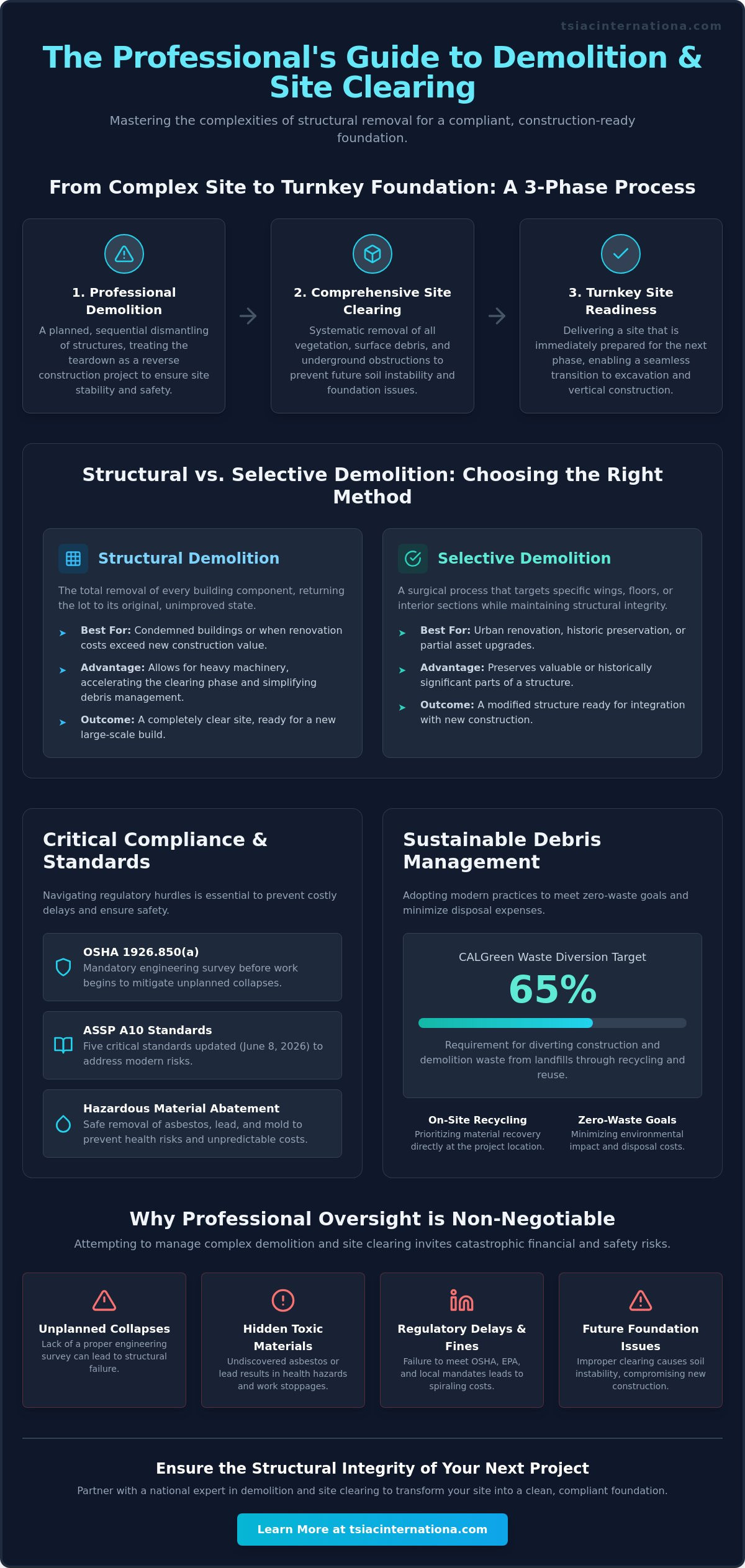
Professional Demolition is far more than the simple destruction of a building. It’s a planned, sequential dismantling of a structure where every component is removed in a controlled manner to maintain site stability. In the commercial sector, this process involves detailed engineering surveys to understand load-bearing capacities and potential failure points. By treating the teardown as a reverse construction project, teams ensure that the process doesn’t endanger nearby infrastructure or the safety of the crew on the ground.
Site clearing acts as the essential follow-up, involving the systematic removal of vegetation, surface debris, and underground obstructions. It isn’t just about making the lot look clean; it’s about stripping the land down to its usable geological state. When you invest in comprehensive demolition and site clearing services, you’re investing in the long-term health of your next building. Removing organic matter and surface clutter is vital because left-behind debris can lead to soil instability and significant foundation issues later in the project lifecycle.
The ultimate objective of these combined efforts is turnkey site readiness. This means that once the demolition team leaves, the site is immediately prepared for the next phase of development. There’s no downtime spent waiting for additional grading or clearing. The transition is seamless, allowing developers to move straight into excavation and vertical construction with confidence that the ground beneath them is stable and compliant. For projects where the cleared land will be used for recreational purposes, high-quality equipment from inSPORTline can help transform the finished site into a functional and active space.
The Scope of Modern Site Preparation
Why Professional Execution Is Non-Negotiable
Attempting to manage these processes without expert oversight invites catastrophic risk. Professional execution starts with a rigorous site assessment that identifies hidden structural weaknesses or toxic materials. Following OSHA standard 1926.850(a), an engineering survey must be completed before any work begins to mitigate the chance of unplanned collapses. Safety isn’t just a guideline; it’s the foundation of the entire operation in these high-risk environments. The risks inherent in demolition and site clearing services are substantial, making professional oversight essential. Site clearing serves as the critical bridge between the removal of the old structure and the commencement of new vertical construction.
Structural vs. Selective Demolition: Choosing the Right Methodology
Determining the appropriate methodology depends on the long-term objectives of the development and the current state of the asset. When assessing the requirements for demolition and site clearing services, project managers must weigh the benefits of total removal against the precision of selective dismantling. Structural demolition involves the total removal of every building component, effectively returning the lot to its original state. This approach is necessary when a building is condemned or when the cost of renovation exceeds the value of the existing framework. In contrast, selective demolition is a surgical process. It targets specific wings, floors, or interior sections while maintaining the integrity of the surrounding structure. This method is the primary driver for urban renovation and historic preservation, where maintaining the aesthetic or historical value of a facade is paramount.
The choice between these methods significantly impacts both project budgets and timelines. Total removal often allows for the use of larger machinery, which can accelerate the clearing phase and simplify debris management. However, selective projects require specialized hand tools and detailed shoring to prevent accidental collapses. While the upfront labor cost for selective work is higher, it often reduces the overall project budget by preserving expensive structural elements and reducing the volume of waste sent to landfills. Adhering to OSHA demolition safety standards is critical in both scenarios to ensure that the removal process doesn’t compromise the safety of the remaining structure or the public.
Total Structural Removal: When to Start from Scratch
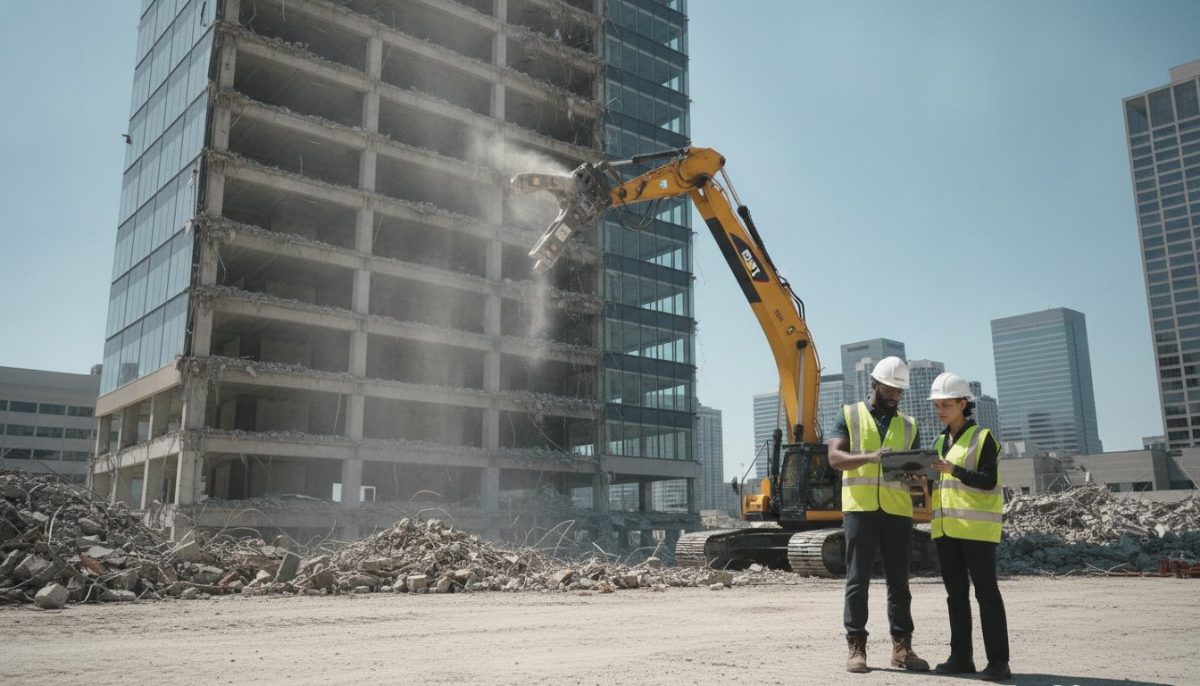
When a site assessment reveals irreversible structural decay, starting from scratch is the most responsible course of action. Managing the debris flow for multi-story buildings requires a disciplined logistical plan to prevent site congestion and ensure worker safety. This process often utilizes high-reach excavators and hydraulic shears to dismantle the building from the top down. Once the building is leveled and the foundation is extracted, the focus shifts to site restoration. This includes backfilling voids and precision grading to prepare the earth for new foundations. Comprehensive demolition and site clearing services ensure that the transition from a standing structure to a clean lot is handled with methodological precision.
Selective Demolition: Precision for Complex Renovations
Executing a renovation within an occupied building requires a level of control that standard demolition cannot provide. The goal is to clear specific zones without disrupting the operations of adjacent tenants or damaging critical infrastructure. Utilizing professional commercial interior gutting services allows for the complete removal of non-structural elements like drywall, flooring, and MEP systems. Technicians must strictly control noise, dust, and vibration to maintain a safe environment. If you are planning a complex renovation, partnering with an experienced team for your selective structural removal can prevent costly errors during the transition phase.
Integrating Hazardous Material Abatement into the Clearing Process
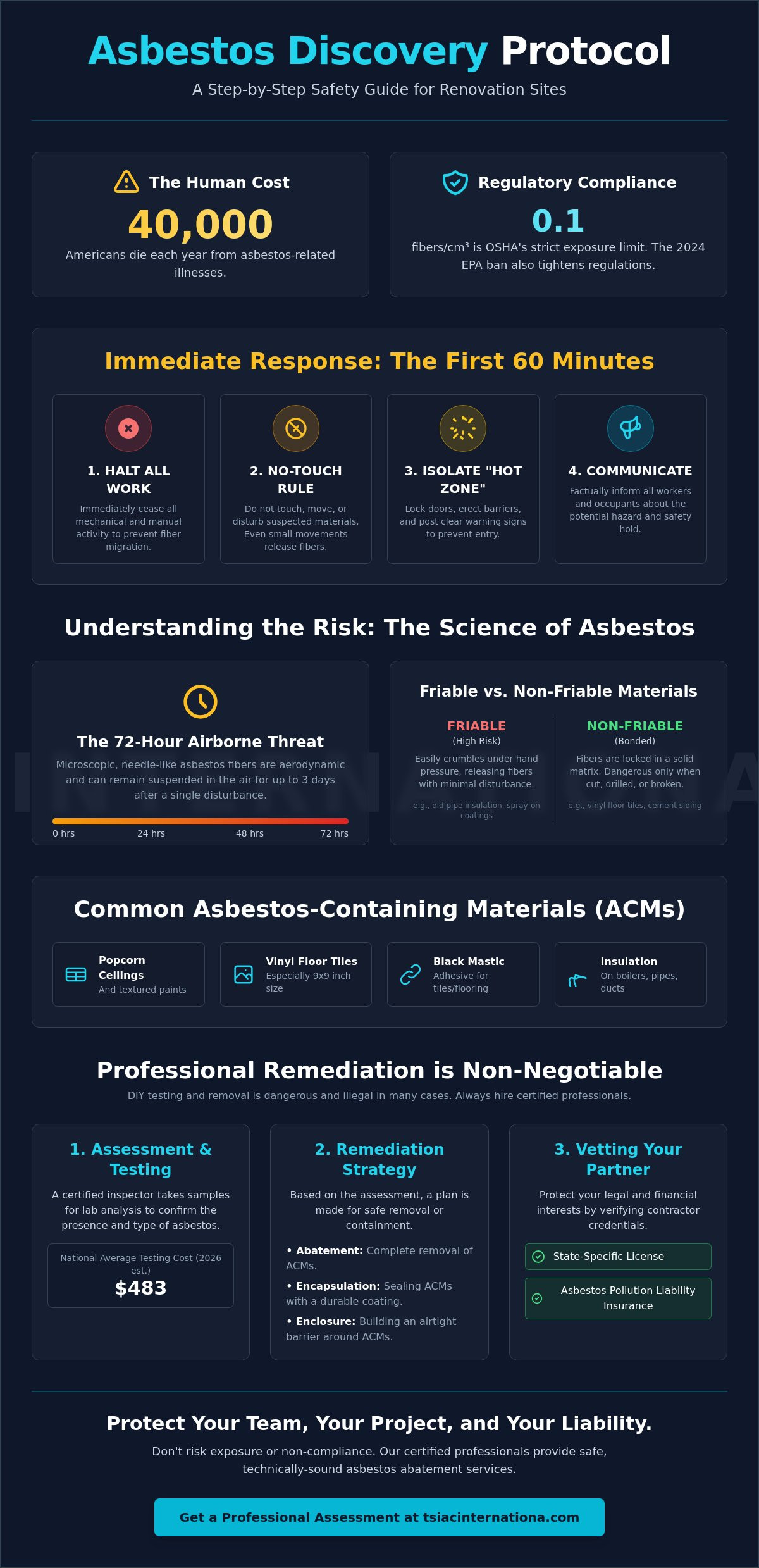
The physical dismantling of a structure is only one facet of the risk profile in modern development. Invisible hazards like asbestos, lead based paint, and mold growth represent significant liabilities that can halt a project if they aren’t identified during the initial engineering survey. In the context of demolition and site clearing services, hazardous material abatement is a non-negotiable precursor to any mechanical destruction. If these materials are pulverized during structural removal, they become airborne, creating an environmental crisis that extends far beyond the property line. Legal ramifications for non compliant disposal are severe, often involving heavy federal fines and project ending litigation.
Abatement must precede demolition to prevent the cross contamination of building materials that would otherwise be recyclable. When toxic substances are properly isolated and removed first, the remaining concrete, steel, and wood can be processed as clean debris. This sequence isn’t just a safety requirement; it’s a financial strategy. It allows for a more efficient debris flow and ensures that the project remains in good standing with environmental regulators who monitor the lifecycle of construction waste.
Asbestos and Lead Removal Protocols
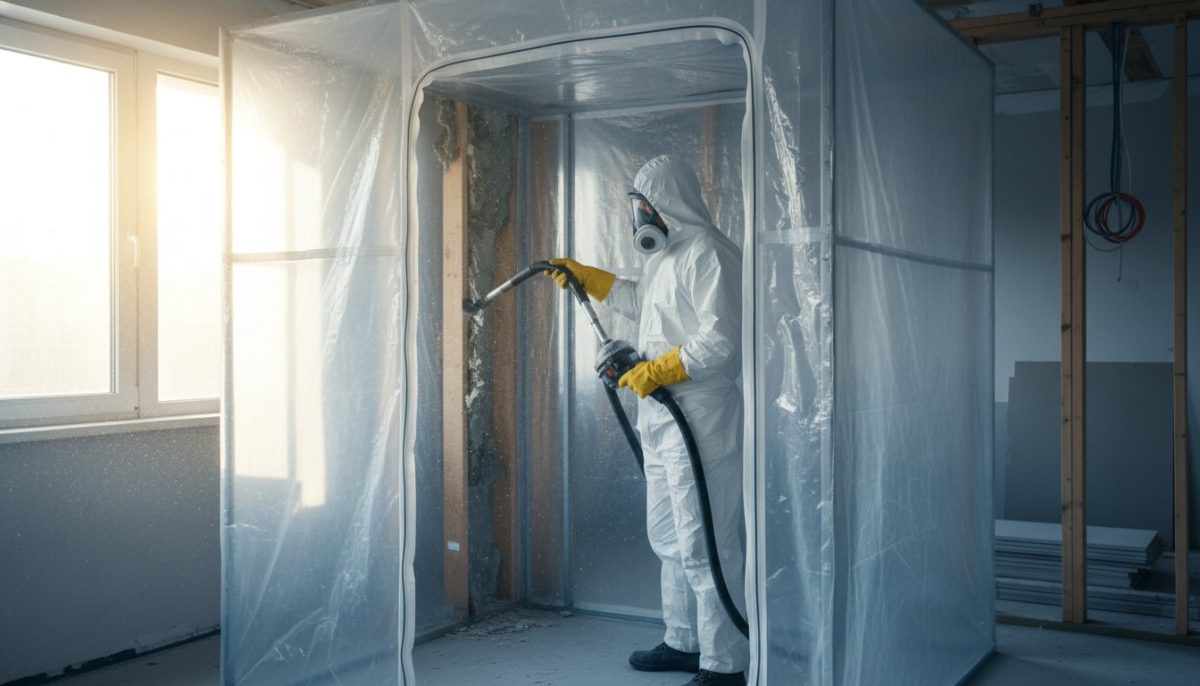
Mechanical demolition can’t begin until all friable and non friable asbestos containing materials are safely extracted from the building envelope. Professional asbestos removal requires rigorous containment strategies to protect the surrounding environment. Technicians utilize negative air pressure systems and high efficiency particulate air (HEPA) filtration to ensure that fibers remain within the work zone. Every pound of toxic waste must be documented through precise manifests and a clear chain of custody. This level of administrative precision is just as important as the physical removal. It provides the audit trail necessary to prove regulatory compliance to state and federal inspectors.
Mold Remediation and Lead Abatement
Abandoned or water damaged structures frequently harbor extensive mold colonies that require professional remediation before interior gutting can proceed. Similarly, historic buildings often contain layers of lead based paint that necessitate lead safe work practices during surgical dismantling. Identifying these biological and chemical risks early in the site assessment phase prevents the contamination of clean debris. Many experts agree that hazardous material abatement is the most critical safety phase of any redevelopment. By addressing these issues before the heavy machinery arrives, you ensure that the resulting debris flow aligns with the standards for Sustainable C&D Materials Management, allowing for higher recycling rates and lower landfill costs.
Choosing a single source contractor who manages both demolition and site clearing services alongside abatement protocols offers a distinct strategic advantage. This integrated approach eliminates the communication gaps that often occur between separate abatement and demolition crews. It streamlines the schedule, as the transition from a “clean” building to a “down” building happens under a unified command structure. This continuity ensures that safety protocols aren’t lost in translation, protecting the project’s timeline and the developer’s reputation.
Sustainable Site Clearing: Debris Management and Recycling
The evolution of demolition and site clearing services has transitioned toward a “Green Demolition” model that prioritizes resource recovery over simple disposal. It’s no longer standard practice to haul all debris to a landfill. With the United States generating approximately 600 million tons of construction and demolition debris annually, the industry’s focus is on maximizing the national recycling rate, which currently sits at an estimated 76 percent. Implementing zero-waste goals is a methodological necessity for high-performance projects, especially in jurisdictions like California where CALGreen mandates a diversion rate of 65 percent or more. Sorting materials on-site allows for the isolation of clean recyclables, which directly reduces landfill tipping fees that average $55 per ton.
This systematic approach to debris management ensures that the site remains organized and safe. By categorizing waste streams at the point of origin, contractors prevent the cross-contamination of materials that would otherwise be rejected by recycling centers. This precision in sorting is what separates a professional operation from a standard teardown. It requires a deep understanding of material science and local recycling capabilities to ensure that every possible ton of debris is diverted from the waste stream and returned to the circular economy.
Recovering Wood, Metal, and Plastic
Effective material recovery requires a disciplined sorting protocol. Ferrous metals, such as structural steel beams, and non-ferrous metals, including copper wiring and aluminum siding, are separated using magnetic separators and manual sorting for industrial reuse. Wood debris is no longer treated as waste; it’s processed into high-quality mulch or biomass fuel, effectively diverting tons of organic matter. The logistics of hauling these large-volume materials require a coordinated fleet of roll-off containers and heavy-duty trailers. This ensures that recyclables reach the correct processing facilities without delaying the site clearing timeline or causing site congestion.
Concrete Removal and Aggregate Recovery
Concrete is the most significant component of the waste stream, making up about 67.5 percent of the total weight of C&D debris. Professional teams use heavy machinery like hydraulic breakers and pulverizers to dismantle slabs and foundations. Once the concrete is removed, it’s often processed through on-site crushing units. This technical approach converts the waste into reusable road base or structural fill. Aggregate recovery lowers project costs by as much as 3 to 5 percent by eliminating the need to purchase and transport virgin stone for the new construction phase.
For developers seeking LEED certification, tracking these recycling percentages with audit-grade accuracy is mandatory. Detailed reporting provides the data necessary to secure sustainability credits and satisfy municipal inspectors. If you’re ready to implement a sustainable recovery plan for your next project, our professional recycling and demolition services provide the technical expertise and documentation required for modern site readiness.
Partnering with a National Demolition and Site Clearing Expert
Selecting a high-performance partner for structural removal requires an objective analysis of technical capabilities and safety benchmarks. In a sector where technical precision affects both human lives and significant capital, the Experience Modification Rate (EMR) serves as a critical metric for evaluation. An EMR below 1.0 indicates a superior safety record compared to the industry average, which directly influences insurance premiums and project risk profiles. When you evaluate providers of demolition and site clearing services, this number provides a transparent look at their operational discipline and their commitment to mitigating workplace hazards. A low EMR isn’t just a statistic; it’s a reflection of a company’s ability to maintain control under extreme working conditions.
TSIAC International manages complex, multi-phase projects by integrating structural removal with hazardous material abatement and precision clearing. This unified approach eliminates the friction points that often occur when multiple subcontractors overlap on a single site. By maintaining a single point of responsibility, the transition from a standing structure to a construction-ready lot becomes a predictable, methodical process. The final phase of any project involves a comprehensive site walkthrough. This ensures that every foundation element is removed, all debris is hauled, and the grading meets the exact specifications required for the next development phase. This disciplined handover is what allows vertical construction to begin without the threat of unforeseen underground obstructions.
Evaluating Safety and Performance Records
A proven track record is the most reliable indicator of future success. With over 15 years of industry experience, TSIAC International has refined the logistics of large-scale structural removal. Rigorous OSHA compliance is the baseline for every operation, protecting property owners from the legal and financial fallout of site accidents. Beyond safety, large-scale projects require substantial insurance and bonding capacities. These financial safeguards ensure that even the most technically challenging projects are backed by the necessary resources to reach completion. A partner’s ability to provide these guarantees is a hallmark of professional reliability in a high-stakes environment.
Streamlining the Project Lifecycle
The lifecycle of a project moves from a detailed initial site assessment through to final debris hauling and site stabilization. This requires constant coordination with general contractors, utility providers, and government agencies to ensure that all permits are closed and all environmental standards are met. Managing these moving parts under a single command structure prevents the delays that often plague fragmented projects. If you require a partner who prioritizes technical accuracy and schedule discipline, contact TSIAC International for a comprehensive site assessment. Our team provides the expert oversight necessary to deliver a clean, compliant, and construction-ready site for your next development.
Securing the Foundation for Your Next Development
Mastering the complexities of structural removal requires a disciplined approach that balances technical precision with environmental responsibility. This guide has detailed how the integration of hazardous material abatement and surgical dismantling prevents regulatory delays while ensuring the safety of the remaining infrastructure. By prioritizing on-site material recovery and aggregate crushing, you can meet the stringent 2026 recycling standards that define modern construction projects. Successful redevelopment begins with a construction-ready site that has been cleared of all subsurface obstructions and environmental liabilities. Securing professional demolition and site clearing services ensures that your project transitions seamlessly from an old structure to a clean, buildable lot.
TSIAC International brings over 15 years of industry-leading experience to every site, offering full-service hazardous material abatement and structural removal. Our methodology ensures that your project remains compliant with all OSHA and EPA mandates while maximizing the recovery of recyclable materials. Don’t leave the critical first phase of your development to chance. Request a Professional Consultation for Your Next Demolition Project to ensure your site is prepared with methodological accuracy. We look forward to partnering with you to build a clean foundation for your next large-scale project.
Frequently Asked Questions
What is the difference between land clearing and site clearing?
Land clearing primarily focuses on the removal of natural obstacles like trees, brush, and boulders from raw land to prepare it for development. Site clearing is a more comprehensive phase that includes the removal of man-made debris, old foundations, and surface obstructions to achieve a construction-ready state. This phase ensures the soil is stabilized and graded according to precise architectural specifications after structural removal is complete.
Do I need a separate contractor for asbestos removal and demolition?
You don’t need separate contractors if you partner with a full-service provider that manages both abatement and structural removal. Integrated demolition and site clearing services often include licensed asbestos and lead abatement to streamline the project timeline and reduce administrative overhead. This approach ensures that hazardous materials are isolated and removed before mechanical demolition begins, which maintains full regulatory compliance and prevents site contamination.
How long does the demolition and site clearing process typically take?
The duration of the process depends on the structure’s size, the presence of hazardous materials, and the extent of the site preparation required. A standard residential teardown might take one week, while large-scale commercial projects often require several months for abatement, structural dismantling, and final grading. A detailed engineering survey helps establish a disciplined schedule that accounts for these technical variables and municipal inspection timelines.
What permits are required for a large-scale demolition project?
Large-scale projects require a combination of municipal demolition permits, utility disconnect authorizations, and environmental notifications. You must file a NESHAP notification with the EPA at least ten working days before starting work if asbestos is present. Additional permits for site grading, erosion control, and debris hauling are also mandatory to ensure the project meets local and federal safety standards throughout the clearing phase.
How is the cost of demolition and site clearing services calculated?
Costs are calculated based on the total square footage of the structure, the complexity of the building materials, and the volume of debris that requires hauling. Factors like the presence of hazardous materials and the ease of site access for heavy machinery also influence the final budget. Professional teams evaluate these technical parameters during the initial site assessment to provide a transparent project estimate that avoids unpredictable expenses.
Can building materials from a demolition site be recycled?
Most structural materials can be recycled if they are sorted correctly on-site during the dismantling process. Concrete is often crushed into aggregate for road base, while ferrous and non-ferrous metals are salvaged for industrial reuse. Wood debris can be processed into mulch or biomass fuel. Efficient waste management helps developers achieve high diversion rates, which is essential for meeting modern environmental standards and reducing landfill fees.
What happens if hazardous materials are found after demolition begins?
Work must stop immediately if previously unidentified hazardous materials are discovered during the structural removal process. The site is secured to prevent airborne contamination, and a certified technician conducts a formal assessment to determine the extent of the hazard. Professional demolition and site clearing services include contingency protocols for these scenarios, ensuring that abatement is completed safely and documented before any mechanical work is allowed to resume.
Is selective demolition more expensive than total structural removal?
Selective demolition often carries a higher cost per square foot due to the requirement for specialized hand tools and meticulous structural shoring. This surgical approach requires more time and skilled labor than total structural removal using heavy machinery. However, it provides significant value by preserving existing building components and reducing the overall volume of waste that requires disposal, making it a cost-effective choice for complex urban renovations.