Friable vs. Non-Friable Asbestos: Understanding the Risks and Abatement Standards in 2026

A single hand-squeeze can be the difference between a routine renovation and a federal regulatory nightmare. While many property owners understand…

A single hand-squeeze can be the difference between a routine renovation and a federal regulatory nightmare. While many property owners understand that asbestos is hazardous, the technical distinction of friable vs non-friable asbestos determines your entire abatement strategy, your legal liability, and the safety of every occupant in the building. As of June 2026, with oral arguments for the chrysotile ban reaching the U.S. Court of Appeals, the margin for error has never been thinner. You likely already recognize that one wrong move during demolition can release microscopic fibers, leading to severe health risks or fines that start at $10,000 per violation in certain jurisdictions.

It’s frustrating to manage complex projects when EPA and OSHA regulations feel like a moving target. This article provides the clarity you need to distinguish between stable materials and those that crumble under slight pressure, ensuring your project remains compliant with NESHAP standards. We’ll examine the specific physical properties of these materials, the latest 2026 regulatory updates, and the methodical steps required for safe structural demolition and abatement. By the end, you’ll have a clear roadmap for identifying when a durable material becomes a high-risk liability and how to integrate professional removal into your project timeline with absolute precision.

Key Takeaways

  • Recognize the legal and physical distinctions of friable vs non-friable asbestos to accurately assess inhalation risks and liability before starting any demolition work.
  • Identify where hazardous materials hide in mid-century structures, from high-risk spray-on insulation to durable but potentially dangerous floor tiles.
  • Detect the specific environmental and mechanical factors that cause stable materials to degrade into regulated airborne hazards.
  • Navigate the 2026 hierarchy of controls and OSHA work classifications to ensure your project meets the latest federal safety and containment standards.
  • Implement a professional abatement strategy that prioritizes occupant safety and regulatory compliance without compromising the structural integrity of your facility.

Defining Friable vs. Non-Friable Asbestos Classifications

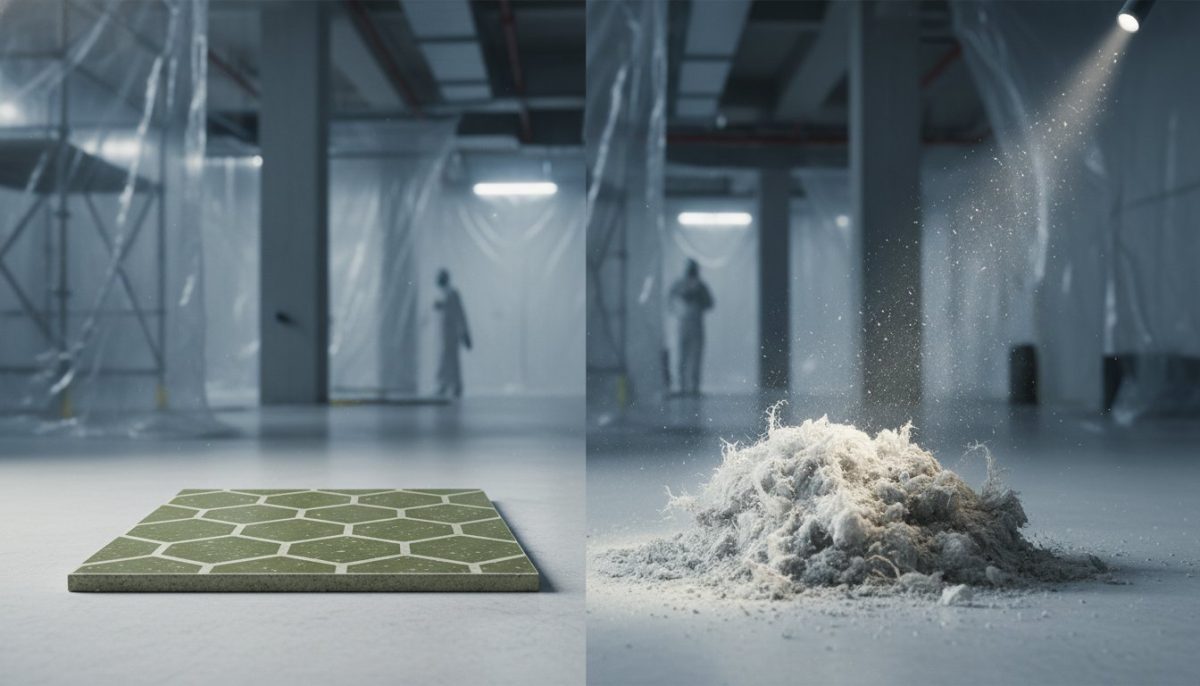
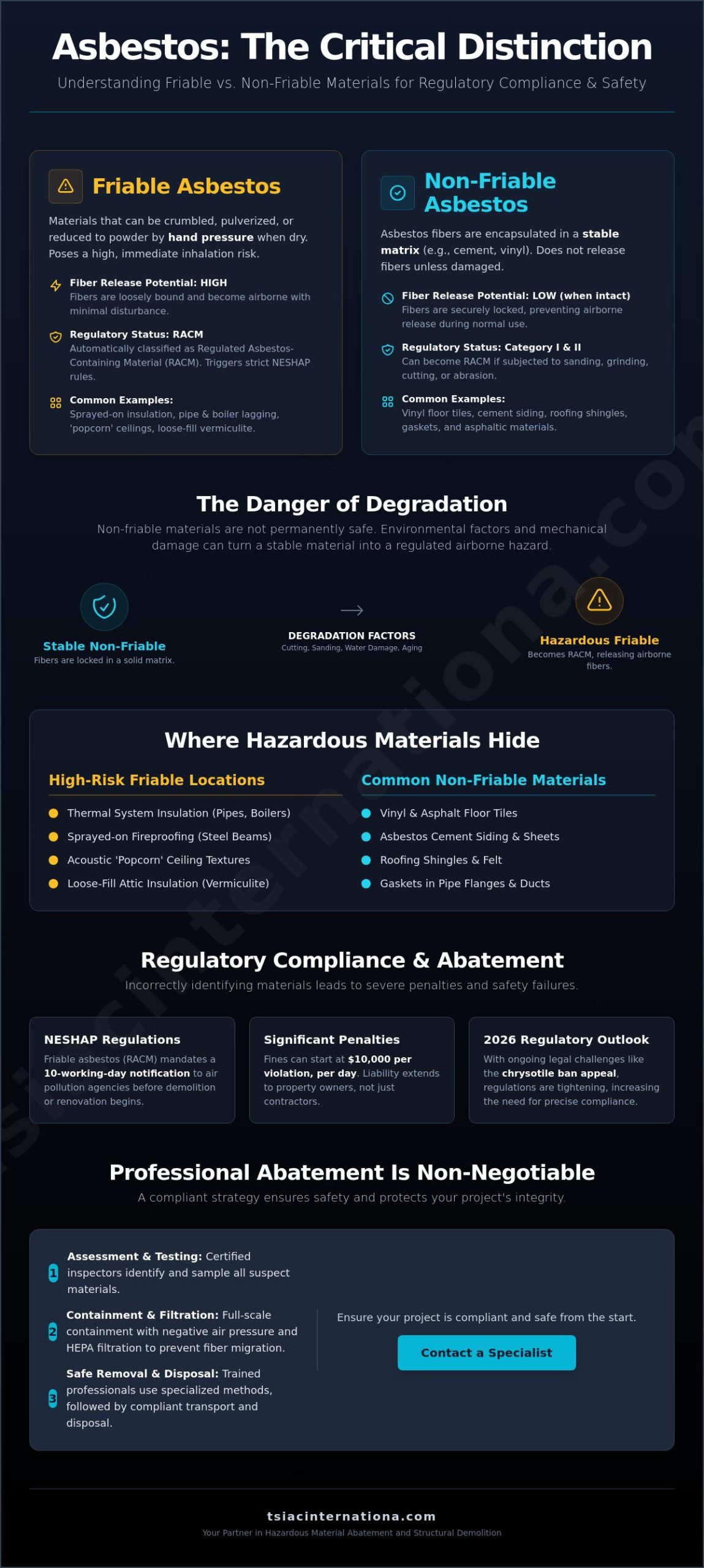
The distinction between friable vs non-friable asbestos is the cornerstone of hazardous material management. According to the EPA, any material containing more than 1% Asbestos is classified as friable if it can be crumbled, pulverized, or reduced to powder by hand pressure when dry. This isn’t just a physical description; it’s a legal classification that triggers specific regulatory oversight and determines the intensity of safety protocols required during a project.

In non-friable materials, the asbestos fibers are locked within a stable matrix, such as cement, bitumen, or vinyl. This binder prevents the fibers from becoming airborne during normal use. Friable materials, however, lack this structural integrity. They often served as thermal insulation or acoustic treatments where a loose, airy texture was desired. Because the fibers aren’t bound, they remain in a state of high readiness to suspend in the air at the slightest disturbance.

Legal implications are immediate upon identification. NESHAP (National Emission Standards for Hazardous Air Pollutants) regulations depend heavily on this distinction. If a material is friable, it’s automatically categorized as Regulated Asbestos-Containing Material (RACM). This status mandates a 10-working-day notification to relevant air pollution control agencies before any demolition begins. Failing to correctly identify these materials can lead to significant legal liabilities and project delays.

The Hand-Pressure Test: A Regulatory Standard

Field inspectors utilize a standardized hand-pressure test to assess friability. While it sounds simple, it requires professional judgment to determine if the material is truly breaking down or just surface-shedding. You shouldn’t attempt this test yourself. Disturbing suspected material without proper containment can immediately contaminate an entire floor. Laboratory verification remains the gold standard, as field tests can be subjective depending on the inspector’s experience and the material’s current moisture content.

Why Fiber Release Potential Dictates Safety Protocols

The risk isn’t the material itself, but its active potential for fiber release. Friable fibers have an aerodynamic diameter that allows them to bypass human respiratory defenses and settle deep in lung tissue. In a dormant state, non-friable asbestos is relatively stable. Once it’s categorized as friable, the safety protocols shift from simple monitoring to full-scale containment. This includes negative air pressure and HEPA filtration to prevent microscopic fibers from migrating through a structure during Selective Demolition or Interior Gutting.

Common Materials and Where They Hide in Structures

Identifying friable vs non-friable asbestos in a facility requires looking beyond the surface and understanding the manufacturing intent of mid-century building components. Engineers prioritized asbestos for its thermal resistance and tensile strength, leading to its integration into thousands of products. In commercial and industrial settings, these materials are often categorized by how they were applied: either as a loose, porous coating or as a dense, structural element. This distinction determines whether the material is inherently dangerous or if it only poses a risk upon mechanical disturbance.

High-Risk Friable Asbestos-Containing Materials (ACMs)

Friable materials are often found in areas requiring high-performance thermal or acoustic management. Thermal System Insulation (TSI) is one of the most common high-risk sources. This includes pipe wrap, boiler lagging, and block insulation, which were designed to be lightweight and efficient. These materials are often so fragile that they can’t be touched without releasing fibers into the air. Sprayed-on fireproofing on steel beams and acoustic ‘popcorn’ ceiling textures are similarly hazardous. Another critical concern is loose-fill vermiculite insulation. While vermiculite itself isn’t asbestos, much of the vermiculite used in the 20th century was contaminated with tremolite asbestos, making it an inherently friable and dangerous material to disturb.

Durable Non-Friable Asbestos: Category I and II

Non-friable materials are classified based on their likelihood of releasing fibers during renovation or demolition. Category I non-friable materials are generally considered the most stable. These include gaskets, packings, resilient floor coverings like 9×9 vinyl tiles, and asphalt roofing products. The asbestos fibers are locked within a flexible bitumen or vinyl matrix, making them less likely to become airborne unless they’re ground, sanded, or burned.

Category II non-friable materials, such as asbestos-cement (transite) siding, shingles, and corrugated panels, present a higher risk profile. These products use a rigid cement binder that is prone to shattering. During selective demolition, Category II materials are far more likely to be crushed or broken, which can immediately transition them from a stable state to a regulated friable hazard. Understanding this transition is vital for maintaining compliance with the NESHAP standards that govern the 2026 regulatory environment. Proper identification during the pre-demolition survey prevents accidental exposure and the heavy fines associated with improper handling of these brittle components.
Friable vs. Non-Friable Asbestos: Understanding the Risks and Abatement Standards in 2026

The Danger of Degradation: When Non-Friable Becomes Friable

The safety profile of asbestos-containing materials isn’t static. While a vinyl floor tile or a cement siding panel might start its lifecycle as a stable, non-friable product, environmental and mechanical stressors can rapidly compromise that stability. Understanding the transition of friable vs non-friable asbestos is critical for property owners who assume that “non-friable” means “no risk.” In reality, time and physical force act as catalysts that liberate once-bound fibers, turning a durable material into a significant inhalation hazard. This transformation turns a manageable asset into a legal and health liability that requires professional intervention.

Mechanical Damage and Weathering Effects

Environmental degradation is a silent but potent factor in fiber release. In exterior applications, such as transite siding or corrugated roofing, prolonged UV exposure and moisture infiltration gradually erode the cementitious binder. Over decades, this weathering makes the material brittle. What was once a solid panel can become a chalky substrate that sheds fibers during a heavy storm. When conducting selective demolition, the impact of mechanical force is even more immediate. High-speed grinding, sanding, or sawing of non-friable materials doesn’t just remove the material; it pulverizes the matrix. This mechanical action reduces the asbestos-containing material to a fine dust that meets the legal definition of friable. Even the vibration from heavy machinery operating nearby can be enough to dislodge fibers from aged, weathered ACMs that are already on the verge of structural failure.

The RACM Threshold: When the Law Changes

The legal landscape shifts once a material is disturbed or degraded. Under NESHAP (National Emission Standards for Hazardous Air Pollutants), materials are classified as Regulated Asbestos-Containing Material (RACM) if they’ve become friable or if they have a high probability of becoming friable during demolition or renovation. This classification isn’t just academic; it dictates the entire scope of a project’s safety requirements. The threshold for mandatory abatement and notification is strictly defined. If a project involves disturbing more than 160 square feet or 260 linear feet of RACM, federal law requires specific containment and disposal procedures. During complex interior gutting projects, contractors often treat all non-friable materials as friable by default. This “worst-case” approach ensures that if a tile shatters or a gasket is scraped away, the project remains in full compliance with safety standards, preventing the accidental creation of a hazardous environment.

Regulatory Compliance and Abatement Requirements in 2026

The operational framework for any remediation project is dictated by the initial classification of friable vs non-friable asbestos. Once a material is identified as friable, or if a non-friable material will be subjected to mechanical force, the regulatory burden increases significantly. OSHA and the EPA maintain a strict hierarchy of controls that prioritizes the total containment of fibers at the source. In the 2026 regulatory environment, the Permissible Exposure Limit (PEL) remains at 0.1 fibers per cubic centimeter, a standard that requires methodical precision to maintain. Achieving this level of safety during structural removal involves a combination of wet methods, HEPA vacuuming, and specialized air filtration systems designed to capture particles as small as 0.3 microns.

OSHA further refines these requirements through work classifications. Class I work involves the removal of friable asbestos-containing materials (ACMs), such as thermal system insulation or sprayed-on fireproofing. This is the most stringent category, requiring the highest level of personal protective equipment and engineering controls. Class II work covers the removal of non-friable ACMs like floor tiles or roofing. While the risks are lower, the moment these materials are shattered or ground, they effectively transition into a Class I scenario. This is why professional oversight is essential to ensure that a simple floor removal doesn’t accidentally trigger a high-risk airborne event.

Containment and Negative Pressure Requirements

For high-risk projects, contractors must establish a regulated area using critical barriers. These are typically double layers of six-mil polyethylene sheeting that isolate the work zone from the rest of the facility. Negative air machines equipped with HEPA filters are then used to create a pressure differential. This ensures that air only flows into the work area, never out, preventing microscopic fibers from migrating to clean zones. Following these rigorous protocols for hazardous material abatement is the only way to guarantee occupant safety and maintain legal compliance during large-scale renovations.

Disposal and Manifesting: The Legal Trail

The management of asbestos waste is as heavily regulated as its removal. Friable waste must be saturated with a wetting agent, double-bagged in leak-tight containers, and labeled with specific warning notifications before leaving the site. Non-friable waste, while often allowed in specialized construction and demolition landfills, still requires careful manifesting to document its final destination. This “Chain of Custody” is a critical document for property owners. It serves as permanent proof that the material was handled according to federal law, protecting the owner from future environmental litigation or “legacy” liability claims. After the physical removal is complete, independent air monitoring and clearance testing are performed to verify that the environment is safe for re-entry.

If your facility requires a certified survey or professional remediation to address these risks, contact our team today for expert asbestos abatement services tailored to your structural requirements.

Professional Hazardous Material Abatement Strategies

Successfully managing the risks associated with friable vs non-friable asbestos requires a transition from theoretical knowledge to tactical execution. For property owners, the objective is rarely just the removal of hazardous materials; it’s the safe preparation of a site for its next phase of utility. A professional surgical approach ensures that asbestos-containing materials (ACMs) are extracted without compromising the structural integrity of the building. This level of precision is vital during selective demolition, where the goal is to strip away hazards while preserving the facility’s core assets. By integrating asbestos removal directly into the broader demolition plan, contractors can synchronize schedules, reduce mobilization costs, and eliminate the communication gaps that often lead to accidental exposure.

Property owners often face uncertainty regarding remediation costs, which can fluctuate depending on the material’s state and the required containment levels. Engaging a contractor who offers a fixed-price contract for total hazardous material remediation provides a layer of financial stability. This approach accounts for the complexities of containment, specialized labor, and the rigorous disposal protocols required by 2026 standards. It transforms a volatile variable into a manageable line item, allowing for more accurate project budgeting and comprehensive risk assessment.

Why DIY Remediation is a Liability Nightmare

Attempting to handle asbestos without professional certification is a significant legal and health gamble. A single “Fiber Release Episode” caused by improper handling can saturate a residential or commercial HVAC system with microscopic fibers, leading to astronomical decontamination costs. Beyond the immediate health risks, the legal penalties are severe. In jurisdictions like New York, failure to conduct a certified survey or improper disposal can result in fines starting at $10,000 per violation. These incidents also create a permanent mark on property records, complicating future real estate disclosures and potentially devaluing the asset during a sale.

The TSIAC Approach to Safe Structural Remediation

With over 15 years of experience in high-stakes commercial interior gutting, our methodology prioritizes both technical accuracy and environmental responsibility. We don’t just remove waste; we implement recycling practices even within hazardous material zones to meet modern sustainability targets. For example, in states like California, current mandates require at least 65% of construction and demolition waste to be recycled. Our team ensures that every phase of the demolition process meets or exceeds federal safety standards. Whether dealing with friable vs non-friable asbestos, we provide a disciplined, methodical solution that protects your investment and ensures the long-term safety of the building’s occupants.

Securing Your Structural Assets through Methodical Abatement

The distinction between friable vs non-friable asbestos is more than a technicality; it’s a fundamental requirement for legal compliance and occupant safety in 2026. As we’ve explored, the transition from a stable material to a regulated hazard can happen rapidly through mechanical force or environmental weathering. Failing to account for this shift during a renovation or demolition project leads to significant liability and health risks. By prioritizing a surgical approach to removal and adhering to the latest NESHAP standards, you ensure that your facility remains a safe and valuable asset.

Managing these high-stakes projects requires a partner with deep technical expertise and a commitment to precision. With over 15 years of specialized abatement experience, TSIAC International provides the stability and reliability needed for complex structural challenges. We’re fully licensed and insured for high-hazard projects, and we provide comprehensive regulatory compliance documentation for every site. Secure Your Property with Professional Abatement Services from TSIAC International and move forward with your project with absolute confidence.

Frequently Asked Questions

Can I tell if asbestos is friable just by looking at it?

Visual inspection alone is insufficient to confirm friability or the presence of asbestos. While certain materials like spray on fireproofing are typically friable, others require a standardized hand pressure test performed by a certified inspector. Professional laboratory analysis remains the only definitive method to verify a material’s composition and its current state of physical degradation.

Is non-friable asbestos safe to leave in my home or building?

Non-friable asbestos is generally considered safe to leave in place if it remains in good condition and is not disturbed. As long as the binder matrix remains intact, the fibers are locked away and cannot become airborne. You must monitor these materials for signs of water damage or mechanical wear that could cause them to transition into a friable state.

What happens if I accidentally break a non-friable asbestos tile?

Breaking a non-friable tile can immediately release microscopic fibers into your breathing zone. When the material shatters, the fractured edges expose fibers that were previously encapsulated in the binder. You should immediately isolate the area, deactivate HVAC systems, and contact a professional for decontamination to prevent the spread of hazardous dust throughout the facility.

Does the EPA require removal of non-friable asbestos before demolition?

The EPA’s NESHAP regulations mandate the removal of Regulated Asbestos-Containing Material (RACM) before any demolition begins. This classification includes all friable asbestos and Category II non-friable materials that are likely to be pulverized by heavy machinery. Category I materials may occasionally remain if they won’t be subjected to grinding, sanding, or burning during the process.

How much does the cost of removal differ between friable and non-friable materials?

Removal costs for friable materials are significantly higher because of the advanced containment protocols required. Friable abatement necessitates full negative pressure enclosures and decontamination units to manage the high risk of fiber release. Non-friable removal is often less resource intensive, provided the material can be extracted without compromising its structural integrity.

What is the ‘wet method’ in asbestos abatement and why is it used?

The wet method involves saturating hazardous materials with amended water to prevent fibers from becoming airborne. This is a critical safety practice used in both friable vs non-friable asbestos abatement. The moisture increases the weight of the fibers, ensuring they settle on the floor rather than remaining buoyant in the air where they could be inhaled.

How long does the air stay contaminated after friable asbestos is disturbed?

Microscopic asbestos fibers can remain suspended in the air for 48 to 72 hours after a significant disturbance. Because these fibers are extremely light, even minor air currents from a ventilation system can keep them buoyant for days. This is why professional HEPA air filtration and independent clearance testing are mandatory before a space is cleared for re-entry.

Are there different types of asbestos fibers in friable vs. non-friable materials?

Both material categories can contain the same types of asbestos fibers, such as chrysotile or amosite. The distinction between friable vs non-friable asbestos lies entirely in the material’s structural matrix and binder, not the mineral type itself. For example, chrysotile is commonly found in both soft pipe insulation and hard vinyl floor tiles, presenting different risks based on how easily the material crumbles.
Asbestos Containing Materials List: The 2026 Property Owner’s Guide to Identification

If you’re planning a renovation or structural update in 2026, could the very walls of your property be harboring a silent regulatory and health…

If you’re planning a renovation or structural update in 2026, could the very walls of your property be harboring a silent regulatory and health liability? Most property owners feel a justified sense of anxiety when facing potential hazardous materials, especially with the EPA’s 2024 ban on chrysotile asbestos and the high-stakes legal challenges currently moving through the courts. It’s difficult to keep track of shifting phase-out deadlines and even harder to know which legacy products actually pose a risk during an interior gutting or selective demolition project. You don’t have to guess when it comes to the safety of your occupants or the legal standing of your property.

We recognize that the fear of accidental exposure and the complexity of modern compliance can be a significant burden. This guide provides a definitive asbestos containing materials list to help you identify hazards with methodical precision. You’ll learn to distinguish between high-risk friable insulation and non-friable products while gaining a clear roadmap for professional management. By following these established technical protocols, you can transform uncertainty into a controlled, professional plan for safe material removal and site preparation.

Key Takeaways

  • Understand the technical 1% threshold that defines Asbestos Containing Materials (ACM) and why historical building practices necessitate rigorous inspection.
  • Utilize our comprehensive asbestos containing materials list to identify hidden hazards across residential and commercial structures before disturbing any surfaces.
  • Learn to evaluate material risk by distinguishing between friable and non-friable states, which dictates the required containment and safety protocols.
  • Establish clear “Stop Work” authority and discovery protocols to ensure immediate crew safety when suspicious materials are encountered during a project.
  • See how professional abatement and selective demolition work together to maintain regulatory compliance while keeping your project timeline on track.

Defining Asbestos Containing Materials (ACM) in 2026

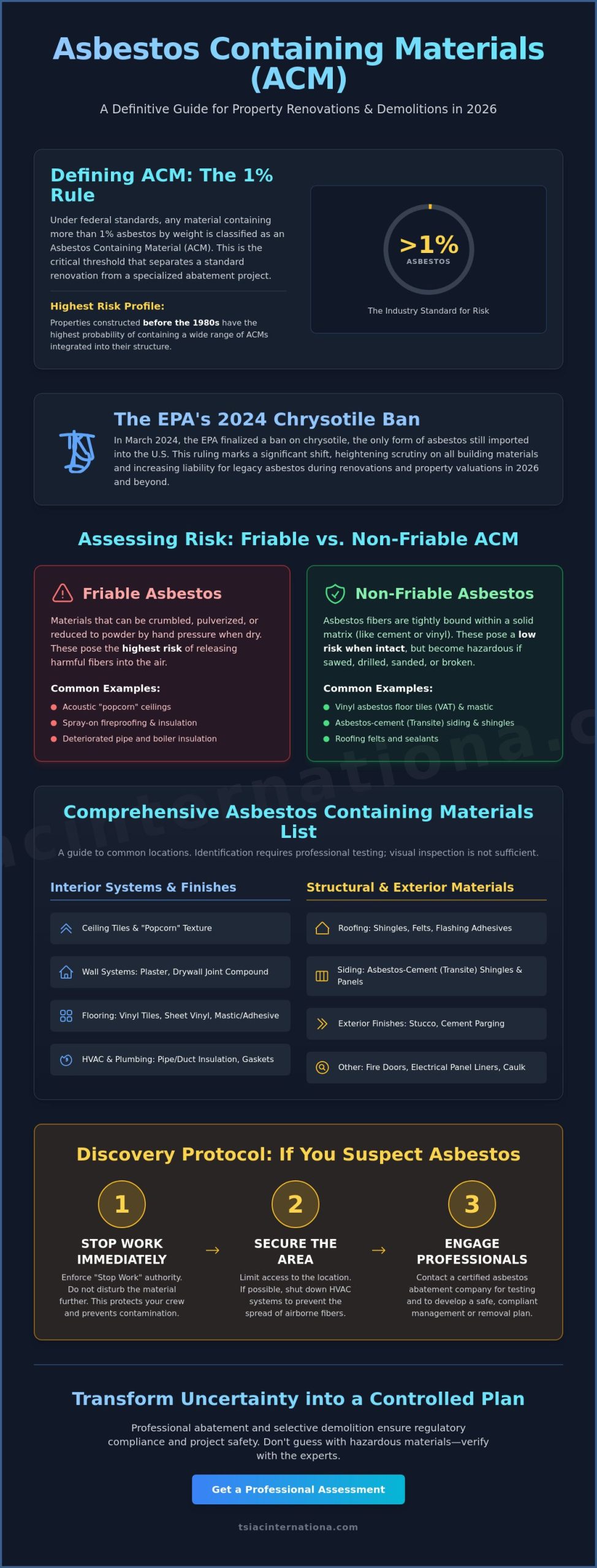
In the technical sector of hazardous material management, precision is the baseline for safety. Defining Asbestos Containing Materials (ACM) requires a strict adherence to regulatory thresholds. Under current federal standards, any material containing more than 1% asbestos by weight is classified as ACM. This mineral was once celebrated as a miracle component due to its exceptional tensile strength and resistance to heat and chemical erosion. It became a staple in fireproofing and thermal insulation until the health risks became undeniable. Even in 2026, property owners must contend with this legacy. Buildings constructed prior to the 1980s remain the highest priority for inspection because they often contain a complex asbestos containing materials list integrated into their structural fabric.

The 1% threshold is the industry standard for risk. It’s the line between a standard renovation and a specialized abatement project. Property owners in 2026 must understand that legacy asbestos is the primary driver of risk. The EPA’s recent actions have effectively closed the door on new chrysotile use, but the millions of tons already installed in our infrastructure don’t simply vanish. Every structural update requires a methodical assessment to ensure these fibers aren’t released into the environment.

The 2024 EPA Chrysotile Ban and Beyond

The EPA’s March 2024 ruling was a watershed moment for the industry. It finalized the ban on chrysotile asbestos, which was the only form still being imported into the United States. While this rule establishes phased deadlines, such as the five year phase out for asbestos diaphragms in the chlor-alkali industry, its effect on property management is immediate. In 2026, property valuations and renovation feasibility studies must account for these stricter standards. Modern imports are now under intense scrutiny to ensure they don’t contain even trace amounts that could trigger liability during future maintenance.

Why Identification is Mandatory for Demolition

Identification isn’t optional. It’s a legal prerequisite. Before any structural disturbance begins, OSHA and EPA regulations mandate a thorough asbestos survey. If you’re planning an interior gutting or selective demolition project, an unintentional disturbance of ACM can lead to catastrophic air quality issues and massive fines. Professional protocols require that we identify every item on the asbestos containing materials list before the first tool is used. This methodical approach protects both the site crew and the long term value of the asset. We don’t guess with hazardous materials; we verify through scientific testing and documented site history.

The Comprehensive Asbestos Containing Materials List

Identifying hazardous substances in a building is a technical exercise that goes far beyond visual observation. Many modern materials mimic the appearance of legacy products, making it impossible to declare a site “asbestos-free” without laboratory verification. To assist property owners in their risk assessment, we have organized The Comprehensive Asbestos Containing Materials List into functional categories based on their location within a structure. This systematic approach is essential during the pre-demolition phase to ensure no hidden fibers are disturbed. Relying on sight alone is a liability; many materials, such as certain types of plaster or insulation, look identical to safe alternatives but contain significant concentrations of chrysotile or amosite fibers.

Structural and Exterior Materials

Exterior surfaces often utilized asbestos for its weatherproofing capabilities and fire resistance. Asbestos-cement products, commonly known as Transite, were used for siding and roofing shingles because of their extreme durability. While these are non-friable when intact, they become dangerous if they’re broken, drilled, or weathered. Property owners should also inspect roofing felts, flashing adhesives, and older stucco applications. These materials often contain fibers to improve structural integrity against the elements, and their removal requires specific containment protocols to prevent environmental contamination.

Interior Finishes and Decorative Elements

The interior of a building holds the highest density of items on a typical asbestos containing materials list. Vinyl composition tile (VCT) is a frequent culprit, but the greater risk often lies in the “black mastic” adhesive used to secure it. Popcorn ceiling textures and acoustic tiles were industry standards for sound dampening and fireproofing through the late 20th century. Perhaps the most overlooked risk is drywall joint compound. In many older structures, the compound used to finish walls contains asbestos. This means a seemingly simple wall removal can lead to widespread fiber release if not handled by professionals.

Mechanical and Thermal Systems

Mechanical rooms are high-risk zones that require methodical inspection. Thermal system insulation (TSI) on boilers and pipe runs is often highly friable. HVAC systems may contain asbestos-lined duct wrap or furnace gaskets that can distribute fibers throughout the building if disturbed. Even electrical systems aren’t exempt. Panel partitions, cloth wire insulation, and arc chutes frequently appear on a professional asbestos containing materials list. Because these systems are often integrated into the building’s core, they require a strategic approach during selective demolition to maintain safety.

Misidentifying these materials can lead to project shutdowns and health liabilities. We recommend that property owners treat any suspicious material as hazardous until a certified lab confirms otherwise. Taking a disciplined approach to identification ensures that your project remains compliant with 2026 regulatory standards while protecting everyone on the job site.

Asbestos Containing Materials List: The 2026 Property Owner’s Guide to Identification

Assessing Risk: Friable vs. Non-Friable Asbestos

Risk management in the hazardous materials sector begins with a technical assessment of friability. Friability serves as the primary metric for airborne fiber risk assessment because it quantifies the ease with which hazardous fibers can enter the breathing zone. By definition, a friable material is one that can be crumbled, pulverized, or reduced to powder by simple hand pressure when dry. This physical state dictates the “Hazard Class” of the material and determines the level of containment required by law. When reviewing an asbestos containing materials list, property owners must look beyond the presence of the mineral and evaluate the stability of the matrix holding the fibers.

Many owners fall into a “false sense of security” regarding non-friable materials like vinyl floor tiles or cement siding. While these products are relatively safe when left undisturbed, their physical state changes immediately upon mechanical impact. Grinding, sawing, or crushing during an interior gutting project can transform a stable Category I material into a friable hazard. This transition is why professional selective demolition protocols treat all suspect materials with extreme caution. Before proceeding with any work, establishing clear Discovery Protocols: What to Do is essential for protecting the health of the crew and future occupants.

Category I and II Non-Friable Materials

Regulatory bodies distinguish between two categories of non-friable ACM. Category I materials include packings, gaskets, resilient floor coverings, and asphalt roofing products. These are generally durable and don’t release fibers easily. Category II materials encompass everything else, such as asbestos-cement (Transite) products. While Category II materials are more rigid, they’re still susceptible to becoming airborne if they’re crushed or subjected to intense weathering. Deciding whether to leave these in place during maintenance depends on their condition; however, identifying items on the asbestos containing materials list as non-friable doesn’t exempt them from strict disposal regulations during a full structural demolition.

High-Risk Friable Materials

Friable materials represent the highest level of risk in commercial and industrial structures. Spray-applied fireproofing is perhaps the most dangerous form of ACM because it’s often loosely bonded and can be easily disturbed by air currents. Thermal system insulation (TSI) and pipe lagging are also high-priority hazards. These materials require Class I abatement protocols, which involve the use of negative air pressure, specialized HEPA filtration systems, and rigorous wet methods to ensure fibers don’t migrate. Because there’s no safe level of exposure, managing these materials requires a disciplined, technical approach that prioritizes total containment over convenience.

Discovery Protocols: What to Do When You Suspect Asbestos

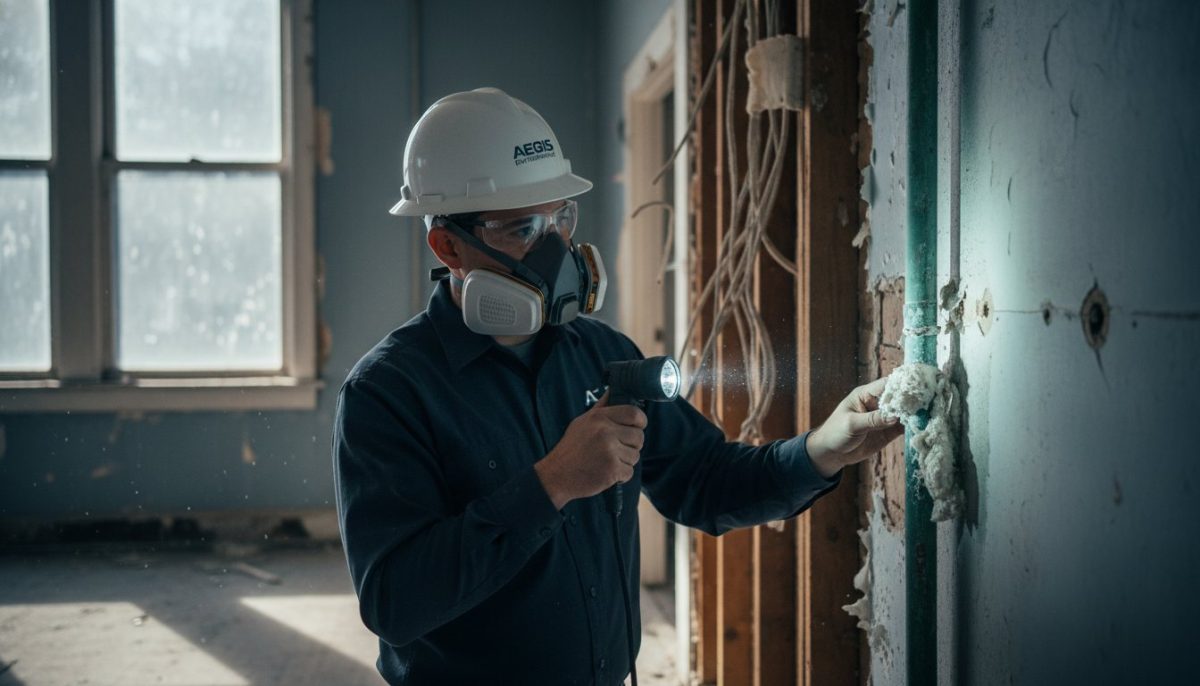
If you uncover suspicious material during an interior gutting or concrete removal project, the first step is non-negotiable: stop all work immediately. This “Stop Work” authority is a critical safety protocol that prevents the further disturbance of fibers and protects both your crew and the building’s occupants. Suspicious materials should always be treated as hazardous until proven otherwise by a certified industrial hygienist (CIH) or a licensed asbestos inspector. We strongly discourage DIY sampling. Disturbing a material to take a sample without proper containment can release millions of microscopic fibers into the air. These fibers are often drawn into the HVAC system, causing cross-contamination throughout the entire facility and significantly increasing the scope of the eventual cleanup.

Professional discovery protocols ensure that the site remains stable while a technical assessment is performed. Once the area is secured, an inspector will conduct a thorough walkthrough to update your asbestos containing materials list. This process isn’t just about safety; it’s about maintaining the legal integrity of your project. In 2026, regulatory scrutiny is at an all-time high, and documented discovery protocols are your best defense against liability and project delays.

The Asbestos Survey and Testing Process

A professional survey involves methodical bulk sampling analyzed in a laboratory. Inspectors typically use Polarized Light Microscopy (PLM) for standard building materials. However, Transmission Electron Microscopy (TEM) is often required for more complex matrices, such as floor tiles or thin-film coatings, where fibers are too small for PLM to detect. The resulting survey report provides a quantified asbestos containing materials list that acts as the foundation for your project’s safety plan. This report is essential for building a compliant asbestos removal south carolina strategy that meets all current DHEC and EPA standards.

Developing an Abatement Strategy

Once the survey is complete, you must choose between abatement and encapsulation. While encapsulation may be a viable short-term fix for materials in good condition, full abatement is the only permanent solution for a total structural demolition. Budgeting for this phase must be integrated into the early planning stages of your project to avoid surprise costs. If your property was constructed before 1978, we also recommend integrating lead abatement into the workflow. Combining these services reduces mobilization costs and ensures a cleaner transition to the recycling and demolition phases.

If you’ve encountered suspicious materials on your job site, contact our expert team for a professional assessment and asbestos abatement services to keep your project moving forward safely.

Professional Abatement: Safely Managing Asbestos with TSIAC

Professional management of hazardous materials requires more than just equipment. It demands a deep, technical understanding of material science and regulatory shifts. With 15 years of experience in the field, we’ve developed a methodology that prioritizes site stability and environmental safety. When we approach a project, we don’t view abatement as an isolated task. Instead, we integrate it directly with our structural and selective demolition workflows. This unified approach ensures that every item on the asbestos containing materials list is neutralized before structural disturbances begin, reducing the risk of project delays and health liabilities.

Our commitment extends to environmental stewardship. Once the abatement phase is complete and the site is cleared, we prioritize recycling wood, metal, and plastic components. This reduces the burden on landfills and aligns with modern sustainability goals. We handle the entire compliance chain with methodical precision:

  • Establishing airtight containment and negative pressure zones.
  • Utilizing HEPA-filtered air scrubbing systems to capture microscopic fibers.
  • Securing independent air clearance testing to verify site safety.
  • Providing documented disposal manifests for all hazardous waste.

Neutralizing the asbestos containing materials list is the critical first step in a successful redevelopment project. You’ll receive a transparent record of every action taken on your property, ensuring that the legacy of hazardous materials doesn’t hinder your future plans.

Comprehensive Remediation Solutions

We specialize in commercial interior gutting where hazardous ACM must be removed before any architectural elements are stripped. In selective demolition projects, our teams employ specialized containment to isolate work zones, allowing other areas of the building to remain unaffected. We provide a single-source solution for hazardous material abatement, including lead and mold remediation. This eliminates the need for multiple contractors and streamlines the communication process for property owners.

Next Steps for Your Project

Moving from identification to action requires a clear, fixed-price contract. We provide detailed estimates for structural demolition and abatement so you can budget with confidence. To prepare for our site arrival, property owners should ensure all utilities are properly disconnected and site access is secured. Once the project concludes, we provide a final clean certificate and all necessary documentation for future development or occupancy. This paperwork serves as your guarantee that the property meets all safety standards.

Securing Your Property’s Future Through Methodical Abatement

Managing a 2026 construction project requires more than a simple walkthrough. You’ve seen that a definitive asbestos containing materials list is the foundation of a safe site, allowing you to distinguish between stable non-friable products and high-risk friable hazards. By following established discovery protocols and prioritizing laboratory verification over visual guesswork, you protect your investment and your people from regulatory and health liabilities.

TSIAC International brings over 15 years of industry experience to every project, integrating specialized abatement with comprehensive structural and selective demolition expertise. Our commitment to environmental responsibility means we don’t just remove hazards; we actively recycle wood, metal, and plastic on every site to minimize the impact on our landfills. Secure Your Site with TSIAC International’s Professional Abatement Services and move forward with the confidence that your project is built on a clean, compliant foundation.

Frequently Asked Questions

Is there a safe level of asbestos exposure for building occupants?

No safe level of asbestos exposure has been established by the scientific community. Even minimal inhalation of microscopic fibers can lead to severe respiratory diseases decades after the initial contact. This reality makes the systematic identification of every item on an asbestos containing materials list a critical safety requirement. Property owners must prioritize total containment and professional removal over attempting to manage exposure levels.

Can I identify asbestos just by looking at a material?

Visual identification is technically impossible for the vast majority of building products. While some specific materials like Transite piping are recognizable to experienced professionals, most hazardous fibers are microscopic and embedded within a stable matrix. You must rely on laboratory analysis, such as Polarized Light Microscopy, to confirm the mineral’s presence. It’s a dangerous liability to assume a material is safe simply because it looks like modern drywall or flooring.

What should I do if I accidentally disturbed asbestos-containing materials?

Stop all work immediately and evacuate the area to prevent further fiber release. You should shut down the HVAC system to ensure that airborne particles don’t migrate to other parts of the building. Seal the entry points to the affected room with plastic sheeting and contact a certified professional for air quality testing. Don’t attempt to clean the debris with a standard vacuum, as this will only distribute the fibers more widely.

Does the 2024 EPA ban mean all asbestos is now illegal to have in a building?

The 2024 EPA ban specifically targets the ongoing use and import of chrysotile asbestos; it doesn’t mandate the immediate removal of all legacy materials. Existing asbestos can legally remain in a structure as long as it’s in good condition and remains undisturbed. However, this ruling increases the regulatory pressure to identify and remove these materials during any planned structural updates or selective demolition projects to ensure long-term compliance.

How much does professional asbestos abatement typically cost?

Abatement costs are determined by technical factors such as the material’s friability, its location, and the total square footage requiring containment. Removing friable pipe insulation in a confined basement involves different specialized equipment than removing non-friable floor tiles in an open warehouse. Property owners should request a comprehensive site assessment to understand their specific budgetary requirements. Investing in professional abatement prevents the far greater costs associated with environmental fines and project shutdowns.

Is asbestos only found in old insulation and floor tiles?

Asbestos is present in thousands of products beyond the most commonly known insulation and tiles. It’s frequently found in drywall joint compounds, roofing adhesives, electrical panel partitions, and even window glazing. Our asbestos containing materials list highlights that these fibers were used in mechanical, structural, and decorative elements throughout the 20th century. Any property built before the late 1980s likely contains asbestos in multiple, often overlooked, applications.

Can I sell a property that contains asbestos-containing materials?

You can sell a property containing asbestos, but you’re generally required by law to disclose its presence to potential buyers. Failure to disclose known hazardous materials can lead to significant legal liabilities and post-sale litigation. Providing a professional asbestos survey report can build trust with buyers by demonstrating that the risks are fully identified and manageable. Many commercial buyers expect to find these materials and will factor the abatement into their renovation budgets.

What is the difference between an asbestos survey and an asbestos abatement plan?

An asbestos survey is a diagnostic document used to identify the location, type, and quantity of hazardous materials within a building. An abatement plan is a tactical roadmap that outlines the specific engineering controls, safety measures, and disposal protocols required for safe removal. The survey identifies the hazards, while the abatement plan explains how a professional crew will neutralize them. Both documents are essential for maintaining a compliant and safe job site.