
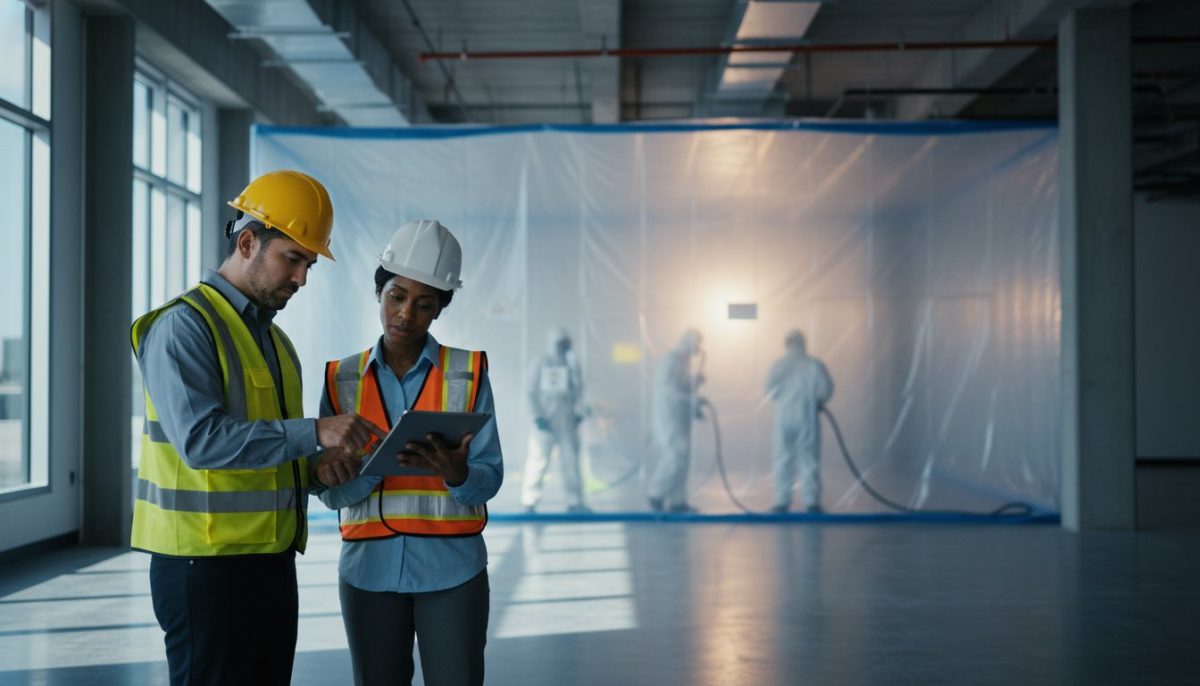
Approximately 40,000 Americans die from asbestos-related diseases every year; a figure that underscores why regulatory oversight remains uncompromising and project pricing remains complex. You’ve likely realized that safety is non-negotiable, yet the wide variance in project quotes often creates significant budgetary uncertainty for both commercial and residential stakeholders. Understanding the primary asbestos abatement cost factors is essential for any facility manager or property owner who wants to avoid the twin risks of regulatory fines and hidden expenses.
This guide provides a technical framework for evaluating abatement proposals, ensuring you aren’t caught off guard by the financial implications of material friability or accessibility challenges. We’ll examine how specialized labor and mandatory air clearance testing in high-regulation zones drive the bottom line. You’ll gain a clear perspective on how to manage risk through containment engineering while staying compliant with the latest EPA mandates, including the 2024 chrysotile ban, and current OSHA exposure limits. By the end of this analysis, you’ll have the professional insight required to evaluate contractors based on technical merit and safety standards rather than just the lowest bid.
Key Takeaways
- Identify the technical distinction between friable and non-friable materials to understand why certain remediation projects require significantly higher levels of containment engineering.
- Evaluate how site-specific variables, including accessibility and structural height, dictate the specialized equipment and labor hours necessary for safe execution.
- Determine when encapsulation serves as a viable, budget-conscious alternative to full material removal while maintaining strict compliance with safety regulations.
- Analyze the primary asbestos abatement cost factors associated with mandatory post-abatement air monitoring and tiered hazardous waste disposal fees.
- Learn to identify red flags in itemized quotes to ensure your chosen partner provides the necessary insurance and safety protocols required for complex projects.
The Core Asbestos Abatement Cost Factors in 2026
Effective asbestos management is a disciplined engineering process, not a simple debris removal task. When stakeholders evaluate asbestos abatement cost factors, they must recognize that pricing reflects the level of risk mitigation required to maintain site safety. Professional abatement involves a multi-stage workflow: containment setup, HEPA-filtered air management, precise material extraction, and multi-stage decontamination. Each of these steps requires specialized training and equipment, shifting the focus from simple hauling to controlled environmental remediation.
Friable vs. Non-Friable Materials
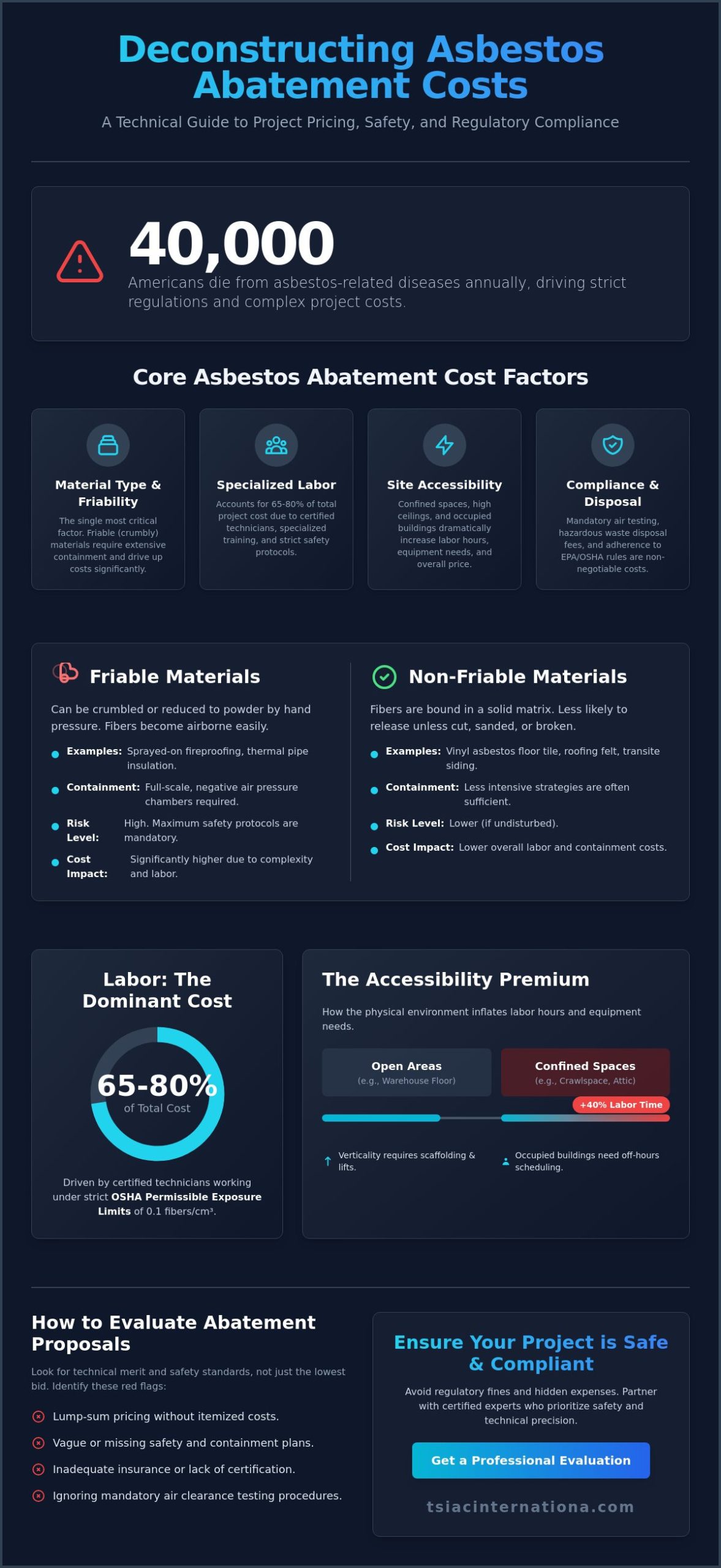
Friability is the most critical technical variable in any project budget. A material is considered friable if it can be pulverized or reduced to powder by hand pressure when dry. This characteristic determines the likelihood of fibers becoming airborne, which directly dictates the complexity of Asbestos abatement procedures. Friable materials, such as thermal system insulation on pipes or sprayed-on fireproofing, require full-scale containment with negative air pressure and decontamination chambers. Conversely, non-friable materials like vinyl asbestos tile or transite siding are often bound in a hard matrix. These materials are less likely to release fibers unless they are cut, sanded, or broken. This allows for less intensive containment strategies and lower overall labor costs compared to their friable counterparts.
Volume and Scale Considerations
The total volume of Asbestos Containing Material (ACM) significantly influences the pricing model, though not always in a linear fashion. Large-scale commercial projects often benefit from economies of scale regarding mobilization and equipment setup. However, small spot removals or residential projects often hit a set-up cost threshold. This means the price for remediating 15 square feet of flooring isn’t one-tenth the price of 150 square feet. Fixed costs, such as transporting specialized equipment, filing regulatory notifications, and conducting mandatory inspections, apply regardless of the project size. Professional contractors must account for these mobilization factors to ensure the site meets federal safety standards before any work begins.
Labor typically accounts for 65% to 80% of the total project expenditure according to data from Environmental Education Associates. This high percentage is due to the intensive requirements for certified technicians who must operate within strict OSHA Permissible Exposure Limits of 0.1 fibers per cubic centimeter. Whether a project is priced by linear footage for pipe lagging or square footage for acoustic ceilings, the technical precision required to protect the estimated 1.3 million workers currently exposed to asbestos in the US remains the primary driver of the budget. Contractors must balance these labor hours against the physical accessibility of the site, which we will examine in the following section.
Structural and Site-Specific Variables Influencing Pricing
While material type is the foundation of an estimate, the physical environment where that material resides dictates the operational tempo. Accessibility remains one of the most underestimated asbestos abatement cost factors in commercial estimating. Removing floor tile in an open 10,000-square-foot warehouse is a straightforward logistical task. Contrast this with removing pipe insulation in a cramped, low-ventilation crawl space or a high-rise mechanical room where movement is severely restricted.
Verticality introduces additional engineering costs. Scaffolding, scissor lifts, and fall protection systems aren’t just equipment rentals; they require certified operators and rigorous safety inspections. Occupancy status also plays a role. Working in an active hospital or school requires stringent barrier systems and off-hours scheduling to prevent exposure to the public, which adds a significant premium compared to vacant, “cold” buildings where work can proceed without disrupting facility operations.
The Accessibility Premium
Confined spaces such as attics or wall cavities can increase labor time by 40% compared to open-area projects. These environments require specialized PPE and often necessitate the use of smaller, manual tools instead of high-efficiency mechanical equipment. The choice between “surgical” removal, which leaves the surrounding structure intact, and total structural demolition also shifts the budget. In a surgical removal, technicians must meticulously isolate the material without damaging adjacent systems, which demands higher precision and more man-hours.
Building Condition and Pre-Abatement Prep
A building’s structural integrity often dictates the safety protocols required before abatement begins. If a facility has suffered neglect or water damage, we may need to implement temporary shoring or stabilization. This is especially true when abatement is a precursor to a larger demolition process south carolina or other regulated regions. Additionally, the site must provide reliable access to electricity and water to support wet-method removal techniques, which are essential for suppressing airborne fibers and maintaining the OSHA permissible exposure limit.
Transporting hazardous waste isn’t a simple hauling job. Proximity to a licensed hazardous waste landfill and state-specific transport regulations influence the final quote. These Regulatory Compliance Requirements ensure that every cubic yard of waste is tracked from the site to the disposal cell. For projects involving complex structural challenges, partnering with a firm experienced in selective demolition ensures that both the abatement and the subsequent structural work remain under tight technical control.
Material Type and Abatement Methodology
Analyzing asbestos abatement cost factors requires a granular look at the specific materials involved and the technical methods required for their safe extraction. The technical execution of the asbestos abatement process varies significantly based on the material’s physical state. For instance, removing popcorn ceilings is notoriously labor-intensive. These textured surfaces often contain multiple layers of paint that must be saturated with amended water to prevent fiber release. The resulting slurry requires careful collection and disposal, which adds hours of manual scraping and meticulous cleanup to the project timeline.
Flooring projects present a different set of engineering challenges. While vinyl asbestos tiles (VAT) are often non-friable and relatively stable, the underlying black mastic adhesive is a significant cost driver. Removing this adhesive typically involves mechanical grinding or chemical solvents. Both methods require advanced HEPA-filtered air management to ensure the site remains within the OSHA permissible exposure limit of 0.1 fibers per cubic centimeter. Similarly, HVAC systems and pipe runs often necessitate “glove-bagging.” This technique involves sealing a specialized plastic bag around a section of pipe to create a localized containment zone, allowing for surgical removal without the need for a full-room enclosure.
Common ACM Material Cost Rankings
Material types generally follow a hierarchy of remediation difficulty. Exterior materials like transite siding or roofing are often categorized as lower-risk projects regarding airborne concentration because natural ventilation reduces the need for complex negative-pressure systems. However, industrial transite pipe removal remains high on the cost spectrum due to the weight of the material and the specialized equipment needed for handling. Interior friable materials, such as boiler insulation or sprayed-on fireproofing, consistently represent the highest cost tier because they demand the most rigorous containment and decontamination protocols.
Encapsulation as a Cost-Effective Alternative
When asbestos-containing materials are in good condition and unlikely to be disturbed, encapsulation offers a technically sound alternative to full removal. This process involves applying a specialized sealant that binds the fibers together or creates a physical barrier over the ACM. According to 2026 industry data, encapsulation can cost 30% to 50% less than full removal, making it a viable option for managing budgets in large-scale facilities. While this provides short-term savings, it does create a long-term management obligation, as the material remains on-site and must be documented. For specific regional insights into these technical choices, refer to our hazardous material abatement south carolina guide. Choosing between stripping and sealing is a strategic decision that balances immediate capital expenditure against future liability.
Indirect Costs and Regulatory Compliance Requirements
Regulatory compliance isn’t just paperwork; it’s the legal backbone of a safe project. Beyond the physical labor, several asbestos abatement cost factors stem from mandatory safety protocols and administrative filings. These indirect expenses ensure that once the containment barriers are dropped, the environment is truly safe for re-occupancy. Property owners often overlook these soft costs, but they’re non-negotiable under federal and state law.
The Role of Third-Party Testing
Air clearance testing represents the most critical indirect cost. It’s standard industry practice to hire a third-party environmental consultant to perform this testing. Using the same firm for both removal and testing creates a conflict of interest that can compromise safety and legal standing. Testing typically involves Phase Contrast Microscopy (PCM) for rapid results or Transmission Electron Microscopy (TEM), which provides a much higher level of magnification. Transmission Electron Microscopy testing is the gold standard for final clearance because it can distinguish asbestos fibers from other non-hazardous particles.
Waste Stream Management
Waste stream management is another major budgetary component. Hazardous waste disposal fees generally range from $10 to $50 per cubic yard, depending on the facility and regional regulations. This doesn’t include the cost of double-bagging, sealing, and labeling materials according to DOT standards. If local landfills are at capacity, transporting hazardous materials across state lines adds significant fuel and logistics surcharges. You can find detailed regional protocols in our guide to asbestos removal south carolina.
Don’t forget the cost of post-abatement reconstruction. Removing asbestos-containing materials often leaves structural voids. Whether it’s replacing an acoustic ceiling or installing new drywall, the project isn’t truly finished until the facility’s restored to its functional state. Budgeting for these replacement materials is essential for an accurate total project estimate. Permitting and notifications also carry fixed fees, usually ranging between $50 and $100 per project. These filings alert regulatory bodies like the EPA or state environmental agencies that hazardous work is occurring. If you’re ready to secure a compliant estimate for your facility, contact our team for professional Asbestos Abatement services.
When budgeting for replacement materials or other facility upgrades, savvy managers often look for ways to maximize their purchasing power. To learn more about earning money back on your business or personal online shopping, visit Cashback Nederland.
Navigating the Bidding Process: How to Evaluate Abatement Proposals
Evaluating a proposal requires more than just looking at the bottom line. In an industry where safety and liability are paramount, the cheapest bid often represents the greatest financial risk. When you analyze asbestos abatement cost factors, you’re essentially reviewing a risk management plan. A proposal that lacks detail usually indicates that the contractor is cutting corners on containment engineering, worker protection, or legal disposal. These omissions can lead to severe regulatory fines or project delays that far exceed the initial savings of a low bid.
Professional quotes must be itemized. You should demand a clear breakdown that separates labor, disposal fees, and containment materials. This transparency allows you to compare bids accurately and ensures that the contractor has accounted for all regulatory requirements. Experience is a significant factor here. A firm with 15 plus years in the field can anticipate site-specific challenges that an inexperienced team might miss, which drastically reduces the likelihood of expensive “unforeseen” change orders halfway through the project.
Many facility managers find they can optimize their budget by integrating abatement with other structural tasks. For example, coordinating removal with commercial interior gutting services streamlines the project timeline and reduces mobilization costs. Combining these phases ensures that the site is cleared of hazardous materials and structurally prepared for the next stage of development in one cohesive, well-organized workflow.
Verifying Contractor Credentials
Before signing any contract, you must verify that the firm holds current state licenses and EPA certifications. Insurance is another critical area where low-bid contractors often fail to meet professional standards. You should specifically look for “Occurrence” based insurance rather than “Claims-Made” policies. Occurrence insurance provides lifetime coverage for work performed during the policy period, which is essential given that asbestos-related illnesses can take decades to manifest. Additionally, every project requires a Site-Specific Safety Plan (SSSP) that outlines the exact containment and air monitoring protocols for your unique environment.
The TSIAC International Approach
Our 15-year history in the industry allows us to provide accurate, fixed-price contracts for both structural demolition and hazardous material remediation. We don’t believe in vague estimates; we provide methodical, data-driven proposals that reflect the true scope of work. Our team prioritizes environmental responsibility, often utilizing recycling services to reduce the volume of waste sent to landfills. This disciplined approach ensures that your project remains compliant, on budget, and safe for all future occupants. If you require technical precision for your next project, request a professional asbestos abatement quote from TSIAC International.
Securing Your Project’s Technical and Financial Integrity
Understanding the various asbestos abatement cost factors is the first step toward reclaiming your property’s safety and long-term value. We’ve explored how material friability, site accessibility, and rigorous third-party testing requirements define the technical scope of a professional project. These variables aren’t just line items; they’re essential components of a risk mitigation strategy that protects your stakeholders and your bottom line from future litigation or regulatory penalties.
As national structural demolition experts with over 15 years of industry experience, TSIAC International provides the technical precision required for complex remediation environments. We’re fully licensed for both lead and asbestos abatement, ensuring your project meets every federal and state safety standard. Taking control of hazardous material remediation doesn’t have to be a source of budgetary uncertainty. You can Secure a Professional Abatement Quote from TSIAC International to begin your project with a partner who prioritizes methodical accuracy and environmental responsibility. We’re ready to help you move your project forward with confidence.
Frequently Asked Questions
How much does asbestos removal typically cost per square foot in 2026?
Industry averages for interior asbestos removal in 2026 typically range between $5 and $20 per square foot. Exterior projects involving roofing or siding require more specialized handling and often range from $50 to $150 per square foot. These rates reflect the high cost of certified labor, which accounts for 65% to 80% of the total project expenditure.
Can I stay in my home or building during the asbestos abatement process?
Occupants are generally required to vacate the work area to ensure safety and prevent accidental exposure to airborne fibers. While some commercial facilities utilize phased abatement with high-integrity barrier systems, residential projects usually require total vacancy. Re-entry is only permitted after a third-party consultant confirms the site meets final air clearance standards.
What is the difference between friable and non-friable asbestos in terms of cost?
Friable materials cost significantly more to remediate because they can be easily crushed into a powder, creating a high risk of airborne fiber release. This requires full negative-pressure containment and advanced filtration systems. Non-friable materials, like vinyl floor tiles, are often cheaper to remove because they remain stable and require less intensive engineering controls during extraction.
Are there hidden costs in asbestos removal quotes that I should look for?
Commonly overlooked asbestos abatement cost factors include third-party air monitoring fees, hazardous waste disposal surcharges, and post-abatement reconstruction. You should also check if the quote includes state-level notification fees or the mobilization of specialized equipment for confined spaces. Transparent proposals should clearly itemize these administrative and logistical expenses.
Is a permit required for asbestos removal, and how much does it cost?
Yes, a permit is a legal requirement for most professional abatement projects to ensure compliance with federal and state safety regulations. These permits typically cost between $50 and $100. Filing these documents allows environmental agencies to track the handling and disposal of hazardous materials from the site to the landfill.
How long does the average asbestos abatement project take to complete?
The timeline for a standard project ranges from two days to over a week, depending on the volume of material and the complexity of the setup. A significant portion of this duration is dedicated to the rigorous preparation of the containment area. Additionally, the mandatory period for laboratory analysis of air clearance samples can add 24 to 48 hours to the final schedule.
Does homeowners or commercial insurance typically cover asbestos removal?
Standard insurance policies often exclude asbestos remediation unless the material was disturbed by a covered peril, such as a fire or water pipe burst. Most abatement work is considered a maintenance or renovation expense and is not covered under general liability or property insurance. You should review your specific policy for environmental hazard riders before beginning work.
What happens if a contractor discovers more asbestos during the removal process?
If additional asbestos-containing material is discovered, work must stop immediately to prevent unregulated fiber release. The contractor will perform an assessment to determine how the new findings impact the primary asbestos abatement cost factors and the site safety plan. This typically results in a change order that accounts for the extra labor and disposal requirements necessary to maintain compliance.
