Finding a Trustworthy Abatement Contractor: The 2026 Property Owner’s Guide

According to EPA enforcement reports from 2023, non-compliance with hazardous material regulations resulted in over $25 million in civil penalties…

According to EPA enforcement reports from 2023, non-compliance with hazardous material regulations resulted in over $25 million in civil penalties across the construction sector. You likely understand that managing a property containing asbestos, lead, or mold is more than a logistical hurdle; it’s a significant liability that affects both your conscience and your balance sheet. The anxiety over potential health risks for your tenants or the threat of a sudden OSHA audit is a reality for owners dealing with infrastructure built before 1980.

We’re here to provide clarity. This guide focuses on the critical steps for finding a trustworthy abatement contractor who prioritizes engineering precision over cutting corners. You’ll learn how to secure a certified-clean site while ensuring your property remains fully compliant with evolving 2026 safety standards. We’ll examine the specific certifications required for modern projects, the red flags often hidden in technical quotes, and the essential documentation needed to facilitate a seamless transition to the demolition phase.

Key Takeaways

  • Learn to verify non-negotiable credentials, such as state-specific licensing and bonding, to ensure your project meets 2026 regulatory standards.
  • Discover the critical steps for finding a trustworthy abatement contractor who prioritizes controlled containment and remediation over simple material removal.
  • Understand how to analyze project quotes to identify red flags, such as suspiciously low bids that may indicate dangerous safety shortcuts or illegal disposal.
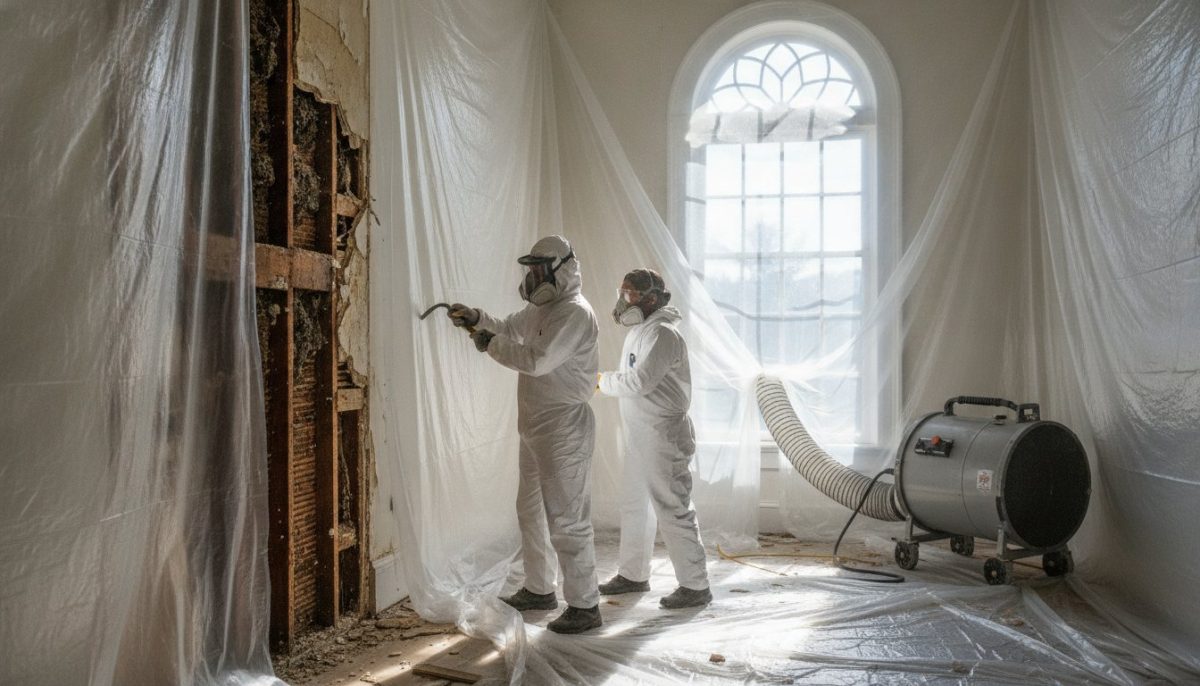
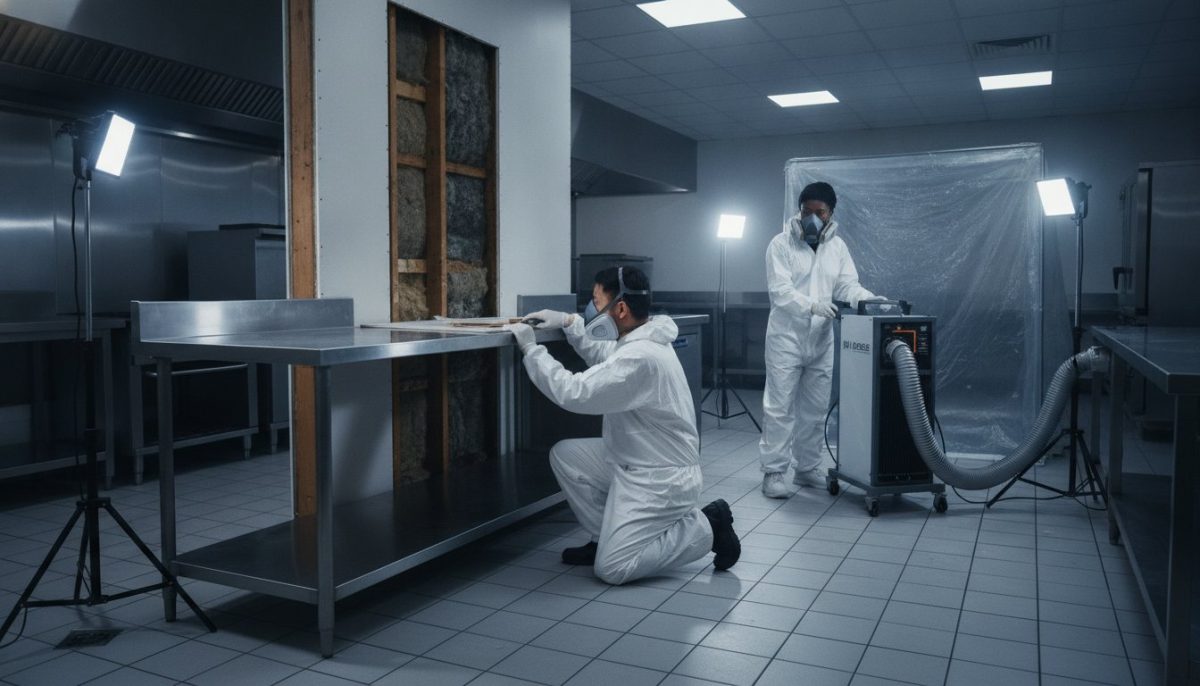
  • Identify the essential physical safety measures, including polyethylene containment barriers and air filtration, required for a compliant and hazard-free job site.
  • Explore the benefits of integrated remediation services that combine hazardous material removal with complex structural demolition for maximum project efficiency.

The High Stakes of Finding a Trustworthy Abatement Contractor

Managing a property in 2026 requires more than just aesthetic maintenance; it demands a rigorous approach to environmental safety. When hazardous materials like asbestos or lead-based paint are discovered, the situation shifts from a standard renovation to a high-stakes engineering challenge. Many owners mistake abatement for simple demolition. In reality, it’s a meticulously controlled containment and remediation process. Finding a trustworthy abatement contractor is the only way to ensure these toxins don’t migrate from a localized area into the building’s entire HVAC system.

General contractors often possess broad construction knowledge, but they’re legally and technically insufficient for hazardous material handling. They lack the specialized HEPA-filtered vacuum systems, negative air pressure machines, and decontamination chambers required by OSHA Part 1926.1101. Relying on an uncertified team creates a legal liability shift. Under federal “cradle-to-grave” statutes, the property owner remains responsible for improper hazardous waste disposal, even if a third party performed the work. If a contractor dumps asbestos-containing material in a standard landfill, the EPA can hold the owner liable for the entire cleanup cost. Physical risks are equally daunting. Improper handling leads to secondary contamination, where microscopic particles settle in carpets and ductwork, creating long-term health hazards for every future occupant.

Abatement vs. Remediation: Understanding the Difference

While people use the terms interchangeably, they represent distinct technical protocols. Asbestos abatement focuses on the total removal or permanent encapsulation of fibers. Lead remediation involves stabilizing or removing lead-based paint to prevent dust inhalation. Mold mitigation centers on structural drying and spore removal. The scope of work changes based on the specific hazardous material identified because each substance reacts differently to disturbance. Abatement is a highly regulated engineering control process designed to isolate and eliminate hazardous materials while preventing environmental cross-contamination. Following established Asbestos abatement procedures ensures that microscopic fibers don’t become airborne during the removal phase.

The Consequences of Cutting Corners

The financial impact of hiring an unqualified crew is often immediate and severe. EPA civil penalties for National Emission Standards for Hazardous Air Pollutants (NESHAP) violations can exceed $37,000 per day. Beyond fines, a failed air clearance test can halt a multi-million dollar renovation for weeks. If a Post-Abatement Air Clearance (PAAC) doesn’t meet the 0.01 fibers per cubic centimeter threshold, the contractor must re-clean the entire site at the owner’s expense. Long-term property value also suffers. Without a certified waste manifest and a final clearance report, prospective buyers or lenders will likely view the asset as a “distressed” property, often leading to a 10% to 15% reduction in market valuation. Finding a trustworthy abatement contractor protects the physical structure and the financial equity of the investment.

The Credentials Checklist: Non-Negotiables for 2026

Success in hazardous material removal depends on technical precision and legal adherence. When you’re finding a trustworthy abatement contractor, your first task involves auditing their professional credentials. State-specific licensing is the foundation of this process. Every legitimate firm must hold a current license specifically for asbestos or lead abatement, which you can verify through state regulatory databases. These licenses confirm the contractor understands the 2026 protocols for containment and disposal. Identifying these specific documents is the most reliable way of finding a trustworthy abatement contractor who respects both your budget and your health.

Worker safety and site supervision are equally critical. Each person on your property must possess up-to-date, EPA-approved training certificates. This ensures they follow OSHA’s Asbestos Standard for the Construction Industry, which mandates specific work practices and the presence of a “competent person” to oversee high-risk tasks. Without these certifications, you risk both legal liability and environmental contamination. Bonding requirements also provide a financial safety net. A performance bond ensures the project reaches completion, while a payment bond guarantees that all subcontractors and material suppliers receive their dues, preventing mechanics’ liens on your property.

Verifying Insurance and Bonding

Don’t accept a verbal confirmation of insurance. You need a Certificate of Insurance (COI) that specifically lists “Pollution Liability.” Standard general liability policies often contain “Total Pollution Exclusions,” meaning they won’t cover a spill or fiber release. It’s better to choose an “Occurrence-Based” policy over a “Claims-Made” policy. Occurrence-based coverage protects you even if a claim is filed years after the work ends, provided the incident happened during the policy period. Always request direct verification from the insurance carrier to confirm the policy is active and paid in full.

Modern Compliance Documentation

A project’s paper trail is as important as the physical removal. For commercial renovations, NESHAP (National Emission Standards for Hazardous Air Pollutants) requires a 10-day notification to the EPA before work begins. Once the project concludes, you must receive a Waste Shipment Record (WSR) or disposal manifest. This document proves the hazardous waste reached a licensed landfill. Finally, never accept a project as “complete” without a clearance letter from an independent, third-party laboratory. This lab should perform aggressive air sampling to confirm the area is safe for re-occupancy. If you need a partner who prioritizes these complex technical requirements, focus on firms with a proven track record in high-stakes environments.

Finding a Trustworthy Abatement Contractor: The 2026 Property Owner’s Guide

Vetting the Bid: Comparing Quotes Beyond the Bottom Line

Selecting a partner based solely on the lowest price often leads to catastrophic failure. In the abatement industry, an unusually low bid usually indicates that a contractor is cutting corners on labor protection or bypassing legal disposal fees. Finding a trustworthy abatement contractor requires a forensic look at the line items within a proposal. If a quote lacks specific costs for 6-mil polyethylene sheeting, HEPA-filtered negative air machines, or specialized decontamination units, the contractor likely intends to skip these critical safety layers.

A professional Scope of Work must be granular. It should specify a minimum of four air changes per hour within the containment zone to maintain negative pressure. This isn’t just a suggestion; it’s a technical requirement to prevent hazardous fibers or particles from migrating to clean areas of the property. You should also demand an equipment list that includes HEPA vacuums certified to capture 99.97% of particles down to 0.3 microns. Without these tools, the contractor is simply moving dust around your building rather than removing it.

Questions to Ask During the Site Walk-Through

During the initial inspection, watch how the contractor evaluates the structural layout. Ask these specific questions to gauge their technical competence:

  • How will you establish negative pressure and contain the work area? Look for mentions of manometer monitoring and physical barriers.
  • What is your specific plan for the safe transport of hazardous materials? They must describe a path that avoids high-traffic zones.
  • Who is the independent lab performing the final air clearance testing? A trustworthy firm never tests their own work; they use a third-party laboratory to ensure total transparency.

Analyzing the Disposal Plan

The liability for hazardous waste remains with the property owner until it reaches its final destination. You must confirm the contractor uses certified hazardous waste landfills and provides a waste shipment record for every load. All debris must be double-bagged in 6-mil bags, goose-neck sealed with duct tape, and labeled according to federal EPA and OSHA standards. For projects involving Hazardous Material Abatement in South Carolina, contractors must also adhere to specific DHEC regulations regarding transport manifests.

Finally, evaluate the proposed timeline. Professional abatement requires meticulous setup and mandatory settling periods for airborne dust. A contractor promising to finish a 1,000-square-foot lead or asbestos project in a single day is likely ignoring the 24-hour waiting period often required before final air clearance testing can begin. Precision takes time, and speed shouldn’t come at the expense of your structural integrity or health.

Red Flags and Industry Warning Signs

Finding a trustworthy abatement contractor requires a critical eye for technical compliance and safety protocols. Professional hazardous material removal is a highly regulated field where shortcuts lead to legal liability and health crises. If a contractor suggests skipping the permitting process to expedite the timeline or reduce costs, they’re signaling a disregard for state and federal law. In South Carolina, for example, DHEC regulations mandate specific notification periods before any regulated asbestos-containing material is disturbed. Bypassing these steps can result in five-figure fines for the property owner.

Visual inspections of active job sites often reveal a contractor’s true standards. You should look for specific engineering controls and safety measures, including:

  • Containment Barriers: Professional sites utilize 6-mil polyethylene sheeting to create airtight seals. If you see thin, household-grade plastic or gaps in the taping, the containment is compromised.
  • Negative Air Pressure Monitors: These digital devices are mandatory. They ensure that air flows into the work zone and through HEPA filters, preventing contaminated dust from escaping into clean areas of the building.
  • PPE Compliance: Workers must wear appropriate Personal Protective Equipment, including N100 or P100 respirators and disposable suits. Seeing workers in standard dust masks or street clothes is a definitive sign of an amateur operation.

Identifying the “Solar Cowboy” Equivalent in Abatement

The abatement industry has its share of “Solar Cowboys,” contractors who lack a permanent physical office or a verifiable track record in complex industrial environments. These operators often apply high-pressure sales tactics, demanding the full project amount upfront. A legitimate firm will tie final payment to a successful third-party air clearance test. Furthermore, look closely at the contract. If it doesn’t specify the exact EPA-approved landfill for disposal, you risk being held responsible for illegal dumping. Transparency in the waste manifest process is the hallmark of a professional partner.

The Danger of DIY or Unlicensed Labor

Attempting to save money through DIY methods or unlicensed labor is a high-risk gamble. Improper removal techniques aerosolize microscopic fibers, which stay suspended in the air for up to 72 hours. Once these fibers enter an HVAC system or settle into porous furniture, the site becomes effectively uninhabitable. Cleaning a cross-contaminated site is significantly more expensive than a standard removal, often increasing remediation costs by 400% or more. Before starting any structural changes, it’s vital to understand The Demolition Process in South Carolina to ensure every safety hurdle is cleared.

Ensure your property meets the highest safety standards by choosing a partner with proven technical expertise. Contact TSIA C International for a professional site assessment today.

The TSIAC International Standard: Integrity in Remediation

TSIAC International brings over 15 years of specialized experience to complex structural and selective demolition projects. Since 2009, our team has refined a methodology that prioritizes technical precision over marketing slogans. Finding a trustworthy abatement contractor requires looking past surface-level promises to examine a firm’s operational history and regulatory compliance record. We provide transparent reporting for every client. This ensures that every milligram of hazardous material is documented from the moment of removal to its final disposal. Our crews are trained to manage difficult locations where standard equipment fails, often utilizing industrial rope access or custom-engineered scaffolding to reach contaminated areas safely.

Why an Integrated Approach Saves Time and Money

Most property owners hire separate crews for abatement and demolition. This often leads to a cycle of delays and finger-pointing where one team stalls the other. These inefficiencies can increase project costs by 15% or more. TSIAC eliminates this friction by handling hazardous material removal and structural gutting simultaneously. We streamline the permitting process for total structural removals, which reduces the administrative burden on the property owner. For those managing assets in the Southeast, understanding Asbestos Removal in South Carolina is critical for staying within the 2026 legal frameworks. Our integrated model ensures that safety protocols and structural integrity move in lockstep, preventing the “blame game” that plagues traditional construction sites.

Environmental Stewardship and Recycling

Environmental responsibility is a logistical requirement in modern remediation, not just a preference. We implement debris recycling programs that sort metal, wood, and plastic directly on-site. This systematic approach reduces landfill impact by up to 70% on major industrial demolition projects. To prevent cross-contamination, we use rigid safety protocols that isolate non-hazardous materials from contaminated zones before they leave the site. This level of control protects the environment and the client’s legal standing. Finding a trustworthy abatement contractor means choosing a partner who values long-term safety over short-term shortcuts. Partnering with TSIAC means choosing a safer, cleaner, and more efficient project completion. We don’t just clear a site; we engineer a solution that meets the highest industrial standards for safety and sustainability.

Securing Your Property’s Future with Precision Remediation

Protecting your investment requires more than a casual search. It demands a technical audit of every potential partner. You’ve seen that finding a trustworthy abatement contractor in 2026 hinges on verifying full compliance with EPA and OSHA regulations. A low bid often masks a lack of comprehensive pollution liability insurance, which leaves your assets exposed to unnecessary risk. By prioritizing a credentials-first approach, you ensure that remediation is a controlled engineering process rather than a liability.

TSIAC International leverages 15+ years of industry experience to handle complex remediation in high-stakes environments. We don’t offer empty promises; we deliver documented safety and structural integrity. Our team maintains strict adherence to federal protocols to ensure your project remains on schedule and within regulatory bounds. When the stakes involve hazardous materials, professional precision is the only acceptable metric for success. You deserve a partner who navigates these technical challenges with calm authority and proven expertise.

Contact TSIAC International for a Professional Abatement Quote

Taking the right steps today prevents costly structural and legal failures tomorrow. Your property deserves the highest standard of technical excellence and a partner who delivers on every commitment.

Frequently Asked Questions

How do I check if an abatement contractor is licensed?

You verify an abatement contractor’s license by searching the official state environmental agency database or the EPA’s Lead-Safe firm registry. Every certified professional holds a unique credential number that’s verifiable online. You should request a copy of the firm’s current 2026 certification and cross-reference it with the Department of Labor’s active list to ensure compliance and safety.

Is it safe to stay in the building during asbestos or lead abatement?

It’s not safe to remain in the immediate work zone during active asbestos or lead abatement processes. EPA guidelines require occupants to vacate the area until third-party air clearance testing proves fiber levels are below 0.01 per cubic centimeter. Professionals establish sealed containment zones using 6-mil polyethylene sheeting to protect the remaining 95 percent of the building from cross-contamination.

What is the difference between a standard demolition and abatement?

Standard demolition involves the mechanical destruction of structures, but abatement is the precise process of isolating and removing hazardous pollutants. Abatement uses negative air machines and HEPA filtration to capture microscopic particles that traditional demolition would release into the environment. This technical approach protects both the structural integrity and the health of future occupants through engineering controls.

How much does professional abatement cost compared to DIY?

Professional abatement involves higher upfront costs than DIY, but it eliminates the risk of legal penalties that reach $37,500 per day for environmental violations. Industry reports from 2024 indicate that professional asbestos removal typically ranges from $1,500 to $3,000 for small residential projects. DIY attempts often lead to 100 percent contamination of the HVAC system, causing much higher long-term remediation expenses.

What documents should I receive after the abatement is finished?

You must receive a comprehensive close-out binder containing the waste disposal manifest, daily work logs, and independent air clearance certificates. The waste manifest is a critical legal document signed by the licensed landfill, proving the hazardous material reached its destination. Finding a trustworthy abatement contractor guarantees you get these records to protect your property’s resale value and legal standing.

Can a general contractor handle lead paint removal?

A general contractor can only handle lead paint removal if they hold a valid EPA RRP certification and employ workers trained in lead-safe practices. Without this specific 2026 accreditation, they lack the technical equipment to manage toxic dust. Finding a trustworthy abatement contractor is vital because they follow the 40-hour HAZWOPER standards required for high-risk environmental work and hazardous waste operations.

What happens if a contractor is caught improperly disposing of hazardous waste?

Contractors caught improperly disposing of hazardous waste face heavy civil fines, license revocation, and potential jail time under the Resource Conservation and Recovery Act. The EPA can levy penalties up to $70,117 per violation for each day the non-compliance continues. Property owners might also be held liable for cleanup costs if the contractor’s disposal chain isn’t documented and verified.

How long does the average abatement project take?

The average residential abatement project takes between 3 and 5 days to complete from initial containment to final clearance. Industrial sites or complex structural projects often require 15 to 20 days due to the scale of the containment systems. Each phase is strictly timed, including a mandatory 24-hour settling period before the final air quality samples are collected for laboratory analysis.

Structural Mold Removal and Prevention: The Definitive 2026 Guide for Property Owners

If you see mold on a surface, you’re looking at the tip of an iceberg that likely hides 85% of the fungal colony within your building’s structural…

If you see mold on a surface, you’re looking at the tip of an iceberg that likely hides 85% of the fungal colony within your building’s structural cavities. Property owners often struggle with recurring growth that returns within 60 days of a standard cleaning. It’s frustrating to face the same moisture issues repeatedly while worrying about 2026 safety standards and the long-term integrity of your investment. We agree that a superficial fix isn’t an option when dealing with complex structural health and toxic spore counts.

This guide empowers you to master the technical requirements for permanent mold removal and prevention through professional abatement and moisture control strategies. You’ll gain the engineering-grade insight needed to eliminate underlying causes rather than just treating symptoms. We’ll detail the specific protocols for industrial remediation, the mechanics of structural drying, and the preventive measures that guarantee a safe, compliant environment for years to come.

Key Takeaways

  • Recognize mold as a biological hazard that compromises structural integrity, requiring an engineering-led approach to remediation rather than cosmetic cleaning.
  • Master the fundamental axiom of mold removal and prevention by managing moisture levels and adhering to the critical 48-hour window for drying structural materials.
  • Understand the “Source Removal” philosophy and why stripping contaminated areas to the studs is often the only way to ensure permanent abatement.
  • Learn to identify and manage the “triple threat” of mold, asbestos, and lead in older buildings to avoid hazardous exposure during restoration.
  • Discover how selective demolition and technical precision protect both the health of occupants and the long-term structural value of the property.

The Science of Mold Growth and Structural Degradation

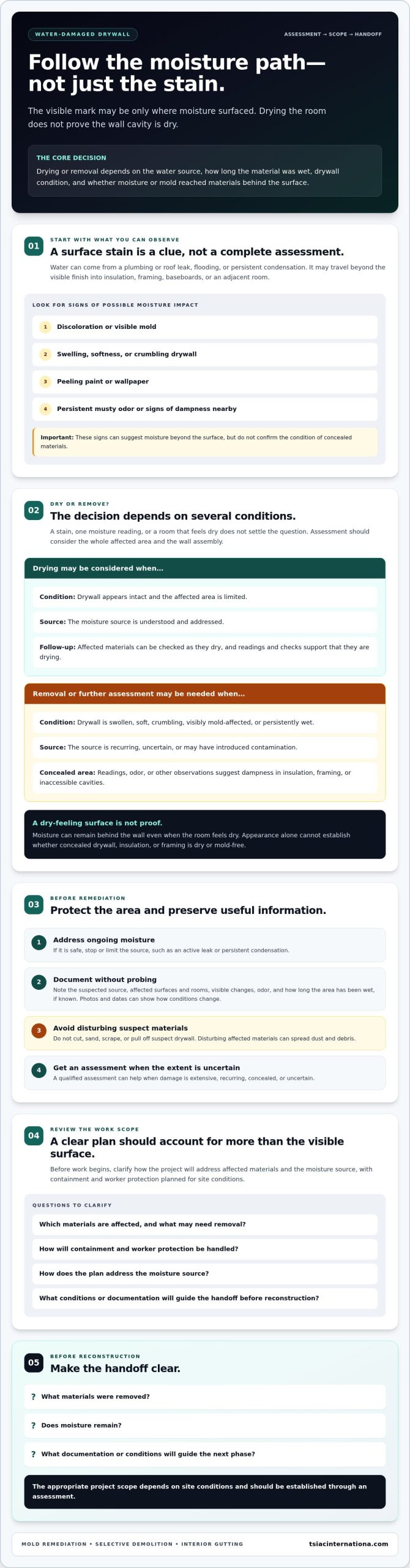
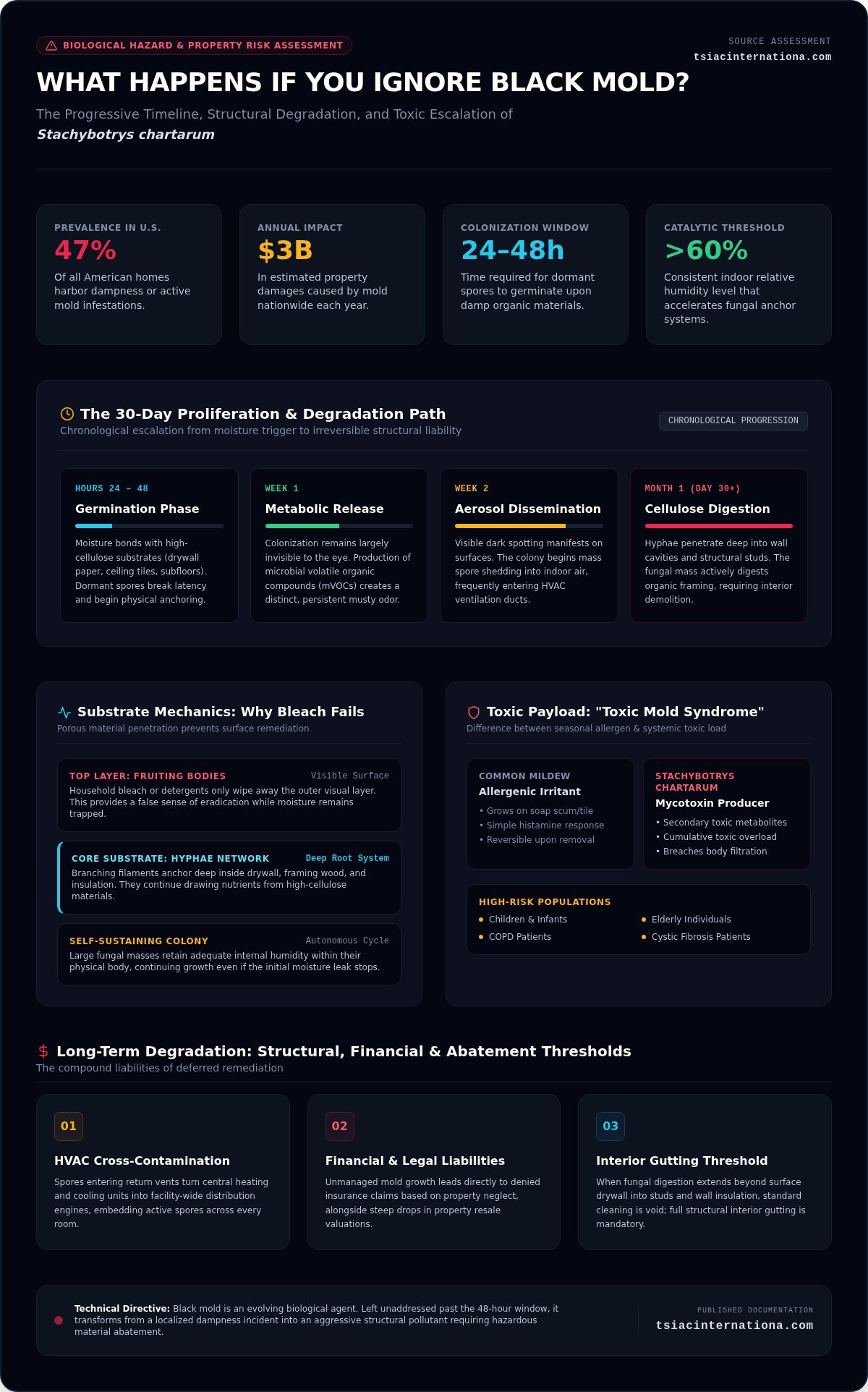
Mold isn’t a surface stain; it’s a biological hazard that actively consumes a building’s physical components. These fungal colonies thrive by digesting cellulose, which is the primary structural component of drywall, wood framing, and paper-faced insulation. When moisture levels remain above 16% in wood or 60% relative humidity in the air, dormant spores activate. This process triggers a metabolic cycle where the fungi secrete enzymes that break down complex organic polymers. Effective mold removal and prevention requires understanding that these organisms don’t just sit on top of materials. They integrate into them. The Science of Mold Growth confirms that these organisms secrete enzymes to digest organic matter, leading to irreversible decay if left unmanaged. Structural mold is growth that has penetrated porous substrates, making simple surface cleaning ineffective for long-term remediation.

Pathogenic Species and Health Implications

While many indoor fungi are relatively benign, toxigenic species like Stachybotrys chartarum present severe risks. This variety produces macrocyclic trichothecene mycotoxins, which are secondary metabolites that can inhibit protein synthesis in human cells. During active growth cycles, mold releases Microbial Volatile Organic Compounds (mVOCs). These gases create the characteristic musty odor and contribute to respiratory distress. Vulnerable populations, including the 10% of the population with mold-related allergies or those with compromised immune systems, face heightened risks of chronic inflammatory response syndrome (CIRS) in both residential and high-occupancy commercial settings.

Identifying Hidden Structural Damage

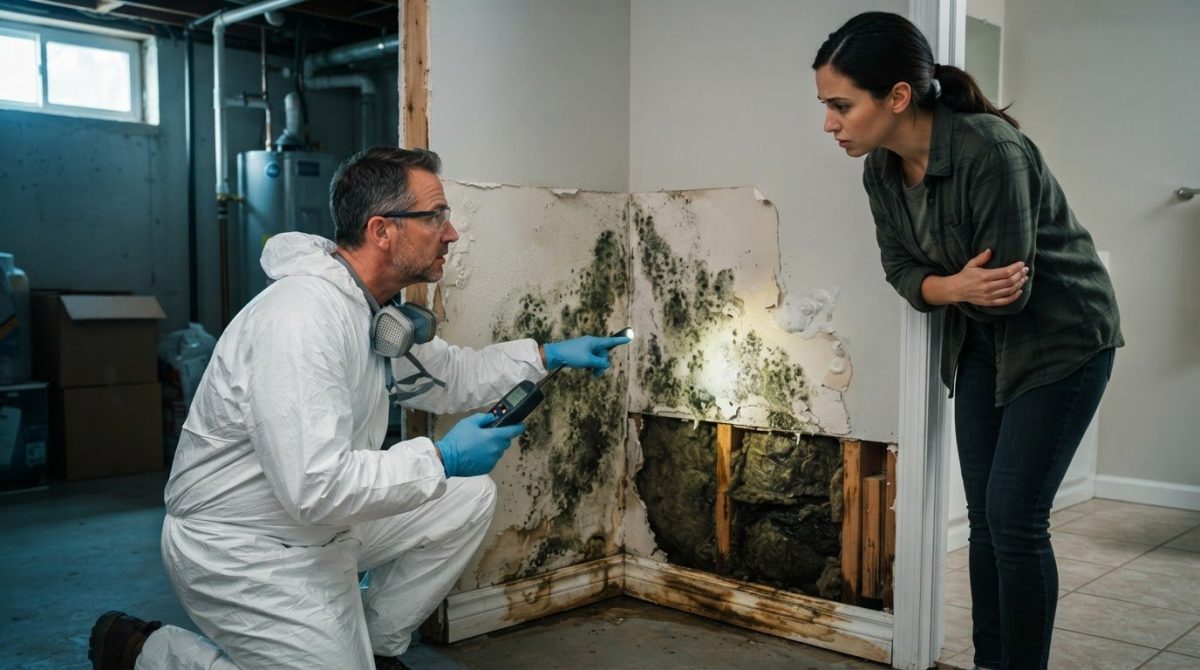
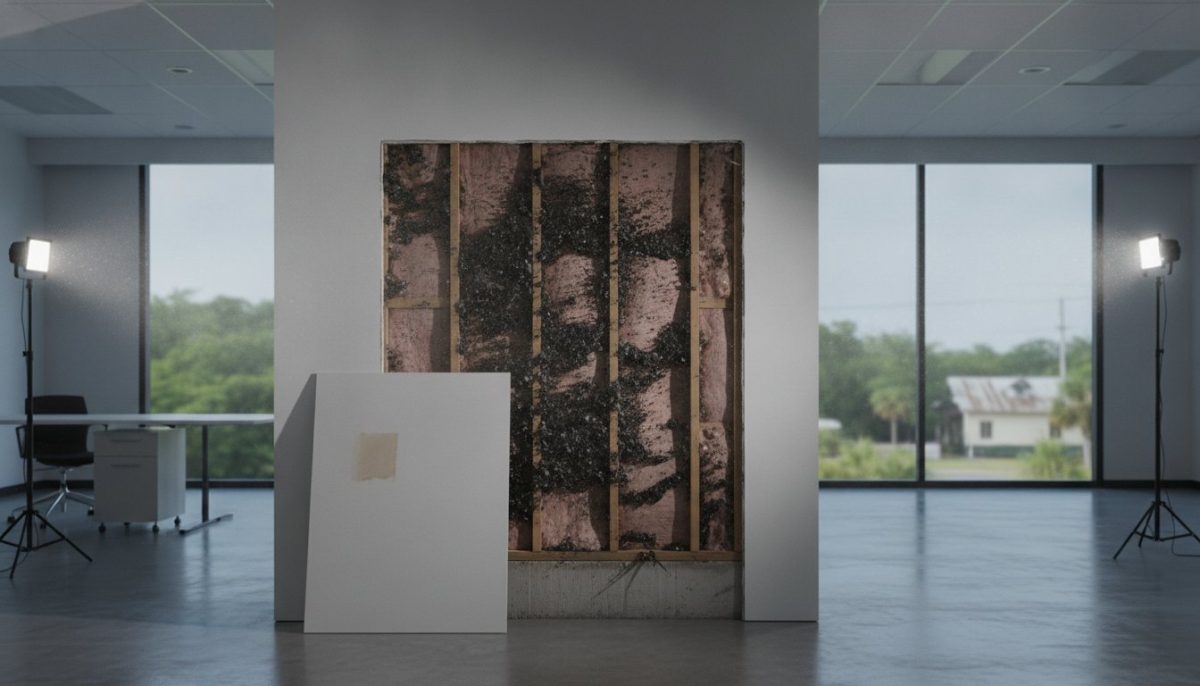
Hidden structural damage often occurs within wall cavities or HVAC systems where visibility is zero. Mold weakens load-bearing wood members by inducing cellular breakdown, a process similar to dry rot that reduces the wood’s shear strength by up to 50% in extreme cases. HVAC systems act as distribution networks for spores, contaminating internal insulation and coil components. If structural saturation persists for more than 48 to 72 hours, the risk of permanent material failure increases. Professional inspection is mandatory when moisture has reached the subfloor or internal framing, as DIY cleaning cannot reach the hyphae embedded deep within the material’s grain. Comprehensive mold removal and prevention strategies must account for these hidden reservoirs to ensure the building’s long-term stability.

Strategic Moisture Control: The Foundation of Permanent Prevention

In the structural remediation industry, experts follow a single, non-negotiable axiom: mold control is moisture control. There are no exceptions to this rule. Effective mold removal and prevention depends entirely on your ability to dominate the environment’s hydration levels. When water-damaged materials aren’t dried within a strict 24 to 48-hour window, microbial colonization becomes inevitable. Once spores take root in porous substrates, the complexity of the recovery project escalates significantly. The data shows that materials remaining saturated beyond this 48-hour threshold are 65% more likely to require full structural replacement rather than simple cleaning.

A building’s envelope integrity serves as the primary defense against external water intrusion. We frequently identify thermal bridging as a silent culprit in modern facilities. This occurs when structural components, such as steel beams or uninsulated concrete, create a direct path for heat transfer. These points become localized condensation zones. When moisture-laden air hits these cold surfaces, it reaches the dew point and liquefies, creating a hidden nursery for fungal growth behind finished walls. Adhering to standards for Professional Mold Remediation ensures these thermal anomalies are identified and corrected before they cause systemic structural damage.

Humidity Management and Indoor Air Quality

Engineering requirements for moisture regulation dictate that indoor relative humidity must stay below 50% year-round. This isn’t a suggestion; it’s a technical threshold for safety. High-performance HVAC systems must be sized to handle latent heat loads effectively to avoid “short-cycling,” which leaves humidity in the air. These air quality management protocols overlap significantly with hazardous material abatement south carolina standards. Both disciplines require precise air pressure differentials and HEPA filtration to prevent the spread of contaminants throughout a facility.

Structural Water Intrusion and Drainage

Groundwater seepage remains a primary threat to foundation stability. Hydrostatic pressure can force thousands of gallons of water through microscopic fissures in basements and crawlspaces. Effective drainage requires a multi-layered approach to keep the building’s footprint dry. Consider these critical maintenance points:

  • Site Grading: Maintain a minimum 5% slope away from the foundation for at least 10 feet.
  • Gutter Systems: Ensure downspouts discharge at least 6 feet away from the structure.
  • Flashing: Inspect window and door flashing every 24 months to prevent seal failure.

We’ve found that 40% of moisture failures stem from neglected exterior transitions. Regular inspections of these points are vital for a long-term mold removal and prevention strategy. If you’re managing a complex facility with persistent dampness, consulting with a structural specialist can identify the root cause of the intrusion before it requires an expensive teardown.

Structural Mold Removal and Prevention: The Definitive 2026 Guide for Property Owners

DIY Cleanup vs. Professional Mold Remediation

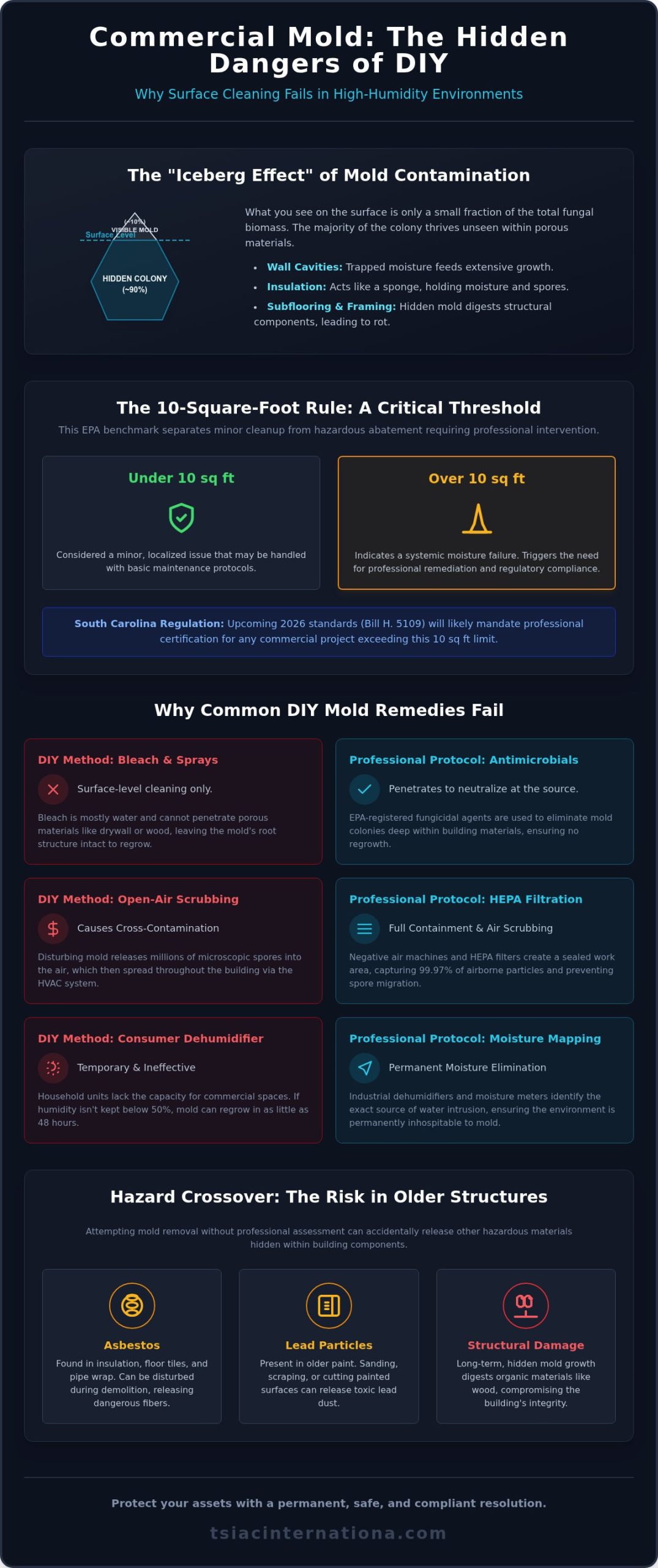
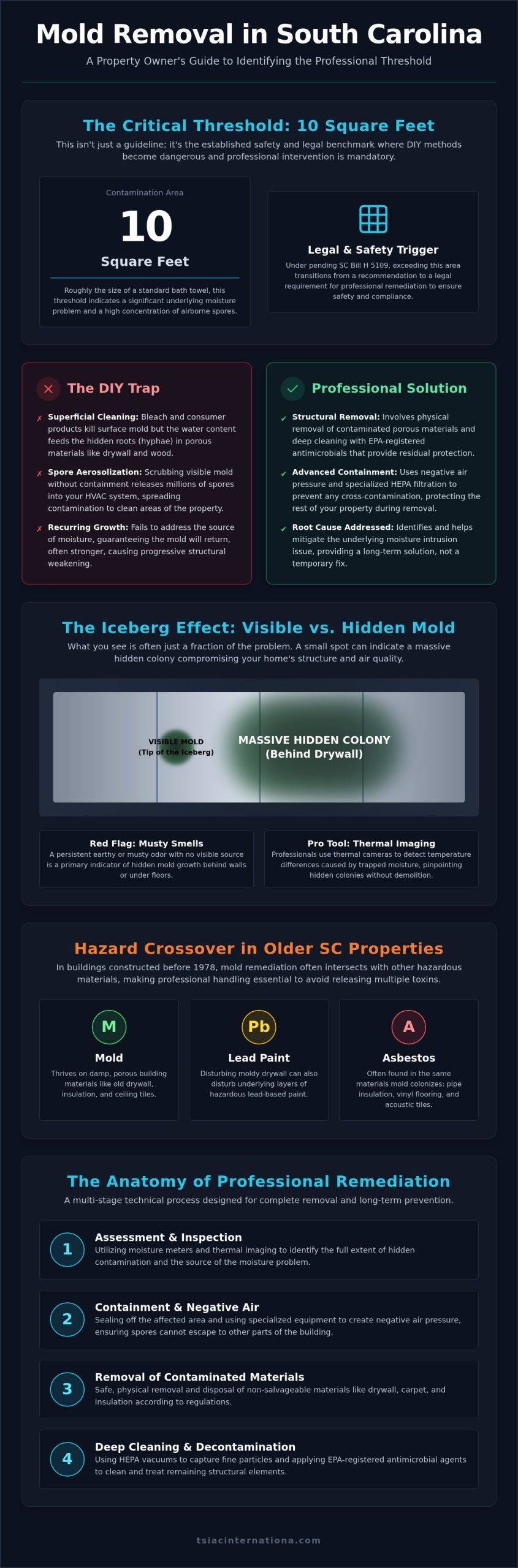
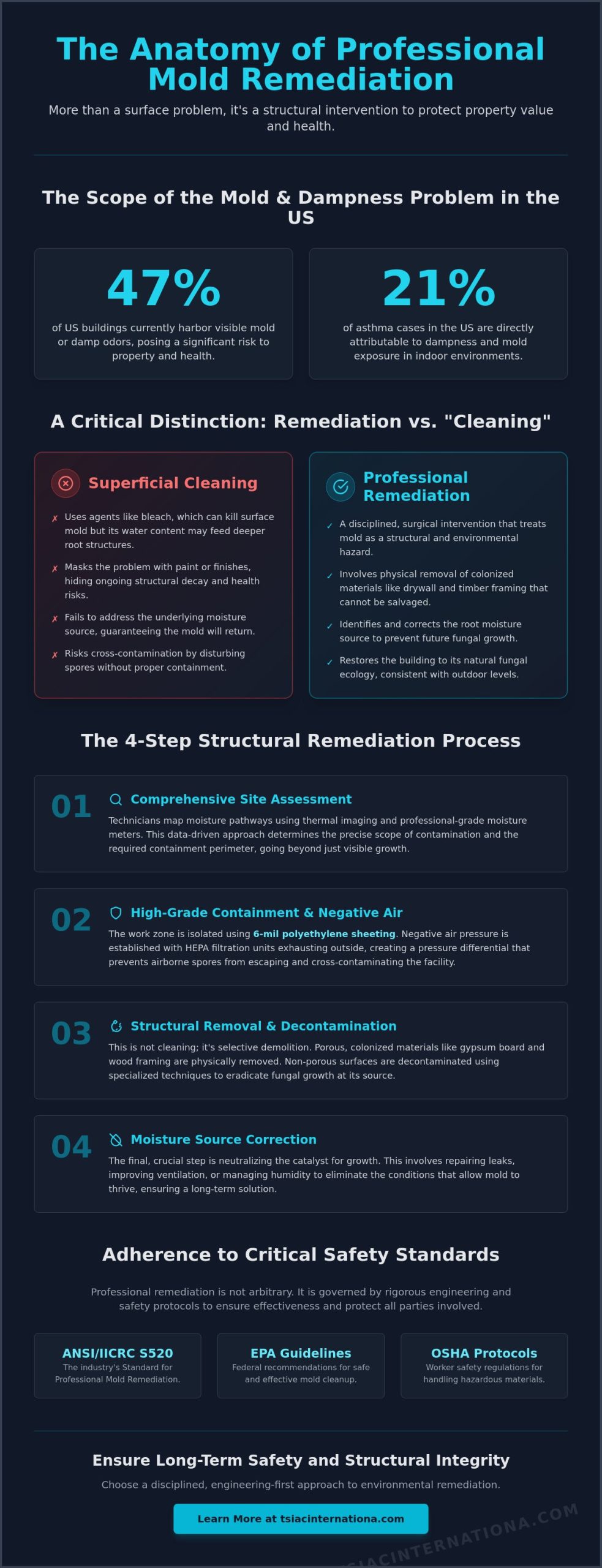
Effective mold removal and prevention requires a technical understanding of material porosity and fungal biology. Surface scrubbing often masks deep-seated structural issues rather than resolving them. A frequent error among property owners is the use of bleach on porous substrates like drywall, ceiling tiles, or unfinished wood. Bleach possesses a high surface tension that prevents it from penetrating the material. While it may discolor the surface mold, the water content in the solution often reaches the roots, providing the moisture necessary for the fungus to return with greater intensity within 14 to 21 days. True remediation involves the physical removal of contaminated porous materials or the specialized mechanical cleaning of non-porous surfaces.

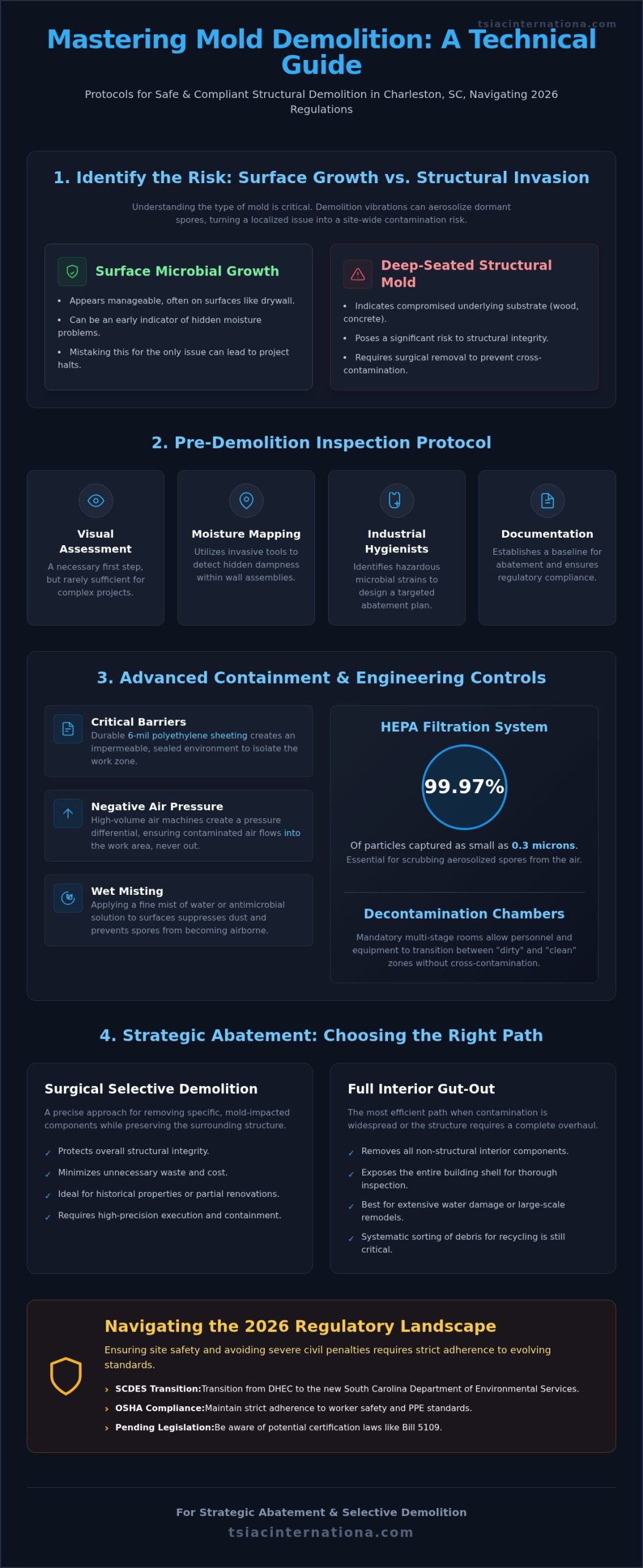
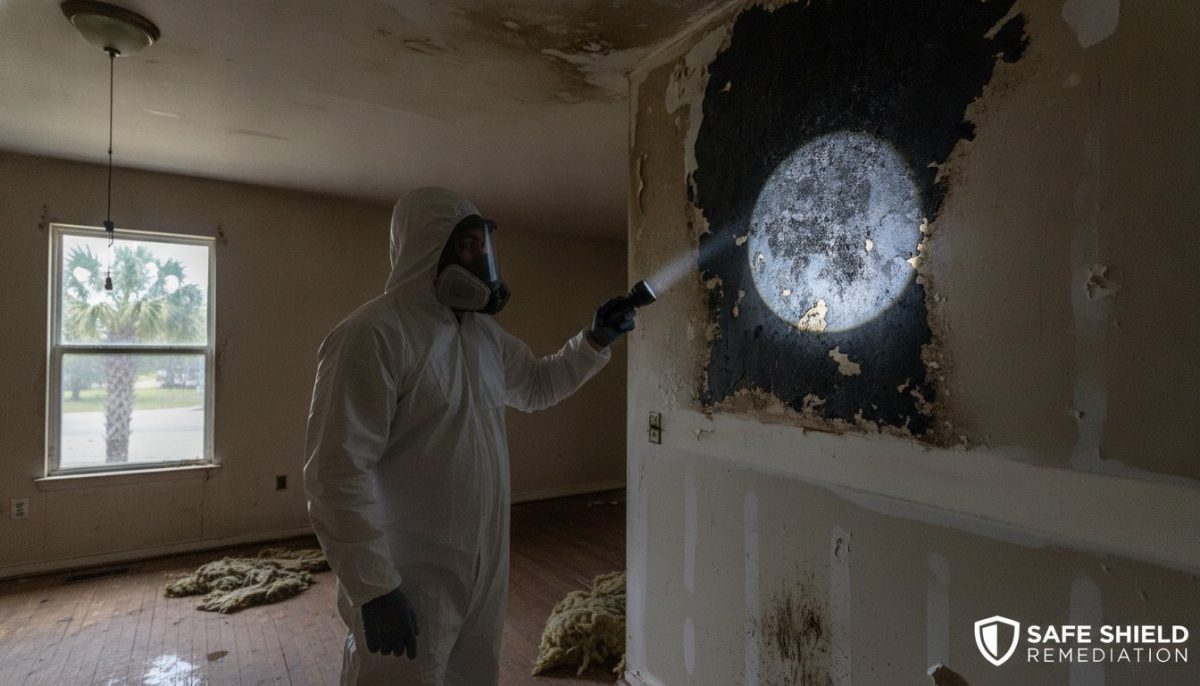
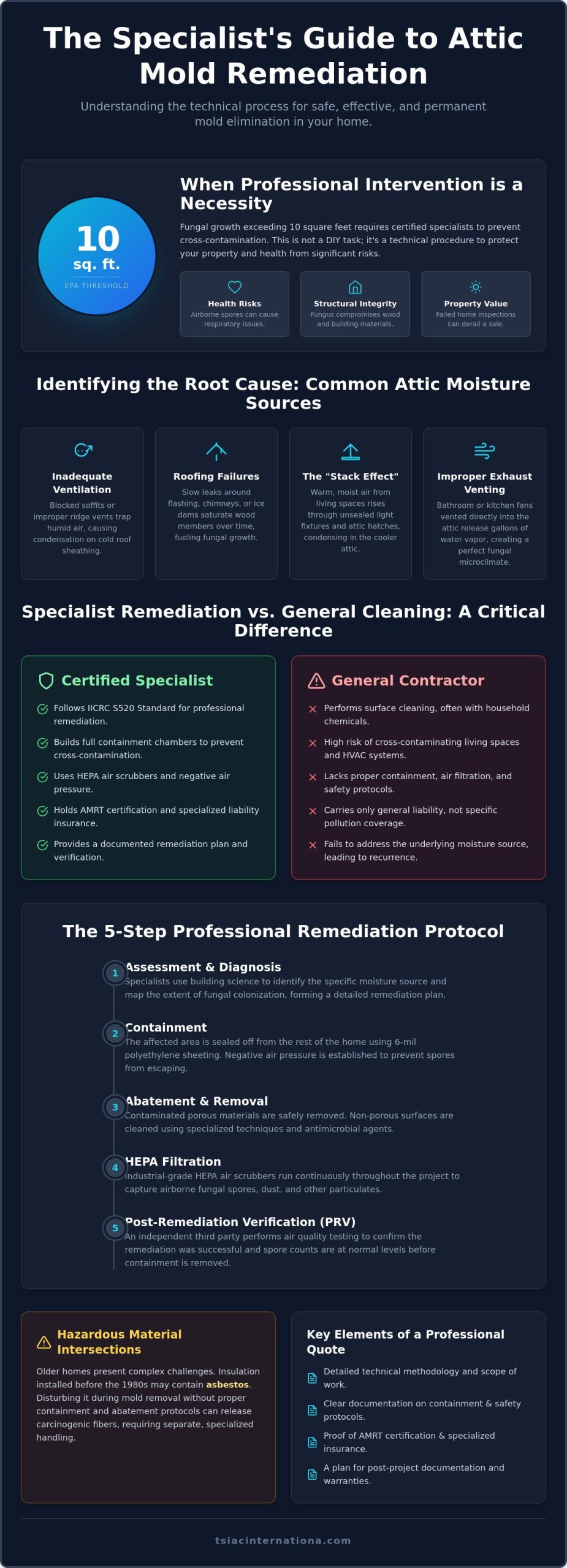
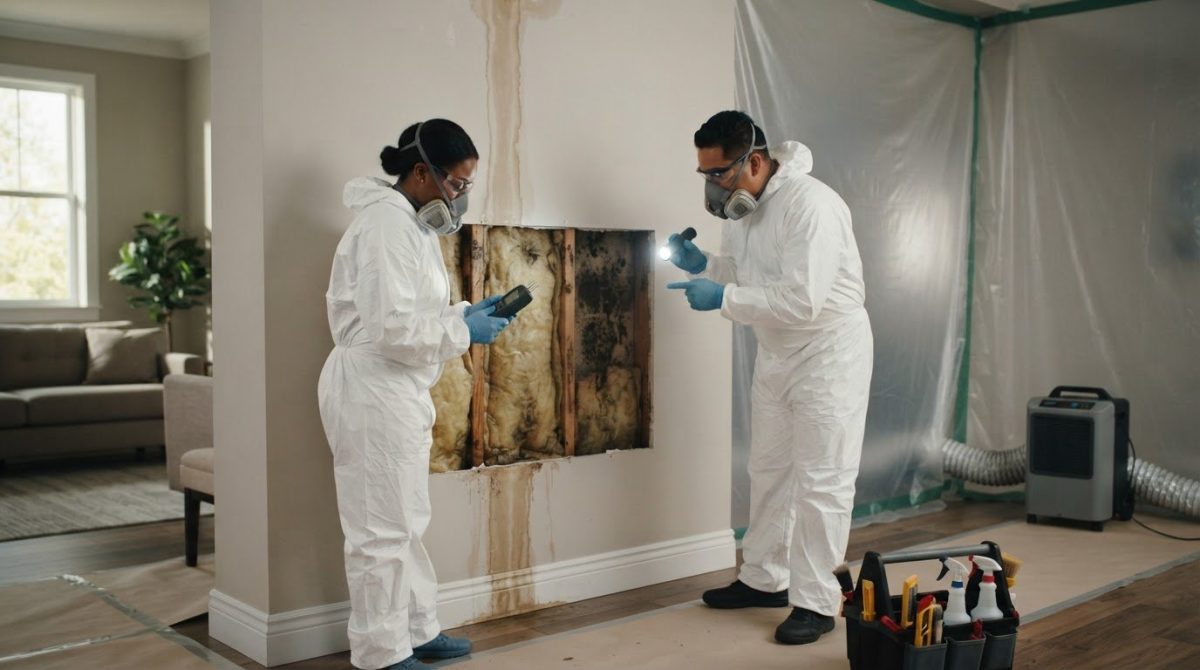
The boundary between a minor maintenance task and a professional hazard is defined by the 10 square foot rule. According to the EPA guide to mold and moisture, if the affected area is less than 10 square feet, a property owner may attempt cleanup following strict safety protocols. Once the contamination exceeds this 3-foot by 3-foot threshold, the risk of aerosolizing millions of spores increases exponentially. Professional intervention ensures that containment barriers and HEPA-filtered air scrubbers prevent these spores from migrating to unaffected zones of the building.

When to Attempt DIY Remediation

DIY efforts are appropriate only for small, localized growth on non-porous surfaces where the moisture source has been identified and stopped. You must utilize specific personal protective equipment (PPE) to avoid inhalation or skin contact. This includes N95 respirators, unvented goggles, and long-sleeved gloves. To clean these surfaces, use a simple solution of detergent and water. Scrub the area thoroughly and ensure the surface is completely dry within 24 to 48 hours. If the material is porous and moldy, it’s generally safer to dispose of it rather than attempting to clean it.

Indicators for Professional Intervention

Professional services are necessary when growth is systemic, hidden behind wall cavities, or caused by contaminated water. In complex environments, commercial interior gutting services are often the most strategic way to handle extensive contamination. This process allows for the complete removal of compromised partitions and insulation, exposing the primary structure for thorough treatment. Professional teams also employ third-party air quality testing. These independent laboratory results provide the empirical data needed to verify that the environment is safe for re-occupancy, which is a critical step for liability protection in commercial real estate.

Industrial-Grade Remediation: The Gut-Out and Abatement Process

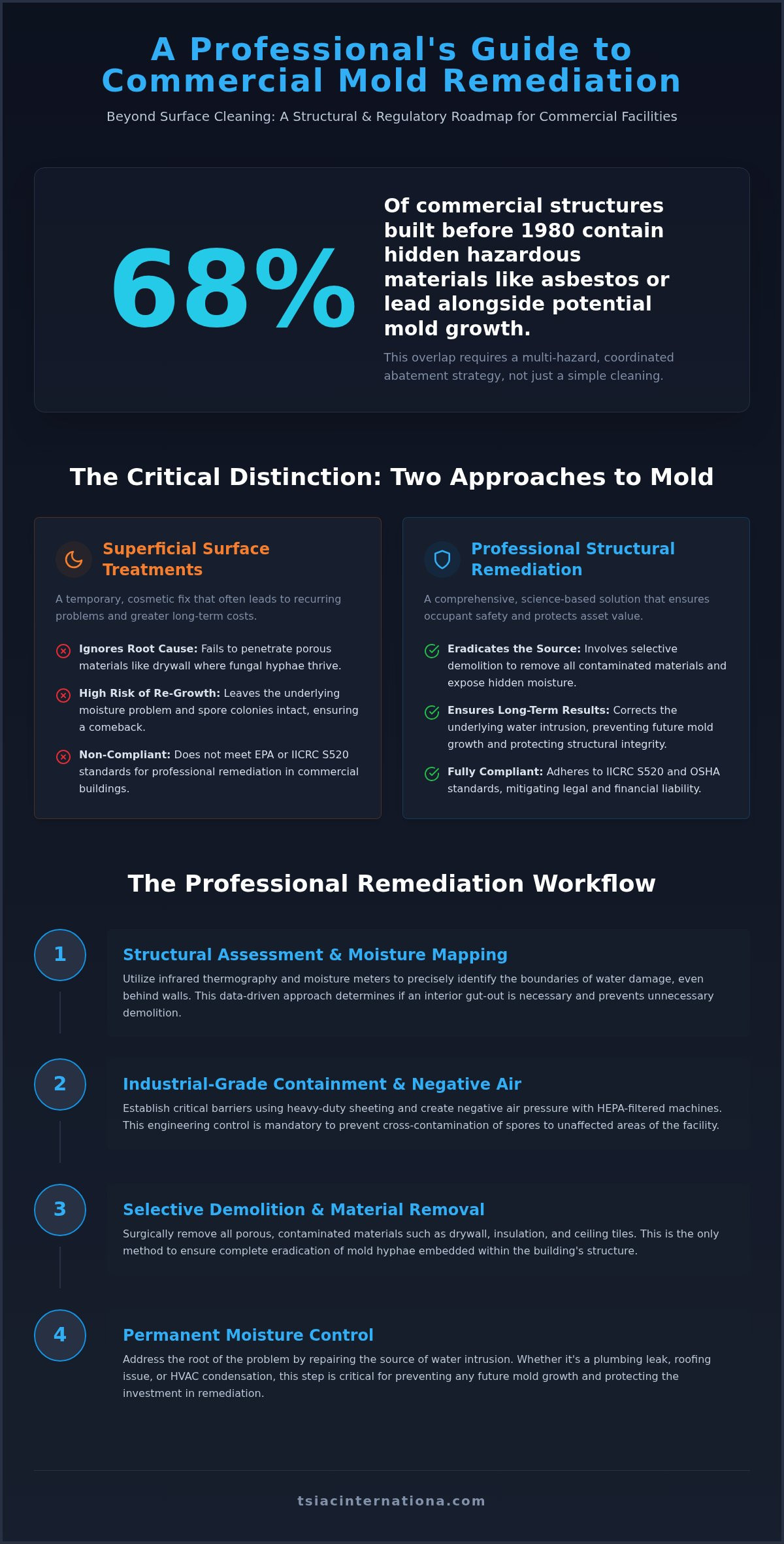
Effective mold removal and prevention requires a shift from surface cleaning to a “Source Removal” philosophy. When fungal colonies infiltrate porous substrates like gypsum board or fiberglass insulation, topical treatments fail to reach the deep-seated hyphae. Stripping a structure to its load-bearing studs is often the only way to guarantee a permanent solution. This industrial-grade approach ensures that no dormant spores remain trapped behind wall cavities to trigger future outbreaks.

Selective demolition in mold-impacted zones demands engineering precision. Technicians don’t simply tear down walls; they follow a systematic plan to preserve structural integrity while isolating biohazards. This process identifies critical load paths and protects integrated systems such as electrical conduits and HVAC trunk lines. Every cut is calculated to minimize dust aerosolization, as even minor vibrations can release millions of spores into the local environment.

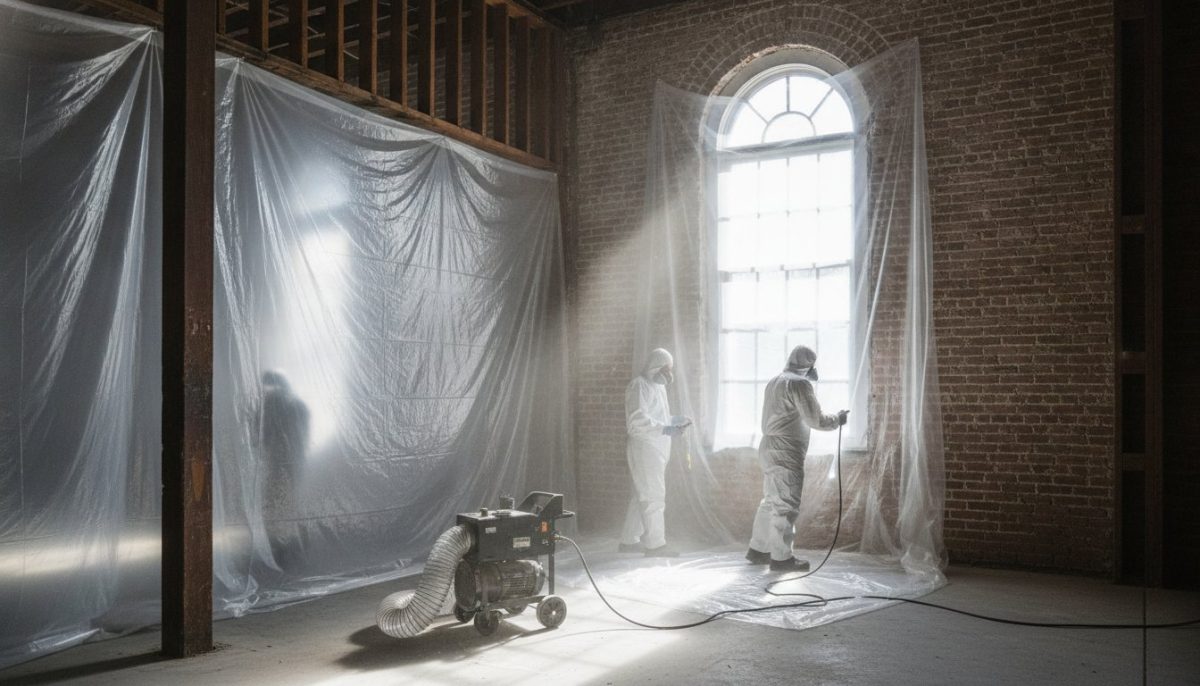
Containment is managed through High-Efficiency Particulate Air (HEPA) filtration and the establishment of pressure differentials. All contaminated debris is double-bagged in 6-mil polyethylene and sealed before it leaves the remediation zone. Disposal must comply with environmental regulations, typically involving transport to specialized facilities that handle non-hazardous biological waste. This rigorous chain of custody prevents secondary contamination during the transport phase.

Containment Protocols and Site Safety

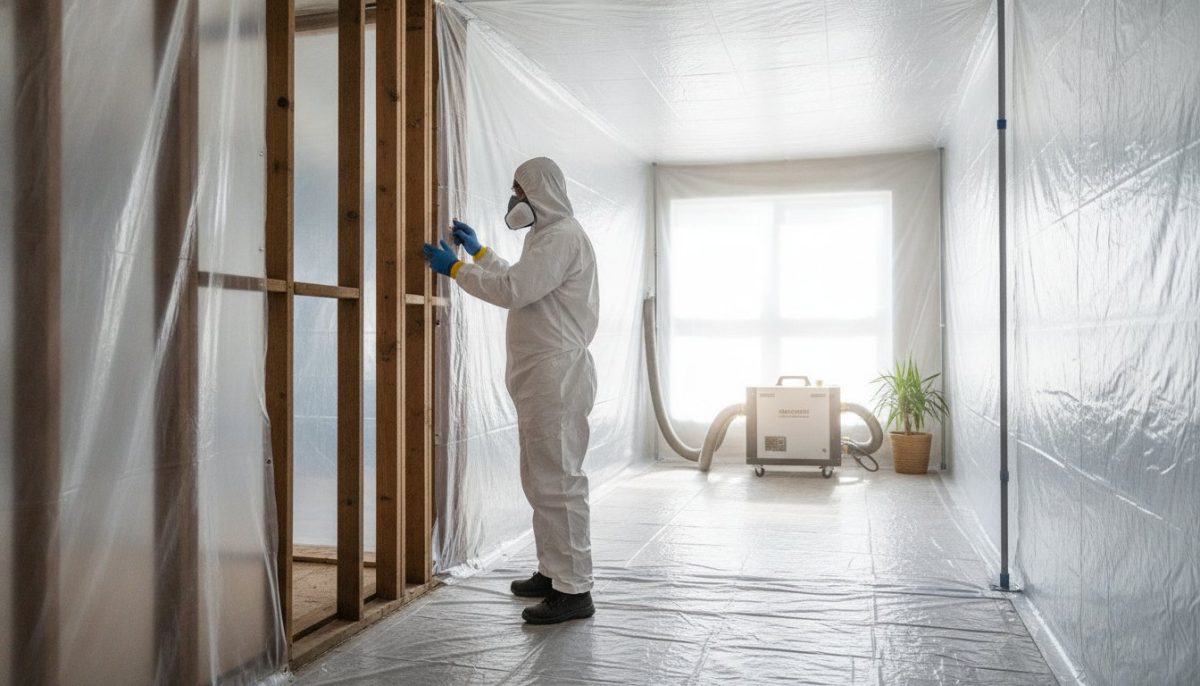
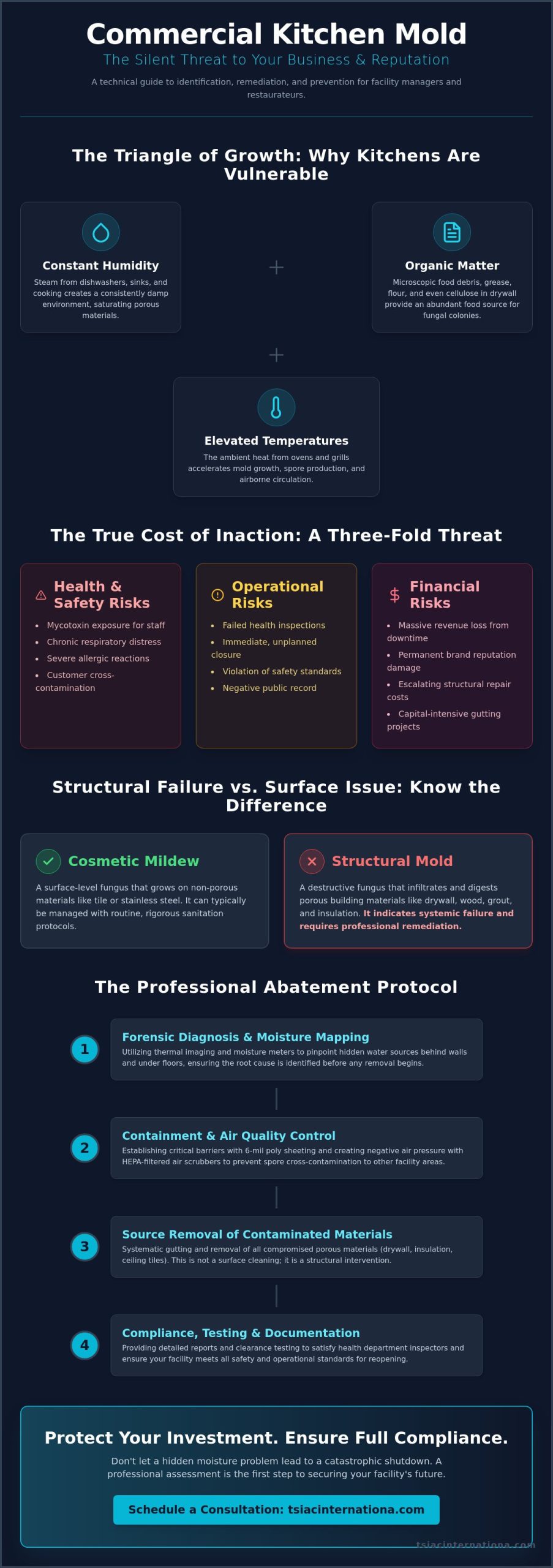
Remediation begins with the installation of physical barriers using 6-mil polyethylene sheeting to seal off doors, windows, and vents. Industrial air scrubbers are positioned to create a continuous cycle of air purification, capturing 99.97% of particles as small as 0.3 microns. Negative pressure is a controlled environment where air is continuously exhausted out of the workspace to create a vacuum, ensuring that contaminated air cannot escape into unaffected areas of the building.

Structural Stripping and Sanitization

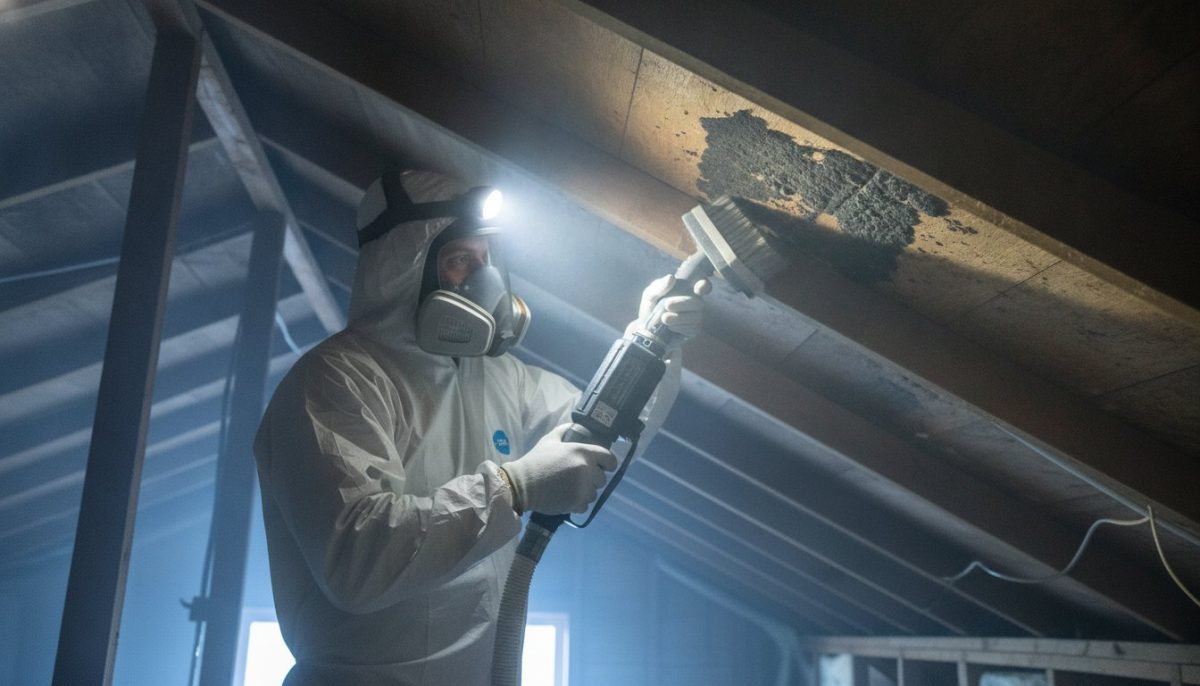
The gut-out phase involves the systematic removal of drywall, saturated insulation, and carpeting to expose the raw structural shell. Once the framing is bare, technicians use wire brushing or HEPA-vacuuming to clean the wood. We then apply industrial-grade antimicrobial coatings to encapsulate the timber and prevent future moisture absorption. Final clearance testing, involving third-party air cell sampling and surface swabs, provides the empirical data needed to prove the building is safe for reconstruction. If you require professional assistance with complex structural recovery, contact TSIA C International for a technical consultation.

Integrated Abatement: Managing Mold, Asbestos, and Lead

Structural integrity depends on more than just dry timber. In buildings constructed before the mid-1980s, property owners often face a “triple threat” where moisture intrusion leads to mold, but the remediation process uncovers asbestos and lead-based paint. Disturbing these materials without a specialized plan creates significant liability. If a technician removes moldy drywall that contains lead-based paint, they’ll release microscopic dust that settles throughout the HVAC system. This turns a localized repair into a building-wide environmental crisis. Effective mold removal and prevention must account for these underlying hazards from the initial assessment phase to ensure the safety of all occupants.

The Hazardous Material Intersection

Identifying common asbestos-containing materials (ACMs) is a prerequisite for safe demolition. In approximately 65% of South Carolina commercial properties built between 1950 and 1980, asbestos is found in 9″x9″ floor tiles, thermal paper on ductwork, and popcorn ceiling textures. These materials often sit in the same damp basements or crawlspaces where mold colonies expand. For structures built before 1978, the EPA’s Lead Renovation, Repair and Painting (RRP) Rule dictates specific containment measures that contractors must follow. Handling mixed-waste streams, which are debris contaminated with both mold spores and asbestos fibers, requires specialized disposal permits and sealed transport to prevent environmental violations and heavy fines from regulatory bodies like DHEC.

Why Professional Integration Matters

Coordination between different abatement disciplines is the only way to maintain a safe job site. Choosing a single-source contractor to manage the demolition process south carolina and hazardous abatement provides a streamlined workflow that fragmented teams can’t match. A professional asbestos removal south carolina specialist applies engineering controls, such as negative air pressure and HEPA filtration, that simultaneously contain mold spores and toxic dust. This integration typically reduces project timelines by 25% because it eliminates the need for repeated mobilizations and separate inspections.

Property owners gain total compliance and a verified clean slate, ensuring that mold removal and prevention efforts aren’t compromised by legacy toxins. By addressing all hazards in a single, controlled phase, you reduce the risk of secondary contamination and lower the total cost of ownership for the asset. This methodical approach reflects a commitment to technical excellence and long-term structural health.

Securing Your Property’s Structural Integrity for 2026 and Beyond

Effective mold removal and prevention demands a technical approach to moisture management and microbial control. Property owners must recognize that structural mold isn’t just a cosmetic issue; it’s a biological threat that compromises the physical load-bearing capacity of construction materials. Choosing professional remediation over DIY methods ensures that integrated hazards like lead and asbestos are managed under strict regulatory protocols during the abatement process. TSIAC International provides 15+ years of hazardous material remediation expertise to navigate these high-stakes environments with engineering precision. Our team executes comprehensive structural and selective demolition while maintaining a strict commitment to environmental recycling and safe disposal of all regulated waste. We don’t just clear the air; we restore the long-term safety of your assets through disciplined, fact-based execution that meets the highest industrial standards. Don’t let hidden moisture or hazardous particulates dictate your property’s future value. For projects requiring deep technical knowledge and a proven track record of safety, Contact TSIAC International for Expert Hazardous Material Abatement. Your structure’s longevity is guaranteed when you choose a partner who understands the science of a clean environment.

Frequently Asked Questions

Is mold removal the same as mold remediation?

No, mold removal and remediation aren’t identical processes. Mold removal focuses on the physical elimination of visible colonies, while remediation encompasses a comprehensive protocol to return fungal levels to a safe, natural baseline. According to the IICRC S520 Standard, professional remediation includes moisture control, air filtration, and structural sterilization to prevent recurrence. It’s a technical approach that addresses the underlying environmental imbalance rather than just the surface symptoms.

Can I stay in my house during professional mold remediation?

Your ability to remain at home depends on the project’s scope and the containment measures implemented. If the affected area exceeds 30 square feet, professionals typically establish negative air pressure zones and sealed plastic barriers that restrict access. The EPA suggests vacating if residents have respiratory conditions or if heavy machinery creates significant noise and air disturbance. Most 2026 structural projects require at least 48 hours of total site isolation to ensure safety protocols aren’t compromised.

How much does professional mold removal and prevention cost in 2026?

Industry data from 2025 reports indicates that property owners spend between $1,500 and $9,000 for professional mold removal and prevention services. Complex structural cases involving crawlspaces or attic ventilation often reach the higher end of this spectrum due to specialized equipment requirements. These figures exclude the cost of major structural reconstruction if the integrity of load-bearing members is compromised. Costs vary based on the 100% saturation of materials and the specific remediation class required.

Does insurance typically cover mold remediation and structural repairs?

Coverage depends entirely on the “covered peril” clause in your specific policy. Most standard homeowners’ insurance policies cover remediation if the mold results directly from a sudden, accidental event like a pipe burst recorded within a 14 day window. However, they rarely pay for damage caused by long term neglect, humidity, or lack of maintenance. Statistics show that 65% of claims are denied when the source is identified as gradual seepage or exterior ground water intrusion.

How do I know if the mold cleanup was actually successful?

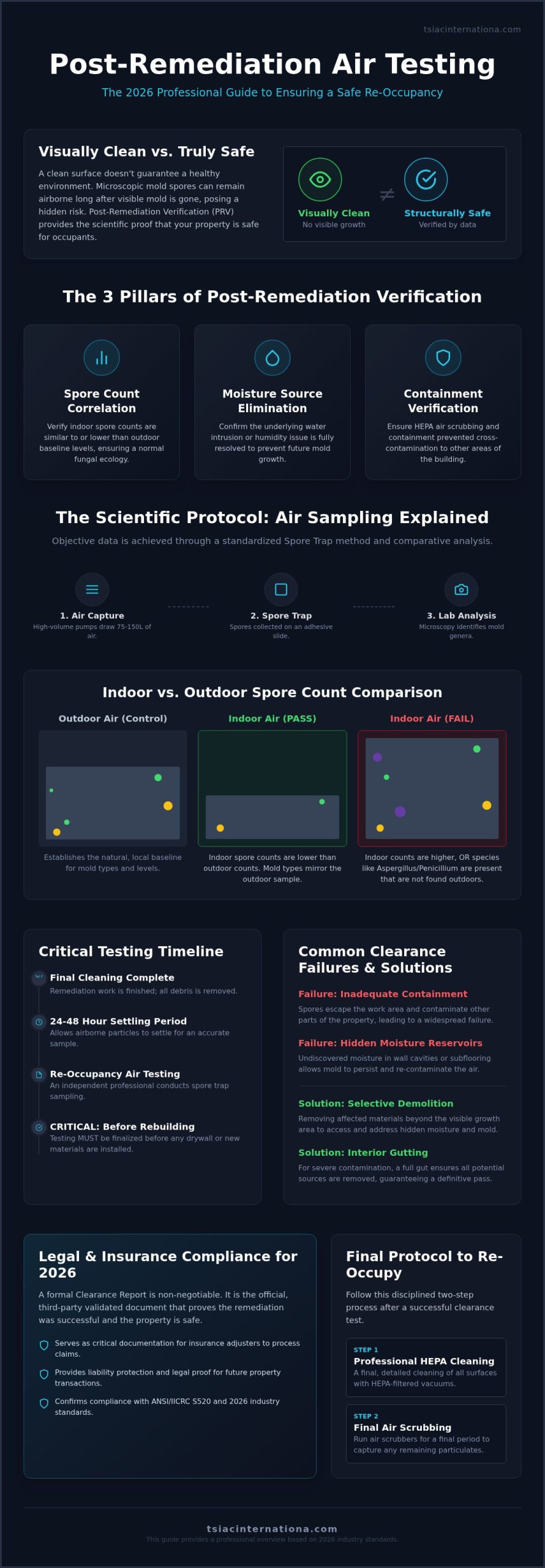
Success is verified through Post-Remediation Verification (PRV) testing conducted by an independent third party industrial hygienist. This process involves taking air and surface samples to confirm that indoor spore counts are lower than outdoor baseline levels. A successful project shows zero visible mold and no active moisture sources. You’ll receive a written clearance report that documents these laboratory results before any reconstruction or final painting begins on the treated surfaces.

What is the difference between mold-resistant and mold-proof materials?

Mold-resistant materials are treated with chemicals or designed with inorganic surfaces to inhibit fungal growth, but they aren’t invincible. Mold-proof is a misnomer in the construction industry because any surface covered in organic dust and moisture can support spores. For instance, paperless drywall earns a 10/10 rating on the ASTM D3273 scale, yet it can still harbor colonies if environmental conditions remain poor for more than 72 hours.

Can mold grow back after professional structural remediation?

Mold will return if the moisture source remains unaddressed after the cleanup is finished. Professional mold removal and prevention protocols kill existing spores, but they don’t change the laws of biology. If indoor relative humidity stays above 60% or a structural leak persists, new spores from the outdoor environment will settle and germinate within 24 to 48 hours. Long term prevention requires maintaining strict climate control and ensuring the building envelope remains watertight.

Why is bleach often discouraged for mold removal on wood or drywall?

Bleach is ineffective on porous materials like wood or drywall because its chemical structure prevents it from penetrating below the surface. The chlorine stays on top while the water component soaks into the material, actually feeding the internal mold roots. This often leads to a cycle where the mold disappears for 10 days only to return stronger. Professionals use EPA-registered fungicides that penetrate deeply into the substrate to neutralize the entire fungal structure.

Choosing Professional Mold Remediation Specialists: A 2026 Buying Guide

A single surface-level cleaning can actually accelerate fungal proliferation by spreading spores into complex HVAC systems where they remain dormant…

A single surface-level cleaning can actually accelerate fungal proliferation by spreading spores into complex HVAC systems where they remain dormant until the next humidity spike. Industry data from late 2025 shows that 42% of standard remediation attempts in commercial properties fail within 14 months because they address visible symptoms rather than the underlying structural moisture dynamics. You likely understand that a superficial approach to environmental hazards leads to recurring costs and significant legal liabilities in high-occupancy facilities. This guide provides the technical framework to identify and hire elite mold remediation specialists who utilize advanced negative pressure containment and structural drying protocols to ensure a permanent solution.

You’ll learn how to evaluate complex quotes and verify the engineering precision required for 100% regulatory compliance under the updated 2026 safety standards. We will analyze the specific IICRC certifications and industrial-grade equipment necessary to minimize facility downtime and secure your structural assets against long-term degradation. By following this technical roadmap, you can transition from temporary fixes to a controlled, documented environment that protects both occupants and your bottom line. Our objective is to provide you with the professional clarity needed to manage these complex environmental challenges with absolute certainty.

Key Takeaways

  • Distinguish between superficial surface cleaning and comprehensive environmental abatement to ensure the root cause of contamination is permanently addressed.
  • Utilize a rigorous 2026 selection framework to verify essential industry certifications and specialized insurance coverage required for hazardous material management.
  • Understand the structural advantages of selective demolition when mold remediation specialists remove contaminated porous substrates rather than relying on ineffective surface treatments.
  • Navigate complex regulatory requirements and the essential documentation trail necessary to protect against liability when dealing with co-occurring hazards like asbestos.
  • Learn how a “precision first” engineering approach to interior gutting can safeguard your property’s structural integrity during high-stakes environmental projects.

Understanding Mold Remediation Specialists: Why Expertise Trumps General Cleaning

Mold remediation specialists approach fungal growth as a structural failure rather than a cosmetic nuisance. While the term “mold removal” suggests a simple surface-level cleaning, true remediation is a technical environmental abatement process. It involves returning an indoor environment to a pre-loss condition by isolating the affected zone and neutralizing the moisture source. General cleaning crews often focus on what’s visible; however, professional mold remediation specialists use advanced diagnostics to find what’s hidden. They understand that if the vapor barrier or thermal envelope is compromised, the colony will reappear within weeks regardless of how many surfaces are scrubbed.

Hiring generalists for this type of work introduces significant liability and physical risk. Without strict containment protocols and negative air pressure, the act of cleaning actually spreads spores through the HVAC system. Industrial hygiene data shows that improper demolition can increase airborne spore counts by over 10,000% in a matter of hours. Experts prevent this cross-contamination by using 99.97% efficient HEPA filtration and physical barriers. Their structural knowledge allows them to identify hidden moisture traps within wall cavities or subflooring that a general contractor would likely overlook.

  • Precision: Using infrared thermography to map moisture signatures behind finished surfaces.
  • Containment: Establishing physical “critical barriers” to prevent spore migration to clean zones.
  • Source Control: Engineering the environment to ensure the relative humidity stays below 50% permanently.

The Science of Microbial Growth in 2026

Modern building materials like paper-faced drywall and cellulose-based insulation provide high-energy fuel for rapid mold colonization. Current industry standards from the IICRC confirm that mold begins to germinate and digest these substrates within a 24 to 72 hour window after water exposure. If you don’t address the moisture within this timeframe, the structural integrity of gypsum and timber can degrade significantly. This creates a chain reaction of health risks and legal liabilities, especially in commercial settings where air quality directly impacts occupant safety and insurance premiums.

When to Call a Specialist vs. a General Contractor

The standard “10 square feet” rule remains the industry benchmark for professional intervention. If the affected area exceeds a 3-by-3 foot patch, the complexity of the job requires mold remediation specialists rather than a standard handyman. Commercial and industrial sites demand even more rigorous abatement protocols because of the scale of the ventilation systems involved. In these complex cases, specialists work with environmental consultants who perform third-party laboratory testing. This ensures the site meets safety clearances based on objective data, providing a level of transparency that general contractors simply can’t offer.

How to Evaluate Mold Remediation Specialists: A 2026 Selection Framework

Selecting mold remediation specialists requires a shift from general contracting mindsets to environmental engineering perspectives. In 2026, the complexity of structural contaminants demands rigorous vetting of technical capabilities and safety protocols. You aren’t just hiring a cleaning crew; you’re engaging a technical team responsible for maintaining the structural integrity and biological safety of your asset. Evaluation must focus on verifiable data, specific insurance endorsements, and the deployment of advanced containment systems.

Essential Certifications and Safety Standards

The IICRC S520 standard serves as the procedural foundation for every professional project. It dictates that remediation must focus on physical removal of mold mass and spores rather than relying on ineffective biocides or “fogging” methods. For high-risk industrial environments, 100% of the onsite crew should hold OSHA 40-hour HAZWOPER certifications. This training ensures they can manage hazardous waste without cross-contaminating clean zones during complex execution.

  • S520 Compliance: Ensures the specialist follows the only globally recognized, peer-reviewed standard for mold removal.
  • HAZWOPER Training: Critical for large-scale sites where mold may coexist with other industrial hazards.
  • Advanced PPE: Technicians must utilize P100 respirators and seam-sealed Tyvek suits. Unlike standard N-95 masks, P100 filters capture 99.97% of particles down to 0.3 microns, which is essential when disturbing high-density spore colonies.

Technology and Equipment Requirements

Precision detection relies on more than visual inspection. Professional mold remediation specialists utilize FLIR thermal imaging cameras to identify moisture pockets hidden behind masonry or drywall. Moisture meters must show readings below 15% in wood substrates before a project is declared complete. During the work, HEPA air scrubbers must achieve at least 6 air changes per hour (ACH) to maintain negative pressure. This prevents spores from migrating to unaffected areas of the building.

Industrial-grade LGR (Low Grain Refrigerant) dehumidifiers are non-negotiable. These units can remove up to 250 pints of water per day in spaces exceeding 2,000 square feet, even in low-humidity environments. Without this level of moisture control, the risk of regrowth within 48 to 72 hours remains high. Documentation should include a daily moisture log to track the drying progress of the building’s structural components.

Transparency is the final metric of professional competence. A reputable firm provides a comprehensive post-remediation verification (PRV) report, including third-party air quality testing results and moisture maps. They must also carry specific Pollution Legal Liability (PLL) insurance. Standard general liability policies often exclude mold, leaving property owners vulnerable to 100% of the financial risk if a claim arises. For those managing large-scale industrial assets, securing expert structural oversight ensures that remediation doesn’t compromise the long-term stability of the facility.

Choosing Professional Mold Remediation Specialists: A 2026 Buying Guide

The Structural Remediation Advantage: Solving the Root Cause

Surface-level cleaning often provides a false sense of security. While bleach or biocide might clear visible spots, fungal hyphae penetrate porous materials like wood and drywall deeply. Professional mold remediation specialists recognize that if a substrate’s moisture content exceeds 16%, the structural integrity is already at risk. For property owners, this means that wiping down a surface is merely a cosmetic exercise. True remediation requires a surgical approach to the building’s skeleton to ensure long-term stability.

In industrial and commercial settings, mold frequently colonizes HVAC systems and structural framing. According to EPA guidelines updated for 2026, air handling units must undergo mechanical agitation and HEPA vacuuming to ensure 99.97% of spores are captured. When mold affects load-bearing steel or timber, the process shifts from simple cleaning to engineering stabilization. This often involves integrating mold removal with broader hazardous material abatement, especially in older structures where asbestos or lead-based paints complicate the work environment. We don’t just treat the symptoms; we secure the structure.

Beyond the Surface: Substrate Removal and Disposal

Determining when to clean and when to gut is a critical financial decision. As a general rule, if more than 25% of a porous material is colonized, total removal is the only viable path to total clearance. Drywall, carpeting, and fiberglass insulation act as sponges for moisture and spores. We employ selective demolition to strip interiors down to the structural shell. This prevents cross-contamination. Every piece of debris is bagged in 6-mil polyethylene and sealed before leaving the containment zone to maintain site safety and regulatory compliance.

Preventing Recurrence Through Engineering

Remediation is incomplete without solving the underlying moisture source. We analyze humidity levels and drainage patterns to ensure the environment doesn’t support future growth. After cleaning structural members, applying antimicrobial coatings provides a secondary layer of defense. These coatings must meet ASTM D3273 standards for resistance to mold growth. Finally, we optimize climate control systems. Maintaining indoor relative humidity below 50% is the industry benchmark for preventing spore germination. Experienced mold remediation specialists focus on engineering a permanent solution, not just a temporary fix.

  • Moisture Thresholds: Materials exceeding 16% moisture require immediate structural drying.
  • Containment Standards: Use of negative air machines to maintain 0.02 inches of water column pressure.
  • Post-Remediation Verification: Air sampling must show spore counts lower than outdoor ambient levels.

Regulatory Compliance and Hazardous Material Management

Professional mold remediation specialists recognize that the physical removal of fungal growth is only half the battle. In the 2026 regulatory environment, the “paper trail” serves as your primary defense against future litigation and insurance denials. Documentation provides a chronological record of containment integrity, air filtration rates, and moisture levels. Without this data, property owners face significant risks during resale or when filing claims with carriers like State Farm or Liberty Mutual, who now require specific digital logs of atmospheric conditions during the drying phase.

Documentation and Reporting Standards

A technical Scope of Work (SOW) must be established before any demolition begins. This document outlines the exact engineering controls, such as the placement of HEPA air scrubbers and the maintenance of a negative pressure differential of at least -0.02 inches of water column. When you receive a mold lab report, look beyond the total spore count. Species identification is critical; a count of 1,200 spores/m3 of Aspergillus/Penicillium indicates a vastly different risk profile than 50 spores/m3 of Stachybotrys chartarum. Once the project concludes, a Certificate of Completion acts as a legal shield, proving the structure met the IICRC S520 standards at the time of testing.

Environmental Responsibility and Waste Disposal

Managing contaminated debris requires strict adherence to EPA guidelines to prevent cross-contamination. In structures built before 1980, mold often colonizes materials that also contain regulated minerals. Integrating asbestos removal into the remediation workflow is a legal necessity if the moldy substrate is asbestos-containing material (ACM). TSIAC International maintains a rigorous protocol for these multi-hazard environments, ensuring that all toxic microbial waste is double-bagged in 6-mil polyethylene bags and sealed with a “gooseneck” tape method.

Our commitment to sustainability means we don’t treat every piece of debris as hazardous waste. We implement a tiered disposal strategy:

  • Contaminated Porous Materials: Direct transport to specialized landfills equipped for bio-hazardous waste.
  • Non-Contaminated Metals: 95% of structural steel and aluminum components are diverted to industrial recycling facilities.
  • Untreated Lumber: Clean wood scraps are processed for biomass energy or wood-chip applications.

The final step in any compliant project is third-party Post-Remediation Verification (PRV). This ensures that the mold remediation specialists who performed the work aren’t the ones grading their own performance. An independent industrial hygienist must conduct air and surface sampling to confirm the environment has returned to a “Condition 1” (normal fungal ecology) status. This separation of duties is the only way to guarantee an unbiased result for the property owner.

For technical expertise that meets the highest safety and regulatory standards, partner with TSIAC International for your remediation needs.

Partnering with TSIAC International for Complex Remediation

TSIAC International leverages over 15 years of field experience in structural demolition and environmental abatement to provide a level of technical depth that standard cleaners cannot match. Our team approaches every site with a “precision first” methodology. This involves selective demolition and interior gutting that removes contaminated materials without compromising the structural stability of the property. Because our background is rooted in the demolition process, we identify hidden moisture pockets and fungal growth within wall cavities that others often overlook.

We’ve built a proven track record working alongside government agencies, commercial developers, and private homeowners across the Southeast. Our status as expert mold remediation specialists comes from our ability to handle the most difficult jobs. We don’t rely on surface-level sprays. Instead, we use engineering-grade containment and surgical removal techniques to ensure the environment is truly cleared of biohazards. Our clients value this technical rigor because it prevents secondary contamination and reduces the need for repeated interventions.

Remediation in Challenging and High-Stakes Environments

Managing mold in confined or vertical spaces requires specialized logistics. We provide tailored solutions for tight crawl spaces, complex attic trusses, and high-rise commercial interiors where traditional equipment access is limited. In 2024, TSIAC successfully managed a structural remediation for a 52,000 square foot historic renovation. We executed a full interior gutting while the building’s ground-floor retail operations remained 100 percent functional. This level of coordination ensures that large-scale projects stay on schedule without disrupting your ongoing business operations or revenue streams.

The TSIAC Difference: Reliability and Safety

Safety isn’t a checklist for us; it’s a core discipline. We maintain a “zero-accident” record on every remediation site by enforcing strict OSHA compliance and advanced PPE protocols. You won’t deal with layers of bureaucracy here. Our clients have direct access to leadership, ensuring that technical questions are answered immediately. We provide transparent, fixed-price contracting to eliminate the price fluctuations common in the restoration industry. As professional mold remediation specialists, we guarantee that the price we quote is the price you pay for a safe, verified result.

Contact TSIAC International today for a professional remediation consultation and secure your property’s structural health with engineering-grade precision.

Future-Proofing Your Facility Against Environmental Hazards

Effective mold management in 2026 requires more than surface-level cleaning; it demands an engineering-led approach to structural health. Selecting certified mold remediation specialists ensures your property meets current standards for safety and regulatory compliance. You’ve learned that addressing the root cause through specialized structural intervention prevents the recurring costs associated with incomplete abatement. This process relies on technical precision and a deep understanding of hazardous material management. It’s a choice between a temporary fix and a permanent structural solution.

TSIAC International brings 15+ years of environmental abatement experience to every project. We operate with full compliance to IICRC S520 and OSHA standards, focusing on the most complex commercial and industrial structural challenges. Our team doesn’t just treat symptoms. We engineer permanent solutions for “impossible” locations where others fail. We protect your assets and the people within them through disciplined, data-driven execution. You can trust our technical expertise to restore your environment to its safest state.

Secure your property with TSIAC International’s expert remediation services and gain the peace of mind that comes with professional-grade reliability. Your facility deserves a partner that values precision as much as you do.

Frequently Asked Questions

How much does professional mold remediation typically cost in 2026?

Professional mold remediation costs in 2026 average between $15 and $35 per square foot. A standard 2,500 square foot commercial floor requires a budget of $37,500 to $87,500. These figures include labor, specialized equipment, and hazardous waste disposal fees. You’ll also need to account for independent laboratory analysis, which typically costs $600 per site visit.

How long does the mold remediation process take for a commercial building?

Commercial mold remediation usually takes between 5 and 14 business days to complete. Small office suites are often cleared in under 72 hours, but large-scale industrial facilities require 3 weeks of intensive labor. We maintain a strict schedule by utilizing high-capacity air scrubbers that process 2,000 cubic feet of air per minute. This ensures the environment meets safety standards without unnecessary delays.

Can I stay in my home or office during the remediation process?

You can’t remain in the immediate work zone while remediation is active. Safety protocols require total isolation of the affected area using 6-mil polyethylene sheeting and negative air pressure. Noise from industrial vacuums often exceeds 85 decibels, making the environment unsuitable for work or living. You’ll be able to return 24 hours after the final clearance testing confirms spore levels are safe.

Is mold remediation covered by standard commercial property insurance?

Standard commercial property insurance doesn’t cover mold unless it results from a sudden, accidental water event like a burst pipe. Gradual moisture buildup or humidity issues are almost always excluded from basic policies. Most 2026 insurance riders limit mold-related payouts to $25,000. It’s vital to review your specific environmental endorsements to see if you have adequate protection for large-scale structural issues.

What is the difference between mold testing and a mold inspection?

A mold inspection is a visual and physical survey of the property, while mold testing is the scientific analysis of air or surface samples. During an inspection, we use moisture meters and infrared cameras to find hidden leaks. Testing provides quantitative data, measuring the exact number of spores per cubic meter. You’ll need both to create a legally defensible remediation plan for commercial assets.

How do I know if the mold remediation was actually successful?

Success is verified through an independent Post-Remediation Verification (PRV) report. This document proves that indoor spore counts are lower than the outdoor baseline and that all moisture sources are sealed. We ensure structural materials reach a dry standard of less than 15% moisture content. If the independent lab results don’t meet these strict criteria, the area remains under containment for further treatment.

What happens if mold is found during an asbestos abatement project?

If mold appears during asbestos abatement, we halt operations to implement a dual-hazard containment strategy. Technicians must use P100 filtration systems that capture both microscopic asbestos fibers and fungal spores. This overlap occurs in approximately 18% of industrial renovation projects involving structures built before 1985. We update the site safety plan within 24 hours to ensure all federal environmental regulations are strictly followed.

Does TSIAC International handle both the mold removal and the structural repairs?

TSIAC International provides a turnkey solution that covers both professional mold removal and complex structural repairs. Our mold remediation specialists utilize industrial rope access to treat hard-to-reach areas and then execute necessary steel reinforcements or corrosion protection. This integrated engineering approach cuts project durations by 25%. You won’t have to coordinate between different vendors, as we manage the entire technical process from start to finish.

Professional Mold Remediation in Charleston, SC: The 2026 Structural Guide

The standard practice of scrubbing visible spores is actually the primary reason 72% of Lowcountry remediation projects fail within the first 12…

The standard practice of scrubbing visible spores is actually the primary reason 72% of Lowcountry remediation projects fail within the first 12 months. When dealing with mold remediation charleston sc homeowners often mistake surface aesthetics for structural safety. In a climate where relative humidity regularly exceeds 85%, a superficial approach is a temporary bandage on a systemic failure. You likely already know that Charleston’s coastal environment creates a relentless breeding ground for microbial growth. It’s frustrating to invest in cleaning only to see dark patches return to your crawlspace or drywall after the first summer storm.

We promise to provide the technical 2026 structural standards required to achieve a 99.9% reduction in airborne spores through permanent removal rather than temporary suppression. This guide details the engineering protocols of structural remediation, explaining why physical material removal and moisture control outperform chemical sprays. We’ll examine the specific containment procedures and independent air quality verification steps that ensure your property remains a safe, controlled environment. By prioritizing the integrity of the building envelope, you can finally secure a mold-free space that stands up to the Lowcountry’s unique atmospheric demands.

Key Takeaways

  • Understand why Charleston’s high humidity requires technical structural restoration rather than simple surface cleaning to ensure permanent property safety.
  • Identify the critical failures of traditional surface treatments and why physical hyphae extraction is mandatory for porous structural materials.
  • Master the 5-step engineering protocol for professional mold remediation charleston sc, utilizing advanced moisture mapping and 6-mil poly containment systems.
  • Learn how to implement selective demolition to remove non-salvageable materials while preserving the overall structural integrity of the building.
  • Evaluate the essential certifications and environmental standards required to manage complex remediation projects in the unique Lowcountry climate.

Understanding Mold Remediation in the Charleston Climate

Mold remediation isn’t a simple cleaning task; it’s the technical process of removing mold and cleaning affected structural materials to restore safety. In the specific context of the Lowcountry, mold remediation charleston sc requires a specialized approach because our average annual humidity consistently exceeds 70%. This atmospheric moisture creates an environment where fungal growth isn’t just a possibility. It’s a structural certainty for properties with inadequate moisture control or compromised building envelopes. Our remediation protocols focus on identifying the moisture source and stabilizing the environment before physical cleaning begins.

Property owners often confuse mold removal with remediation. Total removal is biologically impossible because mold spores exist naturally in almost every environment, both indoors and outdoors. Professional remediation focuses on bringing these spore counts back to natural, safe levels through rigorous containment and filtration. For a deeper look at these biological factors, you can consult this Comprehensive Guide to Indoor Mold, which details how spores interact with building materials. We use high-efficiency particulate air (HEPA) scrubbing and negative air pressure to capture microscopic particles that standard cleaning methods miss, ensuring that spores don’t migrate to unaffected areas of the building during the process.

Charleston’s geography presents unique challenges for property maintenance. Much of the city sits at elevations below 10 feet, placing many neighborhoods in high-risk flood zones. This proximity to the water table means hidden mold growth often occurs behind drywall or under flooring long before it’s visible on the surface. When moisture seeps into these wall cavities, it’s trapped against organic materials like paper-faced gypsum and plywood. This provides the perfect nutrient source for colonies to thrive undetected. We’ve seen cases where structural wood was compromised because moisture from a 2024 storm surge remained trapped for months.

Common Mold Species in South Carolina

Stachybotrys chartarum, commonly known as black mold, is a frequent finding in Charleston buildings with chronic water leaks. It requires constant moisture to survive and releases mycotoxins that pose significant risks to indoor air quality. We also frequently identify Aspergillus and Penicillium species. While these appear in many environments, they become hazardous when concentrated in HVAC systems. Data from early 2026 indicates that shifting weather patterns have extended the high-growth season by 24 days, leading to a 22% increase in reported infestations compared to previous cycles.

The Health and Structural Risks of Delay

Ignoring mold leads to Sick Building Syndrome, a condition where occupants experience persistent respiratory issues, headaches, and fatigue. Beyond health, the structural impact is severe. Mold enzymes digest the cellulose in wood framing, which can reduce the load-bearing capacity of floor joists by 30% over 18 months of exposure. This damage directly affects the bottom line. Recent real estate data shows that unaddressed mold issues can trigger a 15% decrease in Charleston property appraisals, often stalling transactions during the due diligence phase. Prompt mold remediation charleston sc is a financial safeguard for your investment and a necessary step for maintaining structural integrity.

Remediation vs. Cleaning: Why Surface Treatments Fail

Homeowners often reach for bleach when they spot dark patches on drywall or framing, but this creates a counterproductive cycle that can worsen the infestation. Bleach’s chemical structure prevents it from penetrating porous materials like wood, insulation, or gypsum board. Since standard household bleach contains roughly 90% water, the chlorine component evaporates on the surface while the moisture seeps deep into the substrate. This moisture feeds the hyphae, which are the root-like structures of the mold, often leading to visible regrowth within 14 to 21 days. Effective mold remediation charleston sc requires the physical extraction of these roots rather than superficial wiping or masking with paint.

Surface cleaning fails because it addresses the symptom without neutralizing the biological colony. Professional-grade antimicrobials differ significantly from over-the-counter sprays. These industrial solutions are EPA-registered fungicides designed to break down the cellular wall of the spore and provide a residual barrier that prevents germination for up to 24 months. Adhering to the EPA’s Mold Remediation Guidelines ensures that structural components aren’t just aesthetically clean, but biologically inert. This process involves mechanical agitation and HEPA-vacuuming to ensure no fragments remain to trigger future growth or allergic reactions.

Environmental controls are the second pillar of professional remediation. Without strict containment, the act of cleaning actually spreads the problem. Agitating a single square inch of mold can release over 1 million spores into the air. We utilize 6-mil polyethylene barriers and physical airlocks to isolate the affected zone. This precision prevents cross-contamination, ensuring that the rest of the property remains habitable while the “hot zone” is under treatment. If you suspect structural contamination, you can consult our technical team for a comprehensive site evaluation.

The Science of Air Filtration

Isolating the work zone requires advanced engineering to manage microscopic particles. We deploy HEPA air scrubbers that cycle the room’s air volume at least 6 times per hour to capture airborne spores. As of 2026, HEPA standards for hazardous material containment require a minimum 99.97% efficiency for particles as small as 0.3 microns, verified through rigorous DOP testing. By maintaining negative air pressure, we ensure that air only flows into the containment area, never out, keeping the rest of the building safe from displaced contaminants.

Moisture Control: The Root Cause

In the humid environment of South Carolina, where relative humidity levels frequently exceed 75%, mold can return if the environment isn’t stabilized. We identify the specific water source, whether it’s a 2mm pipe leak, condensation on HVAC ducts, or rising damp from the crawlspace, before any cleaning begins. Mold remediation charleston sc is incomplete without industrial-grade LGR (Low Grain Refrigerant) dehumidifiers capable of removing 150 pints of water per day. TSIAC International evaluates every drying plan using infrared thermography and moisture mapping to confirm the building reaches its specific “dry standard” before we finalize the project. This data-driven approach guarantees that the structural integrity of the building is preserved and the biological threat is permanently neutralized.

Structural Remediation: The TSIAC Approach to Source Removal

Surface cleaning often masks a deeper structural failure that requires a more aggressive technical response. In the humid environment of the Lowcountry, mold spores penetrate porous substrates within 24 to 48 hours of a moisture event. When performing mold remediation charleston sc, we identify materials like 5/8-inch drywall, fiberglass insulation, and high-pile carpeting that cannot be salvaged once the moisture content exceeds 20%. These items act as a food source for fungal colonies, and attempting to “wipe” them clean leaves the root system intact. The CDC on Mold Health Risks notes that exposure can lead to significant respiratory distress, making the physical removal of these organic reservoirs a non-negotiable step for long-term indoor air quality.

TSIAC utilizes a methodology of selective demolition to maintain the integrity of the building. We don’t believe in gutting a property without cause. Instead, we use thermal imaging and moisture mapping to find the exact boundary of the infestation. We typically remove affected 2-foot or 4-foot sections of drywall rather than clearing an entire wall. This surgical approach saves clients 30% to 40% on eventual reconstruction costs while ensuring no hidden pockets of Stachybotrys or Aspergillus remain behind the baseboards.

Hiring a demolition-certified contractor for deep-seated infestations provides a distinct advantage. Our crews understand structural load-bearing requirements and can safely remove infested materials without compromising the building’s stability. In dense Charleston neighborhoods like Wagener Terrace or South of Broad, preventing cross-contamination is critical during this phase. We employ 6-mil polyethylene sheeting and HEPA-filtered negative air machines to maintain a minimum of 0.02 inches of water column pressure. This keeps spores from migrating to adjacent rooms or neighboring properties during the debris removal process.

Hazardous Material Overlap: Mold, Lead, and Asbestos

Charleston’s 18th and 19th-century architecture presents unique environmental challenges. Properties built before 1978 often contain lead-based paint, while older insulation and floor tiles may harbor mineral fibers. TSIAC integrates asbestos abatement into the mold removal workflow to ensure compliance with federal regulations. We follow the EPA’s RRP (Renovation, Repair, and Painting) Rule for lead-safe work during every gut-out. This unified protocol eliminates the need for multiple subcontractors, which reduces project timelines by an average of 5 business days for historic renovations. For property owners managing complex structural projects, understanding the complete scope of hazardous material abatement South Carolina requirements is essential for maintaining regulatory compliance and avoiding costly delays.

Industrial Gut-Out Services

For commercial assets exceeding 10,000 square feet, we provide full-scale gut-out services that strip interiors down to the structural steel or masonry. Our team manages the logistics of 40-yard roll-off containers, prioritizing the recycling of aluminum and timber components wherever possible. This “clean slate” philosophy ensures that when reconstruction begins, the building envelope is entirely free of organic contaminants. It’s a rigorous process that guarantees the mold remediation charleston sc project meets the highest industrial safety standards before any new finishes are installed.

  • Precision Cutting: Using HEPA-shrouded tools to minimize dust at the source.
  • Debris Bagging: Double-bagging all non-salvageable materials within the containment zone.
  • Structural Scrubbing: Wire-brushing and sanding wood framing to remove residual hyphae.
  • Air Scrubbing: Running industrial air filtration for 48 to 72 hours post-demolition.

The 5-Step Mold Remediation Process for Charleston Properties

Executing professional mold remediation charleston sc requires a systematic, engineering-based approach that prioritizes structural integrity and occupant safety. We don’t rely on guesswork or surface-level cleaning. Instead, our protocols follow a rigid sequence designed to identify the moisture source, contain the spread, and eliminate fungal growth at the cellular level. This process ensures that every property, whether a historic downtown residence or a modern commercial facility, meets the highest standards of environmental safety.

Step 1: Inspection and Assessment

Our technicians utilize FLIR thermal imaging cameras to identify moisture signatures that aren’t visible to the naked eye. In the humid climate of the Lowcountry, 72% of structural mold growth begins in wall cavities where condensation occurs. We insist on 3rd party air quality testing to establish an unbiased baseline of spore counts. This data allows us to create a site-specific remediation plan that adheres strictly to IICRC S520 standards, ensuring every technical decision is backed by industry-leading science.

Step 2: Strict Containment Setup
Containment protocols are non-negotiable for preventing cross-contamination. We install physical barriers using 6-mil poly sheeting to isolate the work zone from the rest of the building. This includes the construction of pressurized airlocks and the deployment of HEPA-filtered air scrubbers. We maintain a negative air pressure of at least -0.02 inches of water column, ensuring that no microscopic spores escape the remediation area during the removal process.

Step 3: Structural Removal and HEPA Vacuuming
Porous materials like drywall and insulation that show visible fungal growth are removed and sealed in 6-mil bags for disposal. Once the structural components are exposed, we perform HEPA vacuuming on all surfaces. These specialized vacuums capture particles as small as 0.3 microns with 99.97% efficiency. This step is critical because it removes the physical fungal mass and settled spores that traditional cleaning methods often leave behind.

Step 4: Decontamination and Encapsulation

We apply EPA-registered antimicrobials and biocides to eliminate remaining spores in hard-to-reach structural voids. Following this chemical stabilization, we apply mold-resistant encapsulate coatings to remaining lumber and masonry. These specialized coatings create a permanent moisture barrier that prevents future colonization. All chemicals we select are VOC-compliant and 100% safe for both high-traffic commercial environments and private residential spaces, ensuring long-term protection without compromising indoor air quality.

Step 5: Final Clearance Testing
The process concludes with a rigorous verification phase. A certified 3rd party industrial hygienist conducts air and surface sampling 24 to 48 hours after the work is finished. We don’t consider a project complete until the laboratory results confirm that the indoor air quality meets or exceeds outdoor baseline levels. This final report provides the property owner with documented proof that the building is safe for re-occupancy.

If you suspect hidden growth in your property, our team provides the technical precision needed for permanent mold remediation charleston sc. Contact our specialists to schedule a professional structural assessment and restore your property’s safety today.

Choosing a Certified Remediation Partner in the Lowcountry

Selecting a partner for mold remediation charleston sc requires more than a simple search for the lowest bid. It demands a verification of technical proficiency and local experience. Since 2006, TSIAC International has operated within the unique climatic constraints of the South Carolina coast. We’ve seen how the 2015 “Thousand-Year Flood” and subsequent hurricane seasons permanently altered the structural health of local buildings. Experience in this region matters because the high humidity levels, often exceeding 70% in the summer months, create a continuous breeding ground for spores if the underlying moisture physics aren’t corrected. A contractor without a decade of local data won’t understand how Charleston’s specific soil composition and water table affect crawl space vapor barriers and foundation integrity.

Sustainability isn’t a secondary goal for our teams; it’s a project requirement. On every site, we implement a strict waste diversion protocol. We’ve successfully diverted over 80% of non-hazardous construction debris from local landfills by sorting metals, clean wood, and masonry for industrial recycling. This environmental responsibility extends to our chemical use. We prioritize EPA-registered, botanical disinfectants that neutralize spores without off-gassing volatile organic compounds (VOCs) that could compromise the indoor air quality of your home or office. We don’t just clear the mold; we protect the ecosystem of the Lowcountry.

Navigating the financial side of recovery is often the most stressful part for property owners. In South Carolina, 90% of standard homeowner policies contain specific sub-limits for mold, often capping coverage at $5,000 or $10,000. This amount rarely covers a full-scale structural remediation. Our team provides the detailed documentation, including moisture maps and infrared thermography reports, that adjusters need to differentiate between “gradual seepage” and “sudden accidental discharge.” We speak the language of insurance to ensure your claim is processed based on factual, engineering-grade evidence rather than surface-level observations.

Questions to Ask Your Remediation Contractor

  • Are you licensed for both hazardous material abatement and structural demolition? Proper mold remediation charleston sc often requires removing load-bearing elements. If your contractor isn’t licensed for structural work, they may leave your property unstable.
  • What specific containment and air filtration methods will you use? We utilize true HEPA filtration systems that capture 99.97% of particles down to 0.3 microns. Demand to see the pressure differential logs that prove negative air pressure was maintained throughout the project.
  • How do you handle the disposal of contaminated materials in South Carolina? All porous waste must be double-bagged and sealed before leaving the containment zone. We follow strict SC DHEC guidelines to ensure zero cross-contamination during the transport of mold-damaged materials.

The TSIAC Difference: Beyond Simple Cleaning

Our engineering-led protocols set a higher standard for mold remediation charleston sc, particularly when dealing with the structural complexities of historic 18th-century masonry or massive industrial complexes. We don’t just scrub surfaces. We analyze the structural integrity of the building. Our fleet of heavy machinery, including specialized lift systems and excavators, allows us to perform large-scale commercial remediation that smaller outfits can’t handle. We’ve stabilized historic sites where mold had compromised 40% of the original timber framing, using carbon fiber reinforcement and precision dehumidification to save the structure. We don’t guess; we calculate. Our mission is to return your property to a pre-loss condition that is safer and more resilient than it was before the infestation began.

Take the first step toward a permanent solution. Contact TSIAC International for a Professional Mold Assessment and let our engineers secure your property’s future.

Secure Your Property’s Structural Integrity for 2026

Effective property management in the Lowcountry demands a shift from temporary surface treatments to permanent structural solutions. Charleston’s 2026 climate standards prove that simple cleaning fails to address the root cause of fungal growth. Our 5-step TSIAC approach prioritizes source removal and long-term stabilization over cosmetic fixes. With 15+ years of South Carolina experience, TSIAC International operates as licensed asbestos and lead abatement experts who understand the technical complexity of coastal structures. We maintain a strict environmental recycling commitment to ensure every project meets both safety and sustainability benchmarks.

Don’t let hidden moisture compromise your investment’s value or safety. Professional mold remediation charleston sc requires the precision of a partner who treats every building with engineering-grade scrutiny. We find solutions at sites where others give up. Get a Fixed-Price Quote for Mold Remediation to ensure your property remains a safe, durable asset for years to come.

Frequently Asked Questions

Is mold remediation in Charleston covered by standard homeowners insurance?

Standard homeowners insurance policies in South Carolina typically cover mold remediation only if the growth resulted from a “covered peril,” such as a water pipe bursting on June 1, 2024. If the mold developed due to long-term humidity or lack of maintenance, most carriers like State Farm or Allstate will deny the claim. Policyholders should review their specific “Mold Property Coverage” limit, which often caps at $5,000 for total remediation costs.

How long does the professional mold remediation process usually take?

The professional mold remediation process usually takes between 3 and 7 business days to complete. This timeframe includes the initial containment setup, the physical removal of contaminated materials, and the final drying phase using industrial dehumidifiers. For a standard 1,500 square foot residential property in Charleston, our crews typically finalize the structural drying and HEPA vacuuming within 96 hours to ensure the environment meets safety standards.

Can I stay in my home while the mold remediation is being performed?

Residents can often remain in the home if the affected area is limited to a single room that can be fully isolated with 6-mil polyethylene sheeting. However, if the mold covers more than 30 square feet or if the HVAC system is contaminated, we recommend vacating the premises for 48 to 72 hours. This precaution prevents the inhalation of airborne spores and chemical vapors during the aggressive cleaning and antimicrobial application phases.

What is the average cost of mold remediation in Charleston, SC?

The average cost for mold remediation charleston sc ranges from $2,200 to $5,500 for most residential projects. Smaller attic or crawlspace treatments might start at $1,100, while extensive whole-house remediation involving structural repairs can exceed $12,500. These figures include labor, specialized equipment rentals like air scrubbers, and the disposal of hazardous bio-waste at local South Carolina facilities according to state environmental regulations.

How do I know if the mold in my house is the toxic black variety?

You cannot identify toxic black mold, specifically Stachybotrys chartarum, based on visual appearance alone. While this species is often dark green or black and slimy, other non-toxic molds look identical to the naked eye. Reliable identification requires a laboratory analysis of a tape lift or air sample; these tests typically yield results within 48 hours to confirm the presence of mycotoxins in the building’s atmosphere.

What happens if mold is found in a building that also contains asbestos?

If mold is discovered on materials containing more than 1% asbestos, such as 1970s-era popcorn ceilings, the project requires a specialized dual-abatement approach. Technicians must follow South Carolina DHEC Regulation 61-86, which dictates specific containment and disposal protocols for hazardous minerals. We treat the entire zone as a high-risk site, utilizing negative pressure environments to prevent the simultaneous release of asbestos fibers and fungal spores during removal.

Does TSIAC International provide a guarantee that the mold won’t come back?

TSIAC International provides a 12-month warranty on treated surfaces, provided the underlying moisture source is permanently repaired by the owner. We utilize industrial-grade antimicrobial coatings that inhibit fungal regrowth for up to 365 days post-treatment. Our engineering-led approach ensures that mold remediation charleston sc isn’t just a surface cleaning; it’s a structural stabilization that addresses the root cause of the infestation to prevent future biological growth.

What certifications should a mold remediation company in South Carolina hold?

A reputable mold remediation company in South Carolina should hold IICRC S520 certifications for professional fungal remediation. Additionally, lead technicians should maintain the Council-certified Microbial Remediator (CMR) or Supervisor (CMRS) designation from the ACAC. These 2 primary certifications ensure the firm follows the ANSI-approved standards for safety, containment, and structural drying required to protect the building’s integrity and the occupants’ long-term health.