
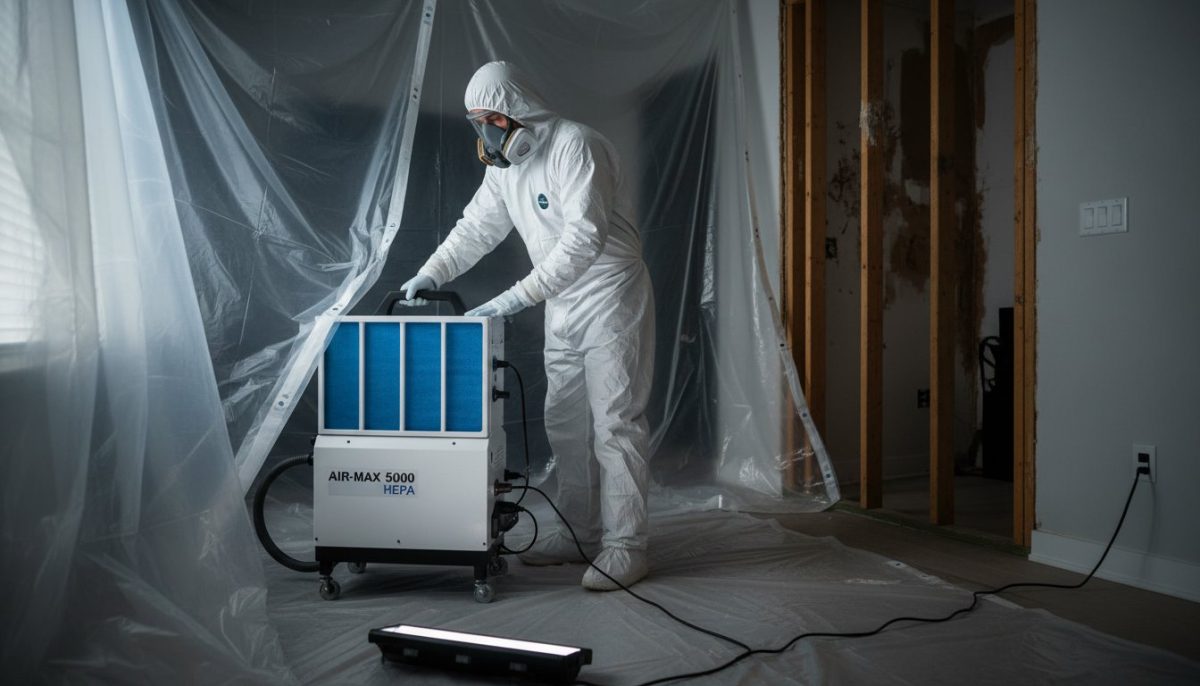
Spraying a household cleaner on a visible colony isn’t remediation; it’s a cosmetic mask that often leaves the underlying structural threat completely untouched. If you’re currently facing an infestation, you’re likely feeling the weight of health anxiety regarding spore exposure and the persistent fear that the growth will simply return. It’s a common point of confusion, but the professional black mold removal process is not a simple cleaning service. It is a disciplined engineering challenge that requires precise containment and, frequently, selective demolition to ensure the source is eradicated at its root.
You deserve a mold-free environment where structural safety is verified by technical standards, not just a visual check. This 2026 guide explains the rigorous, multi-stage protocols required to safely eliminate toxic growth and restore your property’s integrity. We will walk through the critical steps of the IICRC S520 industry standard, from establishing negative air pressure to the final verification of structural safety. This overview provides the clarity you need to move from a state of uncertainty to a controlled, professional restoration of your space.
Key Takeaways
- Identify the critical distinction between superficial surface cleaning and the root-level systematic protocols required for true remediation.
- Learn the technical stages of the professional black mold removal process, including the implementation of negative air pressure and containment zones.
- Discover why mechanical removal methods like media blasting are necessary for porous materials where standard household chemicals fail to reach.
- Review the 2026 OSHA and EPA safety standards, including the specific PPE requirements for handling hazardous fungal growth.
- Understand how to manage the complex overlap between mold remediation and other hazardous material abatement needs like asbestos or lead.
What is the Black Mold Removal Process?
The black mold removal process is a disciplined, multi-stage engineering protocol. It involves the rigorous identification, containment, and total elimination of fungal colonies from building substrates. Property owners often confuse remediation with standard surface cleaning, but the two are fundamentally different in scope and execution. Surface cleaning is a cosmetic fix that addresses visible growth, whereas professional remediation targets the root level of the infestation. A failure to distinguish between these two approaches often results in wasted resources and persistent structural risks.
Professional remediation ensures that the structural integrity of the property is preserved. It’s based on a comprehensive understanding of What is Mold Remediation? and how it applies to modern construction. This systematic approach doesn’t just treat the visible fungus; it mandates the resolution of the underlying moisture source. Stachybotrys chartarum, the species commonly known as black mold, is particularly destructive. It consumes cellulose-rich materials like drywall, insulation, and wood framing, which can lead to significant structural degradation if left unaddressed by a professional team.
The Science of Mold Colonization
Fungal growth is a biological invasion of the building’s material. Microscopic filaments known as hyphae penetrate deep into porous substrates, creating an intricate network that anchors the colony. This reality means that visible growth is frequently just the tip of the iceberg. In many structural assessments, the most significant contamination is found hidden within wall cavities, floor joists, or ceiling voids. Even when a surface looks clean, dormant spores can remain embedded in the material’s fibers. These spores stay inactive until moisture levels rise again, at which point they reactivate and resume the destruction of the substrate. A professional black mold removal process accounts for these hidden threats through mechanical removal rather than just chemical treatment.
When to Transition from DIY to Professional Abatement
Knowing when to stop a DIY effort and hire a professional is critical for safety. The EPA suggests a 10-square-foot rule as a general threshold. If the mold covers an area larger than roughly three feet by three feet, the project has likely exceeded the capacity of household tools. Attempting large-scale removal without professional containment protocols often causes cross-contamination. When you disturb a large colony, millions of spores become airborne, traveling through the air to colonize other parts of the building. Professionals also become essential when dealing with hidden mold in HVAC systems or behind heavy finishes. These scenarios require specialized diagnostic tools and high-efficiency particulate air (HEPA) filtration to ensure the air remains safe during and after the abatement process.
The 5 Essential Stages of Professional Mold Remediation
The black mold removal process follows a rigorous sequence designed to protect the structural integrity of the property. It doesn’t rely on guesswork. Professionals use a specific methodology to ensure the contamination remains localized while the root cause is addressed. A deviation from this order can lead to the accidental spread of spores into previously unaffected areas. The process is broken down into five distinct phases:
- Phase 1: Inspection and Moisture Source Repair. Remediation is futile without moisture control. Technicians must identify and stop the water intrusion that feeds the colony.
- Phase 2: Isolation and Negative Air Pressure Containment. This stage prevents cross-contamination by physically sealing the work zone from the rest of the building.
- Phase 3: HEPA Air Filtration and Spore Management. Continuous air scrubbing removes microscopic particles from the environment during the removal phase.
- Phase 4: Selective Demolition and Removal of Porous Materials. Impacted building components that cannot be salvaged are removed and safely discarded.
- Phase 5: Antimicrobial Treatment and Final Encapsulation. Remaining structural elements are treated with specialized solutions and sealed to prevent future growth.
Containment and Air Quality Control
Isolation is the cornerstone of safe remediation. Technicians establish work zones using 6-mil polyethylene barriers, which are heavy-duty plastic sheets that seal off doorways, vents, and any other openings. Within these barriers, Negative Air Machines (NAMs) are deployed to create a pressure differential. By exhausting air out of the building through HEPA filters, these machines ensure that spores don’t migrate to clean areas. This level of technical control exceeds the basic EPA Mold Cleanup Guidelines, which often focus on smaller, non-commercial scales. High-efficiency vacuuming then captures any settled particles on non-porous surfaces within the zone.
Structural Removal and Selective Demolition
When mold penetrates deep into a structure, cleaning is no longer a viable option. Professional teams must decide between gutting a space or performing selective demolition. Hard, non-porous surfaces like metal framing or concrete can often be saved through mechanical scrubbing. However, porous building materials like drywall cannot be effectively cleaned once infested because fungal hyphae weave through the core of the material, making superficial treatments useless. Contaminated debris is bagged in double-layered 6-mil plastic and disposed of according to hazardous waste protocols. For complex projects requiring professional mold remediation, precise execution during this phase is what prevents future recurrence.
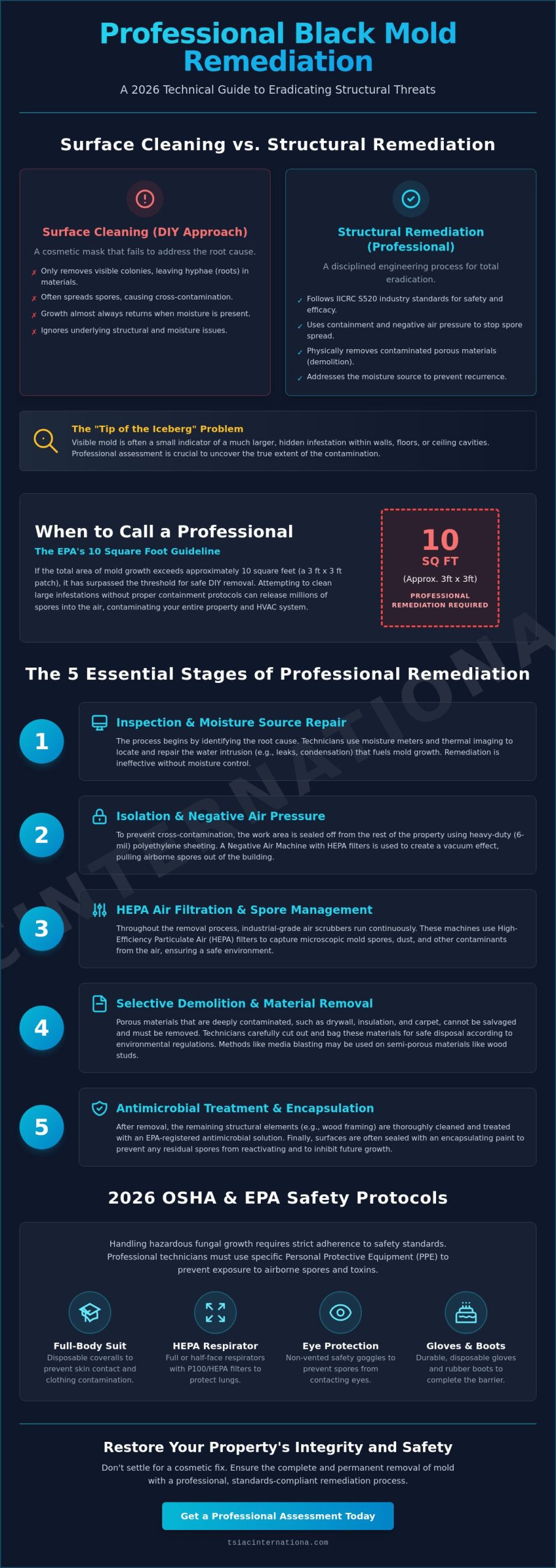
Surface Cleaning vs. Structural Remediation: A Technical Comparison
The black mold removal process is often misunderstood as a simple application of chemical agents. Many property owners rely on the “Bleach Myth,” assuming that household chlorine bleach will eradicate fungal growth. In reality, bleach is primarily composed of water. When applied to porous surfaces like wood or drywall, the chemical component remains on the surface while the water penetrates deep into the material. This moisture effectively feeds the mold roots it was intended to kill, leading to rapid regrowth. This approach fails to address the biological reality of fungal colonization and can actually worsen the structural damage over time.
True remediation requires mechanical removal to ensure the substrate is free of fungal hyphae. Techniques such as sanding, wire-brushing, and media blasting physically strip the mold from the material. Media blasting, which uses dry ice or abrasive soda, is particularly effective for cleaning complex structural geometries without damaging the underlying surface. This rigorous approach aligns with the Professional Mold Remediation Standard, which prioritizes the physical removal of the mold source over chemical suppression. When wood rot is present, the focus shifts to assessing structural integrity. If the fungus has compromised the load-bearing capacity of a beam, selective demolition becomes the only responsible course of action. The project isn’t complete until an independent industrial hygienist performs a clearance test. This third-party audit involves air and surface sampling to provide objective verification that the indoor environment has returned to a normal fungal ecology.
The Limitations of Antimicrobial Coatings
Applying mold-resistant paint over an active colony is a tactical error. These coatings are designed as preventative measures for clean surfaces, not as primary solutions for existing growth. If you trap moisture behind a sealant or encapsulant, you create an ideal environment for hidden decay. Encapsulants should only be used as a secondary defense after the black mold removal process has physically eliminated all spores and the substrate has been thoroughly dried. Using these products prematurely can mask an ongoing problem until it results in a costly structural failure.
Interior Gutting for Commercial Mold Issues
Large-scale contamination in industrial or office settings requires a different operational scale. When mold infiltrates HVAC systems or plenum spaces, localized cleaning is insufficient. These scenarios often necessitate commercial interior gutting services to remove contaminated components while maintaining business continuity. Professionals must balance the speed of remediation with the technical requirements of high-volume air scrubbing. This ensures that the rest of the facility remains operational and uncontaminated during the abatement. Success in these environments depends on meticulous planning and a deep understanding of how mold interacts with complex building systems.
Safety Protocols and Regulatory Standards in 2026
Executing a black mold removal process requires more than just technical skill; it demands strict adherence to evolving safety and regulatory frameworks. As of 2026, the regulatory environment has become increasingly sophisticated, with states like Virginia requiring contractors to hold certifications from recognized bodies like the IICRC. While federal OSHA standards don’t currently set specific exposure limits for mold, the General Duty Clause requires employers to protect workers from recognized hazards, which includes fungal exposure. This legal baseline forces a disciplined approach to site safety that prioritizes the health of both the abatement crew and the building occupants.
Personal Protective Equipment (PPE) is the final line of defense in a contaminated environment. For standard remediation, technicians typically utilize Level C protection, which includes full-face respirators and chemical-resistant, disposable suits. In scenarios involving extreme contamination or poor ventilation, Level B suits with supplied air may be necessary. Respiratory protection must meet N95 or, preferably, P100 standards to ensure that microscopic spores are filtered out before inhalation. Waste management is equally regulated; mold-infested debris must be double-bagged in 6-mil polyethylene and disposed of according to specific local and federal hazardous waste guidelines to prevent environmental leaching.
The Role of Industrial Hygienists
Professional abatement involves a system of checks and balances provided by independent industrial hygienists. These experts conduct pre-remediation air sampling to establish a baseline of fungal concentration. Once the black mold removal process is complete, they perform Post-Remediation Verification (PRV). This testing ensures the space has returned to a “normal fungal ecology,” meaning the indoor air quality is comparable to or better than the outdoor environment. Utilizing a third-party hygienist is essential for commercial liability, as it provides objective, documented proof that the remediation was successful and the structure is safe for re-occupancy.
Site Safety and Decontamination Zones
The work site is organized into specific zones to prevent the migration of hazardous particles. A “dirty” zone is established where the actual removal occurs, followed by a transition or decontamination zone where workers remove PPE. This staging prevents secondary contamination of the “clean” areas of the building. All tools used within the containment must be thoroughly decontaminated before being removed from the site. This level of operational discipline requires specialized training. For property owners seeking a partner who understands these complexities, professional mold remediation services provide the methodical precision necessary to manage these risks effectively.
Strategic Hazardous Material Management with TSIAC International
TSIAC International approaches the black mold removal process through the lens of structural engineering and environmental safety. In many aging properties, mold remediation isn’t an isolated event. It often intersects with other hazardous materials, such as lead-based paint or legacy insulation hidden within wall cavities. Managing this overlap requires a contractor who can execute hazardous material abatement south carolina property owners trust for its technical depth. By addressing mold alongside asbestos removal south carolina protocols, TSIAC ensures that one remediation effort doesn’t inadvertently trigger another environmental crisis. This integrated strategy is vital for maintaining a safe workspace during complex gut-outs.
Our team brings a disciplined expert character to every project. We don’t promise the impossible, but we deliver what we commit to with methodological accuracy. This is especially critical in commercial environments where the black mold removal process must be balanced with business continuity. We understand that a structural failure or a safety breach isn’t just a delay; it’s a significant liability. By employing high-level containment and selective demolition, we protect the value of your assets while eliminating the biological threat at its source.
Comprehensive Remediation Solutions
When fungal growth compromises load-bearing elements, simple cleaning is insufficient. TSIAC integrates the demolition process south carolina standards require for structural stability. This involves selective demolition and interior gutting to remove compromised materials while preserving the building’s skeleton. We maintain a strict commitment to environmental responsibility. We focus on recycling non-contaminated materials, such as metal framing and concrete, while ensuring toxic waste is sequestered and disposed of according to federal guidelines. Our project management covers every phase, from the initial gut-out to the final air quality clearance. This ensures that the transition from a contaminated state to a ready-for-restoration environment is seamless and documented.
Ensuring Long-Term Property Health
True remediation goes beyond the physical extraction of spores. It requires a forensic look at why the growth occurred. TSIAC’s methodology prioritizes site cleanliness and the resolution of moisture dynamics. We don’t just clear the space; we ensure the environment is stabilized to prevent recurrence. This disciplined approach is why we’re a preferred partner for complex structural abatement. We treat each project as a partnership, providing the technical answers needed for extreme conditions. For a professional evaluation of your property’s needs, contact TSIAC International to discuss a customized remediation strategy that prioritizes safety and structural integrity.
Restoring Structural Integrity and Environmental Safety
Professional remediation is a high-stakes technical operation where precision determines long-term success. You’ve seen that a successful black mold removal process requires moving beyond surface-level cleaning to address deep-seated structural colonization through containment and selective demolition. Relying on verified engineering protocols and OSHA-compliant workflows ensures that your property isn’t just visually clear but structurally sound and safe for re-occupancy. The integration of hazardous material management prevents the accidental release of secondary contaminants like asbestos or lead during the gut-out phase.
With 15+ years of hazardous material experience, TSIAC International provides the disciplined expertise required for complex remediation projects. Our comprehensive demolition and remediation capabilities allow us to manage the most challenging environments with unwavering reliability. We don’t just remove growth; we stabilize your property’s future. Take the first step toward a verified, mold-free environment by choosing a partner who values technical accuracy as much as you do. Request a Professional Abatement Consultation from TSIAC International today to secure your property’s health and structural safety.
Frequently Asked Questions
How long does the professional black mold removal process take?
The duration typically ranges from one to five business days, though complex commercial projects may require more time. Factors influencing the timeline include the extent of contamination, the complexity of the containment setup, and the drying time required for structural elements. A standard residential project often concludes within 72 hours once containment is established and the moisture source is repaired.
Is it safe to stay in the building during professional mold remediation?
Occupancy safety depends on the location of the mold and the effectiveness of the containment zones. While negative air pressure prevents spore migration, the noise of air scrubbers and the physical barriers can make staying in the building impractical. For extensive projects involving the HVAC system or multiple rooms, temporary relocation is often recommended to ensure zero exposure risk during the black mold removal process.
Can black mold be completely removed from wood studs?
Black mold can be removed from wood studs through mechanical agitation such as sanding, wire-brushing, or media blasting. Since wood is semi-porous, the hyphae can penetrate the surface, making liquid cleaners ineffective. If the fungal growth has caused significant wood rot that compromises the load-bearing capacity, the stud must be replaced through selective demolition to ensure structural safety.
What is the difference between mold removal and mold remediation?
Mold removal refers specifically to the physical act of stripping the fungus from a surface. Remediation is a more comprehensive systematic protocol that includes identification, containment, removal, and the mandatory resolution of the moisture source. The black mold removal process is technically a component of a broader remediation strategy designed to prevent future recurrence and restore the environment’s health.
How do I know if the mold removal process was successful?
Success is verified through a Post-Remediation Verification (PRV) test conducted by an independent industrial hygienist. This process involves visual inspections and air sampling to confirm that the spore counts are within a normal fungal ecology. Relying on a third-party audit ensures that the results are objective and provides documented proof that the structure is safe for re-occupancy.
Will insurance cover the black mold removal process?
Coverage typically depends on whether the mold resulted from a “sudden and accidental” event, such as a burst pipe, rather than gradual neglect or humidity issues. Most policies have specific limits or exclusions for mold remediation. You should review your policy’s endorsements and consult with your provider to verify if the costs for the black mold removal process are eligible for a claim.
What happens if mold is found during an asbestos abatement project?
When mold is discovered during asbestos work, the abatement protocols must be integrated to handle both hazards simultaneously. Asbestos regulations are generally more stringent, so the containment and filtration systems already in place often exceed mold safety requirements. The crew must adjust their waste management and PPE to ensure that both hazardous materials are safely sequestered and removed without cross-contamination.
Does the black mold removal process involve using toxic chemicals?
Modern remediation prioritizes mechanical removal and HEPA filtration over the heavy use of aggressive chemicals. While EPA-registered antimicrobials and encapsulants are used to treat remaining structural elements, these are applied in a controlled manner within containment zones. The goal is to eliminate the biological threat physically rather than relying on chemical suppression, which can inadvertently trap moisture within the substrate.
