What Happens If You Ignore Black Mold? The Cost of Negligence

An estimated 47% of homes in the U.S. harbor dampness or mold, yet many property owners treat a dark patch on the drywall as a minor cosmetic issue…

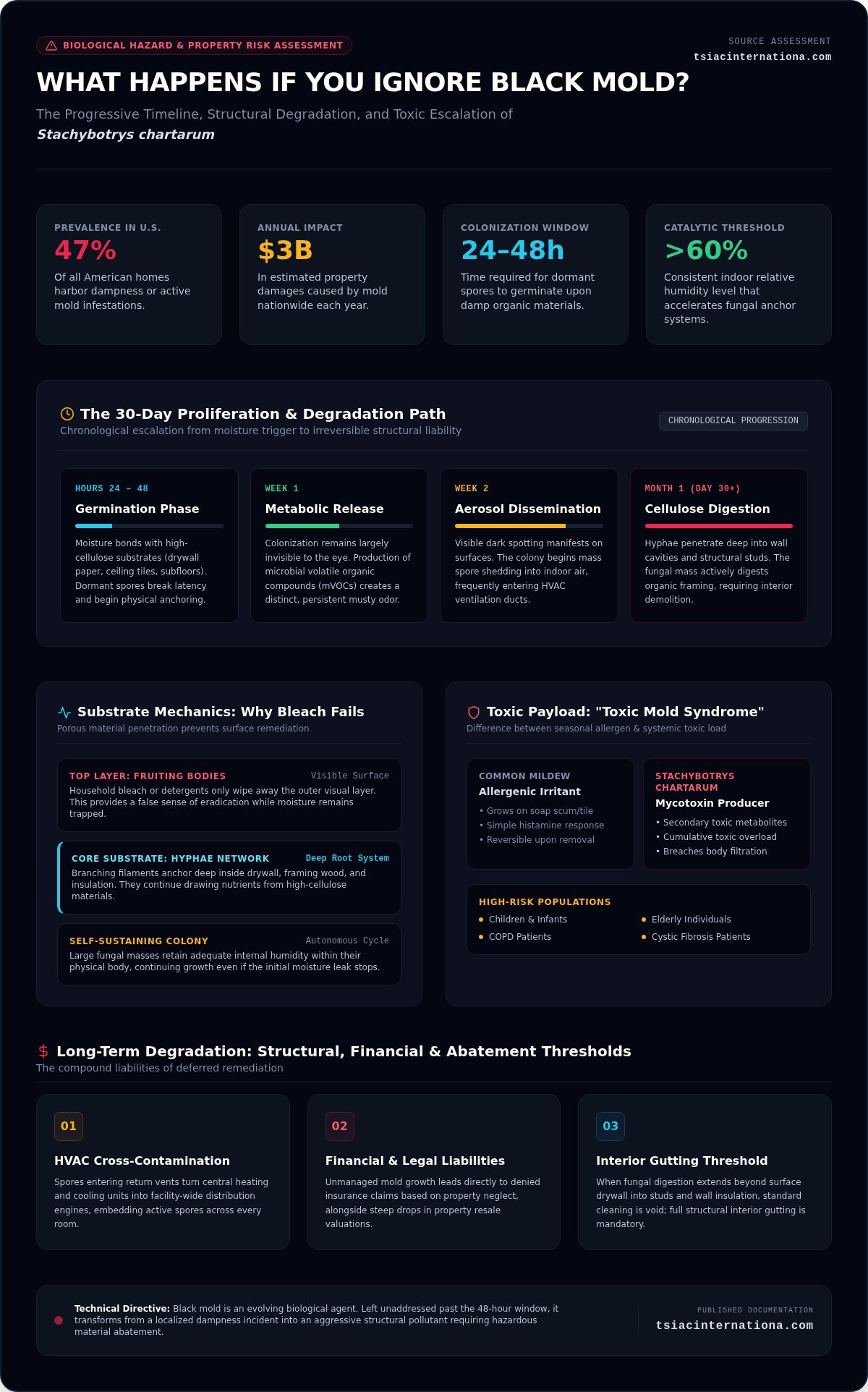
An estimated 47% of homes in the U.S. harbor dampness or mold, yet many property owners treat a dark patch on the drywall as a minor cosmetic issue rather than a biological hazard. You might wonder what happens if you ignore black mold, perhaps hoping the problem will stabilize if left alone. In reality, mold causes approximately $3 billion in property damage annually across the country. Delaying action doesn’t just increase the surface area of the infestation; it initiates a progressive degradation of your building’s structural components and compromises the safety of the indoor environment.

It’s natural to feel anxious about hidden repair costs or the distinction between a nuisance growth and a toxic threat. This guide details the progressive health, structural, and financial risks of untreated mold and explains when professional intervention becomes a necessity. We’ll examine the specific timeline of mold proliferation and the health symptoms that demand immediate attention. By the end of this analysis, you’ll have the technical clarity needed to decide if your situation requires professional hazardous material abatement to protect your property’s long-term value.

Key Takeaways

  • Learn exactly what happens if you ignore black mold during the initial 24 to 48 hour germination window when spores begin bonding with high-cellulose building materials.
  • Understand the critical shift from standard allergy irritants to chronic mycotoxin exposure, which triggers escalating health risks the longer the infestation remains untreated.
  • Discover how unchecked fungal growth actively digests organic materials, leading to irreversible drywall failure and compromised structural integrity.
  • Evaluate the long-term financial liabilities of property neglect, including steep drops in resale value and the likelihood of denied insurance claims.
  • Identify the technical thresholds that dictate when surface cleaning fails, making professional hazardous material abatement or interior gutting a structural necessity.

Understanding Black Mold: Stachybotrys Chartarum and the Growth Timeline

Black mold is a toxigenic fungus that requires moisture and organic matter to colonize building materials. Scientifically classified as Stachybotrys chartarum, this specific fungus is more than a simple nuisance; it’s a slow-acting biological agent that targets the structural components of a property. Unlike common household mildews that grow on soap scum or tiles, this species thrives on high-cellulose, low-nitrogen materials. This includes the paper backing of drywall, wood subflooring, and ceiling tiles. When these materials remain damp for a window of 24 to 48 hours, dormant spores germinate and begin the colonization process.

If you choose to look the other way, the colony eventually creates its own micro-environment. Even if the primary moisture source, like a minor pipe leak, is addressed, a large colony often retains enough internal humidity within its dense fungal mass to self-sustain. This is what happens if you ignore black mold; the fungus transitions from an opportunistic growth to a permanent, self-regulating resident that continues to degrade your property’s value and safety every day it remains in place.

The Anatomy of a Spore Colony

Fungal growth isn’t merely a surface-level aesthetic issue. It utilizes hyphae, which are branching, thread-like filaments that serve as the root system of the fungus. In porous substrates like drywall or insulation, these hyphae penetrate deep into the material’s core. Standard surface cleaning with bleach or household detergents almost always fails because it only eliminates the visible fruiting bodies. The roots remain protected within the substrate, ready to regrow as soon as conditions allow. Stagnant air and consistent humidity levels above 60% act as catalysts, allowing these roots to anchor firmly into the building’s skeletal components.

The 30-Day Escalation Path

Fungal proliferation follows a predictable and aggressive trajectory when left unmanaged. Understanding this timeline is essential for determining when a simple cleanup must evolve into professional hazardous material abatement.

  • Week 1: Initial colonization happens mostly out of sight. While you won’t see dark spots yet, the distinct, musty odor of microbial volatile organic compounds (mVOCs) signals that metabolic activity has begun.
  • Week 2: Visible dark spotting appears on surfaces. The colony starts releasing spores into the air. These spores often find their way into the HVAC system, which then distributes the contamination to previously unaffected areas of the building.
  • Month 1: The fungus achieves deep penetration into wall cavities and subflooring. At this stage, what happens if you ignore black mold becomes a structural liability. The cellulose is being actively digested, often necessitating professional interior gutting services to remove contaminated studs and insulation that are no longer salvageable.

The Health Risks of Chronic Exposure to Mycotoxins

While surface growth indicates a structural problem, the primary concern for occupants is the biological payload black mold carries. Most common molds trigger simple allergic reactions; however, Stachybotrys chartarum produces mycotoxins, which are secondary metabolites capable of causing systemic health issues. This is often termed “Toxic Mold Syndrome” in clinical discussions. Unlike a seasonal allergy that dissipates, chronic exposure leads to a cumulative toxic load. This is exactly what happens if you ignore black mold; the body’s natural filtration systems become overwhelmed by the constant inhalation of these microscopic compounds.

Vulnerable populations face the highest risk. Children, the elderly, and individuals with pre-existing conditions like COPD or cystic fibrosis experience accelerated symptom onset. When spores enter a building’s ventilation system, the HVAC unit acts as a distribution hub, turning a localized problem into a facility-wide health hazard. Understanding what happens if you ignore black mold in these environments is critical, as the spores don’t remain stationary; they circulate until they are inhaled or find new surfaces to colonize.

Immediate vs. Long-Term Respiratory Impact

Short-term exposure typically manifests as irritation of the eyes, nose, and throat. You might notice persistent coughing or a scratchy sensation that doesn’t resolve with standard medication. Over months, these minor irritations can evolve into chronic bronchitis. Research into the health effects of mold exposure suggests a strong link between damp indoor environments and the development of asthma in previously healthy children. Once inhaled, mycotoxins can cross the respiratory membrane and enter the bloodstream, leading to systemic inflammation and long-term pulmonary damage.

Neurological and Systemic Symptoms

The impact isn’t limited to the lungs. Many occupants report “brain fog,” chronic fatigue, and difficulty concentrating, which are often dismissed until the mold source is identified. Direct contact with contaminated surfaces or high concentrations of airborne spores also causes dermatological issues, including persistent rashes and skin irritation. Beyond the physical, the psychological stress of living in a compromised environment shouldn’t be overlooked. The constant anxiety over air quality and hidden repair costs adds a significant mental health burden to property owners. If you suspect your facility is affected, seeking professional mold remediation is the only way to ensure the biological threat is neutralized before symptoms escalate.

Structural Degradation: How Mold Destroys Your Property

While health concerns are the most immediate priority, the physical destruction of the building envelope is the most permanent consequence. Mold species like Stachybotrys don’t simply rest on surfaces; they actively digest building materials. By secreting enzymes that break down cellulose, which is the primary organic compound in wood, paper, and drywall, the fungus converts your property’s structure into a food source. This is what happens if you ignore black mold for extended periods; the materials that provide stability and insulation are chemically dismantled at a microscopic level.

Drywall is particularly susceptible because its paper facing provides a massive surface area of high-cellulose fuel. Once the fungal hyphae penetrate the gypsum core, the board loses its tensile strength and becomes brittle. At this point, the material can’t be restored with a coat of antimicrobial paint or a surface wash. It requires professional interior gutting to ensure every contaminated layer is removed. Hidden damage behind baseboards and within wall cavities is the most insidious, as it allows the fungus to compromise the building’s skeleton without visible warning. This hidden decay often leads to crumbling wall surfaces and structural instability that goes unnoticed until a major repair is unavoidable.

The Compromise of Load-Bearing Elements

Prolonged moisture doesn’t just invite mold; it creates a gateway for wood-destroying fungi that cause structural rot. When floor joists and wall frames remain damp, the transition from surface mold to deep-seated rot happens rapidly. The EPA highlights the dangers of mold exposure not just as a health risk, but as a direct cause of material destruction. Once a load-bearing element is structurally compromised, simple cleaning is no longer a viable technical response. We’ve seen cases where ignoring a small leak for six months resulted in the need for selective demolition of entire floor sections to ensure the building remained safe.

HVAC and Systemic Contamination

Systemic contamination represents the “total loss” scenario for many facilities. Porous materials like fiberglass insulation and flexible ductwork are essentially impossible to remediate once spores have embedded themselves deep within the fibers. The cost of cross-contamination throughout a large-scale commercial facility is immense. If the air handling unit continues to cycle air through a mold-infested space, the entire building’s infrastructure becomes a vector for spores. In these cases, what happens if you ignore black mold is a shift from a localized mold remediation project to a full-scale mechanical and structural overhaul that affects every floor and every occupant.
What Happens If You Ignore Black Mold? The Cost of Negligence

Neglecting a fungal infestation quickly shifts from a maintenance oversight to a major financial liability. While the biological growth digests your property’s structure, it simultaneously erodes its market value. Industry data indicates that a history of untreated mold can decrease a home’s resale value by 20% to 37%. This is a direct consequence of what happens if you ignore black mold; the market views the property as a high-risk asset requiring significant capital expenditure to restore. Beyond the loss in equity, property owners often face a staggering cost gap when they finally address the issue. A localized cleanup that might have been manageable initially can triple in price once the mold necessitates full-scale selective demolition and hazardous material abatement.

Insurance Denials and the “Sudden” Rule

Most property insurance policies operate on the principle of “sudden and accidental” occurrence. This means coverage typically applies to a burst pipe or a flash flood, but it rarely extends to “gradual damage” caused by neglect. When an adjuster arrives, they look for signs of long-term moisture, such as deep wood rot or extensive spore colonies. If the evidence suggests the problem has existed for months, the claim will likely be denied. Many policies also cap mold-related payouts between $1,000 and $10,000, which is often insufficient for large-scale remediation. Precise documentation of all leaks and repairs is critical to proving you haven’t been negligent, but once the growth is established, the financial burden usually falls entirely on the owner.

Impact on Real Estate Transactions

Modern real estate markets are highly sensitive to environmental hazards. Mandatory disclosure laws require sellers to list any known mold issues; failing to do so can lead to litigation long after the sale is finalized. Even if a buyer is willing to proceed, their financing often falls through during the appraisal or inspection phase. Lenders are hesitant to back properties with active biological growth because it threatens the collateral’s integrity. To move forward, you’ll almost certainly need a “clearance certificate” from a professional service. This document proves the area has been remediated according to industry standards, but obtaining it after months of neglect is far more expensive than early intervention.

For commercial landlords, the legal risks are even more acute. Courts are increasingly shortening the “reasonable time” allowed to address mold complaints, with some metropolitan areas favoring a 7-day response window over the traditional 30 days. Ignoring these timelines can lead to habitability lawsuits and massive increases in insurance premiums. If you’ve identified a persistent growth, you need a partner who understands regulatory compliance and safe disposal. Contact the experts at TSIAC International for professional mold remediation to protect your assets and limit your legal exposure.

Professional Abatement: When Cleaning Isn’t Enough

Surface-level cleaning often provides a false sense of security. While household detergents might remove the visible pigmentation, they don’t address the hyphae rooted within porous materials. This technical necessity is a direct result of what happens if you ignore black mold; the fungus eventually embeds itself so deeply that topical treatments are ineffective. When the contamination reaches the structural skeleton of a building, property owners must transition from simple remediation to comprehensive hazardous material abatement protocols to ensure the safety of the indoor environment.

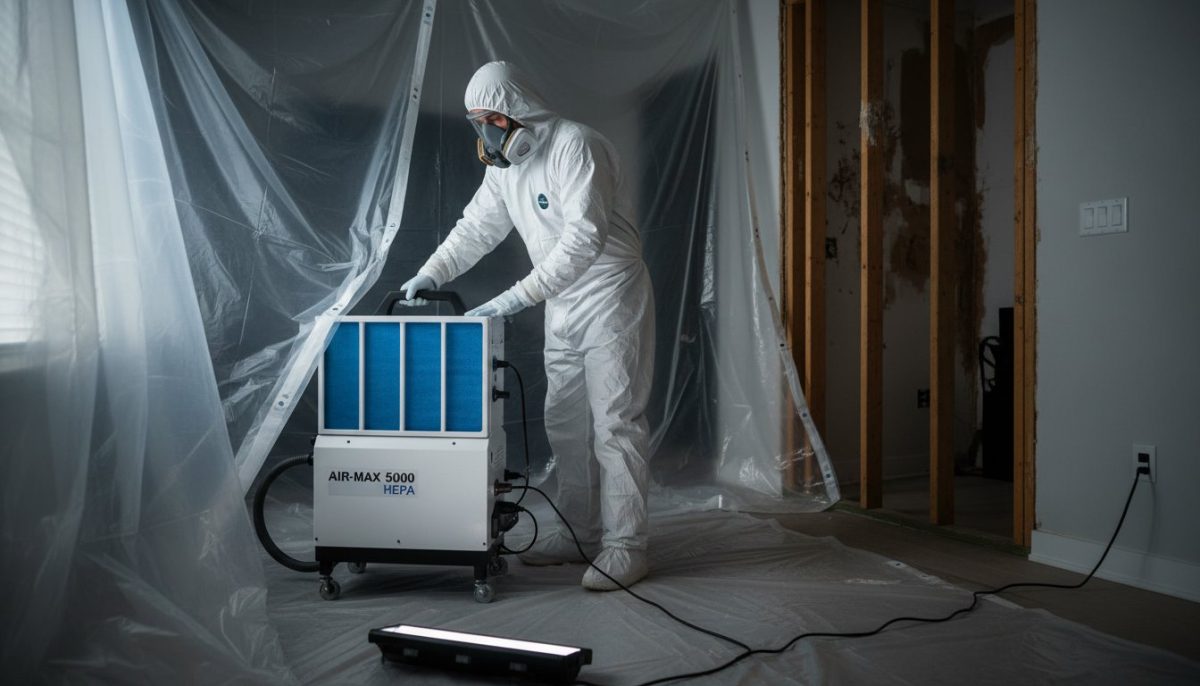
In cases of extensive neglect, the mold colony often compromises the integrity of wall studs and subflooring. At this stage, professional interior gutting services become mandatory. This process involves the controlled removal of all organic materials that have been structurally weakened or heavily colonized. To prevent cross-contamination, experts utilize high-efficiency particulate air (HEPA) filtration and negative air pressure machines. These systems ensure that disturbed spores are captured rather than redistributed through the facility’s ventilation system, which is a common failure point in DIY attempts.

The Professional Remediation Protocol

A disciplined approach to abatement follows a precise methodological sequence to guarantee results. We follow these steps to manage the risks associated with what happens if you ignore black mold for too long:

  • Step 1: Containment. Technicians establish physical barriers using 6-mil polyethylene sheeting. Negative air pressure is maintained within the work zone to prevent spore migration to clean areas of the property.
  • Step 2: Controlled Removal. Contaminated porous materials like drywall and fiberglass insulation are carefully removed, double-bagged, and disposed of as hazardous waste according to regulatory standards.
  • Step 3: Specialized Cleaning. Non-porous surfaces undergo HEPA vacuuming followed by antimicrobial washing. Air scrubbers run continuously to achieve the required air exchange rates and capture airborne particulates.

Choosing a Certified Abatement Contractor

The technical precision required for mold containment is identical to the standards used in asbestos removal. A contractor with experience in high-risk material abatement brings a level of discipline that standard cleaning companies don’t possess. You should verify that your chosen partner holds the necessary licensing, comprehensive liability insurance, and specialized permits for hazardous waste disposal. The final and most critical step is the post-remediation verification (PRV) test. This independent air quality analysis confirms that spore counts have returned to baseline levels, providing a technical guarantee that the facility is once again safe for occupancy. Don’t settle for a visual inspection when biological safety and property value are at stake.

Securing Your Asset Through Technical Intervention

Ignoring biological growth is a gamble with your property’s structural integrity and your occupants’ health. We’ve detailed the aggressive timeline of fungal proliferation and the systemic risks of chronic mycotoxin exposure. Understanding what happens if you ignore black mold helps you recognize the critical transition from a manageable cleaning task to a mandatory hazardous material abatement project. Once hyphae penetrate structural studs or HVAC systems, technical intervention is the only reliable way to restore safety and preserve asset value.

TSIAC International brings over 15 years of hazardous material experience to every project, specializing in complex interior gutting and structural removal. Our teams maintain strict adherence to environmental and safety regulations, ensuring every contaminant is contained and neutralized with methodological precision. You don’t have to manage these risks alone. Protect your property and health; contact TSIAC International for expert hazardous material abatement today. Taking decisive action now ensures a secure, compliant, and healthy environment for the future.

Frequently Asked Questions

Can I just bleach black mold and leave it?

Applying bleach to black mold is not an effective long-term solution. Bleach is a surface-level oxidizer that only kills visible spores on non-porous materials like tile. It cannot penetrate the hyphae, or root systems, that anchor deep into porous materials like drywall or wood. If you rely on bleach, the roots remain alive, and the colony will likely regrow as soon as moisture levels fluctuate again. Professional remediation is required for deep-seated infestations.

How long can you live in a house with black mold before getting sick?

There is no universal timeline for when symptoms appear, as individual sensitivity and the concentration of airborne mycotoxins vary significantly. Some occupants report respiratory irritation within 48 hours, while others develop systemic issues after months of chronic exposure. Understanding what happens if you ignore black mold is vital, as the biological load on your immune system increases the longer you remain in a contaminated environment without proper hazardous material containment.

Will black mold eventually die if I dry out the area?

Drying out an area will cause black mold to go dormant, but it does not kill the fungus. Spores and toxic metabolites remain present in the building materials and can still trigger health issues through inhalation. If moisture returns due to high humidity or a new leak, the dormant colony will reactivate immediately. True removal requires the physical extraction of contaminated materials through specialized abatement protocols to ensure the environment is biologically safe.

Does home insurance cover black mold removal if I waited to report it?

Most standard homeowners’ insurance policies exclude coverage for mold resulting from neglect or lack of maintenance. Insurance is designed to cover sudden and accidental water discharge, such as a burst pipe. If an inspector determines that the mold resulted from a long-term leak that you failed to address, the claim will likely be denied under the “gradual damage” clause. This highlights the financial risk of what happens if you ignore black mold for extended periods.

What is the “musty smell” and does it always mean black mold?

The distinct musty odor is caused by microbial volatile organic compounds, or mVOCs, which are gases released during the mold’s metabolic process. While this smell is a reliable indicator of active microbial growth, it doesn’t always signify the presence of Stachybotrys chartarum. Other species like Aspergillus or Penicillium also produce similar odors. Regardless of the species, a persistent musty smell indicates a moisture problem that requires a professional assessment to prevent structural decay.

When does mold remediation require a full interior gut-out?

A full interior gut-out is necessary when the fungal growth has compromised the structural integrity of porous building components. If the hyphae have penetrated deep into wall studs, floor joists, or fiberglass insulation, these materials cannot be effectively sanitized. In these scenarios, selective demolition is the only way to ensure all contaminated organic matter is removed. This prevents the mold from continuing to digest the building’s skeleton from the inside out.

Can black mold grow back after professional treatment?

Professional treatment effectively removes existing colonies, but mold can grow back if the underlying moisture source is not permanently resolved. Fungal spores are omnipresent in the environment and will colonize any high-cellulose material that remains damp for more than 48 hours. Successful remediation must be paired with moisture control strategies, such as repairing leaks and maintaining indoor humidity levels between 30% and 50% to prevent a recurrence of the infestation.

Is it safe to stay in the house during a mold abatement project?

Safety during an abatement project depends on the scale of the contamination and the effectiveness of the containment barriers. For localized projects, technicians use negative air pressure and physical barriers to isolate the work zone, making it possible to remain in other parts of the building. However, for large-scale commercial gut-outs or extensive hazardous material removal, we typically recommend vacating the premises to avoid any risk of accidental exposure during the demolition process.
The Professional Black Mold Removal Process: A 2026 Comprehensive Guide

Spraying a household cleaner on a visible colony isn’t remediation; it’s a cosmetic mask that often leaves the underlying structural threat…

Spraying a household cleaner on a visible colony isn’t remediation; it’s a cosmetic mask that often leaves the underlying structural threat completely untouched. If you’re currently facing an infestation, you’re likely feeling the weight of health anxiety regarding spore exposure and the persistent fear that the growth will simply return. It’s a common point of confusion, but the professional black mold removal process is not a simple cleaning service. It is a disciplined engineering challenge that requires precise containment and, frequently, selective demolition to ensure the source is eradicated at its root.

You deserve a mold-free environment where structural safety is verified by technical standards, not just a visual check. This 2026 guide explains the rigorous, multi-stage protocols required to safely eliminate toxic growth and restore your property’s integrity. We will walk through the critical steps of the IICRC S520 industry standard, from establishing negative air pressure to the final verification of structural safety. This overview provides the clarity you need to move from a state of uncertainty to a controlled, professional restoration of your space.

Key Takeaways

  • Identify the critical distinction between superficial surface cleaning and the root-level systematic protocols required for true remediation.
  • Learn the technical stages of the professional black mold removal process, including the implementation of negative air pressure and containment zones.
  • Discover why mechanical removal methods like media blasting are necessary for porous materials where standard household chemicals fail to reach.
  • Review the 2026 OSHA and EPA safety standards, including the specific PPE requirements for handling hazardous fungal growth.
  • Understand how to manage the complex overlap between mold remediation and other hazardous material abatement needs like asbestos or lead.

What is the Black Mold Removal Process?

The black mold removal process is a disciplined, multi-stage engineering protocol. It involves the rigorous identification, containment, and total elimination of fungal colonies from building substrates. Property owners often confuse remediation with standard surface cleaning, but the two are fundamentally different in scope and execution. Surface cleaning is a cosmetic fix that addresses visible growth, whereas professional remediation targets the root level of the infestation. A failure to distinguish between these two approaches often results in wasted resources and persistent structural risks.

Professional remediation ensures that the structural integrity of the property is preserved. It’s based on a comprehensive understanding of What is Mold Remediation? and how it applies to modern construction. This systematic approach doesn’t just treat the visible fungus; it mandates the resolution of the underlying moisture source. Stachybotrys chartarum, the species commonly known as black mold, is particularly destructive. It consumes cellulose-rich materials like drywall, insulation, and wood framing, which can lead to significant structural degradation if left unaddressed by a professional team.

The Science of Mold Colonization

Fungal growth is a biological invasion of the building’s material. Microscopic filaments known as hyphae penetrate deep into porous substrates, creating an intricate network that anchors the colony. This reality means that visible growth is frequently just the tip of the iceberg. In many structural assessments, the most significant contamination is found hidden within wall cavities, floor joists, or ceiling voids. Even when a surface looks clean, dormant spores can remain embedded in the material’s fibers. These spores stay inactive until moisture levels rise again, at which point they reactivate and resume the destruction of the substrate. A professional black mold removal process accounts for these hidden threats through mechanical removal rather than just chemical treatment.

When to Transition from DIY to Professional Abatement

Knowing when to stop a DIY effort and hire a professional is critical for safety. The EPA suggests a 10-square-foot rule as a general threshold. If the mold covers an area larger than roughly three feet by three feet, the project has likely exceeded the capacity of household tools. Attempting large-scale removal without professional containment protocols often causes cross-contamination. When you disturb a large colony, millions of spores become airborne, traveling through the air to colonize other parts of the building. Professionals also become essential when dealing with hidden mold in HVAC systems or behind heavy finishes. These scenarios require specialized diagnostic tools and high-efficiency particulate air (HEPA) filtration to ensure the air remains safe during and after the abatement process.

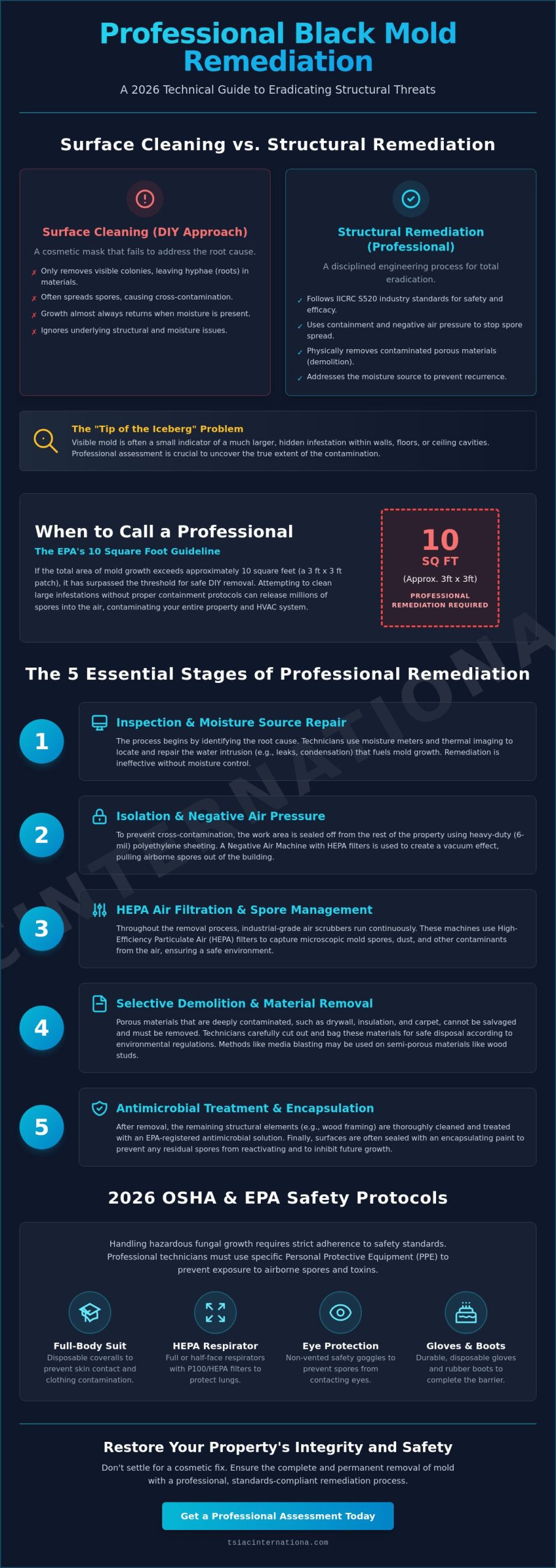
The 5 Essential Stages of Professional Mold Remediation

The black mold removal process follows a rigorous sequence designed to protect the structural integrity of the property. It doesn’t rely on guesswork. Professionals use a specific methodology to ensure the contamination remains localized while the root cause is addressed. A deviation from this order can lead to the accidental spread of spores into previously unaffected areas. The process is broken down into five distinct phases:

  • Phase 1: Inspection and Moisture Source Repair. Remediation is futile without moisture control. Technicians must identify and stop the water intrusion that feeds the colony.
  • Phase 2: Isolation and Negative Air Pressure Containment. This stage prevents cross-contamination by physically sealing the work zone from the rest of the building.
  • Phase 3: HEPA Air Filtration and Spore Management. Continuous air scrubbing removes microscopic particles from the environment during the removal phase.
  • Phase 4: Selective Demolition and Removal of Porous Materials. Impacted building components that cannot be salvaged are removed and safely discarded.
  • Phase 5: Antimicrobial Treatment and Final Encapsulation. Remaining structural elements are treated with specialized solutions and sealed to prevent future growth.

Containment and Air Quality Control

Isolation is the cornerstone of safe remediation. Technicians establish work zones using 6-mil polyethylene barriers, which are heavy-duty plastic sheets that seal off doorways, vents, and any other openings. Within these barriers, Negative Air Machines (NAMs) are deployed to create a pressure differential. By exhausting air out of the building through HEPA filters, these machines ensure that spores don’t migrate to clean areas. This level of technical control exceeds the basic EPA Mold Cleanup Guidelines, which often focus on smaller, non-commercial scales. High-efficiency vacuuming then captures any settled particles on non-porous surfaces within the zone.

Structural Removal and Selective Demolition

When mold penetrates deep into a structure, cleaning is no longer a viable option. Professional teams must decide between gutting a space or performing selective demolition. Hard, non-porous surfaces like metal framing or concrete can often be saved through mechanical scrubbing. However, porous building materials like drywall cannot be effectively cleaned once infested because fungal hyphae weave through the core of the material, making superficial treatments useless. Contaminated debris is bagged in double-layered 6-mil plastic and disposed of according to hazardous waste protocols. For complex projects requiring professional mold remediation, precise execution during this phase is what prevents future recurrence.

The Professional Black Mold Removal Process: A 2026 Comprehensive Guide

Surface Cleaning vs. Structural Remediation: A Technical Comparison

The black mold removal process is often misunderstood as a simple application of chemical agents. Many property owners rely on the “Bleach Myth,” assuming that household chlorine bleach will eradicate fungal growth. In reality, bleach is primarily composed of water. When applied to porous surfaces like wood or drywall, the chemical component remains on the surface while the water penetrates deep into the material. This moisture effectively feeds the mold roots it was intended to kill, leading to rapid regrowth. This approach fails to address the biological reality of fungal colonization and can actually worsen the structural damage over time.

True remediation requires mechanical removal to ensure the substrate is free of fungal hyphae. Techniques such as sanding, wire-brushing, and media blasting physically strip the mold from the material. Media blasting, which uses dry ice or abrasive soda, is particularly effective for cleaning complex structural geometries without damaging the underlying surface. This rigorous approach aligns with the Professional Mold Remediation Standard, which prioritizes the physical removal of the mold source over chemical suppression. When wood rot is present, the focus shifts to assessing structural integrity. If the fungus has compromised the load-bearing capacity of a beam, selective demolition becomes the only responsible course of action. The project isn’t complete until an independent industrial hygienist performs a clearance test. This third-party audit involves air and surface sampling to provide objective verification that the indoor environment has returned to a normal fungal ecology.

The Limitations of Antimicrobial Coatings

Applying mold-resistant paint over an active colony is a tactical error. These coatings are designed as preventative measures for clean surfaces, not as primary solutions for existing growth. If you trap moisture behind a sealant or encapsulant, you create an ideal environment for hidden decay. Encapsulants should only be used as a secondary defense after the black mold removal process has physically eliminated all spores and the substrate has been thoroughly dried. Using these products prematurely can mask an ongoing problem until it results in a costly structural failure.

Interior Gutting for Commercial Mold Issues

Large-scale contamination in industrial or office settings requires a different operational scale. When mold infiltrates HVAC systems or plenum spaces, localized cleaning is insufficient. These scenarios often necessitate commercial interior gutting services to remove contaminated components while maintaining business continuity. Professionals must balance the speed of remediation with the technical requirements of high-volume air scrubbing. This ensures that the rest of the facility remains operational and uncontaminated during the abatement. Success in these environments depends on meticulous planning and a deep understanding of how mold interacts with complex building systems.

Safety Protocols and Regulatory Standards in 2026

Executing a black mold removal process requires more than just technical skill; it demands strict adherence to evolving safety and regulatory frameworks. As of 2026, the regulatory environment has become increasingly sophisticated, with states like Virginia requiring contractors to hold certifications from recognized bodies like the IICRC. While federal OSHA standards don’t currently set specific exposure limits for mold, the General Duty Clause requires employers to protect workers from recognized hazards, which includes fungal exposure. This legal baseline forces a disciplined approach to site safety that prioritizes the health of both the abatement crew and the building occupants.

Personal Protective Equipment (PPE) is the final line of defense in a contaminated environment. For standard remediation, technicians typically utilize Level C protection, which includes full-face respirators and chemical-resistant, disposable suits. In scenarios involving extreme contamination or poor ventilation, Level B suits with supplied air may be necessary. Respiratory protection must meet N95 or, preferably, P100 standards to ensure that microscopic spores are filtered out before inhalation. Waste management is equally regulated; mold-infested debris must be double-bagged in 6-mil polyethylene and disposed of according to specific local and federal hazardous waste guidelines to prevent environmental leaching.

The Role of Industrial Hygienists

Professional abatement involves a system of checks and balances provided by independent industrial hygienists. These experts conduct pre-remediation air sampling to establish a baseline of fungal concentration. Once the black mold removal process is complete, they perform Post-Remediation Verification (PRV). This testing ensures the space has returned to a “normal fungal ecology,” meaning the indoor air quality is comparable to or better than the outdoor environment. Utilizing a third-party hygienist is essential for commercial liability, as it provides objective, documented proof that the remediation was successful and the structure is safe for re-occupancy.

Site Safety and Decontamination Zones

The work site is organized into specific zones to prevent the migration of hazardous particles. A “dirty” zone is established where the actual removal occurs, followed by a transition or decontamination zone where workers remove PPE. This staging prevents secondary contamination of the “clean” areas of the building. All tools used within the containment must be thoroughly decontaminated before being removed from the site. This level of operational discipline requires specialized training. For property owners seeking a partner who understands these complexities, professional mold remediation services provide the methodical precision necessary to manage these risks effectively.

Strategic Hazardous Material Management with TSIAC International

TSIAC International approaches the black mold removal process through the lens of structural engineering and environmental safety. In many aging properties, mold remediation isn’t an isolated event. It often intersects with other hazardous materials, such as lead-based paint or legacy insulation hidden within wall cavities. Managing this overlap requires a contractor who can execute hazardous material abatement south carolina property owners trust for its technical depth. By addressing mold alongside asbestos removal south carolina protocols, TSIAC ensures that one remediation effort doesn’t inadvertently trigger another environmental crisis. This integrated strategy is vital for maintaining a safe workspace during complex gut-outs.

Our team brings a disciplined expert character to every project. We don’t promise the impossible, but we deliver what we commit to with methodological accuracy. This is especially critical in commercial environments where the black mold removal process must be balanced with business continuity. We understand that a structural failure or a safety breach isn’t just a delay; it’s a significant liability. By employing high-level containment and selective demolition, we protect the value of your assets while eliminating the biological threat at its source.

Comprehensive Remediation Solutions

When fungal growth compromises load-bearing elements, simple cleaning is insufficient. TSIAC integrates the demolition process south carolina standards require for structural stability. This involves selective demolition and interior gutting to remove compromised materials while preserving the building’s skeleton. We maintain a strict commitment to environmental responsibility. We focus on recycling non-contaminated materials, such as metal framing and concrete, while ensuring toxic waste is sequestered and disposed of according to federal guidelines. Our project management covers every phase, from the initial gut-out to the final air quality clearance. This ensures that the transition from a contaminated state to a ready-for-restoration environment is seamless and documented.

Ensuring Long-Term Property Health

True remediation goes beyond the physical extraction of spores. It requires a forensic look at why the growth occurred. TSIAC’s methodology prioritizes site cleanliness and the resolution of moisture dynamics. We don’t just clear the space; we ensure the environment is stabilized to prevent recurrence. This disciplined approach is why we’re a preferred partner for complex structural abatement. We treat each project as a partnership, providing the technical answers needed for extreme conditions. For a professional evaluation of your property’s needs, contact TSIAC International to discuss a customized remediation strategy that prioritizes safety and structural integrity.

Restoring Structural Integrity and Environmental Safety

Professional remediation is a high-stakes technical operation where precision determines long-term success. You’ve seen that a successful black mold removal process requires moving beyond surface-level cleaning to address deep-seated structural colonization through containment and selective demolition. Relying on verified engineering protocols and OSHA-compliant workflows ensures that your property isn’t just visually clear but structurally sound and safe for re-occupancy. The integration of hazardous material management prevents the accidental release of secondary contaminants like asbestos or lead during the gut-out phase.

With 15+ years of hazardous material experience, TSIAC International provides the disciplined expertise required for complex remediation projects. Our comprehensive demolition and remediation capabilities allow us to manage the most challenging environments with unwavering reliability. We don’t just remove growth; we stabilize your property’s future. Take the first step toward a verified, mold-free environment by choosing a partner who values technical accuracy as much as you do. Request a Professional Abatement Consultation from TSIAC International today to secure your property’s health and structural safety.

Frequently Asked Questions

How long does the professional black mold removal process take?

The duration typically ranges from one to five business days, though complex commercial projects may require more time. Factors influencing the timeline include the extent of contamination, the complexity of the containment setup, and the drying time required for structural elements. A standard residential project often concludes within 72 hours once containment is established and the moisture source is repaired.

Is it safe to stay in the building during professional mold remediation?

Occupancy safety depends on the location of the mold and the effectiveness of the containment zones. While negative air pressure prevents spore migration, the noise of air scrubbers and the physical barriers can make staying in the building impractical. For extensive projects involving the HVAC system or multiple rooms, temporary relocation is often recommended to ensure zero exposure risk during the black mold removal process.

Can black mold be completely removed from wood studs?

Black mold can be removed from wood studs through mechanical agitation such as sanding, wire-brushing, or media blasting. Since wood is semi-porous, the hyphae can penetrate the surface, making liquid cleaners ineffective. If the fungal growth has caused significant wood rot that compromises the load-bearing capacity, the stud must be replaced through selective demolition to ensure structural safety.

What is the difference between mold removal and mold remediation?

Mold removal refers specifically to the physical act of stripping the fungus from a surface. Remediation is a more comprehensive systematic protocol that includes identification, containment, removal, and the mandatory resolution of the moisture source. The black mold removal process is technically a component of a broader remediation strategy designed to prevent future recurrence and restore the environment’s health.

How do I know if the mold removal process was successful?

Success is verified through a Post-Remediation Verification (PRV) test conducted by an independent industrial hygienist. This process involves visual inspections and air sampling to confirm that the spore counts are within a normal fungal ecology. Relying on a third-party audit ensures that the results are objective and provides documented proof that the structure is safe for re-occupancy.

Will insurance cover the black mold removal process?

Coverage typically depends on whether the mold resulted from a “sudden and accidental” event, such as a burst pipe, rather than gradual neglect or humidity issues. Most policies have specific limits or exclusions for mold remediation. You should review your policy’s endorsements and consult with your provider to verify if the costs for the black mold removal process are eligible for a claim.

What happens if mold is found during an asbestos abatement project?

When mold is discovered during asbestos work, the abatement protocols must be integrated to handle both hazards simultaneously. Asbestos regulations are generally more stringent, so the containment and filtration systems already in place often exceed mold safety requirements. The crew must adjust their waste management and PPE to ensure that both hazardous materials are safely sequestered and removed without cross-contamination.

Does the black mold removal process involve using toxic chemicals?

Modern remediation prioritizes mechanical removal and HEPA filtration over the heavy use of aggressive chemicals. While EPA-registered antimicrobials and encapsulants are used to treat remaining structural elements, these are applied in a controlled manner within containment zones. The goal is to eliminate the biological threat physically rather than relying on chemical suppression, which can inadvertently trap moisture within the substrate.

Structural Mold Removal and Prevention: The Definitive 2026 Guide for Property Owners

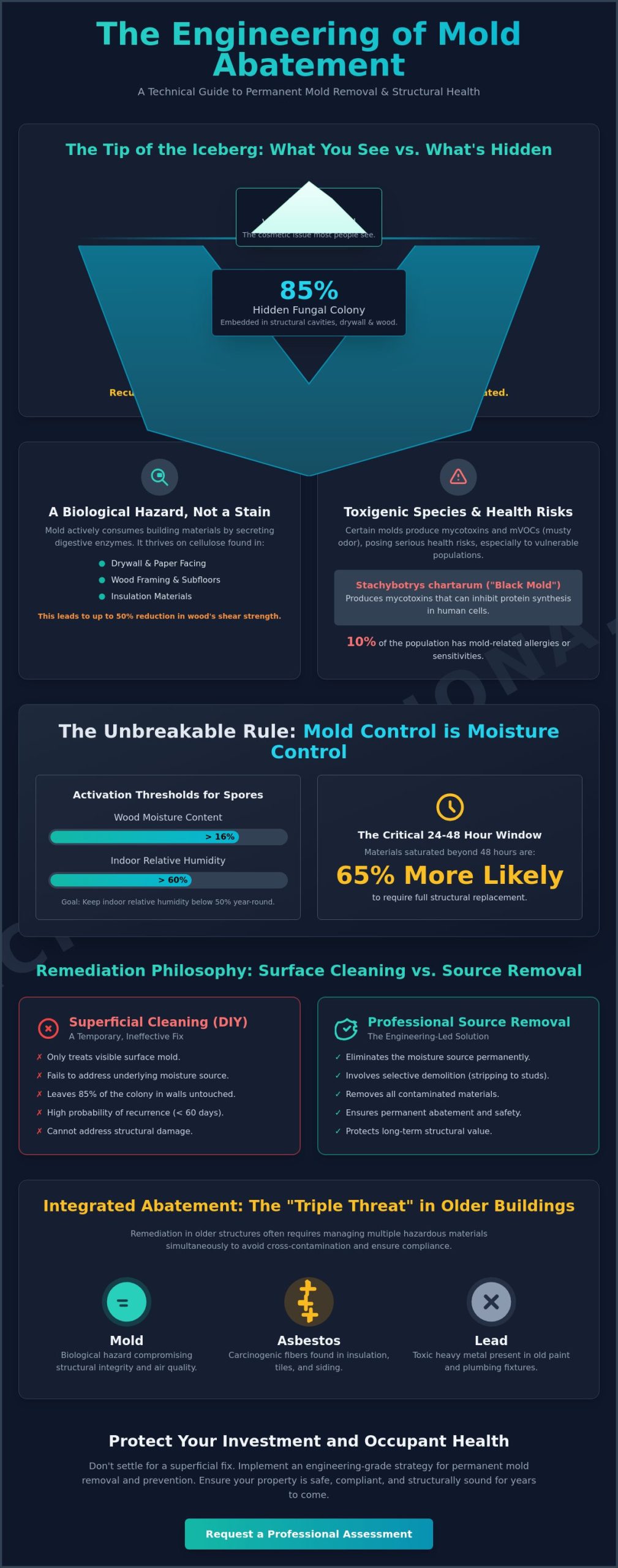
If you see mold on a surface, you’re looking at the tip of an iceberg that likely hides 85% of the fungal colony within your building’s structural…

If you see mold on a surface, you’re looking at the tip of an iceberg that likely hides 85% of the fungal colony within your building’s structural cavities. Property owners often struggle with recurring growth that returns within 60 days of a standard cleaning. It’s frustrating to face the same moisture issues repeatedly while worrying about 2026 safety standards and the long-term integrity of your investment. We agree that a superficial fix isn’t an option when dealing with complex structural health and toxic spore counts.

This guide empowers you to master the technical requirements for permanent mold removal and prevention through professional abatement and moisture control strategies. You’ll gain the engineering-grade insight needed to eliminate underlying causes rather than just treating symptoms. We’ll detail the specific protocols for industrial remediation, the mechanics of structural drying, and the preventive measures that guarantee a safe, compliant environment for years to come.

Key Takeaways

  • Recognize mold as a biological hazard that compromises structural integrity, requiring an engineering-led approach to remediation rather than cosmetic cleaning.
  • Master the fundamental axiom of mold removal and prevention by managing moisture levels and adhering to the critical 48-hour window for drying structural materials.
  • Understand the “Source Removal” philosophy and why stripping contaminated areas to the studs is often the only way to ensure permanent abatement.
  • Learn to identify and manage the “triple threat” of mold, asbestos, and lead in older buildings to avoid hazardous exposure during restoration.
  • Discover how selective demolition and technical precision protect both the health of occupants and the long-term structural value of the property.

The Science of Mold Growth and Structural Degradation

Mold isn’t a surface stain; it’s a biological hazard that actively consumes a building’s physical components. These fungal colonies thrive by digesting cellulose, which is the primary structural component of drywall, wood framing, and paper-faced insulation. When moisture levels remain above 16% in wood or 60% relative humidity in the air, dormant spores activate. This process triggers a metabolic cycle where the fungi secrete enzymes that break down complex organic polymers. Effective mold removal and prevention requires understanding that these organisms don’t just sit on top of materials. They integrate into them. The Science of Mold Growth confirms that these organisms secrete enzymes to digest organic matter, leading to irreversible decay if left unmanaged. Structural mold is growth that has penetrated porous substrates, making simple surface cleaning ineffective for long-term remediation.

Pathogenic Species and Health Implications

While many indoor fungi are relatively benign, toxigenic species like Stachybotrys chartarum present severe risks. This variety produces macrocyclic trichothecene mycotoxins, which are secondary metabolites that can inhibit protein synthesis in human cells. During active growth cycles, mold releases Microbial Volatile Organic Compounds (mVOCs). These gases create the characteristic musty odor and contribute to respiratory distress. Vulnerable populations, including the 10% of the population with mold-related allergies or those with compromised immune systems, face heightened risks of chronic inflammatory response syndrome (CIRS) in both residential and high-occupancy commercial settings.

Identifying Hidden Structural Damage

Hidden structural damage often occurs within wall cavities or HVAC systems where visibility is zero. Mold weakens load-bearing wood members by inducing cellular breakdown, a process similar to dry rot that reduces the wood’s shear strength by up to 50% in extreme cases. HVAC systems act as distribution networks for spores, contaminating internal insulation and coil components. If structural saturation persists for more than 48 to 72 hours, the risk of permanent material failure increases. Professional inspection is mandatory when moisture has reached the subfloor or internal framing, as DIY cleaning cannot reach the hyphae embedded deep within the material’s grain. Comprehensive mold removal and prevention strategies must account for these hidden reservoirs to ensure the building’s long-term stability.

Strategic Moisture Control: The Foundation of Permanent Prevention

In the structural remediation industry, experts follow a single, non-negotiable axiom: mold control is moisture control. There are no exceptions to this rule. Effective mold removal and prevention depends entirely on your ability to dominate the environment’s hydration levels. When water-damaged materials aren’t dried within a strict 24 to 48-hour window, microbial colonization becomes inevitable. Once spores take root in porous substrates, the complexity of the recovery project escalates significantly. The data shows that materials remaining saturated beyond this 48-hour threshold are 65% more likely to require full structural replacement rather than simple cleaning.

A building’s envelope integrity serves as the primary defense against external water intrusion. We frequently identify thermal bridging as a silent culprit in modern facilities. This occurs when structural components, such as steel beams or uninsulated concrete, create a direct path for heat transfer. These points become localized condensation zones. When moisture-laden air hits these cold surfaces, it reaches the dew point and liquefies, creating a hidden nursery for fungal growth behind finished walls. Adhering to standards for Professional Mold Remediation ensures these thermal anomalies are identified and corrected before they cause systemic structural damage.

Humidity Management and Indoor Air Quality

Engineering requirements for moisture regulation dictate that indoor relative humidity must stay below 50% year-round. This isn’t a suggestion; it’s a technical threshold for safety. High-performance HVAC systems must be sized to handle latent heat loads effectively to avoid “short-cycling,” which leaves humidity in the air. These air quality management protocols overlap significantly with hazardous material abatement south carolina standards. Both disciplines require precise air pressure differentials and HEPA filtration to prevent the spread of contaminants throughout a facility.

Structural Water Intrusion and Drainage

Groundwater seepage remains a primary threat to foundation stability. Hydrostatic pressure can force thousands of gallons of water through microscopic fissures in basements and crawlspaces. Effective drainage requires a multi-layered approach to keep the building’s footprint dry. Consider these critical maintenance points:

  • Site Grading: Maintain a minimum 5% slope away from the foundation for at least 10 feet.
  • Gutter Systems: Ensure downspouts discharge at least 6 feet away from the structure.
  • Flashing: Inspect window and door flashing every 24 months to prevent seal failure.

We’ve found that 40% of moisture failures stem from neglected exterior transitions. Regular inspections of these points are vital for a long-term mold removal and prevention strategy. If you’re managing a complex facility with persistent dampness, consulting with a structural specialist can identify the root cause of the intrusion before it requires an expensive teardown.

Structural Mold Removal and Prevention: The Definitive 2026 Guide for Property Owners

DIY Cleanup vs. Professional Mold Remediation

Effective mold removal and prevention requires a technical understanding of material porosity and fungal biology. Surface scrubbing often masks deep-seated structural issues rather than resolving them. A frequent error among property owners is the use of bleach on porous substrates like drywall, ceiling tiles, or unfinished wood. Bleach possesses a high surface tension that prevents it from penetrating the material. While it may discolor the surface mold, the water content in the solution often reaches the roots, providing the moisture necessary for the fungus to return with greater intensity within 14 to 21 days. True remediation involves the physical removal of contaminated porous materials or the specialized mechanical cleaning of non-porous surfaces.

The boundary between a minor maintenance task and a professional hazard is defined by the 10 square foot rule. According to the EPA guide to mold and moisture, if the affected area is less than 10 square feet, a property owner may attempt cleanup following strict safety protocols. Once the contamination exceeds this 3-foot by 3-foot threshold, the risk of aerosolizing millions of spores increases exponentially. Professional intervention ensures that containment barriers and HEPA-filtered air scrubbers prevent these spores from migrating to unaffected zones of the building.

When to Attempt DIY Remediation

DIY efforts are appropriate only for small, localized growth on non-porous surfaces where the moisture source has been identified and stopped. You must utilize specific personal protective equipment (PPE) to avoid inhalation or skin contact. This includes N95 respirators, unvented goggles, and long-sleeved gloves. To clean these surfaces, use a simple solution of detergent and water. Scrub the area thoroughly and ensure the surface is completely dry within 24 to 48 hours. If the material is porous and moldy, it’s generally safer to dispose of it rather than attempting to clean it.

Indicators for Professional Intervention

Professional services are necessary when growth is systemic, hidden behind wall cavities, or caused by contaminated water. In complex environments, commercial interior gutting services are often the most strategic way to handle extensive contamination. This process allows for the complete removal of compromised partitions and insulation, exposing the primary structure for thorough treatment. Professional teams also employ third-party air quality testing. These independent laboratory results provide the empirical data needed to verify that the environment is safe for re-occupancy, which is a critical step for liability protection in commercial real estate.

Industrial-Grade Remediation: The Gut-Out and Abatement Process

Effective mold removal and prevention requires a shift from surface cleaning to a “Source Removal” philosophy. When fungal colonies infiltrate porous substrates like gypsum board or fiberglass insulation, topical treatments fail to reach the deep-seated hyphae. Stripping a structure to its load-bearing studs is often the only way to guarantee a permanent solution. This industrial-grade approach ensures that no dormant spores remain trapped behind wall cavities to trigger future outbreaks.

Selective demolition in mold-impacted zones demands engineering precision. Technicians don’t simply tear down walls; they follow a systematic plan to preserve structural integrity while isolating biohazards. This process identifies critical load paths and protects integrated systems such as electrical conduits and HVAC trunk lines. Every cut is calculated to minimize dust aerosolization, as even minor vibrations can release millions of spores into the local environment.

Containment is managed through High-Efficiency Particulate Air (HEPA) filtration and the establishment of pressure differentials. All contaminated debris is double-bagged in 6-mil polyethylene and sealed before it leaves the remediation zone. Disposal must comply with environmental regulations, typically involving transport to specialized facilities that handle non-hazardous biological waste. This rigorous chain of custody prevents secondary contamination during the transport phase.

Containment Protocols and Site Safety

Remediation begins with the installation of physical barriers using 6-mil polyethylene sheeting to seal off doors, windows, and vents. Industrial air scrubbers are positioned to create a continuous cycle of air purification, capturing 99.97% of particles as small as 0.3 microns. Negative pressure is a controlled environment where air is continuously exhausted out of the workspace to create a vacuum, ensuring that contaminated air cannot escape into unaffected areas of the building.

Structural Stripping and Sanitization

The gut-out phase involves the systematic removal of drywall, saturated insulation, and carpeting to expose the raw structural shell. Once the framing is bare, technicians use wire brushing or HEPA-vacuuming to clean the wood. We then apply industrial-grade antimicrobial coatings to encapsulate the timber and prevent future moisture absorption. Final clearance testing, involving third-party air cell sampling and surface swabs, provides the empirical data needed to prove the building is safe for reconstruction. If you require professional assistance with complex structural recovery, contact TSIA C International for a technical consultation.

Integrated Abatement: Managing Mold, Asbestos, and Lead

Structural integrity depends on more than just dry timber. In buildings constructed before the mid-1980s, property owners often face a “triple threat” where moisture intrusion leads to mold, but the remediation process uncovers asbestos and lead-based paint. Disturbing these materials without a specialized plan creates significant liability. If a technician removes moldy drywall that contains lead-based paint, they’ll release microscopic dust that settles throughout the HVAC system. This turns a localized repair into a building-wide environmental crisis. Effective mold removal and prevention must account for these underlying hazards from the initial assessment phase to ensure the safety of all occupants.

The Hazardous Material Intersection

Identifying common asbestos-containing materials (ACMs) is a prerequisite for safe demolition. In approximately 65% of South Carolina commercial properties built between 1950 and 1980, asbestos is found in 9″x9″ floor tiles, thermal paper on ductwork, and popcorn ceiling textures. These materials often sit in the same damp basements or crawlspaces where mold colonies expand. For structures built before 1978, the EPA’s Lead Renovation, Repair and Painting (RRP) Rule dictates specific containment measures that contractors must follow. Handling mixed-waste streams, which are debris contaminated with both mold spores and asbestos fibers, requires specialized disposal permits and sealed transport to prevent environmental violations and heavy fines from regulatory bodies like DHEC.

Why Professional Integration Matters

Coordination between different abatement disciplines is the only way to maintain a safe job site. Choosing a single-source contractor to manage the demolition process south carolina and hazardous abatement provides a streamlined workflow that fragmented teams can’t match. A professional asbestos removal south carolina specialist applies engineering controls, such as negative air pressure and HEPA filtration, that simultaneously contain mold spores and toxic dust. This integration typically reduces project timelines by 25% because it eliminates the need for repeated mobilizations and separate inspections.

Property owners gain total compliance and a verified clean slate, ensuring that mold removal and prevention efforts aren’t compromised by legacy toxins. By addressing all hazards in a single, controlled phase, you reduce the risk of secondary contamination and lower the total cost of ownership for the asset. This methodical approach reflects a commitment to technical excellence and long-term structural health.

Securing Your Property’s Structural Integrity for 2026 and Beyond

Effective mold removal and prevention demands a technical approach to moisture management and microbial control. Property owners must recognize that structural mold isn’t just a cosmetic issue; it’s a biological threat that compromises the physical load-bearing capacity of construction materials. Choosing professional remediation over DIY methods ensures that integrated hazards like lead and asbestos are managed under strict regulatory protocols during the abatement process. TSIAC International provides 15+ years of hazardous material remediation expertise to navigate these high-stakes environments with engineering precision. Our team executes comprehensive structural and selective demolition while maintaining a strict commitment to environmental recycling and safe disposal of all regulated waste. We don’t just clear the air; we restore the long-term safety of your assets through disciplined, fact-based execution that meets the highest industrial standards. Don’t let hidden moisture or hazardous particulates dictate your property’s future value. For projects requiring deep technical knowledge and a proven track record of safety, Contact TSIAC International for Expert Hazardous Material Abatement. Your structure’s longevity is guaranteed when you choose a partner who understands the science of a clean environment.

Frequently Asked Questions

Is mold removal the same as mold remediation?

No, mold removal and remediation aren’t identical processes. Mold removal focuses on the physical elimination of visible colonies, while remediation encompasses a comprehensive protocol to return fungal levels to a safe, natural baseline. According to the IICRC S520 Standard, professional remediation includes moisture control, air filtration, and structural sterilization to prevent recurrence. It’s a technical approach that addresses the underlying environmental imbalance rather than just the surface symptoms.

Can I stay in my house during professional mold remediation?

Your ability to remain at home depends on the project’s scope and the containment measures implemented. If the affected area exceeds 30 square feet, professionals typically establish negative air pressure zones and sealed plastic barriers that restrict access. The EPA suggests vacating if residents have respiratory conditions or if heavy machinery creates significant noise and air disturbance. Most 2026 structural projects require at least 48 hours of total site isolation to ensure safety protocols aren’t compromised.

How much does professional mold removal and prevention cost in 2026?

Industry data from 2025 reports indicates that property owners spend between $1,500 and $9,000 for professional mold removal and prevention services. Complex structural cases involving crawlspaces or attic ventilation often reach the higher end of this spectrum due to specialized equipment requirements. These figures exclude the cost of major structural reconstruction if the integrity of load-bearing members is compromised. Costs vary based on the 100% saturation of materials and the specific remediation class required.

Does insurance typically cover mold remediation and structural repairs?

Coverage depends entirely on the “covered peril” clause in your specific policy. Most standard homeowners’ insurance policies cover remediation if the mold results directly from a sudden, accidental event like a pipe burst recorded within a 14 day window. However, they rarely pay for damage caused by long term neglect, humidity, or lack of maintenance. Statistics show that 65% of claims are denied when the source is identified as gradual seepage or exterior ground water intrusion.

How do I know if the mold cleanup was actually successful?

Success is verified through Post-Remediation Verification (PRV) testing conducted by an independent third party industrial hygienist. This process involves taking air and surface samples to confirm that indoor spore counts are lower than outdoor baseline levels. A successful project shows zero visible mold and no active moisture sources. You’ll receive a written clearance report that documents these laboratory results before any reconstruction or final painting begins on the treated surfaces.

What is the difference between mold-resistant and mold-proof materials?

Mold-resistant materials are treated with chemicals or designed with inorganic surfaces to inhibit fungal growth, but they aren’t invincible. Mold-proof is a misnomer in the construction industry because any surface covered in organic dust and moisture can support spores. For instance, paperless drywall earns a 10/10 rating on the ASTM D3273 scale, yet it can still harbor colonies if environmental conditions remain poor for more than 72 hours.

Can mold grow back after professional structural remediation?

Mold will return if the moisture source remains unaddressed after the cleanup is finished. Professional mold removal and prevention protocols kill existing spores, but they don’t change the laws of biology. If indoor relative humidity stays above 60% or a structural leak persists, new spores from the outdoor environment will settle and germinate within 24 to 48 hours. Long term prevention requires maintaining strict climate control and ensuring the building envelope remains watertight.

Why is bleach often discouraged for mold removal on wood or drywall?

Bleach is ineffective on porous materials like wood or drywall because its chemical structure prevents it from penetrating below the surface. The chlorine stays on top while the water component soaks into the material, actually feeding the internal mold roots. This often leads to a cycle where the mold disappears for 10 days only to return stronger. Professionals use EPA-registered fungicides that penetrate deeply into the substrate to neutralize the entire fungal structure.