
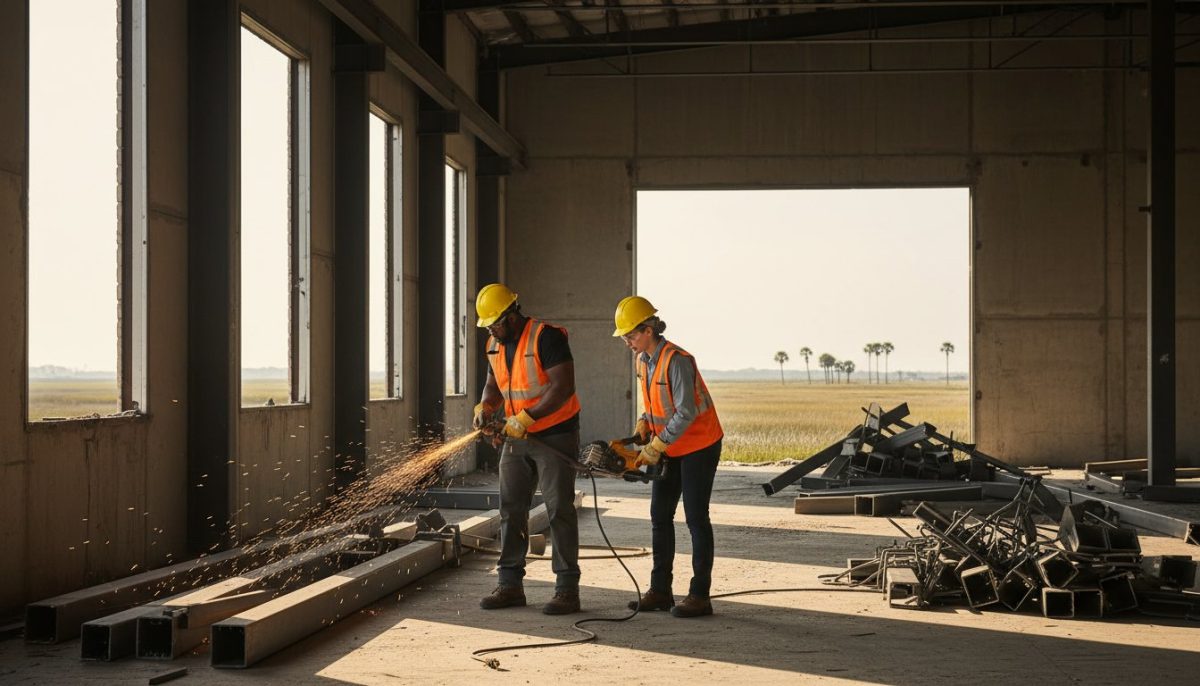
A single miscalculation during metal framing demolition can compromise the structural integrity of a 50,000 square foot industrial facility in less than ten seconds. You’re likely aware that dismantling commercial steel structures requires more than raw force; it demands engineering precision to avoid catastrophic structural failures. It’s natural to worry about the unexpected discovery of hazardous materials like lead or asbestos, which frequently appear in structures built prior to the 1978 ban on lead-based paints. These variables, combined with the rising costs of debris disposal, make every selective demolition project a high-stakes operation.
We’ll provide the expert insights you need to master these complexities through rigorous technical execution and sustainable material recovery. You’ll gain a clear understanding of the professional demolition workflow, ensuring your site remains compliant with OSHA safety standards while maintaining total control over the environment. This guide outlines a strategic plan for material recycling that can significantly reduce project overhead. We’ll examine the critical steps of the process, from initial load-bearing assessments to the final logistics of hauling reclaimed steel to specialized processing centers.
Key Takeaways
- Learn to distinguish between light-gauge cold-formed steel and heavy structural components to ensure the correct technical approach for any project scope.
- Understand why structural surveys and engineering sign-offs are essential for executing safe, surgical selective removals or total structural deconstructions.
- Identify hidden hazards like lead-based paint and asbestos while maintaining strict OSHA standards for fall protection and fire prevention on-site.
- Master the systematic workflow of metal framing demolition, beginning with site mobilization and following through to the precise deconstruction of the structural skeleton.
- Implement sustainable debris management strategies that utilize the total recyclability of steel to lower project costs and minimize environmental footprints.
Fundamentals of Metal Framing Demolition
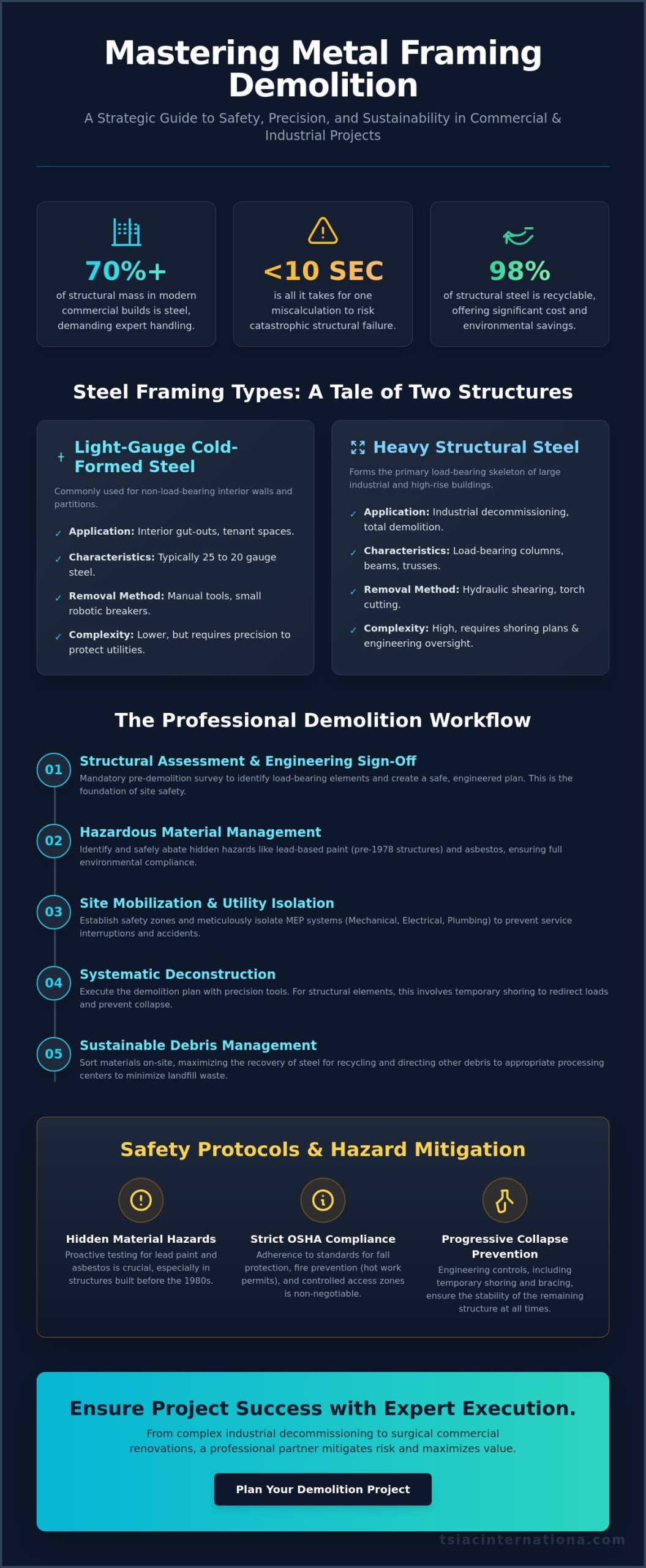
Metal framing demolition is the engineered process of dismantling steel or aluminum structural elements within a building. This discipline requires a different set of skills compared to timber removal because metal doesn’t splinter or fail predictably under impact. Instead, it behaves according to its metallurgical properties, requiring precise thermal or mechanical intervention. In modern industrial settings, where steel accounts for over 70% of the structural mass in commercial builds, a controlled approach ensures the stability of the remaining envelope.
The industry distinguishes between light-gauge cold-formed steel (CFS) and heavy structural members. While CFS has been the standard for interior partitions since the 1990s, heavy structural steel forms the primary skeleton of high-rise and industrial facilities. Using advanced Demolition techniques like hydraulic shearing allows teams to process these materials safely. This systematic approach is vital for maintaining site safety and maximizing the recovery of recyclable materials, which can reach rates of 98% in well-managed steel projects.
Light-Gauge vs. Structural Steel Demolition
Interior gut-outs often focus on light-gauge metal studs. These non-load-bearing components are typically 25 to 20 gauge steel and are removed using manual tools or small robotic breakers. However, structural steel demolition is far more complex. Removing load-bearing columns or beams requires a comprehensive shoring plan. Engineers must calculate the redirected loads before a single bolt is torqued or a torch is lit. Temporary bracing prevents progressive collapse, a risk that increases significantly when working in high-density urban environments.
Common Applications for Metal Demo
Professional metal framing demolition is essential in several scenarios:
- Commercial Renovations: Stripping out tenant spaces in office buildings to prepare for new layouts while protecting existing utilities.
- Industrial Decommissioning: Removing heavy steel platforms, mezzanines, and equipment supports from active or retired manufacturing plants.
- Total Structural Demolition: The complete teardown of steel-framed warehouses or multi-story buildings where structural integrity must be managed until the final member is grounded.
Each application demands a specific safety protocol. Industrial sites often involve “hot work” permits for torch cutting, requiring strict fire watch procedures and specialized ventilation. Our teams prioritize these technical details to deliver results that meet rigorous engineering standards and tight project timelines.
Professional Techniques: Selective vs. Total Removal
Successful metal framing demolition begins with a precise assessment of the project scope. Engineers must determine if the structure requires surgical selective demolition or a complete structural removal based on the 2024 structural assessment protocols. A pre-demolition structural survey is mandatory for every site. This document identifies load-bearing elements and ensures the building remains stable throughout the process. Engineering sign-offs aren’t just paperwork; they’re the foundation of site safety and risk mitigation. Adhering to OSHA demolition safety standards ensures that every phase, from the initial hazard assessment to the final debris removal, protects both the workforce and the surrounding environment.
Maintaining the building envelope’s integrity is a primary concern during partial removals. If the exterior skin is compromised, the cost of remediation can increase by 25% due to water ingress or thermal bridge issues. Professional teams use temporary shoring and weatherproofing to protect the asset while internal metal components are extracted. For projects requiring this level of technical oversight, consulting with an experienced industrial partner ensures the structural integrity of your facility remains uncompromised.
The Selective Demolition Framework
Selective demolition is the preferred method for active commercial facilities where business continuity is a priority. This approach minimizes downtime by allowing operations to continue in adjacent zones. Before any stud removal starts, teams must isolate mechanical, electrical, and plumbing (MEP) systems to prevent accidental utility interruptions. We use precision cutting tools, such as hydraulic shears and reciprocating saws, because they prevent vibration damage to the remaining structure. Integrating commercial interior gutting services into the project timeline allows for a streamlined transition from demolition to renovation. This method typically results in a 15% faster turnaround for tenant improvement projects compared to traditional gutting.
Total Structural Removal Strategies
When a building reaches the end of its lifecycle, total removal is the only viable path. We utilize a top-down sequencing method for multi-story metal-framed buildings. This ensures gravity works with the demolition team, preventing premature collapses. High-reach excavators equipped with specialized shears dismantle structural steel with surgical accuracy. In high-density urban environments, site logistics are complex. We manage debris flow by scheduling off-peak hauling, which has been shown to reduce site congestion by up to 30% in metropolitan areas. Every ton of steel is tracked from the moment it’s cut until it reaches the recycling facility, providing a transparent audit trail for LEED certification requirements.
Safety Protocols and Hazardous Material Management
Metal framing demolition requires more than just mechanical force; it demands a rigorous risk assessment to identify hidden contaminants before the first strike. Older commercial structures frequently utilized asbestos-containing materials (ACM) for fireproofing steel beams or as thermal insulation within wall cavities. Lead-based paint remains a persistent threat on industrial steel surfaces, particularly in facilities built before 1978. Professionals must treat every metal surface as a potential hazard until certified testing proves otherwise.
Asbestos and Lead Abatement in Metal Framing
Asbestos fibers often hide in spray-applied fireproofing, pipe wrap insulation, and heavy-duty adhesives used to secure metal tracks to concrete slabs. Federal law requires a comprehensive survey and professional asbestos removal before any mechanical demolition begins. For lead-encapsulated steel, we employ stabilization techniques like chemical stripping or vacuum-shrouded power tools to prevent toxic dust migration. This precision ensures that materials entering the steel recycling process remain uncontaminated and safe for downstream processing. It’s a technical necessity that protects both the environment and the scrap value of the metal.
Compliance with OSHA 29 CFR 1926 is non-negotiable during these operations. Fall protection systems, including temporary guardrails and personal fall arrest systems (PFAS), are mandatory when dismantling multi-story metal skeletons. Structural instability is a constant variable during metal framing demolition. We use engineered shoring and bracing to maintain equilibrium as load-bearing studs are removed. Site managers must also monitor noise pollution, as metal-on-metal impact often exceeds 90 decibels, necessitating strict hearing conservation zones.
Torches and abrasive saws introduce significant fire risks. A formal ‘hot work’ permit is required for these operations. This protocol includes a dedicated fire watch person who remains on-site for at least 30 minutes after cutting ends. We maintain a 35-foot clearance zone and conduct pre-operational checks of all fuel lines and oxygen cylinders to prevent catastrophic leaks.
Personal Protective Equipment (PPE) for Metal Demo
Standard construction gear won’t suffice for the specific rigors of metal framing demolition. The debris generated is exceptionally sharp and prone to springing under tension. Our crews utilize specialized equipment designed for high-impact environments:
- Cut-Resistant Gloves: ANSI Level A6 or higher protection is required to handle jagged C-channels and sharp fasteners safely.
- Respiratory Protection: P100 respirators are used to filter toxic metal fumes and any residual silica dust generated during track removal from masonry.
- Impact Protection: High-velocity eye protection and face shields are mandatory during grinding or torch-cutting to deflect sparks and metal shards.
Every safety measure is a calculated step to maintain control over a high-energy environment. By prioritizing these protocols, we ensure that complex structural teardowns proceed without injury or environmental liability.
The Demolition Workflow: Tools, Steps, and Execution
A systematic metal framing demolition requires engineering-grade planning to ensure structural integrity remains intact throughout the process. Our mobilization phase begins with a total utility disconnect. Teams verify the absence of live electrical circuits and pressurized plumbing lines within the wall cavities using non-destructive testing tools. We establish a 10-foot safety perimeter using high-visibility barriers. This zone prevents unauthorized personnel from entering areas where structural shifts or falling debris might occur during the deconstruction of heavy-gauge assemblies.
The execution phase prioritizes source-separation. By removing finishes like gypsum board and mineral wool insulation first, we expose the underlying steel skeleton. This approach prevents the contamination of scrap metal, which can increase the recycling value of the salvaged steel by 15% to 20% compared to mixed demolition waste. We select removal methods based on the material’s thickness. Manual removal suits 25-gauge non-structural partitions, while mechanical intervention is mandatory for load-bearing cold-formed steel structures.
Essential Tools for Metal Framing Removal
- Reciprocating saws: Equipped with carbide-tipped metal-cutting blades, these are the primary tools for severing 14-gauge or 16-gauge structural studs.
- Hydraulic shears and nibblers: These tools provide cold-cutting capabilities for heavy-gauge components thicker than 2.5mm, eliminating the fire risk associated with torches.
- High-torque impact drivers: These allow for the non-destructive removal of fasteners in 20-gauge assemblies, facilitating the potential reuse of undamaged tracks and studs in secondary structures.
Step-by-Step Interior Stud Removal
Our teams follow a disciplined four-step protocol to maintain site order and safety. This sequence ensures that the demolition remains controlled and that the material flow is optimized for recycling centers.
- Step 1: Exposure. Strip all drywall and insulation. This reveals the track and stud assembly, allowing for a final inspection of the fastening points.
- Step 2: Disconnection. Sever the connection between the vertical studs and the top track first. This prevents the wall from leaning unexpectedly. We then cut the bottom track connections.
- Step 3: Processing. Collapse the studs and bundle them in groups of 15 to 20 units. Secure bundling makes transport via freight elevators or hoists significantly safer.
- Step 4: Track Extraction. Remove floor and ceiling tracks using heavy-duty pry bars. If the tracks are embedded in concrete, we use walk-behind concrete saws to cut the anchors without damaging the slab.
Precision in deconstruction reduces the risk of onsite accidents and ensures that every pound of steel is accounted for in the project’s sustainability report. For projects requiring technical expertise in complex environments, you can rely on our professional metal framing demolition services to handle the most challenging structural requirements.
Sustainable Debris Management and Metal Recycling
Steel stands as a pillar of the circular economy because it offers 100% recyclability without any loss in structural integrity or material properties. During a metal framing demolition project, this characteristic transforms what would be waste into a valuable commodity. Professional contractors implement a site-wide recycling plan at the earliest stages of mobilization. This strategy isn’t just about environmental stewardship; it’s a calculated move to reduce landfill tipping fees, which can consume a large portion of a project’s logistics budget. By diverting steel, aluminum, and copper from the waste stream, teams maintain a leaner, more efficient job site.
Tracking diversion rates has become a standard requirement for modern industrial projects. This data is essential for achieving LEED certification and meeting strict corporate sustainability goals. When dealing with mixed-material debris, professional crews use advanced mechanical separation techniques. They isolate metal components from wood, plastic, and composite materials to ensure that each waste stream is processed correctly. This level of precision prevents cross-contamination, ensuring that the maximum amount of material remains eligible for recovery rather than disposal.
The Metal Recovery Process
Maximizing the value of recovered materials requires a systematic approach to sorting. Crews separate ferrous metals, which are magnetic, from non-ferrous metals like copper and high-grade aluminum. Non-ferrous materials typically command higher market prices, so keeping them isolated is a priority. On-site processing involves using hydraulic shears and mobile balers to bundle the metal for transport. These machines compress the framing into dense, manageable units that foundries can easily process. To ensure a clean load, workers must remove contaminants such as insulation, adhesives, and drywall screws. Foundries often reject loads that contain more than 1-2% non-metallic debris, so the cleaning phase is critical for project success.
The Economic Case for Recycling
Recycling provides a direct financial benefit by helping to offset demolition costs through the sale of scrap metal. In many cases, the revenue generated from high-volume steel recovery can turn a high-cost removal into a more budget-friendly operation. This approach also lowers the carbon footprint of the new construction phase. Producing steel from recycled scrap uses approximately 75% less energy than manufacturing it from virgin iron ore. By partnering with specialized industrial haulers, contractors ensure that metal framing demolition remains a sustainable and economically viable solution for facility upgrades. This partnership guarantees that large-scale metal recovery happens quickly, keeping the project on schedule while maximizing the return on salvaged assets.
Ensuring Precision in Your Next Structural Project
Successful metal framing demolition requires more than just heavy machinery; it demands engineering precision and a disciplined approach to safety. Whether your site involves selective removal for a renovation or a total structural teardown, the process relies on strict hazardous material management and technical expertise. TSIA C International brings 15+ years of structural demolition experience to every job site. Our certified hazardous material abatement specialists ensure that every phase of the workflow meets rigorous industrial standards while protecting your property assets.
Sustainability isn’t an afterthought in modern construction. We implement a comprehensive 100% recycling program for all wood, metal, and plastic debris recovered during the project. This systematic management of materials reduces environmental impact and streamlines the transition to your next phase of development. You can trust our team to handle the most complex technical challenges with the calm confidence that comes from over a decade of specialized field work. We’re ready to apply our engineering-grade accuracy to your specific site requirements.
Get a Professional Quote for Your Metal Framing Demolition Project
We look forward to partnering with you to deliver a safe, efficient, and professional result.
Frequently Asked Questions
Is it possible to reuse metal studs after they have been demolished?
You can reuse metal studs if they remain straight and free of structural deformities like crimping or heavy corrosion. While direct reuse is possible for minor non-structural partitions, the industry standard focuses on recycling because steel maintains 100% of its metallurgical properties during the melting process. Contractors often find that the labor required to remove screws without damaging 25-gauge metal exceeds the cost of new materials.
How do I know if the metal framing in my building contains asbestos?
Metal studs don’t contain asbestos, but the joint compound, spray-on fireproofing, or thermal insulation attached to them often does in buildings constructed before 1986. You must conduct a certified hazardous material survey according to EPA NESHAP regulations before starting any metal framing demolition. A licensed inspector will take bulk samples of suspicious coatings to verify the presence of chrysotile or amosite fibers before crews enter the site.
What is the difference between a load-bearing and non-load-bearing metal wall?
You distinguish load-bearing walls by their gauge and structural connection to the floor or roof assembly. Load-bearing studs are typically 18-gauge or thicker, measuring at least 1.2 millimeters, while non-load-bearing partitions use 25-gauge steel. Structural walls also feature heavy-duty tracks and specialized fasteners designed to transfer vertical loads of 1,000 pounds or more per linear foot, making them critical to the building’s stability.
Do I need a special permit for metal framing demolition?
You need a permit for most metal framing demolition projects involving structural changes, fire-rated assemblies, or alterations to the building’s egress. Local building departments enforce International Building Code Section 105.1, which mandates permits for any work that impacts the life safety systems of a commercial space. Failing to secure a permit can result in fines exceeding $500 per day and a mandatory stop-work order from the local inspector.
Can metal framing be demolished while the building is still occupied?
Demolition can proceed in occupied buildings if you implement strict dust and noise mitigation protocols to protect the safety of the public. OSHA Standard 1926.850 requires structural evaluations to ensure the safety of occupants in adjacent zones during the process. Crews use negative air machines with HEPA filters that capture 99.97% of airborne particles to maintain air quality while working behind floor-to-ceiling poly-plastic barriers.
How much does metal framing demolition typically cost per square foot?
Interior demolition costs for metal-framed spaces typically range from $2.50 to $5.50 per square foot based on 2023 RSMeans construction cost data. This price fluctuates depending on the height of the ceilings and the complexity of the electrical systems embedded within the wall cavities. Total project expenses also account for debris disposal fees, which can consume 15% of the total budget if the metal isn’t properly sorted for scrap value.
What are the most common safety risks when removing commercial steel framing?
The most frequent risks include lacerations from sheared steel edges and accidental contact with live electrical circuits hidden within the studs. Bureau of Labor Statistics data shows that nearly 20% of non-fatal construction injuries result from contact with objects or equipment. Workers must wear Level A4 cut-resistant gloves and use lockout-tagout procedures to neutralize every power source before they begin removing the metal tracks.
How long does it take to gut a 10,000 square foot metal-framed office space?
A 5-man professional crew can typically gut a 10,000 square foot metal-framed office in 7 to 10 business days. This timeline assumes a daily production rate of 1,200 square feet, which includes the removal of studs, tracks, and non-structural debris. If the project requires salvaging specific components or working around sensitive IT infrastructure, the schedule may extend by 3 days to accommodate the extra precision required.
