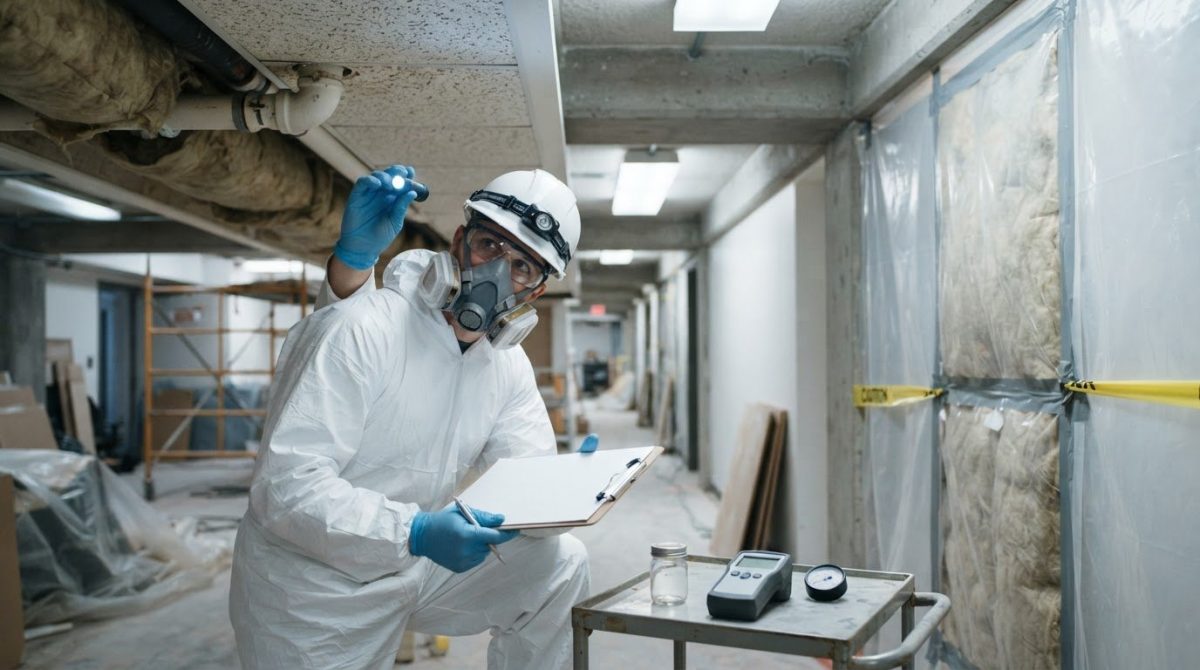
An intact asbestos-containing material and one that is damaged or about to be cut, drilled, or removed don’t present the same fiber-release concern. Appearance alone, however, can’t show what planned work may disturb. An asbestos fiber release risk assessment considers the material, its condition, and the activities that could affect it.
If you’re unsure whether you need an inspection, a risk assessment, or air sampling, that uncertainty is understandable. Each serves a different purpose. Sampling alone doesn’t explain how renovation or maintenance could disturb asbestos-containing material. This guide explains what can drive fiber release and what a useful assessment should consider and document, so you can make informed decisions before work begins.
You’ll learn how material condition, the type and extent of disturbance, potential exposure, and planned controls fit together. You’ll also see how assessment differs from inspection and air sampling, and what next steps may be appropriate when asbestos is suspected. The goal isn’t to assume every finding requires abatement. It’s to identify when a controlled response is warranted and reduce the chance of uncontrolled exposure during planned work.
Key Takeaways
- An asbestos fiber release risk assessment considers material condition, planned disturbance, potential exposure, and controls together.
- A defensible process follows the proposed work from records review and material identification through condition assessment and documented findings.
- Visual inspection, material sampling, and air monitoring answer different questions. Choose methods based on the decision that needs to be made.
- If a suspect material’s identity or condition is uncertain, avoid disturbing it and establish appropriate access controls while arranging qualified evaluation.
- When abatement is warranted, use assessment records to define the work scope and confirm responsibilities, containment, documentation, and disposal procedures.
What Is an Asbestos Fiber Release Risk Assessment?
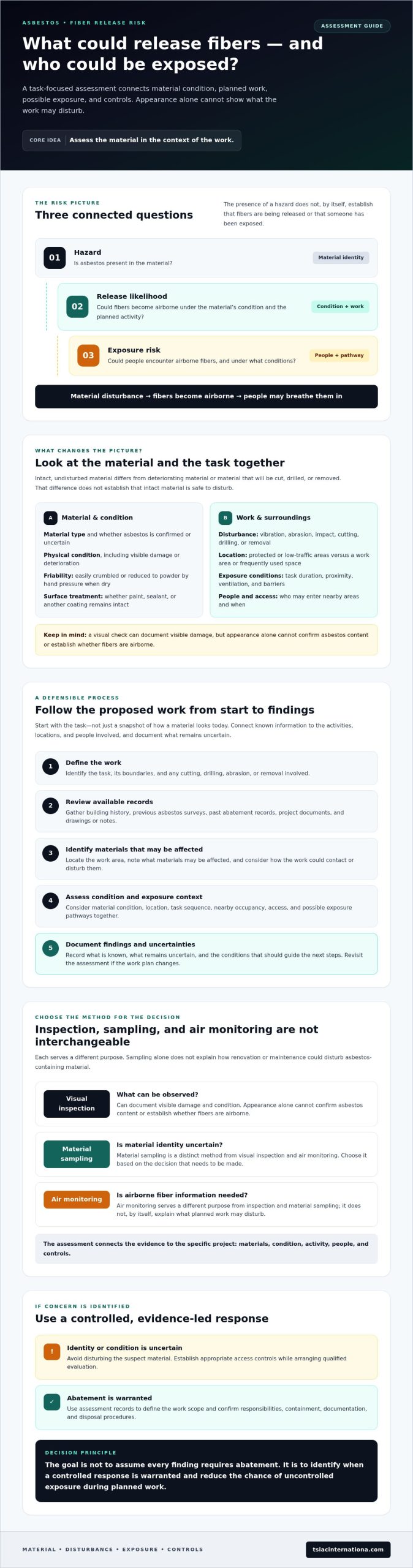
An asbestos fiber release risk assessment evaluates whether fibers could become airborne from suspect or confirmed asbestos-containing material and reach people under particular conditions. It considers the material and its surroundings alongside the work planned nearby. It is a property-level, task-focused assessment, not an EPA chemical risk evaluation. That type of evaluation examines asbestos-related risks at a broader agency level rather than determining what may happen to a particular material during a specific project.
Three terms describe different parts of the issue. Hazard means asbestos is present in a material and can cause harm. Release likelihood concerns whether fibers may become airborne. Exposure risk considers whether people could encounter those fibers, and under what conditions. The distinctions matter: the presence of a hazard doesn’t, by itself, establish that fibers are currently being released or that a person has been exposed.
Intact, undisturbed material presents a different situation from material that is deteriorating or will be cut, drilled, or removed. That difference doesn’t establish that intact material is safe to disturb. It means the assessment must account for its condition and the proposed activity. If work is needed, planned controls should follow documented conditions. An overview of asbestos abatement procedures describes methods intended to control fiber release during abatement work.
What factors determine whether asbestos fibers may be released?
Assessors consider the material type, its physical condition, whether it is friable (easily crumbled or reduced to powder by hand pressure when dry), and whether paint, a sealant, or another surface treatment remains intact. Location matters too. Material in a protected, low-traffic area may face different disturbance conditions from material beside a planned opening or in a frequently used space.
Vibration, abrasion, impact, cutting, drilling, removal, and gradual deterioration can damage material or its surface and change its release potential. A visual check can document visible damage, but appearance alone can’t reliably confirm asbestos content or establish whether fibers are airborne. For a planned project, identify which specific materials may be affected, where the work will occur, and how the work could contact or disturb them.
How does release potential differ from exposure risk?
Exposure requires a pathway: asbestos-containing material is disturbed or deteriorates, fibers become airborne, and people may breathe them in. The possibility of contact depends partly on the task’s duration, a person’s proximity, ventilation, and whether barriers separate the work area from occupied spaces. These factors help describe exposure conditions, but none can be assessed reliably in isolation from the material and planned work.
A sound conclusion draws on available evidence and site context, rather than relying on a single observation such as “the surface looks intact” or “dust is visible.” When material identity is uncertain, visual assessment alone can’t settle the question.
How Does an Asbestos Fiber Release Risk Assessment Work?
A useful assessment starts with the planned work, not just a snapshot of a material’s current appearance. A ceiling tile that seems intact may still be affected by a planned cut or removal. The purpose of an asbestos fiber release risk assessment is to connect what’s known about suspect materials to the specific activities, locations, and people involved, then document what remains uncertain.
What information should be gathered before the assessment?
Collect available building history, previous asbestos surveys, records of past abatement, and a clear description of the proposed work. Include drawings or notes showing where work will occur, what materials may be affected, and the expected sequence of activities. Record who may enter nearby areas and when, so the assessor can consider access and occupancy as well as the task itself. If the work plan changes, update the information before relying on the assessment to guide the next steps.
The practical sequence is:
- Define the work: Identify the task, its boundaries, and any cutting, drilling, abrasion, or removal involved.
- Review records: Compare available building and project documents, noting gaps or conflicting information.
- Locate suspect materials: Map their location, estimated quantity, accessibility, condition, and proximity to occupants.
- Evaluate disturbance: Consider how the work could affect each material, including areas that may be concealed or inaccessible.
- Document findings: Relate observations and evidence to the planned task, then state appropriate next steps and unresolved questions.
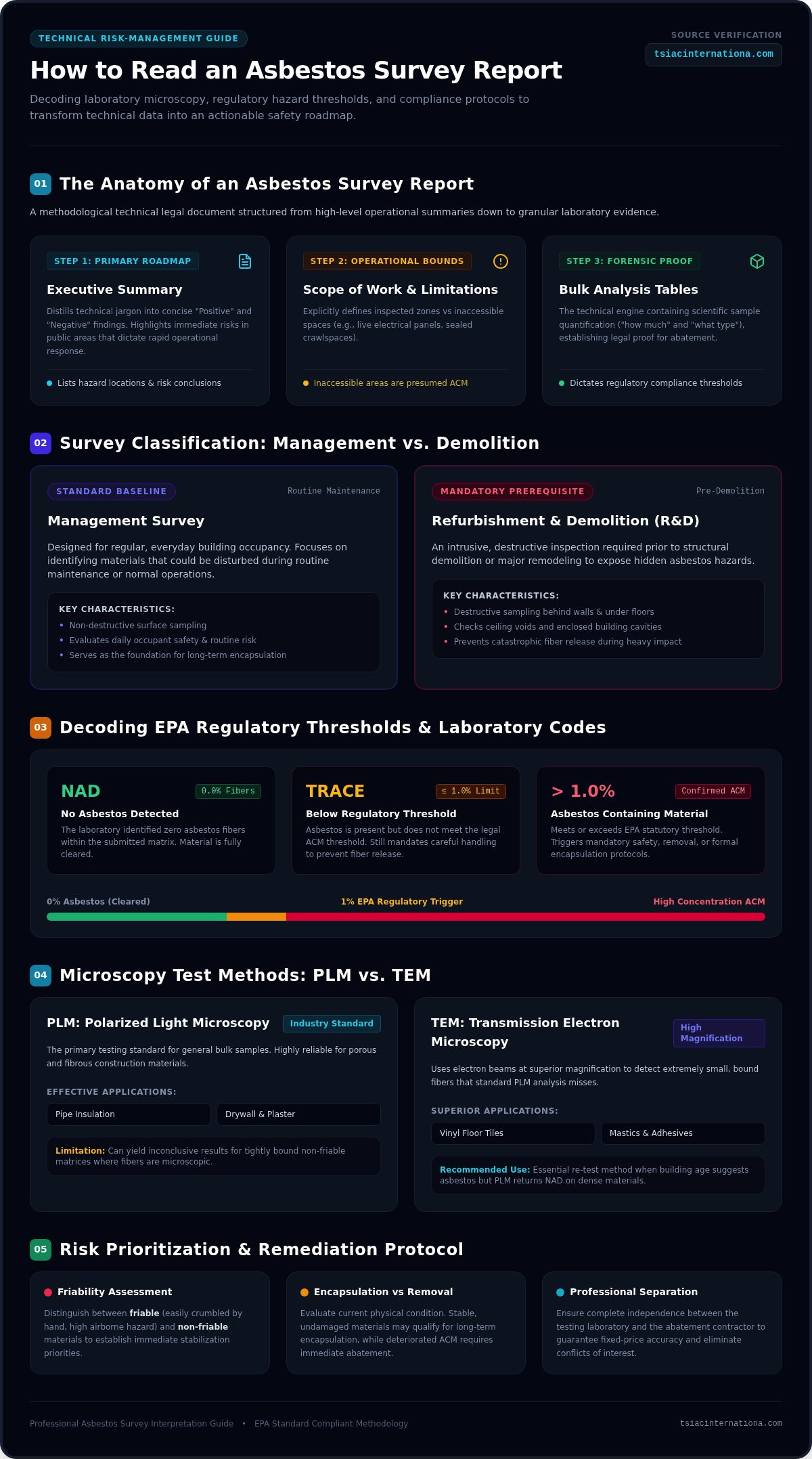
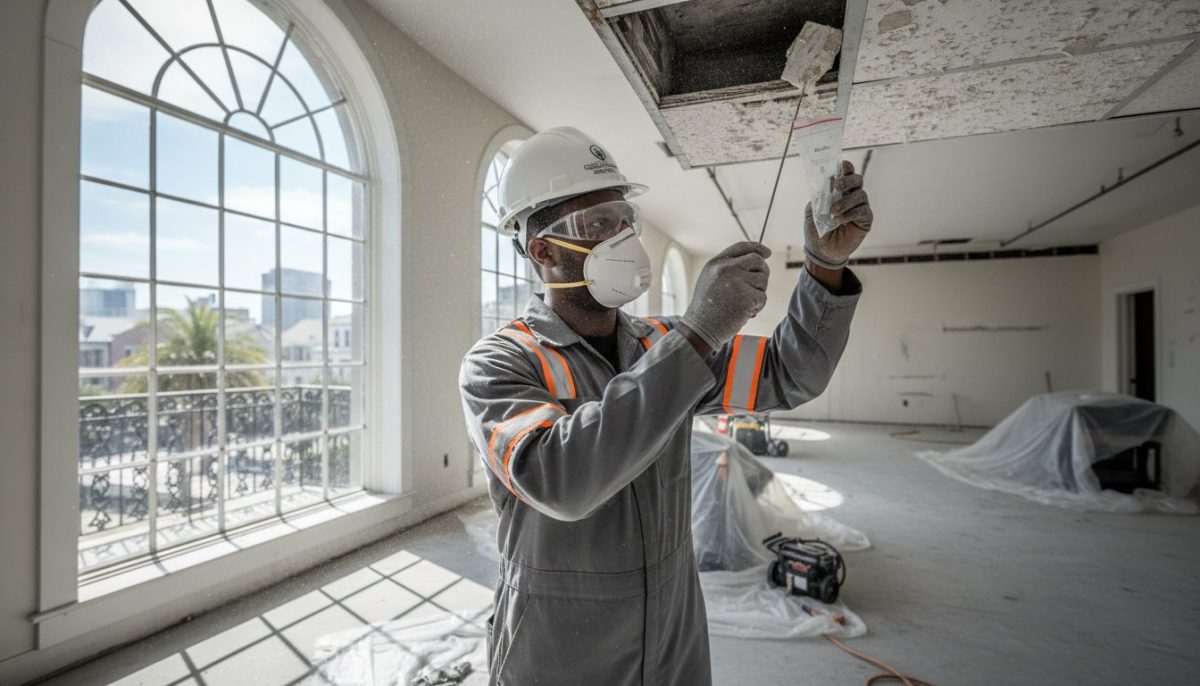
Visual observations can identify suspect materials and visible damage, but they don’t confirm asbestos content. Where identity must be established, appropriate sampling and laboratory analysis may be needed. Sampling should be performed by qualified professionals using methods appropriate to the material and project. Don’t disturb a suspect material to collect a sample yourself.
What should an assessment report document?
A clear report identifies the areas reviewed, methods used, relevant limitations, observations, and any laboratory results. It should connect each finding to the specific planned activity rather than offering a general statement about the building. If air monitoring is selected for a particular purpose, the report should explain what it can and can’t establish. The EPA describes it as supplemental air monitoring to visual inspection.
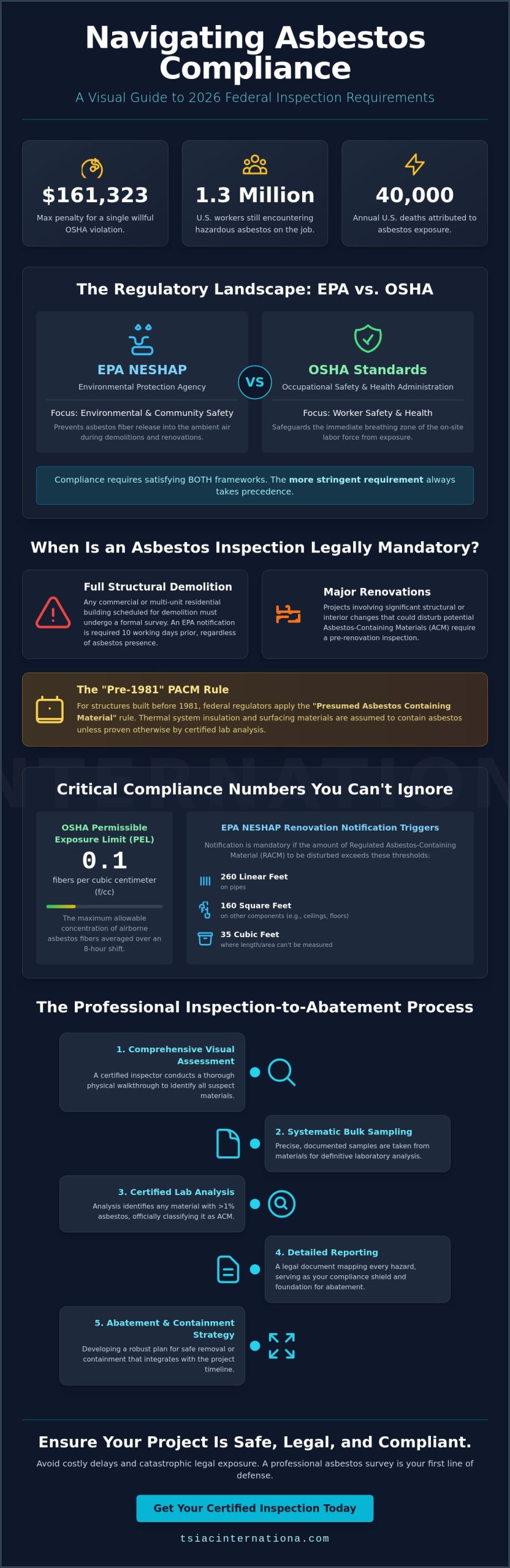
The report should also state remaining uncertainties and document recommendations supported by the evidence, such as further evaluation, access restrictions, work controls, or an abatement scope when warranted. A recommendation doesn’t automatically mean every suspect material should be removed. Federal, state, and local requirements, as well as qualification expectations, can vary with the material and work. Confirm the rules and professional qualifications applicable to the specific project before proceeding.
When documented findings indicate that abatement is appropriate, they can help define a controlled scope. TSIAC International provides asbestos abatement, including containment, removal, compliance documentation, and safe disposal. Review its asbestos abatement services as one potential way to address a documented abatement scope, and confirm how responsibilities will align with the assessment records.
Visual Inspection, Sampling, or Air Monitoring: Which Answers the Question?
These methods answer different questions. An asbestos fiber release risk assessment may use one or more of them, depending on whether the priority is locating suspect material, identifying its composition, or measuring airborne fibers during defined conditions. OSHA’s overview of asbestos hazards provides workplace context, but method selection for a particular property and task depends on the evidence needed and applicable requirements.
| Method | Question it answers | Main limitation |
|---|---|---|
| Visual inspection | Where are suspect materials, and what visible damage or deterioration is present? | Appearance can’t confirm asbestos content or reveal every concealed material. |
| Bulk sampling and analysis | Does a collected material sample contain asbestos? | A result applies to the sample analyzed. It doesn’t by itself establish airborne fiber levels or future exposure conditions. |
| Air monitoring | What airborne fibers were measured at a particular location and time? | The result reflects the sampling conditions and period, not every area, task, or future condition. |
No single method answers every question about what a material contains, how a task may disturb it, and whether people may be exposed. The assessment connects the methods, where appropriate, to the project’s specific decision.
What can a visual inspection establish?
A visual inspection can map accessible suspect materials, note their location and condition, and document visible cracks, abrasions, deterioration, or disturbance. It helps identify where further evaluation may be needed. It can’t confirm composition: materials that look similar may differ, and asbestos-containing materials may be concealed inside walls, above ceilings, or beneath finishes. An informal walkthrough is not a substitute for an appropriately scoped asbestos survey.
When are bulk sampling or air monitoring considered?
When material identity matters to a work decision, qualified professionals determine whether bulk sampling is appropriate, which locations or materials to sample, and how samples should be collected and analyzed. Sampling itself can disturb material, so it shouldn’t be treated as a casual check or attempted without appropriate expertise. Verify applicable qualifications, laboratory methods, and interpretation requirements for the project and jurisdiction.
Air monitoring measures airborne fibers under defined conditions, such as a specified location and sampling period. It may help answer a question about conditions during that period, but it can’t identify the source material by itself or guarantee that another task or time will present the same conditions. Interpret the method and results in context, including the activity underway and the areas represented by the sample.
What Should You Do When an Assessment Identifies Possible Release Risk?
Pause work that could disturb the suspect material. Don’t cut, drill, scrape, remove, or otherwise alter it while its identity and condition remain uncertain. If damage is present, limit access to the affected area as appropriate and keep people from contacting or disturbing the material. These are interim precautions, not a substitute for professional evaluation or a project-specific control plan.
What should happen before renovation or maintenance begins?
Before work resumes, give the relevant project professionals the available building records, assessment findings, and an exact description of the planned work. A scope that says “open the wall” may not be enough. Clarify where the opening will be, what materials may be affected, and how the work will be carried out. This allows the evaluation and work plan to address the actual disturbance, not just the material’s current condition.
Confirm who is responsible for checking applicable requirements and managing project responsibilities, including any required notifications, controls, documentation, and waste handling. Obligations can depend on the material, work, and jurisdiction, so verify them for the specific project rather than relying on a general checklist.
A practical decision path is:
- Suspect material is damaged or may be disturbed: Pause the affected work and restrict access as appropriate.
- Identity or condition is uncertain: Arrange evaluation by qualified professionals and share relevant records and the work scope.
- Findings are available: Confirm the required controls, responsibilities, and next steps before work proceeds.
- Work is ready to resume: Keep the decision and agreed scope documented, and ensure the people carrying out the work understand them.
When does assessment lead to abatement or additional controls?
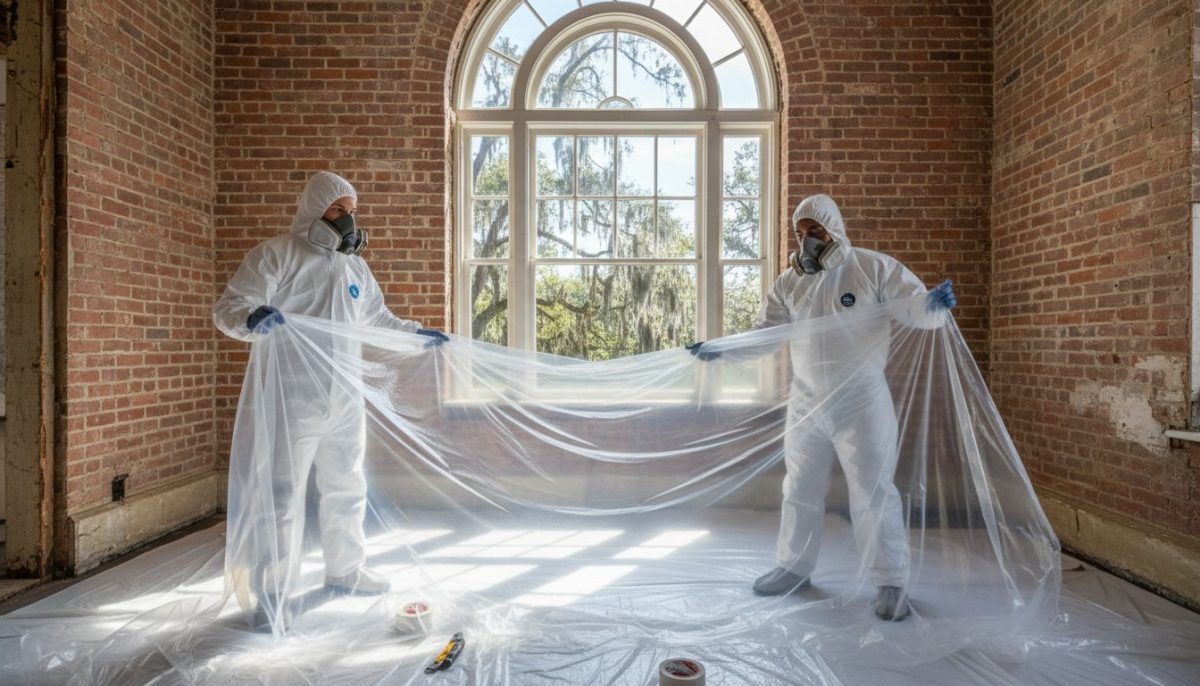
Abatement isn’t an automatic result of every assessment. The decision should follow verified findings, the proposed task, and applicable requirements. Depending on those factors, qualified project professionals may determine that work can proceed with specified controls, that additional evaluation is needed, or that abatement is warranted. Select measures such as containment or removal for the project and carry them out within a defined scope, rather than treating them as interchangeable fixes.
A documented asbestos fiber release risk assessment helps connect those decisions to evidence: which material is involved, what work could affect it, and what controls are appropriate. No single precaution should be presented as eliminating every risk. Avoid do-it-yourself removal or improvised cleanup. Ask the responsible professionals to explain the planned controls, waste procedures, and how the work and decisions will be documented.
If the findings support abatement, TSIAC International provides asbestos abatement that includes containment, removal, compliance documentation, and safe disposal. Explore asbestos abatement support as a potential next step when the documented scope calls for it.
How Can a Qualified Abatement Contractor Support the Next Step?
When assessment findings indicate that specialist work may be needed, an abatement contractor can review available records and help align proposed work with the documented scope. The contractor should understand which materials and locations are involved, what renovation or maintenance activities are planned, and what decisions remain unresolved. This review supports coordination. It doesn’t replace an independent assessment or determine requirements outside the contractor’s role.
What should you ask an asbestos abatement contractor?
Ask how the proposed scope corresponds to the assessment findings and the exact work planned. If the findings identify material in one ceiling area, for example, clarify how the work boundary will be defined and how adjacent areas will be addressed. Request a clear explanation of proposed containment, occupant protection, work sequencing, and project documentation.
Before awarding work, confirm the contractor’s relevant qualifications for the specific project and clarify who is responsible for each project duty. Discuss how applicable regulatory responsibilities, required notifications, records, and waste handling will be addressed. Requirements can vary with the work and jurisdiction, so verify them for the project rather than relying on assumptions.
How do assessment findings support controlled project delivery?
Location-specific findings give the project team a practical reference for defining work boundaries, communicating which materials are involved, and coordinating the sequence of renovation or maintenance. Clear records can also identify limitations, areas requiring further evaluation, and decisions that need to be resolved before work begins. This reduces the chance that a crew acts on an unclear or outdated scope.
Use the assessment documentation to check that the contractor’s proposed measures match the materials and tasks described. Confirm what containment is planned, how affected occupants or nearby workers will be considered, what records will be provided, and how waste will be handled. Ask how changes to the work area or scope will be reviewed and documented before proceeding.
TSIAC International provides asbestos abatement, including containment, removal, compliance documentation, and safe disposal, and reports more than 15 years of industry experience. These services may be relevant when documented findings indicate that abatement is warranted. Review the proposed scope against the assessment records and confirm that project responsibilities are clearly assigned.
A well-documented asbestos fiber release risk assessment can help turn findings into a defined work scope, but the next step should follow the evidence and the project’s applicable requirements. If specialist abatement is indicated, the assessment records and planned work can help guide a discussion with TSIAC International about the abatement scope.
Make the Next Step a Documented One
An asbestos fiber release risk assessment is most useful when it connects material condition to the work planned and the people who may be affected. Visual inspection, material sampling, and air monitoring answer different questions, so interpret findings alongside their methods, limitations, and site context.
If material may be damaged or disturbed, pause the affected work while its identity and condition are evaluated. Then use documented findings to clarify work boundaries, responsibilities, and appropriate controls. Abatement isn’t automatic, but when specialist work is warranted, a defined scope helps guide a controlled response.
TSIAC International provides asbestos abatement, including containment, removal, compliance documentation, and safe disposal, and reports more than 15 years of industry experience. If your project findings indicate abatement may be needed, discuss an asbestos abatement project with TSIAC International. Share the relevant assessment records and planned work to start a conversation about the potential abatement scope.
Frequently Asked Questions
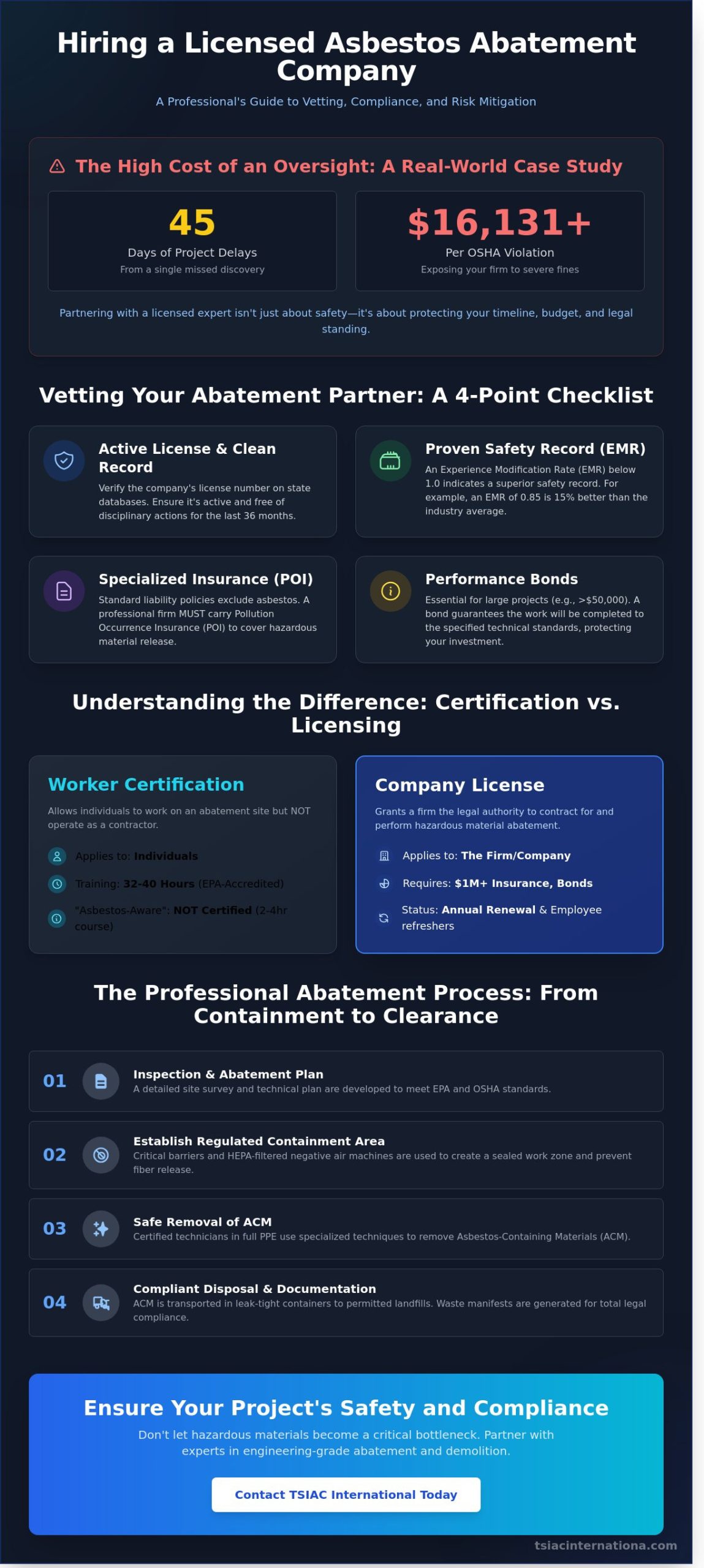
Can asbestos fibers be released from material that looks intact?
Yes, fibers may be released if apparently intact material is disturbed, damaged in a concealed area, or deteriorates. A sound-looking surface can’t confirm asbestos content or show what may happen during cutting, drilling, abrasion, or removal. Material that remains intact and undisturbed presents a different situation from material affected by work, but appearance alone can’t establish that it’s safe to disturb. Have uncertainty evaluated before renovation or maintenance begins.
Is a visual inspection enough to assess asbestos fiber release risk?
No. A visual inspection can document accessible suspect materials and visible damage, but it can’t confirm asbestos content or measure airborne fibers. A qualified professional may recommend bulk sampling and laboratory analysis to identify material, or air monitoring to measure airborne fibers under defined conditions. The appropriate method depends on the question, planned work, and available evidence. An informal walkthrough shouldn’t replace an appropriately scoped asbestos evaluation.
How is asbestos fiber release risk assessed before renovation or demolition?
An asbestos fiber release risk assessment begins by defining the exact work, including where and how materials may be disturbed. The assessor reviews available building records, identifies suspect materials, evaluates their condition and location, and considers who may be nearby. If material identification is needed, qualified professionals may arrange appropriate sampling and analysis. Findings and limitations should be documented, with next steps matched to the evidence and applicable project requirements.
Does an air test show whether asbestos-containing material is present?
No. An air test measures airborne fibers in a particular location during a specified sampling period; it doesn’t identify which building material contains asbestos. A result also represents the conditions during sampling, not necessarily other rooms, tasks, or times. To determine whether a material contains asbestos, qualified professionals may collect a bulk sample for laboratory analysis. The methods answer different questions, so results should be interpreted in context.
What should I do if damaged material may contain asbestos?
Don’t touch, cut, sweep, or remove it. Pause nearby work that could disturb the material, keep people away from the affected area as appropriate, and contact the person responsible for the building or project. Share what you observed and any available records with a qualified asbestos professional for evaluation. Avoid collecting a sample or cleaning debris yourself. Follow project-specific guidance before allowing renovation or maintenance to resume.
Who should assess asbestos fiber release risk at a property?
Ask a qualified asbestos professional whose training, credentials, and experience match the assessment needed and applicable project requirements. Clarify whether the professional is evaluating material condition, arranging sampling, interpreting results, or assessing potential exposure during planned work. These roles may involve different responsibilities. Verify relevant qualifications and applicable federal, state, and local requirements before work begins. An abatement contractor may review records and perform abatement, but don’t assume they provide assessment or testing.
When does an asbestos risk assessment lead to abatement?
An assessment leads to abatement when verified findings, the planned work, and applicable requirements support specialist intervention. It doesn’t automatically mean every suspect or confirmed material must be removed; the appropriate response depends on the material’s condition and how the project may affect it. TSIAC International provides asbestos abatement, including containment, removal, compliance documentation, and safe disposal. The company reports more than 15 years of industry experience.