House Demolition Cost Estimator: A 2026 Contractor’s Guide to Project Budgeting

A house demolition isn’t just the final act of a structure; it’s the first high-stakes engineering phase of your new development where a single…

A house demolition isn’t just the final act of a structure; it’s the first high-stakes engineering phase of your new development where a single overlooked hazardous material can inflate your budget by 25% before the first excavator arrives. You likely recognize that precision in the planning phase is the only way to prevent a project from spiraling into a financial liability. Utilizing a professional house demolition cost estimator is essential for identifying the technical variables that generic quotes often overlook, from structural integrity concerns to complex site access requirements.

We understand the frustration of navigating opaque permit regulations and the genuine fear of discovering asbestos during the stripping phase. This guide provides the technical clarity you need to master demolition budgeting by breaking down structural removal, hazardous abatement, and material recovery strategies. You’ll gain a clear understanding of 2026 cost-per-square-foot variables, a checklist for vetting contractor quotes with engineering rigor, and specific methods to reduce your bottom line through systematic recycling.

Key Takeaways

  • Establish a realistic 2026 budget baseline by identifying why standard national averages often fail to account for complex structural demands.
  • Leverage a professional house demolition cost estimator approach to calculate how square footage and site accessibility impact debris volume and machinery deployment.
  • Mitigate financial and safety risks by prioritizing hazardous material inspections, a critical step for ensuring compliance in pre-1980 structures.
  • Master operational logistics by navigating local permit fees and environmental protection mandates to prevent unforeseen project delays and fines.
  • Transition from vague ballpark estimates to fixed-price execution by applying a rigorous framework for vetting experienced demolition contractors.

Understanding the Baseline: National House Demolition Cost Averages in 2026

Budgeting for residential tear-downs in 2026 requires a data-driven approach that moves beyond simple guesswork. A reliable house demolition cost estimator typically places the standard range for residential projects between $6,000 and $25,000. While industry reports often cite a national average of $10,000, this figure is frequently misleading for complex structures. The average reflects smaller, single-story homes in rural areas and doesn’t account for the technical challenges found in modern urban environments or high-density residential zones.

Contractors and engineers generally utilize a cost-per-square-foot metric ranging from $4 to $17. This broad window exists because demolition isn’t just about destruction; it’s about the controlled management of materials and risks. Relying solely on square footage is a common mistake. A 1,500-square-foot home with asbestos siding or a reinforced concrete foundation will always command a higher price than a larger wood-frame structure with easy site access. Precision in the Demolition process involves analyzing the specific composition of the building before any machinery is deployed.

To build a realistic budget, you must distinguish between hard costs and soft costs. Hard costs include the visible elements of the job: heavy machinery rental, fuel, operator labor, and the significant expense of debris hauling and tipping fees. Soft costs often catch owners off guard, encompassing municipal permits, utility disconnect fees, and mandatory environmental inspections. In 2026, these administrative and preparatory steps can represent 15% to 22% of the total project expenditure.

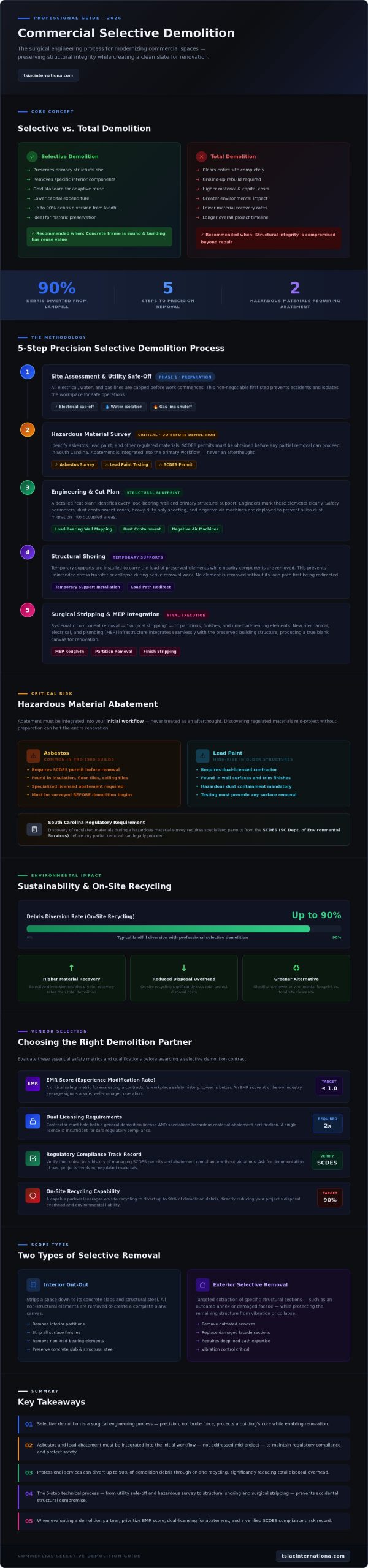
Full vs. Selective Demolition Costs

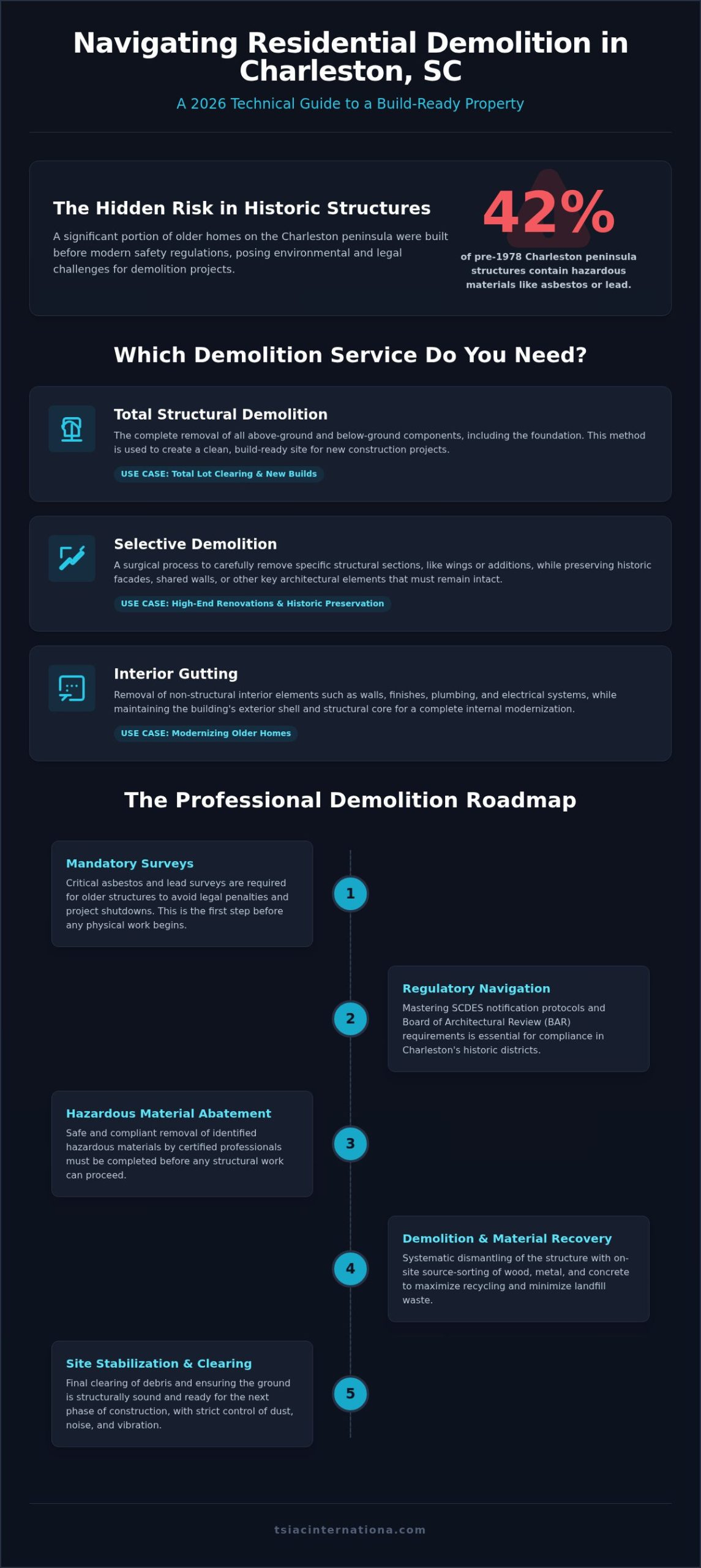
Total structural removal is often more cost-effective on a per-hour basis because it allows for the unrestricted use of heavy excavators and high-capacity loaders. The process is linear and fast. Selective demolition, however, requires a “surgical” approach to maintain the structural integrity of remaining sections or neighboring properties. Because this work involves manual labor and specialized bracing, selective demolition project fees are calculated based on precision requirements and the technical difficulty of the separation, rather than volume alone.

The Role of Structural Type in Your Estimate

Material density is a primary driver of your final house demolition cost estimator results. Wood frame houses are the least expensive to dismantle, whereas brick, masonry, or stone structures require specialized hydraulic breakers and more time to process. Multi-story homes introduce a “height premium” because they require high-reach equipment and stricter safety perimeters to manage falling debris. Finally, don’t overlook the foundation. Removing a simple slab-on-grade is a standard task, but excavating a deep basement requires heavy machinery and significant backfilling to leave the site in a safe, buildable condition.

Primary Structural Variables Influencing Your Demolition Estimate

The total square footage of a building is the primary metric used by any professional house demolition cost estimator, but the calculation is rarely a simple linear progression. A 2,500-square-foot residence produces significantly more waste than its footprint suggests because of the vertical volume of walls, roofing systems, and internal fixtures. Contractors calculate debris weight based on material density; for instance, a standard wood-frame house weighs approximately 50 to 80 pounds per square foot, while a brick or concrete structure can exceed 150 pounds per square foot.

Site accessibility dictates the type of heavy machinery a team can deploy. In urban “tight-fit” environments, where structures sit within 10 feet of neighboring properties, contractors can’t use 20-ton excavators with large reach. These constraints require smaller, less efficient equipment or specialized attachments, which can increase labor duration by 25%. Conversely, open rural properties allow for high-speed mechanical demolition and the staging of multiple hauling trucks, which optimizes the project’s daily throughput. Prior to any structural impact, the law requires specific preparatory operations to be completed, including engineering surveys and the formal capping of gas, water, and sewer lines.

Machinery and Labor Allocation

Mechanical demolition is the most cost-effective path for most residential projects. Standard hourly rates for a primary excavator operator and the machine itself typically range from $150 to $275, depending on the region and fuel surcharges. If a client chooses manual deconstruction to salvage high-value materials like old-growth timber or architectural stone, labor hours can triple compared to mechanical methods. Final site preparation and grade-out, which involves backfilling the foundation hole and leveling the soil to a 1% to 2% slope for drainage, usually requires an additional 8 to 16 hours of skid-steer operation.

Debris Management and Hauling Logistics

Estimating waste volume involves converting the structural mass into cubic yardage. A common industry rule of thumb suggests that a demolished house occupies three to four times its original standing volume before it’s compacted in a container. Tipping fees at local landfills represent a major portion of the budget; these fees are governed by municipal waste regulations and can vary from $40 to $100 per ton. Debris volume directly dictates the number of 40-yard roll-off containers required to clear the site efficiently. Effective logistics planning ensures that trucks are cycled out as they’re filled, preventing idle time for the heavy equipment operators on-site.

Managing these variables requires a disciplined approach to site logistics and safety. For those managing high-risk or technically demanding sites, partnering with a complex execution specialist provides the engineering oversight necessary to maintain budget stability throughout the project lifecycle.

House Demolition Cost Estimator: A 2026 Contractor’s Guide to Project Budgeting

Hazardous Material Abatement: The Critical Variable in Safety and Budgeting

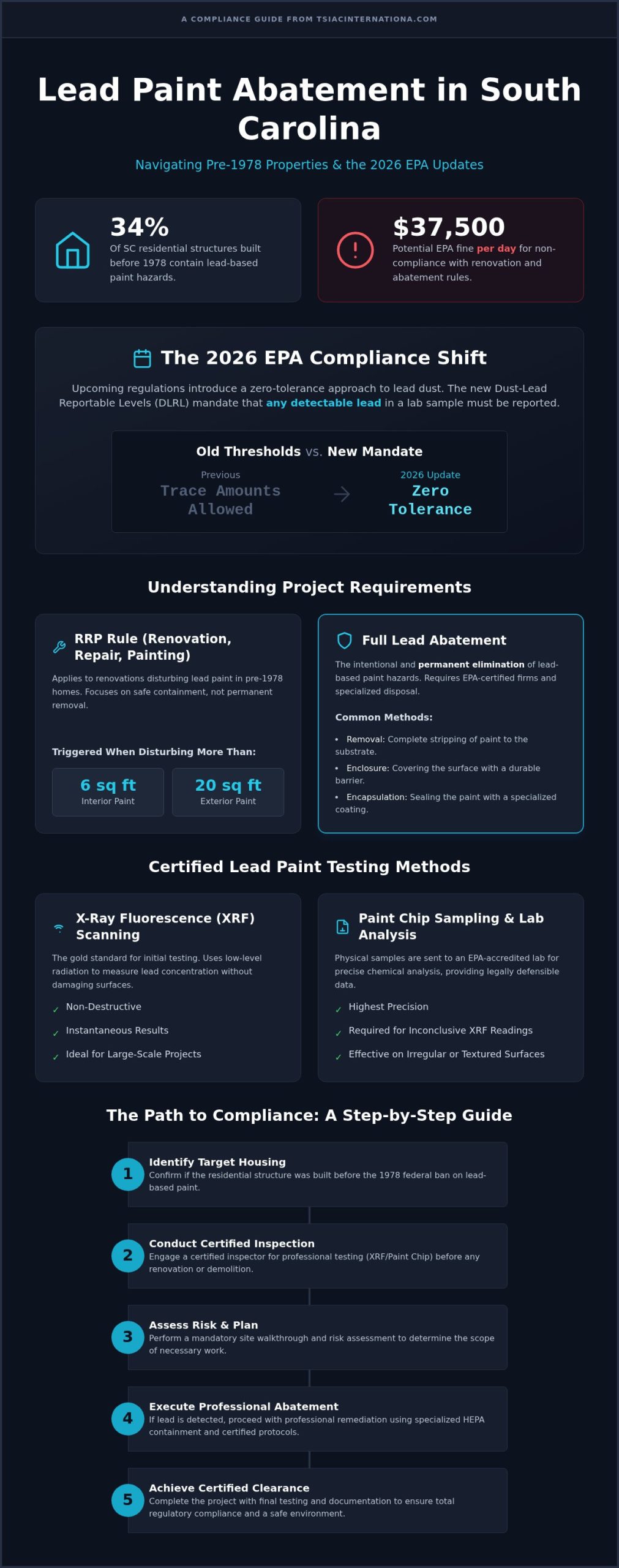
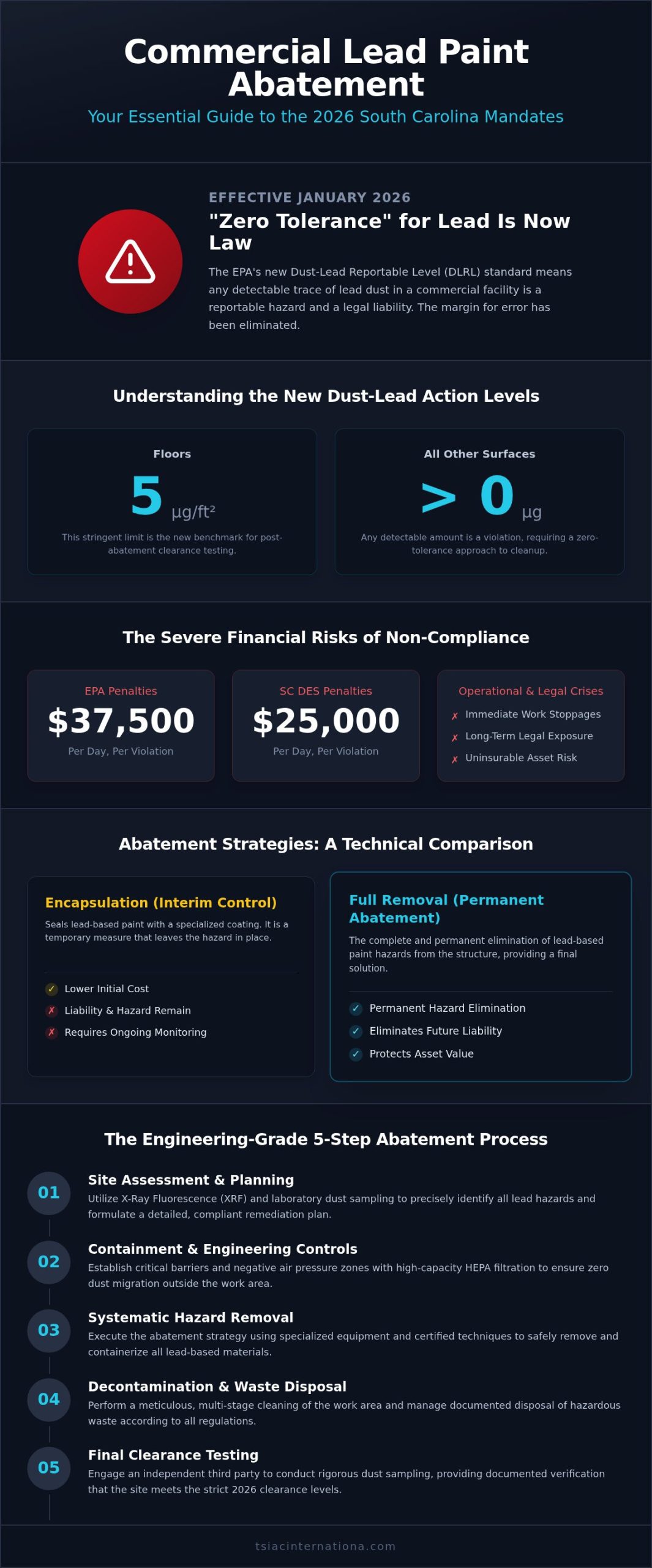
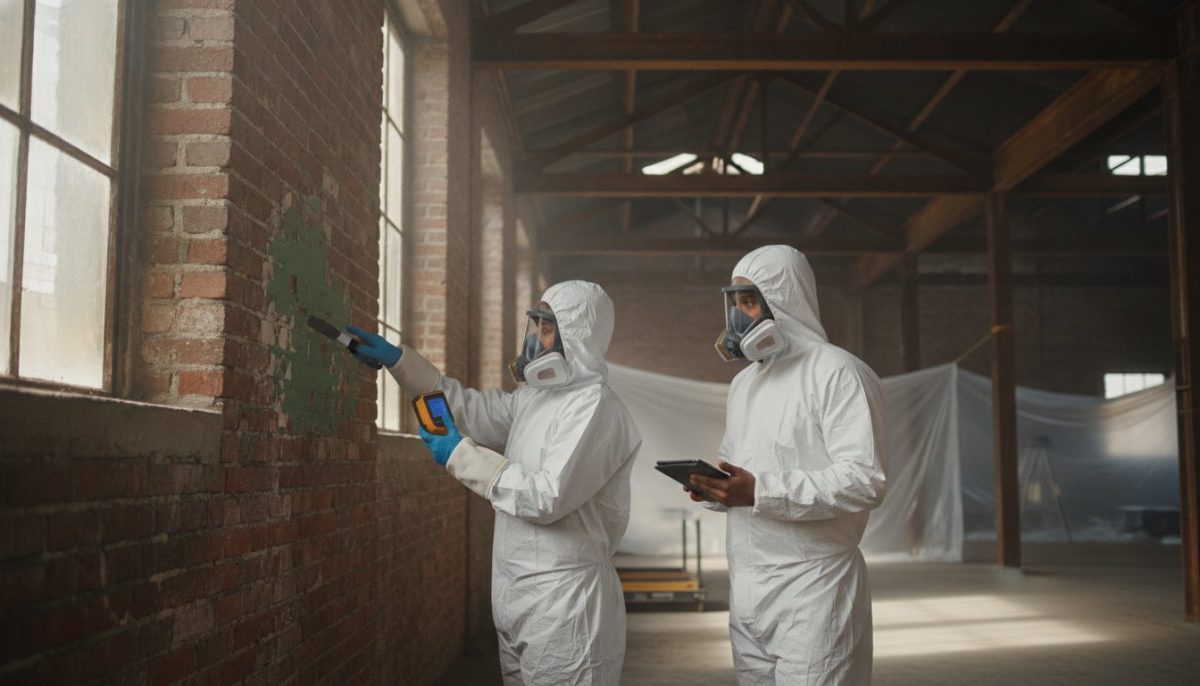
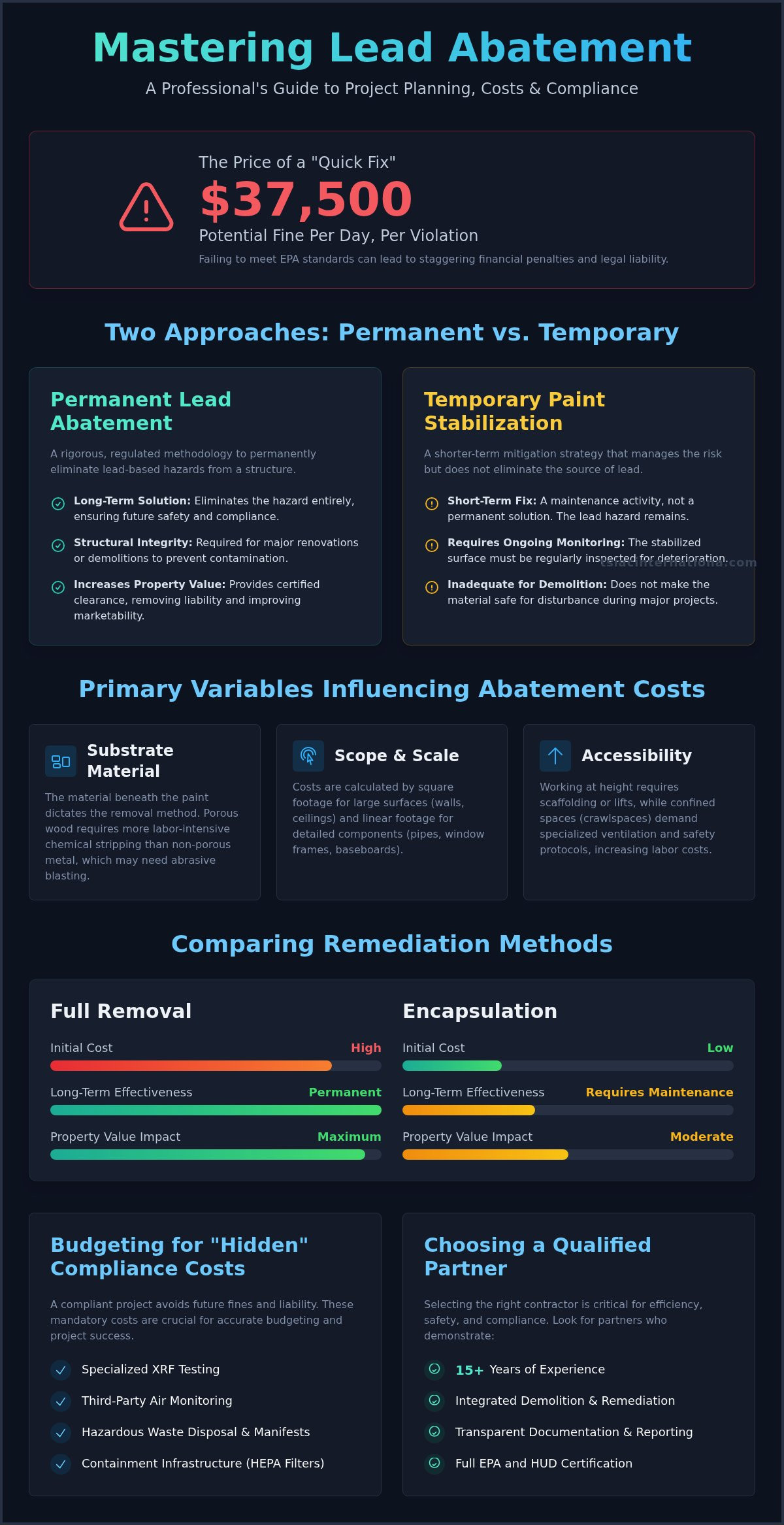
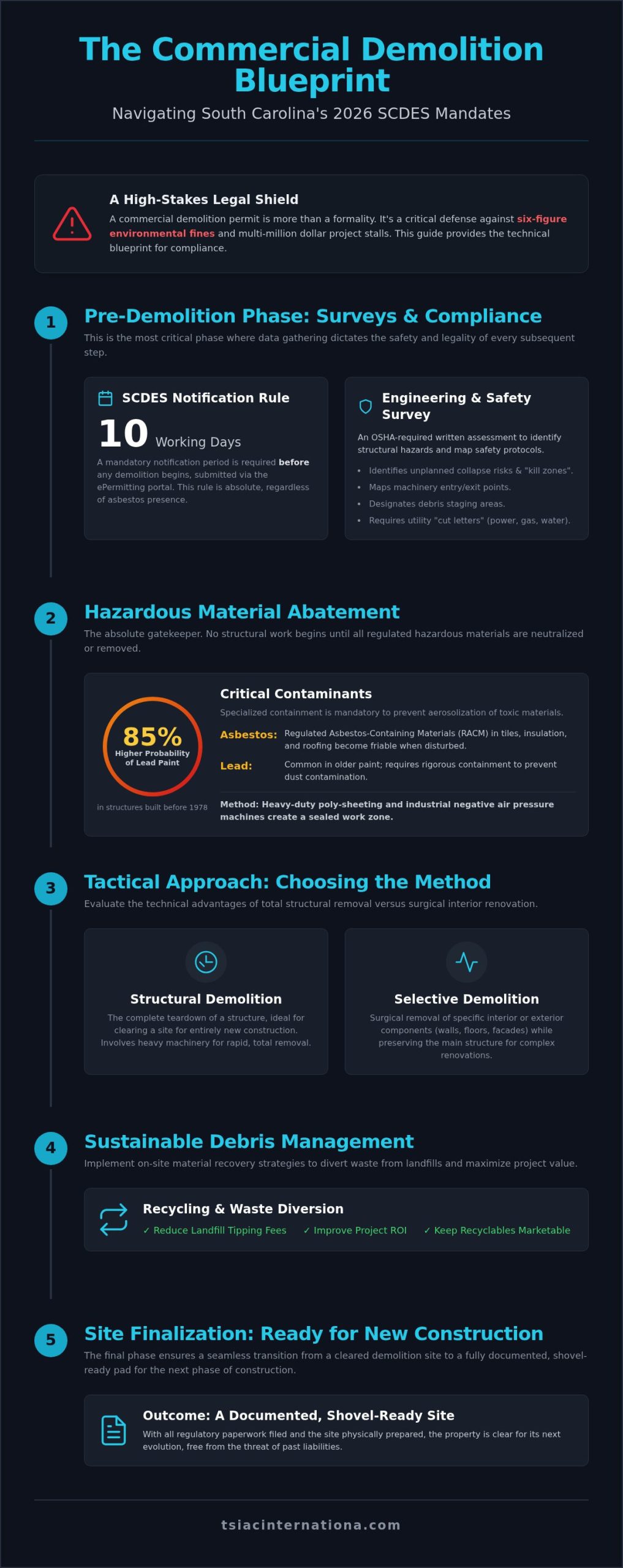
For structures built before 1980, environmental testing isn’t just a recommendation; it’s a legal mandate that dictates the entire project’s financial trajectory. When utilizing a house demolition cost estimator, the presence of toxic substances often represents the largest gap between an initial quote and the final invoice. Federal NESHAP regulations require a thorough inspection before any activity disturbs the structural integrity of a building. Skipping this step to save a few hundred dollars on a professional survey is a high-risk gamble. While a certified inspection might cost between $400 and $1,500 for a standard residential property, the EPA can levy fines exceeding $37,500 per day for non-compliance. Professional contractors prioritize these surveys to establish a baseline for safety and to prevent the accidental release of toxins into the local atmosphere.

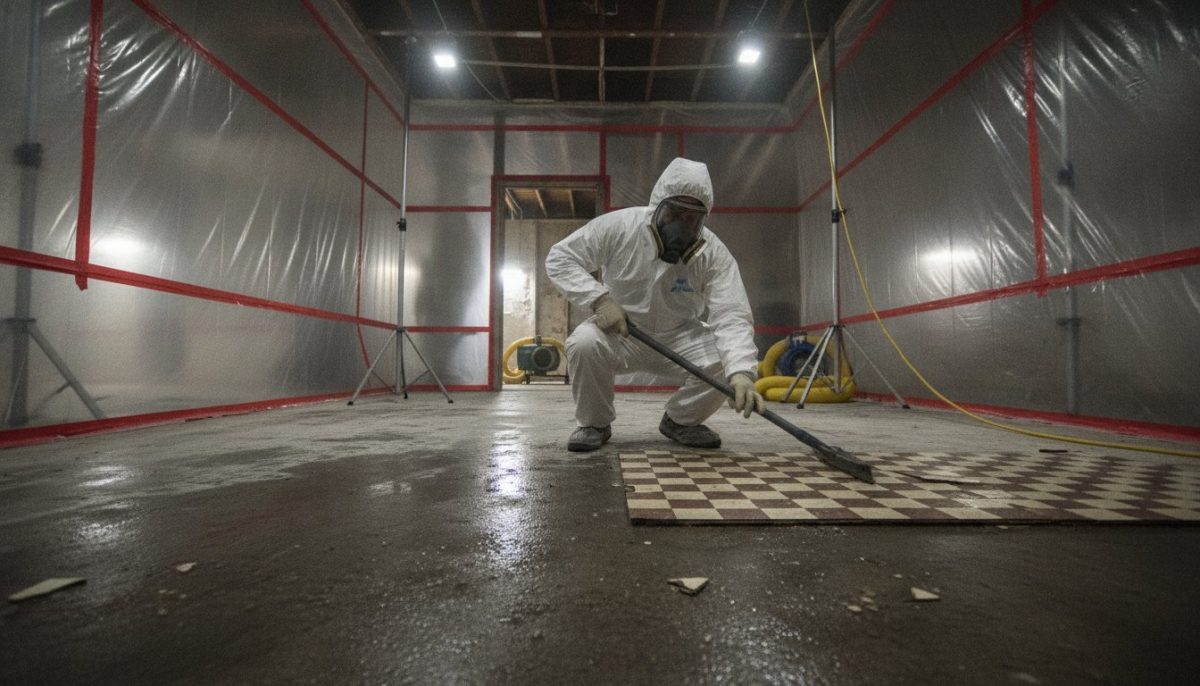
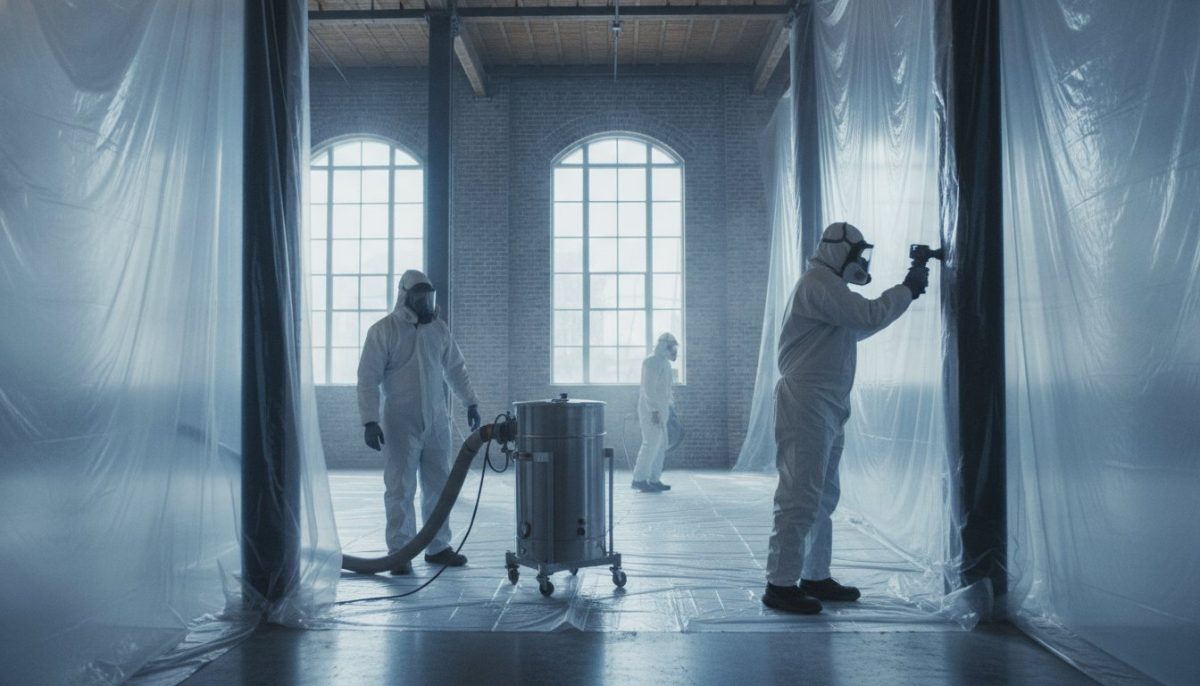
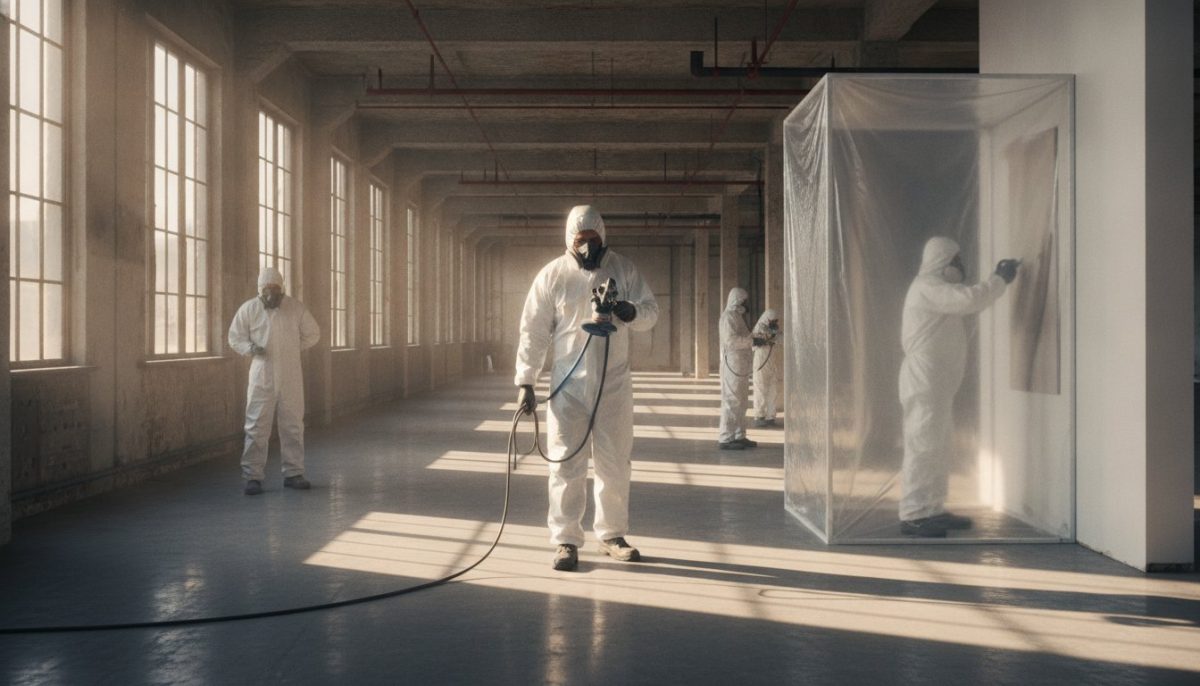
Effective Hazardous material abatement requires sophisticated containment strategies that significantly influence labor costs. Contractors must implement negative air pressure environments and physical barriers using 6-mil polyethylene sheeting to prevent cross-contamination. These technical requirements mean that abatement teams work at a slower, more methodical pace than standard demolition crews. By integrating these specialized workflows early into the demolition process, project managers can avoid the 14-day mandatory notification delays and unexpected work stoppages that occur when materials are discovered mid-teardown.

Asbestos and Lead Mitigation Costs

Budgeting for asbestos removal depends on whether the material is friable or non-friable. Costs are typically calculated by the linear foot for pipe insulation or by the square foot for floor tiles and siding. Lead-based paint stabilization adds another layer of complexity, requiring HEPA-filtered vacuum systems and specialized chemical strippers to prevent dust migration. Beyond labor, owners must account for disposal surcharges. Hazardous waste cannot go to standard C&D landfills; it requires transport to lined facilities equipped to handle toxic containment, which often doubles or triples the standard tipping fees per ton.

Mold Remediation and Soil Contamination

Properties with a history of water intrusion or long-term vacancy often require comprehensive hazardous material abatement for mold spores before mechanical demolition begins. This ensures the safety of the heavy equipment operators and the surrounding neighborhood. Furthermore, if the house demolition cost estimator reveals the presence of underground storage tanks (USTs), soil testing becomes a priority. Discovering a leaking oil tank can trigger mandatory state reporting and expensive soil excavation. Regulatory reporting fees for environmental compliance documentation are fixed costs that must be factored into the 2026 project budget to ensure the site is legally cleared for future redevelopment.

Operational Logistics and Site-Specific Estimation Factors

Precision in demolition requires more than heavy machinery. It demands a meticulous house demolition cost estimator that accounts for administrative and environmental variables. Permit fees aren’t static. In 2024, municipal building departments in urban centers often require 15 to 30 days for plan review, with fees scaling based on square footage. These permits generally range from $400 to $2,000 depending on the local jurisdiction’s fee schedule and the complexity of the utility disconnects.

Environmental protection mandates like silt fencing and erosion control usually add $1,500 to $3,500 to a standard residential project. These aren’t optional extras; they’re legal requirements to prevent sediment runoff into local storm systems. Professional contractors also carry high-limit general liability and workers’ compensation insurance. This coverage protects the property owner from liability if structural failures occur. Bonding provides a financial guarantee that the site will be cleared according to the contract specifications, representing a vital layer of security for the investment.

Material Recovery and Recycling Strategies

Smart contractors use a house demolition cost estimator to calculate the “Recycling Credit.” By sorting materials like structural steel, copper piping, and timber on-site, you reduce landfill tipping fees. Landfill costs averaged $55 per ton in the United States in 2023. Diverting 70% of waste through on-site sorting can save thousands in hauling expenses. Concrete crushing is another efficiency. Instead of hauling away old foundations, we crush the masonry to create 21A or 57 stone for on-site backfill, eliminating the cost of purchasing new aggregate.

Site Stabilization and Post-Demo Cleanup

The project isn’t finished when the walls fall. Site stabilization involves importing clean fill dirt, which costs between $15 and $40 per cubic yard depending on the haul distance. Proper grading ensures water flows away from neighboring structures. We apply seed and straw to prevent soil loss, meeting local 2026 environmental standards for stabilized ground cover. Final administrative steps include a post-demolition inspection to close out the permit and release any held bonds. These technical steps ensure the lot is build-ready and legally compliant.

For projects requiring high-precision execution and specialized technical oversight, consult with our team at TSIA C International for professional demolition logistics.

Moving from Estimates to Execution: The Professional Demolition Framework

Transitioning from a digital house demolition cost estimator to a physical job site requires a shift from theoretical numbers to operational precision. You need to vet a demolition contractor based on their specific fleet of high-reach excavators and specialized attachments rather than just their price point. Experience in structural engineering is non-negotiable. A “ballpark” estimate serves as a preliminary guide, but it lacks the legal weight of a fixed-price structural contract. This contract binds the provider to the agreed-upon figure, protecting your capital from the volatility of material markets or labor shortages. A detailed scope of work (SOW) acts as your primary defense against change orders. It should explicitly define every task from slab removal to utility capping. Without this granularity, projects often see cost overruns of 15% to 20% due to “unforeseen” site conditions. Prioritizing a firm with a documented safety record ensures that liability remains managed and site incidents don’t derail your 2026 development schedule.

Reviewing the Demolition Bid

Low-ball estimates often signal missing line items. If a bid arrives 25% lower than the industry average, check for the exclusion of permit fees, site stabilization, or debris hauling. A professional bid must define hazardous material contingencies, particularly for asbestos or lead paint discovered during the tear-down process. You must verify that the contract requires the provision of disposal receipts and recycling manifests. These documents prove that waste reached a licensed facility, shielding you from environmental fines that can exceed $10,000 per violation in many jurisdictions. Don’t accept verbal assurances; ensure every disposal site is named in the document.

Finalizing Your Demolition Timeline

Project duration directly dictates your overhead. Every day a 30-ton excavator sits idle can cost upwards of $1,500 in rental and standby fees. You must schedule municipal inspections in alignment with your work phases to prevent these bottlenecks. While a house demolition cost estimator provides a baseline, the actual timeline depends on the synchronization of crew shifts and equipment transport. A well-sequenced demolition plan reduces total overhead by eliminating overlapping labor costs and minimizing the duration of onsite machinery rentals.

Securing Your 2026 Site Preparation Strategy

Navigating the complexities of a 2026 demolition project requires more than a simple house demolition cost estimator. It demands a technical understanding of structural integrity and environmental compliance. Successful budgeting hinges on identifying hazardous materials early and accounting for site-specific logistics that impact the final balance sheet. TSIAC International brings over 15 years of experience in structural demolition and abatement to your project site. We apply engineering precision to every assessment, ensuring that hidden variables don’t derail your timeline. Our process includes comprehensive hazardous material remediation and a dedicated commitment to material recycling, which aligns your project with modern environmental responsibilities. We manage the transition from initial estimate to final site clearance with disciplined, professional execution. You can rely on our technical expertise to handle the most challenging structural environments with absolute control. Let’s transform your site into a clean slate for future development.

Get a professional fixed-price demolition estimate from TSIAC International and ensure your project starts on a foundation of professional reliability.

Frequently Asked Questions

How much does it cost to demolish a 2,000-square-foot house in 2026?

Demolishing a 2,000-square-foot house in 2026 typically costs between $8,000 and $30,000 depending on regional labor rates and material disposal fees. This calculation assumes a standard wood frame structure with a concrete slab foundation. You should use a house demolition cost estimator to account for local 2026 landfill taxes and equipment mobilization fees that vary significantly by state.

Structural complexity and site accessibility also influence the final price. If the property is located in a dense urban area, specialized debris management might increase the total expenditure by 15 percent.

Is it cheaper to deconstruct a house or demolish it mechanically?

Mechanical demolition is significantly cheaper than deconstruction, often costing 50 percent less in upfront labor expenses. While deconstruction involves hand-stripping materials to preserve their integrity, mechanical methods use hydraulic excavators to clear a site in 2 to 5 days. Deconstruction can take 2 weeks or longer, though it may provide tax benefits through salvaged material donations.

Choosing mechanical demolition ensures a faster project turnaround. This method focuses on efficiency and safety, allowing the site to be prepared for new construction within a strictly defined timeline.

Does the presence of asbestos always double the demolition cost?

Asbestos abatement doesn’t always double the total demolition cost, but it typically adds $2,000 to $5,000 to the project budget. Federal EPA regulations require certified contractors to handle materials like transite siding or popcorn ceilings before structural teardown begins. In a 2024 industry report, abatement represented approximately 15 percent to 25 percent of the total project expenditure for older homes.

Professional surveys are essential to identify these risks early. Proper handling ensures the safety of the crew and prevents legal liabilities that arise from improper hazardous waste disposal.

Can I save money by doing the interior gutting myself?

You can save between $500 and $2,000 by performing interior gutting yourself, provided you focus on non-structural elements like cabinets and flooring. This approach reduces the contractor’s labor hours and total debris volume. You must ensure all utilities are disconnected and verify that you aren’t disturbing hazardous materials like lead paint during the process.

DIY gutting requires careful planning to avoid damaging load-bearing walls. While it lowers the initial quote, the time investment and tool rental costs should be weighed against professional efficiency.

What permits are required before a house demolition can begin?

You must secure a demolition permit from your local building department and obtain utility disconnect sign-offs from gas, water, and electric providers. Most municipalities also require an asbestos survey and a rodent abatement certificate before work starts. Failure to obtain these 3 primary documents can result in fines exceeding $1,000 per day of unauthorized activity.

Permit fees vary by jurisdiction, usually ranging from $200 to $1,000. Ensuring all paperwork is filed correctly prevents project delays and maintains compliance with local safety ordinances.

How do material recycling programs affect my final demolition bill?

Material recycling programs can reduce your final bill by 20 percent to 40 percent by diverting heavy waste like concrete and steel from high-cost landfills. Many modern projects achieve a 75 percent recycling rate for structural components. Contractors who utilize a house demolition cost estimator often factor in these rebates or lower tipping fees at specialized recycling facilities.

Recycling isn’t just environmentally responsible; it’s a strategic financial decision. Reclaiming materials like timber or brick can sometimes offset the costs of specialized hauling equipment.

What happens to the cost if underground tanks are found during demolition?

Finding an undisclosed underground storage tank typically adds $1,000 to $4,000 to your budget for professional extraction and soil testing. If the tank has leaked, environmental remediation costs can escalate quickly depending on the level of soil contamination. Contractors must follow state environmental protocols to ensure the site is cleared for future residential construction.

Pre-demolition site assessments help mitigate these surprises. Identifying tanks early allows for accurate budgeting and prevents the sudden suspension of work during the mechanical teardown phase.

How long does the typical residential demolition process take from start to finish?

The entire residential demolition process usually takes 2 to 4 weeks from the initial permit application to the final site clearance. The physical teardown and debris removal typically occupy only 3 to 5 working days. Delays often occur during the utility capping phase or if unexpected hazardous materials require specialized handling procedures.

Efficient scheduling is key to maintaining this timeline. A well-organized contractor manages the coordination between inspectors, utility companies, and waste haulers to ensure the project stays on track.

Licensed Asbestos Abatement Company: A Guide to Professional Remediation

On June 12, 2023, a commercial redevelopment project in Chicago ground to a sudden halt when a secondary inspection revealed friable…

On June 12, 2023, a commercial redevelopment project in Chicago ground to a sudden halt when a secondary inspection revealed friable asbestos-containing materials that were missed during the initial site survey. This single oversight triggered 45 days of project delays and exposed the firm to OSHA fines that can reach $16,131 per violation. You recognize that encountering hazardous materials isn’t just a safety concern; it’s a critical bottleneck that threatens your project timeline and legal standing. Partnering with a licensed asbestos abatement company is the only way to mitigate these liabilities through disciplined technical execution and rigorous safety protocols.

This guide provides the professional framework you need to identify, vet, and hire a remediation partner capable of managing complex hazardous risks with engineering precision. You’ll learn how to verify essential certifications and ensure your project receives the full legal documentation, such as waste manifests, required for total regulatory compliance. We’ll outline the specific protocols that turn a hazardous discovery into a controlled, documented process. This ensures a seamless transition to your next construction phase without the shadow of future liability or health concerns hanging over your site.

Key Takeaways

  • Understand the critical distinction between general contractors and specialized hazardous material experts to ensure your project meets all federal and state safety standards.
  • Learn how to verify active credentials and specialized Pollution Occurrence Insurance (POI) when hiring a licensed asbestos abatement company to mitigate long-term liability.
  • Discover the technical requirements of a professional abatement plan, including the establishment of regulated containment areas and the use of negative air pressure.
  • Move beyond simple cost estimates by learning how to evaluate comprehensive project proposals based on a contractor’s specific experience with complex hazardous materials.
  • Identify how integrating hazardous material abatement with structural demolition can streamline complex projects and ensure engineering-grade precision.

What is a Licensed Asbestos Abatement Company?

A licensed asbestos abatement company operates as a highly specialized technical entity, distinct from standard construction firms. These organizations hold specific authorizations from state and federal agencies to identify, contain, and remove hazardous mineral fibers. While a general contractor focuses on structural integrity or aesthetics, a hazardous material specialist manages microscopic risks that threaten public health. The distinction is critical because disturbing asbestos without controlled environments leads to friable fibers entering the air, where they remain suspended for hours.

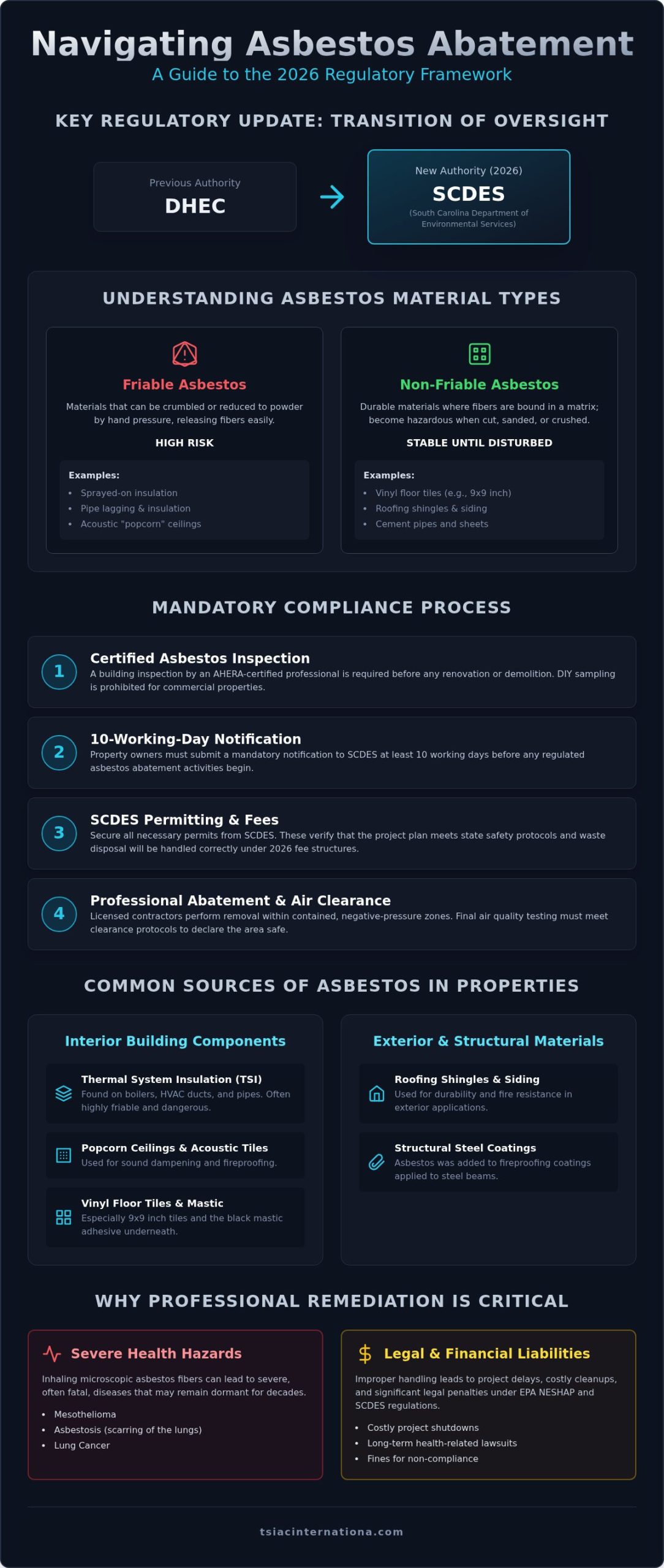
Understanding What is Asbestos Abatement involves recognizing the rigorous protocols required to prevent fiber release. Many firms claim to be “asbestos-aware,” which often indicates a basic 2-hour or 4-hour awareness course. This level of training allows workers to identify potential hazards but strictly prohibits them from disturbing the material. Only a licensed asbestos abatement company possesses the legal standing and specialized equipment, such as HEPA-filtered negative air machines and decontamination units, to perform actual remediation. For commercial properties and residential buildings with more than four units, federal law mandates the use of these licensed professionals to ensure compliance and safety.

The Legal Framework: EPA and OSHA Standards

The EPA governs the National Emission Standards for Hazardous Air Pollutants (NESHAP), which was established under the Clean Air Act in 1970. NESHAP requires that any facility undergoing renovation or demolition be inspected for asbestos-containing materials (ACM). OSHA further categorizes risks into four distinct levels. Class I work involves the removal of thermal system insulation and surfacing materials, representing the highest risk. Class II involves removing miscellaneous ACM like floor tiles or roofing. The EPA also strictly regulates the disposal of ACM, requiring it to be transported in leak-tight containers to specific landfills permitted to accept hazardous waste.

Certification vs. Licensing: Understanding the Difference

Individual worker certification and company-level licensing serve different functions. A worker must complete an EPA-accredited training program, often lasting 32 to 40 hours, to earn an individual certificate. This doesn’t allow them to operate as a contractor. A company-level license requires the firm to carry specific environmental liability insurance, often with limits of $1 million or more, and to maintain a bond. State registries, such as those managed by the Department of Labor or Environmental Quality, track these licenses. In states like New York or California, a firm must renew its license annually and prove its employees have maintained their current certifications through refresher courses.

Critical Indicators of a Professional Abatement Firm

Identifying a qualified partner requires more than a cursory review of a marketing brochure. A licensed asbestos abatement company must demonstrate compliance through verifiable state databases. Clients should request the company’s specific license number to confirm it remains active and free of disciplinary actions within the last 36 months. An Experience Modification Rate (EMR) below 1.0 serves as a primary benchmark for safety; a rating of 0.85, for example, indicates a safety record 15% better than the industry average. This metric directly reflects the firm’s commitment to OSHA standards and incident prevention on complex job sites. Rigorous vetting involves checking for past citations to ensure the firm maintains operational integrity under technical pressure.

Insurance and Bonding for Hazardous Materials

Standard general liability policies typically feature a total exclusion for asbestos and lead. A professional firm carries Pollution Occurrence Insurance (POI), which provides specific coverage for the sudden or gradual release of hazardous fibers during remediation. For projects exceeding $50,000, performance bonds are essential. These bonds guarantee that the work reaches completion according to the technical specifications outlined in the contract. Verifying the policy’s “per occurrence” limit ensures the coverage matches the project’s scale. It protects the asset owner from long-term liability that standard insurance simply won’t cover. Without POI, the financial risk of a fiber release falls entirely on the property owner.

Training and Personnel Qualifications

Technical proficiency relies on rigorous adherence to federal mandates. Every worker must complete an initial 40-hour EPA-approved training course, supplemented by annual 8-hour refreshers. The EPA provides detailed guidance on hiring a certified asbestos professional to ensure these standards are met. Each site requires a designated Competent Person as defined by 29 CFR 1926.1101. This individual possesses the authority to stop work if conditions deviate from the safety plan. Personnel must also undergo annual medical surveillance, including chest X-rays and pulmonary function tests, to monitor long-term health.

Quantitative respirator fit-testing is another non-negotiable requirement. It ensures that the protective equipment provides a perfect seal against microscopic fibers. These protocols aren’t optional; they’re the foundation of a controlled work environment. If you’re managing a facility with complex structural requirements, consulting with a specialized technical partner ensures your remediation plan meets these strict engineering benchmarks. Professional firms maintain detailed logs of these certifications, making them available for audit at any point during the project lifecycle. This transparency is the hallmark of a contractor that prioritizes safety over speed.

Licensed Asbestos Abatement Company: A Guide to Professional Remediation

The Professional Abatement Process: From Containment to Clearance

A licensed asbestos abatement company operates with the same technical discipline found in heavy industrial construction. The process begins with a rigorous site assessment to identify Asbestos-Containing Materials (ACM) and evaluate their friability. This data forms the basis of a formal Abatement Plan. This document isn’t just a workflow; it’s a legal requirement that outlines the specific engineering controls and safety protocols for the project. Adherence to EPA asbestos laws and regulations ensures that the project complies with the National Emission Standards for Hazardous Air Pollutants (NESHAP) to protect both workers and the public.

Engineering Controls and Site Preparation

Preparation is the most critical phase of the remediation cycle. Technicians construct a regulated area using 6-mil polyethylene sheeting to create airtight critical barriers. They seal all HVAC vents and non-removable fixtures within the zone to prevent fiber migration. To maintain the integrity of the containment, teams install HEPA-filtered negative air machines. These units exhaust air out of the work area to create a pressure differential, ensuring that any air leaks move inward rather than outward. Personnel safety relies on three-stage decontamination chambers. These units consist of a “dirty room” for equipment, a shower area for personal cleaning, and a “clean room” where workers don their protective gear. This setup eliminates the risk of carrying microscopic fibers outside the work zone.

During the actual extraction, teams utilize the wet-removal method. They saturate the materials with amended water, which contains chemical wetting agents that penetrate deep into the fibers. This technique keeps the material heavy and prevents dust from becoming airborne. It’s a proven method that can reduce fiber release by more than 95% compared to dry removal techniques.

Safe Disposal and Documentation

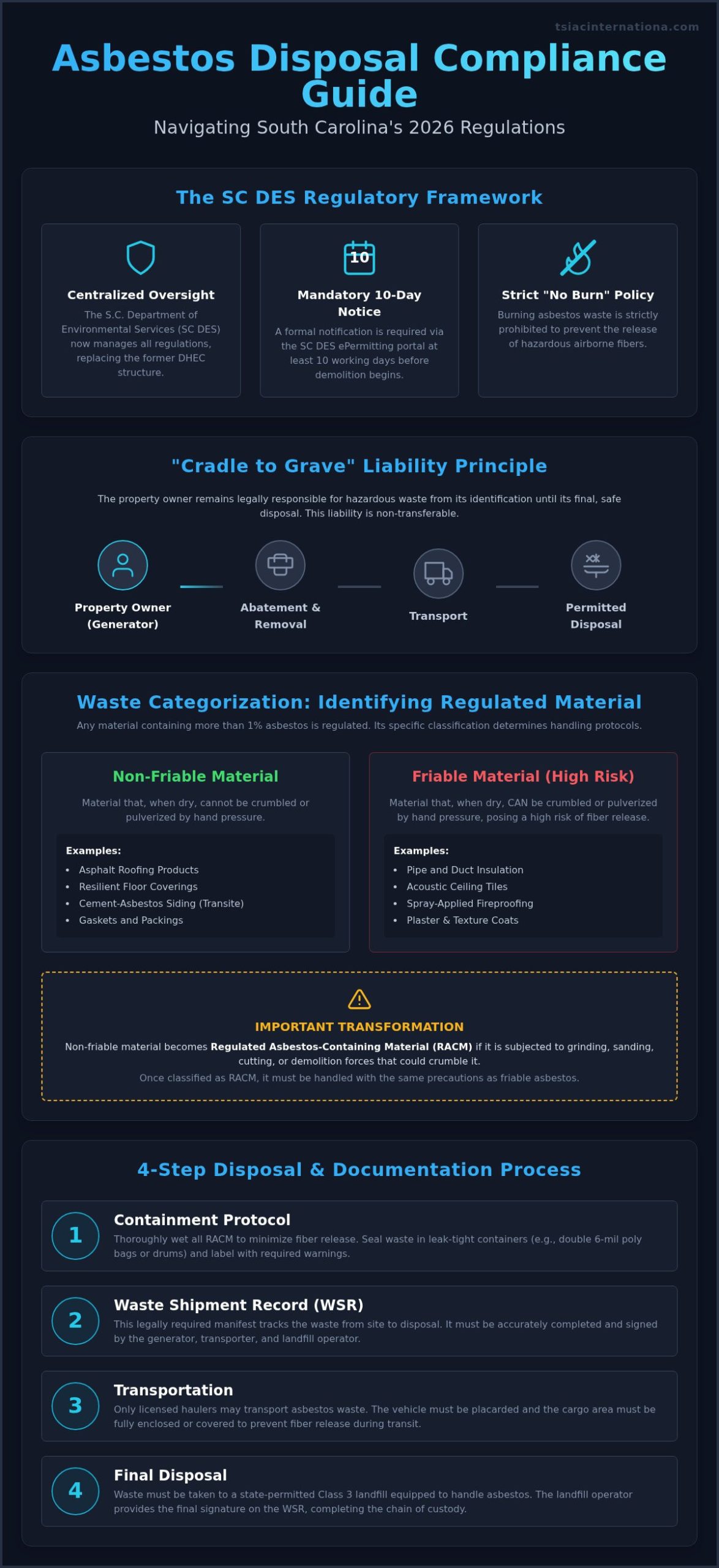
Managing hazardous waste requires precise logistical control. All removed debris is double-bagged in leak-tight, labeled containers while still wet to prevent any dry-out during transport. A licensed asbestos abatement company manages the entire chain of custody through Waste Shipment Records (WSR). These records provide a transparent audit trail from the point of origin to a certified hazardous waste landfill. This documentation is vital for property owners to prove legal compliance and limit future liability.

The final phase involves a multi-step inspection. After a thorough HEPA-vacuuming and wet-wiping of all surfaces, an independent third-party professional conducts a visual inspection. Following this, air clearance testing is performed using Transmission Electron Microscopy (TEM) or Phase Contrast Microscopy (PCM). The containment barriers aren’t removed until the lab results confirm that fiber concentrations are below the strict thresholds required for safe re-occupancy. This objective verification guarantees that the environment is 100% safe for normal use.

How to Vet an Abatement Contractor for Your Project

Selecting a licensed asbestos abatement company requires a shift from looking at price tags to analyzing technical methodologies. A simple estimate often hides gaps in safety protocols. You need a comprehensive project proposal that outlines containment strategies, air monitoring frequencies, and specific equipment lists. This document should serve as a technical roadmap, not just a financial summary.

Contractors must demonstrate a minimum of 10 years of experience with the specific material found in your facility. Removing non-friable floor tiles is a standard procedure; however, handling degraded pipe lagging in an industrial setting involves significantly higher risk. If your project involves high-altitude structures or confined industrial basements, you must seek specialists who handle impossible locations. These firms utilize industrial rope access and specialized rigging to maintain safety where standard scaffolding fails. Always check references for projects of similar scale. A company that successfully cleared a 50,000 square foot warehouse has different logistical capabilities than one that focuses on residential basements.

Red Flags to Watch For During the Bidding Process

Bids that fall 25% or more below the industry average often indicate that the contractor is cutting corners on labor or disposal fees. Proper disposal at a certified hazardous waste landfill is expensive. If a contractor suggests shortcuts or claims that permits aren’t necessary for your specific volume, they’re exposing you to massive legal liability. A lack of transparency regarding waste disposal locations is a critical failure. A reputable licensed asbestos abatement company will name the exact facility where the material is headed.

Questions to Ask During the Interview

Ask how they manage unexpected discoveries of hazardous materials mid-project. A professional firm will have a written contingency plan for these scenarios. You should also ask: What is your protocol for an accidental breach of containment? A fast, documented response is the difference between a minor delay and a site-wide contamination event. Finally, request a sample of their final close-out documentation package. This should include air clearance results, waste manifests, and daily work logs. Without this package, you cannot prove the site is safe for re-occupancy.

For projects requiring technical precision in high-risk environments, you need a partner that understands complex infrastructure. Contact our technical team

TSIAC International: Precision in Hazardous Material Abatement

TSIAC International has spent over 15 years refining its approach to complex hazardous material remediation. As a premier licensed asbestos abatement company, we’ve executed large-scale commercial and industrial projects across the United States. Our team doesn’t just remove toxins; we engineer solutions that integrate structural integrity with environmental safety. This national reach allows us to deploy specialized crews to any location, bringing a level of technical rigor that local generalists often lack. We’ve built our reputation on the ability to handle sites that others find too difficult or technically demanding.

Our integrated approach combines abatement with structural and selective demolition, which is critical for complex retrofitting projects. By handling both the removal of hazardous materials and the physical deconstruction of a site, we provide a seamless transition for the next phase of construction. This method reduces the risk of accidental exposure during demolition, as our abatement experts are on-site to oversee every structural cut. It’s a strategy that prioritizes safety while maximizing efficiency for our partners.

Why Engineering Precision Matters in Abatement

Engineering precision is the backbone of our operations. Working in challenging environments, such as active industrial facilities or high-density urban areas, requires more than basic equipment. It demands a single-source contractor capable of managing both asbestos removal and selective demolition. This unified strategy eliminates the friction often found between separate vendors. Facility managers and developers benefit from significantly reduced downtime because our crews coordinate every phase of the project under one safety protocol. We’ve successfully managed projects involving thousands of square feet of contaminated material while keeping the structural timeline on track. Our technical expertise ensures that even the most sensitive environments remain protected throughout the process.

Partnering for Safe Project Completion

Safety is a non-negotiable metric for our firm. We provide comprehensive hazardous material abatement for diverse property types, including aging industrial plants and high-rise commercial offices. Our commitment to environmental responsibility goes beyond simple disposal. We prioritize material recycling and adhere to the strictest regulatory standards to ensure long-term liability protection for our clients. This focus on sustainable practices helps our clients meet their own environmental goals while ensuring that all hazardous waste is disposed of at certified facilities in accordance with federal law. By maintaining high site safety benchmarks, we ensure that every project concludes without incident or regulatory delay. Every project we touch is backed by a legacy of reliability and a focus on leaving the environment cleaner than we found it.

Ready to secure your site with a trusted licensed asbestos abatement company?

Contact TSIAC International for an Abatement Quote

Ensuring Long-Term Safety Through Rigorous Abatement Standards

Choosing a licensed asbestos abatement company isn’t just a regulatory requirement; it’s a critical step in protecting the structural integrity of your facility and the health of its occupants. Professional remediation relies on precise containment protocols and strict adherence to environmental safety mandates. TSIAC International brings over 15 years of industry experience to every project, ensuring that even the most complex high-risk sites are handled with engineering precision. We provide comprehensive environmental compliance documentation that meets all legal standards, giving you a clear record of safety and liability management. Our teams specialize in those difficult locations where standard methods often fail. You’ll receive a transparent, data-driven approach that prioritizes efficiency without compromising on safety benchmarks. Don’t leave your hazardous material management to chance when specialist expertise is available. We’re ready to secure your environment with the technical rigor your project demands.

Take the first step toward a safer facility today. Request a Professional Abatement Consultation to partner with a team that values precision and safety above all else.

Frequently Asked Questions

What is a licensed asbestos abatement company?

A licensed asbestos abatement company is a specialized contractor certified by state environmental agencies to manage hazardous mineral fibers safely. These firms follow strict protocols defined by OSHA 29 CFR 1926.1101 to prevent fiber release during removal. Every technician must complete EPA-accredited training, ensuring they handle friable materials with engineering controls like HEPA filtration. This technical precision protects the structural integrity of the site and the health of its future occupants.

Can any demolition contractor remove asbestos?

Standard demolition contractors can’t legally remove asbestos without specific hazardous material endorsements. A licensed asbestos abatement company must handle any material containing more than 1% asbestos to comply with federal NESHAP standards. General contractors often lack the specialized negative air pressure machines and decontamination units required for safe remediation. Engaging uncertified labor for these tasks violates safety protocols and risks cross-contaminating the entire building structure.

Is a license required by law for residential asbestos removal?

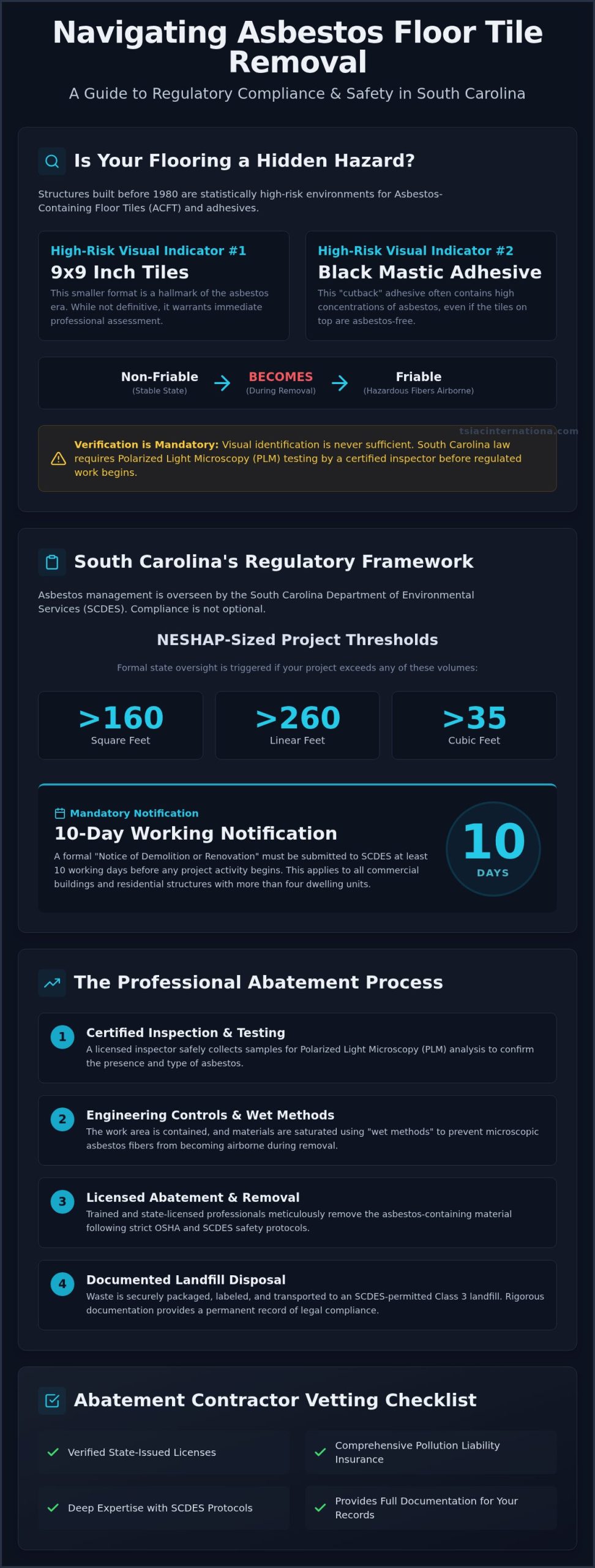
Law requires professional licensing for residential asbestos removal when the project involves significant quantities of hazardous material. The EPA’s National Emission Standards for Hazardous Air Pollutants (NESHAP) mandate professional intervention for amounts exceeding 260 linear feet or 160 square feet. While some states allow homeowners to remove small amounts themselves, it’s a high-risk activity that often leads to improper disposal and long-term environmental contamination.

How do I verify if an asbestos company is actually licensed?

You verify a firm’s credentials by requesting their license number and checking it against the state’s official regulatory database. Most state departments of labor or environmental protection maintain public registries of every licensed asbestos abatement company currently authorized to operate. You should also demand proof of occurrence-based pollution liability insurance. This specific coverage ensures the contractor can handle claims related to respiratory issues that might appear years after the project.

What happens if asbestos is removed by an unlicensed contractor?

Hiring an unlicensed contractor leads to severe health risks and substantial financial liabilities for the property owner. Improper handling can release millions of microscopic fibers into the HVAC system, making the property uninhabitable. The EPA can issue administrative fines reaching $37,500 per day for each violation of the Clean Air Act. Additionally, property owners face potential lawsuits from neighbors or workers exposed to dust during the unmonitored removal process.

How much does it cost to hire a licensed abatement company?

Costs for professional remediation depend on the material’s location and the complexity of the containment area. Data from the 2023 HomeAdvisor report indicates that residential asbestos removal typically costs between $450 and $6,000, with a national average project price of $2,135. Larger industrial projects or those requiring complex scaffolding and high-altitude access will command higher fees due to the increased technical requirements and specialized safety equipment involved.

What documents should I receive after the abatement is complete?

You’ll receive a comprehensive close-out package containing air clearance certificates and waste disposal manifests. The air clearance report, issued by a third-party industrial hygienist, proves that fiber levels are below 0.01 fibers per cubic centimeter. The waste manifest is a legal document tracking the hazardous material from your site to a certified Class I landfill. These documents are essential for future property sales and maintaining insurance compliance.

Does insurance cover the cost of asbestos abatement?

Insurance coverage for asbestos abatement depends entirely on the cause of the material’s disturbance. Most standard policies include a pollution exclusion clause that denies claims for routine maintenance or age-related deterioration. However, if a covered event like a 2024 pipe burst damages asbestos-insulated pipes, the insurer might pay for the remediation. It’s vital to check your policy’s specific endorsements regarding hazardous substance removal before starting any work.

Eco-Friendly Demolition Services: The Complete 2026 Guide to Sustainable Deconstruction

The EPA reports that construction and demolition debris reached 600 million tons in a single year, a figure more than double the volume of standard…

The EPA reports that construction and demolition debris reached 600 million tons in a single year, a figure more than double the volume of standard municipal waste. You likely recognize this reality through the lens of skyrocketing landfill tipping fees and the increasingly complex documentation required to meet 2026 LEED standards. Balancing the removal of hazardous materials like lead and asbestos with the need for strict budget adherence often feels like a zero-sum game. It doesn’t have to be.

By integrating professional eco-friendly demolition services, you can pivot from traditional site clearing to a high-precision deconstruction model. This guide explains how modern recovery techniques allow you to reclaim valuable assets and significantly lower project costs through strategic salvage operations. We’ll outline the technical process of deconstruction, the protocols for verified hazardous material safety, and the engineering logic that makes sustainable demolition the most cost-effective choice for complex industrial projects.

Key Takeaways

  • Learn why modern deconstruction is replacing traditional “wreck-and-haul” methods to maximize material recovery and environmental protection.
  • Understand the critical role of integrated hazardous material abatement and surgical dismantling in ensuring site safety and structural integrity.
  • Discover how eco-friendly demolition services reduce total project costs by diverting waste from landfills and generating value from recovered scrap.
  • Identify the essential components of a successful project, from conducting pre-demolition audits to securing regulatory approval through Waste Management Plans.
  • Explore how precision engineering and industrial expertise allow for the systematic salvage of wood, metal, and plastic in complex environments.

What Are Eco-Friendly Demolition Services in 2026?

In 2026, the construction sector views waste as a fundamental resource failure. Eco-friendly demolition services represent the systematic dismantling of structures designed to maximize material salvage and minimize environmental degradation. This methodology has replaced the obsolete “wreck-and-haul” practices that dominated the industry for decades. Modern engineers and project managers now prioritize “deconstruct-and-recover” strategies. These processes integrate selective demolition, precise on-site sorting, and rigorous hazardous material remediation to ensure that nothing of value reaches a landfill.

Sustainability has transitioned from a niche preference to the absolute industry standard for both commercial and residential projects. This shift is driven by strict regulatory frameworks. By 2026, over 80% of urban jurisdictions require detailed waste management plans before any permit is issued. Developers don’t just choose green methods for the environment; they do it to comply with carbon-neutral mandates and to recapture the value of high-grade materials like structural steel and old-growth timber.

Deconstruction vs. Traditional Demolition

Traditional demolition relies on heavy machinery to level a site in the shortest possible timeframe. While this method is fast, it destroys approximately 70% of potential recyclables by commingling debris with contaminants. In contrast, Deconstruction involves the manual or semi-automated removal of building components to preserve their structural integrity. It’s essentially construction in reverse.

Most 2026 projects utilize a hybrid approach. This strategy uses high-reach excavators for primary structural elements but employs specialized teams for the selective removal of copper, masonry, and architectural features. This balance maintains project timelines while meeting modern environmental responsibilities. It’s a calculated, engineering-led process that treats every building as a vertical warehouse of raw materials.

The Role of Material Recovery Facilities (MRFs)

The process doesn’t end when the trucks leave the site. Material Recovery Facilities (MRFs) are the backbone of the circular economy in the demolition sector. These centers use advanced optical sorters and robotic systems to process debris with surgical precision. Leading eco-friendly demolition services now aim for a 95% diversion rate from landfills, a significant increase from the 50% averages seen in 2015.

Transparency is a non-negotiable requirement for modern contracts. Contractors now provide digital chain-of-custody reports for every project. These documents track every ton of concrete and steel from the site to its secondary use. This level of tracking ensures that 100% of the recycling claims are verifiable through third-party audits, providing the technical proof that stakeholders and regulatory bodies demand.

The Mechanics of Sustainable Deconstruction and Abatement

Sustainable deconstruction isn’t a blunt force activity; it’s a disciplined engineering process. Unlike traditional methods that rely on wrecking balls and high-impact collisions, eco-friendly demolition services utilize surgical precision to dismantle structures. This approach involves removing specific building components while protecting the remaining structure and surrounding environment. We rely on high-reach excavators equipped with precision cutters and hydraulic shears to minimize vibration, noise, and dust. By 2026, these technical standards have become the baseline for projects requiring high levels of control and safety.

The sequence begins with integrated hazardous material abatement. This is the critical first step of any green demolition project. We don’t start structural work until every trace of lead, asbestos, and PCBs is identified and neutralized. Modern site management requires a thorough pre-demolition survey to map out these contaminants, ensuring they don’t enter the waste stream or the atmosphere. It’s a technical necessity that protects both the workforce and the long-term viability of the land.

Safely Managing Asbestos and Lead

Rigorous asbestos removal is vital for preventing environmental contamination during the deconstruction phase. Our teams implement strict containment strategies, including the use of negative pressure enclosures and HEPA filtration systems to capture microscopic fibers. Regulatory compliance isn’t just a hurdle; it’s a safety mandate. We meet all EPA and OSHA standards for hazardous waste disposal, ensuring that toxic materials are transported to specialized facilities. This fomalized process prevents the release of lead dust and asbestos into the local ecosystem, maintaining the site’s environmental integrity.

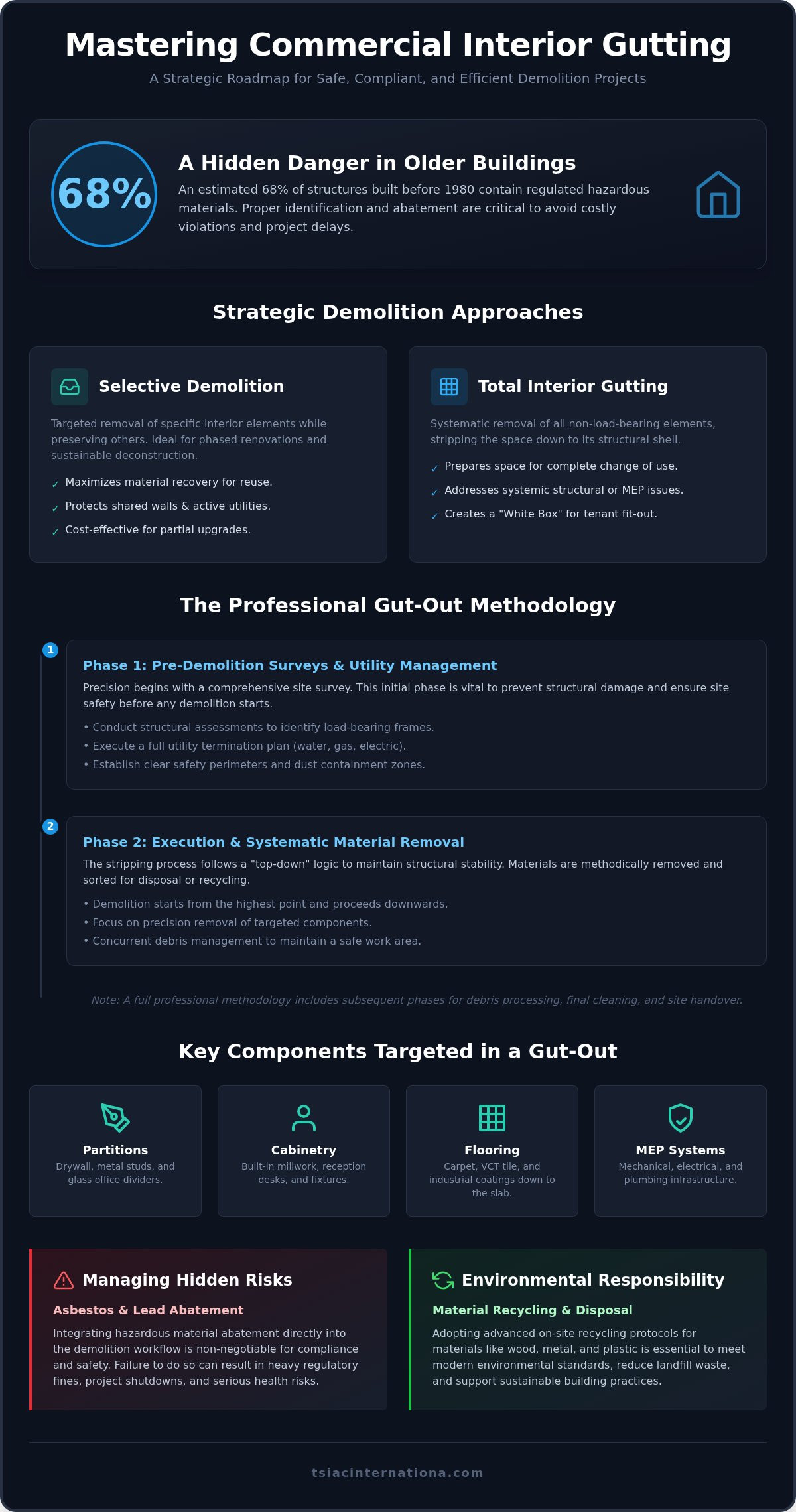
Selective Interior Gutting

Selective gutting focuses on stripping interiors down to the structural studs to recover high-value assets. This process is essential for commercial interior gutting services where tenant improvements require a clean slate without destroying the building’s shell. Reusing and recycling construction and demolition (C&D) materials like copper wiring, structural steel, and architectural fixtures can divert up to 90% of interior debris from landfills.

Our technicians use specialized hand tools and small-scale machinery to preserve historical or architectural elements during complex renovations. This level of care ensures that unique materials, such as reclaimed timber or vintage masonry, are salvaged for future use rather than discarded. If your project involves complex structural challenges, you can consult with our technical team to develop a customized deconstruction plan that prioritizes material recovery and site safety.

Eco-Friendly Demolition Services: The Complete 2026 Guide to Sustainable Deconstruction

Economic Benefits: Why Green Demolition Saves Money

Adopting eco-friendly demolition services isn’t merely a choice for environmental stewardship; it’s a strategic financial decision. Traditional demolition focuses on speed, often resulting in high disposal costs that eat into project margins. In contrast, a controlled deconstruction approach treats a building as a repository of valuable assets. By diverting heavy materials like concrete and structural steel from landfills, contractors avoid escalating tipping fees, which in some jurisdictions can exceed $100 per ton. This shift from waste disposal to material management changes the fundamental math of a project’s budget.

The financial recovery starts with scrap value. Recovered structural steel, copper wiring, and architectural salvage like old-growth timber hold significant market value. These materials can be sold directly to recyclers or reclaimed wood dealers to offset labor costs. Integrating Sustainable Deconstruction practices into the initial planning phase allows for the systematic removal of these high-value items before the heavy machinery arrives, ensuring maximum recovery rates and cleaner material streams.

Reducing Disposal and Transportation Costs

Logistical efficiency is the backbone of a profitable site clearance. On-site crushing of concrete is a primary example of how engineering precision saves money. Instead of paying to haul concrete debris away and then paying again to bring in virgin aggregate, we process the material on-site. This crushed concrete serves as an immediate, high-quality road base or backfill. This process eliminates dozens of haul-off loads, directly reducing fuel consumption and truck rental expenses.

Effective material sorting at the source further minimizes costs. When waste is co-mingled, it’s charged at the highest possible disposal rate. By separating masonry, metal, and wood, we tap into lower recycling rates. Local recycling markets play a decisive role here; proximity to specialized processing centers can reduce transportation overhead by 15% to 22% compared to long-distance landfill hauls.

Long-Term Liability Reduction

Financial risk management is built into every step of the demolition process. Choosing “cheap” demolition often leads to hidden costs, such as soil remediation or legal penalties for improper waste handling. Professional eco-friendly demolition services provide rigorous documentation and hazardous waste tracking. This transparency protects the property owner from future litigation and ensures the site remains a high-value asset for future development.

Sustainable practices also unlock specific financial incentives. LEED certification offers points for construction and demolition waste management, which can increase a building’s market value and attract premium tenants. Many federal and state grants for brownfield redevelopment cover 20% to 35% of cleanup costs if sustainable methods are used. By ensuring a clean, documented site, developers avoid the 404 errors of the physical world: unexpected environmental liabilities that stall progress and drain capital years after the project is finished.

Planning Your Eco-Friendly Demolition Project

Execution of eco-friendly demolition services requires a transition from traditional destruction to a structured deconstruction methodology. This phase begins with a rigorous pre-demolition audit. In 2024, industry data indicated that projects utilizing a detailed audit achieved a 25% higher recovery rate for high-value materials like structural timber and architectural steel. We treat every structure as a resource bank rather than a waste source. A comprehensive Waste Management Plan (WMP) serves as the technical blueprint for the entire operation. This document isn’t merely a formality for regulatory approval; it’s a log of every kilogram of material expected to leave the site. By 2025, over 60% of municipal jurisdictions required a WMP that identifies specific downstream recycling facilities before a single brick is moved.

The timeline for sustainable projects differs from conventional methods. Precision takes time. You must account for the sequential dismantling of components to prevent cross-contamination. Monitoring and documenting the recovery rate throughout the project ensures compliance with the 90% waste diversion targets often required for green building certifications. Effective management involves:

  • Regulatory Alignment: Securing permits that specifically acknowledge deconstruction methods.
  • Environmental Clearances: Obtaining site-specific air and water quality protections.
  • Logistics Planning: Coordinating the transport of salvaged goods to secondary markets to avoid onsite clutter.

The Pre-Demolition Site Assessment

A professional assessment identifies the safest path for dismantling while maximizing asset recovery. Structural analysis determines load-bearing priorities, ensuring the building remains stable as layers are removed. Hazardous materials surveys are mandatory; they test for asbestos, lead paint, and mold to prevent environmental contamination. We create an inventory of reusable assets, such as heavy structural timber and high-grade fixtures, which can be diverted from landfills. This engineering-led approach minimizes risks and optimizes the financial return on salvaged materials.

Selecting a Sustainable Demolition Contractor

You need a partner with a proven track record in complex execution and structural safety. Verification of licenses and specialized insurance is the baseline. Review their past recovery reports to see if they consistently meet or exceed a 75% diversion rate. Assess their equipment; modern eco-friendly demolition services utilize specialized attachments for sorting and crushing material onsite. A contractor’s ability to manage specialized abatement internally, rather than outsourcing, often leads to better communication and tighter safety controls on the job site.

To ensure your project meets the highest standards of engineering precision, consult our experts on complex execution and structural safety for your next deconstruction phase.

TSIAC International: Precision Engineering in Sustainable Demolition

TSIAC International brings over 15 years of specialized experience to the field of complex structural removal and hazardous material abatement. We operate with a philosophy where engineering precision dictates every action on-site. This disciplined approach is vital in high-stakes environments, including heavy industrial plants, dense commercial hubs, and sensitive residential developments. We don’t just clear land; we manage assets through a rigorous framework of safety and environmental compliance that exceeds standard industry requirements.

Our commitment to eco-friendly demolition services is evidenced by our aggressive resource recovery rates. We prioritize the systematic extraction and sorting of wood, metal, and plastic on every project we undertake. By treating these materials as valuable commodities rather than debris, we support the circular economy and significantly reduce the carbon footprint of the entire construction cycle. In 2024, our recovery protocols successfully diverted over 85% of non-hazardous site materials from local landfills, proving that large-scale removals can be both efficient and sustainable.

  • Industrial Expertise: Safe dismantling of steel structures and manufacturing facilities.
  • Commercial Precision: Selective deconstruction in active business environments with minimal disruption.
  • Residential Care: Careful gutting and material salvage for high-end renovations and historic preservation.

The TSIAC Methodology

Our process begins with customized recovery plans tailored to the specific structural needs of each property. We recognize that a 40-year-old industrial warehouse requires a different tactical approach than a modern commercial office. Our teams utilize advanced abatement techniques for the seamless removal of hazardous materials, ensuring that contaminants like asbestos or lead are neutralized before deconstruction begins. Transparency is a cornerstone of our service. We provide clients with clear, data-driven reports on waste diversion, documenting exactly how much material was salvaged, recycled, or repurposed.

Start Your Sustainable Project Today

Ready to partner with a team that values precision and environmental responsibility? Request a Professional Demolition Estimate from TSIAC International to begin your next phase of development with confidence.

Advancing Your Project With Engineering Precision

The shift toward circular construction models isn’t just a trend; it’s a structural necessity for the 2026 industrial landscape. By prioritizing deconstruction over traditional methods, projects can achieve material recovery rates exceeding 90% in many documented cases. This precision approach ensures that hazardous material abatement complies with the strictest environmental regulations while protecting the long term value of your site. Choosing eco-friendly demolition services allows developers to leverage specific economic benefits, including reduced landfill fees and documented tax credits for diverted waste.

TSIAC International brings over 15 years of industry experience and comprehensive hazardous material abatement certification to every site. We ensure that even the most complex technical challenges are managed with engineering rigor. Our proven track record of high material recovery rates transforms what was once considered waste into valuable assets for future development. It’s time to set a higher standard for your site’s lifecycle management.

Partner with TSIAC International for Your Next Sustainable Project

Your next project deserves the reliability and safety that only a seasoned engineering partner can provide.

Frequently Asked Questions

Is eco-friendly demolition more expensive than traditional demolition?

Initial labor costs for deconstruction are typically higher, but tax incentives and avoided landfill fees often offset these expenses. According to the EPA, deconstruction can divert up to 90% of a building’s materials from landfills. Salvaged materials like old-growth timber or architectural features hold significant resale value that lowers the total project expenditure. It’s a strategic investment rather than a simple cost increase.

What is the difference between deconstruction and demolition?

Demolition involves the rapid destruction of a structure using heavy machinery like excavators or wrecking balls. Deconstruction is the systematic disassembly of a building to maximize material recovery. This process prioritizes the preservation of components for immediate reuse. While traditional methods treat everything as waste, deconstruction views the building as a source of high-quality raw materials for future projects.

Can all building materials be recycled during demolition?

Not all materials are recyclable, but modern industrial processes allow for the recovery of approximately 75% to 95% of debris in eco-friendly demolition services. Concrete is crushed for road base, while steel and aluminum are infinitely recyclable without losing structural integrity. Composite materials and certain treated lumbers remain difficult to process. We focus on segregating materials at the source to prevent cross-contamination.

How long does an eco-friendly deconstruction project usually take?

A full deconstruction project typically requires 2 to 4 times longer than traditional mechanical demolition. A 2,000 square foot residential structure might take 2 weeks to disassemble manually compared to 2 days for machine-led destruction. This timeline reflects the precision required to remove fasteners and preserve the integrity of salvaged assets. We plan these schedules into the critical path of every construction project.

What happens to hazardous materials like asbestos during green demolition?

Hazardous materials undergo strict abatement protocols before any structural disassembly begins. Regulations like the EPA’s NESHAP standards require certified professionals to seal and remove asbestos-containing materials in airtight containers. These materials can’t be recycled and must be transported to specialized hazardous waste landfills. Safety remains the primary objective during these technical procedures to ensure the site’s environmental integrity.

Do I need a special permit for eco-friendly demolition services?

Most jurisdictions require standard demolition permits, but many cities now mandate a Waste Management Plan for eco-friendly demolition services. For example, San Francisco requires 65% of all construction and demolition debris to be diverted from landfills. You’ll need to document material weights and destination facilities to comply with local environmental ordinances. Our engineering team handles the technical documentation required for these approvals.

How does sustainable demolition help with LEED certification?

Sustainable demolition directly contributes to the Construction and Demolition Waste Management credit under the LEED v4.1 rating system. Projects can earn up to 2 points by diverting 50% to 75% of debris from landfills. Utilizing deconstruction also supports the Building Product Disclosure and Optimization credits. This systematic approach provides the verified data needed for the final certification audit and improves the building’s overall environmental score.

Can selective demolition be performed while a building is still occupied?

Yes, selective deconstruction is frequently executed in occupied commercial spaces using dust mitigation and vibration control systems. We use HEPA-filtered negative air machines and physical barriers to isolate the work zone. This allows for the removal of specific interior components without disrupting the mechanical or electrical systems serving the rest of the facility. Precision is key to maintaining occupant safety and operational continuity.

Cost of Asbestos Removal 2026: A National Comprehensive Pricing Guide

The most competitive quote for hazardous material abatement often conceals the highest long-term risk to your property and personnel. As we analyze…

The most competitive quote for hazardous material abatement often conceals the highest long-term risk to your property and personnel. As we analyze the cost of asbestos removal 2026, it’s clear that the industry’s shift toward more stringent air quality monitoring and specialized waste logistics is fundamentally reshaping project budgets. You likely recognize that managing friable fibers requires a disciplined, technical approach, yet the 35% variance often found between national contractor bids remains a significant source of frustration for facility managers. It’s difficult to maintain project control when the underlying variables of a quote feel like moving targets.

This guide provides the technical breakdown you need to secure your site without the fear of hidden fees or escalating project scopes. You’ll gain a clear understanding of current national asbestos abatement costs, including the specific engineering factors like negative pressure containment and HEPA filtration cycles that influence your final estimate. We’ll examine the specific variables of labor, disposal, and legal liability so you can finalize your 2026 budget with confidence. By the end of this analysis, you’ll have the data required to select a qualified professional who prioritizes structural integrity and safety over shortcuts.

Key Takeaways

  • Identify the current national price benchmarks for residential and commercial projects, typically ranging from $5 to $25 per square foot.
  • Analyze how technical variables such as material friability and site accessibility in confined spaces directly influence the total cost of asbestos removal 2026.
  • Evaluate the financial and operational advantages of integrating hazardous material abatement with selective commercial interior gutting.
  • Understand the mandatory compliance costs associated with EPA and OSHA regulations, including the critical role of professional air clearance testing.
  • Recognize why certified professional abatement is a strategic investment that protects property value and mitigates the long-term liabilities of improper disposal.

Understanding the National Average Cost of Asbestos Removal in 2026

The cost of asbestos removal 2026 reflects a complex intersection of regulatory compliance, specialized labor availability, and rising disposal logistics. National averages for residential projects currently span from $1,200 to $3,500 for localized tasks. Commercial abatement projects frequently exceed $30,000 depending on the facility’s square footage and the complexity of the structural environment. For most common hazardous materials, the standard price range fluctuates between $5 and $25 per square foot. This pricing structure accounts for the rigorous safety protocols required when handling What is Asbestos? and its associated health risks.

Several distinct factors contribute to the 2026 price levels. Labor costs for certified hazardous material technicians have risen by 14% since 2024 due to mandatory advanced training requirements and insurance premiums. Disposal surcharges at specialized landfills now represent a larger portion of the total budget than in previous decades. Beyond the physical removal, property owners must allocate funds for essential preliminary and concluding steps. Initial inspections typically cost between $450 and $1,200. Daily air monitoring fees during the project usually range from $350 to $1,000 to ensure the work area remains sealed and safe for occupants.

The Baseline: Small vs. Large Scale Projects

Small scale projects, such as removing a single pipe section or a 100-square-foot area of vinyl floor tiles, carry higher per-unit costs. Contractors implement a minimum mobilization fee, often starting at $600, to cover the setup of negative pressure containment zones and decontamination units. Whole-building industrial abatement benefits from economies of scale. While the total outlay is higher, the cost per square foot often drops toward the lower end of the $5 to $12 range for large, unobstructed industrial spaces where technicians can work more efficiently.

Why Estimates Vary Across the Country

Regional differences create substantial price gaps in the cost of asbestos removal 2026. In states with limited hazardous waste disposal facilities, transportation logistics can add 15% to 25% to the final invoice. Labor market shifts also play a critical role. Urban centers with high construction demand often face a shortage of certified technicians, which drives up hourly rates. Local permit requirements and state-specific EPA protocols vary significantly between regions. Some jurisdictions require more frequent air sampling or specific disposal manifests that increase administrative overhead and total project duration.

Primary Factors Influencing Your Abatement Budget

Calculating the cost of asbestos removal 2026 requires a technical analysis of environmental risks and site-specific challenges. Budgeting for abatement isn’t a matter of simple square footage; it’s an assessment of how many labor hours are required to meet federal safety standards. Four primary variables dictate the final invoice: material friability, site accessibility, containment complexity, and the specific type of hazardous material present. For instance, removing asbestos-contaminated attic insulation typically requires 25% to 40% more labor time than removing exterior siding due to the confined space and heat factors involved.

The Complexity of Containment Engineering

Safety protocols represent the largest portion of any professional abatement budget. Technicians must establish a regulated area using 6-mil polyethylene sheeting to create a negative-pressure “bubble.” This system relies on high-efficiency particulate air (HEPA) filtration units that must cycle the air within the enclosure at least four times every hour to ensure no fibers escape. According to industry data on Asbestos Removal Costs, these engineering controls are non-negotiable for interior projects. Labor pricing also accounts for specialized PPE, including powered air-purifying respirators (PAPRs) and disposable suits, which must be replaced every time a technician exits the decontamination zone. Structural obstacles like HVAC ducting or complex machinery can increase the setup time by 15 hours or more, directly impacting the total project spend.

Friable vs. Non-Friable Materials

The physical state of the asbestos-containing material (ACM) determines the level of risk and the resulting cost of asbestos removal 2026. Friable materials, such as sprayed-on fireproofing or thermal system insulation, can be crushed by hand. When these materials are disturbed, they release microscopic fibers into the air instantly, necessitating maximum containment. Conversely, non-friable materials like vinyl floor tiles or cement pipes hold the fibers in a solid matrix. These are often more cost-effective to manage because they don’t require the same level of airtight sealing unless the material is being mechanically ground or sanded. In some cases, encapsulation serves as a safer, more affordable alternative; this involves sealing the ACM with a specialized polymer to prevent fiber release rather than removing it entirely. If you’re managing a facility with complex structural needs, seeking a partner for complex execution and technical solutions can help streamline these high-risk procedures.

Material type also influences disposal fees. While floor tiles might be accepted at standard hazardous waste facilities, friable insulation often requires double-bagging and transport to specific landfills equipped for high-risk waste. These logistics, combined with the required post-removal air clearance testing by a third-party laboratory, ensure the site is safe for re-occupancy but add several layers to the final budget.

Cost of Asbestos Removal 2026: A National Comprehensive Pricing Guide

Integrating Abatement with Commercial Interior Gutting

Integrating abatement into the demolition phase eliminates redundant mobilization fees. Property owners often face 15% to 20% higher expenses when they hire separate contractors for hazardous material removal and structural stripping. By aligning these workflows, the cost of asbestos removal 2026 remains manageable through shared site security, unified insurance premiums, and synchronized scheduling.

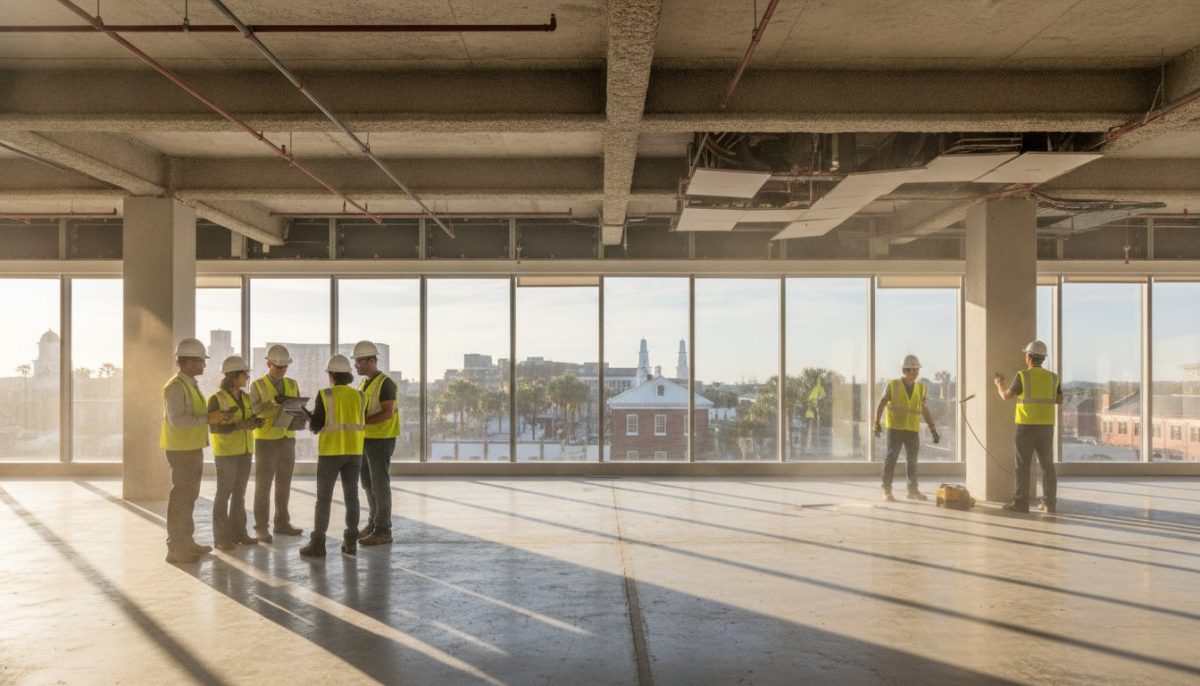
Interior gut-outs frequently expose friable materials hidden within wall cavities or beneath multiple layers of subflooring that initial inspections might overlook. Utilizing professional commercial interior gutting services ensures that these discoveries don’t derail the project timeline. Experienced crews maintain the structural integrity of the building envelope while performing deep stripping; this prevents accidental damage to load-bearing elements during the removal of contaminated insulation or pipe lagging.

Selective Demolition and Hazardous Materials

A surgical approach allows for the removal of specific building wings while the rest of the facility remains operational. This precision is vital for hospitals or schools where total closure is impossible. Identifying lead-based paint and asbestos before the renovation starts prevents costly work stoppages. Projects must adhere to strict protocols, such as those defined by hazardous material abatement south carolina standards, which serve as a rigorous baseline for national safety compliance. Accurate pre-demolition surveys reduce the risk of 48-hour emergency shutdowns by 30% on average.

Efficiency Through Single-Source Contracting

Hiring one firm to handle both demolition and abatement reduces administrative overhead significantly. Contractors with 15+ years of experience understand the logistical complexities of managing hazardous waste streams alongside standard construction debris. This unified approach simplifies the chain of custody for toxic materials. The cost of asbestos removal 2026 is heavily influenced by disposal logistics; therefore, a single-source partner can leverage volume-based rates at specialized landfills to protect the project budget.

  • Unified debris management lowers hauling and disposal fees by consolidating logistics.
  • Single-source accountability eliminates disputes between different trades.
  • Streamlined permitting processes accelerate the overall project completion date.
  • Integrated safety plans ensure all personnel follow the same containment protocols.

Managing these complex job sites requires a fegyelmezett, engineering-focused mindset. When a single entity controls the demolition of interior partitions and the subsequent abatement, they can maintain airtight barriers more effectively. This level of control is essential for protecting the remaining building assets and ensuring the safety of all occupants.

The Cost of Compliance: Permits, Testing, and Disposal

Regulatory frameworks for 2026 demand stricter adherence to EPA and OSHA protocols than ever before. These aren’t suggestions; they’re legal mandates that dictate the total cost of asbestos removal 2026. Failure to comply results in fines that often exceed the original project budget by 200% or more. Proper documentation ensures the safety of the structure and the people within it, providing a legal shield for property owners. Compliance is a specialized engineering task that requires meticulous planning and execution to avoid the long-term liabilities associated with toxic exposure.

Air Quality Monitoring and Post-Abatement Clearance

Third-party verification is the industry standard for risk mitigation. Commercial insurers typically require air clearance certificates before they’ll renew a policy or allow site re-entry. These tests use Phase Contrast Microscopy (PCM) or Transmission Electron Microscopy (TEM) to detect microscopic fibers. While TEM is more expensive, it provides a higher degree of accuracy that’s often required for schools and healthcare facilities. The process adds approximately 24 to 48 hours to the project timeline. This delay is a critical pause that prevents the cross-contamination of clean zones and ensures the cost of asbestos removal 2026 includes a guarantee of safety.

  • Independent Testing: Prevents conflicts of interest between the removal crew and the safety inspectors.
  • Liability Protection: Provides a “clean bill of health” for the building’s permanent records.
  • Site Re-entry: Ensures that air fiber counts are below the 0.01 f/cc threshold set by regulatory bodies.

Hazardous Waste Management and Recycling

Moving toxic materials requires specialized logistics and certified transport vehicles. Hazardous waste cannot go to standard municipal landfills. Transporters must maintain a strict chain of custody, documenting every mile from the abatement site to the certified disposal facility. TSIAC International integrates sustainable practices into this phase to maximize efficiency. By separating non-contaminated materials like steel framing, clean plastic, or wooden supports on-site, we reduce the total volume of waste sent to hazardous landfills.

This recycling strategy helps offset a portion of the disposal fees while meeting modern corporate environmental goals. All asbestos-containing materials (ACM) are double-bagged in 6-mil polyethylene, sealed, and labeled according to Department of Transportation (DOT) regulations. Maintaining a transparent manifest is the only way to prove that the toxic debris was handled with the necessary engineering precision. This fegyelmezett approach ensures that every gram of hazardous material is accounted for from removal to final burial.

Ensure your project meets all 2026 regulatory standards with a professional risk assessment. Contact our technical experts for a compliance-focused consultation.

Why Professional Abatement is a Strategic Investment

Viewing the cost of asbestos removal 2026 as a simple line-item expense is a mistake that often leads to catastrophic financial consequences. When property owners opt for “DIY” methods or low-bid contractors who lack industrial credentials, they inherit a legacy of liability. Improper handling frequently results in microscopic fibers settling into HVAC systems and porous surfaces, necessitating a secondary, much more expensive decontamination process. Since 2024, the EPA has intensified its oversight, and civil penalties for improper disposal now frequently exceed $80,000 per violation. Professional abatement is the only way to insulate yourself from these legal and financial risks.

Protecting Property Value and Human Health

A certified abatement report is a vital document for any real estate portfolio. Properties without documented clearance often see a 15% to 22% reduction in market value during the due diligence phase of a sale. By securing professional asbestos removal south carolina, owners ensure their assets remain liquid and attractive to institutional buyers. Beyond the balance sheet, the human cost is non-negotiable. Modern abatement protocols protect current occupants and future renovation crews from the health risks associated with friable materials. This proactive stance on safety drastically reduces the potential for long-term litigation that can haunt property owners for decades.

Choosing a Reliable Partner for 2026

Selecting a contractor requires looking beyond the initial quote to evaluate their track record in complex structural demolition. As we move into 2026, the industry is shifting toward more integrated solutions where abatement and engineering go hand-in-hand. TSIAC International approaches every hazardous project with a focus on mechanical precision. We understand that removing asbestos from a load-bearing structure or a complex mechanical room requires more than just masks and bags; it requires an engineering mindset to prevent structural damage.

The “TSIAC Gold Standard” represents our commitment to safety and technical excellence. This methodology ensures that every project is managed with the same rigor we apply to high-altitude industrial climbing or heavy steel fabrication. We don’t rely on guesswork. We provide a transparent, fixed-price framework that accounts for the specific technical challenges of your site. To protect your investment and ensure your facility meets all 2026 safety benchmarks, contact our team to request a detailed, fixed-price contract for your upcoming project. Our measured, authoritative approach ensures your project stays on schedule and within the projected cost of asbestos removal 2026 without compromising the integrity of your building.

Securing Your Project’s Future with Precise Abatement Planning

Navigating the cost of asbestos removal 2026 demands a transition from reactive maintenance to rigorous structural strategy. Budgeting for the upcoming year must account for shifting disposal regulations and the logistical complexities of hazardous material transport. Integrating abatement with commercial interior gutting remains the most efficient method to minimize site downtime. It’s a technical challenge that requires an engineering mindset rather than a simple cleanup crew. Technical precision in the early stages prevents expensive remediation later.

TSIAC International brings 15+ years of structural removal expertise to every site, ensuring full regulatory compliance and environmental recycling for all hazardous waste. Our certified hazardous material abatement specialists focus on controlled execution, even in the most difficult industrial environments. By prioritizing technical accuracy over shortcuts, you protect both your timeline and your long-term assets. We’re ready to provide the precision your infrastructure requires. Our team handles the complex logistics so your project remains on schedule and within the defined safety parameters.

Contact TSIAC International for a Professional Abatement Quote

Your path to a safe, compliant, and structurally sound facility begins with professional oversight and a commitment to engineering excellence.

Frequently Asked Questions

Is asbestos removal an emergency that increases the cost?

Emergency asbestos removal increases total project costs by 20% to 50% because contractors must mobilize specialized teams and equipment within 24 hours. These situations typically occur after structural failures or pipe bursts that expose friable materials to the air. The cost of asbestos removal 2026 includes these premiums for immediate containment and the rapid deployment of negative air machines to ensure site safety.

Can I remove asbestos floor tiles myself to save money in 2026?

You shouldn’t remove asbestos floor tiles yourself because the risk of fiber release outweighs any potential savings. While some local jurisdictions allow homeowners to perform DIY work, the EPA and OSHA warn that breaking 9-inch or 12-inch vinyl tiles creates hazardous dust. Professionals use wet-stripping methods and HEPA-filtered vacuums to prevent contamination. DIY mistakes often lead to decontamination bills that cost three times more than the original abatement price.

How long does a typical professional asbestos abatement project take?

A standard professional abatement project for a 1,500-square-foot residential area typically takes 2 to 5 business days. This timeframe includes one day for setting up airtight containment zones and another day for the mandatory third-party air clearance testing. Larger commercial projects or complex industrial sites may require 10 to 15 days. The duration depends heavily on the accessibility of the material and the required drying times for encapsulants.

Does homeowners or commercial insurance cover the cost of asbestos removal?

Standard insurance policies generally exclude asbestos removal unless the damage results from a covered peril like fire or a sudden water pipe burst. Most ISO HO3 policies contain a “Pollution Exclusion” clause that removes liability for hazardous material abatement during routine renovations. Property owners should expect to pay out of pocket for 95% of removal scenarios. Always verify your specific coverage limits with a licensed agent before starting any demolition work.

What is the difference between asbestos removal and encapsulation costs?

Encapsulation costs approximately 15% to 25% less than full removal because it seals the hazardous fibers behind a protective membrane instead of extracting them. While this reduces the immediate cost of asbestos removal 2026, it requires a long-term management plan and inspections every 6 to 12 months. Removal is a permanent solution that eliminates the hazard entirely. Most structural engineers recommend full removal for high-traffic areas where physical damage to the sealant is likely.

Are there specific permits required for asbestos removal at the national level?

National regulations require a NESHAP notification for any project involving more than 160 square feet or 260 linear feet of regulated materials. This federal mandate involves a 10-day waiting period before any work can begin on the site. Contractors must also follow 40 CFR Part 61 standards for wetting and labeling waste. Violating these permit requirements can result in federal civil penalties that exceed $37,000 per day of non-compliance.

How do contractors calculate the disposal fees for hazardous materials?

Contractors calculate disposal fees based on the total tonnage or cubic yardage of the hazardous waste generated during the project. EPA-approved landfills charge tipping fees that are often 300% higher than standard construction debris rates. These costs also include specialized transport in 6-mil polyethylene bags and the generation of Waste Shipment Records (WSR). Each load must be tracked from the job site to the final burial cell to ensure legal compliance.

What happens if more asbestos is discovered during the demolition process?

Work must stop immediately if workers discover suspected asbestos, as mandated by OSHA standard 29 CFR 1926.1101. The site supervisor is legally required to seal the area and hire a certified industrial hygienist to perform bulk sampling. This discovery usually adds 3 to 7 days to the project timeline for testing and the creation of a new abatement plan. Resuming work without a professional survey can lead to massive legal liabilities and health hazards for everyone on site.

Selective Demolition Services: A Strategic Guide to Precision Structural Removal

The decision to level an entire building often results in the unnecessary destruction of high-value structural assets that could’ve been preserved…

The decision to level an entire building often results in the unnecessary destruction of high-value structural assets that could’ve been preserved for future use. According to the EPA’s 2018 report, construction and demolition debris generated 600 million tons of waste, a figure that highlights the inefficiency of traditional “wrecking ball” methods. You likely recognize the anxiety of encountering hidden asbestos or the catastrophic risk of an unplanned structural collapse when a project timeline is already tight. Utilizing professional selective demolition services allows for a controlled, surgical removal process that mitigates these risks by isolating specific components without compromising the primary load-bearing structure.

It’s common to worry about escalating disposal fees and the complexities of hazardous material handling during a renovation. This guide demonstrates how a precision-based approach transforms a chaotic site into a clean structural shell ready for immediate redevelopment. You’ll learn how to achieve full regulatory compliance for lead and asbestos while maximizing material recovery through strategic recycling protocols. We’ll examine the technical methodologies that ensure structural stability and environmental safety throughout every phase of the removal process.

Key Takeaways

  • Understand how surgical precision facilitates complex adaptive reuse by removing specific components while safeguarding the building’s core structural integrity.
  • Learn the technical requirements of selective demolition services, specifically the role of engineering reviews and temporary shoring in maintaining load-bearing stability.
  • Discover the strategic applications of interior gut-outs and facade preservation for modernizing structures while maintaining their original architectural essence.
  • Identify how to synchronize hazardous material abatement with demolition workflows to ensure environmental safety and full regulatory compliance.
  • Master the criteria for selecting a specialized partner by verifying safety ratings and their proven experience with high-risk, complex structural environments.

What Are Selective Demolition Services? Precision Over Power

Selective demolition services represent a specialized engineering approach where specific building components are removed while the primary structure remains intact. Unlike traditional wrecking ball methods, this process requires surgical precision to protect load-bearing elements and adjacent finishes. It’s the technical foundation for adaptive reuse projects. Developers often choose this path to maintain the character of 19th-century masonry or mid-century steel frames. The process aligns closely with Deconstruction, focusing on the systematic disassembly of materials to maximize their salvage value. By preserving the structural shell, contractors reduce new material requirements by 30% to 50% in typical urban redevelopment projects. This method also facilitates recycling rates exceeding 90% for metals, concrete, and timber, significantly lowering a project’s carbon footprint.

  • Structural Integrity: Engineers identify and shore up critical supports before any removal begins.
  • Waste Management: On-site sorting ensures that 95% of steel and 80% of concrete debris enters the circular economy.
  • Asset Protection: High-value architectural elements are cataloged and protected from vibration or dust damage.

Selective vs. Total Demolition: When to Choose Which

Choosing between these methods depends on a rigorous assessment of the building’s “bones.” If the foundation and primary frame meet current seismic and load-bearing standards, selective demolition services offer a clear economic advantage. Total demolition requires ground-up reconstruction, which often triggers modern zoning restrictions or setbacks. Maintaining the original footprint allows developers to bypass complex rezoning processes that can delay projects by 12 to 18 months. Preservation also retains the embodied energy of the existing concrete and steel, making it a superior choice for LEED-certified developments. It’s a calculation of long-term value versus the immediate speed of a total knockdown.

The Role of Selective Demolition in Modern Renovations

In commercial sectors, this technique is vital for tenant improvements where interior layouts change without affecting neighboring units. It allows for the precision upgrading of mechanical, electrical, and plumbing (MEP) systems in occupied buildings. For industrial facilities, selective removal prepares floors for new production lines or heavy machinery installations. Engineers use specialized equipment to cut through reinforced concrete within tolerances of 5mm; this ensures that vibration doesn’t compromise sensitive equipment in adjacent bays. This level of control turns a chaotic demolition site into a disciplined, safe construction environment. It’s about managing risk while facilitating growth.

The Technical Mechanics of Surgical Structural Removal

Executing professional selective demolition services requires a level of engineering precision that mirrors new construction. Before any physical work begins, a comprehensive structural assessment determines how the building will react to the removal of specific components. We perform detailed engineering reviews of original as-built drawings to identify the exact location of tension cables, load-bearing columns, and lateral bracing systems. This phase is critical because an error in identifying a structural member can lead to a 15% increase in the risk of localized collapse during the removal process.

Precision tools define the modern approach to these technical challenges. Our teams utilize robotic breakers for high-risk zones, allowing operators to maintain a safe distance while delivering high-impact force. For reinforced concrete, diamond wire saws provide a vibration-free method to create clean cuts without micro-fracturing the remaining slab. We monitor vibration levels using digital seismographs, ensuring that peak particle velocity stays below 0.5 inches per second. This data-driven approach protects sensitive medical equipment or server rooms located in adjacent suites.

Shoring and Structural Stability Protocols

The distinction between load-bearing walls and non-structural partitions is the foundation of site safety. We implement temporary support systems, such as hydraulic shoring towers or adjustable steel shores, to redistribute weight before a single brick is moved. These systems maintain the building’s equilibrium and must comply with federal safety standards established by OSHA. Our engineers design safe egress routes for both technicians and specialized machinery, ensuring that every movement is calculated and every exit remains unobstructed throughout the project duration.

Dust and Noise Mitigation Strategies

Maintaining air quality in occupied buildings is a non-negotiable requirement. We establish negative air pressure zones using industrial HEPA filtration units that capture 99.97% of airborne contaminants, including hazardous silica dust. Wet-cutting techniques are utilized at the source to eliminate 90% of dust before it becomes airborne. To prevent operational downtime for clients, we schedule high-decibel activities like concrete breaking during off-peak hours, often between 10:00 PM and 6:00 AM. This level of planning ensures that selective demolition services can proceed without compromising the health or productivity of the building’s occupants.

Effective project management relies on these technical layers to turn complex challenges into predictable outcomes. If you’re managing a facility that requires these specialized interventions, it’s beneficial to consult with experts who understand complex structural execution in high-stakes environments.

Selective Demolition Services: A Strategic Guide to Precision Structural Removal

Core Applications: From Interior Gutting to Facade Preservation

Selective demolition services provide the surgical precision necessary for complex renovation projects where total building removal isn’t an option. These technical operations focus on isolating specific components for removal while protecting the primary structure. Technical teams often strip spaces down to the structural shell, a process known as an interior gut-out. This allows for total reconfiguration without compromising the building’s load-bearing capacity. Precision concrete cutting is another vital application. Contractors use diamond-tipped saws to remove slabs or foundations for new utility trenches, often working within tolerances of less than 0.25 inches to ensure the stability of the surrounding floor.

Industrial decommissioning also falls under this specialized umbrella. It involves the safe removal of heavy machinery and mechanical systems, which requires advanced rigging and crane operations. Expert teams must disconnect and remove boilers, cooling towers, and assembly lines without damaging the facility’s infrastructure. Safety is the priority, especially when handling equipment that may contain hazardous residues or high-pressure components.

Commercial Interior Gutting and Tenant Improvements

Modern office and retail spaces evolve quickly to meet new market demands. Property managers frequently require commercial interior gutting services to prepare for new tenants. This involves the systematic removal of partitions, drop ceilings, and outdated flooring systems. In multi-tenant environments, crews must isolate shared utilities to prevent service interruptions for neighboring businesses. According to the National Demolition Association, adhering to strict safety protocols during high-volume debris removal is essential in dense urban environments. Logistics teams coordinate waste haul-off schedules to minimize traffic disruption, often working during off-peak hours to maintain site efficiency.

Surgical Exterior and Facade Removal

The success of these applications depends on a disciplined approach to site management. Whether it’s removing a 10-ton industrial chiller or stripping a 50,000-square-foot office floor, the process follows a logical sequence. Teams identify load-bearing points, map out utility shut-offs, and establish clear debris paths. This engineering-led mindset ensures that the “selective” part of the demolition is handled with the same care as the original construction.

Critical Safety: Integrated Hazardous Material Abatement

Selective demolition services involve more than just the physical removal of structural elements; they require a disciplined, engineering-led approach to environmental hazards. In commercial structures built before 1980, the probability of encountering asbestos-containing materials (ACM) or lead-based paint exceeds 85% in industrial settings. These substances pose severe health risks if disturbed without surgical containment. We don’t view demolition and remediation as separate silos. Instead, we utilize an integrated workflow where abatement is synchronized with the demolition schedule. This coordination prevents cross-contamination and ensures the project timeline doesn’t suffer from unexpected regulatory shutdowns.

Compliance isn’t a suggestion; it’s a legal framework governed by OSHA, the EPA, and local environmental agencies. Every phase of the process must be documented to provide a clear audit trail. This includes air quality monitoring during the work and the use of specialized negative-pressure enclosures. By maintaining these strict standards, we protect the structural integrity of the remaining building while ensuring the safety of every person on the site.

Managing Asbestos and Lead During Demolition

Safety starts with a comprehensive pre-demolition survey. Technicians must identify and test pipe insulation, vinyl floor tiles, and textured coatings before a single wall is breached. Following asbestos removal in South Carolina guidelines ensures that local 2026 regulatory standards and EPA NESHAP requirements are met with precision. We utilize HEPA-filtered vacuum systems and wet-stripping methods to trap microscopic fibers at the source. This level of control is non-negotiable for protecting the building’s future occupants and preventing the spread of toxic dust through HVAC systems.

Environmental Compliance and Liability Protection

The legal landscape of hazardous waste disposal is unforgiving for property owners. You face long-term environmental litigation if waste isn’t tracked from the moment it’s bagged until it reaches a certified landfill. We maintain a strict ‘Chain of Custody’ for all hazardous materials. This documentation proves that every kilogram of lead or asbestos was handled according to OSHA 1926.1101 and EPA Title 40 protocols. Utilizing specialized hazardous material abatement teams for complex projects mitigates these risks from the outset. It’s a strategy designed to protect your financial assets and your reputation through transparent, technical excellence.

Don’t leave your project’s safety to chance. Contact TSIAC International today to ensure your selective demolition services are handled with engineering precision and full environmental compliance.

Strategic Planning: Choosing a Selective Demolition Partner

Selecting a partner for selective demolition services requires a rigorous vetting process that goes beyond simple cost estimates. You’ve got to scrutinize a contractor’s Experience Modification Rate (EMR). This safety metric reflects their past claims history; a rating below 1.0 indicates a safer than average workplace. High stakes projects involving complex structural shoring demand a firm that understands load bearing dynamics. If a contractor lacks a proven record in temporary support systems, the integrity of the remaining structure is at risk. It’s not just about what’s removed, it’s about what stays standing.

Efficiency in demolition keeps the project on its critical path. Delays in the early stages ripple through the entire construction timeline. A professional partner provides a detailed schedule that integrates with other trades. They manage permits, utility disconnects, and hazardous material abatement simultaneously to prevent bottlenecks. You don’t want a team that waits for problems to arise; you want a team that predicts them through engineering led planning.

Material Recovery and Recycling Practices

Waste management is a financial strategy, not just an environmental one. Strategic on site sorting of wood, metal, and plastic allows for high value recovery. This process significantly reduces landfill impact and project disposal fees. For modern developers, documenting these recycling rates is vital for LEED certification and ESG reporting. A dedicated partner provides the manifests and weight tickets necessary to prove that 75% or more of the debris was diverted from landfills. This level of transparency ensures compliance with municipal regulations and corporate sustainability goals.

The TSIAC International Standard of Precision

With over 15 years of experience in high stakes structural and selective demolition, TSIA C International brings engineering led safety to every site. We offer integrated services that combine demolition, abatement, and interior gutting under a single point of responsibility. This unified approach eliminates communication gaps between different subcontractors. Our commitment to environmental responsibility ensures your project meets all regulatory and sustainability goals without sacrificing the schedule.

Precision and reliability are the foundations of our work. We specialize in difficult locations where standard methods fail. Our team manages the technical complexities of selective demolition services so your renovation begins on a clean, safe, and structurally sound site.

Request a consultation for your selective demolition project to secure a partner that treats your timeline and safety as their highest priority.

Mastering the Precision of Structural Evolution

Achieving a successful renovation requires a calculated balance between maintaining structural stability and removing specific components like facades or interior systems. It’s no longer about brute force. Effective selective demolition services rely on engineering precision to protect the integrity of surrounding assets while clearing the way for new construction. TSIAC International applies 15+ years of structural demolition expertise to navigate these technical challenges, ensuring that even complex “impossible locations” are handled with total control. Our process integrates certified hazardous material abatement specialists to manage environmental risks alongside comprehensive debris recycling programs that minimize site waste. We focus on the mechanics of surgical removal to ensure every cut is deliberate and every load-bearing element stays secure. When your project involves intricate structural changes, you need a partner who prioritizes safety and technical accuracy over speed alone. Let’s ensure your next phase of development starts on a stable, expertly cleared foundation.

Partner with TSIAC International for Precision Selective Demolition

Frequently Asked Questions

What is the difference between selective demolition and interior demolition?

Selective demolition involves the strategic removal of specific structural or non-structural elements while preserving the integrity of the remaining building. Interior demolition focuses exclusively on stripping out internal finishes, partitions, and MEP systems within a space. Selective work requires higher technical precision because it often involves cutting into load-bearing components that represent 15% to 25% of the total building mass.

Is selective demolition more expensive than total demolition?

Selective demolition costs more per square foot than total demolition because it relies on manual labor and precision tools rather than heavy machinery. While a total demolition project uses high-reach excavators for rapid clearance, selective demolition services require hand-held equipment to protect adjacent structures. This meticulous approach typically increases the required man-hours by 45% compared to bulk site clearing operations.

How do you ensure the building doesn’t collapse during selective removal?

Engineers maintain structural stability by implementing temporary shoring systems and hydraulic bracing before any load-bearing element is modified. We follow OSHA 1926.850 standards, which mandate a written engineering survey to determine the condition of the framing and floors. Technicians monitor the structure using digital tiltmeters that detect movements as small as 0.01 degrees to ensure the safety of the remaining 80% of the facility.

Can you perform selective demolition while a building is still occupied?

Yes, crews can execute work in occupied buildings by using physical barriers and HEPA-filtered negative air machines to contain dust and debris. We manage noise levels by scheduling high-impact tasks during specific windows, such as 6:00 PM to 4:00 AM, to protect the environment for the 200 or more occupants in neighboring zones. Specialized floor protection prevents damage to shared corridors during the transport of materials.

What happens if asbestos is found after demolition has already started?

Operations stop immediately in the contaminated zone and the area is sealed to prevent the spread of hazardous fibers. According to EPA NESHAP regulations, a certified industrial hygienist must test the material and provide a report within 48 hours. If the results are positive, a licensed abatement team removes the material before our selective demolition services continue under a revised safety plan.

How much of the demolition debris is actually recycled?

Industrial projects typically achieve a 75% to 92% recycling rate by sorting materials at the source. Concrete is crushed for use as aggregate in new road bases, while metals like structural steel and copper wiring are processed at specialized smelting facilities. These recovery efforts satisfy LEED v4 requirements, which demand at least a 50% diversion of non-hazardous construction and demolition debris from landfills.

Do I need special permits for selective demolition compared to total demo?

Selective projects require structural alteration permits rather than standard wrecking permits, as the building remains standing. Local municipalities usually require a signed shoring plan and utility disconnect letters from providers at least 21 days before work begins. These permits ensure that the modifications comply with the International Building Code (IBC) and don’t compromise the fire safety ratings of the existing structure.

How long does a typical commercial selective demolition project take?

A standard 15,000 square foot commercial floor takes approximately 3 to 5 weeks to complete with a 10-person crew. The timeline includes 4 days for utility capping and 3 days for final site decontamination. Complex projects involving the removal of reinforced concrete mezzanines or heavy steel machinery can extend the schedule by 10 business days due to the need for specialized diamond-cutting tools.

Understanding General Contractor Liability for Subcontractor Asbestos Exposure

What if the very subcontractors you rely on could expose your business to significant legal risks? The reality is that general contractor liability…

What if the very subcontractors you rely on could expose your business to significant legal risks? The reality is that general contractor liability for subcontractor asbestos exposure is a pressing concern that could lead to complex legal implications, insurance coverage gaps, and the looming threat of lawsuits. Many professionals in the construction industry feel overwhelmed by these risks, often unsure of how to protect their interests. In this article, you’ll learn how general contractors can effectively manage these liability risks. We will break down the key aspects of liability, outline practical steps to mitigate risks, and highlight essential insurance needs. Understanding these elements can empower you to safeguard your business while maintaining the highest standards of safety and compliance.

Key Takeaways

  • Understand the nuances of contractor liability in asbestos exposure cases to better navigate legal responsibilities.
  • Implement preventive measures to manage risks associated with subcontractor asbestos exposure effectively.
  • Learn how general contractor liability for subcontractor asbestos exposure can be influenced by subcontractor actions and training.
  • Evaluate your insurance coverage to ensure it adequately protects against potential asbestos claims.
  • Discover TSIAC’s proven approach to managing asbestos risks through certified professionals and safety protocols.

Understanding Contractor Liability for Asbestos Exposure

Contractor liability for asbestos exposure is a critical aspect of construction law that affects general contractors, subcontractors, and project owners alike. In essence, a general contractor may be held liable for the actions of subcontractors, especially when those actions lead to asbestos exposure. The legal implications surrounding this issue are complex, shaped by federal and state regulations, as well as a history of legal precedents that dictate how liability is determined.

Legal Implications of Asbestos Exposure

Asbestos is recognized for its severe health risks, including lung cancer, mesothelioma, and asbestosis. These health risks not only impact workers but also extend to anyone who might be exposed to asbestos fibers in the environment. Legal precedents, such as United States v. T. E. I., have established that contractors can be held liable for failing to mitigate these risks. Consequently, general contractors must maintain stringent safety protocols and ensure compliance with the Occupational Safety and Health Administration (OSHA) regulations to protect themselves and their operations.

  • Health Risks: Asbestos exposure can lead to serious health conditions.
  • Legal Precedents: Important cases have shaped contractor liability laws.
  • Contractor Operations: Liability can affect insurance rates and business viability.

Subcontractor Roles and Responsibilities

Subcontractors play a vital role in construction projects, often handling specialized tasks that may involve hazardous materials like asbestos. Their responsibilities include identifying and managing asbestos risks. When subcontractors fail to comply with safety regulations or neglect to inform the general contractor about potential hazards, they can create situations that significantly increase the general contractor’s liability. For example, in the case of Smith v. ABC Construction, a general contractor faced substantial damages due to a subcontractor’s negligence in handling asbestos.

  • Duties: Subcontractors must adhere to safety protocols.
  • Non-compliance: Failure to do so can lead to increased liability.
  • Case Examples: Specific instances illustrate the liability implications.

In summary, understanding general contractor liability for subcontractor asbestos exposure requires a comprehensive grasp of both legal frameworks and the responsibilities each party holds. Misconceptions often arise regarding the distribution of liability, with many believing that general contractors are shielded from the actions of their subcontractors. However, the reality is that they can be held liable, emphasizing the need for diligence and proactive management of asbestos risks throughout the construction process.

General contractors hold significant legal obligations regarding asbestos management, particularly concerning general contractor liability for subcontractor asbestos exposure. These responsibilities are not only regulatory but also ethical, as they directly affect the health and safety of workers and the public. Contractors must ensure compliance with federal and state regulations, including the Occupational Safety and Health Administration (OSHA) standards and the Environmental Protection Agency (EPA) guidelines regarding asbestos handling and abatement.

Preventive Strategies to Reduce Risk

Effective management of asbestos risks starts long before construction begins. Implementing rigorous preventive strategies is crucial for minimizing exposure. Here are some foundational measures:

  • Pre-construction assessments: Conduct thorough evaluations of the site to identify potential asbestos-containing materials (ACMs). This includes reviewing historical data and performing laboratory testing on suspected materials.
  • Contractual clauses for subcontractor compliance: Incorporate specific clauses in contracts that mandate subcontractors adhere to all relevant asbestos regulations. This not only clarifies expectations but also reinforces liability aspects.
  • Training programs for awareness: Provide comprehensive training for all workers about the dangers of asbestos, proper handling techniques, and emergency response protocols. Regular updates and refresher courses can significantly enhance worker safety.

Case Studies: Effective Management

Analyzing successful case studies reveals insights into effective risk management practices. For instance, a construction firm in California undertook extensive pre-construction assessments that identified asbestos in a 1970s office building. By engaging certified asbestos abatement professionals and ensuring all workers were trained, the contractor mitigated potential exposure risks. The project not only complied with regulations but also completed ahead of schedule, showcasing the benefits of proactive planning.

Conversely, a contractor in New York faced litigation after failing to adequately manage asbestos during a renovation project. The oversight resulted in significant legal fees and damage to the company’s reputation. This incident underscores the critical importance of adhering to best practices and regular site inspections.

Regular site inspections are paramount to maintaining safety standards and ensuring compliance. Implementing a routine inspection schedule allows contractors to identify and address issues promptly, reducing the likelihood of exposure incidents. Such diligence not only protects workers but also minimizes legal liability associated with asbestos exposure.

In conclusion, understanding the legal responsibilities and implementing preventive measures are essential for general contractors. By prioritizing safety and compliance, contractors can effectively manage general contractor liability for subcontractor asbestos exposure while fostering a culture of safety. For more insights on managing construction risks effectively, consider exploring relevant resources.

Steps to Mitigate Asbestos Exposure Risks

To effectively manage general contractor liability for subcontractor asbestos exposure, implementing a robust strategy to mitigate asbestos risks is crucial. This involves several proactive steps that ensure safety on construction sites and compliance with relevant regulations.

Developing a Management Plan

A comprehensive asbestos management plan is the cornerstone of risk mitigation. Key components of such a plan should include:

  • Asbestos identification: Conduct thorough surveys to detect asbestos-containing materials (ACMs) before any construction begins.
  • Risk assessment: Evaluate the potential risks associated with identified ACMs, considering the likelihood of disturbance during work.
  • Control measures: Define procedures for handling, removing, or encapsulating ACMs to minimize exposure.
  • Emergency procedures: Outline steps to take in case of accidental asbestos disturbance, including evacuation protocols and reporting mechanisms.

Tailoring these plans to specific projects is essential. For example, a high-rise construction project may require more stringent controls compared to a residential renovation. Documentation plays a vital role in this process, ensuring that all procedures are recorded and easily accessible for audits and inspections.

Training and Certification Requirements

Regular training sessions for subcontractors are essential for maintaining awareness and compliance regarding asbestos risks. Training topics should include:

  • Identification of ACMs and understanding the associated health risks.
  • Proper handling and disposal procedures for asbestos materials.
  • Emergency response protocols in the event of asbestos exposure.

Certification procedures often involve accredited training programs that ensure subcontractors are well-versed in safety practices. Continual education is not only beneficial for compliance but also reinforces a culture of safety among workers. For instance, a study by the Occupational Safety and Health Administration (OSHA) found that regular training decreases the likelihood of asbestos-related incidents by up to 50%.

By establishing clear communication channels for reporting hazards and utilizing certified asbestos abatement professionals, general contractors can further minimize their liability related to subcontractor asbestos exposure. This proactive approach fosters a safer work environment and enhances overall project integrity.

Insurance Coverage and Risk Management

When it comes to general contractor liability for subcontractor asbestos exposure, understanding insurance coverage and risk management is crucial. The potential for asbestos-related claims necessitates a thorough evaluation of existing insurance policies, risk management strategies, and the involvement of legal counsel.

Assessing Insurance Needs

General contractors must assess whether their insurance coverage adequately addresses potential asbestos claims. Standard general liability policies typically cover property damage and bodily injury, but they often contain exclusions related to asbestos. Key steps in this assessment include:

  • Review standard coverage options: Analyze the scope of your current policy to understand its limitations regarding asbestos exposure.
  • Identify gaps in coverage: Many contractors overlook specific exclusions. Confirm if your policy includes coverage for environmental liabilities, as these may encompass asbestos-related claims.
  • Consider specialized policies: Depending on the project scope, you might need to look into additional coverage options such as Pollution Liability Insurance or Contractors’ Errors and Omissions Insurance.

Alternative Risk Management Strategies

Beyond insurance, effective risk management strategies can mitigate the chances of claims related to asbestos exposure. This includes:

  • Legal counsel involvement: Engaging legal experts who specialize in construction law can provide insights into compliance and liability issues. Their expertise can help structure contracts to minimize risk.
  • Contractual risk transfer methods: Utilize indemnity clauses in contracts with subcontractors. This ensures that if a claim arises, subcontractors bear the financial burden, protecting the general contractor.
  • Building a risk-aware company culture: Educate employees and subcontractors about asbestos risks and safety protocols. Regular training can significantly reduce exposure incidents, fostering a culture of safety and compliance.

In the face of potential asbestos claims, the role of legal counsel cannot be overstated. They can assist in negotiating contracts that clearly define responsibilities and liabilities, ensuring that all parties understand their obligations regarding asbestos management. This proactive approach significantly reduces the risk of litigation while enhancing the overall safety culture of the company.

With the right insurance coverage and robust risk management strategies, general contractors can navigate the complexities of general contractor liability for subcontractor asbestos exposure effectively. For further guidance in aligning your insurance needs with comprehensive risk management practices, reach out to our experts.

TSIAC’s Approach to Managing Asbestos Risks

At TSIAC International, we understand the complexities and risks associated with asbestos exposure, particularly concerning general contractor liability for subcontractor asbestos exposure. Our commitment to safety and environmental responsibility is demonstrated through robust protocols, rigorous training, and collaboration with certified professionals.

Safety Protocols and Compliance

TSIAC International employs comprehensive safety measures to minimize asbestos risks. Our protocols include:

  • Conducting thorough site assessments to identify potential asbestos hazards.
  • Implementing detailed safety plans tailored to specific project requirements.
  • Regular audits and inspections to ensure adherence to safety standards.

We comply fully with federal and state regulations, including the Environmental Protection Agency (EPA) guidelines and Occupational Safety and Health Administration (OSHA) regulations. This compliance ensures not only the safety of our workers but also protects the surrounding community from potential exposure.

Environmental Responsibility

TSIAC International is dedicated to maintaining environmental integrity through proactive waste management and recycling practices. We prioritize responsible disposal of asbestos materials, ensuring they are handled according to strict regulatory standards. Our initiatives include:

  • Implementing recycling protocols for non-hazardous materials.
  • Engaging the community through educational programs about asbestos risks and safe handling practices.
  • Adopting sustainable practices in our operations to reduce our carbon footprint.

Through community engagement initiatives, we strive to raise awareness about the health impacts of asbestos exposure. Our sustainability efforts extend beyond compliance; we aim to set industry benchmarks for environmental stewardship.

In conclusion, TSIAC International’s approach to managing asbestos risks centers on rigorous safety protocols, certified professionals for asbestos abatement, and ongoing staff training. This commitment not only protects our employees and subcontractors from general contractor liability for subcontractor asbestos exposure but also reinforces our dedication to environmental responsibility and compliance. By maintaining these high standards, we ensure that we meet industry challenges head-on while fostering a safe working environment for all stakeholders involved.

Secure Your Future with Expert Asbestos Management

Understanding general contractor liability for subcontractor asbestos exposure is crucial for protecting your business and your subcontractors. Key takeaways from this article include the importance of recognizing legal responsibilities, implementing preventive measures, and effectively managing asbestos-related risks. With over 15 years of industry experience, TSIAC has developed comprehensive safety protocols that ensure both compliance and protection for all parties involved.

Don’t leave your project at risk. Explore TSIAC’s asbestos abatement services today and partner with a team committed to environmental responsibility and safety. Together, we can navigate the complexities of asbestos exposure and secure a healthier future for everyone involved.

Frequently Asked Questions

How can general contractors minimize their liability for subcontractor asbestos exposure?

General contractors can minimize their liability for subcontractor asbestos exposure by implementing strict safety protocols and ensuring compliance with OSHA regulations. Conducting thorough due diligence on subcontractors’ safety records and requiring them to provide documentation of asbestos training and safety practices can also mitigate risks. Regular audits and site inspections further enhance safety measures, helping to maintain a safer work environment.

What insurance options are available for asbestos-related claims?

General contractors should consider several insurance options to protect against asbestos-related claims. General liability insurance often includes coverage for bodily injury and property damage caused by asbestos exposure. Additionally, specialized pollution liability insurance can cover claims related to asbestos removal and management, ensuring that contractors are financially protected in case of future litigation.

Are subcontractors solely responsible for asbestos exposure?

No, subcontractors are not solely responsible for asbestos exposure. General contractors share liability, especially if they fail to provide a safe working environment or neglect to communicate asbestos hazards. Courts have determined that both parties can be held accountable, emphasizing the importance of clear contracts and safety protocols that outline responsibilities regarding asbestos management.

What legal precedents exist for contractor liability in asbestos cases?

Legal precedents indicate that general contractors can be held liable for subcontractor asbestos exposure under various circumstances. In the 2006 case of Riley v. Harsco Corp., the court ruled that contractors could be liable for third-party exposure if they had control over the project site. This sets a significant precedent, highlighting the need for contractors to take proactive measures in managing asbestos risks.

How does TSIAC ensure compliance with asbestos regulations?

TSIAC ensures compliance with asbestos regulations by implementing comprehensive training programs and strict adherence to state and federal guidelines. Regular internal audits and third-party inspections are conducted to verify compliance. TSIAC also maintains up-to-date documentation and certifications for all personnel involved in asbestos-related activities, reinforcing a commitment to safety and regulatory adherence.

What role does training play in asbestos risk management?

Training is crucial in asbestos risk management as it equips workers with the knowledge to identify, handle, and mitigate asbestos hazards. Regular training sessions ensure that all personnel are aware of the latest safety protocols and regulations. For instance, OSHA mandates specific training for employees exposed to asbestos, which helps minimize risks and promotes a culture of safety on construction sites.

How to Justify Demolition Costs to a Board: A Strategic Guide for Project Managers

The lowest bid on a structural demolition project is frequently the most expensive line item a company will ever face. When a board of directors sees…

The lowest bid on a structural demolition project is frequently the most expensive line item a company will ever face. When a board of directors sees a high-value estimate, their immediate instinct is to cut costs, yet industry data from 2023 indicates that 35% of major project overruns are caused by inadequate site preparation and unforeseen structural risks. You understand that technical factors like hazardous material abatement and precision structural stabilization aren’t optional extras. They’re the foundation of site safety and long-term asset protection.

Learning how to justify demolition costs to a board requires moving beyond technical jargon and focusing on risk-adjusted investment. We’ll show you how to transform a complex engineering estimate into a persuasive case that secures full budget approval and builds confidence in your chosen contractor. This guide provides a clear framework for quantifying the value of specialized expertise and explains how to present compliance costs as essential insurance against future litigation. You’ll gain the tools to lead a board through the technical logic of a project with the same precision we bring to the job site.

Key Takeaways

  • Shift the board’s perspective from immediate expense to long-term strategic investment by focusing on asset value and liability reduction.
  • Discover how to break down complex estimates into transparent direct and soft costs to eliminate budget surprises for stakeholders.
  • Learn how to justify demolition costs to a board by positioning safety and hazardous material mitigation as the primary drivers of financial stability.
  • Use a data-driven comparative analysis to demonstrate why site clearing is often more cost-effective than the hidden expenses of adaptive reuse.
  • Implement a professional framework to present the net investment, accounting for salvage value and tax benefits to secure final approval.

Framing Demolition as a Strategic Investment Rather Than an Expense

Demolition justification is the technical process of aligning structural removal costs with long-term property valuation and the systematic reduction of environmental liabilities. Project managers often struggle with how to justify demolition costs to a board because they present the project as a singular financial drain. A professional approach requires shifting the narrative from a “cost-center” mindset to a “site-readiness” mindset. This ensures that the board views the removal of a 30-year-old industrial structure not as a loss of assets, but as the critical first step in preparing the ground for a revenue-generating facility.

Boards evaluate major projects through the lens of Total Cost of Ownership (TCO). An initial low bid price often masks the risks of structural instability or unforeseen hazardous material discovery. By utilizing a cost-benefit analysis framework, you can demonstrate that a controlled, professional demolition reduces long-term insurance premiums by an average of 12% and prevents the 25% cost overruns typically seen in poorly planned “budget” removals. High-precision demolition unlocks the site’s potential, allowing for modern, efficient infrastructure that meets current environmental standards.

Identifying Board-Level Priorities

Boards distinguish strictly between capital expenditure (CapEx) and operational expenditure (OpEx). Demolition usually qualifies as CapEx when it’s the precursor to new construction. You’ve got to align the project with the organization’s current five-year strategic plan. If the 2024-2029 goals focus on sustainability, highlight the percentage of materials that will be recycled rather than landfilled. Safety is the primary non-negotiable value for any board. Presenting a contractor’s zero-incident safety record isn’t just a detail; it’s a risk mitigation strategy that protects the board’s corporate reputation and prevents litigation.

The Psychology of Budget Approval

Technical transparency is the foundation of trust with stakeholders. Don’t gloss over high-risk line items like specialized high-reach equipment or asbestos abatement. Instead, provide data-driven production rates, such as the specific tonnage of debris processed per shift, to justify the project timeline. Industry data from 2023 indicates that projects lacking this level of detail face approval delays 40% more often than those with granular data. Use case studies to illustrate the financial impact of failed projects where “cheap” contractors left sites contaminated or structurally unsound, costing companies millions in remedial work.

  • Focus on the transition from “obsolete liability” to “shovel-ready asset.”
  • Use concrete production metrics to back up every dollar requested.
  • Highlight the 15% to 20% increase in land value following professional site clearance.

Decoding the Components of a Professional Demolition Estimate

Boards often view demolition as a destructive expense rather than a preparatory investment. To understand how to justify demolition costs to a board, you’ve got to dismantle the estimate into its core technical layers. A professional bid isn’t just a bottom-line figure; it’s a breakdown of logistical precision and risk mitigation.

Direct costs are the most visible drivers. These include heavy machinery operation, skilled labor hours, and fuel consumption. However, it’s the soft costs that frequently catch board members off guard. Municipal permits, specialized insurance premiums, and utility disconnects are non-negotiable requirements for legal and safe execution. If these aren’t clearly articulated, the board might perceive the estimate as inflated rather than comprehensive.

A responsible estimate also includes a 10% to 15% contingency buffer. This isn’t a “slush fund.” It’s a calculated risk management tool designed to handle unforeseen structural anomalies or the discovery of hazardous materials. Presenting this buffer demonstrates a commitment to financial transparency. It shows the board you’ve planned for reality, not just the best-case scenario.

The Economics of Material Recovery and Recycling

Material recovery transforms waste into a financial asset. By separating steel, copper, and concrete at the source, contractors can secure salvage credits that directly reduce the net project cost. Landfill tipping fees in many metropolitan areas have increased by 7% to 12% annually since 2021. Recycling bypasses these rising costs while fulfilling Environmental, Social, and Governance (ESG) mandates. Boards value these metrics because they align fiscal responsibility with modern corporate sustainability goals. It’s a rare opportunity where the “green” choice is also the most cost-effective one.

Selective vs. Structural Demolition Costs

Total knockdown is often cheaper per square foot because it allows for aggressive, high-volume machinery use. However, when a project requires commercial interior gutting services, the labor intensity increases. This “surgical” approach involves manually removing components to protect the building’s structural integrity or preserve specific architectural features. This precision requires more man-hours and smaller, specialized equipment. You can explain to the board that this higher upfront labor cost prevents millions in potential structural damage or the need for total reconstruction. Balancing these structural concerns with renovation goals is essential for long-term asset value. If you’re managing a complex site, consulting with a technical demolition partner early in the planning phase ensures your estimate remains accurate and defensible.

How to Justify Demolition Costs to a Board: A Strategic Guide for Project Managers

Risk Mitigation: The Board’s Primary Value Driver

Risk is the board’s main concern. They don’t want surprises; they want certainty. When you’re explaining how to justify demolition costs to a board, you must lead with risk management. Hazardous materials represent the primary cause of budget inflation, often increasing project costs by 15% to 30% if discovered mid-demolition. Upfront testing isn’t a luxury. It’s a financial shield that prevents work stoppages and emergency remediation fees.

The “Cost of Inaction” is a powerful metric for any project manager. A vacant, degrading building isn’t a neutral asset; it’s a growing liability. Consider these specific risks that accumulate every month a decision is delayed:

  • Structural Degradation: Water ingress can compromise structural integrity within 12 months, making eventual demolition more dangerous and expensive.
  • Security Threats: Squatters and vandalism increase premises liability. A single injury on-site can lead to litigation costs exceeding the price of the demolition itself.
  • Regulatory Fines: Local municipalities often issue “demolition by neglect” citations. In some jurisdictions, these daily fines can reach thousands of dollars.

Justifying Hazardous Material Abatement

Professional hazardous material abatement serves as a long-term liability shield for the organization. Under EPA National Emission Standards for Hazardous Air Pollutants (NESHAP), owners are responsible for asbestos presence regardless of who performs the work. Non-compliance isn’t just a project delay; it’s a federal offense. As of 2024, OSHA’s maximum penalty for “willful” violations has risen to $161,323 per violation. Specialized containment and professional removal are fixed necessities because they prevent these catastrophic financial and reputational hits. Understanding how to justify demolition costs to a board involves shifting the focus from “spending” to “protecting” the organization’s balance sheet through strict regulatory adherence.

Insurance and Liability Transfer

A high-bonded contractor acts as an external safety net. When you hire a firm with robust insurance, you’re transferring the project’s inherent risks away from the board’s accounts. Ensure the contract includes “pollution liability” coverage. This specific policy covers damages resulting from the release of hazardous materials, which standard general liability often excludes. By selecting a contractor with a low Experience Modification Rate (EMR), typically below 1.0, the organization can often negotiate lower site-specific insurance premiums. This technical approach proves that the demolition budget isn’t just paying for destruction; it’s purchasing a clean, risk-free slate for future development.

Comparative Analysis: Demolition vs. Adaptive Reuse Costs

Boards often default to adaptive reuse because it feels like a conservative preservation of capital. However, the financial reality usually favors a clean slate. Maintaining a derelict 50,000-square-foot industrial warehouse can cost upwards of $2.50 per square foot annually just for basic security, structural stabilization, and liability insurance. When you present your case, you’ve got to address the “Hidden Sunk Cost” fallacy. Retrofitting a structure built before 1980 frequently uncovers hazardous materials like asbestos or lead; these remediation efforts can inflate renovation budgets by 15% to 30% before a single structural improvement begins. This unpredictability is a primary reason why project managers must learn how to justify demolition costs to a board through transparent risk modeling.

Modern, energy-efficient new construction offers a superior ROI compared to retrofitting. New builds typically achieve LEED or similar certifications that reduce operational energy costs by 20% to 35% compared to legacy systems. A new facility isn’t just a structure; it’s a high-performance asset with a reset depreciation clock. By clearing the site, you eliminate the compromises of “working around” old load-bearing walls or outdated floor loads that limit modern machinery placement.

Quantifying the Cost of Delay

Holding a non-productive asset is a direct drain on corporate liquidity. Daily holding costs include property taxes, utility stand-by fees, and 24/7 security to prevent trespassing. In metropolitan areas, these costs often exceed $1,200 per day for mid-sized industrial sites. Inflation adds another layer of financial risk. According to the Turner Building Cost Index, construction costs in the specialized industrial sector rose by approximately 8% in 2022. Delaying demolition for twelve months doesn’t just stall the project; it makes the eventual build significantly more expensive due to rising labor and material costs.

Visualizing the Post-Demolition ROI

Boards respond to clarity and visual evidence. Use 3D site renderings to transform a “dilapidated liability” into a “ready-to-build asset” in their minds. A clear timeline shows that while demolition takes 4 to 10 weeks, it accelerates the total project delivery by removing the technical hurdles of working within an old shell. It provides a predictable path to revenue that stakeholders can track with precision. Site-readiness is the primary hurdle to project financing.

Once the site is cleared and graded, the risk profile drops, making the project more attractive to Tier 1 lenders and institutional investors. Understanding how to justify demolition costs to a board requires shifting the focus from the cost of destruction to the value of a prepared foundation.

Partner with technical experts for complex site preparation to ensure your project stays on schedule and under budget.

Presenting the Final Proposal: A Board-Ready Framework

Your objective is to transform a complex technical project into a clear financial and strategic decision. When you explain how to justify demolition costs to a board, you must shift the focus from spending money to protecting equity and safety. Use this four-step framework to secure approval without unnecessary friction.

  • Step 1: Lead with the “Why” (Safety and Strategy). Safety isn’t a line item; it’s a liability shield. Highlight how removing a derelict structure eliminates 100% of the ongoing maintenance costs and legal risks associated with aging assets.
  • Step 2: Present the “Net Cost.” Don’t just show the gross bid. Calculate the total cost minus salvage credits for steel or copper and any identified tax benefits. This presents the actual impact on the company balance sheet rather than an inflated headline figure.
  • Step 3: Address the “What Ifs” (Risk and Contingency). Boards hate surprises. Proactively define a 10% to 15% contingency plan for unforeseen structural or environmental variables. Addressing these risks early builds trust in your management capabilities.
  • Step 4: The Selection Criteria. Prove that your chosen contractor represents the lowest risk, not just the lowest price. Boards prioritize continuity and reputation over marginal savings that could lead to litigation or delays.

Why Experience Minimizes Change Orders

A 15-year veteran firm like TSIAC International identifies structural weaknesses or hazardous materials before they trigger expensive delays. Change orders in demolition often stem from poor site assessment. Relying on a fixed-price structural demolition contract provides the budget certainty boards demand. A documented demolition process ensures that schedule adherence is measured against clear milestones, keeping the project on track for the next phase of development. This level of engineering precision prevents the 20% to 30% cost overruns common with less experienced crews.

The Final Close: Moving to Action

Distill your proposal into three specific decisions: approving the safety-first methodology, authorizing the net budget, and confirming the project timeline. You need to provide a clear roadmap for the immediate future to maintain momentum. In the first 30 days, focus on permitting and site mobilization. By day 60, structural dismantling should be 50% complete. Within 90 days, the site will be cleared, graded, and ready for inspection. This clear timeline reduces the board’s anxiety regarding project stagnation. If you’re ready to secure a professional, data-backed proposal, request a comprehensive board-ready estimate from TSIAC International to ensure your project starts with total transparency and technical authority.

Securing Board Approval Through Strategic Precision

Success in the boardroom depends on shifting the narrative from a simple expense to a calculated investment in site potential. By highlighting how professional structural removal mitigates long-term liability, you provide the clarity stakeholders need to move forward. Knowing how to justify demolition costs to a board involves presenting a framework that prioritizes safety, environmental compliance, and future-proofing the asset. TSIAC International supports this process with 15+ years of structural removal expertise, ensuring every phase of the project remains under strict control.

Our team provides full-service hazardous material abatement and containment, removing the burden of environmental risk from your proposal. We also implement a comprehensive material recycling program for wood, metal, and plastic, which aligns your project with corporate sustainability goals. These technical advantages turn a standard quote into a strategic plan that addresses the board’s primary concerns regarding safety and efficiency. Don’t present a budget when you can present a solution backed by engineering precision.

Get a Board-Ready Demolition Strategy and Quote from TSIAC International

Your path to a cleared, high-value site is ready for its first professional step.

Frequently Asked Questions

How do you explain asbestos removal costs to a board?

Asbestos removal is a non-negotiable legal requirement under OSHA 29 CFR 1926.1101 and EPA NESHAP regulations. Failure to mitigate these hazardous materials leads to federal fines exceeding $15,000 per violation per day. Board members must view this as a critical risk mitigation strategy that protects the organization from long term litigation and worker health claims. Proper abatement ensures the site meets all safety standards before structural work begins.

What is the typical ROI on building demolition for a developer?

ROI on building demolition is calculated by the immediate elimination of holding costs, which often consume 2% to 5% of a property’s value annually in taxes and security. Clearing an obsolete structure increases land liquidity and can lead to a 20% increase in land value once the site is pad-ready. This financial upside is a critical factor when learning how to justify demolition costs to a board focused on asset performance.

Can we reduce demolition costs through on-site material recycling?

On-site material recycling can reduce total project expenditures by up to 30% by eliminating haul-off fees and the need for imported backfill. Crushing concrete and masonry into aggregate on the job site saves between $10 and $25 per ton compared to purchasing virgin materials. This process also decreases heavy vehicle traffic by 40 percent, which lowers the project’s carbon footprint. It effectively transforms waste into a functional construction asset.

Is selective demolition always cheaper than total structural demolition?

Selective demolition is frequently more expensive per square foot because it requires specialized shoring and 50% more labor hours for precision work. While total demolition uses heavy machinery for rapid clearing, selective projects rely on manual labor and expert structural engineers to protect remaining assets. A 2022 industry study showed that intricate interior gutting takes twice as long as a full site clearing. Decision makers should choose based on architectural goals.

How should we handle unexpected site conditions in our approved budget?

Handle unexpected conditions by utilizing a pre-approved contingency fund, typically set at 10% to 15% of the total project budget. When underground storage tanks or unstable soil are discovered, the project manager must present a revised risk matrix. Addressing these issues immediately prevents compounding delays that could increase costs by 1% for every week the project stalls. Proactive planning ensures transparency and maintains the board’s confidence in the management team.

What are the risks of choosing the lowest bidder for a commercial demolition?

Choosing the lowest bidder often results in hidden costs that can exceed the highest bid by 25% due to poor execution and change orders. Low-cost contractors may lack adequate pollution liability insurance or a high Experience Modification Rate below 1.0. This exposes the board to vicarious liability if a safety incident occurs. Professional demolition requires technical precision and robust safety protocols that bargain-rate firms cannot consistently provide.

How does demolition impact our organization’s ESG or sustainability goals?

Modern demolition practices can divert up to 90% of debris from landfills, which directly supports LEED certification and corporate ESG metrics. By documenting the recovery of steel, copper, and concrete, a project manager demonstrates environmental stewardship through measurable data. This provides a quantifiable way of how to justify demolition costs to a board that prioritizes sustainable investment. It turns a destructive process into a verifiable environmental and social gain.

What happens to our liability if we delay a necessary demolition?

Delaying a necessary demolition exposes the organization to trespassing lawsuits and rising insurance premiums, which can jump by 15% annually for derelict structures. Buildings left idle are prone to fire, mold, and structural collapse, creating a hazardous environment for the public. Under the Attractive Nuisance doctrine, boards are legally responsible for injuries to unauthorized persons on the site. Immediate action is a defensive financial and legal necessity.

What Happens If Asbestos Abatement Fails a Clearance Test? A 2026 Guide

A single failed clearance test can instantly inflate your project budget by 25% and halt demolition schedules for a minimum of 14 days. This isn’t…

A single failed clearance test can instantly inflate your project budget by 25% and halt demolition schedules for a minimum of 14 days. This isn’t just a minor administrative setback; it’s a critical indicator that your containment strategy or cleaning protocol has failed to meet the rigorous safety standards required for 2026. Understanding exactly what happens if asbestos abatement fails clearance test is essential for property owners who need to regain control over their site’s safety and legal standing. You’ve likely worked hard to keep your facility’s renovation on track, and the news of a failed air sample can feel like a devastating blow to both your timeline and your liability profile.

We’ll show you exactly how to navigate this crisis by identifying the technical root causes of failure and implementing the corrective actions needed to ensure your building is 100% safe for re-occupancy. This guide outlines the mandatory re-cleaning procedures and the engineering adjustments required to pass the next round of testing with certainty. We’ll examine the top reasons for failure, such as inadequate HEPA filtration or improper wetting techniques, and detail the specific steps required to maintain your structural demolition timelines without compromising worker health.

Key Takeaways

  • Understand the rigorous two-phase evaluation process required to prove a site is safe for reoccupation and why professional standards are non-negotiable.
  • Discover exactly what happens if asbestos abatement fails clearance test, including the immediate protocols for maintaining containment and analyzing technical failure data.
  • Learn about the mandatory “Wet-Cleaning” protocols and advanced HEPA filtration techniques used to remediate a site and ensure regulatory compliance.
  • Identify the significant project risks associated with failure, such as the suspension of demolition permits and the resulting domino effect on construction schedules.
  • Gain insight into how a “zero-failure” mindset and professional preparation can safeguard your property and keep high-stakes projects on track.

Understanding the Asbestos Clearance Test and Common Failure Points

A final clearance test is a mandatory two-phase evaluation designed to prove a remediation site is safe for reoccupation. This process doesn’t rely on guesswork; it follows a strict technical protocol to ensure no hazardous materials remain. In the context of the 2026 safety standards, these tests serve as the final gatekeeper between a hazardous work zone and a functional living or working space. While professional abatement teams utilize specialized engineering controls, DIY attempts frequently fall short of these rigorous benchmarks due to a lack of industrial-grade equipment and containment expertise.

Regulatory frameworks established by the EPA and OSHA mandate that clearance testing must be performed by an independent third-party professional. This requirement eliminates conflicts of interest, ensuring the contractor who performed the removal isn’t the one certifying the area as safe. According to current federal guidelines, a clearance failure constitutes a breach of either visual cleanliness or air fiber concentration limits.

Understanding what happens if asbestos abatement fails clearance test protocols begins with recognizing that safety is measured at the microscopic level. Even if a room appears pristine to the naked eye, the presence of sub-visible fibers can trigger a failure, requiring immediate corrective action and re-cleaning of the entire containment area.

Visual Inspection vs. Air Sampling Failures

The visual inspection phase is the first hurdle. A licensed inspector examines every inch of the containment area, looking for dust, debris, or residue on pipes, floorboards, and structural components. If any visible dust is found, the test ends immediately as a failure. The site can’t proceed to air sampling until it passes this forensic-level cleaning check.

The air sampling phase involves using high-volume pumps to capture microscopic fibers on a filter for laboratory analysis. Technicians typically use Phase Contrast Microscopy (PCM) or Transmission Electron Microscopy (TEM) to count fibers. A site often looks clean but fails the microscopic count because fibers remain buoyant in the air for 48 to 72 hours if not properly managed. Under AHERA standards, the limit is generally set at 0.01 fibers per cubic centimeter (f/cc) of air.

Common Culprits: Dust, Debris, and Microscopic Fibers

Failures are rarely the result of a single mistake but rather a breakdown in technical execution. Most issues stem from three specific areas:

  • Inadequate HEPA Vacuuming: Technicians often miss hard-to-reach corners, ceiling joists, or the tops of door frames. These “dead zones” collect settled dust that becomes airborne once the air pumps start.
  • Negative Air Pressure Failures: Negative air machines must cycle the room’s air volume at least four times per hour. If the machines are positioned incorrectly or filters are clogged, they won’t effectively scrub the environment.
  • Cross-Contamination: This occurs when workers move between the “hot zone” and clean areas without following proper decontamination procedures, or when the containment barrier itself has a breach.

When analyzing what happens if asbestos abatement fails clearance test, the data shows that 15% of initial tests fail due to settled dust on high surfaces. This statistic highlights why professional-grade execution is non-negotiable for site safety.

Immediate Steps to Take After a Failed Clearance Report

A failed clearance test requires immediate, disciplined action to prevent cross-contamination. When asking what happens if asbestos abatement fails clearance test, the response must follow a strict engineering protocol rather than a reactive one. The priority shifts from project completion to containment integrity and rigorous data analysis. You can’t treat a failure as a minor setback; it’s a technical non-conformance that demands a systematic reset of the site safety plan.

The 2026 protocol dictates a four-step immediate response sequence:

  • Step 1: Maintain the containment area. Don’t take down plastic sheeting or turn off HEPA-filtered air scrubbers. The enclosure must remain under negative pressure to prevent fiber migration.
  • Step 2: Review technical data. Analyze the specific PCM or TEM failure results with your industrial hygienist to identify the source of the contamination.
  • Step 3: Notify stakeholders. Issue a formal notice to general contractors, safety officers, and facility managers to adjust project timelines.
  • Step 4: Schedule re-cleaning. Arrange a mandatory deep-cleaning session with the abatement team, focusing on the specific areas identified in the report.

Keeping the Containment Secure

Breaching the containment barrier before a second successful test is a critical safety violation. If you open the area prematurely, you risk releasing microscopic fibers into clean zones, which could necessitate a full facility decontamination. Negative air machines must operate 24/7. Monitoring equipment should confirm a minimum pressure differential of -0.02 column inches of water. This ensures that any airborne fibers remain trapped within the HEPA filtration system. Access must be restricted to authorized hazardous material personnel who follow full decontamination procedures, as the site remains a high-risk environment until the final air sample passes the 0.01 f/cc threshold.

Reviewing the Industrial Hygienist’s Findings

Interpreting the data correctly is essential for a successful remediation. Your industrial hygienist will provide results based on Phase Contrast Microscopy (PCM) or Transmission Electron Microscopy (TEM). If a PCM test shows a fiber count above 0.01 fibers per cubic centimeter (f/cc), it indicates the presence of airborne particles that might be asbestos. TEM analysis provides more detail by identifying specific asbestos mineral types. Use these findings as a technical roadmap. A failure in one corner of a 5,000-square-foot floor suggests a localized cleaning error, while high counts across all samples indicate a systemic failure in the wet-stripping or HEPA-vacuuming process. This data-driven approach ensures that specialized solutions are applied exactly where the previous cleaning fell short.

The re-cleaning process isn’t just a second pass; it’s a targeted intervention. Understanding what happens if asbestos abatement fails clearance test allows project managers to maintain control over the site’s safety profile. By treating the failure as a data point for improvement, you ensure the final environment meets the highest safety standards required for re-occupancy.

What Happens If Asbestos Abatement Fails a Clearance Test? A 2026 Guide

The Remediation Process: How Contractors Fix a Failed Site

When a project fails a final air clearance, the contractor must immediately transition from a standard removal phase to a rigorous secondary remediation protocol. This phase isn’t a simple repeat of previous steps; it’s a specialized technical reset designed to capture microscopic particulates that escaped initial containment. Understanding what happens if asbestos abatement fails clearance test protocols involves looking at the mandatory 2026 safety standards that dictate how a site is restored to a compliant state.

The first rule of remediation is the absolute prohibition of dry sweeping. Dry methods are strictly forbidden in asbestos zones because they re-aerosolize settled fibers, making the environment more hazardous. Instead, technicians employ a “wet-cleaning” protocol using specialized surfactant solutions. These chemicals reduce the surface tension of water, allowing it to penetrate and weigh down microscopic fibers more effectively than standard water. To ensure complete decontamination, technicians must wait for the air to settle completely before re-cleaning so they can capture any falling fibers that have finally landed on horizontal surfaces.

Advanced HEPA filtration serves as the primary defense during this stage. Contractors must verify that every piece of equipment is serviced and that filters are seated with a perfect seal. Even a 1mm gap in a filter housing can allow thousands of fibers to bypass the system. Once the bulk of the cleaning is finished, teams apply lockdown encapsulants. These liquid polymers act as a permanent binding agent, sealing any remaining microscopic particles to the substrate and preventing them from ever becoming airborne again.

Recleaning and HEPA Vacuuming Protocols

Technicians focus their efforts on horizontal surfaces where fibers typically settle after active work stops. This involves surgical cleaning of window sills, door frames, and structural steel beams that often harbor dust. HVAC ducts receive extra attention to ensure no particles are trapped in the ventilation system. The team utilizes a “double-wipe” method: the first pass removes visible dust using a surfactant-soaked cloth, while the second pass with a fresh cloth ensures microscopic decontamination. Each cloth is disposed of as hazardous waste after a single use to prevent cross-contamination.

The Role of Negative Air Pressure and Air Scrubbing

Effective remediation relies on calculating the precise air changes per hour (ACH) for the specific volume of the containment. While standard projects may require 4 ACH, a failed site often necessitates 6 to 8 ACH to flush the environment. Technicians strategically position air scrubbers to eliminate “dead zones” in corners or behind structural pillars where air might stagnate. Before the second test begins, an independent professional must verify the integrity of the HEPA filters and confirm that the negative pressure monitors show a consistent draw of at least -0.02 inches of water gauge.

Regulatory and Project Implications of Failed Abatement

A failed clearance test creates an immediate regulatory wall. It’s not just a technicality; it’s a legal barrier that prevents the transition from environmental remediation to active construction. When a project fails to meet the 0.01 fibers per cubic centimeter (f/cc) threshold, the containment area remains a restricted hazardous zone. This status prevents the issuance of necessary demolition permits, as building departments require a passed certificate to close out the environmental phase of the project. Without this document, the entire structural workflow remains paralyzed.

Impact on Demolition Permits and Construction Timelines

The domino effect of a failed test can derail a 2026 project schedule within hours. Most commercial gutting or structural demolition timelines are exceptionally tight. A single failure necessitates additional cleaning, a 24-hour settling period, and a subsequent re-test. This process often adds 48 to 72 hours to the critical path. If you don’t coordinate with the building department immediately, you risk receiving stop-work orders that can last weeks. Transparency with regulatory agencies is the only way to maintain your project milestones without facing heavy penalties. It’s vital to update all stakeholders, including interior gutting crews, to prevent them from arriving at a contaminated site.

Responsibility for Re-testing Costs

Financial liability usually depends on the language within your initial contract. In standard industrial agreements, the abatement contractor absorbs the costs of re-cleaning and labor if they failed to meet the specified clearance criteria. However, the property owner often remains responsible for the independent industrial hygienist’s re-testing fees, which can range from $600 to $2,000 depending on the number of samples required. Utilizing hazardous material abatement experts who understand these protocols prevents these unexpected expenses. Professionals ensure the site is ready before the hygienist arrives, protecting the project’s bottom line.

Skipping a re-test is never an option for commercial properties. Under OSHA and EPA regulations, specifically 29 CFR 1926.1101, documented clearance is a mandatory safety requirement for re-occupancy. Violating these standards can result in federal fines exceeding $16,000 per violation day. Understanding what happens if asbestos abatement fails clearance test helps stakeholders prepare for these contingencies. It ensures that the transition to the next phase of construction remains legally sound and physically safe for all trades involved. Logical planning and high-tier execution are the only ways to avoid these structural delays.

Ensure your project stays on track with certified environmental oversight. Contact TSIAC International for professional abatement solutions.

Partnering with TSIAC International for High-Stakes Abatement

TSIAC International brings over 15 years of field-tested expertise to every remediation project. We operate with a “Zero-Failure” mindset because we understand the high stakes involved in hazardous material handling. Our preparation protocols consistently exceed standard regulatory requirements. We ensure that every containment zone is meticulously cleaned and inspected before a third-party consultant ever sets foot on the site. Knowing what happens if asbestos abatement fails clearance test, specifically the cascading delays and increased costs, drives our team to achieve compliance on the first attempt.

Why Experience Matters in Abatement

Success in this industry depends on recognizing the nuances of asbestos removal across different environments. Commercial facilities often feature complex HVAC systems and interstitial spaces that require specialized containment strategies compared to residential settings. Our internal quality control process includes multi-point visual inspections and preliminary air sampling to verify site cleanliness. This rigorous approach has made us a trusted partner for government agencies and industrial contractors who can’t afford the risks associated with a failed clearance.

From Abatement to Structural Demolition

Project momentum is critical for large-scale developments. TSIAC International provides a seamless transition from hazardous material mitigation to structural or selective demolition. We specialize in commercial interior gutting services that begin immediately after the final clearance is secured. By acting as a single-source contractor, we reduce project friction and eliminate the scheduling conflicts that typically arise between different trades. The moment the air samples pass, our heavy machinery teams are authorized to proceed, keeping your timeline intact.

Our commitment to safety extends to environmental responsibility. We implement recycling programs on every job site to ensure that non-hazardous materials are diverted from landfills whenever possible. When you partner with TSIAC International, you’re hiring a team that views safety as a precise engineering discipline. We don’t just follow the 2026 protocol; we set the standard for how it’s executed. We handle the technical challenges of what happens if asbestos abatement fails clearance test by ensuring it doesn’t happen on our watch. Our 15-year track record is built on the fact that we solve problems where others see obstacles.

Securing Your Project Site with Professional Remediation

A failed clearance report is a critical milestone that demands immediate technical intervention. When air samples exceed the 0.01 fibers per cubic centimeter threshold established by regulatory bodies, the site must remain sealed until comprehensive recleaning occurs. Navigating what happens if asbestos abatement fails clearance test requires a partner who understands the high stakes of hazardous material management. You’ll need to coordinate with licensed inspectors to identify specific failure points, whether they stem from inadequate HEPA filtration or overlooked settled dust.

TSIAC International leverages 15+ years of industry experience to manage these complex scenarios with engineering precision. We specialize in high-stakes hazardous remediation and offer comprehensive structural demolition capabilities for projects that require a total site reset. Our team ensures every protocol aligns with 2026 safety standards, transforming a failed test into a verified, safe environment. You don’t have to navigate regulatory setbacks alone when expert help is available to restore your project timeline.

Contact TSIAC International for Expert Abatement & Demolition Services

Take the next step toward a certified safe site today.

Frequently Asked Questions

Can I stay in my house if the asbestos clearance test fails?

You cannot stay in the affected area if the asbestos clearance test fails because the containment zone remains a regulated hazard area under OSHA 1926.1101 standards. If the failure occurs in a primary living space, the polyethylene barriers must stay sealed and negative air pressure machines must continue to operate 24 hours a day. Residents shouldn’t re-enter the space until a certified industrial hygienist issues a passing clearance certificate and the containment is officially dismantled.

How many times can an asbestos clearance test fail?

There’s no legal limit on how many times an asbestos clearance test can fail, but repeated failures indicate poor workmanship or inadequate cleaning protocols. Industry data from the Environmental Information Association suggests that 15% of initial clearance tests fail due to residual dust on horizontal surfaces. If a site fails three consecutive times, the project manager must re-evaluate the contractor’s HEPA filtration systems and wet-cleaning techniques to identify the specific source of contamination.

What is the difference between PCM and TEM testing for asbestos?

Phase Contrast Microscopy (PCM) measures total fiber concentration using an optical microscope at 400x magnification, but it can’t distinguish asbestos from organic fibers like cotton or fiberglass. Transmission Electron Microscopy (TEM) uses electron beams at 20,000x magnification to identify the exact mineral structure of asbestos fibers. TEM is 100 times more sensitive than PCM and is required by AHERA standards for schools when the abatement area exceeds 160 square feet of material.

How much does a second asbestos clearance test cost?

A second asbestos clearance test typically costs between $250 and $600 depending on the number of samples required and the laboratory’s turnaround time. According to 2024 national averages, PCM samples cost approximately $50 per slide, while TEM analysis ranges from $150 to $300 per sample. These costs are usually separate from the original abatement contract unless a pass guarantee was explicitly written into the initial service agreement with the contractor.

Who is responsible for cleaning the site after a failed test?

The asbestos abatement contractor is legally and contractually responsible for re-cleaning the site at their own expense after a failed test. Under standard ASTM E2308 protocols, the crew must wet-wipe all surfaces and HEPA vacuum the entire containment area again to remove microscopic debris. This process continues until an independent third-party inspector confirms that the site meets the specific clearance criteria defined in the project’s scope of work.

How long does it take to re-clean a site for a second test?

Re-cleaning a site typically takes between 4 and 24 hours of active labor for a standard 500-square-foot containment area. The process involves a mandatory settling period of 12 hours after the final wipe-down to ensure any airborne particles have landed on surfaces for collection. Once the re-cleaning is finished, the air must be scrubbed for at least 4 full air changes per hour before the hygienist begins the next sampling cycle.

What happens if the visual inspection passes but the air test fails?

If the visual inspection passes but the air test fails, the contractor must perform an additional round of aggressive cleaning because invisible microscopic fibers are still present in the air. This scenario often occurs if what happens if asbestos abatement fails clearance test involves hidden dust in HVAC ducts or porous materials that weren’t properly sealed. The team must re-seal any leaks in the poly sheeting and run HEPA air scrubbers for another 24-hour cycle before re-testing.

Is a failed asbestos test public record?

A failed asbestos clearance test isn’t typically part of the public record for private residential properties, but it must be documented in the project’s permanent logbook for liability reasons. For public schools and government buildings, AHERA regulations require all test results to be kept in the facility’s management plan for 30 years. These records are available for review by parents, employees, and regulatory agencies like the EPA during any scheduled or surprise audit.

Choosing Professional Mold Remediation Specialists: A 2026 Buying Guide

A single surface-level cleaning can actually accelerate fungal proliferation by spreading spores into complex HVAC systems where they remain dormant…

A single surface-level cleaning can actually accelerate fungal proliferation by spreading spores into complex HVAC systems where they remain dormant until the next humidity spike. Industry data from late 2025 shows that 42% of standard remediation attempts in commercial properties fail within 14 months because they address visible symptoms rather than the underlying structural moisture dynamics. You likely understand that a superficial approach to environmental hazards leads to recurring costs and significant legal liabilities in high-occupancy facilities. This guide provides the technical framework to identify and hire elite mold remediation specialists who utilize advanced negative pressure containment and structural drying protocols to ensure a permanent solution.

You’ll learn how to evaluate complex quotes and verify the engineering precision required for 100% regulatory compliance under the updated 2026 safety standards. We will analyze the specific IICRC certifications and industrial-grade equipment necessary to minimize facility downtime and secure your structural assets against long-term degradation. By following this technical roadmap, you can transition from temporary fixes to a controlled, documented environment that protects both occupants and your bottom line. Our objective is to provide you with the professional clarity needed to manage these complex environmental challenges with absolute certainty.

Key Takeaways

  • Distinguish between superficial surface cleaning and comprehensive environmental abatement to ensure the root cause of contamination is permanently addressed.
  • Utilize a rigorous 2026 selection framework to verify essential industry certifications and specialized insurance coverage required for hazardous material management.
  • Understand the structural advantages of selective demolition when mold remediation specialists remove contaminated porous substrates rather than relying on ineffective surface treatments.
  • Navigate complex regulatory requirements and the essential documentation trail necessary to protect against liability when dealing with co-occurring hazards like asbestos.
  • Learn how a “precision first” engineering approach to interior gutting can safeguard your property’s structural integrity during high-stakes environmental projects.

Understanding Mold Remediation Specialists: Why Expertise Trumps General Cleaning

Mold remediation specialists approach fungal growth as a structural failure rather than a cosmetic nuisance. While the term “mold removal” suggests a simple surface-level cleaning, true remediation is a technical environmental abatement process. It involves returning an indoor environment to a pre-loss condition by isolating the affected zone and neutralizing the moisture source. General cleaning crews often focus on what’s visible; however, professional mold remediation specialists use advanced diagnostics to find what’s hidden. They understand that if the vapor barrier or thermal envelope is compromised, the colony will reappear within weeks regardless of how many surfaces are scrubbed.

Hiring generalists for this type of work introduces significant liability and physical risk. Without strict containment protocols and negative air pressure, the act of cleaning actually spreads spores through the HVAC system. Industrial hygiene data shows that improper demolition can increase airborne spore counts by over 10,000% in a matter of hours. Experts prevent this cross-contamination by using 99.97% efficient HEPA filtration and physical barriers. Their structural knowledge allows them to identify hidden moisture traps within wall cavities or subflooring that a general contractor would likely overlook.

  • Precision: Using infrared thermography to map moisture signatures behind finished surfaces.
  • Containment: Establishing physical “critical barriers” to prevent spore migration to clean zones.
  • Source Control: Engineering the environment to ensure the relative humidity stays below 50% permanently.

The Science of Microbial Growth in 2026

Modern building materials like paper-faced drywall and cellulose-based insulation provide high-energy fuel for rapid mold colonization. Current industry standards from the IICRC confirm that mold begins to germinate and digest these substrates within a 24 to 72 hour window after water exposure. If you don’t address the moisture within this timeframe, the structural integrity of gypsum and timber can degrade significantly. This creates a chain reaction of health risks and legal liabilities, especially in commercial settings where air quality directly impacts occupant safety and insurance premiums.

When to Call a Specialist vs. a General Contractor

The standard “10 square feet” rule remains the industry benchmark for professional intervention. If the affected area exceeds a 3-by-3 foot patch, the complexity of the job requires mold remediation specialists rather than a standard handyman. Commercial and industrial sites demand even more rigorous abatement protocols because of the scale of the ventilation systems involved. In these complex cases, specialists work with environmental consultants who perform third-party laboratory testing. This ensures the site meets safety clearances based on objective data, providing a level of transparency that general contractors simply can’t offer.

How to Evaluate Mold Remediation Specialists: A 2026 Selection Framework

Selecting mold remediation specialists requires a shift from general contracting mindsets to environmental engineering perspectives. In 2026, the complexity of structural contaminants demands rigorous vetting of technical capabilities and safety protocols. You aren’t just hiring a cleaning crew; you’re engaging a technical team responsible for maintaining the structural integrity and biological safety of your asset. Evaluation must focus on verifiable data, specific insurance endorsements, and the deployment of advanced containment systems.

Essential Certifications and Safety Standards

The IICRC S520 standard serves as the procedural foundation for every professional project. It dictates that remediation must focus on physical removal of mold mass and spores rather than relying on ineffective biocides or “fogging” methods. For high-risk industrial environments, 100% of the onsite crew should hold OSHA 40-hour HAZWOPER certifications. This training ensures they can manage hazardous waste without cross-contaminating clean zones during complex execution.

  • S520 Compliance: Ensures the specialist follows the only globally recognized, peer-reviewed standard for mold removal.
  • HAZWOPER Training: Critical for large-scale sites where mold may coexist with other industrial hazards.
  • Advanced PPE: Technicians must utilize P100 respirators and seam-sealed Tyvek suits. Unlike standard N-95 masks, P100 filters capture 99.97% of particles down to 0.3 microns, which is essential when disturbing high-density spore colonies.

Technology and Equipment Requirements

Precision detection relies on more than visual inspection. Professional mold remediation specialists utilize FLIR thermal imaging cameras to identify moisture pockets hidden behind masonry or drywall. Moisture meters must show readings below 15% in wood substrates before a project is declared complete. During the work, HEPA air scrubbers must achieve at least 6 air changes per hour (ACH) to maintain negative pressure. This prevents spores from migrating to unaffected areas of the building.

Industrial-grade LGR (Low Grain Refrigerant) dehumidifiers are non-negotiable. These units can remove up to 250 pints of water per day in spaces exceeding 2,000 square feet, even in low-humidity environments. Without this level of moisture control, the risk of regrowth within 48 to 72 hours remains high. Documentation should include a daily moisture log to track the drying progress of the building’s structural components.

Transparency is the final metric of professional competence. A reputable firm provides a comprehensive post-remediation verification (PRV) report, including third-party air quality testing results and moisture maps. They must also carry specific Pollution Legal Liability (PLL) insurance. Standard general liability policies often exclude mold, leaving property owners vulnerable to 100% of the financial risk if a claim arises. For those managing large-scale industrial assets, securing expert structural oversight ensures that remediation doesn’t compromise the long-term stability of the facility.

Choosing Professional Mold Remediation Specialists: A 2026 Buying Guide

The Structural Remediation Advantage: Solving the Root Cause

Surface-level cleaning often provides a false sense of security. While bleach or biocide might clear visible spots, fungal hyphae penetrate porous materials like wood and drywall deeply. Professional mold remediation specialists recognize that if a substrate’s moisture content exceeds 16%, the structural integrity is already at risk. For property owners, this means that wiping down a surface is merely a cosmetic exercise. True remediation requires a surgical approach to the building’s skeleton to ensure long-term stability.

In industrial and commercial settings, mold frequently colonizes HVAC systems and structural framing. According to EPA guidelines updated for 2026, air handling units must undergo mechanical agitation and HEPA vacuuming to ensure 99.97% of spores are captured. When mold affects load-bearing steel or timber, the process shifts from simple cleaning to engineering stabilization. This often involves integrating mold removal with broader hazardous material abatement, especially in older structures where asbestos or lead-based paints complicate the work environment. We don’t just treat the symptoms; we secure the structure.

Beyond the Surface: Substrate Removal and Disposal

Determining when to clean and when to gut is a critical financial decision. As a general rule, if more than 25% of a porous material is colonized, total removal is the only viable path to total clearance. Drywall, carpeting, and fiberglass insulation act as sponges for moisture and spores. We employ selective demolition to strip interiors down to the structural shell. This prevents cross-contamination. Every piece of debris is bagged in 6-mil polyethylene and sealed before leaving the containment zone to maintain site safety and regulatory compliance.

Preventing Recurrence Through Engineering

Remediation is incomplete without solving the underlying moisture source. We analyze humidity levels and drainage patterns to ensure the environment doesn’t support future growth. After cleaning structural members, applying antimicrobial coatings provides a secondary layer of defense. These coatings must meet ASTM D3273 standards for resistance to mold growth. Finally, we optimize climate control systems. Maintaining indoor relative humidity below 50% is the industry benchmark for preventing spore germination. Experienced mold remediation specialists focus on engineering a permanent solution, not just a temporary fix.

  • Moisture Thresholds: Materials exceeding 16% moisture require immediate structural drying.
  • Containment Standards: Use of negative air machines to maintain 0.02 inches of water column pressure.
  • Post-Remediation Verification: Air sampling must show spore counts lower than outdoor ambient levels.

Regulatory Compliance and Hazardous Material Management

Professional mold remediation specialists recognize that the physical removal of fungal growth is only half the battle. In the 2026 regulatory environment, the “paper trail” serves as your primary defense against future litigation and insurance denials. Documentation provides a chronological record of containment integrity, air filtration rates, and moisture levels. Without this data, property owners face significant risks during resale or when filing claims with carriers like State Farm or Liberty Mutual, who now require specific digital logs of atmospheric conditions during the drying phase.

Documentation and Reporting Standards

A technical Scope of Work (SOW) must be established before any demolition begins. This document outlines the exact engineering controls, such as the placement of HEPA air scrubbers and the maintenance of a negative pressure differential of at least -0.02 inches of water column. When you receive a mold lab report, look beyond the total spore count. Species identification is critical; a count of 1,200 spores/m3 of Aspergillus/Penicillium indicates a vastly different risk profile than 50 spores/m3 of Stachybotrys chartarum. Once the project concludes, a Certificate of Completion acts as a legal shield, proving the structure met the IICRC S520 standards at the time of testing.

Environmental Responsibility and Waste Disposal

Managing contaminated debris requires strict adherence to EPA guidelines to prevent cross-contamination. In structures built before 1980, mold often colonizes materials that also contain regulated minerals. Integrating asbestos removal into the remediation workflow is a legal necessity if the moldy substrate is asbestos-containing material (ACM). TSIAC International maintains a rigorous protocol for these multi-hazard environments, ensuring that all toxic microbial waste is double-bagged in 6-mil polyethylene bags and sealed with a “gooseneck” tape method.

Our commitment to sustainability means we don’t treat every piece of debris as hazardous waste. We implement a tiered disposal strategy:

  • Contaminated Porous Materials: Direct transport to specialized landfills equipped for bio-hazardous waste.
  • Non-Contaminated Metals: 95% of structural steel and aluminum components are diverted to industrial recycling facilities.
  • Untreated Lumber: Clean wood scraps are processed for biomass energy or wood-chip applications.

The final step in any compliant project is third-party Post-Remediation Verification (PRV). This ensures that the mold remediation specialists who performed the work aren’t the ones grading their own performance. An independent industrial hygienist must conduct air and surface sampling to confirm the environment has returned to a “Condition 1” (normal fungal ecology) status. This separation of duties is the only way to guarantee an unbiased result for the property owner.

For technical expertise that meets the highest safety and regulatory standards, partner with TSIAC International for your remediation needs.

Partnering with TSIAC International for Complex Remediation

TSIAC International leverages over 15 years of field experience in structural demolition and environmental abatement to provide a level of technical depth that standard cleaners cannot match. Our team approaches every site with a “precision first” methodology. This involves selective demolition and interior gutting that removes contaminated materials without compromising the structural stability of the property. Because our background is rooted in the demolition process, we identify hidden moisture pockets and fungal growth within wall cavities that others often overlook.

We’ve built a proven track record working alongside government agencies, commercial developers, and private homeowners across the Southeast. Our status as expert mold remediation specialists comes from our ability to handle the most difficult jobs. We don’t rely on surface-level sprays. Instead, we use engineering-grade containment and surgical removal techniques to ensure the environment is truly cleared of biohazards. Our clients value this technical rigor because it prevents secondary contamination and reduces the need for repeated interventions.

Remediation in Challenging and High-Stakes Environments

Managing mold in confined or vertical spaces requires specialized logistics. We provide tailored solutions for tight crawl spaces, complex attic trusses, and high-rise commercial interiors where traditional equipment access is limited. In 2024, TSIAC successfully managed a structural remediation for a 52,000 square foot historic renovation. We executed a full interior gutting while the building’s ground-floor retail operations remained 100 percent functional. This level of coordination ensures that large-scale projects stay on schedule without disrupting your ongoing business operations or revenue streams.

The TSIAC Difference: Reliability and Safety

Safety isn’t a checklist for us; it’s a core discipline. We maintain a “zero-accident” record on every remediation site by enforcing strict OSHA compliance and advanced PPE protocols. You won’t deal with layers of bureaucracy here. Our clients have direct access to leadership, ensuring that technical questions are answered immediately. We provide transparent, fixed-price contracting to eliminate the price fluctuations common in the restoration industry. As professional mold remediation specialists, we guarantee that the price we quote is the price you pay for a safe, verified result.

Contact TSIAC International today for a professional remediation consultation and secure your property’s structural health with engineering-grade precision.

Future-Proofing Your Facility Against Environmental Hazards

Effective mold management in 2026 requires more than surface-level cleaning; it demands an engineering-led approach to structural health. Selecting certified mold remediation specialists ensures your property meets current standards for safety and regulatory compliance. You’ve learned that addressing the root cause through specialized structural intervention prevents the recurring costs associated with incomplete abatement. This process relies on technical precision and a deep understanding of hazardous material management. It’s a choice between a temporary fix and a permanent structural solution.

TSIAC International brings 15+ years of environmental abatement experience to every project. We operate with full compliance to IICRC S520 and OSHA standards, focusing on the most complex commercial and industrial structural challenges. Our team doesn’t just treat symptoms. We engineer permanent solutions for “impossible” locations where others fail. We protect your assets and the people within them through disciplined, data-driven execution. You can trust our technical expertise to restore your environment to its safest state.

Secure your property with TSIAC International’s expert remediation services and gain the peace of mind that comes with professional-grade reliability. Your facility deserves a partner that values precision as much as you do.

Frequently Asked Questions

How much does professional mold remediation typically cost in 2026?

Professional mold remediation costs in 2026 average between $15 and $35 per square foot. A standard 2,500 square foot commercial floor requires a budget of $37,500 to $87,500. These figures include labor, specialized equipment, and hazardous waste disposal fees. You’ll also need to account for independent laboratory analysis, which typically costs $600 per site visit.

How long does the mold remediation process take for a commercial building?

Commercial mold remediation usually takes between 5 and 14 business days to complete. Small office suites are often cleared in under 72 hours, but large-scale industrial facilities require 3 weeks of intensive labor. We maintain a strict schedule by utilizing high-capacity air scrubbers that process 2,000 cubic feet of air per minute. This ensures the environment meets safety standards without unnecessary delays.

Can I stay in my home or office during the remediation process?

You can’t remain in the immediate work zone while remediation is active. Safety protocols require total isolation of the affected area using 6-mil polyethylene sheeting and negative air pressure. Noise from industrial vacuums often exceeds 85 decibels, making the environment unsuitable for work or living. You’ll be able to return 24 hours after the final clearance testing confirms spore levels are safe.

Is mold remediation covered by standard commercial property insurance?

Standard commercial property insurance doesn’t cover mold unless it results from a sudden, accidental water event like a burst pipe. Gradual moisture buildup or humidity issues are almost always excluded from basic policies. Most 2026 insurance riders limit mold-related payouts to $25,000. It’s vital to review your specific environmental endorsements to see if you have adequate protection for large-scale structural issues.

What is the difference between mold testing and a mold inspection?

A mold inspection is a visual and physical survey of the property, while mold testing is the scientific analysis of air or surface samples. During an inspection, we use moisture meters and infrared cameras to find hidden leaks. Testing provides quantitative data, measuring the exact number of spores per cubic meter. You’ll need both to create a legally defensible remediation plan for commercial assets.

How do I know if the mold remediation was actually successful?

Success is verified through an independent Post-Remediation Verification (PRV) report. This document proves that indoor spore counts are lower than the outdoor baseline and that all moisture sources are sealed. We ensure structural materials reach a dry standard of less than 15% moisture content. If the independent lab results don’t meet these strict criteria, the area remains under containment for further treatment.

What happens if mold is found during an asbestos abatement project?

If mold appears during asbestos abatement, we halt operations to implement a dual-hazard containment strategy. Technicians must use P100 filtration systems that capture both microscopic asbestos fibers and fungal spores. This overlap occurs in approximately 18% of industrial renovation projects involving structures built before 1985. We update the site safety plan within 24 hours to ensure all federal environmental regulations are strictly followed.

Does TSIAC International handle both the mold removal and the structural repairs?

TSIAC International provides a turnkey solution that covers both professional mold removal and complex structural repairs. Our mold remediation specialists utilize industrial rope access to treat hard-to-reach areas and then execute necessary steel reinforcements or corrosion protection. This integrated engineering approach cuts project durations by 25%. You won’t have to coordinate between different vendors, as we manage the entire technical process from start to finish.

Choosing a Structural Demolition Company: The 2026 Procurement Guide

The difference between a cleared site and a million-dollar liability often rests on a single structural calculation. In 2024, industry data indicated…

The difference between a cleared site and a million-dollar liability often rests on a single structural calculation. In 2024, industry data indicated that 42% of urban demolition projects experienced delays or cost overruns due to unforeseen hazardous materials or structural instability in adjacent foundations. You understand that hiring a structural demolition company is a decision that impacts your project’s bottom line and your organization’s legal standing under OSHA and EPA regulations. A single oversight in the dismantling of a load-bearing element can jeopardize months of planning and millions in capital investment.

This 2026 procurement guide is designed to help you master the complexities of large-scale dismantling with an engineering-first approach. You’ll learn how to evaluate technical expertise, manage abatement protocols, and ensure your site is handed over with 100% regulatory compliance. We will break down the essential contractor selection criteria, the latest safety technologies for 2026, and the specific documentation required to move from demolition to new construction without a single day of lost time.

Key Takeaways

  • Distinguish between simple wrecking and engineered structural removal to ensure the systematic safety of load-bearing building elements.
  • Discover the specialized 2026 equipment fleet, including robotic units and high-reach excavators, necessary for high-precision technical removal.
  • Understand why a top-tier structural demolition company must integrate hazardous material abatement to mitigate the high cost of discovery delays.
  • Identify the critical safety metrics and insurance coverages, such as EMR and pollution liability, that separate professional contractors from the rest.
  • Explore how a partner with over 15 years of experience can optimize your project through high recycling rates and specialized site solutions.

What is Structural Demolition and Why Does it Require Engineering Precision?

Structural demolition is the systematic and sequenced removal of load-bearing elements within a building or industrial facility. It’s a far cry from the “wrecking” methods of the past. In 2026, the industry has shifted toward engineered structural removal, which treats the deconstruction process as the literal reverse of the construction phase. To understand What is Structural Demolition in a professional context, one must view it through the lens of physics and structural mechanics. A specialized structural demolition company no longer relies on brute force; instead, they utilize high-precision tools and calculated sequences to dismantle complex assets.

The role of structural engineers is paramount in modern procurement. Before a single piece of concrete is crushed, engineers conduct comprehensive pre-demolition surveys and stability analyses. These assessments identify the primary load paths and potential points of failure. Data from the 2025 Global Construction Safety Initiative shows that projects utilizing a documented engineering-first methodology saw a 32% decrease in site incidents compared to those using traditional demolition tactics. For high-stakes projects, such as dismantling a 15-story office block or a heavy industrial plant, this precision isn’t optional. It’s the only way to protect surrounding infrastructure and human life.

The Mechanics of Controlled Structural Collapse

Engineers must calculate how load paths are altered every time a support beam or load-bearing wall is removed. This involves “pre-weakening” structures, a delicate process where specific members are notched or cut to ensure they fail in a predictable direction. It’s a high-wire act that requires constant monitoring to ensure worker safety isn’t compromised during the transition. Structural integrity in a controlled collapse is the state where a building remains stable and predictable throughout every phase of its planned failure.

Total vs. Selective Structural Demolition

Choosing between total and selective removal depends on the 2026 redevelopment goals for the site. Total removal is the standard for complete site clearing, but selective demolition is where a structural demolition company truly proves its worth. This involves removing specific wings or internal frameworks while preserving the main structure for adaptive reuse. The technical challenges are significant. Maintaining utility continuity in adjacent active structures requires a surgical touch. For example, during a 2024 renovation of a data center, contractors had to remove a 40-ton cooling tower platform while the servers below remained 100% operational, requiring real-time vibration monitoring at 2-millisecond intervals.

  • Load Path Mapping: Identifying how weight transfers through the frame.
  • Vibration Control: Using sensors to protect sensitive equipment in adjacent buildings.
  • Sequence Planning: A step-by-step blueprint that dictates the order of every cut.

A fegyelmezett, mérnöki szemléletmód ensures that even the most “impossible” locations are handled with unwavering reliability. This technical rigor defines the difference between a simple contractor and a true structural partner.

Technical Requirements: Heavy Machinery and Specialized Equipment

The 2026 equipment fleet represents a shift from brute force toward surgical precision. A professional structural demolition company no longer relies solely on gravity and impact; instead, it utilizes a sophisticated array of high-reach excavators and remote-controlled robotic units. This technological evolution is driven by the need for 100% vibration control and noise mitigation in dense urban environments. Modern fleets now feature hydraulic shears and concrete processors that pulverize reinforced concrete while simultaneously separating rebar, achieving a 95% material recovery rate on-site.

Reliability in this sector is directly proportional to a firm’s maintenance protocols. When evaluating a structural demolition company, request digital maintenance logs for their primary assets. Top-tier providers maintain a 98% equipment uptime rate by adhering to strict manufacturer service intervals. Furthermore, the 2026 industry standard has moved toward sustainability. Approximately 40% of new machinery acquisitions in the sector are now electric or low-emission hybrid models, which are essential for projects requiring LEED certification or compliance with municipal “green zone” regulations.

Choosing a partner with the right technical assets ensures that complex structural removals don’t compromise the integrity of adjacent properties. You can consult with our technical team to review equipment specifications for your upcoming project.

High-Reach Excavators for Tall Structures

Dismantling structures exceeding 10 stories requires ultra-high-reach (UHR) excavators equipped with telescopic booms. These machines allow for the systematic deconstruction of a building from the top down while the operator remains at a safe distance on the ground. This methodology is a core requirement under OSHA demolition safety standards, as it eliminates the need for workers to be stationed on unstable upper floors. Precision attachments on these machines minimize falling debris and reduce site dust by 75% through integrated high-pressure misting systems.

Robotic and Specialized Interior Equipment

Hazardous or structurally compromised interior zones demand the use of remote-controlled demolition robots. These units, such as the Brokk series, provide the power of a small excavator with a footprint that fits through a standard doorway. Engineering teams must calculate floor-loading capacities carefully; these robots are specifically designed to operate within the 500 kg/m2 limits common in commercial office structures. Deploying this specialized technology significantly accelerates the commercial interior gutting services timeline, often reducing the labor schedule by 30% compared to manual methods. This approach ensures that the primary structural elements remain untouched while secondary partitions are removed with surgical accuracy.

Choosing a Structural Demolition Company: The 2026 Procurement Guide

Integrated Abatement: Managing Asbestos, Lead, and Hazardous Materials

Selecting a structural demolition company that offers integrated abatement isn’t just a convenience; it’s a critical risk-management strategy for 2026. When remediation is siloed from the main demolition scope, projects often suffer from “discovery delays.” These interruptions occur when unidentified hazardous materials are found mid-operation, typically forcing a 15 to 20 day work stoppage while a separate contractor is vetted and mobilized. By choosing a partner that manages these risks internally, property owners eliminate the friction between separate vendors and ensure the schedule remains intact.

Compliance hinges on a rigorous documentation trail that satisfies both OSHA and EPA mandates. This process begins with a comprehensive pre-demolition survey and concludes with final clearance testing. Every phase must adhere to federal hazardous materials regulations to avoid six-figure fines or long-term legal liabilities. A professional structural demolition company maintains a dedicated compliance officer to oversee these filings, ensuring that every gram of lead or asbestos is tracked from the site to a licensed disposal facility through signed waste manifests.

The documentation requirements for a standard industrial project include:

  • Pre-Demolition Survey: A detailed map of all regulated materials.
  • Abatement Plan: Engineering controls and containment strategies.
  • Air Monitoring Logs: Daily records of air quality during removal.
  • Disposal Manifests: Proof of legal deposit at a certified landfill.

Asbestos Abatement in Structural Removal

Structural components often contain both friable materials, like pipe insulation that crumbles under slight pressure, and non-friable materials, such as floor tiles or roofing mastics. During large-scale demolition, preventing fiber release requires advanced containment strategies, including negative air pressure zones and HEPA filtration systems. For a deeper look at regional compliance, consult the asbestos removal in South Carolina guide, which outlines the rigorous standards required for safe removal in the Southeast. Precision here is non-negotiable; even a minor breach in containment can contaminate an entire city block.

Lead Paint and Mold Remediation

Industrial structures built before 1978 frequently feature lead-coated steel. Dismantling these frames requires specialized torch-cutting techniques to prevent lead vapor inhalation. Similarly, buildings with a history of water intrusion or long-term vacancy require immediate mold remediation to protect worker health and surrounding air quality. Proper hazardous material abatement is a prerequisite for successful property redevelopment. It ensures the site is truly “clean” for the next phase of construction, protecting the developer’s reputation and the safety of future occupants.

How to Evaluate a Structural Demolition Company: A Selection Checklist

Selecting a structural demolition company requires a data-driven approach to mitigate long-term liability. Procurement officers in 2026 prioritize the Experience Modification Rate (EMR) because it tracks safety performance over a three-year rolling period. This metric isn’t just a number; it’s a reflection of a firm’s operational discipline. Beyond safety, you must verify the financial depth of a contractor through their bonding capacity. For projects exceeding $2 million, a firm’s ability to secure performance and payment bonds proves they possess the liquidity and track record required by treasury-listed sureties.

Comprehensive insurance coverage acts as the final barrier between a project’s success and a legal catastrophe. You should demand pollution liability to cover potential hazardous material releases, along with professional liability for engineering oversights in the demolition plan. We recommend an umbrella policy of at least $10 million for complex structural projects. Ensure all policies come from carriers with an A.M. Best rating of A- or higher to guarantee financial stability if a claim arises. A partner’s environmental commitment also impacts your bottom line, as high recovery rates for steel and copper can offset total project costs.

Safety Records and Compliance History

Review the contractor’s OSHA 300A logs from the previous five years to identify trends in recordable incidents or recurring violations. A reputable structural demolition company provides a Site-Specific Safety Plan (SSSP) that details crane lift paths, utility disconnects, and fall protection protocols for every unique structure. An EMR score is a numerical calculation that compares a company’s annual worker’s compensation claims to other businesses of similar size in the same industry, serving as a primary filter for contractor pre-qualification. If a firm’s EMR exceeds 1.0, they’re statistically riskier than their peers and may be ineligible for federal contracts.

Debris Management and Recycling Practices

Modern demolition focuses on resource recovery rather than simple destruction. Top-tier firms currently achieve 94% waste diversion by sorting wood, rebar, and non-ferrous metals on-site. Utilizing mobile impact crushers to process concrete into Grade 3 aggregate for on-site backfill reduces truck traffic by 35% and significantly lowers material procurement costs. Understanding the demolition process from a waste-diversion perspective ensures your project meets 2026 LEED standards and local environmental mandates. This technical approach transforms waste into a reusable asset, reflecting a fegyelmezett, engineering-led methodology.

Ready to discuss the technical requirements of your next project? Contact our engineering team for a comprehensive consultation.

Partnering with TSIAC International for Safe, Efficient Project Completion

Selecting a structural demolition company requires more than a cursory review of equipment lists; it demands a partner with proven technical depth and a history of precision. TSIAC International brings over 15 years of experience to complex structural removal projects across the industrial and commercial sectors. We’ve refined a comprehensive service model that spans from surgical interior gutting to the total removal of high-rise facilities. Our team understands that demolition is the first step of a larger lifecycle, and our role is to clear the path for future development without delay or incident.

Financial predictability is a cornerstone of our operational philosophy. To provide clients with 2026 budgetary certainty, we offer fixed-price contract options that mitigate the risks of mid-project cost fluctuations. This transparency extends to our environmental impact. We consistently achieve recycling rates exceeding 92% for concrete, rebar, and structural steel, ensuring that project waste is diverted from landfills and repurposed within the circular economy. Our commitment to these metrics provides our partners with documented proof of their sustainability goals.

The TSIAC Engineering-First Philosophy

We approach every site with an engineering-first mindset, prioritizing structural stability through every phase of the teardown. Before heavy machinery arrives, our engineers conduct exhaustive load-bearing analyses to prevent uncontrolled collapses. Our teams manage the gold standard in demolition by integrating technical expertise with advanced safety protocols. In a 2024 project involving a compromised urban industrial site, we utilized sequential bracing and high-reach shears to complete a total removal within a strict 45-day window. This technical precision allowed the client to maintain their redevelopment schedule despite the site’s initial instability.

Next Steps: Requesting a Comprehensive Site Analysis

Initiating a partnership with a structural demolition company starts with a detailed Request for Proposal (RFP). To ensure an accurate quote, your RFP should include the following data points:

  • Current structural blueprints and previous renovation records.
  • Phase I and Phase II environmental site assessments.
  • Specific site access restrictions or noise ordinances for the 2026 calendar year.
  • Utility disconnect certifications and hazardous material surveys.

Our project management team provides preliminary structural assessments and site surveys within 72 hours of receiving your inquiry. We offer national consultations to address complex logistical challenges, ensuring that your project begins with a clear, data-driven strategy. Contact our headquarters today to schedule a site visit and secure your project’s place on our 2026 execution calendar.

Securing Your Project’s Future with 2026 Procurement Standards

Selecting a structural demolition company requires a shift from simple site clearing to complex engineering management. Modern industrial projects demand 100% adherence to safety protocols and the seamless integration of specialized abatement for materials like asbestos and lead. Success in 2026 depends on high-tier technical machinery and a firm’s ability to navigate hazardous environments without compromising the integrity of surrounding infrastructure.

TSIAC International brings over 15 years of industry experience to every site; ensuring that every structural challenge meets rigorous engineering standards. Our team implements comprehensive environmental recycling practices to divert maximum waste from landfills while maintaining specialized hazardous material containment expertise. We don’t just clear land; we provide the technical precision needed for the most difficult locations and specialized solutions that other firms avoid. Your project’s safety and efficiency depend on this level of professional oversight.

Request a Professional Structural Demolition Consultation from TSIAC International

Your next development starts with a safe and calculated demolition strategy that protects your investment and the environment.

Frequently Asked Questions

What is the difference between structural demolition and selective demolition?

Structural demolition removes the entire load-bearing framework of a building, whereas selective demolition targets specific interior or exterior elements while preserving the main shell. Structural projects require heavy machinery and precise engineering calculations to manage load distribution safely during the teardown. Selective demolition occurs in 75% of renovation projects to update utilities or aesthetics without compromising the foundation or structural integrity of the property.

How much does structural demolition typically cost in 2026?

Commercial structural demolition costs in 2026 average between $8 and $15 per square foot. Total budgets depend on building height, material complexity, and site accessibility. A 50,000 square foot steel-framed facility typically requires a procurement investment of $400,000 to $750,000. These 2026 price points include labor, heavy equipment mobilization, and basic debris management. Specialized high-reach equipment may add 12% to the final cost.

Does a structural demolition company handle asbestos and lead removal?

A professional structural demolition company ensures hazardous material abatement is completed before mechanical teardown begins. While some firms handle this in-house, 65% of contractors partner with licensed environmental remediation specialists. All removal must comply with the 2025 EPA and OSHA safety protocols for lead and asbestos to prevent site contamination. We recommend verifying that the abatement team has at least 10 years of industrial experience.

What permits are required for a building demolition project?

You must obtain a specific demolition permit from the local building department and a certified utility disconnect seal before work starts. Projects exceeding 10,000 square feet require a dust control plan and a noise mitigation permit. In 2026, most municipalities enforce a 30 day notice period to verify that all gas, water, and electrical lines are capped. Failure to secure these documents can result in fines exceeding $5,000 per day.

How long does the structural demolition process take for a commercial building?

Demolishing a standard five story commercial building takes 4 to 8 weeks from site mobilization to final clearing. The first 14 days focus on interior soft stripping and hazardous material removal. Mechanical demolition follows, typically progressing at a rate of 2,500 square feet per day depending on the reinforcement density of the concrete or steel. Site restoration and foundation removal add another 10 days to the total project timeline.

Is it possible to recycle materials from a demolished building?

You can recover 90% of materials from a demolished building through systematic deconstruction and on-site sorting. Steel beams and copper wiring have the highest salvage value in the 2026 market. Concrete is often crushed into 2 inch aggregate for new road bases or foundation fill. This process reduces total project waste by 15 tons on average for mid-sized structures and supports corporate sustainability goals.

What safety precautions are taken during structural demolition?

Safety protocols include 100% perimeter fencing, vibration monitoring sensors, and strict exclusion zones for all personnel. Every structural demolition company implements a site-specific safety plan that addresses fall protection and structural stability during the teardown. Engineers perform daily inspections to ensure the remaining framework doesn’t collapse unexpectedly. These measures have reduced on-site accidents by 22% in the industrial sector since 2023.

How do I know if a structural demolition company is properly insured?

Verify a company’s status by requesting a Certificate of Insurance (COI) showing at least $5 million in general liability and $2 million in workers’ compensation. Ensure the policy specifically covers “XCU” (Explosion, Collapse, and Underground) hazards. A reputable firm provides these documents within 24 hours of a request to prove they’re covered for high-risk operations. We suggest checking the insurer’s AM Best rating to ensure it’s A- or higher.