Asbestos Abatement Plan Requirements in South Carolina: 2026 Regulatory Guide

In South Carolina, a single oversight in your notification timeline can transform a routine renovation into a costly regulatory nightmare. You likely…

In South Carolina, a single oversight in your notification timeline can transform a routine renovation into a costly regulatory nightmare. You likely understand that managing hazardous materials is a high-stakes responsibility, yet the distinction between friable materials and the recent shift from DHEC to SCDES oversight often creates unnecessary friction. Mastering the asbestos abatement plan requirements south carolina enforces is no longer just about safety; it’s a critical strategy for protecting your project’s timeline and bottom line.

We recognize that the complexity of Regulation 61-86.1 can be daunting, especially when trying to coordinate 10-day notifications with active construction schedules. This guide provides the technical clarity you need to navigate the 2026 regulatory landscape with professional precision. You’ll gain a comprehensive understanding of the latest SCDES fee structures, the mandatory checklist for a compliant abatement plan, and the specific thresholds that require a licensed project designer. We’ve organized these requirements into a logical framework so you can manage asbestos logistics with absolute confidence and avoid the risk of non-compliance penalties.

Key Takeaways

  • Identify the critical transition from DHEC to SCDES oversight and why a site-specific execution document is mandatory for legal compliance in 2026.
  • Master the technical asbestos abatement plan requirements south carolina enforces, including mandatory engineering controls like HEPA filtration and negative pressure systems.
  • Navigate the “10-Day Rule” and specific notification thresholds to ensure your project timeline remains uninterrupted by state-level regulatory holds.
  • Avoid common execution pitfalls by recognizing the risks of incomplete surveys and the presence of secondary hazardous materials like lead or mold.
  • Learn the advantages of partnering with a licensed professional capable of integrating abatement with structural demolition and recycling for a streamlined project lifecycle.

Understanding Asbestos Abatement Plan Requirements in South Carolina

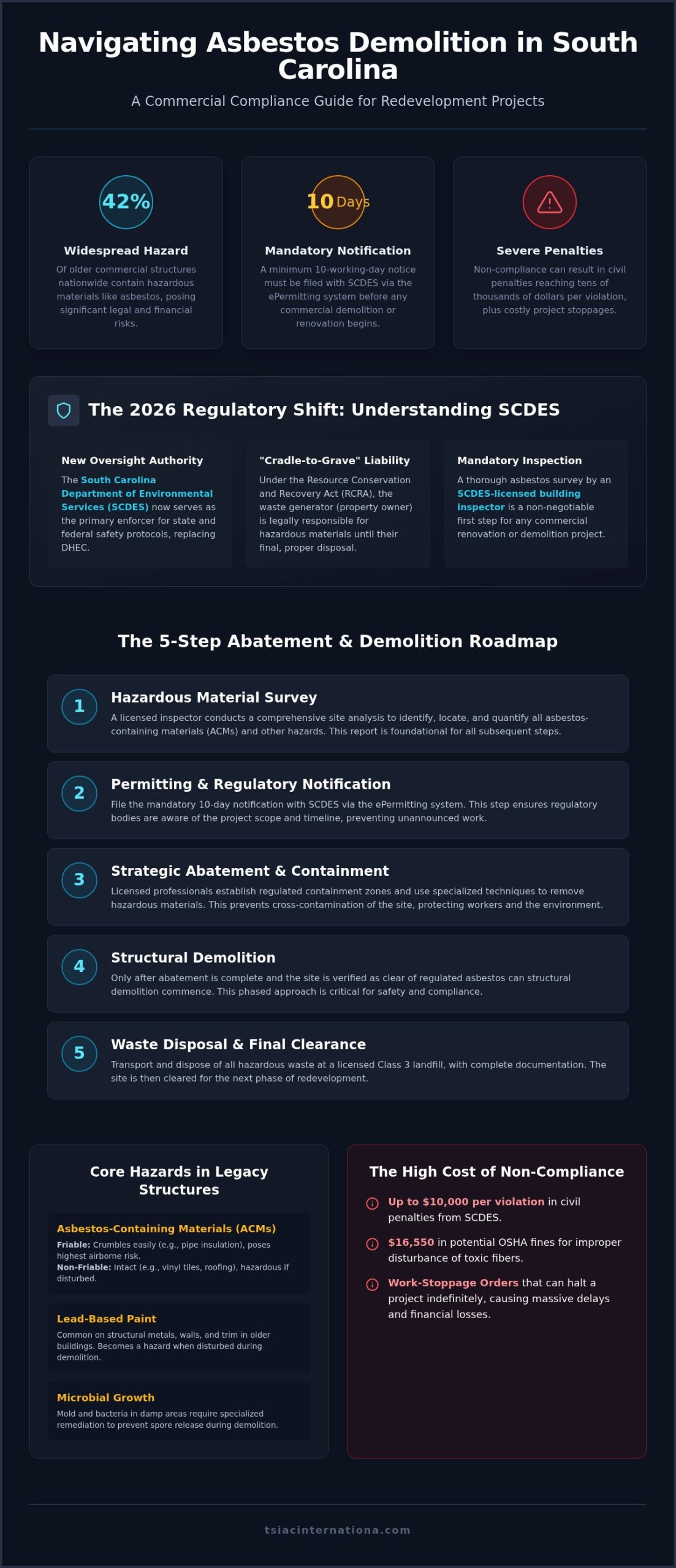
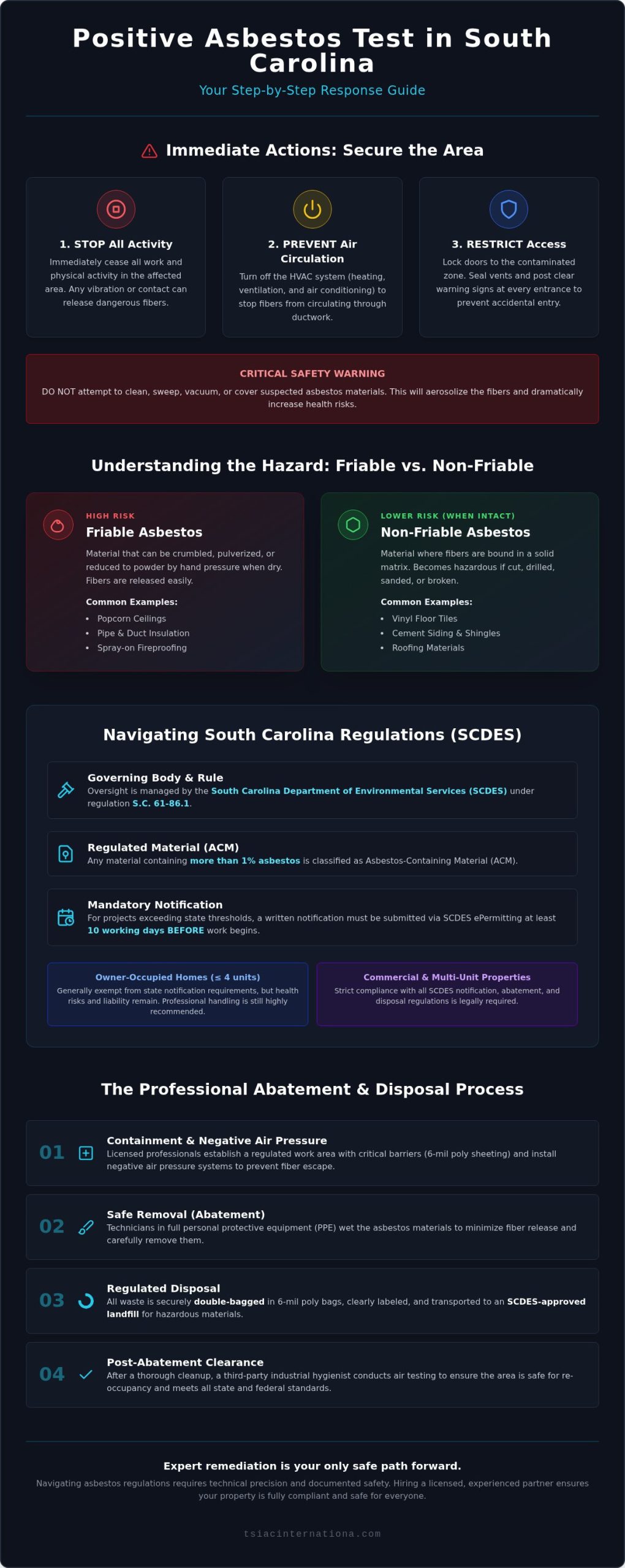
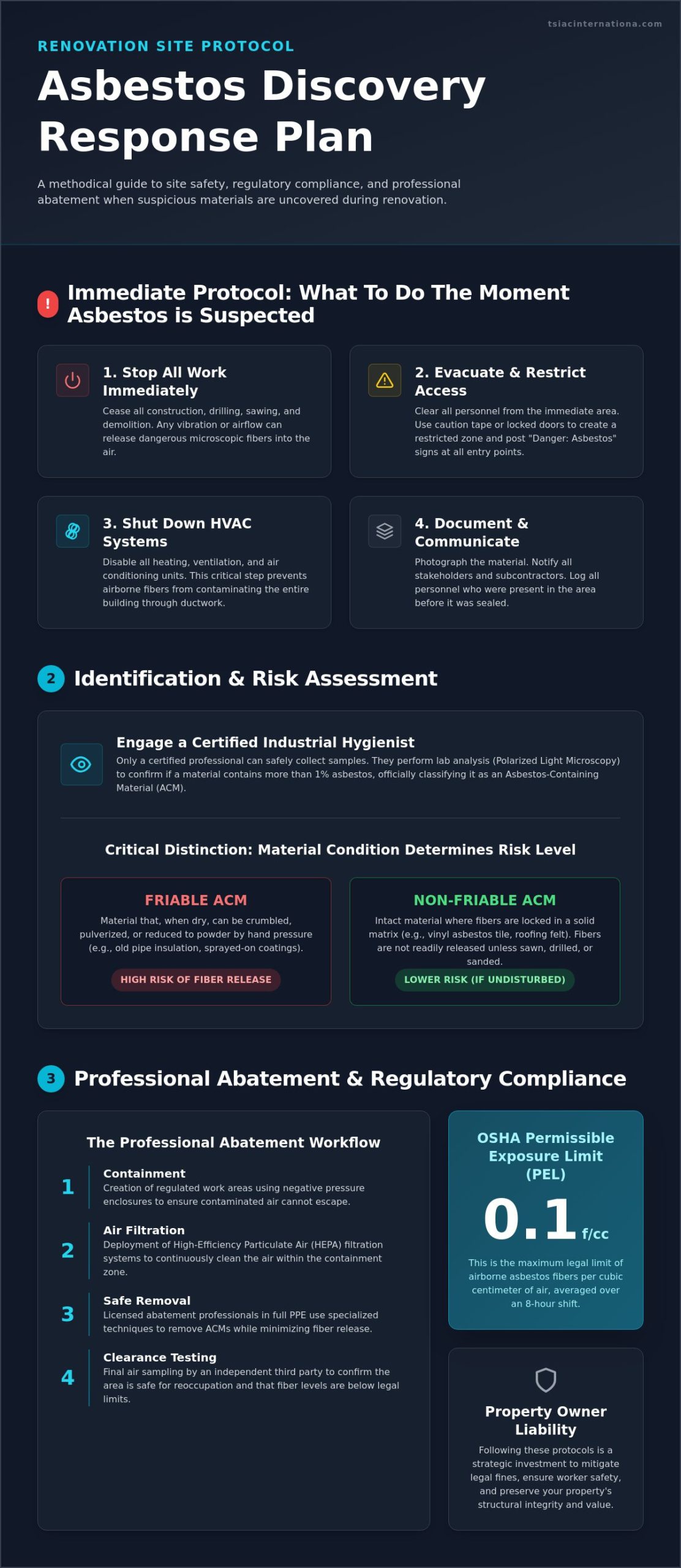
A South Carolina asbestos abatement plan is far more than a bureaucratic hurdle. It serves as a site-specific safety and execution document that outlines the precise methodology for handling hazardous materials. As of July 1, 2024, the South Carolina Department of Environmental Services (SCDES) has taken over the regulatory functions previously held by DHEC. This transition means all project designs, notifications, and licensing applications now fall under SCDES jurisdiction. While federal NESHAP standards provide a foundation, South Carolina’s Regulation 61-86.1 often exceeds these requirements to ensure a higher standard of public safety. Understanding Asbestos Abatement at this level is essential for any facility manager or property owner. Without a technical plan, you risk catastrophic fiber release and immediate stop-work orders.

Who is Regulated Under SC Law?

State law defines specific boundaries for who must comply. The “four or fewer dwelling units” exemption generally applies to private residential properties that aren’t being demolished for commercial development. However, all commercial, industrial, and public facilities must adhere to strict state protocols. In the case of residential cooperatives or condominiums, state law often treats individual units as part of a regulated facility. This means a renovation in a single condo unit may still trigger the full weight of asbestos abatement plan requirements south carolina if the building as a whole meets the regulated criteria. Every institutional building, regardless of its age, requires a thorough inspection before any activity begins.

The Consequences of Non-Compliant Planning

The penalties for failing to produce or follow a compliant plan are severe. SCDES maintains the authority to issue civil penalties that accumulate daily until the violation is corrected. These fines can quickly eclipse the original cost of the abatement project itself. Additionally, an unverified or poorly executed plan leads to significant project delays. If an inspector identifies a breach in containment or a lack of proper documentation, they’ll halt all activity on-site. This doesn’t just affect the abatement; it stalls downstream activities like selective demolition or interior gutting. Property owners carry the ultimate liability. You must ensure your contractor has developed a technical plan that reflects the specific challenges of your facility to avoid these asbestos abatement plan requirements south carolina pitfalls.

Core Components of a Compliant Abatement Project Plan

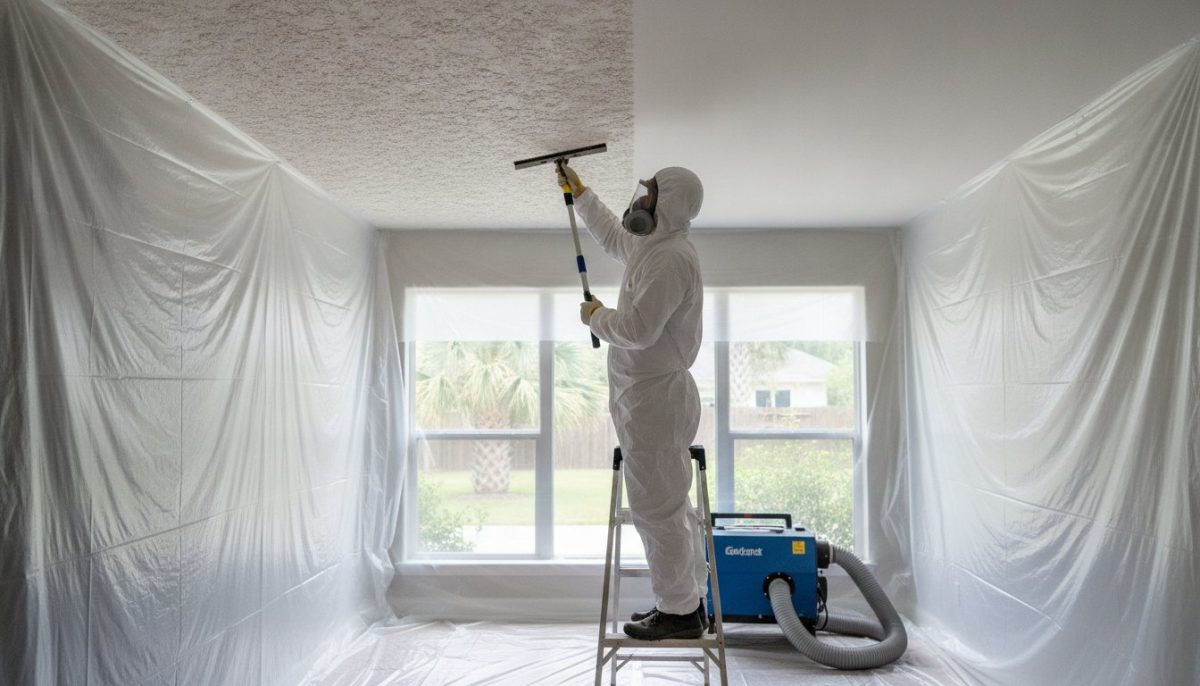
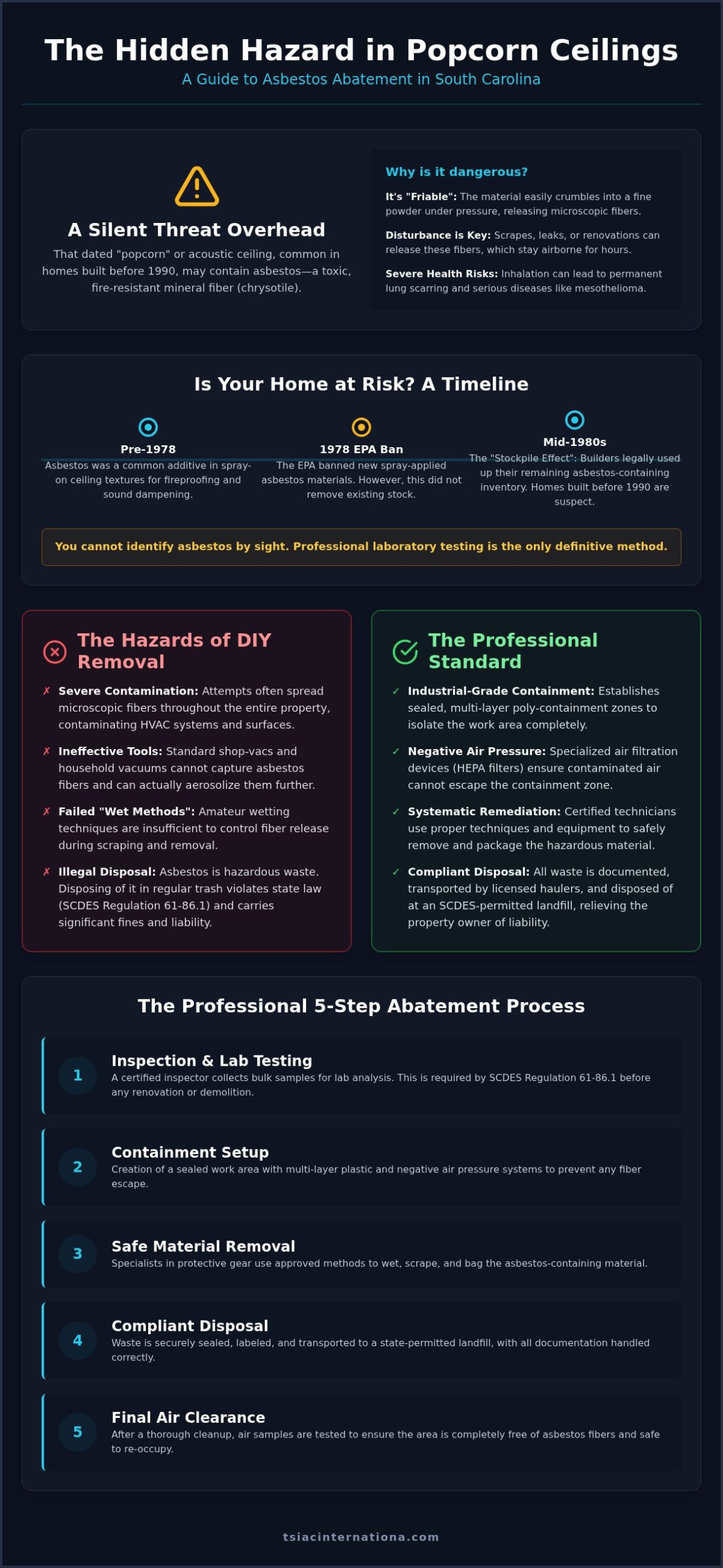
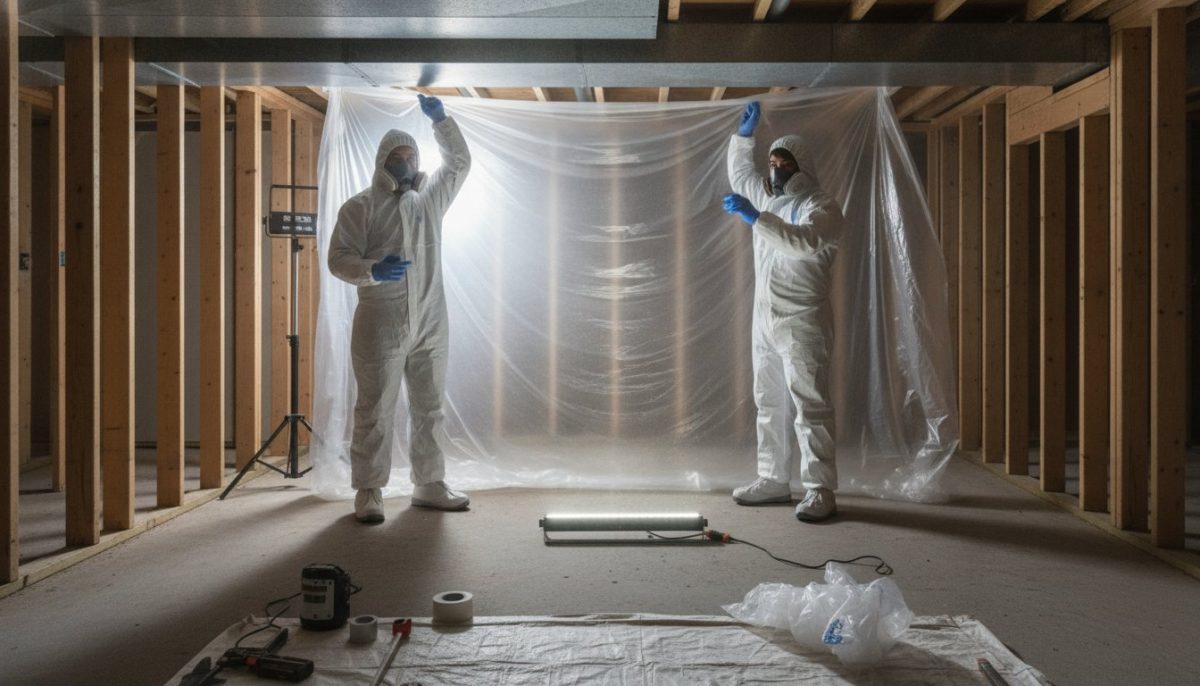
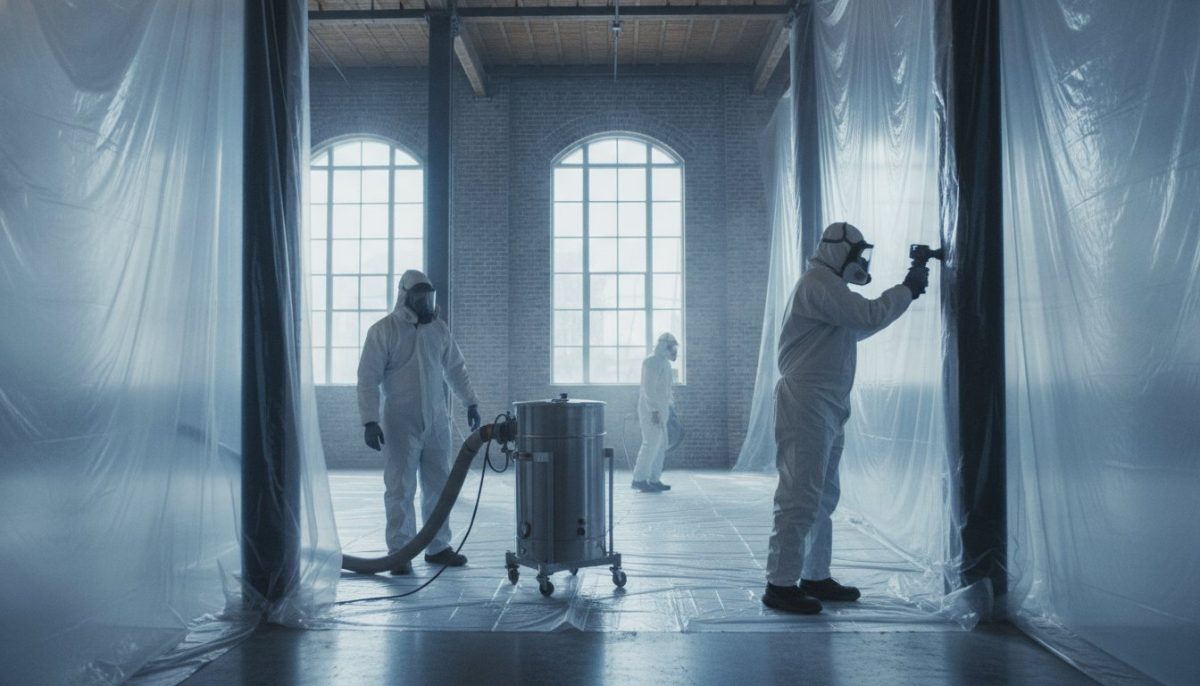
A compliant asbestos abatement plan serves as the technical blueprint for every phase of the removal process. It’s not enough to simply state that material will be removed; the document must detail the specific engineering controls used to isolate the work area. This includes the strategic placement of negative air machines equipped with HEPA filtration and the installation of manometers to monitor air pressure differentials in real time. Under the latest asbestos abatement plan requirements south carolina enforces, the plan must also specify the wet methods used during removal to suppress dust and prevent fiber release. Every plan should include a precise waste management strategy, identifying the specific SCDES-approved landfill that will accept the hazardous waste and the logistics for secure transport in leak-tight, labeled containers.

Personnel safety and site integrity depend on the quality of these documented procedures. The plan must outline the setup of a multi-stage decontamination enclosure system, which typically includes a dirty room, a shower room, and a clean room. Workers must follow strict entry and exit protocols to ensure no asbestos fibers leave the regulated area. If you’re managing a complex industrial site, ensuring your asbestos abatement strategy integrates these protection layers is vital for maintaining a safe environment and avoiding legal liability.

The Importance of the Pre-Abatement Survey

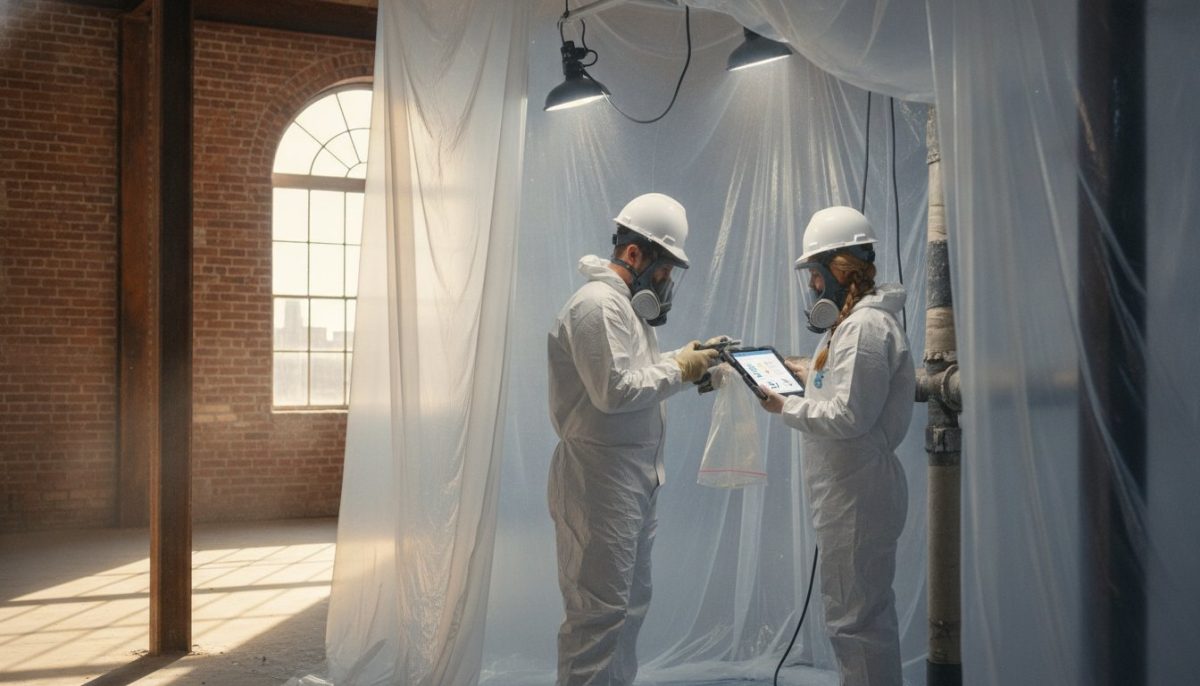
Before any work begins, a licensed South Carolina asbestos inspector must conduct a thorough survey to identify all regulated materials. This document distinguishes between friable materials, which can be crumbled by hand pressure, and non-friable materials like floor tiles or roofing. The plan uses these findings to quantify the total volume of materials. Accurate measurements are essential because they determine whether the project qualifies as a major or minor removal under Federal Asbestos Laws and Regulations and state-specific SCDES rules. Miscalculating these amounts can lead to incorrect notification filings and immediate project shutdowns.

Air Monitoring and Clearance Standards

The final component of a robust plan is the air monitoring protocol. While Phase Contrast Microscopy (PCM) is often used for daily background monitoring, Transmission Electron Microscopy (TEM) provides a more rigorous analysis for final clearance in sensitive environments like schools or high-occupancy buildings. Asbestos abatement plan requirements south carolina mandates that air sampling be performed by a licensed third-party professional who’s independent of the abatement contractor. This ensures an unbiased verification that the area is safe for re-occupancy. All sampling results, along with waste shipment records, must be compiled into a final project close-out report for your permanent records.

Regulatory Thresholds and Notification Timelines

Timing is everything when coordinating a project with the South Carolina Department of Environmental Services (SCDES). The cornerstone of the state’s regulatory framework is the 10-day notification rule. For any demolition project or NESHAP-sized asbestos removal involving at least 160 square feet, 260 linear feet, or 35 cubic feet of regulated material, you must submit a notification at least 10 working days before work starts. It’s vital to count only working days, which are Monday through Friday, excluding state holidays. This window allows SCDES inspectors to review your asbestos abatement plan requirements south carolina filings and potentially schedule a site visit to verify containment measures.

Discovering hidden asbestos during active construction requires an immediate pivot. If you encounter unexpected materials or a pipe burst occurs in a facility containing ACM, emergency notification procedures allow for a faster response. These are strictly reserved for genuine safety risks or structural threats and require immediate contact with SCDES. For standard projects, if your start date shifts or the scope of work changes, you must file an updated notification. Failing to update the state about schedule changes is one of the most common reasons for administrative fines, even if the actual abatement work is technically sound.

Friable vs. Non-Friable Notification Differences

Not all materials require the full 10-day waiting period. South Carolina distinguishes between Category I and Category II non-friable materials. Category I includes resilient floor coverings and asphalt roofing, while Category II covers items like transite siding. If you’re removing non-friable NESHAP-sized materials, the notification window is 4 working days. However, if these materials will be subjected to sanding, grinding, or mechanical chipping during demolition, they’re reclassified as Regulated Asbestos-Containing Material (RACM). At that point, they must follow the more stringent 10-day notification and handling protocols to ensure no fibers become airborne.

Waste Shipment Records (WSR)

Disposal isn’t complete until you have the signed Waste Shipment Record (WSR) in hand. This manifest acts as a legal chain of custody, tracking the material from your job site to an approved South Carolina landfill. The asbestos abatement plan requirements south carolina enforces mandate that the waste generator, the transporter, and the landfill operator all sign this document. You’re required to retain these records to prove the hazardous waste was handled according to state law. If the signed manifest doesn’t return from the landfill within 35 days, you’re obligated to investigate the delay and potentially notify SCDES of the discrepancy.

Asbestos Abatement Plan Requirements in South Carolina: 2026 Regulatory Guide

Common Pitfalls in Abatement Planning and Execution

Technical precision is the only way to navigate the pitfalls of hazardous material removal. Even the most experienced project managers can falter when addressing asbestos abatement plan requirements south carolina due to the complexity of hidden structural layers. A frequent failure point is the reliance on a surface-level survey. Asbestos-containing materials often hide within wall cavities, behind structural beams, or beneath multiple layers of sub-flooring. If these aren’t identified before the demolition crew arrives, the resulting fiber release can contaminate the entire site, leading to massive remediation costs.

Effective site preparation requires a broader view of hazardous material abatement south carolina property owners must manage. Focusing exclusively on asbestos while ignoring lead-based paint or mold growth creates a fragmented safety protocol. Inadequate containment strategies that fail to account for HVAC circulation or structural gaps lead to the cross-contamination of clean zones. Using unlicensed personnel for regulated tasks is a fast track to an immediate project shutdown. SCDES inspectors don’t hesitate to halt work when they find uncertified workers handling regulated materials.

Addressing the Selective Demolition Challenge

Executing selective demolition alongside abatement requires methodical precision. You’re often removing specific interior components while preserving the building’s structural integrity. This complicates the abatement plan because containment barriers must be adjusted as the work progresses. Coordinating these schedules is essential to avoid “dead time” where teams are on-site but unable to work due to pending clearance tests. If you need a partner who understands these complexities, our asbestos abatement experts can help streamline your project.

The Hidden Costs of Poor Planning

A single error in your 10-day notification filing can result in thousands of dollars in equipment standby fees while the crew waits for a corrected state approval. Failing to meet the specific asbestos abatement plan requirements south carolina mandates often leads to expensive regulatory fines that far outweigh the initial savings of a cheaper contractor. A surgical approach to material removal ensures only the necessary components are disturbed, protecting the project budget and timeline.

Partnering with a Licensed Professional for Regulatory Success

Selecting a contractor who maintains a deep technical understanding of asbestos abatement plan requirements south carolina enforces is the final step in securing your project’s success. Since the transition to SCDES oversight and the implementation of the updated Regulation 61-86.1 on July 1, 2024, the administrative burden on property owners has increased. A qualified contractor must hold a valid South Carolina license, which requires an annual $100 fee and proof of rigorous training for all supervisors and workers. Verifying these credentials isn’t just a best practice; it’s a necessary step to ensure that every phase of your project design meets the state’s stringent safety thresholds.

There’s a distinct operational advantage in choosing a partner who offers integrated services. By combining asbestos removal with the broader demolition process south carolina projects require, you eliminate the communication gaps that often lead to regulatory delays. Professional documentation serves as your permanent liability shield. Every air clearance report, waste shipment record, and project manifest must be meticulously archived to prove long-term compliance. In the 2026 regulatory environment, having a partner who can manage these complex data points while prioritizing environmental responsibility through recycling services is non-negotiable for large-scale industrial and commercial ventures.

The TSIAC International Approach to Compliance

Our team brings a 15-year history of navigating the specific nuances of South Carolina’s hazardous material laws. We don’t just follow the asbestos abatement plan requirements south carolina mandates; we integrate them into a broader methodology that encompasses environmental stewardship and technical precision. This experience allows us to transition seamlessly from high-risk abatement to complex structural demolition. We manage the entire debris stream, ensuring that recyclable metals and concrete are diverted from landfills whenever possible while hazardous materials are disposed of at SCDES-approved facilities with a full chain of custody.

Getting Your Project Started

Initiating a compliant project begins with a detailed site evaluation. To provide an accurate, fixed-price estimate, we’ll review your initial asbestos survey and the specific scope of your renovation or demolition. This data allows us to calculate the exact SCDES fees, which can range from a $25 minimum to a $1,000 maximum for regulated renovation projects, and determine if a licensed project designer is required for your specific square footage. Ensure your project is compliant—contact TSIAC International for an expert abatement plan today.

Securing Regulatory Excellence for Your Next Project

Navigating the technical landscape of hazardous material removal requires a disciplined approach to documentation and site safety. You’ve learned how precise notification timelines and rigorous engineering controls form the foundation of a legal abatement strategy. Adhering to the asbestos abatement plan requirements south carolina mandates doesn’t just prevent administrative fines; it ensures the long-term integrity of your facility and the safety of its future occupants. By integrating abatement with structural demolition, you can eliminate the operational friction that often stalls large-scale renovations.

TSIAC International brings over 15 years of South Carolina abatement expertise to every job site. We’re fully licensed and insured for commercial projects, providing the methodical precision necessary to handle complex 2026 regulatory updates. Our commitment to comprehensive environmental recycling protocols means your project is as sustainable as it is compliant. Secure Your Property with Professional Abatement Services and move forward with the confidence that every technical detail is under expert control. We’re ready to help you complete your project with total safety and efficiency.

Frequently Asked Questions

Do I need an asbestos abatement plan for a residential home in South Carolina?

Private residential properties with four or fewer dwelling units are generally exempt from Regulation 61-86.1 unless they’re being demolished for commercial development. However, any multifamily residential building, apartment complex, or public housing facility must strictly follow all asbestos abatement plan requirements south carolina mandates. Even in exempt homes, conducting a professional survey is a vital safety measure to prevent accidental fiber release during renovations.

How long does the SCDES notification process take?

The standard notification window for demolition or NESHAP-sized removal projects is 10 working days. You must count only state-recognized working days, which excludes weekends and official holidays. Smaller projects involving more than 25 but less than 160 square feet require a 4-day notification, while minor removals of 25 square feet or less require only 2 working days. Work cannot legally begin until these periods have fully expired.

What is the difference between friable and non-friable asbestos in a work plan?

Friable asbestos is material that can be crumbled or reduced to powder by hand pressure when dry, posing an immediate inhalation risk. Non-friable materials, like certain floor tiles or roofing, are more stable and don’t release fibers as easily under normal conditions. However, if non-friable materials are sanded, ground, or mechanically disturbed during a project, they’re reclassified as Regulated Asbestos-Containing Material (RACM) and require full containment protocols.

Can I perform asbestos removal myself if I own the commercial building?

No, you cannot legally perform asbestos abatement on a commercial or public building in South Carolina without a state license. SCDES requires that all individuals involved in the removal process, including workers and supervisors, complete accredited training and maintain active licensing. Attempting DIY removal in a regulated facility exposes you to severe civil penalties and significant health liabilities that can halt your entire project indefinitely.

What are the air monitoring requirements for asbestos projects in SC?

South Carolina law requires independent air monitoring for most abatement projects to ensure the work area is safe for re-occupancy. A licensed third-party air sampler, who’s not affiliated with the abatement contractor, must perform daily monitoring and final clearance testing. While Phase Contrast Microscopy is the standard, Transmission Electron Microscopy is often required in sensitive environments like schools to provide a more rigorous analysis of air quality.

How do I verify if an asbestos contractor is licensed in South Carolina?

You can verify a contractor’s credentials by requesting their SCDES license number or checking the state’s online regulatory database. Every licensed professional must carry a state-issued photo ID card that confirms their specific certification, such as Supervisor or Air Sampler. Ensure the company has paid the mandatory $100 annual contractor licensing fee and that their insurance coverage specifically includes asbestos liability before signing any work agreements.

What happens if asbestos is found during a demolition already in progress?

If you encounter suspected asbestos during active demolition, you’re legally required to stop work immediately and secure the site. You must have a licensed inspector test the material to confirm its status. If the results are positive, you must file an emergency notification or amend your existing asbestos abatement plan requirements south carolina filings. Work can only resume after the hazardous material is professionally removed and the area passes a final air clearance test.

Are there specific landfills in South Carolina that accept asbestos waste?

Yes, only specific Class 2 or Class 3 landfills permitted by SCDES can accept asbestos waste. The material must be double-bagged in 6-mil polyethylene bags, properly labeled, and accompanied by a signed Waste Shipment Record. It’s your responsibility to ensure the waste is transported by a licensed carrier to a permitted facility that provides a signed manifest as proof of legal disposal for your permanent records.

Avoiding Demolition Project Delays: A 2026 Strategic Guide for Property Owners

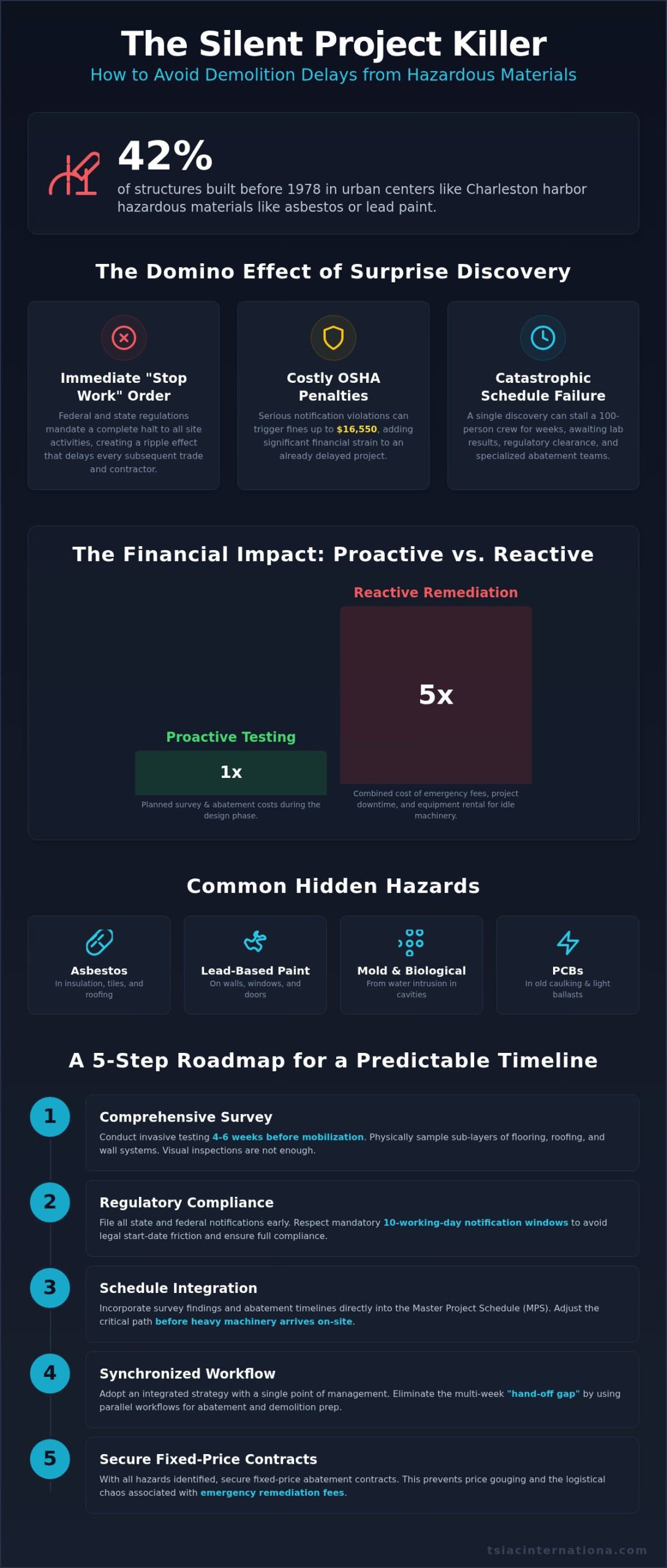
What if the greatest threat to your 2026 redevelopment isn’t the physical demolition itself, but the invisible regulatory and structural variables…

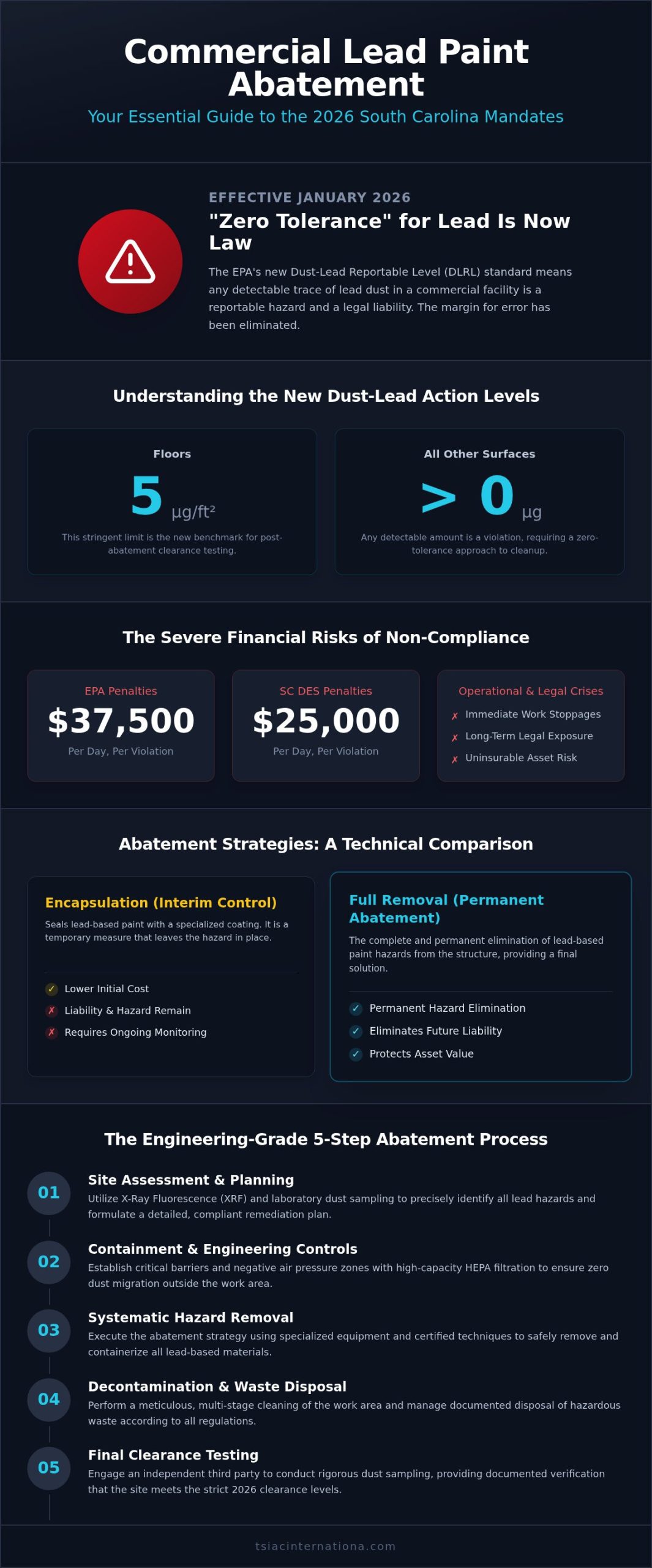
What if the greatest threat to your 2026 redevelopment isn’t the physical demolition itself, but the invisible regulatory and structural variables hidden within the walls? Most property owners assume the wrecking ball dictates the pace, yet the reality is that avoiding demolition project delays depends almost entirely on technical foresight and meticulous pre-site forensics. In an era where the EPA’s 2026 lead-based paint hazard rules now define any detectable level of lead as a hazard, a single overlooked detail can freeze a site for weeks.

We recognize the immense pressure of managing high-stakes projects where unexpected hazardous materials or permit bottlenecks with environmental agencies can derail even the best-laid plans. It’s a complex environment where structural surprises in older buildings often lead to cascading costs and missed deadlines. This guide provides the strategic framework you need to master the current regulatory landscape and maintain a predictable project timeline. You’ll learn how to navigate the 65% CALGreen recycling requirements and manage hazardous material abatement with the precision required to keep your project moving forward without last-minute surprises.

Key Takeaways

  • Adopt a forensic pre-site survey methodology to identify hidden site variables that standard blueprints often fail to document.
  • Navigate the 2026 regulatory landscape by prioritizing NESHAP and OSHA compliance as a core strategy for avoiding demolition project delays.
  • Mitigate the technical and structural risks inherent in selective demolition and interior gutting through precise engineering oversight.
  • Utilize on-site material sorting and recycling as logistical tools to prevent debris accumulation from creating operational bottlenecks.
  • Secure project timelines by partnering with a single-source contractor capable of integrating hazardous material abatement with structural execution.

The Forensic Approach to Preventing Demolition Project Delays

Demolition project delays are rarely the result of mechanical failure. They are the logical conclusion of failed pre-site forensics. When a property owner views a structure only through the lens of basic blueprints, they often overlook the hidden site variables that eventually halt progress. True schedule certainty requires a forensic pre-site survey that treats the building as a complex technical puzzle rather than a simple obstacle. This investigation goes deeper than a visual walk-through; it involves analyzing the structural DNA of the asset to identify risks before they manifest as work stoppages.

This methodical approach differentiates reckless smashing from engineered removal. While a less experienced crew might focus on rapid impact, a professional team with over 15 years of industry experience identifies red flags before the first machine arrives on site. This deep technical vetting is essential for avoiding demolition project delays because it accounts for the structural and environmental realities that blueprints often omit. Understanding a comprehensive demolition process overview reveals that the planning phase is where the most significant time savings are realized. By investing in front-end forensics, you ensure that the physical execution remains a controlled, predictable process.

The Pre-Demolition Site Audit

A successful audit begins with verifying structural load-bearing points. In older assets, previous renovations may have altered the original load paths without updating the documentation. Identifying these anomalies prevents sudden work stoppages during selective removal. We also prioritize the early identification of utility disconnect requirements. Utility companies often present logistical bottlenecks; failing to coordinate these shut-offs weeks in advance is a primary cause of stalled starts. Finally, the audit must document site access constraints. Heavy machinery requires specific clearances and floor loading capacities that must be confirmed to maintain the project’s flow without logistical friction.

Engineering the Removal Sequence

The choice between a top-down approach and a surgical sequence depends on the project’s specific constraints. For high-stakes projects involving commercial interior gutting services, the removal sequence must be engineered to protect the building’s core systems. This requires tight coordination with metal framing and drywall removal schedules to ensure that debris doesn’t accumulate and block progress. We always incorporate a buffer for unforeseen structural conditions in older assets. By anticipating that a building will deviate from its plans, we can maintain the timeline even when surprises emerge. This level of foresight is the only way to ensure that avoiding demolition project delays remains a reality rather than a hope.

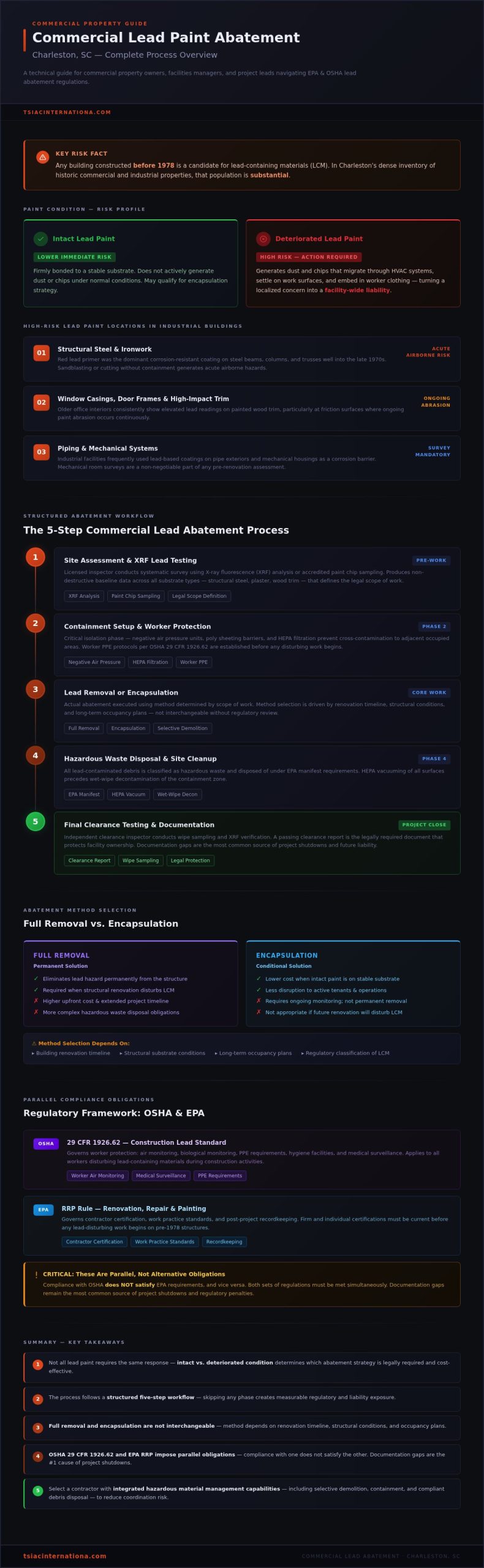
Regulators are the ultimate gatekeepers of your development timeline. In the demolition sector, asbestos and lead abatement represent the primary cause of unplanned project shutdowns. Failure to secure proper clearances isn’t just a safety risk; it’s a legal liability that triggers immediate work-stop orders. Adhering to OSHA asbestos regulations and NESHAP standards is non-negotiable for avoiding demolition project delays. These frameworks dictate how materials are handled, from initial identification to final disposal.

By utilizing specialized asbestos removal services, property owners shift the burden of compliance to experts who understand the nuances of 2026 enforcement. For instance, as of June 2026, EPA civil penalties for violations of the Renovation, Repair and Painting (RRP) Rule can reach up to $41,093 per violation per day. This makes third-party air monitoring essential. It provides the objective data needed for final project sign-off, ensuring the site is safe for subsequent trades and preventing the inspector-led halts that plague less prepared sites.

The Abatement Critical Path

Timing is everything. Hazardous material surveys must be completed at least 3-4 weeks before mobilization. This window allows for lab analysis and the design of containment zones that won’t disrupt adjacent operations. Effective project management ensures that hazardous material abatement is fully executed before structural teams arrive. If these phases overlap without strict separation, the risk of cross-contamination increases. This leads to massive delays and costly remediation efforts that could’ve been avoided with a sequenced approach.

Documentation as a Speed Tool

Paperwork is a logistical engine. Maintaining a digital trail of disposal manifests for toxic waste isn’t just about compliance; it’s about speed. When local authorities conduct audits, having organized regulatory filings prevents administrative holds. Clear documentation proves that all materials were handled according to the latest 2026 standards, such as the EPA’s redefined lead-based paint hazard rules. Fixed-price abatement contracts also offer a strategic advantage, providing budget stability while ensuring the contractor assumes the risk of regulatory precision. Partnering with a team that prioritizes transparency in their hazardous material abatement processes is the most reliable way to maintain your schedule.

Managing Structural Surprises in Selective Demolition

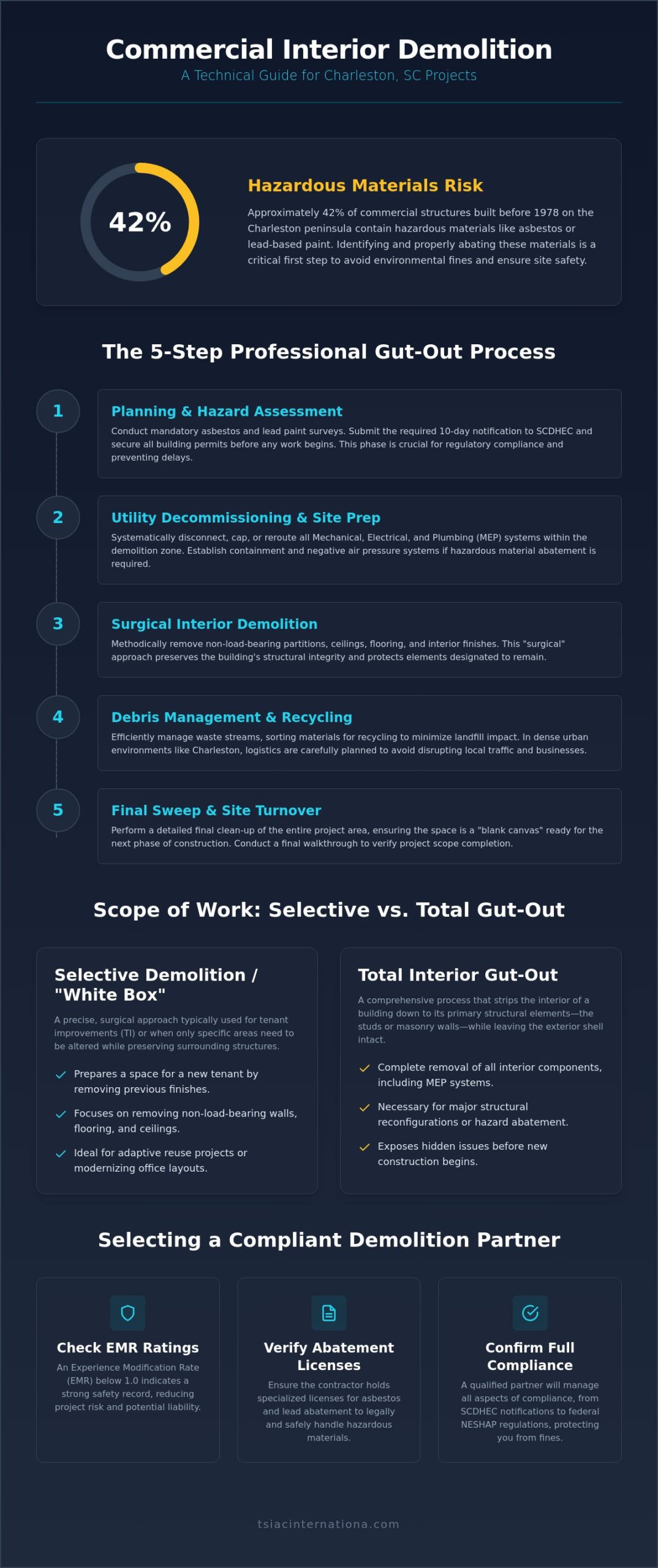
Selective demolition represents a significantly higher risk profile than total teardowns because it requires the surgical removal of specific components while maintaining the structural integrity of the remaining asset. In a total demolition, the sequence ends in a clear site. In contrast, avoiding demolition project delays during selective work depends on your contractor’s ability to navigate “ghost” utilities and undocumented structural modifications. These are the pipes, conduits, or structural supports added during previous renovations that never made it onto the official blueprints. Hitting an active, undocumented line doesn’t just stop work; it triggers emergency repairs and safety audits that can freeze a schedule for days.

Precision is paramount when executing commercial interior gutting services. Tasks like acoustic ceiling and interior partition removal might seem straightforward, but they often conceal the building’s vital MEP (Mechanical, Electrical, Plumbing) systems. A methodical approach to C&D materials management ensures that as these components are stripped away, the debris is handled without damaging the core infrastructure. This level of care is what keeps high-stakes projects on schedule, as it prevents the accidental damage that leads to costly reconstruction.

The Selective Demolition Protocol

  • Step 1: Map all active MEP systems. Before the first wall comes down, we use advanced detection tools to verify the location of all live utilities, ensuring that shut-offs are confirmed and bypasses are in place.
  • Step 2: Install temporary shoring. When load-bearing elements are near the work zone, temporary structural support systems are installed to prevent any unintended shifting or settling of the building.
  • Step 3: Implement vibration monitoring. For projects in occupied buildings or sensitive urban environments, real-time sensors track vibrations to protect adjacent structures and ensure compliance with local noise and safety ordinances.

Interior Gutting Efficiency

Stripping a space to the studs is the foundation of successful tenant improvements. This methodical process requires coordinating concrete removal without compromising the integrity of the slab. We prioritize managing dust and noise, especially in occupied commercial environments where business continuity is a priority. By isolating the work zone with high-grade containment and using specialized equipment for interior partition removal, we maintain a clean, professional site. This disciplined execution is the most effective strategy for avoiding demolition project delays, ensuring that the next phase of metal framing and drywall installation can begin exactly when planned.

Avoiding Demolition Project Delays: A 2026 Strategic Guide for Property Owners

Logistics and Debris Management: Recycling as an Efficiency Tool

Debris accumulation is a physical bottleneck that directly threatens project timelines. When a site becomes congested with mixed waste, the movement of heavy machinery is restricted, and safety hazards multiply. In the 2026 regulatory environment, where mandates like the 2025 CALGreen Code require a minimum of 65% of nonhazardous debris to be recycled, managing waste isn’t just a compliance task. It’s a logistical strategy. By implementing a rigorous on-site material sorting protocol for wood, metal, and plastic, we ensure that the work zone remains clear and operational. This disciplined approach is fundamental to avoiding demolition project delays, as it prevents the “clutter-stalls” that often occur when debris management is treated as an afterthought.

Environmental responsibility has evolved into a significant logistical advantage. With national average landfill tipping fees for construction material reaching $65.84 per ton, and even higher rates in strictly regulated zones, diverting waste through recycling is a cost-control measure. The demolition process relies heavily on a synchronized hauling cycle. If the outbound flow of materials isn’t matched to the speed of the wrecking ball or the interior gutting crew, the site reaches a standstill. We treat every ton of recovered material as a logistical unit that must be moved with precision to maintain the project’s momentum.

The Value of Material Recovery

On-site sorting allows for the rapid recovery of high-value materials like metal framing. By separating these components at the point of removal, we create secondary value streams that can offset overall disposal costs. Managing heavy debris, such as concrete and brick, requires a different tactical approach. We often utilize on-site crushing to transform these materials into reusable fill, which eliminates the need for hundreds of hauling trips. This reduction in landfill impact doesn’t just lower fees; it keeps the site perimeter clear for incoming trades, ensuring that avoiding demolition project delays remains the operational standard.

Fleet and Machinery Logistics

Efficiency depends on matching the right machinery to the specific scale of the site. Using oversized equipment in a tight interior gutting project leads to maneuverability issues, while undersized machinery extends the timeline unnecessarily. We maintain continuous hauling cycles by coordinating with a dedicated fleet of roll-off containers and transport vehicles. This ensures that as concrete removal or selective demolition progresses, the waste is immediately staged and removed. This logistical synchronization is what allows us to guarantee schedule certainty even in complex, high-density urban environments.

To ensure your next project benefits from this level of logistical precision, explore our integrated recycling and demolition services to keep your site clear and on schedule.

Partnering with a Methodical Contractor for Schedule Certainty

The final and most critical component in avoiding demolition project delays is the selection of a contractor whose operational philosophy mirrors the technical complexity of the asset. Many property owners are drawn to “fixed-price” contracts, yet without deep technical vetting, these agreements often mask a lack of foresight. A low-bidder who fails to account for the forensic variables discussed in previous sections will inevitably issue change orders or halt work when reality deviates from the blueprints. Schedule certainty is built on a foundation of methodical precision, not just a contractual figure. It requires a partner who treats the demolition as an engineering challenge rather than a simple labor task. Just as technical precision is vital on-site, international developers or firms managing complex assets may require specialized legal counsel from Tosolini, Toniutti & Partners to navigate the complexities of US-Italy cross-border business operations.

As you prepare your operations for the 2026 regulatory environment, you may also want to visit Business With AI Strategist to ensure your internal business strategy is equally forward-thinking and efficient.

Choosing a single-source partner for both structural demolition and hazardous material abatement is a strategic move that eliminates the friction between separate trades. When one entity manages the entire scope, the finger-pointing that typically occurs during discovery phases is removed. TSIAC International leverages over 15 years of industry experience to provide this level of project predictability. By integrating the removal of acoustic ceilings and interior partitions with the abatement of regulated materials, we ensure a seamless transition to the next phase of construction. This continuity is what allows general contractors and property owners to meet their 2026 development milestones without the standard setbacks associated with fragmented project management.

The TSIAC Difference

  • Deep Professionalism: We maintain a fegyelmezett approach to hazardous material containment and removal, ensuring that every site meets the most stringent 2026 safety standards.
  • Regulatory Command: Our commitment to compliance means we don’t just follow the rules; we document every step to provide property owners with a bulletproof digital trail.
  • Proven Reliability: With a track record spanning residential homeowners, commercial GCs, and government agencies, we understand the unique pressures of various project scales.

Next Steps for Your Project

Moving from a state of uncertainty to a controlled timeline starts with a comprehensive site assessment. This investigation evaluates the specific scope of work, determining where structural removal ends and selective demolition begins. By identifying potential bottlenecks in utility disconnects or hazardous material staging early, we can build a schedule that accounts for the unexpected. Evaluating your asset’s structural DNA before mobilization is the only way to guarantee that your redevelopment stays on track.

Don’t leave your timeline to chance. Secure your project schedule and ensure full regulatory compliance by partnering with the experts at TSIAC International for your next high-stakes demolition or abatement project.

Securing Your 2026 Project Timeline

Successful site clearance in 2026 is a matter of engineering and regulatory mastery rather than raw force. We’ve explored how forensic pre-site surveys and integrated hazardous material abatement are the only reliable methods for avoiding demolition project delays. By prioritizing on-site material recovery and anticipating structural anomalies during selective demolition, you transform a high-risk phase into a predictable milestone. The complexity of modern environmental mandates requires a partner who views every challenge through a lens of technical precision and safety.

TSIAC International brings over 15 years of industry experience to every project, specializing in the complex technical requirements of asbestos and lead abatement. Our commitment to comprehensive recycling practices ensures your site remains clear and compliant with the latest environmental mandates. We manage the technical friction so you can focus on the next phase of development. Your project’s success is built on the precision of its first phase. Contact TSIAC International for a Methodical Demolition Strategy and ensure your redevelopment stays on schedule.

Frequently Asked Questions

What is the most common cause of demolition project delays?

The most common cause of demolition project delays is the discovery of undocumented hazardous materials or structural discrepancies that weren’t identified during the planning phase. When asbestos, lead, or “ghost” utilities are found after work has begun, the site must be shut down for immediate remediation. Conducting a forensic pre-site survey is the most effective way to identify these variables and account for them in the initial schedule.

How long does the asbestos abatement process typically take?

The asbestos abatement process typically requires three to four weeks for the initial survey, laboratory analysis, and regulatory notification period. The actual removal phase depends on the volume of regulated material and the complexity of the containment zones required. Coordinating this process well in advance of structural mobilization is essential for maintaining a predictable project timeline and avoiding administrative bottlenecks.

Can I start demolition before the hazardous material survey is complete?

No, you cannot legally begin any demolition or interior gutting activities until a comprehensive hazardous material survey is finalized and all identified risks are remediated. Federal NESHAP regulations and OSHA standards require these inspections to protect workers and the public from toxic exposure. Attempting to bypass this step triggers immediate work-stop orders and can lead to civil penalties exceeding $40,000 per violation.

How do selective demolition risks differ from total structural removal?

Selective demolition risks are significantly higher because they require surgical precision to remove specific components while preserving the building’s core structural integrity and active MEP systems. Total structural removal allows for a clean slate, whereas selective work involves navigating undocumented modifications and hidden utilities. This complexity necessitates higher engineering oversight and vibration monitoring to protect the remaining asset and adjacent operations.

What permits are required for a large-scale commercial demolition project?

Large-scale commercial projects require a primary demolition permit from the local building department, alongside environmental notifications for asbestos and lead. You must also secure utility abandonment permits for gas, water, and electricity disconnects. Depending on the location, additional permits for site access, dust control plans, and sidewalk closures may be mandatory to ensure full regulatory compliance during the execution phase.

Is on-site recycling of demolition debris more expensive than landfilling?

On-site recycling is often more cost-effective than landfilling when you factor in the reduction of tipping fees and potential offsets from high-value material recovery. With national average landfill fees for construction debris reaching $65.84 per ton, diverting concrete, metal, and wood through on-site sorting significantly lowers hauling costs. It also ensures compliance with 2026 mandates that require high debris diversion rates for commercial projects.

How does weather impact the demolition schedule?

Weather impacts the demolition schedule primarily through high winds and heavy precipitation, which can compromise dust control and machinery stability. High winds often halt high-reach operations to prevent the spread of debris, while heavy rain creates mud that complicates site logistics. Professional contractors build weather buffers into their planning and use specialized equipment to maintain the schedule during all but the most extreme conditions.

What should I look for when vetting a demolition contractor?

When vetting a contractor, prioritize those with at least 15 years of industry experience and a clean safety record in hazardous material abatement. It’s vital to choose a single-source partner who can manage both the environmental remediation and the physical demolition. This integration is the most reliable strategy for avoiding demolition project delays, as it ensures a seamless transition between project phases and centralizes accountability.

Professional Asbestos in Floor Tiles Removal: A Comprehensive 2026 Guide

Did you know that flooring installed in buildings constructed as late as the year 2000 still carries a high probability of harboring hazardous…

Did you know that flooring installed in buildings constructed as late as the year 2000 still carries a high probability of harboring hazardous fibers? When you’re facing a renovation, the discovery of old vinyl or the stubborn black mastic adhesive underneath can feel like an insurmountable legal and health obstacle. We understand the concern that comes with asbestos in floor tiles removal, especially when the safety of your occupants and the integrity of your property are at stake. It’s not just a cleanup task; it’s a precise engineering operation designed to prevent microscopic contamination from entering the air you breathe.

You’ve likely felt the pressure of managing strict EPA mandates and OSHA exposure limits while trying to keep your project on schedule. This guide eliminates that uncertainty by providing a technical roadmap for modern abatement protocols in 2026. You’ll gain a clear understanding of how to identify Presumed Asbestos Containing Material (PACM), manage specialized removal equipment, and ensure full regulatory compliance. We’ll walk through the entire process from initial testing to final air clearance, giving you the confidence that your site is verified safe for re-occupancy.

Key Takeaways

  • Learn why visual inspections are insufficient for diagnosing hazardous flooring and how to identify Presumed Asbestos Containing Material (PACM) in structures built before 2000.
  • Understand the chemical binding of asbestos in vinyl resins and the technical requirements for remediating the underlying “black mastic” cutback adhesive.
  • Master the industry-standard protocols for professional asbestos in floor tiles removal, utilizing wet methods and specialized tools like infrared heat to maintain OSHA compliance.
  • Navigate the legal and liability landscape of 2026, including the mandatory requirement for pre-demolition asbestos surveys and hazardous waste disposal standards.
  • Evaluate potential abatement partners based on safety metrics like EMR ratings and the operational benefits of integrated abatement and structural demolition services.

Identifying Asbestos in Floor Tiles: Risks and Indicators

Vinyl Asbestos Tile (VAT) represents one of the most common legacy materials encountered during modern renovation projects. From the 1930s through the late 1980s, asbestos was a preferred additive in flooring manufacturing because it provided exceptional durability, chemical resistance, and thermal insulation. These tiles were installed in millions of properties, ranging from high traffic commercial corridors to residential basements. While these materials were engineered to last, their presence today requires a rigorous approach to safety. For those seeking a foundational perspective on the mineral itself, Understanding Asbestos helps clarify why these fibers were so widely utilized in construction materials.

A definitive diagnosis of VAT cannot be achieved through visual inspection alone. Many property owners mistakenly assume that if a tile isn’t crumbling, it’s safe to handle. This is a dangerous misconception. Asbestos fibers are microscopic and odorless; they don’t provide any sensory warning when they’re present in the air. The chemical binding of asbestos within vinyl resins originally classified these tiles as non-friable, meaning the fibers were locked in a solid matrix. However, decades of foot traffic, water intrusion, or the use of harsh cleaning chemicals can cause the material to become brittle. When the tile reaches this state, any mechanical force can transition it into a friable condition, where hazardous fibers are easily released. This is why professional asbestos in floor tiles removal is the only way to ensure the polymer matrix isn’t disturbed in a way that contaminates the entire building.

Visual Indicators and Common Dimensions

While lab testing is the only way to confirm asbestos content, certain physical characteristics serve as high probability indicators. The most classic sign is the 9×9 inch tile format. While not every 9×9 tile contains asbestos, the vast majority produced during the mid-century era do. We also frequently identify asbestos in 12×12 inch tiles from the mid-to-late 20th century. You should look for an “oily” or dull texture on the surface of aged flooring. When these tiles break, they often snap cleanly rather than bending, revealing a dark or gray interior. If you see a black, tar-like adhesive peeking through the seams, you’re likely looking at asbestos-containing cutback mastic, which requires its own specialized remediation protocol.

The Health Risks of Disturbed Fibers

The primary danger arises when the material is subjected to mechanical disturbance. Activities like sanding, grinding, or aggressive scraping pulverize the vinyl and the asbestos fibers within. Once airborne, these respirable fibers can be inhaled and lodged deep within lung tissue. Because the body cannot break down these mineral shards, they cause chronic inflammation and cellular damage over time. This exposure is directly linked to severe long-term health conditions, including asbestosis and mesothelioma. To understand how these risks are managed under specific state guidelines, you can review our guide on Asbestos Removal in South Carolina: The Complete 2026 Safety & Regulatory Guide. Proper asbestos in floor tiles removal focuses on containment and saturation to ensure these invisible threats never become airborne.

Understanding the Composition: Vinyl Asbestos Tiles (VAT) and ‘Black Mastic’

The structural integrity of Vinyl Asbestos Tiles (VAT) relies on a dense matrix of vinyl resins and chrysotile fibers. This chemical binding was engineered to create a permanent, wear-resistant surface capable of withstanding extreme pressure and chemical exposure. However, the complexity of asbestos in floor tiles removal extends far beyond the tiles themselves. The real challenge often lies beneath: the black mastic adhesive. This asphalt-based “cutback” adhesive was the industry standard for decades. It doesn’t just sit on top of the subfloor; it penetrates the microscopic pores of concrete substrates, creating a long-term contamination risk if handled incorrectly.

Leaving this adhesive behind while only removing the top layer of tiles creates a latent hazard for future property owners. If a general contractor later attempts to level the floor with a standard grinder, they’ll inadvertently release high concentrations of respirable fibers into the environment. This is why professional abatement must address both the primary material and the secondary bonding agent. Ensuring the site is truly safe for re-occupancy requires a deep cleaning of the substrate that general demolition crews aren’t equipped to handle. For projects requiring comprehensive site preparation, partnering with an experienced asbestos abatement specialist ensures every layer of risk is managed with technical precision.

The ‘Black Mastic’ Problem: Asbestos in Adhesives

Cutback adhesive is a bitumen-based product that frequently contains a higher percentage of asbestos than the tiles it secured. Unlike the tiles, which eventually become brittle and non-reactive, mastic often remains semi-pliable or “sticky” for decades. This chemical state makes it impossible to remove through standard mechanical means without specialized intervention. Standard floor grinders are strictly prohibited for use on asbestos-containing mastic. The friction generates intense heat and dust, turning a non-friable adhesive into an immediate airborne threat. Professional remediation requires chemical strippers or specialized mechanical scraping under HEPA-filtered negative pressure containment to prevent fiber migration.

VAT vs. Modern Vinyl Flooring

Distinguishing between VAT and modern luxury vinyl tile (LVT) requires an understanding of material science. Modern products are designed for flexibility and often lack the mineral density of their predecessors. VAT is notoriously rigid. Professionals often use a “snap test” in controlled environments to identify the material. VAT will snap with a sharp, clean break, while modern vinyl typically bends or tears. Because modern flooring lacks the hazardous mineral content, the removal protocols are vastly different. If you’re uncertain about the composition of your flooring, consulting a professional for hazardous material abatement in South Carolina is a critical first step before any demolition begins.

Professional Abatement vs. DIY: Safety, Liability, and Regulations

The decision between professional intervention and a DIY approach often comes down to a fundamental misunderstanding of the physics involved in asbestos in floor tiles removal. Professional abatement teams utilize the “wet method,” a technical protocol where amended water or specialized surfactants are applied to saturate the material. This process ensures that any fibers disturbed during the removal remain trapped in a liquid state, preventing them from becoming respirable. In contrast, DIY attempts frequently involve dry scraping, prying, or even power-sanding. These actions immediately pulverize the vinyl matrix and the underlying mastic, creating an invisible cloud of hazardous dust that can linger in a property for weeks.

Legal liability is another factor that property owners must weigh heavily. For commercial and multi-unit residential properties, federal law requires a comprehensive asbestos survey before any demolition or renovation work begins. Operating without this documentation isn’t just a safety risk; it’s a regulatory violation that can result in significant fines and project shutdowns. Licensed contractors maintain a strict chain-of-custody for all hazardous waste, ensuring that contaminated materials are transported in double-bagged, labeled containers to authorized landfills. A DIY project lacks this documented trail, potentially leaving the property owner liable for environmental contamination long after the project ends.

Regulatory Compliance and National Standards

Abatement activities are governed by a complex framework of EPA and OSHA regulations designed to protect both workers and the public. Central to these is the National Emission Standards for Hazardous Air Pollutants (NESHAP), which dictates how asbestos-containing materials must be handled during demolition. We work alongside certified industrial hygienists who provide third-party oversight, conducting air monitoring during the project and final clearance testing afterward. This level of technical scrutiny ensures that the work environment remains within the OSHA permissible exposure limit of 0.1 fibers per cubic centimeter. These standards are not suggestions; they are the baseline for professional hazardous material management in 2026.

The Risks of Secondary Contamination

The most significant hidden cost of an improper removal is secondary contamination. When fibers are released during a failed DIY attempt, they don’t simply settle on the floor. They are tracked into carpets, absorbed by upholstered furniture, and pulled into the HVAC system. Once asbestos enters the ductwork, it can be distributed throughout the entire building every time the climate control system cycles. Remediating a building after such an event requires a massive HEPA-vacuuming and air-scrubbing operation that far exceeds the cost of an initial professional abatement. To understand the broader context of property preparation and safety, you should examine The Demolition Process in South Carolina: A 2026 Comprehensive Guide. Choosing a professional for asbestos in floor tiles removal is a decision rooted in long-term risk mitigation and financial stability.

Professional Asbestos in Floor Tiles Removal: A Comprehensive 2026 Guide

The Professional Asbestos Floor Tile Removal Process

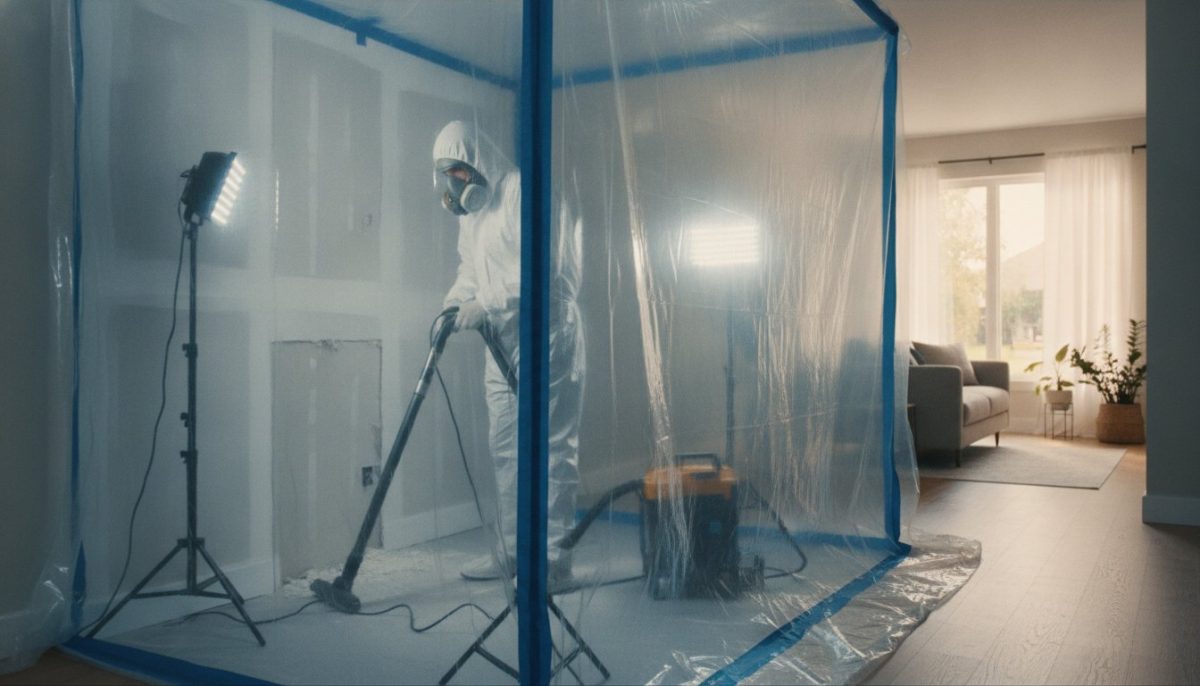
The mobilization phase of a professional abatement project is a rigorous engineering exercise. Before a single tile is lifted, the work area is isolated using 6-mil polyethylene sheeting to create airtight barriers. We install multi-stage airlocks at all entry and exit points to ensure that no fibers escape the regulated area. High-visibility warning signage is posted to alert personnel and the public that a hazardous material remediation is in progress. This systematic approach to asbestos in floor tiles removal ensures that the risk is contained from the moment our team arrives on site.

Once the environment is secured, our technicians utilize specialized tools designed to minimize material breakage. Long-handled floor scrapers allow for controlled prying, while infrared heat machines can sometimes be used to soften the adhesive, allowing tiles to be lifted intact. Every piece of debris is immediately placed into 6-mil poly bags, which are then double-bagged and sealed with duct tape. Each container receives a specific hazardous material label before it leaves the containment area. If you are planning a renovation that involves legacy flooring, our team provides the professional asbestos abatement services required to keep your project compliant and your air clean.

Containment and Environmental Controls

Environmental control is maintained through the use of negative air pressure machines equipped with HEPA filtration. These units pull air from the work area and vent it outside, creating a vacuum effect that prevents cross-contamination to adjacent rooms. To further suppress dust, we use amended water containing specialized surfactants. These chemicals reduce the surface tension of the water, allowing it to penetrate the vinyl matrix more effectively than standard water. This constant saturation is the primary defense against fiber release during the physical removal process.

Precision Removal and HEPA Filtration

The technical difference between a HEPA-filtered vacuum and a standard shop-vac is a matter of life safety. A true HEPA filter captures 99.97% of particles as small as 0.3 microns, whereas a standard vacuum will simply exhaust asbestos fibers back into the room. During removal, we employ the “shingling” method, working in small sections to lift tiles in a way that keeps them as whole as possible. For the underlying mastic, we choose between chemical solvents that liquefy the adhesive or mechanical bead-blasting within a closed-loop HEPA system. The choice depends on the porosity of the concrete and the requirements of the new flooring installation.

Clearance Testing and Site Certification

No project is considered complete until the site passes a multi-stage clearance protocol. We coordinate with third-party consultants to perform Phase Contrast Microscopy (PCM) or Transmission Electron Microscopy (TEM) air testing. PCM is the standard for rapid results, while TEM offers the highest level of precision by identifying fibers at a sub-microscopic level. A thorough visual inspection ensures that no dust or residue remains on any surface. Once the air samples return results below the regulated limit, we provide a final abatement report. This document serves as a permanent record of safety for your property files.

Selecting a National Hazardous Material Abatement Partner

Selecting a partner for asbestos in floor tiles removal is a decision that impacts the long-term safety and legal standing of a property. In the high-stakes environment of hazardous material management, a contractor’s safety record is the most reliable predictor of project success. We utilize the Experience Modification Rate (EMR) as a primary benchmark for operational discipline. An EMR below 1.0 indicates that a company maintains a workplace safety record superior to the industry average, reflecting a fegyelmezett approach to technical protocols. This metric is essential for property owners who want to minimize their liability and ensure the well-being of their future occupants through methodical precision.

The complexity of modern construction often requires more than just a cleanup crew. It demands a partner capable of managing the transition from hazardous material remediation to structural preparation. When a single entity handles both the abatement and the subsequent demolition, the risk of communication gaps and cross-contamination is virtually eliminated. This integrated approach ensures that the project timeline remains stable and that the site is handed over in a condition that is ready for immediate reconstruction. TSIAC International represents this gold standard, providing the technical command necessary for the most challenging environmental conditions.

Evaluating Contractor Credentials

A reputable abatement firm must possess more than just a basic license. You should verify that your partner carries specialized pollution liability insurance, which provides coverage specifically for asbestos-related incidents. Bonding capacity is another indicator of financial stability and professional reliability. With over 15 years of experience in high-stakes environments, our team understands the nuances of federal and state regulations. For a deeper look at how these standards are applied in practice, you can explore why we are considered TSIAC International Charleston: The Gold Standard in Demolition & Abatement. This level of transparency is what defines a true industry leader.

From Abatement to Structural Demolition

The efficiency of a project is greatly enhanced when your abatement partner also provides selective demolition and interior gutting services. Once the asbestos in floor tiles removal is complete and clearance has been achieved, our teams can seamlessly transition into concrete removal or metal framing preparation. This continuity reduces mobilization costs and simplifies project management for the property owner. We also prioritize environmental responsibility by implementing robust recycling services. After the hazardous materials are safely disposed of, we manage the separation and recycling of wood, metal, and plastic components. This commitment to sustainability ensures that your project meets modern environmental standards while maintaining the highest level of safety. If you’re managing a large-scale commercial or residential renovation, contact our team to discuss a comprehensive abatement and demolition strategy.

This level of safety is particularly vital when preparing commercial spaces for specialized training environments, such as an esthetician school raleigh nc, where maintaining a clean and hazard-free facility is essential for both students and staff.

Ensuring Technical Compliance and Occupant Safety

Managing the risks of legacy flooring requires a shift from viewing it as a simple renovation hurdle to treating it as a specialized engineering challenge. Success in asbestos in floor tiles removal depends on the rigorous containment of fibers and the thorough remediation of underlying adhesives that often remain reactive for decades. By prioritizing professional air clearance and third-party verification, you protect both your legal interests and the health of everyone who enters your building. A methodical approach ensures that your property transition is seamless and technically sound.

TSIAC International brings over 15 years of industry experience to every project, ensuring that hazardous material containment and disposal meet the highest national standards. We don’t just clear the site; we’re committed to environmental recycling of site debris to minimize the ecological footprint of your demolition. When you’re ready to secure your property with a partner who values technical precision and transparency, Contact TSIAC International for a Professional Abatement Quote. Your project deserves the stability and reliability that only a seasoned expert can provide. Take the first step toward a safe and compliant environment today.

Frequently Asked Questions

Can I just install new flooring over asbestos tiles?

Encapsulation is a viable alternative if the existing flooring is in good condition and won’t be disturbed by the new installation. Installing a floating floor or new subfloor over intact tiles prevents the release of fibers into the environment. However, this method only delays the eventual necessity of professional asbestos in floor tiles removal and must be disclosed to future property owners during transactions.

How long does the asbestos floor tile removal process take?

Most small to medium-scale abatement projects are completed within one to three business days. This timeline accounts for the mobilization of containment barriers, the physical removal of materials, and the mandatory waiting period for final air clearance testing. Larger commercial facilities or complex industrial environments require a detailed project schedule based on square footage and the presence of porous substrates.

What is the difference between friable and non-friable asbestos tiles?

Non-friable asbestos is bound within a solid material like vinyl and cannot be crumbled by hand pressure. Most floor tiles start as non-friable but become friable when they are sanded, ground, or subjected to extreme mechanical force. Friable materials pose a significantly higher risk because they release respirable fibers into the air with minimal disturbance, requiring more stringent containment protocols.

Do I need an asbestos survey if I am only removing a small area of flooring?

Federal and state regulations generally require a thorough asbestos survey before any renovation or demolition activity, regardless of the project’s physical size. even a small area of flooring can contain enough fibers to contaminate an entire HVAC system if handled incorrectly. Obtaining a certified laboratory analysis ensures your project remains in compliance with OSHA and EPA standards from the outset.

Is the black adhesive (mastic) under my tiles also asbestos?

Black “cutback” mastic adhesive used before the mid-1980s has a high probability of containing asbestos fibers. This material is often more difficult to remediate than the tiles because it penetrates the microscopic pores of the concrete subfloor. Professional asbestos in floor tiles removal must address this adhesive layer to ensure the site is truly safe for the installation of new flooring materials. Once those new surfaces are in place, companies like Anderson Carpet & Tile Cleaning can provide the ongoing professional care needed to keep your carpets and tiles in peak condition.

Can I stay in my home or office during the abatement process?

Occupants should not remain in the immediate vicinity of the regulated work area during the abatement process. While containment barriers and negative air pressure machines are highly effective, the risk of accidental exposure is best managed by vacating the space. You can typically return once a third-party consultant has issued a final air clearance report verifying that fiber levels are below the permissible limit.

What happens if I accidentally broke an asbestos floor tile?

If a tile breaks, you should immediately stop work and avoid using a standard vacuum or broom, as these will spread fibers throughout the room. Lightly mist the area with water to keep the material saturated and cover it with a plastic sheet to prevent air movement. Contact a licensed abatement professional to perform a controlled cleanup and ensure that no microscopic contamination has migrated to other parts of the building.

Demolition Cost Per Square Foot 2026: The Complete Industry Guide

A structure’s footprint is rarely the most expensive part of its removal; instead, the hidden variables of environmental compliance and a 10% surge…

A structure’s footprint is rarely the most expensive part of its removal; instead, the hidden variables of environmental compliance and a 10% surge in landfill tipping fees are what define modern project budgets. If you’re planning a site clearing this year, you’re likely searching for a reliable demolition cost per square foot 2026 to ensure your financial projections remain grounded in reality. It’s a common challenge to feel overwhelmed by the gap between residential and commercial pricing tiers or the looming threat of regulatory fines for improperly handled hazardous materials.

We understand that technical precision and safety are non-negotiable when managing high-value assets and complex site conditions. This guide promises to equip you with accurate national price benchmarks and the expert cost-saving strategies required to maintain total control over your project. You’ll gain a methodical framework to evaluate contractor bids, understand exactly how hazardous materials like asbestos or lead impact your bottom line, and learn to navigate the specific regulatory requirements that will shape the industry throughout 2026.

Key Takeaways

  • Define the 2026 national benchmarks for residential and commercial structures to establish a precise baseline for your demolition cost per square foot 2026.
  • Analyze the impact of current fuel prices and labor shortages on mechanical demolition estimates to avoid mid-project financial adjustments.
  • Identify how hazardous material management, specifically asbestos and lead abatement, serves as the primary determinant of environmental compliance and total budget.
  • Learn to distinguish between “all-in” bids and line-item estimates to ensure full transparency and accountability from your technical partners.
  • Explore how recycling services and material salvage can serve as strategic tools to offset disposal fees and rising landfill tipping costs.

Understanding the 2026 Demolition Market and Pricing Variables

The demolition cost per square foot 2026 isn’t a static figure that you can pull from a generic spreadsheet. It’s a dynamic metric that fluctuates based on the structure’s physical composition, the materials used in its original construction, and its intended final use. While many stakeholders view demolition as a straightforward task of removal, the 2026 market is defined by volatility. We’re seeing a 10% increase in landfill tipping fees, which now average approximately $62.28 per ton nationally. These economic pressures, combined with a persistent shortage of skilled operators for specialized heavy machinery, mean that every estimate must be built from the ground up.

A professional budget is divided into distinct “hard” and “soft” categories. Hard costs encompass the physical labor, machinery hours, and the rising expense of equipment fuel. Soft costs include the necessary permits, environmental inspections, and engineering surveys that ensure the project remains in compliance with municipal standards. Demolition cost is a direct reflection of site complexity and the stringency of local regulatory requirements.

The Shift Toward Selective and Surgical Demolition

Selective demolition often commands a higher price per square foot than total structural removal due to the extreme precision required. This method involves removing specific portions of a building while protecting the integrity of adjacent wings or shared structural components. It requires specialized hand-tools and smaller, agile machinery rather than the blunt force of large excavators. This high-precision approach is central to commercial interior gutting services. These services allow developers to modernize assets without the massive expense or environmental footprint associated with a complete rebuild.

Total Structural Removal: The National Baseline

Total structural removal serves as the primary baseline for the industry. For a foundational Demolition overview, it’s essential to recognize that “clear-cutting” a site provides the most predictable pricing model. This predictability exists because the method allows for the unhindered use of high-capacity mechanical equipment like heavy excavators and wrecking balls. In 2026, advancements in hydraulic attachments and remote-controlled dismantling technology have improved site clearing speeds. However, these technical efficiencies are often balanced by the logistical challenges of transporting heavy machinery to urban sites with limited accessibility. Whether you’re dealing with a residential property or a massive commercial asset, total removal follows a methodical sequence from utility disconnection to final site grading.

Average Demolition Cost Per Square Foot: Residential vs. Commercial

Establishing a precise budget for a teardown requires a clear understanding of the structural differences between residential and commercial assets. For the current year, the national average demolition cost per square foot 2026 for residential structures typically ranges from $5 to $15. In contrast, commercial projects often see a slightly lower baseline of $4 to $12 per square foot. This discrepancy isn’t a result of simpler work; it’s a direct outcome of the economy of scale. Larger commercial footprints allow for the continuous, efficient use of high-capacity machinery, which reduces the per-foot labor and equipment mobilization costs compared to smaller, fragmented residential sites.

While square footage provides the initial framework, building height and foundation depth act as significant cost multipliers. A single-story warehouse is far more predictable than a multi-story office complex or a home with a deep, reinforced concrete basement. As structures grow vertically or extend deeper into the earth, the requirement for specialized high-reach excavators and complex shoring systems increases. Additionally, all projects must adhere to strict environmental regulations for demolition, which mandate specific handling protocols for debris and hazardous materials regardless of the building’s primary use.

Residential Demolition Pricing Factors

In residential settings, the type of foundation is a primary determinant of the final invoice. Removing a simple concrete slab is significantly less labor-intensive than excavating a full crawl space or a finished basement, which requires additional fill dirt and site stabilization. Proximity to neighboring structures also dictates the methodology. In tight urban corridors, we often pivot from mechanical clearing to labor-heavy hand-demolition to prevent vibration damage to adjacent properties. Furthermore, masonry and brick-veneer homes generate significantly more weight in debris than wood-frame builds, leading to higher disposal and transport fees.

Commercial and Industrial Demolition Tiers

Commercial demolition is categorized by the structural complexity of the asset. Retail and light office spaces often involve “soft” demolition or interior gut-outs, which are priced separately from the structural shell. Heavy industrial sites, however, demand specialized equipment to process reinforced concrete and steel framing. High-rise projects introduce logistical hurdles, such as crane placements and floor-by-floor dismantling, which can push costs toward the higher end of the national average. For developers looking to repurpose existing shells, we recommend evaluating structural demolition options that prioritize the preservation of load-bearing elements while clearing the site for new utility integration.

Beyond the Footprint: Key Factors That Inflate Demolition Estimates

Square footage offers a baseline for financial planning, but environmental liabilities represent the most significant risk to budget stability. In the current market, hazardous material removal remains the primary cause of severe budget overruns. While a preliminary demolition cost per square foot 2026 estimate provides a starting point, it rarely accounts for the specialized labor required for contaminant stabilization or the logistical hurdles of high-density urban sites. Technical precision in the early surveying phase is the only way to mitigate these hidden expenses before machinery arrives on-site.

Utility capping and disconnection fees are frequently overlooked line items that can add thousands to a project’s total. Municipalities typically require certified plumbers or electricians to disconnect services at the main line, a process that involves separate permitting and inspection cycles. Additionally, the final price is heavily influenced by local landfill tipping fees. With national averages rising 10% to approximately $62.28 per ton, the weight of your structure’s debris often matters more than its physical dimensions. Heavy masonry or reinforced concrete structures will naturally command a higher premium for disposal than lighter wood-frame buildings.

Hazardous Material Abatement: Asbestos and Lead

Mandatory inspections are essential for buildings of all ages, as even newer structures may contain trace contaminants in adhesives, flooring, or roofing compounds. The hazardous material abatement process for asbestos and lead paint involves rigorous containment protocols, specialized HEPA filtration systems, and certified disposal sites. When these materials are identified, the complexity of the work can double the per-square-foot cost. This increase is driven by the need for manual removal techniques that prioritize safety over speed, ensuring that no airborne fibers or lead dust escape the work zone.

Site Logistics and Equipment Requirements

Mobilization costs for heavy assets like high-reach booms and specialized excavators are determined by site accessibility and location. Rural projects incur higher hauling fees for both equipment delivery and debris removal. Conversely, urban sites require complex traffic management and debris containment plans to comply with OSHA demolition safety standards. In dense environments, “surgical” removal of specific components is often necessary to protect adjacent structures. This shift from mechanical force to labor-intensive manual work increases total man-hours, which often offsets the savings typically associated with a smaller structural footprint.

Demolition Cost Per Square Foot 2026: The Complete Industry Guide

The Project Roadmap: Permits, Utilities, and Site Preparation

Execution begins with a methodical site assessment. The demolition process starts long before the first excavator arrives, moving through a sequence of technical surveys, hazardous material testing, and logistical planning. For selective demolition, we integrate structural engineers early in the planning phase to identify load-bearing elements and design temporary shoring systems. This ensures the demolition cost per square foot 2026 remains within the projected range by preventing accidental structural failures or damage to retained assets. In urban centers, site fencing and pedestrian canopies are mandatory; these aren’t just safety measures; they’re legal requirements that protect the public and the property owner from liability.

A successful site preparation requires a rigorous utility disconnection checklist. Every project manager must verify the following before mobilization:

  • Gas: Coordination with the utility provider for main-line shut-off and physical meter removal.
  • Electricity: Verification of air-gap disconnection and removal of overhead lines or underground feeds.
  • Water and Sewer: Capping at the street level or property line to prevent site flooding or contamination of municipal lines.

Navigating the Permitting Landscape

Permit costs vary significantly by jurisdiction and the nature of the structure. Residential permits might range from $150 to $500, while commercial environmental permits often exceed $1,000 in major metropolitan areas. In 2026, we’re seeing longer lead times for permit approvals due to increased environmental scrutiny and soil density requirements. Project managers should factor in 4 to 8 weeks for final site sign-offs. These inspections verify that all hazardous materials were remediated and that the site is ready for its next phase of development.

Utility Capping and Capping Protocols

Capping sewer and water lines at the main requires technical precision to ensure no leakage occurs during the structural removal. Power companies must issue a formal “letter of disconnect” before any mechanical work begins; this document is a critical safety gate for the crew. Additionally, site surveys must identify any underground storage tanks (USTs). Removing a UST adds significant expense but is necessary to prevent soil contamination fines and future environmental liability. If you’re managing a complex site clearing, our team provides comprehensive selective demolition planning to ensure your project remains on schedule.

Strategic Budgeting: How to Choose a Demolition Partner

Selecting a demolition partner is a complex exercise in risk mitigation. While it’s tempting to focus solely on the demolition cost per square foot 2026, the structure of the bid is often more telling than the final number. You’ll likely encounter “all-in” bids that provide a single total and line-item estimates that break down every phase of the project. We recommend prioritizing line-item transparency. This approach allows you to verify that critical tasks, such as utility capping, hazardous material stabilization, and debris transport, are explicitly covered. A vague bid often leads to unexpected change orders that can inflate the budget by 20% or more once the work is underway.

Technical reliability is non-negotiable in an industry where safety and compliance define project success. You must verify that your contractor carries comprehensive insurance coverage, including General Liability, Workers Compensation, and, crucially, Pollution Liability. Standard liability policies often exclude environmental damage, leaving the property owner vulnerable if contaminants are mishandled. If a contractor provides a bid significantly lower than the national average, it’s a red flag. These low-cost providers often lack the necessary environmental compliance protocols, which can result in severe municipal fines for the property owner.

To maintain these high standards of administrative compliance and operational efficiency, many professional firms leverage MyBPO for specialized offshore staffing and employer-of-record services, allowing them to focus resources on on-site safety and technical execution.

The ROI of Material Recycling

Strategic recycling services aren’t just an environmental preference; they’re a financial necessity in 2026. By sorting materials like wood, metal, and plastic on-site, a contractor can significantly reduce the volume of debris sent to landfills. This directly offsets the impact of rising tipping fees. Scrap metal credits for copper piping or structural steel can often be applied back to the project, reducing the total fee. Additionally, on-site concrete crushing allows for the reuse of aggregate as clean fill or base material for new construction, eliminating both disposal costs and the expense of importing new materials.

Vetting for Safety and Compliance

A contractor’s safety record is the most reliable indicator of project success. Ask for their OSHA 300 logs and Experience Modification Rate (EMR) to gauge their commitment to technical precision. A partner who prioritizes safety will have a documented history of compliance and a clear plan for site-specific hazard management. It’s especially critical to hire a firm with valid asbestos removal certifications. These credentials ensure that the team is trained in state-of-the-art containment and disposal protocols. Finally, ensure your contract explicitly includes site grading and final debris clearance. A clean, level site is the only acceptable result for a professional demolition project.

Securing Your Project’s Financial and Regulatory Integrity

Mastering the demolition cost per square foot 2026 requires a shift from simple estimating to comprehensive risk management. We’ve established that while structural dimensions provide a baseline, the true determinants of your budget are environmental compliance and logistical precision. Identifying hazardous materials early and implementing strategic recycling practices for wood, metal, and plastic are essential steps to protect your bottom line from rising disposal fees. A disciplined approach to site preparation ensures that unexpected variables don’t derail your development timeline.

Beyond operational adjustments, project managers can also optimize their financial outlook by exploring external recovery options. For businesses that have invested heavily in imported machinery, Trump Tariff Relief offers specialized support in claiming refunds on previous tariff payments following landmark legal rulings, providing a valuable source of capital to reinvest into site development.

A successful site clearing depends on a partner who understands the technical demands of specialized work environments. With over 15 years of structural demolition expertise, we provide the methodical accuracy required for complex residential and commercial projects. We’re fully licensed and insured for hazardous material abatement, ensuring your site remains compliant with all federal and local regulations. You can Request a Professional Demolition & Abatement Quote from TSIAC International to secure a transparent, line-item estimate for your next project. Your property’s future begins with a safe and precise clearance.

Frequently Asked Questions

How much does it cost to demolish a 2,000 sq ft house in 2026?

The national average cost to demolish a 2,000-square-foot residential structure in 2026 ranges from $8,000 to $34,000. This total is based on a demolition cost per square foot 2026 benchmark of $4 to $17. If the project allows the foundation to remain in place, the expense typically drops to a range of $3 to $7 per square foot.

Does the per-square-foot cost include asbestos removal?

Standard square-foot estimates almost never include the cost of asbestos abatement or lead paint remediation. Because hazardous material handling requires specialized containment, certified labor, and high-security disposal sites, it’s always treated as a separate line item. Property owners must commission an environmental survey before structural work begins to identify these variables and avoid regulatory fines.

Is it cheaper to demolish a building or renovate it?

Demolition is often the more economical choice when a structure’s primary systems are compromised or the layout requires extensive structural modification. While a total teardown and rebuild can range from $125,000 to $450,000, complex renovations frequently encounter hidden defects that drive costs beyond the price of a fresh start. A technical assessment is necessary to determine which path offers the best long-term value.

What are the hidden costs in a demolition estimate?

Hidden costs often stem from municipal permit fees, utility capping requirements, and rising landfill tipping fees, which currently average $62.28 per ton. If your structure has a basement, the need for excavation, clean fill dirt, and professional soil compaction can add several thousand dollars to the final budget. These items are frequently omitted from “rough” estimates but are essential for site readiness.

How do I get a demolition permit for a commercial property?

Securing a commercial permit involves submitting a formal application to your local building department along with a certified site plan and proof of utility disconnection. Most jurisdictions now require a completed environmental inspection report before they’ll issue a permit. You should account for a lead time of four to eight weeks for the municipality to review your safety and debris management plans.

Can I save money by doing the interior gutting myself?

Attempting DIY interior gutting rarely results in meaningful savings and often introduces significant liability. Uncertified individuals lack the equipment to safely manage lead dust or disturbed asbestos fibers, which can lead to property contamination and health risks. Professional teams utilize specialized HEPA filtration and established recycling channels that often offset the labor costs through more efficient debris management.

How does concrete removal affect the square foot price?

Concrete removal significantly increases the demolition cost per square foot 2026 because of the extreme weight and specialized machinery required. Driveway removal typically costs between $1 and $3 per square foot. Foundation removal is even more intensive; it requires heavy hydraulic breakers and generates massive tonnage that leads to higher transport and landfill tipping fees.

What is the average timeline for a structural demolition project?

A typical residential project requires one to two weeks from initial mobilization to final site grading. While the actual mechanical teardown may only take two or three days, the remaining time is dedicated to meticulous debris sorting, hauling, and utility capping verification. Commercial timelines are more variable and depend on building height, structural material, and the complexity of the required environmental protections.

Asbestos Abatement Containment Procedures: The Gold Standard for Safe Removal

An asbestos containment zone isn’t just a plastic-wrapped room; it’s a precision-engineered life-support system designed to prevent invisible fibers…

An asbestos containment zone isn’t just a plastic-wrapped room; it’s a precision-engineered life-support system designed to prevent invisible fibers from becoming a permanent liability. You’re likely aware that the stakes of disturbing legacy materials in occupied buildings are incredibly high, as a single breach can lead to severe health risks and massive regulatory fines. Mastering the technical requirements of asbestos abatement containment procedures is the only way to ensure your project meets the 0.1 fiber per cubic centimeter permissible exposure limit set by OSHA. This article provides a deep dive into the engineered safety protocols and multi-stage barriers required for professional-grade removal. We’ll examine the specific mechanics of negative-pressure filtration and the mandatory decontamination units that define the gold standard of site safety. By the end, you’ll have a clear methodology for verifying contractor compliance and the confidence that your building is truly ready for safe re-occupancy.

Key Takeaways

  • Understand the critical role of physical barriers in isolating friable fibers to prevent cross-contamination throughout occupied buildings.
  • Identify the technical specifications for high-stakes barriers, including the use of 6-mil fire-retardant sheeting and precision sealing for HVAC systems.
  • Master the physics of negative air pressure and air change calculations essential to professional asbestos abatement containment procedures.
  • Learn the mandatory three-stage decontamination protocols required to ensure technician safety and prevent the migration of hazardous particles.
  • Gain a methodology for post-abatement verification, covering HEPA-filtration cleaning and the application of encapsulants for safe re-occupancy.

What is Asbestos Abatement Containment?

Professional asbestos abatement containment procedures represent the systematic isolation of a hazardous work area from the surrounding environment. This isn’t merely about hanging plastic sheets; it’s an engineered methodology designed to create a “critical barrier.” In the context of hazardous material remediation, a critical barrier is a physical seal that prevents the migration of microscopic, friable fibers into occupied spaces. These fibers are so small they remain buoyant in the air for hours, making precision containment the primary line of defense against cross-contamination and long-term liability.

Regulatory bodies like OSHA and the EPA provide the legal framework for these protocols. Specifically, OSHA 1926.1101 mandates strict asbestos abatement procedures based on the risk level of the activity. Class I work, which involves the removal of thermal system insulation (TSI) and surfacing material, requires the most stringent containment. Class II and Class III activities, while often involving non-friable materials, still demand specific barrier protocols to ensure that any accidental fiber release is captured within the regulated zone. Following these standards ensures that the building remains habitable and legally compliant throughout the project lifecycle.

The Purpose of a Regulated Area

Establishing a regulated area is the first step in any professional abatement project. This involves setting a physical perimeter that clearly separates the work zone from the rest of the building. Federal safety standards require specific signage and labeling at all entry points to warn occupants of the respiratory hazards within. We maintain a zero-tolerance approach to fiber migration. This means the barrier must remain intact and under constant monitoring until final air clearance is achieved. Access is strictly limited to certified personnel who follow rigorous entry and exit sequences to prevent tracking dust into clean zones.

Friable vs. Non-Friable Containment Needs

The intensity of the containment strategy depends heavily on the material’s friability. Friable materials, such as spray-on fireproofing or pipe insulation, can be easily crumbled by hand pressure, releasing millions of fibers instantly. These projects require robust engineering, including full-room enclosures and negative pressure systems. Non-friable materials, like vinyl floor tiles or cement siding, are more stable but can become friable during selective demolition or mechanical removal. We integrate abatement barriers with demolition protocols to ensure that even “low-risk” materials don’t compromise site safety. Whether we’re gutting an interior or removing specific components, the containment must adapt to the physical reality of the materials being handled. This methodical approach ensures that every fiber is accounted for and safely removed.

The Anatomy of a High-Stakes Containment Barrier

Building a containment barrier is an exercise in structural engineering rather than simple site preparation. Properly executed asbestos abatement containment procedures require a rigid adherence to material specifications and sealing techniques. We use 6-mil fire-retardant polyethylene sheeting as the industry standard for all enclosures. This material provides the necessary tensile strength to resist punctures and meets essential safety ratings for work in enclosed environments. For large-scale projects, we don’t just hang plastic; we build a skeleton using PVC or wood framing to ensure the enclosure doesn’t collapse under the force of negative air pressure.

Redundancy is a core principle of our safety protocol. We apply double-layering to all floors and walls within the work zone. If the top layer is compromised during the removal of heavy debris, the secondary layer remains as a fail-safe. This meticulous approach to asbestos abatement containment procedures is what separates professional remediation from amateur attempts that risk the health of building occupants.

  • 6-Mil Polyethylene: Fire-retardant sheeting provides the necessary tensile strength and safety rating for hazardous zones.
  • Double-Layering: Applying two distinct layers to floors and walls creates a redundant shield against accidental tears.
  • Structural Framing: PVC or timber skeletons prevent enclosure failure when negative air machines are active.

Sealing the Critical Openings

A critical barrier is the primary defense against fiber release. To achieve an airtight seal, we use a combination of spray-glues and heavy-duty tape on all seams and joints. Every HVAC vent, window, door, and electrical outlet must be individually sealed before the main enclosure is even built. These protocols align with EPA NESHAP regulations, which demand that containment areas remain leak-tight throughout the project. Managing active utilities requires specialized care; electrical lines are often rerouted or sealed with specific gaskets to prevent air leakage while maintaining site power. For complex projects, consulting with an expert in asbestos abatement ensures these technical nuances are handled with precision.

Viewing Ports and Emergency Egress

Safety extends beyond fiber containment. We install transparent viewing ports at strategic locations to allow external supervisors to monitor the work zone without entering the contaminated area. This increases accountability and allows for immediate response if a barrier is compromised. Emergency egress is equally vital. We design exits using a series of overlapping poly flaps that maintain the seal during normal operations but allow workers to exit quickly in a crisis. This balance of security and accessibility is a hallmark of high-stakes containment design.

Negative Air Pressure: The Invisible Shield

Physical barriers like polyethylene sheeting provide the necessary boundary, but the true security of asbestos abatement containment procedures lies in the management of air movement. While a plastic shell is static, a containment zone is a dynamic, engineered environment. Negative air pressure creates a vacuum effect that ensures air only flows into the contaminated area, never out of it. If a micro-tear occurs in the poly shell, this pressure differential forces clean air from the outside to rush into the containment, effectively trapping hazardous fibers within the regulated zone. This directional flow is the primary mechanism that prevents cross-contamination in occupied buildings.

To maintain this environment, we utilize high-volume negative air machines equipped with HEPA (High-Efficiency Particulate Air) filtration. These units don’t just circulate air; they scrub it. According to the Safe Work Practices outlined by the EPA, maintaining area isolation is a cornerstone of fiber control. We calculate the required number of machines based on the total volume of the enclosure to ensure a minimum of four air changes per hour (ACH). This constant refreshment of the air volume reduces the concentration of airborne fibers, providing a safer working environment for technicians and a lower risk profile for the building owner.

HEPA Filtration Mechanics

HEPA filters are the technical heart of the containment system. These filters are rated to capture 99.97% of particles as small as 0.3 microns, which includes the microscopic asbestos fibers that pose the greatest respiratory risk. We employ a multi-stage filtration approach to ensure maximum efficiency. Pre-filters and secondary filters catch larger dust and debris, preventing the primary HEPA stage from clogging prematurely. Best practices dictate that the filtered, “clean” air is exhausted directly to the building’s exterior. This ensures that even in the unlikely event of a filter bypass, no air from the work zone is recirculated into the property.

Pressure Differential Standards

Precision measurement is what transforms a simple enclosure into a regulated environment. The industry standard requires a minimum pressure differential of -0.02 inches of water column relative to the outside area. We monitor this constantly using digital manometers. These devices don’t just show a real-time reading; they provide 24/7 data logging, which serves as a legal record of compliance throughout the project’s duration. If a pressure drop occurs, it’s an immediate signal to the crew to inspect the poly shell for leaks or check if the HEPA units require a filter change. This continuous monitoring is a non-negotiable component of professional asbestos abatement containment procedures, ensuring the integrity of the barrier remains absolute from the first cut to the final clearance.

Asbestos Abatement Containment Procedures: The Gold Standard for Safe Removal

Decontamination Units and Personnel Protocols

The integrity of a containment zone depends heavily on the transition points where personnel and materials cross the barrier. Even the most robust negative pressure system cannot prevent fiber migration if workers track dust out on their clothing or equipment. Professional asbestos abatement containment procedures mandate the use of a three-stage decontamination unit, often referred to as a “decon.” This system acts as a pressurized airlock, ensuring that every individual exiting the work area is physically scrubbed of hazardous particles before returning to clean environments. It’s a disciplined sequence that leaves no room for error or shortcutting.

The Three-Chamber Decon System

The process begins in the “Dirty Room,” which is the chamber directly connected to the work zone. Here, technicians remove their contaminated disposable coveralls and outer boots. This room is kept under the same negative pressure as the main work area to ensure any loose fibers released during suit removal are captured by the HEPA filtration system. It serves as the primary collection point for heavily soiled PPE.

From the dirty room, personnel move into the “Shower Room.” This is a mandatory wet-decontamination stage. Workers must shower with their respirators still on, thoroughly washing their bodies and the exterior of their breathing apparatus. This step is non-negotiable because water is the most effective medium for suppressing and removing microscopic fibers from surfaces. The shower water itself is filtered through a specialized system before being discharged into the sanitary sewer.

The final stage is the “Clean Room.” Once dried and dressed in street clothes or fresh work wear, technicians leave their respirators here for cleaning and storage. This room serves as the staging area for entering the containment, where workers don new PPE and perform seal checks on their respiratory equipment. This clear separation of zones ensures that the building’s common areas remain untouched by hazardous dust.

Waste Load-Out Procedures

Managing the removal of asbestos-containing waste requires a separate, equally rigorous protocol to prevent barrier failure. All debris is double-bagged or placed in sealed, leak-tight containers within the work zone. Before these containers pass through the airlock or “wash-down” station, the exterior of each bag must be wet-wiped or HEPA-vacuumed. This meticulous cleaning ensures that no fibers are carried out on the surface of the waste packaging itself. See how this fits into our broader hazardous material abatement services.

Adhering to these strict personnel and waste protocols is the only way to guarantee a zero-tolerance environment for fiber migration. If you’re planning a renovation that involves disturbing regulated materials, you need a partner who treats these protocols with methodological precision. Contact us today for a consultation on professional asbestos abatement services to secure your facility and protect its occupants.

Post-Abatement Verification and Site Clearance

The removal of hazardous material is only the midpoint of a professional project. The most critical phase of asbestos abatement containment procedures occurs after the physical removal is complete but before the containment barriers are dismantled. This stage focuses on microscopic decontamination and objective verification. We employ a dual-method cleaning approach, starting with a comprehensive HEPA-vacuuming of all surfaces within the enclosure, followed by a meticulous wet-wipe of every square inch of the poly shell and structural components. This process ensures that any settled fibers disturbed during removal are captured and eliminated.

Once the area is visually clean, we apply a “lock-down” encapsulant. This specialized liquid sealant is sprayed over all surfaces where asbestos was removed, such as floor slabs or ceiling joists. The encapsulant penetrates the substrate and binds any microscopic residual fibers that might remain, effectively pinning them in place. This provides an additional layer of security, ensuring that even if a fiber was missed during the cleaning phase, it cannot become airborne once the building is returned to service.

Visual Inspection Standards

Before any air testing begins, a thorough visual inspection is mandatory. We conduct what is often called a “white glove” test, where every surface is scrutinized for visible dust or debris. This isn’t limited to open floors; we inspect hard-to-reach areas like wall cavities, ceiling joists, and behind structural supports. Identifying even the smallest trace of dust at this stage is vital, as any visible residue will cause an automatic failure of the clearance test. Learn more about the final steps of the demolition process to understand how these safety checks fit into larger renovation timelines.

Final Air Clearance and Re-Occupancy

The final hurdle for any project is third-party air clearance testing. To ensure the results are accurate, we utilize aggressive air sampling techniques. This involves using leaf blowers or high-powered fans to stir the air within the containment, ensuring that if any fibers are present, they are forced into the sampling cassettes. For the highest level of precision, particularly in schools or high-occupancy commercial buildings, we recommend Transmission Electron Microscopy (TEM) analysis. Unlike standard Phase Contrast Microscopy (PCM), TEM can distinguish between asbestos and other fibers, providing a definitive profile of site safety.

Only after the independent laboratory issues a passing report can the final teardown begin. The containment barrier is dismantled from the inside out, with the plastic sheeting being carefully folded and disposed of as contaminated waste. This methodical conclusion to the asbestos abatement containment procedures ensures that when the building is handed back to the owner, it’s not just “clean” by appearance, but scientifically proven safe for re-occupancy. A final clearance report is then issued, providing a permanent legal record of compliance and safety for the property’s history.

Securing Your Facility with Engineered Precision

Professional remediation is more than just a regulatory hurdle; it’s a commitment to protecting human health and long-term property value. By implementing rigorous asbestos abatement containment procedures, you eliminate the risk of fiber migration and ensure that hazardous materials are managed within a strictly controlled, negative-pressure environment. From the structural integrity of redundant 6-mil barriers to the scientific precision of TEM air clearance, every stage of this process serves as a critical safeguard against liability and environmental contamination.

TSIAC International brings over 15 years of hazardous material experience to every site, maintaining full compliance with OSHA 1926.1101 and EPA NESHAP standards. We specialize in the complex containment requirements of commercial and industrial facilities, ensuring that even the most challenging environments are handled with methodical accuracy. Our team provides the technical expertise needed to return your building to service with absolute confidence. Contact TSIAC International for Expert Asbestos Abatement Services to discuss your project’s specific needs and secure a partner dedicated to the gold standard of safety.

Frequently Asked Questions

What is the difference between an asbestos enclosure and a containment?

An enclosure is the physical barrier, usually made of polyethylene sheeting, that isolates the work area from the rest of the building. Containment refers to the entire engineered system, which includes the enclosure plus the active negative air pressure and filtration. While an enclosure provides a static boundary, professional asbestos abatement containment procedures rely on dynamic air management to ensure no fibers escape the regulated zone if the barrier is breached.

How long does it take to set up a professional asbestos containment area?

Setting up a professional containment area typically takes between one and three days, depending on the project’s complexity and total square footage. A standard commercial room might be secured in a single shift, but large-scale industrial projects requiring custom framing and multiple negative air machines demand more time. This period includes sealing all critical barriers, establishing decontamination units, and verifying the mandatory pressure differential before work begins.

Can I stay in my building while asbestos abatement is being performed?

You can often remain in the building provided the work area is completely isolated and the HVAC system is properly bypassed or sealed. Professional containment systems are designed to ensure that air in occupied zones remains unaffected by remediation activities. However, for Class I projects involving high-risk friable materials, some facility managers choose to vacate adjacent rooms as an extra precaution during the most intensive removal phases.

What happens if the negative air machine fails during removal?

If a negative air machine fails, all abatement activities must stop immediately to prevent the loss of directional airflow. The site supervisor will activate backup units or replace the faulty machine before any work resumes. Because we utilize digital manometers with 24/7 logging, any significant drop in pressure triggers an immediate alert. This ensures the containment’s protective vacuum is restored before any further hazardous materials are disturbed.

Is a decontamination unit required for all asbestos projects?

A three-stage decontamination unit is legally required for Class I asbestos projects and most Class II work where friable materials are disturbed. While smaller, non-friable removals might use simplified techniques, a full decon system is the industry standard for ensuring technician and site safety. It prevents the tracking of microscopic fibers into clean zones, which is a fundamental requirement of professional asbestos abatement containment procedures.

How do you test if the containment is actually airtight?

We test the integrity of the containment using visual inspections combined with smoke testing. By releasing a non-toxic fog within the enclosure while the negative air machines are running, we can observe the airflow patterns. If smoke escapes the barrier, it indicates a leak that must be sealed immediately. Additionally, the continuous monitoring of the pressure differential provides real-time data on whether the enclosure is maintaining its airtight status.

What are the specific requirements for 6-mil poly sheeting in abatement?

The 6-mil polyethylene sheeting must be fire-retardant and possess high tensile strength to withstand the constant pull of negative pressure. Federal standards specify this thickness because it provides the necessary durability to resist punctures from tools or heavy debris during the removal process. We typically use clear poly for walls to allow for external supervision, while reinforced black poly is often used for floor layers to improve visibility of dust.

Who is allowed to enter an asbestos regulated area?

Only certified asbestos abatement technicians and authorized inspectors are permitted to enter a regulated area. Every individual must have current training credentials, a valid medical clearance, and a recent respirator fit test. Unauthorized entry is strictly prohibited by law to prevent accidental exposure and to maintain the integrity of the decontamination protocols. All entrants must sign a daily access log for legal and safety documentation.

Asbestos Abatement Third Party Air Monitoring: The Essential Safety & Compliance Guide

If a contractor is permitted to certify the quality of their own hazardous material removal, the objectivity of your safety data is compromised….

If a contractor is permitted to certify the quality of their own hazardous material removal, the objectivity of your safety data is compromised. Relying on the same entity for both execution and validation creates a conflict of interest that your legal and physical safety cannot afford. Prioritizing asbestos abatement third party air monitoring is the only way to ensure that the work meets rigorous safety standards without bias. This process serves as a necessary barrier against the risks associated with the 40,000 annual asbestos-related deaths in the U.S., providing an evidence-based “clean bill of health” for your property.

It’s natural to feel overwhelmed by complex OSHA requirements or the fear of future exposure lawsuits. You deserve the peace of mind that comes from knowing the air is safe to breathe. This article will teach you why independent oversight is the most reliable insurance policy for any abatement project. We’ll detail how third-party experts document compliance with the 0.01 f/cc clearance standard, protecting your liability and ensuring every technical parameter is met with disciplined precision.

Key Takeaways

  • Understand the critical distinction between the removal contractor and the independent environmental professional who provides objective, unbiased oversight.
  • Learn the technical differences between PCM and TEM sampling methods and why accredited laboratory analysis is non-negotiable for valid results.
  • Discover why asbestos abatement third party air monitoring must be a continuous, multi-phase process to ensure safety from project start to final clearance.
  • Identify the specific OSHA and EPA documentation requirements that transform air monitoring data into a robust legal shield against future liability.
  • Gain insights into how professional abatement teams coordinate with independent monitors to maintain project timelines without compromising safety protocols.

What is Third Party Air Monitoring in Asbestos Abatement?

Third-party air monitoring is the systematic oversight of a remediation site by an Independent Environmental Professional (IEP). This individual functions as a neutral observer, ensuring that the physical asbestos abatement process remains within strict safety parameters. There’s a fundamental difference between the abatement team, who performs the labor, and the monitor, who conducts the scientific testing. One handles the hazard; the other validates the environment. This separation of duties is the cornerstone of modern industrial hygiene.

When a removal contractor is permitted to monitor their own air, it’s essentially “grading their own homework.” This practice creates a dangerous lack of accountability. If a containment barrier fails or microscopic fibers escape, a contractor focused on project completion might overlook the breach to avoid delays. An independent monitor has no such incentive. Their primary responsibility is to protect the building occupants and provide an unbiased record of the air quality. By employing an industrial hygienist, property owners ensure that the data driving safety decisions is accurate and untainted by commercial pressure.

The Legal and Ethical Necessity of Independence

The conflict of interest inherent in self-monitoring is why many jurisdictions and insurance providers now mandate separation between the removal and testing entities. For example, in New York, it’s a legal requirement that the abatement contractor and the air monitoring company remain separate business entities. From a liability standpoint, having a third-party record is vital. If a property owner faces a future lawsuit regarding exposure, these independent records serve as an objective legal shield. It proves that the asbestos removal south carolina or elsewhere followed every established protocol. Many insurance policies will not cover a claim unless asbestos abatement third party air monitoring was utilized to verify the final clearance.

Core Responsibilities of the Air Monitor

A professional monitor’s work begins long before the first material is disturbed. They establish a “clean” baseline by sampling the air before work starts to understand the ambient conditions. During the project, they perform daily sampling inside and outside the work area to ensure the containment remains effective. Their role also includes rigorous visual inspections of critical barriers and HEPA filtration systems. They look for physical defects, such as tape failures or punctures in the poly sheeting, before they lead to air contamination. Finally, the monitor issues the formal clearance report. This document contains the laboratory results required to prove the space is safe for re-entry. Without asbestos abatement third party air monitoring, this final “clean bill of health” lacks the necessary credibility for full regulatory compliance.

The Science of Air Sampling: PCM vs. TEM Methods

The technical execution of asbestos abatement third party air monitoring relies on high-volume air pumps and specialized filter cassettes. These pumps draw a measured volume of air through a filter, capturing microscopic particulates for analysis. The resulting data is expressed in fibers per cubic centimeter (f/cc), which is the standard metric used to determine if a space meets safety requirements. It’s vital that the laboratory performing the analysis holds accreditation through the National Voluntary Laboratory Accreditation Program (NVLAP) or the American Industrial Hygiene Association (AIHA). This ensures the results are legally defensible and scientifically accurate.

Accuracy in these measurements is the only way to verify that a site remains below the 0.1 f/cc Permissible Exposure Limit (PEL) established by OSHA’s asbestos standard. During active removal, the monitor must also account for the excursion limit, which is 1.0 f/cc averaged over a 30-minute sampling period. If you’re managing a complex project, reviewing a guide on asbestos removal south carolina can help you understand how these technical parameters fit into a broader regulatory strategy.

PCM (Phase Contrast Microscopy): The Industry Standard

Phase Contrast Microscopy (PCM) is the most common tool for daily monitoring. It uses a standard light microscope to count fibers that meet specific dimensional criteria, usually those longer than five microns with a 3:1 length-to-width ratio. Its primary advantage is speed. A monitor can often provide results on-site or within a few hours, allowing work to continue without interruption. However, PCM has a significant limitation: it cannot distinguish between asbestos and other fibers like fiberglass, gypsum, or organic dust. It simply counts everything that meets the size criteria. Despite this, PCM remains the standard for demonstrating daily compliance during active removal phases.

TEM (Transmission Electron Microscopy): The Gold Standard

Transmission Electron Microscopy (TEM) represents the gold standard of environmental testing. TEM uses an electron beam to view fibers at magnifications exceeding 20,000 times, allowing for the identification of individual asbestos fibrils. Unlike PCM, TEM can identify the specific mineral signature of asbestos, distinguishing it from harmless materials. It also detects much smaller fibers that are invisible under a light microscope. Under the Asbestos Hazard Emergency Response Act (AHERA), TEM is often mandatory for final clearance in school buildings and high-occupancy commercial spaces. While the cost is higher and the turnaround time is longer due to the need for a specialized laboratory, the level of certainty it provides is absolute.

Asbestos Abatement Third Party Air Monitoring: The Essential Safety & Compliance Guide

The Three Critical Phases of Asbestos Air Monitoring

Effective asbestos abatement third party air monitoring isn’t a single event; it’s a continuous lifecycle that spans the entire duration of a project. The monitor works in tandem with the asbestos removal south carolina team to ensure that engineering controls remain intact. This collaboration provides the real-time data necessary to prevent fiber release episodes that could jeopardize the health of occupants in adjacent areas. Meticulous documentation at every stage is required to demonstrate full compliance with EPA asbestos regulations and protect the property owner from future liability.

Phase 1: Background and Pre-Abatement Sampling

Before any hazardous material is disturbed, the monitor must establish a baseline of the existing air quality. This involves placing sampling pumps in and around the proposed work area to determine the ambient fiber count. During this phase, the industrial hygienist also verifies that the containment area is properly sealed and that the negative pressure machines are functioning at the required flow rates. Background sampling serves as the definitive benchmark against which all subsequent air quality tests are measured.

Phase 2: Daily Area and Perimeter Monitoring

Once the removal begins, the focus shifts to containment integrity. The monitor places pumps at the perimeter of the work zone and near the decontamination unit to ensure zero leakage into “clean” areas of the building. This daily asbestos abatement third party air monitoring protects both the workers inside the enclosure and any occupants remaining in the building. If a “spike” in fiber counts is detected, the monitor has the authority to trigger immediate work stoppage protocols. The removal team must then identify the source of the leak and re-seal the containment before activities can resume.

Phase 3: Final Clearance Testing

The final phase is the most rigorous and determines when a space can be safely re-occupied. After the abatement team completes their final cleaning, the monitor performs “aggressive” air sampling. This technique involves using leaf blowers or fans to stir up any settled dust, ensuring that no microscopic fibers remain on surfaces. To pass, the air must test at or below the clearance standard of 0.01 f/cc. You cannot dismantle the containment barriers or turn off the negative air machines until the formal clearance report is received and signed by the independent professional. This document is your proof that the environment is restored to a safe, breathable condition.

Regulatory Compliance and Protecting Against Liability

Adhering to federal and state mandates is a complex undertaking that requires a dual focus on worker safety and environmental protection. OSHA standards primarily govern the health of the technicians performing the work, while EPA regulations focus on the impact the project has on the surrounding environment and public. Utilizing asbestos abatement third party air monitoring serves as the vital link between these two regulatory bodies. It provides an objective data set that proves your project remained within the legal limits of both agencies, effectively creating a “legal shield” against future litigation. Without this independent verification, a property owner is left vulnerable to claims of negligence that can arise decades after the work is finished.

The integrity of this legal shield depends entirely on a flawless “Chain of Custody.” This technical protocol tracks every air sample from the moment the filter is placed in the pump until the final analysis is recorded at the laboratory. If this chain is broken or poorly documented, the results may be ruled inadmissible in court. Professional monitors ensure that every sample is sealed, signed, and logged with precision. This level of detail is necessary because state-specific requirements often exceed federal standards. For instance, certain municipalities require more frequent sampling or lower clearance thresholds than the national baseline, making a local expert’s oversight indispensable.

The Role of AHERA and NESHAP Regulations

Federal laws like the Asbestos Hazard Emergency Response Act (AHERA) and the National Emission Standards for Hazardous Air Pollutants (NESHAP) dictate strict protocols for schools and commercial renovations. These regulations mandate the use of “Accredited Inspectors” and “Project Monitors” for specific types of work. Regulators often audit hazardous material abatement south carolina projects to ensure these protocols are followed. Failure to produce third-party monitoring logs during an unannounced inspection can lead to immediate work stoppages and significant financial penalties.

Close-out Documentation: The Project Record

The conclusion of a project should result in a comprehensive “Abatement Close-out Binder.” This document is the ultimate proof of a successful project. It should contain all laboratory results, the monitor’s daily logs, visual inspection certifications, and the final clearance report. It’s a best practice for property owners to keep these records for at least 30 years. This duration aligns with OSHA’s long-term record-keeping requirements for exposure data. Before hiring, you should always verify that your monitor holds current certifications and that their laboratory is NVLAP accredited to ensure the data is beyond reproach.

If you’re planning a renovation that involves hazardous materials, don’t leave your compliance to chance. Contact the experts at TSIAC International to discuss how our hazardous material abatement south carolina services can integrate with independent monitoring to protect your property and your future.

Coordinating with Your Abatement Contractor

Successful remediation requires disciplined coordination between the abatement team and the independent monitor. While their roles are distinct, their schedules must be perfectly aligned to maintain project momentum. Utilizing asbestos abatement third party air monitoring ensures that every phase of the project is validated by an objective expert. This partnership doesn’t just satisfy regulatory requirements; it creates a culture of accountability where safety is the primary metric of success. When these teams communicate effectively, the property owner benefits from a streamlined process that avoids costly delays.

To maintain the ethical independence discussed earlier, the property owner, architect, or General Contractor should contract the monitor directly. This ensures the monitoring firm’s loyalty remains with the client rather than the abatement contractor. Contractual separation is a fundamental safeguard against biased results. It’s a standard industry practice that protects the integrity of the final clearance report. When the monitoring team is independent, their data stands as an unassailable record of environmental safety.

Ensuring a Seamless Workflow

A professional team like TSIAC International understands that the monitor must be present during critical containment builds. This prevents bottlenecks during the demolition process south carolina, where abatement phases often dictate the overall timeline. Clear communication channels allow for rapid responses if a sampling pump malfunctions or if a containment barrier needs immediate repair. If a discrepancy arises between the removal team’s observations and the monitor’s data, a methodological approach is required. The teams must pause, investigate the technical cause, and implement a solution based on the monitor’s findings. This firmed-up hierarchy is what keeps a site safe and compliant.

Choosing the Right Partner for Your Project

When selecting a contractor, ask about their experience working with independent environmental professionals. A reputable firm like tsiac international charleston welcomes asbestos abatement third party air monitoring because it validates their high standards of workmanship. Before the project begins, use this final checklist to ensure a successful, compliant removal:

  • Verify the monitor’s current state licensing and NVLAP laboratory accreditation.
  • Confirm the abatement contractor has a designated liaison for the monitoring team.
  • Ensure the project schedule accounts for the time needed for lab analysis and final clearance.
  • Review the communication plan for “spike” detections or emergency work stoppages.

By following these steps, you ensure that your project meets every safety benchmark. The result is a clean bill of health for your building and the peace of mind that comes from knowing the air is safe to breathe. Professional oversight isn’t a project hurdle; it’s the only objective insurance policy that proves the work was done correctly.

Ensuring Long-Term Safety Through Independent Verification

Implementing asbestos abatement third party air monitoring is more than a regulatory box to check; it’s the foundation of a safe, habitable environment. By maintaining a strict separation between the removal team and the testing professional, you ensure that the data remains objective and beyond reproach. This disciplined approach protects your health and provides the legal documentation necessary to shield property owners from future liability. As we’ve detailed, the combination of technical precision in the lab and rigorous oversight on-site is what creates a truly secure project environment.

When you partner with a firm that respects this separation of duties, you gain the benefit of 15+ years of hazardous material experience. Our team at TSIAC International prioritizes expert coordination with independent environmental professionals to keep your project on schedule while adhering to the highest safety benchmarks. We provide comprehensive close-out documentation for every project, ensuring you have a permanent record of compliance and successful remediation. We don’t just clear the air; we provide the evidence that it’s safe.

Don’t leave your environmental safety to chance or unverified claims. Contact TSIAC International for a Professional Abatement Quote and take the first step toward a secure, asbestos-free property. We’re ready to help you navigate these technical challenges with precision and reliability.

Frequently Asked Questions

Is third-party air monitoring required by law for all asbestos removal?

Legal requirements for independent oversight vary by jurisdiction and the specific nature of the project. While federal OSHA standards mandate monitoring for worker safety, the Asbestos Hazard Emergency Response Act (AHERA) specifically requires it for school buildings. In some regions, such as New York State, it’s a legal mandate that the abatement contractor and the monitoring firm remain separate entities. Regardless of local laws, asbestos abatement third party air monitoring is considered an industry best practice for any commercial or high-risk residential project.

How much does asbestos air monitoring typically cost?

Industry rates for daily air monitoring services generally range from $600 to $1,200 per day for standard projects. For large-scale industrial sites or complex commercial buildings, these costs can increase to between $1,000 and $5,000 depending on the number of samples required. These fees are paid directly to the independent environmental professional to maintain their objectivity. This investment serves as a critical insurance policy against future legal claims and ensures the environment is truly safe for re-entry.

Can my asbestos removal contractor also perform the air testing?

While some jurisdictions may technically allow a contractor to perform their own testing, this practice creates a significant conflict of interest. Relying on a removal team to validate their own work compromises the integrity of the safety data. Professional standards dictate that asbestos abatement third party air monitoring should be conducted by a firm with no financial ties to the abatement company. This ensures that the results are unbiased, scientifically accurate, and legally defensible in the event of a future audit or lawsuit.

What is the difference between PCM and TEM air sampling?

The primary difference lies in the level of detail and the technology used for analysis. Phase Contrast Microscopy (PCM) is a fast, cost-effective method that counts all fibers meeting specific size criteria but cannot distinguish asbestos from other materials. Transmission Electron Microscopy (TEM) is the gold standard, using electron beams to identify the specific mineral signature of asbestos. TEM is often required for final clearances in schools and high-occupancy buildings where absolute scientific certainty is a priority.

How long does it take to get asbestos air test results back?

Turnaround times are largely determined by the analysis method chosen for the project. PCM results can often be provided on-site or within a few hours, allowing the project to proceed without significant downtime. TEM analysis requires a specialized laboratory environment, which typically results in a 24 to 48-hour waiting period. It’s essential to factor these timelines into your project schedule to ensure the containment remains intact until the final clearance report confirms the area is safe.

What happens if the final air clearance test fails?

A failed clearance test indicates that the fiber count remains above the 0.01 f/cc threshold, requiring an immediate response. The abatement contractor must perform a secondary “wet cleaning” and HEPA vacuuming of the entire containment area to remove any residual microscopic fibers. The independent monitor will then conduct another visual inspection and a new round of aggressive air sampling. The containment barriers must remain in place and the negative air machines must continue running until a passing result is achieved.

Do I need to leave the building during asbestos air monitoring?

Occupancy requirements depend on the project’s scope and the location of the work zone. While occupants don’t always need to vacate the entire building, they must remain completely clear of the containment area and its immediate perimeter. For projects involving the HVAC system or large-scale structural demolition, it’s often safer and more efficient to vacate the affected floors. Your project monitor will establish clear “exclusion zones” to ensure that no unauthorized individuals are exposed to potential fiber release episodes.

How do I find a qualified third-party air monitoring company?

You should prioritize firms that employ certified industrial hygienists and utilize laboratories with NVLAP or AIHA accreditation. These credentials ensure that the technicians follow standardized protocols and that the laboratory results are accurate. Your abatement contractor can often provide a list of independent environmental professionals they’ve worked with successfully in the past. Always verify that the monitoring firm carries its own professional liability insurance and holds all necessary state licenses for environmental testing.

Commercial Mold Remediation & Interior Demolition Services: The 2026 Professional Guide

A commercial gut-out is never just about removing drywall; it’s a high-stakes management of hidden environmental liabilities that can instantly…

A commercial gut-out is never just about removing drywall; it’s a high-stakes management of hidden environmental liabilities that can instantly compromise a project’s timeline. Utilizing professional commercial interior demolition services requires a disciplined, technical approach to ensure that undiscovered mold doesn’t lead to staggering regulatory fines or the cross-contamination of clean building wings. You’re likely aware that handling hazardous materials demands more than just brute force. It requires a partner who understands that safety and structural integrity are non-negotiable benchmarks of a successful renovation project.

This professional guide explores how to seamlessly integrate expert mold abatement with demolition workflows to protect your physical assets and ensure total compliance with the updated 2026 OSHA standards. You’ll discover how a unified methodology secures a clean structural shell ready for tenant improvements while avoiding the delays typical of multi-contractor handoffs. We’ll detail the precise steps required to navigate rising landfill tipping fees and execute a safe, medically-sound interior demolition project from start to finish. By the end of this guide, you’ll have a clear roadmap for maintaining project velocity without sacrificing environmental safety.

Key Takeaways

  • Distinguish between superficial mold removal and the methodological remediation protocols required for permanent structural and environmental safety.
  • Understand the technical deployment of engineering controls, such as infrared site assessments and 6-mil polyethylene containment, to isolate hazardous zones.
  • Discover how professional commercial interior demolition services integrate abatement to streamline project timelines and ensure a clean structural shell.
  • Evaluate the financial impact of contamination levels and material types to avoid the recurring costs of low-bid remediation failures.
  • Ensure total compliance with updated 2026 OSHA and EPA standards through a disciplined, single-source approach to hazardous material handling.

Commercial Mold Removal vs. Remediation: Understanding the Difference

The distinction between mold removal and remediation isn’t merely a matter of terminology; it’s a fundamental difference in technical methodology. In a commercial context, “removal” often refers to the superficial cleaning of visible growth. This approach is frequently a temporary fix that ignores the fungal ecology thriving beneath the surface. True remediation is a permanent structural and environmental correction protocol. It focuses on identifying the moisture source, neutralizing the colony, and ensuring the building’s atmosphere remains within safe parameters. When planning commercial interior demolition services, failing to recognize this difference can lead to the rapid recurrence of contamination once the new finishes are installed.

Commercial interiors demand significantly more rigorous standards than residential properties due to their scale and complexity. High-occupancy buildings utilize intricate HVAC and plumbing systems that can serve as superhighways for fungal spores. A successful protocol involves professional mold remediation, which addresses the underlying moisture source rather than just the visible growth. In large-scale structures, the fungal ecology often integrates into the building’s mechanical heartbeat, requiring a specialized understanding of air pressure and moisture dynamics that residential cleaners simply don’t possess.

Why Surface Removal Fails in Commercial Settings

Surface cleaning fails because mold isn’t just a surface stain. Fungi grow through hyphae, microscopic root-like structures that penetrate deep into porous structural materials like drywall, ceiling tiles, and masonry. If you only wipe the surface, these roots remain viable. During the execution of commercial interior demolition services, the act of tearing down contaminated walls without proper abatement can aerosolize millions of spores. This creates a massive cross-contamination event. Beyond the physical risks, “cosmetic” fixes in tenant-occupied spaces carry heavy legal implications. Property managers who mask mold issues rather than remediating them face significant liability if occupants develop health complications due to poor indoor air quality.

The Liability of Microbial Growth

The OSHA General Duty Clause requires employers to provide a workplace free from recognized hazards that cause or are likely to cause death or serious physical harm. This includes maintaining acceptable indoor air quality. Unaddressed microbial growth doesn’t just threaten health; it actively devalues commercial assets. Insurance providers are increasingly restrictive regarding mold coverage, often excluding “gradual” damage caused by poor maintenance. Microbial volatile organic compounds (mVOCs) are the pungent chemical byproducts of active fungal metabolism that serve as a primary indicator of hidden growth and a direct threat to workplace safety. Addressing these issues through a disciplined remediation plan is the only way to protect both the occupants and the long-term valuation of the property.

The Professional Abatement Protocol for Commercial Structures

Effective remediation begins with precise data. We utilize infrared thermography and comprehensive moisture mapping to identify thermal anomalies indicative of hidden water intrusion. This diagnostic phase is critical for commercial interior demolition services because it prevents the accidental disturbance of active colonies during the gut-out phase. By visualizing the extent of the moisture plume behind masonry or within wall cavities, we define a containment perimeter that is based on physical evidence rather than guesswork. This methodological approach ensures that the abatement strategy is surgical, targeting only the affected structural members while preserving the integrity of clean zones.

Once the perimeter is established, we implement engineering controls to isolate the work area. This involves the installation of 6-mil polyethylene containment barriers and the deployment of high-volume HEPA filtration systems. The EPA’s guidance on Mold Remediation in Schools and Commercial Buildings serves as a baseline, but high-stakes commercial projects often require even more stringent protocols to protect high-value assets and sensitive occupants. For complex projects, partnering with a firm that provides integrated abatement and demolition solutions ensures that every technical requirement is met without project delays.

Containment and Negative Air Systems

In large-volume commercial halls, the calculation of Air Changes per Hour (ACH) is a technical necessity. We typically target a minimum of 4 ACH to ensure that any aerosolized spores are captured by HEPA-filtered air scrubbers. To verify the integrity of these barriers, we use digital pressure manometers that provide real-time monitoring of the negative air pressure. This constant pressure differential ensures that air only flows into the work zone, effectively preventing cross-contamination into active business wings or adjacent tenant spaces. It’s a disciplined process that maintains a sterile boundary throughout the demolition sequence.

Eliminating the Moisture Source

Remediation is a temporary fix if the underlying moisture source isn’t permanently neutralized. Our teams investigate building envelope failures, leaking window flashings, and HVAC condensate issues that often serve as the root cause of microbial growth. Structural drying must precede any final remediation sign-off to ensure that remaining materials don’t support future colonies. It’s often necessary to address hazardous material abatement south carolina as part of a total site plan when dealing with older industrial or commercial assets. Final clearance is only achieved through independent third-party air quality testing, providing the objective documentation required for regulatory compliance and property valuation protection.

Commercial Mold Remediation & Interior Demolition Services: The 2026 Professional Guide

Evaluating Costs and Business Continuity in Mold Remediation

Evaluating the financial impact of mold requires a deep dive into site-specific variables. The primary cost drivers in any commercial project include the accessibility of the affected area, the specific contamination level, and the material type of the substrate. For instance, remediating mold on non-porous structural steel is a vastly different technical challenge than extracting it from high-density insulation or porous masonry. Adhering to the EPA Mold Remediation Guidelines ensures that these variables are managed through established protocols, protecting the owner from the hidden expense of “re-remediation.” This secondary cost arises when low-bid contractors fail to implement proper containment, leading to cross-contamination that necessitates a second, more expensive cleanup.

Integrating these protocols with commercial interior demolition services allows for a more streamlined budget. By addressing the hazardous materials during the gut-out phase, you eliminate the need for separate mobilizations. This unified approach also simplifies the process of navigating commercial insurance claims; documented, professional abatement provides the forensic evidence required by adjusters to justify the scope of work for microbial and water damage. It’s a matter of technical precision that protects the bottom line.

Minimizing Operational Disruption

Facility managers often fear that remediation means a total building shutdown. It’s possible to maintain business continuity through phased execution and strategic containment. We utilize after-hours execution protocols for high-occupancy office environments to ensure that the loudest and most intrusive phases of the gut-out occur when the building is empty. Strategic containment allows for partial building occupancy, keeping your revenue streams active. Clear tenant communication frameworks are essential during this time. They manage liability and perception by providing factual data about the safety of the engineering controls in place.

The ROI of Structural Integrity

The long-term value of a property depends on the health of its structural shell. Metal framing and concrete are not immune to microbial degradation; persistent moisture and fungal growth can lead to oxidation and surface pitting. Professional abatement protects these core assets, ensuring they are ready for the subsequent reconstruction phase without lingering odors or structural weaknesses. This methodical precision prevents long-term litigation by providing a documented, certified clearance that the space is safe for re-occupancy. It’s an investment in the building’s future marketability and safety.

Integrating Mold Abatement with Commercial Interior Demolition Services

Efficiency in a renovation project is often lost at the handoff between environmental specialists and demolition crews. When these services are siloed, the project timeline suffers from redundant mobilizations and conflicting safety protocols. Integrating these disciplines ensures that commercial interior demolition services are executed with the same level of environmental control used during initial abatement. This synergy allows for the seamless removal of mold-impacted drywall, acoustic ceilings, and flooring within a single, controlled flow. By treating the gut-out as an extension of the remediation protocol, we eliminate the risk of re-contaminating a clean site during the heavy removal phase.

The technical advantage of single-source contracting for commercial interior gutting services lies in the continuity of engineering controls. One team manages the containment, the negative air systems, and the debris load-out. This reduces the liability for the property owner and ensures that no hazardous materials are inadvertently left behind or spread through the facility’s common areas. It’s a disciplined approach that maintains project velocity while adhering to strict environmental standards.

Selective Demolition for Contaminated Areas

Selective demolition requires a surgical approach to structural removal. It isn’t about total destruction; it’s about the targeted extraction of specific components while maintaining the building’s structural shell. In contaminated environments, this means removing metal framing or heavy debris under strict containment. This process ensures that the remaining structure is a “clean slate” ready for new tenant improvements. It requires a disciplined crew that understands how to manage structural loads while working within the constraints of environmental barriers. We focus on isolating contaminated structural wings to prevent the migration of debris into unaffected areas of the building.

Preparing the Shell for Reconstruction

Preparing a building for its next phase involves stripping the interior down to the studs or structural concrete. Once the porous materials are removed, we focus on the non-porous members. We often apply antimicrobial encapsulates to these surfaces to provide a secondary layer of protection against future growth. Coordination is vital here. We align our efforts with the broader demolition process south carolina to guarantee a seamless transition to the build-back phase. If you’re managing a complex renovation, you need a partner who views environmental safety and structural removal as a single, unified mission. Consult with our technical experts to secure your project’s structural integrity.

TSIAC International: National Expertise in Abatement and Demolition

TSIAC International stands as a definitive authority in the sector, leveraging over 15 years of specialized experience in high-stakes structural removal. While many firms operate within narrow regional boundaries, our national mobilization capabilities allow us to execute large-scale commercial contracts across the country with consistent technical precision. We don’t just provide commercial interior demolition services; we deliver a comprehensive environmental solution that integrates hazardous material abatement with structural gutting. Our internal protocols are designed to exceed both OSHA and IICRC requirements, ensuring that every site is managed with the discipline required for complex, high-risk environments. This commitment to excellence provides property owners with a reliable partner capable of handling the most demanding architectural and environmental challenges.

Our approach is defined by a rigorous adherence to safety and a deep understanding of structural dynamics. Whether we’re working in a high-rise office complex or a sprawling industrial facility, we deploy specialized equipment and highly trained crews who prioritize site stability. By managing the entire lifecycle of the demolition and abatement process, we eliminate the communication gaps that often lead to project delays. This single-source responsibility ensures that the project’s velocity remains high while the environmental footprint remains strictly controlled.

Recycling Debris: A Sustainable Remediation Approach

In an era where environmental stewardship is a core business requirement, we’ve refined a sustainable approach to remediation that goes beyond simple disposal. We meticulously sort materials like wood, metal, and plastic from remediation sites to maximize resource recovery. This allows our clients to align their demolition projects with corporate ESG and sustainability goals without compromising on safety. We manage this sorting process while strictly adhering to hazardous waste protocols, ensuring that contaminated debris is handled with the same care as the clean structural members we salvage. It’s a disciplined method that reduces landfill impact and supports a circular economy in the construction industry.

The TSIAC Advantage: Precision and Safety

The expertise we’ve demonstrated in tsiac international charleston serves as the technical blueprint for our national commercial projects. Our crews are highly trained specialists who are comfortable operating heavy machinery within the tight constraints of hazardous environments. By providing direct, hands-on project management, we ensure business continuity and offer our partners total regulatory peace of mind. Choosing TSIAC for your commercial interior demolition services means securing a partner who understands that the final result is only as good as the safety protocols used to achieve it. We don’t just clear a space; we prepare it for its next phase of life with absolute methodological accuracy.

Securing Your Structural Assets for the Future

Integrating technical mold abatement with professional commercial interior demolition services isn’t just a safety requirement; it’s a strategic move to preserve your property’s value. Moving beyond superficial removal ensures that hidden microbial threats are neutralized before reconstruction begins. Adopting IICRC S520 compliant remediation protocols protects you from the long-term liability of failed inspections and cross-contamination. This unified approach effectively eliminates the costly delays associated with multi-contractor handoffs, ensuring your project remains on schedule.

TSIAC International offers 15+ years of specialized industry experience and national mobilization for large-scale commercial projects. We provide the technical precision required for high-stakes environments. We don’t just clear debris; we deliver a medically sound structural shell ready for your next phase of development. Protect your business continuity and maintain full regulatory compliance by choosing a partner who views environmental safety as a non-negotiable benchmark. Your project’s success starts with a clean, safe foundation.

Request a Professional Abatement & Demolition Consultation

Frequently Asked Questions

How long does a commercial mold remediation project typically take?

The duration of a project depends on the scale of contamination and the complexity of the structure, typically ranging from three to seven days for standard remediation. Larger projects involving comprehensive commercial interior demolition services may require several weeks to complete the full gut-out, structural drying, and final clearance testing. We provide a definitive project schedule following the initial moisture mapping and infrared site assessment phase.

Will our business need to shut down during the mold removal and demolition process?

Business operations can often continue through phased execution and the implementation of strict engineering controls. We utilize negative air pressure and 6-mil polyethylene barriers to isolate the work zone from occupied areas. This prevents the migration of spores into active business wings, allowing for partial building occupancy without compromising the safety or health of your employees and tenants.

Does commercial insurance typically cover mold remediation and abatement?

Insurance coverage is generally determined by the “proximate cause” of the mold growth. Policies typically cover remediation if the damage resulted from a sudden, covered event, such as a burst pipe or fire suppression system failure. Gradual moisture intrusion or humidity issues are often excluded unless your policy includes a specific environmental or microbial endorsement. You should consult with an insurance specialist to verify your specific coverage limits.

What certifications should a professional commercial mold contractor hold?

A reputable contractor must hold IICRC S520 certification for professional mold remediation and adhere to OSHA 40-hour HAZWOPER standards for hazardous material handling. These certifications ensure that the crew understands the technical requirements for containment and personal protective equipment. It is also essential to verify that the contractor has specific experience in structural demolition to ensure building stability throughout the process.

How do you ensure mold doesn’t return after the interior demolition is complete?

Permanent prevention is achieved by eliminating the moisture source and ensuring the structural shell is completely dry before reconstruction. We use antimicrobial encapsulates on non-porous structural members to provide a secondary layer of protection. By removing all porous organic materials during the demolition phase, we eliminate the food sources required for fungal growth, ensuring the environment remains sterile for the build-back phase.

Can mold remediation be combined with asbestos or lead abatement in one project?

Combining multiple abatement services into a single project is a highly efficient strategy for older commercial assets. This single-source approach reduces mobilization costs and ensures a unified safety plan for all hazardous materials. Integrating these protocols with commercial interior demolition services allows one team to manage every environmental liability, which streamlines the project timeline and simplifies regulatory documentation for the property owner.

What is the difference between air sampling and surface sampling for commercial mold?

Air sampling measures the concentration of fungal spores within the building’s atmosphere, while surface sampling identifies specific colonies on physical substrates like masonry or wood. We utilize both methods to establish an accurate baseline and to verify final clearance. Air sampling is particularly critical for identifying hidden growth that may be circulating through the HVAC system or across different building wings.

Is it safe to recycle materials that have been removed from a mold-impacted area?

Only non-porous materials, such as structural steel, metal framing, and concrete, can be safely recycled after undergoing a rigorous decontamination protocol. Porous materials like drywall, insulation, and ceiling tiles absorb moisture and fungal hyphae, making them unfit for recovery. We prioritize the recycling of decontaminated metals and masonry to support corporate sustainability goals while ensuring all contaminated debris is disposed of according to EPA hazardous waste standards.

How to Choose an Asbestos Removal Company: A Professional 2026 Abatement Guide

Did you know that nearly 40,000 Americans still die from asbestos-related illnesses every year, even with the 2024 EPA ban on chrysotile asbestos…

Did you know that nearly 40,000 Americans still die from asbestos-related illnesses every year, even with the 2024 EPA ban on chrysotile asbestos facing ongoing legal challenges? This staggering figure highlights why abatement isn’t a standard construction task; it’s a high-stakes compliance operation where the wrong choice leads to severe health risks or heavy regulatory penalties. Understanding how to choose an asbestos removal company requires you to look beyond the lowest quote and instead audit a contractor’s technical safety infrastructure and legal documentation.

It’s natural to feel overwhelmed by technical jargon and the pressure to ensure your site is safe and compliant. We understand that you need more than just a service provider; you need a partner who treats your liability and safety with methodical precision. This guide promises to clarify the critical safety, legal, and technical criteria for selecting a top-tier abatement professional who gets the job done right the first time.

We’ll walk you through the essential certifications, air monitoring protocols, and the specific documentation required to prove your property is truly asbestos-free. By the end of this article, you’ll have a clear framework for evaluating contractors based on their actual performance standards and regulatory history.

Key Takeaways

  • Identify why specialized pollution liability insurance is non-negotiable for protecting your property against hazardous material exposure during remediation.
  • Discover the specific technical criteria for how to choose an asbestos removal company, focusing on engineering controls like negative air pressure and HEPA filtration.
  • Learn to distinguish between a standard trade quote and a comprehensive abatement work plan that details containment strategies and decontamination protocols.
  • Understand the critical legal differences between temporary encapsulation and permanent asbestos removal to ensure full compliance with 2026 EPA and OSHA regulations.
  • Gain insights into why coordinating asbestos abatement with structural demolition requires a contractor with deep experience in complex, multi-phase hazardous environments.

Understanding the Risks and Regulatory Landscape of Asbestos Abatement

Asbestos abatement isn’t a standard renovation task. It is a highly regulated discipline centered on the containment and elimination of microscopic mineral fibers. While simple repair or encapsulation might temporarily address a hazard, professional removal remains the only definitive solution for long-term liability protection. When you evaluate how to choose an asbestos removal company, you must prioritize contractors who understand that “abatement” implies a rigorous set of asbestos abatement procedures designed to prevent environmental contamination. This process is governed by strict federal mandates that have evolved significantly as of 2026.

The legal stakes are exceptionally high for property owners. The EPA finalized a rule in March 2024 to ban chrysotile asbestos, but by mid-2026, this regulation faced intense legal scrutiny in the U.S. Court of Appeals for the Fifth Circuit. These shifts mean that compliance isn’t static. It requires a contractor who stays current with NESHAP (National Emission Standards for Hazardous Air Pollutants) updates. Attempting a DIY approach is a critical mistake. Friable asbestos can release millions of invisible fibers into the air with the slightest disturbance, leading to incurable respiratory diseases. Professional intervention ensures these fibers are captured before they can migrate through a building’s HVAC system.

The Hazards of Friable vs. Non-Friable Asbestos

Technicians categorize asbestos based on its physical state. Friable materials, such as sprayed-on insulation or pipe wrap, can be easily crumbled or reduced to powder by hand pressure. This state represents the highest risk because the fibers are already primed for airborne release. Non-friable materials, such as vinyl floor tiles or cement siding, are generally stable unless they’re cut, sanded, or crushed during demolition. Friability is the primary factor in determining containment levels. High-risk, friable projects require full-scale negative pressure enclosures, while non-friable removal might use localized wet methods depending on the project scope.

Federal and State Compliance Requirements

The Clean Air Act mandates that any facility renovation or demolition involving specific quantities of asbestos must follow NESHAP protocols. This includes a mandatory ten-day notification period to the EPA or state agencies before work begins. These regulations ensure that hazardous materials aren’t released during the process. OSHA standards further protect occupants and workers by setting a Permissible Exposure Limit (PEL) of 0.1 fibers per cubic centimeter of air. A reputable contractor doesn’t just promise safety; they provide the air monitoring data and waste shipment records required to prove it. Understanding these layers of oversight is the first step in learning how to choose an asbestos removal company that won’t leave you vulnerable to fines or lawsuits.

Essential Credentials: What to Verify Before Requesting a Quote

When determining how to choose an asbestos removal company, the first line of defense is a rigorous audit of their credentials. You aren’t just hiring a contractor; you’re hiring a licensed specialist capable of managing hazardous waste. State-specific licensing is mandatory and varies by jurisdiction. For example, some states require an asbestos survey by a licensed professional before any renovation of a commercial building, regardless of its age. Every supervisor and worker on your site must hold valid, up-to-date certifications that match the specific material being handled. This documentation is your only proof that the team possesses the technical training required to prevent cross-contamination.

Insurance: Protecting Your Property from Liability

Standard General Liability insurance usually contains a pollution exclusion clause. This means if asbestos fibers are accidentally released into your building, your contractor’s standard policy won’t cover the damages. You must verify that the company carries professional Pollution Liability Insurance. Ideally, seek an occurrence-based policy rather than claims-made. An occurrence policy covers incidents that happen during the policy period, even if the claim is filed years later. Always request a Certificate of Insurance (COI) directly from the insurance agent to ensure the policy is active and has sufficient limits for high-risk hazardous material projects.

Certifications and Professional Affiliations

A legitimate firm maintains a transparent paper trail for every employee. All on-site personnel should have EPA-approved training, often referred to as AHERA certification. Working with a contractor affiliated with organizations like the Environmental Industries Association (EIA) signals a commitment to industry best practices. You can usually verify a license number through state regulatory portals to ensure there are no pending disciplinary actions. Understanding these asbestos rules and regulations helps you identify which certifications are legally required in your specific jurisdiction.

For large-scale commercial or government remediation, bonding is often a requirement. Performance and payment bonds protect you if the contractor fails to complete the work or pay their subcontractors. Additionally, OSHA requires medical surveillance records for abatement workers. These records prove the staff is physically fit to wear respirators and perform high-intensity labor in containment zones. When you’re deciding how to choose an asbestos removal company, ask to see their safety manual and recent OSHA logs. A company that prioritizes its own workers’ health is far more likely to prioritize yours. If you are managing a complex site renovation, partnering with an expert in asbestos abatement and structural demolition ensures that these compliance layers are integrated into the entire project lifecycle.

How to Choose an Asbestos Removal Company: A Professional 2026 Abatement Guide

Evaluating the Removal Methodology and Safety Protocols

Professional abatement is an engineering challenge that requires a sequence of technical controls to prevent the migration of toxic fibers. When you assess how to choose an asbestos removal company, you must look beyond their equipment list and instead evaluate their operational methodology. A high-standard contractor begins by establishing a primary containment zone using 6-mil reinforced polyethylene sheeting and multi-stage decontamination enclosures. These enclosures, which include dedicated shower units for technicians, ensure that fibers don’t leave the work area on clothing or equipment. This physical barrier is the first line of defense in maintaining a controlled environment.

The removal process itself relies on wet methods to suppress dust at the source. Technicians use surfactants or amended water to saturate materials like popcorn ceilings or pipe insulation before they are disturbed. This technique keeps fibers heavy and prevents them from becoming airborne. Once the bulk material is removed and sealed in leak-tight containers, the team performs a meticulous post-removal cleanup. This involves HEPA vacuuming all surfaces followed by a detailed wet-wiping process. This methodical approach ensures that even microscopic dust is captured and removed from the site.

Negative Air Pressure and Air Monitoring

Engineering controls are the most critical component of a safe abatement project. Contractors use high-volume negative air machines equipped with HEPA filters to create a pressure differential. This ensures that air only flows into the containment zone, never out of it, effectively trapping any escaped fibers within the filtration system. To verify the efficacy of these controls, an independent third-party industrial hygienist should conduct air monitoring throughout the project. They use Phase Contrast Microscopy (PCM) or Transmission Electron Microscopy (TEM) to analyze air samples. Air clearance testing is the only way to prove a site is safe for re-entry.

The Legal Chain of Custody: Disposal Manifests

One of the most overlooked aspects of how to choose an asbestos removal company is their waste management protocol. Asbestos is a hazardous material that requires a documented “cradle-to-grave” chain of custody. Every bag of waste must be tracked from your property to an EPA-approved hazardous waste landfill. This process is documented through a Waste Shipment Record (WSR), also known as a disposal manifest. This document must include the generator’s name, the transporter’s information, and the signature of the landfill operator confirming receipt.

The property owner is legally responsible for the asbestos waste even after it leaves the site. If a contractor illegally dumps the material, the owner can face significant fines and legal repercussions. You must demand a copy of the final, signed manifest for your records. This document is a critical piece of your compliance package, providing peace of mind that your liability has been fully discharged through proper disposal channels.

The Vetting Process: Interviewing and Comparing Contractors

A professional bid for hazardous material remediation cannot be accurately produced over the phone. The first step in learning how to choose an asbestos removal company involves conducting a preliminary site walk-through with potential bidders. During this inspection, a qualified contractor will identify the location of all asbestos-containing materials, assess the condition of the substrate, and determine the logistical requirements for containment and decontamination units. If a contractor offers a firm quote without visiting your property, it’s a sign that they may be underestimating the technical complexity of the job, which often leads to change orders or safety shortcuts later.

Once you receive your bids, your analysis must focus on the detailed written work plan rather than the bottom-line price. A high-standard proposal should outline the specific engineering controls the company intends to use, including the number of negative air machines and the layout of the decontamination shower system. Comparing these technical details allows you to see which contractor is prioritizing safety and which is simply trying to undercut the competition. You should also audit their past performance by requesting their Experience Modification Rate (EMR) and checking for any recent OSHA citations. A company with a history of safety violations represents a significant liability risk for your property.

Red Flags: When to Walk Away from a Contractor

Identifying poor practices early can save you from a failed air clearance test or legal penalties. Be wary of the following indicators:

  • Bids that are significantly lower than the industry average, which often suggests the use of untrained labor or improper disposal methods.
  • Contractors who suggest “off-the-books” removal or fail to name the specific EPA-approved landfill they intend to use.
  • Reliance on standard shop-vacs instead of certified HEPA-filtered equipment designed for microscopic fiber capture.

Questions to Ask During the Consultation

Direct technical questions will help you gauge a contractor’s expertise. Ask how they plan to handle a breach in containment, such as a power failure to the negative air machines. Inquire about their third-party air monitoring partner; the laboratory performing the clearance testing should always be independent of the removal company to avoid a conflict of interest. Finally, request a project timeline that accounts for mandatory drying periods and the time required for laboratory analysis of air samples. For projects requiring the highest level of technical precision, choosing a partner with a proven record in selective demolition and asbestos abatement ensures that every phase of the project meets 2026 regulatory standards.

Before signing any contract, review the fine print regarding air clearance failures. A reputable firm should clearly state who is responsible for the costs of re-cleaning and re-testing if the site fails the initial clearance. If the contract is vague on this point, you may find yourself facing unexpected fees for the contractor’s own failure to meet safety standards. Following this systematic vetting process is the most effective way to ensure your abatement project is handled with the necessary methodological accuracy.

Why TSIAC International is the Standard for Hazardous Remediation

Selecting a contractor with over 15 years of field experience in complex structural removal provides a level of certainty that newer firms cannot match. When you research how to choose an asbestos removal company, you’ll find that technical expertise must be paired with operational reliability. TSIAC International has built a reputation on this exact synergy, managing high-compliance projects for commercial and residential clients nationwide. Our approach doesn’t treat hazardous material handling as a secondary task; it’s the core of our technical infrastructure.

Integrating asbestos removal in South Carolina with structural demolition allows us to manage the entire site lifecycle with methodological precision. This coordination is critical for maintaining the integrity of the project timeline and ensuring that no hazardous fibers are disturbed during the subsequent demolition phases. We don’t just clear the site; we protect the property owner’s long-term liability through rigorous documentation and environmental responsibility.

The Advantage of a Full-Service Abatement and Demolition Firm

Our ability to streamline the demolition process in South Carolina by handling all hazardous materials in-house removes the friction often caused by managing multiple subcontractors. By maintaining total control over both abatement and structural removal, we ensure a higher standard of site cleanliness from start to finish. This integrated model reduces project delays and eliminates the communication gaps that frequently lead to safety breaches on complex job sites. You receive a single, accountable point of contact for the entire remediation and demolition scope.

Expertis in Large-Scale Remediation

TSIAC International excels in hazardous material abatement in South Carolina for government and commercial entities. Our team has a proven track record in commercial interior gutting services where legacy asbestos is a persistent challenge. We understand the unique pressures of large-scale remediation, from strict air clearance deadlines to the need for comprehensive waste shipment records that survive legal audits.

Our commitment to the environment extends beyond the removal of toxins. We prioritize the recycling of non-hazardous debris, ensuring that materials like concrete and metal are diverted from landfills whenever possible. This holistic approach to site management defines our role as a responsible partner in the construction industry. If you need a partner who understands how to choose an asbestos removal company based on technical merit and safety records, contact TSIAC International today for a professional consultation and transparent project quote.

Securing Your Property Through Methodical Abatement

Navigating the complexities of hazardous material remediation requires recognizing abatement as a high-stakes compliance operation. By prioritizing technical work plans over bottom-line pricing and verifying specialized pollution liability coverage, you effectively mitigate the long-term risks associated with legacy asbestos. You now have the framework for how to choose an asbestos removal company that aligns with the rigorous safety and legal standards of 2026. This diligence ensures your site remains safe, compliant, and free from the threat of cross-contamination.

TSIAC International brings over 15 years of industry experience to every project, ensuring full EPA and OSHA compliance. Our team provides comprehensive pollution liability coverage to protect your property and interests from start to finish. We provide a methodological solution tailored to the most challenging environmental conditions. When your project demands technical precision and unwavering reliability, we’re ready to serve as your professional partner. Contact TSIAC International for a Professional Abatement Quote and take the first step toward a safe, asbestos-free property today.

Frequently Asked Questions

Do I really need a professional company for small amounts of asbestos?

Yes, professional intervention is necessary regardless of the quantity. Even small amounts of asbestos can release millions of microscopic fibers if disturbed without proper engineering controls. DIY attempts often lead to cross-contamination of the entire property and may violate state and federal disposal laws. Professionals use specialized 6-mil polyethylene containment and HEPA-filtered vacuum systems to ensure that toxic dust is captured at the source and doesn’t migrate to other rooms.

How much does professional asbestos removal typically cost?

Abatement costs are calculated based on the material type, the total square footage, and the complexity of the required containment. Friable materials like pipe insulation or popcorn ceilings require more intensive labor and specialized negative air machines than non-friable floor tiles. While industry data provides broad ranges, a precise quote requires a site-specific walk-through to evaluate the logistical challenges and disposal fees associated with your specific project.

What is the difference between an asbestos survey and asbestos abatement?

A survey is the diagnostic phase where a licensed professional identifies and samples suspected materials to confirm asbestos content. Abatement is the actual remediation process, which involves the physical containment, removal, and legal disposal of those hazardous materials. Knowing this distinction is vital when researching how to choose an asbestos removal company, as you must ensure your contractor is licensed for the specific phase of work they are performing.

Can I stay in my home or building during the asbestos removal process?

Occupants must typically vacate the work zone and any adjacent areas during the removal process. High-risk projects require the contractor to seal off the HVAC system and establish negative pressure zones, which makes the area inaccessible. While some localized, non-friable removals might allow for limited building use, most safety protocols recommend full evacuation to prevent accidental exposure during the transport of hazardous waste through common areas.

What happens if a contractor finds more asbestos during a demolition project?

Work must stop immediately if suspect material is discovered during demolition. The area is secured to prevent fiber release while a licensed investigator takes samples for laboratory analysis. If the tests are positive, the abatement plan must be updated, and the appropriate state or federal agencies must be notified. This process ensures that unforeseen hazards are managed with the same methodological precision as the rest of the project.

How long does a typical asbestos abatement project take to complete?

The duration varies from two days to several weeks depending on the project’s scale. Site preparation and the establishment of decontamination enclosures usually take the first full day. After the removal is finished, a mandatory waiting period is required for the air to settle before third-party clearance testing can begin. Large-scale commercial interior gutting projects involving multiple floors will naturally require a more extended, multi-phase timeline.

What documentation should I receive after the asbestos removal is finished?

You should receive a final close-out package containing all regulatory paperwork. This includes the Waste Shipment Record signed by the disposal facility, daily work logs, and worker training certifications. Most importantly, it must include the independent air clearance report. These documents serve as your legal proof of compliance and are required for property insurance, future renovations, or the eventual sale of the building.

How do I know if the air is safe to breathe after the containment is removed?

Air safety is verified through independent laboratory analysis of air samples collected by a third-party industrial hygienist. They use Phase Contrast Microscopy or Transmission Electron Microscopy to count any remaining fibers. The containment barriers are only dismantled once the samples confirm that fiber levels are below the OSHA permissible exposure limit. This scientific verification is the only reliable way to ensure the site is safe for re-entry.

Asbestos Containing Materials List: The 2026 Property Owner’s Guide to Identification

If you’re planning a renovation or structural update in 2026, could the very walls of your property be harboring a silent regulatory and health…

If you’re planning a renovation or structural update in 2026, could the very walls of your property be harboring a silent regulatory and health liability? Most property owners feel a justified sense of anxiety when facing potential hazardous materials, especially with the EPA’s 2024 ban on chrysotile asbestos and the high-stakes legal challenges currently moving through the courts. It’s difficult to keep track of shifting phase-out deadlines and even harder to know which legacy products actually pose a risk during an interior gutting or selective demolition project. You don’t have to guess when it comes to the safety of your occupants or the legal standing of your property.

We recognize that the fear of accidental exposure and the complexity of modern compliance can be a significant burden. This guide provides a definitive asbestos containing materials list to help you identify hazards with methodical precision. You’ll learn to distinguish between high-risk friable insulation and non-friable products while gaining a clear roadmap for professional management. By following these established technical protocols, you can transform uncertainty into a controlled, professional plan for safe material removal and site preparation.

Key Takeaways

  • Understand the technical 1% threshold that defines Asbestos Containing Materials (ACM) and why historical building practices necessitate rigorous inspection.
  • Utilize our comprehensive asbestos containing materials list to identify hidden hazards across residential and commercial structures before disturbing any surfaces.
  • Learn to evaluate material risk by distinguishing between friable and non-friable states, which dictates the required containment and safety protocols.
  • Establish clear “Stop Work” authority and discovery protocols to ensure immediate crew safety when suspicious materials are encountered during a project.
  • See how professional abatement and selective demolition work together to maintain regulatory compliance while keeping your project timeline on track.

Defining Asbestos Containing Materials (ACM) in 2026

In the technical sector of hazardous material management, precision is the baseline for safety. Defining Asbestos Containing Materials (ACM) requires a strict adherence to regulatory thresholds. Under current federal standards, any material containing more than 1% asbestos by weight is classified as ACM. This mineral was once celebrated as a miracle component due to its exceptional tensile strength and resistance to heat and chemical erosion. It became a staple in fireproofing and thermal insulation until the health risks became undeniable. Even in 2026, property owners must contend with this legacy. Buildings constructed prior to the 1980s remain the highest priority for inspection because they often contain a complex asbestos containing materials list integrated into their structural fabric.

The 1% threshold is the industry standard for risk. It’s the line between a standard renovation and a specialized abatement project. Property owners in 2026 must understand that legacy asbestos is the primary driver of risk. The EPA’s recent actions have effectively closed the door on new chrysotile use, but the millions of tons already installed in our infrastructure don’t simply vanish. Every structural update requires a methodical assessment to ensure these fibers aren’t released into the environment.

The 2024 EPA Chrysotile Ban and Beyond

The EPA’s March 2024 ruling was a watershed moment for the industry. It finalized the ban on chrysotile asbestos, which was the only form still being imported into the United States. While this rule establishes phased deadlines, such as the five year phase out for asbestos diaphragms in the chlor-alkali industry, its effect on property management is immediate. In 2026, property valuations and renovation feasibility studies must account for these stricter standards. Modern imports are now under intense scrutiny to ensure they don’t contain even trace amounts that could trigger liability during future maintenance.

Why Identification is Mandatory for Demolition

Identification isn’t optional. It’s a legal prerequisite. Before any structural disturbance begins, OSHA and EPA regulations mandate a thorough asbestos survey. If you’re planning an interior gutting or selective demolition project, an unintentional disturbance of ACM can lead to catastrophic air quality issues and massive fines. Professional protocols require that we identify every item on the asbestos containing materials list before the first tool is used. This methodical approach protects both the site crew and the long term value of the asset. We don’t guess with hazardous materials; we verify through scientific testing and documented site history.

The Comprehensive Asbestos Containing Materials List

Identifying hazardous substances in a building is a technical exercise that goes far beyond visual observation. Many modern materials mimic the appearance of legacy products, making it impossible to declare a site “asbestos-free” without laboratory verification. To assist property owners in their risk assessment, we have organized The Comprehensive Asbestos Containing Materials List into functional categories based on their location within a structure. This systematic approach is essential during the pre-demolition phase to ensure no hidden fibers are disturbed. Relying on sight alone is a liability; many materials, such as certain types of plaster or insulation, look identical to safe alternatives but contain significant concentrations of chrysotile or amosite fibers.

Structural and Exterior Materials

Exterior surfaces often utilized asbestos for its weatherproofing capabilities and fire resistance. Asbestos-cement products, commonly known as Transite, were used for siding and roofing shingles because of their extreme durability. While these are non-friable when intact, they become dangerous if they’re broken, drilled, or weathered. Property owners should also inspect roofing felts, flashing adhesives, and older stucco applications. These materials often contain fibers to improve structural integrity against the elements, and their removal requires specific containment protocols to prevent environmental contamination.

Interior Finishes and Decorative Elements

The interior of a building holds the highest density of items on a typical asbestos containing materials list. Vinyl composition tile (VCT) is a frequent culprit, but the greater risk often lies in the “black mastic” adhesive used to secure it. Popcorn ceiling textures and acoustic tiles were industry standards for sound dampening and fireproofing through the late 20th century. Perhaps the most overlooked risk is drywall joint compound. In many older structures, the compound used to finish walls contains asbestos. This means a seemingly simple wall removal can lead to widespread fiber release if not handled by professionals.

Mechanical and Thermal Systems

Mechanical rooms are high-risk zones that require methodical inspection. Thermal system insulation (TSI) on boilers and pipe runs is often highly friable. HVAC systems may contain asbestos-lined duct wrap or furnace gaskets that can distribute fibers throughout the building if disturbed. Even electrical systems aren’t exempt. Panel partitions, cloth wire insulation, and arc chutes frequently appear on a professional asbestos containing materials list. Because these systems are often integrated into the building’s core, they require a strategic approach during selective demolition to maintain safety.

Misidentifying these materials can lead to project shutdowns and health liabilities. We recommend that property owners treat any suspicious material as hazardous until a certified lab confirms otherwise. Taking a disciplined approach to identification ensures that your project remains compliant with 2026 regulatory standards while protecting everyone on the job site.

Asbestos Containing Materials List: The 2026 Property Owner’s Guide to Identification

Assessing Risk: Friable vs. Non-Friable Asbestos

Risk management in the hazardous materials sector begins with a technical assessment of friability. Friability serves as the primary metric for airborne fiber risk assessment because it quantifies the ease with which hazardous fibers can enter the breathing zone. By definition, a friable material is one that can be crumbled, pulverized, or reduced to powder by simple hand pressure when dry. This physical state dictates the “Hazard Class” of the material and determines the level of containment required by law. When reviewing an asbestos containing materials list, property owners must look beyond the presence of the mineral and evaluate the stability of the matrix holding the fibers.

Many owners fall into a “false sense of security” regarding non-friable materials like vinyl floor tiles or cement siding. While these products are relatively safe when left undisturbed, their physical state changes immediately upon mechanical impact. Grinding, sawing, or crushing during an interior gutting project can transform a stable Category I material into a friable hazard. This transition is why professional selective demolition protocols treat all suspect materials with extreme caution. Before proceeding with any work, establishing clear Discovery Protocols: What to Do is essential for protecting the health of the crew and future occupants.

Category I and II Non-Friable Materials

Regulatory bodies distinguish between two categories of non-friable ACM. Category I materials include packings, gaskets, resilient floor coverings, and asphalt roofing products. These are generally durable and don’t release fibers easily. Category II materials encompass everything else, such as asbestos-cement (Transite) products. While Category II materials are more rigid, they’re still susceptible to becoming airborne if they’re crushed or subjected to intense weathering. Deciding whether to leave these in place during maintenance depends on their condition; however, identifying items on the asbestos containing materials list as non-friable doesn’t exempt them from strict disposal regulations during a full structural demolition.

High-Risk Friable Materials

Friable materials represent the highest level of risk in commercial and industrial structures. Spray-applied fireproofing is perhaps the most dangerous form of ACM because it’s often loosely bonded and can be easily disturbed by air currents. Thermal system insulation (TSI) and pipe lagging are also high-priority hazards. These materials require Class I abatement protocols, which involve the use of negative air pressure, specialized HEPA filtration systems, and rigorous wet methods to ensure fibers don’t migrate. Because there’s no safe level of exposure, managing these materials requires a disciplined, technical approach that prioritizes total containment over convenience.

Discovery Protocols: What to Do When You Suspect Asbestos

If you uncover suspicious material during an interior gutting or concrete removal project, the first step is non-negotiable: stop all work immediately. This “Stop Work” authority is a critical safety protocol that prevents the further disturbance of fibers and protects both your crew and the building’s occupants. Suspicious materials should always be treated as hazardous until proven otherwise by a certified industrial hygienist (CIH) or a licensed asbestos inspector. We strongly discourage DIY sampling. Disturbing a material to take a sample without proper containment can release millions of microscopic fibers into the air. These fibers are often drawn into the HVAC system, causing cross-contamination throughout the entire facility and significantly increasing the scope of the eventual cleanup.

Professional discovery protocols ensure that the site remains stable while a technical assessment is performed. Once the area is secured, an inspector will conduct a thorough walkthrough to update your asbestos containing materials list. This process isn’t just about safety; it’s about maintaining the legal integrity of your project. In 2026, regulatory scrutiny is at an all-time high, and documented discovery protocols are your best defense against liability and project delays.

The Asbestos Survey and Testing Process

A professional survey involves methodical bulk sampling analyzed in a laboratory. Inspectors typically use Polarized Light Microscopy (PLM) for standard building materials. However, Transmission Electron Microscopy (TEM) is often required for more complex matrices, such as floor tiles or thin-film coatings, where fibers are too small for PLM to detect. The resulting survey report provides a quantified asbestos containing materials list that acts as the foundation for your project’s safety plan. This report is essential for building a compliant asbestos removal south carolina strategy that meets all current DHEC and EPA standards.

Developing an Abatement Strategy

Once the survey is complete, you must choose between abatement and encapsulation. While encapsulation may be a viable short-term fix for materials in good condition, full abatement is the only permanent solution for a total structural demolition. Budgeting for this phase must be integrated into the early planning stages of your project to avoid surprise costs. If your property was constructed before 1978, we also recommend integrating lead abatement into the workflow. Combining these services reduces mobilization costs and ensures a cleaner transition to the recycling and demolition phases.

If you’ve encountered suspicious materials on your job site, contact our expert team for a professional assessment and asbestos abatement services to keep your project moving forward safely.

Professional Abatement: Safely Managing Asbestos with TSIAC

Professional management of hazardous materials requires more than just equipment. It demands a deep, technical understanding of material science and regulatory shifts. With 15 years of experience in the field, we’ve developed a methodology that prioritizes site stability and environmental safety. When we approach a project, we don’t view abatement as an isolated task. Instead, we integrate it directly with our structural and selective demolition workflows. This unified approach ensures that every item on the asbestos containing materials list is neutralized before structural disturbances begin, reducing the risk of project delays and health liabilities.

Our commitment extends to environmental stewardship. Once the abatement phase is complete and the site is cleared, we prioritize recycling wood, metal, and plastic components. This reduces the burden on landfills and aligns with modern sustainability goals. We handle the entire compliance chain with methodical precision:

  • Establishing airtight containment and negative pressure zones.
  • Utilizing HEPA-filtered air scrubbing systems to capture microscopic fibers.
  • Securing independent air clearance testing to verify site safety.
  • Providing documented disposal manifests for all hazardous waste.

Neutralizing the asbestos containing materials list is the critical first step in a successful redevelopment project. You’ll receive a transparent record of every action taken on your property, ensuring that the legacy of hazardous materials doesn’t hinder your future plans.

Comprehensive Remediation Solutions

We specialize in commercial interior gutting where hazardous ACM must be removed before any architectural elements are stripped. In selective demolition projects, our teams employ specialized containment to isolate work zones, allowing other areas of the building to remain unaffected. We provide a single-source solution for hazardous material abatement, including lead and mold remediation. This eliminates the need for multiple contractors and streamlines the communication process for property owners.

Next Steps for Your Project

Moving from identification to action requires a clear, fixed-price contract. We provide detailed estimates for structural demolition and abatement so you can budget with confidence. To prepare for our site arrival, property owners should ensure all utilities are properly disconnected and site access is secured. Once the project concludes, we provide a final clean certificate and all necessary documentation for future development or occupancy. This paperwork serves as your guarantee that the property meets all safety standards.

Securing Your Property’s Future Through Methodical Abatement

Managing a 2026 construction project requires more than a simple walkthrough. You’ve seen that a definitive asbestos containing materials list is the foundation of a safe site, allowing you to distinguish between stable non-friable products and high-risk friable hazards. By following established discovery protocols and prioritizing laboratory verification over visual guesswork, you protect your investment and your people from regulatory and health liabilities.

TSIAC International brings over 15 years of industry experience to every project, integrating specialized abatement with comprehensive structural and selective demolition expertise. Our commitment to environmental responsibility means we don’t just remove hazards; we actively recycle wood, metal, and plastic on every site to minimize the impact on our landfills. Secure Your Site with TSIAC International’s Professional Abatement Services and move forward with the confidence that your project is built on a clean, compliant foundation.

Frequently Asked Questions

Is there a safe level of asbestos exposure for building occupants?

No safe level of asbestos exposure has been established by the scientific community. Even minimal inhalation of microscopic fibers can lead to severe respiratory diseases decades after the initial contact. This reality makes the systematic identification of every item on an asbestos containing materials list a critical safety requirement. Property owners must prioritize total containment and professional removal over attempting to manage exposure levels.

Can I identify asbestos just by looking at a material?

Visual identification is technically impossible for the vast majority of building products. While some specific materials like Transite piping are recognizable to experienced professionals, most hazardous fibers are microscopic and embedded within a stable matrix. You must rely on laboratory analysis, such as Polarized Light Microscopy, to confirm the mineral’s presence. It’s a dangerous liability to assume a material is safe simply because it looks like modern drywall or flooring.

What should I do if I accidentally disturbed asbestos-containing materials?

Stop all work immediately and evacuate the area to prevent further fiber release. You should shut down the HVAC system to ensure that airborne particles don’t migrate to other parts of the building. Seal the entry points to the affected room with plastic sheeting and contact a certified professional for air quality testing. Don’t attempt to clean the debris with a standard vacuum, as this will only distribute the fibers more widely.

Does the 2024 EPA ban mean all asbestos is now illegal to have in a building?

The 2024 EPA ban specifically targets the ongoing use and import of chrysotile asbestos; it doesn’t mandate the immediate removal of all legacy materials. Existing asbestos can legally remain in a structure as long as it’s in good condition and remains undisturbed. However, this ruling increases the regulatory pressure to identify and remove these materials during any planned structural updates or selective demolition projects to ensure long-term compliance.

How much does professional asbestos abatement typically cost?

Abatement costs are determined by technical factors such as the material’s friability, its location, and the total square footage requiring containment. Removing friable pipe insulation in a confined basement involves different specialized equipment than removing non-friable floor tiles in an open warehouse. Property owners should request a comprehensive site assessment to understand their specific budgetary requirements. Investing in professional abatement prevents the far greater costs associated with environmental fines and project shutdowns.

Is asbestos only found in old insulation and floor tiles?

Asbestos is present in thousands of products beyond the most commonly known insulation and tiles. It’s frequently found in drywall joint compounds, roofing adhesives, electrical panel partitions, and even window glazing. Our asbestos containing materials list highlights that these fibers were used in mechanical, structural, and decorative elements throughout the 20th century. Any property built before the late 1980s likely contains asbestos in multiple, often overlooked, applications.

Can I sell a property that contains asbestos-containing materials?

You can sell a property containing asbestos, but you’re generally required by law to disclose its presence to potential buyers. Failure to disclose known hazardous materials can lead to significant legal liabilities and post-sale litigation. Providing a professional asbestos survey report can build trust with buyers by demonstrating that the risks are fully identified and manageable. Many commercial buyers expect to find these materials and will factor the abatement into their renovation budgets.

What is the difference between an asbestos survey and an asbestos abatement plan?

An asbestos survey is a diagnostic document used to identify the location, type, and quantity of hazardous materials within a building. An abatement plan is a tactical roadmap that outlines the specific engineering controls, safety measures, and disposal protocols required for safe removal. The survey identifies the hazards, while the abatement plan explains how a professional crew will neutralize them. Both documents are essential for maintaining a compliant and safe job site.

Demolition Site Safety Plan: A Strategic Guide to Risk Mitigation in 2026

A professional demolition site safety plan is far more than a static binder sitting in a job site trailer; it’s a dynamic structural management…

A professional demolition site safety plan is far more than a static binder sitting in a job site trailer; it’s a dynamic structural management strategy that dictates the survival of your project. You’re likely familiar with the mounting pressure of OSHA’s 2026 enforcement priorities, which now focus heavily on high-energy hazards such as struck-by incidents and falls. Managing the complexity of utility shut-offs while fearing hidden structural instabilities can make even routine projects feel like a legal and financial minefield. It’s a valid concern, especially since 92% of firms now report significant difficulty finding the qualified professionals needed to handle hazardous materials safely.

This guide provides a clear framework to master the essential components of a professional demolition site safety plan to ensure regulatory compliance, worker protection, and project efficiency. We’ll examine the critical link between engineering surveys and site stability, the impact of the January 2026 EPA lead-based paint updates, and how to integrate abatement into your workflow to offset the recent 8% to 12% increase in project costs. You’ll gain a methodical approach to risk mitigation that transforms safety from a regulatory checklist into a disciplined competitive advantage.

Key Takeaways

  • Understand the regulatory framework of a professional demolition site safety plan as required by OSHA 1926 Subpart T to ensure full legal compliance.
  • Learn why a comprehensive engineering survey is the mandatory starting point for identifying structural vulnerabilities in steel, concrete, and masonry systems.
  • Discover how to integrate asbestos and lead abatement procedures to manage hazardous materials effectively when they appear unexpectedly during site operations.
  • Master the Hierarchy of Controls and Lockout/Tagout (LOTO) protocols to maintain rigorous safety standards across all utility and fire prevention workflows.
  • See how active site supervision by veteran professionals ensures that safety documentation translates into real-world protection against evolving site conditions.

What is a Demolition Site Safety Plan and Why Is It Mandatory?

A demolition site safety plan serves as a project-specific roadmap that identifies, evaluates, and controls hazards before the first piece of heavy machinery arrives on site. It isn’t a generic safety manual or a collection of standard operating procedures. Instead, it’s a technical document tailored to the unique structural and environmental variables of a specific building. While a standard construction safety plan focuses on building up, the demolition plan must account for the inherent instability of bringing a structure down. This distinction is critical for compliance with Federal OSHA 1926 Subpart T, the primary legal framework governing these high-risk operations. A thorough Demolition overview highlights that failure to account for structural integrity often leads to catastrophic results, making this plan the foundation of any successful project.

Beyond regulatory compliance, the economic value of a robust plan is undeniable. In 2026, project costs have risen by 8% to 12% due to hazardous material complexities and labor shortages. A well-executed plan prevents work stoppages and reduces insurance premiums by demonstrating a lower risk profile to underwriters. It’s a strategic asset that protects the bottom line as much as the personnel. When safety is treated as an operational priority rather than a bureaucratic hurdle, the entire project moves with greater precision and efficiency.

The Core Objectives of a Professional SSP

The primary objective is the absolute protection of the workforce from structural collapse and falling debris. High-energy hazards like struck-by and caught-in incidents are OSHA’s 2026 enforcement priorities, making rigorous planning a necessity. Additionally, the plan safeguards public health and the integrity of adjacent properties, which is vital in dense urban environments where vibration and dust can cause significant damage. Finally, it ensures environmental stewardship by establishing protocols for hazardous material containment, preventing the release of toxins into the surrounding community during the removal process.

Legal Liabilities and the Cost of Non-Compliance

Under OSHA’s ‘General Duty Clause,’ employers must provide a workplace free from recognized hazards. In the event of an incident, a documented demolition process acts as a primary legal defense, proving that the contractor exercised due diligence and followed industry standards. A rigorous demolition site safety plan also directly impacts future contract bidding. In 2026, 92% of firms struggle to find qualified hazardous material professionals, and clients increasingly use safety metrics as a filter for awarding lucrative contracts. A poor record doesn’t just invite fines; it can effectively end a company’s ability to secure bonding for future projects.

The Foundation of Safety: Engineering Surveys and Structural Analysis

The foundation of any professional demolition site safety plan is the engineering survey. This isn’t a cursory walk-through; it’s a mandatory, systematic evaluation of the building’s structural integrity required by OSHA 1926.850(a). Every project must begin with a comprehensive analysis conducted by a qualified person to determine the condition of the framing, floors, and walls. This assessment identifies if the structure has been weakened by fire, flood, or neglect. Relying on outdated blueprints is a risk no professional takes. Instead, we verify the current state of the building’s structural system, whether it’s a steel frame, reinforced concrete, or load-bearing masonry, to predict how it will react under the stress of demolition.

A OSHA Demolition Hazards Overview confirms that unplanned collapses are frequently the result of inadequate structural assessments. To mitigate this, the survey must detail the thickness of floors and the exact location of primary load-bearing members. During the execution phase, the role of the ‘Competent Person’ becomes indispensable. This individual performs ongoing structural monitoring, looking for signs of fatigue or unintended movement as the building is dismantled. If the project involves complex heavy machinery, partnering with experts in structural demolition ensures these technical assessments are integrated directly into the daily operational workflow.

Pre-Demolition Structural Assessment

Before any commercial interior gutting services begin, we must evaluate the potential for progressive collapse. This occurs when the failure of one structural element leads to the failure of adjacent members, potentially bringing down the entire building. We distinguish between load-bearing and non-load-bearing elements with surgical precision. This subsection of the demolition site safety plan also requires documented evidence of the pre-existing condition of adjacent structures. This documentation serves as a critical baseline, protecting all parties from liability regarding structural shifts that may occur during the project.

Neighboring Property and Public Right-of-Way Protection

Demolition rarely happens in a vacuum. Protecting the public and neighboring assets is a technical challenge that requires disciplined planning. We implement real-time vibration monitoring for sensitive adjacent foundations, ensuring that our impact remains within safe thresholds. Physical barriers, including sidewalk sheds, catch platforms, and high-durability debris netting, are designed to contain materials within the site boundaries. Managing dust and noise is not just about being a good neighbor; it’s a regulatory requirement. Using specialized misting systems and acoustic shielding allows us to maintain the highest safety standards without compromising the surrounding community’s health or property integrity.

Demolition Site Safety Plan: A Strategic Guide to Risk Mitigation in 2026

Managing Invisible Hazards: Asbestos, Lead, and Toxic Materials

While structural integrity is the visible priority, the most insidious risks on a job site are often microscopic. A professional demolition site safety plan recognizes that hazardous material abatement isn’t a separate phase; it’s an integrated safety control that must be synchronized with mechanical operations. Failing to account for this intersection leads to cross-contamination, which can halt a project and trigger severe legal liabilities. Even with the most advanced 2026 surveying technology, ‘presumed hazardous materials’ (PHM) can emerge behind previously inaccessible walls or beneath floor slabs. When these materials are discovered, the plan must dictate an immediate stop-work order in the affected zone until a qualified professional can verify the substance and update the containment strategy.

Effective management of these hazards relies on the ‘Hierarchy of Controls.’ We prioritize elimination through full abatement before structural demolition begins. When total removal isn’t feasible, we employ rigorous containment protocols. These include establishing negative air pressure environments and utilizing HEPA filtration to prevent the migration of toxic particulates. Wet-method removal remains a standard for suppressing dust, but it must be managed carefully to prevent contaminated runoff. Every step of this process is documented through a strict chain-of-custody for toxic waste disposal, ensuring compliance with the Official OSHA Demolition Standards and environmental regulations.

Asbestos Abatement Integration

To maintain site safety, asbestos removal must be verified as complete before any heavy machinery disturbs the building’s core. This prevents the release of friable fibers that can travel far beyond the immediate work zone. Workers in these zones require specialized PPE, including powered air-purifying respirators (PAPR) and disposable high-durability suits. Once the abatement is finished, clearance testing protocols, such as Transmission Electron Microscopy (TEM), provide the empirical proof needed to declare a site ‘clean’ for follow-up crews. This methodical approach ensures that the demolition site safety plan protects every individual on the payroll.

Lead-Based Paint and Mold Remediation

In January 2026, the EPA updated regulations for lead-dust clearance, lowering the Dust-Lead Action Levels (DLAL) to 5 µg/ft² for floors. This change makes managing hazardous material abatement more technically demanding during mechanical shearing and torch cutting. These high-heat activities can aerosolize lead, requiring localized exhaust ventilation and constant health monitoring for workers. Similarly, mold-impacted interior gutting requires specialized air scrubbing and biocidal treatments to prevent biohazard exposure. We track the cumulative exposure of our personnel to heavy metals and biohazards, ensuring that our safety standards exceed the minimum regulatory requirements.

Operational Safety Controls: Utilities, PPE, and Fire Prevention

A disciplined demolition site safety plan operates on the Hierarchy of Controls. While many believe Personal Protective Equipment (PPE) is the primary defense, it’s actually the final layer of protection. We prioritize elimination and engineering controls, such as using high-reach excavators to keep personnel away from falling debris. Administrative controls like OSHA’s National Safety Stand-Down (May 4–8, 2026) and Safe + Sound Week (August 10–14, 2026) reinforce this culture by ensuring every worker understands the specific hazards of the job site. PPE is only deployed after all other risks have been mitigated through structural engineering and procedural discipline.

Utility management is a critical engineering control that requires a rigorous Lockout/Tagout (LOTO) process. Between 2010 and 2014, fire departments responded to an estimated 2,130 fires in structures being demolished, often due to improper utility handling or hot work. We adhere to the NFPA 241 standard for safeguarding demolition operations, which requires a dedicated fire watch during and after torch cutting. In 2026, PPE standards have evolved to require verifiable digital documentation of competency for equipment operators. We don’t just provide hard hats; we ensure every team member is equipped with high-durability respiratory protection and impact-rated gear tailored to the specific environment.

For projects requiring this level of technical oversight, working with experienced demolition contractors ensures that every operational control is executed with precision.

Utility Disconnection and Verification

  • Step 1: Notify all utility providers and obtain written disconnect verification for electricity, gas, and water.
  • Step 2: Physically locate and mark all underground and overhead lines using standardized color-coding.
  • Step 3: Implement visible ‘Safe to Demo’ tagging on verified lines to prevent accidental contact during mechanical removal.

Exclusion Zones and Site Access Control

The ‘Fall Zone’ is a mathematically defined area around the building, calculated based on the structure’s height and the chosen demolition method. We secure these zones with high-visibility fencing and professional security to prevent unauthorized entry. Site access control also includes a comprehensive traffic management plan. This coordinates the movement of heavy machinery and debris hauling trucks, ensuring that transport operations don’t endanger the public or site personnel. By strictly controlling the site perimeter, we maintain a disciplined environment where every movement is planned and monitored.

Executing the Plan: Why Professional Expertise Guarantees Safety

A demolition site safety plan is only as effective as the personnel executing it. While administrative compliance is necessary for legal protection, real-world safety depends on active site supervision that transcends the contents of a static binder. On a live job site, conditions change by the hour. Structural shifts, weather patterns, and the discovery of unforeseen materials require a level of professional intuition that only comes from years of field experience. Experienced demolition contractors don’t just follow a plan; they interrogate it daily to ensure it aligns with the building’s current structural state.

The heartbeat of this execution is the daily ‘Toolbox Talk.’ These briefings aren’t mere formalities. They’re technical huddles where the crew reviews the day’s high-risk tasks, identifies potential pinch points, and confirms the status of utility lockouts. Beyond daily operations, a professional plan dictates a rigid crisis management framework. This includes established emergency communication chains and clearly marked muster points. In a high-energy environment where every second counts, having a disciplined, pre-defined response to an incident is what prevents a minor mishap from becoming a catastrophic event.

Continuous Inspection and Plan Adaptation

Safety plans must be dynamic documents that evolve as the building’s structural integrity is systematically reduced. We conduct continuous inspections to monitor for signs of unintended movement or fatigue. This proactive approach includes a rigorous ‘near-miss’ reporting system. By analyzing incidents that didn’t result in injury, we can identify and correct procedural gaps before an accident occurs. We also utilize specialized equipment, such as remote-controlled demolition robots and high-reach excavators, to reduce human exposure to the most hazardous zones. This integration of technology and methodology ensures the demolition site safety plan remains a living, breathing strategy for risk mitigation.

Partnering with TSIAC International

With over 15 years of experience in high-risk structural and selective demolition, TSIAC International brings a disciplined, expert-led approach to every project. We understand that safety and efficiency aren’t mutually exclusive; they’re interdependent. Our integrated approach to abatement and demolition streamlines the safety process, ensuring that hazardous materials are neutralized before they can endanger our crews or the public. We don’t just provide a service; we act as a responsible partner committed to technical precision and unwavering reliability. Contact TSIAC International today for a professional site safety consultation.

Safeguarding Your Assets with Strategic Operational Oversight

A professional demolition site safety plan serves as the definitive boundary between a high-risk liability and a controlled technical operation. By prioritizing comprehensive engineering surveys and the seamless integration of asbestos and lead abatement, you protect both your workforce and your financial investment from the mounting regulatory scrutiny of 2026. Success on the job site requires moving beyond static documentation to embrace active, expert-led supervision that adapts to structural changes in real time. This disciplined approach ensures that every phase of the project remains under total control.

With 15+ years of industry experience and a steadfast commitment to OSHA-compliant safety protocols, TSIAC International provides the technical precision necessary for complex structural and selective projects. Our full-service model ensures that hazardous material abatement and demolition are managed within a single, disciplined workflow, reducing delays and eliminating cross-contamination risks. Request a Professional Demolition Safety Consultation to secure your project’s success. We’re ready to help you navigate your most complex technical challenges with confidence and reliability.

Frequently Asked Questions

What are the five essential elements of a demolition safety plan?

The five essential elements are the engineering survey, utility management, hazardous material abatement, personal protective equipment (PPE), and emergency response protocols. These components ensure that every project phase follows a methodological approach to risk. By addressing structural integrity and environmental hazards simultaneously, the plan provides a comprehensive framework for site security. It’s a technical roadmap that prioritizes workforce survival and property protection over simple administrative compliance.

Who is responsible for creating the demolition site safety plan?

The employer or primary contractor is legally responsible for the creation and implementation of the demolition site safety plan. While the contractor owns the document, they often collaborate with professional engineers and structural experts to verify technical data. This partnership ensures that the plan reflects real-world conditions. It’s a collaborative effort that requires deep industry expertise to satisfy both federal OSHA standards and local municipal requirements.

Does OSHA require a written safety plan for residential demolition?

OSHA requires a written safety plan for all demolition operations, including residential projects, under 1926 Subpart T. While residential structures may seem less complex than commercial high-rises, the risks of structural collapse and hazardous material exposure remain high. A documented plan ensures that even smaller-scale projects adhere to the same rigorous safety standards. This legal requirement protects the homeowner from liability and guarantees a disciplined work environment for the crew.

How does an engineering survey differ from a standard building inspection?

An engineering survey is a specialized structural analysis performed to determine the condition of a building’s framing, floors, and walls before work begins. Unlike a standard building inspection, which evaluates occupancy safety or aesthetic condition, the engineering survey focuses on load-bearing capacity and potential failure points. It is a technical prerequisite that dictates the sequence of dismantling. This survey identifies if a structure has been weakened by fire, flood, or structural neglect.

What happens if hazardous materials are found after demolition has started?

Work must stop immediately in the affected area if hazardous materials are discovered after the project has commenced. The site supervisor must secure the zone to prevent cross-contamination and notify a qualified abatement professional for testing. Once the material is identified, the safety plan is updated to include specific containment and removal protocols. This disciplined response prevents toxic exposure and ensures the project remains compliant with environmental regulations.

How often should a demolition site safety plan be updated?

A demolition site safety plan should be updated continuously as the building’s structural state changes throughout the project. Any significant shift in site conditions, such as the discovery of unforeseen utilities or hidden structural damage, necessitates an immediate revision of the safety roadmap. Regular updates ensure that the risk mitigation strategy remains aligned with the actual physical state of the structure. This dynamic approach is essential for maintaining total control over the site.

What is the ‘Competent Person’ requirement in demolition safety?

The ‘Competent Person’ is an individual designated by the employer who can identify existing and predictable hazards in the work environment. This person has the authority to take prompt corrective measures to eliminate these risks. In a demolition context, the Competent Person must possess the technical knowledge to monitor structural stability during active operations. Their ongoing oversight is the primary mechanism for translating a written plan into real-world site safety.

Can I use a standard construction safety plan for a demolition project?

You cannot use a standard construction safety plan because demolition requires specific protocols for the controlled destabilization of structural elements. Construction plans focus on building up, while a demolition site safety plan must account for the unique risks of bringing a structure down. These include managing stored energy in tensioned steel, handling friable hazardous materials, and preventing progressive collapse. A specialized plan is the only way to ensure full regulatory and operational compliance.