
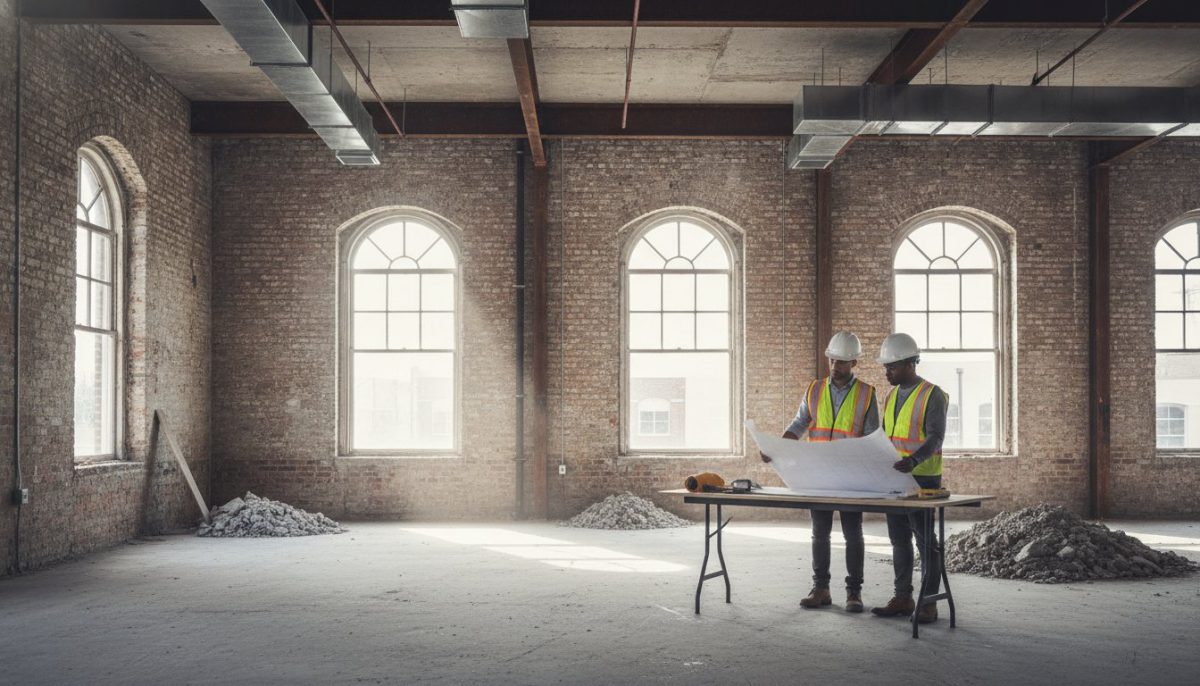
Did you know that approximately 42% of pre-1978 structures on the Charleston peninsula contain hazardous materials like asbestos or lead paint? When you’re managing commercial interior demolition charleston sc, these hidden variables turn a standard gut-out into a high-stakes engineering task. It’s a reality that requires more than just heavy machinery; it demands a surgical approach to protect the building’s structural integrity and your investment.
You likely recognize that a successful commercial renovation starts with a clean, compliant structural shell, but the threat of environmental fines or accidental structural damage is a constant concern. This guide provides the technical expertise needed to master the complexities of commercial interior gutting while maintaining strict safety standards. We’ll walk through the mandatory 10-day SCDES notification requirements, hazardous material abatement protocols, and the specialized methods used to minimize project downtime. You’ll learn how to navigate Charleston’s unique regulatory landscape to ensure your site is ready for its next phase of construction without the risk of costly delays or safety violations.
Key Takeaways
- Understand the technical distinction between “white box” preparation and a total interior gut-out to align your project scope with specific structural requirements.
- Learn the critical 5-step methodology for commercial interior demolition charleston sc, ensuring all utility disconnects and pre-demolition surveys meet current regulatory standards.
- Identify common locations for asbestos and lead in pre-1978 commercial structures and the necessary abatement protocols required to avoid environmental fines.
- Differentiate between surgical selective demolition for tenant improvements and total footprint clearing to optimize material recovery and maintain structural safety.
- Evaluate potential contracting partners based on EMR ratings and specialized abatement licensing to ensure full project compliance and liability protection.
What is Commercial Interior Demolition?
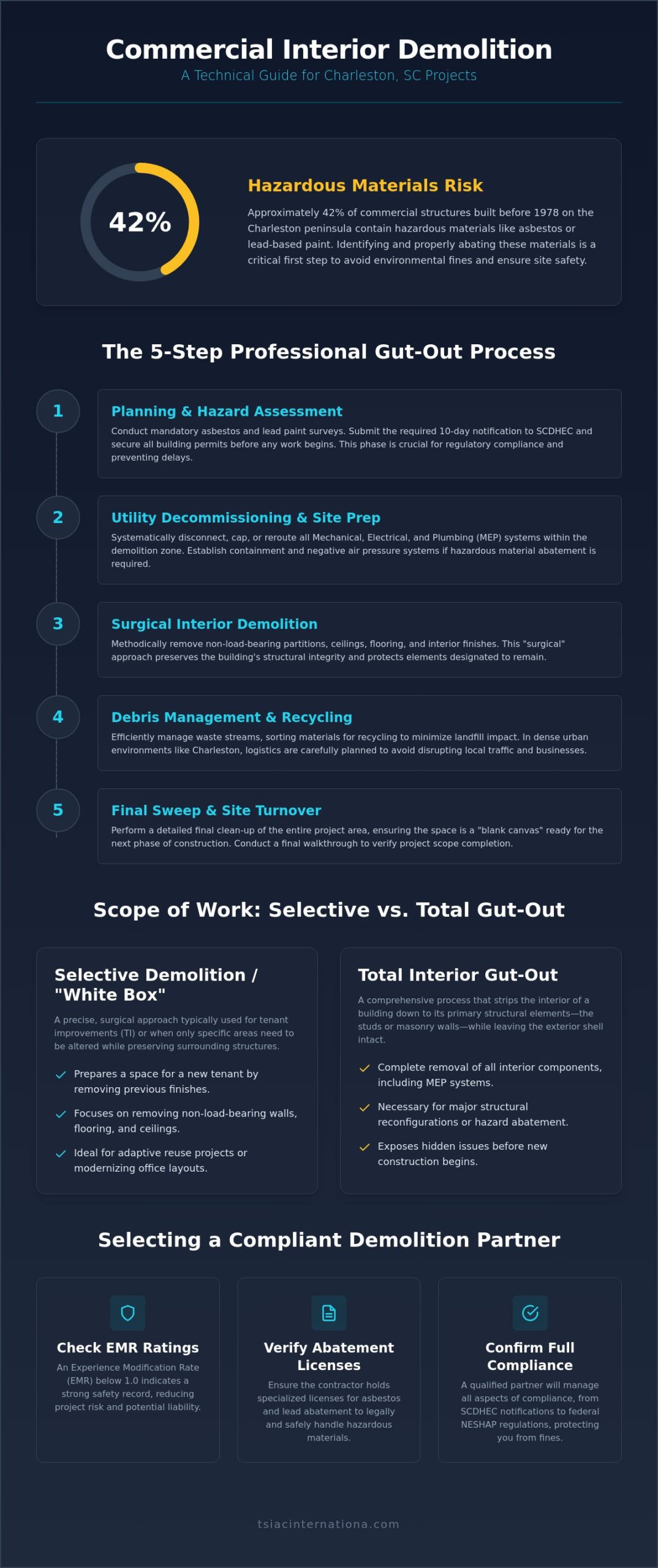
Commercial interior demolition involves the systematic removal of interior components while preserving the building’s exterior and primary structural integrity. In the broader context of demolition, this specific discipline focuses on clearing out non-essential elements to facilitate a new architectural vision. For professionals managing commercial interior demolition charleston sc, it’s vital to distinguish between a “white box” preparation and a total interior gutting. A white box project typically involves removing previous tenant finishes to leave a space ready for lease, whereas a total gut-out strips the area back to the studs or masonry.
Tenant improvement (TI) cycles rely heavily on this process. It’s the bridge between a defunct layout and a functional modern workspace. Commercial projects demand significantly higher safety standards than residential work due to the complexity of shared MEP systems and the higher density of hazardous materials found in industrial-grade finishes. This work isn’t just about removal; it’s about controlled engineering within a confined environment.
The Scope of Interior Gutting
This process extends beyond just swinging a sledgehammer. It requires the methodical removal of non-load-bearing partitions, floor coverings, and suspended ceiling systems. A critical phase is the decommissioning of mechanical, electrical, and plumbing (MEP) systems. Technicians must ensure that all live utilities are safely capped or rerouted without disrupting the operations of adjacent tenants or the building’s core services. This precision creates the blank canvas necessary for modern architectural redesigns. When performing commercial interior demolition charleston sc, contractors must also manage the logistics of waste streams in dense urban environments. To optimize these operations, you can discover Atlanta Container & Trailer for storage and trailer solutions that help ensure debris removal doesn’t interfere with local traffic or neighboring businesses.
Key Drivers for Commercial Demolition
Several factors drive the need for these services in the Charleston market. Adaptive reuse is a primary motivator, where historical commercial structures are repurposed for modern retail or hospitality. Additionally, many firms are modernizing office layouts to accommodate open-concept designs, which requires the complete removal of outdated cubicle farms and interior walls. Finally, addressing environmental hazards like mold or aging insulation in older buildings often necessitates a comprehensive interior strip-out to ensure the health of future occupants. By stripping a space to its structural elements, developers can identify and resolve hidden issues before the new construction phase begins, ultimately reducing the risk of mid-project surprises.
The 5-Step Process of a Professional Interior Gut-Out
Professional demolition follows a strict methodological framework. It isn’t just about clearing space; it’s about executing a sequence that ensures structural stability and environmental safety. For any project involving commercial interior demolition charleston sc, this process begins long before the first partition is removed. A meticulous pre-demolition survey identifies load-bearing elements and utility lines that must remain undisturbed to protect the building’s core. Once these parameters are set, the team begins the systematic decommissioning of mechanical, electrical, and plumbing systems.
Phase 1: Planning and Hazard Assessment
Mandatory asbestos and lead paint testing are the first technical hurdles. In South Carolina, a professional survey is required for all regulated facilities before any activity begins. We must also submit a mandatory 10-day notification to the SCDES, regardless of whether asbestos is suspected. Securing these building and environmental permits early prevents the costly administrative bottlenecks that often derail commercial timelines. A professional assessment identifies these risks upfront, ensuring that the project remains on schedule and within its legal parameters. This phase also includes the asbestos NESHAP compliance checks that protect building owners from federal liability.
After the site is cleared of hazards, we move to the systematic removal of interior finishes. This isn’t a blunt force operation. It’s a surgical extraction of non-structural components like flooring, ceilings, and non-load-bearing walls. This disciplined approach ensures that the transition from demolition to new construction is seamless and documented.
Phase 2: Execution and Debris Management
Modern demolition requires sophisticated dust and noise suppression tools to maintain air quality and minimize disruption to neighboring tenants. Effective debris management involves more than just hauling waste to a landfill. We implement on-site sorting strategies for wood, metal, and plastic to hit high recycling targets. While South Carolina has a 25% municipal recycling goal, industrial projects can often achieve a diversion rate of over 85% through disciplined management. This commitment to integrated recycling services reduces tipping fees and supports LEED certification goals.
The process concludes with a final site clearance and structural inspection. This walkthrough verifies that the remaining structural shell is intact and ready for the next phase of construction. Every square foot is inspected for debris and dust, leaving a pristine environment for the incoming mechanical and framing teams. This level of technical precision ensures the structural integrity of the building remains uncompromised throughout the gut-out. Once the floor is cleared, businesses often look to specialists like Polished Concrete Atlanta to provide the durable polished or epoxy finishes that complete the commercial transformation.
Selective Demolition vs. Total Interior Gutting
Choosing between selective demolition and a total interior gut-out is a strategic decision that dictates the project’s technical requirements and overall budget. In the context of commercial interior demolition charleston sc, this choice often hinges on the building’s age and its intended future use. Selective demolition is a surgical engineering process. It requires technicians to remove specific components, such as individual walls, flooring, or ceiling sections, while protecting the surrounding structural elements and active utility lines.
Total interior gutting involves stripping the entire floor plate down to the structural masonry or steel. This provides a blank canvas for the architectural team. While more invasive, it eliminates the technical debt of working around legacy systems. Risk management is paramount in both scenarios, but selective demolition in occupied spaces requires specialized containment and scheduling to ensure that noise and vibration don’t impact neighboring tenants. The decision requires a rigorous cost-benefit analysis of preserving existing mechanical, electrical, and plumbing (MEP) systems versus the efficiency of a complete replacement.
When to Choose Selective Demolition
Selective demolition is the preferred method when preserving high-value structural elements or historical features is a priority. This is particularly relevant in Charleston’s historic commercial districts where specific interior components may have architectural significance. It’s also the logical choice for phased renovations. If a portion of the building must remain operational, a surgical approach allows for localized work without compromising the safety or utility of the rest of the facility. Common applications include minor tenant improvements where only specific partitions need to be relocated to optimize a new office layout while keeping the primary MEP infrastructure intact.
The Advantages of a Full Interior Gut-Out
A full gut-out offers unparalleled freedom for new mechanical, electrical, and plumbing (MEP) layouts. By removing all interior obstructions, engineers can design the most efficient routing for modern HVAC and data systems without being constrained by outdated configurations. This method also provides the highest level of certainty regarding environmental safety. It ensures that all legacy hazardous materials, such as asbestos hidden behind multiple layers of old renovations, are permanently removed. For large-scale redevelopments, a total gut-out is often more cost-effective. The speed of a full clearing often offsets the higher disposal volumes, as teams don’t have to spend excessive labor hours meticulously protecting old finishes that may eventually be replaced anyway.
Navigating Hazardous Materials: Asbestos and Lead Abatement
Hazardous materials represent the most significant liability in any commercial interior demolition charleston sc project. While surface finishes might appear benign, the layers beneath often harbor regulated substances that require specialized handling. Approximately 42% of pre-1978 structures in the Charleston peninsula contain asbestos or lead paint. This isn’t just a safety concern; it’s a strict regulatory requirement. As of July 1, 2024, the South Carolina Department of Environmental Services (SCDES) assumed oversight for these activities, mandating professional surveys for all regulated facilities before any demolition or renovation begins.
Compliance involves a tripartite framework of EPA, OSHA, and state-level mandates. Failure to identify these materials early leads to stop-work orders and significant environmental fines. We prioritize third-party air monitoring and clearance testing to provide building owners with a documented, defensible record of safety. This technical oversight ensures that the demolition environment remains controlled and that all airborne contaminants are effectively suppressed before they can migrate to adjacent spaces.
Asbestos Abatement in the Demolition Workflow
Asbestos is commonly found in floor tiles, mastic, thermal system insulation, and spray-applied fireproofing. Our workflow integrates containment strategies that utilize negative air pressure and HEPA filtration to prevent cross-contamination into occupied areas of the building. We distinguish between friable and non-friable materials, as each requires different disposal protocols and notification levels. For a deeper look at these requirements, review our guide on asbestos removal in South Carolina. Proper documentation of the waste chain of custody is essential for full regulatory compliance and liability protection.
Lead-Based Paint and Mold Remediation
Renovating historic commercial structures in Charleston frequently reveals lead-based paint. This requires specific wet-scraping or HEPA-shrouded tool methods for safe removal. Beyond chemical hazards, the gutting process often uncovers mold growth within wall cavities or HVAC plenums caused by the region’s high humidity. Addressing these biological and chemical hazards simultaneously prevents project delays and ensures a healthy environment for future tenants. You can find more details in our professional hazardous material abatement resource.
Managing these risks requires a partner who treats environmental safety as a core engineering discipline. If you suspect your facility contains regulated materials, contact our experts for a professional abatement consultation to secure your project’s compliance and protect your investment.
Selecting a National Commercial Demolition Contractor
Selecting a partner for commercial interior demolition charleston sc is a strategic decision that directly impacts the project’s risk profile and eventual success. It isn’t merely about the lowest bid; it’s about identifying a contractor with the technical depth to manage the intersection of structural clearing and hazardous material remediation. A primary metric for evaluation is the Experience Modification Rate (EMR). A contractor with an EMR below 1.0 demonstrates a disciplined approach to site safety and worker protection, which translates to lower liability for the property owner. You should also verify that the contractor maintains specialized abatement licensing and sufficient bonding for high-value commercial environments.
The complexity of interior projects requires a fleet of specialized equipment. Unlike general demolition, interior gutting often demands robotic demolition units for precision work in confined spaces and industrial-grade HEPA air scrubbers to maintain air quality in occupied buildings. There’s significant value in utilizing a single-source provider for both demolition and abatement. This integrated approach eliminates the scheduling gaps and communication breakdowns that occur when multiple subcontractors manage different phases of the strip-out. It ensures that the transition from hazardous material containment to structural clearing is a seamless, documented process.
Why Experience Matters in Interior Projects
Navigating the logistics of urban demolition requires a sophisticated understanding of Charleston’s specific constraints, such as tight mobilization windows and strict noise ordinances. A contractor with a proven track record with government and large-scale commercial clients understands how to maintain a clean site while adhering to aggressive TI cycles. Our 15+ years of industry experience translates to a refined safety protocol where site hazards are identified through predictive analysis rather than reactive correction. This depth of knowledge is essential when dealing with the structural surprises often found behind the walls of aging commercial facilities.
TSIAC International: Your Partner in Structural Removal
TSIAC International provides a disciplined, methodological approach to commercial interior demolition charleston sc. We’re committed to 100% regulatory compliance, ensuring that every project meets SCDES and EPA standards from the initial survey to the final clearance testing. Our commitment to sustainability is reflected in our on-site material management, where we prioritize the recycling of wood, metal, and plastic to reduce landfill impact and support LEED goals. By offering single-source efficiency for demolition, asbestos, and lead abatement, we protect your project timeline and your bottom line.
If you’re preparing for a complex renovation or tenant improvement project, ensure your site is handled with technical precision. Contact TSIAC International for a Project Consultation to discuss your structural removal and abatement needs with our expert team.
Securing Your Project’s Structural Foundation
Successfully managing commercial interior demolition charleston sc requires a disciplined integration of engineering precision and regulatory foresight. By prioritizing professional hazardous material abatement and selecting the appropriate demolition methodology, you mitigate the risks of environmental penalties and structural compromise. The process demands more than just removal; it requires a partner who understands the technical nuances of Charleston’s unique building stock and urban logistics.
Our approach leverages 15+ years of specialized experience to deliver EPA and OSHA compliant results on every site. We maintain a robust material recycling program to support your sustainability goals while ensuring the structural shell is ready for immediate reconstruction. This methodological accuracy protects your timeline and your capital investment from the start. We don’t just clear space; we prepare your property for its next lifecycle with technical certainty.
Request a Fixed-Price Interior Demolition Quote to ensure your next project is handled with unwavering professional reliability. Your vision for a modernized commercial space starts with a clean, safe, and compliant foundation.
Frequently Asked Questions
What is the difference between residential and commercial interior demolition?
Commercial projects involve complex mechanical, electrical, and plumbing (MEP) systems that require professional decommissioning to protect the building’s core. Unlike residential work, commercial interior demolition charleston sc must adhere to stringent OSHA safety standards and environmental regulations. The logistics often include managing waste streams in high-traffic urban areas, requiring a more sophisticated mobilization plan than a standard house gut-out.
How long does a typical commercial interior gut-out take?
A standard commercial gut-out typically spans one to four weeks, though the timeline varies based on square footage and the presence of hazardous materials. Projects involving asbestos or lead abatement require additional time for containment setup and third-party clearance testing. We establish a methodological schedule during the planning phase to ensure the site is ready for new construction without delaying subsequent trades.
Do I need an asbestos survey before starting interior demolition?
Yes, a professional asbestos survey is mandatory for all regulated facilities in South Carolina before any demolition or renovation begins. This requirement applies regardless of the building’s age or whether you suspect hazardous materials are present. The South Carolina Department of Environmental Services (SCDES) requires this documentation to ensure all friable and non-friable materials are handled according to federal safety standards.
Can interior demolition be performed while the rest of the building is occupied?
Interior demolition can be performed in occupied buildings using “surgical” selective demolition techniques. We implement negative air pressure, HEPA filtration, and physical barriers to prevent dust and debris from migrating to active tenant spaces. Scheduling high-impact tasks during off-peak hours further minimizes noise disruption, allowing the rest of the facility to remain fully operational throughout the project.
What happens to the debris removed during a commercial gut-out?
We sort debris on-site to maximize material recovery and meet industrial recycling targets. Wood, metal, and plastic are separated from general construction waste to be processed at specialized facilities. While South Carolina’s municipal target is 25%, industrial projects can often achieve diversion rates over 85%, which reduces landfill tipping fees and supports LEED certification for the new development.
How much does commercial interior demolition cost per square foot?
Costs for commercial interior demolition are calculated based on the project’s complexity, square footage, and the specific materials being removed. Factors such as the need for hazardous material abatement, the difficulty of utility decommissioning, and site accessibility in dense urban areas influence the final budget. We provide a detailed analysis after a site walkthrough to ensure all technical requirements are accurately reflected in the project scope.
What permits are required for interior demolition projects?
Most projects require a demolition permit from the City of Charleston, North Charleston, or Charleston County, depending on the site’s location. Additionally, a mandatory 10-day notification must be submitted to the SCDES before work starts. These permits ensure that the project complies with local zoning, safety codes, and environmental protection mandates, preventing costly administrative fines and project shutdowns.
