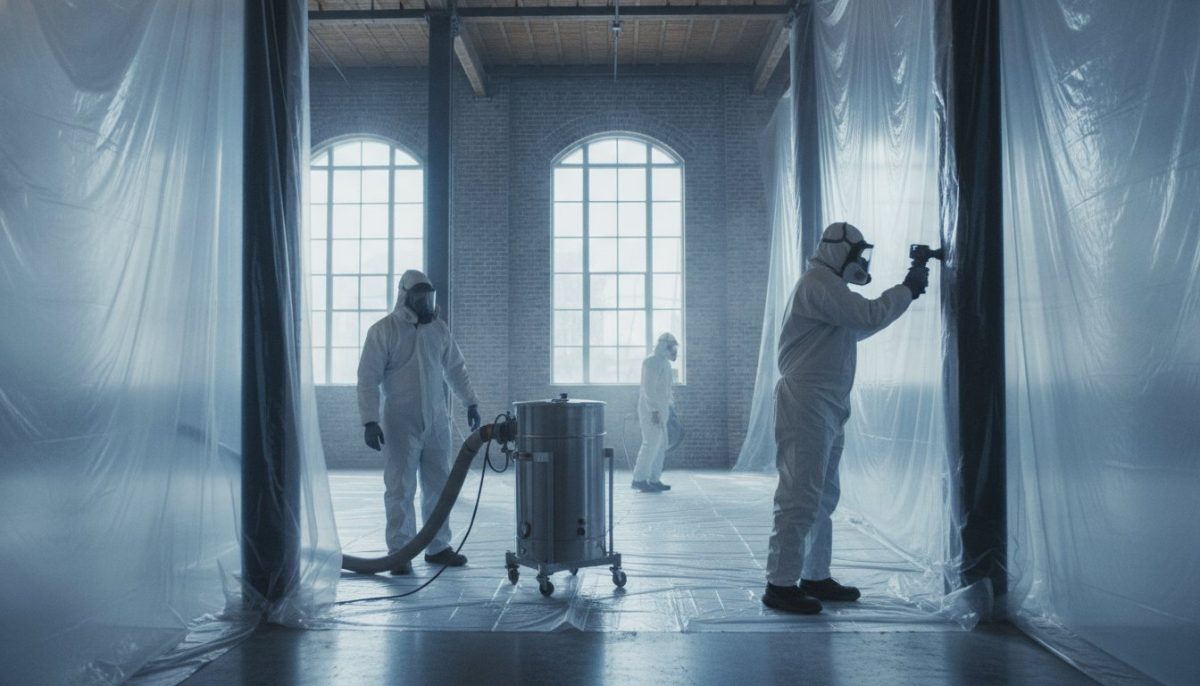
As of January 2026, the margin for error in South Carolina industrial environments has effectively vanished. With the implementation of the Dust-Lead Reportable Level standard, any detectable trace of lead in your facility is now a legal liability. You’ve likely felt the pressure of maintaining a compliant site while facing the constant threat of project delays or SC DES fines that can devastate a budget. It’s a high-stakes environment where technical precision isn’t just a preference; it’s a requirement for structural integrity and safety.
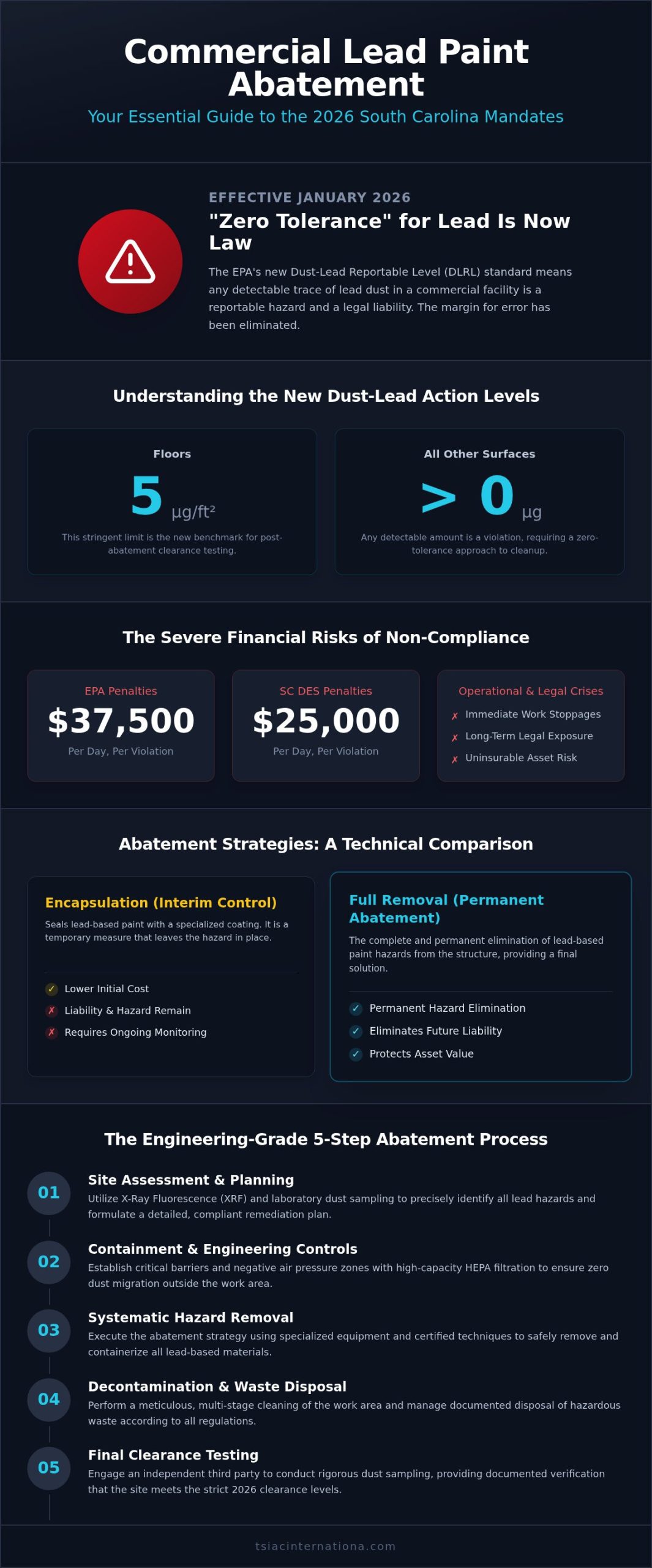
This guide serves as a professional roadmap for commercial lead paint abatement south carolina, offering the methodical strategies needed to eliminate hazardous liabilities. You’ll learn how to navigate the 2026 EPA Dust-Lead Action Levels, including the stringent 5 µg/ft² limit for floors. We’ll outline a disciplined five-step abatement process that ensures documented regulatory compliance and total structural control. By following this technical framework, you can transform a hazardous material discovery from a project-stopping crisis into a controlled, professional remediation that protects both your assets and your workforce.
Key Takeaways
- Navigate the 2026 SC DES and EPA mandates to mitigate regulatory risk and avoid substantial daily non-compliance penalties.
- Evaluate the technical cost-benefit ratio of encapsulation versus full removal to achieve permanent structural control of your facility.
- Implement an engineering-grade 5-step process for commercial lead paint abatement south carolina that utilizes high-capacity HEPA filtration and specialized containment.
- Comply with the updated 2026 Dust-Lead Action Levels through rigorous site assessment and final clearance testing protocols.
- Leverage 15+ years of industry expertise to manage complex hazardous material remediation alongside selective structural demolition projects.
The Critical Need for Commercial Lead Paint Abatement in South Carolina
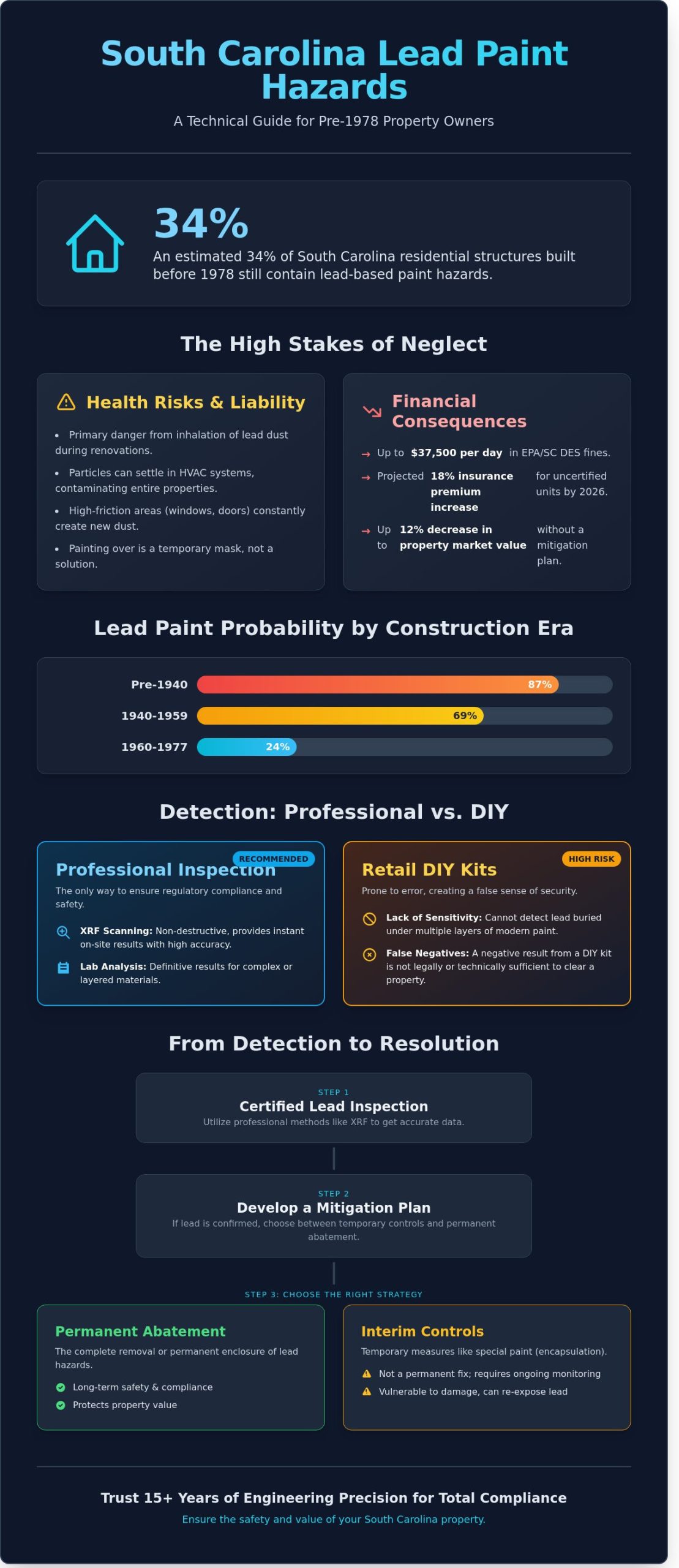
In the industrial and commercial sectors of South Carolina, managing legacy paint systems is a matter of structural engineering and liability mitigation. Lead abatement represents the permanent elimination of lead-based paint hazards, a process distinct from temporary interim controls. For any commercial asset constructed before 1978, the presence of lead is a statistical probability that requires methodical oversight. These structures often fall under U.S. lead-based paint regulations, which dictate strict protocols for handling toxic materials during renovation or demolition.
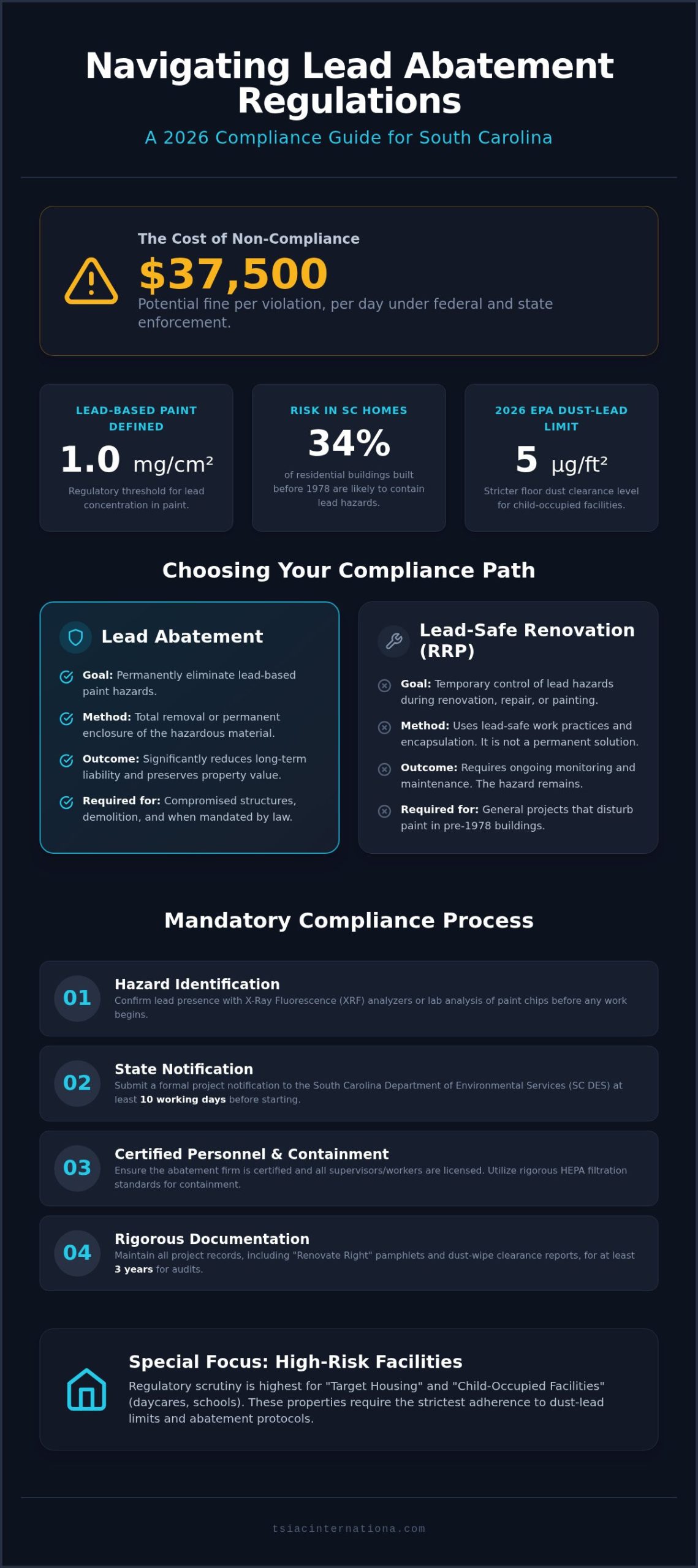
Property owners frequently confuse the EPA’s Renovation, Repair, and Painting (RRP) Rule with full abatement. While RRP focuses on lead-safe work practices during minor disturbances, full commercial lead paint abatement south carolina involves the comprehensive removal or permanent enclosure of the hazard. Failing to distinguish between these can lead to significant insurance complications. Carriers increasingly view unmitigated lead as an uninsurable risk, directly impacting property valuation and the feasibility of future divestment.
Identifying Lead Hazards in Large-Scale Structures
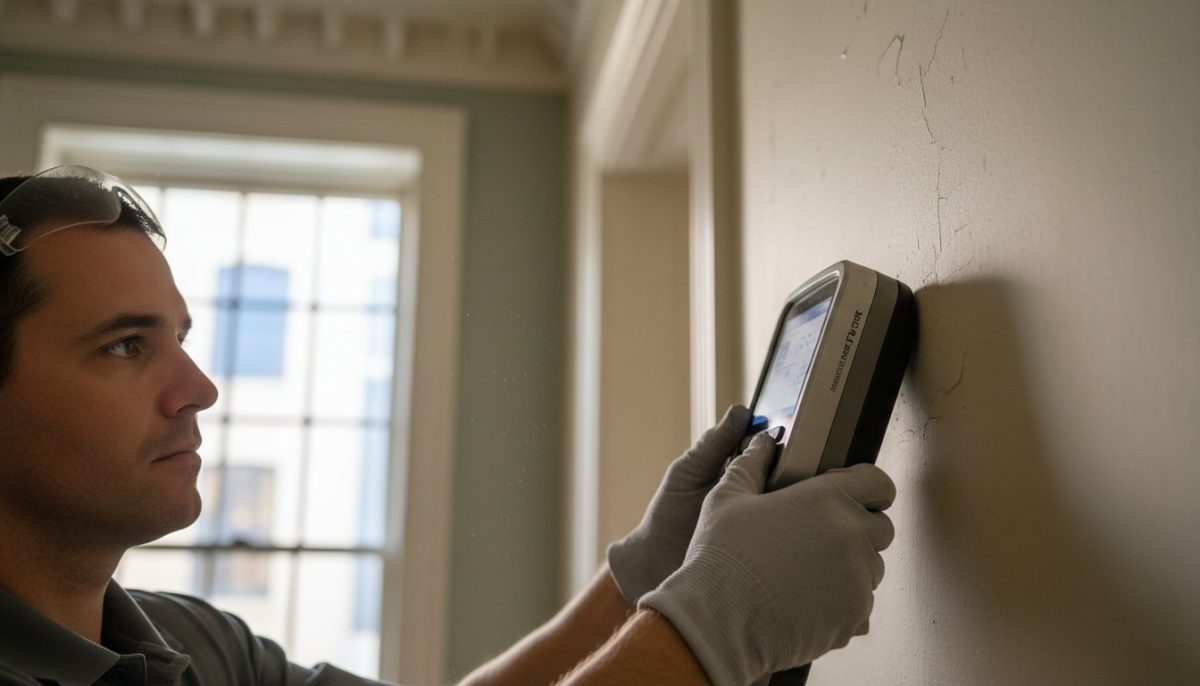
Commercial environments present unique challenges compared to residential settings. Lead-based coatings were often utilized for their durability on structural steel, complex window systems, and exterior masonry. During large-scale interior gutting projects, the risk of lead dust migration is exceptionally high. Fine particulates can infiltrate HVAC systems or settle into structural voids, creating a secondary contamination profile that is difficult to remediate. Visual inspections are insufficient for these environments; they fail to detect lead beneath layers of newer paint or within settled dust. A professional audit requires X-ray fluorescence (XRF) technology and laboratory dust sampling to establish a baseline of safety.
Health Liabilities and Commercial Asset Risk
The presence of lead creates a multi-layered liability profile. Beyond the immediate occupational safety risks for employees and contractors, property owners face long-term legal exposure if lead dust persists after a project concludes. Inadequate containment during selective demolition can lead to litigation that spans decades. Lead abatement is a permanent engineering solution for hazardous material removal. Implementing these high-level controls ensures that the asset remains a viable, safe environment while protecting the owner’s financial interests from regulatory scrutiny.
Navigating 2026 Regulatory Standards: EPA and SC DES Requirements
The South Carolina Department of Environmental Services (SC DES) now serves as the primary enforcement body for lead-based paint regulations in the state, working in coordination with federal EPA mandates. For stakeholders managing commercial lead paint abatement south carolina, this means complying with a dual-layered regulatory framework that prioritizes absolute containment. Effective January 12, 2026, the EPA replaced previous hazard standards with the Dust-Lead Reportable Level (DLRL). This change dictates that any detectable lead in dust is considered a reportable hazard, forcing a zero-tolerance approach to site cleanliness and post-project clearance.
The Role of the SC DES in Lead Oversight
SC DES mandates formal notification for large-scale hazardous material projects before work begins. State inspectors don’t just verify certifications; they evaluate the physical integrity of containment systems and the pressure differentials of HEPA filtration units. The financial consequences of negligence are severe and immediate. Violations of the EPA’s RRP Rule can incur fines up to $37,500 per day, while civil penalties under South Carolina law can reach $25,000 per day per violation. Beyond fines, SC DES has the authority to issue immediate work stoppages, which can derail multi-million dollar commercial developments and trigger long-term legal action from exposed parties.
Certification and Compliance Documentation
It’s vital to distinguish between Lead-Based Paint Activities (Abatement) and simple RRP certifications. Abatement is a higher-tier, specialized certification required for the permanent elimination of lead hazards in commercial structures. Proper record-keeping must include detailed waste manifests and disposal tracking that aligns with the SC DHEC lead paint disposal advisory. This documentation serves as your primary legal defense, proving that toxic materials were handled and disposed of according to stringent state laws. These rigorous standards for documentation and safety are mirrored in other sectors of hazardous material management, such as Asbestos Removal in South Carolina.
The final step in achieving structural control is the Clearance Examination. This involves an independent, certified professional verifying that dust levels meet the 2026 Dust-Lead Action Levels (DLAL). Currently, these standards are set at 5 µg/ft² for floors, 40 µg/ft² for interior window sills, and 100 µg/ft² for window troughs. If your facility requires these precise technical milestones, choosing a partner with proven abatement experience ensures your project remains compliant and your asset remains protected.
Evaluating Abatement Strategies: Encapsulation vs. Full Removal
Selecting the appropriate methodology for commercial lead paint abatement south carolina requires a calculated assessment of the asset’s lifecycle and intended use. Property owners must weigh the immediate capital expenditure of full removal against the recurring operational costs of interim controls. While encapsulation might seem financially attractive in the short term, it leaves the underlying hazard intact. This choice defines the asset’s future risk profile and dictates the level of ongoing regulatory oversight required by state and federal agencies.
The decision-making process often hinges on the condition of the substrate and the traffic patterns within the facility. In industrial settings where heavy machinery or high employee volume is common, the risk of mechanical damage to temporary barriers is high. Selective demolition plays a critical role here, allowing teams to target and remove specific contaminated elements without compromising the building’s structural integrity. This surgical approach ensures that the most hazardous areas are addressed with engineering-grade precision.
Full Component Removal and Replacement
The gold standard for eliminating lead liabilities is the total removal and replacement of contaminated building components. This strategy involves extracting the entire substrate, such as window systems, door assemblies, or structural trim, rather than attempting to strip the paint on-site. This method is exceptionally efficient when synchronized with commercial interior gutting services, as it allows for the comprehensive extraction of hazardous materials during the broader demolition phase.
The long-term value of this strategy is undeniable. By removing the lead entirely, you eliminate the need for periodic lead inspections and the risk of future regulatory shifts. It’s a permanent solution that simplifies property management, reduces insurance premiums, and significantly enhances the resale value of the commercial asset by providing a “lead-free” certification.
Encapsulation and Enclosure Protocols
Encapsulation involves applying a specialized, impact-resistant liquid coating over the lead-based paint to create a dust-tight seal. It’s a technically viable solution for surfaces in excellent condition that aren’t subject to friction. However, in high-traffic commercial environments, encapsulation has significant limitations. Door frames and baseboards are prone to impact, which can breach the encapsulant and release toxic particulates into the air.
Enclosure, another interim control, involves installing a permanent physical barrier like new drywall or cladding over the lead paint. While effective at preventing immediate exposure, enclosure complicates future structural renovations. Any subsequent work that punctures the barrier will re-expose the hazard, requiring specialized containment and specialized labor. For South Carolina property owners, these methods require a commitment to documented monitoring every 6 to 12 months to ensure the barrier remains uncompromised.
The Engineering-Grade Process for Large-Scale Lead Abatement
Executing commercial lead paint abatement south carolina requires a disciplined, multi-phase engineering approach to ensure structural control and environmental safety. Unlike small-scale residential work, industrial projects demand high-capacity containment systems to manage extensive surface areas. This specialized remediation is often an integral component of the broader demolition process in South Carolina, where the removal of hazardous materials must be completed before any structural tearing or interior gutting begins. We follow a methodological five-step process: comprehensive site assessment, containment isolation, precision removal, multi-stage decontamination, and independent clearance testing.
Containment and Environmental Controls
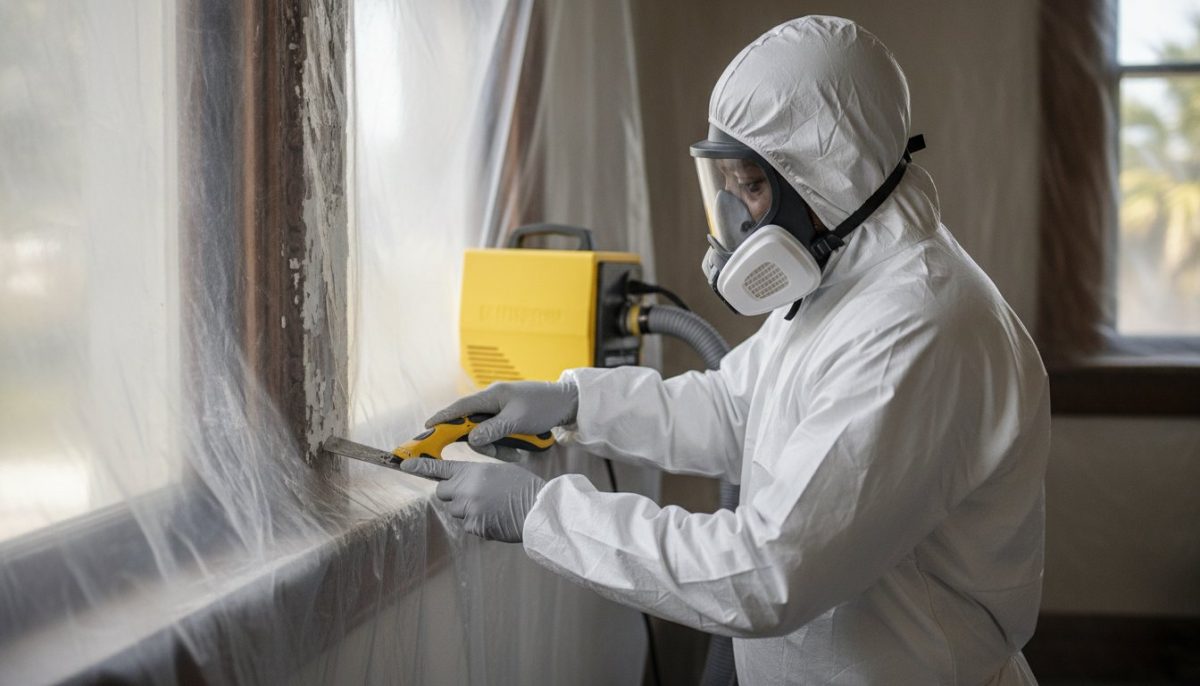
Establishing negative pressure zones is the cornerstone of effective lead dust management. Industrial-grade air scrubbers equipped with HEPA filtration maintain a constant inward airflow, ensuring that microscopic particulates don’t migrate into adjacent clean areas. Technicians utilize heavy-duty 6-mil poly sheeting to create a physical airtight boundary, reinforced by multi-stage decontamination units for personnel entry and exit. During the removal phase, we implement real-time air monitoring protocols to verify that environmental controls are functioning within specified safety parameters. This constant data stream allows for immediate adjustments to the ventilation strategy if particulates fluctuate.
Removal Techniques and Waste Management
Technical precision in coating removal depends on selecting the right tool for the substrate. Chemical stripping agents are often preferred for masonry or intricate details as they lift the paint without generating airborne dust. For wood or metal components, we utilize heat guns operated strictly under 1100°F to prevent the vaporization of lead into toxic fumes. All mechanical equipment, including sanders and saws, must be fitted with HEPA-shrouded vacuum attachments that capture 99.97% of particles at the point of origin.
Waste management is handled with the same level of scrutiny. All lead-contaminated debris is double-bagged, sealed, and labeled before being transported to South Carolina approved hazardous waste facilities for final disposal. This ensures a closed-loop system where no toxic material is left on-site or handled improperly. After the primary removal is complete, crews perform a rigorous wet-cleaning and HEPA-vacuuming protocol to achieve the final clearance standards. If your facility requires this level of technical oversight to meet 2026 standards, consult with our lead abatement specialists to secure your project’s compliance.
Why Precision-Led Abatement is Essential for South Carolina Commercial Assets
In the context of South Carolina’s 2026 regulatory environment, the choice of a remediation partner is a decision that affects both financial stability and public safety. Selecting a firm for commercial lead paint abatement south carolina requires more than a basic understanding of paint removal; it demands a deep mastery of structural engineering and hazardous material containment. TSIAC International brings over 15 years of industry experience to every project, providing the technical rigor necessary to handle the most complex industrial environments. We don’t just remove paint. We manage the entire lifecycle of hazardous material liabilities while maintaining the structural integrity of your asset.
Expertise in Complex Remediation
Managing a large-scale commercial property often involves a convergence of hazards, including lead and asbestos, within aging structural frameworks. Our approach integrates hazardous material remediation with selective demolition to provide a seamless, single-source solution. This surgical precision is essential when working on historic landmarks or commercial facilities where only specific sections require gutting. By isolating the lead hazard from the broader structural project, we prevent cross-contamination and ensure that non-contaminated assets remain protected and ready for future use.
Our commitment to environmental responsibility extends to our material recycling protocols. We recognize that commercial projects generate significant debris, and our process prioritizes the separation of recyclable materials from hazardous waste. This methodical approach reduces the environmental footprint of your project while ensuring that all lead-contaminated components are handled with absolute regulatory precision according to 2026 mandates. This fegyelmezett, expert-driven character is what defines our successful project history.
Securing Your Property for 2026 and Beyond
Investing in professional abatement is a strategic move to secure the long-term viability of South Carolina assets. As regulations continue to tighten, the presence of lead becomes an increasingly heavy financial burden. By performing a permanent removal now, you eliminate the risk of future SC DES enforcement actions and protect your property’s market value. Working with a firm that provides comprehensive hazardous material abatement in South Carolina ensures that every variable, from lead dust to asbestos fibers, is under expert control.
Protecting your commercial landmark or industrial facility requires a partner who doesn’t compromise on safety or technical accuracy. We invite you to contact TSIAC International for a methodological assessment of your commercial lead abatement needs. Our team will provide a detailed roadmap to compliance, ensuring your project is completed safely, efficiently, and with the documented precision your asset deserves.
Securing Structural Integrity through Professional Abatement
The 2026 regulatory landscape in South Carolina has redefined the standards for property safety. With the transition to “reportable level” dust standards, maintaining a compliant facility now requires a disciplined, engineering-grade approach to hazardous material removal. By choosing permanent removal strategies over temporary interim controls, you effectively eliminate long-term legal liabilities and preserve the market value of your commercial assets. This methodical oversight ensures that your project remains on schedule and within the strict safety parameters set by the SC DES.
Achieving total structural control requires a partner who understands the complex intersection of selective demolition and environmental remediation. For your next project involving commercial lead paint abatement south carolina, trust a team that utilizes specialized industrial equipment and 15+ years of South Carolina expertise. We implement EPA and SC DES compliant protocols to ensure every site meets the rigorous 2026 clearance standards. You don’t have to navigate these technical challenges alone. Take the first step toward a lead-free future and Request a Professional Abatement Consultation from TSIAC International today. We’re ready to secure your property for the next generation of use.
Frequently Asked Questions
Is lead paint abatement mandatory for commercial buildings in South Carolina?
Abatement becomes mandatory when lead-based paint is identified as a hazard or when planned renovations will disturb lead-containing surfaces in a way that creates a health risk. While property owners can choose interim controls for short-term maintenance, permanent abatement is required to eliminate the hazard entirely. Failure to comply with SC DES and EPA regulations during structural disturbances can lead to civil penalties reaching $25,000 per day per violation.
What is the difference between lead-safe renovation (RRP) and lead abatement?
Renovation, Repair, and Painting (RRP) rules apply to projects that temporarily disturb lead paint during general construction activities. In contrast, commercial lead paint abatement south carolina refers to the permanent elimination of lead-based paint hazards. Abatement requires a higher tier of certification and involves specialized engineering controls designed for long-term removal or permanent enclosure. RRP is a work practice standard; abatement is a comprehensive remediation solution.
How long does a typical commercial lead abatement project take in South Carolina?
Project timelines vary based on the total square footage and the complexity of the containment required for the facility. A standard commercial wing might take between five to ten business days to clear, which includes the initial site setup and final clearance testing. Large-scale industrial facilities or historic landmarks require more extensive planning. Factors like the number of HEPA filtration units and the chosen removal method significantly influence the total duration.
Can commercial tenants remain in the building during lead abatement?
Tenants must generally vacate the immediate work area to ensure safety and prevent exposure to toxic dust. While some phased projects allow for partial occupancy in separate wings, the negative pressure containment zones must be strictly isolated from all public areas. OSHA and SC DES regulations require that unauthorized personnel stay clear of the regulated area until a certified professional completes final clearance testing and confirms the site is safe for re-entry.
What are the specific SC DES waste disposal rules for lead-based paint?
SC DES requires that lead-based paint waste from commercial sources be tested using the Toxicity Characteristic Leaching Procedure (TCLP). If the waste is determined to be hazardous, it’s mandatory to transport it to a permitted hazardous waste landfill. All debris must be double-bagged in 6-mil poly bags and documented with a detailed waste manifest. Proper disposal tracking is essential for maintaining your facility’s regulatory compliance and avoiding long-term environmental liability.
How do I verify if a South Carolina contractor is certified for lead abatement?
You can verify a contractor’s credentials through the SC DES Lead and Asbestos Section or by requesting their current firm certification and individual worker licenses. A reputable firm will provide documentation of their 15+ years of experience and proof of EPA-accredited training. It’s vital to ensure the contractor holds an Abatement certification rather than just an RRP license, as these allow for different levels of hazardous material handling and structural control.
What happens if lead paint is found during a commercial interior gut-out?
Work should stop immediately to prevent the migration of toxic dust throughout the facility’s HVAC and structural systems. A certified risk assessor must evaluate the site to determine the extent of the contamination before any further selective demolition occurs. Once the hazard is identified, a specialized abatement plan is implemented. This involves establishing high-capacity containment and HEPA-filtered ventilation to safely remove the lead-based paint before the interior gutting project can resume.
Does lead abatement increase the market value of a South Carolina commercial property?
Professional commercial lead paint abatement south carolina significantly enhances asset value by removing a major environmental liability from the deed. Prospective buyers and lenders view “lead-free” or “lead-safe” certifications as a reduction in risk, which simplifies the due diligence process during a sale. By eliminating the need for recurring inspections and potential litigation, property owners secure the financial future of their landmarks and industrial sites while improving overall marketability.