Demolition Planning and Scheduling: A Strategic Guide for 2026 Projects

Demolition is engineering in reverse; success depends on a plan-first, strike-second philosophy that prioritizes structural forensics over brute…

Demolition is engineering in reverse; success depends on a plan-first, strike-second philosophy that prioritizes structural forensics over brute force. Effective demolition planning and scheduling in 2026 requires more than just a basic timeline. It demands a technical understanding of evolving safety standards and complex hazardous material protocols. You’ve likely experienced how a single oversight in abatement coordination or a surprise regulatory hurdle can derail an entire project’s momentum. These incidents don’t just cost time; they jeopardize site safety and professional reputation.

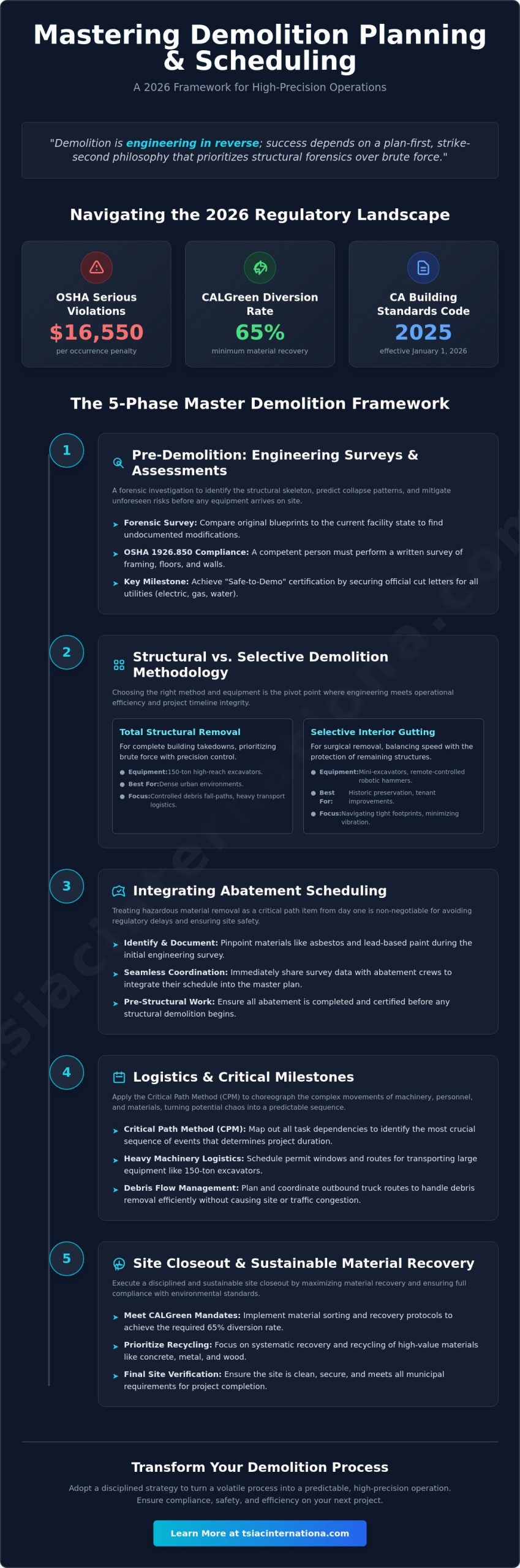
This guide provides an expert-led framework to master these structural complexities, ensuring your site remains under total control. You’ll learn how to navigate the 2025 California Building Standards Code effective as of January 1, 2026, and avoid OSHA’s updated serious violation penalties that now reach $16,550 per occurrence. We’ll outline a methodology for seamless coordination between abatement and removal crews. This approach allows you to maintain full compliance, meet the 65% CALGreen diversion requirements, and maximize material recovery without compromising your schedule. By following this disciplined strategy, you can transform a volatile process into a predictable, high-precision operation.

Key Takeaways

  • Identify the structural skeleton of a building through engineering surveys to predict collapse patterns and mitigate unforeseen site risks.
  • Select the optimal methodology for your project by evaluating the technical requirements of total structural removal versus selective interior gutting.
  • Integrate hazardous material abatement as a critical path item within your demolition planning and scheduling to avoid regulatory delays and safety incidents.
  • Apply the Critical Path Method (CPM) to manage complex site logistics, including heavy machinery transport and outbound debris flow.
  • Execute a sustainable site closeout by implementing material recovery protocols that prioritize the recycling of concrete, metal, and wood.

The Pre-Demolition Phase: Engineering Surveys and Site Assessments

Precision in structural removal begins long before the first excavator arrives on site. The pre-demolition phase functions as a forensic investigation, designed to uncover the structural skeleton of a building and predict its behavior during deconstruction. Successful demolition planning and scheduling relies on this data to transform a high-risk environment into a controlled engineering project. By identifying load-bearing walls, primary support columns, and later structural modifications, you can establish a sequence that dictates exactly how and where the building will yield. This level of foresight is essential to prevent uncontrolled collapses that threaten site personnel and adjacent properties.

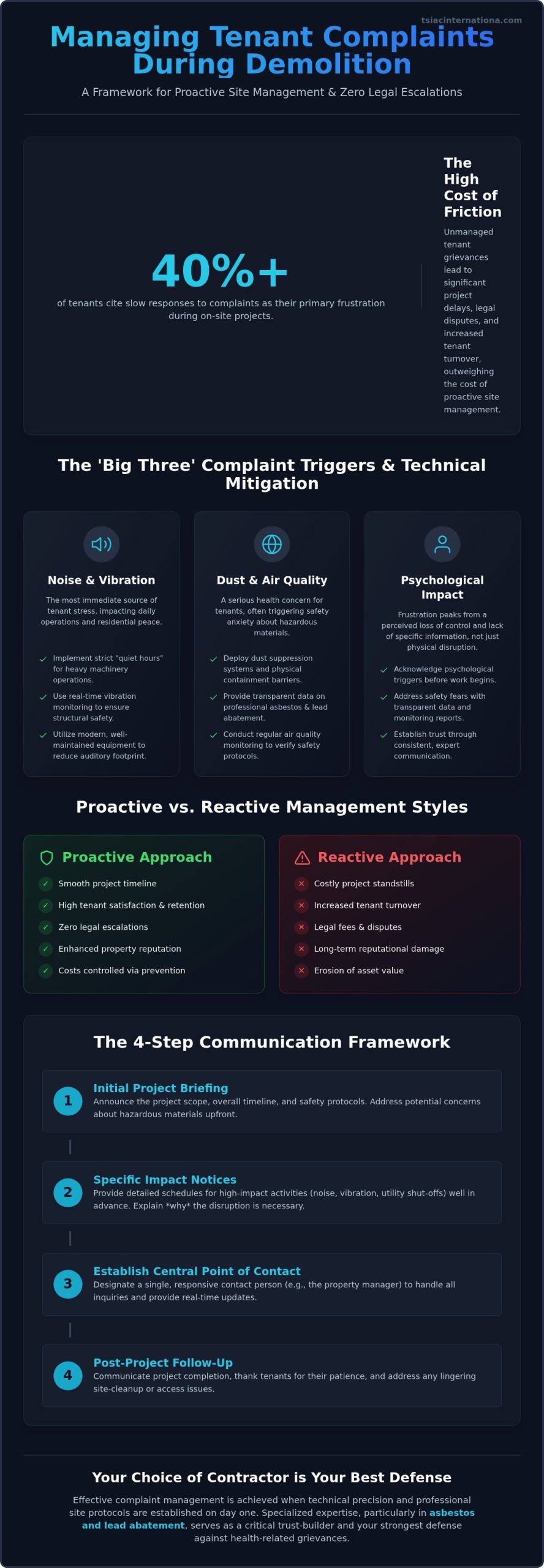
An engineering survey serves as your primary tool for mitigating unforeseen conditions. These hidden variables, such as unrecorded structural reinforcements or degraded masonry, are the leading causes of budget overruns and timeline shifts. Effective demolition methodologies prioritize the identification of these risks during the assessment stage. Beyond the building itself, you must evaluate the impact on the public right-of-way. This includes analyzing vibration and noise thresholds for neighboring structures, which is a critical requirement for maintaining community relations and avoiding work-stop orders from local municipalities.

Conducting a Forensic Engineering Survey

A thorough survey requires a comparison between original blueprints and the current state of the facility. Buildings often undergo decades of renovations that aren’t always documented in the original plans. A competent person, as defined by OSHA 1926.850, must perform a written engineering survey to determine the condition of the framing, floors, and walls to prevent premature collapse. During this inspection, our teams document the presence of hazardous materials like asbestos or lead-based paint. This data is immediately shared with the abatement crews to ensure they’re integrated into the master schedule before structural work begins.

Utility Disconnection and Permitting Milestones

The first major milestone in your project timeline is achieving a safe-to-demo certification. This requires securing official cut letters from electric, gas, and water municipalities to confirm all services are terminated at the street or property line. In the 2026 regulatory landscape, environmental and noise permits have become increasingly stringent. For example, the updated ANSI/ASSP A10.26 standards revised in June 2026 place a higher emphasis on emergency procedures for construction and demolition sites. Establishing a secure site perimeter—which, for projects in the Pacific Northwest, may involve professional vegetation management by CDA TREE AND UTILITY to clear hazards—and installing sediment control measures are not just safety requirements; they’re legal prerequisites that must be satisfied before any physical demolition planning and scheduling milestones can be met.

Structural vs. Selective Demolition: Choosing the Right Methodology

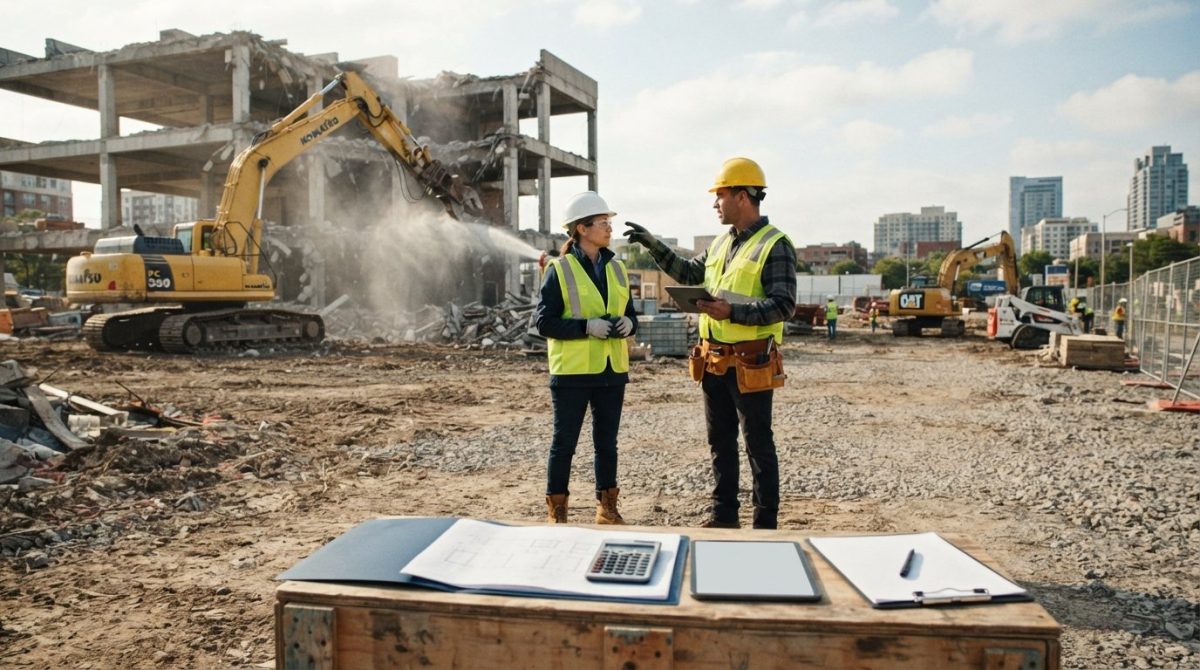
Selecting the appropriate methodology is the pivot point where engineering meets operational efficiency. Total structural removal requires a different logistical mindset than selective stripping. In dense urban environments, high-reach excavators often replace the need for implosion, offering superior control over debris fall-paths and reducing the regulatory burden. This choice directly impacts your demolition planning and scheduling, as mobilizing a 150-ton high-reach machine requires specific permit windows and heavy-load transport logistics that aren’t necessary for smaller-scale work. Precision is mandatory here. If the equipment doesn’t match the building’s structural profile, the timeline will inevitably suffer.

When the project goal involves historic preservation or commercial tenant improvements, the focus shifts to surgical removal. Speed must be balanced with the protection of structural integrity. Our commercial interior gutting services leverage mini-excavators and remote-controlled robotic hammers to navigate tight footprints. These tools allow for high-speed material removal without the vibration risks associated with larger pneumatic equipment. By aligning equipment capacity with site constraints, we ensure the project remains on its critical path. If you’re facing a complex renovation, partnering with a provider of professional demolition services can help you maintain a predictable project timeline.

Waste management also dictates methodology. High-reach mechanical demolition allows for better on-site sorting, which is vital for meeting Sustainable Material Recovery benchmarks. Sorting concrete from steel at the source reduces landfill tipping fees, which have seen significant increases in high-demand regions. A well-planned sequence allows for the recovery of valuable materials while the structure is being dismantled, turning a waste stream into a recovery asset.

Surgical Precision in Interior Gut-Outs

Stripping a building’s interior while it remains occupied or adjacent to active businesses requires a disciplined approach to environmental controls. We prioritize the protection of load-bearing elements by using non-impact cutting tools where possible. Managing dust, noise, and vibration isn’t just about comfort; it’s a regulatory necessity. Scheduling work during off-hours, such as nights or weekends, is often the most effective way to eliminate business disruption and accelerate the removal phase. It’s about maintaining a ghost-like presence while achieving maximum structural progress.

Heavy Structural Removal Techniques

For multi-story urban structures, a top-down approach is frequently the safest methodology. This involves lifting smaller equipment to the roof and working downward, floor by floor. This sequence ensures the building’s structural stability remains intact throughout the process. Every phase requires a clearly defined safety zone and a documented debris fall-path. Whether using mechanical crushing or specialized diamond-wire cutting for reinforced concrete, the goal is to maintain a predictable flow of material from the structure to the transport fleet without risking uncontrolled collapse.

Integrating Abatement and Hazardous Material Scheduling

Abatement is rarely a standalone task; it’s the primary bottleneck that determines the velocity of your entire project. Treating hazardous material removal as a side activity is a common error that leads to cascading delays. In a professional demolition planning and scheduling framework, abatement must be positioned as the “Critical Path” item. This means no structural work can proceed until the site is certified clean. A growing trend in 2026 is the total integration of these phases to avoid the logistical friction that occurs when separate contractors fail to coordinate. By scheduling asbestos and lead surveys as the very first step of the demolition process, you gain the lead time necessary to secure permits and mobilize specialized crews without stalling heavy machinery.

Managing the physical footprint of containment zones is a technical challenge. High-risk areas require “Clean Rooms” and negative-air enclosures that can physically block access to structural elements. If your schedule doesn’t account for these containment barriers, your excavators might sit idle while waiting for a single room to be cleared. Coordination is vital here. You must sequence the work so that abatement teams stay exactly one phase ahead of the structural crews. This requires a deep understanding of OSHA demolition safety guidelines, which mandate strict separation between hazardous work areas and general demolition zones to prevent cross-contamination. Failure to maintain these boundaries doesn’t just risk health; it invites OSHA penalties that, as of June 2026, have reached $16,550 per serious violation.

Disposal logistics also diverge significantly between toxic waste and standard C&D debris. While the national average tipping fee for standard debris is approximately $62.28 per ton in 2026, toxic materials like lead-contaminated steel or asbestos-containing transit pipe require specialized manifests and high-cost hazardous waste landfills. Your schedule must reflect these separate outbound flows to prevent logistical logjams at the site exit.

Asbestos and Lead Abatement Timelines

The timeline for asbestos removal is dictated by the physics of containment. Setting up negative-air systems and sealing penetrations can take days before a single gram of material is removed. You must also factor in the mandatory third-party air clearance testing. This final inspection is a hard stop in the master schedule; structural work cannot begin until a lab verifies the air is safe. For a detailed breakdown of these requirements, consult our hazardous material abatement guide to ensure every compliance step is mirrored in your project timeline.

Managing Mold and Other Biohazards

Water-damaged structures often present mold or other biological hazards that require a different set of protocols. Unlike asbestos, mold can spread rapidly if the building’s envelope is breached during demolition. We schedule specialized remediation crews to stabilize these areas using antimicrobial treatments before general gutting begins. This phase demands high-level PPE and rigorous worker safety monitoring. By identifying these biohazards during the initial engineering survey, we ensure the right protective equipment is on-site from day one, preventing reactive stops that blow the budget.

Demolition Planning and Scheduling: A Strategic Guide for 2026 Projects

The Demolition Master Schedule: Logistics and Critical Milestones

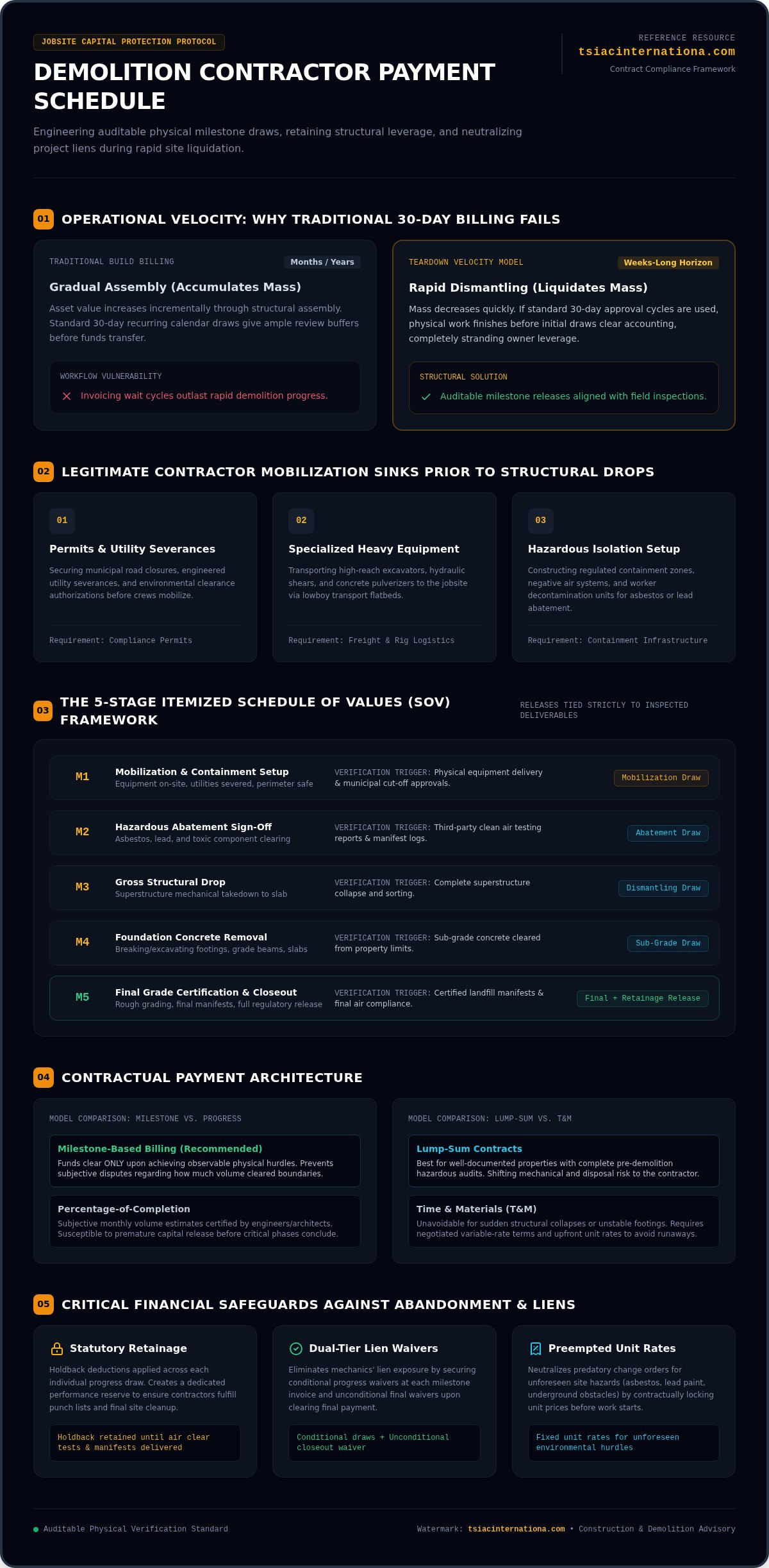
Effective demolition planning and scheduling moves beyond simple calendars. It requires the Critical Path Method (CPM) to identify which tasks hold the key to the project’s finish line. Unlike new construction where tasks are additive, demolition is a subtractive process. Each step relies on the structural stability left behind by the last. If a high-reach excavator is scheduled to arrive before the soft-strip is complete, you’re paying for idle machinery. We treat the master schedule as a living document. It must adjust for real-time site conditions while maintaining the hard milestones required by stakeholders and regulatory bodies.

Inbound logistics involve the complex transport of oversized machinery like high-reach excavators or robotic hammers. Outbound logistics focus on the constant flow of debris. Weather contingencies are a non-negotiable part of this framework. High winds can halt high-reach operations, while heavy rain can complicate sediment control measures. Daily reporting and safety stand-downs are integrated into our schedule as fixed points. This ensures every operator is aligned with the day’s structural goals. If trucks stop, the machines stop. Maintaining this flow is the primary responsibility of the project lead.

Sequencing for Efficiency and Safety

We divide the work into distinct phases to maintain site control. Phase 1 involves the soft-strip, where non-structural elements and interior finishes are removed. This allows for cleaner debris sorting on-site, which is essential for meeting the 65% CALGreen diversion requirements verified for 2026 projects. Phase 2 is the structural drop, where heavy machinery begins the systematic dismantling of the building’s frame. In a high-risk demolition context, float time is the amount of time a specific task can be delayed without affecting the overall project completion date or compromising structural safety.

Hauling and Disposal Logistics

The pulse of a demolition site is measured in “pulls,” or the number of dumpster swaps executed per day. We calculate these based on the building’s total volume and the specific density of materials being removed. Managing traffic flow in dense urban environments requires precise coordination with local transit authorities to avoid congestion. Securing tipping permits and scheduling disposal at specialized facilities ensures that outbound material never piles up. If you need a partner who can manage these complex logistics with technical precision, consult our guide on the demolition process to align your project milestones.

Post-Demolition: Site Closeout and Sustainable Material Recovery

The final phase of a project is as critical as the first strike. Site closeout represents the transition from a hazardous work zone to a stabilized platform ready for follow-on construction crews. This transition requires a disciplined approach to site grading and soil stabilization to prevent erosion and ensure proper drainage. In a professional demolition planning and scheduling framework, this isn’t just a cleanup; it’s a strategic hand-off. We provide our clients with a comprehensive Closeout Package that includes all permit closures, final recycling receipts, and third-party air clearance certifications. This documentation is vital for minimizing liability and ensuring the property is legally and physically ready for its next use.

Achieving a Zero Waste goal involves high-level on-site sorting of wood, metal, and concrete. Metals are recovered for their scrap value, which can help offset certain project costs, while wood and concrete are diverted to specialized processing facilities. TSIAC International manages this process with technical precision, ensuring that every ton of material is accounted for in the final environmental report. A successful closeout means the next contractor can begin work immediately without discovering buried debris or unresolved environmental issues.

Material Recycling and Environmental Reporting

Detailed documentation of diversion rates is now a requirement for LEED certification and corporate ESG goals. As of 2026, California’s CALGreen code requires a minimum of 65% of construction and demolition waste to be diverted from landfills. We track these metrics in real-time, providing the data needed to prove compliance with both local and national standards. On-site concrete crushing and reuse significantly reduce the environmental impact of a project by eliminating the need for outbound hauling and the carbon footprint associated with transporting new aggregate. This circular approach to material management turns structural waste into a valuable resource for the next project phase, maintaining the efficiency established during the initial demolition planning and scheduling phases.

Final Inspections and Permit Sign-off

The legal conclusion of a project requires coordinating with local building departments for a final site inspection. This step ensures all work has been performed according to the approved permit and that the site poses no risk to the public. We manage the archiving of all hazardous material manifests, ensuring that every load of asbestos or lead-contaminated debris is tracked from the site to its final disposal point. This level of transparency is what defines a professional partnership. If you’re preparing for a new project, Contact TSIAC International for a comprehensive project assessment that covers every phase of the structural removal process.

Securing the Future of Your Structural Removal Projects

Successful structural removal in 2026 is defined by technical foresight rather than force. By prioritizing forensic engineering surveys and integrating hazardous material abatement into the critical path, you eliminate the volatility that often plagues complex projects. We’ve explored how the Critical Path Method transforms logistics into a predictable flow, ensuring that site stabilization and sustainable material recovery meet the highest regulatory standards. These methodologies don’t just protect your timeline; they safeguard your reputation. It’s about maintaining control from the first survey to the final permit sign-off.

Mastering the complexities of demolition planning and scheduling requires a partner with deep industry experience and a commitment to methodical precision. With over 15 years of structural demolition expertise, TSIAC International provides the technical leadership necessary for high-stakes environments. Our fully licensed hazardous material abatement specialists ensure every phase is compliant, while our comprehensive safety and recycling reporting offers total transparency for your stakeholders. Partner with TSIAC International for Expert Demolition Planning and ensure your next project is executed with unwavering reliability. Your site’s transition to its future use starts with a controlled, expert-led deconstruction.

Frequently Asked Questions

What is the very first step in demolition planning?

The very first step is conducting a forensic engineering survey to determine the building’s structural condition and framing stability. This survey, mandated by OSHA, identifies load-bearing elements and potential hazards before any physical work begins. It sets the foundation for your entire demolition planning and scheduling strategy. Without this baseline data, it’s impossible to predict collapse patterns or ensure site safety during the removal process.

How long does it typically take to get demolition permits in 2026?

Permit timelines in 2026 vary significantly based on project location and local regulatory complexity. In major metropolitan areas, the process typically takes between four and eight weeks, while smaller jurisdictions may move faster. Specific regulations, such as the 10-working-day advance notice required in Arizona for asbestos-related demolitions, must be factored into your schedule. New laws in San Francisco also include strict unit replacement requirements that can extend approval windows.

Can structural demolition and asbestos abatement happen at the same time?

Structural demolition and asbestos abatement cannot occur simultaneously within the same containment area. Abatement is a critical path item that must be completed and certified safe by a third-party laboratory before heavy machinery begins structural removal. Attempting to overlap these phases risks cross-contamination and severe OSHA penalties. We sequence these tasks so that abatement teams stay one phase ahead of structural crews to maintain project momentum safely.

What is an Engineering Survey, and why is it required by OSHA?

An Engineering Survey is a written assessment performed by a competent person to determine the condition of the framing, floors, and walls. OSHA requires this under standard 1926.850 to prevent accidental structural collapse during the demolition process. This forensic analysis identifies where the building is weak or where modifications have altered the original load-bearing capacity. It’s a non-negotiable safety requirement for every professional structural removal project.

How do you calculate the timeline for a commercial interior gut-out?

Calculating the timeline for a commercial interior gut-out involves analyzing the total square footage and the density of interior finishes. We evaluate equipment accessibility, such as whether mini-excavators or robotic hammers can enter the footprint. National averages for interior demolition in 2026 range from $2.00 to $8.00 per square foot, reflecting the technical complexity of the task. The final schedule accounts for material volume and the number of dumpster swaps required per shift.

What factors cause the most common delays in demolition scheduling?

The most common delays in demolition scheduling stem from utility disconnection hurdles and the unexpected discovery of hazardous materials. Securing “cut letters” from municipalities often takes longer than anticipated, stalling the “safe-to-demo” milestone. Weather events, such as high winds or heavy precipitation, also create mandatory safety stand-downs. Building “float” into your demolition planning and scheduling is the only effective way to mitigate these inevitable variables without blowing the budget.

How is debris recycling handled in a professional demolition project?

Debris recycling is managed through rigorous on-site sorting of concrete, metal, and wood. In regions like California, meeting the 2026 CALGreen 65% diversion requirement is a legal necessity. We use specialized attachments to separate materials at the source, which reduces landfill tipping fees and maximizes material recovery. Professional projects provide detailed recycling receipts as part of the closeout package to document these diversion rates for LEED or ESG reporting.

What safety documentation should a property owner expect at project closeout?

At project closeout, a property owner should expect a comprehensive package containing permit closures, hazardous material manifests, and air clearance certifications. This documentation provides a legal paper trail proving that all toxic materials were disposed of at authorized facilities and that the site is safe for follow-on crews. You should also receive final recycling reports showing total tonnage diverted from landfills. These records are essential for minimizing long-term liability and securing final project approvals.

How to Justify Demolition Costs to a Board: A Strategic Guide for Project Managers

The lowest bid on a structural demolition project is frequently the most expensive line item a company will ever face. When a board of directors sees…

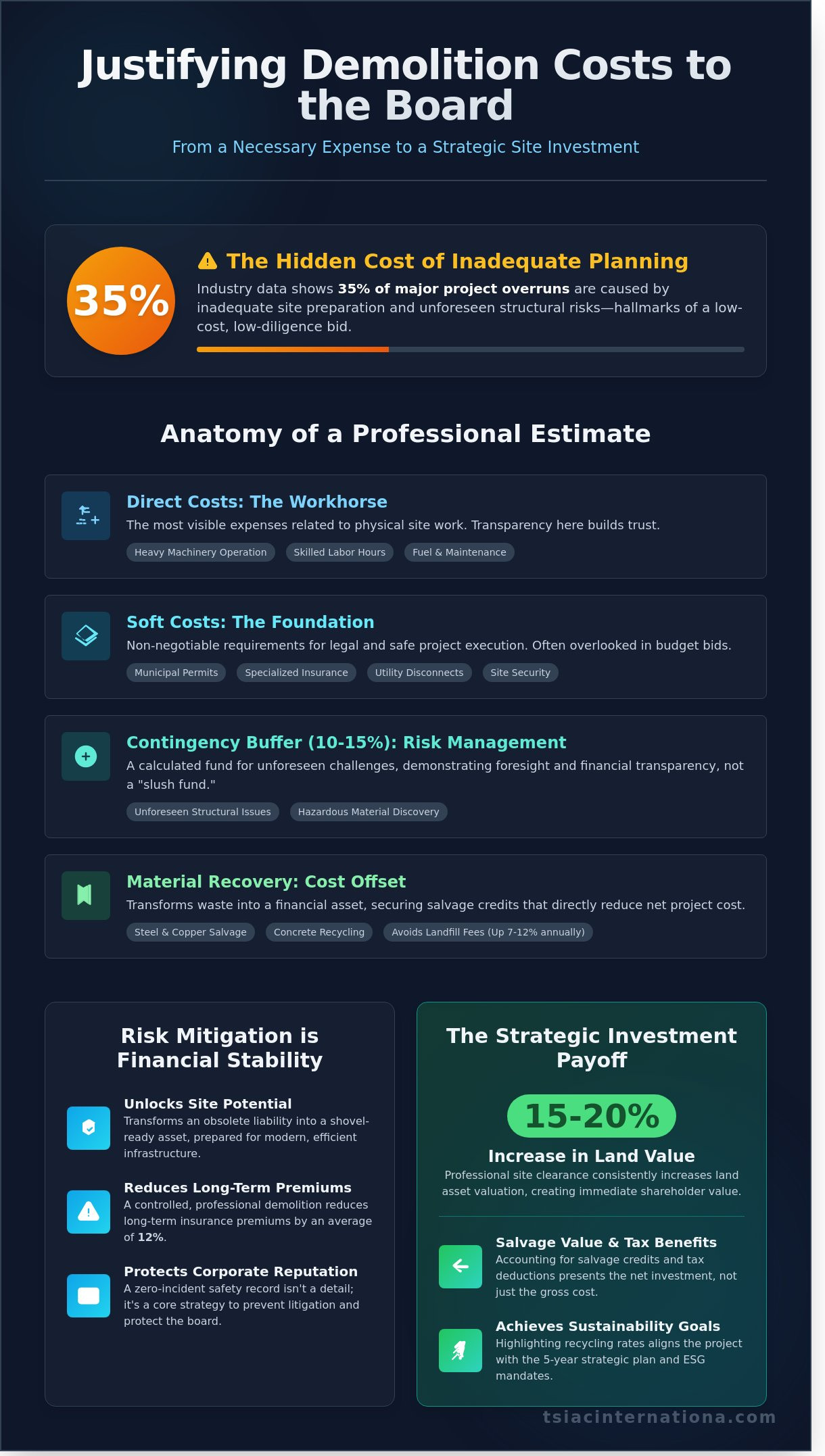
The lowest bid on a structural demolition project is frequently the most expensive line item a company will ever face. When a board of directors sees a high-value estimate, their immediate instinct is to cut costs, yet industry data from 2023 indicates that 35% of major project overruns are caused by inadequate site preparation and unforeseen structural risks. You understand that technical factors like hazardous material abatement and precision structural stabilization aren’t optional extras. They’re the foundation of site safety and long-term asset protection.

Learning how to justify demolition costs to a board requires moving beyond technical jargon and focusing on risk-adjusted investment. We’ll show you how to transform a complex engineering estimate into a persuasive case that secures full budget approval and builds confidence in your chosen contractor. This guide provides a clear framework for quantifying the value of specialized expertise and explains how to present compliance costs as essential insurance against future litigation. You’ll gain the tools to lead a board through the technical logic of a project with the same precision we bring to the job site.

Key Takeaways

  • Shift the board’s perspective from immediate expense to long-term strategic investment by focusing on asset value and liability reduction.
  • Discover how to break down complex estimates into transparent direct and soft costs to eliminate budget surprises for stakeholders.
  • Learn how to justify demolition costs to a board by positioning safety and hazardous material mitigation as the primary drivers of financial stability.
  • Use a data-driven comparative analysis to demonstrate why site clearing is often more cost-effective than the hidden expenses of adaptive reuse.
  • Implement a professional framework to present the net investment, accounting for salvage value and tax benefits to secure final approval.

Framing Demolition as a Strategic Investment Rather Than an Expense

Demolition justification is the technical process of aligning structural removal costs with long-term property valuation and the systematic reduction of environmental liabilities. Project managers often struggle with how to justify demolition costs to a board because they present the project as a singular financial drain. A professional approach requires shifting the narrative from a “cost-center” mindset to a “site-readiness” mindset. This ensures that the board views the removal of a 30-year-old industrial structure not as a loss of assets, but as the critical first step in preparing the ground for a revenue-generating facility.

Boards evaluate major projects through the lens of Total Cost of Ownership (TCO). An initial low bid price often masks the risks of structural instability or unforeseen hazardous material discovery. By utilizing a cost-benefit analysis framework, you can demonstrate that a controlled, professional demolition reduces long-term insurance premiums by an average of 12% and prevents the 25% cost overruns typically seen in poorly planned “budget” removals. High-precision demolition unlocks the site’s potential, allowing for modern, efficient infrastructure that meets current environmental standards.

Identifying Board-Level Priorities

Boards distinguish strictly between capital expenditure (CapEx) and operational expenditure (OpEx). Demolition usually qualifies as CapEx when it’s the precursor to new construction. You’ve got to align the project with the organization’s current five-year strategic plan. If the 2024-2029 goals focus on sustainability, highlight the percentage of materials that will be recycled rather than landfilled. Safety is the primary non-negotiable value for any board. Presenting a contractor’s zero-incident safety record isn’t just a detail; it’s a risk mitigation strategy that protects the board’s corporate reputation and prevents litigation.

The Psychology of Budget Approval

Technical transparency is the foundation of trust with stakeholders. Don’t gloss over high-risk line items like specialized high-reach equipment or asbestos abatement. Instead, provide data-driven production rates, such as the specific tonnage of debris processed per shift, to justify the project timeline. Industry data from 2023 indicates that projects lacking this level of detail face approval delays 40% more often than those with granular data. Use case studies to illustrate the financial impact of failed projects where “cheap” contractors left sites contaminated or structurally unsound, costing companies millions in remedial work.

  • Focus on the transition from “obsolete liability” to “shovel-ready asset.”
  • Use concrete production metrics to back up every dollar requested.
  • Highlight the 15% to 20% increase in land value following professional site clearance.

Decoding the Components of a Professional Demolition Estimate

Boards often view demolition as a destructive expense rather than a preparatory investment. To understand how to justify demolition costs to a board, you’ve got to dismantle the estimate into its core technical layers. A professional bid isn’t just a bottom-line figure; it’s a breakdown of logistical precision and risk mitigation.

Direct costs are the most visible drivers. These include heavy machinery operation, skilled labor hours, and fuel consumption. However, it’s the soft costs that frequently catch board members off guard. Municipal permits, specialized insurance premiums, and utility disconnects are non-negotiable requirements for legal and safe execution. If these aren’t clearly articulated, the board might perceive the estimate as inflated rather than comprehensive.

A responsible estimate also includes a 10% to 15% contingency buffer. This isn’t a “slush fund.” It’s a calculated risk management tool designed to handle unforeseen structural anomalies or the discovery of hazardous materials. Presenting this buffer demonstrates a commitment to financial transparency. It shows the board you’ve planned for reality, not just the best-case scenario.

The Economics of Material Recovery and Recycling

Material recovery transforms waste into a financial asset. By separating steel, copper, and concrete at the source, contractors can secure salvage credits that directly reduce the net project cost. Landfill tipping fees in many metropolitan areas have increased by 7% to 12% annually since 2021. Recycling bypasses these rising costs while fulfilling Environmental, Social, and Governance (ESG) mandates. Boards value these metrics because they align fiscal responsibility with modern corporate sustainability goals. It’s a rare opportunity where the “green” choice is also the most cost-effective one.

Selective vs. Structural Demolition Costs

Total knockdown is often cheaper per square foot because it allows for aggressive, high-volume machinery use. However, when a project requires commercial interior gutting services, the labor intensity increases. This “surgical” approach involves manually removing components to protect the building’s structural integrity or preserve specific architectural features. This precision requires more man-hours and smaller, specialized equipment. You can explain to the board that this higher upfront labor cost prevents millions in potential structural damage or the need for total reconstruction. Balancing these structural concerns with renovation goals is essential for long-term asset value. If you’re managing a complex site, consulting with a technical demolition partner early in the planning phase ensures your estimate remains accurate and defensible.

How to Justify Demolition Costs to a Board: A Strategic Guide for Project Managers

Risk Mitigation: The Board’s Primary Value Driver

Risk is the board’s main concern. They don’t want surprises; they want certainty. When you’re explaining how to justify demolition costs to a board, you must lead with risk management. Hazardous materials represent the primary cause of budget inflation, often increasing project costs by 15% to 30% if discovered mid-demolition. Upfront testing isn’t a luxury. It’s a financial shield that prevents work stoppages and emergency remediation fees.

The “Cost of Inaction” is a powerful metric for any project manager. A vacant, degrading building isn’t a neutral asset; it’s a growing liability. Consider these specific risks that accumulate every month a decision is delayed:

  • Structural Degradation: Water ingress can compromise structural integrity within 12 months, making eventual demolition more dangerous and expensive.
  • Security Threats: Squatters and vandalism increase premises liability. A single injury on-site can lead to litigation costs exceeding the price of the demolition itself.
  • Regulatory Fines: Local municipalities often issue “demolition by neglect” citations. In some jurisdictions, these daily fines can reach thousands of dollars.

Justifying Hazardous Material Abatement

Professional hazardous material abatement serves as a long-term liability shield for the organization. Under EPA National Emission Standards for Hazardous Air Pollutants (NESHAP), owners are responsible for asbestos presence regardless of who performs the work. Non-compliance isn’t just a project delay; it’s a federal offense. As of 2024, OSHA’s maximum penalty for “willful” violations has risen to $161,323 per violation. Specialized containment and professional removal are fixed necessities because they prevent these catastrophic financial and reputational hits. Understanding how to justify demolition costs to a board involves shifting the focus from “spending” to “protecting” the organization’s balance sheet through strict regulatory adherence.

Insurance and Liability Transfer

A high-bonded contractor acts as an external safety net. When you hire a firm with robust insurance, you’re transferring the project’s inherent risks away from the board’s accounts. Ensure the contract includes “pollution liability” coverage. This specific policy covers damages resulting from the release of hazardous materials, which standard general liability often excludes. By selecting a contractor with a low Experience Modification Rate (EMR), typically below 1.0, the organization can often negotiate lower site-specific insurance premiums. This technical approach proves that the demolition budget isn’t just paying for destruction; it’s purchasing a clean, risk-free slate for future development.

Comparative Analysis: Demolition vs. Adaptive Reuse Costs

Boards often default to adaptive reuse because it feels like a conservative preservation of capital. However, the financial reality usually favors a clean slate. Maintaining a derelict 50,000-square-foot industrial warehouse can cost upwards of $2.50 per square foot annually just for basic security, structural stabilization, and liability insurance. When you present your case, you’ve got to address the “Hidden Sunk Cost” fallacy. Retrofitting a structure built before 1980 frequently uncovers hazardous materials like asbestos or lead; these remediation efforts can inflate renovation budgets by 15% to 30% before a single structural improvement begins. This unpredictability is a primary reason why project managers must learn how to justify demolition costs to a board through transparent risk modeling.

Modern, energy-efficient new construction offers a superior ROI compared to retrofitting. New builds typically achieve LEED or similar certifications that reduce operational energy costs by 20% to 35% compared to legacy systems. A new facility isn’t just a structure; it’s a high-performance asset with a reset depreciation clock. By clearing the site, you eliminate the compromises of “working around” old load-bearing walls or outdated floor loads that limit modern machinery placement.

Quantifying the Cost of Delay

Holding a non-productive asset is a direct drain on corporate liquidity. Daily holding costs include property taxes, utility stand-by fees, and 24/7 security to prevent trespassing. In metropolitan areas, these costs often exceed $1,200 per day for mid-sized industrial sites. Inflation adds another layer of financial risk. According to the Turner Building Cost Index, construction costs in the specialized industrial sector rose by approximately 8% in 2022. Delaying demolition for twelve months doesn’t just stall the project; it makes the eventual build significantly more expensive due to rising labor and material costs.

Visualizing the Post-Demolition ROI

Boards respond to clarity and visual evidence. Use 3D site renderings to transform a “dilapidated liability” into a “ready-to-build asset” in their minds. A clear timeline shows that while demolition takes 4 to 10 weeks, it accelerates the total project delivery by removing the technical hurdles of working within an old shell. It provides a predictable path to revenue that stakeholders can track with precision. Site-readiness is the primary hurdle to project financing.

Once the site is cleared and graded, the risk profile drops, making the project more attractive to Tier 1 lenders and institutional investors. Understanding how to justify demolition costs to a board requires shifting the focus from the cost of destruction to the value of a prepared foundation.

Partner with technical experts for complex site preparation to ensure your project stays on schedule and under budget.

Presenting the Final Proposal: A Board-Ready Framework

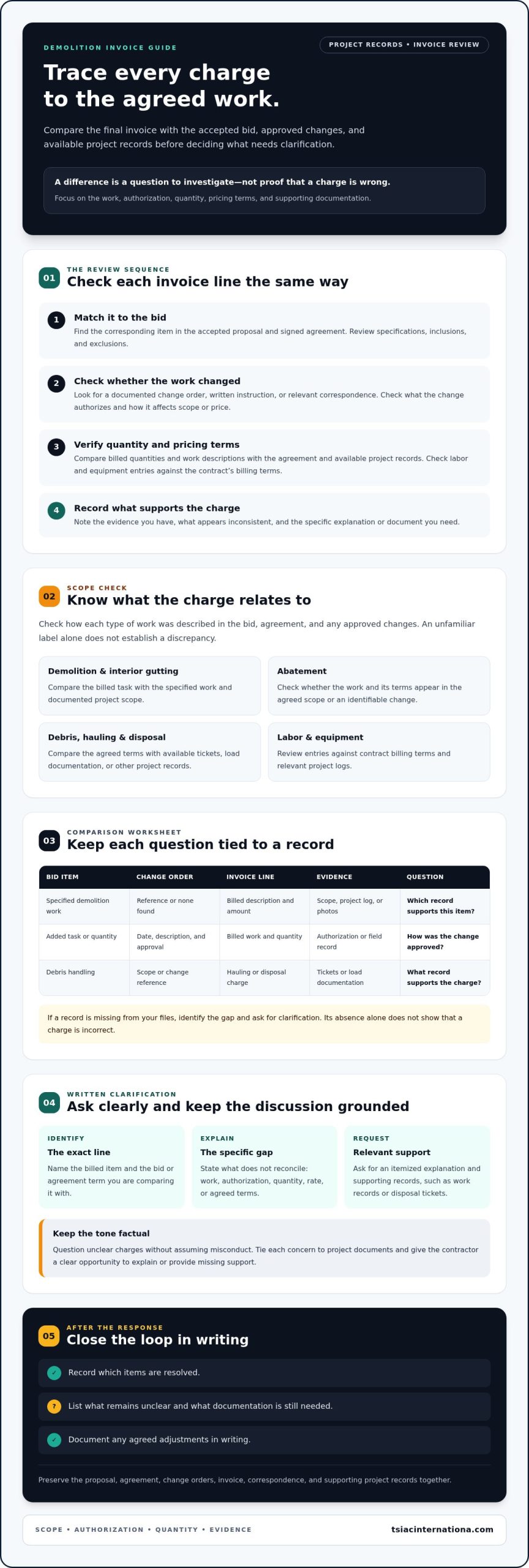
Your objective is to transform a complex technical project into a clear financial and strategic decision. When you explain how to justify demolition costs to a board, you must shift the focus from spending money to protecting equity and safety. Use this four-step framework to secure approval without unnecessary friction.

  • Step 1: Lead with the “Why” (Safety and Strategy). Safety isn’t a line item; it’s a liability shield. Highlight how removing a derelict structure eliminates 100% of the ongoing maintenance costs and legal risks associated with aging assets.
  • Step 2: Present the “Net Cost.” Don’t just show the gross bid. Calculate the total cost minus salvage credits for steel or copper and any identified tax benefits. This presents the actual impact on the company balance sheet rather than an inflated headline figure.
  • Step 3: Address the “What Ifs” (Risk and Contingency). Boards hate surprises. Proactively define a 10% to 15% contingency plan for unforeseen structural or environmental variables. Addressing these risks early builds trust in your management capabilities.
  • Step 4: The Selection Criteria. Prove that your chosen contractor represents the lowest risk, not just the lowest price. Boards prioritize continuity and reputation over marginal savings that could lead to litigation or delays.

Why Experience Minimizes Change Orders

A 15-year veteran firm like TSIAC International identifies structural weaknesses or hazardous materials before they trigger expensive delays. Change orders in demolition often stem from poor site assessment. Relying on a fixed-price structural demolition contract provides the budget certainty boards demand. A documented demolition process ensures that schedule adherence is measured against clear milestones, keeping the project on track for the next phase of development. This level of engineering precision prevents the 20% to 30% cost overruns common with less experienced crews.

The Final Close: Moving to Action

Distill your proposal into three specific decisions: approving the safety-first methodology, authorizing the net budget, and confirming the project timeline. You need to provide a clear roadmap for the immediate future to maintain momentum. In the first 30 days, focus on permitting and site mobilization. By day 60, structural dismantling should be 50% complete. Within 90 days, the site will be cleared, graded, and ready for inspection. This clear timeline reduces the board’s anxiety regarding project stagnation. If you’re ready to secure a professional, data-backed proposal, request a comprehensive board-ready estimate from TSIAC International to ensure your project starts with total transparency and technical authority.

Securing Board Approval Through Strategic Precision

Success in the boardroom depends on shifting the narrative from a simple expense to a calculated investment in site potential. By highlighting how professional structural removal mitigates long-term liability, you provide the clarity stakeholders need to move forward. Knowing how to justify demolition costs to a board involves presenting a framework that prioritizes safety, environmental compliance, and future-proofing the asset. TSIAC International supports this process with 15+ years of structural removal expertise, ensuring every phase of the project remains under strict control.

Our team provides full-service hazardous material abatement and containment, removing the burden of environmental risk from your proposal. We also implement a comprehensive material recycling program for wood, metal, and plastic, which aligns your project with corporate sustainability goals. These technical advantages turn a standard quote into a strategic plan that addresses the board’s primary concerns regarding safety and efficiency. Don’t present a budget when you can present a solution backed by engineering precision.

Get a Board-Ready Demolition Strategy and Quote from TSIAC International

Your path to a cleared, high-value site is ready for its first professional step.

Frequently Asked Questions

How do you explain asbestos removal costs to a board?

Asbestos removal is a non-negotiable legal requirement under OSHA 29 CFR 1926.1101 and EPA NESHAP regulations. Failure to mitigate these hazardous materials leads to federal fines exceeding $15,000 per violation per day. Board members must view this as a critical risk mitigation strategy that protects the organization from long term litigation and worker health claims. Proper abatement ensures the site meets all safety standards before structural work begins.

What is the typical ROI on building demolition for a developer?

ROI on building demolition is calculated by the immediate elimination of holding costs, which often consume 2% to 5% of a property’s value annually in taxes and security. Clearing an obsolete structure increases land liquidity and can lead to a 20% increase in land value once the site is pad-ready. This financial upside is a critical factor when learning how to justify demolition costs to a board focused on asset performance.

Can we reduce demolition costs through on-site material recycling?

On-site material recycling can reduce total project expenditures by up to 30% by eliminating haul-off fees and the need for imported backfill. Crushing concrete and masonry into aggregate on the job site saves between $10 and $25 per ton compared to purchasing virgin materials. This process also decreases heavy vehicle traffic by 40 percent, which lowers the project’s carbon footprint. It effectively transforms waste into a functional construction asset.

Is selective demolition always cheaper than total structural demolition?

Selective demolition is frequently more expensive per square foot because it requires specialized shoring and 50% more labor hours for precision work. While total demolition uses heavy machinery for rapid clearing, selective projects rely on manual labor and expert structural engineers to protect remaining assets. A 2022 industry study showed that intricate interior gutting takes twice as long as a full site clearing. Decision makers should choose based on architectural goals.

How should we handle unexpected site conditions in our approved budget?

Handle unexpected conditions by utilizing a pre-approved contingency fund, typically set at 10% to 15% of the total project budget. When underground storage tanks or unstable soil are discovered, the project manager must present a revised risk matrix. Addressing these issues immediately prevents compounding delays that could increase costs by 1% for every week the project stalls. Proactive planning ensures transparency and maintains the board’s confidence in the management team.

What are the risks of choosing the lowest bidder for a commercial demolition?

Choosing the lowest bidder often results in hidden costs that can exceed the highest bid by 25% due to poor execution and change orders. Low-cost contractors may lack adequate pollution liability insurance or a high Experience Modification Rate below 1.0. This exposes the board to vicarious liability if a safety incident occurs. Professional demolition requires technical precision and robust safety protocols that bargain-rate firms cannot consistently provide.

How does demolition impact our organization’s ESG or sustainability goals?

Modern demolition practices can divert up to 90% of debris from landfills, which directly supports LEED certification and corporate ESG metrics. By documenting the recovery of steel, copper, and concrete, a project manager demonstrates environmental stewardship through measurable data. This provides a quantifiable way of how to justify demolition costs to a board that prioritizes sustainable investment. It turns a destructive process into a verifiable environmental and social gain.

What happens to our liability if we delay a necessary demolition?

Delaying a necessary demolition exposes the organization to trespassing lawsuits and rising insurance premiums, which can jump by 15% annually for derelict structures. Buildings left idle are prone to fire, mold, and structural collapse, creating a hazardous environment for the public. Under the Attractive Nuisance doctrine, boards are legally responsible for injuries to unauthorized persons on the site. Immediate action is a defensive financial and legal necessity.