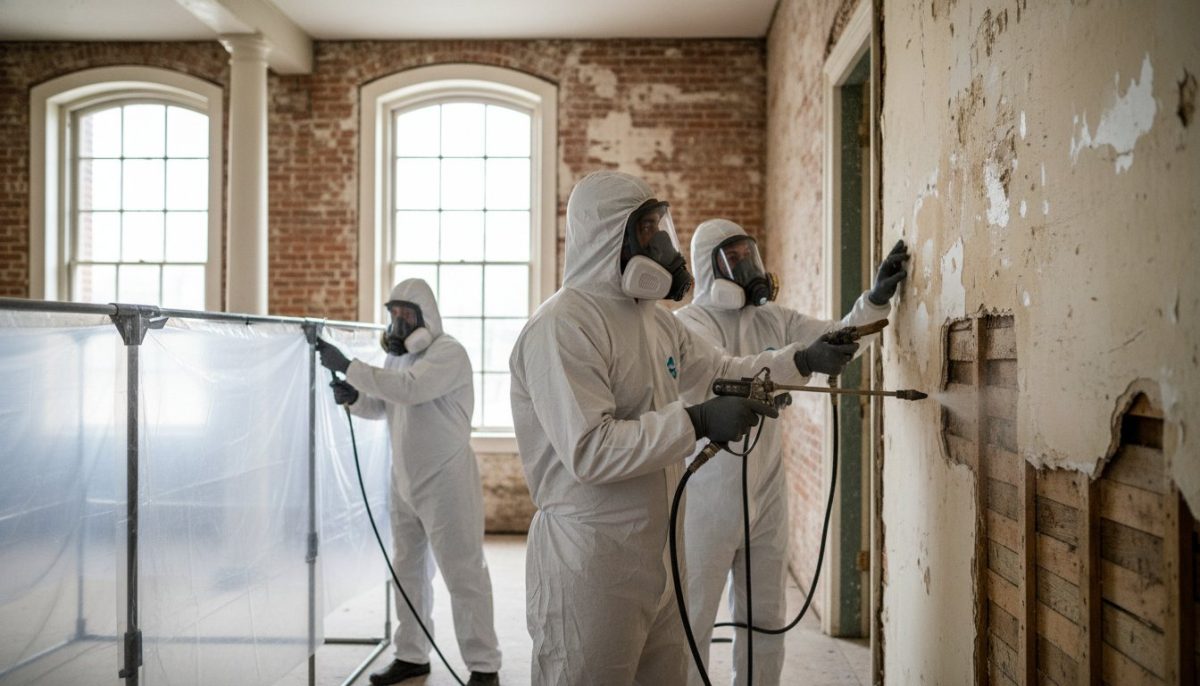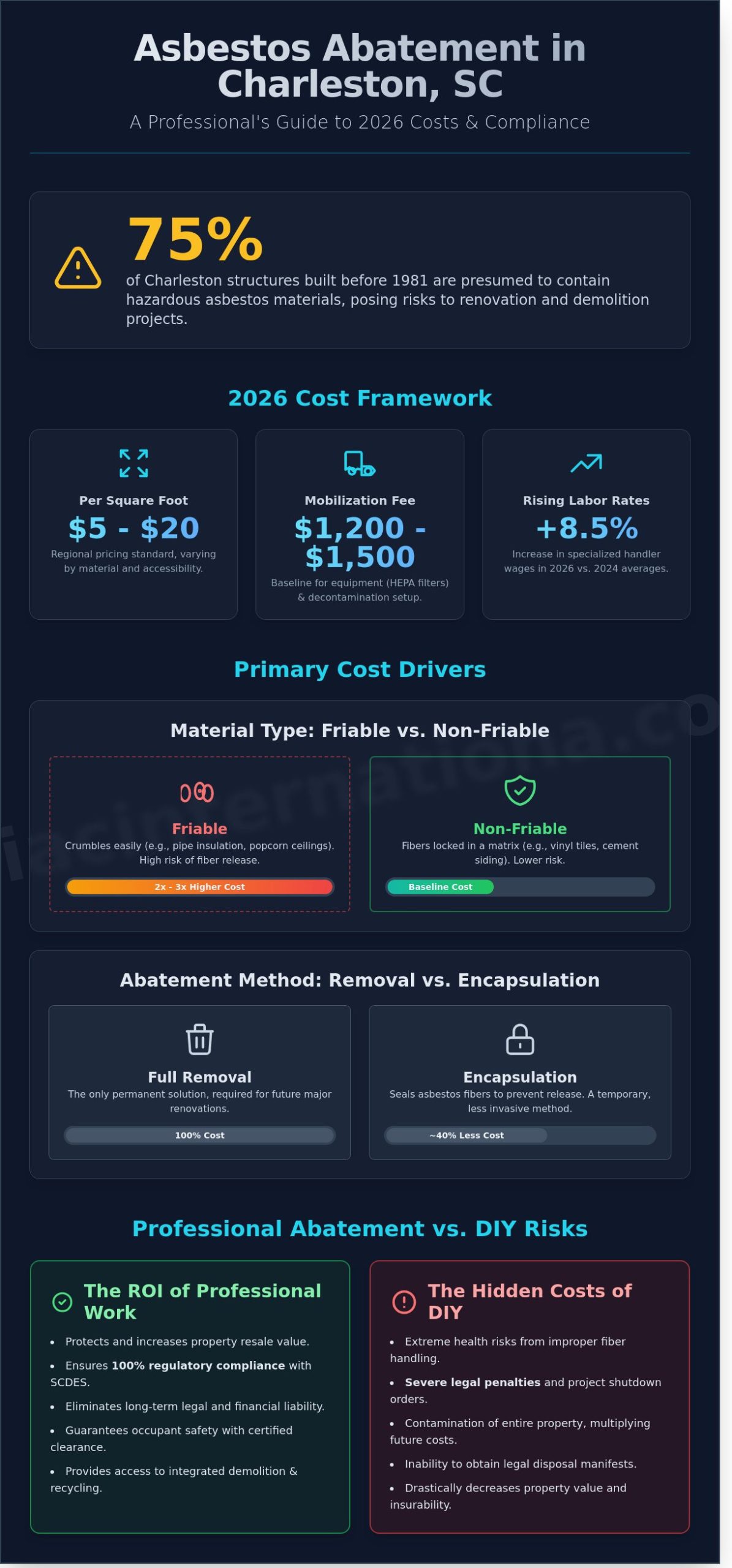
Could a 48-hour moisture event in the South Carolina humidity permanently compromise your commercial asset’s structural integrity? For property owners and facility managers, the reality of mold abatement south carolina has shifted from simple surface cleaning to a rigorous, surgical structural requirement. You likely understand that the humid climate doesn’t just invite spores; it accelerates structural decay that leads to massive liability and environmental non-compliance if handled incorrectly.
This guide helps you master the technical requirements, the 2026 SCDES regulatory standards, and the complex structural implications of large-scale abatement projects. We’ll provide a methodical breakdown of how to navigate current SCDES protocols while ensuring your property is restored to a safe, compliant shell. We’ll examine everything from mandatory 10-day asbestos notification prerequisites to the specific engineering standards of ANSI/IICRC S520. By following these disciplined procedures, you can achieve full regulatory compliance and minimize environmental impact through strategic material recycling.
Key Takeaways
- Understand why surgical structural removal is the only viable methodology for mitigating long-term moisture damage and preserving property value in humid climates.
- Navigate the 2026 SCDES regulatory landscape for mold abatement south carolina, ensuring full compliance with updated hazardous material reporting and environmental standards.
- Gain technical insight into high-integrity containment protocols and negative air pressure systems required for safe, professional-grade hazardous material extraction.
- Identify the specific engineering challenges involved in large-scale industrial projects, particularly regarding complex HVAC distribution and acoustic ceiling assemblies.
- Discover the operational advantages of a unified approach that integrates certified environmental remediation with selective structural demolition and material recycling.
Understanding Mold Abatement in South Carolina: Structural vs. Cosmetic
Professional mold abatement south carolina requires a disciplined departure from superficial cleaning methods. In commercial and industrial settings, mold isn’t just an aesthetic blemish; it’s a biological contaminant that compromises the substrate’s physical properties. True abatement involves the physical extraction of hazardous growth and the implementation of rigorous engineering controls to prevent cross-contamination during the removal process. Unlike cosmetic remediation, which often relies on antimicrobial coatings to mask issues, abatement addresses the root structural failure.
The Impact of Humidity on South Carolina Structures
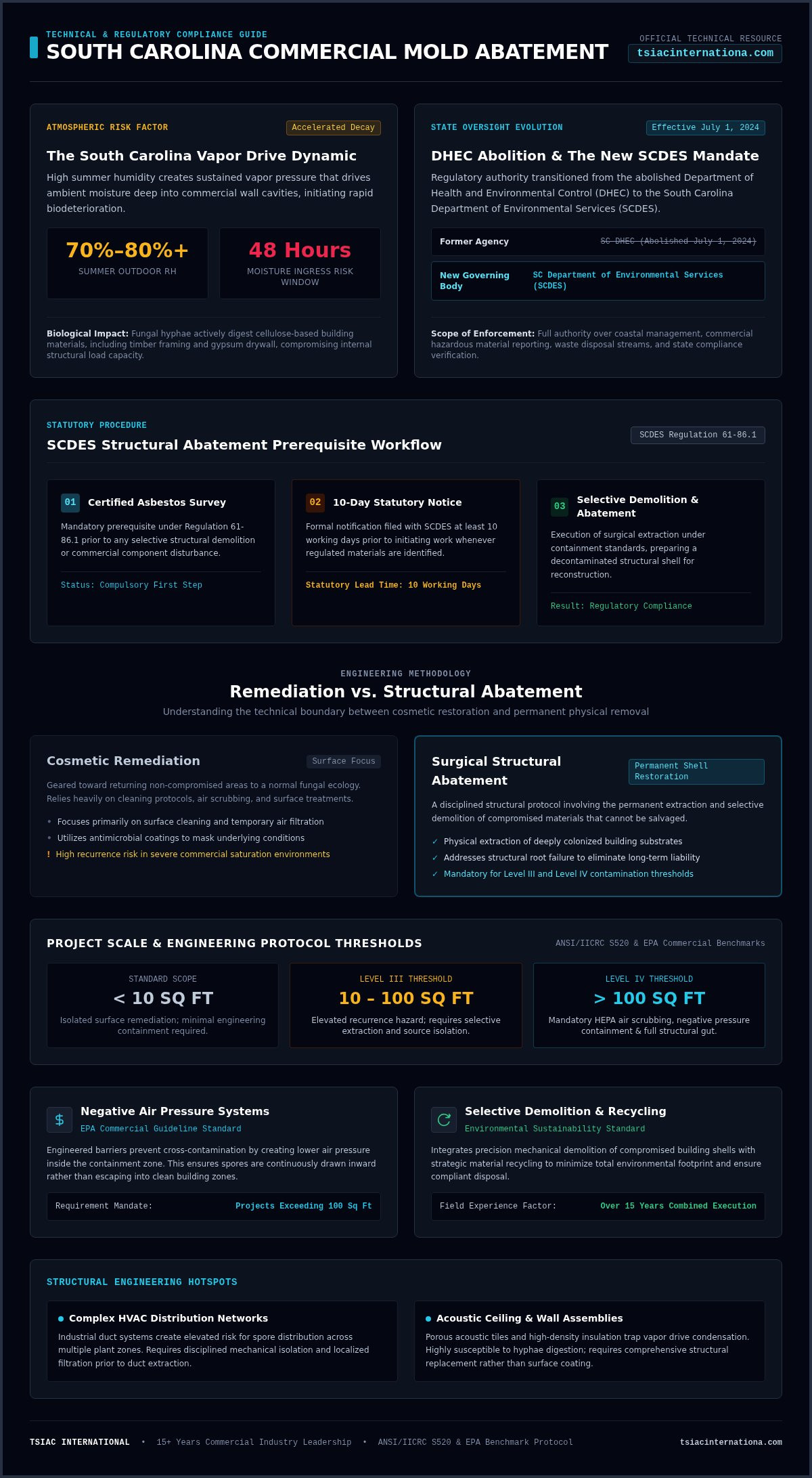
South Carolina’s climate presents unique challenges for property maintenance. With average outdoor relative humidity frequently exceeding 70% to 80% during summer months, buildings face a persistent vapor drive that forces moisture deep into wall cavities. This atmospheric saturation fuels the microbial biodeterioration of building materials, where fungal hyphae actively digest cellulose-based components like drywall and timber framing. By the time visible growth appears on a surface, the internal structural integrity of load-bearing elements may already be compromised. For property owners in 2026, failing to address these deep-seated issues creates significant long-term liability. The recent transition of environmental oversight to the South Carolina Department of Environmental Services (SCDES) has further tightened the requirements for documented, professional-grade structural management.
Abatement vs. Remediation: A Technical Distinction
There’s a critical technical difference between remediation and abatement that owners must understand to protect their assets. Remediation generally focuses on restoration and returning a space to a normal fungal ecology, often through cleaning and air filtration. In contrast, abatement is a permanent structural solution involving the removal of contaminated materials that can’t be salvaged. TSIAC International prioritizes an abatement-first methodology because surface treatments often fail in high-saturation commercial environments.
When colonization reaches Level III or IV thresholds (areas exceeding 10 to 100 square feet), the risk of recurrence is too high for simple restoration. We leverage over 15 years of industry experience to combine selective demolition with hazardous material containment. This ensures that the building shell is truly decontaminated before any reconstruction begins. Our process doesn’t just clean the surface; it utilizes surgical structural intervention to eliminate the source of decay, ensuring the safety of the environment and the longevity of the property.
Navigating South Carolina Regulatory Standards for 2026
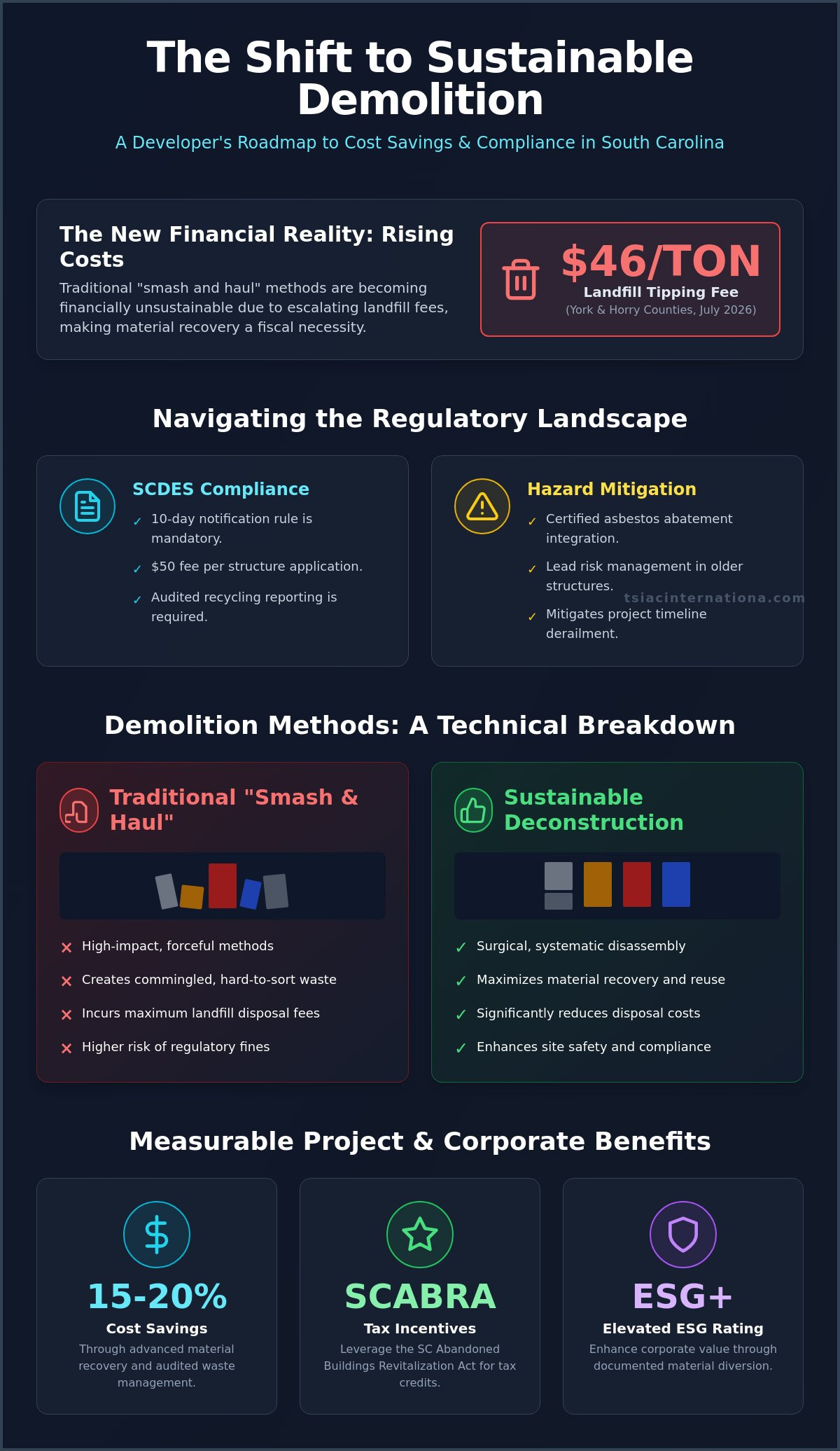
The regulatory landscape for mold abatement south carolina underwent a fundamental shift on July 1, 2024, when the Department of Health and Environmental Control (DHEC) was abolished. Environmental oversight, including hazardous waste disposal and coastal management, now falls under the jurisdiction of the South Carolina Department of Environmental Services (SCDES). For property owners, this means that compliance is no longer just about air quality; it’s about adhering to the specific waste management and reporting protocols established by this new agency. Navigating these requirements requires a disciplined understanding of both state mandates and federal Hazardous Air Pollutants (HAP) standards.
SCDES and EPA Compliance Protocols
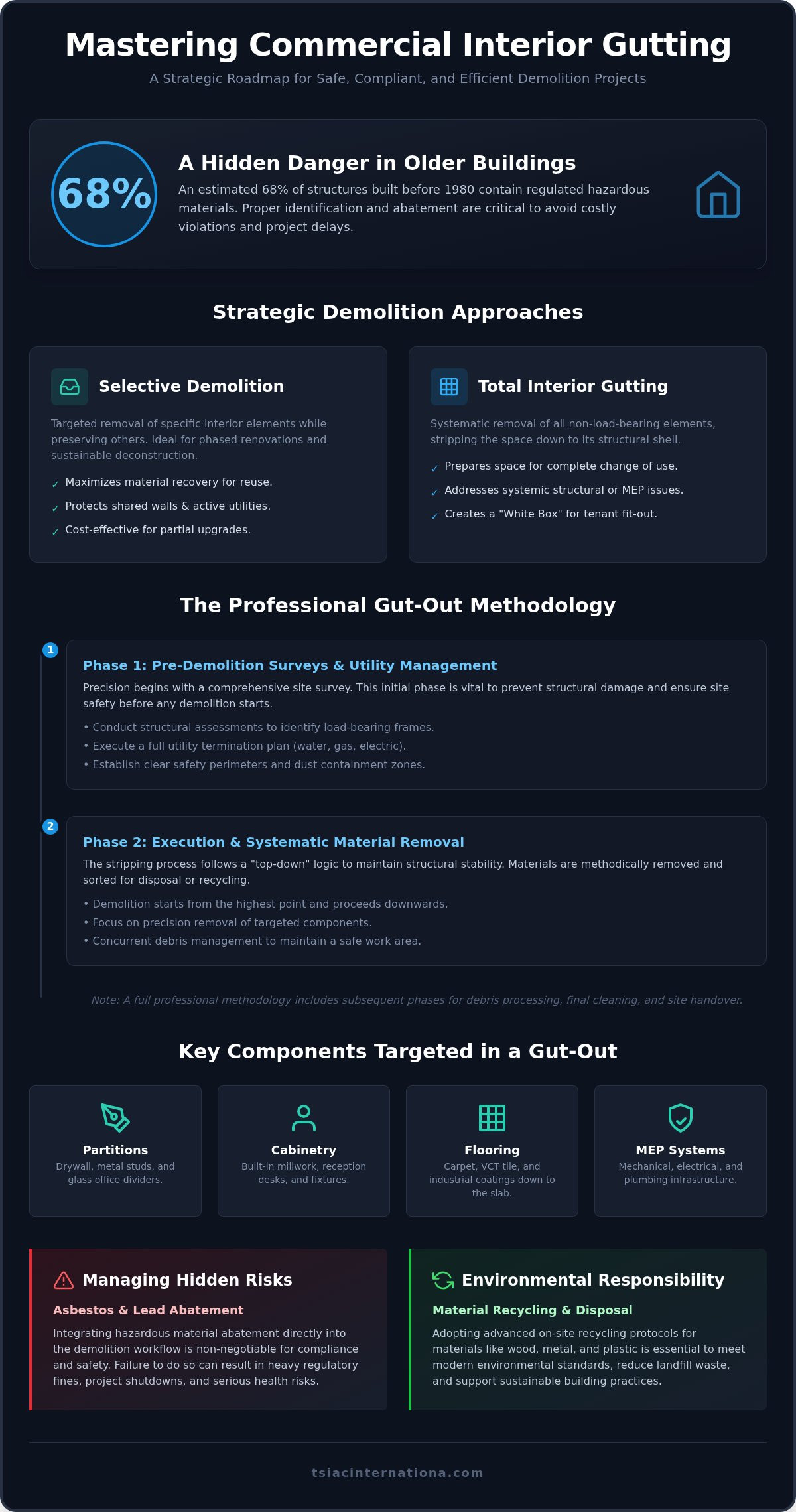
Large scale structural abatement often intersects with other regulated materials, particularly in South Carolina’s historic and coastal commercial structures. Under SCDES Regulation 61-86.1, any structural abatement involving selective demolition or the disturbance of building components in commercial properties requires a certified asbestos survey first. If regulated materials are present, a formal notification must be filed with SCDES at least 10 working days before work begins. This statutory lead time is non-negotiable and essential for maintaining legal compliance during the gutting process.
Beyond state rules, professional contractors must align their containment strategies with EPA commercial mold remediation guidelines. These federal benchmarks dictate the use of HEPA air scrubbers and negative pressure environments for any project exceeding 100 square feet of contamination. Maintaining these engineering controls isn’t just a safety preference; it’s a requirement to prevent the dispersal of toxic organic spores into adjacent, uncontaminated zones during structural removal. Failure to document these air quality controls can lead to severe penalties under HAP reporting standards.
Liability Management for Property Owners
Liability in 2026 extends far beyond the physical completion of a project. Property managers must maintain a rigorous chain of custody for all debris disposal to avoid the “DIY Trap,” where improper waste handling leads to environmental litigation. While non-hazardous moldy materials like carpeting or drywall can often be disposed of in standard landfills, they must be double-bagged in 6-mil polyethylene sheeting to prevent spore release during transit. If the substrate contains lead-based paint or asbestos, disposal becomes a high-stakes hazardous waste operation under SCDES oversight.
Choosing a partner who understands these bureaucratic complexities is vital for risk mitigation. Professional hazardous material abatement services ensure that every phase of the project, from the initial 10-day filing to the final waste manifest, is documented with precision. This methodical approach protects the property owner from future claims and ensures that the structural restoration meets all current South Carolina legal thresholds.
The Professional Abatement Process: A Surgical Approach
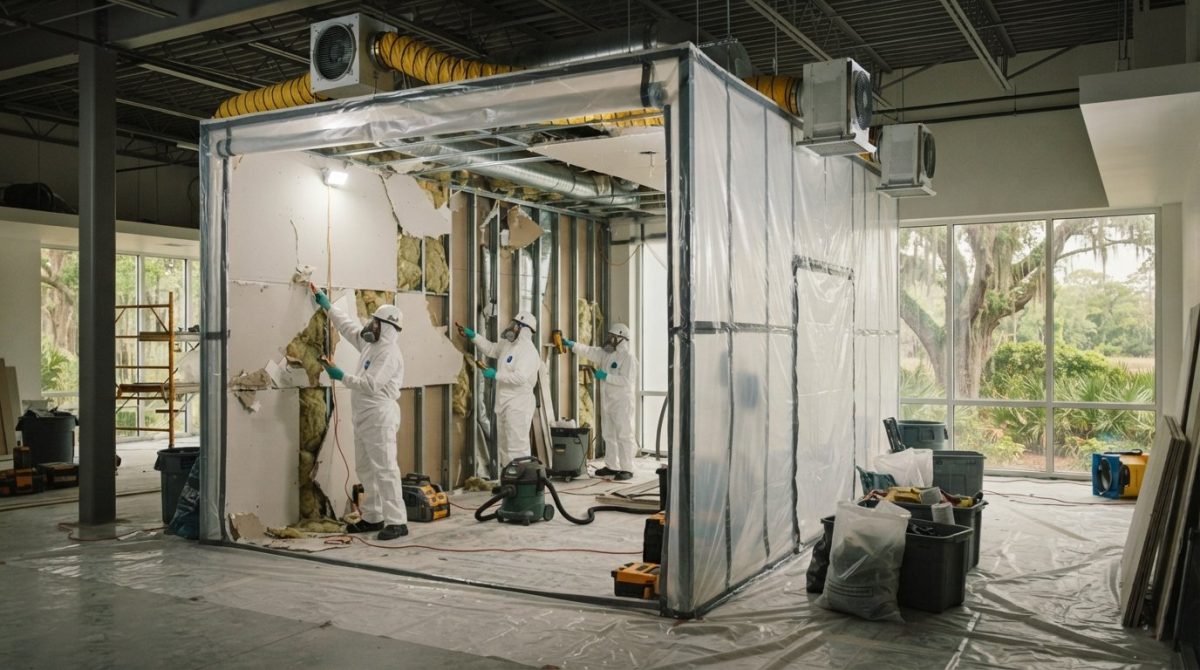
Executing professional mold abatement south carolina requires a four-phase methodology designed to isolate and eliminate microbial hazards without compromising the rest of the facility. Unlike rapid disaster cleanup, surgical abatement requires an engineering-first mindset. The process begins with advanced site assessment and moisture mapping. We use thermal imaging and moisture meters to identify hidden saturation points within wall cavities that surface inspections often miss. Once the extent of the damage is mapped, we transition to phase two: establishing high-integrity containment. We use 6-mil polyethylene sheeting and tensioned poles to create physical barriers, coupled with negative air pressure systems to ensure that no airborne spores escape the work zone.
Phase three involves the selective removal of contaminated structural components. This isn’t a general demolition; it’s a precise extraction of materials that have reached a state of irreversible microbial decay. Finally, phase four focuses on specialized HEPA filtration and environmental decontamination. We utilize industrial-grade air scrubbers to cycle the air multiple times per hour, scrubbing microbial particulates to achieve a safe fungal ecology. This disciplined sequence ensures that the building is returned to a safe shell, ready for reconstruction without the risk of latent spore regrowth.
Containment and Negative Pressure Infrastructure
Preventing cross-contamination during interior gut-outs is the highest priority. We deploy industrial-grade air scrubbers equipped with HEPA filters capable of capturing 99.97% of particles down to 0.3 microns. These machines maintain a continuous negative pressure environment, which is vital when projects involve co-contamination hazards like lead paint or asbestos. All site personnel adhere to OSHA worker protection standards for mold abatement, including mandatory respiratory protection and PPE protocols. This disciplined approach ensures that the remediation zone remains strictly isolated from occupied areas of the building, protecting both the workers and the property’s occupants.
Debris Management and Environmental Responsibility
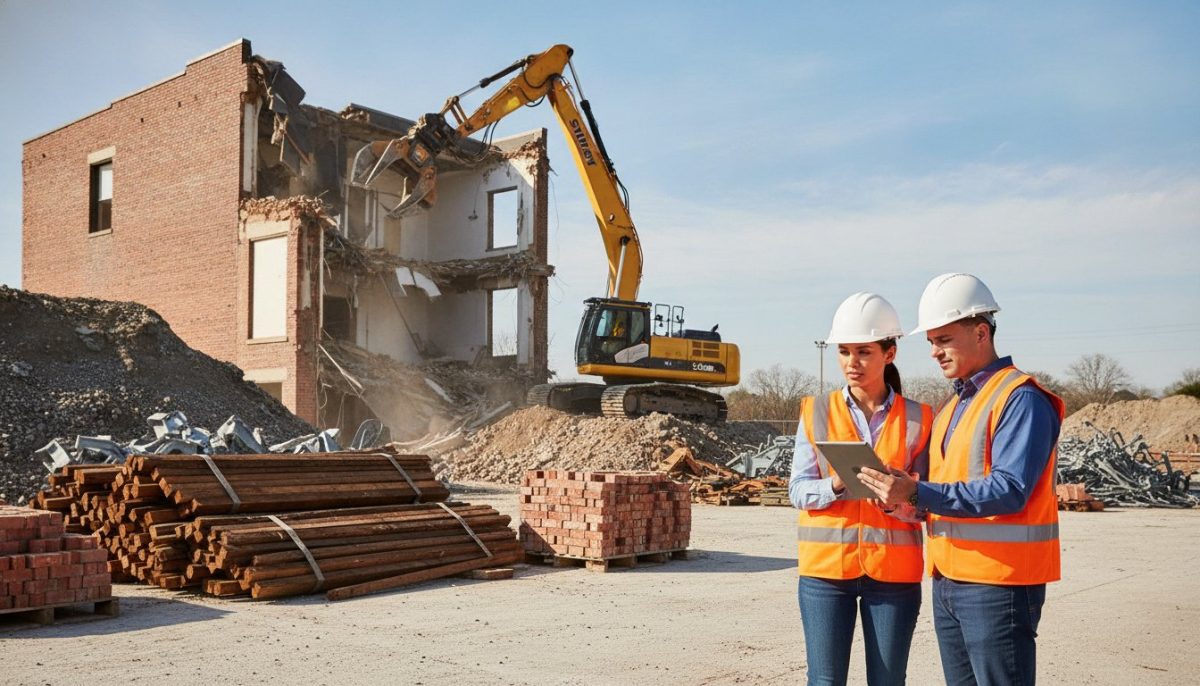
Effective abatement shouldn’t come at the cost of environmental health. TSIAC International maintains a strict commitment to job site stewardship by sorting wood, metal, and plastic for sustainable recovery. Instead of sending all structural debris to a landfill, we prioritize selective material recycling. This reduces the project’s overall environmental footprint and aligns with modern commercial sustainability goals. Our 15+ years of experience allows us to manage these complex waste streams with precision. We ensure that hazardous materials are double-bagged and disposed of according to SCDES standards while recyclable substrates are diverted back into the supply chain, providing a cleaner, more responsible solution for South Carolina property owners.
Commercial vs. Industrial Mold Abatement Challenges
Scaling mold abatement south carolina for industrial environments requires a fundamental shift in equipment and logistical planning compared to standard commercial office projects. Industrial facilities often feature massive HVAC distribution networks and sprawling acoustic ceiling structures that act as secondary reservoirs for microbial growth. While a commercial office might require localized containment, an industrial plant may necessitate the isolation of entire production lines to prevent cross-contamination across thousands of square feet. Property managers must also navigate stringent insurance requirements, as professional abatement in 2026 typically mandates a minimum of $1,000,000 in general liability coverage specifically for mold-related claims.
Managing these projects in operational spaces requires a disciplined approach to selective demolition. We coordinate work schedules to minimize downtime, using physical barriers that exceed standard safety thresholds. The goal is to maintain a safe environment for active staff while performing high-intensity structural extraction in adjacent zones. This methodical separation is essential for facilities that cannot afford a complete operational shutdown during hazardous material removal.
Industrial Gutting and Selective Demolition
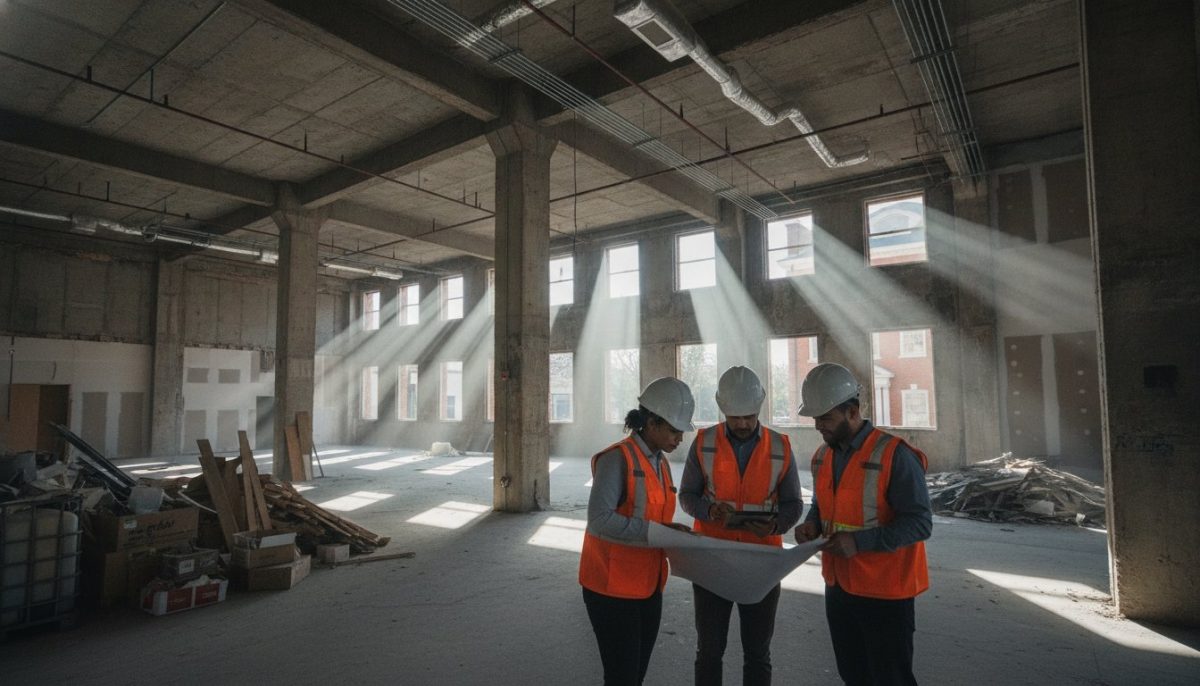
Stripping an industrial interior to its structural shell is a complex engineering task, especially when foundations are compromised by long-term moisture. This often involves concrete removal where spores have penetrated deep into porous slabs or sub-flooring. Our teams utilize specialized heavy machinery designed for confined interior spaces, ensuring that load-bearing elements remain intact while contaminated substrates are extracted. This level of precision prevents the structural instability that often follows aggressive, non-professional demolition attempts.
Tenant Improvement and Renovation Readiness
Once the mold abatement south carolina phase is complete, the site must be prepared for immediate reconstruction. This transition is a critical handoff point where we ensure the structural shell is ready for metal framing, drywall, and painting services. By integrating these steps, we provide a seamless path toward tenant improvement. For a deeper look at how we manage these transitions, read our Commercial Interior Gutting Services guide. This integrated approach allows general contractors to begin their work immediately upon our clearance, reducing the total project timeline.
If you’re ready to secure your facility’s future, request a professional industrial assessment to begin the restoration process.
Choosing an Abatement Partner: The TSIAC International Advantage
Selecting a partner for mold abatement south carolina requires more than a simple restoration checklist; it demands a contractor capable of managing deep structural complexities. TSIAC International brings over 15 years of industry experience to every project site. We don’t just treat surfaces. We execute methodical extractions that address the underlying structural failures caused by South Carolina’s climate. Our team has built a proven track record serving residential homeowners, large-scale commercial contractors, and government agencies. We provide transparent, fixed-price contracts for large remediation projects. This transparency ensures that facility managers can budget with total certainty, eliminating the risk of hidden costs during the structural gutting phase. Our word is a guarantee of quality and precision.
Integrated Hazardous Material Solutions
Many South Carolina properties, especially those in the coastal or historic sectors, face multi-hazard challenges during renovation. Our expertise allows for the simultaneous management of mold, lead, and Asbestos Removal in South Carolina. This unified approach eliminates the logistical burden of managing multiple subcontractors and reduces the risk of regulatory delays with SCDES. We apply surgical precision to every selective demolition project. We ensure that only compromised materials are removed while the structural integrity of the remaining building shell is preserved. Our commitment to environmental stewardship is reflected in our strict recycling standards. We sort wood, metal, and plastic on every site to divert materials from landfills. This aligns our safety protocols with modern corporate sustainability requirements and reduces the overall environmental footprint of your project.
Next Steps for Your South Carolina Property
Transitioning from a contaminated environment to a clean, build-ready shell begins with a technical site evaluation. During this assessment, we map the moisture profile and identify all hazardous contaminants present in the building assembly. It’s a data-driven approach that’s vital for professional mold abatement south carolina. Understanding the timeline for full structural gutting is essential for coordinating subsequent trades like metal framing and drywall. For a comprehensive overview of the legal and technical requirements, consult our Hazardous Material Abatement in South Carolina guide. This document provides property owners with the necessary framework to manage long-term liability and ensure a safe, compliant restoration process. By choosing a partner who manages the entire lifecycle of abatement and demolition, you secure the long-term value of your asset.
Securing Structural Integrity in the 2026 Regulatory Environment
Managing mold abatement south carolina requires a disciplined transition from reactive cleaning to proactive structural management. Adhering to the 2026 SCDES standards and implementing surgical containment protocols are non-negotiable steps for protecting commercial assets. By prioritizing full material extraction over surface treatments, you eliminate the risk of recurring contamination and preserve the building’s long-term value. It’s about moving beyond cosmetics to ensure the fundamental safety of the environment.
TSIAC International provides the technical precision needed for these complex environments. With 15+ years of industry experience and specialized selective demolition expertise, we ensure your property’s restored to a safe, build-ready shell. Our dedicated environmental recycling program further reduces your project’s footprint by diverting wood, metal, and plastic from landfills. This methodical approach transforms a hazardous liability into a clean slate for future growth. Consult with TSIAC International for Expert Abatement & Demolition to secure your property’s future today.
Frequently Asked Questions
Is mold abatement required by law for South Carolina commercial properties?
Professional mold abatement south carolina is legally required when the scope of work involves structural modifications exceeding specific cost thresholds under the South Carolina Contractor’s Licensing Board. While the state doesn’t currently mandate a standalone mold license, pending legislation like House Bill 5109 aims to establish stricter certification standards. Additionally, SCDES Regulation 61-86.1 requires a certified asbestos survey before any regulated structural demolition or renovation occurs on commercial or multi-family properties.
What is the difference between mold remediation and structural abatement?
Mold remediation primarily focuses on returning a space to a normal fungal ecology through cleaning and restoration. Structural abatement is a more aggressive, permanent solution involving the surgical removal of contaminated building materials that are beyond salvage. TSIAC International prioritizes an abatement-first methodology because it addresses the root cause of decay in humid climates. This process often involves stripping interiors to the structural shell to ensure all hazardous microbial growth is physically extracted.
How much does professional mold abatement cost in South Carolina?
The total investment for professional abatement depends on the project’s complexity, the square footage of the contaminated area, and the level of structural intervention required. Factors such as the necessity for high-integrity containment, industrial-grade negative air pressure systems, and specialized disposal of hazardous waste influence the final project fee. Larger industrial projects involving HVAC distribution or acoustic ceiling removal require more extensive engineering controls than localized residential extractions or simple surface treatments.
Can mold return after a professional interior gut-out?
Mold can return if the underlying moisture source isn’t permanently eliminated. While a professional interior gut-out removes all current colonization, the property remains vulnerable if relative humidity stays above 60% or if structural leaks persist. Successful mold abatement south carolina requires a dual approach: physically removing the contaminated substrates and implementing rigorous moisture control strategies. This ensures the building shell remains a Condition 1 environment after the reconstruction phase is completed by your general contractor.
Does TSIAC International handle both mold and asbestos at the same site?
Yes, TSIAC International provides integrated hazardous material solutions by managing both mold and asbestos simultaneously. Our 15 years of industry experience allow us to navigate the 10-day SCDES notification requirements and execute combined containment strategies. This unified approach reduces logistical delays and ensures that all hazardous materials are extracted under a single, rigorous safety protocol. It protects property owners from the liability of managing multiple environmental subcontractors on a single job site.
How long does the selective demolition process take during abatement?
The duration of selective demolition varies based on the scale of the facility and the complexity of the containment infrastructure. A standard commercial project may take several days to a week, accounting for the initial site assessment, moisture mapping, and the setup of negative air pressure systems. Industrial-scale projects requiring extensive concrete removal or HVAC stripping follow a more detailed timeline. We provide methodical schedules to ensure minimal operational downtime for our clients during the abatement process.
What materials are recycled during a mold abatement project?
TSIAC International maintains a dedicated environmental recycling program that prioritizes the recovery of wood, metal, and plastic from the job site. While porous materials like mold-contaminated drywall must be double-bagged and disposed of according to SCDES regulations, non-contaminated structural components are sorted for sustainable processing. This selective material recovery reduces the overall landfill impact of the project. Our commitment to job site stewardship ensures that your abatement project aligns with modern corporate sustainability benchmarks.
What certifications should a South Carolina abatement contractor hold in 2026?
In 2026, contractors performing structural abatement should hold appropriate licensure through the South Carolina Department of Labor, Licensing and Regulation (SC LLR). Projects exceeding $10,000 in commercial value require a General Contractor’s license. Additionally, firms should adhere to ANSI/IICRC S520 standards for professional mold remediation. Because mold often intersects with other hazards, contractors must also hold SCDES certifications for asbestos and lead abatement to ensure full regulatory compliance during structural gut-outs.