
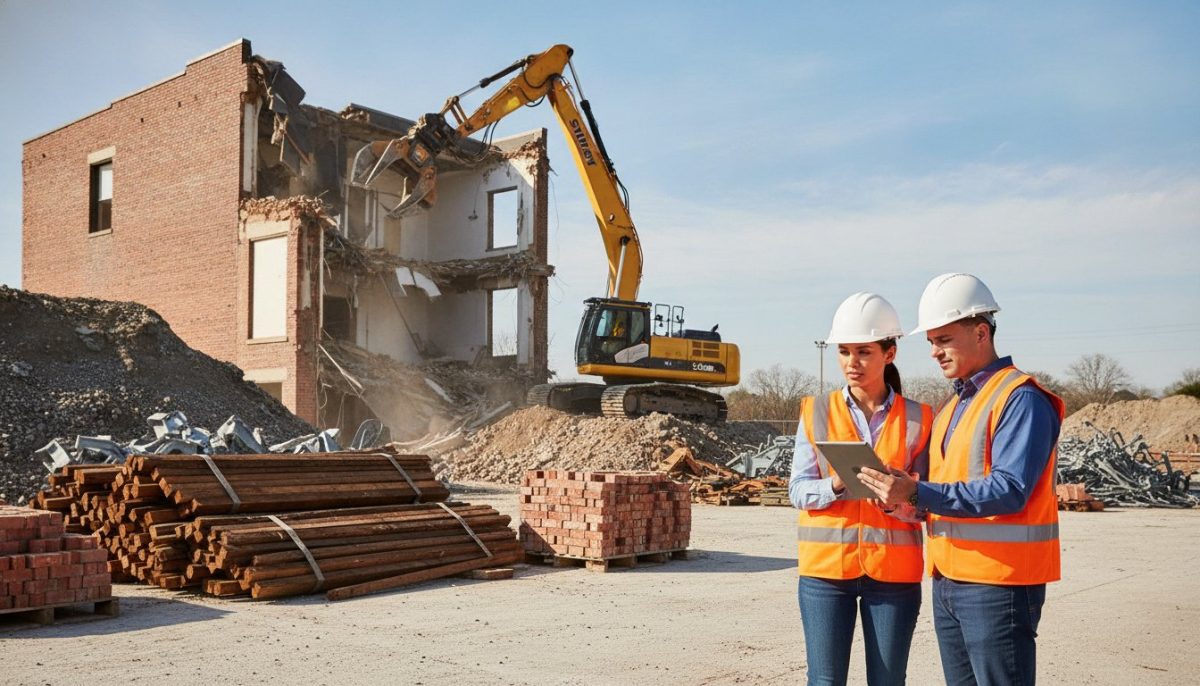
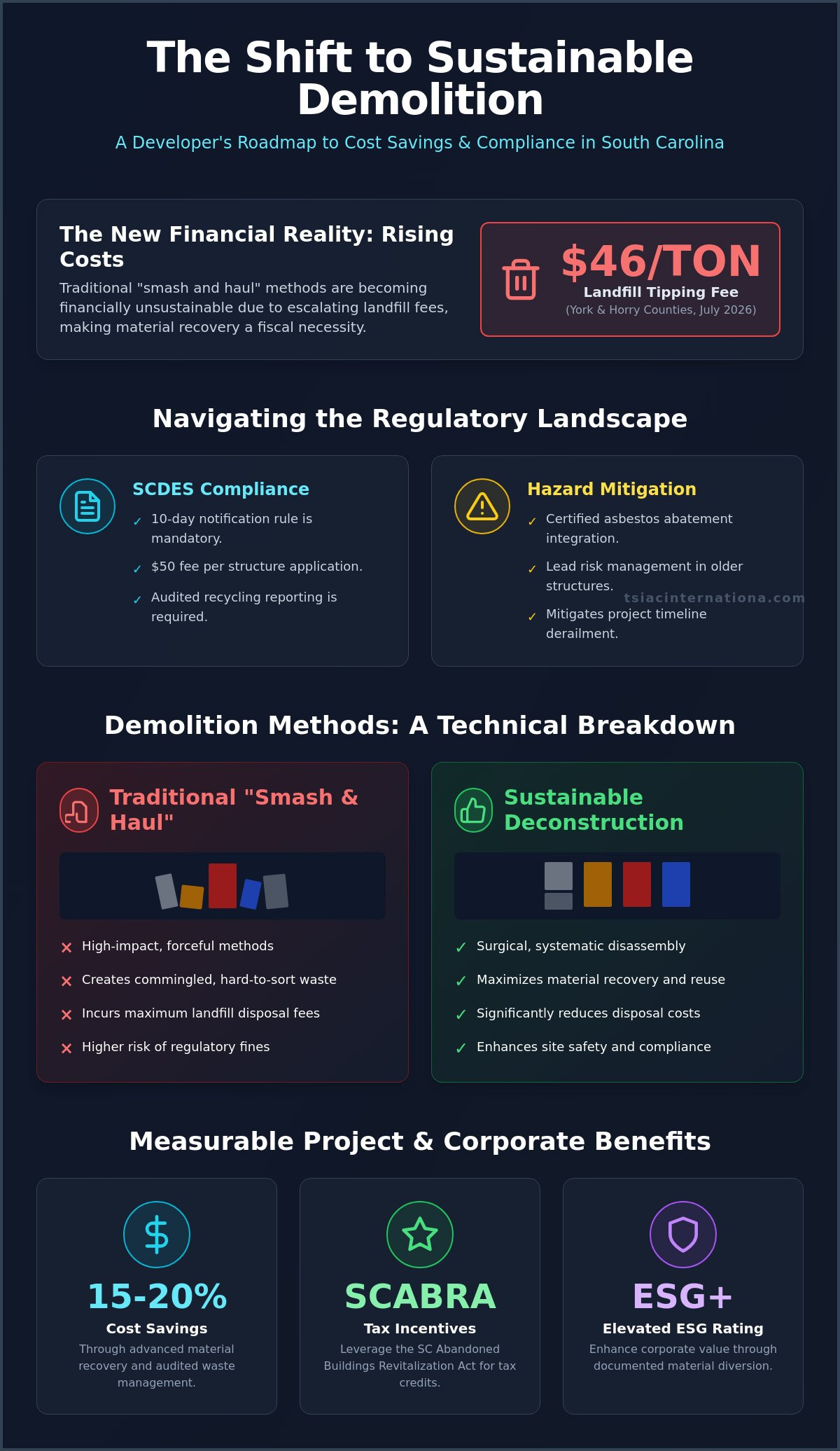
With landfill tipping fees in York and Horry counties reaching $46 per ton as of July 2026, the traditional “smash and haul” method is no longer a viable financial strategy for South Carolina property developers. As regulatory oversight from the South Carolina Department of Environmental Services (SCDES) reaches new levels of technical scrutiny, implementing sustainable demolition practices south carolina has shifted from a corporate social responsibility goal to a core fiscal necessity. You likely understand that managing the 10-day SCDES notification rule while mitigating the risks of asbestos and lead in older structures is an increasingly complex operational burden that can derail project timelines.
This guide provides a technical roadmap to transform these liabilities into measurable assets, showing you how to achieve 15-20% cost savings through advanced material recovery and audited waste management. We’ll explore the integration of hazardous material abatement with selective deconstruction and examine how the 2026 SCABRA tax incentive updates can improve your project’s bottom line. By adopting a methodical approach to deconstruction, you don’t just meet environmental laws; you elevate your corporate ESG ratings through documented, high-precision material diversion and superior site safety protocols.
Key Takeaways
- Learn how to mitigate rising landfill costs by implementing on-site sorting and high-precision material recovery strategies to achieve significant project savings.
- Master the complexities of SCDES compliance, including the mandatory 10-day notification rule and the seamless integration of certified asbestos and lead abatement.
- Understand the technical shift toward sustainable demolition practices south carolina, prioritizing “surgical” selective deconstruction over traditional high-impact methods.
- Discover how to structure your pre-bid phase to balance labor-intensive deconstruction costs against long-term disposal and material reuse advantages.
- Improve your corporate ESG ratings and leverage SCABRA tax incentives through documented, audited waste management and material reuse protocols.
The Evolution of Sustainable Demolition Practices in South Carolina
Sustainable demolition isn’t a mere buzzword; it’s a high-precision engineering methodology that prioritizes the systematic dismantling of structures. In South Carolina, the industry has undergone a definitive evolution, moving away from the blunt force of the wrecking ball toward the methodical accuracy of deconstruction. This approach involves the careful separation of building components to ensure maximum material recovery and reuse. For property developers, 2026 marks a definitive shift as the South Carolina Department of Environmental Services (SCDES) implements more stringent oversight on construction and demolition (C&D) waste. Adopting sustainable demolition practices south carolina is now the baseline for any project aiming for both regulatory compliance and long-term fiscal efficiency.
Understanding SCDES 2026 Regulatory Standards
The transition from DHEC to SCDES brought more than just a name change. It introduced a rigorous framework for environmental accountability that developers can’t afford to ignore. Every regulated facility now requires a formal “Notification of Demolition” submitted at least 10 working days before any site activity begins. This application carries a $50 fee per structure and applies even if the structure is confirmed to be free of asbestos. By 2026, the state has prioritized audited recycling reporting, requiring developers to provide granular data on material diversion rates. Failure to document these metrics doesn’t just risk heavy fines; it can stall the entire development pipeline and complicate future property transfers.
The Economic Incentives for Green Demolition
The financial argument for Deconstruction vs. Traditional Demolition is grounded in the reality of rising disposal costs. With tipping fees in counties like York and Horry reaching $46 per ton as of July 2026, the cost of landfilling debris has become a significant project liability. Utilizing sustainable demolition practices south carolina offers a direct countermeasure to these escalating expenses. By diverting non-hazardous wood, metal, and concrete through disciplined on-site sorting, developers can reduce overhead while simultaneously qualifying for state-level tax incentives.
The South Carolina Abandoned Buildings Revitalization Act (SCABRA) remains a cornerstone for developers, providing critical tax credits for rehabilitating qualifying sites. It’s vital to note that amendments to Notices of Intent for these credits were permitted through June 1, 2026, for taxpayers who hadn’t yet placed their sites in service. Beyond immediate savings, these practices enhance corporate ESG ratings and overall property values. Integrating these workflows early in the pre-bid phase positions a project as a premium, LEED-compliant asset that appeals to modern investors and tenants alike. This isn’t just about waste management; it’s about protecting the project’s bottom line through technical precision.
Deconstruction vs. Traditional Demolition: A Technical Breakdown
Traditional demolition relies on high-impact force, often resulting in a commingled waste stream that is difficult and expensive to process. In contrast, deconstruction is a surgical alternative. It prioritizes the systematic disassembly of building components. For developers in South Carolina, choosing between these methods requires a technical evaluation of the building’s age, structural composition, and the potential for asset recovery. While traditional “wrecking ball” methods may appear faster, they often incur higher long-term costs due to the $46 per ton tipping fees for C&D debris. Implementing sustainable demolition practices south carolina involves a strategic balance between mechanical speed and manual precision.
Selective Demolition and Asset Recovery
Selective demolition is the preferred choice for historic preservation and renovation projects in Charleston and Columbia. This process involves the meticulous removal of interior finishes, MEP systems, and non-structural partitions. By utilizing professional commercial interior gutting services, developers can prepare a site for its next lifecycle without compromising the building’s core structural integrity. This phase is critical for asset recovery, where high-value industrial components or architectural elements like heart pine flooring are salvaged for resale or reuse. It’s a disciplined approach that transforms a potential waste stream into a secondary revenue source or a cost-offsetting asset.
Structural Dismantling for Maximum Material Integrity
Once the interior is cleared, structural dismantling begins. This isn’t a random collapse. It’s a calculated sequence of removal. Modern excavators equipped with specialized shears and grapples allow for the controlled take-down of steel beams and concrete walls. This precision prevents material contamination, ensuring that the metals and masonry remain clean enough for recycling. According to the EPA’s guidelines on the Sustainable Management of C&D Materials, the purity of the waste stream is the primary factor in its recyclability. When materials are mixed during a high-impact demolition, their value plummets; when they are dismantled with sustainable demolition practices south carolina in mind, they remain viable for the circular economy.
A sustainable demolition project follows a strict lifecycle: comprehensive site assessment, hazardous material abatement, selective interior gutting, and finally, structural dismantling. This method allows TSIAC International to consistently divert over 85% of non-hazardous project debris from landfills. If you’re planning a complex renovation, reviewing our selective demolition capabilities can help you identify high-value recovery opportunities early in the process. Balancing the speed of traditional methods with the precision of deconstruction ensures your project remains both on schedule and within the 2026 regulatory framework.
Integrating Asbestos and Lead Abatement into Sustainable Workflows
Hazardous material remediation is the indispensable first step in any viable sustainable demolition plan. Without the rigorous removal of legacy contaminants, the potential for material recovery vanishes. When asbestos fibers or lead-based paint dust contaminate a site, otherwise recyclable concrete, wood framing, and masonry are reclassified as hazardous waste. This cross-contamination forces materials into expensive, specialized landfills, instantly negating any planned cost savings from material diversion. For property developers, sustainable demolition practices south carolina begin with a “clean site” philosophy. This ensures that the bulk of the building’s mass remains a non-toxic asset rather than a liability.
Pre-Demolition Hazardous Material Assessments
In South Carolina, the regulatory environment requires a proactive stance on contaminant detection. Statistics indicate that in Charleston, approximately 42% of buildings constructed before 1978 contain hazardous materials like asbestos or lead paint. Before any structural disturbance occurs, a comprehensive survey by a state-certified inspector is mandatory, regardless of the building’s age. These surveys remain valid for three years and are the foundation for a safe project. Developers must prioritize professional asbestos removal in South Carolina to meet SCDES standards. By identifying these risks during the pre-bid phase, you can develop a technical hazardous material abatement strategy that protects both your workers and your project’s recycling goals.
Safe Containment and Disposal in Circular Economy Models
TSIAC International employs specialized containment protocols to isolate toxic elements from the general waste stream. This “surgical” abatement involves negative air pressure systems and HEPA filtration to prevent environmental contamination. While hazardous materials themselves cannot be recycled, their precise removal is what unlocks the potential for 75% or higher site recycling rates. Once the toxic “un-recyclable” portion is safely extracted, the remaining structural elements are cleared for recovery.
Regulatory precision is maintained through strict documentation and chain-of-custody reporting. South Carolina environmental laws require detailed manifests for the transport and disposal of hazardous debris. This audited reporting is essential for maintaining corporate ESG ratings and ensuring full legal compliance. By integrating abatement directly into sustainable demolition practices south carolina, developers avoid the logistical friction of hiring separate contractors. This unified workflow ensures that safety protocols and material recovery goals are perfectly aligned, transforming a complex regulatory requirement into a streamlined phase of the deconstruction process.
Material Management: Turning Debris into Project Assets
Effective material management transforms demolition from a heavy cost center into a strategic source of project capital. In South Carolina, the logistical engine of sustainable demolition practices south carolina is built on a disciplined hierarchy: Reuse, Recycle, and Repurpose. To capture the highest value from a structure, establishing on-site sorting stations is a technical necessity. By separating wood, masonry, and metals at the point of origin, we eliminate the cross-contamination that often renders materials worthless at a processing facility. This methodical separation ensures that clean streams of debris can be diverted from landfills, directly lowering the project’s total disposal expenditures.
The role of specialized equipment is central to this process. Mobile crushers, magnetic separators, and high-capacity shears allow for the immediate processing of site-generated waste. This reduces the frequency of hauls, lowering the carbon footprint and transportation costs. When materials are managed with this level of precision, they transition from “debris” to “assets” that can be sold, traded, or reintegrated into the new construction phase.
Concrete Crushing and Aggregate Recycling
Structural concrete and brick masonry represent the largest volume of material on most South Carolina demolition sites. Rather than paying to transport these heavy loads to a landfill, we process them into high-quality fill. Aggregate recycling is the mechanical process of crushing recovered concrete and masonry into graded stone that replaces virgin materials in road bases and structural fill. Using this processed material on-site provides an immediate environmental benefit by preserving natural resources and significantly reducing the project’s procurement costs for new aggregate.
Ferrous and Non-Ferrous Metal Recovery Strategies
Metal recovery offers the most significant immediate financial return in a deconstruction project. Identifying high-value materials like copper piping, aluminum siding, and structural steel beams early in the process allows for clean, “surgical” extraction. Best practices involve sorting and processing scrap to meet specific mill requirements, which ensures the highest possible market value for the recovered goods. The revenue generated from these metals often offsets a substantial portion of the labor costs associated with more intensive deconstruction methods. To maximize the financial return on your next project, you should partner with a firm that prioritizes advanced material recovery and recycling services as a core component of their workflow.
Implementing a Sustainable Demolition Plan for Your Next Project
Setting clear sustainability targets during the pre-bid phase is essential for the financial and regulatory success of any modern development. Developers must define specific diversion goals before any heavy machinery arrives on site. By establishing these metrics early, you allow contractors to price their bids based on the technical reality of material recovery rather than just disposal volume. Transitioning to sustainable demolition practices south carolina requires a shift in how we view the project timeline. While deconstruction may require additional days for manual stripping and on-site sorting, the reduction in landfill expenses often compensates for the increased labor requirements.
Criteria for Selecting a Sustainable Contractor
Selecting a partner requires more than comparing bottom-line numbers. You must evaluate a firm’s safety record and their specific hazardous material certifications, particularly for asbestos and lead abatement. A contractor capable of managing both structural and selective demolition provides a single point of accountability, which is vital for maintaining tight schedules. It’s important to assess the demolition process in South Carolina that the firm employs. Do they offer on-site crushing? Do they have established relationships with local recycling facilities? These technical capabilities distinguish a professional partner from a standard wrecking crew.
Documentation and Auditing for LEED and State Compliance
In 2026, the value of a demolition project is often found in the quality of its paperwork. Tracking every ton of material is no longer optional for developers aiming for LEED certification or improved corporate ESG ratings. Comprehensive documentation for state audits ensures that your material diversion claims are verifiable and legally sound. This data provides the transparency required by modern investors and regulatory bodies like the SCDES. Reliable reporting proves that you’ve successfully implemented sustainable demolition practices south carolina throughout the project lifecycle. Ready to start? Contact TSIAC International for a sustainable project consultation to see how we integrate 15 years of expertise into your next development.
Securing the Future of Your South Carolina Development
The shift toward sustainable demolition practices south carolina is a strategic response to the technical and financial realities of 2026. By prioritizing deconstruction over traditional high-impact methods, developers can effectively mitigate the burden of rising tipping fees while ensuring 100% compliance with SCDES protocols. We’ve analyzed how integrating certified asbestos and lead abatement into the initial workflow is the only way to safeguard the recyclability of structural materials. This methodical approach doesn’t just reduce waste; it transforms site debris into valuable project assets that improve your corporate ESG standing and overall project ROI.
Success in this complex environment depends on precision and deep local knowledge. TSIAC International brings over 15 years of South Carolina expertise to every site, providing the audited material recovery reporting and specialized abatement services needed for high-stakes developments. We don’t just clear sites; we prepare them for their next lifecycle with methodological accuracy. Request a Sustainable Demolition Quote from TSIAC International and partner with a team that values your bottom line as much as environmental integrity. Your next successful development starts with a clean, compliant foundation.
Frequently Asked Questions
What are the primary sustainable demolition practices used in South Carolina?
The most effective methods include on-site material sorting, mobile aggregate crushing, and surgical selective dismantling. These sustainable demolition practices south carolina developers utilize focus on isolating high-value assets like structural steel and architectural wood before mass removal begins. By processing masonry and metals at the source, we eliminate the cross-contamination that typically occurs during traditional “smash and haul” operations, ensuring a cleaner waste stream for recovery.
How much does it cost to implement green demolition compared to traditional methods?
While deconstruction often requires more manual labor hours, it reduces the total project overhead by avoiding escalating landfill expenses. In counties like York and Horry, tipping fees have reached $46 per ton for C&D waste as of July 2026. The savings generated from diverting heavy masonry and metal often offset the increased labor investment. This makes green demolition a financially competitive choice for large-scale commercial projects with high material volumes.
Is asbestos removal required before I can recycle other building materials?
Yes, all regulated asbestos-containing materials must be professionally removed before any recycling or structural demolition can occur. If hazardous fibers contaminate the building mass, the entire waste stream is reclassified as toxic and becomes ineligible for standard recycling facilities. Safe abatement is the technical prerequisite for achieving high material recovery rates. It protects the integrity of the recyclable assets and ensures full regulatory compliance.
What percentage of demolition debris can actually be recycled in South Carolina?
Property developers can consistently divert over 85% of all non-hazardous project debris from landfills through disciplined material management. This percentage includes structural steel, copper, aluminum, and clean masonry. Reaching these high rates requires a methodical approach to deconstruction where materials are separated by type at the point of origin. This level of precision is essential for meeting modern sustainability goals and reducing project waste footprints.
How do SCDES regulations impact my demolition project in 2026?
In 2026, SCDES requires a “Notification of Demolition” at least 10 working days before site activity begins for all regulated facilities. This requirement includes a $50 fee per structure and applies even if no asbestos is present. Additionally, a comprehensive asbestos inspection by a state-certified inspector is mandatory for most facilities before any renovation or demolition occurs. Failure to follow these timelines can result in significant project delays and legal penalties.
Can concrete and brick from a demolition site be reused on the same property?
Clean concrete and brick can be crushed on-site and reused as engineered fill, road base, or drainage aggregate for the new construction phase. This practice reduces the need for virgin materials and eliminates the cost of hauling heavy masonry to a disposal site. On-site processing is a core component of sustainable demolition practices south carolina firms use to improve project efficiency and lower procurement costs for new materials.
What is the difference between deconstruction and selective demolition?
Deconstruction is the systematic dismantling of an entire structure to maximize material recovery, whereas selective demolition focuses on removing specific interior or non-structural elements. Selective demolition is typically used during renovations or “surgical” gutting projects where the building’s shell must remain intact. Both methods prioritize asset recovery over simple disposal, but they differ in the scope of structural removal and the final project outcome.
How does sustainable demolition help with LEED certification?
Sustainable demolition provides the audited documentation necessary to earn LEED Materials and Resources (MR) credits. By providing granular data on material diversion and recycling rates, developers can demonstrate a significant reduction in construction waste sent to landfills. This audited reporting is also essential for improving corporate ESG ratings. It meets the transparency requirements often demanded by modern institutional investors and municipal regulatory bodies.
