Asbestos Abatement in Myrtle Beach: A Professional How-To Guide for 2026

By 2026, an estimated 12% of commercial structures in South Carolina built before the 1980s will require some form of structural intervention, making…

By 2026, an estimated 12% of commercial structures in South Carolina built before the 1980s will require some form of structural intervention, making asbestos abatement myrtle beach a critical priority for property managers and developers. You’re likely aware that even minor structural modifications can release hazardous particulates, creating liabilities that extend far beyond simple health codes. It’s a high-stakes environment where the margin for error is zero and technical precision is the only safeguard against long-term risk.

We’ll provide a technical, step-by-step protocol for professional remediation that ensures your project meets EPA and SCDHEC standards while maintaining total structural integrity. This guide breaks down the specific containment technologies, negative pressure filtration requirements, and contractor vetting frameworks necessary for a successful 2026 abatement project. From initial site characterization to the final air clearance report, we’ll give you the engineering-grade roadmap needed to manage hazardous materials with absolute certainty.

Key Takeaways

  • Understand the vital distinction between simple removal and professional abatement to ensure full compliance with EPA NESHAP and OSHA safety regulations.
  • Evaluate the technical benefits of full removal versus encapsulation to determine the safest and most cost-effective long-term strategy for your facility.
  • Follow our comprehensive 5-step protocol for asbestos abatement myrtle beach, including the establishment of critical barriers and negative pressure zones.
  • Learn how to integrate hazardous material remediation with structural demolition to maintain project momentum without compromising on engineering precision.
  • Gain insights into specialized filtration and containment techniques that secure the structural integrity of your site during complex abatement procedures.

Defining Professional Asbestos Abatement and Remediation

Professional asbestos abatement myrtle beach involves a rigorous, engineering-based process of identifying, containing, and either removing or encapsulating asbestos-containing materials (ACM). It’s a specialized discipline that requires technical precision. While simple removal might seem straightforward, professional abatement utilizes sophisticated asbestos abatement procedures to ensure that microscopic fibers don’t migrate through a building. This process includes the installation of physical barriers and the use of high-efficiency particulate air (HEPA) filtration systems to maintain negative pressure environments.

Maintaining structural integrity is a central priority for any project. Removing insulation from support beams or stripping materials from aging coastal foundations can weaken a building’s core if not managed by experts. In Myrtle Beach, approximately 75% of commercial and residential structures built before 1980 contain some form of ACM. These materials are most commonly found in:

  • Thermal system insulation around boilers and pipes
  • 9×9 inch vinyl floor tiles and associated mastic adhesives
  • Spray-applied “popcorn” ceiling textures
  • Transite siding and cementitious roofing shingles

The Difference Between Friable and Non-Friable Asbestos

Friable asbestos refers to material that can be crumbled or reduced to powder by hand pressure. This category includes pipe lagging and sprayed fireproofing. It’s the most dangerous form because it easily releases fibers into the air. Non-friable materials, like floor tiles or roofing, keep fibers locked in a solid matrix. These pose a lower immediate risk but become hazardous during demolition or when subjected to mechanical force. Engineering controls for friable materials require full-scale containment with three-stage decontamination units to ensure zero fiber release.

Why Professional Remediation is Non-Negotiable

Inhaling a single microscopic fiber can lead to mesothelioma or asbestosis, diseases that often stay dormant for 20 to 50 years before surfacing. DIY attempts often lead to secondary contamination, where fibers settle into HVAC ductwork and carpets, creating a permanent health hazard. Beyond health, property owners face massive liability risks. South Carolina DHEC regulations are strict; improper handling can result in fines exceeding $25,000 per day. Professional asbestos abatement myrtle beach ensures that every project reaches the 0.01 fibers per cubic centimeter clearance level necessary for safe occupancy.

Federal Compliance: Navigating EPA and OSHA Abatement Regulations

Compliance in the hazardous material sector isn’t a suggestion; it’s a rigorous legal mandate. Two primary federal agencies dictate the safety parameters for every project. The Environmental Protection Agency (EPA) focuses on environmental protection and public health, while the Occupational Safety and Health Administration (OSHA) enforces strict workplace safety standards. For any commercial asbestos abatement myrtle beach project, South Carolina DHEC requires a written notification at least 10 working days before work begins. This window allows regulators to inspect the planned containment strategies and ensure the project adheres to Federal asbestos regulations. Only SC DHEC-licensed professionals and certified inspectors possess the legal standing to handle these materials, as they’re trained to manage the high-risk variables inherent in structural disturbance.

Understanding NESHAP Standards

The National Emission Standards for Hazardous Air Pollutants (NESHAP) governs how asbestos is handled during renovation and demolition. It enforces a “no visible emission” rule, meaning any dust or debris escaping the containment area constitutes a federal violation. Contractors must saturate materials with amended water to prevent fiber release. Every pound of waste requires detailed documentation through a Waste Shipment Record (WSR). This paperwork proves the material reached a Class 3 landfill authorized for hazardous waste disposal, ensuring a permanent, legal paper trail for the property owner.

OSHA Workplace Safety Protocols

OSHA standard 1926.1101 defines the protective measures required for the workforce. Technicians must utilize full-body Tyvek suits and P100 HEPA-filtered respirators to prevent inhalation. Entry and exit occur through a three-stage decontamination enclosure, which includes a clean room, a shower area, and a “dirty” equipment room. This prevents cross-contamination of the surrounding environment. Site supervisors conduct daily air monitoring to verify that fiber counts remain below the Permissible Exposure Limit (PEL) of 0.1 fibers per cubic centimeter. If a sample exceeds this 0.1 f/cc threshold, the site is shut down immediately for remediation of engineering controls.

Managing these high-stakes technical requirements demands a partner who understands the intersection of safety and structural integrity. For complex industrial or commercial sites, a technical consultation can help define a compliant path forward that protects both your personnel and your investment.

Identifying Risks: When to Choose Abatement Over Encapsulation

Selecting the right remediation path requires a cold assessment of the building’s ten year lifecycle. While encapsulation offers a lower initial price point, it’s often a temporary deferment of a permanent liability. In the 2026 Myrtle Beach market, property owners must weigh the immediate savings of sealing against the long term costs of specialized maintenance. Professional asbestos abatement myrtle beach is the only method that provides a definitive end to the risk cycle.

The Case for Full Abatement

Full removal is the superior choice for assets slated for redevelopment or intensive use. It provides a clean slate for future mechanical, electrical, and plumbing upgrades. Property data from 2025 indicates that commercial buildings with certified asbestos-free status see an 8% to 12% increase in valuation compared to those with active encapsulation plans. Removal is also a prerequisite for any structural demolition. Attempting to demolish a building with encapsulated materials is illegal and results in heavy EPA fines. By adhering to OSHA asbestos safety standards, our teams ensure that removal is performed under strict negative pressure, preventing any cross contamination of the job site. This approach removes the need for future air monitoring and specialized contractor insurance.

When Encapsulation is a Viable Strategy

Encapsulation is an engineering solution for materials that are currently stable and in hard to reach locations. It involves applying bridging agents or penetrants that create a durable chemical bond over the asbestos fibers. This strategy is appropriate in three specific scenarios:

  • The material is in “good” condition with no signs of delamination or water damage.
  • The ACM is located in a low traffic area where physical disturbance is impossible.
  • The cost or structural risk of removal outweighs the benefit, such as with certain fireproofing sprays on load bearing beams.

It’s a common misconception that encapsulation is a permanent “fix.” Sealing requires a rigorous Operations and Maintenance (O&M) program. South Carolina health codes demand inspections every six months to ensure the sealant hasn’t cracked or degraded. If your long term goal is a worry free asset, asbestos abatement myrtle beach remains the most logical investment for your 2026 project budget.

The 5-Step Protocol for Safe Asbestos Abatement

Executing a professional asbestos abatement myrtle beach project requires a disciplined engineering approach rather than simple demolition. Our protocol follows a rigid sequence to ensure that microscopic fibers never migrate beyond the regulated work zone. Since the 2024 update to South Carolina DHEC standards, the margin for error has narrowed, making technical precision the only acceptable standard for 2026 operations.

  • Step 1: Comprehensive Site Inspection and Laboratory Testing. Technicians must collect at least three bulk samples per homogenous material area. These samples are analyzed by NVLAP-accredited laboratories using Polarized Light Microscopy (PLM).
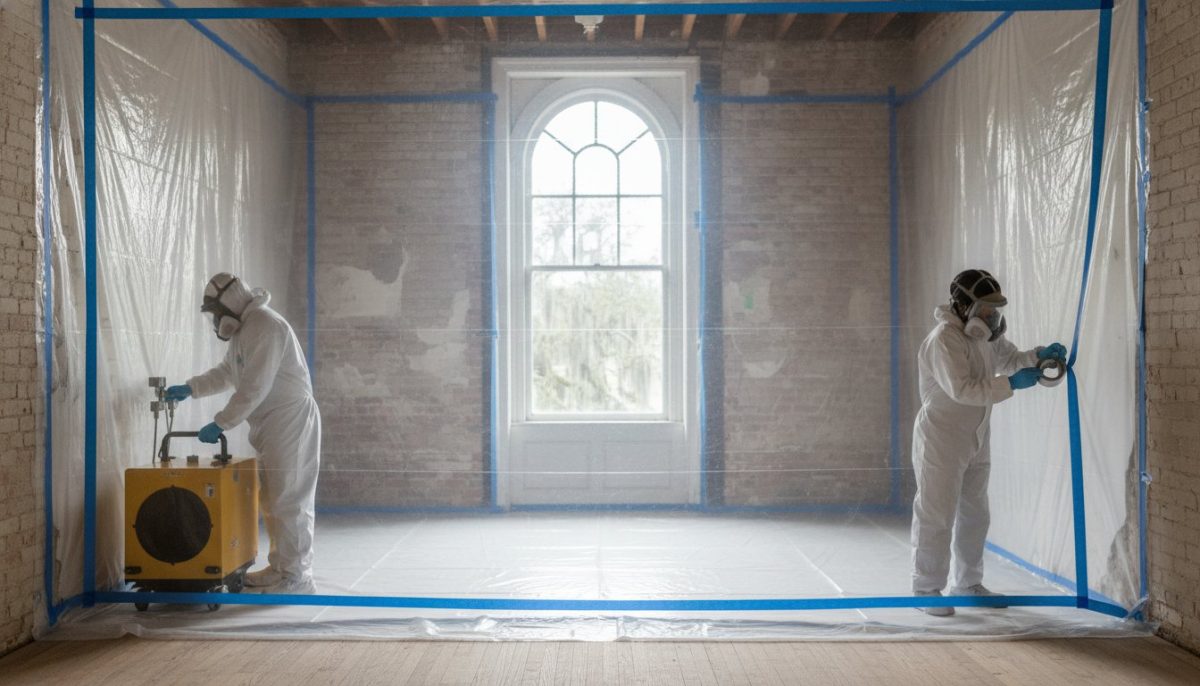
  • Step 2: Establishment of Critical Barriers and Negative Pressure Zones. The team isolates the area using 6-mil polyethylene sheeting. We then install Negative Air Machines (NAMs) to create a pressure differential that prevents air from escaping the containment.
  • Step 3: Precision Removal and Wet-Stripping Techniques. Workers saturate Asbestos-Containing Materials (ACM) with amended water. This process uses surfactants to penetrate the material, significantly reducing the risk of fiber release during physical detachment.
  • Step 4: HEPA Vacuuming and Fine Cleaning of the Remediation Area. After bulk removal, surfaces undergo a multi-stage cleaning process. We use industrial vacuums equipped with 99.97% efficiency filters to capture dust particles as small as 0.3 microns.
  • Step 5: Final Clearance Testing and Regulatory Documentation. An independent third party performs air clearance testing. The project is only considered complete when fiber concentrations drop below 0.01 fibers per cubic centimeter (f/cc).

Containment and Negative Air Pressure

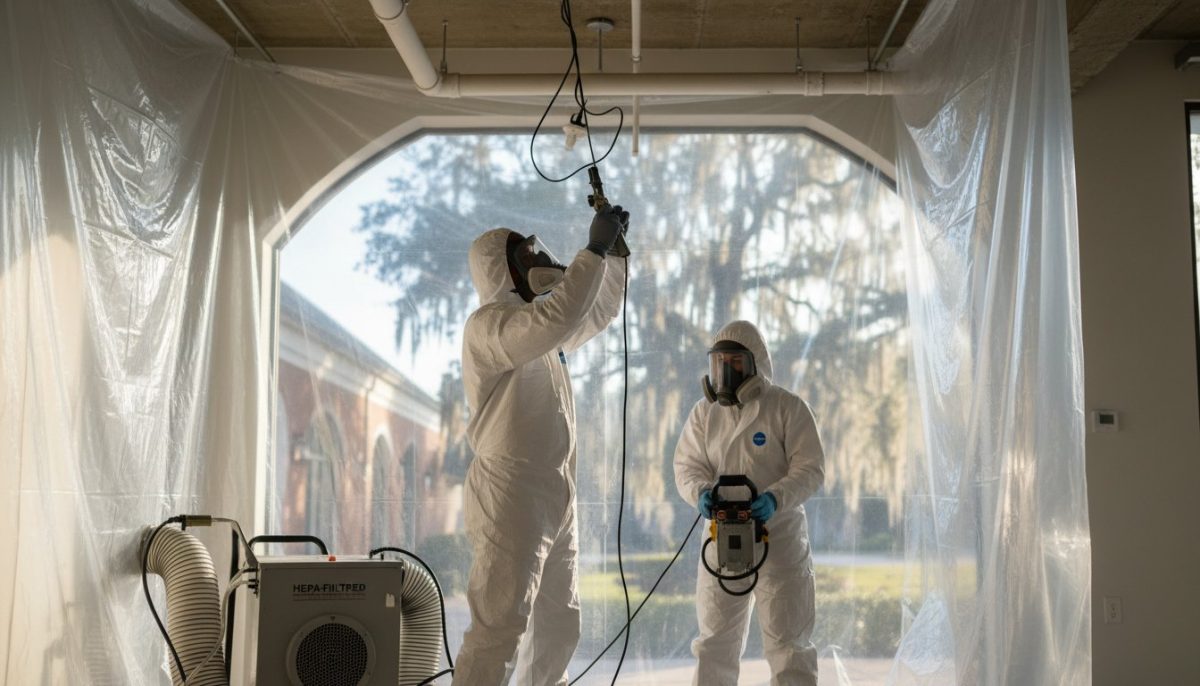
Engineering controls are the foundation of safety. We utilize negative air machines to achieve a minimum of four air changes per hour within the work zone. This constant airflow ensures that any airborne particles are pulled through HEPA filtration systems before the air is exhausted outside. Technicians secure 6-mil poly-sheeting with heavy-duty duct tape to create airtight seals over HVAC vents, windows, and doorways. We perform smoke tests daily to visually confirm that the containment remains under constant negative pressure and that no leaks exist in the barrier system.

Safe Removal and Disposal Techniques

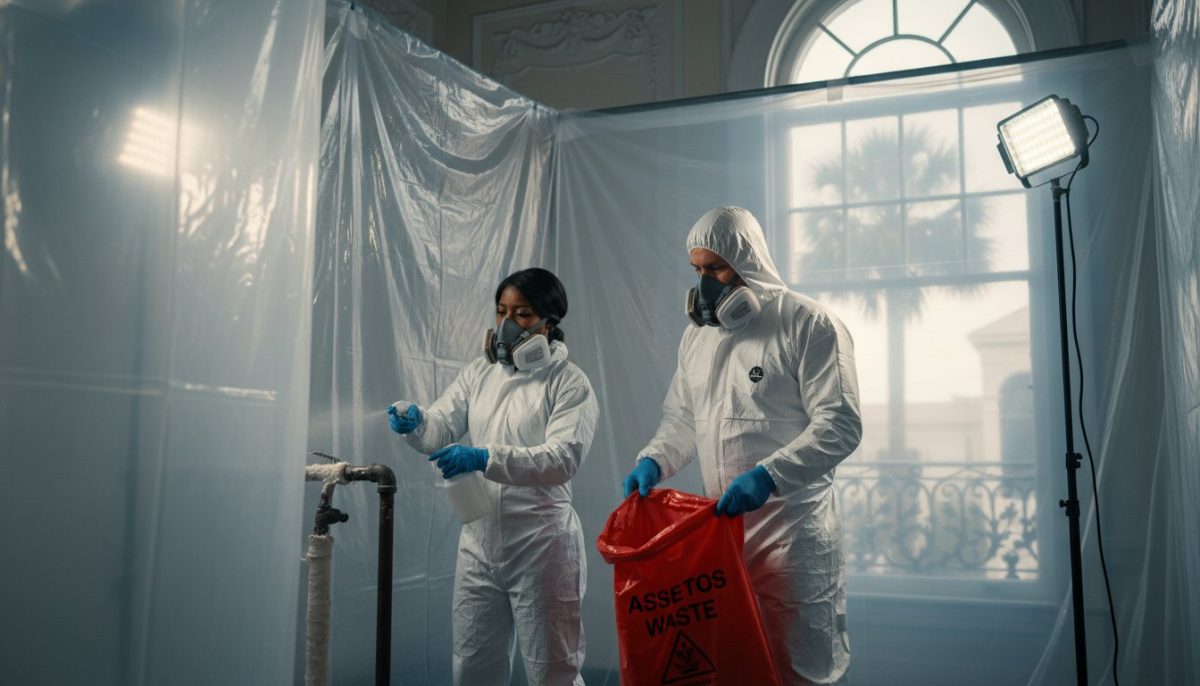
During the removal phase, dry scraping is strictly prohibited. We apply amended water to keep the ACM damp throughout the entire extraction. Once removed, the hazardous waste is placed into 6-mil poly bags, sealed, and then placed into a second 6-mil bag to meet double-bagging protocols. Each container receives a specific OSHA-compliant warning label. We manage the logistics of transporting these materials to certified Class 3 landfills, ensuring that the chain of custody remains documented from the moment of removal until final burial. This level of rigor is essential for any high-stakes asbestos abatement myrtle beach project.

For projects requiring extreme technical accuracy and verified safety results, you can secure your industrial site with certified specialists who prioritize engineering over guesswork.

Engineering Excellence in Hazardous Material Removal

Success in asbestos abatement myrtle beach requires more than basic containment; it demands a sophisticated engineering mindset. TSIAC International treats every remediation project as a high-stakes technical challenge. We don’t just remove hazards. We manage the structural and environmental risks that others avoid. By integrating abatement directly into the demolition phase, we eliminate the friction between separate contractors. This unified workflow prevents 15% to 20% of typical project delays caused by miscommunication between remediation teams and demolition crews. Our approach ensures that the structural integrity of the building remains uncompromised during the removal of friable materials.

The TSIAC International Approach

Since 2009, our teams have managed high-risk sites involving complex industrial alpinism and intricate structural supports. We specialize in “impossible sites” where traditional access methods fail. Our 15 years of field data shows that precise engineering planning reduces onsite accidents to near zero. Environmental stewardship drives our process through the following protocols:

  • Structural stability assessments: We evaluate load-bearing elements before any hazardous material is disturbed.
  • High-altitude containment: Specialized systems designed for multi-story structures in high-wind coastal environments.
  • Real-time telemetry: Constant monitoring of air quality and pressure differentials within the work zone.
  • Aggressive recycling: We prioritize the recovery of materials, successfully diverting up to 88% of non-hazardous debris from South Carolina landfills.

This commitment to recycling reduces the carbon footprint of your project while significantly lowering disposal fees for the property owner. We don’t see waste as an afterthought; we see it as a resource to be managed with precision.

Securing a Professional Consultation

Choosing the lowest bid for asbestos abatement myrtle beach often results in hidden costs, project creep, or severe regulatory penalties. TSIAC International provides fixed-price contracts that include comprehensive air monitoring results and disposal manifests. These documents are essential for your 2026 compliance audits and long-term liability protection. We deliver a transparent close-out package that confirms every milligram of hazardous material was handled according to EPA and DHEC standards. Our clients receive a digital vault of all permits, worker certifications, and waste shipment records within 14 days of project completion.

Contact TSIAC International for a Professional Abatement Assessment to ensure your property meets the highest safety and engineering standards.

Securing Your Industrial Infrastructure for 2026

Navigating hazardous material removal requires more than basic caution; it demands rigorous adherence to the latest 2026 EPA and OSHA standards. A structured 5-step protocol ensures structural integrity while eliminating microscopic risks that compromise long-term safety. For industrial managers and property owners, professional asbestos abatement myrtle beach is a critical investment in both regulatory compliance and site safety. We’ve shown that engineering excellence is the only way to manage these complex environmental hazards effectively without risking costly litigation or health crises.

TSIAC International brings 15+ years of hazardous material remediation experience to every job site. We’re fully licensed and insured for large-scale structural removal, ensuring that even the most difficult technical challenges meet federal mandates. Our team maintains a strict commitment to EPA and OSHA compliance on 100% of our projects. We don’t just clear the air; we provide a foundation of safety for your next phase of construction through disciplined technical execution.

Don’t leave your facility’s compliance to chance. Request a Professional Abatement Quote from TSIAC International to secure your property today. You can trust our engineering precision to handle your most demanding remediation needs with absolute reliability.

Frequently Asked Questions

Is asbestos abatement required before every demolition project?

South Carolina law requires a thorough inspection and subsequent asbestos abatement in Myrtle Beach before any demolition of a commercial or public facility. Regulation 61-86 from the SCDHEC mandates that owners identify all asbestos-containing materials before any structural disturbance occurs. If an inspection reveals more than 160 square feet or 260 linear feet of friable asbestos, you must complete full remediation. This protocol ensures that hazardous fibers don’t enter the local environment during mechanical demolition.

Can I stay in my home or office during the asbestos removal process?

You shouldn’t remain in the immediate work area while crews remove friable materials. While small non-friable removals might allow for limited occupancy in separate zones, standard safety protocols require total site evacuation to prevent accidental exposure. Professionals establish a negative pressure enclosure using HEPA filtration systems to contain dust. You can typically return only after a third-party laboratory confirms the air contains fewer than 0.01 fibers per cubic centimeter.

How long does a typical asbestos abatement project take to complete?

A standard residential project covering 1,500 square feet typically requires 3 to 5 business days from setup to final clearance. This timeline includes 1 day for containment area construction, 2 days for actual material removal, and 24 hours for final air monitoring and lab analysis. Larger commercial sites in Horry County may take 14 to 21 days depending on the complexity of the HVAC systems and structural accessibility. Weather conditions rarely impact indoor timelines.

What is the difference between an asbestos survey and an abatement plan?

An asbestos survey identifies the location and condition of hazardous materials, while an abatement plan outlines the specific engineering controls used for removal. The survey follows EPA AHERA protocols to sample materials like floor tiles or pipe insulation. Once the lab confirms asbestos presence above 1%, the abatement plan defines the work area boundaries, the number of air scrubbers needed, and the disposal route to a licensed landfill. You need both documents to maintain legal compliance.

How do I know if the air is safe after the abatement is finished?

Safety is verified through post-abatement air clearance testing conducted by an independent environmental professional. The technician uses Phase Contrast Microscopy or Transmission Electron Microscopy to analyze air samples from the work zone. In South Carolina, the air is considered safe for re-occupancy only when fiber concentrations fall below the 0.01 f/cc threshold. This empirical data provides a legal record that the asbestos abatement in Myrtle Beach was successful and the environment is secure.

Can a general contractor perform asbestos removal without a specific license?

No, a general contractor can’t legally remove asbestos without a specific license from the South Carolina Department of Health and Environmental Control. Handling these materials requires specialized training and certification under the Asbestos Hazard Emergency Response Act. Unlicensed removal often leads to civil penalties exceeding $10,000 per violation and creates severe health risks for occupants. Always verify that your contractor holds a valid certification before they begin any hazardous material handling.

What happens if asbestos is discovered mid-project during a renovation?

You must stop all work immediately and seal the affected area if you suspect asbestos during a renovation. Once the site is secure, an accredited inspector must sample the material and submit the findings to the state. If the test is positive, you’ll need to file a 10-day notification with SCDHEC before professional removal begins. This pause prevents the spread of fibers through the building’s ventilation system and protects workers from illegal exposure levels.
Professional Lead Paint Removal Service: The Complete Guide to Safe Abatement

Did you know that 24 million housing units across the United States still contain significant lead-based paint hazards according to the latest CDC…

Did you know that 24 million housing units across the United States still contain significant lead-based paint hazards according to the latest CDC reports? It’s a sobering reality for property owners who recognize that lead exposure isn’t just a regulatory hurdle but a genuine threat to neurological health. You’re likely concerned about the safety of your family or tenants, and you’ve probably felt overwhelmed by the conflicting information surrounding EPA Lead-Safe Certification versus full structural abatement. We understand that managing a high-stakes renovation requires more than just a quick fix; it demands engineering precision and a transparent approach to hazardous material handling.

In this guide, you’ll learn exactly what to expect from a professional lead paint removal service, from the initial XRF testing to the final clearance report. We’ll demystify the 2010 EPA RRP Rule and explain how to avoid the hidden costs often associated with 40 CFR Part 745 waste disposal requirements. Our technical breakdown ensures you can achieve a lead-free environment without derailing your construction schedule. We’ll examine the specific equipment used in HEPA-filtered vacuum systems and the chemical stripping agents that keep your site compliant and safe.

Key Takeaways

  • Understand the critical differences between temporary lead management and permanent abatement to ensure long-term structural safety and regulatory compliance.
  • Discover the advanced engineering behind safe containment, including the use of negative air machines and wet-scrape techniques to neutralize toxic airborne dust.
  • Evaluate the long-term ROI of full lead extraction versus encapsulation to maximize property value and achieve a certified lead-free status.
  • Learn how a professional lead paint removal service executes a rigorous multi-stage process, from initial site assessment to secure hazardous waste disposal.
  • Identify why complex structural demolition and hazardous material remediation require a partner capable of managing the most challenging technical environments with engineering precision.

Understanding Lead Paint Removal Service vs. Abatement

A professional lead paint removal service involves the technical extraction of toxic lead-based pigments from structural substrates. It isn’t a simple cosmetic upgrade; it’s a critical environmental remediation process. Prior to the federal ban in 1978, lead was added to paint to increase durability and speed up drying times. In Charleston, where a large percentage of the housing stock predates this regulation, property owners must assume that any building older than 45 years contains hazardous materials until a certified inspection proves otherwise.

Property managers must distinguish between permanent abatement and interim controls. Abatement involves strategies designed to eliminate lead hazards for a minimum of 20 years. This includes specific lead abatement methods like component replacement, enclosure behind specialized barriers, or complete mechanical removal. Interim controls are temporary management techniques. They include specialized cleaning and localized repairs that require periodic re-evaluation to ensure the lead remains contained. Choosing the right path depends on the long-term goals for the structure and the current state of the coatings.

The danger of lead paint is highest when it’s disturbed. Sanding, grinding, or heat-gunning lead surfaces without industrial-grade containment releases microscopic dust into the environment. This dust is easily inhaled or ingested. It’s far more hazardous to perform an amateur removal than to leave intact lead paint alone. Professionals use HEPA-filtered vacuum systems that capture 99.97% of particles as small as 0.3 microns, preventing the cross-contamination of living spaces during a lead paint removal service.

The Legal Landscape: EPA RRP Rule

The EPA Renovation, Repair, and Painting (RRP) Rule, which took full effect on April 22, 2010, dictates how contractors must handle lead-based paint. There’s a sharp legal distinction between an RRP-certified renovator and a licensed abatement professional. RRP certification allows a contractor to perform work that might disturb lead while following lead-safe practices. Abatement professionals are specifically licensed to permanently remove the hazard. Property owners who hire uncertified labor risk federal fines that can exceed $40,000 per day, per violation, depending on the severity of the non-compliance.

Visual Signs of Lead Paint Failure

Identifying failing lead paint requires looking for “alligatoring,” which is a distinct pattern of deep, square-shaped cracking that looks like reptile skin. This occurs because lead-based coatings lose their elasticity over decades. You should also inspect friction zones; these are areas like window tracks and door headers where surfaces rub together. This friction creates fine, toxic dust even if the paint appears to be in good condition. Lead is often buried. A wall might have ten layers of safe latex paint, but the original lead layer from 1965 remains hazardous if the surface is punctured or sanded during a remodel. Utilizing a professional lead paint removal service is the only way to ensure these hidden layers are managed safely.

The Technical Science of Safe Lead Abatement

Professional lead abatement requires more than basic construction skills; it demands a rigorous engineering approach to particle physics and airflow management. When a lead paint removal service operates in Charleston, the primary objective is the total immobilization of lead-contaminated dust. This process begins with containment engineering. Technicians install 6-mil polyethylene plastic sheeting to seal all openings, including windows, doors, and HVAC vents. We use reinforced tape to ensure these seals withstand the pressure changes caused by negative air machines. These machines pull air through HEPA filters, creating a vacuum that prevents microscopic particles from escaping the work zone into clean areas of the property.

Methods of removal are selected based on the substrate and the thickness of the paint layers. Wet scraping and wet sanding are the industry standards for minimizing dust. By applying a fine mist of water to the surface before agitation, we increase the mass of the paint chips and dust, causing them to fall directly onto the plastic sheeting rather than becoming airborne. This technical precision is vital because lead dust particles as small as 0.3 microns can remain suspended in the air for days, posing a severe inhalation risk to occupants.

Standard shop-vacuums are strictly prohibited and dangerous for this work. They lack the filtration necessary to trap lead dust and often exhaust fine particles back into the room, effectively turning a localized problem into a building-wide contamination. True HEPA vacuums are required, featuring filters certified to capture 99.97% of all particles sized 0.3 microns or larger. Chemical stripping offers an alternative for intricate historic moldings found in Charleston. We utilize caustic pastes for heavy accumulations, though these require a subsequent neutralizing wash to stabilize the pH of the wood. Solvent-based strippers are reserved for specific finishes, provided the work area maintains high-volume air exchange. Adhering to EPA’s Lead Regulations ensures that every technical choice meets federal safety mandates and protects the long-term value of the structure.

Specialized Equipment for Hazardous Removal

Precision in lead abatement relies on high-tier hardware. Negative pressure environments are maintained using industrial air scrubbers that cycle the room’s air volume at least six times per hour. Workers must wear N100 or P100 respirators and disposable Tyvek suits to prevent cross-contamination. On-site detection has evolved with XRF (X-ray fluorescence) technology. These handheld analyzers provide instant, non-destructive readings of lead concentrations in milligrams per square centimeter, allowing our team to identify specific hazards without waiting for laboratory results.

Clearance Testing and Verification

The final phase of any technical lead paint removal service involves rigorous verification. We employ third-party industrial hygienists to conduct independent dust wipe sampling. This ensures there is no conflict of interest during the safety certification. Current standards are becoming increasingly strict; the 2026 EPA clearance levels require floor lead-dust levels to be below 10 micrograms per square foot. Visual inspections are conducted under high-intensity lighting to ensure no microscopic debris remains on any surface. Only after these laboratory results confirm a “lead-safe” status is the containment disassembled and the site returned to the owner.

Abatement vs. Encapsulation: Which is Right for You?

Selecting a professional lead paint removal service requires a technical evaluation of the building’s substrate and your long-term financial goals. Encapsulation is a management strategy that uses specialized “lead-lock” coatings. These aren’t standard paints; they are elastomeric polymers designed to bond with lead-based layers and prevent the release of toxic dust. While encapsulation costs roughly 30% to 50% less than full removal, it’s a temporary fix. Property owners must conduct visual inspections every 12 months to ensure the membrane hasn’t cracked or peeled. If the underlying surface is damp or decaying, encapsulation will fail within 2 to 3 years.

Full abatement provides a permanent solution by stripping the lead or replacing the contaminated components entirely. This path offers a superior return on investment. In the Charleston real estate market, properties certified as “lead-free” see a 5% to 8% increase in valuation compared to those merely labeled “lead-safe.” Removing the hazard eliminates the need for recurring inspections and removes the risk of future toxic torts. From a technical standpoint, full removal allows for a thorough assessment of the structural integrity of the wood or steel that lead paint often hides.

The DIY trap is a significant risk for Charleston residents. Retail lead test kits, often priced under $15, have a documented failure rate of up to 60% on certain types of industrial primers. These kits frequently yield false negatives on red or orange lead-based pigments. Relying on a faulty test leads to homeowners dry-sanding surfaces, which aerosolizes lead dust and contaminates the entire HVAC system. Professional teams use X-ray fluorescence (XRF) analyzers that provide 99% accuracy without damaging the historic finish.

Commercial vs. Residential Lead Strategies

Commercial projects often involve heavy-duty lead-coated steel and industrial infrastructure. These sites require strict adherence to OSHA lead exposure standards to protect workers during abrasive blasting or torch cutting. Residential historic preservation focuses on a different set of priorities. We prioritize architectural integrity, using low-temperature heat plates and chemical peel pastes to lift lead layers from 150-year-old moldings. For multi-family housing, federal law mandates specific tenant protections; failing to meet these can result in civil penalties exceeding $16,000 per violation.

Managing the #1 Objection: Cost

The upfront price of a lead paint removal service is often the primary concern for property managers. However, the landscape of liability is shifting. By 2026, new federal grant programs are expected to allocate $340 million for lead hazard reduction in historic districts. These credits can often offset 40% of the total project cost. We also find that a “demolition-first” approach is frequently more cost-effective for major renovations. Instead of stripping paint from old windows or doors, replacing the entire unit with modern, energy-efficient alternatives eliminates the lead hazard and reduces labor hours by 25%. This strategy prevents future medical liabilities and ensures the building meets modern safety codes immediately.

The Lead Abatement Process: From Testing to Disposal

The technical execution of a lead abatement project requires more than just labor; it demands an engineered approach to site safety. We begin every project with a rigorous site assessment to identify every surface containing lead-based pigments. In Charleston’s historic properties, this often involves testing multiple layers of paint applied over the last 150 years. We use XRF (X-ray fluorescence) technology to map lead concentrations without damaging the underlying substrate. This data allows us to create a surgical removal plan that minimizes dust and protects the building’s structural integrity.

Containment is the most critical phase. We seal all HVAC vents, windows, and doors using 6-mil fire-retardant polyethylene sheeting. Our teams establish negative air pressure within the work area, utilizing HEPA-filtered air scrubbers that cycle the air at least six times per hour. This prevents cross-contamination into non-work areas of the structure. Execution involves specialized methods like wet-scraping or HEPA-shrouded power tool cleaning. We never use open-flame burning or high-heat stripping, as temperatures above 1,100 degrees Fahrenheit can vaporize lead and create a severe inhalation hazard.

Once the surfaces are clean, we conduct a final clearance. This isn’t a simple visual check; it’s a scientific verification. We perform dust-wipe sampling on floors, window sills, and troughs. These samples are sent to an accredited laboratory to ensure lead levels are below the 10 micrograms per square foot limit set by the EPA in January 2021. Only after receiving a passing report do we dismantle the containment and allow other trades to re-enter the space. This disciplined approach ensures our lead paint removal service meets the highest safety benchmarks in the industry.

Hazardous Waste and Environmental Responsibility

TSIAC International treats every ounce of debris as a potential environmental liability. We separate lead-contaminated waste from standard demolition materials to reduce the volume sent to specialized landfills. Every barrel is labeled and tracked via a formal manifest system. This chain of custody ensures that 100% of toxic materials reach a licensed hazardous waste facility. We don’t just clear your building; we protect the local Charleston ecosystem by strictly following DHEC regulations for hazardous waste transport.

Coordinating with Other Renovation Phases

Lead abatement is a critical path item that must occur before any interior gut-out or structural modification begins. We coordinate directly with general contractors to schedule selective demolition around our containment zones. This prevents trade overlap and ensures that unprotected workers don’t enter high-risk areas. By finishing the lead paint removal service first, we provide a clean, safe site that allows subsequent trades to work without specialized PPE or the fear of contamination. Our project managers ensure that safety compliance is maintained site-wide during these complex transitions.

Ensure your renovation project stays on schedule and meets all safety regulations by partnering with experts who understand the complexities of hazardous material handling. Contact TSIAC International today for a technical consultation on your abatement needs.

Why TSIAC International is the Standard for Lead Abatement

TSIAC International brings 15 years of technical mastery to the South Carolina Lowcountry. We don’t just scrape surfaces; we execute high-stakes hazardous remediation and structural demolition with engineering-grade precision. Our team manages complex projects across Charleston and the broader region, ensuring every site meets stringent EPA and OSHA standards. We maintain comprehensive licensing and multi-million dollar insurance policies specifically designed for large-scale commercial and government contracts. This level of protection is vital for municipal projects where liability management is just as important as the physical work.

Our dual expertise sets us apart from standard contractors. Most firms specialize in either abatement or demolition, but we’ve integrated both disciplines into a singular, streamlined workflow. Choosing a professional lead paint removal service requires more than a basic license. It demands a partner who understands how hazardous materials interact with structural integrity. When we strip lead-based coatings, we’re already prepared for the structural tear-downs or renovations that follow. This eliminates the communication gaps that often occur between separate vendors, saving our clients an average of 14 days on their project timelines. Our track record includes over 400 successful projects across South Carolina, ranging from historic residential restorations to massive industrial decommissionings.

Our Approach to Complex Site Challenges

Handling lead on “impossible” sites is where our engineering background becomes most apparent. We’ve managed abatement on industrial high-rises and 100-foot-tall water towers where standard access methods fail. The TSIAC guarantee isn’t a marketing slogan; it’s a commitment to engineering-grade precision in every containment system we build. We prioritize sustainability by focusing on material recovery. In a 2023 industrial project in North Charleston, our recycling focus successfully diverted 12 tons of steel from specialized landfills. By separating lead-contaminated layers from clean structural components, we significantly reduce total project waste and disposal fees for our clients.

Get Started with a Professional Assessment

Every project begins with a site-specific lead management plan. We don’t believe in generic estimates. Our team conducts a thorough assessment to identify the exact depth of contamination and the structural integrity of the substrate. This allows us to offer a fixed-price contract, providing you with financial certainty from day one. You won’t find hidden surcharges for disposal or equipment in our agreements. We provide the clarity and technical data needed to move your project forward safely. For comprehensive guidance on managing all types of contaminants during your renovation, our hazardous material abatement South Carolina guide offers essential regulatory insights and cost-saving strategies. It’s time to secure your facility’s safety with a partner who understands the high stakes of hazardous remediation.

Contact TSIAC International for a Professional Lead Abatement Quote

Ensure Total Site Safety with Professional Abatement

Managing hazardous materials isn’t just about compliance; it’s about protecting your assets and the people who occupy them. Effective lead abatement demands more than a superficial coat of paint. It requires a systematic approach that separates permanent removal from temporary fixes. TSIAC International brings over 15 years of industry experience to every project, ensuring that technical science guides every step. We’re fully licensed for both asbestos and lead abatement, which means your site meets all regulatory standards. Our expertise extends into structural and selective demolition, allowing us to handle complex environments where others might hesitate. For property owners managing multiple contaminant types, understanding the broader scope of hazardous material abatement in South Carolina ensures comprehensive compliance and cost control across your entire project. Choosing a professional lead paint removal service ensures that toxic particles are contained and disposed of according to strict safety protocols. You don’t have to navigate these technical challenges alone. Our team provides the engineering precision needed to transform high-risk sites into safe, usable spaces.

Secure Your Site with TSIAC International’s Lead Abatement Services

We’re ready to help you build a safer future for your facility.

Frequently Asked Questions

Is lead paint removal service required by law for my pre-1978 home?

Federal law doesn’t strictly mandate lead paint removal for private homeowners, but the EPA’s 2008 RRP Rule requires a certified lead paint removal service for any renovation disturbing more than 6 square feet of interior paint. South Carolina DHEC Regulation 61-86.1 governs these activities to prevent environmental contamination. If you’re a landlord, you must address lead hazards identified during inspections to comply with the federal Lead Disclosure Rule.

How much does professional lead paint removal cost per square foot?

Professional lead abatement typically costs between $8 and $15 per square foot, depending on the substrate condition and the chosen removal method. A 1,500 square foot Charleston residence might see total project costs ranging from $12,000 to $22,500. These figures include specialized HEPA filtration equipment and the technical labor required to maintain negative air pressure during the stripping process.

Can I stay in my home while lead paint is being removed?

Residents shouldn’t remain in the work zone while active abatement is underway to avoid exposure to lead dust. The EPA recommends vacating the property if the project involves extensive structural components or interior surfaces. We establish 6-mil polyethylene barriers to isolate work areas; this ensures the rest of the structure remains uncontaminated while our technicians execute the removal protocol.

What is the difference between lead-safe and lead-free?

A lead-safe designation means lead paint is present but has been stabilized or encapsulated to prevent dust migration. Lead-free status requires the total physical removal of all lead-based materials, verified by an XRF analyzer reading below 1.0 mg/cm². Achieving lead-free status involves more intensive mechanical or chemical stripping but provides a permanent solution that eliminates future disclosure requirements under federal law.

How do I know if the contractor I hire is EPA RRP certified?

You can verify a contractor’s credentials by requesting their EPA Lead-Safe Certified Firm logo and certificate number. The EPA maintains a public database where you can search for firms authorized under the 2008 Renovation, Repair, and Painting Rule. Our technicians carry individual renovator certificates to prove they’ve completed the required 8-hour training course and passed the proficiency exam for safe lead handling.

What happens if lead paint is found during a commercial demolition project?

Work must cease immediately if lead-based paint is discovered during demolition to comply with OSHA 29 CFR 1926.62 standards. The project manager must initiate a lead compliance plan, which includes air monitoring and personal protective equipment for all site personnel. We implement wet-misting techniques and specialized containment to prevent the release of lead-laden particulates into the surrounding Charleston environment during structural dismantling.

Does lead paint removal include the disposal of the debris?

Comprehensive lead paint removal service includes the collection, transport, and disposal of all contaminated debris according to RCRA Subtitle C or D regulations. We package waste in 6-mil plastic bags and transport it to a licensed facility capable of handling hazardous materials. Proper documentation and a chain of custody are provided to ensure your project meets all environmental compliance standards for the South Carolina region.

How long does a typical lead abatement project take to complete?

A standard residential lead abatement project usually takes between 7 and 14 days to complete from setup to final clearance testing. Large commercial structures or complex architectural details in historic Charleston properties may extend this timeline by 5 to 10 additional days. Our engineering approach prioritizes a logical sequence of containment, removal, and HEPA vacuuming to ensure the site passes a dust wipe analysis on the first attempt.

Professional Asbestos Removal Services: The Complete Guide to Safe Abatement in 2026

In 2026, a single microscopic fiber of disturbed chrysotile can devalue a commercial property by 15% in less than 24 hours if the abatement process…

In 2026, a single microscopic fiber of disturbed chrysotile can devalue a commercial property by 15% in less than 24 hours if the abatement process fails to meet updated EPA strictures. You likely recognize that managing an aging industrial or residential facility requires a calculated approach to hazardous materials. It’s a high-stakes environment where any error in professional asbestos removal services leads to more than just health risks; it triggers legal liabilities and expensive project delays. You need a partner who views safety through the lens of engineering precision rather than just a checklist.

You’ve probably felt the anxiety of navigating shifting safety standards while trying to keep a project on schedule. This guide provides the technical roadmap required to secure services that guarantee 100% regulatory compliance and a certified clean environment for your occupants. We’ve compiled expert insights on the latest OSHA safety protocols and the specific documentation necessary for future property sales. You’ll learn how to identify specialized solutions for difficult-to-reach locations and understand the 2026 cost structures for complex abatement projects. By the end of this analysis, you’ll have the clarity to eliminate hazardous materials while maintaining total control over your project’s budget and timeline.

Key Takeaways

  • Master the critical distinctions between removal, encapsulation, and enclosure to determine the most effective strategy for managing hazardous materials on your property.
  • Understand the engineering behind safety, including the implementation of airtight poly-sheeting barriers and negative air pressure systems to prevent site contamination.
  • Ensure full regulatory compliance by learning how to navigate EPA’s NESHAP requirements and OSHA’s strict standards for site safety and air monitoring.
  • Use our expert checklist to verify essential credentials, such as pollution occurrence insurance, when selecting professional asbestos removal services for your next project.
  • Explore the advantages of integrated abatement and demolition, where single-source contractors manage everything from interior gutting to high-level environmental recycling.

What are Professional Asbestos Removal Services?

Professional asbestos removal services involve a rigorous technical discipline known as asbestos abatement. This process focuses on the identification, containment, and physical extraction of asbestos-containing materials (ACMs) from a structure. It’s not a simple cleaning task; it’s a highly regulated engineering control designed to prevent the release of microscopic silicate fibers into the air. When these fibers remain undisturbed, they pose a negligible risk. However, during renovation or demolition, they become airborne and easily inhaled. Specialized asbestos abatement procedures ensure that these materials are handled within sealed environments using HEPA-filtered negative air pressure systems.

Property owners must understand the distinction between removal, encapsulation, and enclosure. Removal is the only permanent solution, as it completely eliminates the hazard from the premises. Encapsulation involves treating the ACM with a liquid sealant that binds the fibers together or coats the material to prevent fiber release. Enclosure involves building a permanent, airtight barrier around the asbestos. While encapsulation and enclosure are valid management strategies, they require ongoing monitoring and don’t eliminate the underlying liability. For most commercial properties and multi-family residential buildings with more than four units, professional intervention isn’t just a safety choice; it’s a legal mandate under EPA NESHAP regulations and South Carolina DHEC requirements.

Asbestos was integrated into over 3,000 different building products throughout the 20th century. In South Carolina, our team frequently identifies these materials in structural fireproofing applied to steel beams, 9×9 inch vinyl floor tiles, and acoustic “popcorn” ceilings installed before 1981. Other common locations include thermal system insulation on boilers and pipes, as well as exterior cement siding. Identifying these risks requires a certified inspector to take bulk samples for laboratory analysis before any structural work begins.

The Persistent Danger: Why Asbestos Still Matters in 2026

Asbestos remains a primary concern in 2026 because of the long latency period associated with respiratory diseases. It often takes 20 to 50 years after initial exposure for conditions like mesothelioma or asbestosis to manifest. Since many South Carolina structures built between 1940 and 1980 are now reaching their renovation cycles, the risk of disturbing dormant fibers is at a peak. We follow the “disturbing the fibers” rule: dormant asbestos is often safer than a poorly executed removal attempt that lacks proper containment. Professional asbestos removal services ensure that legacy materials don’t become modern health liabilities.

Friable vs. Non-Friable Asbestos: Identifying the Risk

The state of the material determines the immediate danger level. Friable asbestos, such as old pipe insulation or sprayed-on fireproofing, can be crumbled by simple hand pressure. This releases thousands of fibers instantly. Non-friable materials, like floor tiles or roofing felts, are more stable but become hazardous when subjected to mechanical force. Drilling, sanding, or grinding these surfaces turns a stable material into a friable one. A professional survey assesses the “state of repair” of these materials to determine if they can be managed in place or if immediate extraction is necessary for safety.

The Engineering of Safety: How the Abatement Process Works

Effective asbestos removal services rely on a rigorous, multi-stage engineering approach to isolate hazardous fibers. The process isn’t merely about disposal; it’s about the total control of a microscopic environment. Technicians treat every project as a high-stakes containment operation where the primary goal is preventing the migration of friable materials. Strict adherence to EPA asbestos regulations ensures that every stage of the process meets federal safety benchmarks. This systematic workflow prevents the contamination of adjacent spaces and protects building occupants from long-term health risks.

  • Step 1: Regulated Area Establishment. Technicians seal all HVAC vents, windows, and doors with two layers of 6-mil polyethylene sheeting. This creates an airtight barrier that isolates the work zone from the rest of the structure.
  • Step 2: Negative Air Pressure. Professionals install high-volume air machines to create a pressure differential. By pulling air out through HEPA filters, the system ensures that any accidental leaks pull clean air into the zone rather than pushing contaminated air out.
  • Step 3: Wet-Method Removal. To suppress dust, workers apply amended water, which contains chemical surfactants, to the asbestos-containing materials. This saturation prevents fibers from becoming airborne during the physical removal process.
  • Step 4: Three-Stage Decontamination. All personnel must pass through a series of connected chambers. This sequence includes a dirty room for equipment disposal, a shower room for personal cleaning, and a clean room for changing into street clothes.
  • Step 5: Final Clearance Testing. After removal and HEPA vacuuming, a third-party laboratory conducts air sampling. They use Phase Contrast Microscopy (PCM) or Transmission Electron Microscopy (TEM) to verify that fiber counts are below 0.01 fibers per cubic centimeter.

The Role of HEPA Filtration and Negative Air Machines

Negative air pressure is the engineering standard for safety in modern abatement. Professionals use industrial-grade machines equipped with High-Efficiency Particulate Air (HEPA) filters. These filters are rated to capture 99.97% of all particles as small as 0.3 microns. In a standard 1,000 square foot work area, these machines are calibrated to provide at least four air changes per hour. Technicians monitor this pressure constantly using a digital manometer, maintaining a minimum of -0.02 inches of water gauge pressure. This technical precision ensures that the surrounding environment remains unaffected by the work occurring inside the containment.

Decontamination Protocols for Site Workers

Worker safety is managed through a disciplined transition protocol that eliminates fiber carry-over. Every technician wears a full-body Tyvek suit and a dual-cartridge P100 respirator, which is fit-tested to ensure a perfect seal. The decontamination unit is the only way in or out of the work zone. When leaving, workers vacuum their suits with a HEPA-rated device, enter the shower room to wash away any residual dust, and only then enter the clean room. This three-stage system is mandatory for all professional asbestos removal services to prevent the “take-home” exposure that historically affected the families of industrial workers. Those seeking technical consultation on complex abatement can explore specialized industrial safety solutions to ensure total compliance. This level of fegyelmezett (disciplined) execution is what separates industrial-grade abatement from general demolition.

Regulatory Compliance: Navigating EPA and OSHA Standards

Compliance isn’t a suggestion; it’s a legal mandate that dictates every phase of a project. Property owners in South Carolina face complex layers of federal and state oversight that require technical precision. The EPA governs the environmental impact through NESHAP, while OSHA focuses on the human element. Professional OSHA asbestos safety standards dictate everything from the specific type of HEPA-filtered respirators used to the frequency of air quality tests on the perimeter. If a contractor skips these protocols, the property owner remains legally liable for the health and environmental fallout. We treat these regulations as the minimum baseline for our operations.

Regional nuances in South Carolina often complicate the process. The Lowcountry and Grand Strand regions have specific environmental stressors, such as high humidity and salt air, that can compromise temporary containment barriers. Local SCDHEC (Department of Health and Environmental Control) offices in Charleston and Myrtle Beach maintain strict oversight on local projects. Hiring a team familiar with these regional nuances ensures that your asbestos removal services don’t hit a bureaucratic wall or face unexpected work-stop orders due to structural failures in containment.

The NESHAP Notification Process

Federal law requires a formal written notification to SCDHEC at least 10 working days before any demolition or significant renovation begins. This rule applies even if no asbestos was found in some commercial renovation scenarios. Skipping this 10-day window leads to immediate project shutdowns and EPA fines that can reach $37,500 per day per violation. TSIAC manages this entire administrative burden. We handle the technical filings and coordinate with state inspectors so the timeline stays on track without legal interruptions.

Hazardous Waste Transport and Disposal

Asbestos cannot go into a standard roll-off container or a local municipal landfill. Every ounce of contaminated material requires double-bagging in 6-mil poly bags and distinct, OSHA-compliant labeling. We transport these materials to specific, EPA-approved Class 3 landfills designed for hazardous waste. The process concludes with the “Cradle-to-Grave” waste shipment record. This document tracks the waste from the moment it leaves your site until it’s permanently buried. Property owners should keep these records for 30 years to prove legal disposal and protect against future litigation. Selecting professional asbestos removal services means hiring a partner who understands that the manifest system is your primary defense against long-term liability.

Precise air monitoring is the only way to verify a safe site. We utilize Phase Contrast Microscopy (PCM) to analyze air samples during the project and after the final cleaning. These tests provide immediate data on fiber counts in the air. We don’t guess about safety; we prove it with lab-certified results. Our team maintains a fegyelmezett (disciplined) approach to these metrics. We ensure every technician on-site follows the established safety plan to the letter. This engineering-grade focus on data protects your property and your people from invisible risks.

Evaluating Asbestos Removal Companies: A Buyer’s Checklist

Selecting asbestos removal services requires more than a simple price comparison; it demands a rigorous audit of technical credentials and safety protocols. You shouldn’t settle for a general contractor who lacks specific hazardous material training. In South Carolina, any firm you hire must hold a valid SC DHEC license. Beyond the license, verify they carry specialized pollution occurrence coverage. Standard general liability policies often exclude asbestos-related claims, which means you’d be personally liable for any fiber release during the project. This insurance is the only way to protect your assets if a containment breach occurs during the 2024 operating season.

Verification of a company’s track record in both structural demolition and hazardous remediation is the next step. These fields are distinct but highly interdependent. A firm that understands the structural integrity of a 50,000 square foot facility can better predict where hidden hazards lie within wall cavities or HVAC systems. Demand a written project plan before signing any agreement. This document must outline the specific containment strategies, including the placement of HEPA-filtered negative air machines and the exact route for waste transport. If they can’t provide a detailed map of their containment zone, they don’t have a plan for your safety.

Transparency is maintained through independent, third-party air monitoring. It’s a conflict of interest when a removal company monitors its own air quality. You need an objective lab to perform PCM (Phase Contrast Microscopy) or TEM (Transmission Electron Microscopy) analysis during and after the work. These experts ensure that fiber counts remain below 0.01 fibers per cubic centimeter of air. This data provides the legal “clearance” required to re-occupy the space. Without this third-party verification, you’re relying on the word of the person you’re paying to do the cleanup, which is a significant risk in high-stakes environments.

Residential vs. Commercial Abatement Needs

Residential projects focus on precision, such as gutting 1,200 square feet of popcorn ceilings or removing 50 linear feet of pipe insulation in tight crawlspaces. Commercial abatement handles large-scale tenant improvements or selective demolition in active facilities. For these complex industrial environments, fixed-price contracts are the standard. They prevent the 15% to 20% budget creep that happens when contractors claim “unforeseen conditions” halfway through a structural removal project.

The Red Flags of ‘Low-Bid’ Abatement

A bid that’s 30% lower than the market average is a warning sign. Low-cost operators often save money by using thinner 4-mil poly instead of the required 6-mil polyethylene sheeting or by rushing the 24-hour settling period. Lack of documentation is your biggest liability. If a company can’t produce a waste manifest from an EPA-approved landfill, you haven’t legally disposed of the hazard. Companies with 15+ years of experience know that cutting corners isn’t worth the risk to their reputation or your health.

Protecting your property starts with choosing a partner who values engineering precision over speed. You can ensure your facility meets all SC safety standards by consulting with our specialized remediation team today.

TSIAC International: Integrated Demolition and Abatement

Efficiency in construction projects often fails when communication breaks down between separate abatement and demolition teams. TSIAC International eliminates this friction by operating as a single-source contractor. We handle both interior gutting and professional asbestos removal services under one management umbrella. This integrated model reduces project timelines by approximately 18% compared to traditional multi-vendor setups. Whether we’re working in Charleston, Myrtle Beach, or other locations throughout the South Carolina Lowcountry and Grand Strand, our crews apply a surgical selective demolition technique. This method ensures we protect the structural integrity of the building while isolating and removing hazardous toxins with 100% containment reliability. We utilize high-capacity negative air machines equipped with HEPA filtration to ensure that no fibers escape the designated work zone during the gutting process.

Responsibility doesn’t end when the asbestos leaves the site. We prioritize environmental recovery by sorting debris at the source. In our 2023 project data, we successfully diverted 78% of non-hazardous waste from South Carolina landfills by recycling wood, metal, and plastic components after the abatement phase was complete. This data-driven approach appeals to developers seeking LEED certification or those committed to reducing their carbon footprint. By managing the waste stream directly, we provide a transparent chain of custody for both hazardous and non-hazardous materials, which simplifies the compliance process for our clients and reduces overall disposal costs.

Our 15-Year Legacy in the Lowcountry

Since 2009, TSIAC International has built a reputation for handling complex technical challenges that stop general demolition crews in their tracks. We’ve partnered with over 135 general contractors and 18 government agencies to revitalize aging infrastructure across the Lowcountry. Our engineering-first mindset means we analyze load-bearing requirements and utility maps before a single hammer swings. For example, during a 2022 renovation of a 15,000-square-foot historic Charleston commercial interior, our team cleared contaminated thermal insulation and floor tiles without compromising the fragile 19th-century masonry. This level of precision is why professional project managers choose us for high-stakes environments where standard demolition is too risky.

Ready for a Safe Start? Contact TSIAC Today

Starting a renovation project requires a partner who values regulatory transparency and site safety above all else. We provide every client with a detailed site evaluation followed by a fixed-price proposal, ensuring there are no financial surprises during the abatement process. Our safety record remains 20% better than the industry average, a direct result of our rigorous training and equipment maintenance schedules. If you’re managing a property that requires expert asbestos removal services, don’t leave the results to chance. Schedule your asbestos abatement consultation with TSIAC International to secure a clean, compliant, and structurally sound foundation for your project.

Securing Your Infrastructure for 2026 and Beyond

Managing hazardous materials requires a shift from reactive fixes to engineering-led precision. Effective asbestos removal services in 2026 demand more than just basic containment. They require strict adherence to evolving EPA and OSHA mandates to prevent long-term liability. We’ve outlined how rigorous technical protocols and comprehensive ‘Cradle-to-Grave’ documentation ensure that every fiber is accounted for from the initial site survey through to final disposal. This level of detail isn’t optional; it’s the standard for professional abatement in modern construction.

TSIAC International brings 15+ years of hazardous material experience to every project. Our licensed and insured abatement specialists don’t just clear a site. They provide a technical foundation for safe redevelopment. Whether you’re navigating complex demolition or specialized abatement, we deliver the certainty your project needs to stay on schedule. You can rely on our team to handle the most difficult sites with surgical accuracy and complete transparency. We prioritize safety because we know that project integrity and human health are non-negotiable.

Get a Professional Asbestos Abatement Quote from TSIAC International

It’s time to transform your environmental challenges into a clean, compliant workspace that’s ready for the future.

Frequently Asked Questions

How much does asbestos removal service typically cost?

Asbestos removal service costs typically range from $1,500 to $3,000 for residential projects, while commercial jobs can exceed $25,000. Professional asbestos removal services in South Carolina calculate these fees based on a $10 to $20 per square foot industry standard. Factors like the accessibility of the containment area and the specific material type, such as friable pipe insulation versus non-friable floor tiles, determine the final project estimate.

Can I stay in my home or office during the asbestos abatement process?

You can’t remain in the building or any zone connected to the shared HVAC system during an active abatement project. Safety protocols require a negative air pressure enclosure to prevent microscopic fibers from migrating. While small exterior projects might allow you to stay inside, 95% of interior removals require occupants to vacate the premises until a third party completes final air clearance testing.

How do I know if a material in my building contains asbestos?

You can’t identify asbestos through a visual inspection; you must hire a South Carolina licensed inspector to collect material samples for polarized light microscopy analysis. Buildings constructed before the 1989 EPA partial ban often contain these fibers in popcorn ceilings, vinyl floor tiles, or thermal insulation. A formal survey provides a 100% accurate inventory of hazardous materials before you begin any renovation or demolition work.

Is it legal to remove asbestos myself in South Carolina?

South Carolina law allows homeowners to remove asbestos from their primary residence, but it’s illegal for unlicensed individuals to handle these materials in public or commercial structures. The South Carolina Department of Health and Environmental Control (SCDHEC) Regulation 61-86 mandates strict disposal and notification procedures for all projects. Even when it’s legal for your home, 85% of DIY attempts result in cross-contamination that requires professional remediation.

What is the difference between asbestos testing and asbestos abatement?

Asbestos testing is the diagnostic phase where an inspector takes physical samples, while abatement is the actual physical removal or encapsulation of the hazard. Testing costs roughly $250 to $750 and identifies the specific fiber type and its current condition. Professional asbestos removal services use these lab results to build a containment plan that meets OSHA and SCDHEC safety standards for your specific property.

How long does a typical asbestos removal project take?

A typical residential project takes 2 to 5 days, while complex industrial sites can require several weeks for completion. The first 24 hours involve the technical setup of critical barriers and HEPA-filtered decontamination units. Once the hazardous material is removed, the site must remain sealed for 48 hours to allow for air scrubbing and the mandatory final clearance sampling to ensure the environment is safe.

What happens to the asbestos after it is removed from my property?

Asbestos waste is sealed in double 6-mil poly bags, labeled with OSHA-required warnings, and transported to a specialized Class 3 landfill permitted by SCDHEC. The contractor must provide you with a Waste Shipment Record within 35 days of the disposal. This document tracks the material from your property to the final burial cell, ensuring 100% legal compliance and long term environmental safety for the community.

Lead Paint Testing in South Carolina: The 2026 Property Owner’s Guide

Did you know that an estimated 34% of South Carolina residential structures built before 1978 still contain lead-based hazards? You’re likely aware…

Did you know that an estimated 34% of South Carolina residential structures built before 1978 still contain lead-based hazards? You’re likely aware that managing an older property involves more than just aesthetic upkeep; it requires a rigorous commitment to structural safety and regulatory compliance. The risk of health liabilities or heavy fines from the South Carolina Department of Environmental Services (SC DES) is a legitimate concern for any disciplined property owner who values precision and safety. This guide provides a technical roadmap for lead paint testing south carolina to ensure your 2026 operations align with both EPA and state-specific mandates. You’ll gain the clarity needed to distinguish between cost-effective professional inspections and the inherent limitations of retail DIY kits. We’ll examine the specific protocols for 2026, including the shift from basic Renovation, Repair, and Painting (RRP) standards to advanced abatement strategies that protect your long-term assets. By following these engineering-grade standards, you can move from uncertainty to a state of total structural control and documented safety.

Key Takeaways

  • Identify why pre-1978 properties in high-risk areas like Charleston and Myrtle Beach require specialized attention due to historic lead-based paint hazards.
  • Compare the technical advantages of non-destructive XRF (X-Ray Fluorescence) scanning versus laboratory analysis for efficient and accurate on-site results.
  • Navigate the complex regulatory landscape of lead paint testing south carolina by understanding the latest SC DES and EPA RRP Rule requirements.
  • Discover the critical protocols for containment and the long-term safety benefits of choosing permanent abatement over temporary interim controls.
  • Learn how 15+ years of engineering precision in the Lowcountry ensures that even the most challenging hazardous material removal projects are managed with total compliance.

Why Lead Paint Testing is Critical for South Carolina Properties

Structural integrity and safety in South Carolina’s historic real estate market rely on more than just aesthetic preservation. Properties built before the 1978 federal ban represent a massive portion of the state’s housing stock; specifically, 62% of residential units in older urban corridors. Lead paint testing south carolina protocols are the only way to verify if a structure meets modern safety standards. The history of Lead-based paint in the United States reveals that federal bans didn’t eliminate the material; they merely stopped new applications. For South Carolina owners, this means decades of accumulated paint layers often hide toxic concentrations of lead chromate or lead carbonate.

By 2026, insurance premiums for uncertified historic multi-family units in South Carolina are projected to rise by 18% as carriers tighten liability requirements. This financial pressure makes early detection a fiscal necessity. A property with documented lead hazards can see a 12% decrease in market value if the owner fails to provide a clear mitigation plan during the due diligence phase. Whether you’re managing a commercial renovation in Myrtle Beach or a residential restoration in Columbia, understanding the technical state of your substrates is the first step in risk management.

The Historic Charleston Factor

Charleston’s unique environmental conditions create a high-risk scenario for lead paint degradation. The city’s average humidity levels, which often exceed 70%, accelerate the breakdown of lead-based primers. This process, known as chalking, releases microscopic particles into the local soil and air. Owners of landmarks must also satisfy the Board of Architectural Review (BAR) requirements. These legal obligations mandate that any lead disturbance during exterior scraping or repainting follows strict containment procedures to prevent contaminating the dense Lowcountry urban environment.

Health Risks and Liability

Inhalation of lead dust remains the primary vector for toxicity during structural demolition or selective renovations. When contractors use high-heat guns or power sanders without HEPA filtration, they aerosolize lead particles that settle into HVAC systems. For commercial property managers and landlords, the legal stakes are high. South Carolina law, aligned with EPA’s RRP (Renovation, Repair, and Painting) Rule, imposes fines of up to $37,500 per day for violations that expose tenants to lead hazards.

Landlords often mistakenly believe that applying a fresh coat of latex paint solves the problem. This is rarely a long-term legal or safety solution; it’s merely a temporary mask. Friction surfaces like window sashes and door frames will inevitably grind through new layers, exposing the lead underneath. Professional lead paint testing south carolina identifies these high-friction areas before they become a liability. Relying on “encapsulation” without a certified inspection report leaves owners vulnerable to personal injury lawsuits and significant civil penalties.

  • Pre-1940 Homes: 87% chance of containing lead-based paint.
  • 1940-1959 Homes: 69% chance of containing lead-based paint.
  • 1960-1977 Homes: 24% chance of containing lead-based paint.

Precision in testing ensures that renovation budgets are allocated correctly. Instead of guessing which walls require abatement, technical data allows for targeted intervention. This engineering-led approach saves time and prevents the unnecessary removal of safe historic materials. It’s about maintaining the balance between preserving South Carolina’s architectural heritage and ensuring the biological safety of its inhabitants.

Professional Lead Testing Methods: XRF vs. Laboratory Analysis

Professional inspection of historic properties in cities like Charleston or Greenville requires a technical approach that balances accuracy with the preservation of architectural integrity. Property owners must choose between non-destructive surface analysis and invasive chemical sampling. Selecting the right protocol for lead paint testing south carolina requires a technical understanding of building substrates and historical coating layers. While DIY kits exist, they lack the sensitivity needed to detect lead buried under twenty layers of modern latex, often yielding false negatives that compromise occupant safety.

Technical assessments typically begin with a visual inspection to identify friction surfaces, such as window sashes and door frames, where lead dust is most likely to accumulate. A certified risk assessor then determines whether X-Ray Fluorescence or paint chip sampling is the most efficient path forward. This decision often hinges on the specific substrate; for instance, ornate plasterwork requires a different diagnostic tool than a standard exterior clapboard. Professional results provide the empirical data necessary for 100% compliance with EPA lead safety standards.

XRF Testing: The Industry Standard

X-Ray Fluorescence (XRF) technology serves as the primary diagnostic tool for rapid, non-destructive onsite analysis. The device emits a controlled beam of high-energy X-rays that displaces electrons in the lead atoms within the paint. As these atoms return to a stable state, they emit a secondary X-ray, or fluorescence, which the handheld analyzer measures with a 95% confidence interval. This method identifies lead concentration through multiple layers of paint without damaging the surface. It provides immediate results, allowing for real-time decision-making during a structural audit.

Only licensed professionals should operate XRF machinery because the equipment requires precise calibration and specialized training to interpret complex readings on metallic or curved substrates. While the initial cost of a professional XRF survey is higher than manual sampling, it eliminates the need for patching damaged walls and reduces laboratory turnaround times. It’s a vital component for any comprehensive lead paint testing south carolina strategy, especially when dealing with large-scale renovations where hundreds of surfaces require verification.

Laboratory Analysis and Dust Wipes

When XRF readings are inconclusive or when a precise chemical breakdown is required, risk assessors turn to laboratory analysis. This process involves collecting a physical paint chip, typically two square inches in size, and sending it to an EPA-recognized laboratory. Technicians use Atomic Absorption Spectroscopy (AAS) or Inductively Coupled Plasma (ICP) to measure lead content. Results are reported in parts per million (ppm) or percent by weight. Under federal law, paint is considered lead-based if it contains 5,000 ppm or 0.5% lead by weight. This method is the final word in legal and insurance disputes.

Testing must extend beyond the paint itself to account for environmental migration. Dust wipe sampling measures the actual risk of exposure in living spaces by collecting particles from floors and window sills. As of 2021, the EPA lowered the dust-lead hazard standards to 10 micrograms per square foot (µg/ft²) for floors. In South Carolina’s coastal regions, soil testing is equally critical, as exterior paint flaking over decades can contaminate the perimeter of a home. For complex projects involving structural modifications, consulting with a specialized structural partner ensures that these technical risks are managed alongside the physical construction process.

  • Soil Sampling: Necessary for homes built before 1950 where exterior lead concentrations often exceed 1,200 ppm in play areas.
  • Water Testing: Essential if the property contains lead service lines or interior brass fixtures manufactured before 2014.
  • Clearance Testing: Performed after lead hazard reduction to ensure the environment is safe for re-occupancy.

Effective June 1, 2024, the South Carolina Department of Environmental Services (SC DES) assumed the regulatory oversight previously managed by DHEC. This agency now handles the enforcement of lead-based paint protocols across the state alongside federal authorities. The cornerstone of these protections is the EPA Renovation, Repair, and Painting (RRP) Rule. It dictates that any firm disturbing more than six square feet of interior paint in a pre-1978 home must be lead-safe certified. Ignoring these mandates doesn’t just risk health; it invites heavy litigation and state-level enforcement actions that can stall a renovation indefinitely.

Property owners often struggle to choose the correct protocol when ordering lead paint testing south carolina services. A Lead Inspection is a surface-by-surface inventory. It uses X-Ray Fluorescence (XRF) analyzers to identify exactly where lead exists on walls, windows, or trim. Conversely, a Lead Risk Assessment is more diagnostic. It identifies active hazards like deteriorating paint, lead-contaminated dust, or soil issues. For historic preservation, a risk assessment is usually the superior choice because it provides a prioritized plan for hazard control rather than just a simple list of locations. It’s about finding the source of the danger, not just the presence of the material.

The regulatory landscape is tightening to protect vulnerable populations. In October 2024, the EPA finalized a rule that significantly lowers the thresholds for lead dust in residential settings. By 2026, the EPA lead hazard standards will transition to a “reportable level” standard. This means any amount of lead dust detected by a certified laboratory will be considered a hazard. These updates require contractors to adopt more rigorous HEPA-vacuuming and wet-cleaning cycles to pass final clearance testing. If your project concludes after these 2026 updates, the margin for error during the final cleaning phase will effectively be zero.

Residential vs. Commercial Compliance

Regulations classify structures built before 1978 as “Target Housing.” This includes most historic residences in Charleston. If a facility houses children under age six for six hours weekly, it’s a child-occupied facility. For commercial interior gutting, SC DES requires lead paint testing south carolina as a mandatory pre-demolition step. OSHA Standard 1926.62 also dictates worker safety if lead levels exceed 30 micrograms per cubic meter of air.

Certification Requirements for SC Contractors

Verify a firm’s status through the EPA’s Lead-Safe Certification search tool before any work begins. In South Carolina, SC DES can issue fines reaching $37,500 per day for non-compliant lead disturbance. Contractors must maintain a strict paper trail, including the “Renovate Right” receipt and dust-wipe clearance reports. These documents must be kept for a mandatory 3-year period to prove compliance during state audits.

From Testing to Abatement: What Happens if Lead is Found?

Confirming the presence of lead through professional lead paint testing south carolina requires an immediate, structured response. Once a laboratory report identifies lead concentrations exceeding 1.0 mg/cm² or 0.5% by weight, the property owner enters a regulatory framework designed to protect human health. The first 48 hours are critical. We prioritize site containment by isolating the affected areas with 6-mil polyethylene plastic sheeting and high-tack tape. Under South Carolina DHEC guidelines, occupants must receive written notification of the findings within 15 days. This transparency ensures that residents take necessary precautions while we determine the most effective path forward.

Property owners must choose between interim controls and permanent abatement. Interim controls, such as specialized HEPA vacuuming and dust-suppressant cleaning, offer a temporary reduction in risk. However, these methods require ongoing monitoring every 6 to 12 months. For historic structures in South Carolina, permanent abatement is the standard for long-term safety. This process involves a 20-year guarantee of lead-free surfaces. It requires a rigorous technical approach that treats the building as a complex industrial site rather than a simple renovation project.

Professional Abatement Strategies

Our team implements several specialized methods to ensure the total removal or stabilization of hazards. We select the strategy based on the architectural importance of the substrate and the severity of the lead concentration. Common professional methods include:

  • Mechanical Removal: We utilize HEPA-shrouded power tools that connect directly to industrial vacuum systems. These systems capture 99.97% of airborne particulates at the source, preventing the spread of toxic dust.
  • Encapsulation: When removal isn’t feasible due to structural integrity, we use encapsulation. This involves applying an ASTM E1795-certified liquid coating that creates a permanent, impact-resistant bond over the lead paint.
  • Component Replacement: For 1920s-era sash windows or doors, component replacement is often the safest strategy. Removing the entire architectural element eliminates the friction points where lead dust is most likely to be generated during daily use.

Waste Management and Disposal

Handling lead-contaminated debris in South Carolina follows strict protocols under Regulation 61-107.19. We don’t simply haul waste to a standard landfill. Every pound of material is sorted and categorized to minimize environmental impact. TSIAC International employs a precise sorting method that separates recyclable metals from hazardous paint chips. In a typical 2,500-square-foot historic restoration, we often divert up to 30% of the total waste weight through careful material recovery. This disciplined approach reduces the volume of hazardous material entering South Carolina’s specialized disposal sites, ensuring 100% compliance with state transport manifests.

The process concludes with final clearance testing. A certified third-party inspector performs dust wipe sampling on floors, windowsills, and troughs. To pass, floor samples must show lead levels below 10 micrograms per square foot (µg/ft²). Only after these laboratory results confirm the site is decontaminated can the containment barriers be removed and the space declared safe for re-occupancy. If you’ve received positive results from lead paint testing south carolina, you need a partner who understands the engineering behind the safety.

Ensure your historic property meets the highest safety standards by consulting with our experts today. Contact TSIAC International for professional abatement solutions.

Why TSIAC International for Lead Abatement in the Lowcountry

TSIAC International has maintained a specialized presence in the Charleston hazardous material removal sector since 2008. Over these 15 years, we’ve refined a workflow that bridges the gap between technical demolition and environmental safety. Our team understands that historic homes in the Lowcountry require more than just brute force; they demand a surgical approach to lead paint removal. We offer integrated services that allow a project to move from selective demolition to lead abatement without the friction of hiring multiple subcontractors. This continuity reduces project timelines and ensures that safety standards remain consistent from the first swing of a hammer to the final clearance test.

Safety isn’t a suggestion at our job sites. We operate under strict adherence to SC DES (South Carolina Department of Environmental Services) and EPA protocols. This commitment ensures that every square inch of a property is handled with environmental responsibility. We utilize advanced HEPA filtration and negative air pressure systems to contain lead dust, which is particularly volatile in the humid South Carolina climate. Our site cleanliness standards exceed industry norms. We don’t just meet the minimum requirements; we aim for a pristine environment that protects both our specialized technicians and the families who will eventually occupy these historic spaces.

Our Professional Abatement Process

Our workflow begins the moment lead paint testing south carolina results are finalized. We collaborate with independent testing firms to translate their data into a precision abatement plan. This ensures we target only the necessary areas, saving time and structural material. Our experience includes over 250 historic renovations and large-scale commercial gut-outs where lead was a major factor. We provide every client with a fixed-price abatement contract. This transparency eliminates the unexpected costs often associated with environmental remediation in older structures. Our process includes:

  • Detailed site containment using 6-mil polyethylene sheeting and reinforced entry points.
  • Wet-scraping and HEPA-vacuuming techniques to minimize airborne particulates.
  • Chemical stripping for intricate historic moldings where mechanical removal is impossible.
  • Comprehensive waste management and disposal at certified hazardous waste facilities.

Serving Charleston and Beyond

From our central hub in North Charleston, we serve the entire Grand Strand and the broader Lowcountry region. Our reputation is built on successful outcomes in high-stakes environments. In 2022, we managed the lead removal for a 14,000-square-foot historic renovation where 85% of the original woodwork contained toxic levels of lead paint. We completed the project three days ahead of schedule with zero safety incidents and passed the final lead paint testing south carolina inspection on the first attempt. Our local knowledge of SC building codes and historic board requirements makes us a vital partner for any renovation project. We don’t just remove hazards; we prepare your property for its next century of life.

Ready to secure your property and ensure a lead-free environment? Request a Lead Abatement Quote from TSIAC International today to speak with a specialist about your specific project needs.

Securing Your Property Assets and Health for 2026

Compliance with South Carolina Department of Environmental Services (SC DES) and EPA standards isn’t just a legal hurdle; it’s a fundamental safety requirement for any property built before 1978. Accurate lead paint testing south carolina remains the first line of defense against hazardous exposure and long-term liability. Whether you utilize XRF technology for instant results or detailed laboratory analysis for verification, precise data ensures your remediation strategy is built on engineering facts rather than assumptions. For complex commercial projects that may involve multiple contaminants beyond lead paint, comprehensive hazardous material abatement South Carolina protocols ensure all environmental risks are properly identified and mitigated. TSIAC International brings over 15 years of specialized experience to the Charleston Lowcountry, operating as a strictly vetted EPA Certified Lead-Safe Contractor. Our team is fully licensed, bonded, and insured for hazardous materials, providing the technical precision required for even the most complex abatement projects. You don’t have to navigate these evolving 2026 regulations alone or risk the integrity of your structure with uncertified labor. Secure Your Property with Professional Lead Abatement Services and gain the peace of mind that comes from working with proven industry experts. Taking proactive steps today ensures a safer environment for your community and a more secure, compliant future for your real estate investment.

Frequently Asked Questions

Is lead paint testing mandatory before home renovations in South Carolina?

Lead paint testing south carolina is mandatory for all pre-1978 residences under the EPA Renovation, Repair, and Painting (RRP) Rule when a project disturbs more than 6 square feet of interior surface. Contractors must either assume lead is present or perform verified testing using EPA-recognized methods. Failure to comply with these federal regulations can result in civil penalties exceeding $37,500 per violation per day.

How much does a professional lead inspection cost in Charleston?

A professional lead inspection in Charleston typically costs between $300 and $600 for a standard 2,000-square-foot residential property. Larger historic estates in the Downtown District often require more extensive XRF scanning, which can push costs toward $850. These prices cover the certified inspector’s site visit, equipment usage, and the detailed technical report required for legal documentation.

Can I use a DIY lead test kit for legal compliance in SC?

DIY kits like the 3M LeadCheck are EPA-recognized for some residential applications, but they don’t meet the legal requirements for lead abatement projects or commercial compliance. Professional lead paint testing south carolina utilizes XRF analyzers that provide non-destructive, instant results with 95% accuracy. Relying on retail swabs often leads to false negatives on older, multi-layered historic surfaces where lead is buried under modern coatings.

What is the difference between lead abatement and lead-safe renovation?

Lead abatement is a specialized set of procedures designed to permanently eliminate lead-based paint hazards for at least 20 years. Lead-safe renovation involves interim controls and work practices that minimize dust during standard maintenance or remodeling. Abatement requires South Carolina DHEC-certified supervisors and specific containment protocols that go far beyond standard RRP guidelines to ensure total site safety.

How long does the lead paint removal process take for a commercial building?

Lead removal for a 10,000-square-foot commercial facility typically requires 7 to 14 business days depending on the substrate’s condition. This timeline includes site stabilization, specialized containment setup, and the final HEPA vacuuming process. Complex industrial sites involving abrasive blasting or chemical stripping may extend the schedule by an additional 5 days to ensure 100% compliance with safety standards.

What should I do if my child tests positive for lead in South Carolina?

You should immediately contact the South Carolina Department of Health and Environmental Control (DHEC) at 803-898-3432 if a child’s blood lead level exceeds 3.5 micrograms per deciliter. State law requires healthcare providers to report these results within 10 days of the test. You’ll need a certified environmental investigation of your home to identify and mitigate the specific source of exposure immediately.

Are there grants available for lead paint removal in SC historic homes?

The HUD Lead Hazard Control Grant Program provides funding for lead mitigation, often covering up to $10,000 per unit for qualifying low-income households. Additionally, the South Carolina State Historic Preservation Office offers a 25% state income tax credit for the rehabilitation of certified historic residential structures. These financial incentives help offset the technical costs of specialized abatement in 19th-century properties.

How does TSIAC International handle lead-contaminated debris?

TSIAC International manages lead-contaminated waste through rigorous adherence to the Resource Conservation and Recovery Act (RCRA) standards. We utilize 6-mil polyethylene bagging for all hazardous debris and ensure transport to Subtitle D landfills permitted for such materials. Every project includes a documented chain of custody and a final disposal certificate to guarantee your site remains 100% compliant with environmental regulations.

Asbestos Removal in South Carolina: The Complete 2026 Safety & Regulatory Guide

Discovering asbestos in your residential or commercial property can initiate a cascade of concerns, from the significant health liabilities to the…

Discovering asbestos in your residential or commercial property can initiate a cascade of concerns, from the significant health liabilities to the complex web of state regulations and the potential for costly project delays. The process of asbestos removal in South Carolina is governed by stringent protocols that can be daunting for property owners to navigate alone. The anxiety surrounding SCDES (formerly DHEC) compliance, cost uncertainty, and the safe handling of hazardous materials is a substantial burden.

This comprehensive 2026 guide is engineered to replace that uncertainty with clarity and confidence. We provide a definitive roadmap for the entire abatement process, demystifying South Carolina’s legal requirements and outlining each critical step from initial assessment to final air clearance. By the end of this guide, you will not only understand the state’s safety and regulatory landscape but also possess the knowledge to select a qualified, compliant contractor, ensuring your project is completed safely, on schedule, and with unwavering adherence to the highest professional standards.

Key Takeaways

  • Understand the critical health hazards posed by friable asbestos in pre-1980s properties to better protect occupants and workers.
  • Navigate the updated 2026 SCDES notification requirements to ensure your project for asbestos removal south carolina remains fully compliant.
  • Discover why professional lab testing is the only definitive method for identifying asbestos-containing materials (ACMs), as visual inspection is unreliable.
  • Learn the key steps of a professional abatement, from establishing negative air pressure containment to utilizing wet-stripping techniques for safety.

Understanding the Risks: Why Asbestos Removal in South Carolina is Critical

Asbestos is a group of six naturally occurring silicate minerals once widely used in residential and commercial construction for their fire resistance, durability, and insulating properties. Until its use was heavily restricted in the late 1970s, it was a component in thousands of building materials. For a detailed scientific background, the Wikipedia entry on What is Asbestos? provides an exhaustive resource. The primary danger arises when these materials are disturbed, releasing microscopic fibers into the air.

The critical distinction for property owners lies between two categories of asbestos-containing materials (ACMs):

  • Friable Asbestos: This material can be crumbled, pulverized, or reduced to powder by hand pressure when dry. Examples include aged acoustic ceiling tiles, thermal pipe insulation, and spray-on fireproofing. Friable materials pose the highest risk as they release toxic fibers with minimal disturbance.
  • Non-Friable Asbestos: This material is encapsulated within a solid matrix, such as cement or vinyl, making it more resistant to fiber release. Examples include vinyl floor tiles and asbestos cement siding. However, cutting, drilling, sanding, or natural degradation can compromise this matrix and render it just as hazardous as friable asbestos.

Common Health Hazards and Long-term Liabilities

When microscopic asbestos fibers become airborne during renovation, demolition, or even routine maintenance, they can be inhaled deep into the lungs. This exposure is directly linked to fatal diseases like mesothelioma, asbestosis, and lung cancer. Crucially, the latency period for these diseases can span decades, meaning exposure today presents a grave risk far into the future. For commercial property owners, failure to perform proper abatement not only endangers occupants but also creates significant legal and financial liabilities. Managing these varied risks is a core responsibility, and for challenges beyond environmental hazards, many businesses also rely on security experts such as Palisade International LLC for comprehensive protection.

The “Lowcountry Factor”: Asbestos in Historic SC Properties

South Carolina’s rich architectural history, particularly in Charleston and other coastal communities, means many properties built before 1980 contain asbestos. The region’s high humidity and corrosive salt air can accelerate the deterioration of building materials, increasing the likelihood of fiber release. This environmental stress makes professional assessment a non-negotiable first step for any project, forming the foundation of safe and compliant asbestos removal in South Carolina. Pre-renovation surveys are essential to identify hidden ACMs in materials like “popcorn” ceilings, siding, pipe insulation, and old vinyl flooring before they become a hazard.

In South Carolina, all asbestos abatement activities are governed by the South Carolina Department of Environmental Services (SCDES). This agency is responsible for enforcing both state and federal regulations to protect public health and the environment from asbestos exposure. For any project involving asbestos removal in South Carolina, compliance is not optional; it is a critical component of a safe and legally sound operation. As of 2026, all regulated renovation and demolition projects require a formal notification submitted to SCDES, adhering to a mandatory 10-day waiting period before work can commence. This ensures the agency has adequate time to review the project plan and conduct inspections if necessary.

The state’s primary directive, SC Regulation 61-86, mirrors the federal EPA’s National Emission Standards for Hazardous Air Pollutants (NESHAP). While the state enforces these standards, it’s crucial to understand that South Carolina’s regulations can be more stringent. Property owners and contractors must be familiar with both the foundational Federal asbestos laws and regulations and the specific requirements mandated by SCDES. This dual jurisdiction underscores the need for expert guidance to ensure full compliance on every project.

SCDES Licensing and Certification Requirements

It is essential to distinguish between a licensed asbestos contractor and a certified supervisor. A licensed contractor is a company authorized by SCDES to perform abatement work, while a certified supervisor is a trained individual who must be on-site overseeing the project. Property owners must verify a contractor’s status through the SCDES Bureau of Air Quality before hiring. For large-scale projects, SCDES often mandates third-party air monitoring to independently verify that the work area is safe for re-occupancy.

Residential vs. Commercial Regulatory Differences

South Carolina regulations provide an exemption for owner-occupied, single-family homes and residential buildings with four or fewer dwelling units. However, this exemption only applies to notification and licensing rules; it does not eliminate the inherent danger of asbestos. Improper handling can contaminate an entire property, posing a severe health risk. For this reason, professional handling is strongly recommended for any asbestos removal south carolina project. Furthermore, the state enforces a strict “No Burn” policy, prohibiting the burning of any asbestos-containing waste under any circumstances.

Identifying Asbestos-Containing Materials (ACMs) in SC Properties

In South Carolina, countless properties constructed before the 1980s contain asbestos-containing materials (ACMs). Due to its widespread use as a fire retardant and insulator, asbestos can be found in over 3,000 building products. Critically, identifying these materials by sight alone is impossible and unsafe. Only a certified professional using accredited laboratory analysis can confirm the presence of asbestos fibers. Any attempt at DIY identification or removal risks releasing these carcinogenic fibers into the air.

Common ACM Locations in South Carolina

While a comprehensive survey is the only way to be certain, asbestos is frequently found in specific areas of both residential and commercial structures. Property owners should be particularly aware of:

  • Ceiling and Wall Finishes: “Popcorn” ceilings, textured paints, and joint compounds used on drywall.
  • Flooring Systems: Vinyl floor tiles (especially 9″x9″ and 12″x12″ formats), sheet vinyl, and the black mastic adhesive used to secure them.
  • Insulation: Thermal insulation on pipes, boilers, and HVAC ducts (often appearing as a chalky white wrap or blanket), as well as vermiculite attic insulation.
  • Exterior Materials: Transite cement siding, roofing shingles, and soffit panels, which were valued for their durability in South Carolina’s coastal climate.

The Necessity of Professional Lab Analysis

A conclusive diagnosis requires a meticulous sampling process. A licensed inspector will carefully extract small bulk samples of suspected materials, following strict protocols to prevent fiber release. These samples are then sent to an accredited laboratory for analysis using methods like Polarized Light Microscopy (PLM), the industry standard for identifying asbestos fiber types. For more complex samples or to confirm low concentrations, Transmission Electron Microscopy (TEM) may be employed for its higher resolution. For property owners in the Lowcountry, professional asbestos testing charleston sc provides the definitive data needed for regulatory compliance and safety.

An immediate asbestos survey is required if you see damaged or deteriorating materials like crumbling pipe insulation or cracked floor tiles. Furthermore, any planned renovation, demolition, or repair work on a pre-1980s structure mandates a survey. This is a critical first step in any compliant asbestos removal south carolina project, often conducted alongside testing for lead-based paint, as these hazards frequently coexist in older buildings and require a coordinated abatement strategy. For comprehensive guidance on managing multiple contaminants during renovation projects, property owners should consult resources on hazardous material abatement south carolina to ensure all regulatory requirements are met.

The Professional Abatement Process: From Containment to Safe Disposal

Professional asbestos abatement is a highly regulated, multi-stage process engineered to protect workers, building occupants, and the public. The meticulous protocols for asbestos removal in South Carolina are not merely guidelines; they are stringent requirements mandated by SCDHEC and OSHA to ensure that once the project is complete, the area is verifiably safe for re-occupancy. Each step is executed with precision, from initial site preparation to final legal documentation.

Containment Strategies and Site Safety

The first critical phase involves constructing a regulated work area. This containment is built using 6-mil polyethylene sheeting to create airtight critical barriers over all surfaces and openings, isolating the abatement zone from the rest of the building. A specialized decontamination unit is established for personnel entry and exit, preventing the cross-contamination of fibers. To maintain containment integrity, the entire area is placed under continuous negative air pressure with HEPA-filtered exhaust units, ensuring contaminated air cannot escape.

During removal, technicians exclusively use the “wet method.” Asbestos-containing materials are saturated with a wetting agent, a surfactant solution that suppresses the release of microscopic fibers into the air during stripping and handling. This technique is the industry standard for minimizing airborne fiber concentrations and is a cornerstone of safe abatement practices.

Post-Abatement Air Clearance and Documentation

Once all materials are removed and double-bagged in properly labeled, leak-tight containers, the final clearance protocol begins. This phase is non-negotiable and includes several verification steps:

  • Final Visual Inspection: After a detailed HEPA vacuuming and wet-wiping of all surfaces, an independent consultant or industrial hygienist typically performs a visual inspection to confirm that no visible debris remains.
  • Air Clearance Testing: Aggressive air sampling is conducted to test the air quality. Only when fiber concentrations fall below the permissible exposure limit of 0.01 fibers per cubic centimeter (f/cc) is the area considered safe to reoccupy.
  • Waste Shipment Record: All asbestos waste is transported by a licensed hauler to a permitted Class 2 or Class 3 landfill in SC. You will receive a copy of the Waste Shipment Record, a critical legal document that serves as your permanent proof of proper disposal and completes the chain of custody.

This rigorous, documented process provides the ultimate assurance of a successfully completed project. For complex industrial challenges that demand uncompromising safety and compliance, partner with a team that has mastered these protocols. Explore our specialized services at tsiacinternationa.com.

Choosing TSIAC International for Integrated Abatement and Demolition

When a project involves both hazardous material abatement and structural demolition, coordinating multiple contractors introduces significant risks of delays, miscommunication, and budget overruns. The most efficient and secure approach is to engage a single, fully-licensed firm capable of managing the entire lifecycle of the project. For over 15 years, TSIAC International has provided the South Carolina Lowcountry with a unified solution, streamlining complex projects from initial hazardous material containment to final site clearing.

Our integrated model ensures that every phase is meticulously planned and executed in sequence. We offer clients the security of fixed-price contracts, eliminating unforeseen costs and providing complete regulatory peace of mind. Furthermore, our commitment to environmental stewardship means we actively recycle materials like wood, metal, and plastic whenever feasible, reducing landfill waste and project footprint.

Our Seamless Abatement-to-Demolition Workflow

Our internal coordination between abatement and demolition teams minimizes downtime, a critical advantage for time-sensitive projects. This unified command structure has been proven effective in numerous large-scale commercial gut-outs in Charleston, where we managed the entire process from asbestos containment to structural removal. Our specialized fleet of heavy machinery is equipped to handle the most demanding projects, ensuring your site is cleared safely and prepared for its next phase.

Safety First: Our Commitment to SC Property Owners

Our unyielding commitment to safety is the foundation of our operations. Every TSIAC team member undergoes continuous training on the latest SCDES and OSHA safety protocols for asbestos removal in South Carolina. We provide property owners with transparent communication and comprehensive project documentation from start to finish. Your safety and regulatory compliance are our primary objectives. Ready to ensure your project is handled with precision and integrity? Contact TSIAC International for an Asbestos Abatement Quote today.

Your Partner for Compliant and Safe Asbestos Abatement in South Carolina

As this guide has detailed, navigating the complexities of asbestos abatement requires a deep understanding of the material’s inherent dangers and South Carolina’s stringent SCDES regulations. Proper identification, containment, and disposal are not just recommendations—they are legal and ethical imperatives for ensuring public safety. For any project involving asbestos removal south carolina, professional execution is the only way to mitigate risk effectively.

At TSIAC International, we bring over 15 years of industry experience to this critical task. As a fully SCDES licensed and certified firm, we possess the technical proficiency and regulatory knowledge to manage complex abatement and demolition projects, with specialized expertise in the unique demands of Charleston and Myrtle Beach Lowcountry properties. To ensure your project is handled with engineering precision and uncompromising safety standards, we invite you to Request a Professional Asbestos Abatement Quote from TSIAC International.

Protect your investment and ensure peace of mind by partnering with a leader in the field. Take the definitive step toward a safer environment today.

Frequently Asked Questions About Asbestos Removal in South Carolina

Can I remove asbestos from my own home in South Carolina?

While state regulations permit homeowners to remove asbestos from their single-family, owner-occupied residence, it is a highly hazardous undertaking that is strongly discouraged. The process requires specialized personal protective equipment (PPE), meticulous containment protocols to prevent fiber release, and adherence to strict disposal laws. Due to the severe health risks associated with improper handling, engaging a licensed professional is the most secure method to ensure the safety of your family and property.

How much does asbestos removal cost in South Carolina?

The cost for asbestos removal in South Carolina is contingent on several factors, including the type and condition of the material, its accessibility, and the total square footage. For example, removing friable (easily crumbled) pipe insulation is more complex and costly than abating non-friable vinyl floor tiles. A definitive cost can only be established after a thorough site inspection and assessment by a licensed abatement contractor, who will provide a detailed project estimate.

How long does the asbestos abatement process usually take?

The project timeline is directly proportional to its scope. A small-scale residential task, like removing asbestos insulation from a boiler, might be completed in one to two days. Conversely, a large commercial abatement involving extensive areas can take several weeks. The duration accounts for critical phases including containment setup, meticulous removal of materials, thorough site decontamination, and mandatory third-party air clearance testing to certify the area is safe for re-occupancy.

What should I do if I find suspected asbestos after a storm in Myrtle Beach?

If storm damage exposes materials you suspect contain asbestos, prioritize safety above all else. Do not touch, disturb, or attempt to clean the debris, as this can release hazardous fibers. Immediately secure the area to prevent access by others and contact a South Carolina-licensed asbestos professional. They possess the necessary training and equipment to safely assess the material, conduct testing if needed, and execute a compliant abatement plan to mitigate the hazard.

Do I need an asbestos survey before a commercial renovation in Charleston?

Yes, an asbestos survey conducted by a licensed inspector is a mandatory legal requirement before any commercial renovation or demolition activities in Charleston. This is enforced by both federal NESHAP (National Emission Standards for Hazardous Air Pollutants) and SCDHEC regulations. This prerequisite is crucial for ensuring worker safety and public health, and failure to comply can result in significant legal penalties and costly project delays. This step is not optional.

Where is asbestos waste disposed of in South Carolina?

Asbestos-containing waste must be disposed of exclusively at a Class 3 landfill specifically permitted by the South Carolina Department of Health and Environmental Control (SCDHEC) to accept it. This material is classified as special waste and cannot go to a standard municipal landfill. The waste must be properly wetted, double-bagged in labeled, leak-tight 6-mil polyethylene bags or wrapping, and transported according to strict state and federal protocols to prevent any fiber release.

What is the difference between asbestos abatement and asbestos encapsulation?

Asbestos abatement is the complete physical removal of asbestos-containing materials (ACMs) from a structure, providing a permanent solution. In contrast, asbestos encapsulation is a management method where the ACM is sealed with a durable, penetrating coating. This sealant prevents asbestos fibers from becoming airborne. Encapsulation is a viable, less disruptive option for materials that are in good, stable condition and are not likely to be disturbed in the future.

How do I know if my contractor is properly licensed by SCDHEC?

To verify a contractor’s license, request their SCDHEC-issued license number for the company, their on-site supervisor, and their workers. You can and should confirm the validity and status of these licenses directly through the SCDHEC Asbestos Section’s online database or by contacting their office. A reputable, professional firm will provide this information without hesitation. Never hire a contractor whose credentials cannot be independently verified as current and in good standing.