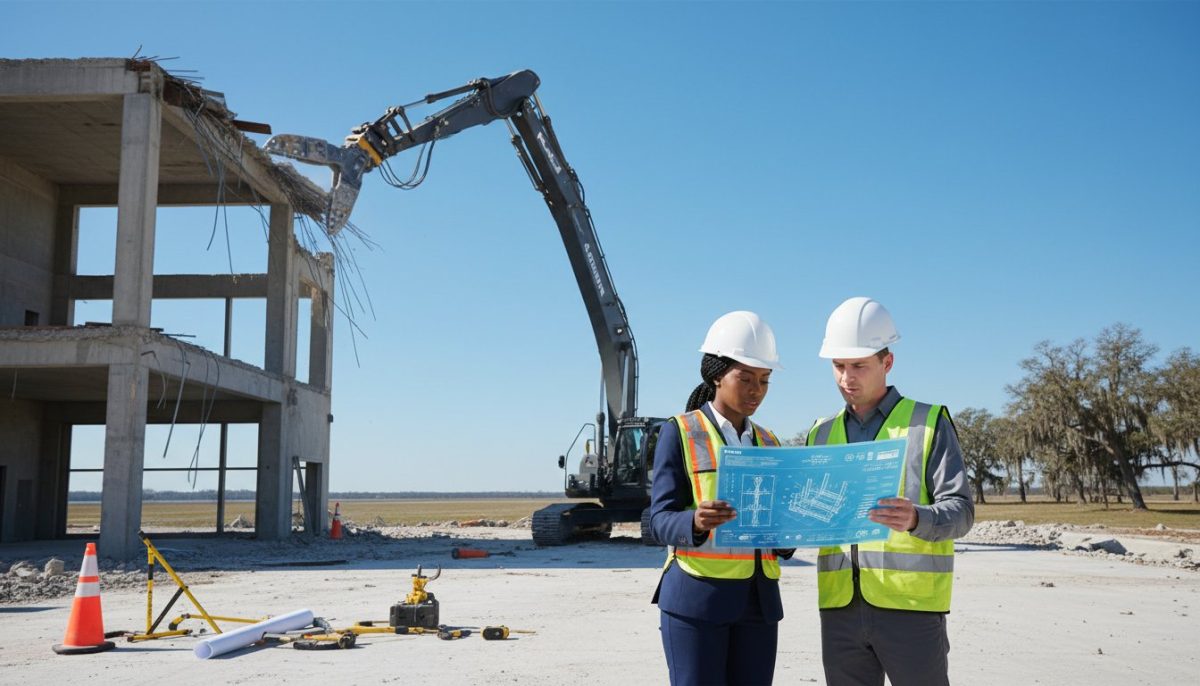
Demolition Pre-Start Meeting Agenda: 2026 Success Guide

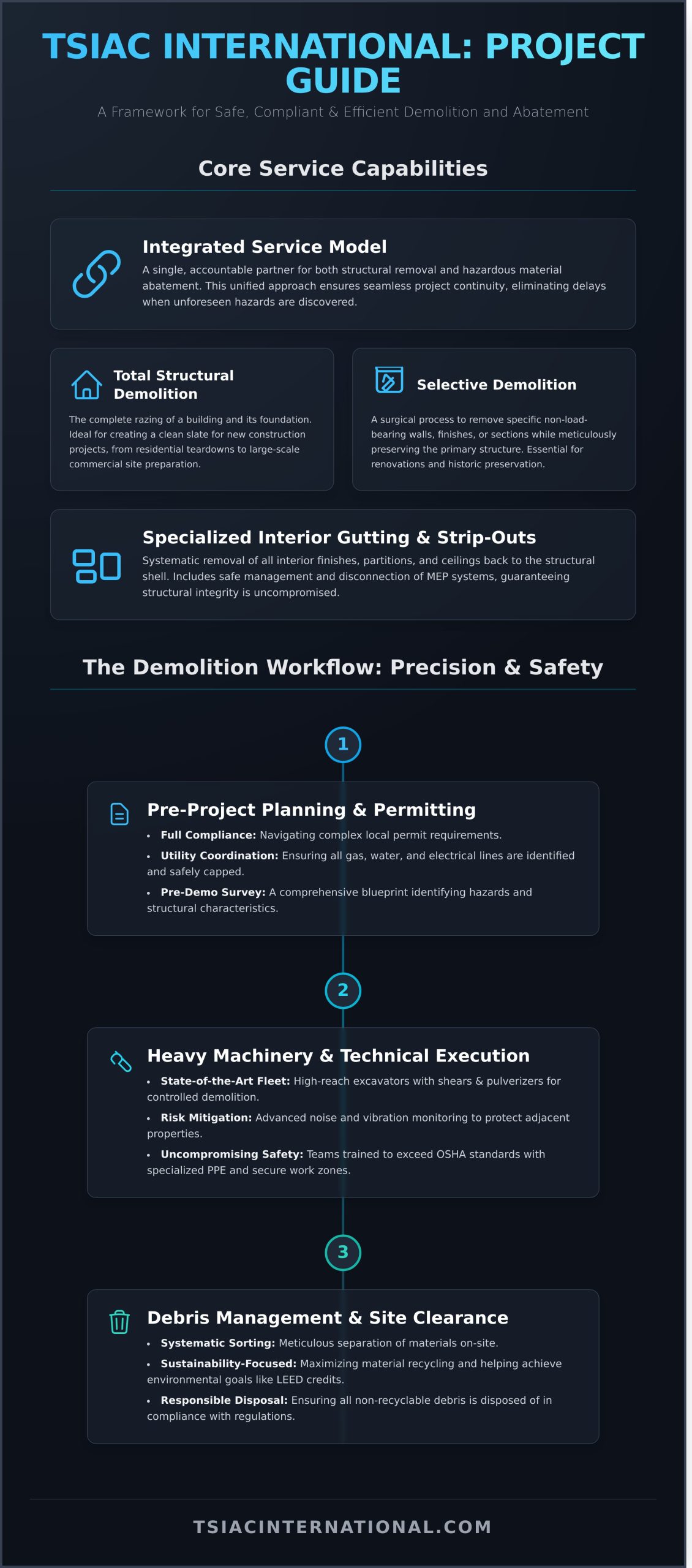
Over 50% of all OSHA citations for demolition preparation violations are linked to one critical failure: skipping the mandatory structural survey…

Over 50% of all OSHA citations for demolition preparation violations are linked to one critical failure: skipping the mandatory structural survey before partial or full removal begins. In a sector where technical precision involves lives and high value assets, you know that a project’s success is determined well before the first excavator arrives. The fear of discovered hazardous materials like asbestos or lead causing indefinite delays is a valid concern, especially as abatement costs in major markets have already climbed up to 12% in early 2026.

Mastering a comprehensive demolition pre-start meeting agenda is your primary defense against regulatory fines and costly scope creep. By establishing clear boundaries and communication protocols early, you ensure full compliance with the updated 2026 ANSI/ASSP A10 safety standards and EPA silt fence mandates. This guide provides a repeatable framework to align every stakeholder, reduce change orders, and manage the complex transition from a theoretical contract to a safe, high performance operation. We’ll examine the essential agenda items, from utility disconnect verification to the latest municipal “silent demolition” requirements, to keep your project on schedule and under control.

Key Takeaways

  • Implement a structured demolition pre-start meeting agenda to transform contract specifications into a synchronized, safe operational plan before any heavy machinery is mobilized.
  • Define precise “Limit of Work” boundaries and review structural engineering requirements to prevent accidental damage to adjacent properties and utilities.
  • Establish rigorous hazardous material protocols by reviewing current asbestos and lead survey results to designate regulated work areas and decontamination zones.
  • Create a formal Decision Matrix and RFI process to handle structural unknowns, ensuring all stakeholders know who has the authority to approve change orders.
  • Conduct the pre-start meeting on-site to perform a physical “Site Walk,” which allows for the immediate identification of physical hazards and boundary markers.

The Foundation: Why a Structured Demolition Pre-Start Meeting is Non-Negotiable

The demolition pre-start meeting serves as the final alignment phase before heavy machinery or abatement crews mobilize on-site. It’s the critical juncture where a project shifts from a theoretical plan to a high-stakes physical operation. While many treat this as a formality, seasoned professionals recognize it as a risk-mitigation engine. This meeting is the last opportunity to verify that every technical parameter is understood by the owner, the general contractor, and the demolition team. Without a rigorous demolition pre-start meeting agenda, the transition from paper to pavement often results in preventable safety incidents.

Demolition differs fundamentally from new construction due to the inherent unpredictability of existing structures. A new build follows a linear, controlled path from the foundation up. In contrast, a Demolition process overview reveals a reverse engineering challenge where structural integrity can change with every wall removed. You aren’t just following a blueprint; you’re uncovering decades of modifications, hidden utilities, and potentially hazardous materials. Identifying these risks on paper during the pre-start phase saves thousands in field hours. It’s far more cost-effective to solve a structural conflict in a conference room than to pause a 40-ton excavator while waiting for an engineering RFI.

Bridging the Gap Between Contract and Execution

A successful project requires translating the written scope of work into a logical sequence of physical tasks. The meeting must clarify the “who-does-what” for critical items like utility air-gaps, digital permitting, and site security. If the responsibility for a water disconnect is ambiguous, the project faces immediate delays or catastrophic flooding. By walking through the sequence of structural or selective demolition, you set a tone of professional accountability. This ensures every subcontractor understands their specific boundaries and the precise timing of their involvement.

Mitigating Liability Through Proactive Planning

Professional site management is your primary defense against environmental litigation and safety violations. The demolition pre-start meeting agenda must include a verification of all site-specific insurance certificates and bonds. This proactive approach protects the property owner and helps maintain a low Experience Modification Rate (EMR). A low EMR isn’t just a number; it’s a reflection of a “Safety First” culture that prevents accidents before they occur. Confirming that specialized hazardous material containment protocols are ready for deployment ensures that the project remains compliant with 2026 regulatory standards from day one.

Core Agenda Items: Defining Scope, Logistics, and Site Boundaries

A precise demolition pre-start meeting agenda moves beyond general safety into the granular technicalities of the site. The structural engineering report serves as the anchor for this discussion. Every participant must review the demolition plan to understand how the building’s load paths will change during the teardown. Defining the Limit of Work (LOW) is equally critical. Without clearly marked boundaries, heavy machinery can easily encroach on adjacent structures, leading to vibration damage or accidental structural compromise. It’s not enough to say “demolish the building”; you must define exactly where the work stops and how the remaining site will be stabilized.

Debris management is another pillar of modern site operations that often lacks sufficient detail in standard meetings. In 2026, professional site management requires a sophisticated approach to sorting and hauling. Your demolition pre-start meeting agenda should specify the staging areas for wood, metal, and plastic to maximize recycling yields. This isn’t just about environmental stewardship; it’s about operational efficiency. Proper sorting at the source reduces landfill fees and keeps the site organized. Additionally, you must confirm the receipt of “kill letters” for all utilities. Verified digital disconnects for water, gas, and electricity must be in hand at least 48 hours before any structural impact occurs.

Selective Demolition and Interior Gutting Limits

When performing selective demolition, the distinction between structural and non-structural components must be absolute. The team should physically walk the interior to mark “save” items, such as architectural features or MEP systems that will remain active. For occupied buildings, the agenda must detail vibration control and dust mitigation protocols. High-efficiency particulate air (HEPA) filtration and temporary partitions are standard requirements to prevent cross-contamination between the work zone and occupied spaces. If you’re unsure about the structural implications of a specific interior wall, consulting with a partner experienced in selective demolition services can prevent a costly engineering error.

Mobilization and Site Logistics

Mobilization requires a logical flow for heavy machinery and debris containers. The meeting must establish specific ingress and egress routes that minimize disruption to local traffic and neighboring properties. Compliance with OSHA demolition safety standards dictates that staging areas for equipment and hazardous material containment units remain clear of overhead hazards and pedestrian paths. Finally, the team must review work hours and noise ordinances. Proactive neighbor notification protocols help manage expectations and reduce the likelihood of noise complaints that can trigger municipal stop-work orders.

Hazardous Material Protocol: Asbestos, Lead, and Environmental Safety

The discovery of hazardous substances is the most frequent cause of project paralysis and budget overruns. A robust demolition pre-start meeting agenda must prioritize the review of comprehensive survey results for asbestos removal and lead abatement. This involves cross-referencing EPA pre-demolition inspection guidelines with site-specific findings to establish regulated work areas. These zones require dedicated decontamination units and strict air monitoring schedules conducted by third-party inspectors to ensure zero exposure. If the demolition process uncovers suspicious, untested materials, the “Stop Work” protocol must be immediate. Ignorance of a material’s presence isn’t a legal defense. Establishing a clear chain of command for environmental unknowns is vital for maintaining regulatory compliance.

Containment and Abatement Coordination

Effective coordination between abatement contractors and structural teams prevents cross-contamination and hazardous exposure. The agenda should specify PPE requirements, which often differ significantly between abatement crews and general demolition operators. While abatement personnel utilize specialized respiratory protection, general crews must maintain safe distances until clearance is achieved. Every pound of toxic material must be accounted for through rigorous waste manifest tracking. This documentation ensures legal disposal at certified facilities and protects the project owner from future liability. Clear communication ensures that abatement is completed in logical phases, allowing structural work to proceed without breaching containment barriers.

Structural Integrity and Collapse Prevention

Safety extends beyond chemistry to the physics of the structure itself. The demolition pre-start meeting agenda must include a detailed review of the engineered takedown sequence. This plan prevents unplanned collapses by identifying which load-bearing elements must remain until specific phases are reached. Teams should physically inspect and monitor existing cracks or structural weaknesses in adjacent walls, often using vibration sensors or digital crack gauges. An emergency response plan is essential for handling structural anomalies. If a building behaves unexpectedly during teardown, the team needs a pre-approved protocol to stabilize the site and evacuate personnel without delay.
Demolition Pre-Start Meeting Agenda: 2026 Success Guide

Communication and Accountability: Roles and Documentation Standards

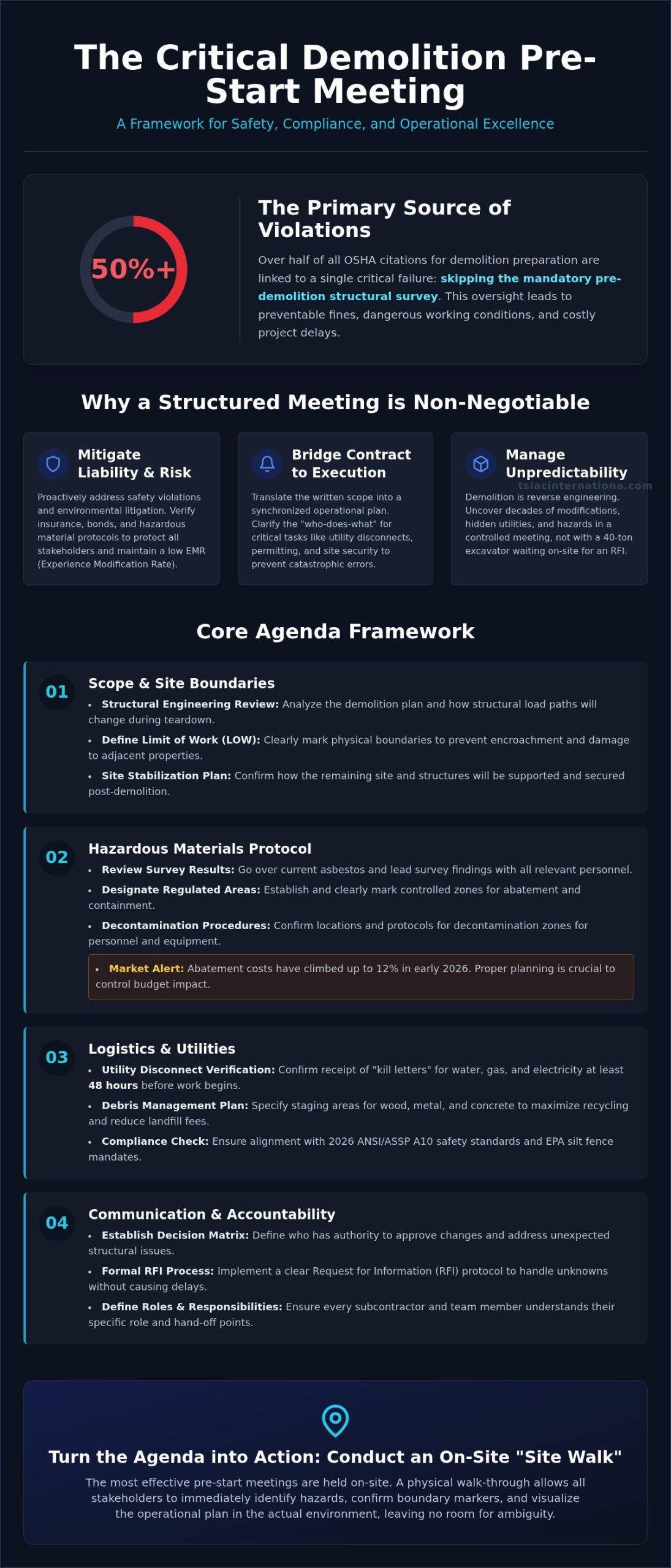
Effective site management relies on a transparent communication structure established during the initial briefing. A comprehensive demolition pre-start meeting agenda must define the Decision Matrix to prevent operational paralysis. When structural or environmental unknowns appear, the team needs to know exactly who has the authority to approve change orders. Without this, a minor discovery can halt production for days while stakeholders debate costs. The RFI (Request for Information) process should be formalized to ensure that technical queries regarding load-bearing elements or hazardous materials are addressed by qualified engineers or environmental consultants immediately.

Daily reporting serves as the project’s legal diary. These reports must capture progress, safety huddles, and a log of all site visitors. Photographic documentation is equally vital for risk mitigation. Capturing high-resolution ‘before’ conditions of the site and adjacent structures is the most effective way to mitigate fraudulent damage claims. By documenting existing cracks or structural wear on neighboring buildings, you create a verifiable baseline that protects all parties involved. This level of detail ensures that any claim of new damage can be cross-referenced with the initial site state.

Establishing the Chain of Command

Every high-performance site requires a clear hierarchy. The agenda must designate the Site Safety and Health Officer (SSHO), who holds the authority to stop work for safety violations without prior approval. Identifying the primary points of contact for the Owner, General Contractor, and Demolition Contractor eliminates confusion during emergencies. Weekly progress meetings should be scheduled in a consistent format to review the look-ahead schedule and address any emerging logistical constraints. This rhythm keeps all stakeholders aligned on the engineered takedown sequence.

Regulatory and Compliance Documentation

Compliance isn’t optional; it’s the foundation of professional demolition. The team must confirm that all required permits are physically present on-site and that OSHA-required notifications are active. A site-specific safety plan (SSSP) must be accessible to all personnel at all times. For projects with sustainability goals, maintaining the ‘Green’ file is essential. This document tracks recycling percentages for metal, wood, and plastic, ensuring the project meets LEED or corporate environmental targets. If you need a partner who prioritizes this level of technical transparency and regulatory precision, contact TSIAC International to discuss your next project.

Turning the Agenda into Action: Best Practices for Meeting Execution

A demolition pre-start meeting agenda achieves its full potential only when executed within the physical context of the project site. While administrative alignment can happen in a remote office, the technical nuances of a teardown require visual confirmation. Holding the conference on-site allows the owner, general contractor, and demolition team to point directly at structural transition points and potential hazards. This physical grounding eliminates the ambiguity that often plagues complex projects. It’s the difference between discussing a utility line on a blueprint and standing over the specific valve that requires a lock-out/tag-out procedure.

Total subcontractor presence is mandatory for this session to be effective. When abatement crews, structural specialists, and hauling contractors are all present, the “I didn’t know” excuse is removed from the project vocabulary. This collective presence ensures that everyone understands the sequence of operations and the interdependencies between trades. For example, the structural team must know exactly when the abatement crew has cleared a specific zone before they can mobilize heavy equipment. Closing the loop with signed meeting minutes provides a legal and operational record of these agreements, ensuring that verbal instructions are never lost in the noise of a busy site.

Conducting the Site Walkthrough

The “Site Walk” is the most vital component of the execution phase. During this walkthrough, the team must perform physical lock-out/tag-out (LOTO) checks to verify that all utility disconnects are air-gapped and secured. This is also the time to identify overhead obstructions, such as low-hanging power lines, or evidence of underground storage tanks (USTs) that may not have been fully documented in the initial surveys. Finally, the team should perform a final check of the site fencing and silt-fence environmental protections. These barriers must comply with the 2026 EPA mandates to prevent runoff into municipal sewers, a common source of heavy fines during the early stages of structural removal.

Post-Meeting Follow-up and Sign-offs

Execution doesn’t end when the team leaves the site. Meeting minutes must be distributed to all stakeholders within 24 hours of the conference to maintain momentum. This document should summarize every decision made, especially regarding the Limit of Work (LOW) and the engineered takedown sequence. Obtaining formal signatures on the site-specific safety plan (SSSP) acknowledgment is a critical step for insurance and regulatory compliance. Finally, the master project schedule must be updated to reflect any logistical adjustments or structural discoveries made during the walkthrough. This ensures the project remains a well-coordinated, high-performance operation from the first impact to the final debris haul-off.

Securing Your Project Timeline Through Precision Planning

A successful teardown requires more than just a signed contract; it demands a rigorous transition from documentation to physical site control. By prioritizing a structured demolition pre-start meeting agenda, you transform potential liabilities into a synchronized operational plan. We’ve explored how identifying “Limit of Work” boundaries and establishing immediate “Stop Work” protocols for hazardous materials prevents the cascading delays that plague less disciplined projects. Precision in the planning phase translates directly to safety and efficiency on the ground. Experience matters.

When you require a partner that combines technical mastery with an unwavering commitment to regulatory compliance, our team is ready to mobilize. With over 15 years of specialized abatement and demolition experience, we provide national coverage for the most complex commercial and industrial projects. Our teams maintain rigorous adherence to OSHA and environmental standards to protect your assets and the surrounding community. Partner with TSIAC International for your next high-stakes demolition project to ensure every phase of your teardown is handled with methodical accuracy. You can proceed with confidence knowing your site is in expert hands.

Frequently Asked Questions

What is the primary goal of a demolition pre-start meeting?

The primary goal is final alignment and risk mitigation before heavy machinery or abatement crews mobilize on-site. It ensures all stakeholders understand the engineered takedown sequence, safety protocols, and site boundaries. This meeting prevents costly “discovery” delays by addressing structural and environmental unknowns on paper rather than in the field. It establishes a professional “Safety First” culture from the project’s inception to protect both lives and property values.

Who should attend the pre-construction conference for a demolition project?

Attendance must include the property owner, the general contractor, the demolition contractor’s project manager, and the Site Safety and Health Officer (SSHO). Additionally, specialized subcontractors for asbestos and lead abatement should be present. Structural engineers and utility representatives may attend if the project involves complex load-bearing removals or high-risk utility air-gaps. This collective presence eliminates the “I didn’t know” excuse later in the project and ensures everyone understands their specific roles.

How do you handle hazardous materials discovered during the pre-start phase?

If hazardous materials are identified during the site walk or survey review, the “Stop Work” protocol is immediately activated for that specific zone. The demolition pre-start meeting agenda should define the chain of command for environmental discoveries. You must engage a certified inspector to conduct testing and establish specialized hazardous material containment protocols. Abatement must be completed and cleared by a third-party inspector before structural demolition resumes in that area.

What documents must be present at the pre-start meeting?

Essential documentation includes the engineered demolition plan, asbestos and lead survey results, and active demolition permits. The team must also review the Site-Specific Safety Plan (SSSP) and utility “kill letters” verifying digital disconnects for water, gas, and electricity. If the project targets LEED certification, the “Green” file for tracking recycling percentages of wood, metal, and plastic should be initiated during this meeting to ensure accurate environmental reporting from day one.

How long does a typical demolition pre-start meeting last?

A typical meeting lasts between two and four hours depending on project complexity. The administrative portion usually takes 60 to 90 minutes to review the Decision Matrix, RFI process, and documentation standards. The remaining time is dedicated to a physical site walkthrough. This walkthrough is essential for identifying physical hazards, overhead obstructions, and “Limit of Work” markers that aren’t always clear on a blueprint, ensuring every subcontractor sees the site’s current state.

Can a demolition project start without a formal pre-start meeting?

While physically possible, starting without a formal meeting is a high-risk practice that often leads to OSHA citations or environmental litigation. Skipping this alignment phase is linked to over 50% of all demolition preparation violations. A formal conference is a regulatory and insurance necessity to confirm that all safety standards, such as the 2026 ANSI/ASSP A10 revisions, are fully integrated into the operational plan before any structural impact occurs on the property.

What is the difference between a safety huddle and a pre-start meeting?

A demolition pre-start meeting agenda focuses on high-level project alignment, roles, and long-term logistical planning before any work begins. In contrast, a safety huddle is a brief, daily gathering held on-site to discuss immediate tasks and specific hazards for that day’s work. The pre-start meeting sets the overarching safety framework, while the daily huddle ensures the crew executes that framework safely every morning as site conditions change during the teardown.

How often should site safety meetings occur after the initial pre-start?

Beyond the initial pre-start conference, safety huddles should occur daily before each shift begins. Weekly progress meetings are also standard for reviewing the look-ahead schedule and addressing emerging structural or environmental constraints. These recurring meetings ensure that the safety culture established on day one remains consistent as the structure is progressively removed. They provide a vital platform for discussing any structural anomalies or hazardous materials discovered during the physical removal process.
Lead Abatement Cost Guide: 2026 Planning and Professional Methodology

A $37,500 fine per day for a single regulatory violation is a staggering price to pay for a “quick fix” that fails to meet EPA standards. While some…

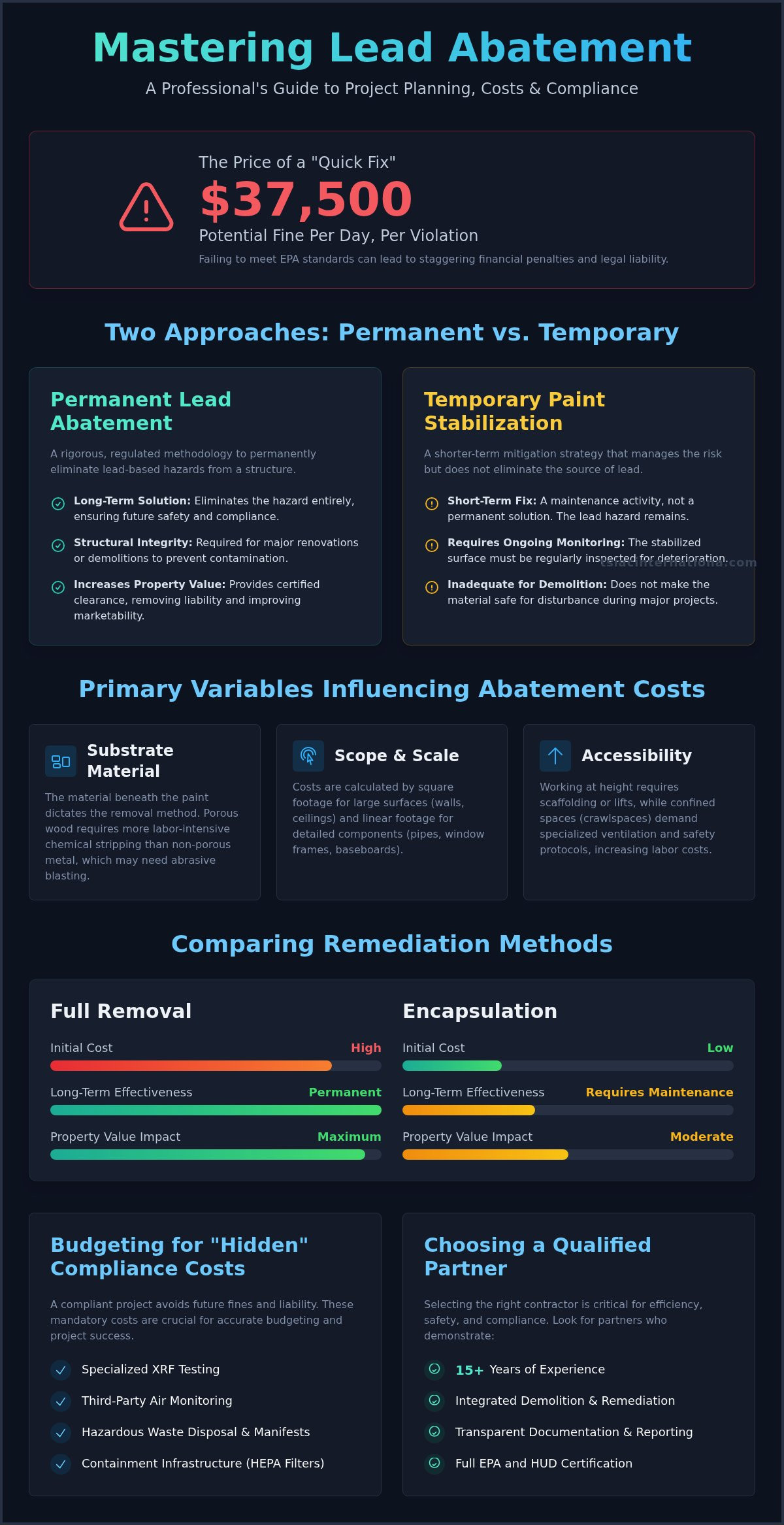
A $37,500 fine per day for a single regulatory violation is a staggering price to pay for a “quick fix” that fails to meet EPA standards. While some contractors offer surface-level solutions, stakeholders managing large-scale projects recognize that hazardous material mitigation requires a disciplined, technical approach. When researching the lead abatement cost charleston sc or evaluating broader national standards, it’s easy to feel overwhelmed by the technical jargon of RCRA compliance and the fear of hidden fees associated with hazardous waste disposal. You aren’t alone in seeking clarity between temporary encapsulation and permanent structural solutions that safeguard both your budget and your asset’s future.

This guide provides a professional framework for mastering these complexities, ensuring your 2026 project planning remains grounded in methodological precision. We’ll outline exactly how to estimate abatement costs without the guesswork, focusing on the legal necessity of certified contractors and the safety protocols required for industrial-grade removal. By the end of this article, you’ll have a clear roadmap for integrating lead abatement with broader structural demolition, moving from initial risk assessment to final waste manifest with total confidence in your compliance strategy.

Key Takeaways

  • Distinguish between temporary paint stabilization and permanent lead abatement to ensure long-term structural integrity and regulatory compliance for large-scale projects.
  • Identify how substrate materials like wood, brick, and metal significantly influence the technical complexity and overall lead abatement cost charleston sc for 2026 planning.
  • Evaluate the strategic trade-offs between initial encapsulation and comprehensive full removal to maximize the return on investment for your facility.
  • Account for mandatory “hidden” compliance costs, including specialized XRF testing and third-party air monitoring, to avoid unexpected budgetary expansions.
  • Optimize project efficiency by selecting a partner with at least 15 years of experience who can integrate selective demolition with hazardous material remediation.

Understanding the Scope of Lead Abatement and Project Budgeting

Lead abatement is a rigorous, regulated methodology designed to permanently eliminate lead-based hazards from a structure. Unlike temporary maintenance, true abatement seeks to remove the risk entirely through specialized techniques like removal, replacement, or enclosure. Stakeholders often confuse this with lead paint stabilization, which is a shorter-term mitigation strategy that requires ongoing monitoring. For those calculating the lead abatement cost charleston sc or elsewhere, understanding this distinction is vital. Abatement isn’t a cosmetic upgrade; it’s a structural necessity that ensures a building is safe for occupancy or further development.

This process serves as a critical prerequisite for any large-scale structural demolition or interior gutting project. Disturbing lead-laden materials without professional containment causes hazardous dust to migrate throughout a site, contaminating air and soil. Beyond immediate safety, lead presence affects property value and creates long-term legal liability. Properties with documented lead hazards often face reduced marketability and higher insurance premiums until certified clearance is achieved. Addressing these risks early in the budgeting phase prevents costly project delays and litigation.

Lead Hazards Beyond Surface Paint

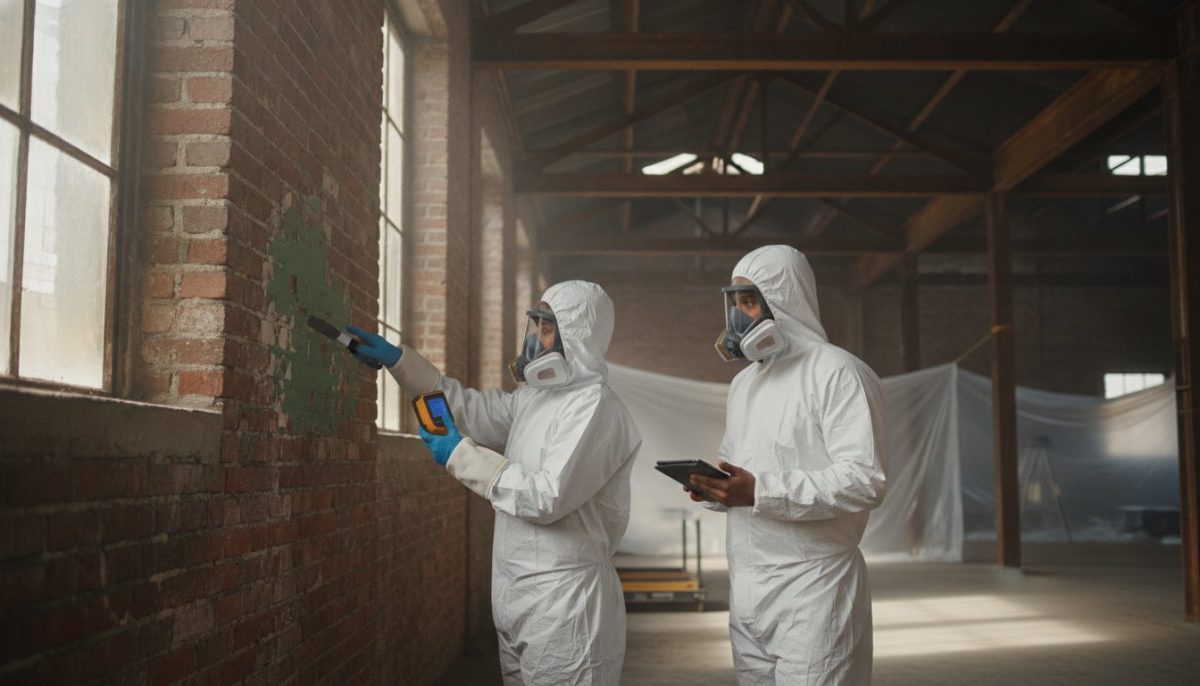
Lead contamination often extends far beyond visible paint chips on a wall. Industrial coatings on structural steel, lead-based solder in plumbing systems, and glazed ceramic tiles frequently harbor high concentrations of the metal. As structures age, these materials degrade into fine lead dust that settles into HVAC systems and wall cavities. This pervasive contamination requires a surgical approach to remediation. Additionally, the soil surrounding older commercial or residential foundations often contains decades of accumulated lead from exterior paint weathering. Addressing these subsurface and structural hazards is a core component of professional Lead Abatement Methods.

The Legal Necessity of Certified Remediation

The Environmental Protection Agency (EPA) and the Department of Housing and Urban Development (HUD) establish the national safety standards that govern these activities. Bypassing these certified protocols exposes property owners to severe legal risks, including civil penalties and personal injury litigation. Professional remediation provides a transparent paper trail, including waste manifests and clearance reports. This documentation is indispensable during property transactions or when securing financing for major renovations. When you factor in the potential lead abatement cost charleston sc, the investment in certified expertise mitigates the far greater cost of legal non-compliance and future remediation rework.

Primary Variables Influencing Professional Abatement Costs

Estimating professional remediation requires looking beyond simple surface area. While square footage serves as the primary metric for large flat surfaces like walls or ceilings, linear footage is more accurate for specialized components such as window casings, baseboards, or exposed piping. The substrate material dictates the removal methodology and labor intensity. Stripping lead from porous wood often requires more intensive manual labor or specialized chemicals compared to treating non-porous metal surfaces. These technical nuances are why a generic search for the lead abatement cost charleston sc often yields broad ranges that don’t account for site-specific engineering challenges.

Substrate complexity is particularly evident in industrial settings. Metal framing and structural steel often feature lead-based primers that bond aggressively to the surface. Removing these requires abrasive blasting or specialized chemical heat-stripping, both of which increase the complexity of the containment setup. Accessibility also drives labor costs. Working at height requires scaffolding or lift equipment, while tight crawlspaces demand specialized ventilation. The condition of the structure dictates the level of containment; severely degraded, flaking paint is far more volatile than intact layers, necessitating more robust protective measures from the first day of mobilization.

Containment and Safety Infrastructure

HEPA filtration and negative air pressure systems are mandatory to prevent micro-particulate lead from escaping the work zone. Large-scale job sites require the installation of multi-stage decontamination units where technicians can safely remove contaminated gear. These infrastructure requirements, combined with high-grade respiratory protection, ensure that the project remains compliant with the EPA Lead Abatement Program guidelines. When you factor in the lead abatement cost charleston sc for a complex facility, a significant portion of the budget is dedicated to this critical safety barrier.

Hazardous Waste Logistics and Disposal Fees

Lead debris isn’t standard construction waste. It’s toxic material that requires specialized hauling and disposal at licensed hazardous waste facilities. These facilities calculate fees based on volume and lead concentration levels. Regulatory mandates require “cradle-to-grave” tracking, where every ounce of material is documented from the moment it’s disturbed until its final disposal. Managing these logistics effectively is why many property owners choose to partner with hazardous material experts who provide fixed-price certainty for complex removals. This disciplined approach ensures that all RCRA disposal mandates are met without the fear of hidden environmental fees or legal repercussions.

Comparing Remediation Methods: Encapsulation vs. Full Removal

Selecting the appropriate remediation strategy requires a balance between immediate budgetary constraints and long-term asset protection. Property owners often evaluate the initial lead abatement cost charleston sc without considering the lifecycle expenses associated with temporary fixes. Professional lead mitigation generally falls into four technical categories:

  • Encapsulation: This method involves applying a specialized, high-solids coating that creates a physical barrier over the lead paint. It’s a cost-effective initial step but requires the underlying surface to be structurally sound.
  • Enclosure: Lead-bearing surfaces are covered with a permanent material such as new drywall, paneling, or aluminum siding. While effective, the hazardous material remains behind the barrier.
  • Removal: Technicians physically strip lead paint using specialized heat guns, vacuum-shrouded power tools, or chemical strippers. This is the most labor-intensive but permanent solution.
  • Replacement: This involves the total removal of contaminated components, such as window sashes, doors, or millwork, and installing new, lead-free alternatives.

Each method carries different implications for future liability and maintenance. While encapsulation might seem attractive for a quick turnaround, it doesn’t eliminate the lead. This means the hazard must be managed and disclosed in all future property transactions. For facilities undergoing significant changes, calculating the total lead abatement cost charleston sc often reveals that permanent removal is the only way to truly “clear” the property of regulatory burdens.

When to Choose Selective Demolition for Lead Removal

In complex commercial or industrial environments, stripping lead paint on-site is often inefficient and creates unnecessary dust risks. Selective demolition offers a surgical alternative by removing entire contaminated wings or structural sections. Instead of spending weeks stripping lead-coated steel or wood framing, the components are removed in their entirety under controlled conditions. This approach is particularly beneficial when the building’s layout is being altered. It integrates hazardous material remediation directly into the structural preparation phase, following the principles outlined in our strategic guide to interior demolition. This method minimizes on-site contamination and speeds up the overall project timeline.

Long-Term ROI: Permanent Removal vs. Temporary Mitigation

The financial logic of lead mitigation extends far beyond the mobilization phase. Encapsulation requires a commitment to ongoing monitoring; if the sealant cracks or the building settles, the lead hazard reappears. Over a decade, the costs of inspections and re-applications can quickly surpass the price of a one-time permanent removal. Analysis of the Cost-Benefit of Lead Hazard Control shows that permanent solutions provide superior value by removing the need for lead-safe work practices during all future maintenance. For severely degraded structures, total structural demolition is often the most fiscally responsible path. It provides a clean slate for development and completely removes the legal and health liabilities associated with legacy lead contamination.

Lead Abatement Cost Guide: 2026 Planning and Professional Methodology

Regulatory Compliance and “Hidden” Costs in Abatement

Regulatory compliance represents a significant portion of the professional lead abatement budget. Before a single wall is disturbed, mandatory pre-abatement testing must be conducted. This typically involves X-ray fluorescence (XRF) scanning and laboratory analysis of paint chips to pinpoint lead concentrations. These tests aren’t just technical formalities; they establish the legal baseline for the entire project. When calculating the lead abatement cost charleston sc, project managers must account for these initial diagnostic phases. Failing to accurately map lead presence leads to mid-project discoveries that can derail a timeline and inflate costs.

Oversight continues throughout the remediation process. Independent third-party air monitoring is often required to verify that containment systems are functioning correctly and that no hazardous dust is escaping into adjacent areas. Once the physical removal is complete, final clearance testing is necessary to certify the site as lead-safe for other trades to enter. This rigorous verification process is non-negotiable. Non-compliance doesn’t just risk health; it invites massive federal fines and immediate project shutdowns. A single oversight can result in penalties that far outweigh the cost of doing the job correctly the first time.

Environmental Responsibility and Debris Management

Modern abatement strategies prioritize the systematic sorting of materials. By separating wood, metal, and plastic from lead-contaminated debris, contractors can significantly reduce the volume of waste destined for hazardous landfills. Implementing a robust demolition debris recycling program is a hallmark of professional methodology. This approach isn’t just environmentally responsible; it’s a strategic way to manage the lead abatement cost charleston sc by bypassing the high fees associated with toxic waste disposal for non-hazardous components.

Permitting and Administrative Overhead

The administrative burden of a lead project is substantial. Property owners must budget for hazardous material abatement permits and the labor-intensive documentation required for regulatory reporting. This includes maintaining waste manifests and worker exposure records. Additionally, the insurance premiums for high-risk abatement work are considerably higher than standard construction coverage. These administrative layers provide the legal protection necessary for complex projects. To ensure your project remains fully compliant and avoids costly delays, you should consult with our regulatory specialists for a comprehensive project assessment.

Choosing a Qualified Abatement Partner for Structural Projects

Selecting a partner for hazardous material remediation requires a disciplined evaluation of their operational history. A track record of over 15 years is often considered non-negotiable for large-scale projects because it demonstrates a long-term commitment to evolving safety standards and technical precision. When you analyze the lead abatement cost charleston sc, you’re investing in more than just labor; you’re securing a methodology that prevents cross-contamination and shields you from legal liability. Experience allows a contractor to anticipate the variables of aging structures before they become expensive mid-project discoveries.

There’s a significant operational advantage to hiring a single contractor capable of handling both structural demolition and lead abatement. This integration eliminates the coordination gaps and finger-pointing that often occur between separate vendors. A single-source provider manages the entire lifecycle of the material, from initial containment to final disposal. This streamlines the timeline and ensures that hazardous material handling is woven into the demolition strategy rather than treated as a separate, disjointed task. It also provides a single point of accountability for all waste manifests and clearance documentation.

Many contractors operate on a “time and materials” basis for hazardous work, which often leads to budget creep as new variables emerge. In contrast, fixed-price structural contracts provide stakeholders with financial certainty. By conducting thorough pre-project assessments, a qualified partner can provide a transparent, all-inclusive quote that accounts for disposal fees and administrative overhead. This approach protects your project from “too-good-to-be-true” quotes that often hide missing certifications, vague disposal plans, or inadequate insurance coverage. If a quote seems suspiciously low, it’s likely because the contractor is cutting corners on containment or regulatory reporting.

The TSIAC International Approach to Hazardous Materials

Our methodology is built on 15 years of industry experience and a commitment to EPA-certified safety protocols. We utilize vacuum-shrouded tools and high-efficiency particulate air (HEPA) filtration to maintain strict site control during every phase of removal. Beyond safety, we focus on environmental stewardship by integrating recycling programs for non-hazardous materials like wood and metal. This technical precision is detailed further in our hazardous material abatement guide, which serves as a foundational resource for property owners planning complex renovations.

Next Steps: Requesting a Detailed Project Evaluation

Accurate budgeting for a large-scale structure requires a data-driven site evaluation. To provide a precise quote, specialists need access to existing blueprints, previous lead test reports, and a clear understanding of the project’s final goals. The process begins with a comprehensive site walkthrough to identify accessibility challenges and substrate conditions. Engaging with hazardous material experts early in the demolition planning phase ensures that the lead abatement cost charleston sc is fully integrated into the master budget. This early collaboration prevents logistical bottlenecks and ensures a lead-safe clearance at the project’s conclusion.

Securing Your Asset Through Methodological Precision

Effective 2026 project planning requires a shift from viewing lead mitigation as a simple maintenance task to recognizing it as a critical engineering requirement. By prioritizing permanent removal over temporary encapsulation, property owners eliminate future liability and secure the long-term marketability of their assets. Navigating the technical variables of substrate complexity and regulatory oversight is essential for maintaining project timelines and avoiding budget creep. Understanding the lead abatement cost charleston sc involves looking beyond the initial mobilization to the total value of a certified, lead-safe clearance.

Successful remediation rests on the technical precision of your chosen partner. Integrated demolition and abatement services provide the most streamlined path for complex renovations, ensuring that hazardous materials are handled with surgical accuracy from containment to final disposal. With over 15 years of industry experience as an EPA Lead-Safe Certified firm, we specialize in managing the most demanding structural and selective demolition challenges. Contact TSIAC International for a Professional Abatement Consultation to establish a clear, fixed-price framework for your project. Taking this proactive step ensures your facility remains compliant, safe, and ready for its next phase of development.

Frequently Asked Questions

Is lead abatement more expensive than standard interior demolition?

Lead abatement is significantly more technical than standard interior demolition. The necessity for negative air pressure systems, multi-stage decontamination units, and specialized hazardous waste hauling increases the complexity of the project. While standard demolition focuses on speed, abatement requires a surgical approach to material handling. These additional safety protocols and regulatory reporting requirements are primary drivers for the overall lead abatement cost charleston sc compared to non-hazardous structural removal.

Can I stay in my property during the lead removal process?

Occupants should vacate the work area during the removal process to ensure total safety. While small-scale repairs might allow for partial occupancy, large-scale residential or commercial abatements require the entire site to be sealed under negative pressure. This prevents lead dust from migrating into living or work spaces. Re-entry is only permitted after a third-party professional conducts final clearance testing and certifies the environment as lead-safe for unprotected individuals.

How long does a typical lead abatement project take to complete?

A typical project timeline depends on the remediation method chosen and the total linear footage involved. A focused interior gutting of a contaminated wing might take one to two weeks, whereas a full structural stripping of an industrial facility could span several months. Factors such as substrate material and the condition of the existing paint significantly impact the speed of mobilization. Replacement of components is generally faster than on-site chemical or mechanical stripping.

What is the difference between lead-safe renovation and lead abatement?

Lead abatement is a permanent solution designed to eliminate lead hazards entirely through removal, replacement, or enclosure. In contrast, lead-safe renovation refers to work practices used during general repairs to minimize dust. While renovation follows the EPA’s RRP Rule, it doesn’t necessarily result in a lead-free environment. For stakeholders evaluating the lead abatement cost charleston sc, the investment in true abatement provides long-term liability protection that standard renovation cannot offer.

Does lead abatement automatically increase my property value?

Lead abatement preserves property value by removing a major structural and legal liability. Properties with documented lead hazards often face lower appraisal values and more difficult paths to financing. By achieving a certified lead-free status, you increase the asset’s marketability and eliminate the need for mandatory lead disclosures during future transactions. This proactive approach is a strategic investment in the building’s long-term financial health and occupancy safety.

What happens if lead is discovered during a structural demolition project?

If lead is discovered mid-project, all activities must cease to prevent hazardous dust from spreading. The site must be secured, and a certified risk assessment should be conducted immediately. Resuming work without a hazardous material plan violates federal safety regulations and risks massive environmental fines. Integrating abatement with your initial demolition strategy is the most effective way to prevent these costly project shutdowns and ensure continuous workflow.

Are there federal grants available for lead paint removal in 2026?

Federal funding is often available through the HUD Lead Hazard Control and Healthy Homes program. These grants are typically directed toward high-risk residential areas and community-based projects. In 2026, many government agencies continue to prioritize the elimination of lead in older housing stocks. Property owners should consult the official HUD or EPA portals to identify available local and national financial assistance programs for hazardous material remediation.

How do I verify if an abatement contractor is EPA Lead-Safe Certified?

You can verify a contractor’s status by using the EPA’s Lead-Safe Certification Locator tool online. Professional firms are required to maintain valid certifications and should be able to provide their firm’s license number upon request. It’s also vital to check the individual certifications of the technicians performing the work. Verifying these credentials ensures that the contractor follows the strict methodological protocols required for legal and environmental compliance.

TSIAC International FAQ: Expert Answers on Demolition & Abatement in 2026

Navigating the complexities of a structural demolition or hazardous material abatement project presents significant challenges. The potential for…

Navigating the complexities of a structural demolition or hazardous material abatement project presents significant challenges. The potential for unforeseen costs, regulatory penalties from agencies like DHEC, and critical project delays are valid concerns for any property owner or developer in South Carolina. To provide clarity and instill confidence in these high-stakes operations, our team of specialists has compiled this comprehensive tsiac international faq for 2026. This is more than just a list of answers; it is a direct line to the expertise that has defined our firm as a leader in the industry.

Within this guide, you will find authoritative information on our meticulous safety protocols, our transparent pricing models for hazardous material removal, and our unwavering commitment to full regulatory compliance. We aim to demystify the process from initial assessment to final clearance, empowering you with the knowledge to move forward with your project, secure in the knowledge that every technical detail is under control. Consider this your essential resource for planning a safe, compliant, and efficient project outcome.

Key Takeaways

  • Understand the strict South Carolina DHEC requirements for asbestos testing *before* beginning any structural demolition to ensure full legal compliance.
  • Learn how a meticulously engineered demolition plan not only mitigates on-site risks like dust and vibration but also leads to a more predictable project timeline and budget.
  • This tsiac international faq clarifies how integrating hazardous material abatement directly with demolition creates a single, accountable point of contact for complex projects.
  • Discover how partnering with a sustainability-focused contractor can help you achieve environmental goals, from maximizing material recycling to earning valuable LEED credits.

Understanding TSIAC International’s Core Service Capabilities

For over 15 years, TSIAC International has served as the Charleston Lowcountry’s trusted contractor for technically demanding projects. Our expertise is engineered around a critical dual-focus: the precise execution of structural removal and the certified remediation of hazardous materials. This integrated service model provides clients with a single, accountable partner for projects ranging from residential teardowns to large-scale commercial site preparation, ensuring efficiency and strict regulatory compliance from start to finish.

We manage projects across both the residential and commercial sectors, understanding that the scale, risks, and regulations differ significantly. The primary advantage of hiring a unified contractor is seamless project continuity. When demolition uncovers unforeseen hazards, our cross-trained teams can pivot immediately to implement compliant asbestos abatement procedures without halting progress or engaging a separate subcontractor. This capability is a cornerstone of the value we provide and a frequent topic in this tsiac international faq.

Structural vs. Selective Demolition: What Do You Need?

The correct demolition method is dictated entirely by your project’s end goal. Total structural demolition involves the complete razing of a building and its foundation, creating a clean slate for new construction. In contrast, selective demolition is a surgical process essential for renovations, additions, or historic preservation projects. It involves removing only specific non-load-bearing walls, finishes, or building sections while meticulously preserving the primary structure.

Specialized Interior Gutting and Strip-Outs

Our interior gutting and strip-out services are engineered for precision, serving commercial tenant improvements and extensive residential remodels. This process involves the systematic removal of all interior finishes, partitions, and ceilings back to the structural shell. We carefully manage the safe disconnection and removal of mechanical, electrical, and plumbing (MEP) systems, guaranteeing that the building’s foundational integrity remains uncompromised throughout the deconstruction phase.

The TSIAC Demolition Workflow: Safety and Engineering Precision

At TSIAC International, a successful demolition project is defined not by the collapse of a structure, but by the meticulous process that precedes and follows it. Our workflow is a synthesis of advanced engineering, rigorous safety protocols, and strategic execution. This section of our tsiac international faq breaks down the critical phases of our demolition process, from initial site assessment to final debris management, ensuring every project is completed with unparalleled precision and control.

Pre-Project Planning and Permitting

The foundation of a safe demolition is laid long before heavy machinery arrives. Our project managers are experts in navigating the complex local permit requirements of municipalities like Charleston and Myrtle Beach, ensuring full compliance. A critical step is meticulous utility coordination, where we work directly with providers to guarantee that all gas, water, and electrical lines are identified, disconnected, and safely capped. The mandatory Pre-Demo Survey serves as our comprehensive blueprint, identifying structural characteristics, hazardous materials, and environmental sensitivities to inform every subsequent action.

Heavy Machinery and Technical Execution

TSIAC International deploys a state-of-the-art fleet engineered for power and precision. This includes high-reach excavators equipped with specialized attachments like shears and pulverizers for controlled, top-down demolition of commercial structures, alongside versatile skid steers for material handling. In sensitive urban environments, our methodology is paramount. We utilize advanced noise and vibration monitoring systems to ensure our operations remain within acceptable limits, protecting adjacent properties and minimizing community disruption through a carefully phased approach.

On-site execution is governed by an uncompromising commitment to safety. Every team member is trained to exceed the rigorous federal guidelines outlined in the OSHA Demolition Safety Standards, utilizing specialized personal protective equipment (PPE) and maintaining secure work zones. We engineer each demolition plan to actively mitigate risks like airborne dust and structural vibration. Upon completion of the teardown, the final phase involves systematic debris management—sorting materials for recycling and responsible disposal—and site stabilization, leaving the property secure, clean, and ready for its next chapter.

Compliance in demolition and abatement is not optional; it is a legal and ethical imperative. South Carolina’s Department of Health and Environmental Control (DHEC) enforces some of the most stringent regulations in the region, designed to protect public health and the environment from hazardous materials. A critical mandate is the legal requirement for a comprehensive asbestos inspection by a licensed inspector before any demolition or renovation activities can commence, regardless of the building’s age. Failure to comply can result in significant fines and project shutdowns.

At TSIAC International, our commitment to safety and regulatory adherence is absolute. Our hazardous material handlers are not only licensed by DHEC but also undergo continuous, rigorous training that exceeds OSHA and EPA standards. To provide clients with complete liability protection, every abatement project concludes with a meticulously compiled “Close-Out” package. This vital documentation includes:

  • State notifications and permits
  • Air monitoring and clearance reports
  • Hazardous waste manifests confirming proper disposal
  • Daily project logs and personnel certifications

This comprehensive record-keeping is a cornerstone of our process and a frequent topic in our tsiac international faq, as it provides clients with indisputable proof of compliance for their records.

The Asbestos Removal Process (Abatement)

Our abatement methodology is engineered for maximum safety and efficiency. We establish fully sealed containment zones maintained under negative air pressure, with all exhausted air passing through high-efficiency particulate air (HEPA) filters to capture microscopic fibers. TSIAC prioritizes a wet-method removal technique, which involves saturating asbestos-containing materials to prevent fibers from becoming airborne. All waste is securely bagged, sealed, and transported with manifest tracking to a licensed disposal facility, ensuring a complete and documented chain of custody.

Lead Paint Remediation and Mold Services

Beyond asbestos, our expertise extends to other environmental hazards. Handling lead-based paint, particularly in historic Charleston properties, requires specialized containment and removal techniques to preserve architectural integrity while ensuring safety. Similarly, our approach to mold remediation goes beyond surface cleaning. We identify and address the root cause of moisture intrusion—the source of the mold—before any structural removal, safeguarding the building’s long-term stability and preventing recurrence.

TSIAC International FAQ: Expert Answers on Demolition & Abatement in 2026

Estimating Project Costs, Timelines, and Logistics

A precise and transparent estimate is the foundation of any successful demolition or abatement project. A common question in our tsiac international faq is how we translate complex site variables into a predictable budget and schedule. Our methodology is built on meticulous assessment, ensuring clients and general contractors have a clear financial and operational roadmap from day one.

The final cost of a demolition contract is determined by a confluence of critical factors, never just one. We analyze:

  • Structural Complexity & Materials: A project’s scope extends beyond simple square footage. The type of construction—such as reinforced concrete versus a wood-frame structure—dictates the equipment, labor, and time required.
  • Hazardous Material Abatement: The confirmed presence of asbestos, lead paint, or other regulated materials fundamentally alters the project’s scope. These require specialized containment, removal, and disposal protocols, which are significant and non-negotiable cost drivers governed by strict federal and state regulations.
  • Site Accessibility & Logistics: The ability to deploy heavy machinery efficiently impacts the budget. Tight urban sites or locations with limited access require specialized equipment and more strategic planning, influencing mobilization costs and project duration.

How We Calculate Your Demolition Quote

Our quotes are engineered, not guessed. We balance the baseline metric of square footage against the material complexity and structural density of the building. We conduct a thorough site logistics analysis to calculate machinery deployment and debris removal costs accurately. Furthermore, TSIAC International actively identifies opportunities for material salvage and recycling; any credits obtained from reclaimed steel, concrete, or other valuable materials are passed on to you, directly offsetting project expenses.

Scheduling and Project Management

Once a contract is executed, typical lead times for mobilization in the Lowcountry range from two to four weeks, allowing for permitting, utility disconnection, and pre-construction surveys. While a standard residential demolition may be completed in under a week, a large-scale commercial or industrial project can span several months. Our project managers maintain proactive communication protocols with general contractors, providing regular updates and strategically navigating potential weather delays and mandatory regulatory inspection windows to keep the project on its critical path.

At TSIAC International, our commitment is to provide comprehensive, fixed-price contracts whenever possible. This eliminates financial uncertainty and establishes us not just as a contractor, but as a predictable and reliable partner in your project’s success. For a detailed, site-specific proposal, we invite you to contact our estimating team.

Compliance, Sustainability, and Partnering with TSIAC

Executing a successful demolition or abatement project extends beyond technical proficiency; it demands a deep commitment to regulatory compliance, environmental stewardship, and transparent partnership. At TSIAC International, these principles are integrated into every phase of our operations, ensuring that your project not only meets its technical objectives but also aligns with corporate responsibility standards and contributes positively to the community. Our approach is designed to provide clients with peace of mind, knowing every detail is managed with engineering precision.

Our commitment to sustainability is demonstrated through our proactive support for clients pursuing LEED (Leadership in Energy and Environmental Design) certification. By maximizing material recovery and minimizing waste, we help projects earn valuable credits. This dedication is a core part of our “Zero Waste” initiative, where materials such as wood, metal, and plastic are not viewed as debris but as resources to be reclaimed and repurposed, reducing environmental impact and often generating cost efficiencies.

The Recycling and Material Recovery Program

Central to our sustainability mission is a rigorous material recovery program. Our teams meticulously sort debris on-site to maximize the recovery of recyclable materials. Through strategic partnerships with certified recycling facilities across South Carolina, we ensure that resources are processed responsibly. Through these meticulous processes, TSIAC International consistently diverts over 85% of all non-hazardous project debris from landfills, directly contributing to our clients’ sustainability goals.

Why TSIAC International is the Preferred SC Partner

Selecting a partner for complex industrial work is a critical decision. As this tsiac international faq guide concludes, we want to emphasize the foundational pillars that make us a trusted leader. Our status as a certified Latino-owned business also enhances our clients’ ability to meet supplier diversity requirements for both public and private sector contracts. We provide a partnership built on:

  • Unquestionable Credentials: We maintain comprehensive insurance, full bonding capacity, and all requisite state and federal licenses to manage projects of any scale and complexity.
  • The Andra Basnight Standard: Every project is managed with a level of direct communication, accountability, and professionalism that reflects our founder’s commitment to client success.
  • Proven Performance: A documented history of delivering safe, efficient, and on-schedule demolition and abatement solutions for the most demanding industries.

The final step is to translate these capabilities into a tailored solution for your project. We invite you to request a comprehensive site walk-through to discuss your specific demolition or abatement needs. Contact TSIAC International for a Professional Consultation to receive a formal, detailed proposal from our expert team.

Your Strategic Partner for Complex Demolition and Abatement

Navigating the intricacies of demolition and hazardous material abatement requires a partner with proven expertise and an unwavering commitment to safety. This guide has illuminated the core tenets of our operations, from our meticulously engineered demolition workflows to our rigorous adherence to South Carolina’s asbestos and lead abatement regulations. We trust this tsiac international faq has provided the clarity and confidence you need for your upcoming projects in 2026 and beyond.

With 15+ years of industry experience, our status as a Fully DHEC & OSHA Compliant and Certified Latino-Owned Small Business stands as a testament to our dedication to operational excellence. When your project demands a solution that is both technically sound and executed with uncompromising precision, the next step is a detailed consultation.

Take the definitive step toward a safe and successful project outcome. Request a Comprehensive Project Quote from TSIAC International and let our team develop a strategic plan tailored to your specific needs. We look forward to building a safer, more sustainable future together.

Frequently Asked Questions About Demolition & Abatement

Is TSIAC International licensed for asbestos removal in South Carolina?

Yes, TSIAC International is fully licensed and certified by the South Carolina Department of Health and Environmental Control (SCDHEC) for asbestos abatement projects. Our technicians adhere strictly to all state and federal regulations, including OSHA and EPA standards. We maintain comprehensive insurance and bonding, ensuring every project is executed with the highest level of safety, compliance, and professional accountability. This commitment to regulatory adherence is fundamental to our operations.

Do I need an asbestos survey before I demolish my house in Charleston?

Absolutely. Both federal NESHAP regulations and South Carolina DHEC rules mandate a comprehensive asbestos survey by a licensed inspector before any demolition or significant renovation, regardless of the structure’s age. This is a critical step to identify any asbestos-containing materials (ACMs) and ensure they are handled safely. This legal requirement protects workers, the community, and property owners from liability and hazardous exposure.

How much does commercial demolition cost per square foot in 2026?

In 2026, commercial demolition costs typically range from $5 to $15 per square foot, but this figure is highly variable. The final price is determined by factors such as the building’s construction materials (e.g., steel frame vs. reinforced concrete), the presence of hazardous materials, site accessibility for heavy machinery, and local landfill fees. We provide a detailed, site-specific estimate after a thorough project evaluation to ensure accurate and transparent pricing.

What is the difference between abatement and remediation?

While related, these terms have distinct meanings. Abatement refers to the specific process of controlling, containing, or removing a known hazardous material, such as asbestos or lead paint, to eliminate exposure. Remediation is a broader term for the cleanup and reversal of environmental contamination. It can include abatement as one component but may also involve addressing contaminated soil or groundwater to restore a site to a safe, usable condition.

How does TSIAC handle dust and noise control for neighbors?

We implement a rigorous environmental control plan for every project. Dust is actively suppressed using engineered water misting systems and perimeter dust screens. For sensitive interior work, negative air pressure containments are established. Noise is managed by using modern equipment and adhering strictly to local ordinances regarding operational hours. Proactive communication with adjacent property owners is also a key component of our strategy to minimize community impact.

Can TSIAC assist with the demolition permit process in Myrtle Beach?

Yes, managing the permitting process is an integral part of our turnkey demolition services. We handle all necessary documentation and coordination with municipal bodies, including the City of Myrtle Beach. This is a common topic in our TSIAC International FAQ with clients. Our extensive experience with local regulations ensures that all prerequisites, from utility disconnects to environmental clearances, are met efficiently to secure the demolition permit without unnecessary delays.

What happens to the materials after a building is torn down?

Post-demolition, materials are meticulously sorted on-site to maximize recycling and ensure regulatory compliance. Concrete, steel, and wood are segregated and transported to certified recycling facilities to be repurposed. Any identified hazardous materials are handled and disposed of according to strict EPA and SCDHEC protocols at licensed facilities. Non-recyclable construction and demolition debris is transported to an approved landfill, minimizing the project’s environmental footprint.

Does TSIAC perform mold remediation alongside demolition?

Yes, TSIAC International provides integrated environmental services, including professional mold remediation. If mold is identified during the pre-demolition inspection or uncovered during the work, our certified technicians are equipped to establish containment and execute a thorough remediation plan. We follow IICRC S520 industry standards to safely remove mold and address the underlying moisture source, ensuring the issue is resolved completely before demolition proceeds.