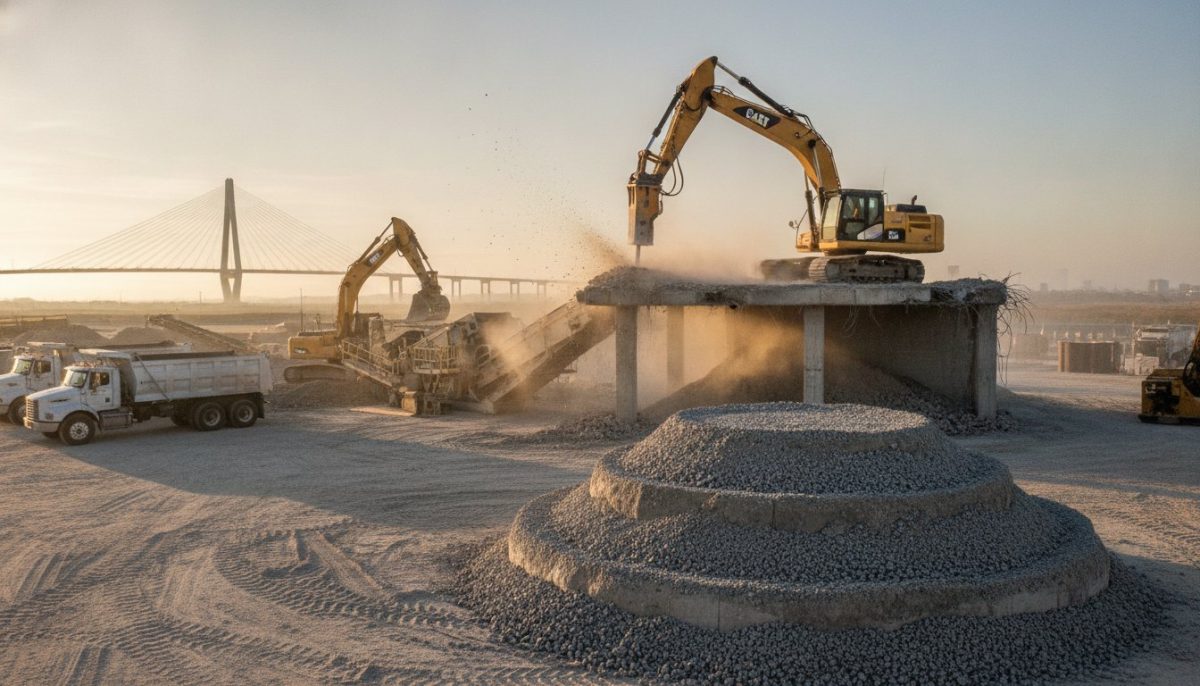
Concrete Demolition and Recycling in Charleston, SC: A 2026 Strategic Guide

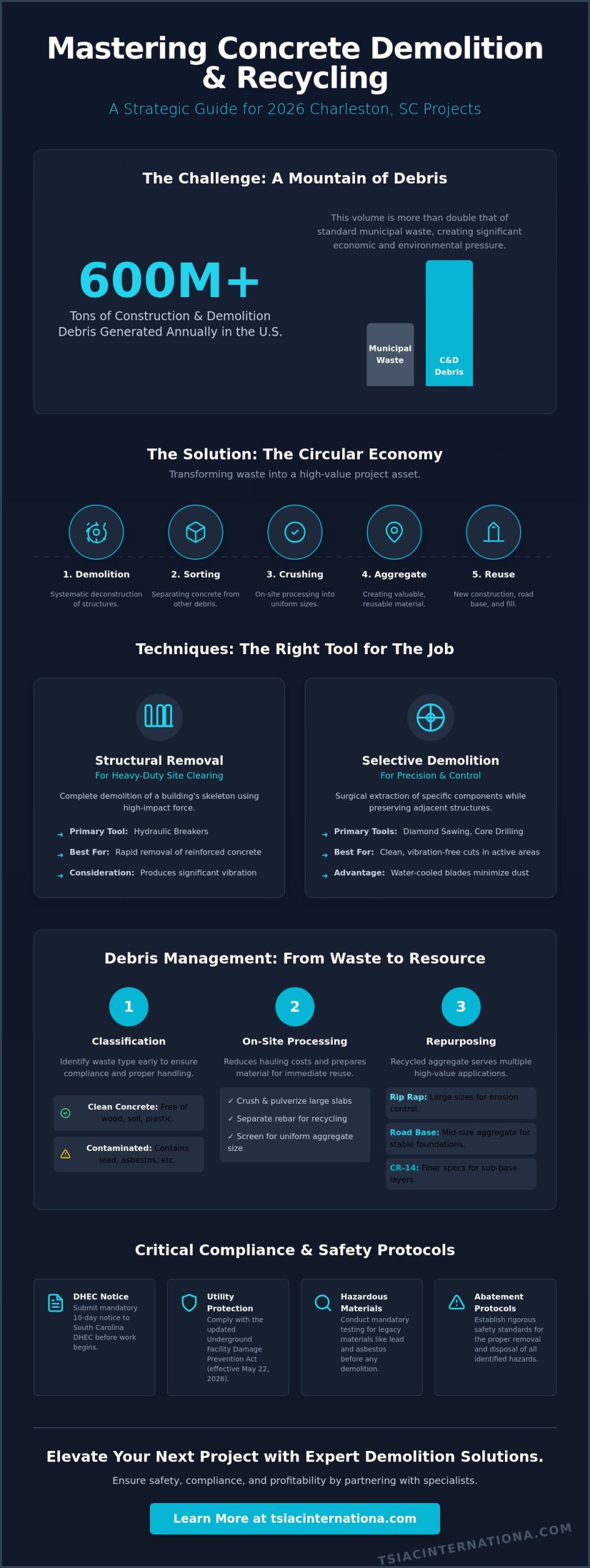
Did you know that construction and demolition debris generated nationwide exceeds 600 million tons annually, more than doubling the volume of…

Did you know that construction and demolition debris generated nationwide exceeds 600 million tons annually, more than doubling the volume of standard municipal waste? For project managers in the Lowcountry, this reality translates into escalating landfill tipping fees and the constant pressure of strict environmental oversight. You likely view heavy slabs and structural foundations as a liability that threatens your bottom line and project timeline. We understand that managing high-volume debris requires more than just brute force; it demands a disciplined, methodical approach to site clearing.

This strategic guide will help you master concrete demolition and recycling charleston sc by detailing the technical requirements and safety protocols essential for 2026. You’ll learn how to navigate South Carolina DHEC’s ten-day notice requirements and the updated Underground Facility Damage Prevention Act, which became effective May 22, 2026, to ensure full regulatory compliance. We’ll also explore how material recovery can lower your project overhead, transforming what was once waste into a valuable resource for a more efficient, safe, and profitable operation.

Key Takeaways

  • Identify the specific technical applications for hydraulic breakers in heavy structural removal versus precision diamond sawing for selective demolition tasks.
  • Learn the methodical steps of the circular economy to transform concrete debris into high-value aggregate through on-site sorting and secondary crushing.
  • Navigate the complex regulatory landscape of concrete demolition and recycling charleston sc, including mandatory DHEC asbestos applications and utility marking protocols.
  • Establish rigorous safety standards for detecting and abating legacy hazardous materials like lead and asbestos before beginning mechanical clearing.
  • Reduce project overhead and liability by leveraging structural demolition expertise and fixed-price contracts for large-scale site recovery.

The Fundamentals of Concrete Demolition and Sustainable Recovery

Modern demolition is an engineering discipline. It’s no longer just about breaking surfaces with brute force. In the context of concrete demolition and recycling charleston sc, the process involves the systematic deconstruction of structures to preserve the integrity of the base material. This evolution is driven by the necessity of the circular economy. We’ve moved away from the traditional “haul and dump” model. Instead, we view debris as a valuable project asset that requires careful management.

Economic factors make this shift mandatory for any large-scale operation. High landfill tipping fees and rising fuel costs for hauling make traditional disposal a heavy financial burden. By processing concrete on-site or at specialized facilities, project managers can significantly reduce overhead. The environmental benefits are equally compelling. Every ton of recycled aggregate used in new construction reduces the carbon footprint associated with mining and transporting virgin materials. It’s a strategy that aligns fiscal responsibility with environmental stewardship.

The Role of Concrete in the Circular Economy

The lifecycle of demolished concrete is now a closed loop. The Concrete Recycling Process allows us to crush old foundations and pavements into high-quality aggregate. By 2026, industry standards have shifted to prioritize this recovery as a primary goal. It’s a core component of achieving LEED certification and meeting local sustainability mandates. Recovered materials are frequently repurposed for road base, drainage layers, or even new structural concrete. This isn’t just a trend; it’s a technical requirement for modern site clearing.

Key Terminology for Project Managers

Precision in communication prevents costly errors on the job site. You must differentiate between structural removal and selective demolition. Structural removal involves the complete clearing of a building’s skeleton. Selective demolition targets specific components while preserving the surrounding structure. This distinction dictates the equipment used and the safety protocols required.

Understanding aggregate sizing is also critical for material recovery. Materials range from large Rip Rap used for erosion control to finer CR-14 specifications for sub-bases. Finally, you must distinguish between “clean” and “contaminated” waste. Clean concrete is free of wood, plastic, or excessive soil. Contaminated concrete requires additional processing to remove hazardous materials like lead paint or asbestos. Identifying these factors early ensures your project remains compliant and profitable.

Industrial Concrete Removal Techniques: Structural vs. Selective

Executing successful concrete demolition and recycling charleston sc requires a disciplined selection of mechanical techniques tailored to the specific structure. We categorize these methods based on the desired outcome: either the complete removal of a building’s skeleton or the surgical extraction of specific components. Hydraulic breakers serve as the primary workhorse for heavy structural removal. These attachments deliver high-impact energy to fracture reinforced concrete, allowing for rapid site clearing. While efficient, they produce significant vibration, which requires careful monitoring in densely populated areas.

For projects requiring precision, diamond sawing and core drilling are the preferred standards. These tools allow for clean, vibration-free cuts through heavily reinforced slabs and walls. This level of control is essential during selective demolition, where preserving the integrity of adjacent structures is the top priority. By using water-cooled diamond blades, we also minimize dust migration, which is a critical safety factor in active commercial environments.

Preparing material for immediate on-site recovery involves crushing and pulverizing. Rather than transporting large slabs, we use secondary processors to separate rebar from the concrete and reduce the material to a uniform aggregate size. This process aligns with federal Sustainable Demolition Practices, ensuring that the debris is immediately ready for reuse as road base or fill. In hazardous or confined environments, robotic demolition units provide a safer alternative. These remote-controlled machines allow operators to maintain a safe distance from falling debris and silica dust while performing high-intensity breaking tasks.

Choosing the Right Method for Your Site

Analyzing structural integrity is the first step before any equipment arrives on site. Our team evaluates the load-bearing capacity of the remaining structure to prevent unplanned collapses. In urban Charleston, noise and vibration considerations are paramount. We often shift from high-impact breakers to quieter hydraulic shears or sawing methods when working near historic properties or sensitive utility lines. If your project involves complex interior modifications, consulting with an expert in Selective Demolition ensures that your structural assets remain protected throughout the process.

Heavy Machinery and Specialized Attachments

The scale of the project dictates the machinery. High-reach excavators are indispensable for multi-story concrete structures, providing the reach needed to deconstruct buildings from the top down safely. We evaluate the utility of hydraulic shears versus breakers based on the ratio of steel reinforcement within the concrete. Shears excel at cutting through rebar-heavy sections, while breakers are better suited for mass concrete removal. Regular maintenance and safety checks for demolition-grade equipment are non-negotiable, as hydraulic failures under high pressure can lead to severe site accidents and project delays.

The Concrete Recycling Process: From Debris to Aggregate

The transformation of structural waste into reusable material follows a rigorous four-step methodology. This systematic approach ensures that concrete demolition and recycling charleston sc projects meet both engineering specifications and environmental standards. We don’t simply break the material; we refine it through a controlled industrial process designed to maximize recovery and minimize landfill dependency.

  • Step 1: On-site sorting. Before crushing begins, we remove non-concrete contaminants. This includes wood, plastic, insulation, and general trash. Clean input is the only way to guarantee a high-quality end product.
  • Step 2: Primary and secondary crushing. Large slabs enter a primary jaw crusher to reduce their size. Following this, secondary impact or cone crushers further refine the material to achieve the specific aggregate dimensions required for the project.
  • Step 3: Magnetic separation. As the crushed material moves along the conveyor, powerful cross-belt magnets extract steel reinforcement and rebar. This recovered metal is diverted to local recycling streams, where tipping fees are significantly lower than municipal solid waste.
  • Step 4: Grading and stockpiling. The final aggregate is screened and sorted into specific grades. Whether the goal is Rip Rap for erosion control or finer CR-14 for road base, precise grading ensures the material is ready for immediate reuse.

On-Site vs. Off-Site Crushing Logistics

Selecting the right processing location depends on site constraints and volume. On-site crushing requires a minimum footprint for mobile plants and stockpiling, but it eliminates the logistical cost of hauling raw debris. For large-scale clearing, this is the most efficient choice. However, on tight urban lots in Charleston, off-site processing is often more practical. We evaluate the cost-benefit of hauling raw material against the savings of on-site production. Local facilities, such as those operated by Banks Construction, allow for the free drop-off of concrete with rebar, which can be a decisive factor in your logistical planning. You must also secure temporary air quality and noise permits if you choose to process material on-site.

Quality Control for Recycled Concrete Aggregate (RCA)

Recycled Concrete Aggregate (RCA) must perform with the same reliability as virgin stone. We subject all processed material to graduation testing to ensure it meets structural fill standards. Cleanliness is a primary safety concern. During the sorting phase, we follow strict protocols for Managing Hazardous Materials to prevent asbestos or lead-based paint from contaminating the aggregate stream. If the input material is flagged as “contaminated,” it’s diverted from the recycling line to specialized disposal to protect the environmental integrity of the new construction site. This disciplined oversight ensures that the recovered aggregate is both technically sound and safe for reuse.
Concrete Demolition and Recycling in Charleston, SC: A 2026 Strategic Guide

Compliance and Safety: Managing Hazardous Materials in Concrete

In legacy structures, the concrete itself is rarely the only material present. Before any heavy machinery initiates concrete demolition and recycling charleston sc, a comprehensive hazardous material survey is a technical necessity. South Carolina DHEC regulations require a written demolition application to be submitted at least ten working days before any activity begins. This rule applies to all facilities, regardless of whether initial inspections indicate the presence of Asbestos-Containing Material (ACM). Securing an asbestos demolition license is mandatory for the project to proceed legally. Failure to manage these early regulatory steps can lead to immediate site shutdowns and significant financial penalties.

Identifying lead-based paint and asbestos in structural foundations or floor mastics is the first stage of risk mitigation. Once identified, these materials must be handled under strict OSHA and EPA standards. Crystalline silica exposure is a primary concern during the breaking phase. We utilize advanced water suppression systems and HEPA-filtered extraction to maintain air quality levels below the Permissible Exposure Limit (PEL). Managing the chain-of-custody for hazardous waste is equally critical. Every ton of contaminated debris must be documented from the point of origin to a certified disposal facility to ensure a transparent and compliant project record.

The Intersection of Abatement and Demolition

Integrating professional asbestos removal with the broader demolition process is a logistical requirement for older industrial sites. Specialized contractors are essential because mechanical demolition of contaminated concrete can release airborne toxins that threaten both workers and the surrounding Charleston community. We implement containment strategies such as negative air pressure environments and wet-method processing to isolate hazardous zones. This disciplined coordination ensures that abatement is completed before heavy mechanical clearing begins, preventing cross-contamination of the aggregate stream.

Environmental Compliance and Reporting

Navigating the 2026 regulatory landscape requires meticulous environmental reporting. Government contracts and large-scale commercial developments now frequently include sustainability mandates that require high recycling diversion rates. We provide accurate recycling diversion reports that track the volume of material recovered versus the amount sent to hazardous waste landfills. This data is vital for proving full regulatory compliance. If you are planning a complex structural project, you should secure a professional Asbestos Abatement assessment to ensure your site clearing remains safe and legally sound.

Professional Concrete Solutions: Why Expertise Matters

Expertise in concrete demolition and recycling charleston sc is defined by the ability to manage multifaceted risks without compromising the project schedule. With over 15 years of experience in complex structural removal, we’ve refined a methodology that addresses the high-stakes nature of industrial site clearing. The complexity of modern demolition requires a partner who understands the physical mechanics of a building and the legal requirements of the South Carolina regulatory environment. This depth of knowledge ensures that every phase of the project, from initial deconstruction to final material recovery, is executed with technical precision.

One of the most effective ways to mitigate project risk is through fixed-price structural demolition contracts. This approach provides financial predictability for general contractors and developers, ensuring that the burden of managing technical variables remains with the specialist. Total site management is the cornerstone of this efficiency. By integrating services such as interior gutting and selective removal with heavy structural demolition, we create a continuous workflow. This integration significantly reduces project timelines, as there’s no downtime waiting for separate abatement and clearing crews to coordinate their schedules.

Selecting a Full-Service Contractor

General contractors often face logistical friction when abatement and demolition are handled by separate entities. A “one-stop” partner ensures that safety protocols are consistent and that the transition from hazardous material abatement to structural clearing happens without a gap in the timeline. When evaluating a partner, you must look beyond the equipment list. Assess their safety record, their insurance bonding capacity, and their documented history with similar structural challenges. Experience in handling contaminated concrete is not just a benefit; it’s a requirement for maintaining site safety and legal compliance in 2026.

Next Steps for Your Project

Moving from the planning phase to execution requires a clear roadmap. We recommend starting with a preliminary site assessment and material audit to identify the specific requirements of your structure. This audit determines the volume of recyclable aggregate and identifies any hazardous materials that need prioritized removal. Following the assessment, we provide a comprehensive quote that details the demolition strategy and the anticipated recycling diversion rates. This transparency allows you to plan your project with confidence, knowing that the site will be cleared safely and efficiently. Contact TSIAC International today for an expert project consultation to secure a disciplined partner for your next structural project.

Optimizing Your Site Clearing Strategy for 2026

Mastering concrete demolition and recycling charleston sc is a logistical necessity that transforms structural debris from a liability into a strategic asset. By integrating advanced mechanical techniques with a disciplined recycling process; you can significantly reduce project overhead while meeting the stringent environmental mandates of the Lowcountry. Success in this sector requires more than just heavy equipment. It demands a methodical approach to safety and a deep understanding of South Carolina DHEC regulations regarding hazardous material handling.

With over 15 years of industrial demolition experience, TSIAC International provides the technical precision and SCDHEC compliant hazardous material handling required for complex site recovery. Our specialized fleet is equipped for both heavy structural and selective removal; ensuring your project stays on schedule and remains fully compliant. Partner with TSIAC International for Safe, Sustainable Demolition and secure the expert oversight your structural project deserves. We look forward to helping you clear the way for your next successful development.

Frequently Asked Questions

How much does concrete demolition and recycling typically cost?

Total project costs are primarily influenced by slab thickness, the presence of steel reinforcement, and local disposal rates. In Charleston County, as of June 2026, tipping fees for municipal solid waste are $66 per ton, while metal recycling fees are $30 per ton. Utilizing material recovery strategies on-site can significantly reduce these overhead expenses by converting debris into usable aggregate rather than paying landfill fees.

Can all types of concrete be recycled into new aggregate?

Most structural concrete is suitable for recycling if it’s free of excessive contaminants like wood, soil, or hazardous substances. While rebar and steel reinforcement are easily extracted using magnetic separators, materials containing heavy wire mesh or organic trash may require more intensive processing. Clean concrete is refined into various aggregate grades, ranging from large rip rap to fine sub-base materials.

What is the difference between structural and selective concrete demolition?

Structural demolition involves the complete deconstruction of a building’s load-bearing frame to clear the entire site. Selective demolition is a precision-based method used to remove specific parts of a structure while leaving the rest of the building intact. This surgical approach is essential for interior gutting projects where adjacent floors or walls must be preserved for future use.

Are there specific permits required for on-site concrete crushing?

Yes, on-site processing requires several local and state permits to manage dust, noise, and environmental impact. South Carolina DHEC regulations mandate a ten-day notice period before demolition begins, regardless of the building’s age. You must also comply with the South Carolina Underground Facility Damage Prevention Act by providing a three-day notice for utility marking before any mechanical clearing occurs.

How is rebar separated from concrete during the recycling process?

Rebar is extracted using powerful industrial magnets during the secondary crushing stage of the recycling process. As the concrete is pulverized into smaller fragments, it travels along a conveyor belt where a cross-belt magnet pulls out the steel reinforcement. This recovered metal is then diverted to scrap metal streams, while the clean concrete continues to the grading and stockpiling phase.

Is recycled concrete aggregate as strong as virgin stone?

Recycled concrete aggregate (RCA) meets rigorous engineering standards and provides a stable, durable alternative to virgin stone. It’s an ideal material for road bases, drainage layers, and structural fill. While its absorption characteristics differ slightly from natural stone, proper grading and testing ensure that RCA performs reliably under the technical requirements of modern commercial construction projects.

What happens if asbestos is found in the concrete structure?

If asbestos is identified, all mechanical activity must stop immediately to prevent the release of airborne toxins. South Carolina law requires a licensed abatement professional to remove the hazardous material before demolition can resume. The contaminated concrete is then handled as hazardous waste and sent to a certified facility, ensuring it doesn’t enter the standard recycling stream or endanger the community.

How long does a typical commercial concrete demolition project take?

Timelines depend on the scale of the structure and the level of hazardous material abatement required. A typical project includes a mandatory ten-day DHEC notice period followed by the physical clearing and processing of materials. Implementing concrete demolition and recycling charleston sc protocols on-site can often streamline the schedule by eliminating the logistical delays associated with hauling raw debris to distant landfills.
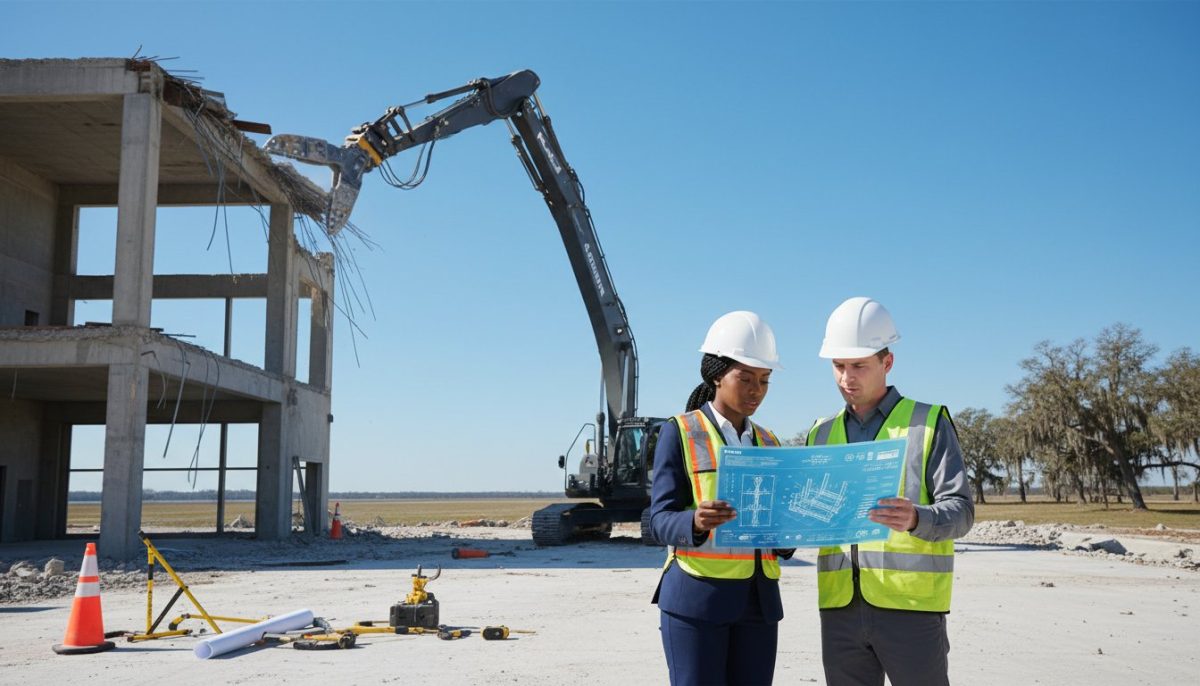
TSIAC International FAQ: Expert Answers on Demolition & Abatement in 2026

Navigating the complexities of a structural demolition or hazardous material abatement project presents significant challenges. The potential for…

Navigating the complexities of a structural demolition or hazardous material abatement project presents significant challenges. The potential for unforeseen costs, regulatory penalties from agencies like DHEC, and critical project delays are valid concerns for any property owner or developer in South Carolina. To provide clarity and instill confidence in these high-stakes operations, our team of specialists has compiled this comprehensive tsiac international faq for 2026. This is more than just a list of answers; it is a direct line to the expertise that has defined our firm as a leader in the industry.

Within this guide, you will find authoritative information on our meticulous safety protocols, our transparent pricing models for hazardous material removal, and our unwavering commitment to full regulatory compliance. We aim to demystify the process from initial assessment to final clearance, empowering you with the knowledge to move forward with your project, secure in the knowledge that every technical detail is under control. Consider this your essential resource for planning a safe, compliant, and efficient project outcome.

Key Takeaways

  • Understand the strict South Carolina DHEC requirements for asbestos testing *before* beginning any structural demolition to ensure full legal compliance.
  • Learn how a meticulously engineered demolition plan not only mitigates on-site risks like dust and vibration but also leads to a more predictable project timeline and budget.
  • This tsiac international faq clarifies how integrating hazardous material abatement directly with demolition creates a single, accountable point of contact for complex projects.
  • Discover how partnering with a sustainability-focused contractor can help you achieve environmental goals, from maximizing material recycling to earning valuable LEED credits.

Understanding TSIAC International’s Core Service Capabilities

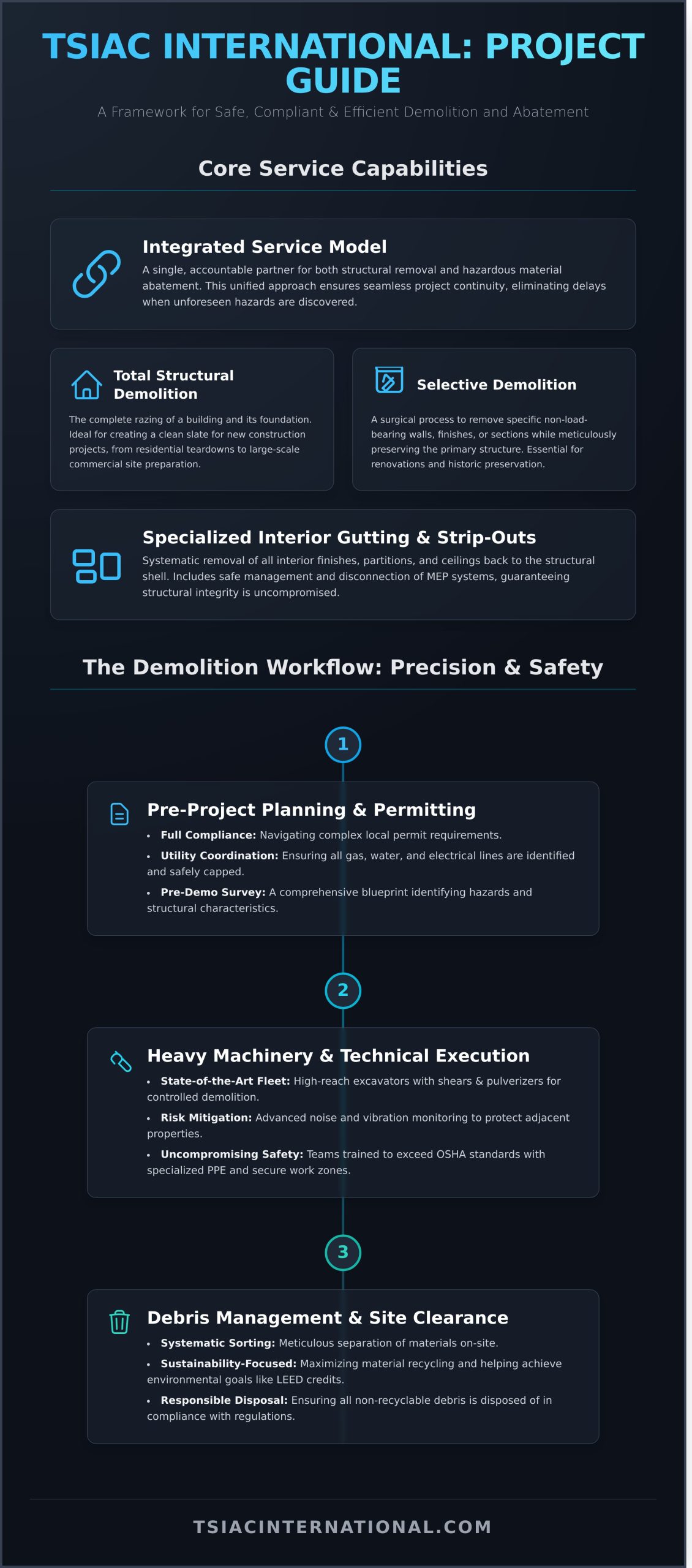
For over 15 years, TSIAC International has served as the Charleston Lowcountry’s trusted contractor for technically demanding projects. Our expertise is engineered around a critical dual-focus: the precise execution of structural removal and the certified remediation of hazardous materials. This integrated service model provides clients with a single, accountable partner for projects ranging from residential teardowns to large-scale commercial site preparation, ensuring efficiency and strict regulatory compliance from start to finish.

We manage projects across both the residential and commercial sectors, understanding that the scale, risks, and regulations differ significantly. The primary advantage of hiring a unified contractor is seamless project continuity. When demolition uncovers unforeseen hazards, our cross-trained teams can pivot immediately to implement compliant asbestos abatement procedures without halting progress or engaging a separate subcontractor. This capability is a cornerstone of the value we provide and a frequent topic in this tsiac international faq.

Structural vs. Selective Demolition: What Do You Need?

The correct demolition method is dictated entirely by your project’s end goal. Total structural demolition involves the complete razing of a building and its foundation, creating a clean slate for new construction. In contrast, selective demolition is a surgical process essential for renovations, additions, or historic preservation projects. It involves removing only specific non-load-bearing walls, finishes, or building sections while meticulously preserving the primary structure.

Specialized Interior Gutting and Strip-Outs

Our interior gutting and strip-out services are engineered for precision, serving commercial tenant improvements and extensive residential remodels. This process involves the systematic removal of all interior finishes, partitions, and ceilings back to the structural shell. We carefully manage the safe disconnection and removal of mechanical, electrical, and plumbing (MEP) systems, guaranteeing that the building’s foundational integrity remains uncompromised throughout the deconstruction phase.

The TSIAC Demolition Workflow: Safety and Engineering Precision

At TSIAC International, a successful demolition project is defined not by the collapse of a structure, but by the meticulous process that precedes and follows it. Our workflow is a synthesis of advanced engineering, rigorous safety protocols, and strategic execution. This section of our tsiac international faq breaks down the critical phases of our demolition process, from initial site assessment to final debris management, ensuring every project is completed with unparalleled precision and control.

Pre-Project Planning and Permitting

The foundation of a safe demolition is laid long before heavy machinery arrives. Our project managers are experts in navigating the complex local permit requirements of municipalities like Charleston and Myrtle Beach, ensuring full compliance. A critical step is meticulous utility coordination, where we work directly with providers to guarantee that all gas, water, and electrical lines are identified, disconnected, and safely capped. The mandatory Pre-Demo Survey serves as our comprehensive blueprint, identifying structural characteristics, hazardous materials, and environmental sensitivities to inform every subsequent action.

Heavy Machinery and Technical Execution

TSIAC International deploys a state-of-the-art fleet engineered for power and precision. This includes high-reach excavators equipped with specialized attachments like shears and pulverizers for controlled, top-down demolition of commercial structures, alongside versatile skid steers for material handling. In sensitive urban environments, our methodology is paramount. We utilize advanced noise and vibration monitoring systems to ensure our operations remain within acceptable limits, protecting adjacent properties and minimizing community disruption through a carefully phased approach.

On-site execution is governed by an uncompromising commitment to safety. Every team member is trained to exceed the rigorous federal guidelines outlined in the OSHA Demolition Safety Standards, utilizing specialized personal protective equipment (PPE) and maintaining secure work zones. We engineer each demolition plan to actively mitigate risks like airborne dust and structural vibration. Upon completion of the teardown, the final phase involves systematic debris management—sorting materials for recycling and responsible disposal—and site stabilization, leaving the property secure, clean, and ready for its next chapter.

Compliance in demolition and abatement is not optional; it is a legal and ethical imperative. South Carolina’s Department of Health and Environmental Control (DHEC) enforces some of the most stringent regulations in the region, designed to protect public health and the environment from hazardous materials. A critical mandate is the legal requirement for a comprehensive asbestos inspection by a licensed inspector before any demolition or renovation activities can commence, regardless of the building’s age. Failure to comply can result in significant fines and project shutdowns.

At TSIAC International, our commitment to safety and regulatory adherence is absolute. Our hazardous material handlers are not only licensed by DHEC but also undergo continuous, rigorous training that exceeds OSHA and EPA standards. To provide clients with complete liability protection, every abatement project concludes with a meticulously compiled “Close-Out” package. This vital documentation includes:

  • State notifications and permits
  • Air monitoring and clearance reports
  • Hazardous waste manifests confirming proper disposal
  • Daily project logs and personnel certifications

This comprehensive record-keeping is a cornerstone of our process and a frequent topic in our tsiac international faq, as it provides clients with indisputable proof of compliance for their records.

The Asbestos Removal Process (Abatement)

Our abatement methodology is engineered for maximum safety and efficiency. We establish fully sealed containment zones maintained under negative air pressure, with all exhausted air passing through high-efficiency particulate air (HEPA) filters to capture microscopic fibers. TSIAC prioritizes a wet-method removal technique, which involves saturating asbestos-containing materials to prevent fibers from becoming airborne. All waste is securely bagged, sealed, and transported with manifest tracking to a licensed disposal facility, ensuring a complete and documented chain of custody.

Lead Paint Remediation and Mold Services

Beyond asbestos, our expertise extends to other environmental hazards. Handling lead-based paint, particularly in historic Charleston properties, requires specialized containment and removal techniques to preserve architectural integrity while ensuring safety. Similarly, our approach to mold remediation goes beyond surface cleaning. We identify and address the root cause of moisture intrusion—the source of the mold—before any structural removal, safeguarding the building’s long-term stability and preventing recurrence.

TSIAC International FAQ: Expert Answers on Demolition & Abatement in 2026

Estimating Project Costs, Timelines, and Logistics

A precise and transparent estimate is the foundation of any successful demolition or abatement project. A common question in our tsiac international faq is how we translate complex site variables into a predictable budget and schedule. Our methodology is built on meticulous assessment, ensuring clients and general contractors have a clear financial and operational roadmap from day one.

The final cost of a demolition contract is determined by a confluence of critical factors, never just one. We analyze:

  • Structural Complexity & Materials: A project’s scope extends beyond simple square footage. The type of construction—such as reinforced concrete versus a wood-frame structure—dictates the equipment, labor, and time required.
  • Hazardous Material Abatement: The confirmed presence of asbestos, lead paint, or other regulated materials fundamentally alters the project’s scope. These require specialized containment, removal, and disposal protocols, which are significant and non-negotiable cost drivers governed by strict federal and state regulations.
  • Site Accessibility & Logistics: The ability to deploy heavy machinery efficiently impacts the budget. Tight urban sites or locations with limited access require specialized equipment and more strategic planning, influencing mobilization costs and project duration.

How We Calculate Your Demolition Quote

Our quotes are engineered, not guessed. We balance the baseline metric of square footage against the material complexity and structural density of the building. We conduct a thorough site logistics analysis to calculate machinery deployment and debris removal costs accurately. Furthermore, TSIAC International actively identifies opportunities for material salvage and recycling; any credits obtained from reclaimed steel, concrete, or other valuable materials are passed on to you, directly offsetting project expenses.

Scheduling and Project Management

Once a contract is executed, typical lead times for mobilization in the Lowcountry range from two to four weeks, allowing for permitting, utility disconnection, and pre-construction surveys. While a standard residential demolition may be completed in under a week, a large-scale commercial or industrial project can span several months. Our project managers maintain proactive communication protocols with general contractors, providing regular updates and strategically navigating potential weather delays and mandatory regulatory inspection windows to keep the project on its critical path.

At TSIAC International, our commitment is to provide comprehensive, fixed-price contracts whenever possible. This eliminates financial uncertainty and establishes us not just as a contractor, but as a predictable and reliable partner in your project’s success. For a detailed, site-specific proposal, we invite you to contact our estimating team.

Compliance, Sustainability, and Partnering with TSIAC

Executing a successful demolition or abatement project extends beyond technical proficiency; it demands a deep commitment to regulatory compliance, environmental stewardship, and transparent partnership. At TSIAC International, these principles are integrated into every phase of our operations, ensuring that your project not only meets its technical objectives but also aligns with corporate responsibility standards and contributes positively to the community. Our approach is designed to provide clients with peace of mind, knowing every detail is managed with engineering precision.

Our commitment to sustainability is demonstrated through our proactive support for clients pursuing LEED (Leadership in Energy and Environmental Design) certification. By maximizing material recovery and minimizing waste, we help projects earn valuable credits. This dedication is a core part of our “Zero Waste” initiative, where materials such as wood, metal, and plastic are not viewed as debris but as resources to be reclaimed and repurposed, reducing environmental impact and often generating cost efficiencies.

The Recycling and Material Recovery Program

Central to our sustainability mission is a rigorous material recovery program. Our teams meticulously sort debris on-site to maximize the recovery of recyclable materials. Through strategic partnerships with certified recycling facilities across South Carolina, we ensure that resources are processed responsibly. Through these meticulous processes, TSIAC International consistently diverts over 85% of all non-hazardous project debris from landfills, directly contributing to our clients’ sustainability goals.

Why TSIAC International is the Preferred SC Partner

Selecting a partner for complex industrial work is a critical decision. As this tsiac international faq guide concludes, we want to emphasize the foundational pillars that make us a trusted leader. Our status as a certified Latino-owned business also enhances our clients’ ability to meet supplier diversity requirements for both public and private sector contracts. We provide a partnership built on:

  • Unquestionable Credentials: We maintain comprehensive insurance, full bonding capacity, and all requisite state and federal licenses to manage projects of any scale and complexity.
  • The Andra Basnight Standard: Every project is managed with a level of direct communication, accountability, and professionalism that reflects our founder’s commitment to client success.
  • Proven Performance: A documented history of delivering safe, efficient, and on-schedule demolition and abatement solutions for the most demanding industries.

The final step is to translate these capabilities into a tailored solution for your project. We invite you to request a comprehensive site walk-through to discuss your specific demolition or abatement needs. Contact TSIAC International for a Professional Consultation to receive a formal, detailed proposal from our expert team.

Your Strategic Partner for Complex Demolition and Abatement

Navigating the intricacies of demolition and hazardous material abatement requires a partner with proven expertise and an unwavering commitment to safety. This guide has illuminated the core tenets of our operations, from our meticulously engineered demolition workflows to our rigorous adherence to South Carolina’s asbestos and lead abatement regulations. We trust this tsiac international faq has provided the clarity and confidence you need for your upcoming projects in 2026 and beyond.

With 15+ years of industry experience, our status as a Fully DHEC & OSHA Compliant and Certified Latino-Owned Small Business stands as a testament to our dedication to operational excellence. When your project demands a solution that is both technically sound and executed with uncompromising precision, the next step is a detailed consultation.

Take the definitive step toward a safe and successful project outcome. Request a Comprehensive Project Quote from TSIAC International and let our team develop a strategic plan tailored to your specific needs. We look forward to building a safer, more sustainable future together.

Frequently Asked Questions About Demolition & Abatement

Is TSIAC International licensed for asbestos removal in South Carolina?

Yes, TSIAC International is fully licensed and certified by the South Carolina Department of Health and Environmental Control (SCDHEC) for asbestos abatement projects. Our technicians adhere strictly to all state and federal regulations, including OSHA and EPA standards. We maintain comprehensive insurance and bonding, ensuring every project is executed with the highest level of safety, compliance, and professional accountability. This commitment to regulatory adherence is fundamental to our operations.

Do I need an asbestos survey before I demolish my house in Charleston?

Absolutely. Both federal NESHAP regulations and South Carolina DHEC rules mandate a comprehensive asbestos survey by a licensed inspector before any demolition or significant renovation, regardless of the structure’s age. This is a critical step to identify any asbestos-containing materials (ACMs) and ensure they are handled safely. This legal requirement protects workers, the community, and property owners from liability and hazardous exposure.

How much does commercial demolition cost per square foot in 2026?

In 2026, commercial demolition costs typically range from $5 to $15 per square foot, but this figure is highly variable. The final price is determined by factors such as the building’s construction materials (e.g., steel frame vs. reinforced concrete), the presence of hazardous materials, site accessibility for heavy machinery, and local landfill fees. We provide a detailed, site-specific estimate after a thorough project evaluation to ensure accurate and transparent pricing.

What is the difference between abatement and remediation?

While related, these terms have distinct meanings. Abatement refers to the specific process of controlling, containing, or removing a known hazardous material, such as asbestos or lead paint, to eliminate exposure. Remediation is a broader term for the cleanup and reversal of environmental contamination. It can include abatement as one component but may also involve addressing contaminated soil or groundwater to restore a site to a safe, usable condition.

How does TSIAC handle dust and noise control for neighbors?

We implement a rigorous environmental control plan for every project. Dust is actively suppressed using engineered water misting systems and perimeter dust screens. For sensitive interior work, negative air pressure containments are established. Noise is managed by using modern equipment and adhering strictly to local ordinances regarding operational hours. Proactive communication with adjacent property owners is also a key component of our strategy to minimize community impact.

Can TSIAC assist with the demolition permit process in Myrtle Beach?

Yes, managing the permitting process is an integral part of our turnkey demolition services. We handle all necessary documentation and coordination with municipal bodies, including the City of Myrtle Beach. This is a common topic in our TSIAC International FAQ with clients. Our extensive experience with local regulations ensures that all prerequisites, from utility disconnects to environmental clearances, are met efficiently to secure the demolition permit without unnecessary delays.

What happens to the materials after a building is torn down?

Post-demolition, materials are meticulously sorted on-site to maximize recycling and ensure regulatory compliance. Concrete, steel, and wood are segregated and transported to certified recycling facilities to be repurposed. Any identified hazardous materials are handled and disposed of according to strict EPA and SCDHEC protocols at licensed facilities. Non-recyclable construction and demolition debris is transported to an approved landfill, minimizing the project’s environmental footprint.

Does TSIAC perform mold remediation alongside demolition?

Yes, TSIAC International provides integrated environmental services, including professional mold remediation. If mold is identified during the pre-demolition inspection or uncovered during the work, our certified technicians are equipped to establish containment and execute a thorough remediation plan. We follow IICRC S520 industry standards to safely remove mold and address the underlying moisture source, ensuring the issue is resolved completely before demolition proceeds.