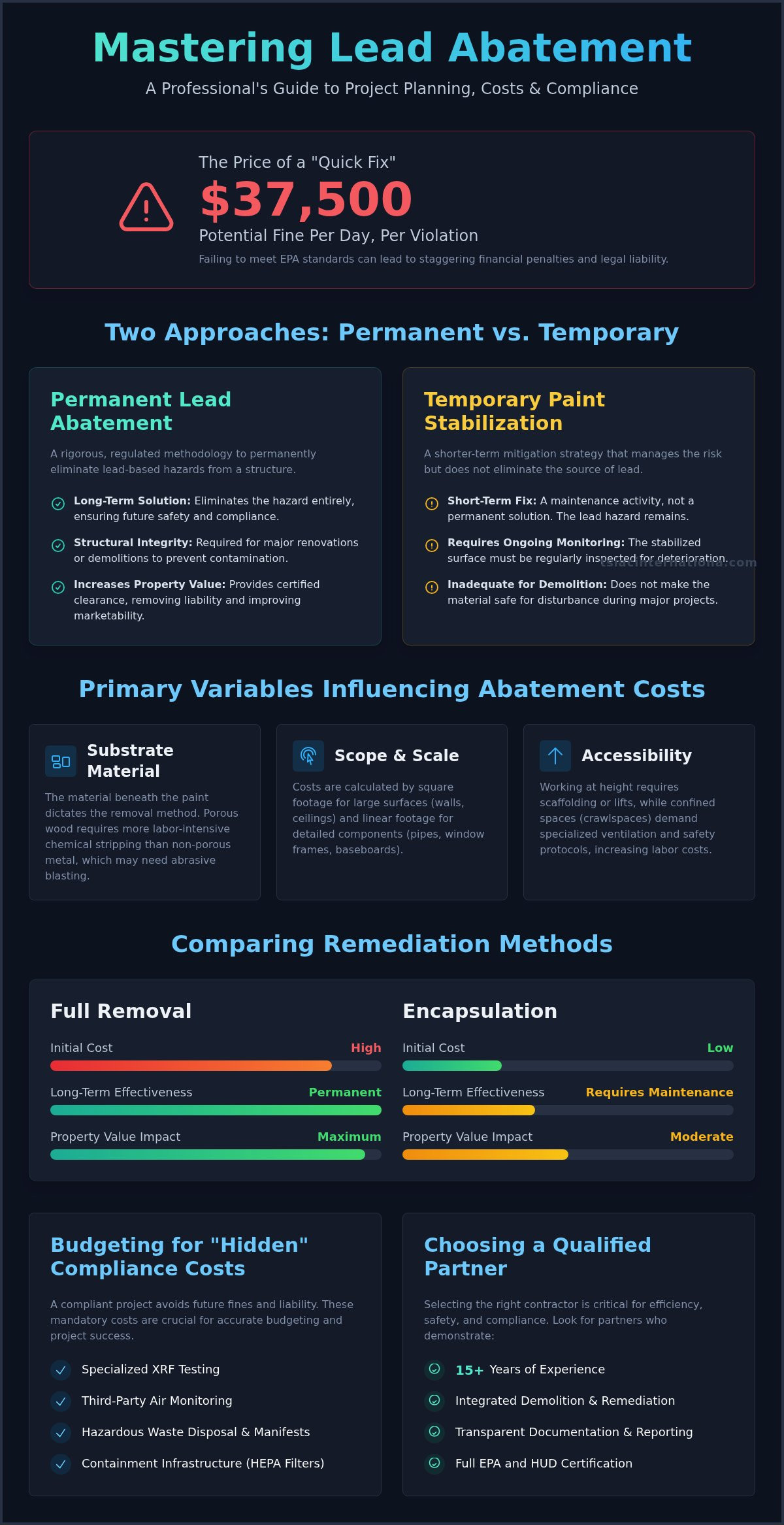
A $37,500 fine per day for a single regulatory violation is a staggering price to pay for a “quick fix” that fails to meet EPA standards. While some contractors offer surface-level solutions, stakeholders managing large-scale projects recognize that hazardous material mitigation requires a disciplined, technical approach. When researching the lead abatement cost charleston sc or evaluating broader national standards, it’s easy to feel overwhelmed by the technical jargon of RCRA compliance and the fear of hidden fees associated with hazardous waste disposal. You aren’t alone in seeking clarity between temporary encapsulation and permanent structural solutions that safeguard both your budget and your asset’s future.
This guide provides a professional framework for mastering these complexities, ensuring your 2026 project planning remains grounded in methodological precision. We’ll outline exactly how to estimate abatement costs without the guesswork, focusing on the legal necessity of certified contractors and the safety protocols required for industrial-grade removal. By the end of this article, you’ll have a clear roadmap for integrating lead abatement with broader structural demolition, moving from initial risk assessment to final waste manifest with total confidence in your compliance strategy.
Key Takeaways
- Distinguish between temporary paint stabilization and permanent lead abatement to ensure long-term structural integrity and regulatory compliance for large-scale projects.
- Identify how substrate materials like wood, brick, and metal significantly influence the technical complexity and overall lead abatement cost charleston sc for 2026 planning.
- Evaluate the strategic trade-offs between initial encapsulation and comprehensive full removal to maximize the return on investment for your facility.
- Account for mandatory “hidden” compliance costs, including specialized XRF testing and third-party air monitoring, to avoid unexpected budgetary expansions.
- Optimize project efficiency by selecting a partner with at least 15 years of experience who can integrate selective demolition with hazardous material remediation.
Understanding the Scope of Lead Abatement and Project Budgeting
Lead abatement is a rigorous, regulated methodology designed to permanently eliminate lead-based hazards from a structure. Unlike temporary maintenance, true abatement seeks to remove the risk entirely through specialized techniques like removal, replacement, or enclosure. Stakeholders often confuse this with lead paint stabilization, which is a shorter-term mitigation strategy that requires ongoing monitoring. For those calculating the lead abatement cost charleston sc or elsewhere, understanding this distinction is vital. Abatement isn’t a cosmetic upgrade; it’s a structural necessity that ensures a building is safe for occupancy or further development.
This process serves as a critical prerequisite for any large-scale structural demolition or interior gutting project. Disturbing lead-laden materials without professional containment causes hazardous dust to migrate throughout a site, contaminating air and soil. Beyond immediate safety, lead presence affects property value and creates long-term legal liability. Properties with documented lead hazards often face reduced marketability and higher insurance premiums until certified clearance is achieved. Addressing these risks early in the budgeting phase prevents costly project delays and litigation.
Lead Hazards Beyond Surface Paint
Lead contamination often extends far beyond visible paint chips on a wall. Industrial coatings on structural steel, lead-based solder in plumbing systems, and glazed ceramic tiles frequently harbor high concentrations of the metal. As structures age, these materials degrade into fine lead dust that settles into HVAC systems and wall cavities. This pervasive contamination requires a surgical approach to remediation. Additionally, the soil surrounding older commercial or residential foundations often contains decades of accumulated lead from exterior paint weathering. Addressing these subsurface and structural hazards is a core component of professional Lead Abatement Methods.
The Legal Necessity of Certified Remediation
The Environmental Protection Agency (EPA) and the Department of Housing and Urban Development (HUD) establish the national safety standards that govern these activities. Bypassing these certified protocols exposes property owners to severe legal risks, including civil penalties and personal injury litigation. Professional remediation provides a transparent paper trail, including waste manifests and clearance reports. This documentation is indispensable during property transactions or when securing financing for major renovations. When you factor in the potential lead abatement cost charleston sc, the investment in certified expertise mitigates the far greater cost of legal non-compliance and future remediation rework.
Primary Variables Influencing Professional Abatement Costs
Estimating professional remediation requires looking beyond simple surface area. While square footage serves as the primary metric for large flat surfaces like walls or ceilings, linear footage is more accurate for specialized components such as window casings, baseboards, or exposed piping. The substrate material dictates the removal methodology and labor intensity. Stripping lead from porous wood often requires more intensive manual labor or specialized chemicals compared to treating non-porous metal surfaces. These technical nuances are why a generic search for the lead abatement cost charleston sc often yields broad ranges that don’t account for site-specific engineering challenges.
Substrate complexity is particularly evident in industrial settings. Metal framing and structural steel often feature lead-based primers that bond aggressively to the surface. Removing these requires abrasive blasting or specialized chemical heat-stripping, both of which increase the complexity of the containment setup. Accessibility also drives labor costs. Working at height requires scaffolding or lift equipment, while tight crawlspaces demand specialized ventilation. The condition of the structure dictates the level of containment; severely degraded, flaking paint is far more volatile than intact layers, necessitating more robust protective measures from the first day of mobilization.
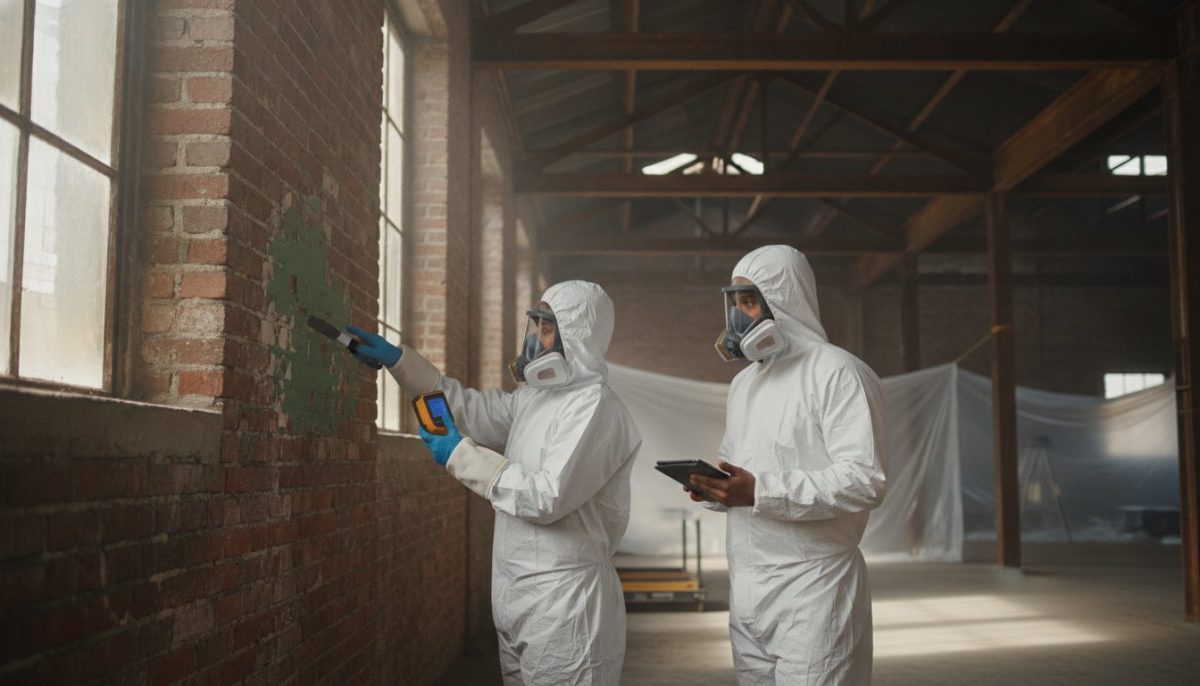
Containment and Safety Infrastructure
HEPA filtration and negative air pressure systems are mandatory to prevent micro-particulate lead from escaping the work zone. Large-scale job sites require the installation of multi-stage decontamination units where technicians can safely remove contaminated gear. These infrastructure requirements, combined with high-grade respiratory protection, ensure that the project remains compliant with the EPA Lead Abatement Program guidelines. When you factor in the lead abatement cost charleston sc for a complex facility, a significant portion of the budget is dedicated to this critical safety barrier.
Hazardous Waste Logistics and Disposal Fees
Lead debris isn’t standard construction waste. It’s toxic material that requires specialized hauling and disposal at licensed hazardous waste facilities. These facilities calculate fees based on volume and lead concentration levels. Regulatory mandates require “cradle-to-grave” tracking, where every ounce of material is documented from the moment it’s disturbed until its final disposal. Managing these logistics effectively is why many property owners choose to partner with hazardous material experts who provide fixed-price certainty for complex removals. This disciplined approach ensures that all RCRA disposal mandates are met without the fear of hidden environmental fees or legal repercussions.
Comparing Remediation Methods: Encapsulation vs. Full Removal
Selecting the appropriate remediation strategy requires a balance between immediate budgetary constraints and long-term asset protection. Property owners often evaluate the initial lead abatement cost charleston sc without considering the lifecycle expenses associated with temporary fixes. Professional lead mitigation generally falls into four technical categories:
- Encapsulation: This method involves applying a specialized, high-solids coating that creates a physical barrier over the lead paint. It’s a cost-effective initial step but requires the underlying surface to be structurally sound.
- Enclosure: Lead-bearing surfaces are covered with a permanent material such as new drywall, paneling, or aluminum siding. While effective, the hazardous material remains behind the barrier.
- Removal: Technicians physically strip lead paint using specialized heat guns, vacuum-shrouded power tools, or chemical strippers. This is the most labor-intensive but permanent solution.
- Replacement: This involves the total removal of contaminated components, such as window sashes, doors, or millwork, and installing new, lead-free alternatives.
Each method carries different implications for future liability and maintenance. While encapsulation might seem attractive for a quick turnaround, it doesn’t eliminate the lead. This means the hazard must be managed and disclosed in all future property transactions. For facilities undergoing significant changes, calculating the total lead abatement cost charleston sc often reveals that permanent removal is the only way to truly “clear” the property of regulatory burdens.
When to Choose Selective Demolition for Lead Removal
In complex commercial or industrial environments, stripping lead paint on-site is often inefficient and creates unnecessary dust risks. Selective demolition offers a surgical alternative by removing entire contaminated wings or structural sections. Instead of spending weeks stripping lead-coated steel or wood framing, the components are removed in their entirety under controlled conditions. This approach is particularly beneficial when the building’s layout is being altered. It integrates hazardous material remediation directly into the structural preparation phase, following the principles outlined in our strategic guide to interior demolition. This method minimizes on-site contamination and speeds up the overall project timeline.
Long-Term ROI: Permanent Removal vs. Temporary Mitigation
The financial logic of lead mitigation extends far beyond the mobilization phase. Encapsulation requires a commitment to ongoing monitoring; if the sealant cracks or the building settles, the lead hazard reappears. Over a decade, the costs of inspections and re-applications can quickly surpass the price of a one-time permanent removal. Analysis of the Cost-Benefit of Lead Hazard Control shows that permanent solutions provide superior value by removing the need for lead-safe work practices during all future maintenance. For severely degraded structures, total structural demolition is often the most fiscally responsible path. It provides a clean slate for development and completely removes the legal and health liabilities associated with legacy lead contamination.
Regulatory Compliance and “Hidden” Costs in Abatement
Regulatory compliance represents a significant portion of the professional lead abatement budget. Before a single wall is disturbed, mandatory pre-abatement testing must be conducted. This typically involves X-ray fluorescence (XRF) scanning and laboratory analysis of paint chips to pinpoint lead concentrations. These tests aren’t just technical formalities; they establish the legal baseline for the entire project. When calculating the lead abatement cost charleston sc, project managers must account for these initial diagnostic phases. Failing to accurately map lead presence leads to mid-project discoveries that can derail a timeline and inflate costs.
Oversight continues throughout the remediation process. Independent third-party air monitoring is often required to verify that containment systems are functioning correctly and that no hazardous dust is escaping into adjacent areas. Once the physical removal is complete, final clearance testing is necessary to certify the site as lead-safe for other trades to enter. This rigorous verification process is non-negotiable. Non-compliance doesn’t just risk health; it invites massive federal fines and immediate project shutdowns. A single oversight can result in penalties that far outweigh the cost of doing the job correctly the first time.
Environmental Responsibility and Debris Management
Modern abatement strategies prioritize the systematic sorting of materials. By separating wood, metal, and plastic from lead-contaminated debris, contractors can significantly reduce the volume of waste destined for hazardous landfills. Implementing a robust demolition debris recycling program is a hallmark of professional methodology. This approach isn’t just environmentally responsible; it’s a strategic way to manage the lead abatement cost charleston sc by bypassing the high fees associated with toxic waste disposal for non-hazardous components.
Permitting and Administrative Overhead
The administrative burden of a lead project is substantial. Property owners must budget for hazardous material abatement permits and the labor-intensive documentation required for regulatory reporting. This includes maintaining waste manifests and worker exposure records. Additionally, the insurance premiums for high-risk abatement work are considerably higher than standard construction coverage. These administrative layers provide the legal protection necessary for complex projects. To ensure your project remains fully compliant and avoids costly delays, you should consult with our regulatory specialists for a comprehensive project assessment.
Choosing a Qualified Abatement Partner for Structural Projects
Selecting a partner for hazardous material remediation requires a disciplined evaluation of their operational history. A track record of over 15 years is often considered non-negotiable for large-scale projects because it demonstrates a long-term commitment to evolving safety standards and technical precision. When you analyze the lead abatement cost charleston sc, you’re investing in more than just labor; you’re securing a methodology that prevents cross-contamination and shields you from legal liability. Experience allows a contractor to anticipate the variables of aging structures before they become expensive mid-project discoveries.
There’s a significant operational advantage to hiring a single contractor capable of handling both structural demolition and lead abatement. This integration eliminates the coordination gaps and finger-pointing that often occur between separate vendors. A single-source provider manages the entire lifecycle of the material, from initial containment to final disposal. This streamlines the timeline and ensures that hazardous material handling is woven into the demolition strategy rather than treated as a separate, disjointed task. It also provides a single point of accountability for all waste manifests and clearance documentation.
Many contractors operate on a “time and materials” basis for hazardous work, which often leads to budget creep as new variables emerge. In contrast, fixed-price structural contracts provide stakeholders with financial certainty. By conducting thorough pre-project assessments, a qualified partner can provide a transparent, all-inclusive quote that accounts for disposal fees and administrative overhead. This approach protects your project from “too-good-to-be-true” quotes that often hide missing certifications, vague disposal plans, or inadequate insurance coverage. If a quote seems suspiciously low, it’s likely because the contractor is cutting corners on containment or regulatory reporting.
The TSIAC International Approach to Hazardous Materials
Our methodology is built on 15 years of industry experience and a commitment to EPA-certified safety protocols. We utilize vacuum-shrouded tools and high-efficiency particulate air (HEPA) filtration to maintain strict site control during every phase of removal. Beyond safety, we focus on environmental stewardship by integrating recycling programs for non-hazardous materials like wood and metal. This technical precision is detailed further in our hazardous material abatement guide, which serves as a foundational resource for property owners planning complex renovations.
Next Steps: Requesting a Detailed Project Evaluation
Accurate budgeting for a large-scale structure requires a data-driven site evaluation. To provide a precise quote, specialists need access to existing blueprints, previous lead test reports, and a clear understanding of the project’s final goals. The process begins with a comprehensive site walkthrough to identify accessibility challenges and substrate conditions. Engaging with hazardous material experts early in the demolition planning phase ensures that the lead abatement cost charleston sc is fully integrated into the master budget. This early collaboration prevents logistical bottlenecks and ensures a lead-safe clearance at the project’s conclusion.
Securing Your Asset Through Methodological Precision
Effective 2026 project planning requires a shift from viewing lead mitigation as a simple maintenance task to recognizing it as a critical engineering requirement. By prioritizing permanent removal over temporary encapsulation, property owners eliminate future liability and secure the long-term marketability of their assets. Navigating the technical variables of substrate complexity and regulatory oversight is essential for maintaining project timelines and avoiding budget creep. Understanding the lead abatement cost charleston sc involves looking beyond the initial mobilization to the total value of a certified, lead-safe clearance.
Successful remediation rests on the technical precision of your chosen partner. Integrated demolition and abatement services provide the most streamlined path for complex renovations, ensuring that hazardous materials are handled with surgical accuracy from containment to final disposal. With over 15 years of industry experience as an EPA Lead-Safe Certified firm, we specialize in managing the most demanding structural and selective demolition challenges. Contact TSIAC International for a Professional Abatement Consultation to establish a clear, fixed-price framework for your project. Taking this proactive step ensures your facility remains compliant, safe, and ready for its next phase of development.
Frequently Asked Questions
Is lead abatement more expensive than standard interior demolition?
Lead abatement is significantly more technical than standard interior demolition. The necessity for negative air pressure systems, multi-stage decontamination units, and specialized hazardous waste hauling increases the complexity of the project. While standard demolition focuses on speed, abatement requires a surgical approach to material handling. These additional safety protocols and regulatory reporting requirements are primary drivers for the overall lead abatement cost charleston sc compared to non-hazardous structural removal.
Can I stay in my property during the lead removal process?
Occupants should vacate the work area during the removal process to ensure total safety. While small-scale repairs might allow for partial occupancy, large-scale residential or commercial abatements require the entire site to be sealed under negative pressure. This prevents lead dust from migrating into living or work spaces. Re-entry is only permitted after a third-party professional conducts final clearance testing and certifies the environment as lead-safe for unprotected individuals.
How long does a typical lead abatement project take to complete?
A typical project timeline depends on the remediation method chosen and the total linear footage involved. A focused interior gutting of a contaminated wing might take one to two weeks, whereas a full structural stripping of an industrial facility could span several months. Factors such as substrate material and the condition of the existing paint significantly impact the speed of mobilization. Replacement of components is generally faster than on-site chemical or mechanical stripping.
What is the difference between lead-safe renovation and lead abatement?
Lead abatement is a permanent solution designed to eliminate lead hazards entirely through removal, replacement, or enclosure. In contrast, lead-safe renovation refers to work practices used during general repairs to minimize dust. While renovation follows the EPA’s RRP Rule, it doesn’t necessarily result in a lead-free environment. For stakeholders evaluating the lead abatement cost charleston sc, the investment in true abatement provides long-term liability protection that standard renovation cannot offer.
Does lead abatement automatically increase my property value?
Lead abatement preserves property value by removing a major structural and legal liability. Properties with documented lead hazards often face lower appraisal values and more difficult paths to financing. By achieving a certified lead-free status, you increase the asset’s marketability and eliminate the need for mandatory lead disclosures during future transactions. This proactive approach is a strategic investment in the building’s long-term financial health and occupancy safety.
What happens if lead is discovered during a structural demolition project?
If lead is discovered mid-project, all activities must cease to prevent hazardous dust from spreading. The site must be secured, and a certified risk assessment should be conducted immediately. Resuming work without a hazardous material plan violates federal safety regulations and risks massive environmental fines. Integrating abatement with your initial demolition strategy is the most effective way to prevent these costly project shutdowns and ensure continuous workflow.
Are there federal grants available for lead paint removal in 2026?
Federal funding is often available through the HUD Lead Hazard Control and Healthy Homes program. These grants are typically directed toward high-risk residential areas and community-based projects. In 2026, many government agencies continue to prioritize the elimination of lead in older housing stocks. Property owners should consult the official HUD or EPA portals to identify available local and national financial assistance programs for hazardous material remediation.
How do I verify if an abatement contractor is EPA Lead-Safe Certified?
You can verify a contractor’s status by using the EPA’s Lead-Safe Certification Locator tool online. Professional firms are required to maintain valid certifications and should be able to provide their firm’s license number upon request. It’s also vital to check the individual certifications of the technicians performing the work. Verifying these credentials ensures that the contractor follows the strict methodological protocols required for legal and environmental compliance.