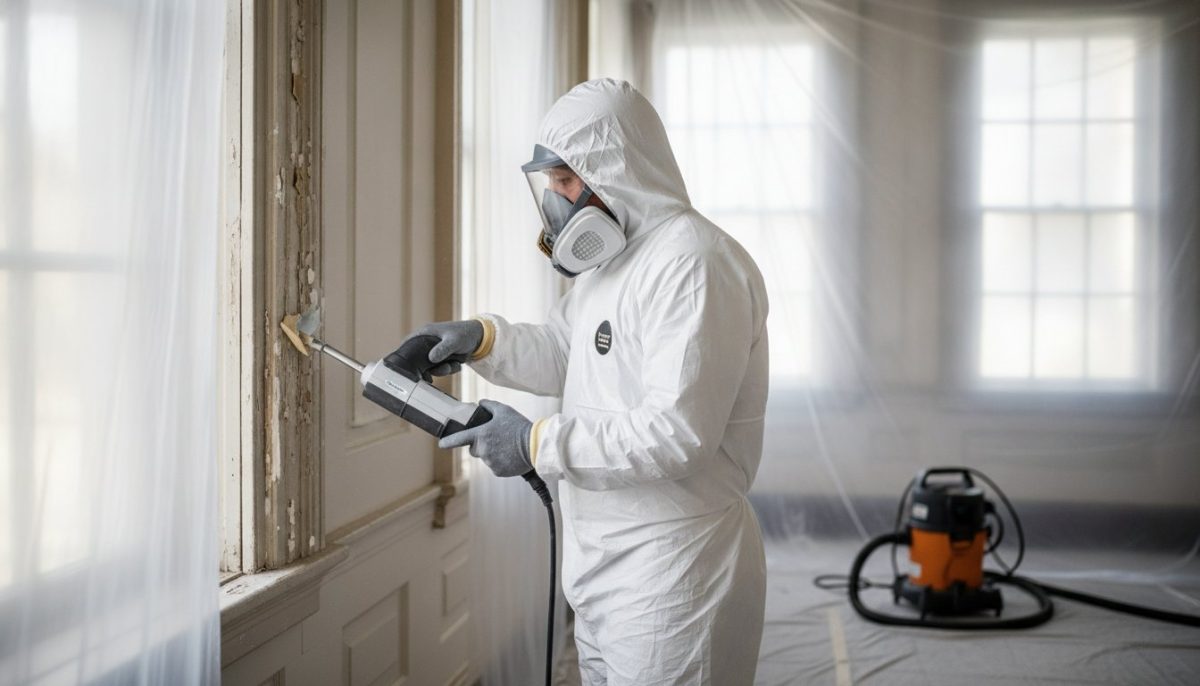
Lead Abatement Cost in Charleston, SC: 2026 Price Guide and Factors

Did you know that approximately 34% of residential structures in South Carolina built before 1978 still contain lead-based paint hazards? For…

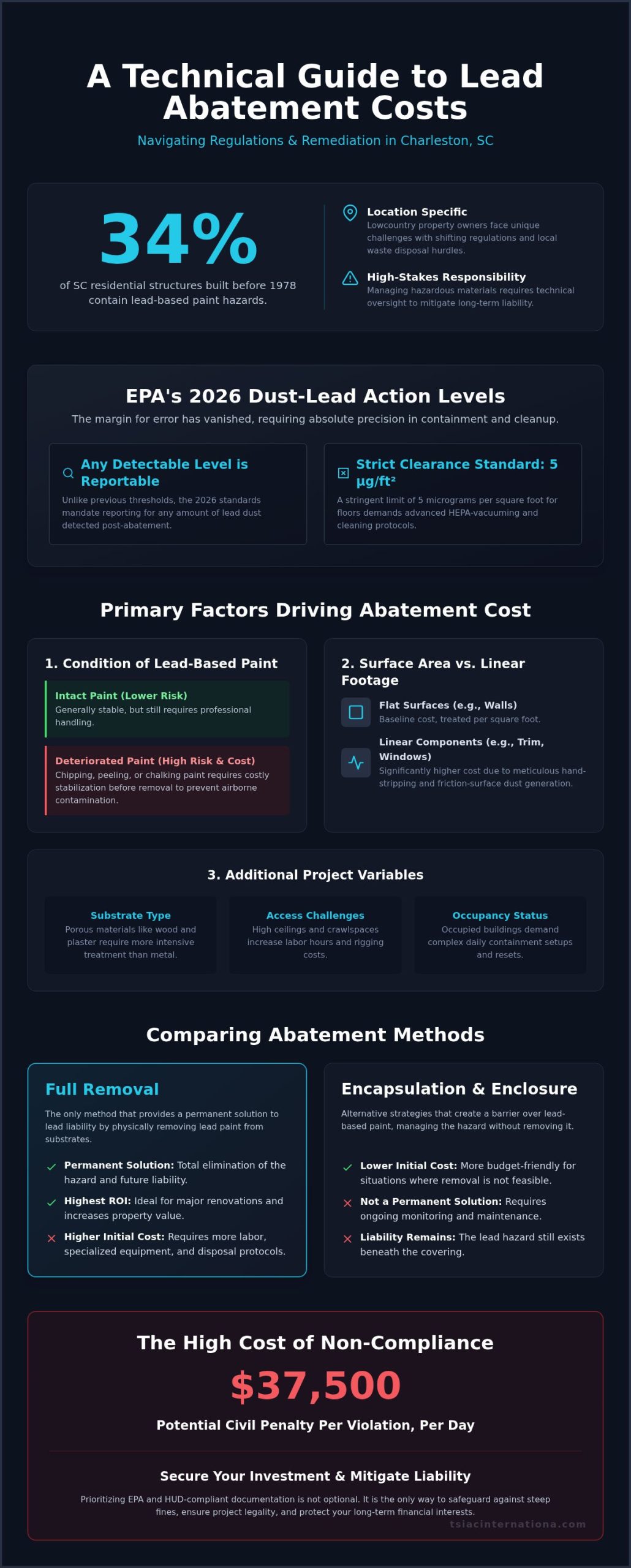
Did you know that approximately 34% of residential structures in South Carolina built before 1978 still contain lead-based paint hazards? For property owners in the Lowcountry, determining the lead abatement cost charleston sc requires more than a simple surface-level estimate. You likely recognize that managing hazardous materials is a high-stakes responsibility where technical oversight is the only way to mitigate long-term liability. With the EPA’s 2026 dust-lead action levels now reportable at any detectable level, including a strict 5 µg/ft² for floors, the margin for error in containment has effectively vanished.

We understand the pressure of navigating shifting regulations like the South Carolina Department of Public Health’s lowered blood lead thresholds and the logistical hurdles of local waste disposal. This guide provides a disciplined breakdown of professional remediation methods, the critical differences between EPA RRP and HUD abatement standards, and the specific variables that dictate your total project budget. You’ll gain the technical clarity needed to ensure full regulatory compliance, avoid civil penalties that can reach $37,500 per day, and secure a clean site ready for selective demolition or renovation.

Key Takeaways

  • Understand how surface condition and total square footage dictate project complexity and the level of containment required for safe remediation.
  • Compare the permanent benefits of full lead removal against the cost-effective nature of encapsulation to determine the best long-term ROI for your property.
  • Factor in localized disposal challenges, as Charleston-specific landfill restrictions and hazardous waste manifests significantly impact the total lead abatement cost charleston sc.
  • Secure your investment by prioritizing EPA and HUD-compliant documentation to mitigate liability and avoid steep non-compliance fines.
  • Learn why integrated abatement and demolition services provide a safer, more efficient transition for structural renovations and site preparation.

Primary Factors Driving Lead Abatement Cost in Charleston, SC

Calculating the lead abatement cost charleston sc involves more than just measuring a room’s dimensions. In our professional experience, the architectural complexity of a building dictates the intensity of the remediation process. While a building’s footprint provides a baseline, the density of lead-impacted surfaces is the true driver of expense. 2026 market conditions have seen a rise in the costs of specialized hazardous material labor and the high-grade PPE required to meet the EPA’s stricter clearance standards. When every detectable level of lead dust is now reportable, the precision of your containment strategy is non-negotiable.

Specific building components also play a massive role in your budget. High-friction areas, such as windows and doors, are significantly more expensive to treat than stationary walls. These components generate lead dust every time they are used, requiring more rigorous Lead abatement methods to ensure the site passes final clearance. Property owners must account for the specialized equipment needed to manage these “impact surfaces” without contaminating the surrounding environment.

Surface Area vs. Linear Footage

Estimating lead removal isn’t a one-size-fits-all calculation. We differentiate between flat surfaces like drywall and linear components like crown molding, baseboards, and window casings. Detailed trim work requires meticulous hand-stripping or careful removal, which takes considerably longer than treating a flat wall. When we calculate the “measurable surface,” we look at the total count of openings. A room with four windows and two doors will always carry a higher lead abatement cost charleston sc than a similarly sized room with fewer architectural features.

The Condition of the Lead-Based Paint

The physical state of the substrate determines the safety protocols we must deploy. Intact paint is generally stable, but “deteriorated” paint that is chipping, peeling, or chalking is a high-risk hazard. Crumbling surfaces require a costly stabilization phase before full removal can even begin. This process ensures that hazardous flakes don’t become airborne during the main project. We also frequently encounter the aftermath of DIY attempts. If a previous owner tried to sand or scrape lead paint without professional containment, the resulting microscopic dust often permeates the subfloor and HVAC system. This requires a much more intensive cleaning and HEPA-vacuuming regimen to reach the 2026 EPA action levels of 5 µg/ft² for floors.

  • Substrate Type: Wood and plaster are more porous than metal, often requiring deeper treatment.
  • Access Challenges: High ceilings or tight crawlspaces increase labor hours and rigging costs.
  • Occupancy Status: Working in an occupied building requires more complex, daily containment resets.

Comparing Abatement Methods: Removal, Encapsulation, and Enclosure

Selecting a remediation strategy directly influences the long-term lead abatement cost charleston sc. Property owners must weigh immediate capital expenditure against permanent liability reduction. Each approach requires specific EPA-certified work practices to ensure the site remains safe during and after the intervention. The intended future use of your building dictates which method provides the most sustainable return on investment.

The Pros and Cons of Full Lead Removal

Full removal is the only method that provides a permanent solution to lead liability. We utilize technical processes such as wet scraping, heat stripping with HEPA-shielded tools, and chemical stripping to lift lead-based paint from the substrate. While this method requires a higher initial investment, it’s the only path recognized by insurers and regulatory bodies as a total elimination of the hazard. This approach is particularly strategic during large-scale renovations. By integrating removal with commercial interior gutting services, we can clear the structure of all hazardous materials before the reconstruction phase begins. This synergy reduces the need for multiple containment setups and streamlines the overall project timeline.

Encapsulation and Enclosure as Alternative Strategies

Encapsulation involves applying a specialized, high-solids coating that bonds to the lead paint, creating a leak-proof seal. This is often effective for stationary surfaces like ceilings where friction is non-existent. However, it isn’t a permanent fix. Encapsulated surfaces require periodic inspections to ensure the bond remains intact. Enclosure, on the other hand, utilizes physical barriers like new drywall or aluminum siding to mechanically isolate the lead paint from the environment. Both methods require skilled labor to ensure the new structural shell is airtight and compliant with safety standards.

While these methods often lower the upfront lead abatement cost charleston sc, they carry hidden maintenance burdens. Because the lead remains on-site, property owners must maintain detailed records and disclose the presence of lead during any future real estate transactions. When calculating your budget, you must also account for the EPA lead program fees associated with the ongoing certification of the firm managing these interim controls. If you aren’t sure which path fits your structural goals, we can help you evaluate the most durable solution for your specific property. Consulting with a remediation expert ensures your chosen method aligns with your building’s future use and safety requirements.

The Hidden Costs: Compliance, Disposal, and Site Safety

Surface-level estimates often fail to account for the logistical infrastructure required to maintain a lead-safe environment. While labor and materials are visible expenses, the technical overhead of compliance dictates a significant portion of the lead abatement cost charleston sc. Professional remediation isn’t merely about paint removal; it’s a controlled engineering process. This includes the deployment of HEPA-filtered air scrubbers and the construction of critical barriers using 6-mil polyethylene sheeting. These containment systems prevent microscopic lead dust from migrating to non-work areas, a requirement that standard contractors often overlook.

Documentation is another essential professional cost. EPA and HUD regulations require meticulous record-keeping, including occupant protection plans and daily work logs. These documents aren’t just “paperwork.” They serve as your legal shield, proving that the abatement followed federal mandates. Without this verified trail, property owners remain vulnerable to future litigation and regulatory scrutiny. Investing in a contractor who prioritizes this level of detail is the only way to ensure the site is truly ready for selective demolition or occupancy.

Toxic Waste Management and Disposal Fees

Lead-contaminated debris cannot be discarded like standard construction waste. In Charleston County, the Bees Ferry Landfill does not accept construction and demolition waste from commercial haulers, meaning lead waste must be transported to specific, permitted facilities. This logistical hurdle adds to the lead abatement cost charleston sc through increased transport times and specialized tipping fees. We manage hazardous material abatement in South Carolina by utilizing strict “cradle-to-grave” waste manifests. This tracking system ensures that every pound of lead-impacted material is documented from the moment it leaves your site until it’s legally interred at a licensed toxic waste facility. This process eliminates the risk of illegal dumping fines, which can be devastating for a property owner’s budget.

Regulatory Inspections and Clearance Testing

The final phase of any project is independent third-party verification. Under the 2026 EPA standards, the threshold for lead dust on floors is now just 5 µg/ft². Reaching this level of cleanliness requires multiple rounds of HEPA-vacuuming and wet-wiping. Once the work is complete, a certified lead inspector must perform dust wipe sampling to confirm the area is safe for re-entry. While these inspections are an additional expense, they provide the “Lead-Free” or “Lead-Safe” certification required to close out permits and satisfy insurance underwriters. Hiring a contractor with 15+ years of experience ensures your project is built on EPA-compliant protocols, preventing the massive civil penalties associated with non-compliance.
Lead Abatement Cost in Charleston, SC: 2026 Price Guide and Factors

Long-Term Financial Impact: Why Professional Abatement Pays Off

Viewing lead remediation as a one-time expense is a common oversight. In reality, the lead abatement cost charleston sc represents a strategic investment in a property’s total cost of ownership. By permanently removing hazardous materials, you eliminate the looming threat of lead poisoning lawsuits and long-term legal liability. For commercial property owners, this proactive stance is essential. It ensures that future structural modifications can proceed without the delays and specialized containment costs associated with working around toxic substrates.

Property Value and Marketability

A “Lead-Free” or “Lead-Safe” certification significantly enhances a building’s position in the Charleston real estate market. High-value commercial tenants and institutional occupants prioritize safety and compliance when selecting a site. Without these certifications, you may find your property excluded from consideration by the most stable, long-term lessees. Property insurance premiums also reflect the risk profile of the structure. Removing lead hazards can lead to more favorable terms from underwriters and reduce your annual carrying costs.

Professional documentation serves as a tangible financial asset during property transfers by providing buyers with verified proof of regulatory compliance and hazard elimination. This transparency speeds up the due diligence process and prevents lead-related issues from becoming a bargaining chip during price negotiations. When the site is certified clean, the path to financing and permit approval becomes much smoother.

The Escalating Costs of Remediation Failure

The most expensive project is the one we have to fix after a failed DIY or uncertified attempt. When lead-based paint is disturbed without professional containment, microscopic dust permeates subfloors, ductwork, and insulation. This cross-contamination often triples the eventual lead abatement cost charleston sc, as the entire volume of the building may require specialized HEPA cleaning and environmental emergency response. Attempting to bypass certified protocols also exposes you to EPA fines that can reach $37,500 per violation, per day.

Professional containment is always more cost-effective than a reactive cleanup. Our technical approach ensures that hazards are isolated and removed at the source, preventing the spread of toxic particles. If you’re planning a renovation, address the lead hazards now to protect your long-term ROI. Contact our remediation specialists to schedule a technical assessment and secure a predictable budget for your project.

Choosing a Lead Abatement Contractor: The TSIAC International Standard

Selecting a partner for hazardous material remediation requires a rigorous evaluation of technical credentials. The lead abatement cost charleston sc should not be the sole metric for your decision. A low initial bid often masks a lack of sophisticated containment equipment or an inability to manage complex waste manifests. At TSIAC International, we maintain a standard rooted in 15+ years of industry experience across both residential and commercial sectors. Our approach centers on transparent, fixed-price contracts that encompass everything from initial site preparation to final disposal and regulatory compliance. This model provides property owners with the budget predictability necessary for large-scale capital projects, removing the fear of hidden change orders during the remediation phase.

Integrated Abatement and Demolition

The transition from hazardous material removal to structural renovation is where most projects lose momentum. We solve this by providing integrated services that bridge the gap between remediation and construction. Our team manages the demolition process in South Carolina with a focus on technical precision. By utilizing a single contractor for both lead abatement and structural gutting, you eliminate the scheduling conflicts and communication gaps that typically arise between disparate subcontractors. This synchronized remediation schedule allows us to maintain a “clean” site throughout the demolition phase, ensuring that no lead-contaminated debris is cross-contaminated with recyclable structural elements. This level of control is vital for meeting the 2026 EPA clearance standards on the first attempt.

Environmental Responsibility and Site Management

Our commitment to site management extends to environmental stewardship. We’ve developed protocols for sorting and recovering materials like wood, metal, and plastic from every project site. This isn’t just about sustainability; it’s a methodical way to reduce the volume of waste destined for permitted hazardous landfills. While we remove lead-impacted layers, we prioritize the structural integrity of the remaining building components. This level of precision is essential during selective demolition, where specific architectural features must be preserved while the surrounding hazards are eliminated. We don’t just clear a site; we provide a foundation of reliability and technical excellence.

Request a professional lead abatement consultation from TSIAC International to ensure your property meets the highest safety standards for 2026 and beyond. Our disciplined approach guarantees a safe, clean site that is ready for immediate renovation or redevelopment.

Securing Your Property’s Future with Technical Precision

Navigating hazardous material remediation requires a disciplined approach to both technical execution and regulatory documentation. You now understand that the lead abatement cost charleston sc is influenced by substrate condition, architectural complexity, and the stringent 2026 EPA clearance standards. By prioritizing professional removal over temporary fixes, you eliminate long-term liability and secure a status that enhances property marketability. Our team ensures every project adheres to strict disposal manifests, effectively bypassing local landfill restrictions through verified hazardous waste channels.

With over 15 years of abatement and demolition expertise, we provide the technical control needed for safe, compliant site preparation. We don’t just remove hazards; we prepare your structure for its next phase of life. Our comprehensive hazardous material disposal and recycling protocols ensure that your project meets environmental standards while protecting your bottom line. Get a Professional Lead Abatement Quote from TSIAC International today to protect your investment with EPA-certified professionals. We look forward to helping you secure a safe, clean site for your next renovation.

Frequently Asked Questions

Is lead abatement the same as lead remediation?

Lead abatement is a specific subset of remediation that focuses on the permanent elimination of lead-based paint hazards. While remediation is a general term for addressing environmental issues, abatement involves certified methods like removal, enclosure, or encapsulation to ensure long-term safety. Abatement projects are subject to stricter regulatory oversight and require specialized clearance testing to confirm the hazard is permanently controlled.

Can I stay in my home during the lead abatement process?

Occupants generally cannot remain in the immediate work area during an active project. High-intensity lead removal creates microscopic dust that must be strictly contained behind physical barriers. While residents might remain in unaffected wings of a large property, most safety protocols recommend vacating the premises until a third-party lead inspector provides a passed dust-wipe clearance report. This ensures no exposure to airborne particles occurs.

How much does a professional lead inspection cost in 2026?

The cost of a professional lead inspection depends on the structure’s total square footage and the number of paint samples required for laboratory analysis. Because every property has a unique architectural footprint, inspectors provide quotes based on the complexity of the testing needed. Property owners should prioritize inspectors who provide a comprehensive risk assessment, as this document is the foundation for determining the eventual lead abatement cost charleston sc.

What are the EPA RRP requirements for commercial properties?

EPA RRP rules apply to commercial buildings when the work impacts child-occupied facilities, such as daycares or preschools located within the structure. These regulations require that any firm disturbing lead-based paint be EPA-certified and follow specific lead-safe work practices. Failure to comply can result in substantial civil penalties, making it essential to verify the certifications of any contractor performing renovations in these sensitive environments.

Does lead abatement affect the resale value of my property?

Professional lead abatement significantly increases a property’s resale value by removing a major disclosure liability. A Lead-Free or Lead-Safe certification provides peace of mind to buyers and institutional investors, often leading to faster closings and higher offers. It transforms a potential structural hazard into a documented safety asset, which is particularly valuable in the historic Charleston real estate market.

How is lead-contaminated waste disposed of safely?

Lead-contaminated waste is managed through a cradle-to-grave tracking system using hazardous waste manifests. In the Lowcountry, commercial haulers must transport lead debris to permitted facilities that are equipped to handle toxic materials, as standard landfills often have strict restrictions. This process ensures that hazardous dust and debris are interred safely, protecting the property owner from the legal risks of improper disposal.

What is the difference between encapsulation and full removal?

Full removal involves stripping lead paint down to the bare substrate, while encapsulation uses a specialized liquid coating to seal the lead in place. Removal is a permanent solution that eliminates the lead abatement cost charleston sc associated with future monitoring. Encapsulation is often faster but requires periodic inspections to ensure the sealant hasn’t cracked or peeled, as the underlying lead remains present on the property.

How long does a typical lead abatement project take?

A typical project duration ranges from a few days for single rooms to several weeks for entire commercial structures. The timeline is dictated by the chosen abatement method and the condition of the substrate. Meticulous containment setup and the mandatory post-abatement clearance testing are the most time-consuming phases, but these steps are critical for ensuring the site is safe for re-occupancy or further renovation.
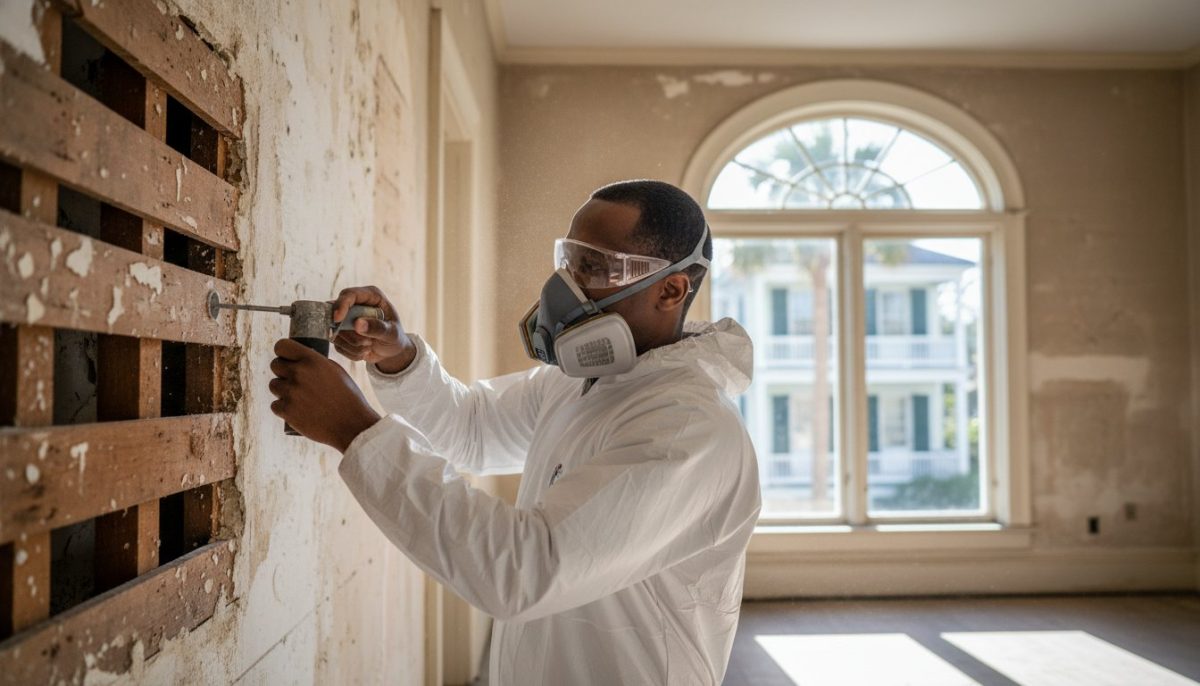
Professional Asbestos Testing in Charleston, SC: A 2026 Property Owner’s Guide

For property owners in Charleston, the architectural charm of a historic estate or the structural complexity of a modern industrial site often…

For property owners in Charleston, the architectural charm of a historic estate or the structural complexity of a modern industrial site often conceals a silent liability: legacy asbestos. Navigating the severe health risks associated with mesothelioma while attempting to satisfy the stringent requirements of the South Carolina Department of Health and Environmental Control (SC DHEC) can be a daunting technical challenge. Securing professional asbestos testing in charleston sc is not merely a procedural formality; it is a critical safety measure that ensures your renovation or demolition project remains on schedule, within legal boundaries, and free from the interference of local preservation boards.

This 2026 guide provides a technical roadmap for identifying hazardous materials with engineering-level precision, specifically tailored to the unique regulatory landscape of the Lowcountry. You will learn how to obtain definitive pass/fail results, manage complex regulatory compliance for building permits, and facilitate a seamless transition from initial site assessment to certified removal. By prioritizing technical accuracy and safety protocols, we empower you to protect both your structural investment and your occupants with unwavering professional confidence and mechanical reliability.

Key Takeaways

  • Understand why Charleston’s unique architectural history necessitates mandatory testing for nearly all pre-1980 structures to protect property value and occupant safety.
  • Identify hidden hazardous materials and the critical differences between friable and non-friable fibers before beginning any coastal renovation or demolition project.
  • Navigate regulatory complexities by ensuring your professional asbestos testing charleston sc aligns with strict SC DHEC standards and EPA-accredited laboratory protocols.
  • Learn the essential steps for transitioning from survey results to remediation, including the technical process of securing mandatory local abatement permits.
  • Discover how a comprehensive, expert-led approach integrates scientific analysis with specialized removal to ensure long-term structural integrity and compliance.

Why Asbestos Testing is Critical for Charleston Properties

Asbestos testing is a rigorous, scientific analysis of building materials designed to identify hazardous mineral fibers that may be embedded within a structure. In a city like Charleston, where architectural history spans centuries, this process is not merely a recommendation but a foundational safety requirement. Before initiating any structural modification, it is essential to understand What is Asbestos? and why its microscopic fibers pose such a significant risk to long-term respiratory health when disturbed during renovation or demolition.

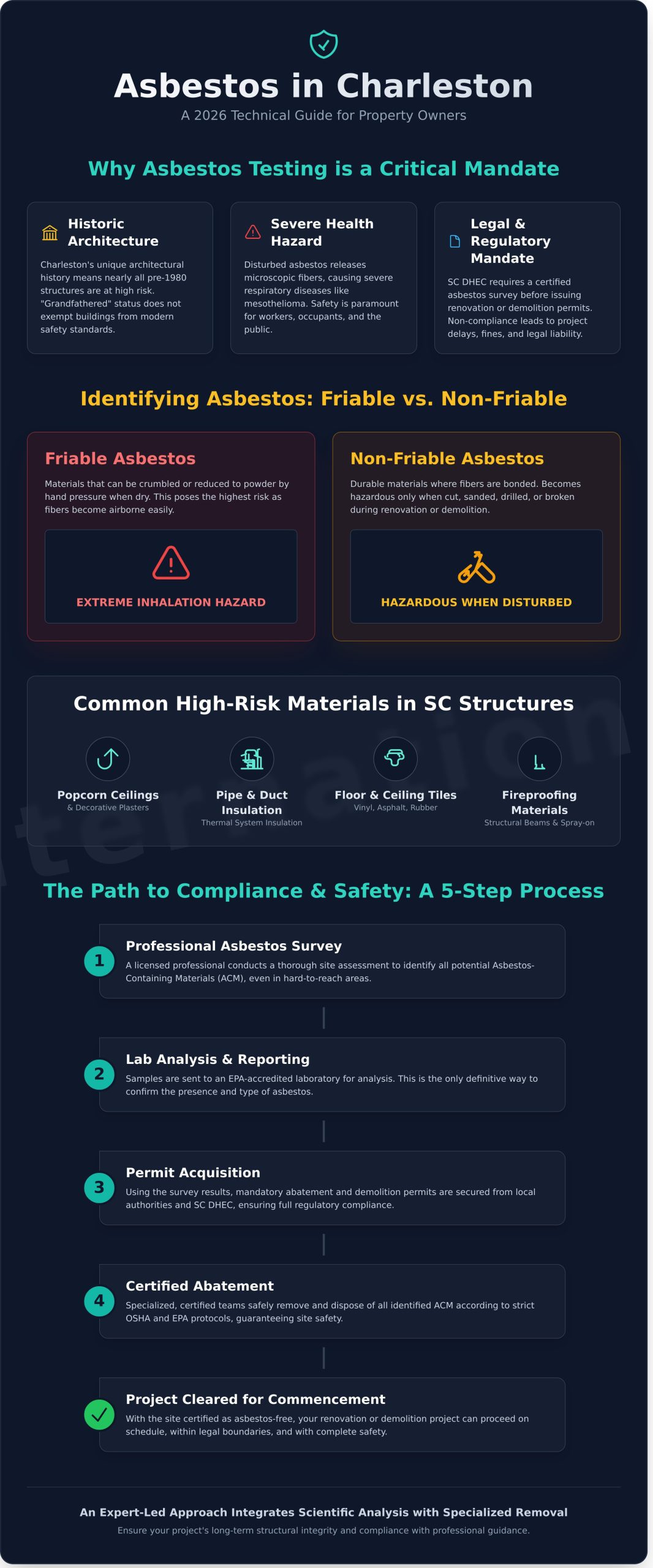
For many local property owners, asbestos testing charleston sc is the first step in ensuring regulatory compliance and physical safety. South Carolina law is explicit: a certified asbestos survey must be performed by a licensed professional before a demolition or renovation permit can be issued for any structure, particularly those built before 1980. This legal mandate serves as a critical barrier against the accidental release of carcinogenic fibers, protecting both the site workers and the general public from preventable health crises.

The “Historic District” Factor

Conducting asbestos testing charleston sc within the Historic District presents unique technical challenges. Professionals must balance the necessity of invasive material sampling with the strict preservation mandates of the Board of Architectural Review (BAR). It is a common misconception that “grandfathered” status exempts historic buildings from modern safety standards; in reality, hazardous material regulations are absolute. Safety protocols regarding toxic minerals take precedence over aesthetic preservation during the pre-construction phase to ensure the long-term viability of the asset.

Commercial vs. Residential Testing Requirements

While residential inspections often focus on localized risks, commercial asbestos surveys are governed by stringent OSHA and DHEC protocols. The distinction is critical for project management:

  • Residential: Typically focuses on surfacing materials, thermal insulation, and flooring in pre-1980 homes.
  • Commercial: Requires a comprehensive survey of all functional spaces, including mechanical systems and structural fireproofing, to secure demolition contracts.
  • Worker Safety: Compliance with OSHA requirements for interior gutting projects remains mandatory to protect labor forces from exposure.

In the professional landscape of 2026, the role of testing is not just about identifying a substance, but about securing the legal and structural integrity of a project. Precise testing ensures that “impossible” renovation sites are managed with engineering certainty and total safety.

Identifying Asbestos in Lowcountry Homes and Offices

Charleston’s architectural landscape is a complex tapestry ranging from 18th-century historic estates to mid-century industrial developments. This structural diversity creates unique challenges for asbestos testing charleston sc, as hazardous materials are often integrated into the very “bones” of a building. Identifying Asbestos-Containing Materials (ACM) requires more than a cursory glance; it necessitates a deep technical understanding of historical construction methods. At TSIAC International, our team specializes in accessing “impossible locations”-tight structural shells, interstitial spaces, and high-reaching voids where asbestos was frequently utilized for its thermal and fire-resistant properties.

A critical distinction in property safety is the difference between friable and non-friable materials. Friable asbestos can be easily pulverized by hand, releasing microscopic fibers into the air, while non-friable materials, such as transit pipe or floor tiles, are more stable until they are cut, sanded, or broken. Understanding these OSHA Asbestos Hazards is vital for any property owner, as even non-friable materials become a significant risk during a renovation’s demolition phase. Because asbestos fibers are invisible to the naked eye, visual inspection is never sufficient to confirm a building’s safety; laboratory analysis is the only definitive proof of absence.

High-Risk Materials in Older SC Structures

In Charleston’s mid-century suburbs, popcorn ceilings and decorative plasters were standard, often containing significant concentrations of chrysotile asbestos. During commercial interior gut-outs, we frequently identify 9×9 floor tiles and the high-performance mastic adhesives used to secure them. Furthermore, historic Lowcountry estates often harbor hidden risks in the form of asbestos-wrapped steam pipes and attic vermiculite, which require precision sampling to ensure the structural integrity of the historic fabric remains uncompromised.

The Impact of Coastal Humidity

Charleston’s persistent moisture levels significantly impact the degradation of ACM. High humidity can accelerate the breakdown of binding agents in insulation and ceiling tiles, causing them to become brittle and prone to fiber release. We frequently observe an intersection between mold remediation and asbestos testing charleston sc, where water-damaged materials must be handled with extreme caution. In these humid environments, maintaining rigorous containment integrity during the sampling process is a technical necessity to prevent the cross-contamination of the property.

The Professional Testing Process & SC DHEC Regulations

Navigating the complexities of asbestos testing charleston sc requires a meticulous adherence to both federal mandates and specific state protocols. In South Carolina, the safety of building occupants and the integrity of the local environment are protected by a rigorous regulatory framework. A professional survey is not merely a safety precaution; it is a technical requirement that must be executed with engineering precision to ensure project viability and legal standing.

SC DHEC Rule 61-86.1 Compliance

In South Carolina, the Department of Health and Environmental Control (DHEC) enforces Regulation 61-86.1, which dictates how asbestos must be identified and managed. This regulation applies to all commercial renovations and any residential demolition projects. Key compliance factors include:

  • Notification Requirements: A formal “Renovation and Demolition” notification must be submitted to the state at least ten working days before work commences if certain thresholds of asbestos-containing materials (ACM) are involved.
  • Certified Inspections: Only DHEC-licensed building inspectors are authorized to perform the surveys required for legal compliance.
  • Enforcement: Non-compliance with SC DHEC Regulations can result in immediate stop-work orders, substantial civil penalties, and long-term legal liabilities.

Independent Lab Verification

TSIAC maintains a policy of absolute objectivity, insisting on rigorous data from an EPA-accredited laboratory before any abatement strategy is formulated. This engineering-led approach ensures that remediation is based on empirical evidence. The analysis typically utilizes two primary methodologies:

  • Polarized Light Microscopy (PLM): The industry standard for bulk sample analysis, identifying fiber types and their percentage by volume.
  • Transmission Electron Microscopy (TEM): A high-resolution method used when PLM results are inconclusive or for air clearance testing, capable of detecting fibers at a microscopic scale.

A legally valid survey report for asbestos testing charleston sc must include the inspector’s credentials, the laboratory’s NVLAP accreditation, a detailed map of sample locations, and a quantified assessment of the asbestos content. In the Charleston market, laboratory results are typically delivered within 24 to 72 hours. This structured timeline allows for the seamless integration of safety protocols into the broader construction schedule, ensuring that the most challenging technical hurdles are managed with total control and transparency.

Professional Asbestos Testing in Charleston, SC: A 2026 Property Owner’s Guide

Once asbestos testing charleston sc confirms the presence of hazardous materials, the project transitions from assessment to technical execution. At TSIAC International, we approach this phase with engineering precision, ensuring that every step aligns with both safety protocols and structural requirements. Navigating the path from positive results to a clean site involves a disciplined five-step process:

  • Step 1: Survey Analysis: We meticulously review the survey results to identify and map all Asbestos-Containing Materials (ACM) within the structure.
  • Step 2: Regulatory Permitting: Our team secures the necessary abatement permits from local Charleston authorities and South Carolina DHEC to ensure full legal compliance.
  • Step 3: Containment Planning: We develop a site-specific containment and removal plan, utilizing advanced filtration and negative air pressure systems.
  • Step 4: Controlled Abatement: Hazardous materials are removed prior to any structural or selective demolition to prevent cross-contamination.
  • Step 5: Final Clearance: Independent air clearance testing is conducted to certify the environment is safe for re-occupancy or further construction.

Selective Demolition and Asbestos

In complex commercial environments, “surgical” removals are often required to protect the building’s structural integrity. TSIAC’s approach to selective demolition involves stripping hazardous materials from specific wings or floors while the rest of the facility remains operational. Whether managing commercial tenant improvements (TI) or a complete interior gutting, we ensure that asbestos-containing components are isolated and removed without compromising adjacent structural elements.

Cost Factors for Abatement in Charleston

The total project fee for abatement is primarily influenced by the volume and friability of the material, as well as the complexity of the containment required. Specialized disposal and toxic waste management also factor into the budget. However, the ROI of professional asbestos testing charleston sc is significant; by identifying risks early, property owners avoid the massive, unbudgeted costs associated with emergency cleanups and long-term legal liabilities. For expert guidance on managing your remediation project, visit tsiacinternational.com.

TSIAC International: Expert Abatement and Demolition in SC

With over 15 years of specialized experience rooted in the South Carolina Lowcountry, TSIAC International provides a disciplined transition from initial asbestos testing charleston sc to full-scale structural remediation. Our comprehensive approach is designed to bridge the gap between identifying hazardous materials and the final phase of structural removal. By maintaining a single point of accountability, we eliminate the logistical friction often found when transitioning between testing consultants and abatement contractors.

Our operational model is built on a foundation of environmental responsibility and technical excellence. We serve a broad spectrum of clients, including:

  • Homeowners requiring precise residential remediation for historic or modern properties.
  • General Contractors seeking a reliable partner for complex site preparation and hazardous material management.
  • Government Agencies demanding strict adherence to federal and state safety regulations and transparent reporting.

Beyond simple removal, we focus on material sustainability by actively recycling wood, metal, and plastic. This ensures that our demolition processes contribute to environmental conservation while maintaining the highest safety standards in the industry.

Engineering Precision in Hazardous Environments

At TSIAC International, we treat every abatement project with the rigor of a complex engineering task. This disciplined methodology allows us to maintain safety in hazardous environments where variables can change rapidly. We specialize in “impossible” sites-projects characterized by restricted access, structural instability, or extreme contamination-where other contractors often decline to bid. Our reputation is built on the ability to manage high-risk scenarios through clear communication, technical expertise, and total regulatory transparency.

Schedule Your Consultation

Preparing your site for remediation requires a partner who understands the nuances of asbestos testing charleston sc and the subsequent abatement requirements. We operate on a fixed-price contract basis, providing our clients with the financial certainty and technical clarity necessary for large-scale projects. To prepare for your initial professional walkthrough, ensure that all previous inspection reports are accessible and the site is clear of temporary obstructions.

Ready to move forward with a partner who prioritizes precision and safety? Contact TSIAC International for expert asbestos and demolition services to schedule your comprehensive site assessment today.

Securing Your Charleston Property with Expert Asbestos Oversight

Navigating the complexities of SC DHEC regulations and the unique structural challenges of the Lowcountry requires a technical, detail-oriented approach. Professional asbestos testing charleston sc is the foundational step in ensuring environmental safety and structural integrity, whether you are managing a historic renovation or a modern commercial demolition. Identifying hazardous materials early mitigates long-term liability and protects both personnel and property value through disciplined, fact-based risk management.

TSIAC International brings over 15 years of specialized South Carolina abatement experience to every site. As a fully licensed and insured firm, we are uniquely equipped for high-risk demolition and maintain rigorous compliance standards, specifically within the sensitive Charleston historic district. Our methodology prioritizes engineering precision and transparent communication, ensuring that even the most complex technical challenges remain under absolute control. Trust a partner who views safety not just as a requirement, but as a guarantee of quality.

Request a Professional Abatement Quote from TSIAC International to secure your project’s future. Taking proactive steps today ensures a safer, more sustainable environment for Charleston’s architectural legacy tomorrow.

Frequently Asked Questions

Is asbestos testing required for residential renovations in Charleston, SC?

In South Carolina, the Department of Health and Environmental Control (SCDHEC) mandates that structures be inspected for asbestos-containing materials (ACM) prior to any renovation or demolition. While specific exemptions exist for owner-occupied single-family residences, professional asbestos testing charleston sc is highly recommended to ensure occupant safety and structural integrity. Failure to identify hazardous materials can lead to significant health risks and legal liabilities during the construction process.

How much does asbestos testing typically cost in the Lowcountry?

The cost of professional testing in the Lowcountry generally ranges from $400 to $1,200, depending on the scope of the inspection and the number of bulk samples required for lab analysis. Factors influencing the final investment include the total square footage of the facility and the complexity of the material matrix being analyzed. We prioritize a detailed technical breakdown of costs to ensure transparency and precision throughout the evaluation process.

Can I take my own asbestos samples and send them to a lab?

While DIY kits are available, we strongly advise against self-sampling due to the high risk of fiber release and cross-contamination. Professional inspectors utilize specialized containment protocols and engineering controls to ensure that structural fibers do not become airborne during the sampling process. Furthermore, regulatory bodies often require a certified inspector’s report for permit approval, making professional sampling a technical necessity for legitimate project execution and safety compliance.

How long does the asbestos testing process take from start to finish?

A standard asbestos assessment typically requires 48 to 72 hours from the initial site inspection to the delivery of the final analytical report. This timeline accounts for the rigorous microscopic analysis performed in accredited laboratories using Polarized Light Microscopy (PLM). For high-priority industrial or commercial projects where downtime must be minimized, expedited results can often be procured within 24 hours to maintain the momentum of the construction schedule.

What happens if asbestos is found during my commercial gut-out?

If asbestos-containing materials are identified, all work in the affected area must cease immediately to prevent hazardous exposure. A comprehensive abatement plan is then developed, which includes filing a mandatory notification with SCDHEC and establishing a regulated work area with negative air pressure. Our approach focuses on complex execution, ensuring that the hazardous material is neutralized and removed with engineering precision before any structural demolition or renovation resumes.

Does a “negative” test result mean I can start demolition immediately?

A negative test result indicates that the sampled materials do not contain asbestos above the regulatory limit of 1%. Once a certified report confirms these findings, you may proceed with the demolition phase, provided all relevant local building permits are secured. It is critical to maintain this documentation on-site as proof of compliance, as it serves as a technical guarantee for the safety of the workforce and the surrounding environment.

Are there specific Charleston city permits required for asbestos removal?

Yes, asbestos removal in Charleston requires coordination between the City of Charleston Building Inspections Division and state environmental authorities. A specific “Asbestos Renovation/Demolition” notification must be submitted to SCDHEC at least ten working days before the abatement begins. Our team manages these complex regulatory requirements, ensuring that all technical documentation and safety protocols align with both municipal codes and state environmental protection standards.

How does TSIA C International handle the disposal of asbestos after it is removed?

TSIA C International manages asbestos disposal through a rigorous protocol involving double-bagging in 6-mil polyethylene containers and labeling according to federal standards. The waste is transported to a permitted Class 3 landfill specifically authorized to accept friable and non-friable asbestos. Every shipment is accompanied by a Waste Shipment Record (WSR), providing a transparent chain of custody that confirms the permanent and safe sequestration of the hazardous material.