
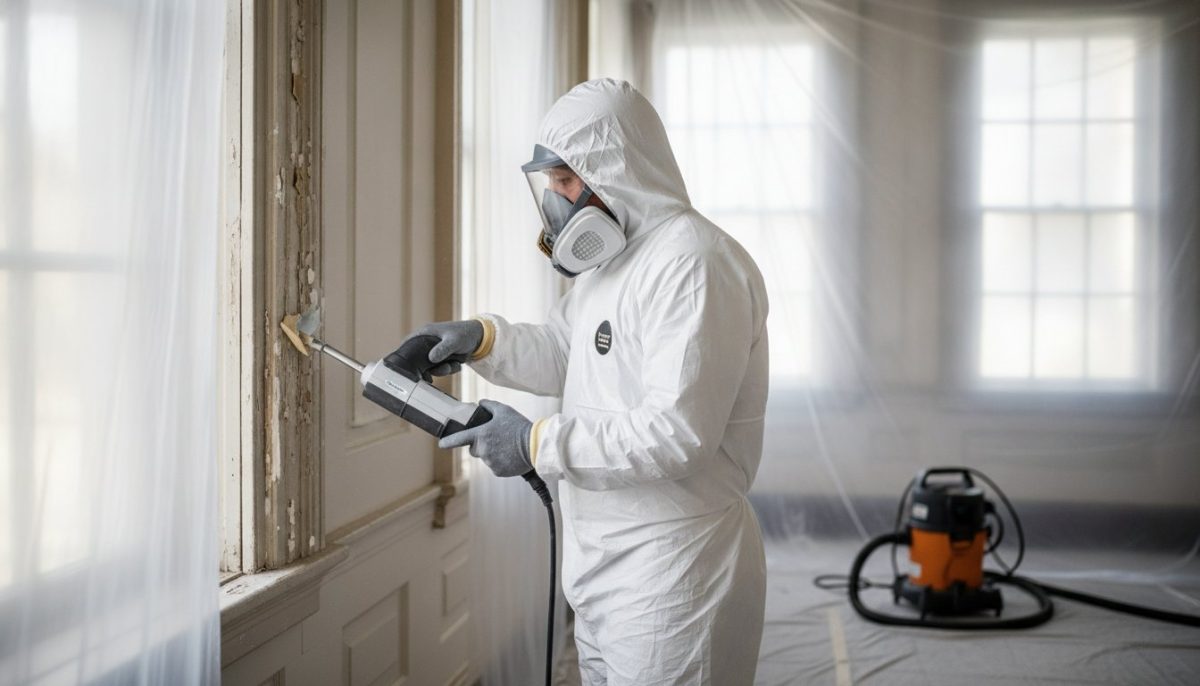
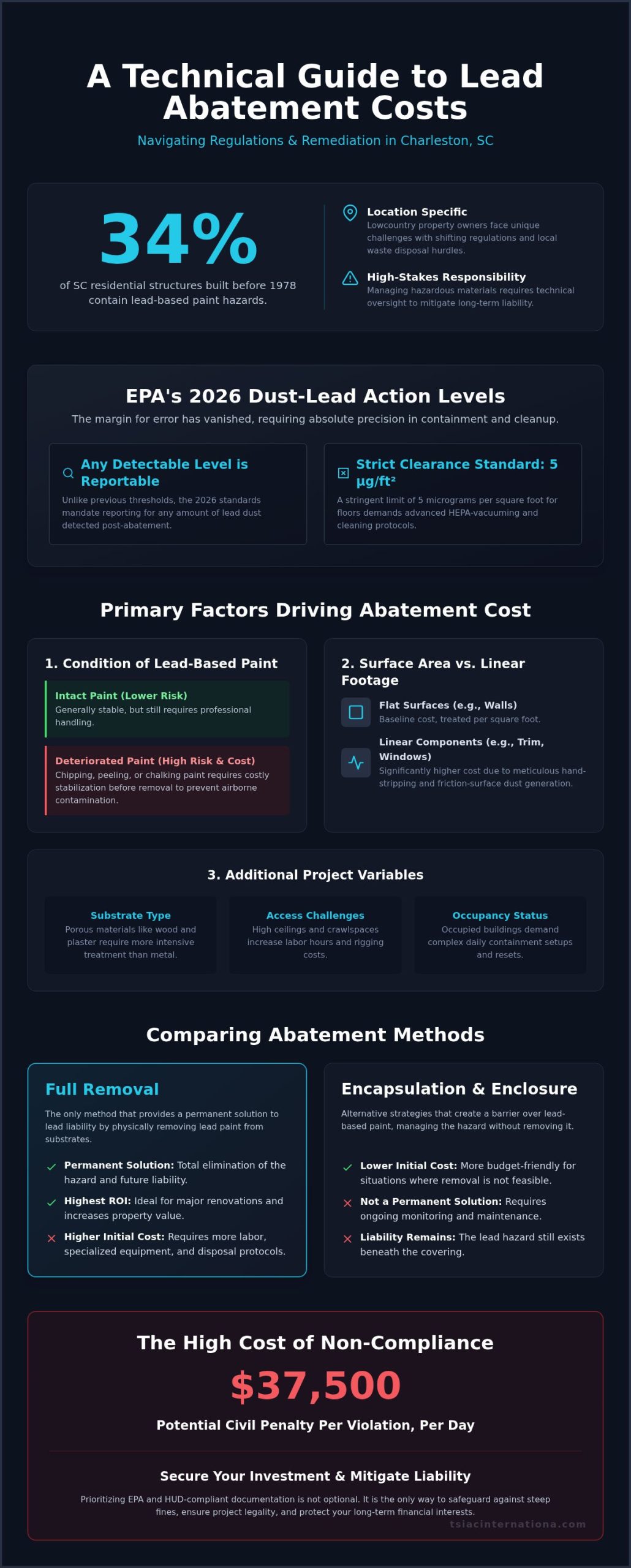
Did you know that approximately 34% of residential structures in South Carolina built before 1978 still contain lead-based paint hazards? For property owners in the Lowcountry, determining the lead abatement cost charleston sc requires more than a simple surface-level estimate. You likely recognize that managing hazardous materials is a high-stakes responsibility where technical oversight is the only way to mitigate long-term liability. With the EPA’s 2026 dust-lead action levels now reportable at any detectable level, including a strict 5 µg/ft² for floors, the margin for error in containment has effectively vanished.
We understand the pressure of navigating shifting regulations like the South Carolina Department of Public Health’s lowered blood lead thresholds and the logistical hurdles of local waste disposal. This guide provides a disciplined breakdown of professional remediation methods, the critical differences between EPA RRP and HUD abatement standards, and the specific variables that dictate your total project budget. You’ll gain the technical clarity needed to ensure full regulatory compliance, avoid civil penalties that can reach $37,500 per day, and secure a clean site ready for selective demolition or renovation.
Key Takeaways
- Understand how surface condition and total square footage dictate project complexity and the level of containment required for safe remediation.
- Compare the permanent benefits of full lead removal against the cost-effective nature of encapsulation to determine the best long-term ROI for your property.
- Factor in localized disposal challenges, as Charleston-specific landfill restrictions and hazardous waste manifests significantly impact the total lead abatement cost charleston sc.
- Secure your investment by prioritizing EPA and HUD-compliant documentation to mitigate liability and avoid steep non-compliance fines.
- Learn why integrated abatement and demolition services provide a safer, more efficient transition for structural renovations and site preparation.
Primary Factors Driving Lead Abatement Cost in Charleston, SC
Calculating the lead abatement cost charleston sc involves more than just measuring a room’s dimensions. In our professional experience, the architectural complexity of a building dictates the intensity of the remediation process. While a building’s footprint provides a baseline, the density of lead-impacted surfaces is the true driver of expense. 2026 market conditions have seen a rise in the costs of specialized hazardous material labor and the high-grade PPE required to meet the EPA’s stricter clearance standards. When every detectable level of lead dust is now reportable, the precision of your containment strategy is non-negotiable.
Specific building components also play a massive role in your budget. High-friction areas, such as windows and doors, are significantly more expensive to treat than stationary walls. These components generate lead dust every time they are used, requiring more rigorous Lead abatement methods to ensure the site passes final clearance. Property owners must account for the specialized equipment needed to manage these “impact surfaces” without contaminating the surrounding environment.
Surface Area vs. Linear Footage
Estimating lead removal isn’t a one-size-fits-all calculation. We differentiate between flat surfaces like drywall and linear components like crown molding, baseboards, and window casings. Detailed trim work requires meticulous hand-stripping or careful removal, which takes considerably longer than treating a flat wall. When we calculate the “measurable surface,” we look at the total count of openings. A room with four windows and two doors will always carry a higher lead abatement cost charleston sc than a similarly sized room with fewer architectural features.
The Condition of the Lead-Based Paint
The physical state of the substrate determines the safety protocols we must deploy. Intact paint is generally stable, but “deteriorated” paint that is chipping, peeling, or chalking is a high-risk hazard. Crumbling surfaces require a costly stabilization phase before full removal can even begin. This process ensures that hazardous flakes don’t become airborne during the main project. We also frequently encounter the aftermath of DIY attempts. If a previous owner tried to sand or scrape lead paint without professional containment, the resulting microscopic dust often permeates the subfloor and HVAC system. This requires a much more intensive cleaning and HEPA-vacuuming regimen to reach the 2026 EPA action levels of 5 µg/ft² for floors.
- Substrate Type: Wood and plaster are more porous than metal, often requiring deeper treatment.
- Access Challenges: High ceilings or tight crawlspaces increase labor hours and rigging costs.
- Occupancy Status: Working in an occupied building requires more complex, daily containment resets.
Comparing Abatement Methods: Removal, Encapsulation, and Enclosure
Selecting a remediation strategy directly influences the long-term lead abatement cost charleston sc. Property owners must weigh immediate capital expenditure against permanent liability reduction. Each approach requires specific EPA-certified work practices to ensure the site remains safe during and after the intervention. The intended future use of your building dictates which method provides the most sustainable return on investment.
The Pros and Cons of Full Lead Removal
Full removal is the only method that provides a permanent solution to lead liability. We utilize technical processes such as wet scraping, heat stripping with HEPA-shielded tools, and chemical stripping to lift lead-based paint from the substrate. While this method requires a higher initial investment, it’s the only path recognized by insurers and regulatory bodies as a total elimination of the hazard. This approach is particularly strategic during large-scale renovations. By integrating removal with commercial interior gutting services, we can clear the structure of all hazardous materials before the reconstruction phase begins. This synergy reduces the need for multiple containment setups and streamlines the overall project timeline.
Encapsulation and Enclosure as Alternative Strategies
Encapsulation involves applying a specialized, high-solids coating that bonds to the lead paint, creating a leak-proof seal. This is often effective for stationary surfaces like ceilings where friction is non-existent. However, it isn’t a permanent fix. Encapsulated surfaces require periodic inspections to ensure the bond remains intact. Enclosure, on the other hand, utilizes physical barriers like new drywall or aluminum siding to mechanically isolate the lead paint from the environment. Both methods require skilled labor to ensure the new structural shell is airtight and compliant with safety standards.
While these methods often lower the upfront lead abatement cost charleston sc, they carry hidden maintenance burdens. Because the lead remains on-site, property owners must maintain detailed records and disclose the presence of lead during any future real estate transactions. When calculating your budget, you must also account for the EPA lead program fees associated with the ongoing certification of the firm managing these interim controls. If you aren’t sure which path fits your structural goals, we can help you evaluate the most durable solution for your specific property. Consulting with a remediation expert ensures your chosen method aligns with your building’s future use and safety requirements.
The Hidden Costs: Compliance, Disposal, and Site Safety
Surface-level estimates often fail to account for the logistical infrastructure required to maintain a lead-safe environment. While labor and materials are visible expenses, the technical overhead of compliance dictates a significant portion of the lead abatement cost charleston sc. Professional remediation isn’t merely about paint removal; it’s a controlled engineering process. This includes the deployment of HEPA-filtered air scrubbers and the construction of critical barriers using 6-mil polyethylene sheeting. These containment systems prevent microscopic lead dust from migrating to non-work areas, a requirement that standard contractors often overlook.
Documentation is another essential professional cost. EPA and HUD regulations require meticulous record-keeping, including occupant protection plans and daily work logs. These documents aren’t just “paperwork.” They serve as your legal shield, proving that the abatement followed federal mandates. Without this verified trail, property owners remain vulnerable to future litigation and regulatory scrutiny. Investing in a contractor who prioritizes this level of detail is the only way to ensure the site is truly ready for selective demolition or occupancy.
Toxic Waste Management and Disposal Fees
Lead-contaminated debris cannot be discarded like standard construction waste. In Charleston County, the Bees Ferry Landfill does not accept construction and demolition waste from commercial haulers, meaning lead waste must be transported to specific, permitted facilities. This logistical hurdle adds to the lead abatement cost charleston sc through increased transport times and specialized tipping fees. We manage hazardous material abatement in South Carolina by utilizing strict “cradle-to-grave” waste manifests. This tracking system ensures that every pound of lead-impacted material is documented from the moment it leaves your site until it’s legally interred at a licensed toxic waste facility. This process eliminates the risk of illegal dumping fines, which can be devastating for a property owner’s budget.
Regulatory Inspections and Clearance Testing
The final phase of any project is independent third-party verification. Under the 2026 EPA standards, the threshold for lead dust on floors is now just 5 µg/ft². Reaching this level of cleanliness requires multiple rounds of HEPA-vacuuming and wet-wiping. Once the work is complete, a certified lead inspector must perform dust wipe sampling to confirm the area is safe for re-entry. While these inspections are an additional expense, they provide the “Lead-Free” or “Lead-Safe” certification required to close out permits and satisfy insurance underwriters. Hiring a contractor with 15+ years of experience ensures your project is built on EPA-compliant protocols, preventing the massive civil penalties associated with non-compliance.
Long-Term Financial Impact: Why Professional Abatement Pays Off
Viewing lead remediation as a one-time expense is a common oversight. In reality, the lead abatement cost charleston sc represents a strategic investment in a property’s total cost of ownership. By permanently removing hazardous materials, you eliminate the looming threat of lead poisoning lawsuits and long-term legal liability. For commercial property owners, this proactive stance is essential. It ensures that future structural modifications can proceed without the delays and specialized containment costs associated with working around toxic substrates.
Property Value and Marketability
A “Lead-Free” or “Lead-Safe” certification significantly enhances a building’s position in the Charleston real estate market. High-value commercial tenants and institutional occupants prioritize safety and compliance when selecting a site. Without these certifications, you may find your property excluded from consideration by the most stable, long-term lessees. Property insurance premiums also reflect the risk profile of the structure. Removing lead hazards can lead to more favorable terms from underwriters and reduce your annual carrying costs.
Professional documentation serves as a tangible financial asset during property transfers by providing buyers with verified proof of regulatory compliance and hazard elimination. This transparency speeds up the due diligence process and prevents lead-related issues from becoming a bargaining chip during price negotiations. When the site is certified clean, the path to financing and permit approval becomes much smoother.
The Escalating Costs of Remediation Failure
The most expensive project is the one we have to fix after a failed DIY or uncertified attempt. When lead-based paint is disturbed without professional containment, microscopic dust permeates subfloors, ductwork, and insulation. This cross-contamination often triples the eventual lead abatement cost charleston sc, as the entire volume of the building may require specialized HEPA cleaning and environmental emergency response. Attempting to bypass certified protocols also exposes you to EPA fines that can reach $37,500 per violation, per day.
Professional containment is always more cost-effective than a reactive cleanup. Our technical approach ensures that hazards are isolated and removed at the source, preventing the spread of toxic particles. If you’re planning a renovation, address the lead hazards now to protect your long-term ROI. Contact our remediation specialists to schedule a technical assessment and secure a predictable budget for your project.
Choosing a Lead Abatement Contractor: The TSIAC International Standard
Selecting a partner for hazardous material remediation requires a rigorous evaluation of technical credentials. The lead abatement cost charleston sc should not be the sole metric for your decision. A low initial bid often masks a lack of sophisticated containment equipment or an inability to manage complex waste manifests. At TSIAC International, we maintain a standard rooted in 15+ years of industry experience across both residential and commercial sectors. Our approach centers on transparent, fixed-price contracts that encompass everything from initial site preparation to final disposal and regulatory compliance. This model provides property owners with the budget predictability necessary for large-scale capital projects, removing the fear of hidden change orders during the remediation phase.
Integrated Abatement and Demolition
The transition from hazardous material removal to structural renovation is where most projects lose momentum. We solve this by providing integrated services that bridge the gap between remediation and construction. Our team manages the demolition process in South Carolina with a focus on technical precision. By utilizing a single contractor for both lead abatement and structural gutting, you eliminate the scheduling conflicts and communication gaps that typically arise between disparate subcontractors. This synchronized remediation schedule allows us to maintain a “clean” site throughout the demolition phase, ensuring that no lead-contaminated debris is cross-contaminated with recyclable structural elements. This level of control is vital for meeting the 2026 EPA clearance standards on the first attempt.
Environmental Responsibility and Site Management
Our commitment to site management extends to environmental stewardship. We’ve developed protocols for sorting and recovering materials like wood, metal, and plastic from every project site. This isn’t just about sustainability; it’s a methodical way to reduce the volume of waste destined for permitted hazardous landfills. While we remove lead-impacted layers, we prioritize the structural integrity of the remaining building components. This level of precision is essential during selective demolition, where specific architectural features must be preserved while the surrounding hazards are eliminated. We don’t just clear a site; we provide a foundation of reliability and technical excellence.
Request a professional lead abatement consultation from TSIAC International to ensure your property meets the highest safety standards for 2026 and beyond. Our disciplined approach guarantees a safe, clean site that is ready for immediate renovation or redevelopment.
Securing Your Property’s Future with Technical Precision
Navigating hazardous material remediation requires a disciplined approach to both technical execution and regulatory documentation. You now understand that the lead abatement cost charleston sc is influenced by substrate condition, architectural complexity, and the stringent 2026 EPA clearance standards. By prioritizing professional removal over temporary fixes, you eliminate long-term liability and secure a status that enhances property marketability. Our team ensures every project adheres to strict disposal manifests, effectively bypassing local landfill restrictions through verified hazardous waste channels.
With over 15 years of abatement and demolition expertise, we provide the technical control needed for safe, compliant site preparation. We don’t just remove hazards; we prepare your structure for its next phase of life. Our comprehensive hazardous material disposal and recycling protocols ensure that your project meets environmental standards while protecting your bottom line. Get a Professional Lead Abatement Quote from TSIAC International today to protect your investment with EPA-certified professionals. We look forward to helping you secure a safe, clean site for your next renovation.
Frequently Asked Questions
Is lead abatement the same as lead remediation?
Lead abatement is a specific subset of remediation that focuses on the permanent elimination of lead-based paint hazards. While remediation is a general term for addressing environmental issues, abatement involves certified methods like removal, enclosure, or encapsulation to ensure long-term safety. Abatement projects are subject to stricter regulatory oversight and require specialized clearance testing to confirm the hazard is permanently controlled.
Can I stay in my home during the lead abatement process?
Occupants generally cannot remain in the immediate work area during an active project. High-intensity lead removal creates microscopic dust that must be strictly contained behind physical barriers. While residents might remain in unaffected wings of a large property, most safety protocols recommend vacating the premises until a third-party lead inspector provides a passed dust-wipe clearance report. This ensures no exposure to airborne particles occurs.
How much does a professional lead inspection cost in 2026?
The cost of a professional lead inspection depends on the structure’s total square footage and the number of paint samples required for laboratory analysis. Because every property has a unique architectural footprint, inspectors provide quotes based on the complexity of the testing needed. Property owners should prioritize inspectors who provide a comprehensive risk assessment, as this document is the foundation for determining the eventual lead abatement cost charleston sc.
What are the EPA RRP requirements for commercial properties?
EPA RRP rules apply to commercial buildings when the work impacts child-occupied facilities, such as daycares or preschools located within the structure. These regulations require that any firm disturbing lead-based paint be EPA-certified and follow specific lead-safe work practices. Failure to comply can result in substantial civil penalties, making it essential to verify the certifications of any contractor performing renovations in these sensitive environments.
Does lead abatement affect the resale value of my property?
Professional lead abatement significantly increases a property’s resale value by removing a major disclosure liability. A Lead-Free or Lead-Safe certification provides peace of mind to buyers and institutional investors, often leading to faster closings and higher offers. It transforms a potential structural hazard into a documented safety asset, which is particularly valuable in the historic Charleston real estate market.
How is lead-contaminated waste disposed of safely?
Lead-contaminated waste is managed through a cradle-to-grave tracking system using hazardous waste manifests. In the Lowcountry, commercial haulers must transport lead debris to permitted facilities that are equipped to handle toxic materials, as standard landfills often have strict restrictions. This process ensures that hazardous dust and debris are interred safely, protecting the property owner from the legal risks of improper disposal.
What is the difference between encapsulation and full removal?
Full removal involves stripping lead paint down to the bare substrate, while encapsulation uses a specialized liquid coating to seal the lead in place. Removal is a permanent solution that eliminates the lead abatement cost charleston sc associated with future monitoring. Encapsulation is often faster but requires periodic inspections to ensure the sealant hasn’t cracked or peeled, as the underlying lead remains present on the property.
How long does a typical lead abatement project take?
A typical project duration ranges from a few days for single rooms to several weeks for entire commercial structures. The timeline is dictated by the chosen abatement method and the condition of the substrate. Meticulous containment setup and the mandatory post-abatement clearance testing are the most time-consuming phases, but these steps are critical for ensuring the site is safe for re-occupancy or further renovation.
