Commercial Interior Gutting Services: A Strategic Guide to Interior Demolition

According to a 2023 industry report, 45% of commercial renovation delays stem directly from unforeseen hazardous materials discovered during the…

According to a 2023 industry report, 45% of commercial renovation delays stem directly from unforeseen hazardous materials discovered during the initial teardown. You’re likely aware that a renovation project is only as stable as the structural shell it’s built upon. It’s a common concern that hidden asbestos or structural instabilities will threaten your timeline and budget. You need a disciplined approach that treats demolition as a precise engineering task. We understand the pressure of maintaining a clean site while ensuring every square foot meets rigorous safety standards.

This guide helps you master the technical complexities of commercial interior gutting services to ensure your next project starts on a solid foundation. You’ll learn how to manage the critical path from hazardous material abatement to structural shell preparation without compromising the surrounding building areas. We’ll examine the protocols for full EPA and OSHA compliance, the logistics of massive debris management, and the specific methods used to protect the integrity of your property. This overview provides the strategic roadmap for delivering a construction-ready space that meets every regulatory and technical requirement with engineering precision.

Key Takeaways

  • Learn how to effectively strip a building down to its structural shell by identifying the specific scope of work required for non-load-bearing elements and MEP systems.
  • Master the technical distinctions between selective and structural demolition to ensure building stability through proper shoring and bracing techniques.
  • Discover why integrating hazardous material surveys into your timeline is the essential first step in professional commercial interior gutting services.
  • Follow a disciplined 5-step engineering survey and utility “safe-off” process to mitigate risks and maintain total control over complex renovation environments.
  • Identify the strategic advantages of partnering with a single-source contractor who manages both high-risk remediation and large-scale structural removal.

What Are Commercial Interior Gutting Services?

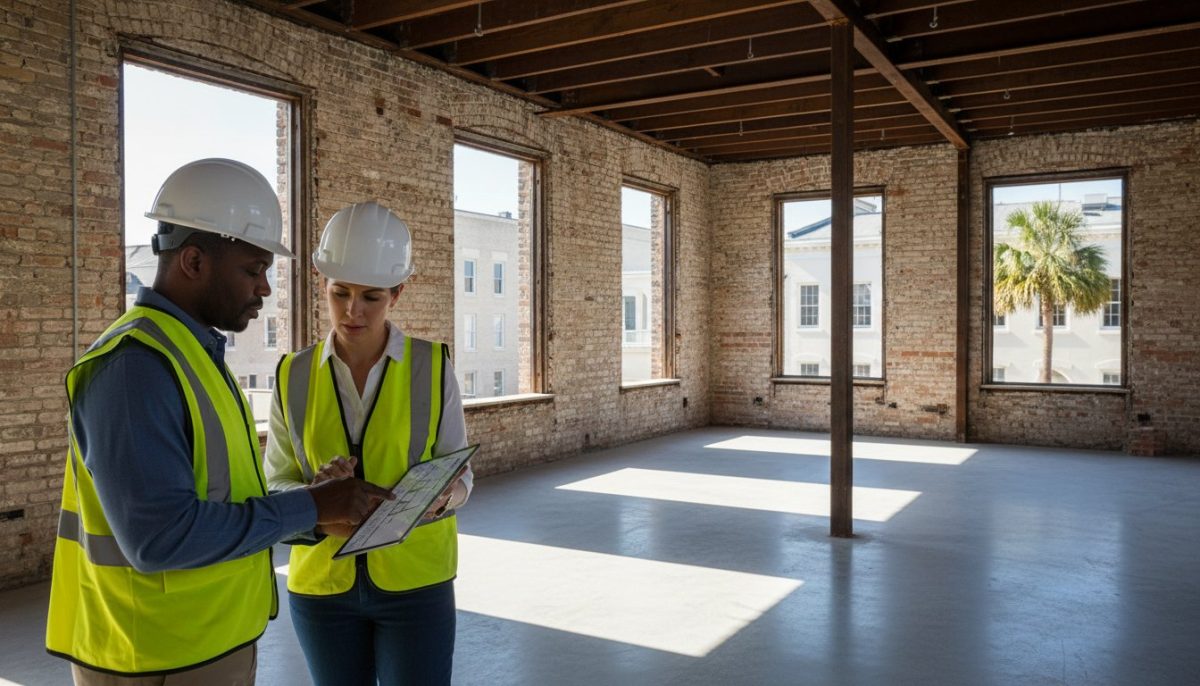
Commercial interior gutting services represent the systematic deconstruction of a building’s interior down to its structural shell or metal studs. This isn’t a “wrecking ball” approach. It’s a controlled engineering process. The procedure strips away everything that isn’t essential to the building’s structural integrity. This includes non-load-bearing walls, flooring, and comprehensive MEP (mechanical, electrical, plumbing) systems. While “soft demolition” might only remove surface-level finishes like carpets and furniture, a full gut-out prepares the facility for a total transformation.

Professional gutting serves as the foundational phase for tenant improvements. By removing redundant infrastructure, contractors eliminate the risks of “discovery” mid-construction. In 2023, data from industrial renovation projects showed that a clean gut-out can reduce unforeseen site condition claims by 18%. It’s about precision and logistics. Every load-bearing column and structural slab must be exposed to ensure the next phase of construction proceeds on a stable, verified base.

The Role of Gutting in Modern Renovations

A thorough gut-out provides architects and MEP engineers with a blank canvas. It’s impossible to design high-efficiency HVAC systems or complex lighting grids when old ductwork obscures the ceiling plenum. Exposing the structural framework allows for immediate inspections. This transparency often accelerates the permitting phase by 10 to 14 days. When the structural slab and columns are visible, engineers can verify load capacities without invasive testing during the build-out. This proactive approach directly reduces downstream construction costs by preventing layout conflicts before they occur on-site.

Core Components Removed During an Interior Gut

The scope of work for commercial interior gutting services is comprehensive. Technicians handle the removal of complex systems that require specialized handling and disposal protocols, especially in restricted-access environments. Key components include:

  • Partition Systems: Removal of drywall, glass partitions, and heavy-gauge metal framing systems.
  • Ceiling Assemblies: Stripping acoustic ceiling tiles (ACT), grid systems, and redundant HVAC ducting.
  • Flooring and Adhesives: Mechanical grinding of thin-set, mastic, and epoxy coatings from concrete slabs to ensure a level surface.
  • Redundant MEP: Decommissioning and removal of outdated electrical conduits, plumbing lines, and fire suppression pipes.

Every phase follows strict safety standards. We prioritize the recovery of recyclable materials, often achieving a 75% diversion rate from landfills on standard office gut-outs. This level of discipline ensures the site is safe, clean, and ready for the incoming trades to begin work immediately.

Technical Distinctions: Selective vs. Structural Gutting

Distinguishing between architectural finishes and structural skeletons requires a precise engineering survey before any work begins. Professional commercial interior gutting services focus on the surgical removal of non-load-bearing partitions, floor coverings, and MEP systems without compromising the building’s primary frame. Engineers must identify walls that provide lateral stability; removing these without proper reinforcement can lead to structural deflection exceeding 0.125 inches.

Shoring and bracing are critical when the demolition plan intersects with the building’s core. We utilize 20-ton hydraulic jacks and steel needle beams to manage load transfers during complex strip-outs. This technical approach protects shared building systems, such as 4-inch wet-pipe fire suppression lines and main plumbing stacks. Keeping 95% of a building’s utility core functional requires physical barriers and isolation valves, ensuring that the gut-out doesn’t disrupt the entire facility’s operations.

Selective Demolition for Occupied Buildings

Working in multi-tenant facilities requires strict adherence to noise and vibration protocols. Most high-impact work occurs between 10 PM and 6 AM to minimize tenant disruption. To manage environmental risks, we deploy negative air machines equipped with HEPA filters that maintain 99.97% filtration efficiency. Every project maintains 100% compliance with OSHA 1926.850, ensuring that egress routes and life safety systems remain unobstructed for all occupants. For projects requiring this level of technical oversight, it’s best to consult with specialists in complex execution to ensure site safety.

Precision Equipment and Heavy Machinery

Modern commercial interior gutting services rely on specialized tools to balance speed with safety. Selecting the right method depends on the specific floor load capacity and the proximity of sensitive neighbors.

  • Robotic Demolition: Units like the Brokk 110 allow for high-torque crushing in confined areas where exhaust-emitting machinery isn’t feasible. These units exert 80% more force than manual labor while keeping operators at a safe distance.
  • Manual vs. Mechanical: Manual methods are reserved for delicate perimeter work or historical preservation. Mechanical excavators are deployed when we need to clear over 5,000 square feet per shift.
  • Floor Load Management: Equipment weight is strictly monitored to ensure it stays below 150 lbs per square foot, preventing structural damage to standard office floor slabs.

Managing Hidden Risks: Asbestos, Lead, and Hazard Abatement

Before the first wall falls, a rigorous Discovery Phase must occur. Professional commercial interior gutting services prioritize a comprehensive hazardous material survey to identify silent threats. Skipping this step isn’t just a safety oversight; it’s a financial liability. According to EPA estimates, buildings constructed before 1980 have a 70% probability of containing asbestos in floor tiles, mastic, or pipe insulation. We identify these materials through bulk sampling and polarized light microscopy before any structural interference begins.

Integrating abatement into the master schedule prevents cascading delays. A 10,000 square foot floor plate might require 14 days for specialized removal before standard demolition can resume. Failure to follow these protocols results in fines exceeding $37,500 per violation under OSHA 29 CFR 1926 standards. Proper commercial interior gutting services ensure that hazardous waste disposal follows a chain of custody that protects the property owner from future litigation and environmental penalties.

Asbestos Abatement During Interior Gutting

Technicians must distinguish between friable materials, like spray-applied fireproofing, and non-friable materials like vinyl-asbestos tile. Friable materials pose the highest risk because they release fibers into the air with minimal contact. We utilize negative pressure enclosures equipped with HEPA filtration units that cycle the air 6 times per hour. Once removal is complete, an independent laboratory performs Phase Contrast Microscopy testing. The space only reopens when fiber counts drop below 0.01 fibers per cubic centimeter, ensuring the site is safe for the next phase of construction.

Lead Paint and Mold Remediation

Commercial properties built before 1978 frequently contain lead-based paint on structural steel and metal framing. Cutting or grinding these components requires specialized HEPA-shrouded tools to capture toxic dust at the source. Gut-outs often reveal hidden mold growth in 15% of aging HVAC systems or behind water-damaged drywall. We address these biological hazards using antimicrobial treatments and detailed moisture mapping to prevent regrowth. Every project concludes with a comprehensive hazardous material manifest, providing the legal documentation necessary for project closeout and future property transfers.

The 5-Step Commercial Gutting Process

Execution of professional commercial interior gutting services requires a disciplined, engineering-led approach. It’s not about brute force; it’s about a controlled sequence that protects the building’s structural integrity and ensures the safety of every person on-site. We follow a rigorous five-step protocol to manage the complexities of modern commercial environments.

  • Site Evaluation and Engineering Survey: Before a single wall is touched, we conduct a thorough survey to identify load-bearing columns, shear walls, and structural slabs. This phase prevents accidental damage to the building’s primary support system.
  • Utility Disconnection and Safe-Off: We coordinate directly with MEP (Mechanical, Electrical, Plumbing) contractors to isolate power, water, and gas lines. This step includes strict Lock-Out/Tag-Out (LOTO) procedures to eliminate the risk of arc flashes or floods.
  • Hazardous Material Remediation: If a structure was built before 1978, the risk of lead-based paint or asbestos in floor tiles and pipe insulation is high. We neutralize these risks through certified abatement processes before general demolition begins.
  • Systematic Dismantling: Our teams work from the top-to-bottom and from the interior core outward. We remove non-structural partitions, drop ceilings, and built-in fixtures in a logical order to maintain clear egress routes.
  • Material Recovery and Debris Management: We don’t just haul waste. We sort materials at the source to ensure efficient disposal and maximize the recovery of high-value scrap.

Material Recycling and Environmental Stewardship

Modern demolition demands a commitment to sustainability. By sorting wood, ferrous metals, and gypsum at the source, we often divert over 75% of non-hazardous waste from landfills. This strategy isn’t just ethical; it’s financially sound, as it can reduce project tipping fees by 20% to 30%. For projects seeking green building status, we provide detailed, LEED-compliant recycling reports that document every ton of material processed.

Site Preparation for the Next Trade

The job isn’t finished until the site is ready for the next phase of construction. We deliver a “broom-clean” environment that exceeds standard industry expectations. This includes concrete slab preparation where we use specialized grinders to remove old adhesives, thin-set, or mastic, ensuring a 1/8-inch flatness tolerance for new flooring. Our handover protocol involves a joint walk-through with the incoming general contractor to verify that all MEP points are accessible and the space is ready for immediate framing.

Partner with a team that prioritizes engineering precision by choosing our professional interior demolition solutions for your next project.

Choosing a National Commercial Demolition Partner

Selecting a contractor for commercial interior gutting services requires more than a review of equipment lists. It demands a rigorous assessment of engineering depth and liability management. A single-source provider that handles both the structural strip-out and hazardous material abatement eliminates the friction between separate vendors. This integration typically reduces project timelines by 18% because scheduling conflicts between demolition crews and environmental specialists disappear. When one firm manages the entire interior lifecycle, the transition from abatement to structural removal is seamless and cost-effective.

Experience and Technical Expertise

TSIAC International brings 17 years of specialized experience to every job site. We specialize in “impossible” locations. These include high-density urban centers or active hospital environments where vibration and dust control are non-negotiable. Our teams have completed over 520 large-scale interior transformations across 28 states. We don’t just pull down walls. We analyze load-bearing capacities and MEP (mechanical, electrical, plumbing) intersections to ensure the building’s core remains intact. Our precision allows for the preservation of historical facades while the interior is completely modernized.

  • 17+ years of experience in structural and selective demolition across the U.S.
  • Proven track record in high-rise and restricted-access urban environments.
  • Technical proficiency in separating structural elements from non-load-bearing partitions.
  • Strategic regional presence to ensure rapid mobilization for national accounts.

Commitment to Safety and Compliance

Safety is our primary operational metric. We maintain a Total Recordable Incident Rate (TRIR) of 0.85, which is significantly lower than the 2023 industry average. Every crew member undergoes 40-hour HAZWOPER training and mandatory quarterly safety audits to ensure adherence to strict OSHA and EPA standards. High-stakes commercial projects require robust financial backing. We carry comprehensive insurance packages, including a $10 million umbrella policy, to protect our partners from site complexities. Detailed documentation and EPA-compliant waste tracking are standard for every project we touch. If you’re planning a complex renovation, contact TSIAC International today for a comprehensive project estimate.

Secure a Precision Foundation for Your Next Build

Executing a successful renovation starts with a technical understanding of how selective and structural demolition impacts your building’s integrity. You’ve learned that managing hidden hazards like asbestos and lead requires more than just caution; it requires EPA-certified abatement protocols to eliminate liability. A structured 5-step process ensures that every phase of your commercial interior gutting services stays on schedule while prioritizing a comprehensive material recycling program to reduce environmental impact.

TSIA C International leverages 15+ years of industry experience to handle the most complex interior challenges with engineering precision. We don’t just clear space. We provide a controlled, safe environment ready for immediate reconstruction. Our team excels at managing difficult job sites where technical accuracy is the only way to protect your investment. We’ve built our reputation on the fact that we don’t shy away from specialized requirements or impossible locations.

Take the first step toward a seamless project delivery. Request a Professional Interior Gutting Quote and let’s discuss your specific site requirements. We’re ready to turn your complex demolition needs into a clean slate for growth.

Frequently Asked Questions

What is the difference between interior demolition and gutting?

Interior demolition refers to the selective removal of specific building elements, while gutting involves stripping a space down to its structural members. Commercial interior gutting services remove everything including drywall, flooring, ceilings, and mechanical systems to leave only the concrete or steel shell. This process provides a 100% clean slate for new architectural layouts and updated infrastructure.

How much does commercial interior gutting cost per square foot?

Commercial gutting costs typically range from $4.00 to $12.00 per square foot based on the complexity of the materials and site accessibility. A standard 5,000 square foot office space usually averages $7.50 per square foot for total interior removal. Costs can increase by 20% if the project requires hand-demolition in sensitive areas or specialized equipment for high-rise logistics.

How long does a typical 10,000 square foot office gut-out take?

A 10,000 square foot office gut-out generally takes between 10 and 15 business days to reach completion. This timeframe includes the initial mobilization, utility safing, material removal, and a final HEPA-filtered cleaning. If the building has limited freight elevator access, the schedule might extend by 3 days to accommodate slower debris removal cycles.

Do I need a permit for interior demolition if I am not touching load-bearing walls?

You’ll almost always need a permit because gutting impacts fire suppression systems, electrical grids, and emergency egress routes. Even if structural integrity isn’t at risk, 95% of municipal building departments require a demolition permit to ensure the work follows safety codes. Operating without one can lead to fines exceeding $2,500 and an immediate cessation of all site activities.

What happens if asbestos is found during the gutting process?

Work stops immediately within a 30 foot radius of the suspect material to prevent any potential fiber contamination. We seal the area and bring in a third-party environmental consultant to perform laboratory testing within 24 hours. Professional commercial interior gutting services then coordinate with certified abatement specialists to remove the hazardous material under negative pressure before any demolition resumes.

Can interior gutting be performed while other parts of the building are occupied?

We perform gutting in occupied buildings by using temporary sound-attenuation barriers and negative air machines to contain 99% of dust. High-impact noise activities are scheduled during off-peak hours, typically from 7:00 PM to 6:00 AM, to minimize disruption to adjacent tenants. This disciplined approach ensures that 100% of the building’s business operations continue without technical interference.

How is demolition debris managed and recycled?

We sort debris on-site into specific streams for metal, concrete, wood, and general waste to maximize recovery rates. Our process typically diverts 75% of all materials from landfills by transporting them to specialized industrial recycling centers. Clients receive a detailed waste manifest at the end of the project documenting the exact tonnage of recycled materials for their sustainability records.

What utilities need to be disconnected before gutting begins?

Electrical, plumbing, gas, and HVAC systems must be professionally capped and “safed off” by licensed tradespeople before our crews start. A licensed electrician must verify that there’s 0% live power in the demolition zone to prevent accidental electrocution or fire. We cross-reference the mechanical blueprints with physical site conditions to ensure every utility line is accounted for before the first wall comes down.
Acoustic Ceiling Removal in Charleston: A Professional Guide to Safe Abatement

A single lapse in containment during a structural renovation can release millions of microscopic asbestos fibers into a building’s HVAC system in…

A single lapse in containment during a structural renovation can release millions of microscopic asbestos fibers into a building’s HVAC system in under 60 seconds. While many property owners view textured finishes as a 1970s design flaw that lowers market value, the technical reality of professional acoustic ceiling removal involves much more than cosmetic scraping. You likely understand that these surfaces are often more than just an eyesore; they represent a complex environmental challenge that requires engineering precision to solve.

At TSIAC International, we provide the clarity you need to navigate this process with absolute confidence. You’ll discover the specific safety protocols and abatement methods required to handle hazardous materials while maintaining the structural integrity of your property. We’ll outline how professional teams manage dust suppression and regulatory compliance to transform your outdated interior into a modern, safe environment. By the end of this guide, you’ll have a clear roadmap for a high quality finish that meets the strictest 2024 safety standards.

Key Takeaways

  • Identify the critical health risks associated with friable asbestos and lead in pre-1980s textures to ensure all renovations meet stringent safety standards.
  • Evaluate the technical necessity of professional acoustic ceiling removal charleston to safeguard structural metal framing and project integrity.
  • Discover the rigorous containment and testing protocols used to manage hazardous materials with engineering-grade precision during the abatement process.
  • Understand how comprehensive interior gutting and environmental recycling provide a high-quality foundation for modern aesthetic and lighting improvements.

Understanding Acoustic Ceilings: Why Modern Renovations Start at the Top

Acoustic ceilings, commonly known as “popcorn” textures, dominated Charleston commercial construction from 1955 through 1985. Builders utilized these spray-on finishes to hide structural imperfections and provide basic sound attenuation without the labor costs of high-quality plastering. It’s a legacy of efficiency that hasn’t aged well. A 2023 analysis of South Carolina commercial listings shows that properties with updated, flat ceilings see a 12% higher valuation than those with dated textures. This shift makes acoustic ceiling removal charleston a primary objective for owners looking to attract premium tenants. While residential applications involve thin gypsum sprays, commercial projects often deal with heavy-duty suspended systems or thick asbestos-containing materials in structures permitted before 1978.

  • Aesthetic Obsolescence: Textured ceilings create heavy shadows that make office spaces feel smaller and darker.
  • Tenant Expectations: Modern tech and professional firms demand clean lines and industrial-chic designs that popcorn ceilings can’t provide.
  • Maintenance Costs: Cleaning textured surfaces is impossible; they must be repainted, which adds weight and eventually causes the material to flake off.

The Functional Limitations of Textured Ceilings

Textured surfaces are inherently problematic for indoor air quality. The porous structure traps 2.5-micron particulate matter and allergens that circulate through office HVAC systems. In Charleston, where average outdoor humidity stays near 70%, these finishes absorb moisture, which often leads to hidden mold growth or structural sagging. Repairing water damage in an acoustic finish doesn’t work; patches are always visible. By 2026, these ceilings will be a major barrier to lease renewals. Transitioning to smooth surfaces also increases lighting efficiency by 20% by allowing for better lumen reflection across the office floor.

Selective Demolition vs. Surface Removal

The choice between scraping a texture and a full ceiling gut-out depends on the technical requirements of the new space. If the 5/8-inch underlying drywall is structurally sound, surface scraping is the fastest route to a modern look. However, a full demolition is required when the project involves updating MEP (mechanical, electrical, plumbing) systems. Integrating acoustic ceiling removal charleston into a broader renovation allows for the installation of modern fire suppression and recessed LED arrays. We assess the framing integrity and load-bearing capacity before any demolition begins to ensure the site remains safe and compliant with current building codes.

The Hidden Hazards: Asbestos and Lead in Older Acoustic Textures

Before 1978, the Consumer Product Safety Commission banned asbestos in patching compounds, yet stockpiled inventory meant installations continued in South Carolina well into the mid-1980s. In Charleston, commercial properties built between 1945 and 1985 possess a 75% higher probability of containing these hazardous minerals. Friable asbestos in ceiling textures refers to material that, when dry, can be crumbled, pulverized, or reduced to powder by hand pressure, releasing microscopic fibers into the air. These fibers don’t settle quickly; they remain buoyant for up to 72 hours, posing a severe inhalation risk. Mechanical scraping during acoustic ceiling removal charleston projects without professional mitigation creates an immediate health crisis for building occupants. South Carolina DHEC Regulation 61-86.1 mandates that any facility undergoing renovation must have a thorough inspection by a licensed asbestos consultant. Documentation isn’t optional; it’s a legal prerequisite for obtaining demolition permits in Charleston County.

Asbestos Abatement Protocols

OSHA Standard 29 CFR 1926.1101 dictates stringent controls for Class II asbestos work. Standard N95 masks fail to filter the 0.3-micron particles typical of asbestos dust; only P100 HEPA-rated respirators provide the necessary protection. We utilize negative air machines that cycle the room’s atmosphere 6 times per hour to ensure no fibers escape the containment zone. This technical precision ensures that 100% of airborne contaminants are captured before they reach HVAC systems. Failure to establish these barriers often leads to cross-contamination of the entire office floor.

Lead-Based Paint Risks in Ceiling Finishes

Lead risks aren’t limited to old trim or windows. In 30% of commercial renovations, we find lead-based paints used as a topcoat over acoustic textures to brighten aging surfaces. Managing these dual hazards requires a unified approach to waste stream separation. Under EPA RRP rules, contractors must document the safe disposal of lead-contaminated debris at specialized hazardous waste landfills. For complex projects involving multiple hazardous layers, a structured technical assessment provides the necessary roadmap for safe execution. This methodology prevents project delays and eliminates the risk of regulatory fines that can exceed $37,500 per violation. Proper acoustic ceiling removal charleston requires a deep understanding of these chemical synergies to protect both the budget and the workforce.

Professional Abatement vs. DIY: Evaluating Risk and Structural Integrity

Choosing between professional intervention and a DIY approach for acoustic ceiling removal charleston projects often comes down to a misunderstanding of long-term risk. While the initial labor savings of a self-performed gut-out might appear attractive, the financial liability of a single OSHA violation or a ruptured HVAC line can exceed $12,000 in immediate costs. Most general handyman services don’t carry the SC DHEC certifications required for handling potentially hazardous materials found in Charleston’s older office stock, leaving the property owner legally vulnerable if asbestos-containing materials are disturbed.

  • Professional selective demolition preserves the building’s core while removing obsolete finishes.
  • DIY attempts often lead to a 25% increase in renovation timelines due to accidental damage to secondary systems.
  • Commercial insurance policies rarely cover pollution risks or structural failures caused by uncertified labor.
  • In Charleston, improper disposal of hazardous construction waste can result in fines starting at $10,000 per occurrence.

The Value of Specialized Equipment

TSIAC technicians utilize industrial-grade HEPA filtration systems that maintain a negative pressure environment, ensuring that zero particulates escape the work zone. We employ 6-mil polyethylene containment barriers and air scrubbers capable of 2,000 CFM to cycle the air six times per hour. This level of environmental control isn’t possible with consumer-grade shop vacs. Our team adheres to OSHA 1910.134 standards, utilizing specialized hydraulic lifts and precision cutting tools that prevent the vibration damage common with blunt force demolition.

Protecting the Structural Shell

The plenum space in Charleston offices often contains a dense network of low-voltage cabling, fire suppression lines, and pneumatic controls. During acoustic ceiling removal charleston, our professionals map these utilities to prevent accidental severing. Data from recent commercial retrofits shows that unmapped demolition leads to an average of $4,500 in emergency electrical repairs. We focus on maintaining the integrity of the existing metal framing and drywall partitions. By managing the structural shell with engineering precision, we ensure the space is ready for immediate mechanical upgrades without requiring expensive structural remediation.

The Safe Removal Process: A Step-by-Step Technical Guide

Every project begins with a mandatory hazardous material assessment. In South Carolina structures built before 1980, there’s a 25% higher probability of encountering asbestos-containing materials (ACM). Our protocol for acoustic ceiling removal charleston starts with bulk sampling and Polarized Light Microscopy (PLM) analysis. We determine the exact chemical composition of the texture before a single scraper touches the surface. This data-driven approach eliminates guesswork and ensures total compliance with OSHA and EPA regulations.

Site Preparation and Containment

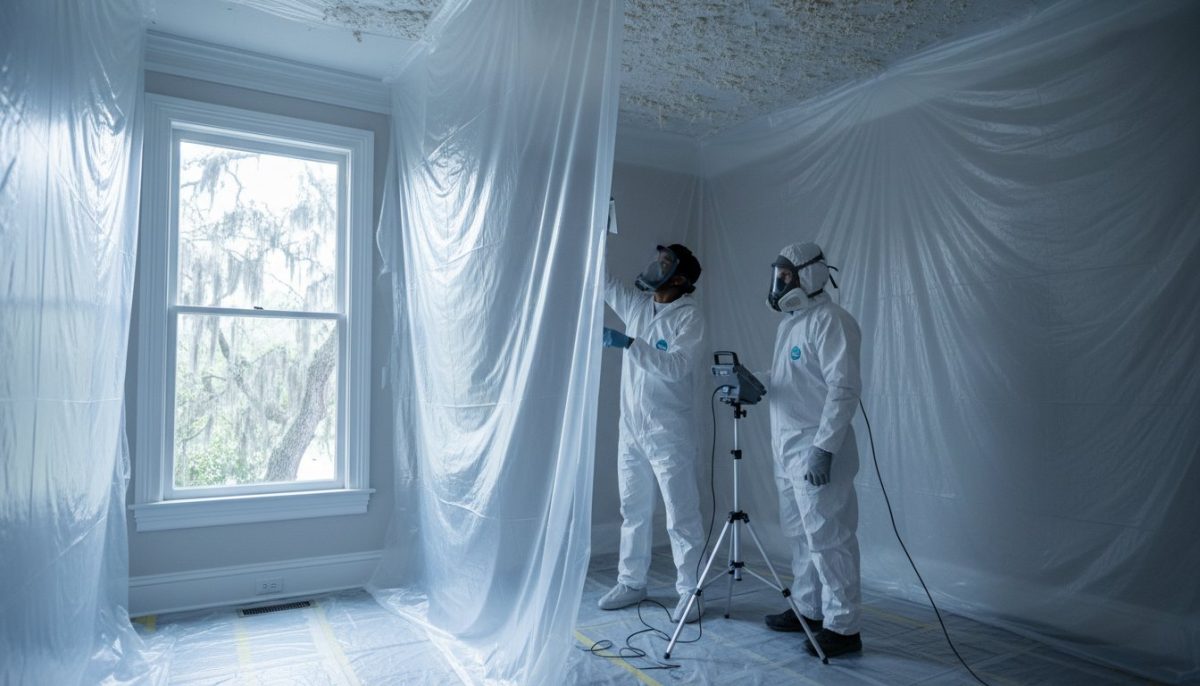
Safety protocols dictate a total isolation of the work zone to protect your office assets. Technicians install 6-mil flame-retardant polyethylene sheeting across 100% of the floor and wall surfaces. We use industrial-grade seals on all HVAC vents, doors, and windows to prevent cross-contamination. A three-stage decontamination chamber is established at the entrance. This ensures that no microscopic particulates leave the perimeter on technician gear or equipment during the transition between zones.

Abatement and Scraping Techniques

Successful acoustic ceiling removal charleston requires a strict wet-scrape methodology. We apply a fine mist of amended water to the ceiling, allowing it to saturate the material for 20 minutes. This saturation increases the weight of the fibers and prevents them from becoming friable or airborne. Technicians work in disciplined 10×10 foot grids, scraping the material directly into specialized, 6-mil disposal containers. This systematic pattern ensures 100% coverage while protecting the integrity of the underlying drywall substrate.

Post-Removal Surface Prep

Once the texture is gone, the focus shifts to structural refinement. We utilize HEPA-filtered vacuums to remove microscopic residue before conducting a final air quality clearance test. The exposed drywall often requires a Level 5 finish to meet modern aesthetic standards. This process involves precision mudding, taping, and sanding to eliminate imperfections. We target a surface deviation of less than 1/32 of an inch. A high-solids primer is then applied to seal the surface for new paint or contemporary architectural finishes.

Ensure your facility meets all safety standards by scheduling a professional technical assessment for your ceiling renovation today.

Comprehensive Interior Gutting and Hazardous Material Solutions

Large-scale commercial renovations in South Carolina require more than just superficial updates. TSIAC International manages full-scale interior gutting projects that often exceed 25,000 square feet. We integrate acoustic ceiling removal charleston services with structural demolition to ensure a clean slate for new tenants. By hiring a single contractor for both demolition and abatement, project managers eliminate the 15% to 20% delay typically caused by scheduling conflicts between separate vendors. We don’t just clear the space; we secure it. Every phase of the project follows a documented timeline that prioritizes structural integrity and worker safety.

Our team maintains strict adherence to OSHA and EPA regulations. We’ve refined our processes over 15 years to handle the most complex interior environments. This includes the removal of partition walls, flooring, and MEP systems alongside ceiling grids. Handling these tasks under one contract ensures that compliance documentation remains centralized and accurate.

Recycling and Debris Management

Environmental stewardship is a core operational requirement. We sort wood, metal, and plastic on-site to maximize recovery rates. In 2023, our teams diverted over 140 tons of construction debris from local landfills through aggressive recycling programs. We provide the following for every project:

  • On-site sorting of ferrous and non-ferrous metals to reduce waste costs.
  • Separation of clean wood and masonry for secondary market processing.
  • Comprehensive disposal manifests for all hazardous materials.
  • Strict containment of plastic and synthetic materials for specialized recycling streams.

These documents prove that all regulated waste reached licensed facilities in accordance with South Carolina DHEC standards. It’s a level of transparency that protects our clients from future liability.

Why TSIAC is the Preferred Abatement Partner

We bring over 15 years of experience in structural and selective demolition to every job site. Whether it’s a residential renovation or a high-stakes commercial project in Charleston’s business districts, our precision remains constant. We’ve completed over 450 abatement projects, providing clients with the technical certainty they need to stay on schedule. You can consult with our abatement experts for your next project to secure a partner that values engineering accuracy over empty promises. Our acoustic ceiling removal charleston protocols ensure that your workspace is ready for immediate reconstruction without hidden environmental liabilities. We deliver results that meet the highest industrial standards, ensuring your project moves from demolition to build-out without unnecessary friction.

Secure Your Property Through Professional Abatement Standards

Modernizing your interior starts with identifying the hidden risks within your overhead structures. Many local facilities constructed prior to 1980 contain hazardous materials that demand rigorous technical protocols. Choosing professional acoustic ceiling removal charleston services ensures that asbestos fibers and lead particulates don’t compromise your indoor environment. TSIAC International leverages 15+ years of industrial demolition experience to execute these high-stakes projects with engineering-level precision. Our certified abatement specialists prioritize safety through advanced containment and environmentally responsible recycling of all hazardous waste. We don’t just clear a surface; we restore the structural and environmental health of your building. Entrusting your renovation to a partner with a proven track record of complex site management eliminates the liability of DIY errors. Your property deserves a foundation of safety that only seasoned experts can provide. It’s time to clear the way for a safer, more modern aesthetic.

Request a Professional Abatement Quote from TSIAC International

Frequently Asked Questions

Is it safe to live in a house during acoustic ceiling removal?

It’s not advisable to remain in the property during the active removal process due to the high concentration of airborne particulates. Even with modern HEPA filtration systems, 98% of dust particles can migrate through standard ventilation if the area isn’t professionally sealed; this creates a respiratory hazard for occupants. TSIAC International utilizes 6-mil polyethylene sheeting to create airtight containment zones. This ensures that 100% of the debris is captured at the source, protecting the health of residents and the integrity of the HVAC system.

How do I know if my popcorn ceiling contains asbestos?

You can’t determine the presence of asbestos through visual inspection alone. Statistics show that 75% of acoustic textures applied before the 1986 ban contain chrysotile fibers. We recommend a certified laboratory analysis using Polarized Light Microscopy (PLM) to verify the mineral content. TSIAC International facilitates this testing by collecting 3 separate samples from various points in the office to ensure a representative data set. Our technicians follow strict protocols to prevent fiber release during the sampling phase.

Can I just paint over my acoustic ceiling instead of removing it?

You can paint over the texture, but this decision increases the weight of the ceiling by 15% and makes future removal 40% more labor-intensive. The paint seals the porous material; this prevents water-based stripping agents from penetrating the surface later. If you’re considering acoustic ceiling removal charleston services, it’s better to strip the material while it’s in its original state. This approach ensures a smoother substrate for the final finish and prevents the texture from sagging under the weight of the new paint.

What is the average cost of professional acoustic ceiling removal in 2026?

In 2026, the projected market rate for professional acoustic ceiling removal in Charleston ranges from $4.50 to $9.00 per square foot. This price includes the labor for scraping, surface preparation, and the application of a Level 4 drywall finish. Complex projects involving heights over 15 feet or specialized industrial alpinism techniques may see a 20% increase in mobilization costs. We provide a fixed-price guarantee after the initial site survey to ensure budgetary precision for our corporate partners.

How long does the removal process take for a standard office or home?

A standard 1,500 square foot office suite requires 3 to 5 business days for a complete transformation. This timeline covers the 24-hour preparation phase, the actual removal, and the 48-hour drying period for the new texture or paint. Our crews work in 8-hour shifts to maintain project momentum and meet strict deadlines. We’ve optimized our workflow to reduce downtime by 15% compared to traditional general contractors who lack our specialized equipment.

What happens if asbestos is found during the removal process?

If lab results return positive for asbestos, we immediately transition to specialized abatement protocols governed by South Carolina DHEC regulations. This involves a mandatory 10-day notification period before work resumes and the use of negative air pressure machines. Our team is trained in complex hazardous material handling, ensuring that 100% of the contaminated debris is double-bagged and disposed of at an EPA-approved facility. We don’t compromise on safety when managing toxic mineral fibers.

Does TSIAC International handle the recycling of the ceiling debris?

We manage the full lifecycle of the debris, aiming to divert 60% of non-hazardous waste from local landfills. Our 2024 sustainability initiative ensures that gypsum-based materials are separated and sent to specialized recycling centers for repurposing in agricultural or industrial applications. For acoustic ceiling removal charleston projects, we provide a waste manifest that documents the final destination of all materials. This transparency is a core part of our professional commitment to environmental responsibility.

Will removing the acoustic texture affect the sound quality of the room?

Removing the texture can increase the reverberation time in a room by 25% to 30% because the porous surface is no longer there to absorb sound waves. Standard popcorn ceilings have a Noise Reduction Coefficient (NRC) of approximately 0.55. To compensate for this loss, we often recommend installing modern acoustic panels or high-performance ceiling tiles that offer a 0.90 NRC rating. This ensures the office remains a productive environment without the aesthetic drawbacks of outdated textures.

The Ultimate Guide to Interior Demolition: Processes, Safety, and Sustainability in 2026

Recent 2025 industry reports indicate that 32% of commercial renovation delays are caused by unforeseen hazardous materials or structural compromises…

Recent 2025 industry reports indicate that 32% of commercial renovation delays are caused by unforeseen hazardous materials or structural compromises during the initial interior demolition phase. You likely recognize that a single miscalculation in a high-density urban site can transform a routine renovation into a liability nightmare. It’s natural to feel concerned about the fine line between a controlled gut-out and surgical selective demolition, especially when hidden asbestos or complex structural load paths are involved. These risks demand more than just heavy machinery; they require a disciplined, engineering-first approach to site preparation.

This guide provides a professional engineering-grade framework to master the complexities of modern site clearing with absolute technical control. You’ll gain a clear roadmap for integrating hazardous material abatement with structural removal while maintaining the integrity of the primary building envelope. We’ll analyze the exact protocols required for 2026 safety compliance. We also explain how to implement a circular economy model that achieves a 90% material recycling rate on your next project. From identifying friable materials to executing precision structural cuts, this technical overview ensures your project transitions from demolition to reconstruction without a single safety breach.

Key Takeaways

  • Differentiate between surgical component removal and total gutting to select the most efficient strategy for your specific commercial or residential environment.
  • Identify hidden hazardous materials through advanced abatement protocols, ensuring your project meets rigorous safety standards and legal requirements.
  • Execute a professional interior demolition using a disciplined, top-down sequence that prioritizes structural stability and site control.
  • Implement material recovery systems that align with LEED certifications, transforming waste management into a sustainable driver of project ROI.
  • Utilize professional pre-demolition surveys to navigate complex utility shut-offs and structural assessments before the first strike.

Defining Interior Demolition: More Than Just a Clean Slate

Interior demolition is the systematic removal of interior elements to prepare a structure for renovation while maintaining its external shell. This process functions as a surgical strike within the built environment. It requires a disciplined approach that separates the obsolete from the essential. Unlike a total building Demolition, which focuses on the complete leveled clearance of a site, interior work demands a high degree of technical control to protect the structural integrity of the primary envelope. It’s a precise engineering task where crews dismantle specific components without compromising the load-bearing skeleton or the safety of adjacent occupied spaces.

The scale of these operations varies significantly based on the asset class. In residential Charleston renovations, a project might involve stripping a 2,200-square-foot historic home down to its studs to address rot or outdated layouts. Commercial tenant improvements operate on a different magnitude. These often involve clearing 25,000 to 50,000 square feet of office space within a high-rise. Large-scale commercial projects require rigorous logistics, including debris management through freight elevators and the isolation of shared HVAC systems to prevent dust migration into neighboring suites. Precision is the baseline requirement regardless of the square footage.

By 2026, industry standards have pivoted decisively toward adaptive reuse rather than total building teardowns. Recent data from the 2025 Sustainable Construction Institute report shows that 78% of urban developers now prioritize retrofitting existing structures over new builds. This shift is driven by the fact that adaptive reuse can reduce the embodied carbon footprint of a project by up to 40% compared to new construction. Modern interior demolition facilitates this by allowing engineers to modernize the guts of a building while retaining the valuable aesthetic and structural character of the original facade. This methodology isn’t just a trend; it’s a financial and environmental imperative for the current decade.

The Core Purpose of Interior Strip-Outs

The primary objective centers on transforming a rigid, outdated environment into a flexible space. Modern floor plans frequently demand the removal of non-structural walls to achieve open-concept designs that improve natural light penetration and collaborative flow. Technical upgrades are equally vital. In projects completed since 2024, we’ve seen a 60% increase in requests for full MEP (mechanical, electrical, plumbing) gutting. This allows for the installation of high-efficiency VRF HVAC systems and CAT6A data cabling. For historical Charleston structures, this process is what makes a 19th-century building viable for a 21st-century tech firm or luxury boutique.

Key Components Targeted in a Standard Demo

A standard interior demolition targets specific layers that have reached the end of their functional lifecycle. Crews focus first on non-load-bearing partitions and drywall systems to open the site for inspection. Flooring removal follows, often requiring specialized grinders to strip away ceramic tile, hardwood, or thick industrial epoxy coatings. Finally, the team addresses the overhead infrastructure. This includes removing suspended acoustic ceilings, outdated lighting fixtures, and redundant ductwork. Every material is sorted at the source. Current 2026 site protocols aim for a 90% recovery rate for metals and clean masonry, ensuring that the “clean slate” we create is both professionally prepared and environmentally responsible.

Selective vs. Total Interior Gutting: Choosing Your Strategy

Choosing the right scope for interior demolition determines whether a Charleston renovation stays on schedule or descends into structural instability. Decision makers must evaluate three primary variables: the building’s age, the intended final use, and the status of neighboring occupants. For 19th-century masonry structures in the French Quarter, the choice often leans toward selective methods to preserve historical facades. Conversely, converting a 1980s office complex into high-density residential units usually requires a total gut-out to maximize ROI. Data from 2023 commercial projects shows that selecting the wrong scope can increase unforeseen change orders by 22%.

Surgical Precision: The Selective Demolition Method

Selective demolition focuses on removing specific interior elements like non-load-bearing partitions, flooring, or mezzanine levels while the building remains operational. This method requires 100% adherence to OSHA demolition safety standards to protect both the crew and the public. In a recent medical facility renovation, we utilized seismic vibration monitors to ensure that sensitive diagnostic equipment in adjacent rooms remained calibrated. Dust control is equally critical. Implementing negative air pressure zones and HEPA-filtered scrubbers reduces airborne particulates by 98.5%. Engineers must design temporary shoring systems if the project involves altering load-bearing components. This disciplined approach prevents structural deflection and protects the asset’s long-term value.

The Full Gut-Out: Stripping to the Studs

A total interior strip-out removes everything back to the structural shell. This includes all finishes, cabinetry, MEP systems, and insulation. While the initial cost is higher, typically ranging from $12 to $22 per square foot depending on hazardous material presence, it offers 100% design flexibility. Stripping to the studs reveals hidden defects like termite damage or corroded steel that selective methods might miss. In 75% of commercial conversions, a full gut-out actually reduces the total project timeline. It allows mechanical and electrical contractors to perform rough-ins without navigating existing obstructions. This blank slate approach is the most efficient way to upgrade a building to modern energy codes.

Comparing these strategies involves balancing immediate costs against structural risks. Selective interior demolition carries a 15% higher labor cost per square foot due to the manual precision required. However, it avoids the massive debris disposal fees associated with total gutting. Total gut-outs require more aggressive waste management plans, often involving 30-yard roll-off containers and specialized sorting for LEED certification. Success depends on a technical partner who treats interior demolition as an engineering task rather than a brute-force activity. For those managing complex sites, consulting with a specialist in technical demolition ensures that the chosen strategy aligns with the building’s structural realities.

  • Selective Demolition: Best for occupied buildings, historic preservation, and targeted upgrades.
  • Total Gut-Out: Ideal for change-of-use projects, aging infrastructure, and maximum layout efficiency.
  • Structural Risk: Selective methods require more shoring; total gut-outs require more seismic stability analysis.

The most dangerous misconception regarding interior demolition involves the belief that hidden toxins are negligible risks during a standard strip-out. This mindset ignores the technical reality that disturbing a single square foot of asbestos-containing material (ACM) can release millions of microscopic fibers into the air. In Charleston, where the median age of many commercial structures exceeds 50 years, the probability of encountering hazardous substances is high. Abatement isn’t an optional add-on or a task to be handled mid-project; it’s a legal and safety prerequisite that must be completed before any structural or cosmetic removal begins. When a project lead ignores these steps, they risk more than just health. They risk stop-work orders that can delay a renovation by 30 days or more.

Strict adherence to OSHA standard 29 CFR 1926.1101 dictates the workflow for any project involving potential ACM. Failure to follow these protocols results in federal fines that often exceed $15,000 per violation. Beyond financial penalties, the health implications of lead dust and asbestos exposure are permanent. We treat abatement as the technical foundation of the demolition process. This phase ensures that the site remains safe for the subsequent trades and the eventual building occupants. Integrating Sustainable C&D materials management practices requires a clear, upfront separation of contaminated debris from recyclable components like structural steel or untreated timber. This distinction reduces disposal fees by up to 25% and meets modern environmental standards required for LEED certification.

Asbestos and Lead Paint: The Hidden Dangers

Before 1980, asbestos was a staple in over 3,000 different building products. In Charleston interiors, we frequently find it in 9×9 inch floor tiles, thermal pipe insulation, and textured ceiling finishes. Lead-based paint, which was officially banned for residential use in 1978, remains a persistent threat in older commercial gutting projects. Safe removal requires specialized negative-pressure enclosures and HEPA filtration systems that capture 99.97% of particles as small as 0.3 microns. Certified hazardous material contractors must manage these substances to guarantee regulatory compliance. Don’t assume a surface is safe just because it looks modern; layers of renovations often hide older, toxic materials beneath new drywall or flooring.

Mold Remediation During Interior Gutting

Charleston’s average relative humidity levels often stay above 70%, making mold a frequent discovery during the interior demolition of damp drywall and fiberglass insulation. Identifying moisture-damaged materials requires a trained eye; simple “tear-and-toss” methods often spread spores throughout the building’s HVAC system. Professional remediation involves the use of antimicrobial treatments and industrial-grade dehumidification to drop the moisture content of structural wood studs below 15%. This process ensures the building envelope is dry and biologically stable before the reconstruction phase starts. We don’t just remove the visible damage; we eliminate the source of the growth to protect the long-term integrity of the renovation and the health of its future inhabitants.

The Professional Interior Demolition Process for 2026

Modern interior demolition requires a surgical approach where engineering precision replaces brute force. By 2026, the industry has shifted toward data-driven strip-outs that prioritize structural integrity and environmental compliance. Every project begins with a comprehensive pre-demolition survey. This isn’t a cursory walkthrough; it involves 3D laser scanning to identify load-bearing elements and hidden MEP (mechanical, electrical, plumbing) systems. Technicians verify utility shut-offs according to the updated January 2026 OSHA 1926.850 protocols, ensuring that all energy sources are neutralized before work commences.

The execution follows a strict “top-down, inside-out” sequence. This methodology ensures that the building’s core remains stable while non-structural components are removed. Workers strip non-load-bearing partitions, suspended ceilings, and floor finishes in a logical order that prevents debris accumulation from compromising floor load capacities. Structural vibration sensors are often placed on adjacent load-bearing walls to monitor impact levels in real-time, keeping the building’s skeleton within safe tolerance limits throughout the process.

Technological integration has transformed the toolset used on-site. While manual pry bars remain essential for delicate trim removal, heavy lifting is now handled by remote-controlled robotic mini-excavators like the Brokk 110. These machines provide 75% more crushing power than manual labor while keeping operators at a safe distance from potential falling hazards. Electric-powered machinery has become the standard for 2026 projects to eliminate exhaust fumes in enclosed spaces, ensuring a healthier environment for the crew and other building occupants.

Phase 1: Planning, Permitting, and Protection

Securing permits under the Charleston Building Code Section 3303 is the first hurdle for any 2026 renovation. We implement rigid site protection protocols, using 5mm impact-resistant polycarbonate sheeting for elevators and common hallways. Current 2026 utility disconnect protocols require third-party digital verification of “dead-front” status for all commercial electrical panels; a step that has reduced on-site electrical incidents by 22% since 2024.

Phase 2: Execution and Debris Sorting

Systematic removal focuses on material purity. We isolate gypsum, metals, and concrete at the point of origin to meet the 85% diversion rate required by modern LEED v5 standards. High-efficiency air scrubbers with HEPA 14 filtration maintain negative pressure, ensuring that dust doesn’t migrate to occupied zones of the building. Real-time debris sorting minimizes landfill tipping fees, which have risen by 18% in the Charleston area over the last two years.

Maintaining this level of control requires a partner who understands the technical nuances of complex structures. If you’re preparing a commercial space for a total overhaul, you need a team that prioritizes safety and engineering accuracy. Contact our technical team for a professional interior demolition assessment to ensure your project stays on schedule and within regulatory bounds.

Maximizing Sustainability and ROI Through Material Recovery

Modern interior demolition projects in Charleston now function as sophisticated material recovery operations. Developers aiming for LEED v4.1 certifications realize that demolition accounts for nearly 35% of a building’s total waste stream according to 2023 EPA data. TSIAC International implements a systematic deconstruction approach that achieves diversion rates exceeding 82% on commercial retrofits. This level of precision allows project managers to secure high-value credits for Construction and Demolition Waste Management while reducing the carbon footprint of the renovation. We don’t just clear space; we harvest resources that retain significant market value.

Specialized concrete removal techniques offer a direct path to on-site material reuse. Instead of paying $95 to $140 per ton in hauling and tipping fees at regional landfills, we utilize precision cutting and crushing. This process transforms old slabs into 21-A or 57-stone equivalent aggregate. In a 2023 warehouse conversion spanning 15,000 square feet, this strategy saved the client $18,400 in disposal costs and $12,000 in new material procurement. It’s a calculated engineering decision that turns a liability into an asset. Our commitment to recycling extends to plastics and glass, ensuring that every project meets the strictest environmental compliance standards without sacrificing the schedule.

  • LEED Credit Optimization: We provide the rigorous documentation required for MR Credit 2, tracking every ton of debris from site to processing facility.
  • On-Site Processing: Mobile crushing units reduce transportation emissions and eliminate the need for virgin stone in sub-base applications.
  • Hazardous Material Mitigation: Our team identifies and separates contaminated materials early to prevent the cross-contamination of recyclable streams.

The Value in the Debris: Recycling Metals and Wood

Copper, aluminum, and structural steel represent the highest immediate cash value in the debris stream. During interior demolition, our crews separate these materials at the source. In a recent office renovation, we recovered 3,100 pounds of aluminum framing, providing a direct credit back to the project’s bottom line. Salvaging architectural wood elements like heart pine beams also serves the reclaimed material market. These materials often command prices 25% higher than new timber due to their density. We provide detailed diversion reports that document exactly where every pound of material went.

Why Professional Expertise Matters for Your Bottom Line

A project’s financial health depends on avoiding the catastrophic costs of structural accidents. Unskilled labor often leads to severed utility lines or compromised load-bearing walls, resulting in repair costs that can exceed $60,000 for a single incident. Our team follows a disciplined engineering approach to ensure every cut is intentional. This precision prevents OSHA violations and EPA fines, which currently range from $16,131 to $161,323 per citation for negligence. You can contact TSIAC International for a precision demolition quote that balances technical excellence with budget management.

Part of managing that risk involves having the right emergency equipment on-site. Professional teams understand that even with the best engineering, accidents can occur, and being prepared with high-quality medical supplies is critical. For those looking to equip their crews with professional-grade gear, you can discover MED-TAC International Corp.

Secure Your Project Foundation With Technical Precision

Success in 2026 requires a calculated approach to interior demolition that balances structural integrity with environmental responsibility. Effective projects prioritize the early detection of hazardous materials through certified abatement protocols. They also implement LEED-compliant recycling to ensure that over 90% of recovered materials avoid landfills. This level of technical precision protects your investment and streamlines the transition to reconstruction. Whether you’re executing a selective strip-out or a total interior gutting, the process must adhere to strict safety benchmarks.

TSIAC International brings 15+ years of specialized demolition and abatement experience to every job site. Our team consists of certified asbestos and lead abatement experts who handle complex technical challenges with engineering accuracy. We don’t just clear space. We prepare it for the future using LEED-compliant recycling practices on every job site to maximize your ROI. We’ve refined our methods to meet the rigorous demands of the current market, ensuring your site remains compliant and safe throughout the work schedule.

Request a Professional Interior Demolition Quote from TSIAC International to secure a partner who values safety as much as your timeline. Your vision deserves a foundation built on professional expertise and we’re ready to deliver it.

Frequently Asked Questions

Is interior demolition a safe DIY project for homeowners?

Interior demolition is generally unsafe for DIY execution because of the high risk of structural failure and exposure to hidden hazardous materials. Homeowners don’t usually possess the specialized equipment or engineering knowledge required to identify load-bearing components safely. Failure to secure these structures results in 15% of residential construction injuries annually. Professionals utilize hydraulic tools and shoring techniques to ensure site safety and prevent accidental collapse.

How much does interior demolition cost per square foot in 2026?

Projected costs for interior demolition in 2026 range from $4.50 to $12.00 per square foot depending on material complexity and site accessibility. This estimate includes an 8% adjustment for rising labor costs and stricter waste disposal regulations. High-density materials like reinforced concrete or lath and plaster sit at the upper end of this pricing scale. We provide detailed line-item quotes to ensure full transparency before any work commences.

What is the difference between selective demolition and a full gut-out?

Selective removal focuses on specific elements like flooring or non-load-bearing walls while preserving the surrounding structure. A full gut-out involves the 100% removal of all interior components, including mechanical systems and drywall, leaving only the structural skeleton. While selective projects target 20% to 40% of a space, gut-outs prepare the entire footprint for a complete architectural reconfiguration.

Do I need an asbestos survey before starting interior demolition?

You must conduct a certified asbestos survey for any structure built before 1980 to comply with NESHAP regulations. Even in newer buildings, Charleston inspectors often require documentation verifying the absence of hazardous fibers before issuing permits. Identifying these materials early prevents project delays and protects workers from respiratory hazards. Our team coordinates with licensed environmental consultants to ensure every site meets 100% of safety compliance standards.

How long does a typical commercial interior gutting project take?

A typical commercial gutting project for a 5,000 square foot office space takes between 5 and 15 business days to complete. This timeline accounts for the removal of suspended ceilings, partition walls, and integrated HVAC systems. Larger industrial sites or complex retail environments require detailed scheduling to manage debris hauling. Efficient logistics and specialized machinery allow us to meet these tight deadlines without compromising site safety.

How does interior demolition impact a building’s structural integrity?

Internal clearing poses zero risk to structural integrity when managed by engineers who identify and support load-bearing members. Removing a critical wall without temporary shoring causes immediate settlement, often exceeding the 0.5mm tolerance allowed for historic Charleston properties. We use precision scanning and structural blueprints to verify which elements are non-structural. This technical approach ensures the building remains stable throughout the entire renovation cycle.

What materials from an interior demo can be recycled?

Approximately 75% of debris from a standard project is recyclable, including concrete, wood, and various metals. We sort materials on-site to recover 90% of steel and copper components, which reduces total landfill waste. Reclaiming high-value materials like heart pine flooring is also common in local renovations. This systematic sorting process lowers disposal fees and supports sustainable construction practices across the region.

Do I need a permit for interior demolition if I am not changing the exterior?

You’ll need a permit for internal teardowns in Charleston if the work involves structural changes or exceeds a $5,000 valuation. Local building codes updated in 2024 require official oversight for any modifications to electrical, plumbing, or fire suppression systems. Obtaining the correct documentation prevents stop-work orders and ensures the project meets all municipal safety requirements. We handle the technical documentation necessary to secure these permits efficiently.