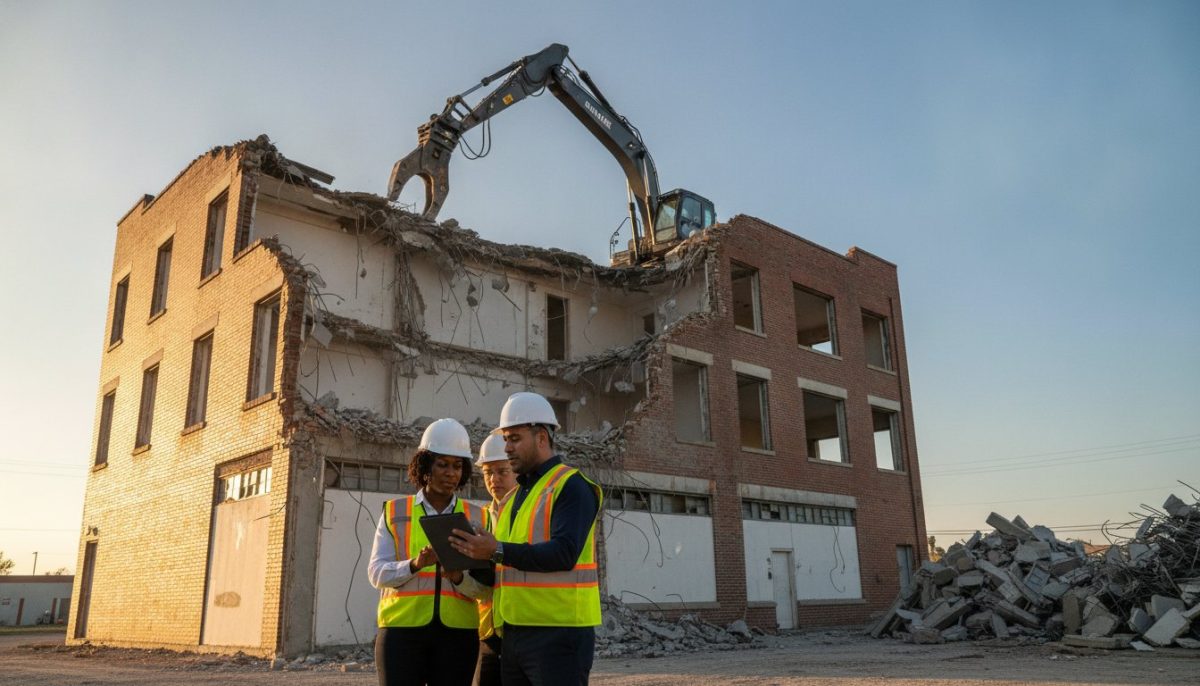
Government Demolition Contracts in South Carolina: 2026 Procurement & Compliance Guide

Did you know that nearly 42% of commercial structures in Charleston built before 1978 contain hazardous materials like asbestos or lead paint? When…

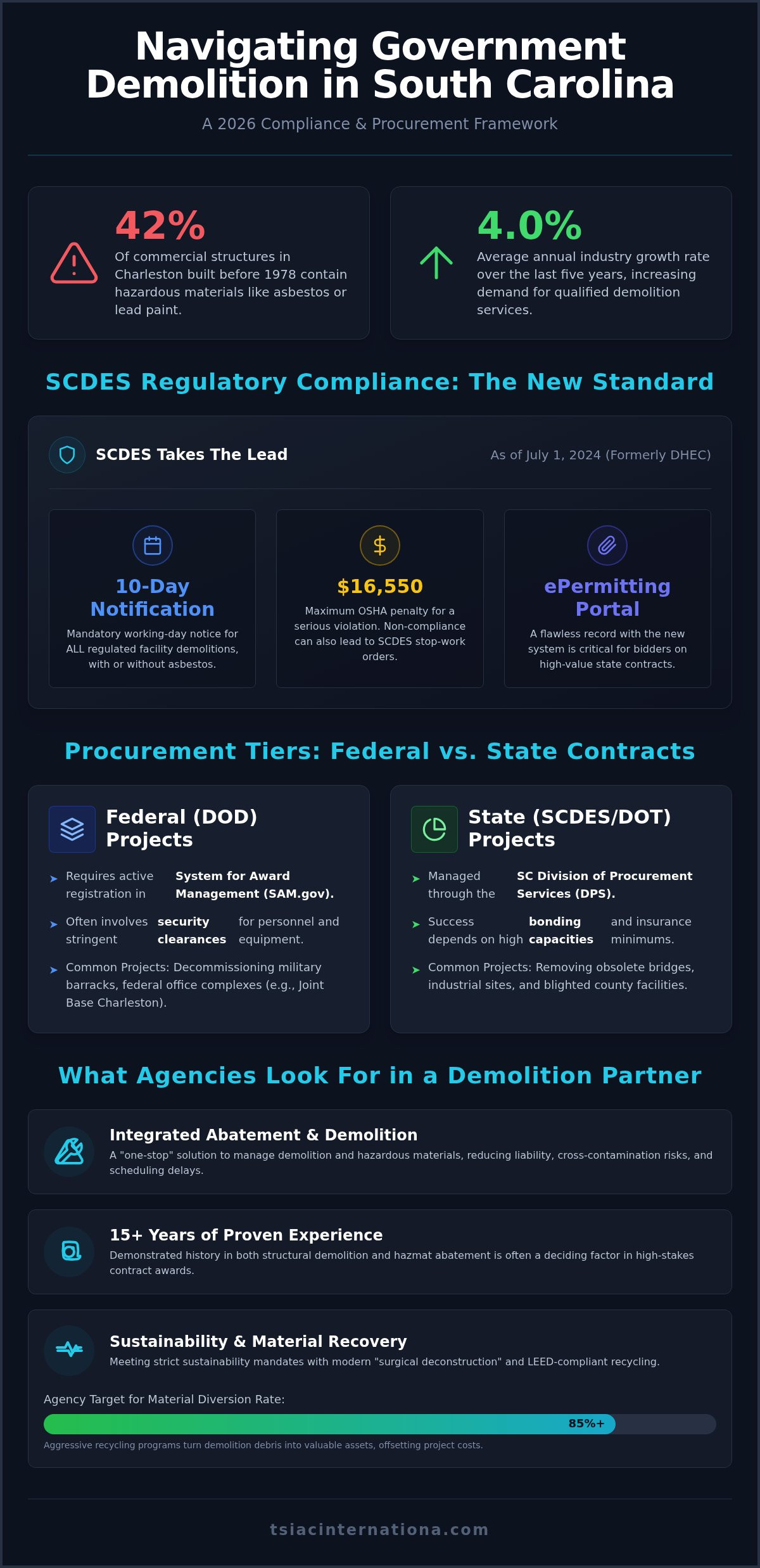
Did you know that nearly 42% of commercial structures in Charleston built before 1978 contain hazardous materials like asbestos or lead paint? When you are managing government demolition contracts south carolina, these legacy environmental risks transform a simple wrecking job into a high-stakes compliance mission. You likely understand that the transition from DHEC to the South Carolina Department of Environmental Services (SCDES) has introduced a new level of technical scrutiny. Managing mandatory 10-day notifications and the $50 per structure fee is just the beginning of a modern procurement strategy.

This guide provides the framework you need to handle these requirements, ensuring your projects remain 100% compliant with state environmental laws while securing high-value state and federal contracts. We will examine the latest 2026 SCDES protocols, the impact of the Underground Facility Damage Prevention Act, and how integrated abatement services reduce operational risk. By mastering these regulatory shifts, you can maximize material recovery and protect your agency from OSHA penalties that now reach $16,550 per violation.

Key Takeaways

  • Understand the mandatory SCDES notification protocols and the transition to the ePermitting portal to ensure 100% regulatory compliance for every structure.
  • Learn why integrating hazardous material abatement with government demolition contracts south carolina is the most efficient strategy for reducing institutional risk and controlling project timelines.
  • Identify the specific procurement differences between federal (DOD), state (SCDES/DOT), and municipal contracts to streamline your 2026 bidding process.
  • Explore how modern “surgical deconstruction” techniques and LEED-compliant recycling can significantly offset disposal costs while meeting strict sustainability mandates.
  • Discover the safety-first benchmarks and technical qualifications required of a demolition partner to protect public infrastructure and safeguard state budgets.

The Landscape of Public Sector Demolition in South Carolina

The public sector demolition market in South Carolina has reached a critical juncture in 2026. With an industry growth rate averaging 4.0% annually over the last five years, the demand for sophisticated wrecking and remediation services has never been higher. Government agencies aren’t just looking for a wrecking ball; they’re seeking disciplined partners who can manage the liability associated with aging infrastructure. Securing government demolition contracts south carolina requires a meticulous understanding of different procurement tiers, as each level of government operates under distinct regulatory and portal requirements.

Public bidding in 2026 is increasingly defined by specialized certifications and set-aside programs. Agencies often prioritize small business designations or minority-owned status to meet socio-economic goals. However, technical merit remains the primary driver. A contractor’s ability to demonstrate 15+ years of experience in both structural demolition and hazardous material abatement is often the deciding factor in high-stakes awards. Decision-makers want to see a safety-first culture that protects the public while ensuring the project stays on schedule and within budget.

Federal vs. State Procurement Standards

Federal projects, particularly those involving Department of Defense (DOD) facilities, require active registration in the System for Award Management (SAM.gov). These contracts often involve stringent security clearances and specific set-asides. In contrast, state-level projects are managed through the South Carolina Division of Procurement Services (DPS). Success here depends on maintaining high bonding capacities and meeting insurance minimums that protect the state’s interests. The transition to the South Carolina Department of Environmental Services (SCDES) means state bidders must now demonstrate a flawless record with the ePermitting system to be considered for high-value awards.

Common Government Structure Types for Removal

Public sector work in South Carolina typically falls into three primary categories:

  • Federal Defense Infrastructure: Decommissioning military barracks and federal office complexes at sites like Joint Base Charleston.
  • Municipal Revitalization: Removing blighted housing and abandoned county facilities to make way for urban redevelopment.
  • Civil Infrastructure: Removing obsolete bridges, concrete structures, and industrial sites that no longer meet modern safety codes.

Modern procurement officers prioritize contractors who offer a “one-stop” solution. Managing a project where one company handles the structural demolition and another handles the asbestos abatement is a logistical and liability nightmare. By selecting a partner with integrated hazardous material capabilities, agencies reduce the risk of cross-contamination and scheduling delays. Additionally, there’s a growing emphasis on managing Demolition waste through aggressive recycling programs. Agencies now look for diversion rates exceeding 85%, turning debris into valuable material recovery that can offset tight project budgets.

Regulatory Compliance and SCDES Notification Requirements

Since July 1, 2024, the South Carolina Department of Environmental Services (SCDES) has assumed all regulatory functions previously managed by DHEC. For professionals managing government demolition contracts south carolina, this transition demands a renewed focus on technical reporting and administrative precision. The cornerstone of state compliance is the mandatory 10-working-day notification rule. This requirement applies to all regulated facility demolitions, regardless of whether asbestos is present. It ensures that state regulators have sufficient time to review project parameters and schedule site inspections if necessary.

The consequences of bypassing these protocols are severe and immediate. In 2026, OSHA serious violation penalties can reach $16,550 per item. Beyond these fines, SCDES has the authority to issue stop-work orders that can paralyze a government project for weeks, leading to massive budget overruns. Procurement officers frequently monitor the South Carolina Business Opportunities (SCBO) portal to identify contractors with a proven track record of regulatory excellence. A single compliance failure can disqualify a firm from future public bidding cycles, making disciplined adherence to the law a prerequisite for long term success.

The SCDES Notification Step-by-Step

Compliance follows a rigid, methodical sequence to ensure public safety. First, a licensed asbestos inspector must conduct a thorough survey. This report must be no older than three years and must identify all Regulated Asbestos-Containing Materials (RACM). Next, the contractor submits the notification through the SCDES ePermitting portal, which has been updated in 2026 to streamline the review process. This submission must include a $50.00 fee per structure. Finally, a strict 10-working-day waiting period is enforced. Mobilizing equipment or disturbing the structure before this window closes is a direct violation of state law.

Handling Emergency Demolitions

There are rare instances where a structure is deemed “imminently dangerous” by a government official. In these scenarios, the standard 10-day window can be bypassed to protect public safety. However, this requires specific written documentation from a building inspector or authorized government representative. Even during an emergency, the handling of hazardous materials cannot be ignored. Contractors must implement immediate containment strategies for unknown toxic substances to prevent environmental contamination. Partnering with a firm that provides integrated abatement and structural demolition ensures that even emergency projects are handled with the necessary technical control and legal protection.

Integrated Abatement: Managing Asbestos and Lead in Public Bids

In the context of government demolition contracts south carolina, hazardous material abatement is never an afterthought. It’s the critical first phase of the project lifecycle. Structural work cannot legally or safely commence until all toxic substances are identified, contained, and removed. Because approximately 42% of commercial structures built before 1978 in areas like Charleston contain hazardous materials, government agencies prioritize bidders who demonstrate a disciplined, integrated approach to remediation. This integration eliminates the coordination gap between abatement teams and demolition crews, reducing the risk of accidental exposure or cross-contamination.

TSIAC International utilizes a methodical containment strategy that prioritizes the stabilization of the work environment. Regulatory documentation is a vital component of this process. We maintain a rigorous chain of custody for all hazardous waste, tracking it from the point of generation to its final disposal at a licensed facility. This documentation isn’t just a best practice; it’s a legal safeguard for government stakeholders. It provides the verifiable proof of compliance required to close out state and federal permits and protects the agency from long-term environmental liability.

Asbestos Abatement Protocols

Managing Regulated Asbestos-Containing Materials (RACM) requires absolute technical control. Our teams establish negative pressure environments using high-efficiency particulate air (HEPA) filtration to ensure no fibers escape the containment zone. We utilize wet-method removal techniques, which involve saturating materials with amended water to suppress dust at the source. Once the removal is complete, we conduct final air clearance testing. This independent verification is the prerequisite for structural demolition, providing the objective data needed to declare the site safe for the next phase of wrecking.

Lead Paint and Mold Remediation

Historic public buildings across South Carolina often present the dual challenge of lead-based coatings and mold growth. Lead abatement involves specialized stripping and disposal methods that prevent toxic flakes from entering the soil or groundwater. Similarly, addressing mold in abandoned or water-damaged government property requires surgical precision to prevent spore dispersal. We focus on ensuring site safety not just for our own crews, but for the follow-up trades and future development teams. By delivering a clean, decontaminated site, we provide a foundation for the safe and efficient execution of government demolition contracts south carolina.
Government Demolition Contracts in South Carolina: 2026 Procurement & Compliance Guide

Sustainability and Material Recovery in Government Projects

In 2026, the methodology for executing government demolition contracts south carolina has evolved from traditional mass wrecking to “surgical deconstruction.” This shift is driven by both environmental ethics and fiscal necessity. As landfill tipping fees in counties like York and Horry reach $46 per ton, the financial burden of waste disposal can consume a significant portion of a project’s budget. By prioritizing material recovery, agencies can divert over 85% of debris from landfills, aligning with state “Green” mandates and federal sustainability goals. This disciplined approach ensures that valuable resources are harvested rather than discarded.

Meeting LEED requirements for debris diversion is now a standard expectation in new public construction bids. Successful contractors must implement rigorous on-site sorting protocols for wood, metal, and plastic. This isn’t merely about environmental stewardship; it’s about technical precision. Each material stream requires specific handling to maintain its secondary market value. For instance, clean wood can be processed for mulch or biomass, while high-density plastics are baled for industrial reuse. These actions contribute to a circular economy that benefits South Carolina’s local infrastructure and taxpayer interests.

Concrete and Metal Recovery

Structural steel and metal framing represent high-value assets in any government facility. We employ strategic removal techniques to preserve the metallurgical integrity of these components, ensuring they are eligible for premium recycling rates. On-site concrete crushing has also become a logistical staple. By processing clean concrete into various grades of aggregate, we create a reusable product for road base or site fill. This eliminates the carbon footprint associated with hauling heavy debris and reduces the need for virgin quarry materials in future development phases.

Documenting Environmental Impact

Transparency is a requirement for modern public sector project managers. We provide comprehensive waste diversion reports that detail the exact weights and destinations of all recovered materials. These audits are essential for agencies seeking federal tax credits or specific environmental certifications. Understanding the demolition process in South Carolina reveals that data-driven reporting is just as important as the physical removal of structures. It proves that the contractor has met every LEED benchmark and complied with all SCDES waste management protocols.

Managing a project with high diversion targets requires a partner with specialized equipment and a methodical workflow. If your agency needs to meet aggressive sustainability goals while controlling disposal costs, explore our comprehensive recycling services to ensure your next project is both compliant and cost-effective.

Partnering with TSIAC International for State and Federal Contracts

Choosing a contractor for government demolition contracts south carolina requires a partner that prioritizes technical precision over raw force. TSIAC International brings over 15 years of disciplined experience to the public sector, having successfully navigated the complex transition from DHEC to the current SCDES regulatory framework. We understand that for government stakeholders, the primary objective is risk mitigation. By maintaining a single point of accountability for structural demolition, asbestos abatement, and lead remediation, we eliminate the coordination gaps that often lead to project delays and environmental non-compliance.

Our operational philosophy is built on a safety-first culture that exceeds standard OSHA requirements. In an environment where serious violations can result in five-figure penalties, our methodical approach protects both the site workers and the agency’s reputation. We operate with a national reach, yet our deep roots in South Carolina ensure we possess localized expertise in state-specific standards, such as the 2026 Underground Facility Damage Prevention Act. This dual perspective allows us to execute large-scale federal projects while maintaining the agility needed for municipal infrastructure removal.

Selective Demolition for Renovations

Not every public project requires a total structural knockdown. For historic preservation or phased facility upgrades, we provide selective demolition services characterized by surgical precision. We specialize in the removal of specific building components while maintaining the structural integrity of the remaining shell. This process is essential for clearing interior floors or specific wings in active government complexes. To understand how we manage these high-precision projects, consult our guide on Commercial Interior Gutting Services, which details our strategic approach to interior deconstruction.

Securing a Bid for Your Next Project

Integrating TSIAC International into your RFP or RFQ process ensures your project benefits from professional site preparation and advanced debris management. We provide the comprehensive documentation required for federal SAM.gov compliance and state DPS portals, including detailed waste diversion reports and hazardous material manifests. Our team is prepared to assist procurement officers in defining the technical parameters of a project to ensure all environmental and safety benchmarks are met from day one. Partnering with us means securing a safer, cleaner infrastructure for the citizens of South Carolina through a process defined by reliability and professional pride.

Securing Your Agency’s Infrastructure Future

The 2026 landscape for public works requires more than just heavy machinery; it demands a disciplined adherence to SCDES ePermitting protocols and a commitment to material recovery. Successfully managing government demolition contracts south carolina depends on the early identification of hazardous materials and the implementation of 100% compliant abatement strategies. By prioritizing integrated services, agencies can avoid the logistical friction of multi-contractor sites and ensure that every structural removal meets the highest environmental benchmarks. This methodological precision is what separates successful procurement from costly regulatory delays.

TSIAC International offers 15+ years of industry experience and specialized asbestos and lead certifications. Our commitment to comprehensive environmental reporting ensures that your agency remains protected from long-term liability while meeting aggressive debris diversion targets. We provide the technical control necessary for even the most complex state and federal assignments, from surgical interior gutting to total structural demolition. We don’t just clear land; we provide the foundation for safe redevelopment.

Request a Professional Bid for Your Government Project to begin a partnership built on technical excellence and unwavering safety. Together, we can transform obsolete structures into clean, shovel-ready sites for South Carolina’s future growth.

Frequently Asked Questions

How do I find open government demolition contracts in South Carolina?

State and municipal opportunities are primarily listed on the South Carolina Business Opportunities (SCBO) portal. For projects involving federal facilities or military bases within the state, you must monitor the System for Award Management (SAM.gov). These platforms provide the necessary solicitation documents and technical specifications for every public wrecking project. It’s essential to maintain active registrations on both portals to ensure you don’t miss high-value bidding windows.

What is the 10-day SCDES notification rule for demolition?

State law requires a mandatory 10-working-day notification period before any demolition or renovation activities begin on a regulated facility. This window allows the South Carolina Department of Environmental Services (SCDES) to review your asbestos survey and schedule site inspections if necessary. You must submit this notification through the ePermitting portal and pay the required $50.00 fee per structure. Mobilizing equipment before this period expires is a direct regulatory violation.

Is an asbestos survey required for every government building demolition?

Yes, an asbestos survey report is a mandatory requirement for all regulated facility demolitions in South Carolina. This report must be conducted by a licensed inspector and cannot be more than three years old at the time of the application. Even if you believe a structure is free of hazardous materials, the survey provides the legal verification required by SCDES. This document must accompany your notification to ensure the safety of the public and environmental compliance.

Can a demolition contractor also handle hazardous material abatement?

Many agencies prefer a single partner for government demolition contracts south carolina because it streamlines the project timeline. An integrated contractor manages both the hazardous material abatement and the subsequent structural removal under one safety plan. This approach eliminates the risk of cross-contamination between different crews and reduces administrative overhead. It also ensures that the chain of custody for hazardous waste is managed with consistent technical precision from start to finish.

What are the insurance requirements for public demolition projects in SC?

Public projects typically require comprehensive insurance coverage that includes general liability, workers’ compensation, and specialized pollution liability. Because demolition involves significant environmental and physical risks, agencies often set high coverage limits to protect state assets. You must also demonstrate sufficient bonding capacity to cover the total project value. These financial safeguards are non-negotiable and must be verified before any contract is officially awarded or work begins on-site.

How does recycling debris affect the total cost of a government contract?

Aggressive recycling programs can significantly reduce project costs by avoiding high landfill tipping fees, which reached $46 per ton in some South Carolina counties in 2026. By recovering structural steel, concrete, and timber, contractors can create material offsets that lower the total bid price. This practice also supports state and federal “Green” mandates, making your bid more competitive. Modern projects often target diversion rates exceeding 85% to maximize these financial and environmental benefits.

What is the difference between structural and selective demolition in public bids?

Structural demolition involves the total removal of a building down to its foundation, often including the slab. Selective demolition is a surgical process where only specific building components or interior sections are removed to prepare for a renovation. Selective work is common in historic preservation projects where the exterior shell must remain intact. Both methods require distinct technical approaches and specialized equipment to ensure the safety of the remaining structure and surrounding environment.
Choosing a Structural Demolition Company: The 2026 Procurement Guide

The difference between a cleared site and a million-dollar liability often rests on a single structural calculation. In 2024, industry data indicated…

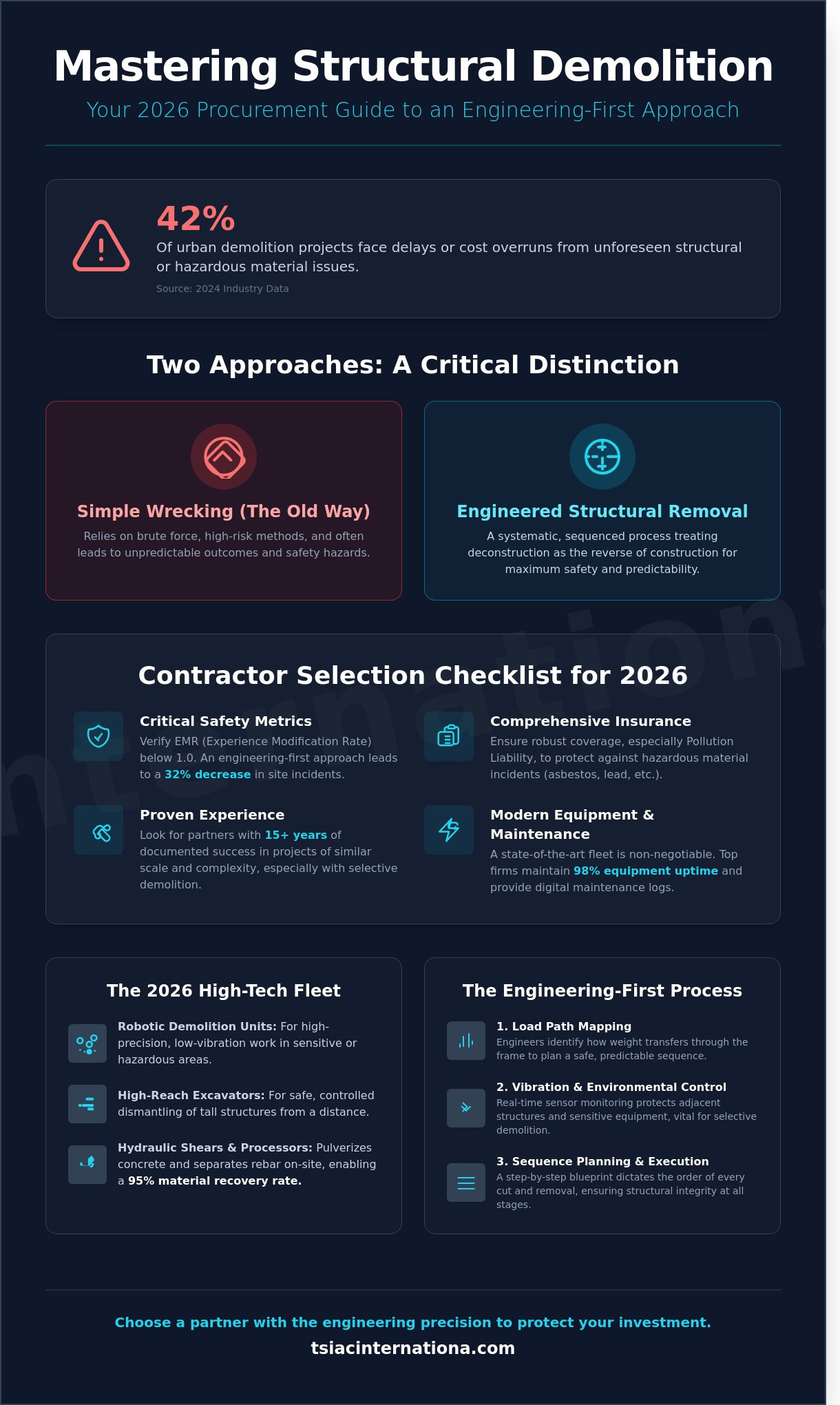
The difference between a cleared site and a million-dollar liability often rests on a single structural calculation. In 2024, industry data indicated that 42% of urban demolition projects experienced delays or cost overruns due to unforeseen hazardous materials or structural instability in adjacent foundations. You understand that hiring a structural demolition company is a decision that impacts your project’s bottom line and your organization’s legal standing under OSHA and EPA regulations. A single oversight in the dismantling of a load-bearing element can jeopardize months of planning and millions in capital investment.

This 2026 procurement guide is designed to help you master the complexities of large-scale dismantling with an engineering-first approach. You’ll learn how to evaluate technical expertise, manage abatement protocols, and ensure your site is handed over with 100% regulatory compliance. We will break down the essential contractor selection criteria, the latest safety technologies for 2026, and the specific documentation required to move from demolition to new construction without a single day of lost time.

Key Takeaways

  • Distinguish between simple wrecking and engineered structural removal to ensure the systematic safety of load-bearing building elements.
  • Discover the specialized 2026 equipment fleet, including robotic units and high-reach excavators, necessary for high-precision technical removal.
  • Understand why a top-tier structural demolition company must integrate hazardous material abatement to mitigate the high cost of discovery delays.
  • Identify the critical safety metrics and insurance coverages, such as EMR and pollution liability, that separate professional contractors from the rest.
  • Explore how a partner with over 15 years of experience can optimize your project through high recycling rates and specialized site solutions.

What is Structural Demolition and Why Does it Require Engineering Precision?

Structural demolition is the systematic and sequenced removal of load-bearing elements within a building or industrial facility. It’s a far cry from the “wrecking” methods of the past. In 2026, the industry has shifted toward engineered structural removal, which treats the deconstruction process as the literal reverse of the construction phase. To understand What is Structural Demolition in a professional context, one must view it through the lens of physics and structural mechanics. A specialized structural demolition company no longer relies on brute force; instead, they utilize high-precision tools and calculated sequences to dismantle complex assets.

The role of structural engineers is paramount in modern procurement. Before a single piece of concrete is crushed, engineers conduct comprehensive pre-demolition surveys and stability analyses. These assessments identify the primary load paths and potential points of failure. Data from the 2025 Global Construction Safety Initiative shows that projects utilizing a documented engineering-first methodology saw a 32% decrease in site incidents compared to those using traditional demolition tactics. For high-stakes projects, such as dismantling a 15-story office block or a heavy industrial plant, this precision isn’t optional. It’s the only way to protect surrounding infrastructure and human life.

The Mechanics of Controlled Structural Collapse

Engineers must calculate how load paths are altered every time a support beam or load-bearing wall is removed. This involves “pre-weakening” structures, a delicate process where specific members are notched or cut to ensure they fail in a predictable direction. It’s a high-wire act that requires constant monitoring to ensure worker safety isn’t compromised during the transition. Structural integrity in a controlled collapse is the state where a building remains stable and predictable throughout every phase of its planned failure.

Total vs. Selective Structural Demolition

Choosing between total and selective removal depends on the 2026 redevelopment goals for the site. Total removal is the standard for complete site clearing, but selective demolition is where a structural demolition company truly proves its worth. This involves removing specific wings or internal frameworks while preserving the main structure for adaptive reuse. The technical challenges are significant. Maintaining utility continuity in adjacent active structures requires a surgical touch. For example, during a 2024 renovation of a data center, contractors had to remove a 40-ton cooling tower platform while the servers below remained 100% operational, requiring real-time vibration monitoring at 2-millisecond intervals.

  • Load Path Mapping: Identifying how weight transfers through the frame.
  • Vibration Control: Using sensors to protect sensitive equipment in adjacent buildings.
  • Sequence Planning: A step-by-step blueprint that dictates the order of every cut.

A fegyelmezett, mérnöki szemléletmód ensures that even the most “impossible” locations are handled with unwavering reliability. This technical rigor defines the difference between a simple contractor and a true structural partner.

Technical Requirements: Heavy Machinery and Specialized Equipment

The 2026 equipment fleet represents a shift from brute force toward surgical precision. A professional structural demolition company no longer relies solely on gravity and impact; instead, it utilizes a sophisticated array of high-reach excavators and remote-controlled robotic units. This technological evolution is driven by the need for 100% vibration control and noise mitigation in dense urban environments. Modern fleets now feature hydraulic shears and concrete processors that pulverize reinforced concrete while simultaneously separating rebar, achieving a 95% material recovery rate on-site.

Reliability in this sector is directly proportional to a firm’s maintenance protocols. When evaluating a structural demolition company, request digital maintenance logs for their primary assets. Top-tier providers maintain a 98% equipment uptime rate by adhering to strict manufacturer service intervals. Furthermore, the 2026 industry standard has moved toward sustainability. Approximately 40% of new machinery acquisitions in the sector are now electric or low-emission hybrid models, which are essential for projects requiring LEED certification or compliance with municipal “green zone” regulations.

Choosing a partner with the right technical assets ensures that complex structural removals don’t compromise the integrity of adjacent properties. You can consult with our technical team to review equipment specifications for your upcoming project.

High-Reach Excavators for Tall Structures

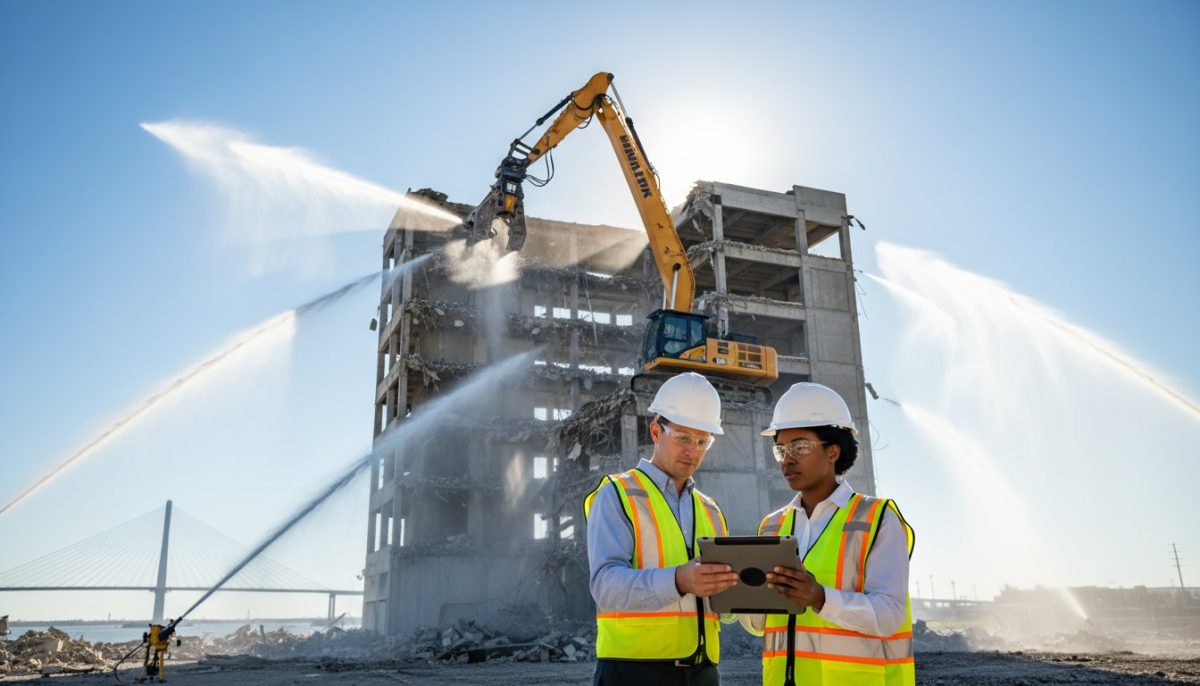
Dismantling structures exceeding 10 stories requires ultra-high-reach (UHR) excavators equipped with telescopic booms. These machines allow for the systematic deconstruction of a building from the top down while the operator remains at a safe distance on the ground. This methodology is a core requirement under OSHA demolition safety standards, as it eliminates the need for workers to be stationed on unstable upper floors. Precision attachments on these machines minimize falling debris and reduce site dust by 75% through integrated high-pressure misting systems.

Robotic and Specialized Interior Equipment

Hazardous or structurally compromised interior zones demand the use of remote-controlled demolition robots. These units, such as the Brokk series, provide the power of a small excavator with a footprint that fits through a standard doorway. Engineering teams must calculate floor-loading capacities carefully; these robots are specifically designed to operate within the 500 kg/m2 limits common in commercial office structures. Deploying this specialized technology significantly accelerates the commercial interior gutting services timeline, often reducing the labor schedule by 30% compared to manual methods. This approach ensures that the primary structural elements remain untouched while secondary partitions are removed with surgical accuracy.

Choosing a Structural Demolition Company: The 2026 Procurement Guide

Integrated Abatement: Managing Asbestos, Lead, and Hazardous Materials

Selecting a structural demolition company that offers integrated abatement isn’t just a convenience; it’s a critical risk-management strategy for 2026. When remediation is siloed from the main demolition scope, projects often suffer from “discovery delays.” These interruptions occur when unidentified hazardous materials are found mid-operation, typically forcing a 15 to 20 day work stoppage while a separate contractor is vetted and mobilized. By choosing a partner that manages these risks internally, property owners eliminate the friction between separate vendors and ensure the schedule remains intact.

Compliance hinges on a rigorous documentation trail that satisfies both OSHA and EPA mandates. This process begins with a comprehensive pre-demolition survey and concludes with final clearance testing. Every phase must adhere to federal hazardous materials regulations to avoid six-figure fines or long-term legal liabilities. A professional structural demolition company maintains a dedicated compliance officer to oversee these filings, ensuring that every gram of lead or asbestos is tracked from the site to a licensed disposal facility through signed waste manifests.

The documentation requirements for a standard industrial project include:

  • Pre-Demolition Survey: A detailed map of all regulated materials.
  • Abatement Plan: Engineering controls and containment strategies.
  • Air Monitoring Logs: Daily records of air quality during removal.
  • Disposal Manifests: Proof of legal deposit at a certified landfill.

Asbestos Abatement in Structural Removal

Structural components often contain both friable materials, like pipe insulation that crumbles under slight pressure, and non-friable materials, such as floor tiles or roofing mastics. During large-scale demolition, preventing fiber release requires advanced containment strategies, including negative air pressure zones and HEPA filtration systems. For a deeper look at regional compliance, consult the asbestos removal in South Carolina guide, which outlines the rigorous standards required for safe removal in the Southeast. Precision here is non-negotiable; even a minor breach in containment can contaminate an entire city block.

Lead Paint and Mold Remediation

Industrial structures built before 1978 frequently feature lead-coated steel. Dismantling these frames requires specialized torch-cutting techniques to prevent lead vapor inhalation. Similarly, buildings with a history of water intrusion or long-term vacancy require immediate mold remediation to protect worker health and surrounding air quality. Proper hazardous material abatement is a prerequisite for successful property redevelopment. It ensures the site is truly “clean” for the next phase of construction, protecting the developer’s reputation and the safety of future occupants.

How to Evaluate a Structural Demolition Company: A Selection Checklist

Selecting a structural demolition company requires a data-driven approach to mitigate long-term liability. Procurement officers in 2026 prioritize the Experience Modification Rate (EMR) because it tracks safety performance over a three-year rolling period. This metric isn’t just a number; it’s a reflection of a firm’s operational discipline. Beyond safety, you must verify the financial depth of a contractor through their bonding capacity. For projects exceeding $2 million, a firm’s ability to secure performance and payment bonds proves they possess the liquidity and track record required by treasury-listed sureties.

Comprehensive insurance coverage acts as the final barrier between a project’s success and a legal catastrophe. You should demand pollution liability to cover potential hazardous material releases, along with professional liability for engineering oversights in the demolition plan. We recommend an umbrella policy of at least $10 million for complex structural projects. Ensure all policies come from carriers with an A.M. Best rating of A- or higher to guarantee financial stability if a claim arises. A partner’s environmental commitment also impacts your bottom line, as high recovery rates for steel and copper can offset total project costs.

Safety Records and Compliance History

Review the contractor’s OSHA 300A logs from the previous five years to identify trends in recordable incidents or recurring violations. A reputable structural demolition company provides a Site-Specific Safety Plan (SSSP) that details crane lift paths, utility disconnects, and fall protection protocols for every unique structure. An EMR score is a numerical calculation that compares a company’s annual worker’s compensation claims to other businesses of similar size in the same industry, serving as a primary filter for contractor pre-qualification. If a firm’s EMR exceeds 1.0, they’re statistically riskier than their peers and may be ineligible for federal contracts.

Debris Management and Recycling Practices

Modern demolition focuses on resource recovery rather than simple destruction. Top-tier firms currently achieve 94% waste diversion by sorting wood, rebar, and non-ferrous metals on-site. Utilizing mobile impact crushers to process concrete into Grade 3 aggregate for on-site backfill reduces truck traffic by 35% and significantly lowers material procurement costs. Understanding the demolition process from a waste-diversion perspective ensures your project meets 2026 LEED standards and local environmental mandates. This technical approach transforms waste into a reusable asset, reflecting a fegyelmezett, engineering-led methodology.

Ready to discuss the technical requirements of your next project? Contact our engineering team for a comprehensive consultation.

Partnering with TSIAC International for Safe, Efficient Project Completion

Selecting a structural demolition company requires more than a cursory review of equipment lists; it demands a partner with proven technical depth and a history of precision. TSIAC International brings over 15 years of experience to complex structural removal projects across the industrial and commercial sectors. We’ve refined a comprehensive service model that spans from surgical interior gutting to the total removal of high-rise facilities. Our team understands that demolition is the first step of a larger lifecycle, and our role is to clear the path for future development without delay or incident.

Financial predictability is a cornerstone of our operational philosophy. To provide clients with 2026 budgetary certainty, we offer fixed-price contract options that mitigate the risks of mid-project cost fluctuations. This transparency extends to our environmental impact. We consistently achieve recycling rates exceeding 92% for concrete, rebar, and structural steel, ensuring that project waste is diverted from landfills and repurposed within the circular economy. Our commitment to these metrics provides our partners with documented proof of their sustainability goals.

The TSIAC Engineering-First Philosophy

We approach every site with an engineering-first mindset, prioritizing structural stability through every phase of the teardown. Before heavy machinery arrives, our engineers conduct exhaustive load-bearing analyses to prevent uncontrolled collapses. Our teams manage the gold standard in demolition by integrating technical expertise with advanced safety protocols. In a 2024 project involving a compromised urban industrial site, we utilized sequential bracing and high-reach shears to complete a total removal within a strict 45-day window. This technical precision allowed the client to maintain their redevelopment schedule despite the site’s initial instability.

Next Steps: Requesting a Comprehensive Site Analysis

Initiating a partnership with a structural demolition company starts with a detailed Request for Proposal (RFP). To ensure an accurate quote, your RFP should include the following data points:

  • Current structural blueprints and previous renovation records.
  • Phase I and Phase II environmental site assessments.
  • Specific site access restrictions or noise ordinances for the 2026 calendar year.
  • Utility disconnect certifications and hazardous material surveys.

Our project management team provides preliminary structural assessments and site surveys within 72 hours of receiving your inquiry. We offer national consultations to address complex logistical challenges, ensuring that your project begins with a clear, data-driven strategy. Contact our headquarters today to schedule a site visit and secure your project’s place on our 2026 execution calendar.

Securing Your Project’s Future with 2026 Procurement Standards

Selecting a structural demolition company requires a shift from simple site clearing to complex engineering management. Modern industrial projects demand 100% adherence to safety protocols and the seamless integration of specialized abatement for materials like asbestos and lead. Success in 2026 depends on high-tier technical machinery and a firm’s ability to navigate hazardous environments without compromising the integrity of surrounding infrastructure.

TSIAC International brings over 15 years of industry experience to every site; ensuring that every structural challenge meets rigorous engineering standards. Our team implements comprehensive environmental recycling practices to divert maximum waste from landfills while maintaining specialized hazardous material containment expertise. We don’t just clear land; we provide the technical precision needed for the most difficult locations and specialized solutions that other firms avoid. Your project’s safety and efficiency depend on this level of professional oversight.

Request a Professional Structural Demolition Consultation from TSIAC International

Your next development starts with a safe and calculated demolition strategy that protects your investment and the environment.

Frequently Asked Questions

What is the difference between structural demolition and selective demolition?

Structural demolition removes the entire load-bearing framework of a building, whereas selective demolition targets specific interior or exterior elements while preserving the main shell. Structural projects require heavy machinery and precise engineering calculations to manage load distribution safely during the teardown. Selective demolition occurs in 75% of renovation projects to update utilities or aesthetics without compromising the foundation or structural integrity of the property.

How much does structural demolition typically cost in 2026?

Commercial structural demolition costs in 2026 average between $8 and $15 per square foot. Total budgets depend on building height, material complexity, and site accessibility. A 50,000 square foot steel-framed facility typically requires a procurement investment of $400,000 to $750,000. These 2026 price points include labor, heavy equipment mobilization, and basic debris management. Specialized high-reach equipment may add 12% to the final cost.

Does a structural demolition company handle asbestos and lead removal?

A professional structural demolition company ensures hazardous material abatement is completed before mechanical teardown begins. While some firms handle this in-house, 65% of contractors partner with licensed environmental remediation specialists. All removal must comply with the 2025 EPA and OSHA safety protocols for lead and asbestos to prevent site contamination. We recommend verifying that the abatement team has at least 10 years of industrial experience.

What permits are required for a building demolition project?

You must obtain a specific demolition permit from the local building department and a certified utility disconnect seal before work starts. Projects exceeding 10,000 square feet require a dust control plan and a noise mitigation permit. In 2026, most municipalities enforce a 30 day notice period to verify that all gas, water, and electrical lines are capped. Failure to secure these documents can result in fines exceeding $5,000 per day.

How long does the structural demolition process take for a commercial building?

Demolishing a standard five story commercial building takes 4 to 8 weeks from site mobilization to final clearing. The first 14 days focus on interior soft stripping and hazardous material removal. Mechanical demolition follows, typically progressing at a rate of 2,500 square feet per day depending on the reinforcement density of the concrete or steel. Site restoration and foundation removal add another 10 days to the total project timeline.

Is it possible to recycle materials from a demolished building?

You can recover 90% of materials from a demolished building through systematic deconstruction and on-site sorting. Steel beams and copper wiring have the highest salvage value in the 2026 market. Concrete is often crushed into 2 inch aggregate for new road bases or foundation fill. This process reduces total project waste by 15 tons on average for mid-sized structures and supports corporate sustainability goals.

What safety precautions are taken during structural demolition?

Safety protocols include 100% perimeter fencing, vibration monitoring sensors, and strict exclusion zones for all personnel. Every structural demolition company implements a site-specific safety plan that addresses fall protection and structural stability during the teardown. Engineers perform daily inspections to ensure the remaining framework doesn’t collapse unexpectedly. These measures have reduced on-site accidents by 22% in the industrial sector since 2023.

How do I know if a structural demolition company is properly insured?

Verify a company’s status by requesting a Certificate of Insurance (COI) showing at least $5 million in general liability and $2 million in workers’ compensation. Ensure the policy specifically covers “XCU” (Explosion, Collapse, and Underground) hazards. A reputable firm provides these documents within 24 hours of a request to prove they’re covered for high-risk operations. We suggest checking the insurer’s AM Best rating to ensure it’s A- or higher.