Did you know that 24 million housing units across the United States still contain significant lead-based paint hazards according to the latest CDC reports? It’s a sobering reality for property owners who recognize that lead exposure isn’t just a regulatory hurdle but a genuine threat to neurological health. You’re likely concerned about the safety of your family or tenants, and you’ve probably felt overwhelmed by the conflicting information surrounding EPA Lead-Safe Certification versus full structural abatement. We understand that managing a high-stakes renovation requires more than just a quick fix; it demands engineering precision and a transparent approach to hazardous material handling.
In this guide, you’ll learn exactly what to expect from a professional lead paint removal service, from the initial XRF testing to the final clearance report. We’ll demystify the 2010 EPA RRP Rule and explain how to avoid the hidden costs often associated with 40 CFR Part 745 waste disposal requirements. Our technical breakdown ensures you can achieve a lead-free environment without derailing your construction schedule. We’ll examine the specific equipment used in HEPA-filtered vacuum systems and the chemical stripping agents that keep your site compliant and safe.
Key Takeaways
- Understand the critical differences between temporary lead management and permanent abatement to ensure long-term structural safety and regulatory compliance.
- Discover the advanced engineering behind safe containment, including the use of negative air machines and wet-scrape techniques to neutralize toxic airborne dust.
- Evaluate the long-term ROI of full lead extraction versus encapsulation to maximize property value and achieve a certified lead-free status.
- Learn how a professional lead paint removal service executes a rigorous multi-stage process, from initial site assessment to secure hazardous waste disposal.
- Identify why complex structural demolition and hazardous material remediation require a partner capable of managing the most challenging technical environments with engineering precision.
Understanding Lead Paint Removal Service vs. Abatement
A professional lead paint removal service involves the technical extraction of toxic lead-based pigments from structural substrates. It isn’t a simple cosmetic upgrade; it’s a critical environmental remediation process. Prior to the federal ban in 1978, lead was added to paint to increase durability and speed up drying times. In Charleston, where a large percentage of the housing stock predates this regulation, property owners must assume that any building older than 45 years contains hazardous materials until a certified inspection proves otherwise.
Property managers must distinguish between permanent abatement and interim controls. Abatement involves strategies designed to eliminate lead hazards for a minimum of 20 years. This includes specific lead abatement methods like component replacement, enclosure behind specialized barriers, or complete mechanical removal. Interim controls are temporary management techniques. They include specialized cleaning and localized repairs that require periodic re-evaluation to ensure the lead remains contained. Choosing the right path depends on the long-term goals for the structure and the current state of the coatings.
The danger of lead paint is highest when it’s disturbed. Sanding, grinding, or heat-gunning lead surfaces without industrial-grade containment releases microscopic dust into the environment. This dust is easily inhaled or ingested. It’s far more hazardous to perform an amateur removal than to leave intact lead paint alone. Professionals use HEPA-filtered vacuum systems that capture 99.97% of particles as small as 0.3 microns, preventing the cross-contamination of living spaces during a lead paint removal service.
The Legal Landscape: EPA RRP Rule
The EPA Renovation, Repair, and Painting (RRP) Rule, which took full effect on April 22, 2010, dictates how contractors must handle lead-based paint. There’s a sharp legal distinction between an RRP-certified renovator and a licensed abatement professional. RRP certification allows a contractor to perform work that might disturb lead while following lead-safe practices. Abatement professionals are specifically licensed to permanently remove the hazard. Property owners who hire uncertified labor risk federal fines that can exceed $40,000 per day, per violation, depending on the severity of the non-compliance.
Visual Signs of Lead Paint Failure
Identifying failing lead paint requires looking for “alligatoring,” which is a distinct pattern of deep, square-shaped cracking that looks like reptile skin. This occurs because lead-based coatings lose their elasticity over decades. You should also inspect friction zones; these are areas like window tracks and door headers where surfaces rub together. This friction creates fine, toxic dust even if the paint appears to be in good condition. Lead is often buried. A wall might have ten layers of safe latex paint, but the original lead layer from 1965 remains hazardous if the surface is punctured or sanded during a remodel. Utilizing a professional lead paint removal service is the only way to ensure these hidden layers are managed safely.
The Technical Science of Safe Lead Abatement
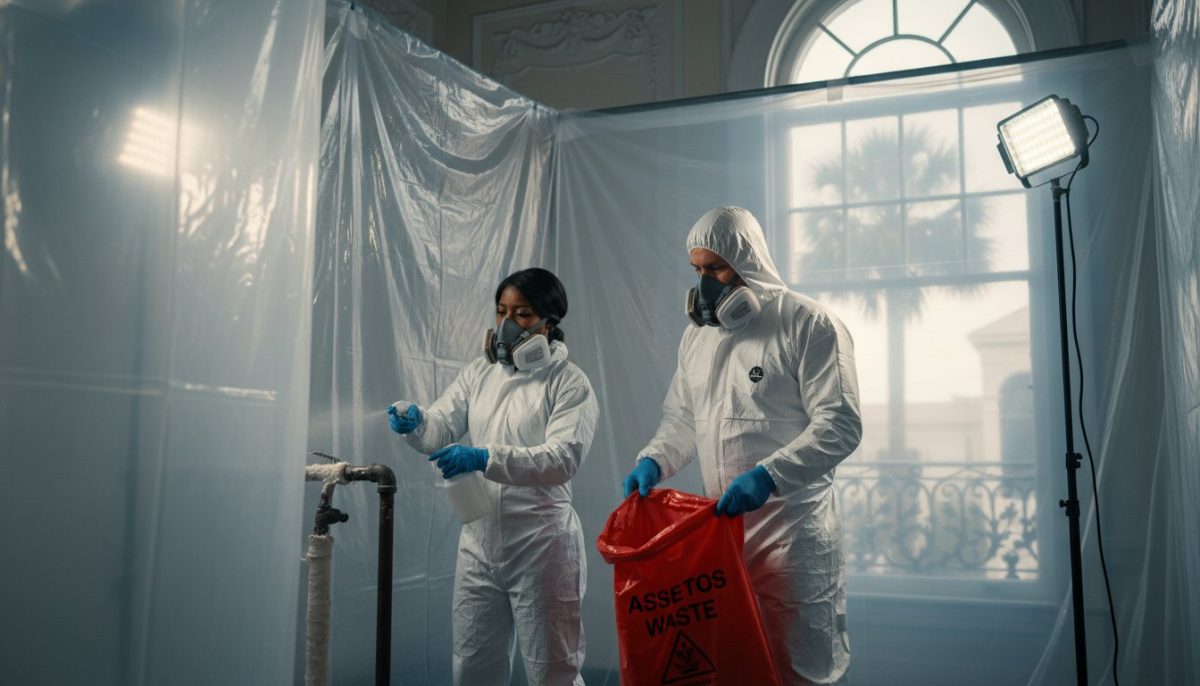
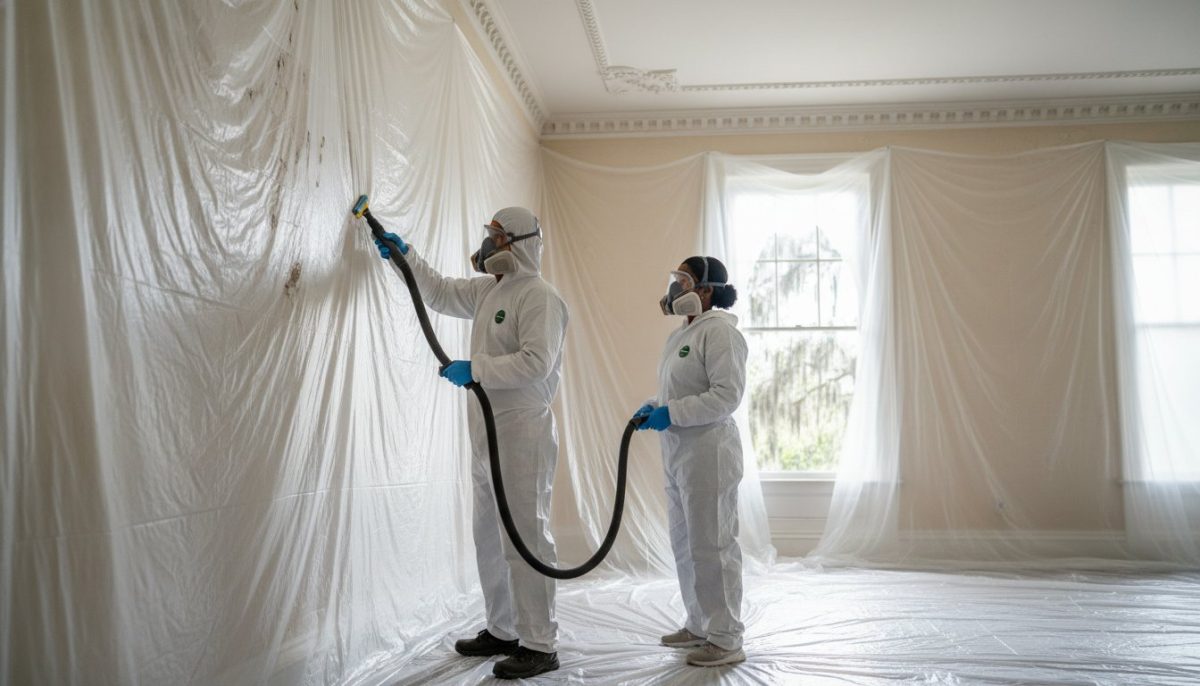
Professional lead abatement requires more than basic construction skills; it demands a rigorous engineering approach to particle physics and airflow management. When a lead paint removal service operates in Charleston, the primary objective is the total immobilization of lead-contaminated dust. This process begins with containment engineering. Technicians install 6-mil polyethylene plastic sheeting to seal all openings, including windows, doors, and HVAC vents. We use reinforced tape to ensure these seals withstand the pressure changes caused by negative air machines. These machines pull air through HEPA filters, creating a vacuum that prevents microscopic particles from escaping the work zone into clean areas of the property.
Methods of removal are selected based on the substrate and the thickness of the paint layers. Wet scraping and wet sanding are the industry standards for minimizing dust. By applying a fine mist of water to the surface before agitation, we increase the mass of the paint chips and dust, causing them to fall directly onto the plastic sheeting rather than becoming airborne. This technical precision is vital because lead dust particles as small as 0.3 microns can remain suspended in the air for days, posing a severe inhalation risk to occupants.
Standard shop-vacuums are strictly prohibited and dangerous for this work. They lack the filtration necessary to trap lead dust and often exhaust fine particles back into the room, effectively turning a localized problem into a building-wide contamination. True HEPA vacuums are required, featuring filters certified to capture 99.97% of all particles sized 0.3 microns or larger. Chemical stripping offers an alternative for intricate historic moldings found in Charleston. We utilize caustic pastes for heavy accumulations, though these require a subsequent neutralizing wash to stabilize the pH of the wood. Solvent-based strippers are reserved for specific finishes, provided the work area maintains high-volume air exchange. Adhering to EPA’s Lead Regulations ensures that every technical choice meets federal safety mandates and protects the long-term value of the structure.
Specialized Equipment for Hazardous Removal
Clearance Testing and Verification
Abatement vs. Encapsulation: Which is Right for You?
Selecting a professional lead paint removal service requires a technical evaluation of the building’s substrate and your long-term financial goals. Encapsulation is a management strategy that uses specialized “lead-lock” coatings. These aren’t standard paints; they are elastomeric polymers designed to bond with lead-based layers and prevent the release of toxic dust. While encapsulation costs roughly 30% to 50% less than full removal, it’s a temporary fix. Property owners must conduct visual inspections every 12 months to ensure the membrane hasn’t cracked or peeled. If the underlying surface is damp or decaying, encapsulation will fail within 2 to 3 years.
Full abatement provides a permanent solution by stripping the lead or replacing the contaminated components entirely. This path offers a superior return on investment. In the Charleston real estate market, properties certified as “lead-free” see a 5% to 8% increase in valuation compared to those merely labeled “lead-safe.” Removing the hazard eliminates the need for recurring inspections and removes the risk of future toxic torts. From a technical standpoint, full removal allows for a thorough assessment of the structural integrity of the wood or steel that lead paint often hides.
The DIY trap is a significant risk for Charleston residents. Retail lead test kits, often priced under $15, have a documented failure rate of up to 60% on certain types of industrial primers. These kits frequently yield false negatives on red or orange lead-based pigments. Relying on a faulty test leads to homeowners dry-sanding surfaces, which aerosolizes lead dust and contaminates the entire HVAC system. Professional teams use X-ray fluorescence (XRF) analyzers that provide 99% accuracy without damaging the historic finish.
Commercial vs. Residential Lead Strategies
Commercial projects often involve heavy-duty lead-coated steel and industrial infrastructure. These sites require strict adherence to OSHA lead exposure standards to protect workers during abrasive blasting or torch cutting. Residential historic preservation focuses on a different set of priorities. We prioritize architectural integrity, using low-temperature heat plates and chemical peel pastes to lift lead layers from 150-year-old moldings. For multi-family housing, federal law mandates specific tenant protections; failing to meet these can result in civil penalties exceeding $16,000 per violation.
Managing the #1 Objection: Cost
The upfront price of a lead paint removal service is often the primary concern for property managers. However, the landscape of liability is shifting. By 2026, new federal grant programs are expected to allocate $340 million for lead hazard reduction in historic districts. These credits can often offset 40% of the total project cost. We also find that a “demolition-first” approach is frequently more cost-effective for major renovations. Instead of stripping paint from old windows or doors, replacing the entire unit with modern, energy-efficient alternatives eliminates the lead hazard and reduces labor hours by 25%. This strategy prevents future medical liabilities and ensures the building meets modern safety codes immediately.
The Lead Abatement Process: From Testing to Disposal
The technical execution of a lead abatement project requires more than just labor; it demands an engineered approach to site safety. We begin every project with a rigorous site assessment to identify every surface containing lead-based pigments. In Charleston’s historic properties, this often involves testing multiple layers of paint applied over the last 150 years. We use XRF (X-ray fluorescence) technology to map lead concentrations without damaging the underlying substrate. This data allows us to create a surgical removal plan that minimizes dust and protects the building’s structural integrity.
Containment is the most critical phase. We seal all HVAC vents, windows, and doors using 6-mil fire-retardant polyethylene sheeting. Our teams establish negative air pressure within the work area, utilizing HEPA-filtered air scrubbers that cycle the air at least six times per hour. This prevents cross-contamination into non-work areas of the structure. Execution involves specialized methods like wet-scraping or HEPA-shrouded power tool cleaning. We never use open-flame burning or high-heat stripping, as temperatures above 1,100 degrees Fahrenheit can vaporize lead and create a severe inhalation hazard.
Once the surfaces are clean, we conduct a final clearance. This isn’t a simple visual check; it’s a scientific verification. We perform dust-wipe sampling on floors, window sills, and troughs. These samples are sent to an accredited laboratory to ensure lead levels are below the 10 micrograms per square foot limit set by the EPA in January 2021. Only after receiving a passing report do we dismantle the containment and allow other trades to re-enter the space. This disciplined approach ensures our lead paint removal service meets the highest safety benchmarks in the industry.
Hazardous Waste and Environmental Responsibility
TSIAC International treats every ounce of debris as a potential environmental liability. We separate lead-contaminated waste from standard demolition materials to reduce the volume sent to specialized landfills. Every barrel is labeled and tracked via a formal manifest system. This chain of custody ensures that 100% of toxic materials reach a licensed hazardous waste facility. We don’t just clear your building; we protect the local Charleston ecosystem by strictly following DHEC regulations for hazardous waste transport.
Coordinating with Other Renovation Phases
Lead abatement is a critical path item that must occur before any interior gut-out or structural modification begins. We coordinate directly with general contractors to schedule selective demolition around our containment zones. This prevents trade overlap and ensures that unprotected workers don’t enter high-risk areas. By finishing the lead paint removal service first, we provide a clean, safe site that allows subsequent trades to work without specialized PPE or the fear of contamination. Our project managers ensure that safety compliance is maintained site-wide during these complex transitions.
Ensure your renovation project stays on schedule and meets all safety regulations by partnering with experts who understand the complexities of hazardous material handling. Contact TSIAC International today for a technical consultation on your abatement needs.
Why TSIAC International is the Standard for Lead Abatement
TSIAC International brings 15 years of technical mastery to the South Carolina Lowcountry. We don’t just scrape surfaces; we execute high-stakes hazardous remediation and structural demolition with engineering-grade precision. Our team manages complex projects across Charleston and the broader region, ensuring every site meets stringent EPA and OSHA standards. We maintain comprehensive licensing and multi-million dollar insurance policies specifically designed for large-scale commercial and government contracts. This level of protection is vital for municipal projects where liability management is just as important as the physical work.
Our dual expertise sets us apart from standard contractors. Most firms specialize in either abatement or demolition, but we’ve integrated both disciplines into a singular, streamlined workflow. Choosing a professional lead paint removal service requires more than a basic license. It demands a partner who understands how hazardous materials interact with structural integrity. When we strip lead-based coatings, we’re already prepared for the structural tear-downs or renovations that follow. This eliminates the communication gaps that often occur between separate vendors, saving our clients an average of 14 days on their project timelines. Our track record includes over 400 successful projects across South Carolina, ranging from historic residential restorations to massive industrial decommissionings.
Our Approach to Complex Site Challenges
Handling lead on “impossible” sites is where our engineering background becomes most apparent. We’ve managed abatement on industrial high-rises and 100-foot-tall water towers where standard access methods fail. The TSIAC guarantee isn’t a marketing slogan; it’s a commitment to engineering-grade precision in every containment system we build. We prioritize sustainability by focusing on material recovery. In a 2023 industrial project in North Charleston, our recycling focus successfully diverted 12 tons of steel from specialized landfills. By separating lead-contaminated layers from clean structural components, we significantly reduce total project waste and disposal fees for our clients.
Get Started with a Professional Assessment
Every project begins with a site-specific lead management plan. We don’t believe in generic estimates. Our team conducts a thorough assessment to identify the exact depth of contamination and the structural integrity of the substrate. This allows us to offer a fixed-price contract, providing you with financial certainty from day one. You won’t find hidden surcharges for disposal or equipment in our agreements. We provide the clarity and technical data needed to move your project forward safely. For comprehensive guidance on managing all types of contaminants during your renovation, our hazardous material abatement South Carolina guide offers essential regulatory insights and cost-saving strategies. It’s time to secure your facility’s safety with a partner who understands the high stakes of hazardous remediation.
Contact TSIAC International for a Professional Lead Abatement Quote
Ensure Total Site Safety with Professional Abatement
Managing hazardous materials isn’t just about compliance; it’s about protecting your assets and the people who occupy them. Effective lead abatement demands more than a superficial coat of paint. It requires a systematic approach that separates permanent removal from temporary fixes. TSIAC International brings over 15 years of industry experience to every project, ensuring that technical science guides every step. We’re fully licensed for both asbestos and lead abatement, which means your site meets all regulatory standards. Our expertise extends into structural and selective demolition, allowing us to handle complex environments where others might hesitate. For property owners managing multiple contaminant types, understanding the broader scope of hazardous material abatement in South Carolina ensures comprehensive compliance and cost control across your entire project. Choosing a professional lead paint removal service ensures that toxic particles are contained and disposed of according to strict safety protocols. You don’t have to navigate these technical challenges alone. Our team provides the engineering precision needed to transform high-risk sites into safe, usable spaces.
Secure Your Site with TSIAC International’s Lead Abatement Services
We’re ready to help you build a safer future for your facility.
Frequently Asked Questions
Is lead paint removal service required by law for my pre-1978 home?
Federal law doesn’t strictly mandate lead paint removal for private homeowners, but the EPA’s 2008 RRP Rule requires a certified lead paint removal service for any renovation disturbing more than 6 square feet of interior paint. South Carolina DHEC Regulation 61-86.1 governs these activities to prevent environmental contamination. If you’re a landlord, you must address lead hazards identified during inspections to comply with the federal Lead Disclosure Rule.
How much does professional lead paint removal cost per square foot?
Professional lead abatement typically costs between $8 and $15 per square foot, depending on the substrate condition and the chosen removal method. A 1,500 square foot Charleston residence might see total project costs ranging from $12,000 to $22,500. These figures include specialized HEPA filtration equipment and the technical labor required to maintain negative air pressure during the stripping process.
Can I stay in my home while lead paint is being removed?
Residents shouldn’t remain in the work zone while active abatement is underway to avoid exposure to lead dust. The EPA recommends vacating the property if the project involves extensive structural components or interior surfaces. We establish 6-mil polyethylene barriers to isolate work areas; this ensures the rest of the structure remains uncontaminated while our technicians execute the removal protocol.
What is the difference between lead-safe and lead-free?
A lead-safe designation means lead paint is present but has been stabilized or encapsulated to prevent dust migration. Lead-free status requires the total physical removal of all lead-based materials, verified by an XRF analyzer reading below 1.0 mg/cm². Achieving lead-free status involves more intensive mechanical or chemical stripping but provides a permanent solution that eliminates future disclosure requirements under federal law.
How do I know if the contractor I hire is EPA RRP certified?
You can verify a contractor’s credentials by requesting their EPA Lead-Safe Certified Firm logo and certificate number. The EPA maintains a public database where you can search for firms authorized under the 2008 Renovation, Repair, and Painting Rule. Our technicians carry individual renovator certificates to prove they’ve completed the required 8-hour training course and passed the proficiency exam for safe lead handling.
What happens if lead paint is found during a commercial demolition project?
Work must cease immediately if lead-based paint is discovered during demolition to comply with OSHA 29 CFR 1926.62 standards. The project manager must initiate a lead compliance plan, which includes air monitoring and personal protective equipment for all site personnel. We implement wet-misting techniques and specialized containment to prevent the release of lead-laden particulates into the surrounding Charleston environment during structural dismantling.
Does lead paint removal include the disposal of the debris?
Comprehensive lead paint removal service includes the collection, transport, and disposal of all contaminated debris according to RCRA Subtitle C or D regulations. We package waste in 6-mil plastic bags and transport it to a licensed facility capable of handling hazardous materials. Proper documentation and a chain of custody are provided to ensure your project meets all environmental compliance standards for the South Carolina region.
How long does a typical lead abatement project take to complete?
A standard residential lead abatement project usually takes between 7 and 14 days to complete from setup to final clearance testing. Large commercial structures or complex architectural details in historic Charleston properties may extend this timeline by 5 to 10 additional days. Our engineering approach prioritizes a logical sequence of containment, removal, and HEPA vacuuming to ensure the site passes a dust wipe analysis on the first attempt.