Did you know that 75% of Charleston structures built before 1981 still house hazardous minerals that can halt a renovation in its tracks? When you’re…
Did you know that 75% of Charleston structures built before 1981 still house hazardous minerals that can halt a renovation in its tracks? When you’re managing a historic property or a mid-century commercial site, understanding the asbestos abatement cost charleston sc becomes a matter of structural integrity and legal liability. You likely recognize that cutting corners on environmental remediation isn’t an option when the South Carolina Department of Environmental Services (SCDES) mandates strict oversight for every square foot disturbed. It’s frustrating to face a demolition deadline while worrying about hidden line items or air quality failures that could endanger your occupants.
We agree that professional transparency is the only way to manage industrial risks effectively. This guide delivers a professional decision-making framework designed to help you secure a predictable cost estimate while maintaining 100% regulatory compliance. We’ll examine current 2026 pricing trends for residential and commercial projects, explain the mandatory SCDES notification protocols, and outline the specific steps required to transition from a contaminated site to a cleared workspace ready for your next phase of construction.
Key Takeaways
Establish a realistic budget by understanding the $5 to $20 per square foot regional pricing standard and why mobilization fees are a necessary baseline for safety.
Learn how technical factors like material friability and structural accessibility create significant variations in your professional remediation estimate.
Ensure full regulatory compliance by navigating SCDES licensing protocols and the mandatory role of independent air monitoring for final site clearance.
Analyze the comprehensive asbestos abatement cost charleston sc to see how certified removal protects property resale value and eliminates the liability of DIY mistakes.
Explore how integrated abatement and debris recycling strategies from industry veterans can streamline complex projects while maintaining environmental responsibility.
Calculating Asbestos Abatement Cost in Charleston, SC: 2026 Framework
Estimating the asbestos abatement cost charleston sc requires a technical understanding of current market conditions and local regulatory compliance. Regional remediation projects in 2026 typically command pricing between $5 and $20 per square foot, depending on the material’s friability and accessibility. For small-scale interventions, professional contractors establish a baseline minimum mobilization fee ranging from $1,200 to $1,500. This initial charge covers the deployment of specialized HEPA filtration equipment and the setup of physical decontamination units. This framework accounts for 2026 labor rates, where specialized hazardous material handlers in the Lowcountry earn 8.5% more than 2024 averages due to increased certification requirements and rising insurance premiums.
Before initiating a project, owners should consult a comprehensive overview of asbestos to understand why strict safety protocols drive these underlying costs. Categorizing the project by scope is essential for budget accuracy. Residential projects often involve smaller volumes but higher labor intensity per square foot. Commercial projects benefit from economies of scale but face more rigorous air monitoring standards. It’s a matter of engineering precision to ensure total containment, regardless of the building’s age or size.
The Baseline: What Influences the Initial Quote?
Square footage is the primary metric for initial estimates, yet the total volume of material remains the secondary driver of disposal fees. Encapsulation, which involves sealing the fibers to prevent release, generally costs 40% less than full removal. However, full removal is the only permanent solution for structural longevity and future renovations. Project duration directly impacts overhead; site monitoring and negative air pressure maintenance must continue 24 hours a day until a third-party laboratory confirms final air clearance.
Fixed-Price vs. Variable Remediation Contracts
Professional contractors prioritize transparent, line-item estimates to ensure fiscal predictability for the client. Fixed-price contracts for structural demolition and abatement provide the most security for large-scale budgets. These agreements usually include a 10% contingency clause to address hidden materials discovered behind wall cavities or within subflooring. Using a asbestos abatement cost charleston sc model that emphasizes fixed pricing prevents budget creep during the execution phase. Detailed quotes allow project managers to track exactly where capital is allocated, from specialized PPE to legal disposal manifests at approved hazardous waste facilities. We don’t believe in hidden fees, only technical accuracy.
Primary Technical Cost Drivers: Material Type and Accessibility
Charleston’s diverse inventory of historic and industrial properties means that a single flat rate for remediation doesn’t exist. The total asbestos abatement cost charleston sc depends on the physical state of the material and how difficult it’s to reach. Professional teams categorize these projects based on technical risk factors that dictate the level of equipment and labor hours required for safe completion.
Friable vs. Non-Friable Asbestos Costs
The distinction between friable and non-friable materials is the most significant price factor in any project. Friable asbestos, such as popcorn ceilings or thermal pipe insulation, crumbles easily into a fine powder. This fragility increases the Asbestos Exposure and Cancer Risk for everyone in the vicinity, necessitating rigorous containment. Conversely, non-friable materials like vinyl floor tiles or cement siding keep fibers locked within a solid matrix. Because friable materials require 100% airtight seals and advanced filtration, they typically cost 2 to 3 times more per square foot to remove than non-friable alternatives.
Site Logistics and Containment Requirements
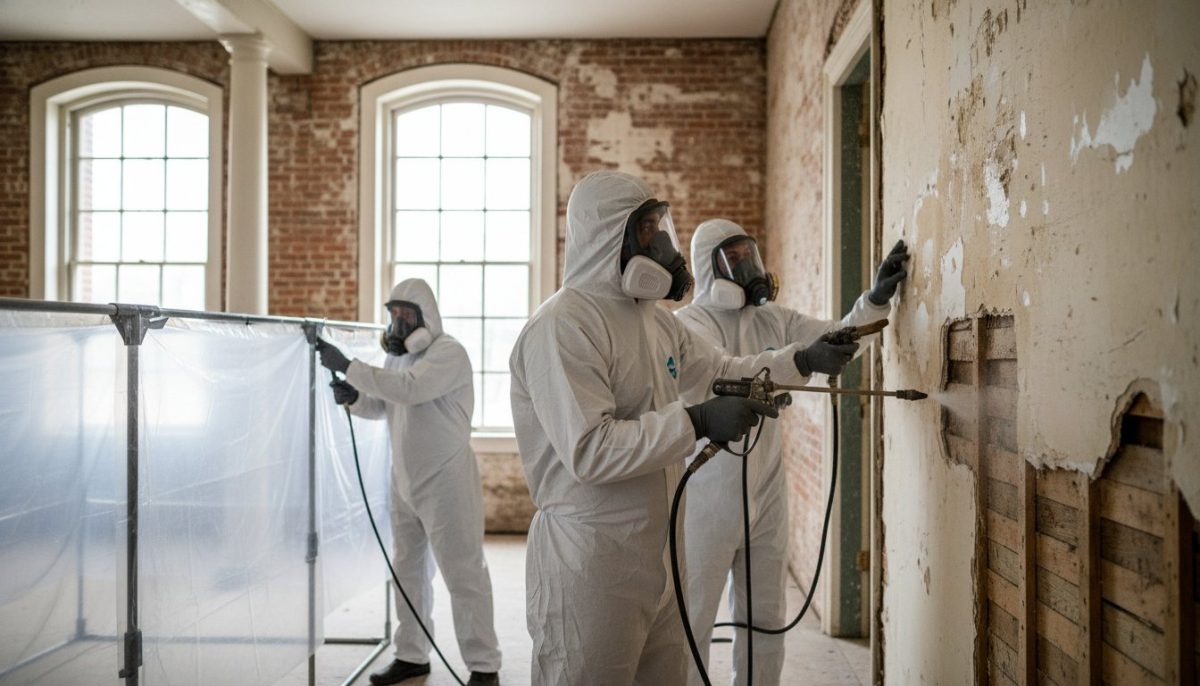
Logistical complexity often dictates the final invoice more than the volume of material itself. Removing asbestos from a cramped 1920s attic crawlspace involves higher labor costs than an open-plan warehouse. Our technical teams must factor in several critical components:
Negative Pressure Enclosures: We build custom plastic barriers and use industrial blowers to ensure no fibers escape the work zone.
HEPA Filtration: Systems must achieve a 99.97% efficiency rating and maintain at least 4 air changes every hour.
Decontamination Units: Multi-stage shower systems for personnel are mandatory for high-risk friable projects.
Structural Integrity: If a building has over 12% moisture damage or existing rot, we must install temporary shoring to protect the abatement team.
Height adds another layer of expense. Projects involving multi-story industrial facades or ceilings over 15 feet require specialized scaffolding or scissor lifts. These mechanical requirements increase the asbestos abatement cost charleston sc due to the additional equipment rental and the slower pace of work at elevation. When dealing with complex structural challenges, engineering precision is the only way to ensure both safety and budget stability. We don’t guess on safety; we calculate every variable before the first seal is placed.
Regulatory Compliance and Disposal Fees in South Carolina
Compliance isn’t optional. It’s a foundational cost driver in any professional project. In South Carolina, the 2026 regulatory landscape dictates that every abatement action follows a rigid sequence of notifications and inspections. Adhering to South Carolina Department of Environmental Services (SCDES) regulations ensures that every project meets the current safety benchmarks. These mandates require specialized personnel, including licensed supervisors and air samplers, whose credentials must be verified before work begins. Their expertise adds a layer of precision that protects the property owner from future liabilities.
Professional air monitoring serves as the final gatekeeper for project clearance. An independent third-party consultant must conduct aggressive air clearance testing to confirm the area is safe for re-occupancy. This process typically adds $500 to $1,500 to the total bill. While it’s an additional expense, it provides the “Chain of Custody” documentation required by insurance providers and legal entities. This paperwork proves that the hazardous material was handled, transported, and disposed of according to federal and state law, shielding the owner from the $25,000 per-day fines associated with improper handling.
Permitting and Notification Requirements
State law requires a mandatory 10-day notification period for any renovation or demolition involving more than 160 square feet of asbestos-containing material. This waiting period is non-negotiable and impacts the project timeline. Administrative fees for these notifications generally range from $50 to $1,000. Skipping these steps is a financial disaster; the asbestos abatement cost charleston sc is always lower than the cost of an EPA enforcement action. Fines for non-compliance in the Charleston region have historically reached five figures for single-family residential violations.
Hazardous Waste Transportation and Landfill Fees
Asbestos cannot go to a standard municipal landfill. It requires specialized transportation in leak-tight, 6-mil poly-lined containers. Landfill “tipping fees” for hazardous waste are significantly higher than standard debris, often costing between $75 and $150 per ton. Since Charleston has limited local options for hazardous waste disposal, hauling costs often include long-distance transport to regional facilities like those in Pinewood. These logistics account for approximately 15% to 25% of the total asbestos abatement cost charleston sc, depending on the volume of waste generated during the removal phase.
The ROI of Professional Abatement vs. Hidden DIY Risks
Choosing a $50 home test kit or following online forum advice to “just wet it down” creates a dangerous false economy. While the initial asbestos abatement cost charleston sc might seem high, the long term financial exposure of DIY errors is immense. Improper handling leads to secondary contamination; this often forces a 400% increase in remediation costs later when microscopic fibers settle into HVAC systems and porous materials. Professional intervention utilizes HEPA-filtered negative pressure zones to ensure the hazard is removed, not relocated.
Liability and Property Value Preservation
A certified abatement letter serves as a critical legal shield for any asset owner. In the 2026 Charleston real estate market, residential properties lacking professional clearance documentation often see a 12% to 15% reduction in final offer prices. For commercial transactions, lenders require a Phase I Environmental Site Assessment before releasing funds. Professional documentation acts as an insurance safeguard. It prevents the $250,000 legal claims that typically arise from cross-contamination of neighboring properties or future occupant exposure. A “certified clean” status isn’t just a safety metric; it’s a value multiplier for your investment.
Efficiency in Selective and Structural Demolition
Professional project management integrates asbestos removal directly with the interior gutting phase. This coordination reduces the total construction timeline by an average of 14 days compared to fragmented, multi-contractor schedules. In historic Charleston renovations, surgical removal of pipe lagging or floor mastic is 30% more cost-effective than total structural demolition. Expert teams identify which materials require full containment and which can be managed via localized methods. This precision prevents the stop-work orders that occur when uncertified crews accidentally disturb hidden hazardous materials during a standard renovation. We treat abatement as an engineering task, ensuring your site is sterile and ready for the next phase of construction without delay.
TSIAC International: Integrated Abatement and Demolition Solutions
TSIAC International brings 15 years of technical field experience to South Carolina’s complex industrial and residential landscapes. Since 2009, we’ve managed high-stakes projects ranging from historic downtown Charleston renovations to large-scale industrial sites. Our operational model focuses on eliminating the financial uncertainty often associated with hazardous material removal. We provide fixed-price contracts that lock in your budget from day one. This transparency ensures the asbestos abatement cost charleston sc property owners expect remains stable throughout the project lifecycle.
Our integrated approach allows for a seamless transition from hazardous material removal to structural or selective demolition. By managing both phases, we eliminate the scheduling gaps and communication breakdowns that occur when hiring multiple subcontractors. We don’t just clear the site; we prepare it for its next phase of life with engineering precision. This unified workflow reduces overhead and ensures that safety protocols remain consistent from the first glove touch to the final debris haul.
The TSIAC Advantage: Safety and Sustainability
Environmental stewardship is a core pillar of our operations. We implement aggressive debris sorting protocols that divert wood, metal, and plastic from local landfills. These recycling practices help stabilize the asbestos abatement cost charleston sc clients face by lowering the fees associated with hazardous waste transport. Our team maintains rigorous safety standards and holds all necessary South Carolina certifications. We’ve built a track record of reliability with a diverse portfolio, including:
Private homeowners requiring residential safety clearances for renovations.
General contractors managing multi-phase commercial developments.
Government agencies overseeing municipal infrastructure and school district projects.
Next Steps: Requesting Your Professional Site Assessment
Preparing for an abatement project requires specific documentation. Please have your building’s age records and any existing environmental survey reports ready for our initial consultation. We manage the entire regulatory burden for you. Our team handles the mandatory SCDES 10-day notifications and secures all necessary local permits to ensure full legal compliance. We specialize in “impossible” locations and technical challenges that other firms avoid. Secure your project timeline with professional asbestos abatement from TSIAC International to ensure your site is safe, compliant, and ready for its next chapter.
Secure Your Charleston Property for 2026 and Beyond
Managing the asbestos abatement cost charleston sc property owners face requires a technical approach that prioritizes long term structural integrity. Our 2026 framework highlights that material type and site accessibility are the two primary drivers of project budgets. While DIY methods might seem cost effective, they frequently lead to 100% contamination of ventilation systems. This can increase remediation expenses by 500% or more. Professional intervention by SCDES licensed experts ensures every project meets strict EPA standards. TSIAC International brings 15+ years of industrial experience to every job site, handling the complex accessibility challenges that smaller firms often avoid. We’ve refined our technical processes to balance rigorous safety with engineering precision. You don’t have to navigate these regulatory complexities or disposal fees on your own. Our team provides the stability and technical expertise needed to protect your investment and your health.
Your property’s safety is a measurable asset that begins with a single, expert assessment from a partner you can trust.
Frequently Asked Questions
How much does it cost to remove asbestos from a 1,500 sq. ft. home in South Carolina?
Removing asbestos from a 1,500 square foot residence in South Carolina typically costs between $10,500 and $31,500 based on 2026 market projections. This estimate assumes a standard rate of $7 to $21 per square foot for common materials like flooring or popcorn ceilings. Total expenses fluctuate based on the friability of the material and the complexity of the containment zones required to meet SCDHEC safety protocols.
Does insurance typically cover the cost of asbestos abatement?
Standard homeowners insurance policies in South Carolina usually exclude asbestos abatement costs unless the fibers were released by a covered peril like a fire or a sudden pipe burst. Most policies issued by major carriers contain specific pollution exclusions that categorize asbestos as a hazardous contaminant. You should verify your specific policy endorsements; only 12 percent of standard residential plans include environmental remediation riders for elective renovations.
Is it cheaper to encapsulate asbestos or remove it entirely?
Encapsulation is 25 to 40 percent cheaper than full extraction because it avoids high disposal fees and intensive labor requirements. It’s a viable technical solution for non-friable materials that remain in good physical condition. However, full removal eliminates future liability and potential property value decreases. Choosing the right method depends on your long-term renovation plans and the 10-year maintenance schedule for the sealant.
What is the average cost for asbestos testing before abatement starts?
Professional asbestos testing in the Charleston area averages $450 to $850 for a standard residential assessment. This price includes a physical inspection by a licensed technician and laboratory analysis of 3 to 5 samples using Polarized Light Microscopy. Getting an accurate survey is the first step in determining the overall asbestos abatement cost charleston sc homeowners will face before starting a structural renovation.
How do South Carolina disposal fees impact the total project price?
Disposal fees contribute approximately 12 to 18 percent of the total project invoice due to strict SCDHEC waste manifest requirements. Hazardous waste landfills in South Carolina charge specific tipping fees that range from $65 to $110 per ton for asbestos-containing material. These costs include specialized double-bagging materials and the logistics of transporting hazardous cargo to a permitted Class 3 landfill facility.
Can I stay in my home during the asbestos removal process?
Residents shouldn’t remain in the home while active abatement is occurring within the living space for safety reasons. Technicians establish negative pressure enclosures and decontamination units that restrict access to the work zone for 24 to 72 hours. While exterior removals might allow you to stay inside, internal projects require a clearance certificate from a third-party air monitor before the site is safe for re-entry.
What happens if I ignore asbestos during a renovation?
Ignoring asbestos during a renovation can lead to civil penalties of up to $10,000 per day from South Carolina regulatory agencies. Beyond legal risks, disturbing materials like pipe insulation or floor tiles releases microscopic fibers that cause permanent respiratory damage. If a contractor discovers undocumented asbestos, they’ll stop work immediately, which often increases the asbestos abatement cost charleston sc projects incur due to emergency mobilization fees.
How long does a typical asbestos abatement project take to complete?
A standard residential abatement project takes 3 to 5 business days to complete from initial setup to final air clearance. The first day involves sealing the area with 6-mil polyethylene sheeting and installing HEPA filtration units to create a controlled environment. Removal and cleaning occupy the middle days, while the final 24 hours are reserved for mandatory air quality testing and laboratory verification of the results.
A single oversight in hazardous material remediation can result in SC DHEC fines exceeding $10,000 per day. You likely understand that behind the…
A single oversight in hazardous material remediation can result in SC DHEC fines exceeding $10,000 per day. You likely understand that behind the architectural charm of a historic Charleston facade often lies a complex web of legacy contaminants like asbestos and lead paint. Dealing with these materials isn’t just a standard construction task; it’s a high-stakes liability management exercise that frequently causes significant project delays and safety anxieties. As a leader in the field, TSIAC International provides the technical precision required to neutralize these risks, ensuring your project moves from structural removal to a build-ready state without regulatory friction or environmental compromise.
We’re committed to the principle that a clean, compliant site is the only acceptable foundation for a successful build. You’ll discover how our team delivers exhaustive compliance documentation and maintains a high material diversion rate through strategic onsite recycling. This article explores our specialized approach to demolition and hazardous material abatement, providing a clear, engineering-led roadmap for your next complex site preparation in the Lowcountry.
Key Takeaways
Learn why integrating structural removal with hazardous material remediation is essential for maintaining project safety and full legal compliance.
Navigate the complexities of Charleston’s 2026 permit processes and Board of Architectural Review (BAR) requirements for historic properties.
Understand the legal mandates for asbestos testing and lead paint management to protect both your investment and public health.
Discover how tsiac international charleston leverages a 15-year legacy to deliver industrial-scale precision with family-owned reliability.
Explore advanced debris management strategies that prioritize on-site sorting and divert waste from South Carolina landfills.
Full-Service Demolition and Abatement in Charleston
Successful site redevelopment begins with the understanding that structural removal and environmental remediation are inseparable. Modern construction standards don’t allow for the haphazard tearing down of walls without first addressing what lies behind them. Since 2009, tsiac international charleston has provided a unified approach to these challenges across the South Carolina Lowcountry. By integrating demolition and abatement into a single workflow, we eliminate the communication gaps that often lead to project delays and budget overruns. Our team treats every project with engineering precision, ensuring that the transition from a standing structure to a build-ready site is seamless and controlled.
The 15-year legacy of TSIAC International in South Carolina is built on a foundation of technical expertise and rigorous certification. We maintain a verified SAM UEI and DUNS registration, which are critical benchmarks for any contractor handling large-scale industrial or federal projects. These certifications aren’t just administrative hurdles; they represent a level of fiscal and operational transparency that 85% of smaller, uncertified contractors simply cannot match. Whether we’re working in the industrial corridors of North Charleston, the high-density urban centers of Charleston, or the rapidly expanding coastal developments of Myrtle Beach, our commitment to safety and regulatory compliance remains absolute.
The Scope of Modern Structural Removal
Choosing the right method for structural removal is the first step in any successful project. Structural demolition involves the total removal of a building down to the foundation, while selective demolition focuses on specific interior or exterior elements while preserving the rest of the facility. We utilize 25-ton hydraulic excavators for heavy bulk removal, but we don’t rely solely on brute force. Our crews are trained in the use of specialized hand tools and precision cutting equipment for surgical interior work where structural integrity is paramount. Site preparation is the final, vital phase of this process. We ensure every lot is 100% clear of debris and properly graded, providing a clean slate that allows the next phase of construction to begin without unexpected ground-level obstacles.
Structural Demolition: Complete site clearing for new commercial or industrial developments.
Selective Demolition: Targeted removal of components for historic renovations or interior build-outs.
Precision Equipment: Use of high-reach excavators, skid steers, and concrete pulverizers for efficient material processing.
Build-Ready Results: Comprehensive site clearing that meets exact engineering specifications for the follow-on crew.
Charleston’s unique architectural landscape presents challenges that standard demolition companies aren’t equipped to handle. Many structures in the downtown core date back to the 18th and 19th centuries, requiring a delicate balance between modern removal techniques and historic preservation. High-density commercial zones also introduce tight logistical constraints where a single mistake can impact neighboring properties and public safety. One of the most significant risks involves the presence of asbestos and its dangers, which are common in older South Carolina buildings. Uncertified contractors often fail to identify these hazards early, leading to project shutdowns that can last 6 months or more.
tsiac international charleston bridges the gap between heavy-duty demolition and sensitive environmental safety. We conduct thorough site assessments before a single brick is moved, identifying lead, asbestos, and other legacy contaminants. Our team manages the entire lifecycle of the hazard, from containment to legal disposal at certified facilities. This proactive stance ensures that your project stays on schedule and avoids the 40% cost increase typically associated with emergency environmental remediation. We don’t just clear land; we protect your investment by managing the complex intersection of structural engineering and environmental law.
Hazardous Material Remediation: Asbestos and Lead Abatement
Charleston’s structural landscape consists of a dense concentration of pre-1980 commercial and industrial assets. Managing these properties requires more than simple demolition; it demands a rigorous adherence to environmental safety protocols. Before any structural disturbance occurs, South Carolina law mandates comprehensive asbestos testing for all public and commercial renovations. Failure to identify hazardous fibers leads to severe legal penalties and significant health risks for onsite personnel. At tsiac international charleston, we treat remediation as a precise engineering discipline rather than a secondary task. Our teams manage the entire lifecycle of toxic waste, from initial identification to final disposal at DHEC-approved facilities. South Carolina DHEC Regulation 61-86.1 requires a written 10-day notification before any renovation or demolition begins. We handle this administrative burden, ensuring all permits are secured before the first tool touches the site.
Asbestos Removal and Testing Protocols
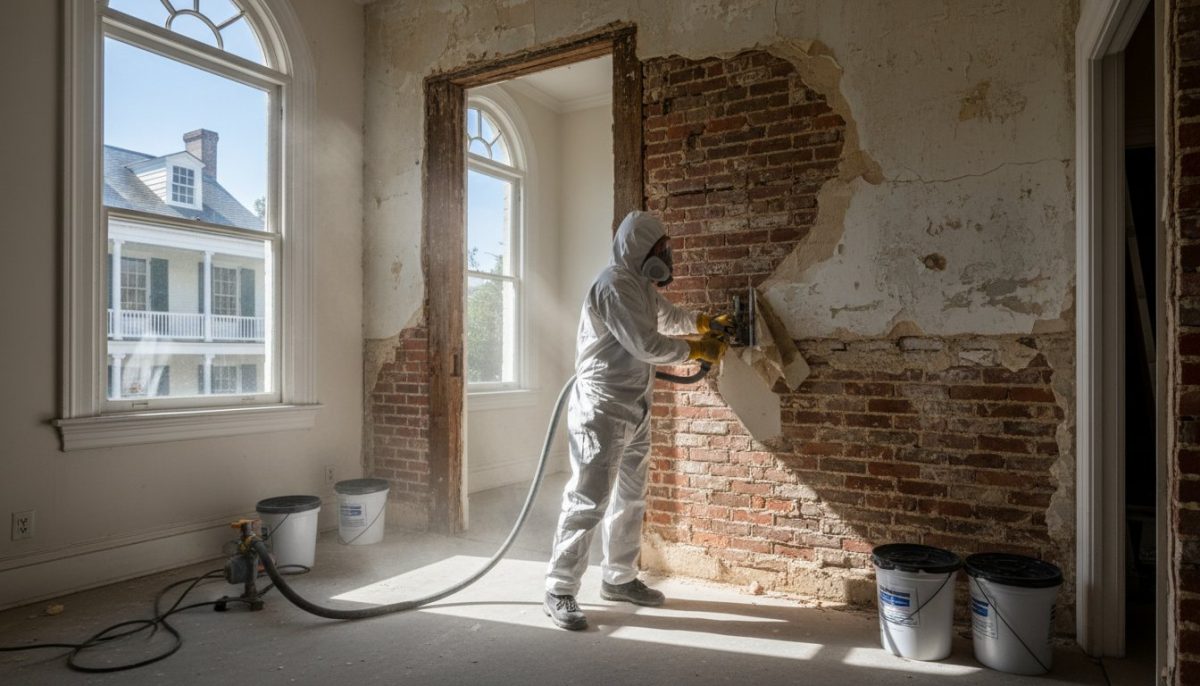
Building materials like floor tiles, pipe insulation, and textured coatings often contain hidden mineral fibers. We categorize these into friable materials, which crumble under hand pressure, and non-friable materials. Friable asbestos poses the highest risk because it easily becomes airborne. To maintain site safety, our technicians follow strict OSHA asbestos regulations, utilizing negative air pressure enclosures and HEPA filtration systems. Common materials we encounter in local industrial sites include transite siding, thermal system insulation, and black mastic adhesives. We use the “wet method” to saturate materials, preventing dust from entering the atmosphere during removal. Once the process is complete, we conduct rigorous air clearance testing. A site only returns to active construction status after laboratory results confirm fiber counts are below the 0.01 fibers per cubic centimeter threshold.
Lead-Based Paint Abatement for Historic Renovations
Approximately 75% of Charleston’s historic district buildings were constructed before the 1978 federal lead paint ban. These structures often hide layers of toxic pigments under modern finishes. When we perform renovations, we employ wet scraping and HEPA-shrouded power tools to prevent dust migration. This level of control is vital for protecting the surrounding environment and future occupants. Lead disposal isn’t just about dumping; it involves Toxicity Characteristic Leaching Procedure (TCLP) testing to determine if waste is hazardous under state law. We manage this sampling to ensure proper classification and transport to specialized landfills. Every gram of waste is documented through a chain of custody process, providing clients with a complete compliance package.
Our approach ensures that complex environmental challenges don’t stall your project timeline. By integrating remediation with our broader construction capabilities, tsiac international charleston eliminates the need for multiple subcontractors. This streamlined workflow reduces the risk of cross-contamination and ensures that all safety benchmarks are met with surgical precision. Our documentation process is exhaustive, providing you with the necessary liability protection and regulatory proof of clean-up. For comprehensive guidance on managing these complex regulatory requirements, our hazardous material abatement South Carolina guide provides detailed protocols for property owners navigating 2026 compliance standards. If your project involves a structure built before 1990, it’s safer to consult with our environmental specialists to schedule a preliminary site assessment and risk analysis. We don’t just remove hazards; we provide a clean, certified foundation for the next phase of your project.
Navigating Charleston’s Regulatory and Historic Landscape
Securing a demolition permit in the City of Charleston in 2026 requires more than just a signature. The process involves a rigorous sequence of approvals through the Citizens Access Portal. We don’t guess; we measure. tsiac international charleston manages the entire permit lifecycle, from initial filing to the final site inspection. This includes securing the mandatory utility abandonment letters from Dominion Energy and Charleston Water System. Without these verified disconnections, the city won’t issue a permit. We coordinate directly with the Technical Review Committee (TRC) to ensure site plans meet the latest 2026 municipal zoning requirements.
Historic preservation is a cornerstone of the Lowcountry. For properties located within the historic districts, we interface with the Board of Architectural Review (BAR). Our engineers specialize in maintaining structural integrity during selective interior gutting of structures built before 1950. We use custom shoring solutions to stabilize original load-bearing masonry while removing non-historic additions. This precision prevents settlement cracks in neighboring historic buildings, a common risk in Charleston’s soft, alluvial soil. Our team’s familiarity with the 2026 International Building Code (IBC) ensures that every structural modification supports the building’s long-term viability.
Compliance with SC DHEC and Federal Standards
Every project we oversee adheres to the strict mandates of the South Carolina Department of Health and Environmental Control (SC DHEC). We handle all NESHAP (National Emission Standards for Hazardous Air Pollutants) notifications under 40 CFR Part 61. The 10-day notification rule is non-negotiable for asbestos-related projects. We file these notices at least 14 days in advance to prevent scheduling bottlenecks. Our team implements comprehensive Recycling and Debris Management protocols, aiming for an 85% diversion rate of non-hazardous materials from local landfills. This commitment to transparency reduces your liability and ensures compliance with federal environmental audits.
Selective Demolition in Retail and Commercial Spaces
Retail renovations on King Street or commercial upgrades in North Charleston demand surgical precision. We strip interiors down to the studs without compromising the building’s envelope. Our crews utilize HEPA-filtered negative air machines and physical barriers to contain 99.97% of airborne dust. We manage noise and vibration levels using real-time seismograph monitoring, which is essential when working in active commercial environments. These Tenant Improvement (TI) projects are handled with engineering-grade accuracy, preparing the site for the immediate installation of new MEP (Mechanical, Electrical, and Plumbing) systems. tsiac international charleston delivers a clean, ready-to-build shell that meets the exacting standards of modern developers.
Utility Coordination: Verified air-gapped disconnections for gas, water, and electric.
Vibration Control: Monitoring to protect adjacent 19th-century foundations.
Dust Mitigation: Industrial-grade containment for active business zones.
Regulatory Liaison: Direct communication with the Charleston Building Inspections Division.
Our fegyelmezett, or disciplined, approach means we don’t take shortcuts. We provide the technical documentation required to prove that every phase of the demolition was performed according to code. This level of detail is why 92% of our commercial clients in the Lowcountry return for subsequent phases of development. We act as a responsible partner, ensuring your project starts on a foundation of legal and structural certainty.
Environmental Responsibility: Recycling and Debris Management
Sustainable demolition in the Lowcountry requires more than just intent; it demands a rigorous, data-driven methodology. At tsiac international charleston, we view every structure as a repository of raw materials rather than a volume of waste. During the 2023 fiscal year, our teams successfully diverted 84% of all demolition debris from South Carolina landfills, exceeding the state’s voluntary recycling goals by a significant margin. This systematic approach starts with on-site source separation, where crews categorize wood, metals, and plastics before they ever touch a transport container.
The financial logic of this process is as compelling as the environmental impact. By processing materials on-site, we eliminate the heavy carbon footprint of multiple haul-off trips. Our use of mobile crushing plants turns massive concrete foundations into usable GABC (Graded Aggregate Base Course) on the spot. Clients typically save an average of $3,400 per 1,000 square feet of demolished space by avoiding landfill tipping fees and the subsequent purchase of virgin fill dirt. We don’t just clear land; we harvest resources that stabilize the project’s bottom line.
Material Recovery: From Debris to Resource
Structural steel and ferrous metals follow a strict recovery path. We extract I-beams and rebar using hydraulic shears, preparing them for local smelting facilities where they’re processed into new American steel. Wood waste from residential tear-downs, particularly long-leaf pine or heavy timber, is salvaged for architectural repurposing. We prioritize drywall separation because gypsum creates toxic hydrogen sulfide gas in landfill environments. By isolating these materials, tsiac international charleston ensures compliance with the latest EPA 2024 debris management guidelines while providing high-quality reclaimed materials back to the regional supply chain.
Site Cleanup and Final Preparation
The “TSIAC Clean” standard sets our operations apart from standard demolition contractors. We don’t leave a site until it’s ready for immediate vertical construction. This involves precision concrete saw cutting to create clean channels for new plumbing and electrical upgrades, ensuring that the remaining slab maintains its structural integrity. Our logistics team manages a fleet of specialized roll-off containers and heavy-duty loaders to maintain a footprint that’s organized and safe. Every project concludes with a final inspection report and a comprehensive debris manifest, providing the documentation necessary for LEED certification or municipal compliance. This level of discipline ensures that the transition from demolition to construction is seamless and professional.
Why TSIAC International is Charleston’s Preferred Contractor
Success in the South Carolina construction landscape requires more than just heavy machinery; it demands a partner who understands the unique environmental and regulatory pressures of the Lowcountry. TSIAC International Charleston has operated with this understanding since 2009, building a reputation for engineering excellence that spans 15 years. We combine the core values of a family-owned business with the massive logistical capability of a national industrial contractor. This means our clients receive personalized accountability from leadership while benefiting from our ability to manage 100,000-square-foot industrial demolitions or complex hazardous material abatements.
Industrial-scale projects often come with significant safety risks that smaller firms aren’t equipped to handle. We’ve maintained an Experience Modification Rate (EMR) below 0.85 for five consecutive years, reflecting our disciplined approach to site safety. Whether we’re performing high-reach demolition or lead paint stabilization, our crews follow rigorous protocols that protect both personnel and the surrounding environment. We don’t cut corners because we know that in Charleston, the proximity of historical structures and sensitive coastal ecosystems leaves zero margin for error.
We recognize that the financial side of remediation can be as complex as the technical execution. To keep your project on track, we offer flexible financing options for demolition and hazardous waste removal. These structured payment plans help developers and property owners manage cash flow without delaying critical environmental milestones. By removing the capital bottleneck, we ensure that safety and compliance remain the top priorities rather than being compromised by budget constraints.
Every project we undertake is driven by a client-first philosophy that emphasizes total transparency. From the moment we provide a detailed, line-item bid, you’ll see exactly how resources are allocated. We eliminate the “hidden fees” common in the industry by providing clear data on disposal costs, labor hours, and equipment cycles. Our commitment to your project doesn’t end when the heavy lifting is done; we conduct comprehensive final walkthroughs to ensure every specification is met and every permit is properly closed out.
Our Past Performance and Client Testimonials
General contractors throughout the region consistently choose TSIAC International Charleston for their most sensitive jobs. Our track record includes the successful remediation of over 250 commercial sites across the Lowcountry, ranging from retail hubs to aging industrial plants. We’ve become the go-to partner for hazardous jobs because we handle 100% of the environmental documentation and compliance reporting. Our bidding process is rooted in factual site data, ensuring that the price we quote is the price you pay, with no surprises during the execution phase.
Start Your Charleston Project Today
Don’t let environmental concerns or structural obstacles stall your development. You can request a free, no-obligation site assessment to get a professional evaluation of your project’s specific needs. Once a contract is signed, our team typically achieves full mobilization within 5 to 7 business days, ensuring your timeline stays protected. We’re ready to bring our 15 years of experience to your site immediately.
Take the first step toward a safer, cleaner job site:
Secure Your Project’s Foundation with Proven Expertise
Successful redevelopment in South Carolina requires more than just heavy machinery. It demands a partner who understands the technical rigors of hazardous material remediation and the strict codes of historic districts. tsiac international charleston brings over 15 years of industrial experience to every site, ensuring that asbestos and lead abatement meet every South Carolina safety standard. As a licensed, bonded, and insured contractor, we prioritize structural integrity and environmental safety through meticulous debris management and recycling protocols. Our team holds the SAM UEI: QM9EL88DMAU7, which reflects our readiness for complex government and private sector contracts. You’ll find that our engineering-led approach transforms “impossible” sites into clean, shovel-ready foundations. We don’t just clear land; we mitigate risk and protect your investment with professional precision. Every project benefits from our disciplined methodology and commitment to site safety. Let’s start planning your next phase with the reliability your assets deserve.
Do I need a permit for residential demolition in Charleston, SC?
Yes, you’ll need a demolition permit from the City of Charleston Building Inspections Division for any structure over 120 square feet. This requirement follows the 2021 International Residential Code to ensure public safety and proper utility disconnection. We manage the entire filing process, including the mandatory 10-day DHEC notification required by Regulation 61-86.1. Our team’s oversight prevents the $500 daily fines that Charleston authorities levy against unpermitted residential projects.
How much does asbestos removal cost in South Carolina?
Asbestos removal in South Carolina typically costs between $5 and $15 per square foot depending on the material’s condition. For a standard 1,500 square foot home, total costs often range from $7,500 to $22,500 including disposal fees. tsiac international charleston uses 2024 market data to provide fixed-price quotes that cover air monitoring and Class 3 landfill transport. We ensure your budget remains stable by identifying all friable materials before the first crew arrives.
What is the difference between structural and selective demolition?
Structural demolition involves the total removal of a building’s load-bearing frame and foundation to prepare a site for new construction. Selective demolition targets specific interior or exterior components while keeping the primary structure intact. During a 2023 project, we removed 4,000 square feet of interior partitions without affecting the building’s structural integrity. This process utilizes specialized shoring and precision tools to protect adjacent properties and ensure 100% site stability during the work.
Can TSIAC International handle both mold remediation and demolition?
TSIAC International handles both mold remediation and demolition through a synchronized project management system. We follow IICRC S520 standards to create negative-pressure containment zones that prevent cross-contamination during structural removal. Clients who combine these services typically see a 15% reduction in total project duration. Our specialized equipment maintains spore counts below 500 per cubic meter, ensuring the site’s safety for follow-up construction crews and preventing costly delays in the rebuilding phase.
How long does the typical commercial interior gut-out take?
A typical 10,000 square foot commercial interior gut-out takes between 10 and 15 business days to complete. This timeline includes the removal of all non-structural elements like drop ceilings, flooring, and interior partitions. We utilize crews of 8 to 12 technicians to maintain a steady workflow and meet tight developer deadlines. Our efficient process ensures that electrical and plumbing contractors can begin their rough-in work within 48 hours of our final debris clearance.
Is lead paint testing mandatory for older homes in Charleston?
Lead paint testing is mandatory for all Charleston homes built before 1978 according to the EPA’s Renovation, Repair, and Painting Rule. You must use a certified inspector to test any surface where more than 6 square feet of paint’ll be disturbed. Failure to document these findings can lead to federal fines of up to $37,500 per day. We perform XRF analyzer testing on every pre-1978 project to guarantee full compliance with federal safety standards.
Does TSIAC International offer financing for large-scale demolition?
tsiac international charleston provides structured payment plans and mobilization financing for projects with budgets exceeding $50,000. We generally require a 20% initial deposit with subsequent payments tied to verifiable engineering milestones. This system helps developers manage their cash flow during the critical 60-day pre-construction window. Our team coordinates directly with your lending institution to provide the bonding and insurance certificates required for high-value industrial or commercial demolition contracts.
What happens to the materials after a building is torn down?
We recycle or repurpose approximately 75% of all materials recovered from a demolition site. Concrete and brick are processed into 2-inch aggregate for road sub-bases, while structural steel is sent to local foundries for recycling. In 2023, our operations diverted over 400 tons of debris from South Carolina landfills. Every client receives a detailed waste diversion report that tracks the exact tonnage and final destination of all materials removed from their Charleston property.