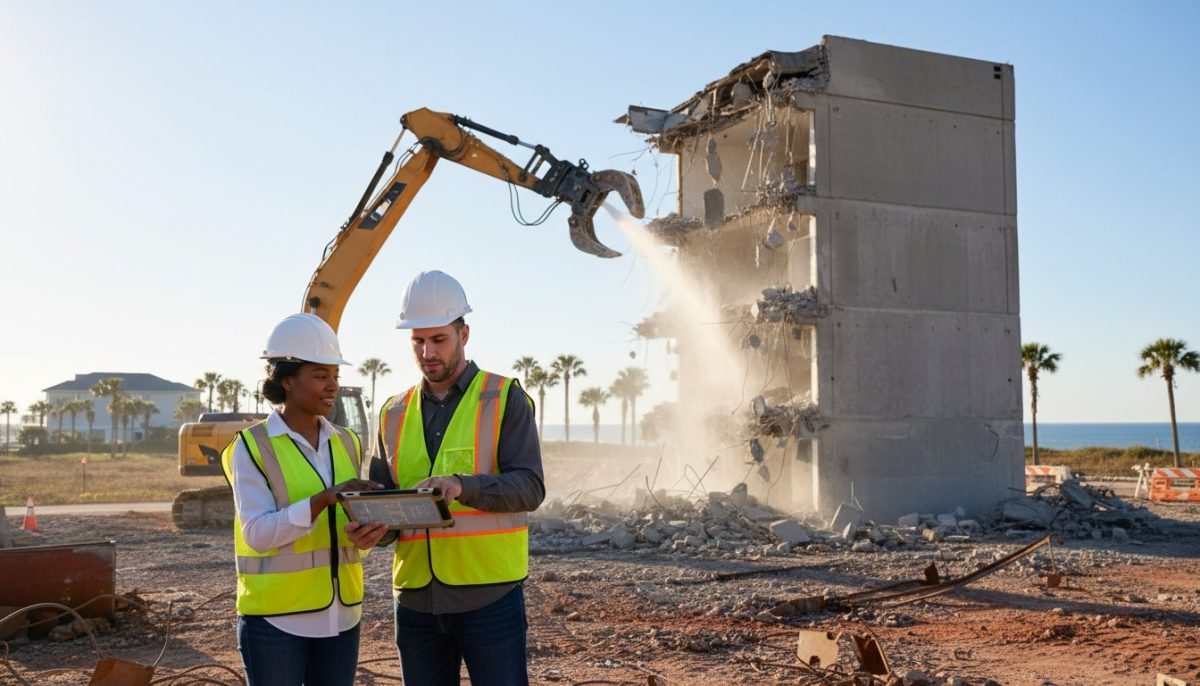
According to a 2023 industry report, 45% of commercial renovation delays stem directly from unforeseen hazardous materials discovered during the initial teardown. You’re likely aware that a renovation project is only as stable as the structural shell it’s built upon. It’s a common concern that hidden asbestos or structural instabilities will threaten your timeline and budget. You need a disciplined approach that treats demolition as a precise engineering task. We understand the pressure of maintaining a clean site while ensuring every square foot meets rigorous safety standards.
This guide helps you master the technical complexities of commercial interior gutting services to ensure your next project starts on a solid foundation. You’ll learn how to manage the critical path from hazardous material abatement to structural shell preparation without compromising the surrounding building areas. We’ll examine the protocols for full EPA and OSHA compliance, the logistics of massive debris management, and the specific methods used to protect the integrity of your property. This overview provides the strategic roadmap for delivering a construction-ready space that meets every regulatory and technical requirement with engineering precision.
Key Takeaways
- Learn how to effectively strip a building down to its structural shell by identifying the specific scope of work required for non-load-bearing elements and MEP systems.
- Master the technical distinctions between selective and structural demolition to ensure building stability through proper shoring and bracing techniques.
- Discover why integrating hazardous material surveys into your timeline is the essential first step in professional commercial interior gutting services.
- Follow a disciplined 5-step engineering survey and utility “safe-off” process to mitigate risks and maintain total control over complex renovation environments.
- Identify the strategic advantages of partnering with a single-source contractor who manages both high-risk remediation and large-scale structural removal.
What Are Commercial Interior Gutting Services?
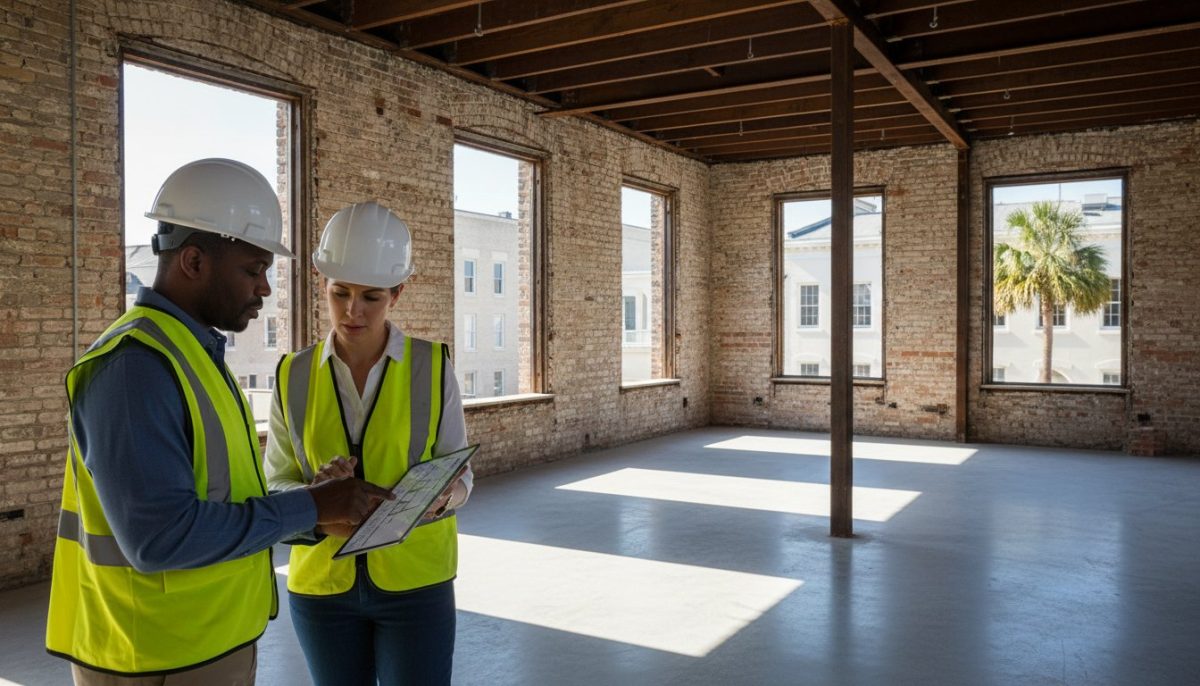
Commercial interior gutting services represent the systematic deconstruction of a building’s interior down to its structural shell or metal studs. This isn’t a “wrecking ball” approach. It’s a controlled engineering process. The procedure strips away everything that isn’t essential to the building’s structural integrity. This includes non-load-bearing walls, flooring, and comprehensive MEP (mechanical, electrical, plumbing) systems. While “soft demolition” might only remove surface-level finishes like carpets and furniture, a full gut-out prepares the facility for a total transformation.
Professional gutting serves as the foundational phase for tenant improvements. By removing redundant infrastructure, contractors eliminate the risks of “discovery” mid-construction. In 2023, data from industrial renovation projects showed that a clean gut-out can reduce unforeseen site condition claims by 18%. It’s about precision and logistics. Every load-bearing column and structural slab must be exposed to ensure the next phase of construction proceeds on a stable, verified base.
The Role of Gutting in Modern Renovations
A thorough gut-out provides architects and MEP engineers with a blank canvas. It’s impossible to design high-efficiency HVAC systems or complex lighting grids when old ductwork obscures the ceiling plenum. Exposing the structural framework allows for immediate inspections. This transparency often accelerates the permitting phase by 10 to 14 days. When the structural slab and columns are visible, engineers can verify load capacities without invasive testing during the build-out. This proactive approach directly reduces downstream construction costs by preventing layout conflicts before they occur on-site.
Core Components Removed During an Interior Gut
The scope of work for commercial interior gutting services is comprehensive. Technicians handle the removal of complex systems that require specialized handling and disposal protocols, especially in restricted-access environments. Key components include:
- Partition Systems: Removal of drywall, glass partitions, and heavy-gauge metal framing systems.
- Ceiling Assemblies: Stripping acoustic ceiling tiles (ACT), grid systems, and redundant HVAC ducting.
- Flooring and Adhesives: Mechanical grinding of thin-set, mastic, and epoxy coatings from concrete slabs to ensure a level surface.
- Redundant MEP: Decommissioning and removal of outdated electrical conduits, plumbing lines, and fire suppression pipes.
Every phase follows strict safety standards. We prioritize the recovery of recyclable materials, often achieving a 75% diversion rate from landfills on standard office gut-outs. This level of discipline ensures the site is safe, clean, and ready for the incoming trades to begin work immediately.
Technical Distinctions: Selective vs. Structural Gutting
Distinguishing between architectural finishes and structural skeletons requires a precise engineering survey before any work begins. Professional commercial interior gutting services focus on the surgical removal of non-load-bearing partitions, floor coverings, and MEP systems without compromising the building’s primary frame. Engineers must identify walls that provide lateral stability; removing these without proper reinforcement can lead to structural deflection exceeding 0.125 inches.
Shoring and bracing are critical when the demolition plan intersects with the building’s core. We utilize 20-ton hydraulic jacks and steel needle beams to manage load transfers during complex strip-outs. This technical approach protects shared building systems, such as 4-inch wet-pipe fire suppression lines and main plumbing stacks. Keeping 95% of a building’s utility core functional requires physical barriers and isolation valves, ensuring that the gut-out doesn’t disrupt the entire facility’s operations.
Selective Demolition for Occupied Buildings
Working in multi-tenant facilities requires strict adherence to noise and vibration protocols. Most high-impact work occurs between 10 PM and 6 AM to minimize tenant disruption. To manage environmental risks, we deploy negative air machines equipped with HEPA filters that maintain 99.97% filtration efficiency. Every project maintains 100% compliance with OSHA 1926.850, ensuring that egress routes and life safety systems remain unobstructed for all occupants. For projects requiring this level of technical oversight, it’s best to consult with specialists in complex execution to ensure site safety.
Precision Equipment and Heavy Machinery
Modern commercial interior gutting services rely on specialized tools to balance speed with safety. Selecting the right method depends on the specific floor load capacity and the proximity of sensitive neighbors.
- Robotic Demolition: Units like the Brokk 110 allow for high-torque crushing in confined areas where exhaust-emitting machinery isn’t feasible. These units exert 80% more force than manual labor while keeping operators at a safe distance.
- Manual vs. Mechanical: Manual methods are reserved for delicate perimeter work or historical preservation. Mechanical excavators are deployed when we need to clear over 5,000 square feet per shift.
- Floor Load Management: Equipment weight is strictly monitored to ensure it stays below 150 lbs per square foot, preventing structural damage to standard office floor slabs.
Managing Hidden Risks: Asbestos, Lead, and Hazard Abatement
Before the first wall falls, a rigorous Discovery Phase must occur. Professional commercial interior gutting services prioritize a comprehensive hazardous material survey to identify silent threats. Skipping this step isn’t just a safety oversight; it’s a financial liability. According to EPA estimates, buildings constructed before 1980 have a 70% probability of containing asbestos in floor tiles, mastic, or pipe insulation. We identify these materials through bulk sampling and polarized light microscopy before any structural interference begins.
Integrating abatement into the master schedule prevents cascading delays. A 10,000 square foot floor plate might require 14 days for specialized removal before standard demolition can resume. Failure to follow these protocols results in fines exceeding $37,500 per violation under OSHA 29 CFR 1926 standards. Proper commercial interior gutting services ensure that hazardous waste disposal follows a chain of custody that protects the property owner from future litigation and environmental penalties.
Asbestos Abatement During Interior Gutting
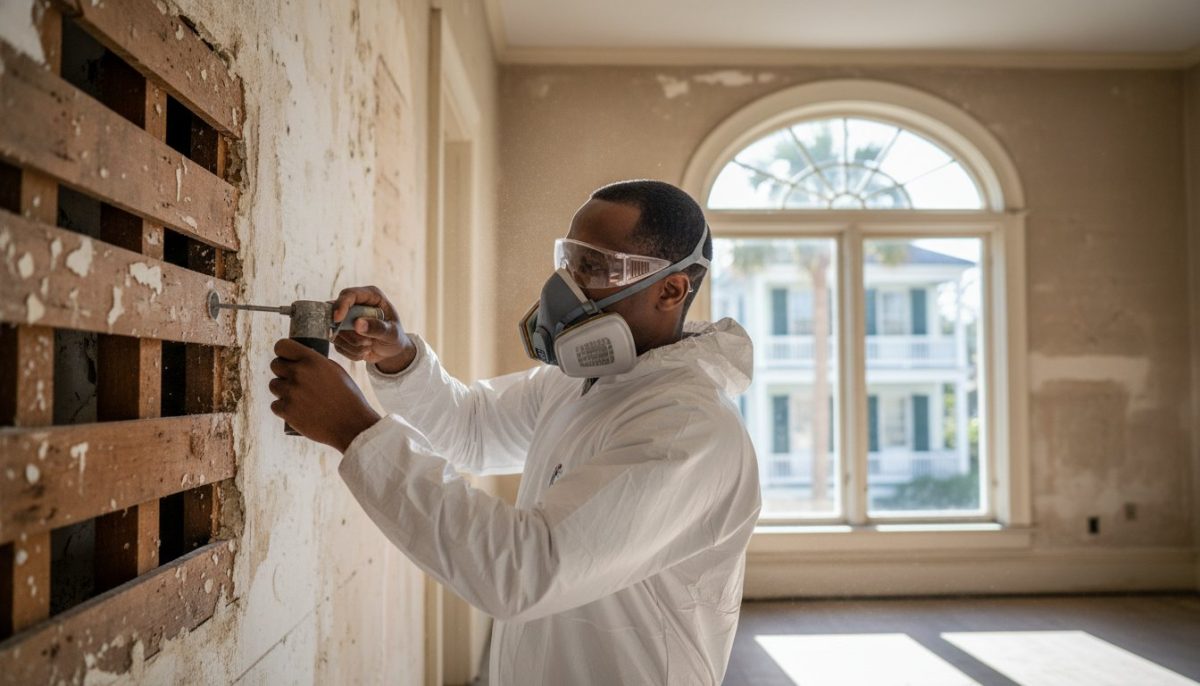
Technicians must distinguish between friable materials, like spray-applied fireproofing, and non-friable materials like vinyl-asbestos tile. Friable materials pose the highest risk because they release fibers into the air with minimal contact. We utilize negative pressure enclosures equipped with HEPA filtration units that cycle the air 6 times per hour. Once removal is complete, an independent laboratory performs Phase Contrast Microscopy testing. The space only reopens when fiber counts drop below 0.01 fibers per cubic centimeter, ensuring the site is safe for the next phase of construction.
Lead Paint and Mold Remediation
Commercial properties built before 1978 frequently contain lead-based paint on structural steel and metal framing. Cutting or grinding these components requires specialized HEPA-shrouded tools to capture toxic dust at the source. Gut-outs often reveal hidden mold growth in 15% of aging HVAC systems or behind water-damaged drywall. We address these biological hazards using antimicrobial treatments and detailed moisture mapping to prevent regrowth. Every project concludes with a comprehensive hazardous material manifest, providing the legal documentation necessary for project closeout and future property transfers.
The 5-Step Commercial Gutting Process
Execution of professional commercial interior gutting services requires a disciplined, engineering-led approach. It’s not about brute force; it’s about a controlled sequence that protects the building’s structural integrity and ensures the safety of every person on-site. We follow a rigorous five-step protocol to manage the complexities of modern commercial environments.
- Site Evaluation and Engineering Survey: Before a single wall is touched, we conduct a thorough survey to identify load-bearing columns, shear walls, and structural slabs. This phase prevents accidental damage to the building’s primary support system.
- Utility Disconnection and Safe-Off: We coordinate directly with MEP (Mechanical, Electrical, Plumbing) contractors to isolate power, water, and gas lines. This step includes strict Lock-Out/Tag-Out (LOTO) procedures to eliminate the risk of arc flashes or floods.
- Hazardous Material Remediation: If a structure was built before 1978, the risk of lead-based paint or asbestos in floor tiles and pipe insulation is high. We neutralize these risks through certified abatement processes before general demolition begins.
- Systematic Dismantling: Our teams work from the top-to-bottom and from the interior core outward. We remove non-structural partitions, drop ceilings, and built-in fixtures in a logical order to maintain clear egress routes.
- Material Recovery and Debris Management: We don’t just haul waste. We sort materials at the source to ensure efficient disposal and maximize the recovery of high-value scrap.
Material Recycling and Environmental Stewardship
Modern demolition demands a commitment to sustainability. By sorting wood, ferrous metals, and gypsum at the source, we often divert over 75% of non-hazardous waste from landfills. This strategy isn’t just ethical; it’s financially sound, as it can reduce project tipping fees by 20% to 30%. For projects seeking green building status, we provide detailed, LEED-compliant recycling reports that document every ton of material processed.
Site Preparation for the Next Trade
The job isn’t finished until the site is ready for the next phase of construction. We deliver a “broom-clean” environment that exceeds standard industry expectations. This includes concrete slab preparation where we use specialized grinders to remove old adhesives, thin-set, or mastic, ensuring a 1/8-inch flatness tolerance for new flooring. Our handover protocol involves a joint walk-through with the incoming general contractor to verify that all MEP points are accessible and the space is ready for immediate framing.
Choosing a National Commercial Demolition Partner
Selecting a contractor for commercial interior gutting services requires more than a review of equipment lists. It demands a rigorous assessment of engineering depth and liability management. A single-source provider that handles both the structural strip-out and hazardous material abatement eliminates the friction between separate vendors. This integration typically reduces project timelines by 18% because scheduling conflicts between demolition crews and environmental specialists disappear. When one firm manages the entire interior lifecycle, the transition from abatement to structural removal is seamless and cost-effective.
Experience and Technical Expertise
TSIAC International brings 17 years of specialized experience to every job site. We specialize in “impossible” locations. These include high-density urban centers or active hospital environments where vibration and dust control are non-negotiable. Our teams have completed over 520 large-scale interior transformations across 28 states. We don’t just pull down walls. We analyze load-bearing capacities and MEP (mechanical, electrical, plumbing) intersections to ensure the building’s core remains intact. Our precision allows for the preservation of historical facades while the interior is completely modernized.
- 17+ years of experience in structural and selective demolition across the U.S.
- Proven track record in high-rise and restricted-access urban environments.
- Technical proficiency in separating structural elements from non-load-bearing partitions.
- Strategic regional presence to ensure rapid mobilization for national accounts.
Commitment to Safety and Compliance
Safety is our primary operational metric. We maintain a Total Recordable Incident Rate (TRIR) of 0.85, which is significantly lower than the 2023 industry average. Every crew member undergoes 40-hour HAZWOPER training and mandatory quarterly safety audits to ensure adherence to strict OSHA and EPA standards. High-stakes commercial projects require robust financial backing. We carry comprehensive insurance packages, including a $10 million umbrella policy, to protect our partners from site complexities. Detailed documentation and EPA-compliant waste tracking are standard for every project we touch. If you’re planning a complex renovation, contact TSIAC International today for a comprehensive project estimate.
Secure a Precision Foundation for Your Next Build
Executing a successful renovation starts with a technical understanding of how selective and structural demolition impacts your building’s integrity. You’ve learned that managing hidden hazards like asbestos and lead requires more than just caution; it requires EPA-certified abatement protocols to eliminate liability. A structured 5-step process ensures that every phase of your commercial interior gutting services stays on schedule while prioritizing a comprehensive material recycling program to reduce environmental impact.
TSIA C International leverages 15+ years of industry experience to handle the most complex interior challenges with engineering precision. We don’t just clear space. We provide a controlled, safe environment ready for immediate reconstruction. Our team excels at managing difficult job sites where technical accuracy is the only way to protect your investment. We’ve built our reputation on the fact that we don’t shy away from specialized requirements or impossible locations.
Take the first step toward a seamless project delivery. Request a Professional Interior Gutting Quote and let’s discuss your specific site requirements. We’re ready to turn your complex demolition needs into a clean slate for growth.
Frequently Asked Questions
What is the difference between interior demolition and gutting?
Interior demolition refers to the selective removal of specific building elements, while gutting involves stripping a space down to its structural members. Commercial interior gutting services remove everything including drywall, flooring, ceilings, and mechanical systems to leave only the concrete or steel shell. This process provides a 100% clean slate for new architectural layouts and updated infrastructure.
How much does commercial interior gutting cost per square foot?
Commercial gutting costs typically range from $4.00 to $12.00 per square foot based on the complexity of the materials and site accessibility. A standard 5,000 square foot office space usually averages $7.50 per square foot for total interior removal. Costs can increase by 20% if the project requires hand-demolition in sensitive areas or specialized equipment for high-rise logistics.
How long does a typical 10,000 square foot office gut-out take?
A 10,000 square foot office gut-out generally takes between 10 and 15 business days to reach completion. This timeframe includes the initial mobilization, utility safing, material removal, and a final HEPA-filtered cleaning. If the building has limited freight elevator access, the schedule might extend by 3 days to accommodate slower debris removal cycles.
Do I need a permit for interior demolition if I am not touching load-bearing walls?
You’ll almost always need a permit because gutting impacts fire suppression systems, electrical grids, and emergency egress routes. Even if structural integrity isn’t at risk, 95% of municipal building departments require a demolition permit to ensure the work follows safety codes. Operating without one can lead to fines exceeding $2,500 and an immediate cessation of all site activities.
What happens if asbestos is found during the gutting process?
Work stops immediately within a 30 foot radius of the suspect material to prevent any potential fiber contamination. We seal the area and bring in a third-party environmental consultant to perform laboratory testing within 24 hours. Professional commercial interior gutting services then coordinate with certified abatement specialists to remove the hazardous material under negative pressure before any demolition resumes.
Can interior gutting be performed while other parts of the building are occupied?
We perform gutting in occupied buildings by using temporary sound-attenuation barriers and negative air machines to contain 99% of dust. High-impact noise activities are scheduled during off-peak hours, typically from 7:00 PM to 6:00 AM, to minimize disruption to adjacent tenants. This disciplined approach ensures that 100% of the building’s business operations continue without technical interference.
How is demolition debris managed and recycled?
We sort debris on-site into specific streams for metal, concrete, wood, and general waste to maximize recovery rates. Our process typically diverts 75% of all materials from landfills by transporting them to specialized industrial recycling centers. Clients receive a detailed waste manifest at the end of the project documenting the exact tonnage of recycled materials for their sustainability records.
What utilities need to be disconnected before gutting begins?
Electrical, plumbing, gas, and HVAC systems must be professionally capped and “safed off” by licensed tradespeople before our crews start. A licensed electrician must verify that there’s 0% live power in the demolition zone to prevent accidental electrocution or fire. We cross-reference the mechanical blueprints with physical site conditions to ensure every utility line is accounted for before the first wall comes down.