
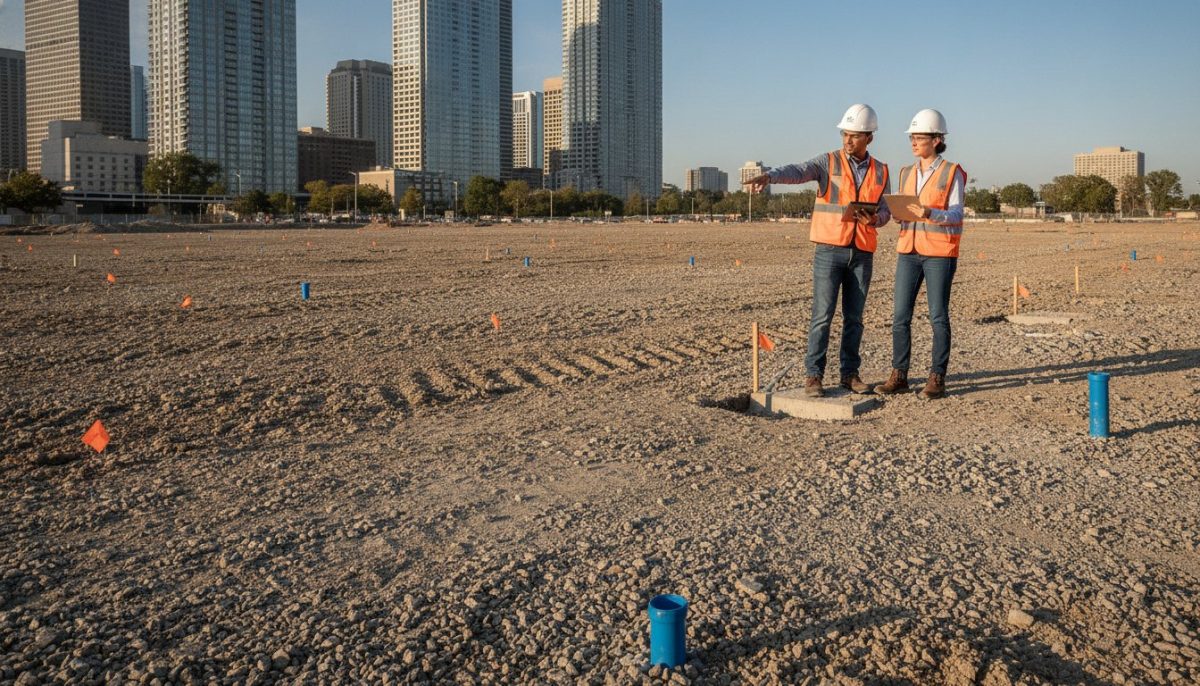
A demolition project isn’t finished when the structures are leveled; it’s finished when the legal and physical liabilities are fully extinguished. Many site managers realize too late that a cleared lot can still hide environmental hazards or stabilization failures that stall new construction for months. Utilizing a rigorous post-demolition site inspection checklist is the only way to ensure your site meets the 2026 technical standards for safety and structural integrity.
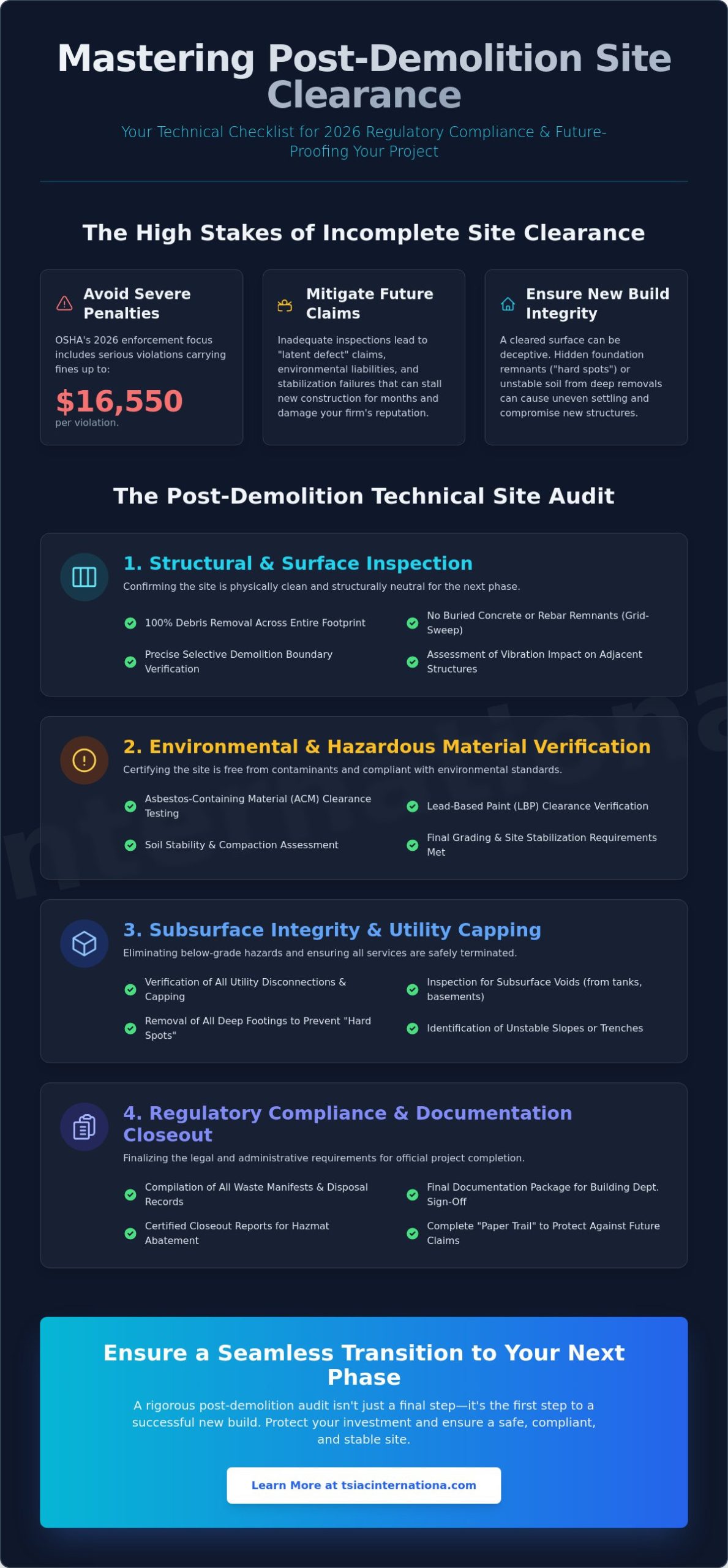
We understand the pressure of navigating complex regulatory frameworks, especially with OSHA’s 2026 enforcement focus and serious violation penalties reaching up to $16,550 per occurrence. This guide will help you master the technical requirements for site clearance and ensure a seamless transition to your next project phase. You’ll gain a methodical framework for verifying hazardous material abatement, assessing soil stability, and finalizing the documentation needed for a successful regulatory sign-off. We’ll examine the specific protocols required to mitigate future claims and maintain the high standards of safety that your stakeholders expect.
Key Takeaways
- Implement a methodical site audit framework to identify and mitigate latent environmental and physical liabilities before concluding your project.
- Master the technical criteria within our comprehensive post-demolition site inspection checklist to ensure 100% debris removal and utility capping integrity.
- Navigate complex 2026 environmental standards with specialized protocols for asbestos-containing materials and lead-based paint clearance testing.
- Streamline your regulatory closeout by compiling the precise waste manifests and documentation required for official building department sign-off.
- Establish a safe and stable foundation for future development through rigorous site stabilization and final grading requirements.
The Critical Role of Post-Demolition Site Inspections
The completion of a physical teardown marks the beginning of the most critical phase of any redevelopment project: the technical site audit. In professional practice, a post-demolition inspection isn’t a casual walkthrough; it’s a rigorous verification process designed to confirm that every technical parameter of the project scope has been satisfied. This transition phase is where long-term liability is either successfully managed or dangerously ignored. Utilizing a robust post-demolition site inspection checklist serves as the primary mechanism for this verification, ensuring the ground is physically and legally prepared for the next stage of development. For a broader Demolition overview, the industry recognizes that modern site clearance requires systematic planning and meticulous closeout procedures to be considered complete.
Insurance providers and regulatory bodies increasingly demand high-resolution documentation of site conditions before new permits are issued. Inadequate inspections often lead to “latent defect” claims years after a project ends, which can be catastrophic for a firm’s reputation and bottom line. By maintaining methodological site verification, contractors protect their insurance premium profiles and demonstrate a commitment to safety. This professional oversight is non-negotiable for specialized tasks such as asbestos abatement or lead remediation. Without a certified closeout, hazardous particles could remain on-site, creating environmental liabilities that are far more expensive to fix after new construction begins.
Protecting Future Structural Integrity
A cleared surface can be deceptive. A professional inspection focuses heavily on identifying subsurface voids or disturbed soil conditions caused by the removal of deep footings or underground storage tanks. If foundation remnants are left in the ground, they create “hard spots” that lead to uneven settling for new structures. Our protocols also include assessing the impact of heavy machinery on adjacent buildings. Vibrations from high-reach excavators or concrete breakers can cause hairline fractures in neighboring walls that might only become visible weeks after the equipment has left the site.
Safety and Liability Mitigation
The primary goal of a post-demolition audit is to eliminate physical hazards for subsequent construction crews. Sharp rebar, unstable slopes, or improperly capped utilities represent significant risks that can lead to costly delays. With OSHA’s 2026 enforcement focus, serious violations now carry penalties of up to $16,550 per violation. Ensuring the site meets all national occupational safety standards is a matter of financial survival. Establishing a clear paper trail through a detailed checklist provides property owners with the necessary protection against future claims. This documentation acts as a definitive record that the site was handed over in a compliant, stable, and hazard-free state.
Essential Structural and Surface Inspection Criteria
Technical accuracy is the hallmark of a professional closeout. Once the heavy machinery is demobilized, the site must undergo a rigorous surface evaluation to confirm 100% debris removal across the entire footprint. This isn’t merely about aesthetics; it’s about ensuring no foreign materials interfere with subsequent excavation or grading. In projects involving interior gut-outs, inspectors must verify selective demolition boundaries with surgical precision. This involves checking that load-bearing elements remain undisturbed and that all non-structural components have been extracted according to the engineering plan. If you’re overseeing a large-scale renovation, our experts provide specialized selective demolition and interior gutting to ensure these boundaries are maintained flawlessly.
Concrete removal sites require specialized attention during the final walk-through. It’s common for fractured aggregate or jagged rebar leftovers to remain partially buried, posing a risk to future foundation work. A comprehensive post-demolition site inspection checklist includes a “grid-sweep” of these areas to ensure the soil is clean of structural remnants. This level of detail prevents mechanical damage to new construction equipment and avoids the high costs of secondary clearing once the primary contractor has left the site. Detailed visual confirmation ensures the site’s surface is truly prepared for the next phase of development.
Subsurface and Foundation Verification
The inspection must extend below the visible surface to be considered complete. Professionals must confirm the complete removal of footings, pilings, and grade beams as specified in the permit. Leaving these elements in place can cause catastrophic settlement issues for new buildings. Additionally, the inspector should look for signs of abandoned underground storage tanks (USTs) that may have been missed during pre-demolition surveys. Evidence of soil saturation or unexpected drainage patterns often indicates disturbed earth that requires stabilization before the site is declared ready for development.
Utility and Infrastructure Closeout
Safety is the primary driver when verifying utility termination points. Every water, gas, and electrical line must be safely secured and capped at the property line or the point of connection. Adherence to OSHA demolition standards ensures that these terminations are not only physically sound but also properly documented for future crews. Sewer and storm drain connections must be protected with debris covers to prevent siltation or blockages during the interim period. We recommend creating a digital map documenting the exact GPS coordinates of all remaining underground services to prevent accidental strikes during the next phase of construction.
Environmental Clearance and Hazardous Material Verification
Environmental clearance represents the most legally sensitive portion of the site audit. While structural debris is visible, hazardous particulates often remain invisible to the naked eye. A rigorous post-demolition site inspection checklist must prioritize a final visual inspection for suspected asbestos-containing materials (ACM) that may have been uncovered during the final stages of structural dismantling. Lead-based paint dust clearance is equally vital, requiring specialized surface testing to ensure that the soil and surrounding structures haven’t been contaminated by airborne lead particles. Failing to identify these hazards at the closeout stage can lead to significant environmental claims during the subsequent construction phase.
Industrial demolition projects demand even higher levels of scrutiny. Soil testing for chemical contaminants is standard procedure to identify potential leaks from old machinery, processing lines, or underground storage tanks. We look for hydrocarbons, heavy metals, or volatile organic compounds that may have migrated into the soil over decades of operation. Particulate matter verification and continuous air quality monitoring provide the empirical data necessary to prove that the demolition process didn’t release harmful toxins into the local environment. These steps aren’t just safety measures; they’re essential components of a robust risk management strategy that protects your long-term interests.
Asbestos Abatement Closeout
Closing out an asbestos project requires more than just hauling away bags of waste. You must review air clearance reports from independent laboratories to confirm that fiber counts are below the strict regulatory thresholds. Verification of the integrity of containment areas post-removal ensures that no cross-contamination occurred during the process. Following established asbestos removal protocols is the only way to secure the documentation needed for legal protection. We verify that all seals, filters, and negative pressure systems functioned correctly until the final clearance was issued, providing a definitive record of compliance.
Lead and Mold Remediation Verification
Lead dust is a persistent hazard that requires meticulous cleanup and verification. Our team confirms the removal of all lead-contaminated debris and conducts wipe tests on remaining surfaces to meet 2026 safety standards. In selective demolition or interior gutting projects, we also inspect for residual mold growth that could compromise the air quality of the new building. Referencing our guide on hazardous material abatement provides property owners with the detailed remediation standards required for a successful site handover. This methodical approach ensures that the transition to new construction is not delayed by unforeseen environmental discoveries, making the post-demolition site inspection checklist an indispensable tool for project completion.
Navigating Regulatory Compliance and Documentation Closeout
The administrative closeout is the final hurdle in transforming a demolition site into a development-ready asset. While the physical work is complete, the legal transfer of the property requires a meticulous compilation of data. A professional post-demolition site inspection checklist ensures that every manifest, permit, and certificate is organized for local building department review. This documentation is not just a formality; it’s a critical defense against future litigation and a mandatory requirement for securing new construction permits.
Municipalities like Houston or Fresno have specific fee structures for inspections and permit resolutions, often requiring a final sign-off before a project is considered legally closed. In Santa Rosa, for instance, a reinspection fee of $170.34 per hour underscores the financial importance of getting the documentation right the first time. Failing to close out an active permit can lead to building code enforcement cases, which carry significantly higher costs and can stall new development for months. Professional oversight ensures that these bureaucratic requirements are met with the same precision as the physical demolition itself.
Waste Manifests and Recycling Records
Modern development often hinges on sustainability metrics. Tracking debris through the entire demolition process is necessary to secure green building certifications like LEED. The EPA estimates that the United States generates over 600 million tons of C&D debris annually, yet the overall diversion rate remains around 76%. Documenting your specific recycling percentages for wood, metal, and plastic is essential for compliance with local diversion ordinances that are becoming increasingly strict in 2026.
While concrete and asphalt see recovery rates exceeding 95%, materials like wood and drywall often fall below 25% in national averages. Providing proof of proper disposal for specialized concrete removal or hazardous material abatement is mandatory for a successful closeout. These records protect the property owner by proving that all regulated materials were handled at licensed facilities. If you require expert management of these complex material streams, our team offers comprehensive recycling services and structural demolition to ensure your project meets all environmental and diversion targets.
Regulatory Sign-Offs and Permits
The final step involves coordinating with municipal inspectors for a site walk-through. This visit verifies that the site matches the submitted plans and that all safety protocols were maintained throughout the project lifecycle. Obtaining the official certificate of completion is the definitive signal that the property is ready for its next use. We recommend maintaining a permanent digital archive of all inspection photos, soil logs, and manifest receipts. This archive serves as the ultimate paper trail should any questions arise regarding the site’s history or environmental status years down the line.
Transitioning from Site Clearance to New Development Readiness
The final phase of a project involves transforming a vacant footprint into a secure, stabilized asset. A common oversight in many projects is the failure to address site conditions between the end of demolition and the start of new construction. Using a comprehensive post-demolition site inspection checklist ensures that the lot doesn’t become a liability due to erosion or unauthorized access. This readiness phase requires a shift from destruction to preservation, protecting the site’s environmental integrity and the owner’s investment during the interim period.
Final grading is a primary requirement for both safety and drainage. The site must be contoured to prevent water pooling, which can destabilize the soil or lead to mosquito breeding grounds. Proper drainage prevents runoff from impacting neighboring properties or public infrastructure. Establishing security protocols is equally essential. A cleared lot is often an attractive nuisance; perimeter fencing and signage must be inspected to ensure they meet local safety ordinances and mitigate the risk of trespasser injury. These steps ensure the site remains a controlled environment until the next phase of development begins.
Site Stabilization and Erosion Control
Effective stabilization prevents the loss of topsoil and protects local waterways from siltation. Installing silt fences and hay bales is a standard requirement under national storm water regulations, especially if the site will remain vacant for an extended period. For dust mitigation, we recommend applying hydroseeding or a temporary gravel cover. These measures ensure the site remains compliant with EPA standards and avoids the fines associated with particulate matter pollution or improper runoff management. Meticulous erosion control is a signature of a professionally managed site closeout.
Professional Handover Protocols
The transition is completed through a formal handover to the follow-on construction team. This involves a final walk-through with the project owner to verify that every item on the post-demolition site inspection checklist has been addressed. If the project involves a partial renovation rather than a total teardown, we define the exact scope of commercial interior gutting to ensure the structural shell is ready for new mechanical, electrical, and plumbing installations. This methodical approach guarantees that the incoming team inherits a site that is clean, safe, and fully documented.
For expert demolition and abatement services that prioritize technical precision and regulatory compliance, contact TSIAC International today. Our team ensures your site is perfectly prepared for its next chapter.
Securing Your Project’s Future Through Methodological Site Audits
A cleared lot is only as valuable as the documentation and physical stability supporting it. By prioritizing technical precision in utility capping and subsurface verification, you eliminate the latent risks that often derail future construction schedules. Adhering to a rigorous post-demolition site inspection checklist ensures that every environmental liability, from asbestos particulates to lead dust, is fully mitigated and legally documented. This systematic approach transforms a high-risk demolition site into a secure foundation for your next development.
TSIAC International brings over 15 years of abatement expertise to every project site. We utilize methodological site verification protocols and comprehensive hazardous material remediation to guarantee your property meets the highest safety standards. Don’t leave your regulatory compliance to chance. Partner with TSIAC International for your next demolition project to ensure a seamless transition from site clearance to new development. We look forward to helping you build on a clean, safe, and fully compliant foundation.
Frequently Asked Questions
What is the primary goal of a post-demolition site inspection?
The primary goal is to establish a definitive record that the site is physically safe, environmentally remediated, and legally prepared for its next use. This process identifies any latent hazards, such as unstable soil or uncapped utilities, that could cause structural failures or safety incidents during new construction. It serves as the final barrier against future liability by confirming that all project specifications and regulatory mandates have been met with methodical precision.
How long does a typical site inspection take after structural removal?
A standard commercial site walk-through typically requires two to four hours of active field time. However, the duration varies based on the site’s complexity and the presence of specialized environmental concerns. Industrial facilities with extensive subsurface footprints or those requiring multi-point soil sampling may necessitate a full day of observation. This timeframe ensures the inspector can meticulously verify every technical parameter without rushing the safety-critical evaluation of the property.
Who is responsible for conducting the final site inspection?
Responsibility for the final audit is shared between the demolition contractor, independent environmental laboratories, and the local building authority. The contractor verifies the physical scope of work, while third-party consultants provide the objective data needed for asbestos or lead clearance. Finally, a municipal inspector performs a site visit to grant the official regulatory sign-off. This multi-layered approach ensures that no single party can overlook potential safety or compliance issues.
What happens if hazardous materials are found during the final inspection?
If suspected hazardous materials appear during the final audit, the area must be secured and all activity halted. A specialized remediation team will then execute a focused abatement plan to remove the contaminant. This discovery triggers a revision of the post-demolition site inspection checklist to include new clearance testing and updated disposal manifests. Once the area is verified clean by an independent laboratory, the final inspection process can resume for the entire site.
Do I need a separate inspection for interior gutting projects?
Interior gutting projects require a dedicated inspection focused on the structural shell and internal environmental conditions. Unlike total teardowns, these audits must verify that load-bearing walls remain intact and that all non-structural debris has been extracted. Inspectors also conduct air quality tests to confirm that the interior environment is free from hazardous dust before new mechanical or electrical crews begin work. This ensures a safe transition for the renovation phase.
What documentation is required to prove a site is environmentally clean?
Proving a site is environmentally clean requires a comprehensive package of empirical data. This includes air clearance reports from independent labs, hazardous waste manifests from licensed disposal facilities, and certified soil analysis results. These documents provide the legal paper trail necessary to defend against future environmental claims. Maintaining these records as part of your post-demolition site inspection checklist is essential for securing new construction permits and demonstrating full regulatory compliance to stakeholders.
Can I start new construction immediately after the inspection is passed?
Passing the inspection is the technical green light, but you cannot legally break ground on new construction until the municipal authority issues the final certificate of completion or a new building permit. The inspection report serves as the primary evidence needed for this administrative approval. Once the building department processes the documentation and closes out the demolition permit, the site is officially transitioned to the new development phase under its respective permits.
How does site stabilization affect the final inspection process?
Site stabilization is a critical component of the final inspection because it ensures the lot remains safe and compliant while vacant. Inspectors evaluate erosion control measures, such as silt fences and hydroseeding, to prevent sediment runoff into public storm drains. Proper grading is also verified to ensure water doesn’t pool on the site. If these stabilization measures are inadequate, the inspector may withhold the final sign-off until the site meets all environmental safety standards.
